Best Thermal Scope 2026: Top Picks Ranked by Detection Range & Price
The best thermal scope for most hunters is the Pulsar Thermion 2 XG50: a 640 sensor and 50mm lens that detects heat past 2,500 yards. But the right thermal rifle scope depends on your budget and your distances. This guide ranks eight dedicated thermal riflescopes from a sub-$1,100 entry sight to a $6,819 American-made weapon sight, with honest picks for hog hunting, coyote control, and long-range night work. Every pick here is a standalone scope. If you would rather keep your day optic and add thermal in front of it, see our clip-on thermal guide instead. On a tighter budget, our best budget thermal and night vision guide ranks fused and digital units mostly under $2,000.
Best Thermal Scopes Ranked (2026)
Dedicated thermal riflescopes ranked by detection range and price tier, from sub-$1,100 entry sights to premium 640 weapon sights for hog and predator hunting.
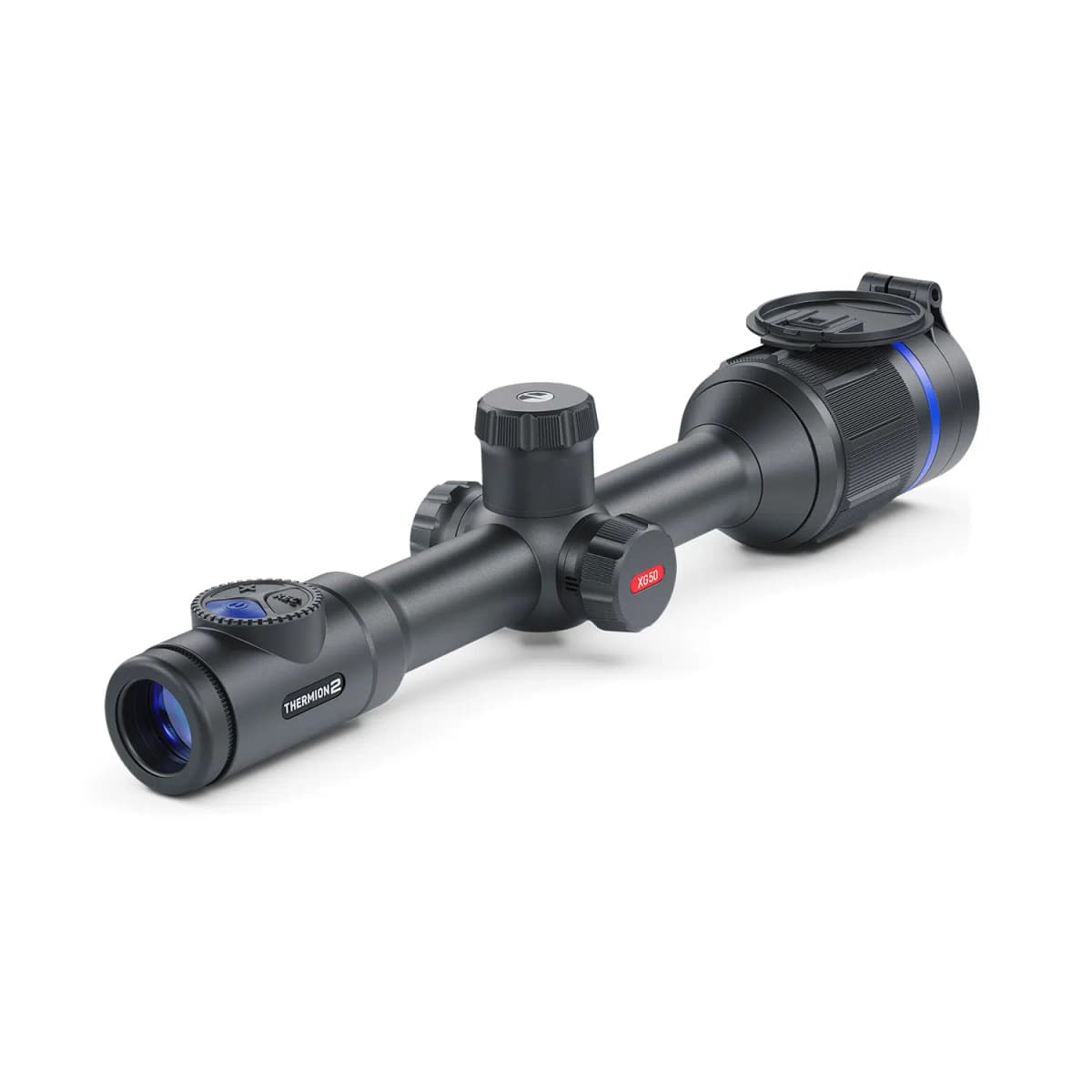
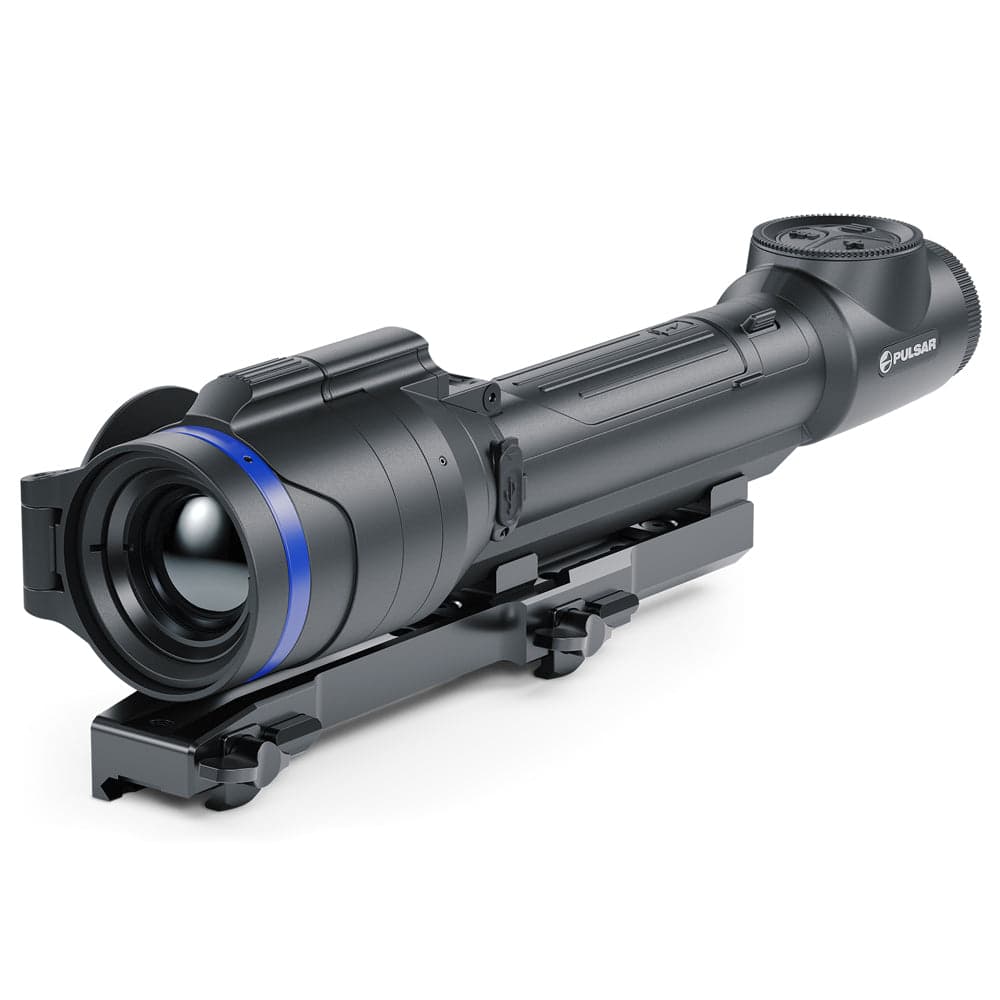
Pulsar Thermion 2 XG50
Best Overall Long-Range 640 Scope
- +2,500-yard detection from the 50mm lens leads its price class
- +640 sensor with sub-40mK NETD for strong contrast in brush
- +Dual battery system delivers up to 10 hr without a swap
- −No integrated laser rangefinder; the LRF XG50 variant costs more
- −31.75 oz is heavy for a lightweight or scout setup
- −50mm lens makes it longer than 35mm scopes on the rail
AGM Rattler V3 LRF 35-640
Best Smart 640 Scope With LRF and Ballistics
- +Integrated LRF eliminates need for separate rangefinder
- +Sub-15mK sensor provides excellent thermal contrast
- +Onboard ballistic calculator for precision shooting
- −5.5-hour runtime on a proprietary battery pack
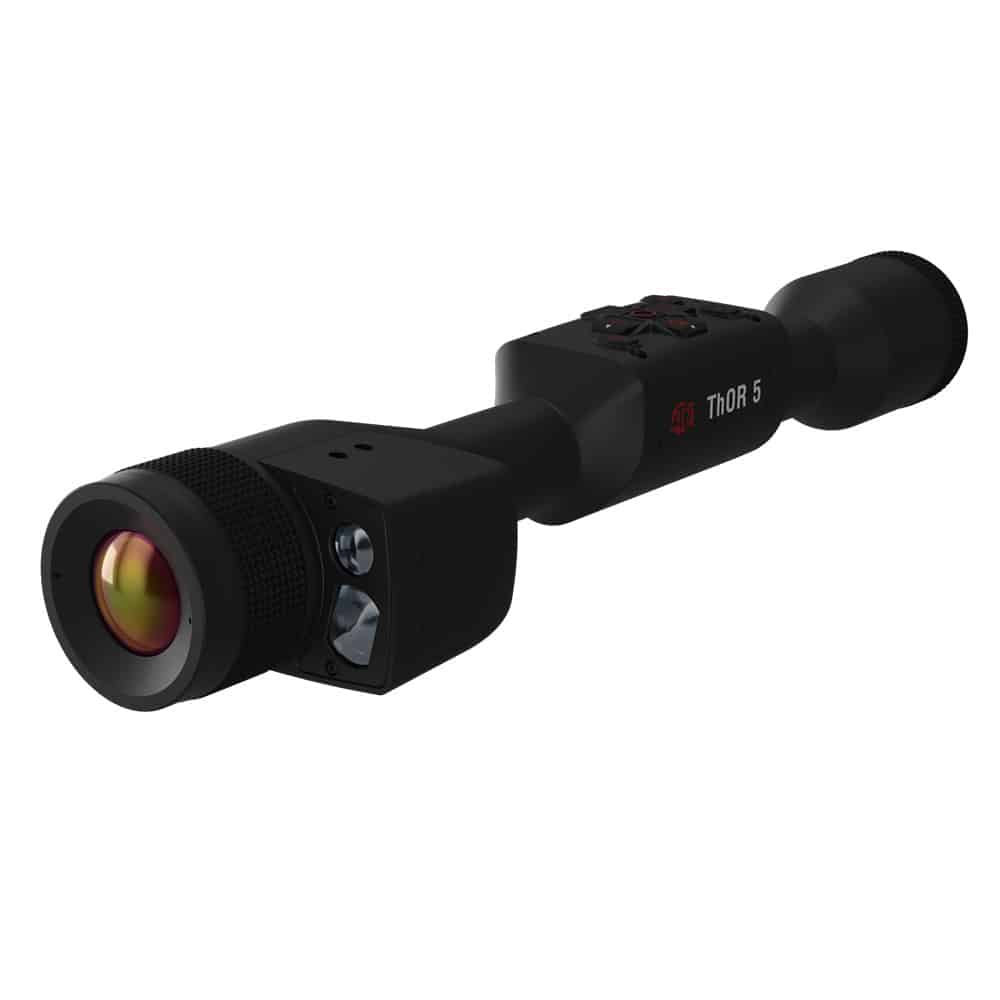
ATN ThOR 5 LRF 640 3-24x
Best Budget 640 With Built-In Rangefinder
- +Integrated LRF and ballistic calculator at a sub-$3,000 street price
- +640 sensor at 60fps for smooth tracking on moving game
- +Recoil Activated Video records shots without manual triggering
- −Heavier and bulkier than passive thermal scopes in this price band
- −ATN's onboard software has a steeper learning curve than Pulsar's
- −Prior generation; ATN's ThOR 6 line launched in 2026
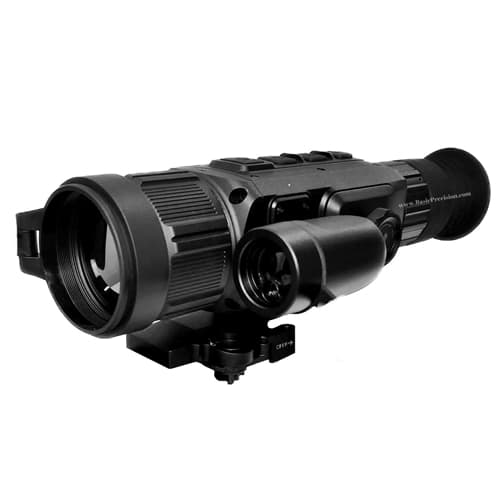
Bering Optics Super Yoter LRF 3.0-24.0x50mm
Best Long-Range 50mm Scope With Integrated LRF
- +Integrated LRF eliminates a separate rangefinder
- +Large 50mm lens for long-range detection
- +Uses common AA batteries
- −1,650-yard detection trails the 2,500-yard Thermion 2 XG50 despite the same 50mm lens
- −35mK NETD not as sensitive as newer models

Trijicon REAP-IR Type 4 35mm
Best Rugged American-Made Weapon Sight
- +American-made 7075 T6 aluminum housing built for hard use
- +Selectable 30/60Hz refresh on a 640 core
- +Integrated DVR records footage without an external recorder
- −About 4 hr CR123A runtime trails rechargeable competitors
- −No integrated laser rangefinder at a premium price
- −Heavy at 28.18 oz for a 35mm sight
Pulsar Talion XQ35 Pro
Best Compact Lightweight Scope
- +Sub-15mK sNETD delivers contrast that beats the 384 resolution on paper
- +Light at 24.7 oz in a magnesium alloy housing
- +Up to 9 hr runtime on a rechargeable APS 5T battery
- −384 resolution trails 640 cores for long-range identification
- −No integrated laser rangefinder
- −35mm lens caps practical reach versus a 50mm scope
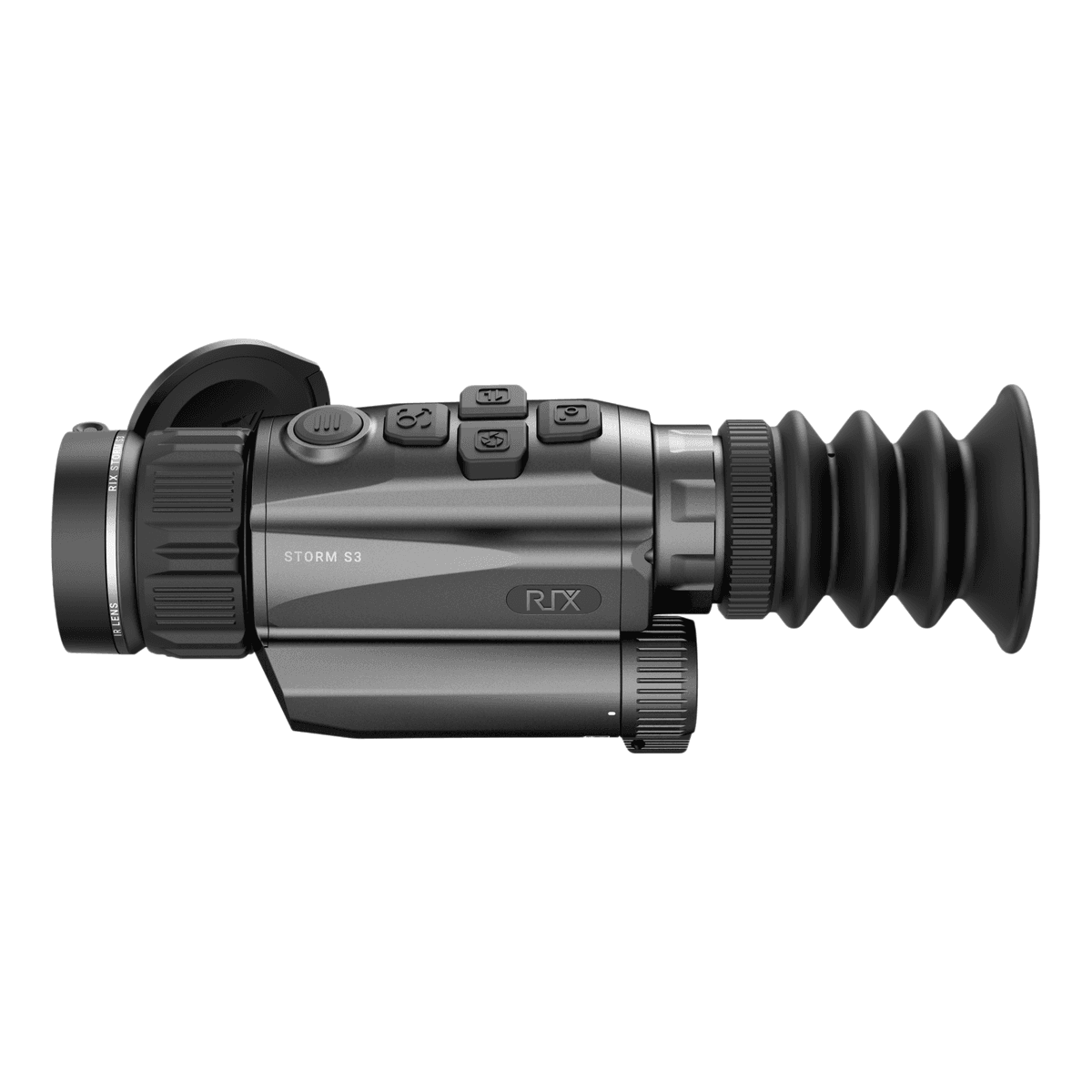
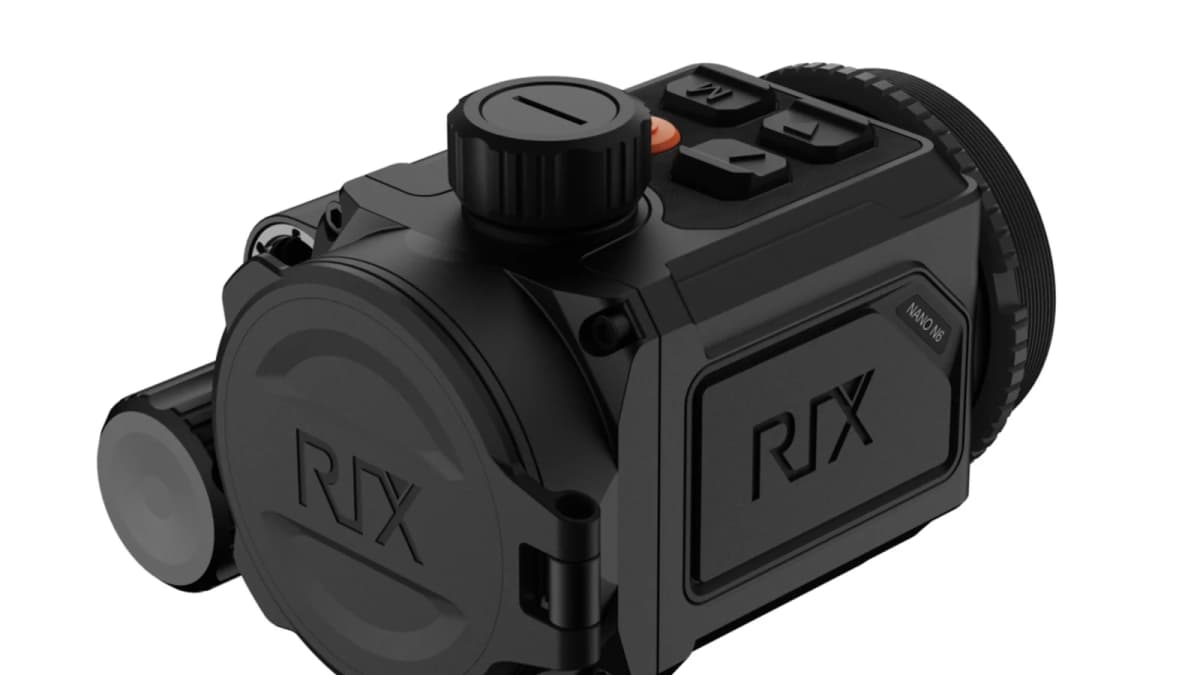
RIX Storm S3 384 35mm
Best Value 384 Scope
- +384 sensor with sub-25mK NETD at a mid-tier price
- +RET image processing sharpens targets at distance
- +High recoil rating suits magnum and large-bore rifles
- −Up to 4.5 hr runtime trails the AGM Rattler V2
- −384 resolution still trails 640 cores for long-range ID
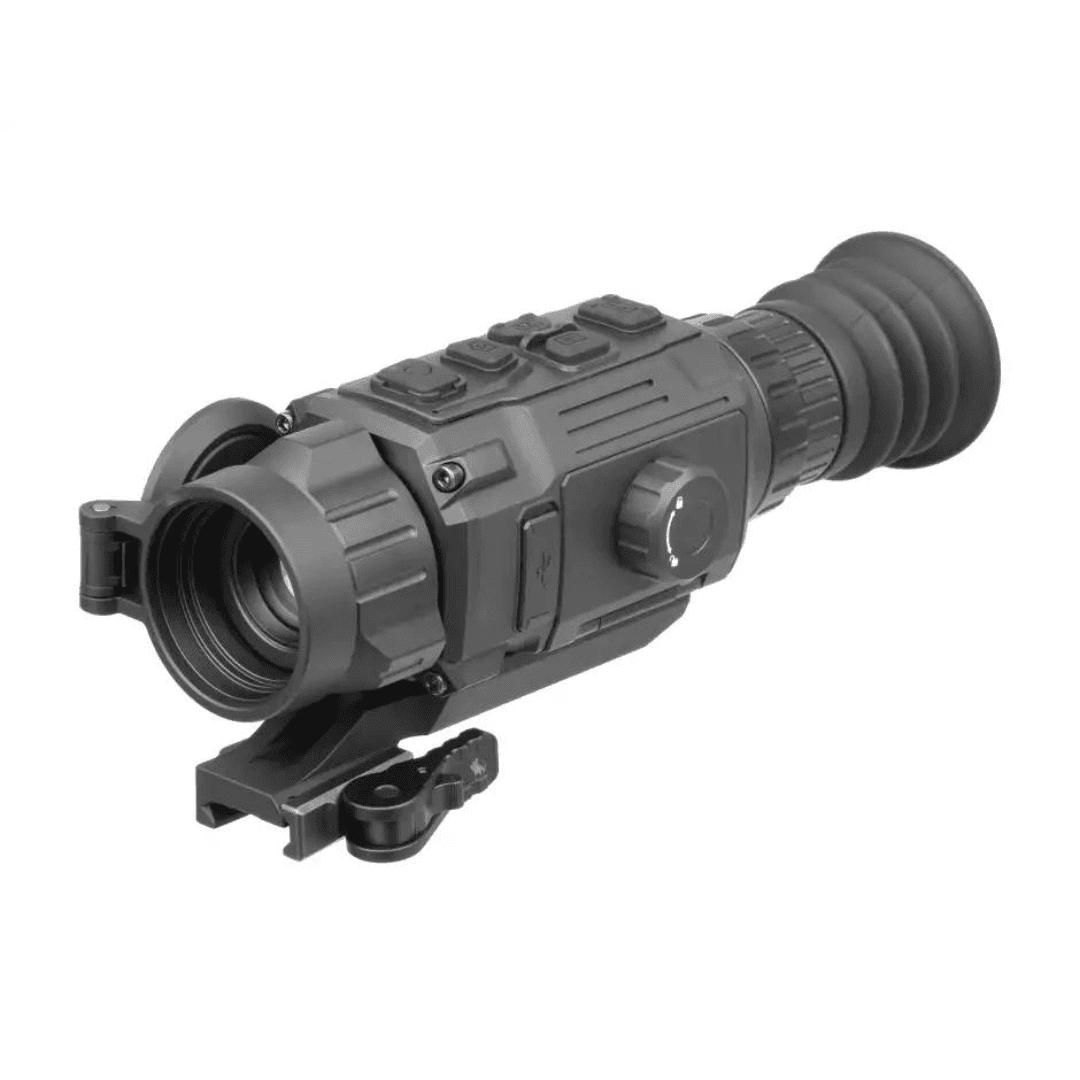
AGM Rattler V2 25-256
Best Budget Entry Scope
- +Dedicated thermal scope under $1,100 with a 50Hz core
- +Long 11.5 hr runtime on a rechargeable battery
- +Light at 16 oz for a self-contained thermal sight
- −256x192 resolution limits detail versus 384 and 640 sensors
- −25mm lens caps practical identification range
Prices and availability can change.
Affiliate links - purchases support this site at no extra cost to you. (?)
How to Choose a Thermal Scope
Pick your thermal scope by sensor resolution and lens size first, then let price follow. Resolution (256, 384, or 640) sets how much detail the image holds; lens diameter (25mm, 35mm, or 50mm) sets how far that detail reaches. A 256x192 scope like the AGM Rattler V2 is plenty for coyotes inside 200 yards. A 640 scope with a 50mm lens like the Pulsar Thermion 2 XG50 confirms a hog at distances most hunters will never shoot. Everything else, NETD sensitivity, refresh rate, rangefinders, is a refinement on top of those two decisions.
Match the scope to the animal and the terrain. Hog hunters working open agricultural fields want reach and a built-in rangefinder; the ATN ThOR 5 LRF and Bering Super Yoter LRF solve ranging without a handheld unit. Predator callers working brush and tree lines want sensitivity over raw range, where the Pulsar Talion XQ35 Pro and RIX Storm S3 earn their place. If the rifle sees recoil from a magnum or large-bore cartridge, confirm the recoil rating: the RIX Storm S3 is rated to 6,000 joules, which covers nearly anything you would mount it on.
- AGM Rattler V2 25-256$795Sensor256x192Lens25mmDetection1,250 ydLRFNo
- RIX Storm S3$1,499Sensor384x288Lens35mmDetection1,969 ydLRFNo
- Pulsar Talion XQ35 Pro$1,799.97Sensor384x288Lens35mmDetection1,475 ydLRFNo
- ATN ThOR 5 LRF 640$2,629Sensor640x480Lensn/aDetection2,900 ydLRFYes
- Pulsar Thermion 2 XG50$3,999Sensor640x480Lens50mmDetection2,500 ydLRFNo
- AGM Rattler V3 LRF 35-640$3,495Sensor640x512Lens35mmDetection2,710 ydLRFYes
- Bering Super Yoter LRF$4,595Sensor640x480Lens50mmDetection1,650 ydLRFYes
- Trijicon REAP-IR Type 4$6,819Sensor640x480Lens35mmDetectionn/aLRFNo
| Model | Sensor | Lens | Detection | LRF | Price |
|---|---|---|---|---|---|
| AGM Rattler V2 25-256 | 256x192 | 25mm | 1,250 yd | No | $795 |
| RIX Storm S3 | 384x288 | 35mm | 1,969 yd | No | $1,499 |
| Pulsar Talion XQ35 Pro | 384x288 | 35mm | 1,475 yd | No | $1,799.97 |
| ATN ThOR 5 LRF 640 | 640x480 | n/a | 2,900 yd | Yes | $2,629 |
| Pulsar Thermion 2 XG50 | 640x480 | 50mm | 2,500 yd | No | $3,999 |
| AGM Rattler V3 LRF 35-640 | 640x512 | 35mm | 2,710 yd | Yes | $3,495 |
| Bering Super Yoter LRF | 640x480 | 50mm | 1,650 yd | Yes | $4,595 |
| Trijicon REAP-IR Type 4 | 640x480 | 35mm | n/a | No | $6,819 |
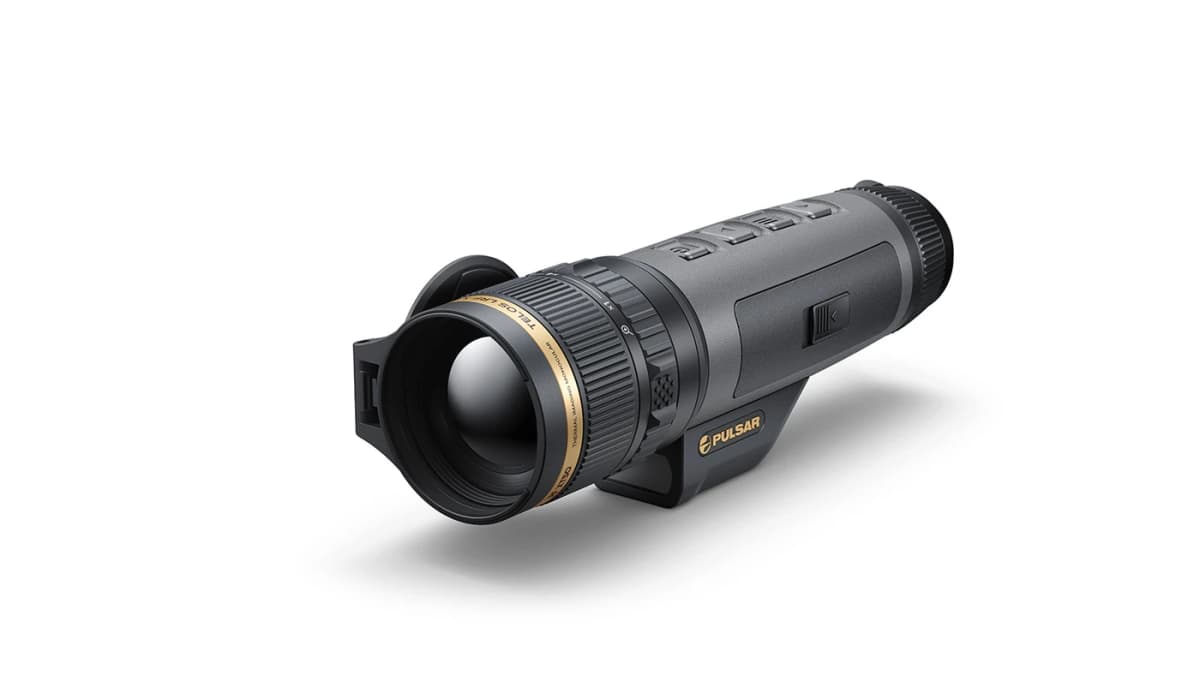
For handheld observation, use the thermal monocular buying guide. It compares scanners by scene coverage, native detail, and battery life as a separate category from aiming optics. Pulsar’s 1280-class TELOS LRF XT50 is that scanner job, not a riflescope.
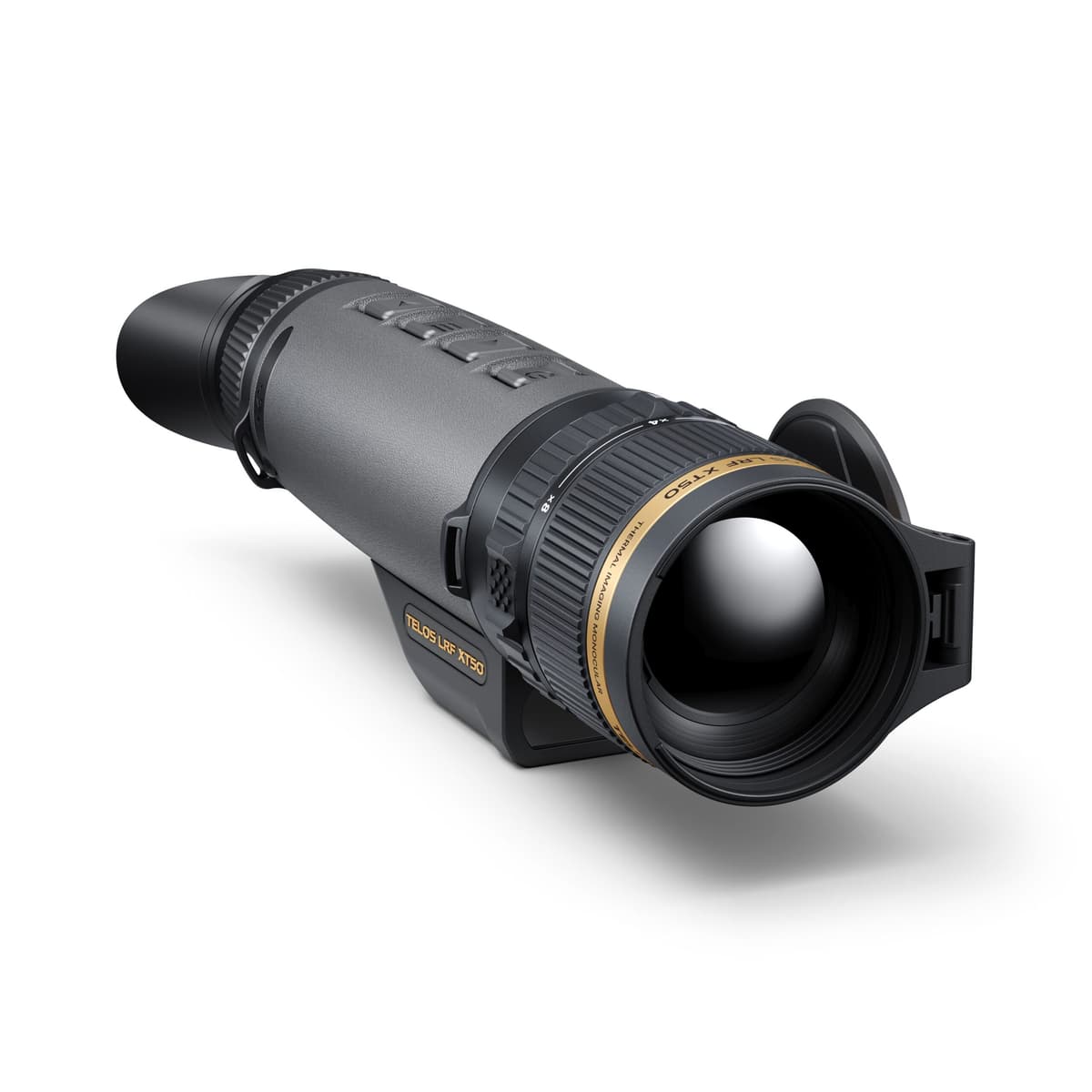
Pulsar TELOS LRF XT50
Scanning and ranging in the hand, alongside your thermal scope
Flagship handheld thermal with a 1280x1024 sensor, wide scan view, and integrated laser rangefinder
Affiliate links (?)
Budget Thermal Scopes (Under $2,000)
Under $2,000, the Pulsar Talion XQ35 Pro ($1,799.97) is the best pick for predator callers who want image quality, while the AGM Rattler V2 ($795) is the right call inside 200 yards where runtime matters more than reach. You are choosing between a 256 sensor at the entry point and two 384 sensors that hold more detail at range. All three are dedicated, self-contained riflescopes, so there is no day optic to keep zeroed and no separate clip-on to mount.
The AGM Rattler V2 25-256 is the dedicated thermal that finally undercut $1,100. Its 256x192 core and 25mm lens are honest about their job: spotting and shooting coyotes and hogs inside a few hundred yards. The 50Hz refresh scans cleanly without the smear of older 25Hz cores, and the 11.5-hour runtime is the longest in this guide. The trade is detail. At 256x192 you will see that something is there well before you can confirm what it is, so this is a close-range predator tool, not a long-range identification scope. It is the thermal pick that anchors the best hog hunting rifle guide, where a suppressed .300 Blackout or .308 host does the close-range night work.
Step up to the RIX Storm S3 at $1,499 and the 384x288 sensor with sub-25mK sensitivity changes what you can see. RIX's Resolution Enhanced Technology doubles effective pixel density and sharpens targets at distance, and the 35mm lens reaches a rated 1,800m detection range. Its 6,000-joule recoil rating is the highest here, which makes it the pick for magnum and large-bore rifles. The only real compromise is runtime: the replaceable 18650 battery runs up to 4.5 hours, well short of the AGM. The Pulsar Talion XQ35 Pro at $1,799.97 spends the extra money on a sub-15mK sNETD rating, the best contrast of any 384 scope in this guide, and a light 24.7 oz magnesium housing. For a coyote caller who values image quality and weight over raw resolution, it is the best thermal scope under $2,000.
Get Thermal Scope Reviews and Night Hunting Updates
New 640-sensor releases, hog hunting rig breakdowns, and thermal vs night vision comparisons.
Mid-Tier Thermal Scopes ($2,500-$4,500)
The $2,500-$4,500 tier is where the 640 sensor becomes the standard and where built-in rangefinders start to appear. This is the resolution that lets you identify game, not just detect it, and the jump from 384 to 640 is the single most noticeable upgrade in thermal imaging. If you hunt past 200 yards or want to positively ID a target before the shot, this is the tier to shop.
The ATN ThOR 5 LRF 640 3-24x is the value path to a 640 scope with a rangefinder, landing near $2,629 against a $3,595 MSRP. It pairs a 60fps 640 sensor with an integrated laser rangefinder that feeds an onboard ballistic calculator, so the reticle adjusts for the ranged distance automatically. Recoil Activated Video captures every shot without you touching a button. ATN's smart-scope software has a steeper learning curve than Pulsar's, and the scope is heavier than the passive options, but nothing else in this guide gives you a 640 sensor and a built-in LRF for under $3,000.
The Pulsar Thermion 2 XG50 at $3,999 is the best overall long-range thermal scope. Its 50mm f/1.0 lens drives a rated 2,500-yard detection range, the longest reach of any passive scope here, and the 640 sensor with sub-40mK NETD holds strong contrast pulling warm targets out of brush. The dual battery system runs up to 10 hours without a swap. It has no built-in rangefinder (the LRF XG50 variant costs more), and at 31.75 oz with a 50mm lens it is the longest and heaviest scope to ride your rail, but for a hog hunter who wants maximum reach and image quality, it is the benchmark. The AGM Rattler V3 LRF 35-640 at $3,495 is the smart-scope answer in this tier: a 640x512 sensor with sub-15mK sensitivity, an integrated 1,000m rangefinder, and an onboard ballistic calculator in a more compact 35mm package than the Thermion. If you want the rangefinder and ballistics of the ATN with a sharper sensor, the V3 is the upgrade.
Premium Thermal Scopes ($4,500-$8,000)
Premium thermal scopes buy you either maximum long-range capability or duty-grade durability, not necessarily both. Above $4,500 you are paying for a large 50mm lens with integrated ranging, or for an American-made housing built to survive abuse that would crack a hunting scope. For open-country hog work with onboard ranging, the Bering Super Yoter LRF earns its $4,595; for duty and hard-use, the Trijicon REAP-IR Type 4 housing is what the $6,819 buys.
The Bering Super Yoter LRF at $4,595 is the long-range hunting answer. Its 640 sensor and 50mm lens deliver a rated 1,650-yard detection range on hog-sized targets, and the integrated laser rangefinder reaches 1,200 yards with a customizable BDC reticle. It runs on four common AA batteries, so you can resupply at any gas station instead of carrying proprietary packs, a genuine advantage on multi-day hunts. Its 35mK NETD is less sensitive than the newest cores, but for an open-country hog rig with onboard ranging it is a complete package.
The Trijicon REAP-IR Type 4 35mm at $6,819 is the closest a civilian can get to a military-grade thermal weapon sight. Built in a 7075 T6 aluminum housing, it prioritizes ruggedness over weight, and the 640 sensor runs at a selectable 30 or 60Hz with an integrated DVR that records to an SD card. It is the answer to the question of what thermal the military uses: the actual military FLIR sights are not sold to civilians, and the REAP-IR is the durability equivalent you can buy. The trade is practicality. The two CR123A cells deliver only about four hours, there is no rangefinder at this price, and at 28.18 oz for a 35mm sight it is heavy. You buy the REAP-IR for the housing and the build quality, not the spec sheet.
Thermal Scope Specs That Actually Matter
Three specs decide how a thermal scope performs in the field: sensor resolution, NETD sensitivity, and lens diameter. Everything else on the box is secondary. Here is what each one does and where the marketing numbers mislead.
Sensor Resolution
256, 384, or 640 pixels of width. More pixels means more detail and a longer identification range. A 256 sensor detects and engages close-range predators; a 640 sensor lets you confirm what you are looking at well before the shot. The jump from 384 to 640 is the most noticeable upgrade in thermal.
NETD Sensitivity
Measured in millikelvin (mK), NETD is how small a temperature difference the sensor can see. Lower is better. Sub-20mK cores like the Talion XQ35 Pro and AGM Rattler V3 pull warm targets out of brush and pick up faint heat differences that a 35mK sensor washes out. In cluttered terrain, low NETD often beats raw resolution.
Lens Diameter and Detection Range
A larger objective (25mm to 50mm) gathers more thermal energy and reaches farther. Treat published detection ranges as spotting figures for a heat blob, not identification ranges. Real-world ID range is roughly a third to a quarter of the marketing number, so a 2,500-yard detection spec means confident target ID closer to 600-800 yards.
Refresh Rate and Recoil Rating
A 50Hz or 60Hz refresh tracks moving game without smearing; avoid older 25Hz cores. Confirm the recoil rating matches your cartridge. The RIX Storm S3 is rated to 6,000 joules, enough for magnum and large-bore rifles, while lighter-duty scopes can lose zero or fail under heavy recoil.
Thermal sees heat, so it works in total darkness and through light fog and smoke, but it cannot see through glass and rendered detail is coarser than image-intensified night vision. For how thermal compares to traditional night vision and when to run each, see our night vision compatibility guide. Still deciding between a standalone scope and a front-mounted unit that preserves your day optic's zero? Our thermal clip-on vs scope breakdown walks through the trade-offs, and once you have picked an optic, pair it with the right host using our AR-15 hunting rifle guide. You can also drop any of these scopes onto a configuration in our rifle builder to see how the weight and rail length affect the rest of your setup. For the full hunting kit around the optic, the deer hunting checklist covers the rifle, glass, ammo, and suppressor that pair with a thermal setup.