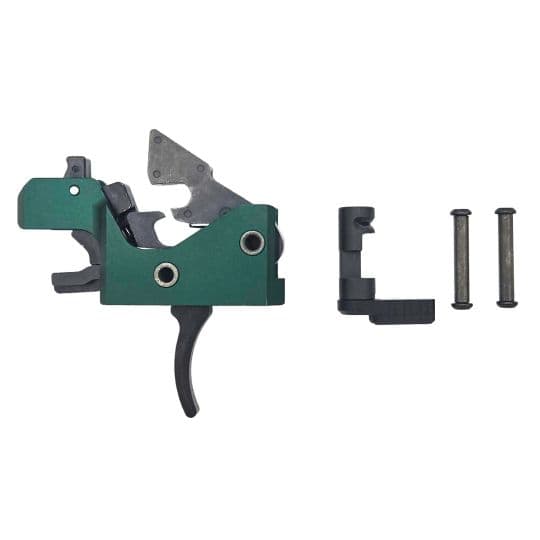
Triggers & Fire Control • $275
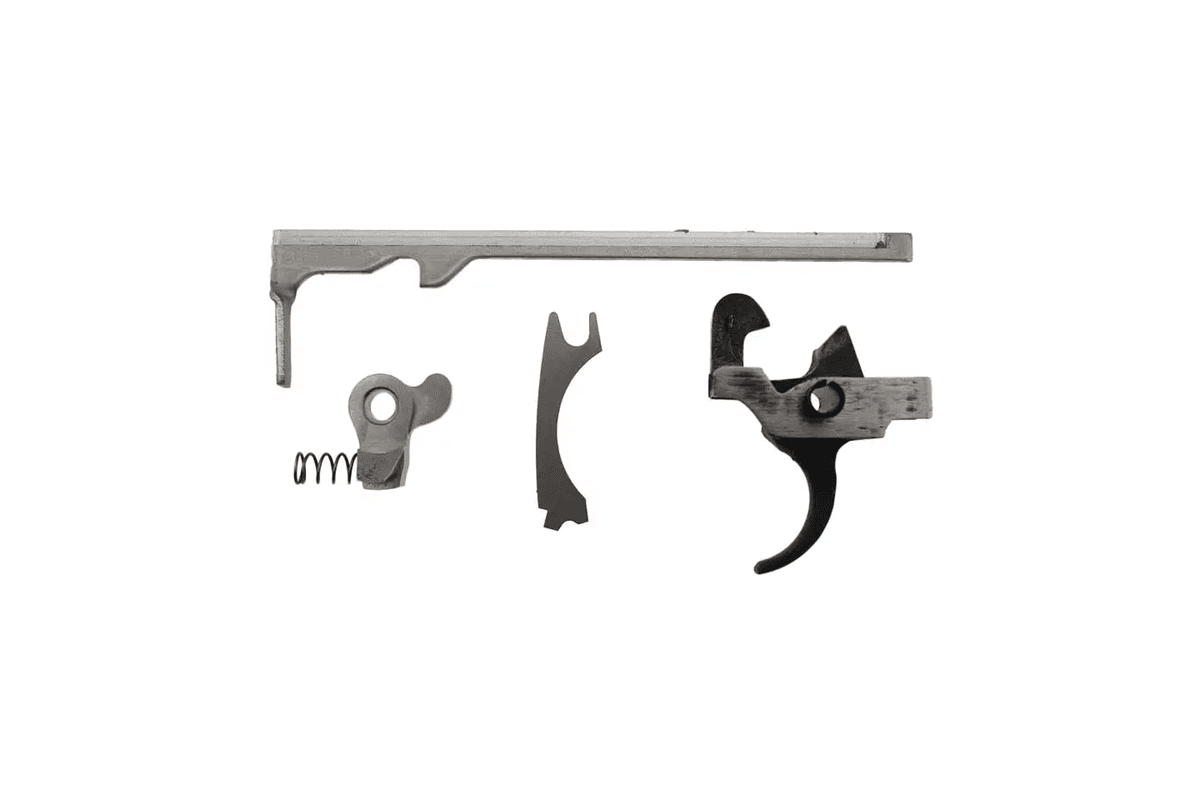
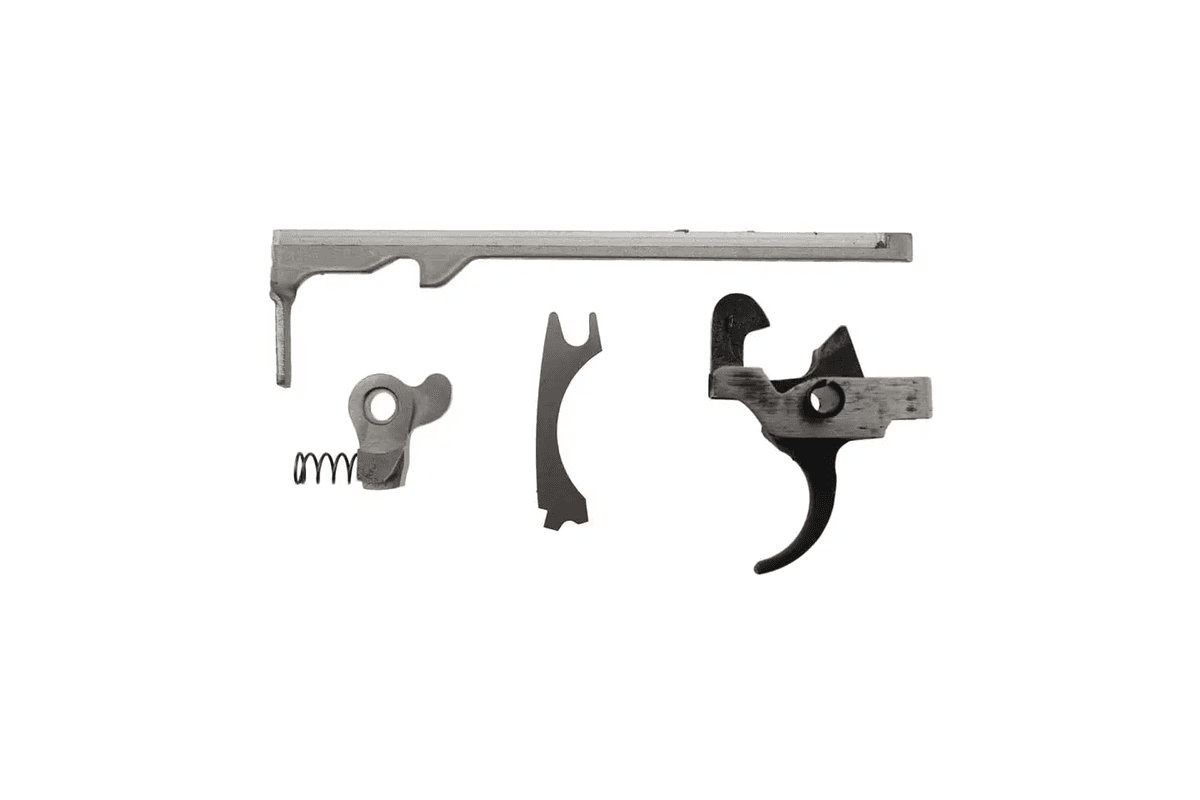
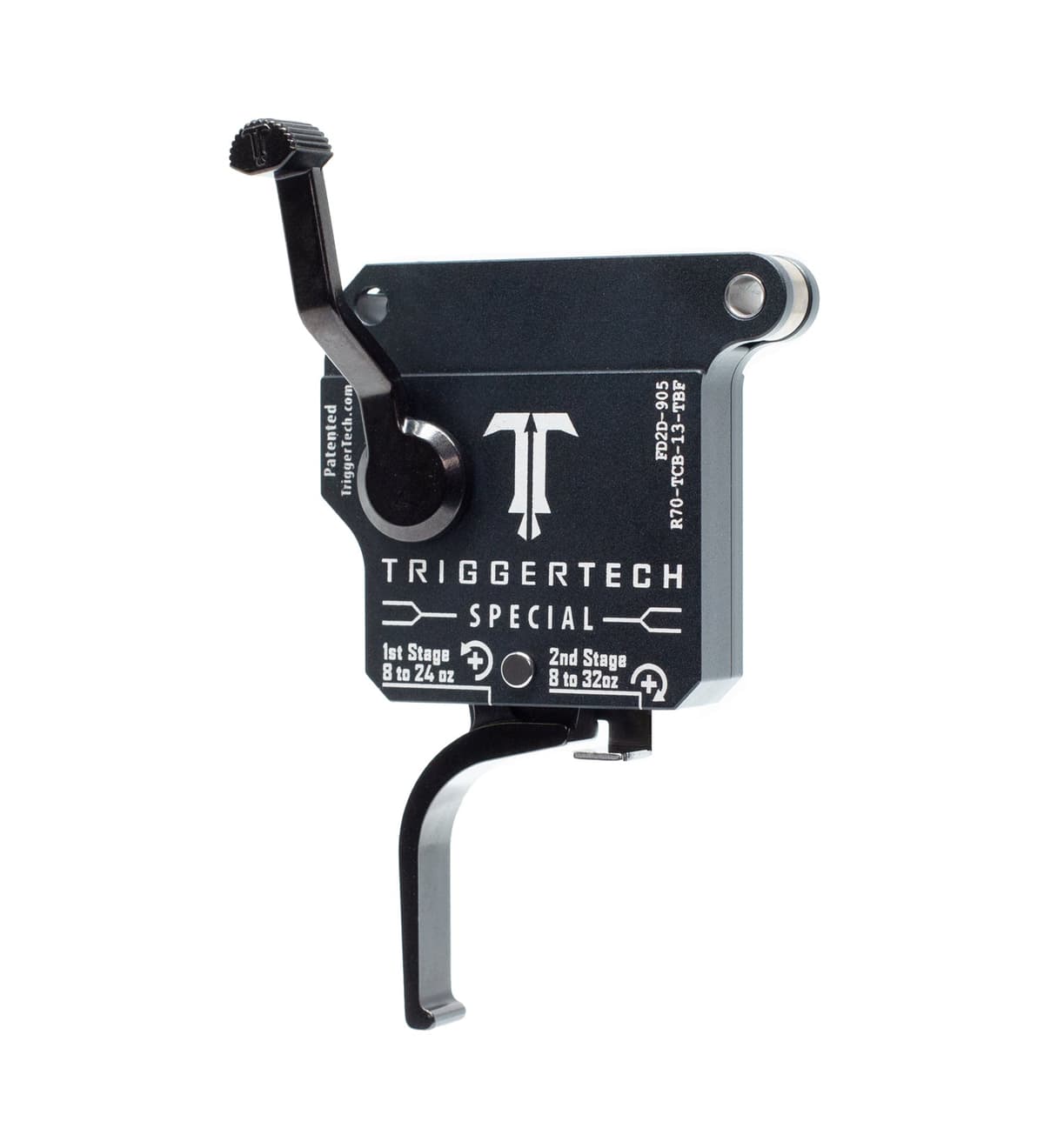
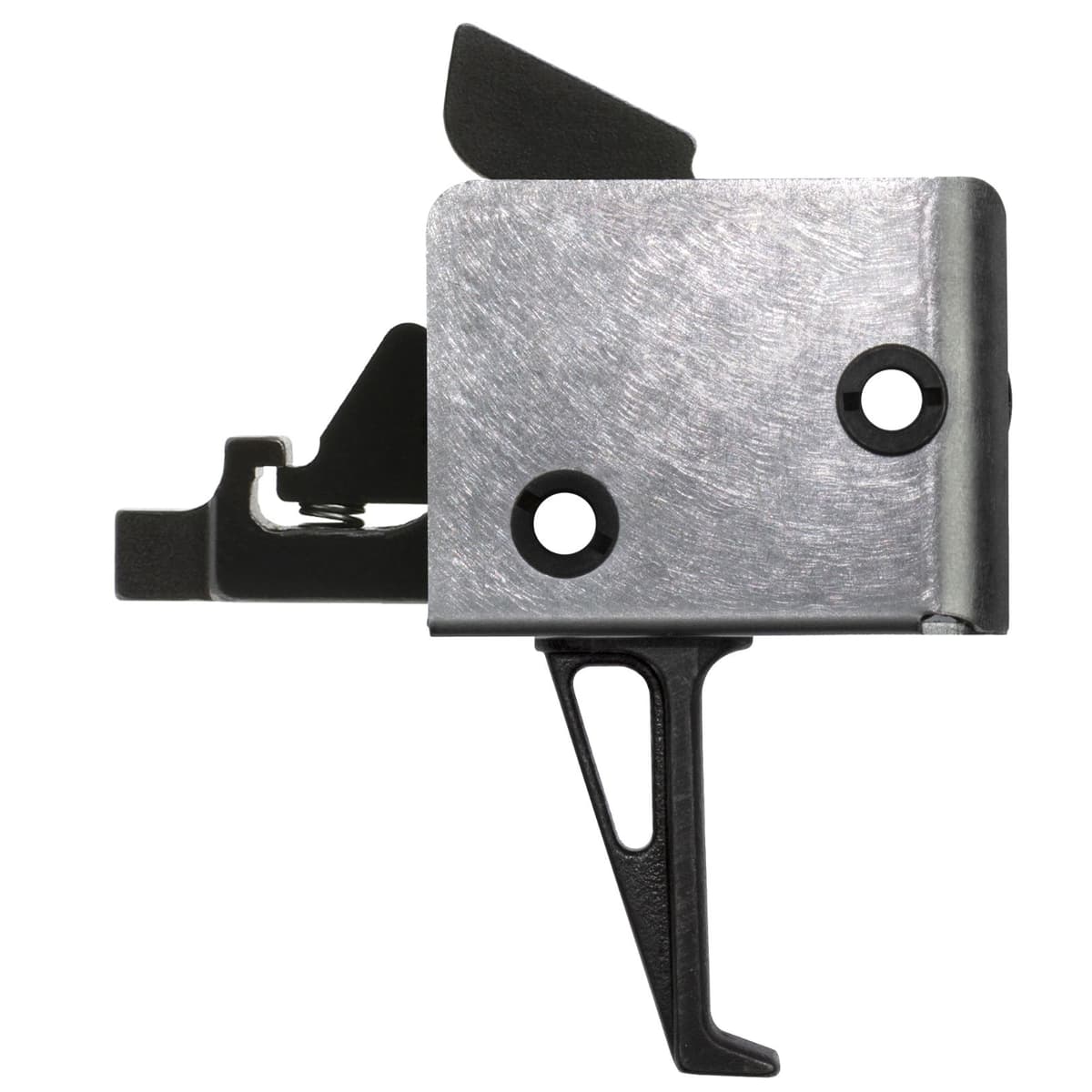
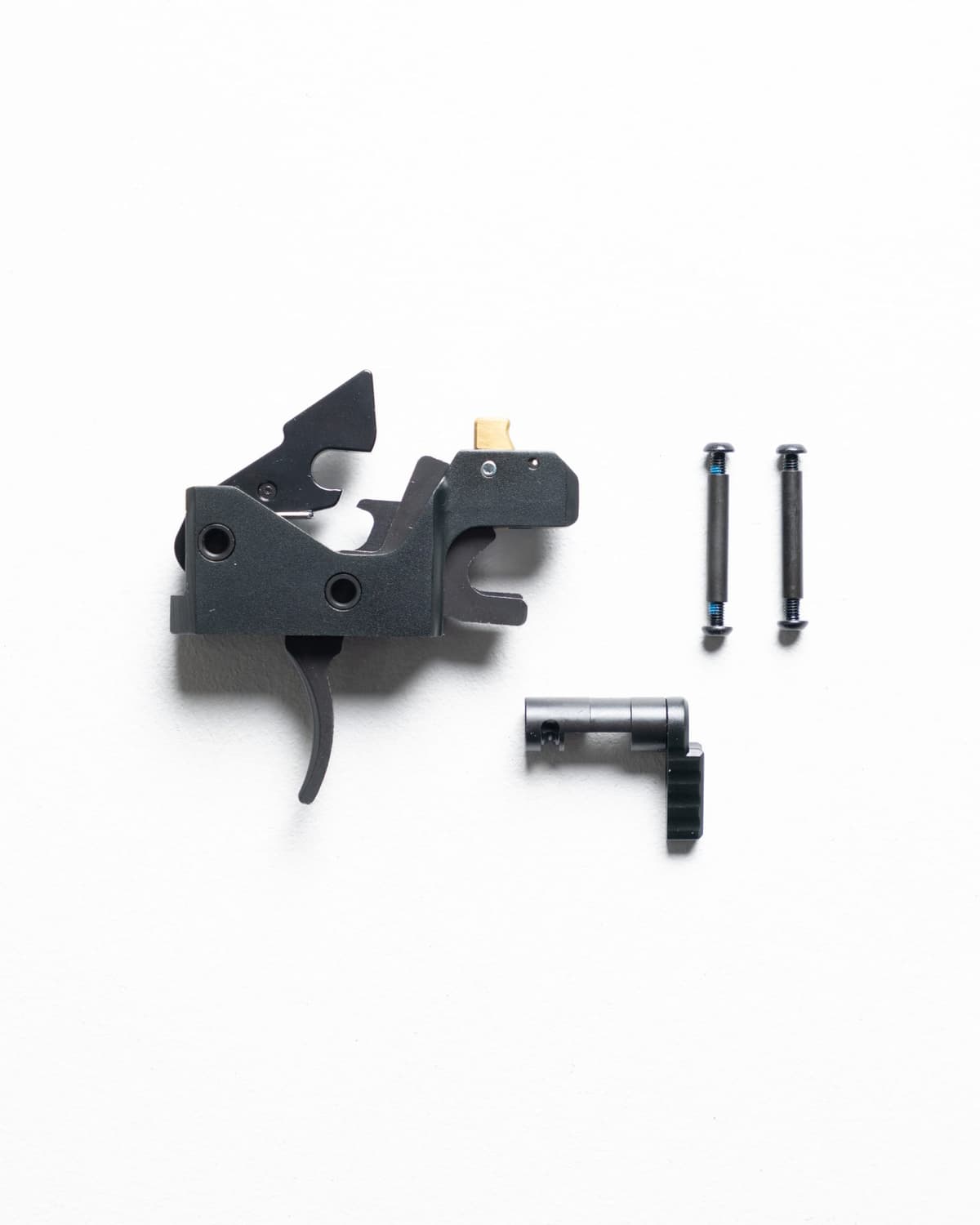
The Triggered Company Partisan Disruptor FRT
- 3.75-4.1lb pull
- Forced reset
$224.99$275.00Save 18%
View at OpticsPlanet
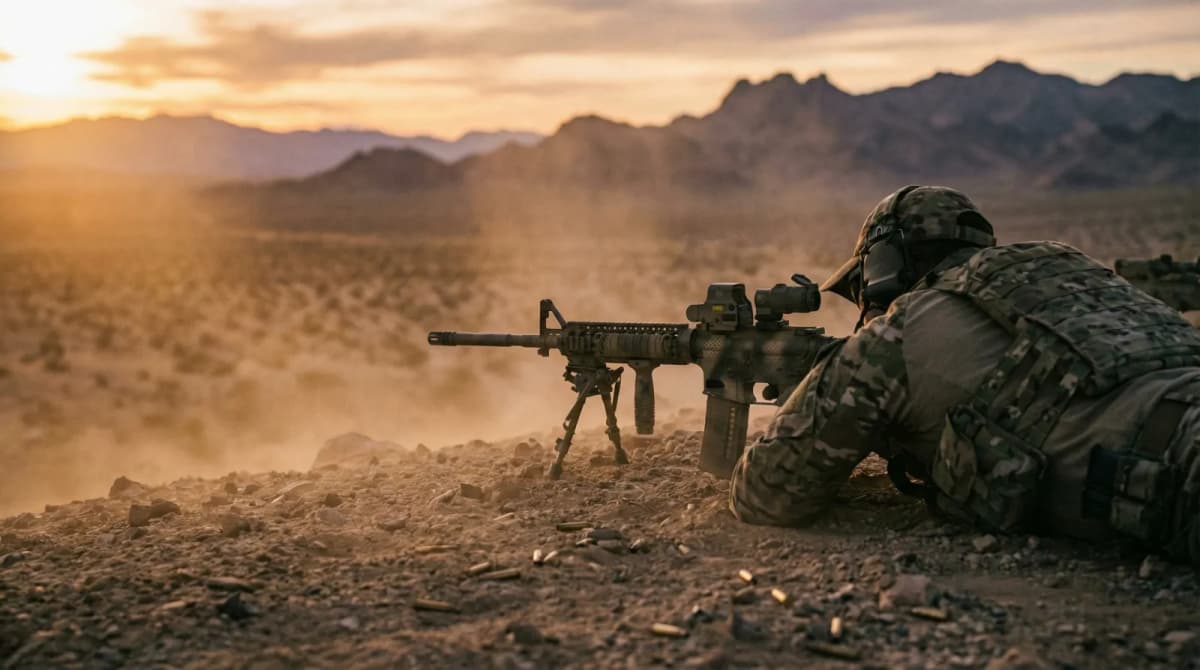
Build a civilian Infantry Automatic Rifle using an AR-15 platform. Block 2 with SOCOM barrel and RIS II is the practical, proven approach. Complete parts lists for Block 2 IAR, budget Hopsaw (16" HBAR), and premium IAR uppers, plus heat management fundamentals and a sustained fire calculator.
Affiliate links (?)
The M27 IAR proved that a magazine-fed, closed-bolt rifle can fill the automatic rifle role when it has the right barrel, the right buffer system, and enough thermal mass to sustain fire without cooking off. This guide applies that concept to the AR-15 platform. Three builds at three price points, from a $1,220 budget Hopsaw to the Block 2 IAR that we recommend for most shooters, to a purpose-built premium upper with active heat management.
In 2011, the USMC adopted the M27 Infantry Automatic Rifle to replace the M249 SAW in the squad automatic rifleman role. The decision was controversial: a magazine-fed rifle replacing a belt-fed machine gun. But the Marines had data showing that accurate, sustained semi-automatic and burst fire from a heavy-barreled rifle suppressed enemy positions more effectively than poorly aimed belt-fed fire, while cutting the weight each Marine carried by over 10 pounds.
To compare the issued M27 with the factory HK rifle and the M27-inspired BRN-4 reproduction parts, see the U.S. military HK clone guide.
The civilian IAR applies the same logic. With forced reset selectors providing near-cyclic fire rates and heavy barrel profiles handling the thermal load, an AR-15 can fill a suppressive fire role that was previously exclusive to NFA weapons. This is not about replicating a belt-fed machine gun. As Hop puts it: "The civilian fire support weapon is a lot closer to the US Marine Corps' M27 IAR than it is to an M249 SAW." It is a companion to your SPR or general-purpose rifle, giving a team the ability to lay suppressive fire during movement.
The Super Safety Guide covers FRS mechanics, installation, and tuning in detail. This guide assumes you understand how forced reset selectors work and focuses on the platform itself: which barrel, which rail, which buffer system, and why.
Pre-configured IAR builds with all components selected. Click to open in the custom AR builder.
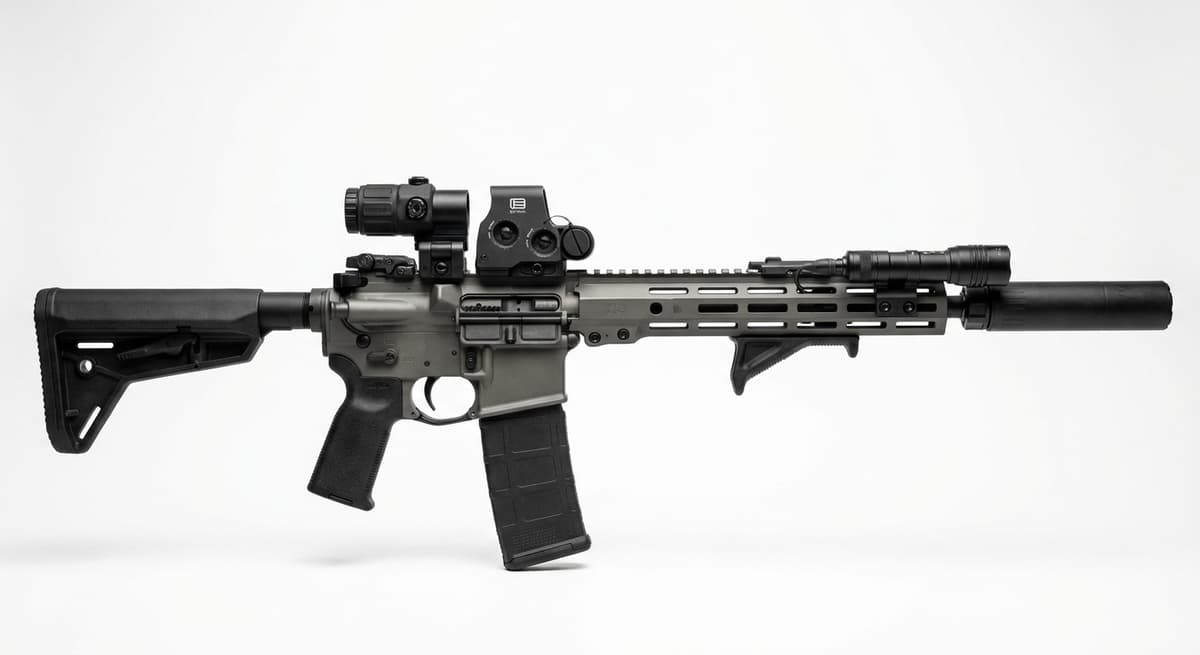
Block 2 IAR
Sustained fire from a magazine-fed AR-15
Budget Hopsaw
Heavy barrel thermal mass on a budget
Affiliate links (?)
Every component in the IAR build exists to manage a single variable: heat. Under sustained fire, the chamber temperature climbs until it reaches the cook-off threshold, approximately 400-500F, at which point the propellant in a chambered round can auto-ignite without a trigger press. That is not a malfunction. It is a catastrophic safety hazard. If you have a round chambered and the barrel is at cook-off temperature, it will fire on its own.
The failure progression under extreme heat is predictable. The gas tube fails first because it is designed as a sacrificial component, thin-walled steel that sags and eventually splits before the barrel itself fails. This is by design: a gas tube failure stops the rifle from cycling, which is preferable to barrel failure. After the gas tube, the barrel droops (literally bends under its own weight at extreme temperatures), and eventually the barrel itself can fail catastrophically.
Barrel profile is the single biggest factor. A heavier barrel has more metal to absorb heat before reaching critical temperatures. An HBAR profile can absorb substantially more thermal energy than a Pencil profile before reaching the same chamber temperature. The SOCOM profile splits the difference, offering meaningfully more thermal capacity than a Government profile at a manageable weight penalty.
Gas system length matters because longer gas systems distribute heat more evenly along the barrel. A mid-length gas system runs cooler than carbine length at the same barrel length because the gas port is further from the chamber. Rifle-length gas is even better but requires 18"+ barrels. For a 14.5" IAR, mid-length gas is the right choice. For a 16" Hopsaw, mid-length is standard. See our gas system tuning guide for detailed buffer and gas block setup.
Handguard design affects heat dissipation rate. This is why we recommend the RIS II quad rail for the Block 2 IAR: the aluminum quad rail has significantly more surface area and thermal mass than an M-LOK handguard. It acts as a passive heat sink, drawing thermal energy from the barrel nut and barrel extension outward into the rail. The trade-off is weight, but in the IAR role you are already accepting a heavier rifle for the suppressive fire capability. Our Block II forced reset trigger host writeup covers the same rail in the FRT role.
Use a pinned gas block, not adjustable. Adjustable gas blocks are a liability under sustained fire. Carbon buildup clogs the adjustment mechanism, detents seize under heat, and you are left with an unreliable single point of failure. A quality low-profile gas block, drilled and pinned to the barrel by a gunsmith, is permanently secured, maintenance-free, and will never drift or fail. Tune your gas system through buffer weight and spring rate instead.
| Profile | Diameter | Thermal Mass | IAR Suitability |
|---|---|---|---|
| Pencil | 0.625" | Low | Not recommended |
| Government (M4) | 0.625" / 0.750" | Moderate | Minimum viable |
| SOCOM | 0.750" | Good | Recommended |
| HBAR / Heavy | 0.750"+ | High | Ideal (weight penalty) |
SOCOM profiles maintain 0.750" diameter under the handguard, where Government profiles taper to 0.625". This matters for sustained fire because the thin section forward of the gas port heats fastest. For barrel length trade-offs, see our barrel length guide.
Safety: Cook-Off Protocol
Know the approximate cook-off threshold of your specific firearm. If you have been firing rapidly and believe the barrel is at or near cook-off temperature, do not point the weapon anywhere you are not willing to destroy, including downrange if friendly elements are maneuvering. Clear the weapon (remove magazine, lock bolt open, visually inspect empty chamber) and allow it to cool. A chambered round in a hot barrel will eventually fire on its own.
Estimate rounds to cook-off warning threshold based on your barrel profile, gas system, and fire control device. Values are heuristic estimates calibrated against published data, not exact predictions.
Barrel Profile
Gas System Length
Fire Control Device
Warning Zone
73 rds
Chamber temp approaching cook-off risk
Critical
99 rds
Cook-off probability is high; stop firing
Cooling Interval
90s
Minimum pause to return from warning zone to safe operating temperature
Relative Heat Risk
98%
Limiting Factor
Gas tube sag. The Government profile's thin section forward of the gas port dissipates poorly under sustained fire.
These estimates use heuristic thermal coefficients, not measured data from your specific firearm. Actual cook-off thresholds depend on chamber dimensions, ammunition type, ambient temperature, barrel metallurgy, and dozens of other variables.
Calibration anchors: a mil-spec M4 (Government profile, carbine gas) reaches cook-off risk around 180 rounds of rapid continuous fire. An M249 SAW (open bolt, heavy barrel) sustains ~600 rounds. An HBAR AR-15 profile falls between these extremes.
Cook-off occurs when the chamber temperature exceeds ~400-500F and the propellant in a chambered round auto-ignites without trigger activation. This is a catastrophic safety hazard. When in doubt, clear your weapon and allow the barrel to cool.
The Block 2 M4 with a SOCOM-profile barrel and Daniel Defense RIS II quad rail is the foundation of the IAR build we recommend for most shooters. It is not the cheapest option. It is not the most thermally capable. It is the one that balances heat management, weight, accuracy, and parts availability into a rifle you can actually carry and fight with. The Block 2 IAR build lists every component at current pricing so you can see the full total before committing.
The RIS II quad rail is a deliberate choice over modern M-LOK alternatives. The four aluminum Picatinny rail segments add thermal mass that acts as a passive heat sink, pulling energy from the barrel nut outward. It also gives you unrestricted bipod mounting on the bottom rail and direct-attach capability for lights, lasers, and other accessories without adapters. Weight penalty is roughly 3 oz over a comparable M-LOK rail. For the IAR role, that is a worthwhile trade.
If you already have a Block 2 clone build (see also the broader military clone builds overview), you are halfway there. Add the VLTOR A5 buffer system and drop in your FRT of choice. The DD M4A1 SOCOM upper (available through Brownells) already has the RIS II quad rail and SOCOM barrel you need.
The DD M4A1 SOCOM upper with RIS II quad rail forms the foundation of a practical civilian IAR. Available in FSP and non-FSP configurations through Brownells. Add a VLTOR A5 buffer system, Partisan Disruptor FRT, EOTech optic, bipod, and drum magazine.
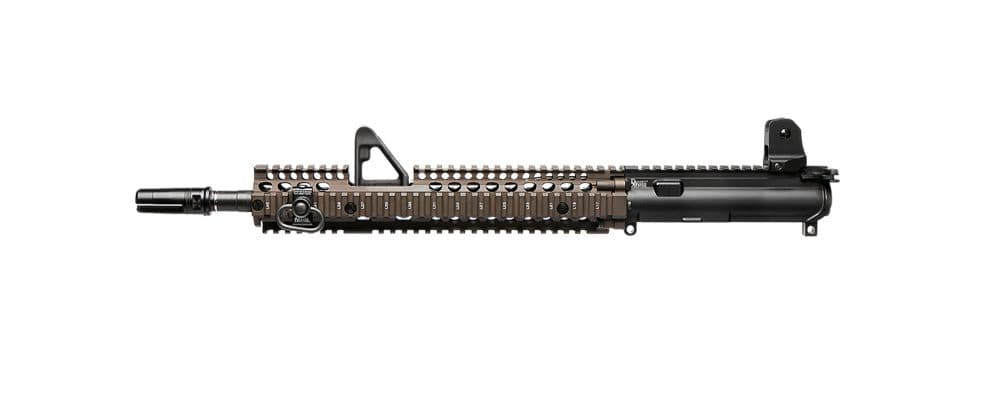
Complete Upper - SOCOM barrel + RIS II quad rail, the IAR foundation
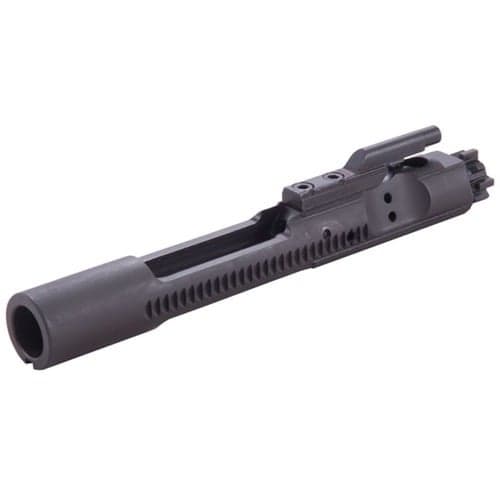
BCG - Reliable feeding through sustained fire, matched to DD upper
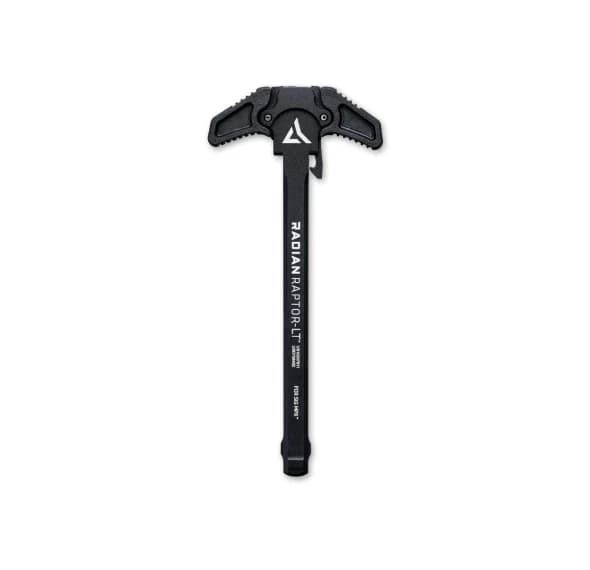
Charging Handle - Ambidextrous, one-handed charging from prone
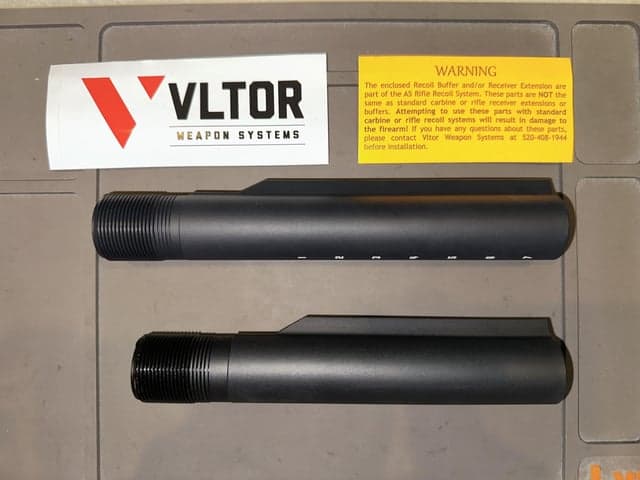
Buffer System - Eliminates bolt bounce under sustained fire
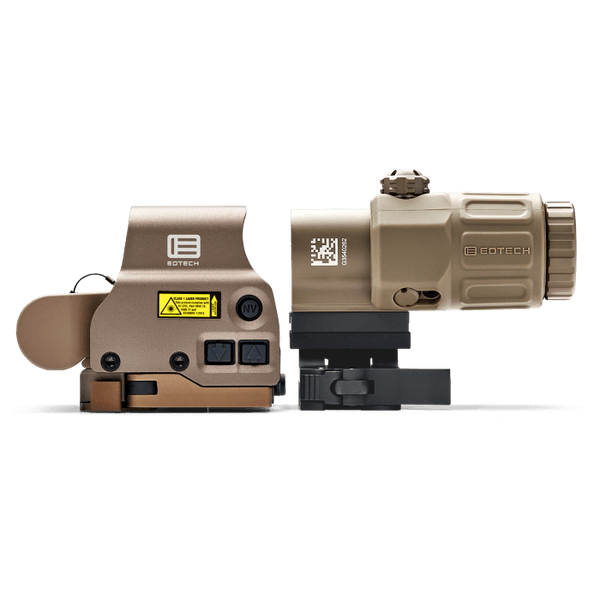
Optic - 1x for suppression, 3x for identification and precision
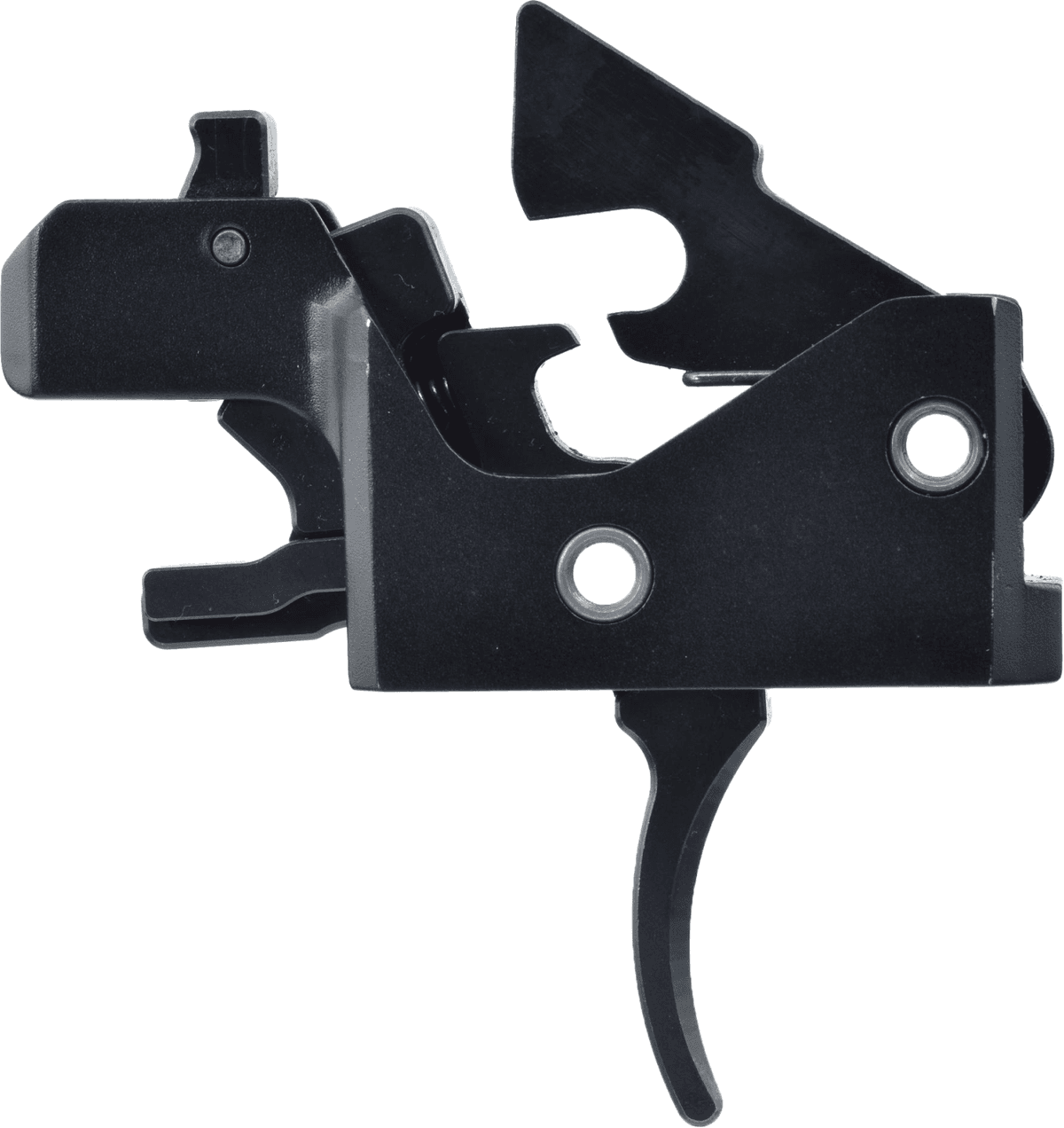
Fire Control - Spring-driven FRT with the most controllable reset
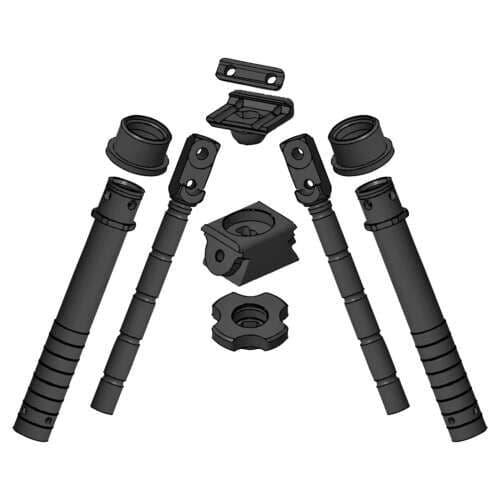
Bipod - Pan and cant capability for sector suppression from prone
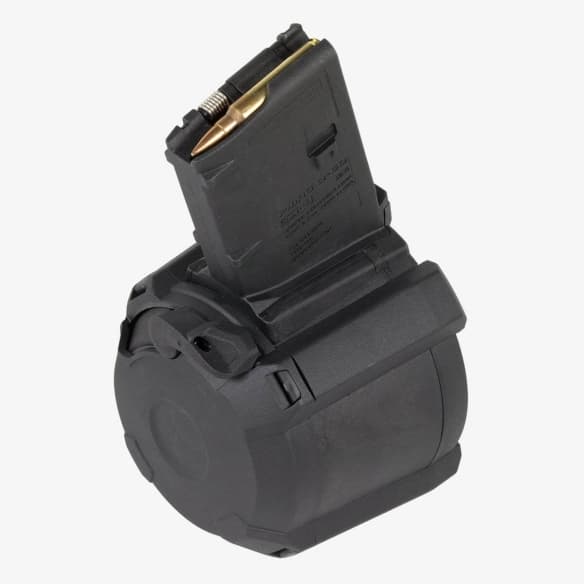
Primary Magazine - 60 rounds for opening suppressive fire strings
Affiliate links - purchases support this site at no extra cost to you. (?)
New M27 IAR clone parts, heavy-barrel uppers, and automatic-rifle build breakdowns sent to your inbox.
The Hopsaw concept, named by Hop, strips the IAR down to its essential variable: barrel thermal mass. Our take builds it as a parts list: a Geissele CHF barrel (14.5" or 16") on a mid-length gas system, Aero M4E1 stripped upper, Midwest Industries Combat Rail, and a standard carbine buffer tube running an H2 buffer and Sprinco Blue spring. No exotic heat sinks. No piston conversion. Just a heavy barrel doing what heavy barrels do.
The counterintuitive truth is that the Hopsaw is thermally superior to the more expensive Block 2 build. The HBAR profile has roughly 30% more thermal mass than the SOCOM profile, which means more rounds before reaching cook-off temperatures. The trade-off is weight and handling. A 16" HBAR is noticeably front-heavy, which makes it less agile for transitions and movement. But in the prone-supported IAR role, that weight is an advantage, not a penalty.
The Hopsaw proves a point Hop makes in his video: avoid "cargo cult" thinking. Adding a 20" barrel, a carry handle, and a tripod does not make your AR-15 a machine gun. It makes it unmanageably heavy with little performance gain. The Hopsaw keeps things practical: a rifle that handles sustained fire well and can still be carried, maneuvered, and employed as a standard rifle when the IAR role is not needed. If you want the 20" HBAR silhouette with a factory-fitted M2 bipod in a single SKU rather than a parts build, the new H&R Model 606 LMG ($1,249 MSRP, released through PSA on May 15, 2026) is the shortest path; trade off is fixed A1 stock and no M-LOK real estate.
Our interpretation of Hop's budget autorifle concept. A parts build using a Geissele CHF barrel (14.5" or 16"), Aero stripped upper, and Midwest Industries Combat Rail. Thermally superior to the Block 2 build thanks to the heavier barrel profile, at roughly half the cost.
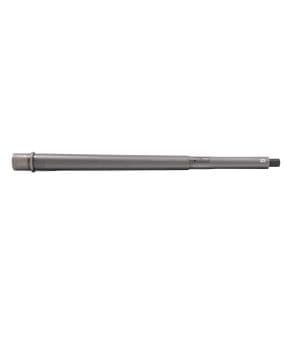
Barrel - in-house CHF chrome-lined, heavier taper for sustained fire
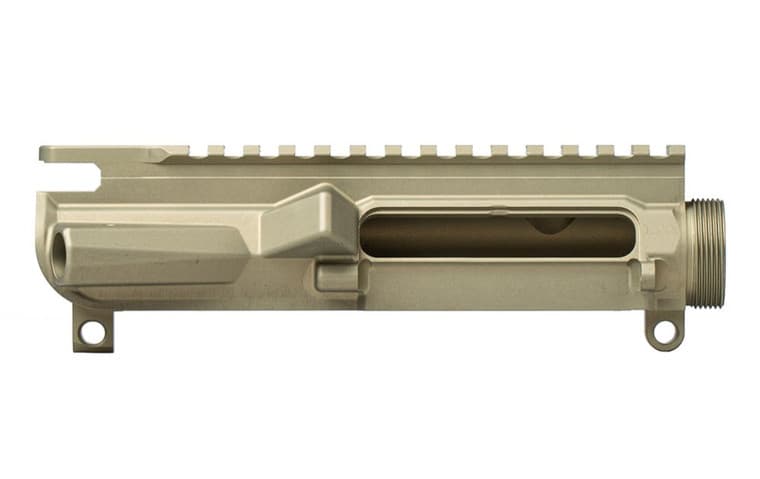
Upper Receiver - Best value stripped upper for a parts build
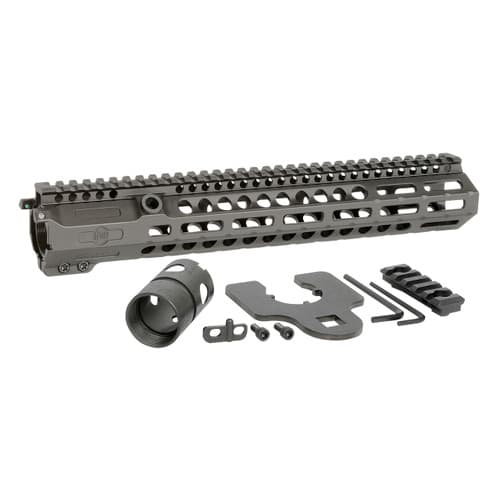
Handguard - Lightweight, well-vented, budget M-LOK rail
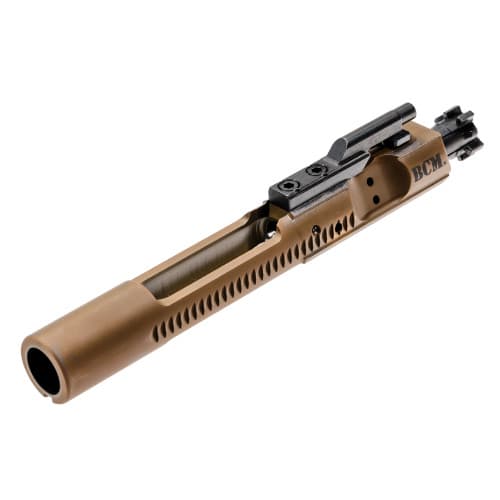
BCG - Proven mid-tier reliability, MPI tested
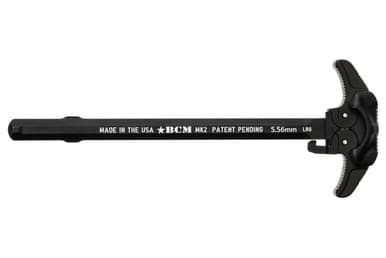
Charging Handle - Ambidextrous, durable, budget-friendly
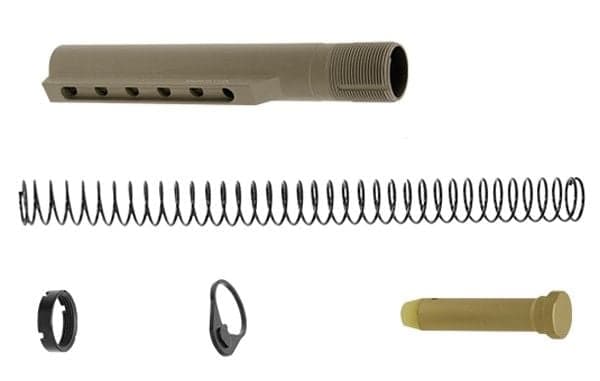
Budget Buffer - Slows carrier for FRS reliability at minimal cost
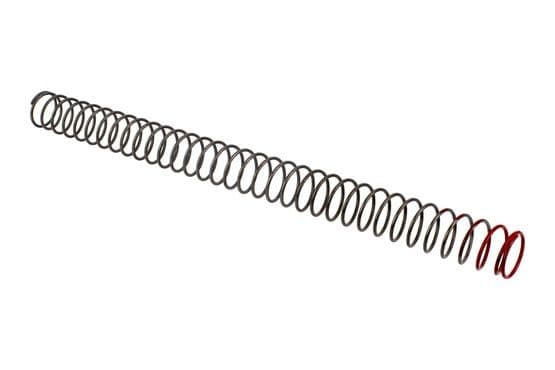
Buffer Spring - Enhanced power for reliable cycling with H2 buffer + FRS
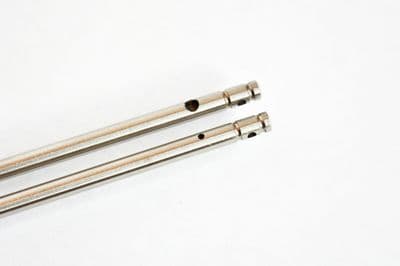
Gas tube - fixed restriction for a hot or over-gassed build, no moving parts
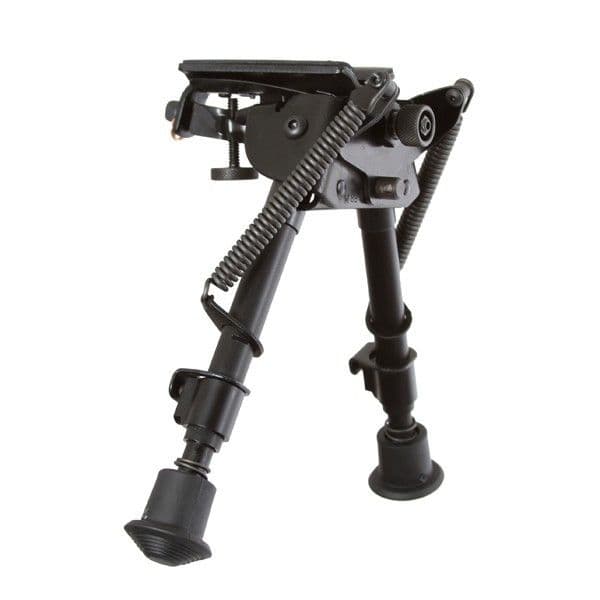
Budget Bipod - Proven reliability at a fraction of Atlas price
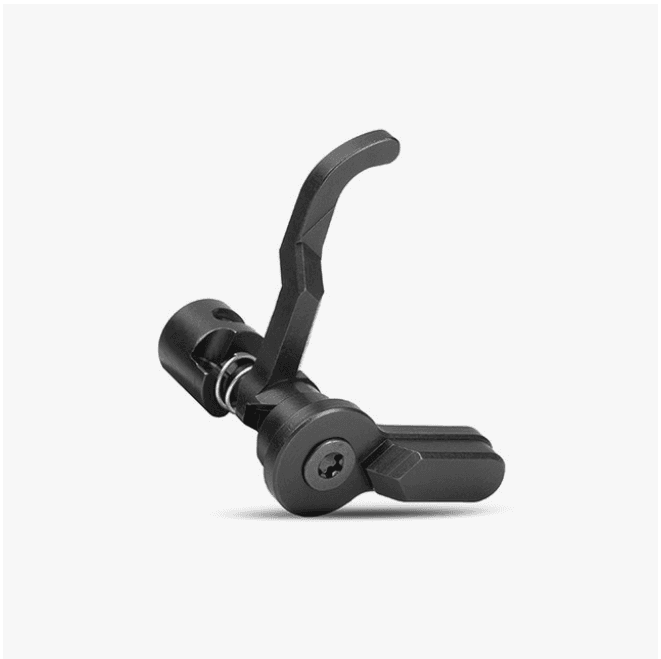
Fire Control - Drop-in FRS that works with your existing mil-spec trigger
Affiliate links - purchases support this site at no extra cost to you. (?)
Purpose-built IAR uppers from manufacturers like Red Right Hand take heat management beyond barrel profile selection. The Red Right Hand RECCE IAR features machined aluminum heat sinks press-fit onto the barrel that actively draw thermal energy away from the chamber. A coiled heat sink on the gas tube prevents the most common failure mode under sustained fire. And a Superlative Arms short-stroke piston conversion reduces the volume of hot gas entering the receiver.
The V2 uses a Shaw-manufactured .850" BAR-profile barrel (14.5", 4150 CMV, chrome-lined, 1:7 twist) with a Midwest Industries 12.65" Combat Rail and Superlative Arms short-stroke piston system with adjustable gas. Despite the heat sinks and piston conversion, the complete upper weighs only 4-5 oz more than the budget Hopsaw upper.
This tier makes sense for shooters who run their IAR hard and often, who need maximum round count before cooling, and who can justify the $1,510 upper-only price tag. For most shooters, the Block 2 build delivers 90% of the capability at 40% of the cost.
Purpose-built IAR uppers with barrel heat sinks, coiled gas tube sinks, and reinforced components. The premium path for shooters who want maximum sustained fire capability and can accept the price tag.
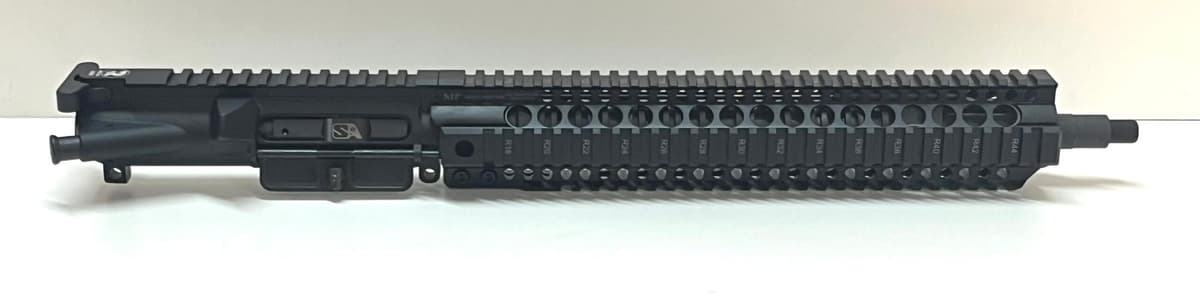
Premium Upper - Purpose-built IAR with active heat management
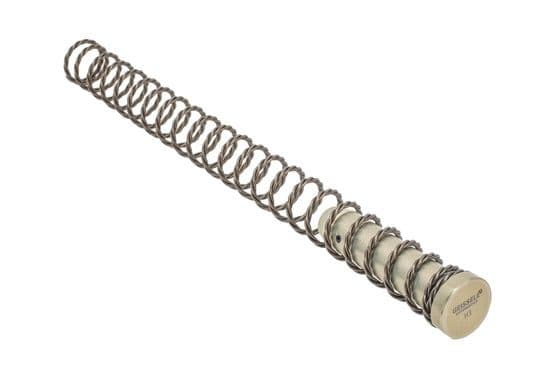
Premium Spring/Buffer - Braided wire spring eliminates fatigue under high round counts
Affiliate links - purchases support this site at no extra cost to you. (?)
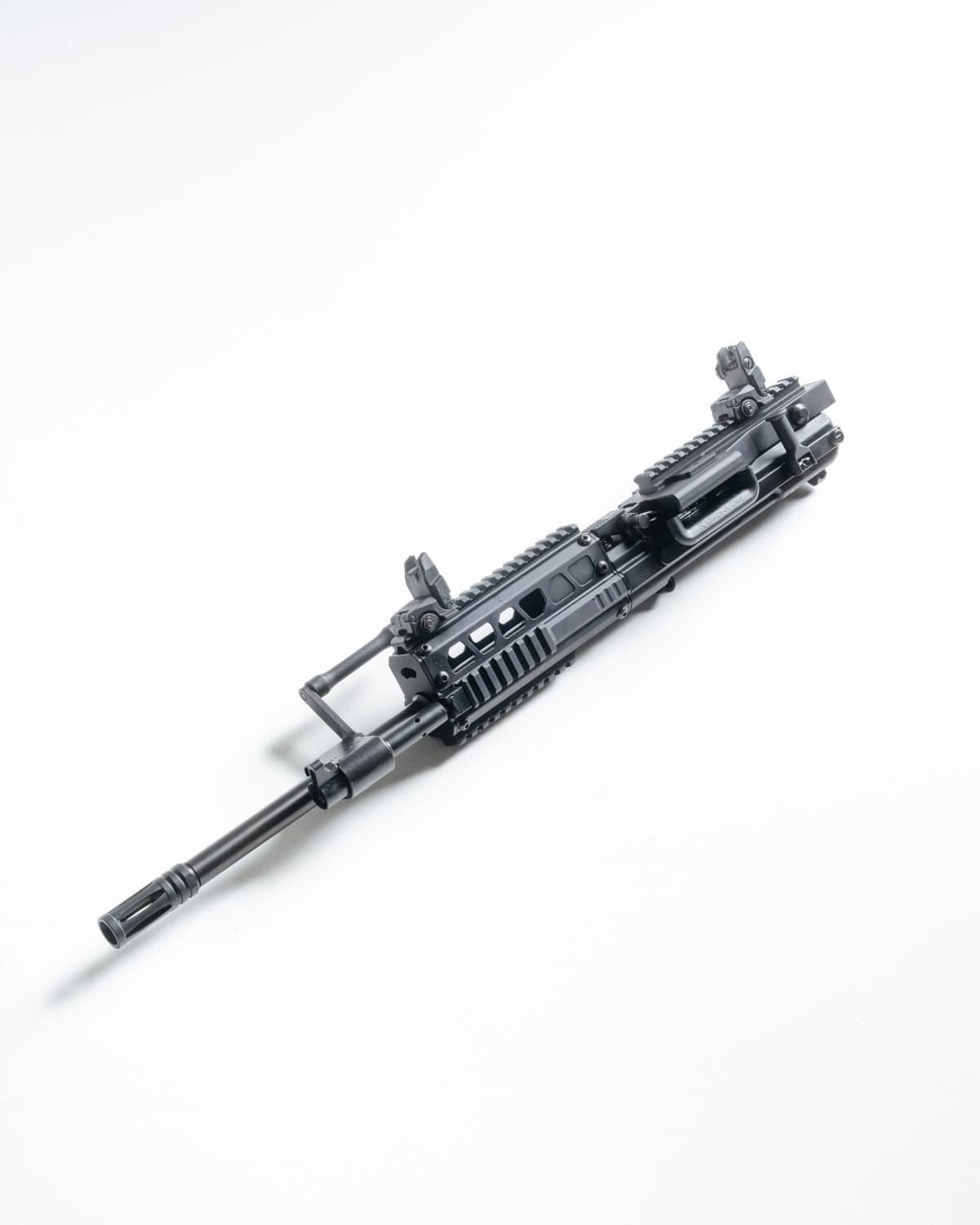
Choose the MFR56 when belt feed is the goal. Its 16-inch short-stroke-piston upper accepts M27-linked 5.56 or standard STANAG magazines. That is a different architecture from the magazine-fed IAR builds above, which keep the normal AR feed path and use their specific barrel and operating-system designs to manage heat.
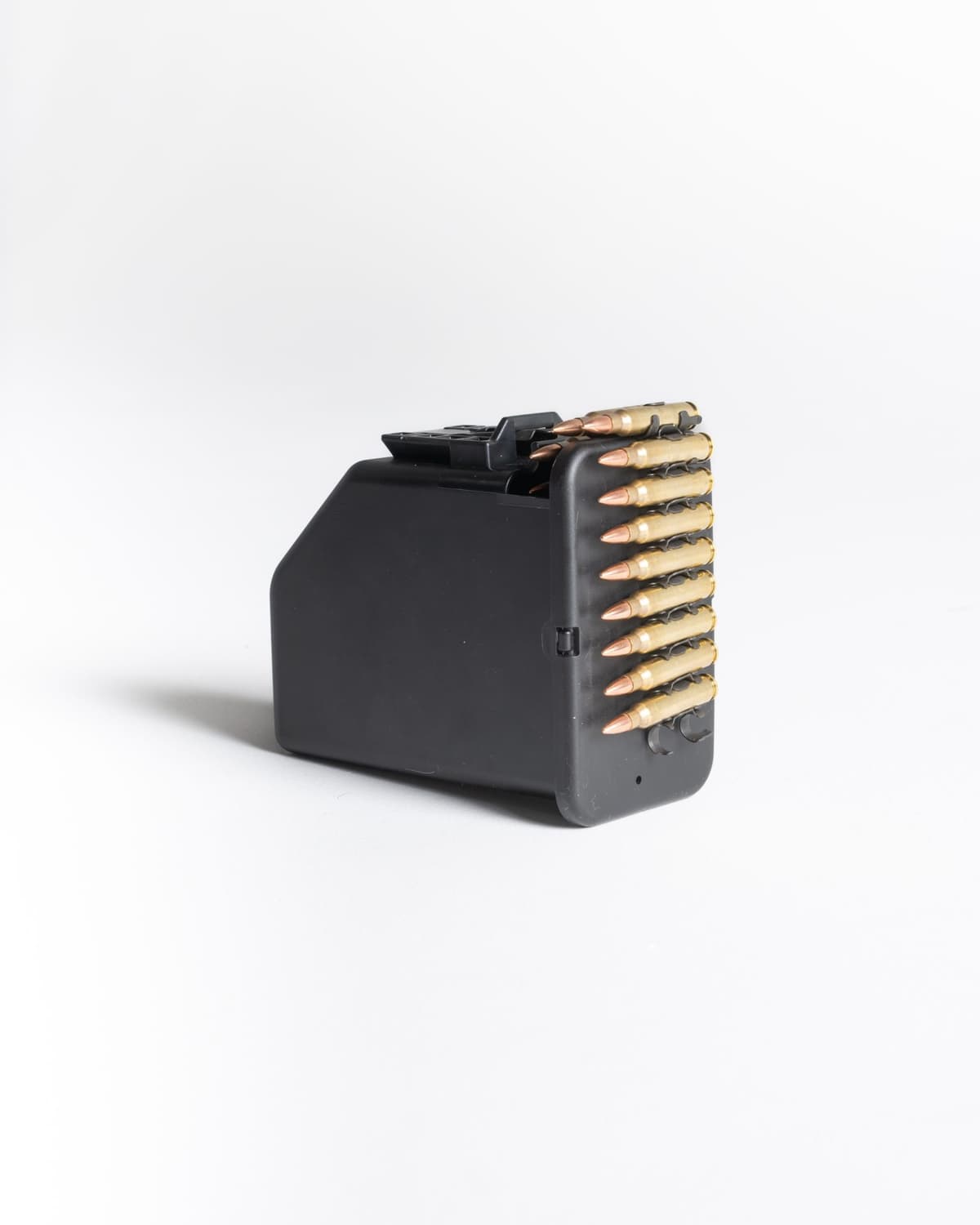
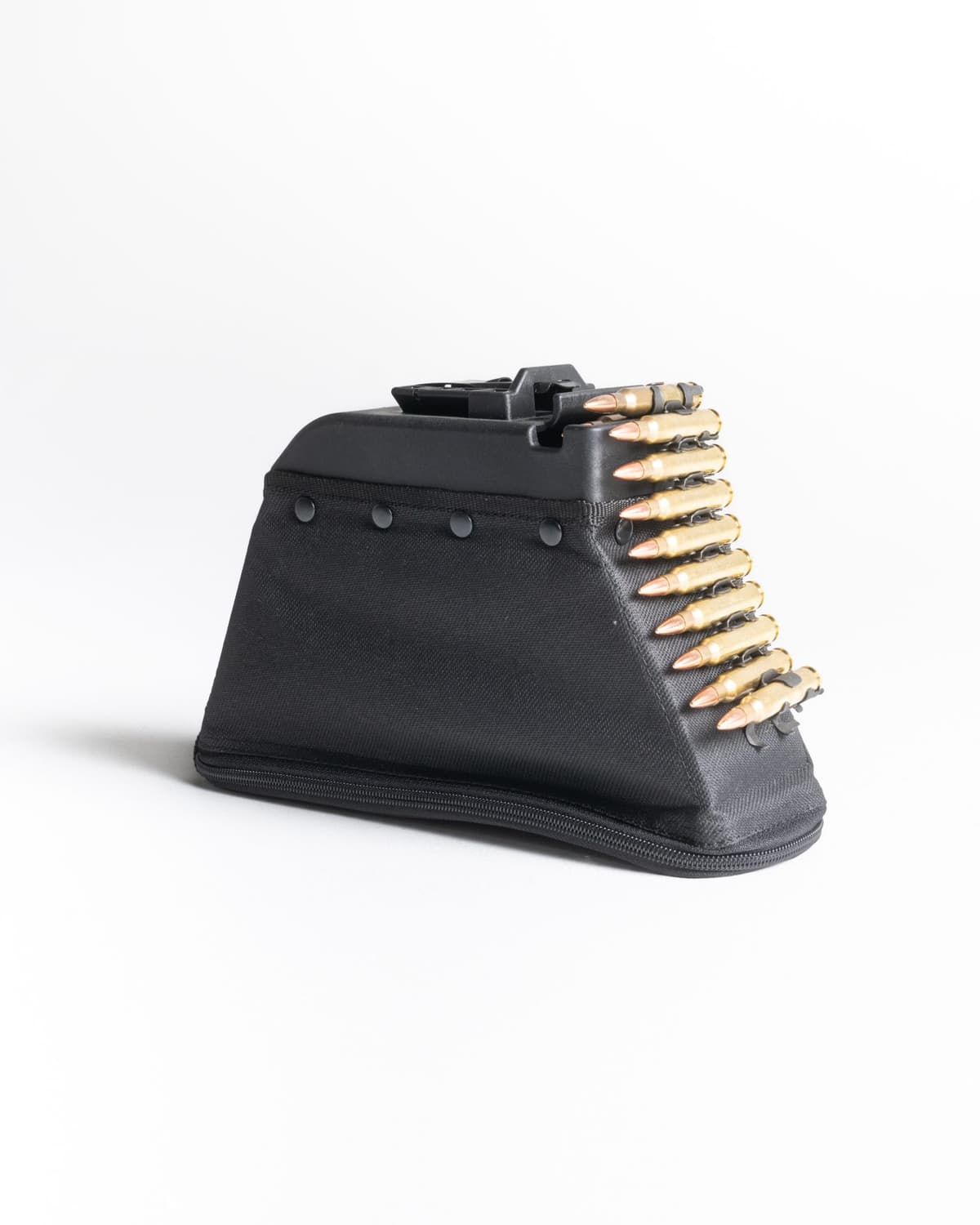
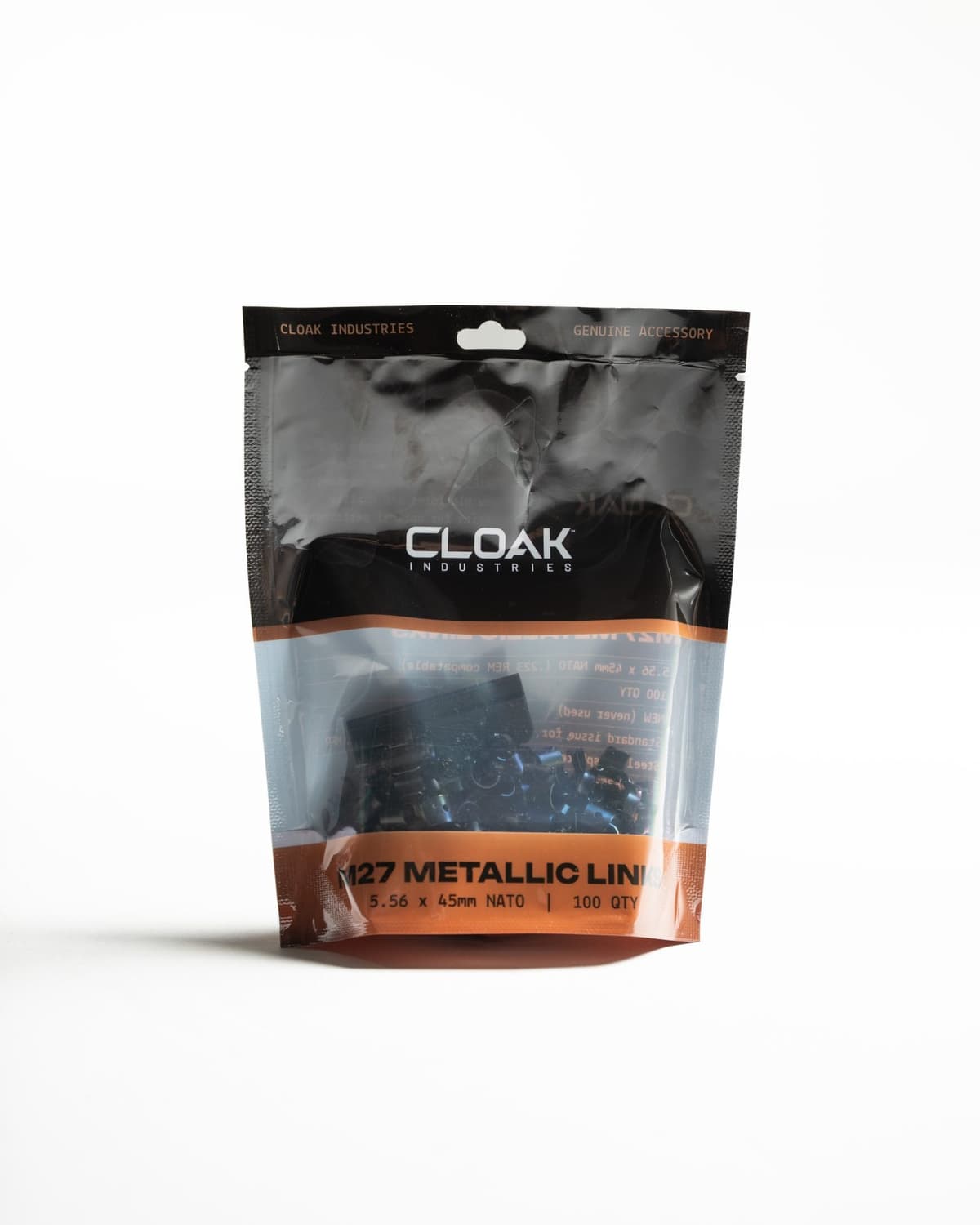
The upper bundle already includes one 100-round rigid container, 100 links with a starter tab, an H3 buffer and spring, and the required extended catches. The matching assisted-reset trigger uses MFR56-specific geometry. Read the belt-fed AR-15 guide for the full parts map, host checks, safety limits, and legal boundary.
FightLite's MCR and DFX belong to a separate belt-fed upper family with their own host and support requirements. Do not treat FightLite and MFR56 feed or fire-control parts as interchangeable. Read our FightLite DFX coverage for that architecture. Both belt-fed paths also sit outside the magazine-fed IAR builds used in the FAST Auto-Rifle division.
Affiliate links - purchases support this site at no extra cost to you. (?)
Treat the 100-round rigid container and extra M27 links as replacements because both come with the upper. The 150-round cloth container is the capacity choice. None of these feed parts creates belt-feed capability without the upper.
Affiliate links - purchases support this site at no extra cost to you. (?)
The M27 was fielded with the Trijicon Squad Day Optic (SU-258/PVQ), a fixed-magnification ACOG-type sight with a piggyback RMR, and the Corps later transitioned the fleet to the Squad Common Optic. For a civilian IAR clone, the practical setup is a holographic sight paired with a 3x magnifier. This combination works because the IAR role requires two different things from its optic: fast, wide-field-of-view target acquisition during suppressive fire (1x holographic), and positive target identification at extended range between suppression tasks (3x magnifier). An LPVO can do both, but the EOTech transitions faster and the 68 MOA ring is purpose-built for rapid engagement.
The ELCAN SpecterDR 1-4x is the other serious IAR optic. It switches between true 1x and true 4x with a throw lever, no zoom distortion, no loss of eye relief. The 4x gives you more reach than the G33's 3x, and the integrated design eliminates the two-item mounting problem. The tradeoff is weight (~24 oz) and price (~$2,500). If your IAR budget allows it, the SpecterDR is a direct upgrade over the EOTech + G33 combination.
Fixed prism optics are the budget play. The Primary Arms SLx 3x MicroPrism gives you a fixed 3x with an etched ACSS reticle for $350. No battery required for reticle visibility, works perfectly for shooters with astigmatism, and the compact footprint keeps weight down. You lose the 1x CQB capability of a holographic, but the wide eyebox and 3x magnification cover the IAR's primary engagement range of 100-300 meters. For a complete breakdown of optic categories, see our optic selection guide.
The IAR role consumes ammunition at a rate that changes your entire loadout calculation. At ~450 RPM with an FRS, a 30-round magazine empties in roughly 4 seconds. A D-60 drum lasts about 8 seconds. A realistic suppressive fire string, covering a team element's movement to the next position, requires 60-120 rounds depending on distance and duration.
A practical IAR combat load is two Magpul D-60 drums and four 30-round PMAGs, totaling 240 rounds. The D-60s go in dedicated drum pouches (Tactical Tailor makes one), and the PMAGs ride in standard triple-mag shingles. Brass Facts recommends the Agilite Reaper chest rig with expansion wings for the increased weight.
SureFire 60-round coffin magazines are an alternative to the D-60 for shooters who prefer a box magazine form factor. They fit standard mag pouches better than drums but are heavier per round. Magpul 40-round PMAGs split the difference between capacity and profile for follow-up magazines. For more on magazine selection, see our AR-15 magazine guide.
Suppressors and the IAR role are in tension. A suppressor increases backpressure, which accelerates heat buildup in the receiver and bolt carrier group. It also traps heat at the muzzle end of the barrel, which is already the hottest section during sustained fire. The result is a shorter timeline to cook-off and increased gas blowback into the shooter's face.
If you run a suppressor on your IAR, use a flow-through design like the Huxwrx Flow 556k rather than a traditional baffled can. Flow-through suppressors produce virtually no increase in bolt carrier velocity, which means you do not need to retune your buffer system or adjust your gas block when mounting the can. A conventional baffled suppressor increases backpressure significantly, which accelerates carrier speed, increases heat in the receiver, and worsens gas blowback into the shooter's face. With a flow-through design, your IAR runs the same suppressed as unsuppressed. See our suppressor compatibility guide for detailed tuning recommendations.
| Spec | Block 2 IAR | Hopsaw | Red Right Hand | FightLite MCR | MFR56 |
|---|---|---|---|---|---|
| Barrel | 14.5" SOCOM | 14.5"/16" CHF | 14.5" .850" BAR | See model specification | 16" CrMo, nitride |
| Gas System | DI Mid-Length | DI Mid-Length | SA Piston | Model-specific | Short-stroke piston |
| Rail | DD RIS II Quad | MI Combat Rail | MI Combat Rail | Integrated | Mil-Spec rail |
| Heat Mgmt | Passive (rail mass) | Passive (barrel mass) | Active (heat sinks) | Model-specific | Quick-change barrel |
| Feed | Magazine (60-rd drum) | Magazine (60-rd drum) | Magazine (60-rd drum) | Belt / Magazine | Belt / Magazine |
| Weight (Upper) | ~5.5 lbs | ~5.8 lbs | ~6.0 lbs | See model specification | 7.6 lbs |
| Parts List | ~$3,100 | ~$1,220 | ~$1,580 | Complete upper family | Core conversion package |
| All-In Build | ~$3,450 | ~$1,550 | ~$1,900 | Upper plus compatible lower | Upper plus compatible lower |
Parts list is the cost of components listed in this guide. All-in adds lower receiver (~$200), LPK (~$60), stock (~$50), and grip (~$25). Hopsaw all-in excludes optic. Suppressor not included in any total. Use our rifle builder to configure your IAR and price individual components.
Related Guides
Super Safety Guide - FRS mechanics, installation, tuning, and lower receiver compatibility.
Military Clone Builds - Period-correct Block II, MK18, URGI, and Spear LT parts lists.
FRT Buyer's Guide 2026 - Head-to-head comparison of Partisan Disruptor, Arc Fire, Atrius FRS, and Mars Super Safety.
Muzzle Device Guide - Flash hiders, comps, and brakes for sustained fire.
The two videos that inspired this guide. Hop covers heat management, barrel profiles, and the budget "Hopsaw" build. Brass Facts breaks down FRT employment tiers from general purpose rifle through belt-fed.
Video by Hoplopfheil - Barrel profiles, heat management, and the Hopsaw build.
Video by Brass Facts - FRT employment tiers, GPR to belt-fed capability stacking.

Avid shooter with 10+ years of experience including competition shooting, an associate member of the Professional Outdoor Media Association (POMA), and a member of the National Shooting Sports Foundation (NSSF) and Safari Club International (SCI). Built 10+ AR-pattern rifles and several handgun platforms for home defense, competition, and suppressed night shooting.
This page contains affiliate links. Purchases through these links support the site at no extra cost to you. Read the affiliate disclosure
Ready to continue? Here's the recommended next guide:
Complete parts lists for the 4 most iconic military clone builds: MK18 CQBR (10.3"), Block II SOPMOD (14.5"), URGI (14.5" & 10.3"), and SIG MCX Spear LT. Every component identified with prices, from KAC RAS and RIS II rails to Geissele MK16 and SSA-E trigger.
Continue exploring with these related resources
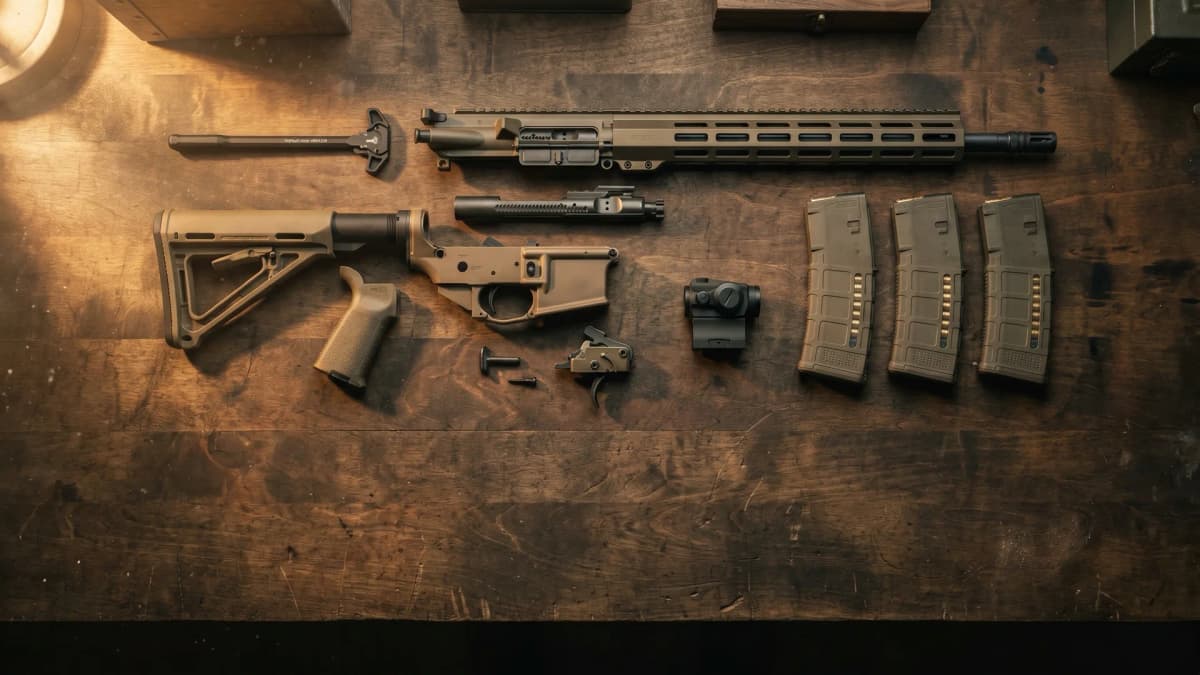
A single vetted mid-tier AR-15 build for the buyer stepping up from a budget rifle. Part-by-part picks for a ~$1,000-1,300 rifle that runs a class without babysitting, with a running cost tally, why each slot beats the budget pick, and a separate optic add-on tier.
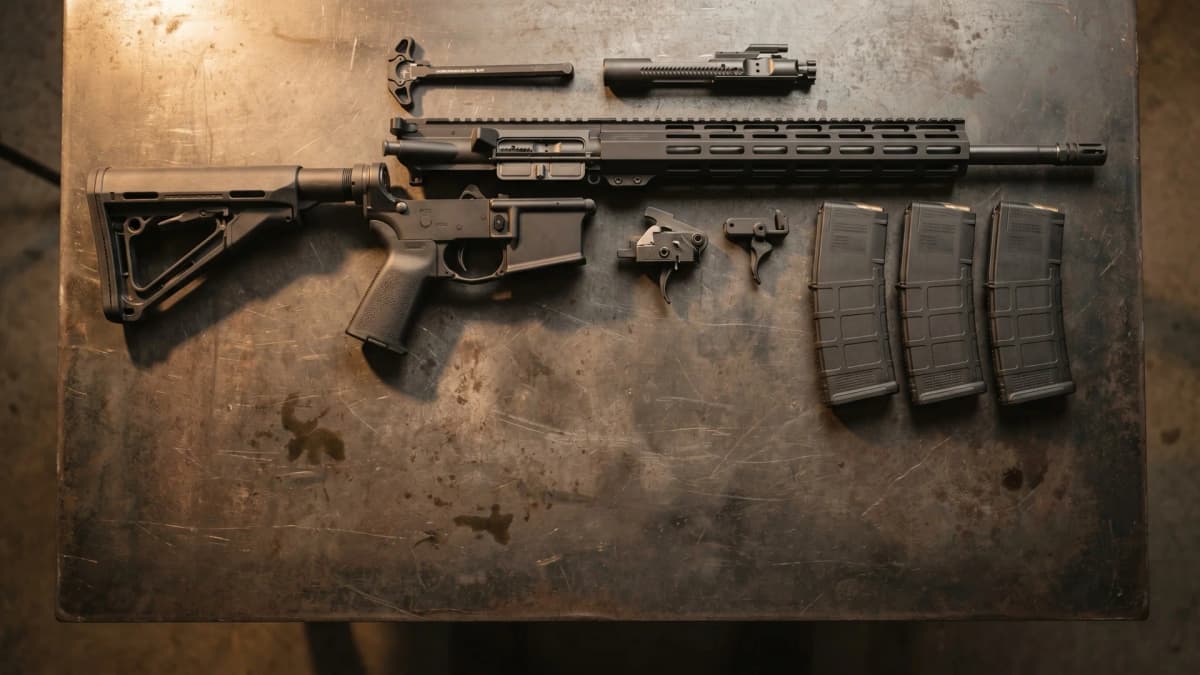
A single vetted upper-mid-tier AR-15 build, part by part. BCM complete lower and upper, Daniel Defense BCG, Geissele SSA-E trigger, and a Radian Raptor, with a running cost tally and a callout for where this tier stops short of full Gucci.
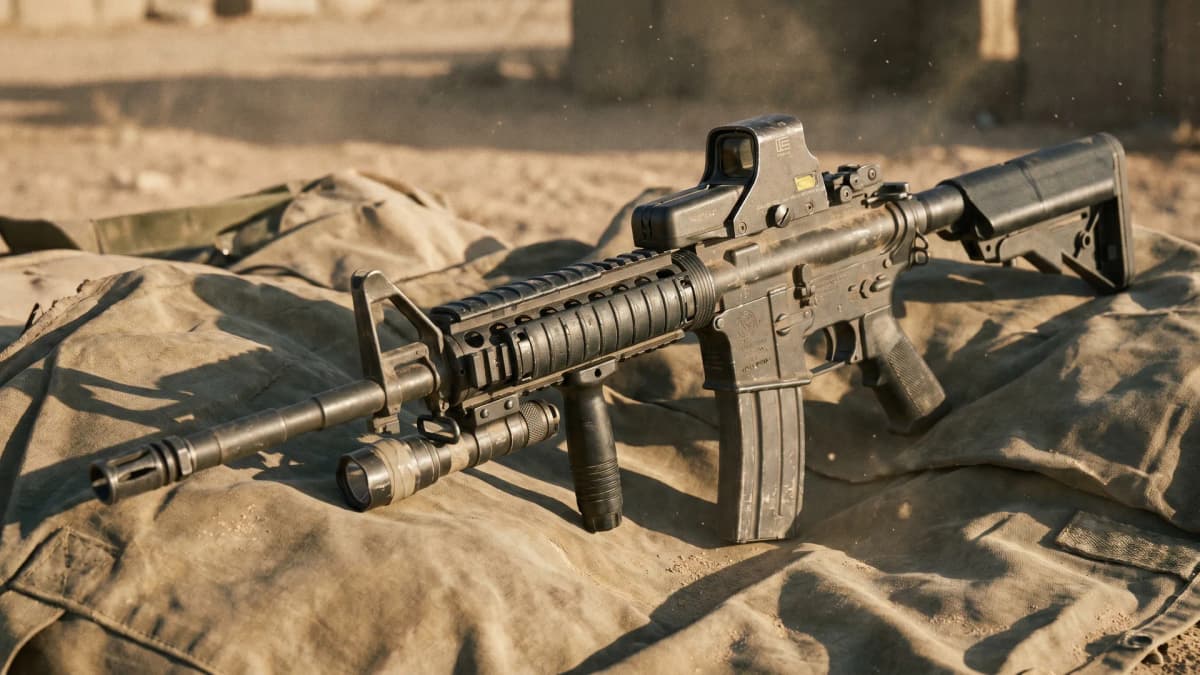
First-generation SOPMOD Block 1 M4A1 clone built two ways. The strict lane mirrors the early-2000s SOCOM kit part-for-part: the Knight's Armament M4 RAS two-piece quad rail (the visual tell that separates Block 1 from the later RIS II Block 2), the EOTech 552, the KAC broomstick vertical grip, and a crane SOPMOD stock. The practical lane stays clone-correct on the same SOPMOD-lineage brands you can buy in stock today, anchored on a BCM Standard 16-inch M4 SOCOM upper wearing a genuine KAC M4 RAS over a fixed front sight, the rail that keeps it a Block 1 and not a Block 2.
Related articles and industry updates
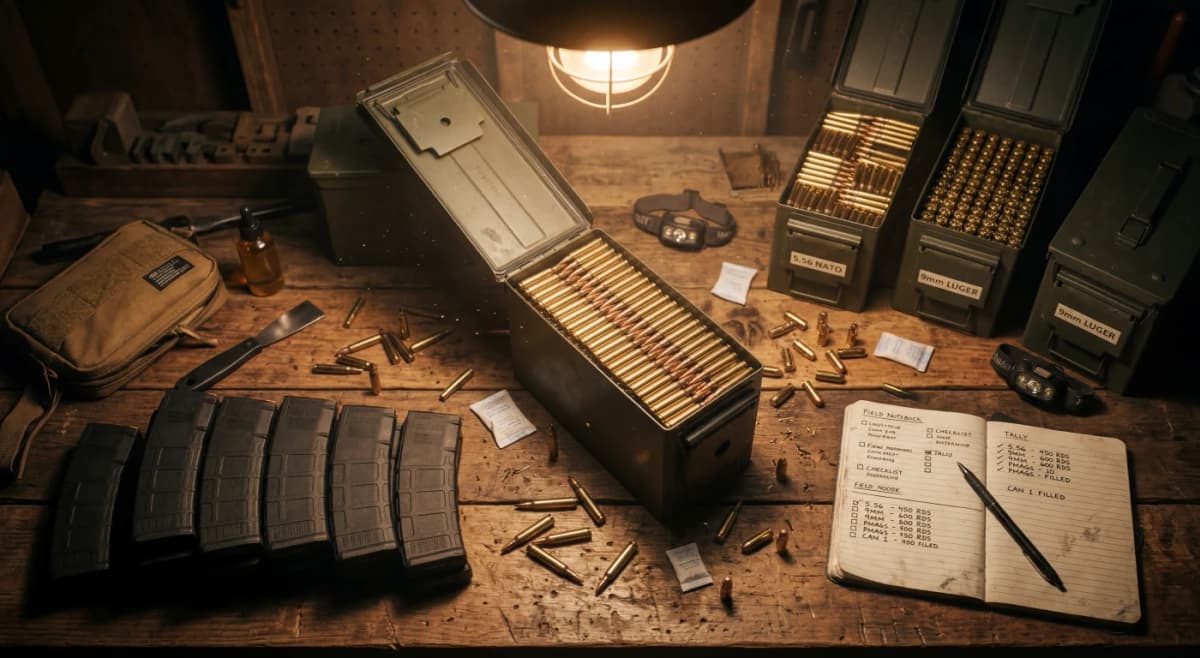
Oil infrastructure attacks, AI-driven semiconductor demand, and geopolitical instability are creating supply chain pressure on ammunition, optics, and emergency gear. Prioritized buying checklist: ammunition, magazines, optics, spare parts, and general emergency preparedness.
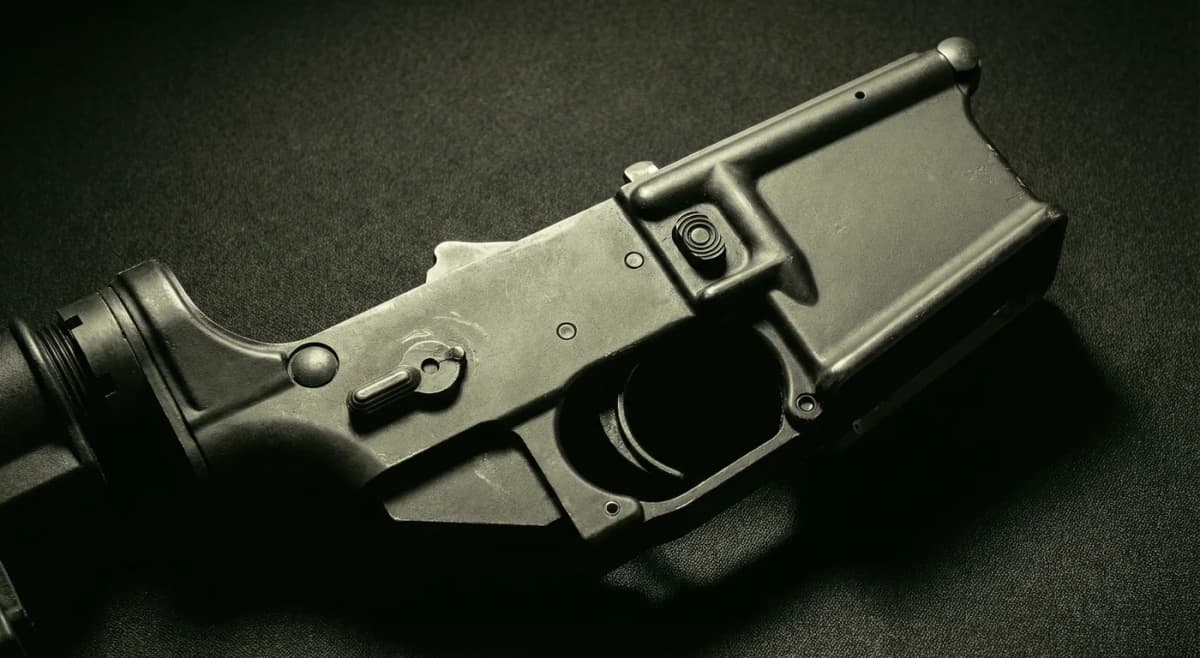
Which forced reset trigger fits your platform: a cross-platform router covering the AR-15, AK, MP5, Ruger PC and 10/22, FN PS90, Glock, Canik, and Taurus TX22, plus ranked AR-15 picks (Triggered Company Disruptor, Rare Breed FRT-15L3, Arc-Fire V2, Atrius FRS, Mars Super Safety). Pricing, legality, and which device fits your gun.
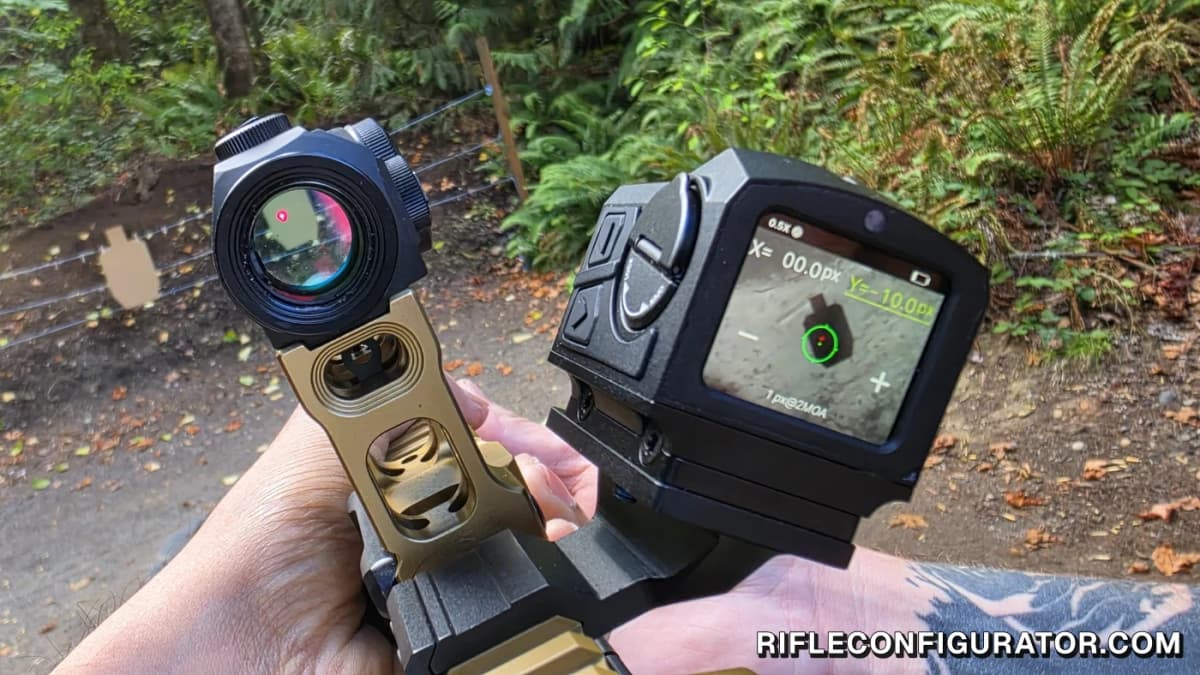
We ran the InfiTac FMP13 on a 45-degree offset beside a Holosun on a Unity FAST mount. The 256x192 mini thermal has an intuitive touchscreen and zeroed on plain cardboard, but the CR2 ran short of its 5-hour rating, so it belongs on an offset, not a pistol.