Labor Day gun deals are live through Monday. See the deals
Gun Room Ideas 2026: How to Build, Store, and Conceal header image
Gear
September 12, 2026
Gun Room Ideas 2026: How to Build, Store, and Conceal

A room-first plan for layout, gun walls, enclosed storage, humidity control, lighting, a cleaning bench, ammunition, alarms, and concealment.

[ < Back to guides ]
Buying guideStorageBeginner

Gun Room Ideas 2026: How to Build, Store, and Conceal

The gun room ideas that survive contact with a real house are the ones that start with the room, not the catalog. A gun room is five jobs sharing one space: locked storage, open wall storage, a place to clean, a place to keep ammunition dry, and the utilities that keep the other four working. Measure and zone the room first, then buy the wall system, the cabinet, and the humidity hardware that fit what you measured. This guide walks the room in that order, from layout and gun walls through lighting, a bench, ammunition, alarms, and hidden gun storage.

By AB|Last reviewed September 2026

Key Takeaways

  • Zone before you buy: five zones (secure storage, wall storage, maintenance, ammunition, utility), each assigned a wall or a corner before a single panel is ordered.
  • Gun wall starting point: the Tactical Walls ModWall 9 Gun Combo Pack ($595) carries five rifle and four pistol positions across two 22 x 48 inch panels.
  • Enclosed storage: the SecureIt Agile Model 52 Pro ($899) holds six long guns up to 51 inches bare, or 48.25 inches on the included stock bases, and ships knockdown with no published fire rating.
  • Humidity is two jobs: a room appliance removes water from the air in the space; the $35.95 Eva-Dry E-500 (500 cu ft) and the $52.19 Golden Rod (200 cu ft) are rated for enclosures, not for a 960 cubic foot room.
  • Concealment is a layer: the 1440 ModWall Hidden Gun Compartment ($595) recesses into a 16-inch-on-center wall and carries no published burglary or fire rating.

Plan the Room by Zone Before Buying Storage

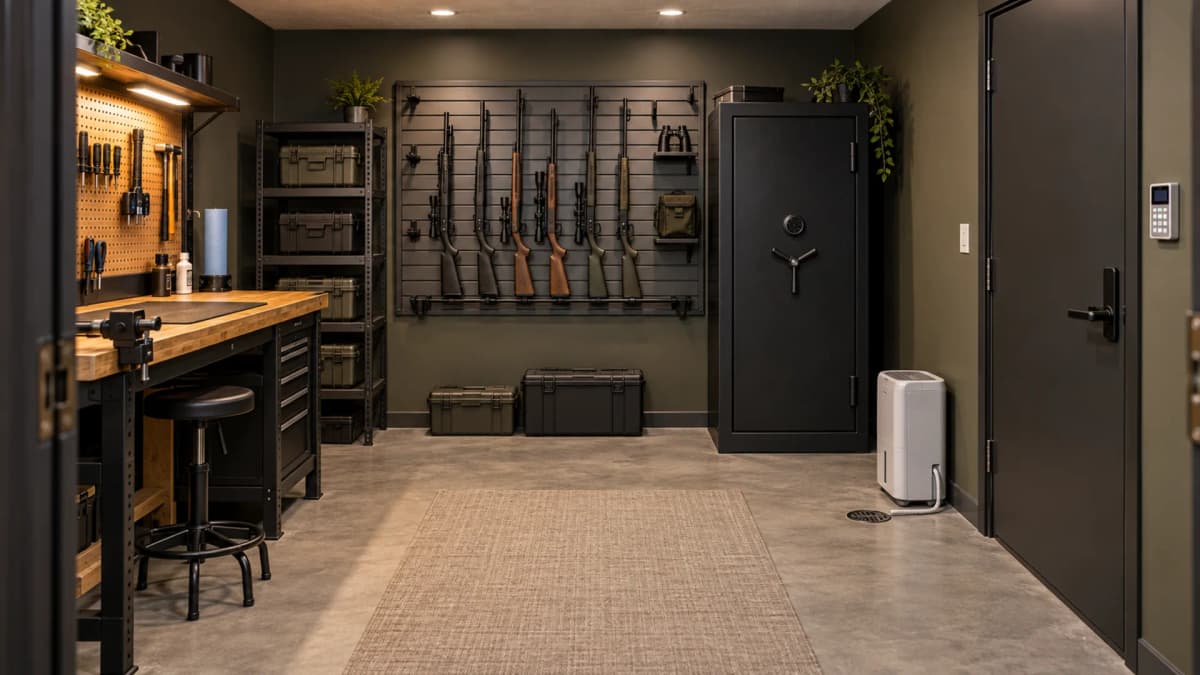
Assign every square foot of the room to one of five zones before you order anything: secure storage, open wall storage, maintenance, ammunition, and utility. The zone plan is what stops the two failures that force a second purchase, which are a cabinet that cannot open fully because the door swings into it, and a wall system ordered for a wall that turns out to be the one carrying the electrical panel.

Take five measurements first. Wall-by-wall clear length and ceiling height tell you what will physically fit. Door swing and the walking path tell you which wall is unusable. Stud locations tell you where a rack or a recessed cabinet can actually go, because both the ModWall racks and the 1440 recessed compartment are built around standard 16-inch-on-center framing. Outlet positions tell you where powered gear can live without a cord crossing the floor. Room volume, which is length times width times ceiling height, is the number the humidity plan runs on: a 10 by 12 foot room with an 8-foot ceiling is 960 cubic feet.

Floor construction decides where the heavy zones go, and this is a room decision rather than a per-product one. A concrete slab distributes a heavy point load more readily than a wood-framed floor, where capacity depends on joist size, span, and what sits underneath, so put the enclosed storage and the ammunition shelving against a wall and running across joists rather than in the middle of a span, and have a contractor check the load path before committing a heavy load to an upper floor. If the room is upstairs or in an apartment, that constraint alone will steer you toward a knockdown cabinet instead of a welded safe. For the safe-side version of this question, including anchoring and per-safe placement, see the gun safe buying guide.

  • Secure storage
    Enclosed cabinet or safe, the guns that stay locked
    Room requirementInterior wall, ground floor or a framed floor you have checked, an outlet within reach
    Plan aroundDoor swing and the clear space needed to open the cabinet fully
  • Open wall storage
    Gun wall panels, rifle racks, pistol hangers, support gear
    Room requirementA clear run of wall with studs on standard 16-inch centers
    Plan aroundOptic and light width, which eats horizontal space faster than the gun count suggests
  • Maintenance
    Bench, mat, cleaning chemicals, tools, parts trays
    Room requirementTask lighting, bench-height outlets, and a way to ventilate while you work
    Plan aroundKeeping solvents and the ammunition zone apart
  • Ammunition
    Sealed crates and cans, labeled by caliber and load
    Room requirementLow shelving over a floor that can take concentrated weight
    Plan aroundTotal shelf load, because ammunition is the densest thing in the room
  • Utility
    Room dehumidifier, hygrometer, alarm panel, spare power
    Room requirementA dedicated outlet and, for a room dehumidifier, a drain or an easy tank path
    Plan aroundCord routing, so nothing permanent runs on a daisy-chained extension cord

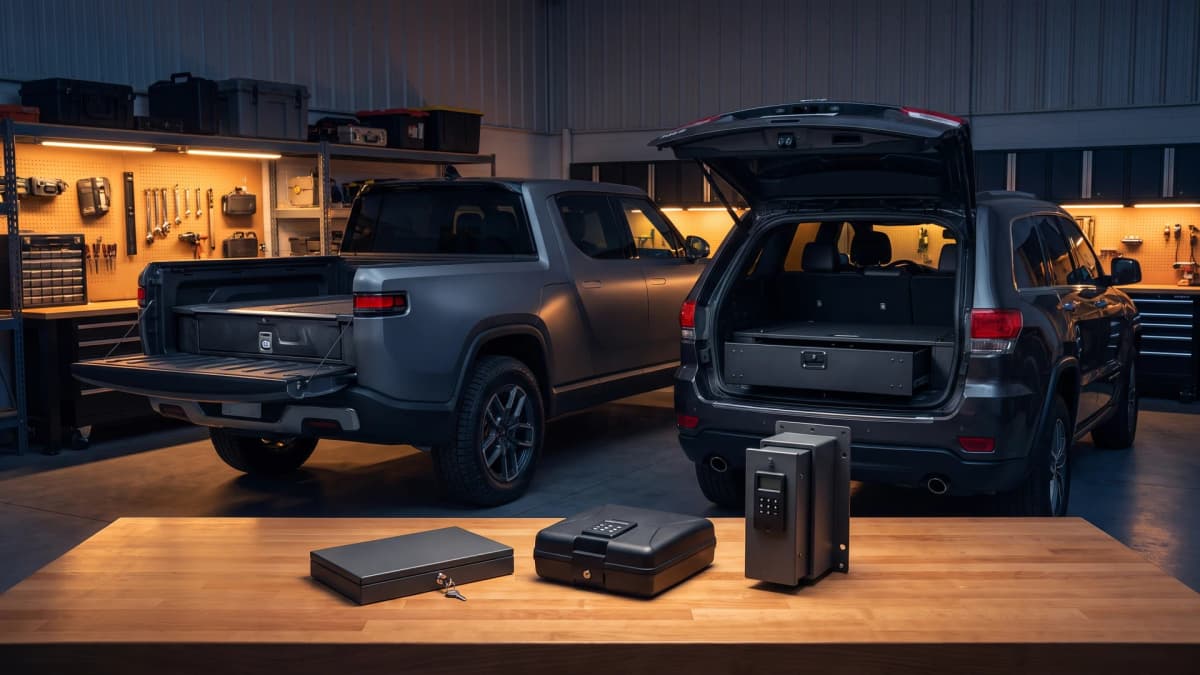
One zone belongs outside the room entirely. Transport cases live by the door you actually leave through, not on the gun room floor where they block a walking path, and vehicle storage is a separate problem with separate hardware. The rifle hard case guide covers what travels, and the car and truck gun safe guide covers what stays in the vehicle. Keeping both out of the room plan is what leaves floor space for the zones that earn it.

Gun Wall Systems and Rifle Racks

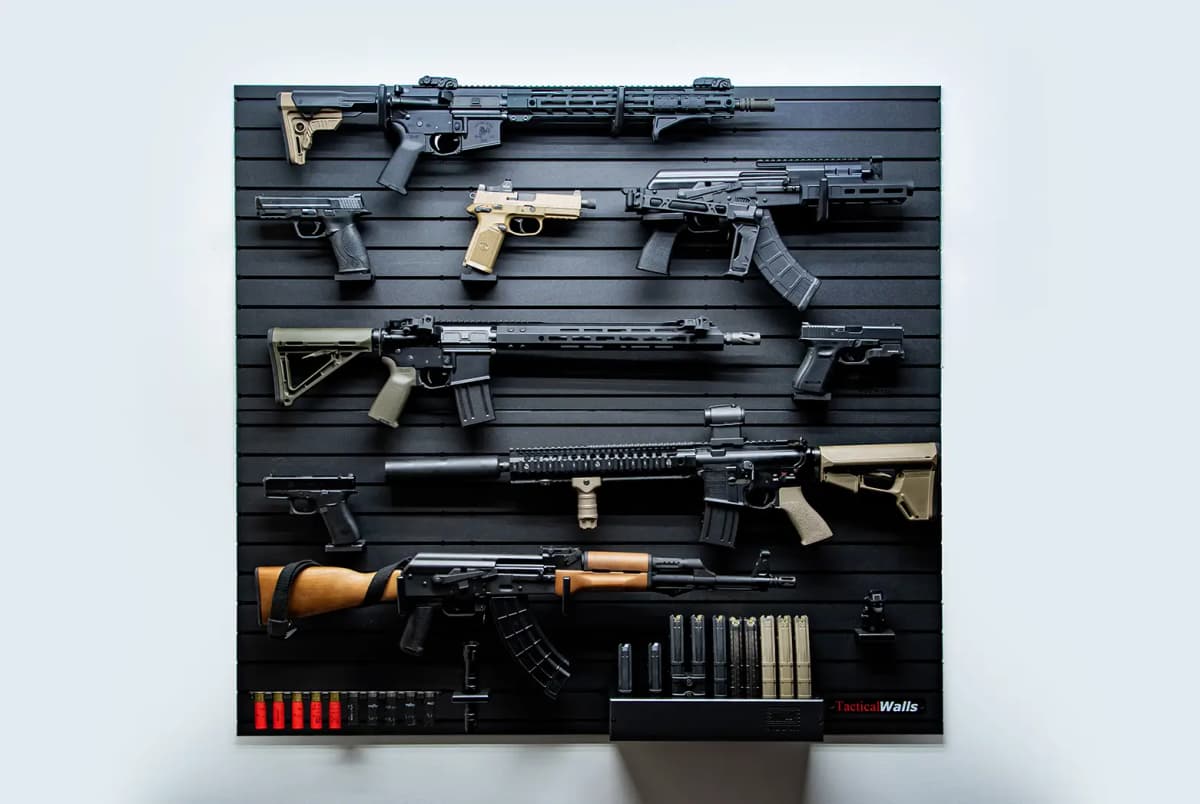
The Tactical Walls ModWall 9 Gun Combo Pack ($595) is the best starting point for a gun wall, because it arrives as a complete system: two 22 by 48 by 0.5 inch HDPE panels plus the hardware for five rifle and four pistol positions, a shelf, a shell holder, and two light holders. The panels are slotted, so accessories slide along the grooves and the layout changes as the collection changes. Buying a panel and then buying hangers one at a time is how a wall ends up half finished.

Be clear about what a gun wall is. It is organization and display, not containment. Nothing in a panel package locks on its own, and while Tactical Walls sells a magnetic ModWall Weapon Lock that pins one firearm by the trigger guard, that secures a gun rather than enclosing it, so the room around the wall still has to supply the access control. Plan capacity by width, not by gun count. A rifle with a wide scope, an offset light, and a sling takes noticeably more horizontal room than a bare one, so a nine-position package is nine positions, not nine guaranteed guns. Lay the rifles on the floor in the spacing you intend before you drill, and if you want to sanity-check how wide a build actually gets once the accessories are on it, spec it in the rifle builder first.

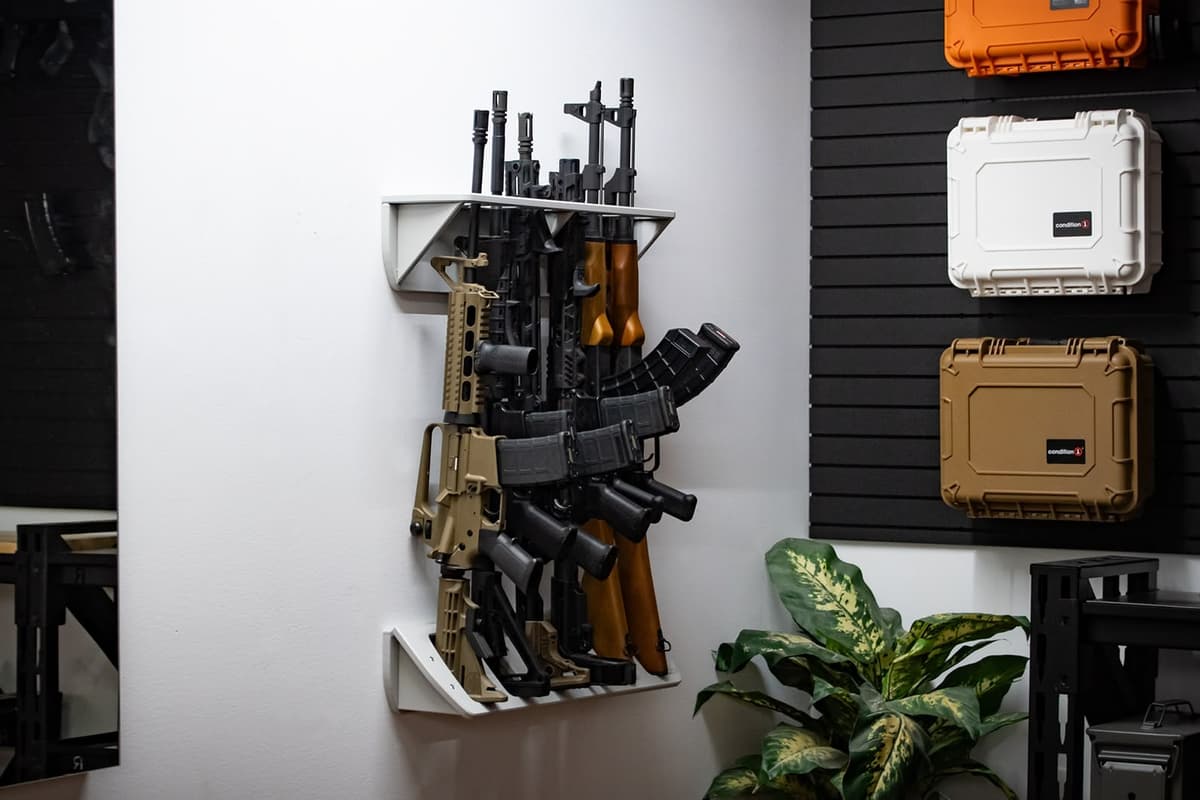
When the wall zone is narrow, the ModWall Vertical Six Rifle Rack ($155) does the same job in far less width, standing up to six long guns upright with stocks on the lower shelf and barrels passing through the upper shelf. The two shelves are separate pieces that mount independently. Tactical Walls instructs you to space the upper and lower shelf to fit your rifles' length and orientation, mount them, then optionally drive fixation screws so the rack cannot slide side to side. Both pieces carry fasteners 16 inches apart, so the rack drops onto ModWall panels or spans standard studs directly, which is the cheaper route into vertical storage when a full panel system is more than the room needs.

1

Tactical Walls ModWall 9 Gun Combo Pack

Best complete gun-wall starting package

$595
Shop at Tactical Walls
  • +Two half-inch HDPE panels create one adjustable wall system
  • +Included hardware provides positions for five rifles and four pistols
  • +Shelf, shell holder, and light holders organize support gear
  • Open display does not provide locked containment
  • Two 22in panels need roughly 44in of clear, stud-backed wall
  • Wide optics and side-mounted accessories can reduce practical capacity
2

Tactical Walls ModWall Vertical Six Rifle Rack

Best compact vertical long-gun rack

$155
Shop at Tactical Walls
  • +Stores up to six rifles or shotguns in a narrow wall zone
  • +Upper and lower shelves mount independently, so spacing is set to the stored long guns
  • +Can mount to ModWall or directly across standard wall studs
  • Rack provides no lock or enclosure
  • Direct mounting depends on suitable stud placement
  • Six positions may not all clear bulky mounted accessories
3

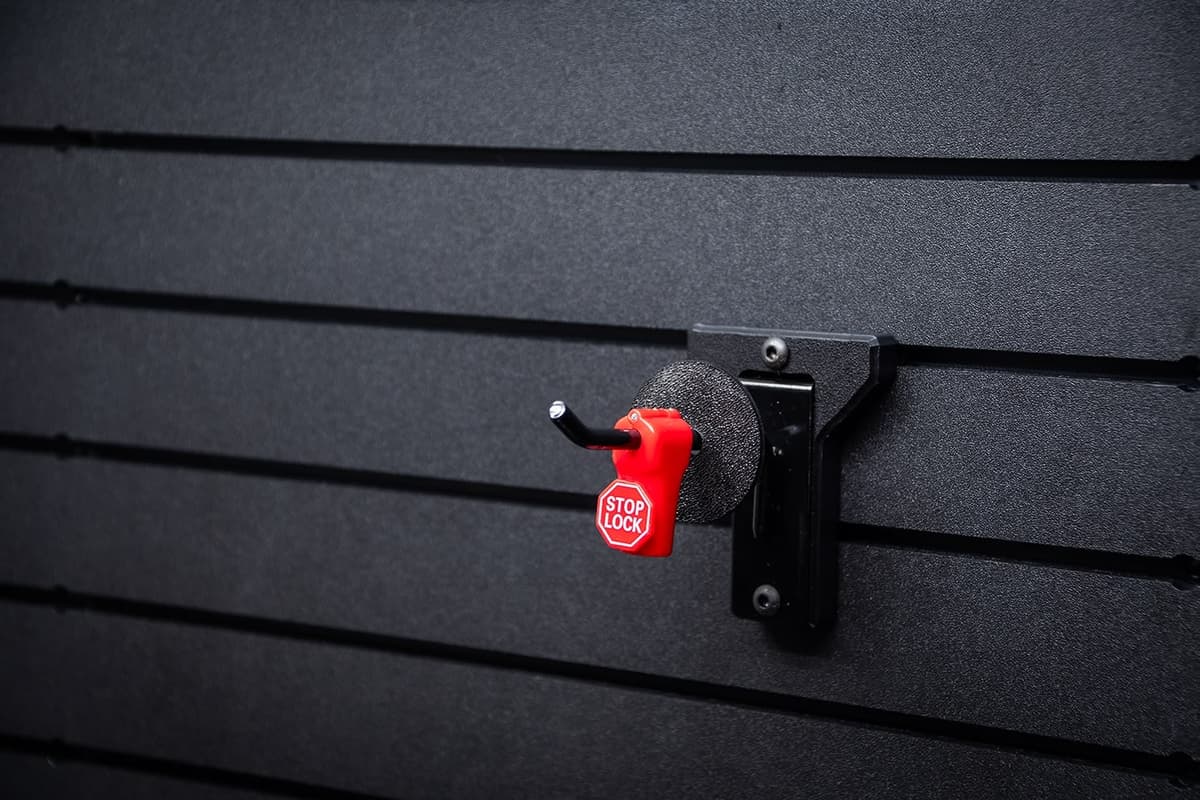
Tactical Walls ModWall Magnetic Weapon Lock

Best way to secure individual guns on an open wall

$20
Shop at Tactical Walls
  • +Adds per-firearm security to a panel that otherwise only displays
  • +One magnetic key opens every lock on the wall
  • +Fits rifles, shotguns, and handguns on the same hook
  • Secures a firearm without enclosing or concealing it
  • Needs a ModWall panel rather than a bare wall
  • A magnetic key stored near the wall defeats the lock

Prices and availability change; verify current pricing at the retailer.

Affiliate links - purchases support this site at no extra cost to you. (?)

Size Enclosed Storage to the Collection

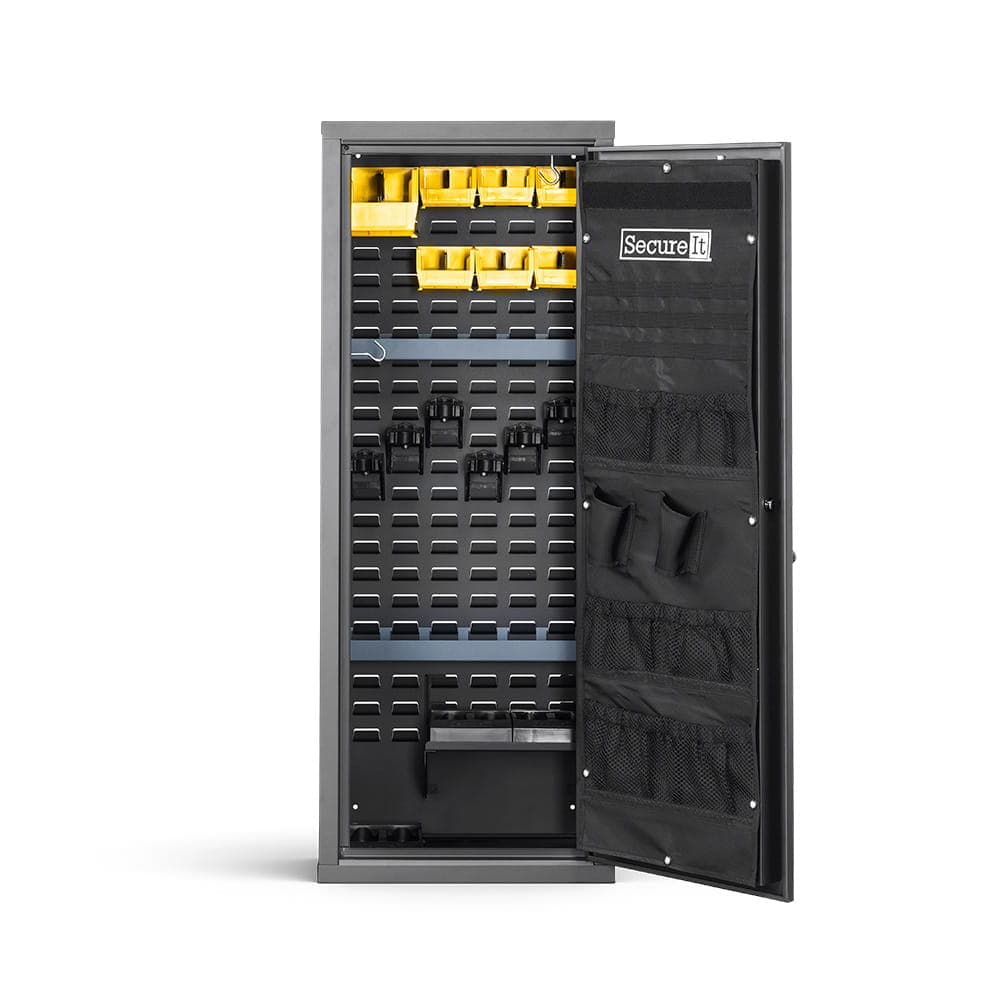
For a gun room whose rifles run optics, the SecureIt Agile Model 52 Pro ($899) is the enclosed-storage pick: six long guns up to 51 inches bare, or 48.25 inches on the included stock bases. Its CradleGrid modular interior lets each rifle sit where its own optic, light, and laser clear the one beside it. It ships knockdown and assembles in place, so it goes into rooms that a welded body cannot reach, and the Pro package adds bins, a shelf, and an interior light. SecureIt publishes no fire rating for it; this is a security cabinet, not a heavy fire safe.

Three more questions decide which enclosure you buy. Whether you need a fire rating, and what the temperature and duration numbers on one actually mean, is covered in the fire-rating section of the rifle safe guide. How far a rated gun count drops once glass and lights go on is worked through in why a 24-gun safe holds far fewer AR-15s. Which lock belongs on the door, biometric against keypad against mechanical, is compared in the lock-type breakdown in the handgun safe guide. The room answers are the two above: how the cabinet gets in, and whether the floor can take it once loaded.

Size the enclosure to the guns that must stay locked, not to the whole collection. In a room that already has a controlled door and a wall system, the cabinet holds the firearms that should be inaccessible when you are not in the room, and the wall holds the rest. That split is what keeps a six-gun cabinet adequate in a room with twenty guns in it, and it is the reason the room plan has to come before the cabinet order rather than after.

SecureIt Agile Model 52 Pro
1

SecureIt Agile Model 52 Pro

Best modular enclosed rifle storage for a gun room

$899

The best modular rifle storage for AR-15s with optics, lights, and lasers mounted. The CradleGrid interior adapts to any gun shape, and its light knockdown build fits apartments and upstairs rooms that a full-size safe cannot.

6 long guns: 51in bare, 48.25in with stock basesNo fire ratingCradleGrid modular interiorKeypad + fingerprint lock
Pros
  • +CradleGrid interior built specifically for optic-mounted rifles
  • +Light enough for apartments and upstairs rooms
  • +Pro bundle includes bins, shelf, and LED lighting
Cons
  • No fire rating; it is a security cabinet, not a fire safe
  • Gets tight with all six rifles plus the full accessory kit
  • SecureIt does not publish a steel gauge for the Agile line

Get Home Storage and Gun Room Build Guides

New storage system breakdowns, wall and rack layouts, safe and cabinet rankings, and room build-out guides, sent when they publish.

Free targets, drill cards, and weekly reviews by email.

Control Room Humidity and Safe Humidity Separately

Hold the room below 50 percent relative humidity, and measure it with a hygrometer instead of guessing, because a closed room with no supply air drifts away from the rest of the house without anyone noticing. Room humidity and enclosure humidity are two separate jobs with two separate pieces of hardware. Buy only the enclosure unit and the room itself stays uncontrolled, which is what rusts the guns that are not in the cabinet.

The room job belongs to the building. Start with air movement: if the room has an HVAC supply register and a return path, keep both open and stop closing the door on a sealed box. A room with no conditioned air, a basement room especially, needs a standalone dehumidifier sized off the appliance's published pints-per-day rating for the room's square footage and dampness level, and it needs somewhere for the water to go. A unit with a gravity drain to a floor drain or a condensate pump runs unattended; a tank-only unit runs until the tank fills and then stops, which in practice means it protects the room only as often as you remember to empty it. Put the hygrometer on the opposite side of the room from the dehumidifier so you are reading the room rather than the appliance.

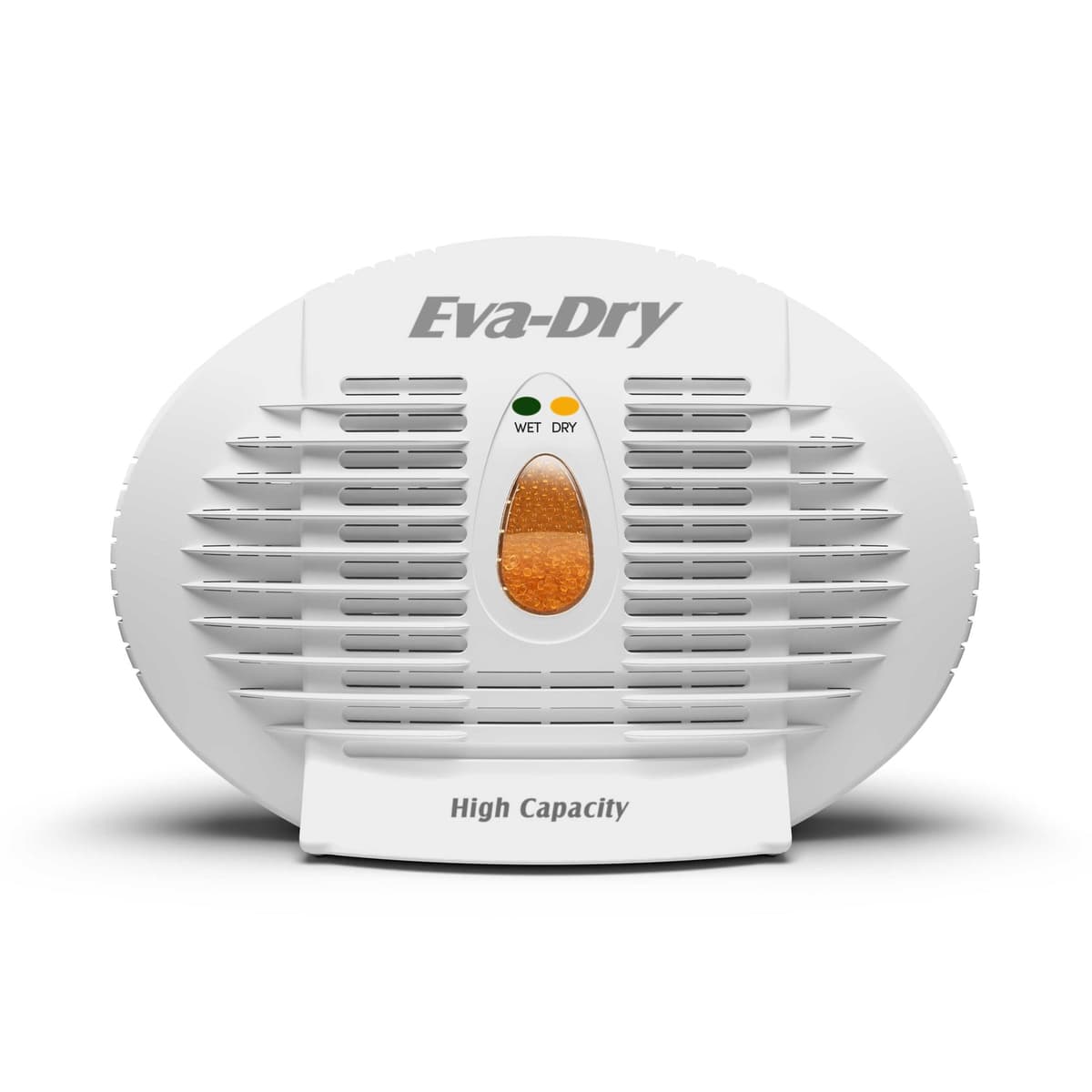
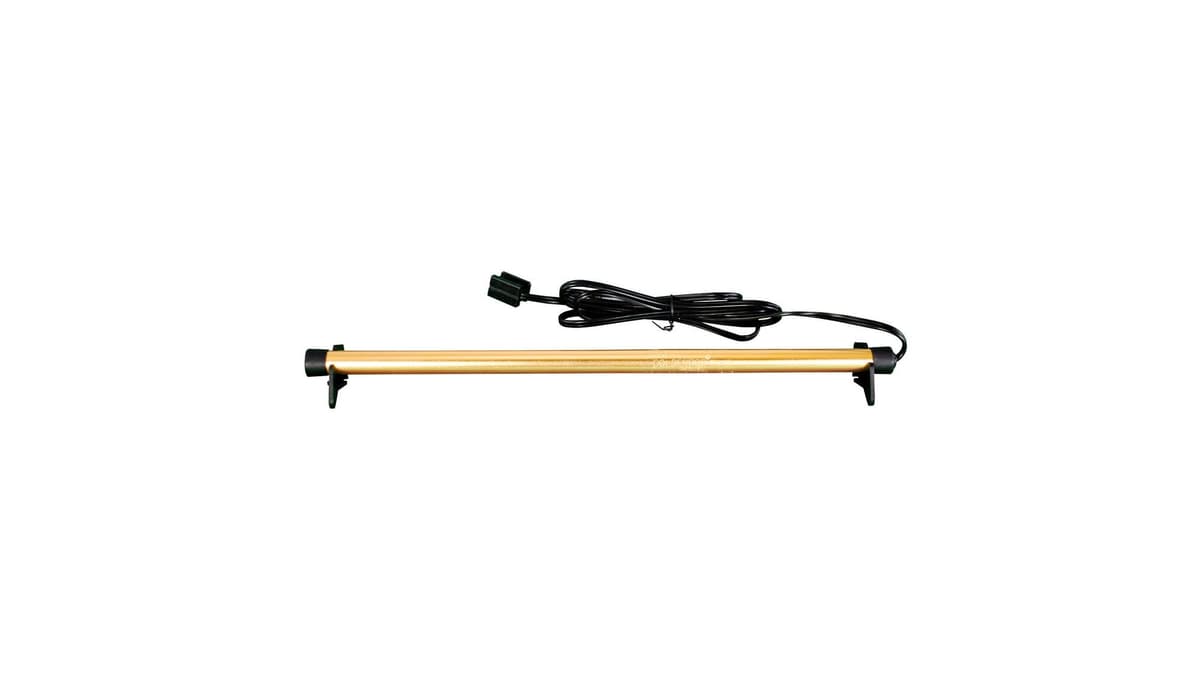
The enclosure job is separate and smaller. The Eva-Dry E-500 ($35.95) is the cordless option: it sits inside a safe, cabinet, or closet up to 500 cubic feet on renewable silica gel, the beads change color when it is saturated, and it leaves the enclosure for a 10 to 12 hour plug-in recharge. Its rated coverage assumes an enclosed or lightly ventilated space. The 18-inch Lockdown Golden Rod ($52.19) is the powered option: it stays in the enclosure, warms the air enough to promote convection, runs continuously with no recharge cycle, and is rated for enclosures up to 200 cubic feet. It needs an outlet and a safe cable path, and it does not remove collected water from the room.

Run the volume math and the division of labor becomes obvious. That 960 cubic foot room is nearly twice the E-500's 500 cubic foot enclosure rating and almost five times the Golden Rod's 200. Both products publish their coverage for an enclosure, so neither is the room's dehumidifier, and neither one saves a room whose ambient humidity is climbing. Put the room appliance on the utility zone's outlet, put the enclosure unit inside the cabinet, and check the hygrometer on the same schedule you check the beads.

Eva-Dry E-500 Renewable Dehumidifier1
Up to 500 cu ft · cordless silica gel

Eva-Dry E-500 Renewable Dehumidifier

Best cordless humidity control for an enclosure
  • Up to 500 cu ft
  • Cordless renewable silica gel
  • 10 to 12 hour plug-in recharge
$35.95Catalog
View at Amazon
18in heated rod · up to 200 cu ft

Lockdown Golden Rod Dehumidifier Rod, 18in

Best continuous humidity control inside a powered safe
  • 18in heated rod
  • Up to 200 cu ft
  • Item 725731
$52.19Catalog
View at OpticsPlanet

Affiliate links - purchases support this site at no extra cost to you. (?)

Layer the Door, Alarm, Cameras, and Access Rules

The room's security is the door first, the alarm second, and the rules about who holds keys and codes third. A gun room is a delay layer around the storage inside it, so the goal is buying time and generating an alert, not building a vault.

Upgrade the door before anything else, because a hollow-core interior door defeats every dollar spent behind it. A solid-core door in a properly shimmed frame, hung on a hinge side that cannot be pinned from the hallway, with a strike plate screwed through the jamb into the framing rather than into trim, is the single cheapest improvement in the whole build. If the room has a window, it is now part of the perimeter and gets the same attention as the door.

For the alarm, a contact sensor on the room door plus a motion sensor inside covers the two ways in; add a glass-break sensor if there is a window. Monitoring matters more than sensor count, because an unmonitored siren only works if someone is home to hear it. Aim a camera at the door and the approach rather than at the guns, since the useful footage is who came in and when, and a camera pointed at an open gun wall is an inventory list if the feed is ever exposed. This is the same layered-response thinking behind an AR-15 home defense setup: detect early, delay entry, keep the response options open.

Write the access rules down, because an undefined rule is the one that gets broken. List who is allowed in the room, who has the door key or code, who has the cabinet combination, and where the physical keys live. Keys and magnetic release keys never live in the room they open, and a magnetic key in a kitchen drawer is not an access plan. Review the list whenever the household changes, because a code that four people know is not a code.

Plan Lighting, Outlets, and Backup Power

A gun room needs three lighting layers: bright overhead light for the whole room, dedicated task light at the bench, and light aimed at the wall system from in front of it. That third layer is what makes a gun wall readable: overhead light behind a rack throws every racked rifle into its own shadow, so the fixture has to sit in front of the panel or on a shelf within it.

Task light at the bench is a different requirement from room light. You are looking for carbon, copper fouling, burrs, and small parts on a dark mat, and a single ceiling fixture puts your own head between the light and the work. Put a neutral white fixture directly over the bench surface, close enough that it lights the work rather than the room.

Outlets follow the zone plan. The utility zone needs a dedicated, reachable outlet for the room dehumidifier, sited so the cord does not cross a walking path. The secure-storage zone needs an outlet within reach of the cabinet if a powered dehumidifier rod is going inside it, since the Golden Rod is mains powered and its cord has to enter the enclosure through a safe path. The bench needs outlets at bench height, not at floor level behind the bench. Nothing permanent should live on a daisy-chained extension cord.

Plan for the power being out. Keep a light in the room that does not depend on house power, confirm the alarm panel has battery backup, and know which of your locks still open without electricity. An electronic lock with no mechanical override and a dead battery turns a well-planned room into a closed box.

Build a Cleaning and Workbench Zone

Give cleaning its own surface, its own light, and its own ventilation, and keep it out of the ammunition zone. A bench that doubles as a staging table is where parts get lost and solvents get spilled on primers.

The bench needs to be deep enough for a full-length rifle mat and stable enough that a vise does not walk. Set the top at standing height so you are over the work rather than looking across it, and put a lipped tray or a parts bin at the back to catch detents and springs before they reach the floor. Chemicals go in a closed cabinet under the bench, not on an open shelf above it, and they go nowhere near stored ammunition.

Ventilation is the part the humidity plan complicates. Solvents want air exchange, and a sealed, dehumidified room is the opposite of air exchange, so plan to open the door or a window while you work rather than treating the dehumidifier as ventilation. It does not remove solvent vapor. Build the bench kit around what you actually clean; the gun cleaning kit guide covers rods, jags, solvents, and mats, and the AR-15 cleaning guide covers the procedure the bench exists to support.

One rule governs the bench: firearms arrive at it cleared, and ammunition stays in its own zone while the bench is in use. That separation is the reason the ammunition zone gets its own shelving in the zone plan rather than sharing the bench top.

Keep Ammunition Dry, Labeled, and Load-Aware

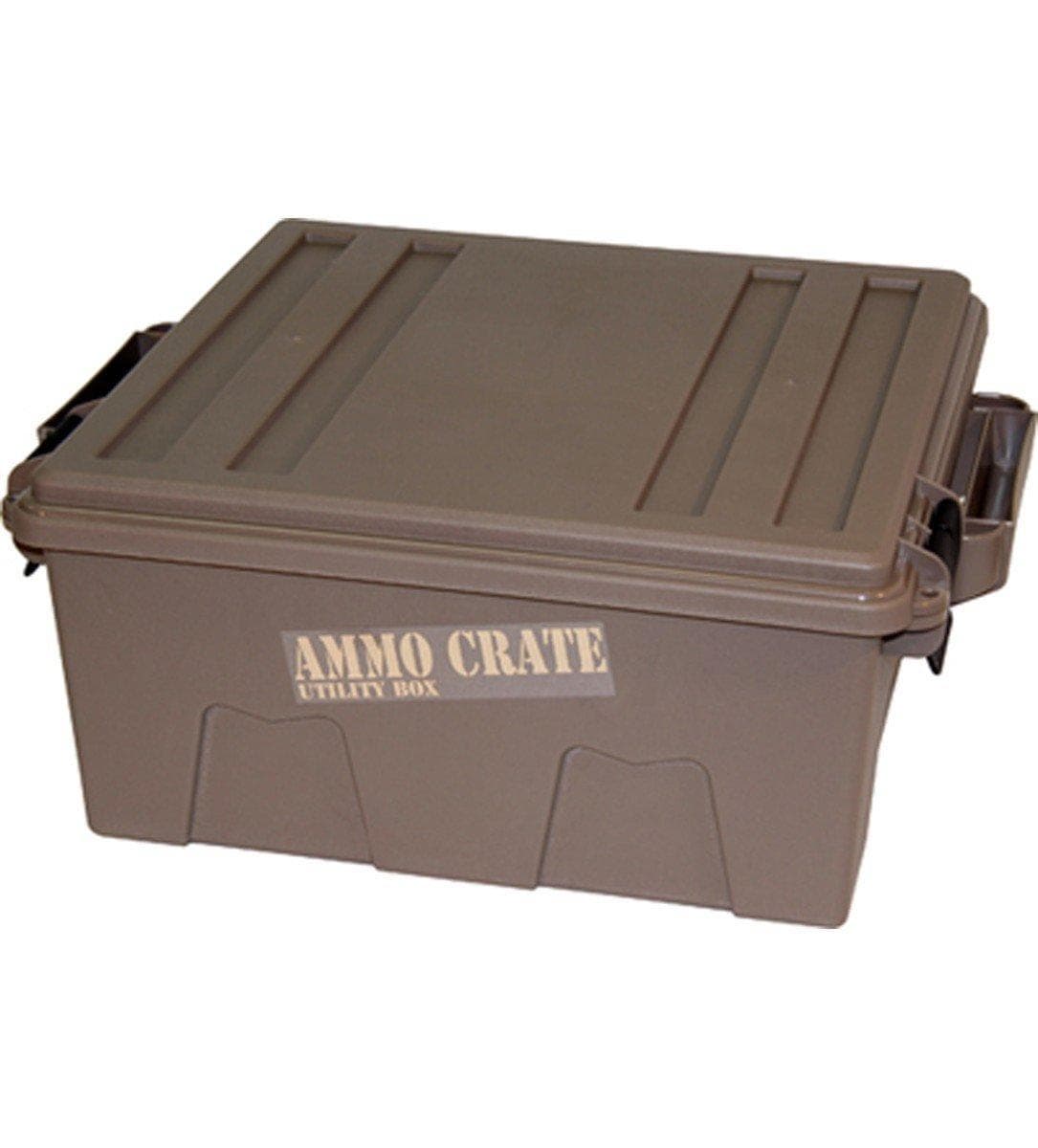
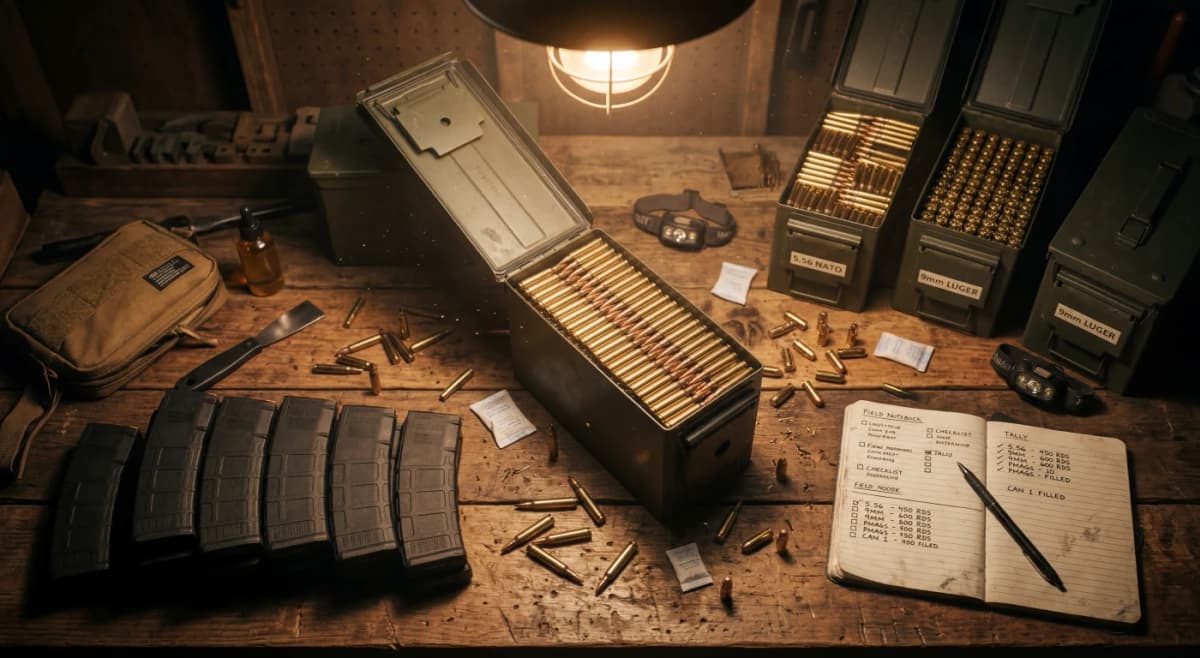
For bulk ammunition on a gun room shelf, the MTM ACR8-72 Ammo Crate ($37.49) is the container to standardize on: a 14 by 13.5 by 7.25 inch interior behind a tongue-and-groove O-ring seal, two handles rated to carry up to 85 pounds, and molded ridges that let crates stack on a shelf without walking. One crate consolidates what would otherwise be a row of individual cans.

Label every container on the outside with caliber, bullet weight, load, and the date it went on the shelf, then pull from the oldest first. An unlabeled sealed crate is a crate you have to open to inventory, which defeats the seal, and a room with four calibers in identical boxes is a room where the wrong box comes to the range. Keep the practice ammunition and the defense or match ammunition in separate, clearly marked containers.

Ammunition is the densest thing in the room, so treat the shelf as a load problem. Keep crates low, put the shelving against a wall rather than in the middle of a floor span, and spread the load across several shelves instead of stacking one column to the ceiling. The crate's padlock tabs deter casual handling; they are not the protection a locked ammunition cabinet provides, so if access control over ammunition matters in your household, that is a cabinet decision rather than a container decision.

MTM ACR8-72 Ammo Crate Utility Box1
14 x 13.5 x 7.25in interior · O-ring seal

MTM ACR8-72 Ammo Crate Utility Box

Best sealed bulk-ammo container for shelving

Bulk dry storage on a different scale. A 14 x 13.5 x 7.25 in interior with an O-ring seal and twin handles rated to carry up to 85 pounds of ammo or gear.

  • 14 x 13.5 x 7.25in interior
  • Tongue-and-groove O-ring seal
  • Up to 85lb carry rating
$33.79$37.49Save 10%In Stockat Optics Planet
View at OpticsPlanet

Affiliate links - purchases support this site at no extra cost to you. (?)

Use Concealment as One Layer, Not the Whole Plan

Hidden gun storage buys time against someone who does not know the room, and nothing more. Concealment furniture carries no published burglary or fire rating, so it belongs on top of a controlled door and enclosed storage, never in place of them. Used that way it is genuinely useful: what is not visible is not a target.

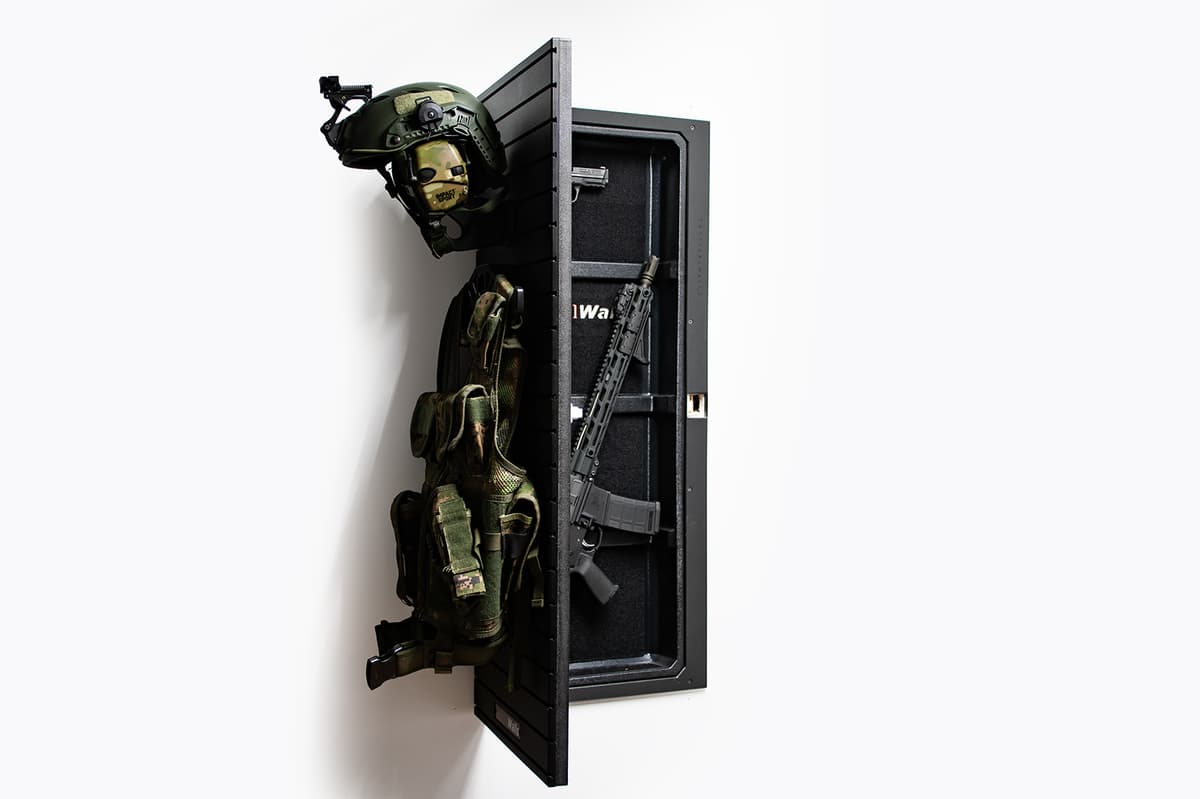
The Tactical Walls 1440 ModWall Hidden Gun Compartment ($595) is the configurable version of the idea. It measures 19.25 by 44 by 1.75 inches closed, recesses into standard 16-inch-on-center framing so it takes no floor space, and closes behind a plain face. Inside, a US-sourced HDPE ModWall panel accepts movable racks and holders, so the interior can be rebuilt around whatever it holds, and the compartment is sold in Basic, Armor, Rifle, and Pistol interior packages. Left- and right-hinge options mean the door can open the way the room actually allows, and a magnetic key releases the retention system.

Two things decide whether it works in your room. The first is the wall: a recessed cabinet needs a suitable cavity between studs, so anything carrying plumbing or a run of electrical is out, and an insulated exterior wall means reframing or moving insulation rather than a simple cut-in. Confirm cavity depth and what runs inside the wall before ordering, not after. The second is the key. Magnetic-key access needs its own household plan, because a magnetic key left on the shelf beside the compartment is a compartment that is only hidden from people who are not looking. Store the key elsewhere, and keep the access list from the security section current.

19.25 x 44 x 1.75in closed · 16in-on-center fit

Tactical Walls 1440 ModWall Hidden Gun Compartment

Best configurable hidden wall compartment

A between-stud concealment cabinet with a ModWall interior, left- or right-hinge options, and magnetic-key access.

  • 19.25 x 44 x 1.75in closed
  • Standard 16in-on-center wall fit
  • Basic, Armor, Rifle, and Pistol packages
$595.00Catalog
Shop at Tactical Walls

Affiliate links - purchases support this site at no extra cost to you. (?)

Build the Room in Safe, Useful Phases

Build the room in four phases, and start with the phase that costs the least. Phase one is the door, the access rules, a hygrometer, and better light, because every one of those makes the room safer before a single storage product arrives and none of them is wasted money later.

Phase two is enclosed storage and the humidity hardware that goes with it: the SecureIt Agile Model 52 Pro ($899) with an Eva-Dry E-500 ($35.95) inside it, or the 18-inch Golden Rod ($52.19) if the cabinet has a power path. This is the phase that answers "what has to be locked," and it is where the largest single expense in most builds lands.

Phase three is the wall system and the bench, which is where the room starts working as a room. The budget route is the ModWall Vertical Six Rifle Rack ($155) mounted straight to studs plus an MTM ACR8-72 Ammo Crate ($37.49) on existing shelving; the complete route is the ModWall 9 Gun Combo Pack ($595) across a dedicated wall. Starting narrow does not strand the purchase, because the Vertical Six mounts onto ModWall panels as readily as it spans bare studs, so it moves onto the wall system later.

Phase four is concealment and alarm expansion: the 1440 ModWall Hidden Gun Compartment ($595), additional sensors, monitoring, and cameras. It is last because it is the layer that adds the least when the first three phases are missing, and the most when they are done. If you want to price the parts side of a build while you plan the room, the component catalog carries current pricing on the storage and support gear in this guide.

Frequently Asked Questions

What are the essential items for a gun room?
Start with controlled access, storage matched to the collection, room-level humidity monitoring, clear lighting, sealed ammunition storage, and a separate cleaning surface. A solid-core door with a reinforced strike plate, a SecureIt Agile Model 52 Pro or similar enclosed cabinet, a hygrometer, an Eva-Dry E-500 inside the cabinet, and an MTM ACR8-72 Ammo Crate cover all six. Display walls, cameras, and concealment come after those basics, not before.
How to design a gun room?
Measure the room, door swing, stud locations, outlets, drains, and walking paths first, then divide the space into five zones: secure storage, open wall storage, maintenance, ammunition, and utility. Assign each zone a wall or a corner so one task does not block another, and confirm the wall you want for a gun wall has studs on standard 16-inch centers before ordering panels. Buying storage before measuring is what forces a second purchase.
What are some budget-friendly ideas for a gun room?
Improve the door and the access rules first, because both cost less than any storage purchase. Then add bright task lighting, reuse sturdy shelving you already own, and start with one compact rack such as the Tactical Walls ModWall Vertical Six Rifle Rack plus a sealed MTM ACR8-72 Ammo Crate for bulk ammunition. Expand into a full panel wall, an enclosed cabinet, and a workbench as the collection grows.
How much does a gun vault room cost?
The total depends on the existing room, door and framing work, electrical changes, climate control, alarm coverage, and the storage system, so price it by zone rather than as one number. Hardware inside the room is the predictable part, because a Tactical Walls ModWall 9 Gun Combo Pack, a SecureIt Agile Model 52 Pro, and the humidity and ammunition gear all carry published prices you can add up before you start. Structural, electrical, and security work needs local quotes before you set a final budget.
Do I need a dehumidifier in a gun room or just in the safe?
Both, because they do different jobs. A room dehumidifier removes water from the air in the whole space and needs a tank or a drain; an in-safe unit such as the Eva-Dry E-500 conditions up to 500 cubic feet of enclosed volume and the 18-inch Lockdown Golden Rod covers up to 200 cubic feet inside a powered safe. A typical 10 by 12 foot room with 8-foot ceilings is 960 cubic feet, which is larger than either enclosure rating, so an in-safe unit alone leaves the room uncontrolled.

The Verdict

Zone the room, fix the door, then buy the wall system and the cabinet that fit what you measured.

A gun room is a layout problem before it is a shopping problem. Measure the walls, the studs, the outlets, and the room volume; assign the five zones; upgrade the door and write down who has access. Then the hardware choices get easy: the ModWall 9 Gun Combo Pack for an open wall, the SecureIt Agile Model 52 Pro for what has to stay locked, a room dehumidifier plus an enclosure unit for moisture, sealed crates for ammunition, and the 1440 compartment as a final layer. For the storage decisions this guide deliberately hands off, the rifle safe guide and the gun safe buying guide rank the safes themselves.