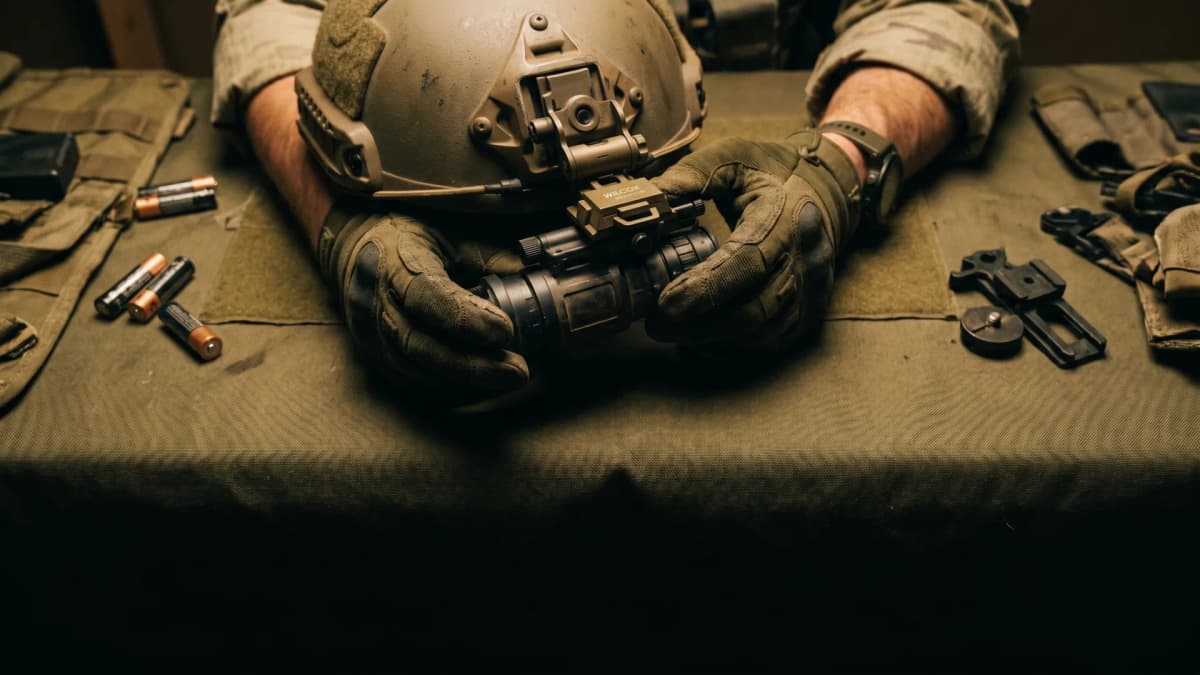
Best PVS-14 Night Vision Monocular 2026
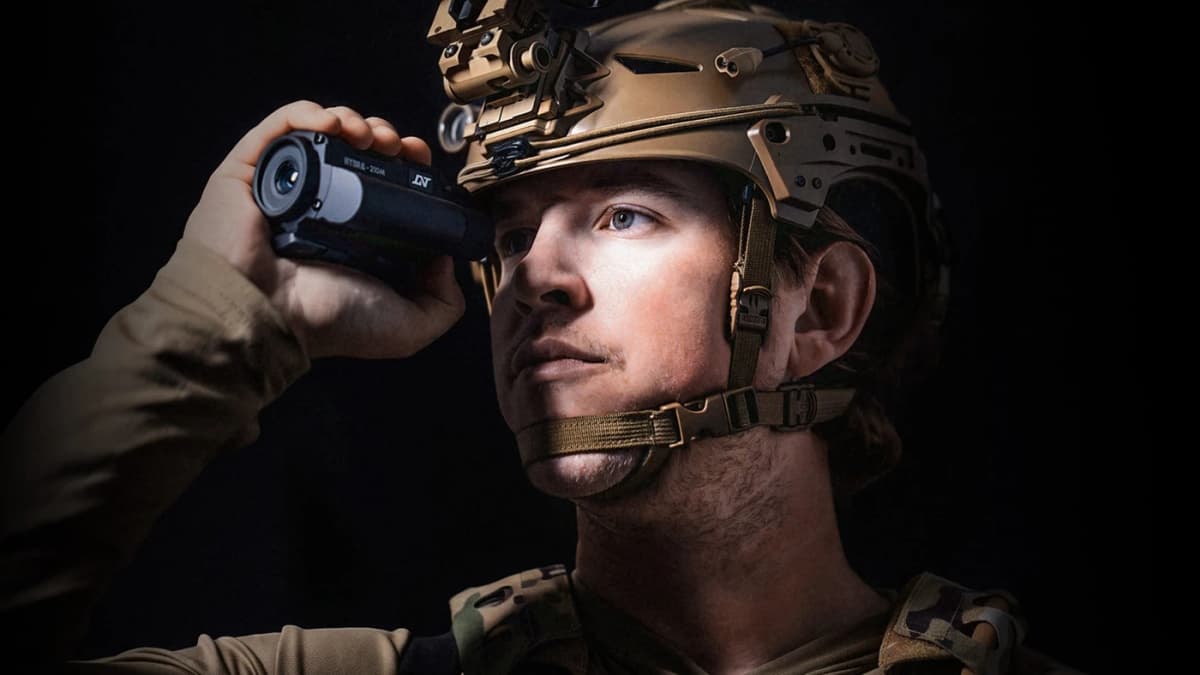
The PVS-14 is one of the most common night vision monoculars on the civilian market, and almost every buyer overpays for the wrong tube spec. This guide ranks eight current-production PVS-14s by tier: AGM Gen 2+ at $2,720.58, AGM Gen 3 autogated at $2,895, white phosphor under $3,500, and L3 unfilmed at $4,999. It tells you which one fits a real budget without wasting money on a tube grade the use case does not justify, what FOM threshold actually matters in field use, and which housing differences are real versus marketing.
For a digital day/night riflescope instead of a helmet monocular, our digital night vision scope buying guide compares native view, display resolution, batteries, and included infrared equipment.
Top PVS-14 Picks for 2026
Eight current-production PVS-14 units ranked by tube spec, autogating, phosphor, and verified FOM. The Licentia 24UA is the floor on a PVS-14 worth building serious helmet and mount hardware around; the AGM NL2 is the cheapest legitimate entry into the form factor.
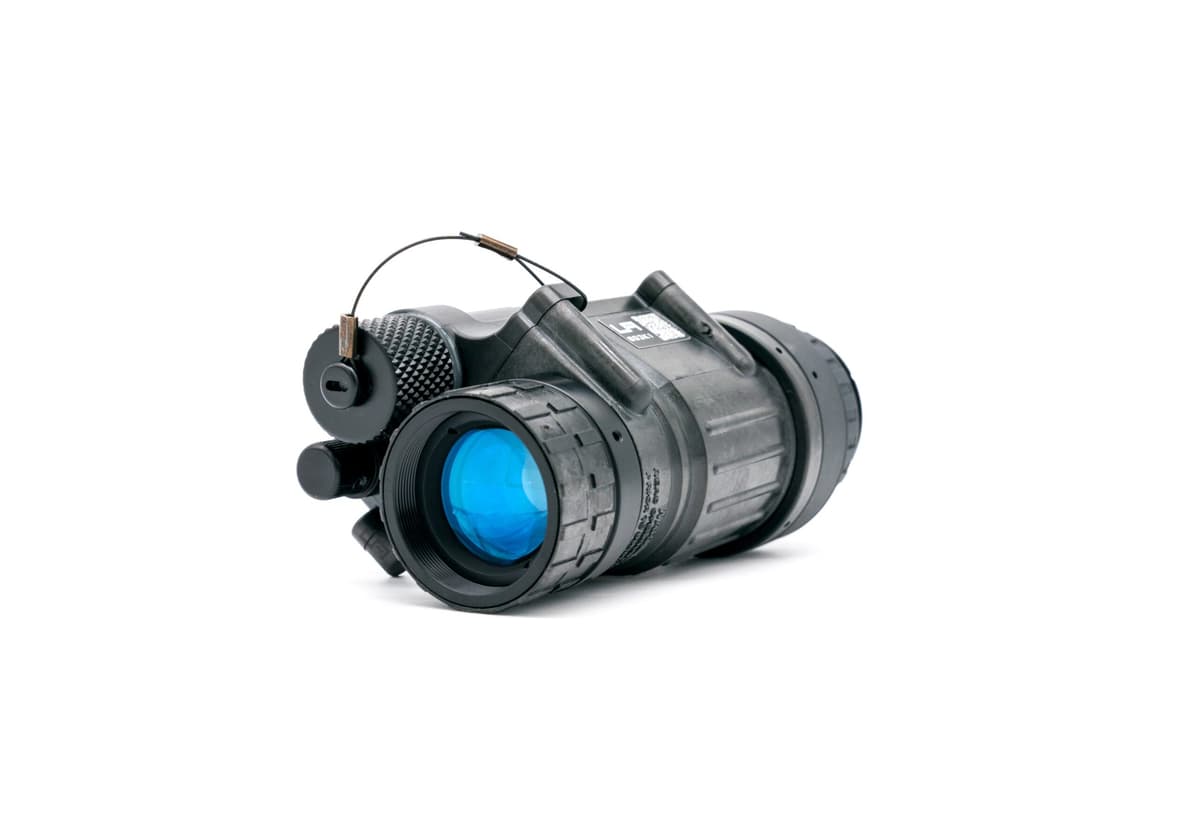
Licentia Arms PVS-14 L3 Unfilmed (24UA)
Best Overall - the unit serious civilian buyers should land on
- +L3Harris-published data sheet (24UA spec, 2160 FOM minimum) with every unit
- +Unfilmed white phosphor - substantially better resolution, halo, and SNR than any AGM tube grade
- +Hand-fit standard PVS-14 housing assembled in the US
- −$4,999 is a real number, not the right buy for a once-a-year range user
- −300-FOM delta to the high-FOM Licentia at $5,299 is hard to see in field use
- −Build queue can run weeks during high-demand windows
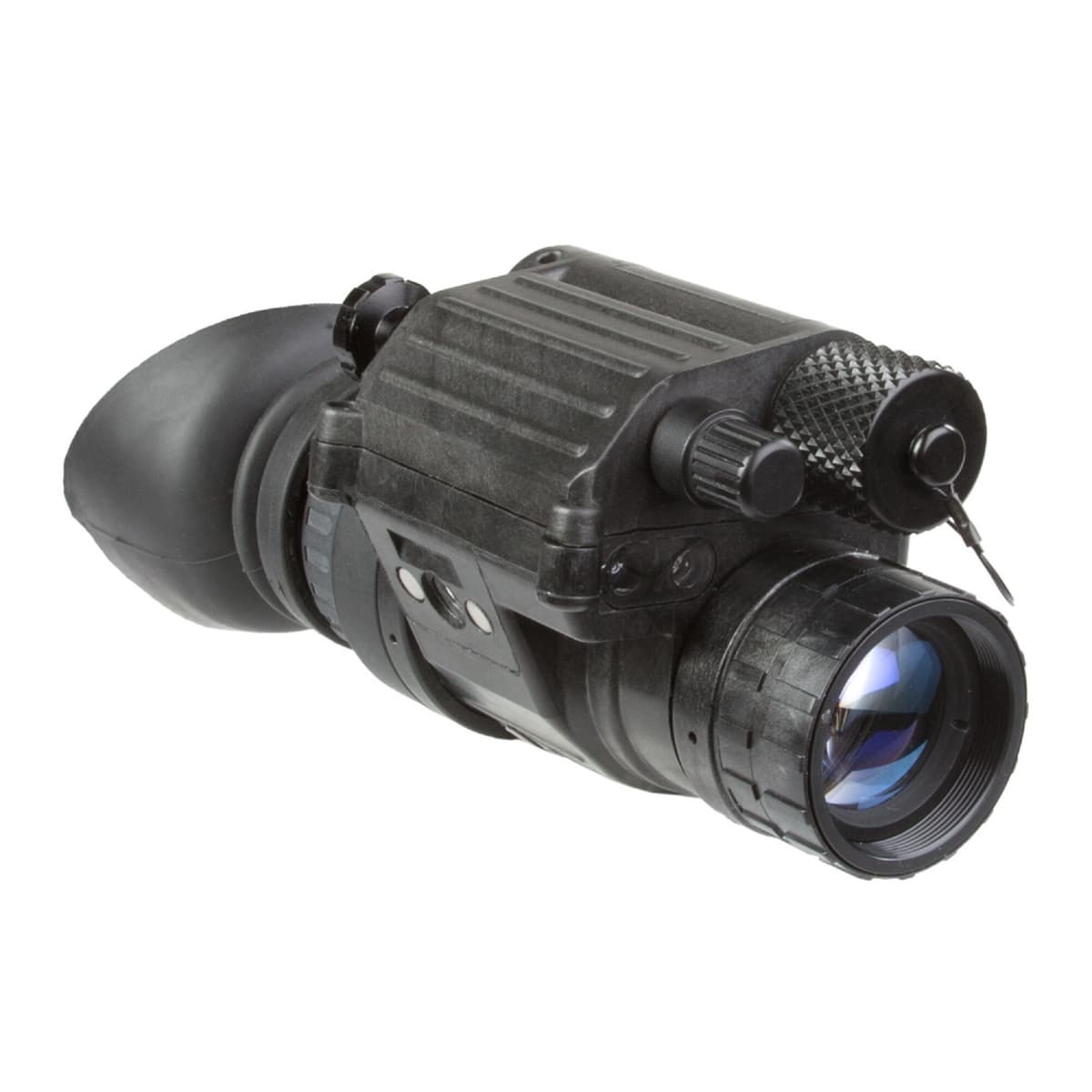
AGM PVS-14 3AL3
Best Value - cheapest Gen 3 PVS-14 worth running
- +Real Gen 3 image intensifier under $3,000
- +Autogated tube resists bloom from sudden bright sources (headlights, muzzle flash, IR illuminator-on-illuminator)
- +$73.47 cheaper than the top Gen 2+ NL1 makes the upgrade decision trivial
- −Level 3 is the lowest of AGM's three Gen 3 selections - higher spot counts allowed than Level 1
- −Green phosphor - eye fatigue higher than white under long sessions
- −Standard AGM data-sheet selection, not a hand-picked L3 tube
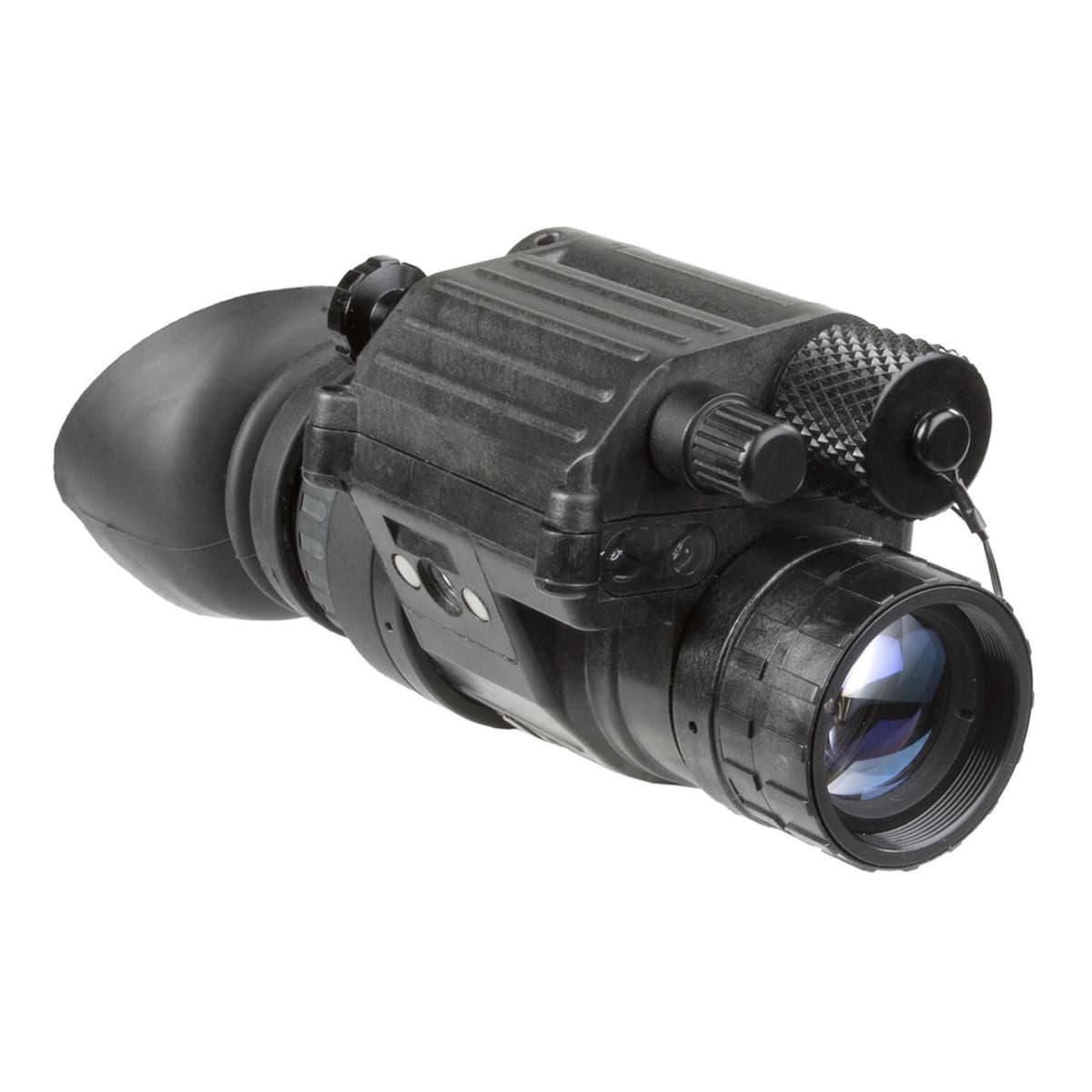
AGM PVS-14 3AW3 (White Phosphor)
Best white phosphor under $3,500
- +Cheapest white phosphor PVS-14 in production
- +Real Gen 3 P45 white phosphor with autogating
- +White phosphor is meaningfully easier on the dark-adapted eye over 30+ minute runtime
- −Still Level 3 tube grade - Level 1 units only available in the 3AW1 PVS-14E at $4,495
- −AGM data-sheet selection, not a published L3Harris spec
- −Resale demand softer than L3 unfilmed units
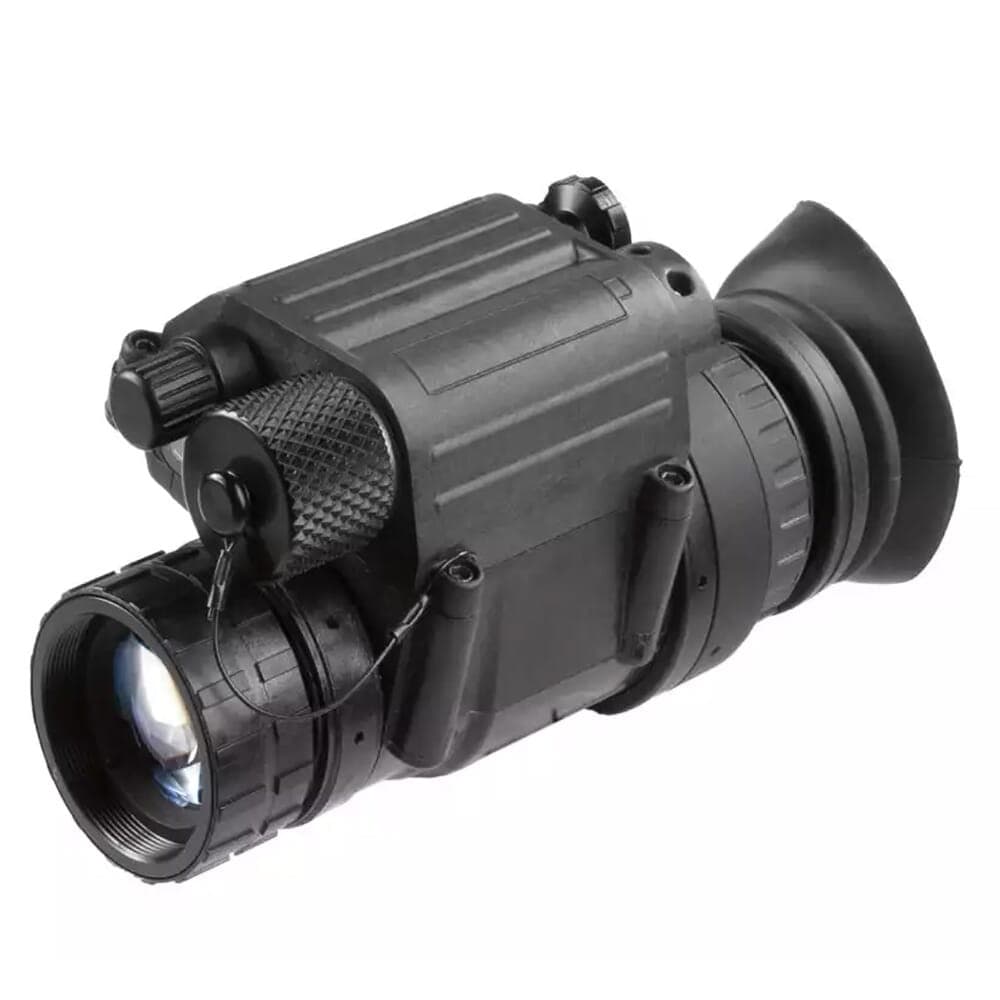
AGM PVS-14 NL2
Best Budget - cheapest entry to real PVS-14 form factor
- +Cheapest real PVS-14 housing in production at $2,720.58
- +Universal mount compatibility with every helmet and weapon mount on the market
- +Single AA battery simplifies logistics (~40 hr runtime)
- −Gen 2+ tube blooms under bright sources - no autogating
- −Resolution and SNR notably below any Gen 3 spec
- −Tube wears faster under heavy runtime than Gen 3
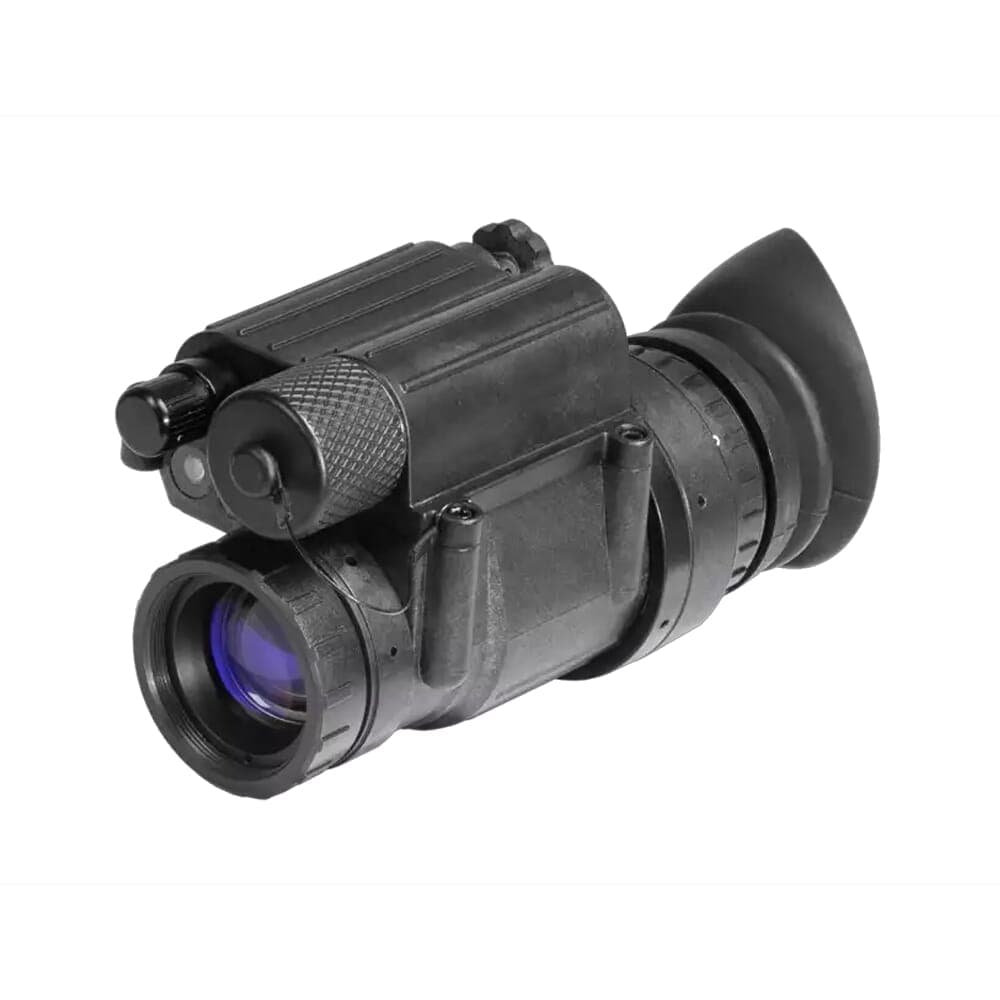
AGM PVS-14E 3AW1 (White Phosphor)
Best AGM white tube - top of the AGM line
- +Top-spec AGM white tube at $504 less than the Licentia L3 24UA
- +PVS-14E enhanced housing with refined controls and improved tube protection
- +Level 1 Gen 3 selection - AGM's tightest QA pass criteria
- −Within $504 of the Licentia L3 24UA - most buyers should jump
- −AGM data-sheet tube vs published L3Harris spec
- −PVS-14E housing not universally compatible with every aftermarket J-arm built for the standard PVS-14 frame
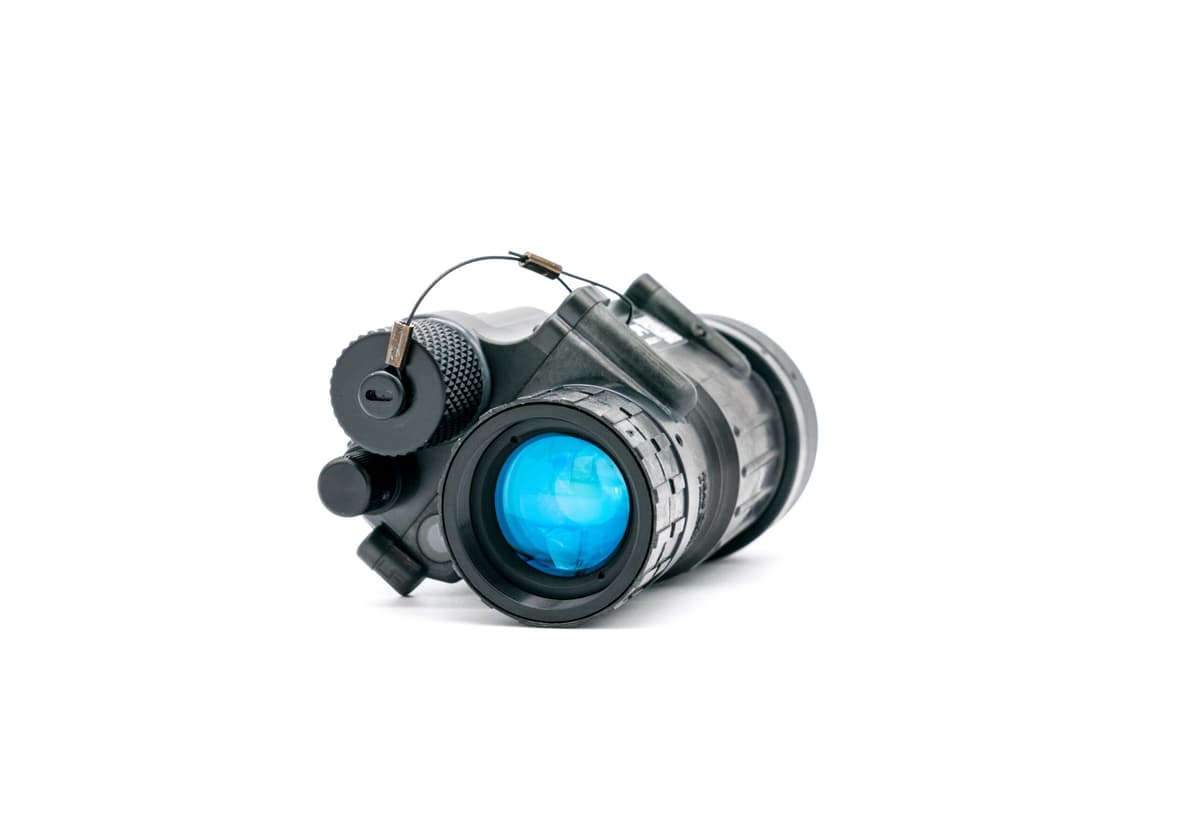
Licentia Arms PVS-14 L3 High-FOM
Best top-spec stock-config Licentia - highest stock FOM
- +Top of the standard Licentia PVS-14 line
- +2376 minimum FOM (vs 2160 on the 24UA)
- +Same hand-fit housing and published L3Harris data sheet as the 24UA
- −300-FOM premium over the 24UA is field-marginal for most users
- −$5,299 is within striking distance of older used binocular units (PVS-15)
- −Build queue can run weeks
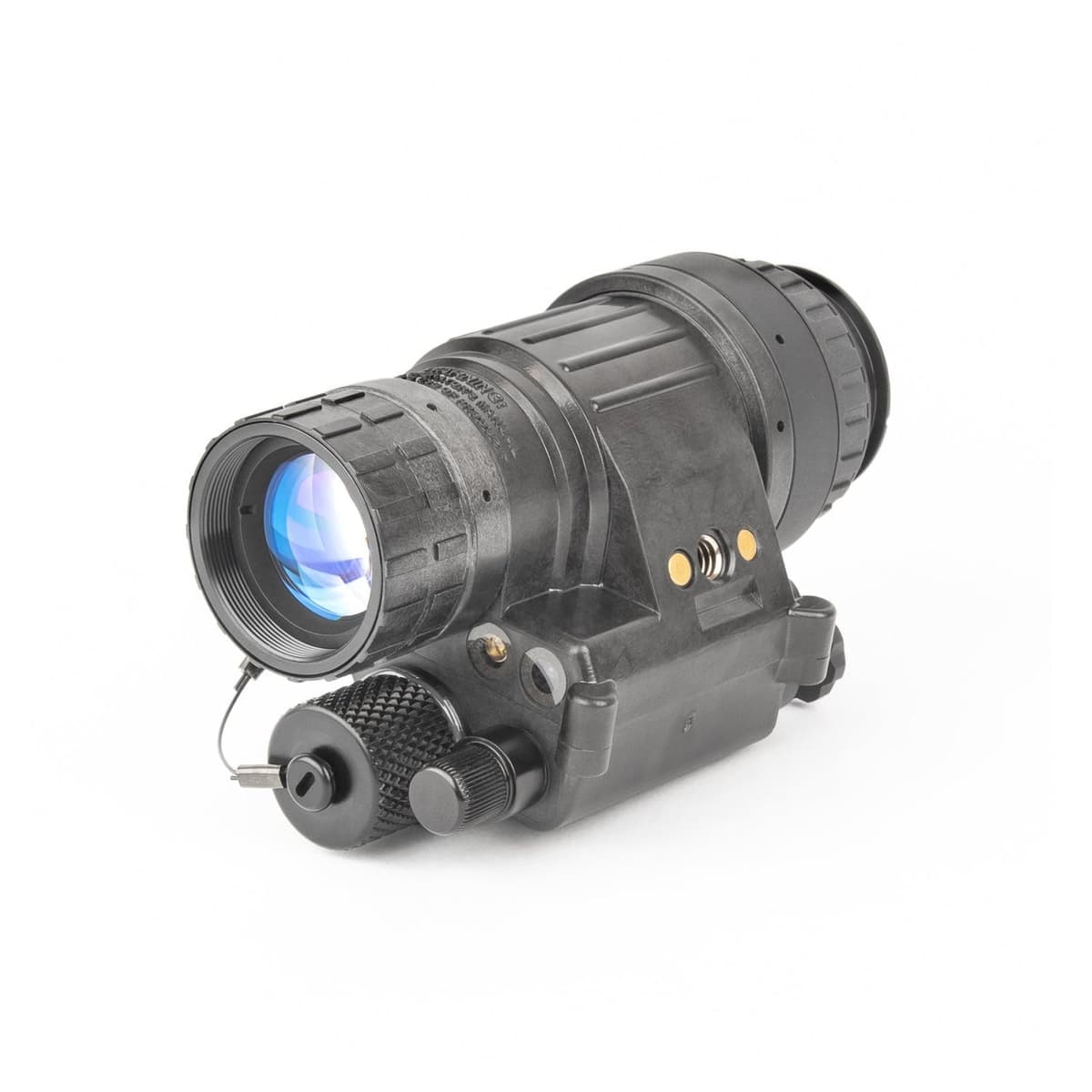
L3Harris PVS-14 (White Phosphor)
Best government-spec - the unit issued to US military and LE
- +L3Harris-built unit (not a third-party housing with an L3 tube)
- +Government-grade QA and assembly
- +Civilian-channel tube spec consistently 2200+ FOM
- −Civilian availability is dealer-dependent and inconsistent
- −$1,500+ premium over a Licentia L3 unit of similar tube spec
- −Dealer markup varies; comparison-shop before committing
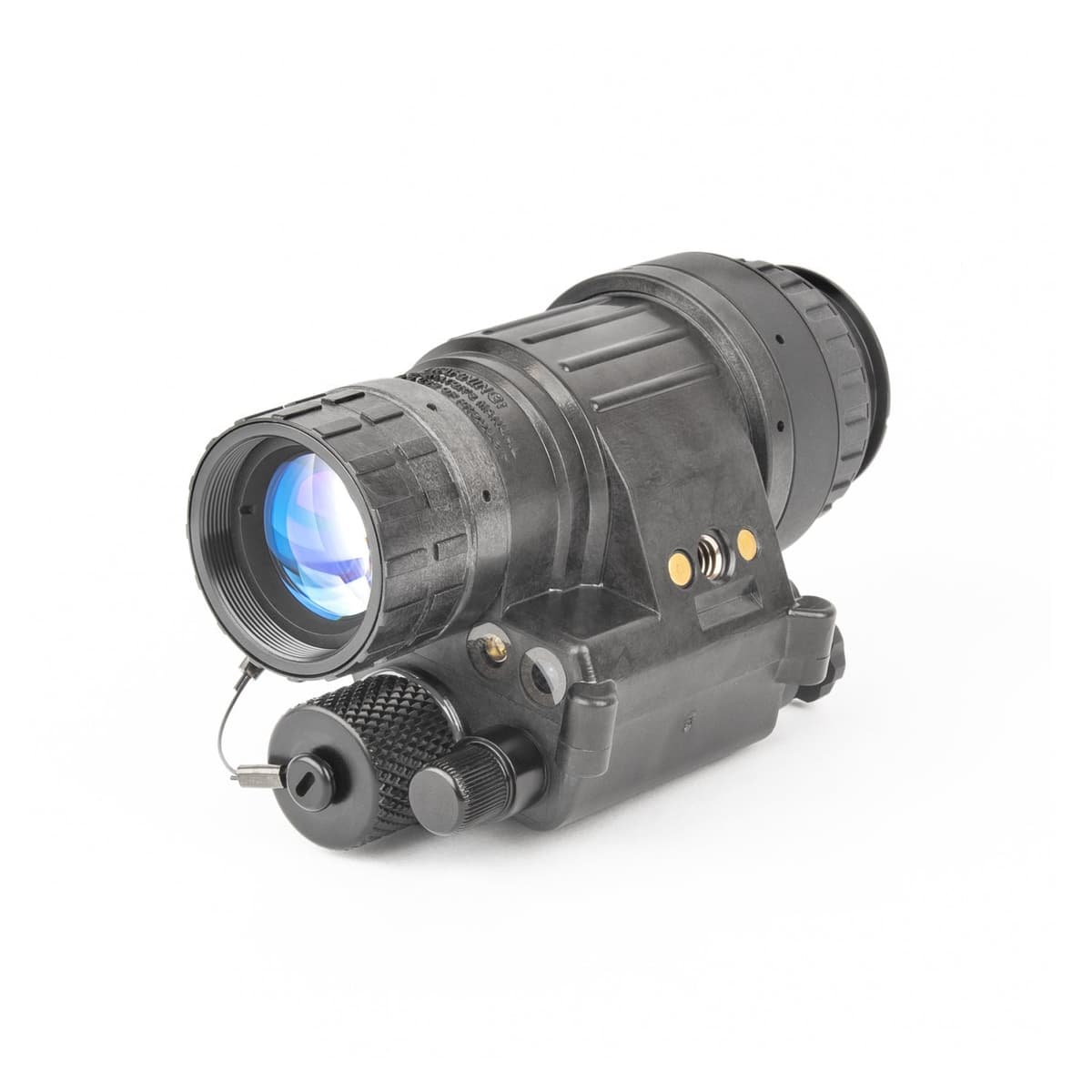
Elbit PVS-14 (White Phosphor)
Best L3Harris alternative - Elbit-built premium
- +US-built premium alternative to L3Harris
- +Generally cheaper than equivalent-FOM L3Harris units
- +Strong halo and SNR characteristics (often imperceptible vs L3Harris in field use)
- −Published FOM minimums often lower than L3Harris equivalents (2000-2300 civilian channel)
- −Civilian availability is dealer-dependent
- −Resale demand softer than L3Harris on the used market
Gen 3 image intensifier tubes are ITAR-controlled (USML Category XII(c)). Domestic civilian ownership is unrestricted; export to a foreign national or overseas requires a State Department license. A handful of states restrict night-vision use for hunting; verify local game laws before field use.
Affiliate links - purchases support this site at no extra cost to you. (?)
What Actually Matters: Tube Spec, Phosphor, Autogating
The PVS-14 housing is commodity. What costs the money is the image intensifier tube inside it. Four specs decide whether a PVS-14 is worth the price: generation (Gen 2+ vs Gen 3), phosphor (green P43 vs white P45), autogating (yes/no), and Figure of Merit (FOM, the resolution times SNR composite score). Everything else, including housing brand, country of final assembly, and accessory bundle, is secondary.
Generation. Gen 2+ uses a multi-alkali photocathode with no autogating. Resolution and signal-to-noise are notably below Gen 3, and bright sources cause the tube to bloom across the entire image. Gen 3 uses a gallium arsenide photocathode with autogating built in, doubles the typical service life of a Gen 2+ tube, and resolves detail Gen 2+ tubes cannot. The $300-500 step from Gen 2+ to Gen 3 is the single largest performance jump in this guide; do not skip it unless the budget is genuinely fixed.
Phosphor. Green P43 phosphor is the legacy NVG color. White P45 is what modern military NVG has used since the early 2020s. White phosphor renders a grayscale image that is easier on the dark-adapted eye over 30+ minute sessions and shows terrain contrast more naturally. Green is not broken, but if the use case involves long runtime (hunting, sustained property security, training), white is worth the $300-500 premium.
Autogating. Autogating cycles the tube power on and off at high frequency, protecting the photocathode when a sudden bright source enters the field of view. Headlights, muzzle flash, a flashlight turned on indoors, or an IR illuminator pointed back at you will white out a non-autogated tube and can permanently damage the photocathode. Every Gen 3 PVS-14 in this guide is autogated. If the use case involves any of those scenarios, autogating is not optional.
FOM. Figure of Merit is resolution (line pairs per millimeter) times signal-to-noise ratio. The thresholds: 1600+ is the floor on a commercial Gen 3 tube, 2000+ is mid-tier, 2160+ is the entry point for L3 unfilmed (Licentia 24UA), and 2376+ is high-FOM L3 unfilmed (Licentia high-FOM). The jump from 1600 to 2160 is obvious in field use; the jump from 2160 to 2376 is field-marginal for most shooters and only becomes meaningful when the rest of the kit (helmet, mount, illuminator) is equally dialed in.
Filmed vs unfilmed. L3Harris ships unfilmed tubes (the ion barrier film is removed during manufacturing), which reduces halo around bright sources and improves resolution. Filmed tubes (most commercial Gen 3, including AGM 3AL/3AW units) keep the film, which slightly degrades those metrics but extends tube life under heavy bright-source exposure. For civilian use, unfilmed is the right call because civilian environments rarely subject the tube to the sustained flash exposure unfilmed tubes are penalized for.
Tier Breakdown by Price
PVS-14 pricing breaks into four tiers, and the bottom two now overlap. Budget Gen 2+ at $2,720.58-$2,968.47 buys the form factor but not a Gen 3 tube. Value Gen 3 at $2,895-$3,219.99 is the sweet spot for first-time buyers, and its floor sits below the top of the Gen 2+ tier: the autogated AGM 3AL3 at $2,895 undercuts the Gen 2+ AGM NL1 at $2,968.47, which leaves the NL1 without a price argument. Premium AGM at $3,995-$4,495 buys Level 1 tube grades. L3 unfilmed at $4,999+ is the floor on a unit worth building serious helmet and mount hardware around. Match the tier to how often the NVG will actually be on the head.
- Budget Gen 2+$2,720.58-$2,968.47Representative UnitsAGM NL2, AGM NL1Best ForOnce-a-year curiosity, form factor only
- Value Gen 3$2,895-$3,219.99Representative UnitsAGM 3AL3, AGM 3AW3Best ForFirst-time buyer, real autogated Gen 3
- Premium AGM$3,995-$4,495Representative UnitsAGM 3AL1, AGM PVS-14E 3AW1Best ForLevel 1 selection within the AGM data sheet
- L3 unfilmed$4,999-$5,299Representative UnitsLicentia 24UA, Licentia high-FOMBest ForSerious user with full helmet+mount loadout
- OEM channel$5,500-$7,500Representative UnitsL3Harris, ElbitBest ForGovernment-grade QA, strongest resale
| Tier | Price | Representative Units | Best For |
|---|---|---|---|
| Budget Gen 2+ | $2,720.58-$2,968.47 | AGM NL2, AGM NL1 | Once-a-year curiosity, form factor only |
| Value Gen 3 | $2,895-$3,219.99 | AGM 3AL3, AGM 3AW3 | First-time buyer, real autogated Gen 3 |
| Premium AGM | $3,995-$4,495 | AGM 3AL1, AGM PVS-14E 3AW1 | Level 1 selection within the AGM data sheet |
| L3 unfilmed | $4,999-$5,299 | Licentia 24UA, Licentia high-FOM | Serious user with full helmet+mount loadout |
| OEM channel | $5,500-$7,500 | L3Harris, Elbit | Government-grade QA, strongest resale |
The honest gut check: if night-time use is rare, the AGM NL2 at $2,720.58 is fine and the rest of the spend is better routed to a thermal monocular or training ammo. If the PVS-14 is going to spend real hours on a helmet, jump straight to the AGM 3AL3 at $2,895 for autogated Gen 3, or to the Licentia 24UA at $4,999 for L3 unfilmed white phosphor with a published data sheet. The middle tiers exist, but they are narrow value windows that only make sense for buyers who specifically want the PVS-14E enhanced housing.
Get PVS-14 Night Vision Reviews and Buying Guides
PVS-14 availability updates, tube spec changes, and NVG accessory picks from Licentia and AGM.
Mount and Helmet Pairing
A PVS-14 is useless without a mount. The right pairing depends on the helmet, and the mount is where the next $200-$500 goes after the monocular itself. The four real paths:
- VAS shroud helmets (Ops-Core FAST, Team Wendy EXFIL, Galvion Caiman): run a Wilcox L4 G24 ($500) or Norotos TATM ($500) direct off the factory shroud. This is the default for any serious helmet. See the best ballistic helmets guide for the helmet picks that pair with these mounts.
- USGI 3-hole shroud helmets (PASGT, MICH, ACH): run a Norotos Rhino II ($199 new, $50-$100 surplus). This is the cheapest legitimate path to a PVS-14 on the head, and the Rhino II is what most surplus-helmet buyers end up with.
- Surplus shells without a factory shroud: need the ATN PASGT or MICH complete kit ($329) which provides shroud plus arm. Skip the temptation to drill a bare shell; the geometry rarely lines up correctly.
- Weapon-mounted use: ATN PVS-14 weapon mount ($129) on a Picatinny rail behind a daylight optic. The daylight optic projects the dot through the PVS-14 eyepiece for passive aiming. This is a specialized configuration, not the default. For most users, helmet-mount with a quick-disconnect arm is the right answer.
Plan for a front counterweight on the rear of the helmet to offset the PVS-14 mass. A 4-8 oz counterweight pouch with AA batteries inside is the cheap default; aftermarket counterweight kits run $40-$80. Skipping the counterweight makes a multi-hour session genuinely uncomfortable.
IR Illuminator and Laser Pairing
A PVS-14 is a passive image intensifier. Under starlight or quarter-moon ambient, the tube performs. Under heavy overcast, indoors, or in tree canopy, the tube needs help, and that help is an IR illuminator. The pairing is what separates a head-mounted PVS-14 from a head-mounted PVS-14 that can actually clear a building or hunt in real conditions.
For weapon use, the standard answer is a rail-mounted IR laser/illuminator combo. The IR illuminator guide covers the full set of units; the Meprolight Sting Lumina is a dual-wavelength IR laser/illuminator worth a look for budget-conscious buyers. The deeper compatibility question (rail height, optic clearance, laser-zero retention) is in the night vision compatibility guide which walks through AR-15 setup behind a PVS-14.
For helmet-mounted use, a head-borne IR illuminator like the Princeton Tec Charge Pro or B.E. Meyers Glare LA-5C handles indoor and close-range work without lighting up the muzzle line. Treat it as a separate purchase from the weapon laser; trying to run one device for both jobs compromises both.
If thermal capability matters more than the cost savings of a single PVS-14, look at the clip-on thermal AR-15 guide instead, or run both. Thermals see heat through smoke and light foliage where image intensifiers fail; image intensifiers preserve detail and depth where thermals smear everything into temperature blobs. The two are complementary, not interchangeable.
AGM Tube Selection Levels (Level 1, 2, 3)
AGM segments its Gen 3 PVS-14 line by tube selection: Level 1, Level 2, and Level 3. The numbers refer to how strict the QA pass criteria are. Level 1 tubes have the tightest tolerances on spot counts, SNR floor, and resolution; Level 3 tubes have the loosest. All three are Gen 3 with autogating; the difference is statistical, not categorical.
Practical advice: Level 3 (3AL3, 3AW3) is fine for civilian use and the right buy when budget matters. Level 1 (3AL1, 3AW1) tightens the spec but adds $1,000+. The honest reframe is that the Level 1 to L3 unfilmed step ($4,495 to $4,999) is a bigger upgrade than the Level 3 to Level 1 step ($2,895 to $3,995). If you find yourself eyeballing a Level 1 unit, spend the extra $504 and get the Licentia 24UA instead.
Used PVS-14 Market: What to Watch
The used PVS-14 market is real and saves $500-$1,500 on a comparable new unit, but the buy carries specific risks. Three rules:
- Demand a data sheet. L3Harris and Licentia tubes ship with a printed spec sheet showing FOM, resolution, SNR, and halo. A used unit without its data sheet is a guess, not a buy. Walk away.
- Inspect the screen for spots and lines. Black spots are baked-in tube defects and grade-out at manufacture. A spot in zone 1 (center) is a no-go; spots in zone 3 (edge) are tolerable on a discount. Lines through the image are usually crystal growth and indicate end-of-life wear.
- Verify autogating with a flashlight. In a dark room, point the PVS-14 toward a flashlight and turn it on. An autogated tube clamps brightness within a fraction of a second; a non-autogated tube blooms across the whole screen for several seconds. If the seller claims Gen 3 and the tube does not autogate, the tube is mis-spec or damaged.
The used market is also where binocular conversions show up. Two PVS-14 tubes in a PVS-31 or NVG-40 housing get you a binocular setup for the cost of two monoculars plus a bridge. For buyers comparing a single PVS-14 against a used binocular, the rule of thumb is that a used PVS-31 with two 2000-FOM tubes runs $7,500-$9,500 while a new Licentia 24UA monocular plus bridge for a second tube later runs $6,500-$7,500 staged.
Building the rifle behind the PVS-14
Run an AR-15 build configured for night work in the rifle builder and the compatibility filter will surface IR lasers, scout lights, and irons that work behind a PVS-14 mounted on the helmet. The full setup walkthrough is in the night vision compatibility guide.