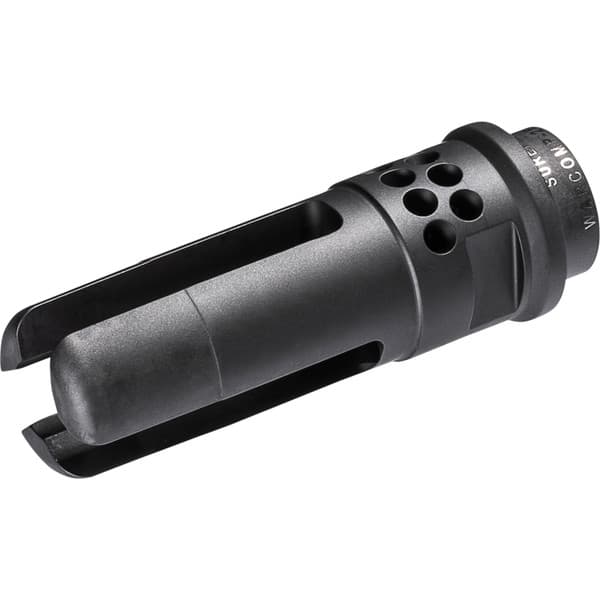
Muzzle Devices • $152
SureFire WARCOMP
- Open-tine flash hider and compensator
- 1/2-28 host thread, 5.56 NATO
$152.00 Catalog
Shop at MidwayUSA
Illustrative flow: directions come from the device's geometry; sizes and speeds are schematic, not a simulation
A bullet leaves a carbine barrel with gas still behind it at thousands of psi. Scrub through the first two milliseconds to see the air shoved out ahead of the bullet, the shock bottle the gas forms, and where secondary flash lights, then swap the device on the muzzle to see what an A2 birdcage, a SureFire SF3P 3-prong, a SureFire WARCOMP, a Precision Armament M4-72 brake, a KAK linear compensator, a SureFire SOCOM556-MINI2 suppressor on two different mounts and a HUXWRX FLOW 556k flow-through suppressor each do to that gas.
The devices are modeled from their makers' published dimensions and drawings. The gas is illustrative: its directions come from each device's ports, but the sizes and speeds of the plume are schematic, not a simulation. Neither suppressor's internals are published, so the cans are drawn closed and only the gas that leaves them is shown.
Three things leave the muzzle, in order: the air that was in the bore, the bullet, and the powder gas behind it. The bullet shoves the bore's air out ahead of itself, so a precursor blast forms before the bullet appears; in a published 7.62 mm study those precursor shocks were already formed about 395 microseconds before the bullet left. When the bullet's base clears the crown, the gas behind it, still about 8,150 psi for M855 in a 14.5 inch barrel, bursts into air that is already moving.
That gas leaves far above the pressure of the air around it and forms a shock bottle: a barrel-shaped shock capped by a flat Mach disk, where the flow drops from supersonic to subsonic, with a vortex ring rolling off its edge. The bullet starts inside the blast and punches clear of it within a few hundred microseconds; in one study a .300 Blackout bullet was clear of the main blast by 354 microseconds. The scrubber runs on a log scale, and those timings come from 7.62 mm and .300 Blackout studies, so read them as orders of magnitude for 5.56. Drag it back past Exit to watch the precursor form, then press play.
Most of the flash you see from a rifle is secondary flash: fuel-rich powder gas relighting once it mixes with outside air. An equilibrium estimate for M855's propellant puts its gas at about 37% carbon monoxide and 8% hydrogen by moles. That fuel can only burn after it mixes with atmospheric oxygen, and only if the mix stays above roughly 900 to 1,000 K. The Mach disk is what keeps it that hot: gas crossing the disk slows and reheats, so the big flash lights downstream of it, not at the crown.
Muzzle flash has three zones. Primary flash is the glow right after the gas leaves the muzzle, intermediate flash sits just past the Mach disk, and secondary flash is the afterburn further out. Short barrels flash and bang more because more unburned fuel leaves with the gas; PEW Science found a 10.3 inch MK18 produced a significant secondary blast wave from afterburning propellant. Switch the stage's barrel to 10.5 inches and the gas behind the bullet at exit rises from 8,150 to 11,500 psi. Powders with potassium salts cut flash chemically by scavenging the radicals the afterburn needs.
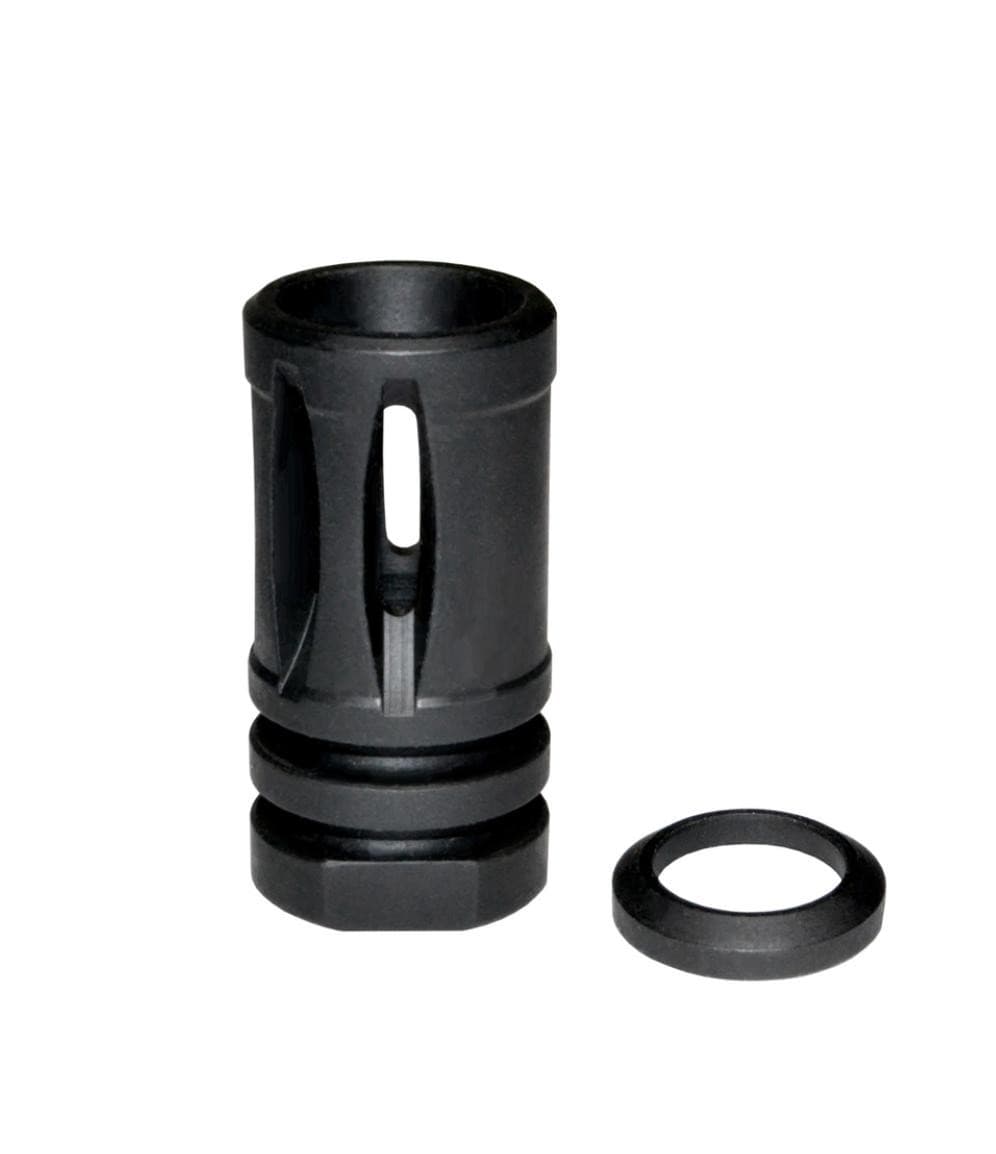
A flash hider works by breaking up the shock bottle, so the gas never crosses a Mach disk strong enough to reheat it and mixes with air too cool to light. The A2 birdcage does it with five slots around a closed bottom, installed with the middle slot at 12 o'clock. In one TTAG test with a light meter about 2 feet from the muzzle at 45 degrees, a bare 16 inch piston upper read 10,760 lux and the same upper with an A2 read 0.48 lux. The closed bottom keeps it from kicking up dust when fired prone.
A flash hider does not hide the flash from you. It acts on the flash that forms downstream; primary flash at the muzzle cannot be changed mechanically, so a small glow stays visible behind the gun, most at night and from short barrels. It does little for recoil. The Army's parts list calls the A2 a compensator, part 9349051, but by function it is a flash hider, the same thing as a flash suppressor. Compare flash hiders, brakes and hybrids in the best AR-15 muzzle devices guide.
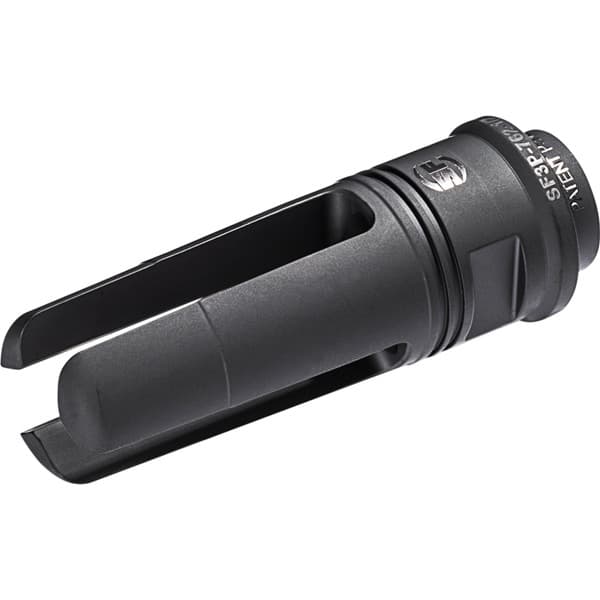
A 3-prong flash hider does the same job as the A2 with a different shape: three slots spaced evenly around it and open at the front, where the A2 has five slots and a solid bottom. The SureFire SF3P on the bench is 2.6 inches long against the A2's 1.75, and it doubles as the mount for SureFire's SOCOM suppressors. On the stage its gas leaves outward through the three slots and forward through the bore.
For flash, the two measured about the same. In TTAG's second flash hiding test, SureFire's 3P Eliminator, the same 3-prong without the suppressor mount, read 1.07 lux against 1.13 for an A2 and 10,932 for the bare muzzle. Pick between them on length, weight and whether you plan to mount a can; the best AR-15 muzzle devices guide compares 3-prongs, birdcages and suppressor-mount flash hiders.
A muzzle brake turns the gas sideways and back, and the reaction pushes the muzzle forward against recoil. It only works after the bullet has left: while the bullet is in the bore the gas has nowhere to go but behind it, so a brake corrects recoil already under way rather than preventing it. The Precision Armament M4-72 on the bench is a brake with side ports raked to throw the gas rearward and a closed bottom, even though PA sells it as a compensator.
In a TTAG sled test, a piston AR with its gas block off, so all the gas left through the muzzle, slid back 2.44 inches with an M4-72 against 9.18 inches bare: 73.84% less sled travel. That is travel, not recoil. Sled travel grows with the square of the sled's speed, so the result works out to about half the rearward momentum, and a normal gas-operated carbine sends some of its gas to the action instead. Only part of recoil comes from the gas at all: for an M16A2 with a 20 inch barrel, an Army analysis puts the gas at about 42% of the total recoil impulse and about 30% after the bullet leaves, the only part a brake can touch. Cutting more than that takes ports that throw the gas back toward the shooter, which is what reverse venting does. Work out your own rifle's free recoil in the recoil calculator.
The cost is blast. The same gas that pushes the muzzle forward goes to the sides and back, toward you and anyone beside you; the Army's muzzle device handbook says noise is always increased and that shielding does little to protect people around the weapon. PA warns the M4-72 may cause excessive blast and concussion on barrels shorter than 14.5 inches.
A brake fights rearward recoil; a compensator fights muzzle rise. A compensator vents gas up through ports on top, and the reaction pushes the muzzle down. A 1968 British symposium on muzzle devices found that compensators generally increase the blast and noise at the firer, and often increase flash as well.
The SureFire WARCOMP is a hybrid: two rows of ports across its upper half for rise and open tines in front for flash. In a separate TTAG flash test it read 1.11 lux against 10,932 bare and 1.13 for an A2, and SureFire claims more than 98% flash elimination. SureFire also says it virtually eliminates muzzle rise; no published measurement puts a number on that. See how quickly your own rifle settles back on target with the recoil return-to-zero analyzer.
A linear compensator sends the blast forward, away from the shooter, and does little or nothing for recoil. It is a short can over the muzzle: the gas fills its chamber and leaves through the open front, so none of it is thrown sideways or back. That is the opposite of the M4-72, which throws its gas back toward you to push the muzzle forward; with no gas going back, a linear comp gives no brake effect, and on the stage its thrust matches the bare muzzle's.
The one on the bench is KAK Industry's Slimline Flash Can: 3.25 inches long, 1.2 inches across and 3.42 ounces of aluminum. KAK says it directs muzzle blast, flash and gases forward, away from the user, and that it is not designed to reduce muzzle rise or flash signature, so the stage draws its flash like a bare muzzle's, moved out to the can's mouth. No published test puts a number on its recoil, flash or sound. Because the blast goes downrange, a linear comp is easier on the shooter beside you than a brake; see where it fits against flash hiders and brakes in the muzzle device guide.
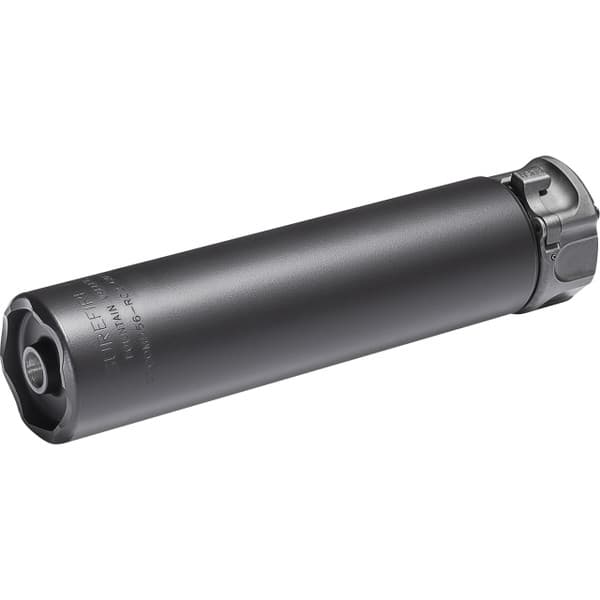
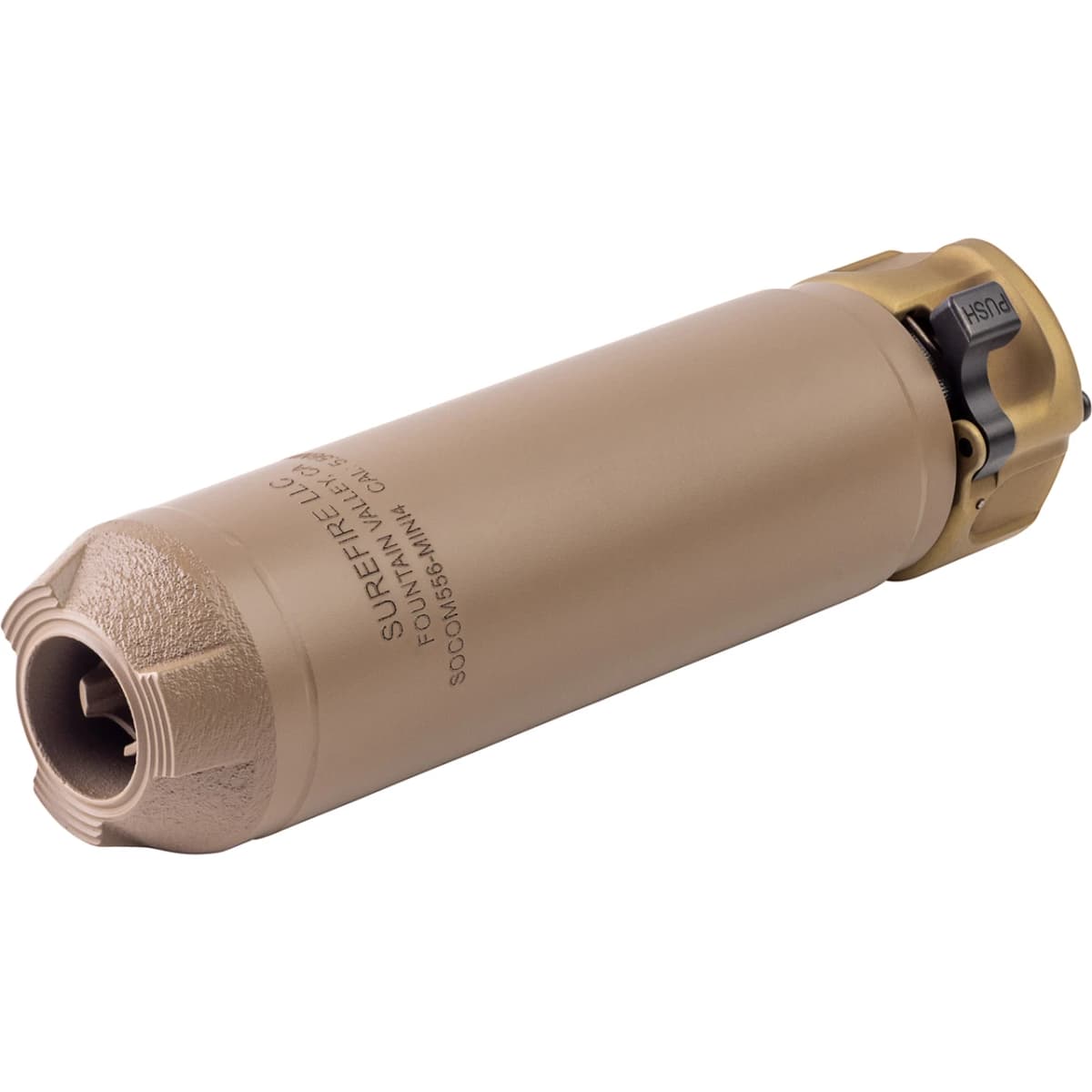
A suppressor gives the gas room and time: a blast chamber and a stack of baffles trap it, slow it and let it out gradually, so the pressure wave leaving the end cap is far weaker. It makes 5.56 quieter, not quiet. SureFire rates the SOCOM556-MINI2 at 137 dB at the shooter's ear with M855 from a 14.5 inch barrel and 140 dB from a 10.3 inch barrel, and OSHA's ceiling for impulse noise is 140 dB peak. In NIOSH testing across several hosts, suppressors cut the peak at the shooter's ear by 17 to 24 dB.
Two sounds stay. The bullet flies at about Mach 2.4, 2,700 ft/s for M855 from a 14.5 inch barrel, and drags a 24.4 degree shock cone, the crack, that no can touches; the cone only sweeps forward of the gun, so people downrange hear the crack while the shooter mostly hears the muzzle. On a direct-impingement AR the ejection port also vents gas and noise the suppressor does nothing about. Wear hearing protection with supersonic 5.56, suppressed or not.
The first shot through a cold can is louder, a first-round pop, because the air inside still holds oxygen for the hot gas to burn; later shots find it depleted. PEW Science rates the MINI2's first-round pop to bystanders as relatively significant and ties it to the short can's six baffles. Trapping the gas also pushes some of it back through the action as blowback; PEW found the MINI2 has less back pressure than the SOCOM556-RC2. Compare cans by measured suppression in the best 5.56 suppressors guide.
Because its ports keep venting after the can goes on. A SOCOM556-MINI2 slides over the WARCOMP and locks with a ring that turns about 180 degrees with audible clicks; it does not thread onto the device. PEW Science found the SOCOM mount's taper does not seal completely and that the ports on a WARCOMP-family mount drive high-pressure gas to that joint, so blast escapes at the rear of the can. The MINI2 on WARCOMP state draws that leak.
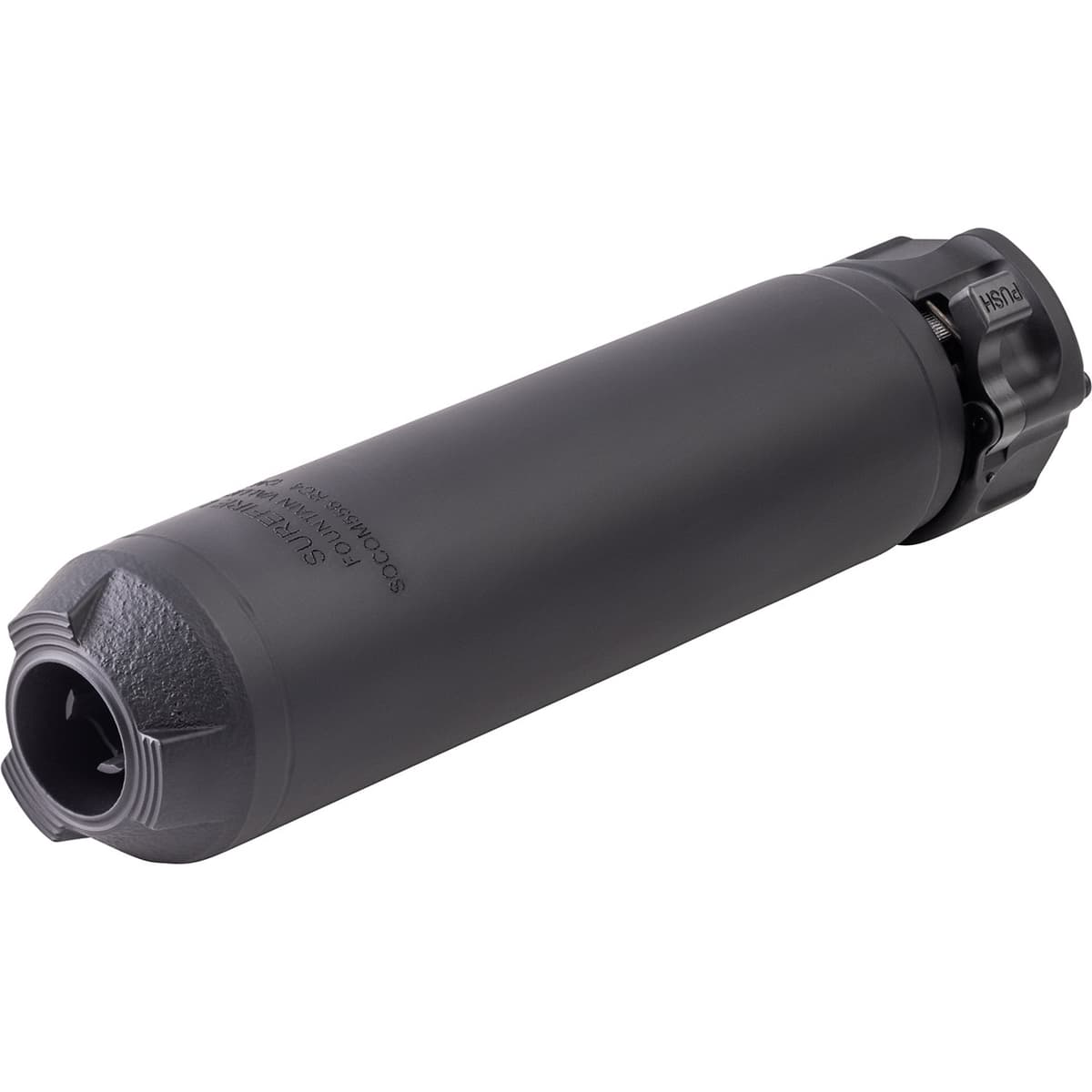
SureFire's SF3P 3-prong flash hider is the same Fast-Attach mount without the ports: it has a rear labyrinth seal that SureFire says mitigates gas leak from the lock ring, so the MINI2 on SF3P state draws no leak at the rear of the can; nobody has published how much the seal still lets by. On a 14.5 inch M4A1 with Federal XM193, PEW measured the MINI2 at a composite suppression rating of 29.2 on the SF3P and 26.1 on a WARCOMP-family mount; higher is better. The WARCOMP's ports also stop compensating once a can is on. Compare quick-detach systems across brands in the suppressor mounting systems guide.
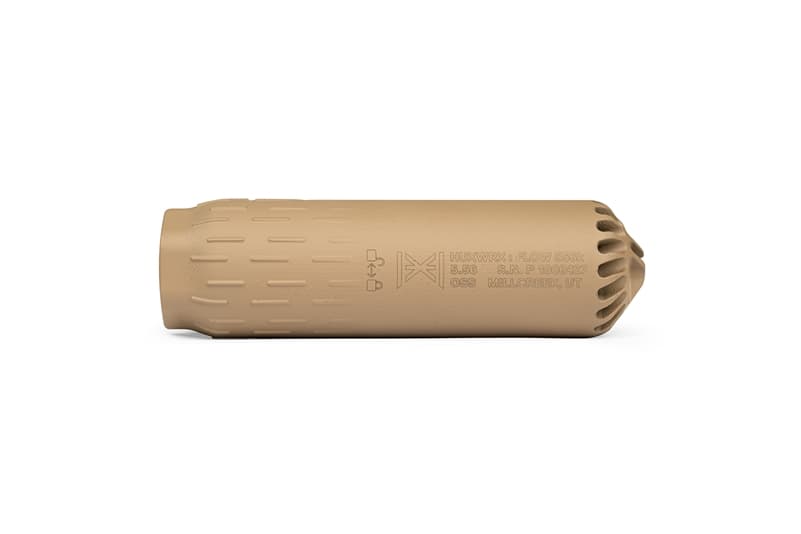
A flow-through suppressor sends the gas forward and out rather than holding it. Inside the FLOW 556k a helical coil and core deflector turn the gas off the bore line into channels round the core, and it leaves through the ring of slots in the can's front shoulder as well as the bore; HUXWRX says the gases are deflected forward and away from the shooter. The slots run at a slight angle, so on the stage their gas leaves forward, outward and turning. The flow is illustrative: nobody publishes how the gas splits between the slots and the bore.
Venting forward keeps back pressure low, so less gas is pushed back through a direct-impingement AR's action to the ejection port and the shooter's face. PEW Science measured very low back pressure on the FLOW 556k and, on a 10.3 inch MK18 with Federal XM193, a composite suppression rating of 33.1: 31.8 at the shooter's ear and 25.8 at the muzzle. That is a different host from the MINI2's 14.5 inch tests, so the ratings do not compare directly. The trade PEW notes is a lower-pitched, boomier sound to bystanders and a noticeable first-round pop.
The can screws onto its Flash Hider-QD 556 by hand on a left-hand thread, the opposite way to the barrel's right-hand muzzle threads, and it tightens itself as it fires: HUXWRX says the exiting gas creates a rotational force that keeps the can firmly seated, and its manual warns that removing the can after firing can take more effort. It adds 4.9 inches to the barrel.
Match the device to its job and to the barrel's threads. A flash hider suits a rifle you may shoot in low light and a rifle that shares a firing line; a brake earns its blast only where recoil matters more than the people beside you; a hybrid or a suppressor mount makes sense once a can is in the plan. Confirm your barrel's pitch in the muzzle thread checker before ordering; 5.56 AR barrels are usually 1/2x28.
On a 14.5 inch barrel the device also sets legal length. A standard 1.75 inch A2 adds only about 1.1 to 1.25 inches past the muzzle, so even pinned and welded it leaves the barrel short of 16 inches; that takes an extended A2 or a longer device, permanently attached. Check a combination in the barrel length visualizer.
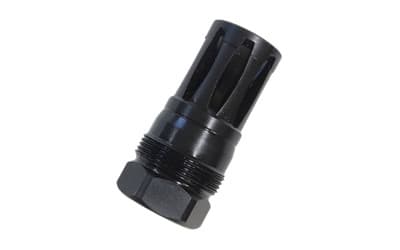
The WARCOMP and SF3P on the bench, two A2 flash hiders, SureFire SOCOM cans that mount on them, and the FLOW 556k.
Affiliate links - purchases support this site at no extra cost to you. (?)
Affiliate links (?)
They aim the gas differently. A flash hider breaks up the shock bottle at the muzzle so the gas mixes with air too cool to light, which cuts secondary flash; it does little for recoil. A muzzle brake turns the gas sideways and back through side ports, which pushes the muzzle forward against recoil. A compensator vents gas upward, which pushes the muzzle down against rise. Hybrids such as the SureFire WARCOMP put rise-fighting ports on top and flash-hiding tines in front. Brakes and compensators both add blast at the shooter.
Not completely. A flash hider suppresses secondary flash, the fuel-rich gas relighting once it mixes with air downstream of the muzzle, but it cannot change the primary flash right at the muzzle. You still see a small glow behind the gun, most at night and from short barrels. The effect on secondary flash is large: in one TTAG test a bare 16 inch piston upper read 10,760 lux at a meter about 2 feet from the muzzle, and the same upper with an A2 flash hider read 0.48 lux.
In a TTAG sled test, a Precision Armament M4-72 cut the sled's travel by 73.84% against a bare muzzle: 2.44 inches against 9.18 inches. That test ran a piston AR with the gas block off, so all the gas left through the muzzle, and it measured slide distance, not recoil impulse. Sled travel grows with the square of speed, so the result works out to about half the rearward momentum, and a normal gas-operated carbine sends some gas to the action instead. Do not read it as 74% less kick on your rifle.
Because a brake works by throwing the gas sideways and back, toward you and anyone beside you. The Army's muzzle device handbook says noise is always increased by a brake and that shielding does little to protect people around the weapon. A flash hider does not throw gas back toward the firing line, so it is easier on the shooter and on the shooter next to you. Precision Armament warns that its M4-72 may cause excessive blast and concussion on barrels shorter than 14.5 inches.
No. A suppressor makes supersonic 5.56 quieter, not quiet. SureFire rates its SOCOM556-MINI2 at 137 dB at the shooter's ear with M855 from a 14.5 inch barrel and 140 dB from a 10.3 inch barrel, and OSHA's ceiling for impulse noise is 140 dB peak. The bullet's supersonic crack is untouched by the can, and on a direct-impingement AR the ejection port still vents gas and noise. Wear hearing protection with supersonic 5.56, suppressed or not.
Yes. The WARCOMP is a SOCOM Fast-Attach mount, so SureFire SOCOM cans slide over it and lock with a ring that turns about 180 degrees. Its ports keep venting under the can, though, and they stop compensating. PEW Science found the SOCOM mount's taper does not seal completely and that a WARCOMP-family mount drives high-pressure gas to that joint; a SOCOM556-MINI2 on a 14.5 inch M4A1 scored a composite suppression rating of 26.1 on a WARCOMP-family mount against 29.2 on SureFire's SF3P 3-prong flash hider.
It can. The same SureFire SOCOM556-MINI2 on the same 14.5 inch M4A1 with Federal XM193 scored a composite suppression rating of 29.2 in PEW Science testing on an SF3P 3-prong flash hider and 26.1 on a WARCOMP-family mount; higher is better. The difference is the mount: the WARCOMP's comp ports feed high-pressure gas to the joint at the back of the can, while the SF3P has no ports and a labyrinth seal that SureFire says mitigates gas leak from the lock ring.
A linear compensator, also called a flash can or blast can, catches the muzzle gas in a short chamber and sends all of it forward out of its open front, so the blast goes downrange instead of sideways and back toward the shooter. That makes it the opposite of a muzzle brake: a brake throws gas back to push the muzzle forward against recoil, while a linear comp throws none back, so it does little or nothing for recoil. KAK Industry says its Slimline Flash Can directs muzzle blast, flash and gases forward, away from the user, and is not designed to reduce muzzle rise or flash signature.
Both are flash hiders that break up the gas at the muzzle; they differ in shape. A 3-prong like the SureFire SF3P has three slots spaced evenly around it and open at the front, while the A2 has five slots and a solid bottom. For flash they measured about the same in one TTAG test: SureFire's 3P Eliminator, the same 3-prong without the suppressor mount, read 1.07 lux against 1.13 for an A2 and 10,932 for a bare muzzle. The SF3P is also longer, 2.6 inches against the A2's 1.75, and it doubles as the mount for SureFire's SOCOM suppressors.
A flow-through suppressor routes the gas forward through channels around its core and vents it out the front, instead of trapping it in baffle chambers and letting it bleed out slowly. The HUXWRX FLOW 556k uses a helical coil and core deflector to do it, and HUXWRX says the gases are deflected forward and away from the shooter. PEW Science measured very low back pressure on it, and less back pressure means less gas pushed back through a direct-impingement AR's action toward the shooter's face. The trade PEW notes is a lower-pitched, boomier sound to bystanders.
Because the Army's parts list names it that: the M16 maintenance manual lists part 9349051 as a compensator. By function it is a flash hider. Its five slots break up the muzzle gas to cut flash, and its closed bottom keeps it from kicking up dust when fired prone; it is installed with the middle slot at 12 o'clock. Flash hider and flash suppressor mean the same thing.
Pick a rifle, add a flash hider, brake or suppressor mount in the configurator, and check that every part fits before you buy.
Launch Configurator