Suppressors • $1,054
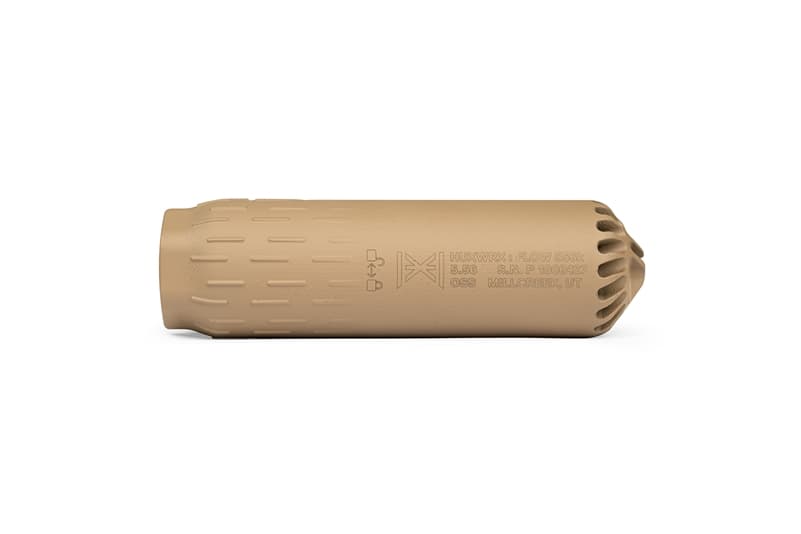
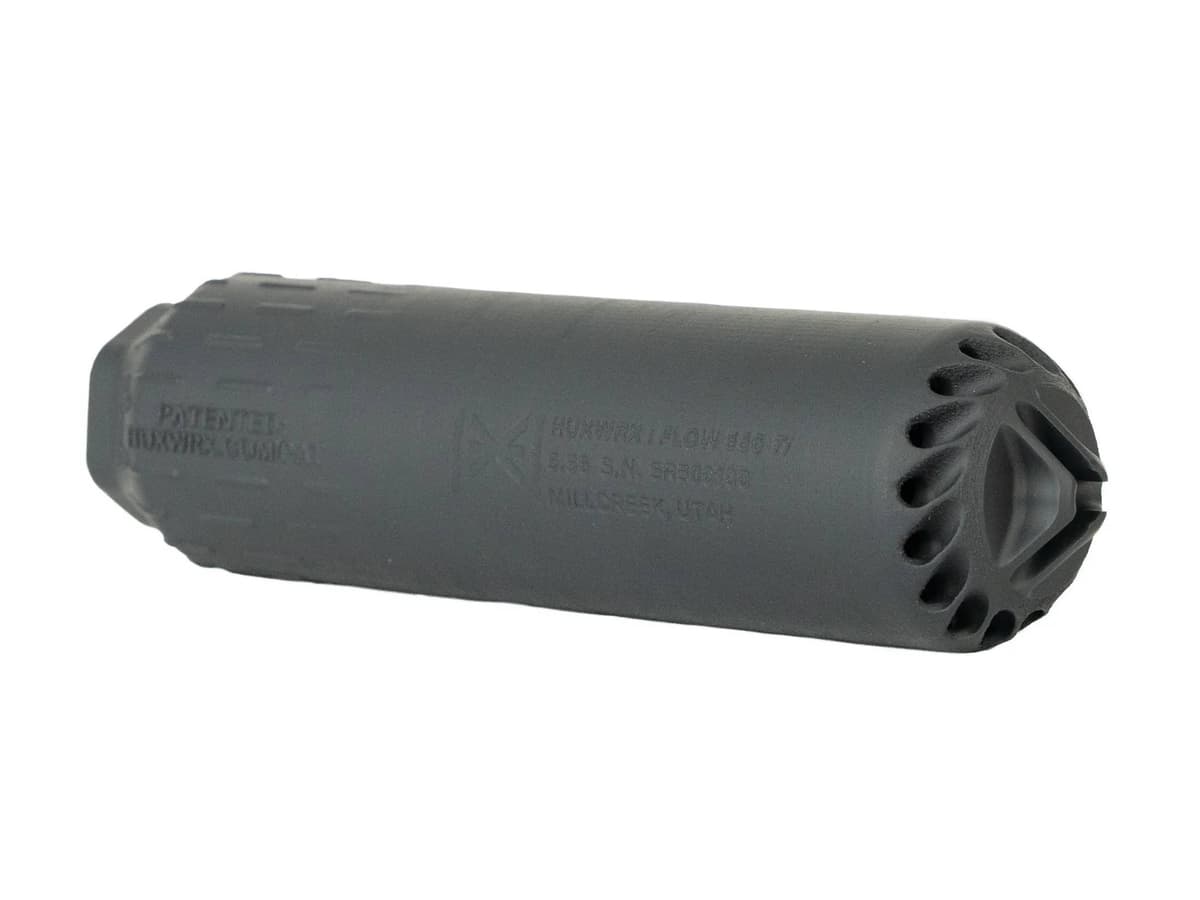
Huxwrx Flow 556k
- 5.56mm rated
- Flow-through design
$1054.00
Shop at Primary Arms
A suppressor works by giving the powder gas behind the bullet room to expand and a slow way out. Cut a can in half to watch the gas from one shot fill a conventional baffle stack, run forward through a flow-through can and zigzag through a monocore, then see why the first shot is louder, why a can makes an AR-15 cycle harder, and what lines a bullet up with a baffle.
The baffle stack and the monocore are traced from published patent drawings rather than any one production can (SureFire and Gemtech) and scaled to the same 1.5 inch tube. The flow-through can is the outside of the HUXWRX FLOW 556k, with internals drawn from the OSS (now HUXWRX) patent rather than the 556k's own. The gas routes follow each patent; their timing and strength are illustrative.
A suppressor slows the gas that follows the bullet out of the barrel and lets it out over a longer time, so the pressure wave that reaches your ears is lower. Unsuppressed, the gas leaves the muzzle all at once. In a can it expands first into a blast chamber, then each baffle turns it off the bore line into a chamber, where it is held and bleeds forward. SureFire's patent puts it as turning the explosive pressure wave of an unsuppressed shot into a lower pressure wave of greater duration.
The bullet has to pass through every baffle, so each one has a hole on the bore line a little larger than the bullet. Some gas always follows the bullet straight out of those holes; the rest is what the baffles catch. The first burst fills the blast chamber before the chambers ahead of it. For what a can does to the blast outside the muzzle, see how muzzle devices work.
Baffles divide the can into chambers and deflect the gas into them. SureFire's patent calls the K baffle, a flat disc joined to a forward cone, the industry standard since the 1980s: the slanted walls of its bore turn gas away from running straight down the cone and send it behind the disc. The stack on the stage is SureFire's drawing of five cones, each narrowing rearward to its aperture, behind an open blast chamber.
The first baffle, the blast baffle, meets the hottest, fastest gas. Each cone after it catches part of what got through the one before, so the gas reaches the front in stages instead of in one burst.
A flow-through suppressor keeps the gas moving forward instead of holding it. In an OSS Suppressors patent (OSS is now HUXWRX), deflectors on the bore line turn gas outward into nested tubes, whose walls make a serpentine path that carries it back and forth along the can and out through slits in the front cap. On the stage those passages sit inside a FLOW 556k, so the gas leaves through the slots round its front shoulder. HUXWRX describes its Flow-Through design as deflectors and coils that route gas forward, away from the shooter's face, and tells owners of rifles with a suppressed gas setting to leave it on the unsuppressed setting.
The trade is in what gets held. PEW Science measured the HUXWRX FLOW 556k as a high flow rate, low back pressure can that still throttles the sound impulse, with a noticeable first-round pop to bystanders. For a short 5.56 rifle that is the appeal of the HUXWRX FLOW 556k and FLOW 556 Ti, and of low back pressure cans such as the SilencerCo Velos LBP 556K, which SilencerCo describes as low back pressure without sacrificing sound performance. Compare them by measured suppression in the best 5.56 suppressors guide.
A monocore is one machined part; a baffle stack is separate baffles in a tube. Gemtech's monocore patent draws a single tubular core with a blast plate at the rear, then slanted baffles that lean alternately forward and back, so the first one forms a triangular blast chamber with the plate and the rest form expansion chambers. Half baffles reach in from the wall toward the bore, and the gas zigzags from chamber to chamber.
Because the core is one piece, its baffles cannot shift against each other. Switch the stage between the two to see how differently each fills.
First-round pop is the louder first shot through a cold suppressor. Before it, the can is full of air; the hot, fuel-rich powder gas burns with that oxygen, and the extra combustion adds to the report. Later shots find the can full of spent gas instead. PEW Science says first-round pop is present and measurable in every suppressed system unless the air inside is purged.
How much it adds depends on the can. In PEW Science's test of a 300 Blackout can on subsonic ammunition, the first shot carried about 41% more peak impulse, on average, than the shots after it. Compare 300 Blackout cans in the best 300 Blackout suppressors guide. The stage's first-round pop mode lights the burn on the first shot and not on later ones.
A suppressor raises backpressure because it holds gas at the muzzle while the bore is still open to the action. On a gas-operated rifle some of that gas runs back down the barrel, into the gas port and on to the bolt carrier, so the rifle cycles harder. NSWC Crane measured a 25% increase in bolt carrier speed on an M4A1 firing M855 fully automatic with a traditional suppressor, and RECOIL's full-auto test of 5.56 cans on 12.5 inch rifles saw the rate of fire rise 23 to 52 percent, depending on the can.
The extra gas also comes back toward you: HUXWRX says a traditional baffle suppressor sends ammonia, carbon monoxide and hydrogen cyanide back toward the shooter. A flow-through or low back pressure can sends more of it forward, and an adjustable gas block tunes what is left. Follow that gas into the carrier in how AR-15 gas systems work, and tune a rifle for a can with the adjustable gas block guide.
A baffle strike happens when the bullet's path is not centered in the can and the bullet clips a baffle's aperture. Anything between the bore and the can that is not concentric with the bore or not square to it can do it: the threads, the muzzle device, the mount or an adapter.
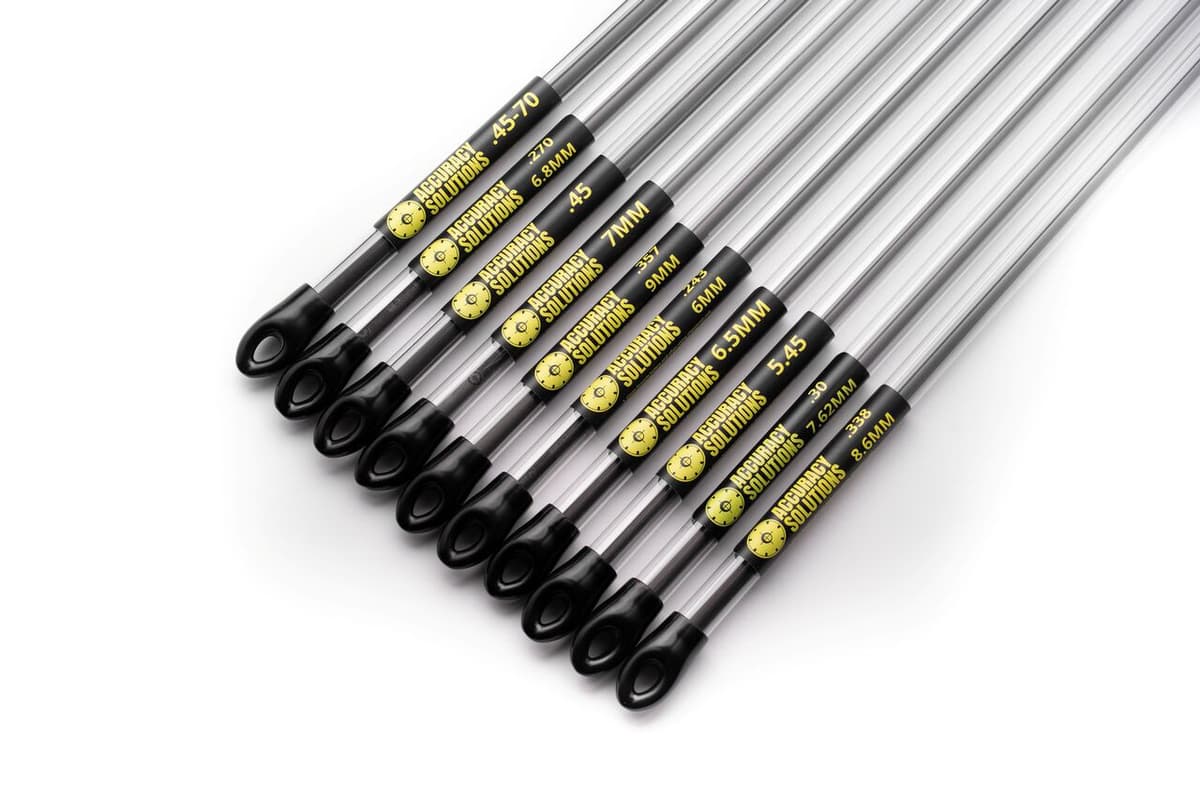
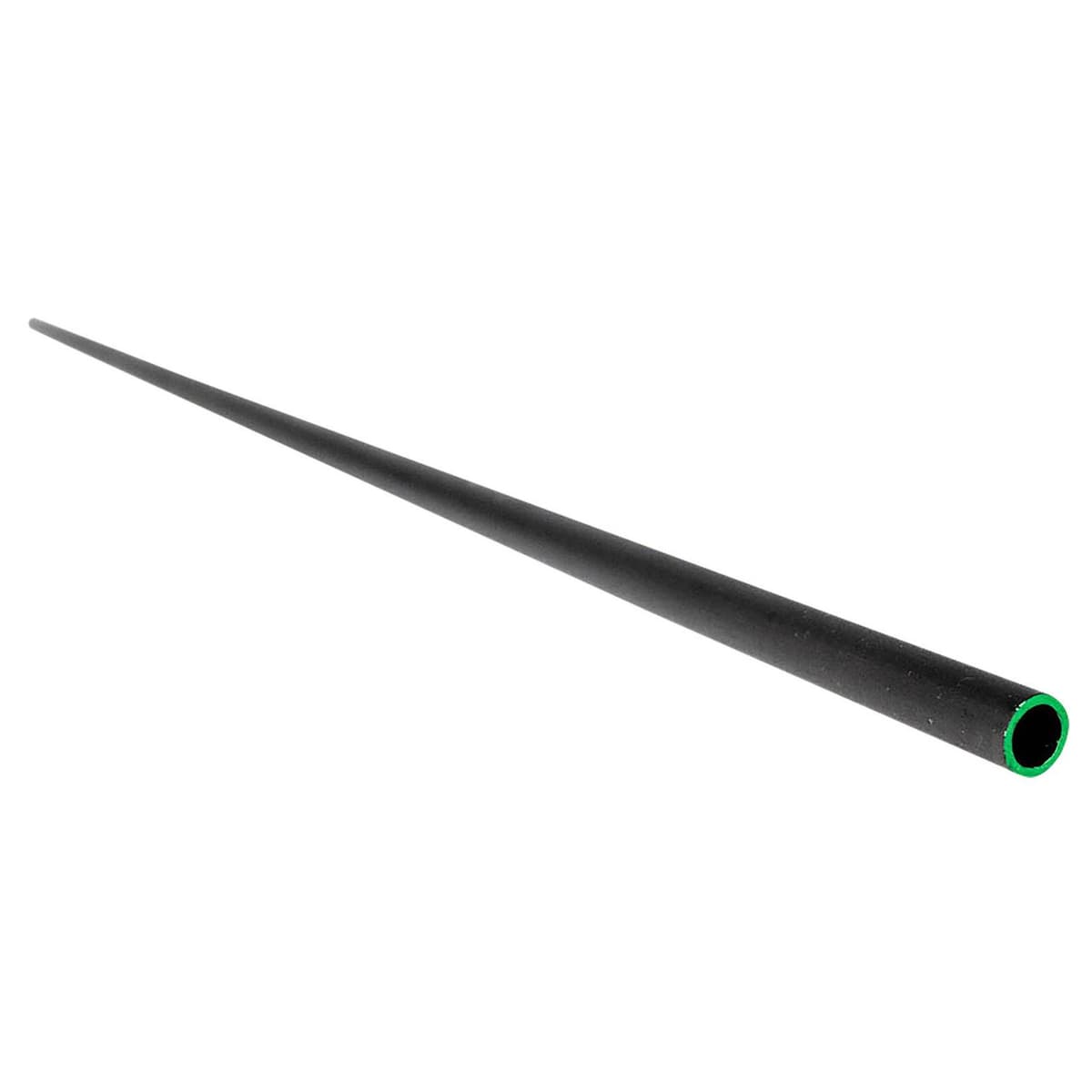
A tilt's miss grows with distance. A can tilted one degree is off by about 0.017 inch for every inch past the muzzle, so about 0.12 inch at a baffle 7 inches out, while an off-center can misses by the same amount at every baffle. Check a new can, mount or host with a caliber-correct rod before you fire; the suppressor alignment rod guide covers which rod to buy, and the suppressor mounting systems guide compares how each mount locks on.
Match the design to the host. On a direct-impingement AR-15 a flow-through or low back pressure can sends less gas back into the action and toward you; HUXWRX tells owners to leave a rifle's suppressed gas setting on unsuppressed with its cans. On a bolt action there is no gas system for a conventional baffle stack's backpressure to overdrive.
Mount and caliber come next: a can has to thread or lock onto the muzzle device on your barrel and pass the bullet with room to spare. Confirm your barrel's thread pitch with the muzzle thread checker before you pick a mount.
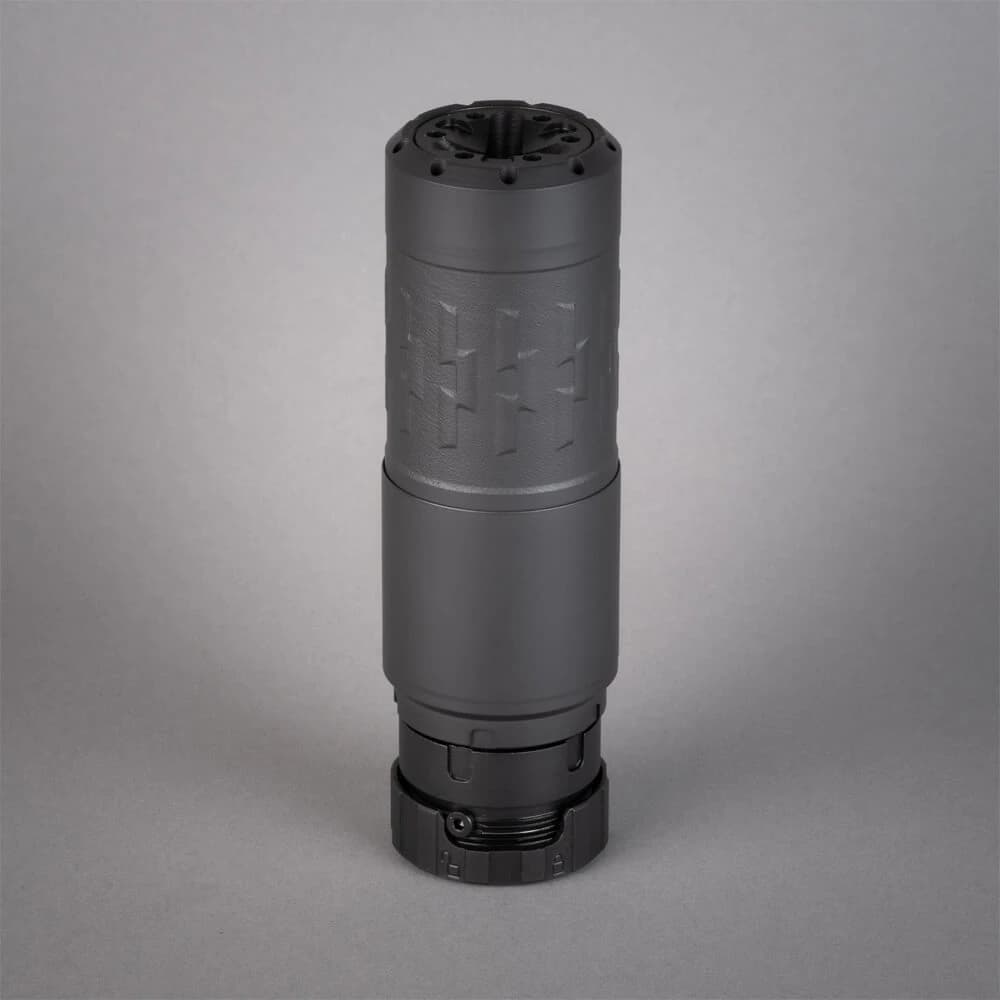
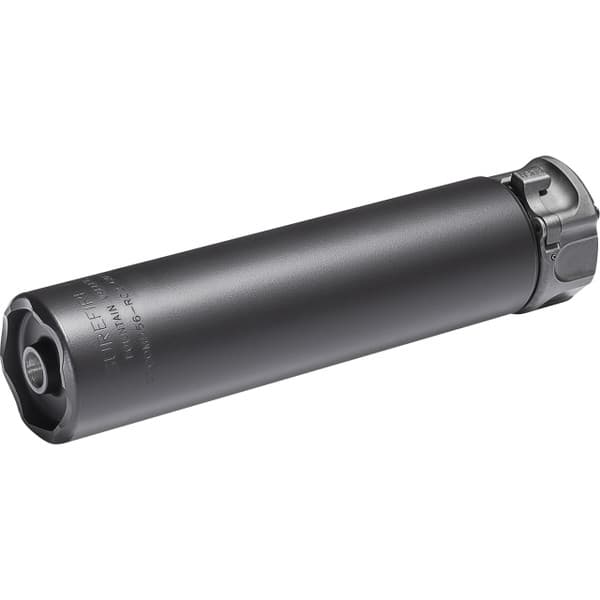
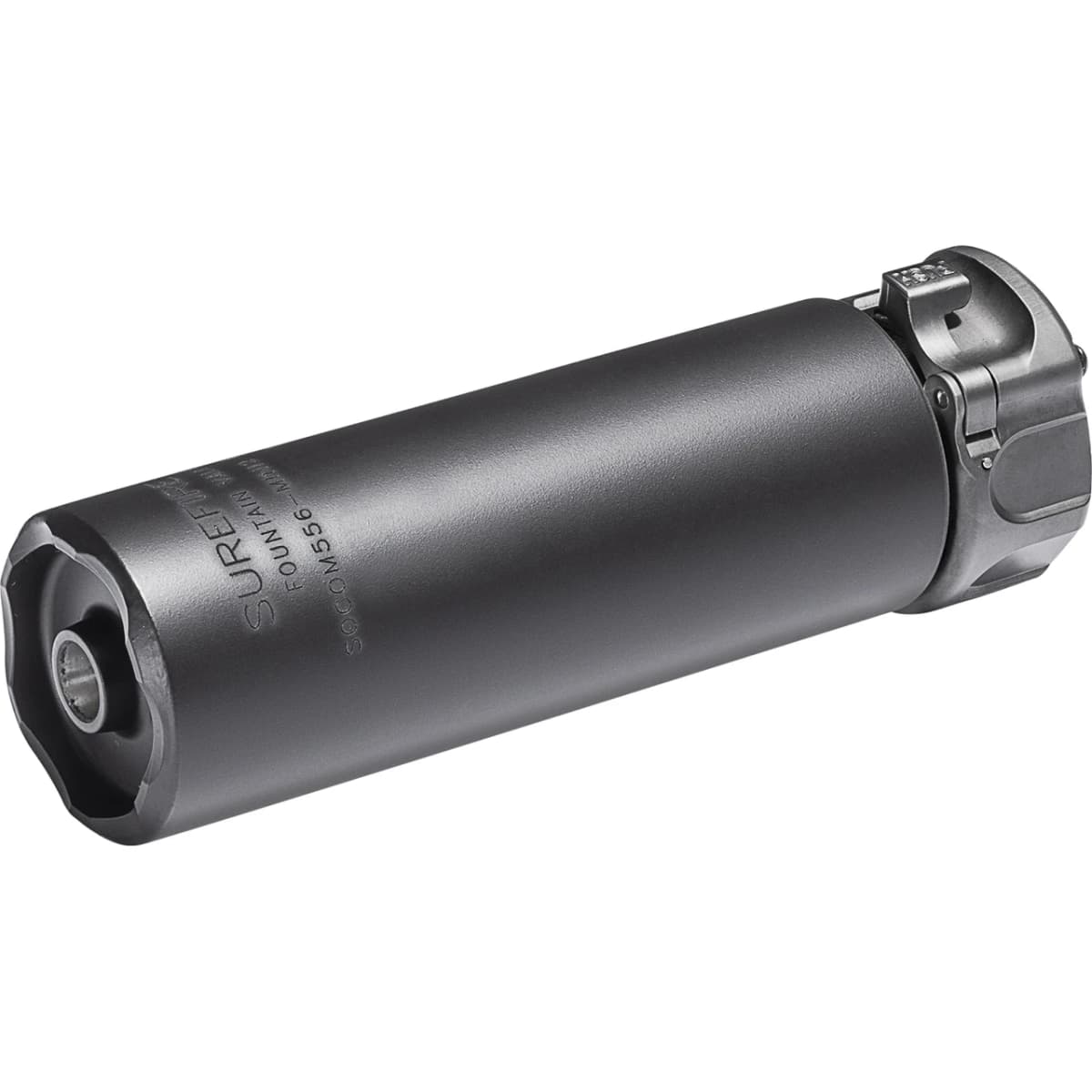
Flow-through and low back pressure 5.56 cans, SureFire SOCOM cans, and rods to check a can is concentric before the first shot.
Affiliate links - purchases support this site at no extra cost to you. (?)

Affiliate links (?)
Pick a rifle, a muzzle device and a can in the configurator, and check that the mount, threads and caliber all fit before you buy.
Launch Configurator