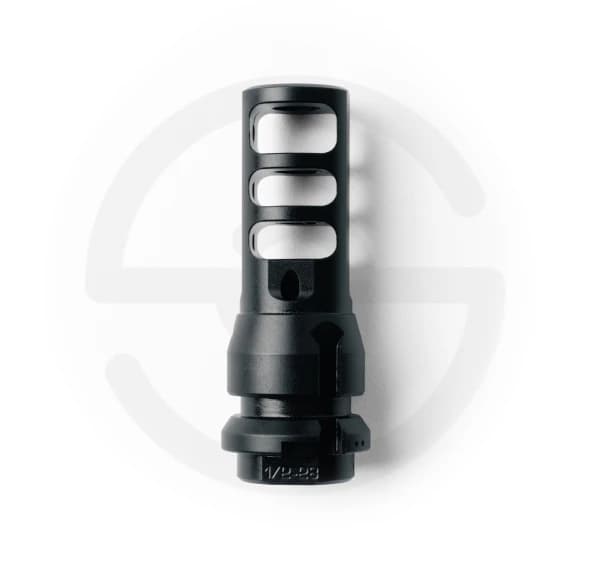
Muzzle Devices • $89.49
Dead Air KeyMo Muzzle Brake
- Muzzle brake
- KeyMo mount
$70.99$89.49Save 21%
Shop at MidwayUSA
Calculate free recoil energy, recoil velocity, and muzzle energy for any cartridge and firearm weight using the SAAMI recoil formulae. Compare two loads side by side, from .22 LR to .338 Lapua, pocket pistols to 12 gauge slugs.
Free recoil energy, recoil velocity, and muzzle energy for any load using the SAAMI recoil formulae. Pick preset loads or enter your own, then compare two setups side by side.
115 gr @ 1155 fps | 5.5 gr powder
The default range load. Baseline for every pistol recoil comparison.
Free Recoil Energy
3.4 ft-lbs
Light recoil
Muzzle Energy
341 ft-lbs
Recoil Velocity
10.7 fps
Recoil Impulse
0.63 lb-s
Power Factor
133
Gas share of momentum: 7%
230 gr @ 850 fps | 6 gr powder
Classic hardball. The slow heavy push in the 9mm-vs-45 debate.
Free Recoil Energy
5.2 ft-lbs
Moderate recoil
Muzzle Energy
369 ft-lbs
Recoil Velocity
11.6 fps
Recoil Impulse
0.90 lb-s
Power Factor
196
Gas share of momentum: 4%
Load B generates 55% more free recoil energy than Load A.
Free recoil energy in ft-lbs. Reference loads use typical firearm weights; your loads use the weights entered above.
Free recoil per the SAAMI recoil formulae; preset powder charges are typical published values for each load. Free recoil ignores gas redirection by muzzle brakes and suppressors; the gas-share readout shows the slice of momentum those devices can attack.
Free recoil energy comes from conservation of momentum: the gun's rearward momentum equals the forward momentum of the bullet plus the propellant gas. This calculator implements the SAAMI recoil formulae, the industry-standard method, which models gas velocity as 1.75x muzzle velocity for rifles and 1.5x for handguns and shotguns. Four inputs decide everything: projectile weight, muzzle velocity, powder charge weight, and firearm weight; shotguns add the wad, which recoils with the shot. Muzzle energy is simpler; it is the bullet's kinetic energy, bullet weight times velocity squared divided by 450,436.
Preset powder charges are typical published values for each load, military specification where one exists (26 grains for M193, 46 grains for M80 ball). If you handload or shoot something unusual, switch the load panel to custom and enter your own charge weight. Muzzle velocity has the largest effect on both numbers, and barrel length changes it substantially; our ballistics calculator carries per-barrel-length velocity data for common loads, and the barrel length guide covers how much speed each inch is worth.
Free recoil is the honest physics number, but it is not the whole feel. Action type, stock fit, and how fast the impulse arrives all shape felt recoil, which is why a gas-operated .308 feels softer than a bolt gun of the same weight and why the caliber-war threads never end. For the full cartridge-selection picture, see the .380 vs 9mm vs .45 ACP comparison and the .30-06 vs .308 breakdown.
Three levers actually move the number: add gun weight, redirect propellant gas, or shoot a lighter load. Weight is the most reliable; recoil energy is inversely proportional to firearm weight, so two added pounds on an 8 lb rifle cuts recoil energy by 20 percent. The calculator's gas-share readout shows the second lever's ceiling: on high-intensity rifle cartridges, 30 to 45 percent of recoil momentum is propellant gas, and that is the share a muzzle brake can attack.
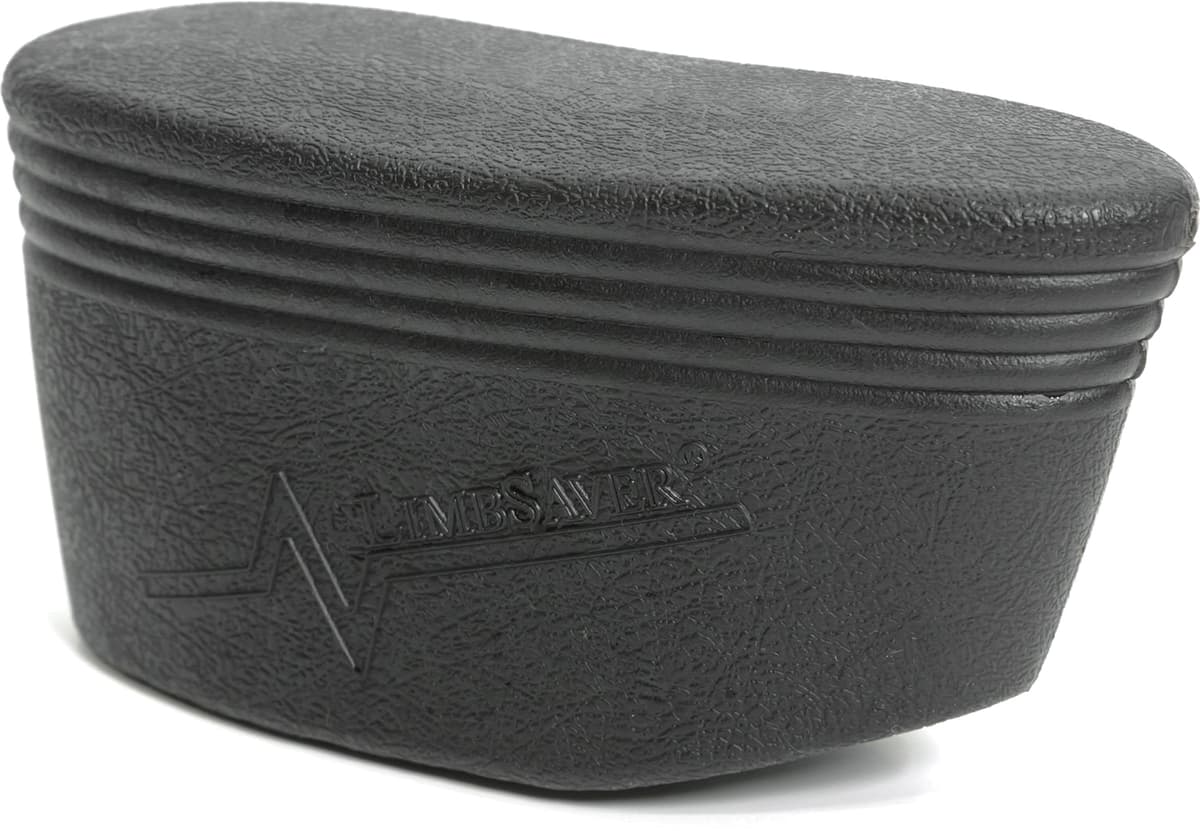
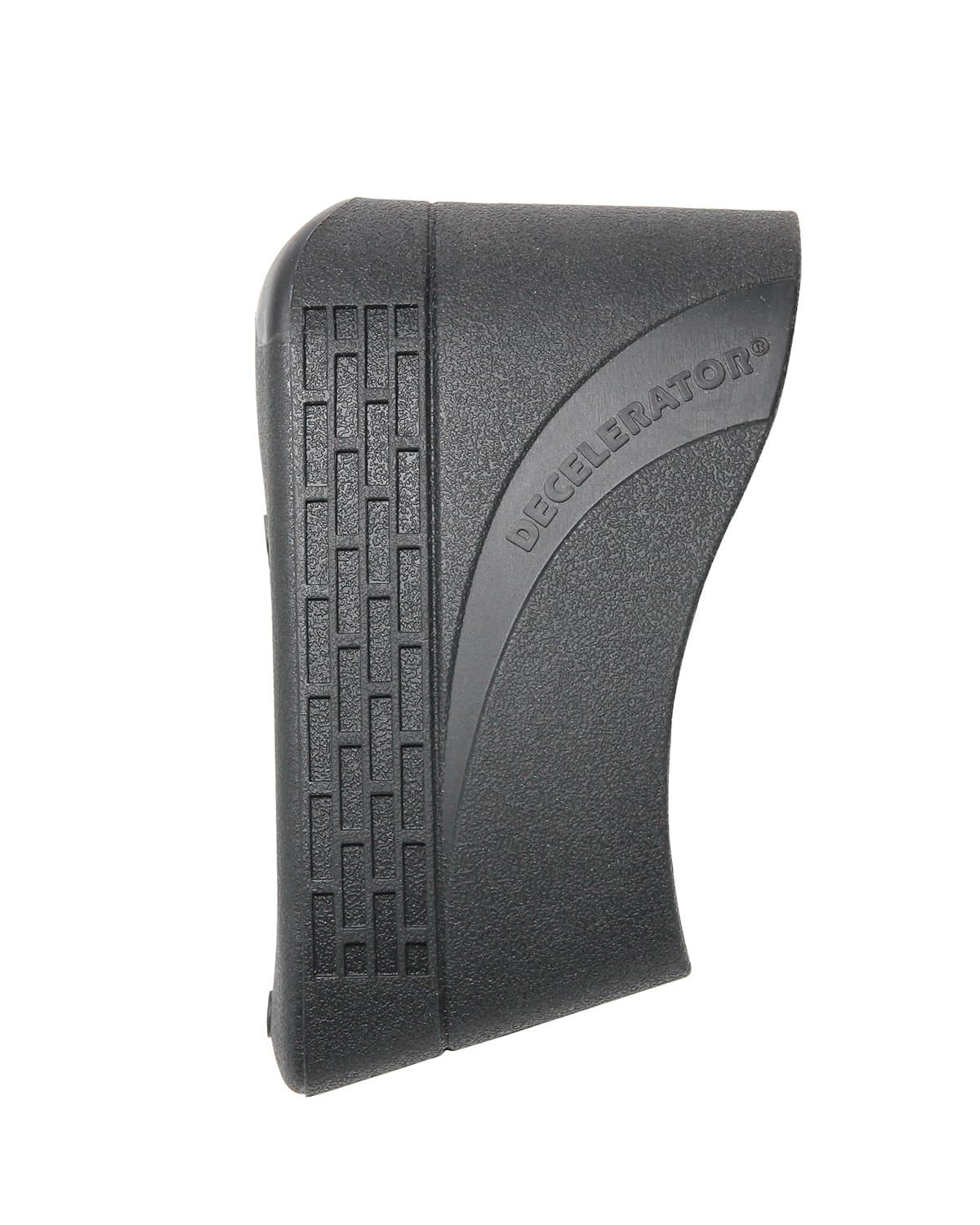
A quality brake measurably cuts 40 to 50 percent of recoil energy on magnum rifles at the cost of blast and concussion; our muzzle device guide covers brake versus compensator versus flash hider tradeoffs in depth. Suppressors cut 20 to 30 percent of felt recoil while eliminating the blast problem, and with the NFA tax at $0 and eForm 4 approvals running days, they are a practical recoil-management option; check current wait times in the suppressor tracker. On shotguns and hard-kicking bolt guns, a quality recoil pad spreads the same impulse over more time and area, which changes felt recoil more than any spec sheet suggests.
Affiliate links - purchases support this site at no extra cost to you. (?)
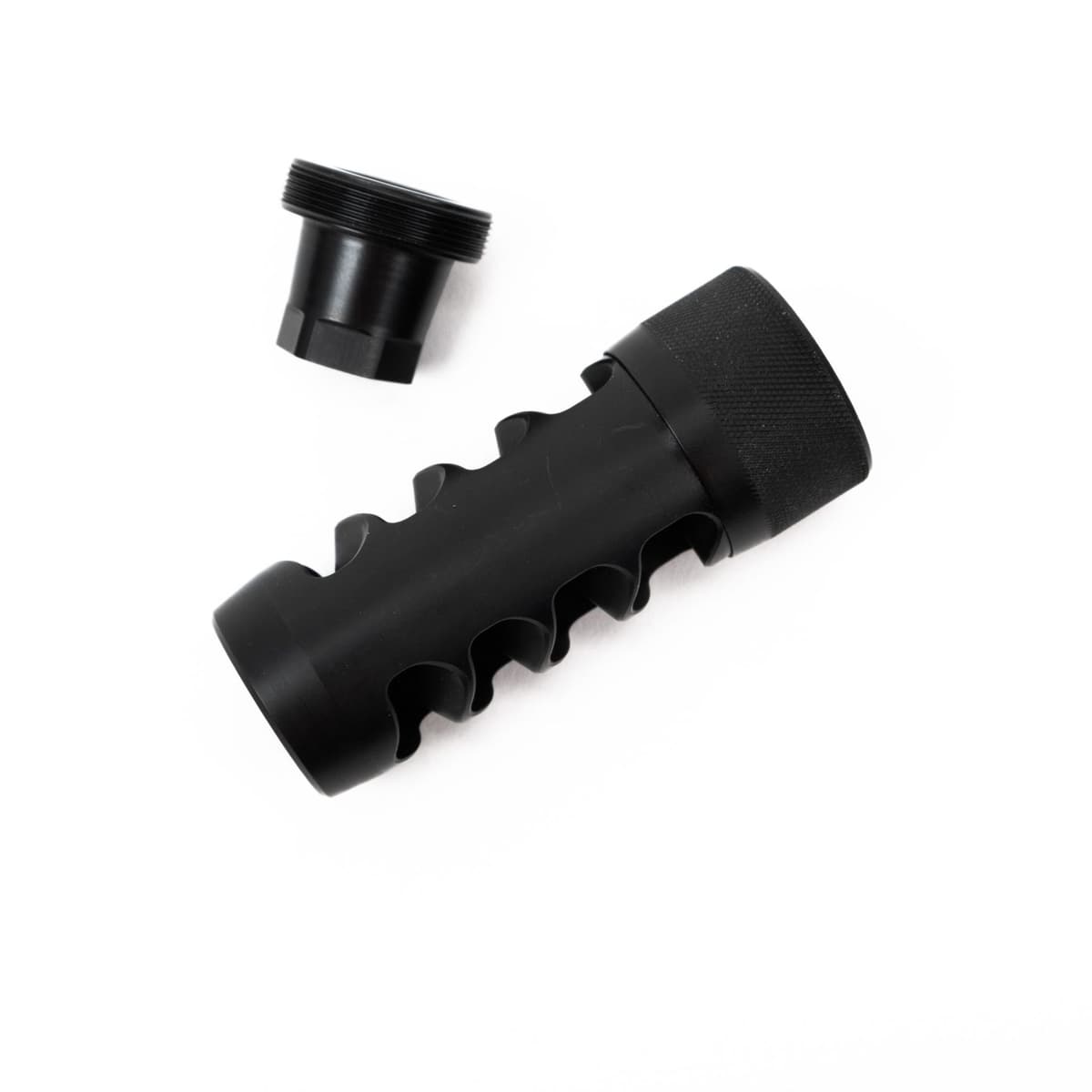
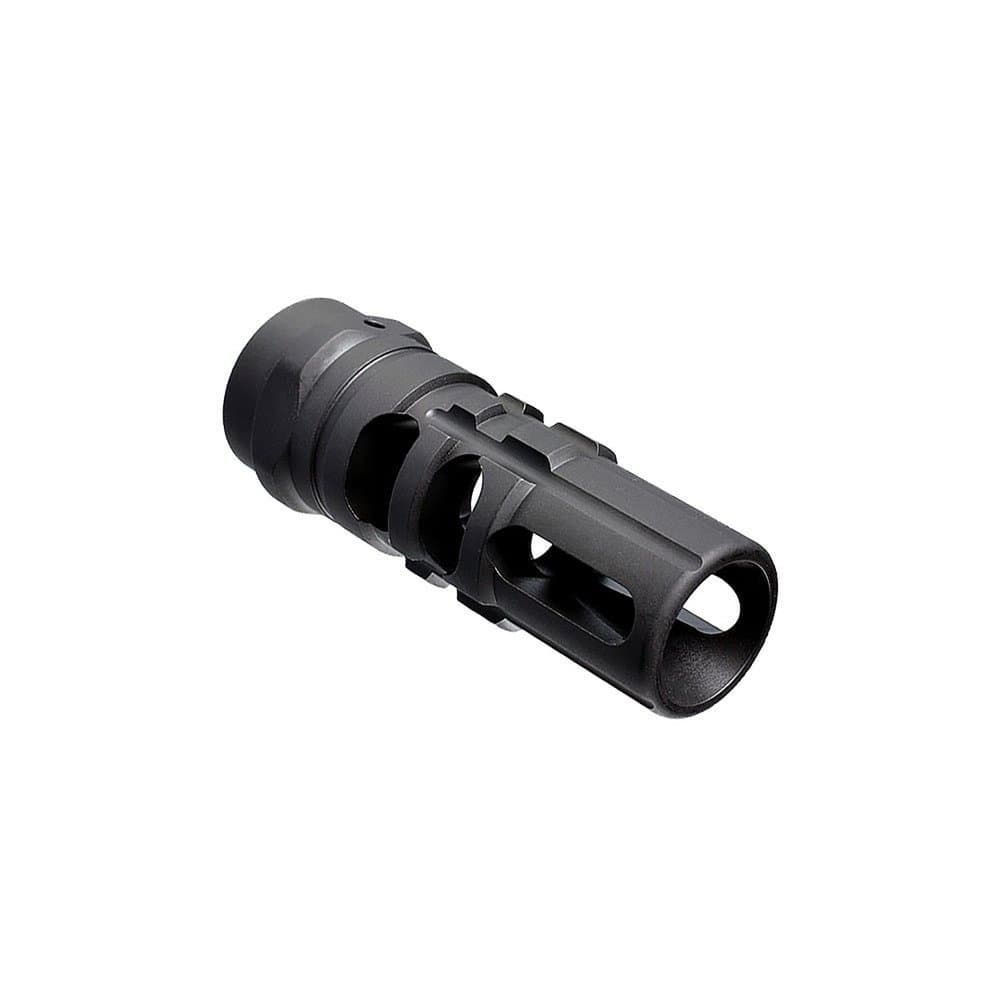
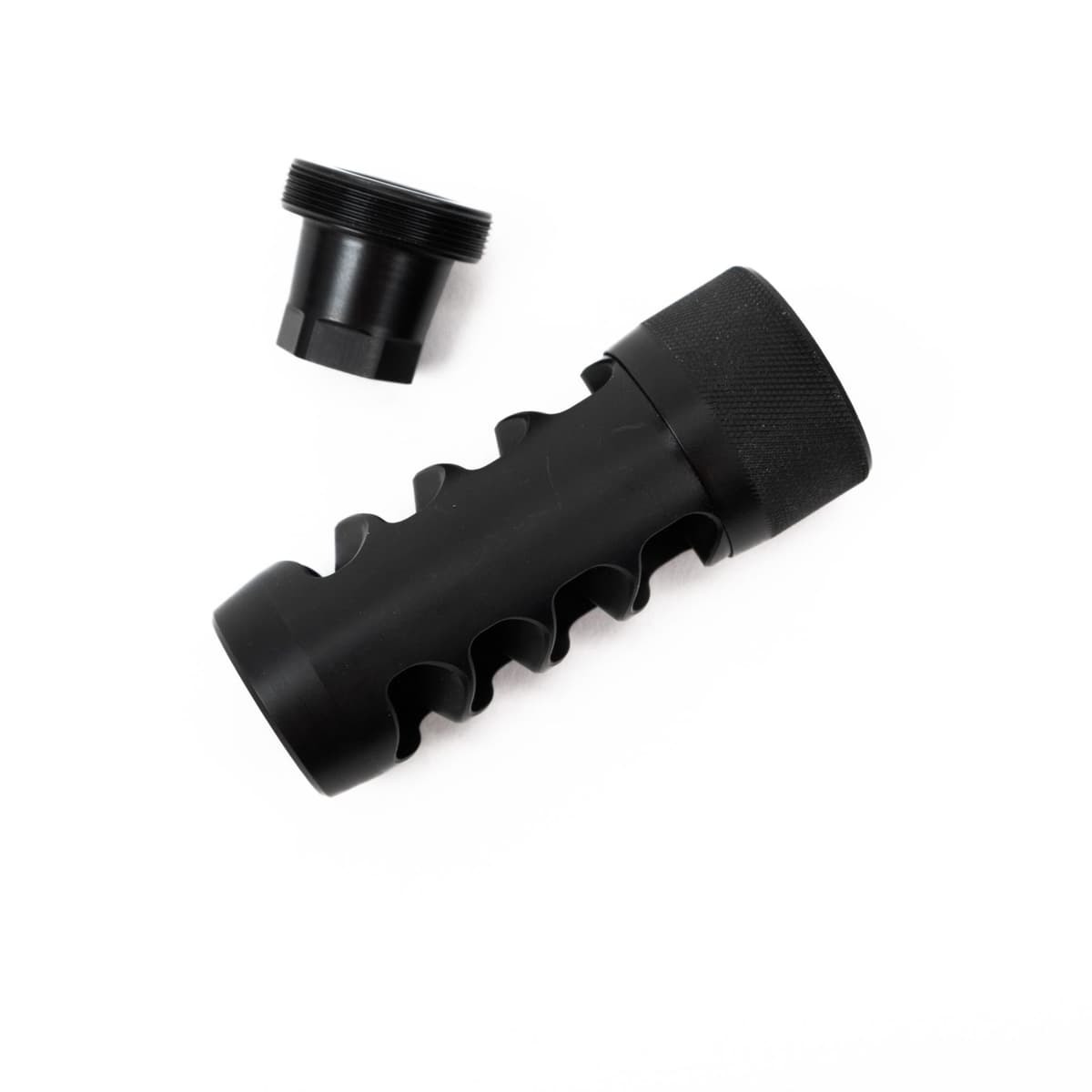
Affiliate links (?)
Affiliate links (?)
Affiliate links (?)
Free recoil energy comes from conservation of momentum using the SAAMI formula: the firearm's rearward momentum equals the forward momentum of the bullet plus the propellant gases. Gun velocity V = (bullet weight x muzzle velocity + powder charge x gas velocity) / (7000 x gun weight), and recoil energy = gun weight x V squared / 64.34. SAAMI models gas velocity as 1.75x muzzle velocity for rifles and 1.5x for handguns and shotguns. You need four inputs: bullet weight in grains, muzzle velocity, powder charge weight, and firearm weight in pounds.
.45 ACP produces nearly twice the free recoil energy of 9mm from the same weight pistol. A 230gr .45 at 850 fps generates about 5.2 ft-lbs in a 2.5 lb pistol; a 124gr 9mm at 1,125 fps generates about 2.8 ft-lbs in that same gun, and about 3.7 ft-lbs in a typical 1.9 lb compact. The character differs too: .45 delivers a slower push, 9mm a quicker snap. That recoil gap, plus higher capacity, is a big part of why most shooters run 9mm today.
Muzzle energy is the bullet's kinetic energy as it leaves the barrel: bullet weight in grains times velocity squared, divided by 450,436. The common field guideline for whitetail deer is roughly 1,000 ft-lbs of retained energy at the distance you shoot, which most centerfire rifle cartridges from .243 Win up deliver well past 200 yards. Energy is only a screening number though; bullet construction and shot placement matter more than an extra 300 ft-lbs on paper.
Yes, and it is the most reliable recoil reduction there is. Free recoil energy is inversely proportional to firearm weight: double the gun weight and you halve the recoil energy. Going from a 6 lb carbon-fiber hunting rifle to an 8 lb rifle cuts recoil energy by 25 percent with zero change to the load. This is why precision rifles weigh 12+ lbs and why featherweight mountain rifles in magnum chamberings are so unpleasant to shoot.
An effective brake redirects propellant gas sideways or rearward, cancelling much of the gas portion of recoil momentum. On high-intensity rifle cartridges, gas can account for 30 to 45 percent of total recoil momentum, which is why quality brakes measurably cut 40 to 50 percent of recoil energy on cartridges like .300 Win Mag. The tradeoff is severe blast and concussion for the shooter and everyone nearby. On low-gas-volume loads like .45 ACP or subsonic .300 BLK there is much less gas to redirect, so a brake does far less.
Yes, in two ways: a suppressor traps and slows propellant gas instead of letting it jet forward at high velocity, cutting the gas term of recoil momentum, and it adds weight at the muzzle. The result on most centerfire rifles is a 20 to 30 percent reduction in felt recoil plus reduced muzzle rise, without a brake's blast. With the NFA transfer tax at $0 and eForm 4 approvals running days rather than months, a can is now a realistic recoil-management pick, not just a hearing protection one.
Around 15 ft-lbs of free recoil energy is the traditional comfort ceiling for extended rifle shooting, which covers .243 Win, 6.5 Creedmoor, and 7mm-08 in normal-weight rifles. 20 ft-lbs (.308, .30-06 class) is manageable but tiring over a long session, and 30+ ft-lbs (.300 Win Mag and up, 12ga slugs) causes flinch in most shooters without a brake, suppressor, or added gun weight. For pistols, anything under about 5 ft-lbs runs comfortably; the same energy in a lighter gun feels sharper because the gun accelerates faster.
Because felt recoil depends on gun weight, stock geometry, action type, and recoil velocity, not just the cartridge. A 124gr 9mm generates 2.4 ft-lbs in a 2.9 lb steel-frame pistol but 5.3 ft-lbs in a 1.3 lb micro carry gun, more than double, and the lighter gun also recoils at a higher velocity, which reads as snap. Gas-operated semi-autos spread the impulse over a longer time than fixed-breech guns, which is why a gas gun in .308 feels softer than a bolt gun of equal weight firing the same load.
Use the Configurator to pick a platform and components matched to how much recoil you actually want to manage, from soft-shooting PCCs to braked magnum rifles.
Launch Configurator