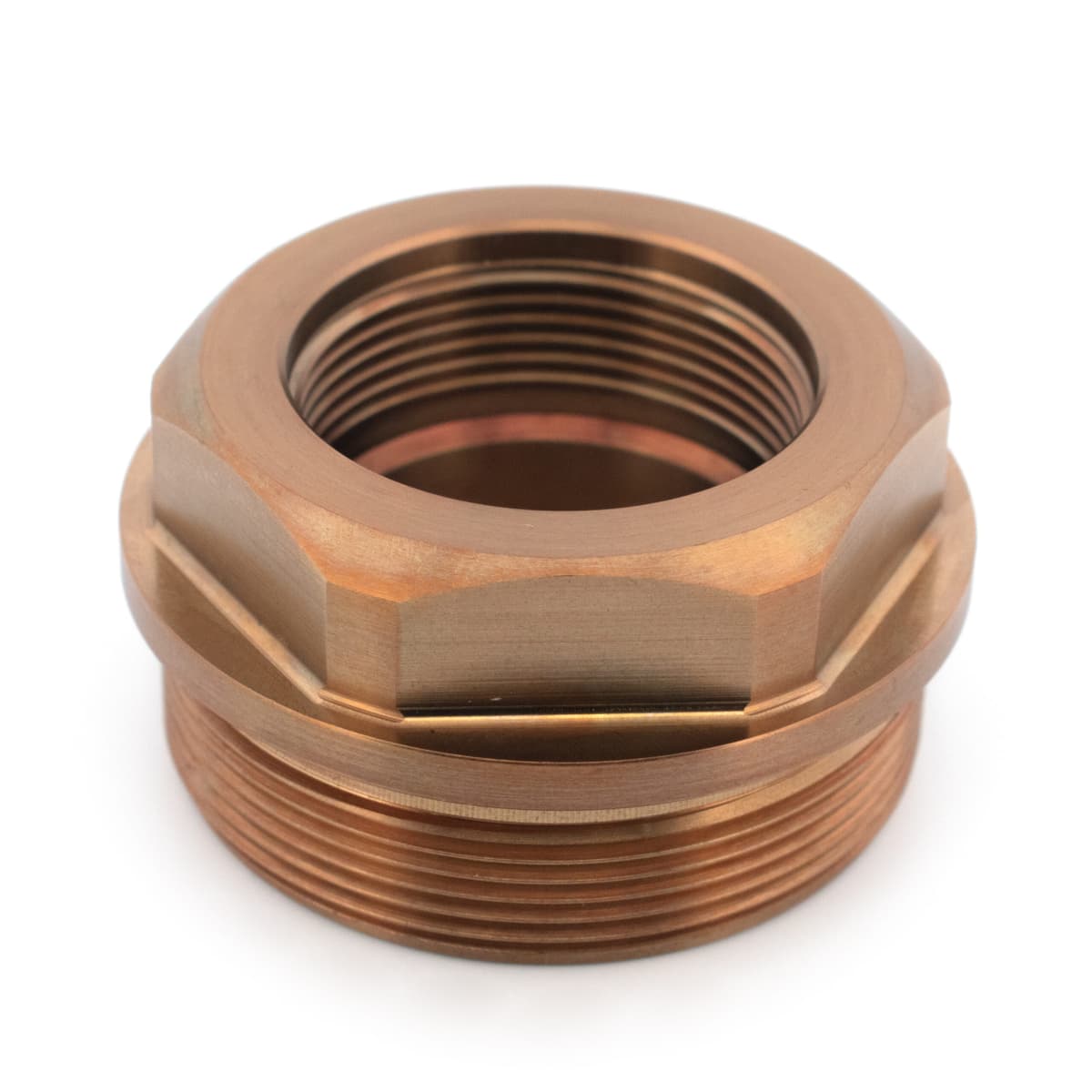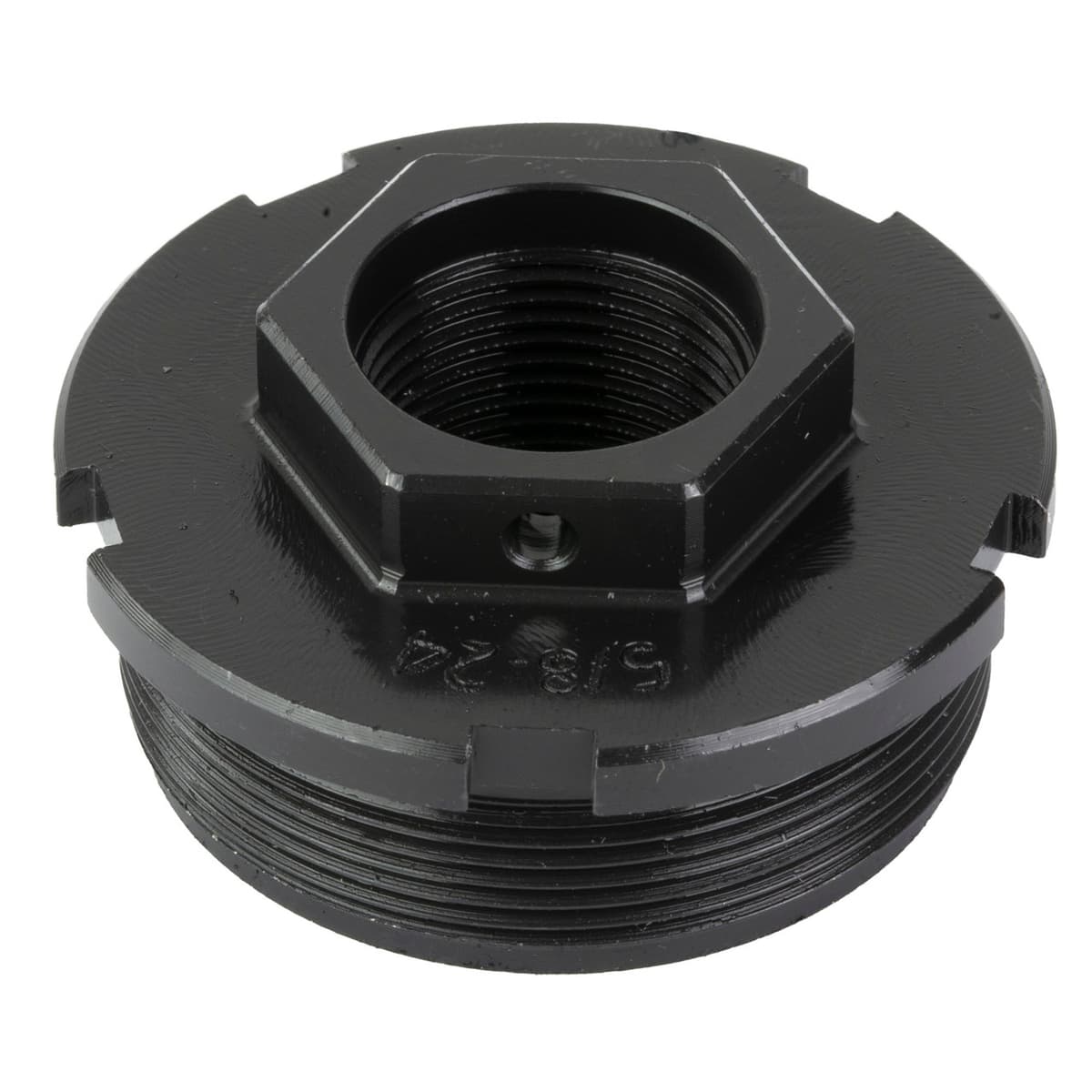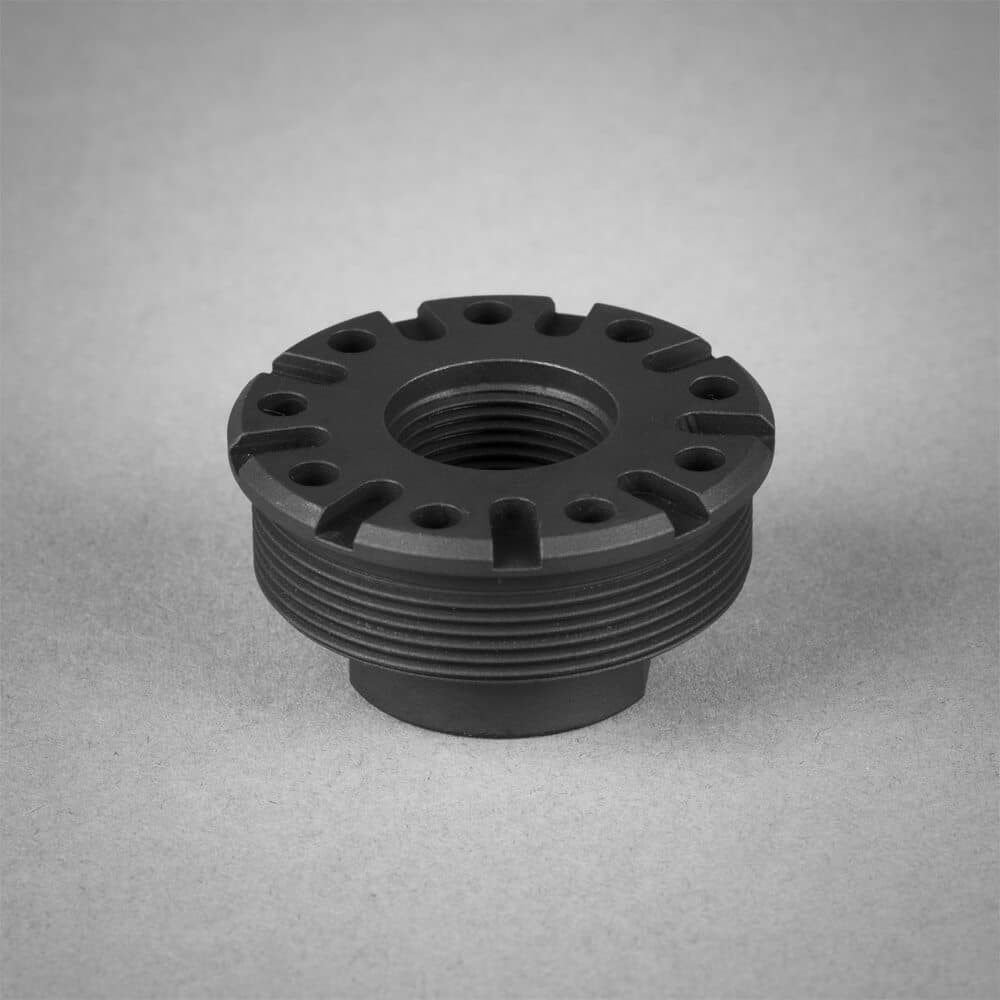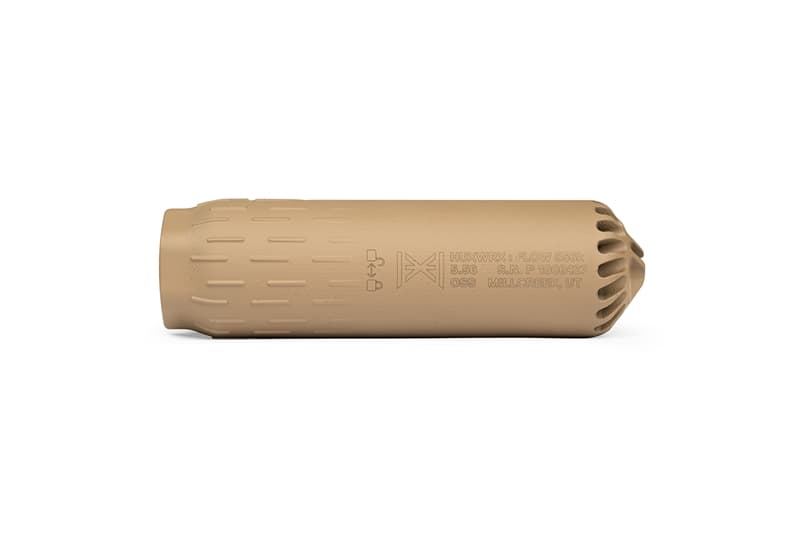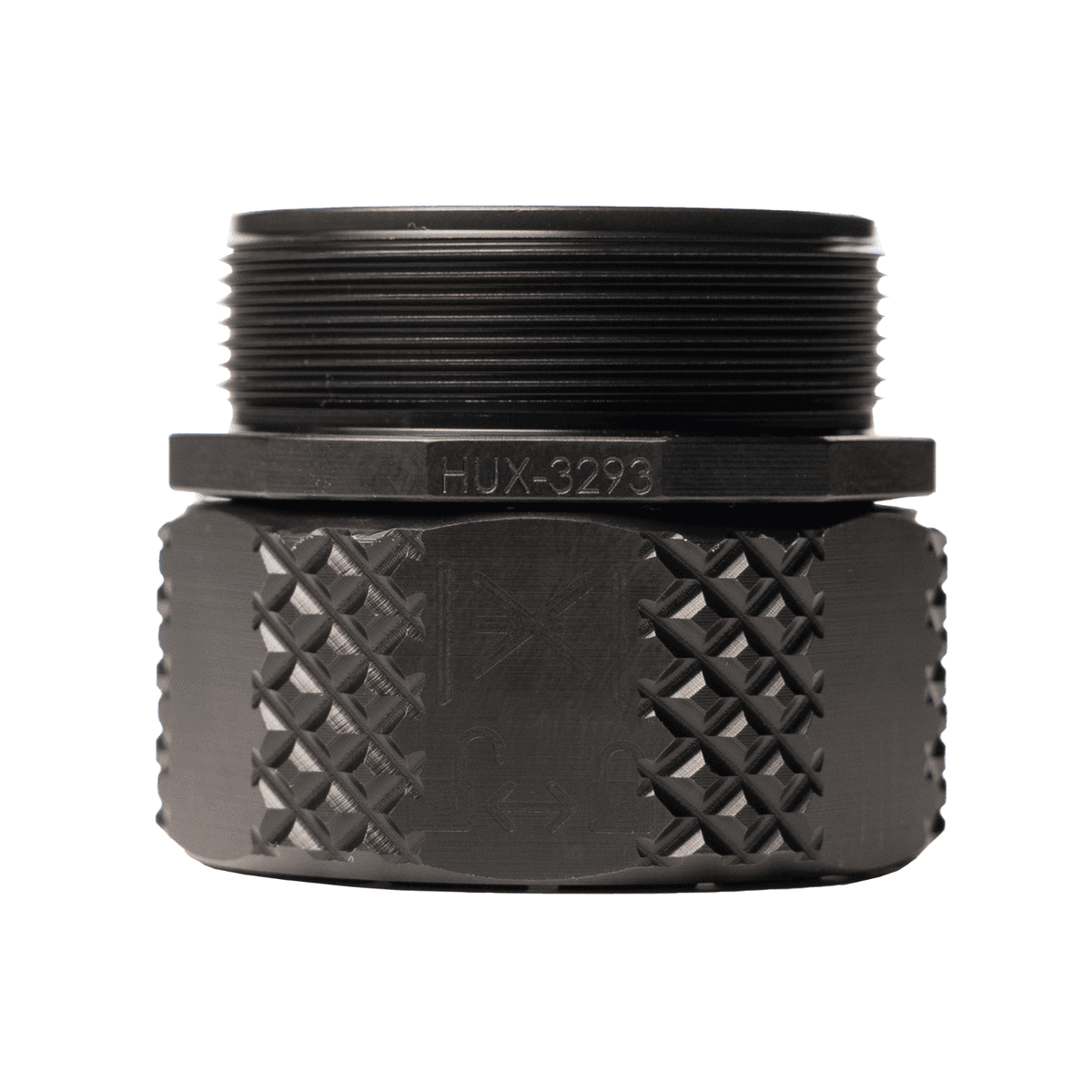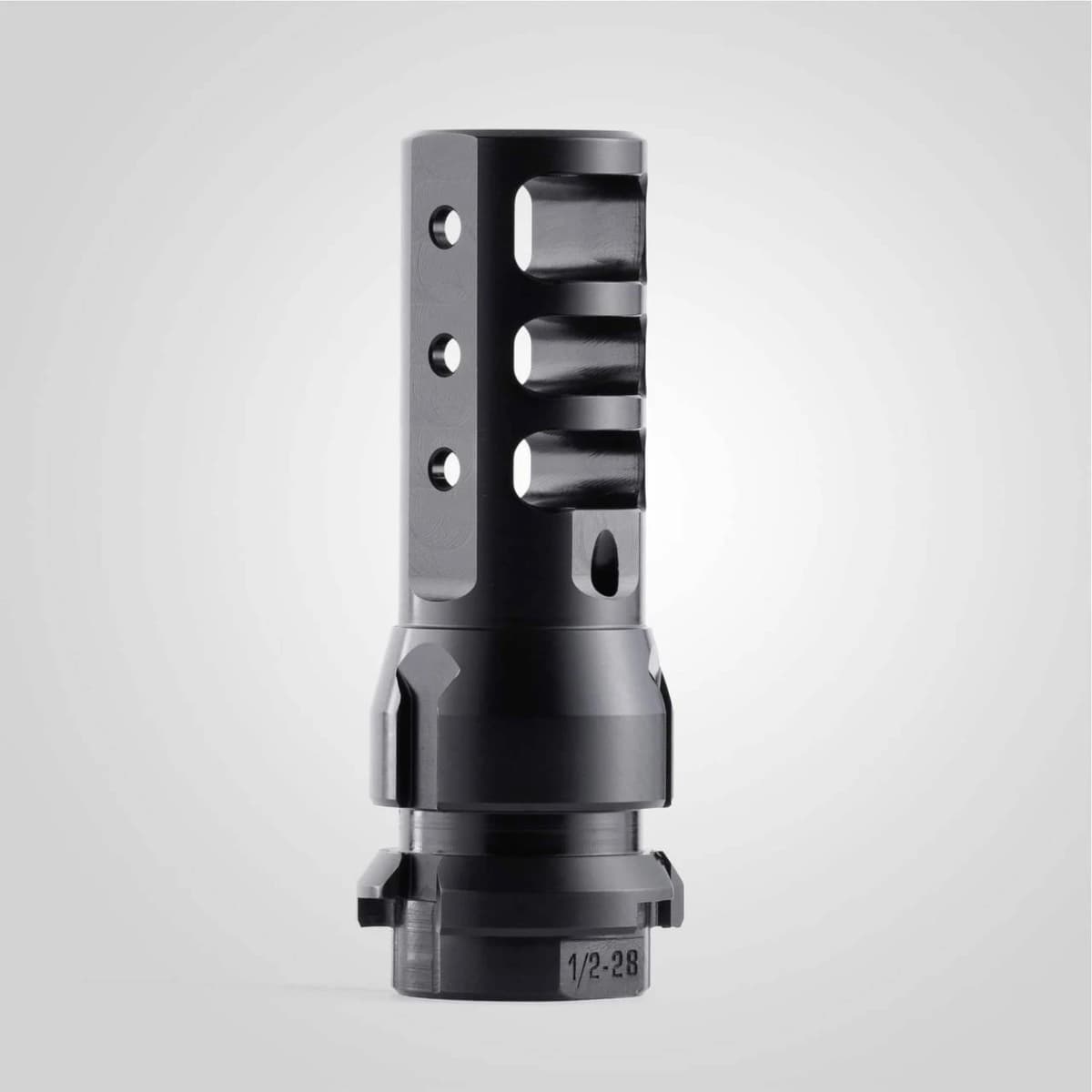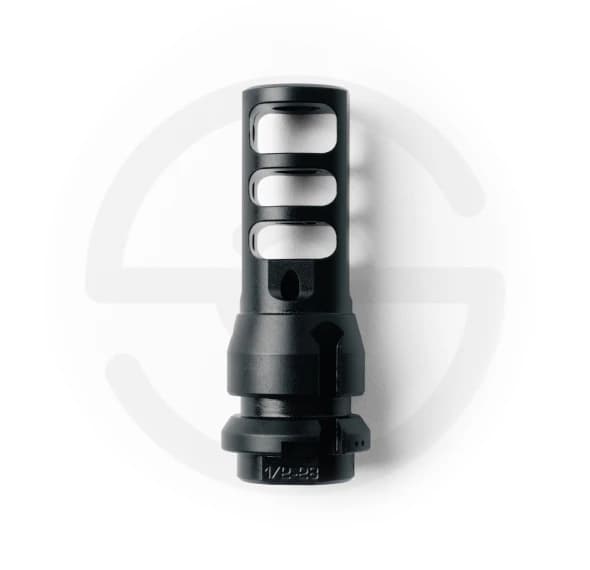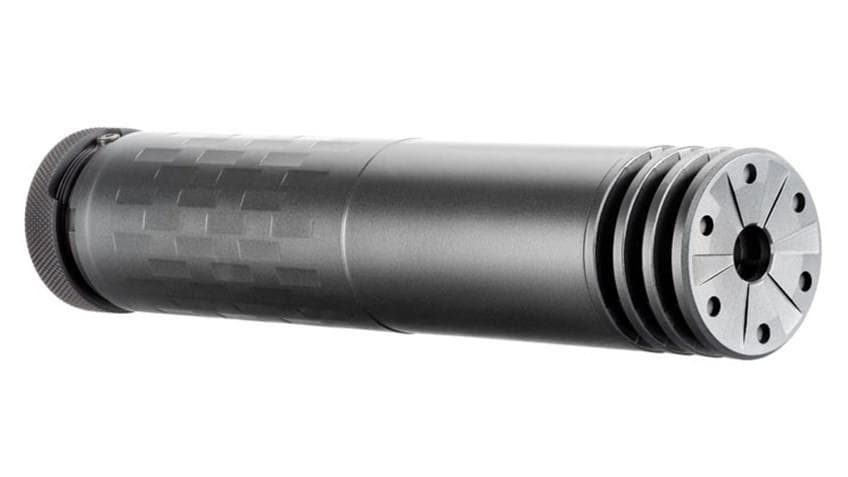
SilencerCo Omega 300
Versatile .30 caliber suppressor
- Ships with a 5/8x24 Bravo direct-thread mount
- Takes ASR, KeyMo and Xeno HUB mounts

Which rifle suppressor mount to buy in 2026: Plan-B with the Rearden Atlas, Dead Air Xeno, HUB 1.375x24 direct thread, HUXWRX, Dead Air KeyMo, SureFire SOCOM, and how to adapt legacy ASR cans. A mount finder shows every chain for your thread, caliber and barrel length.
Affiliate links (?)
The best rifle suppressor mount for most shooters in 2026 is the Q Plan-B taper, with a Rearden Atlas threaded into a can with a HUB 1.375x24 rear. A Q Cherry Bomb and the Atlas weigh about 4.2 oz together, about half a Dead Air KeyMo brake and adapter; the taper is an open pattern with devices from Q, Rearden and KAK Industry; and nothing in the lock moves. Dead Air Xeno is the next pick, HUB direct thread is the answer for a single rifle, and HUXWRX, KeyMo, SureFire SOCOM and SilencerCo ASR each fit a specific rack. The HUB rear keeps the choice reversible: swap one adapter and the same can moves to another system. This guide covers how each mount locks, what to buy for it, and a finder that shows every mount chain for your barrel.
Pick the mount by how many rifles will share the can, then buy a HUB can so the choice stays reversible. In order of what we recommend for a rifle today:
Still choosing the can itself? Our suppressor buying guide ranks cans by caliber and budget, and the best HUB suppressors guide covers the cans that take every mount on this page.
Pick your caliber, thread and barrel length to see each mount chain a can supports and the parts you still need to buy.
12 suppressors mount on a 16 in 5.56 NATO / .223 Rem barrel. Pick one to see the parts for each mount system.
A rifle suppressor attaches through a chain of up to four parts: the barrel thread, a muzzle device, a mount or adapter on the back of the can, and the can itself.
The barrel thread is usually 1/2x28 on 5.56 and 5/8x24 on .308 and 6.5 Creedmoor; .300 Blackout barrels come in both. On a quick-detach system the muzzle device threads onto it, is timed with shims and torqued (SureFire specifies 20 to 30 lb-ft with Rocksett for its adapters, HUXWRX about 33 ft-lb), and stays on the rifle. The can-side part is what locks onto that device. On direct thread there is no device: the mount in the can screws straight onto the barrel. If you are not sure which pitch your barrel has, the muzzle thread checker lists it by caliber.
HUB is the thread that makes the can-side part swappable. It is a 1.375x24 thread, 1-3/8 inch diameter at 24 threads per inch, machined into the rear of the suppressor.
The SilencerCo Omega 300, launched in 2015, popularized it; Dead Air, SilencerCo's Bravo-pattern cans and most modern makers now use it. A HUB can takes whichever mount you thread into it: a Rearden Atlas for Plan-B, a Xeno or KeyMo adapter, a direct-thread mount, a SilencerCo Bravo ASR mount, the HUXWRX HUB QD Adapter 2.0, or SureFire's Fast-Attach Hub. It only works in one direction. A can without HUB threads cannot be converted to HUB, and some cans build the mount into the rear instead: SureFire SOCOM cans, HUXWRX FLOW cans and Knight's Armament QDC cans carry their locking hardware on the can itself. SilencerCo's Charlie rear is 1.375x32, the same diameter as HUB with a different pitch, so HUB adapters do not fit it.
To watch the lock motions in 3D, the muzzle device visualizer's mounting mode puts a can on SureFire SOCOM, Knight's Armament QDC, Dead Air Xeno and HUXWRX mounts step by step.

Versatile .30 caliber suppressor
Affiliate links - purchases support this site at no extra cost to you. (?)
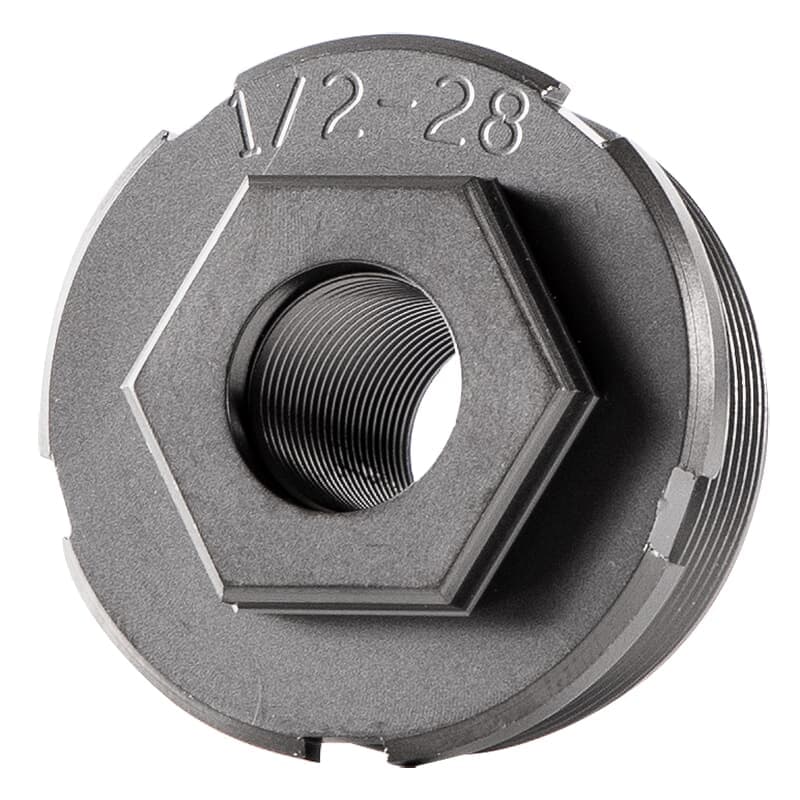
Plan-B is the best rifle suppressor mount in 2026: a thread-to-taper QD with a lighter stack than either Dead Air system, an open device pattern, and no moving parts in the lock. The can threads onto the device until the tapers seat, and Rearden specifies 10 ft-lb on the suppressor.
In 1/2x28, a Q Cherry Bomb (2.0 oz) and a Rearden Atlas Gen 2 (2.15 oz) total about 4.2 oz. A Xeno A1 flash hider and its 1.92 oz HUB adapter come to about 5.1 to 5.3 oz, and a 1/2-28 KeyMo brake (4.42 oz) with the DA428 KeyMo HUB Adapter (4.30 oz) to about 8.7 oz. There is no detent ring, wave spring or lock ring in the joint: the taper and the install torque hold the can.
The Q Cherry Bomb is the original Plan-B device, 1.64 in long, with 360 degree ports that need no timing or shims, and it is the host for Q's own cans. The Rearden Atlas Gen 2 is how a HUB can joins: it threads into the 1.375x24 rear, adds about 0.400 in, and Rearden lists it for the Cherry Bomb and other Plan-B devices, so a Dead Air, SilencerCo Bravo or other HUB can runs on the same rack.
The pattern is open, so extra hosts are cheap. Q, Rearden and KAK Industry all make Plan-B taper devices; KAK offers its Universal in sixteen thread pitches and adds A2 and A7 flash-hider patterns the brake-only Cherry Bomb does not offer, so the rifles you suppress least often can still carry a compatible device. KAK itself notes that some suppressor makers will not honor warranty claims when another brand's muzzle device is used with their can, so check your can maker's policy before mixing brands.

A 2.0 oz Plan-B host with no timing; Q cans mount directly and any HUB can joins through a Rearden Atlas

Putting a HUB can on Plan-B taper devices

Putting a Plan-B host on every rifle in the rack without paying Cherry Bomb money per gun
Affiliate links - purchases support this site at no extra cost to you. (?)
New mount comparisons, HUB adapter guides, and suppressor purchasing updates sent when we publish.
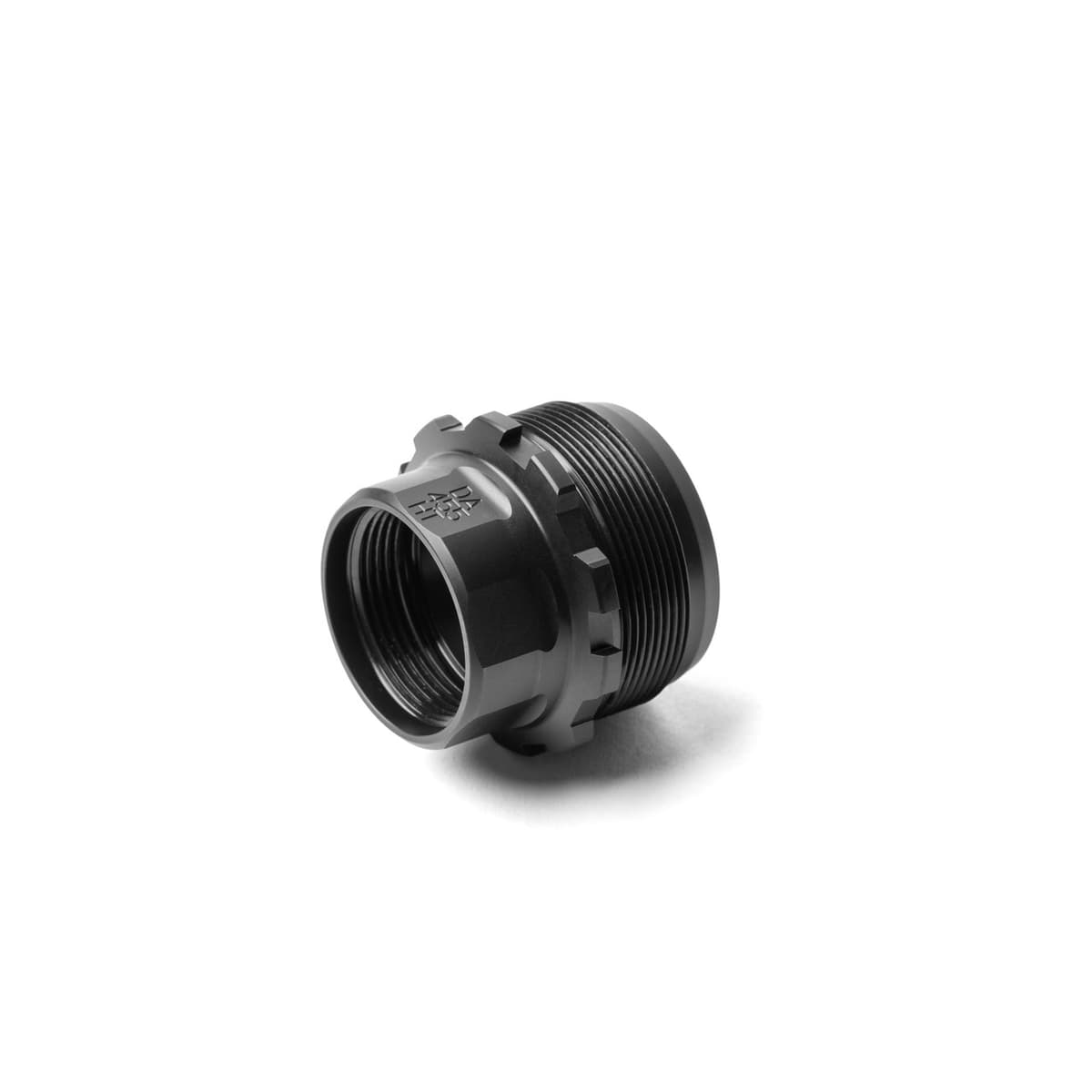
Dead Air Xeno is our second pick and Dead Air's lighter QD: the whole can threads onto the muzzle device with left-hand threads, counterclockwise seen from above, until the internal tapers of the adapter and device touch, and then you torque it by hand with both hands.
Turning it clockwise breaks the taper and unscrews it. The left-hand thread has a specific job: Dead Air uses it so that unscrewing the can from the device never unthreads the adapter from the can, and so you can confirm the mount is still tight when you install it.
The DA455 Xeno HUB Adapter ($111.99) is 1.92 oz and 1.241 in long in nitrided 4140, which Dead Air picked because it resists the thread galling it sees on uncoated 17-4 mounts. Its 1-1/8 in socket and 1.5 in hook-spanner surfaces stay reachable with the can installed, which matters on a can that has fired hundreds of rounds without coming off. Hosts include the Xeno A1 flash hider and the 2.70 oz Xeno Omni Brake, .30 bore in every thread.

5.56 rifles that should keep a flash hider on when the can comes off

.308 and 6.5 Creedmoor hosts on the Xeno pattern

Putting any 1.375x24 HUB can on Xeno muzzle devices
Affiliate links - purchases support this site at no extra cost to you. (?)
Direct thread is the right mount when a can lives on one rifle: the suppressor screws straight onto the barrel threads through a HUB mount under an inch long, with no muzzle device to buy.
A HUB direct-thread mount threads into the back of the can, and the whole suppressor then screws onto the bare barrel threads; it comes off counterclockwise. Dead Air's HUB Fixed Mount is 0.765 in long, 1.84 oz in 1/2-28 and 1.62 oz in 5/8-24, and SilencerCo says its Bravo direct-thread mount makes a can 3/4 in shorter than its ASR mount. There is no muzzle device to buy, time or torque. The cost is speed: retention is thread friction alone, so moving the can to another rifle means unscrewing it from the barrel, and a HUB can keeps the option of threading in a QD adapter the day a second rifle needs it.

One 5.56 rifle that keeps its HUB can on full time

A single .308 or 6.5 Creedmoor precision rifle

Omega 300 and other Bravo-pattern SilencerCo owners going direct thread on a 5.56 host
Affiliate links - purchases support this site at no extra cost to you. (?)
HUXWRX Torque Lock is the mount for HUXWRX FLOW flow-through cans: the can threads onto a HUXWRX QD flash hider or brake left-handed, and the gas leaving the can keeps it seated.
You thread the can on counterclockwise until hand-tight and take it off clockwise; a lock and unlock icon on the can shows the direction. Once you fire, the gas leaving the can creates a rotational force that keeps it seated, and firing torque plus friction seal the can against the device's taper, so HUXWRX warns that removal can take more effort after shooting. That is the design working, not carbon lock. The hosts are the Flash Hider-QD and the Muzzle Brake-QD, and HUXWRX's FLOW manual specifies about 33 ft-lb for the QD device on the barrel.
FLOW cans have the QD rear built in, with no HUB rear and no direct-thread option. The FLOW 556k is 5.5 in long and 1.6 in across, adds 4.9 in to the barrel and weighs 12.9 oz in 3D-printed 17-4 stainless, full-auto rated with no barrel length restrictions. The system is not closed to other cans, though: the HUXWRX HUB QD Adapter 2.0 ($234) puts a HUB can on the same Flash Hider-QD and Muzzle Brake-QD devices.

FLOW and HX-QD can owners who want a flash hider left on the rifle

The flow-through anchor can for shooters who want less gas back at the face

Running a HUB can on HUXWRX QD muzzle devices
Affiliate links - purchases support this site at no extra cost to you. (?)
Dead Air KeyMo is the QD to pick when you want a detent clutch on top of the taper: a thread-to-taper mount whose adapter carries a compression nut, detent ring and wave spring, KeyMo devices in multiple thread pitches, and a HUB adapter for almost any HUB can. The trade is weight and parts count: in 1/2-28, the brake and the DA428 adapter come to about 8.7 oz, about twice a Plan-B Cherry Bomb and Atlas.
Dead Air describes it as a thread-to-taper system with a detent clutch plate, not a ratchet: you line up the indexing notch on the locking collar, slide the can onto the brake or flash hider, and turn the suppressor body clockwise by hand until it seats on the taper and the clicks stop. The compression nut, detent ring and wave spring inside the adapter resist loosening. To remove it, turn the body counterclockwise about 3/4 turn until it stops and slide it off; that resets it for the next install.
What you buy is a KeyMo device for every rifle and one adapter per can. The KeyMo Muzzle Brake comes in 1/2-28 (4.42 oz) and 5/8-24 (3.90 oz), both .30 bore, 2.82 in long, with a shim kit and a pre-drilled pin-and-weld hole at 6 o'clock. The DA428 KeyMo HUB Adapter ($199.01) threads into any 1.375x24 HUB can and accepts every KeyMo and KeyMicro brake and flash hider; Dead Air lists it for its Nomad series and the SilencerCo Omega 300.

5.56 and .300 BLK rifles that share a KeyMo can or a HUB can on the KeyMo adapter

.308, 6.5 Creedmoor and other 5/8-24 .30-caliber rifles on the KeyMo pattern

Putting any 1.375x24 HUB can on KeyMo and KeyMicro muzzle devices
Affiliate links - purchases support this site at no extra cost to you. (?)
KeyMo wins on retention and device choice; Xeno wins on weight, length and adapter price, with a 1.92 oz HUB adapter against KeyMo's 4.30 oz.
KeyMo adds a detent clutch that resists loosening on top of the taper, and the same adapter takes the shorter KeyMicro devices too. Xeno has no detent, so the can stays put on hand torque against the taper and can take as much torque to remove. The two are separate patterns: a KeyMo adapter does not lock onto a Xeno device, so pick one per rack.
HUB adapter spec sheet
KeyMo (DA428)
VSXeno (DA455)
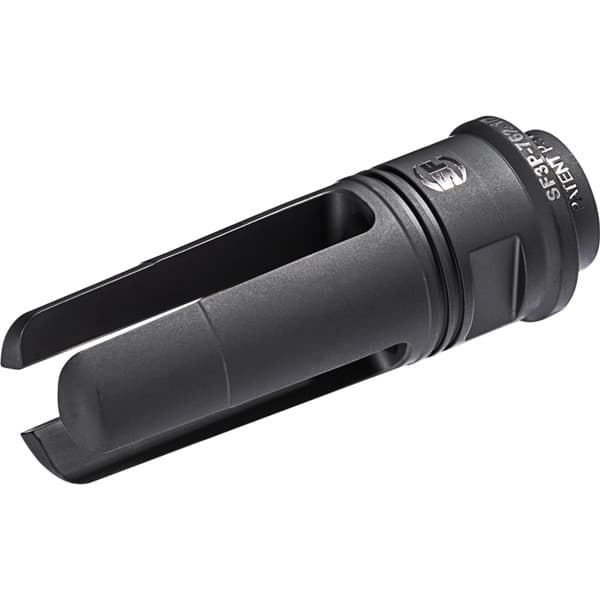
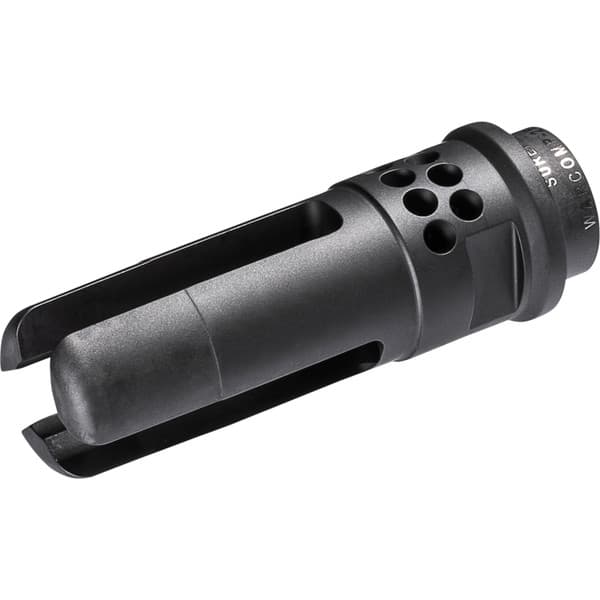
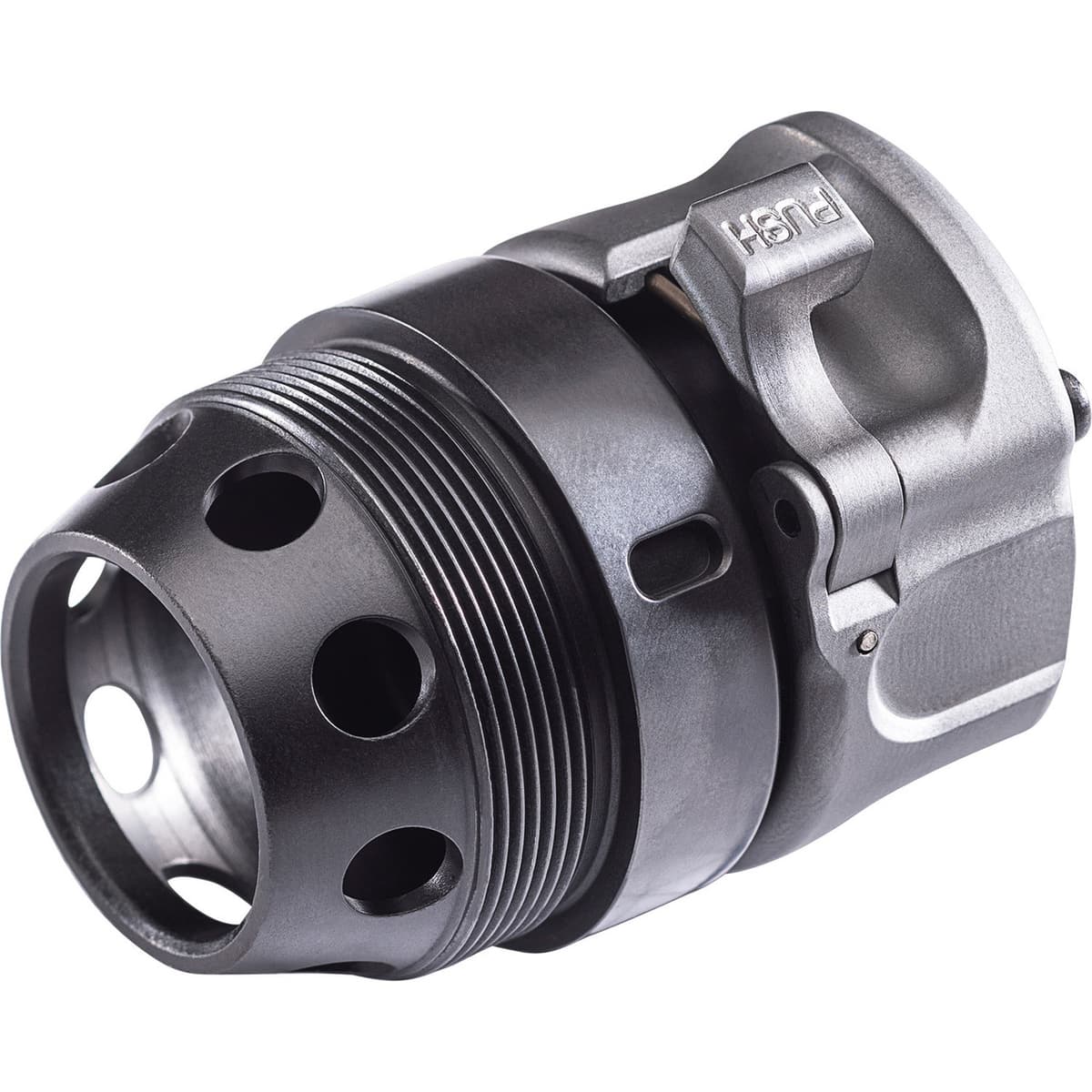
SureFire SOCOM Fast-Attach locks with a ring on the can, not on the muzzle device: the can indexes onto a tab on an SF3P or WARCOMP, and its lock ring turns about 180 degrees to hold it.
In detail: slide the can over the device and turn it until the indexing slot in the can drops onto the device's indexing tab, then tighten the lock ring at the back of the can until it stops: about 180 degrees with audible clicks, and SureFire says less travel means the can is not fully seated. To remove it, depress the latch, turn the ring a half turn counterclockwise and pull the can straight off. SureFire describes the seat as multiple bearing surfaces that align the can.
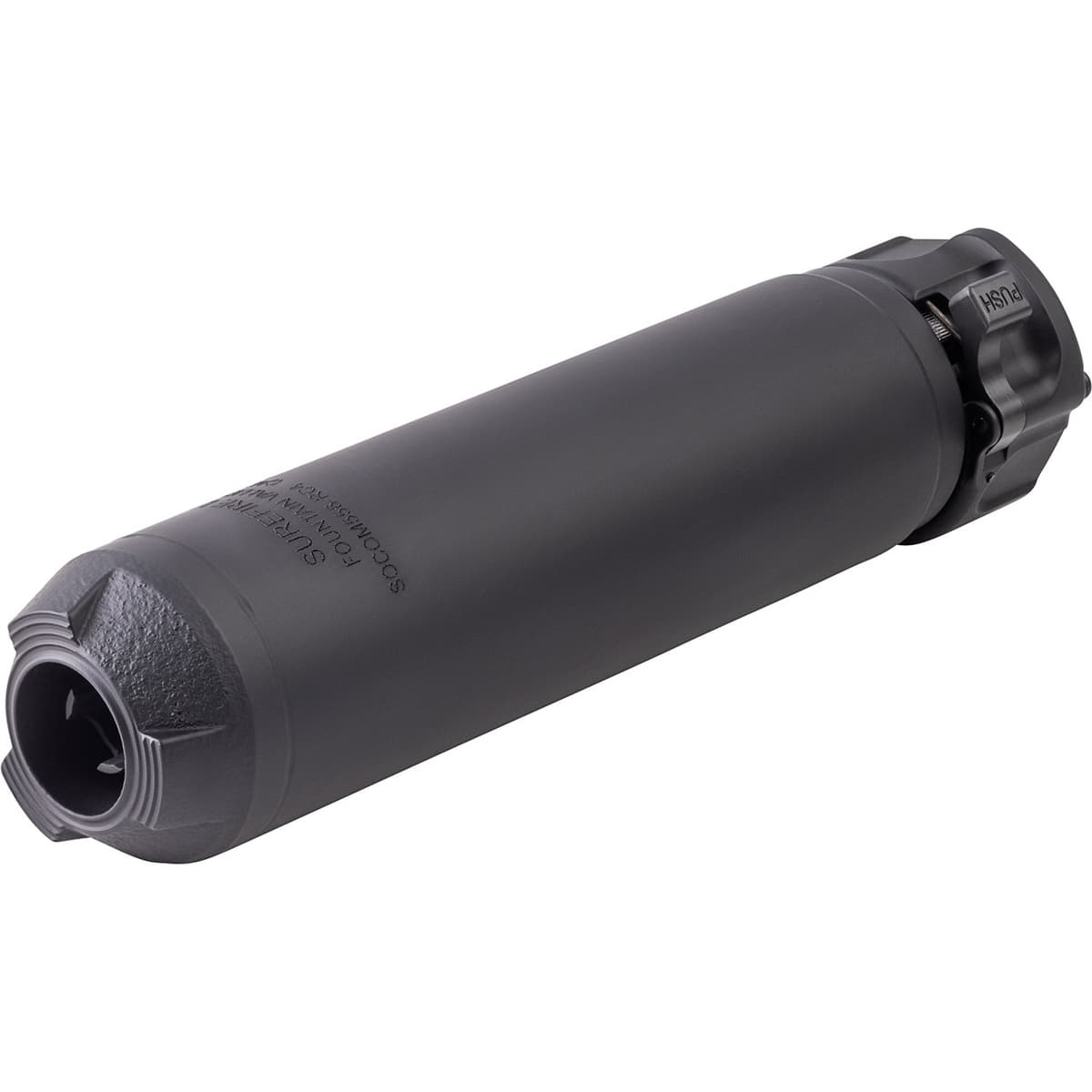
Run the SF3P under a can full time: its rear labyrinth seals limit gas leaking into the lock ring, while the WARCOMP's comp ports feed gas back to that joint. SOCOM cans such as the SOCOM556-RC4 have no HUB rear, but SureFire does support HUB cans: its Fast-Attach Hub ($299) threads into a HUB can with SureFire's spanner and locks onto the same SOCOM devices with the same slot and lock ring. That makes SOCOM a sensible choice for a rack already fitted with SureFire devices, not only for SureFire cans.

The SOCOM host to run under a can full time

SOCOM rifles that run unsuppressed as often as suppressed

Putting a HUB can on SureFire SOCOM muzzle devices

Rifles already on SOCOM devices that want SureFire's current 5.56 can
Affiliate links - purchases support this site at no extra cost to you. (?)
ASR makes sense today for one job: adding rifles to SilencerCo cans that already have ASR mounts.
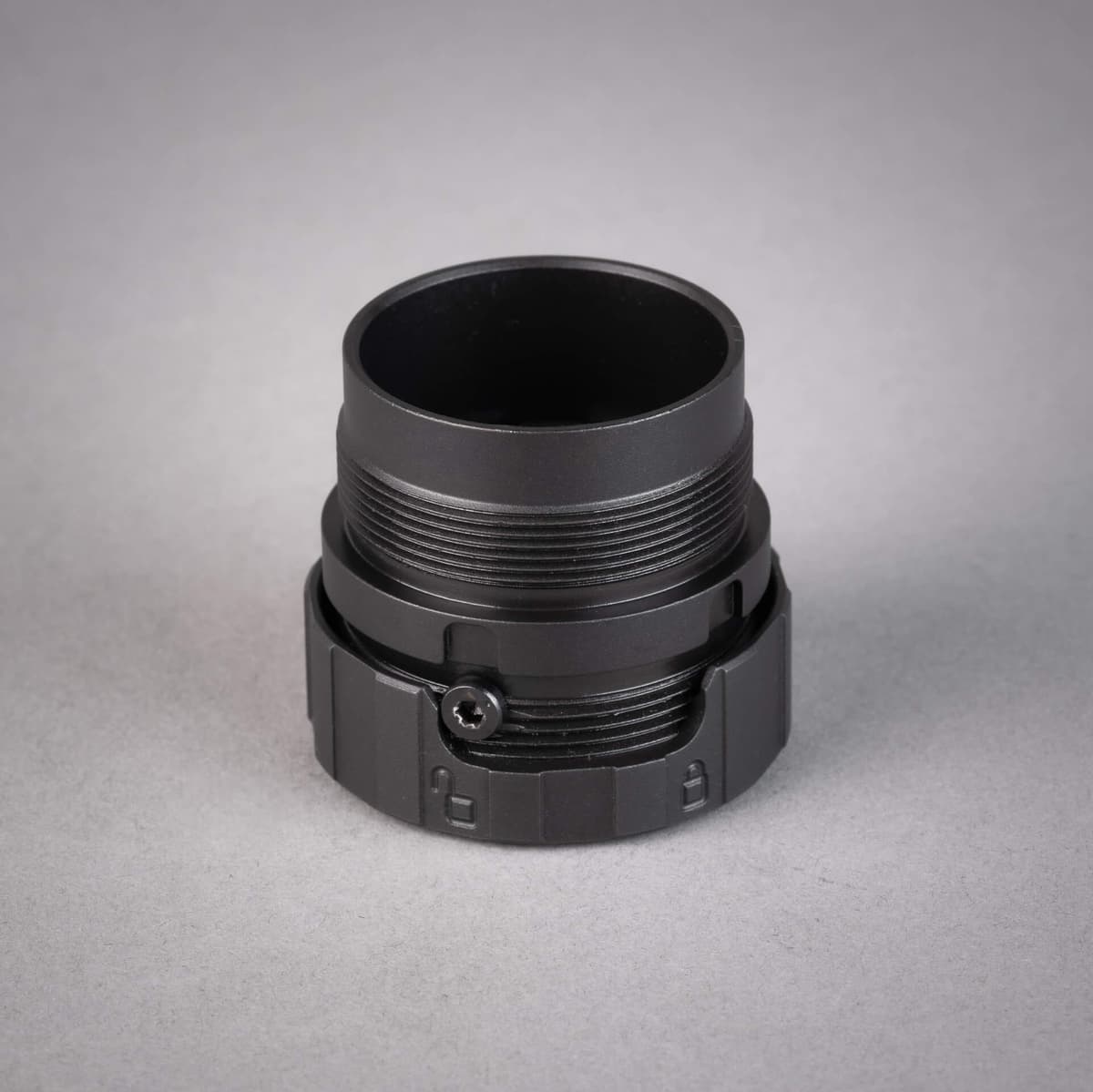
The ASR device has a tapered shoulder, coarse threads and a ring of fine teeth. With the collar unlocked, you screw the can on until it seats against the shoulder, then turn the collar the same way until the closed padlock icon lines up with the set screw. The collar is a cam: turning it pushes toothed tabs on a spring into the device's teeth so vibration cannot back the can off. Threading the can on with the collar already locked grinds those teeth.
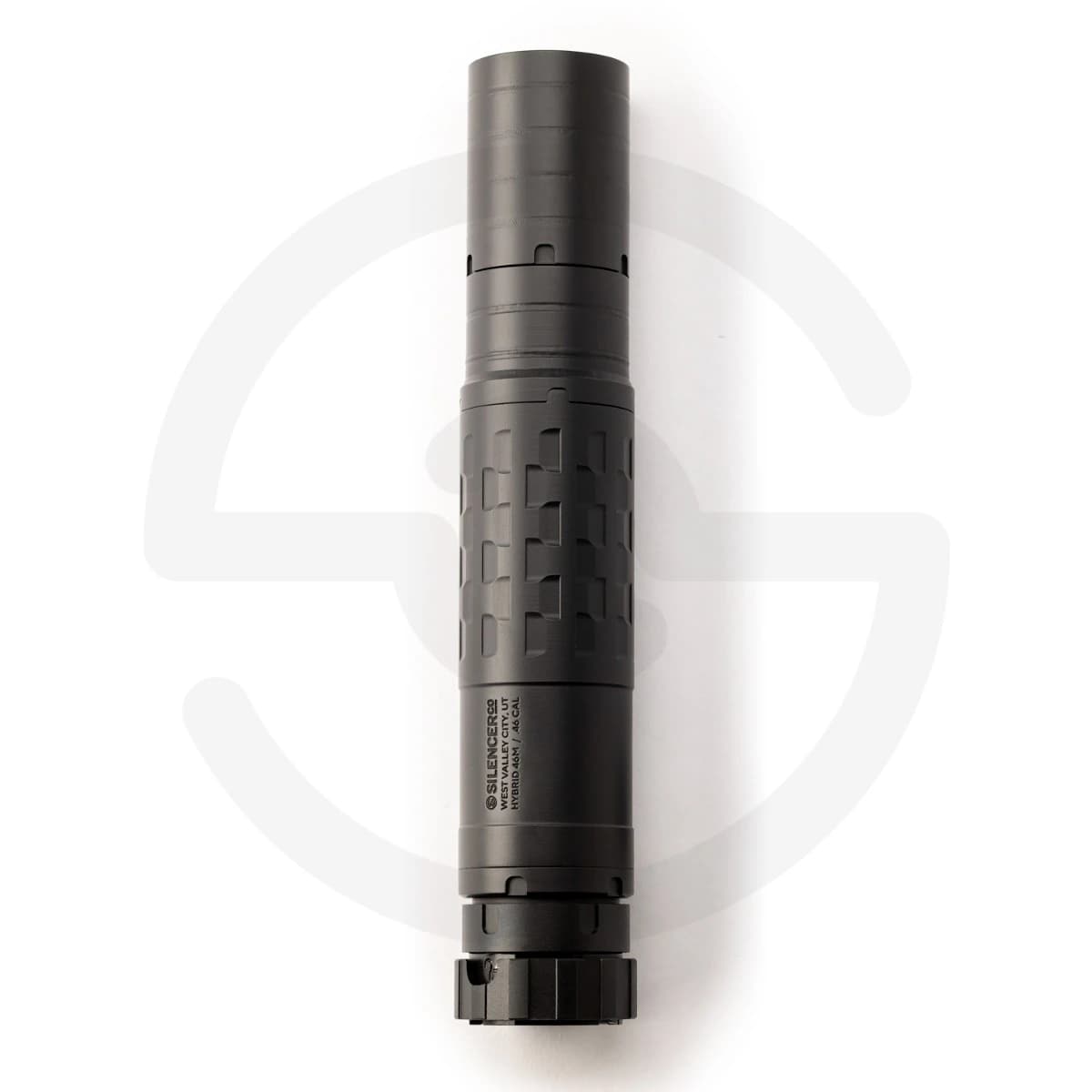
The ASR mount comes in three sizes, and only one is HUB. Bravo is 1.375x24, used on the Omega 300, Hybrid 46 and Scythe-Ti; Alpha is 1.125x28 and Charlie is 1.375x32. A Bravo can is a HUB can, so you can unscrew its ASR mount and thread in a Rearden Atlas, a Xeno or KeyMo HUB adapter or a direct-thread mount, and the same can then runs on the rack you are building now. Alpha and Charlie cans, including the Hybrid 46M, do not take HUB adapters. For SilencerCo's piston path on handguns, the pistol suppressor setup guide covers pistons, fixed-barrel spacers and thread pitch.

Adding another rifle to a rack of SilencerCo cans already on ASR mounts

Putting a Bravo-pattern SilencerCo can, or any HUB can, on ASR devices

One SilencerCo can that has to cover handguns, PCCs, big-bore rifle and .338 across multiple mounts
Affiliate links - purchases support this site at no extra cost to you. (?)
Every system in this guide can carry a HUB can through an adapter; what differs is how it locks and which cans have the mount built in.
| System | How it locks | On the barrel | HUB cans | Best for |
|---|---|---|---|---|
| Q Plan-B / Rearden Atlas | Thread-to-taper, 10 ft-lb; no moving lock parts | Cherry Bomb, KAK or other Plan-B device | Rearden Atlas Gen 2 | Most racks sharing one can |
| Dead Air Xeno | Left-hand thread onto a taper, hand torqued | Xeno flash hider or brake | DA455 Xeno HUB Adapter | Dead Air racks; lighter than KeyMo |
| HUB direct thread | Can screws onto the barrel threads | Nothing; bare 1/2x28 or 5/8x24 | Native: the mount threads into the HUB rear | One rifle per can |
| HUXWRX Torque Lock | Left-hand thread onto a taper; gas keeps it seated | Flash Hider-QD or Muzzle Brake-QD | HUB QD Adapter 2.0; FLOW cans have no HUB rear | FLOW flow-through cans |
| Dead Air KeyMo | Thread-to-taper with a detent clutch; about 3/4 turn off | KeyMo or KeyMicro brake or flash hider | DA428 KeyMo HUB Adapter | Racks that want a detent clutch |
| SureFire SOCOM | Slot over tab, then about 180 degrees of lock ring on the can | SF3P, WARCOMP or other SOCOM device | Fast-Attach Hub; SOCOM cans have no HUB rear | Racks already on SOCOM devices |
| SilencerCo ASR | Cam collar pushes toothed spring tabs into the device | ASR brake or flash hider | Bravo ASR mount; Alpha and Charlie cans are not HUB | Existing SilencerCo ASR cans |
Buy a HUB can with a Rearden Atlas and put Plan-B taper devices on your rifles; choose Xeno for a Dead Air rack, and direct thread when a can lives on one rifle.
The mount decision is a count of rifles more than a brand choice. One rifle favors HUB direct thread; several favor a QD system, and Plan-B is our pick among them: a lighter stack than Xeno or KeyMo, an open device pattern and no moving lock parts. A HUB can is the hedge: a $76.50 Rearden Atlas, a $111.99 Xeno adapter or a $199.01 KeyMo adapter moves the same can to a new pattern without touching the suppressor. For the muzzle devices themselves, see the muzzle device guide; for 5.56 cans that pair with these mounts, the best 5.56 suppressors ranking; and for AR-15 gas tuning once the can is on, the suppressor compatibility guide.

Avid shooter with 10+ years of experience including competition shooting, an associate member of the Professional Outdoor Media Association (POMA), and a member of the National Shooting Sports Foundation (NSSF) and Safari Club International (SCI). Built 10+ AR-pattern rifles and several handgun platforms for home defense, competition, and suppressed night shooting.
This page contains affiliate links. Purchases through these links support the site at no extra cost to you. Read the affiliate disclosure
Continue exploring with these related resources

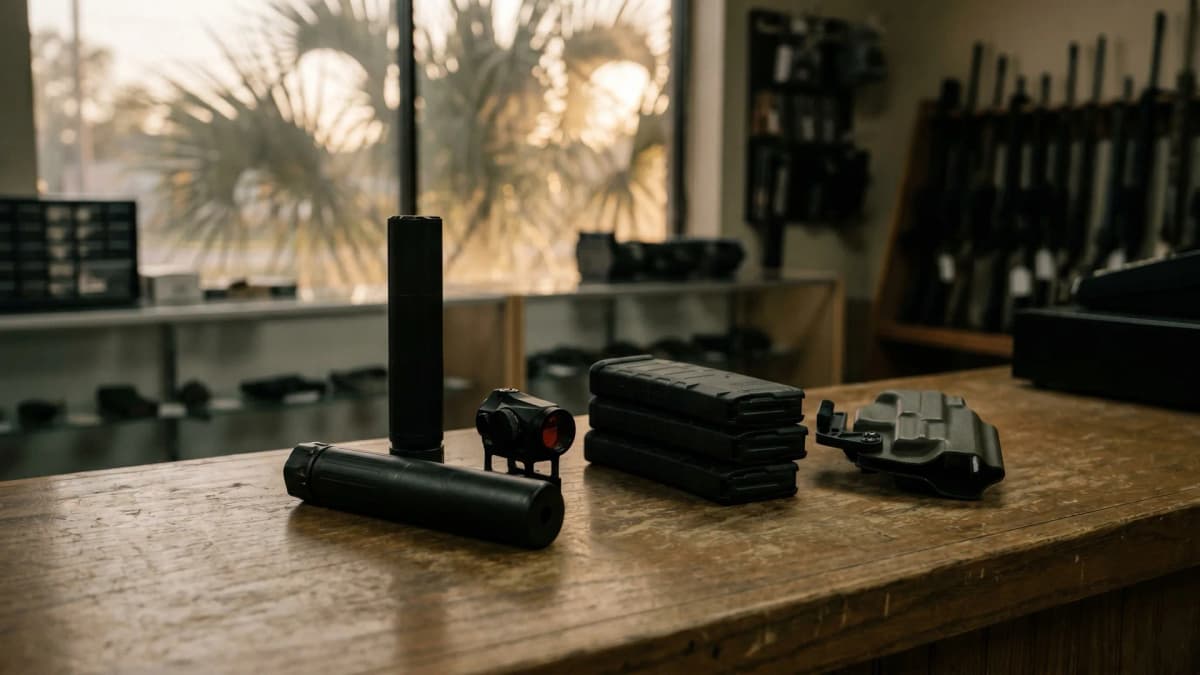
Florida's 2026 holiday runs September 1 through December 31 with no price caps and suppressors newly exempt. Here is what to buy first, ordered by dollar savings and commercial intent: suppressors, optics, magazines, then triggers, stocks, holsters, slings, and cleaning kits.

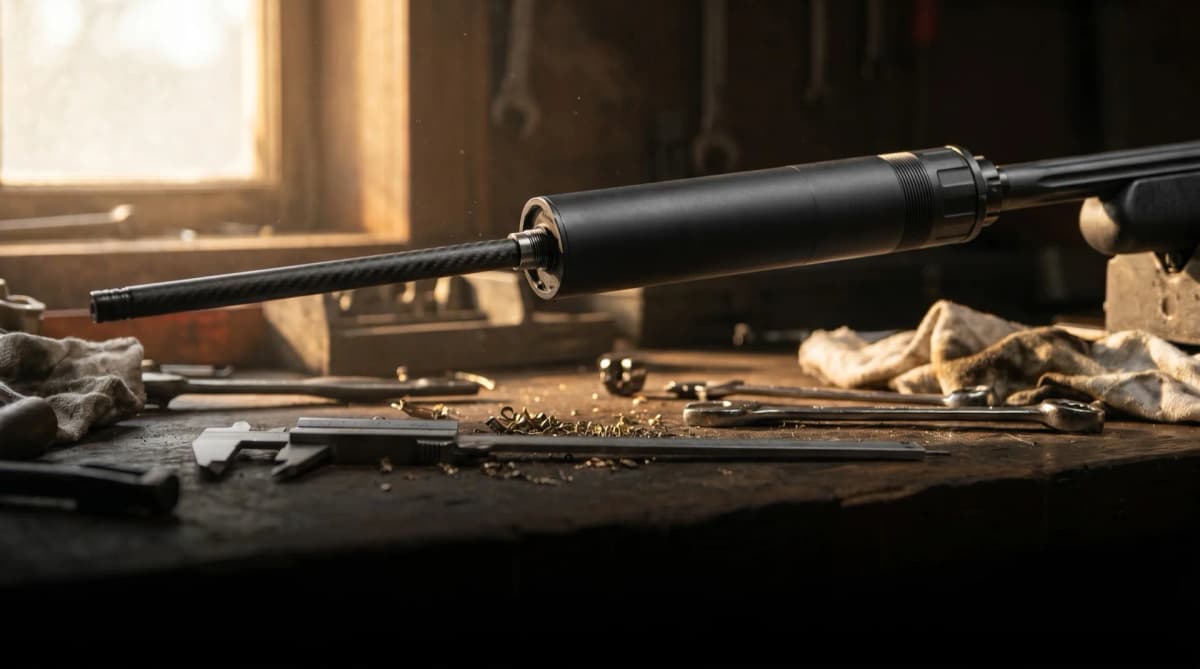
A suppressor alignment rod is a caliber-specific gage you push through a mounted can to verify the bore and suppressor are concentric before firing. This guide covers when a rod is worth the check, how to size one to your caliber, and which rods are worth buying.

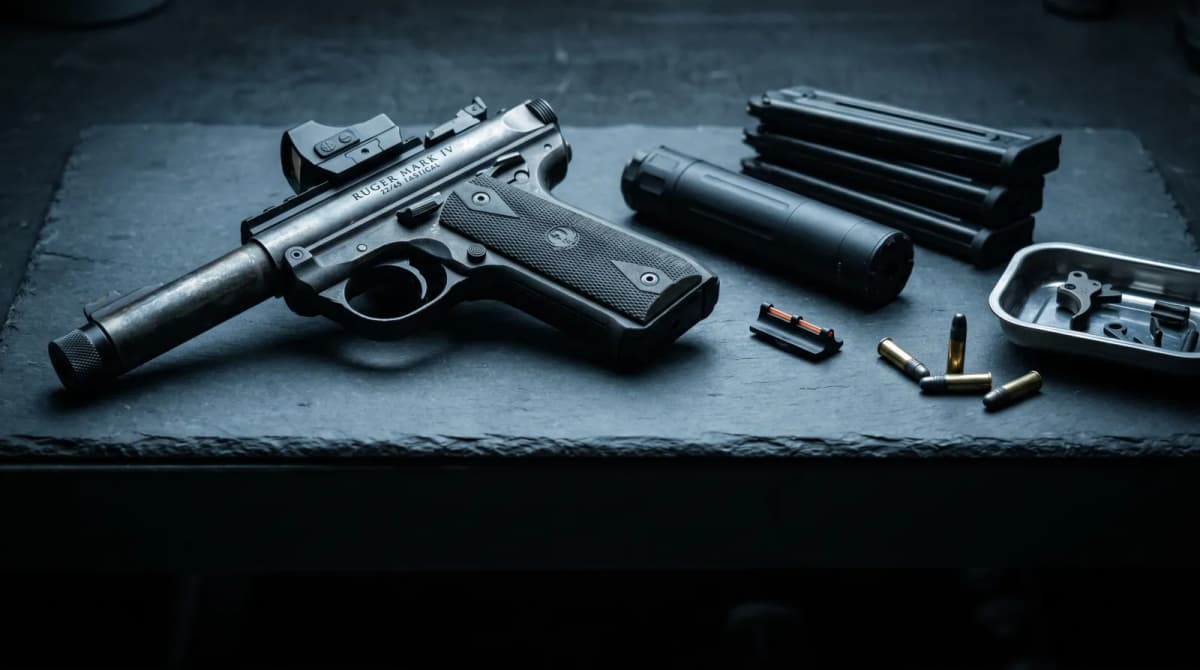
Best Ruger Mark IV accessories ranked for 2026: Volquartsen Accurizing Kit, TANDEMKROSS Ultimate Trigger Kit and Eagle's Talon Extractor, factory 10-round magazines, Eagle Eye fiber-optic sights, Holosun ARO and AEMS Picatinny red dots, and Rugged Oculus / Dead Air Mask 22 LR suppressors. Covers every Mark IV variant including the 22/45 Tactical, 22/45 Lite, Target, Hunter, and Competition.
Related articles and industry updates

RetailBI's Q3 2026 retail data shows suppressor unit sales up 178.6% year over year while new firearm unit sales fell 7.8%. Why the jump is that large, how it compares with ATF Form 4 filings and NSSF's NFA checks, and why none of it reflects ATF's October 9 policy.

Effective October 9, 2026, ATF no longer requires a Form 4, Form 1, or NFA registration for suppressors, SBRs, SBSs, and AOWs for anyone, extending the Silencer Shop Foundation v. ATF result nationwide as enforcement discretion. Dealers still run a 4473 and NICS, SBRs still need a Form 20 to cross state lines, and state law still applies.

PSA's Sabre 5.56 AK is on sale: Polish WBP bolt, carrier, and trunnion, a 16-inch CHF chrome-lined 1:7 barrel, ALG trigger, Soviet Arms rail, and full specs.