Key Takeaways
- →It is official: the CMP announced the future availability and sale of surplus M14 rifles, by special authorization, in a notice published on its own site.
- →Semi-automatic only: every rifle will be modified to be permanently and irreversibly semi-automatic before it is sold. No select-fire rifles are being released.
- →January 2027 sales: CMP says the project is on schedule and plans to start sales in January, first by mail order.
- →Price is unknown: pricing, purchase limits, the order form, grades, and quantities are all deferred to a later announcement.
- →Stores come later: CMP plans to add the rifles to its Alabama and Ohio stores after the mail-order launch, with Wyoming following eventually.
What the CMP Announced
CMP plans to open mail-order sales of converted M14 rifles in January 2027. In a September 30 update, the organization said the project remains on schedule and that conversion work will begin during the final three months of 2026. Physical-store sales in Alabama and Ohio will follow as soon as possible, with Wyoming planned later.
Every rifle will be converted to semi-automatic before sale. CMP's original announcement states that “by special authorization” it can offer the rifles, that “prior to sale, the rifles will be modified to be permanently and irreversibly semi-automatic rifles,” and that the modified rifles “will be fully compliant with CMP enabling legislation authorizing the transfer and sale of military surplus .30 caliber rifles.”
The original notice placed first order fulfillment in the late 2026 to early 2027 window. The newer update now puts the sales launch in January 2027, but it does not give a separate first-shipment date. CMP says more details will arrive later in fall 2026. Pricing, purchase limits, grades, quantities, and the order form remain unpublished. Proceeds fund CMP's safety and marksmanship instruction, competitions, scholarships, and youth programs.
This is a much bigger deal than another Garand batch. CMP has spent three decades moving bolt guns and semi-autos that were already civilian-legal as issued: M1 Garands, M1903s, M1917 Enfields, Krag-Jorgensens, M1 Carbines, and .22 trainers. It has never offered an M14, because the rifle in its issued form sits on the wrong side of federal machine gun law. Solving that is what the word “permanently” in the announcement is doing.
CMP M14 Sale: Confirmed vs. Not Announced
| Configuration | Permanently, irreversibly semi-automatic |
| Cartridge | 7.62mm NATO |
| Conversion work | Scheduled to begin in the final three months of 2026 |
| Sales launch | January 2027 |
| Statutory basis | CMP surplus .30 caliber rifle authority |
| Buyer pool | Eligible U.S. citizens |
| Price | Not announced |
| Purchase limits | Not announced |
| Order process | Not announced |
| Initial sales channel | Mail order |
| Store rollout | Alabama and Ohio, then eventually Wyoming |
| Quantity available | Not announced |
Why Every Rifle Gets Converted
A select-fire M14 cannot be sold to the public, so the conversion is the entire reason this program can exist. Under 18 U.S.C. 922(o) it is unlawful to transfer or possess a machine gun, with exceptions only for government entities and for machine guns lawfully possessed before that subsection took effect. An M14 as the Army issued it has a selector and fires automatically, which puts it squarely in that category. Converting the rifle so it fires one round per trigger pull, permanently, moves it out.
The second constraint is CMP's own charter. Under 36 U.S.C. 40732, CMP may sell surplus caliber .22 rimfire rifles, caliber .30 surplus rifles, caliber .45 M1911 and M1911A1 surplus pistols, and surplus pump action shotguns, at fair market value, to U.S. citizens of legal age who belong to an affiliated gun club and pass a records check. A semi-automatic 7.62mm M14 fits “caliber .30 surplus rifle.” A machine gun does not fit anywhere in that list. Both conditions have to be satisfied at once, and the announcement says they are.
The Army has done this before, and it documented exactly how. Army Regulation 920-25, “Rifles, M14M and M14NM, for Civilian Marksmanship Use,” dated 8 February 1965, defined the M14M as “basically the M14 Service Rifle with the exception of welding operations performed on the selector shaft lock, the selector shaft lock-retaining pin, the selector shaft, the receiver and the sear release.” That five-point weldment, in the regulation's words, “will render the rifles incapable of full automatic fire since the selector may no longer be assembled thereto.” The M14NM was the same rifle further refined to Match target quality with a barrel selected for uniform bore diameter, chamber size, and headspace, a glass-bedded straight-grained stock, and special front and rear sights.
The regulation also records the legal finding that made those rifles sellable. Paragraph 2 states that the Director of the Alcohol and Tobacco Tax Division of the U.S. Treasury Department “has ruled that an M14 rifle, so modified, will not be a firearm as defined in section 5848 (1) and (2) of the Internal Revenue Code, and may be sold or issued to civilians without payment of a special license.” The M14M carried its own federal stock number, 1005-678-9829, and an “M” stamped on the rear bridge of the receiver.
AR 920-25 is long rescinded and CMP has not said whether it will use that method or a different one. It does establish that a permanently semi-automatic M14 built for civilian marksmanship is a documented Army configuration, not something invented for 2026.
CMP has not published the conversion method, the physical configuration the rifles will ship in, stock and barrel condition, or grading. Those are the specifics worth watching for in the next announcement, because they drive both price and whether these end up as shooters or safe queens.
Stay Updated on the CMP M14 Release
Get notified when CMP publishes M14 pricing, purchase limits, and the January mail-order process.
What the M14 Actually Is
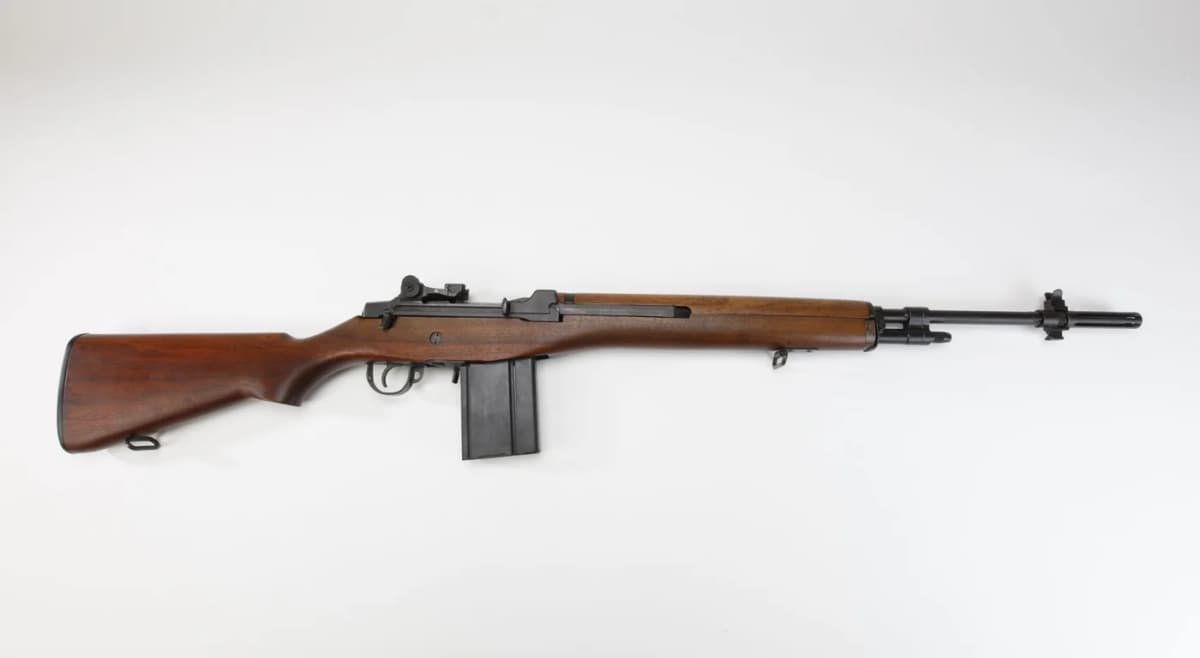
The M14 is a gas-operated 7.62mm NATO service rifle adopted in June 1957, and it is the direct descendant of the M1 Garand. Springfield Armory was tasked with combining the Garand's power with lighter, select-fire handling, which produced the T20 series and its twenty-round box magazine, then the T44 series. After NATO adopted the 7.62mm round in December 1953, the T44E4 was standardized as the Rifle, 7.62mm, M14. The weight went down, not up: at 8.33 pounds without sling or magazine the M14 came in under the 9.5-pound M1, and even carrying a loaded twenty-round magazine it weighed less than a Garand with an eight-round clip.

Its frontline career was short and contested. The rifle was nearly uncontrollable in automatic fire, and Secretary of Defense Robert McNamara halted production on 23 January 1963 after more than a million had been built. Four makers turned out 1,380,358 M14s between 1959 and 1963: Harrington & Richardson 537,512, Winchester 356,510, Thompson-Ramo-Wooldridge 319,163, and Springfield Armory 167,173. The M16 replaced it as the standard rifle. What the M14 kept was accuracy: it stayed the basic training rifle into 1970, dominated service rifle competition for years, and became the basis for the M21 and M25 designated marksman rifles. In trained hands it is effective out to roughly 800 meters. The 3d Infantry Regiment still carries M14s for ceremonial duty at the Tomb of the Unknowns.
That competition pedigree is the reason a CMP M14 is interesting rather than merely nostalgic. This is a rifle that earned its reputation on High Power lines. If you are weighing it against the modern .308 field, our best .308 rifle guide ranks AR-10s, battle rifles, and bolt guns side by side, and the .30-06 vs .308 comparison covers what changed between the Garand's cartridge and the M14's.
For a smaller-frame classic, Auto-Ordnance's factory 12-inch M1 Carbine SBR is a different rifle for a different job. It weighs less than five pounds, measures 30 inches overall, and combines walnut with M-LOK, but its 12-inch barrel means it transfers as an NFA firearm. It fills the classic-military-rifle niche without the CMP eligibility gate.
Who Can Buy One, and What to Do Now
CMP eligibility is the part of this purchase you can solve today, even though the rifle's price is still unknown. The requirements are already published and none of them are new: proof of U.S. citizenship, age at least 18, current membership in a CMP-affiliated club or organization, documented marksmanship or firearms activity, and a passing FBI NICS check. The membership requirement is the one that catches people out, because CMP states plainly that it cannot be waived. Affiliated organizations are broader than most people assume: CMP counts over 2,000 affiliated organizations, and membership in congressionally chartered veterans groups such as the VFW, American Legion, DAV, and Marine Corps League, in the active or reserve military, in the National Guard including retirees, in 501(c)(3) law enforcement associations, or in the Garand Collectors Association all satisfy it on their own. CMP notes that many affiliated club memberships can be completed online at low cost.
The marksmanship requirement accepts a wide range of proof, including military or law enforcement service, competition results, a completed clinic, a hunting license, or certification from a range or club official. If you are over 60, CMP waives proof of marksmanship entirely for military surplus rifles.
Where you live changes the transaction. CMP requires purchasers to be at least 21 in Washington State, California, Florida, Illinois, Hawaii, New York, Delaware, New Jersey, Rhode Island, Vermont, and Washington DC. Shipment must go through an FFL rather than to your door in California, Connecticut, Illinois, New Jersey, New York, Oregon, and Washington, and Florida orders are routed through an in-state FFL to satisfy the state's 3 to 5 day waiting period. California limits buyers to one firearm per person per 30 days, New York requires a permit to purchase any semi-automatic rifle, and as of July 1, 2026 CMP can no longer ship semi-automatic rifles to Rhode Island under Senate Bill 359. Every CMP M14 will be semi-automatic, so Rhode Island residents are out on this one. Beyond CMP's own list, a GI-configuration rifle carries a flash suppressor and a bayonet lug, and several states run feature tests on semi-automatic rifles that treat those parts as disqualifying. Confirm your own state before you order.
The practical move: join an affiliated club and get your marksmanship documentation in order now. Mail orders are scheduled to begin in January 2027, and a club membership application is not something you want to be starting the week the order form drops.
M14 / M1A Pattern Parts
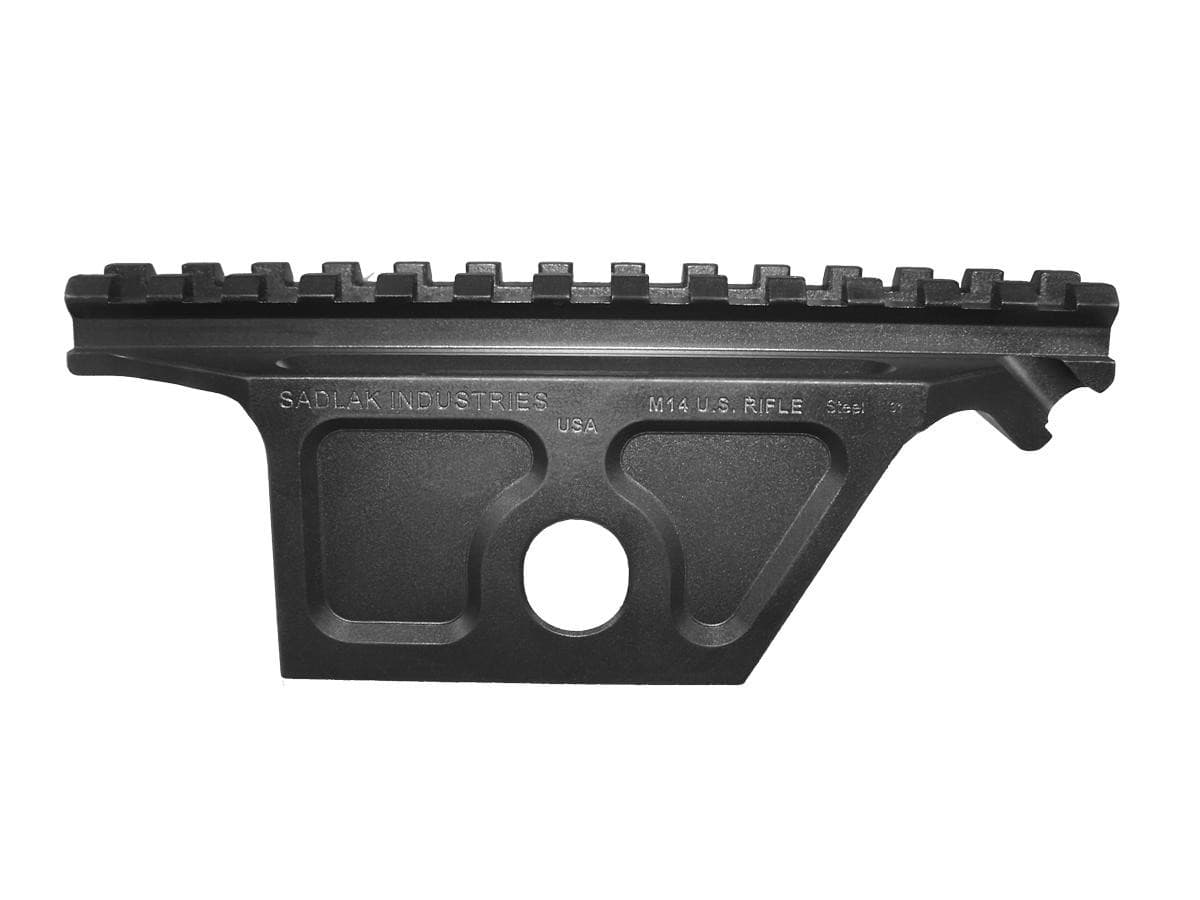
SADLAK Industries Steel M1A/M14 Scope Mount
- 4142 chrome-moly steel, 28-32 RC
- Manganese phosphate finish
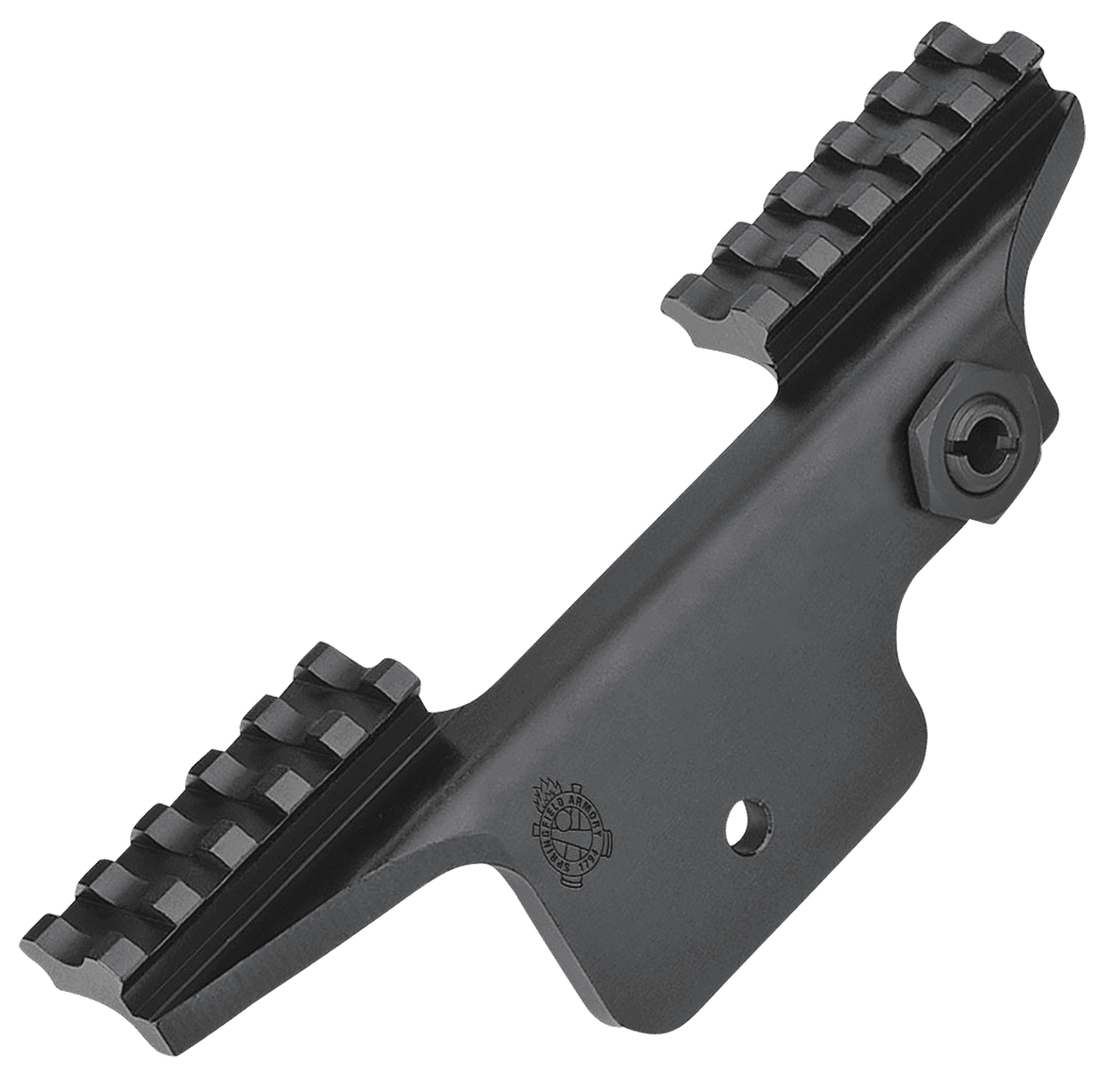
Springfield Armory M1A 4th Generation Aluminum Scope Mount
- Aircraft-grade aluminum
- 3-point receiver contact
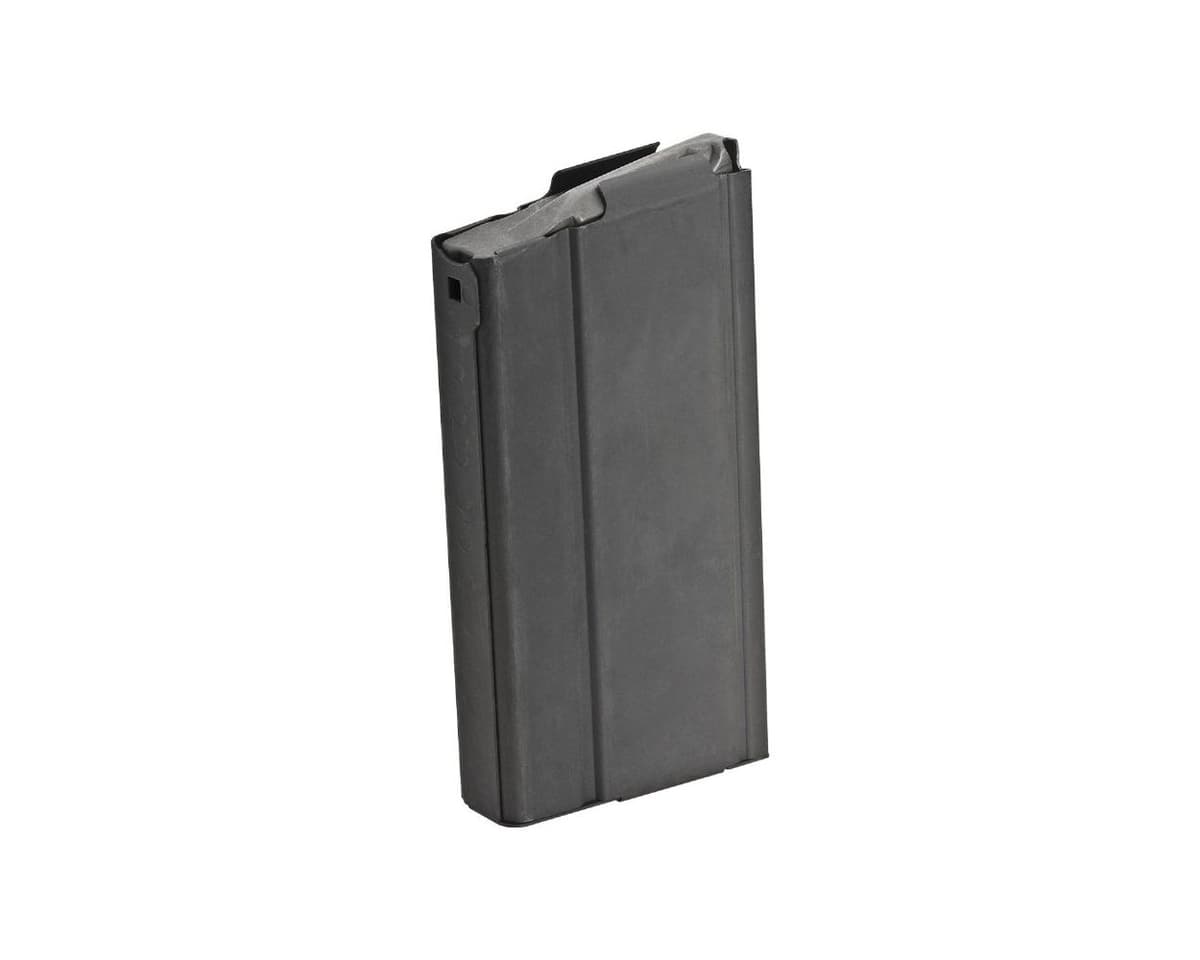
Springfield Armory M1A 20-Round Factory Magazine
- 20-round .308/7.62 NATO
- Steel body, blued
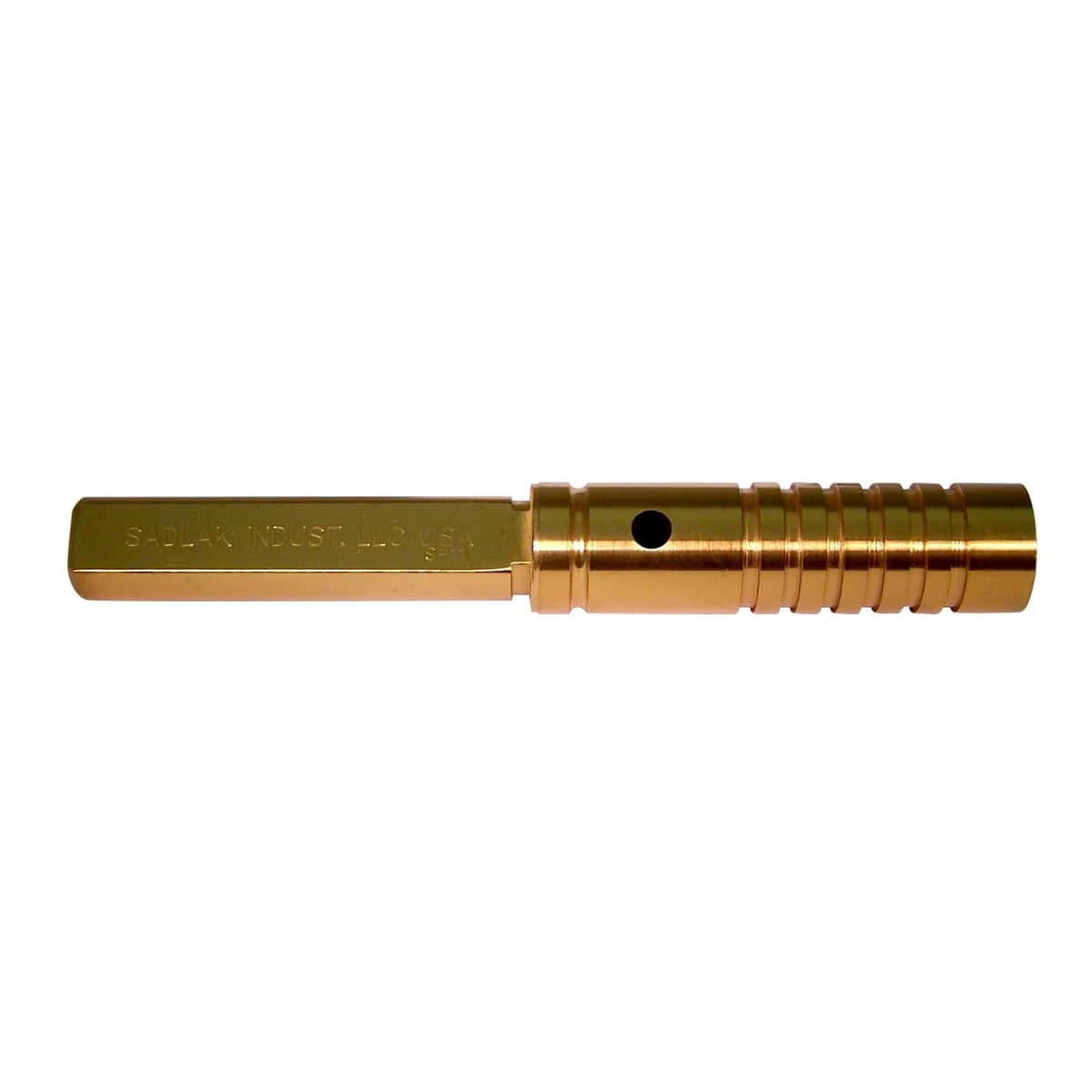
SADLAK National Match M14/M1A Gas Piston (TiN Coated)
- Titanium nitride (TiN) coating
- National Match spec
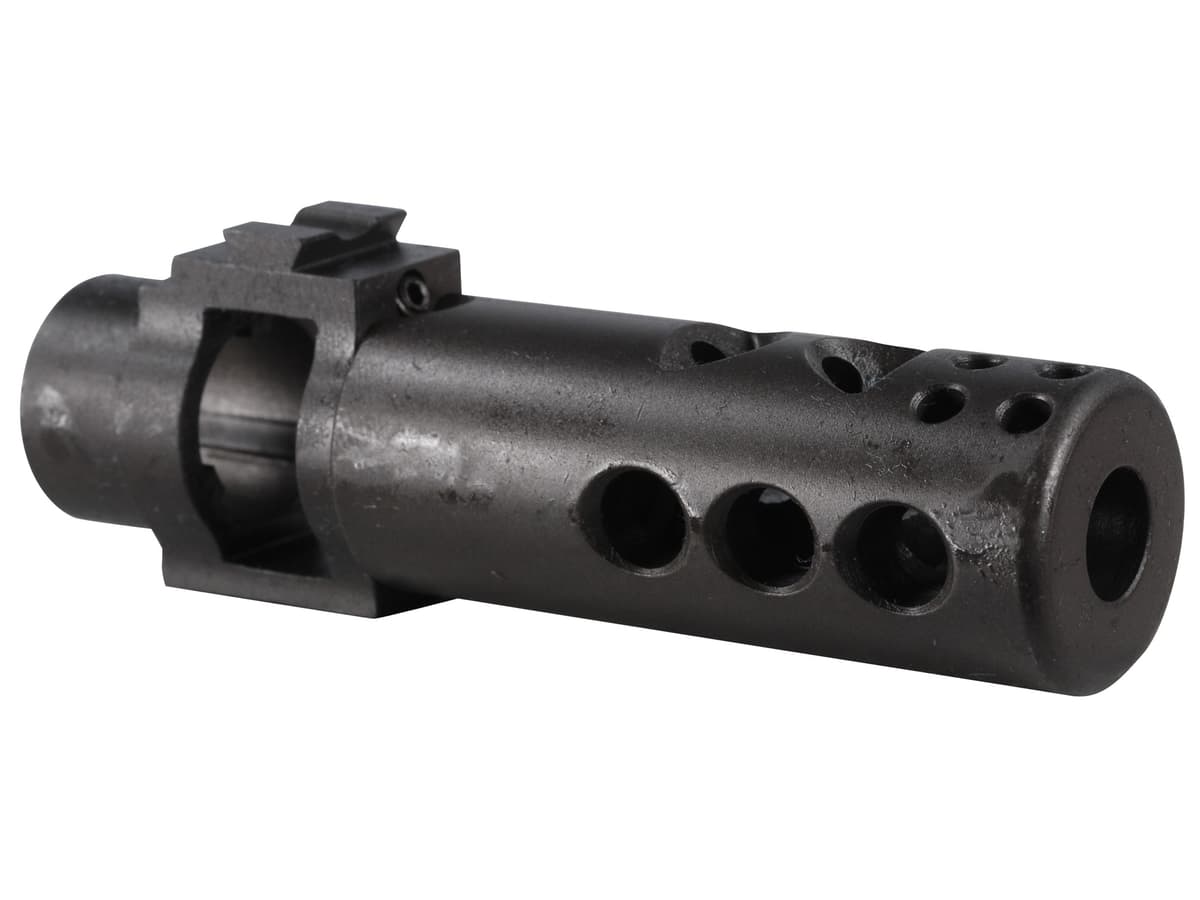
Smith Enterprise Good Iron M14/M1A National Match Muzzle Brake
- 8620 steel, 60 RC, salt-bath nitrided
- USGI flash-suppressor profile
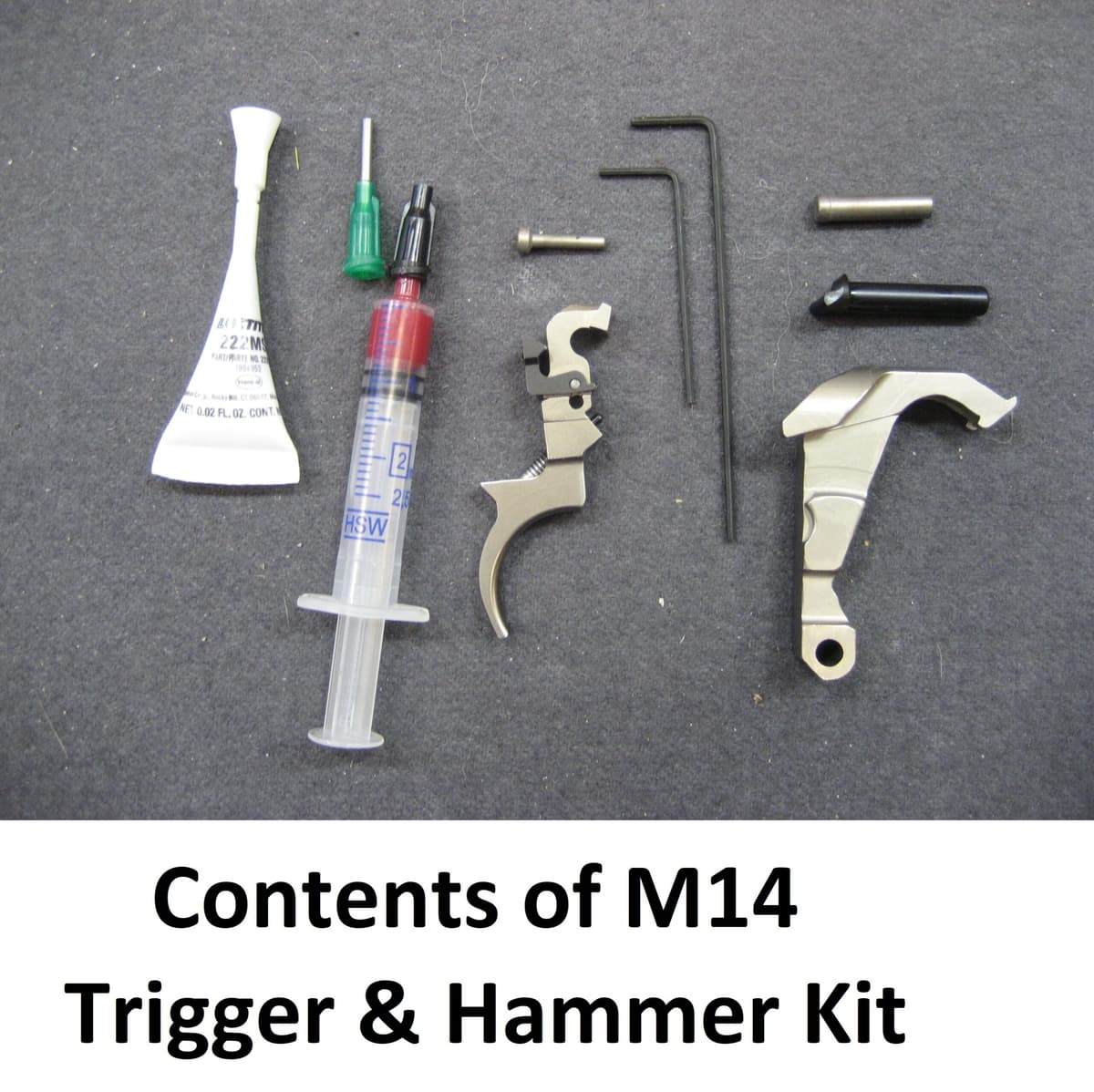
ShootingSight National Match M14/M1A Trigger & Hammer Set
- NM-prepped two-stage feel
- Adjustable down to 4.5 lb
Affiliate links (?)
CMP M14 vs. Springfield M1A
The M1A is the same rifle pattern built commercially, and the difference that matters is how the receiver started life. Springfield Armory has sold the M1A as a semi-automatic rifle since 1974, so its receiver was never a machine gun. A CMP M14 is a USGI rifle that begins as select-fire and is converted. Both chamber 7.62x51mm NATO and both feed from M14-pattern 20-round box magazines.
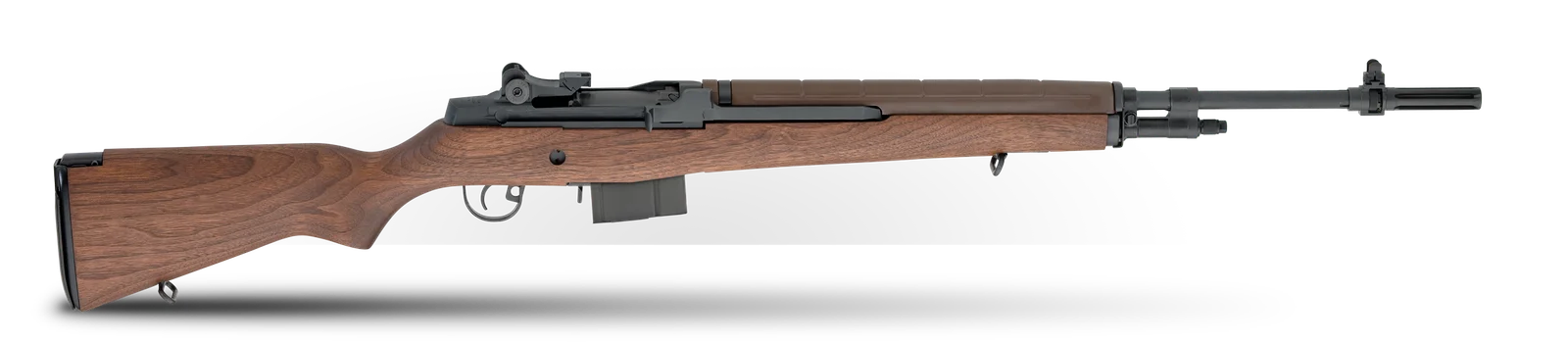
Buying process is the real split. An M1A ships through normal dealers today. A CMP M14 requires club membership, marksmanship documentation, a citizenship record, and CMP's application queue, in exchange for a genuine service rifle at fair market value. If you want a .308 battle rifle on the range this year, the M1A is the answer. If you want USGI provenance and are willing to wait, the CMP rifle is the one worth the paperwork.
The short-barrel option is worth knowing about before you commit to a 22-inch service rifle. The M1A SOCOM 16 runs a 16.25-inch barrel and a forward scout rail, which makes it far easier to shoot from vehicles and inside structures than a full-length M14 while keeping the same 7.62 NATO chambering and M14-pattern magazines.
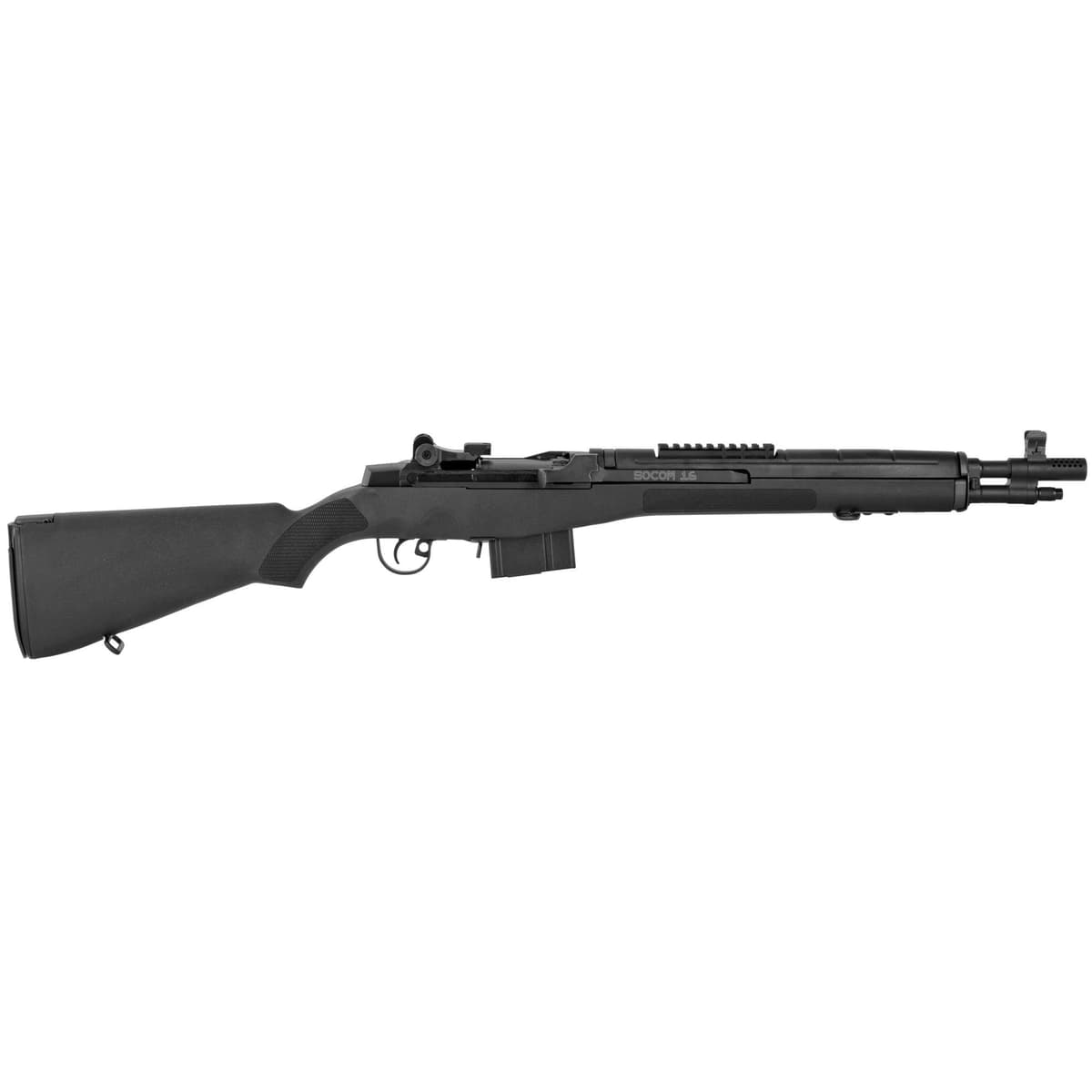
Springfield Armory M1A SOCOM 16
Compact 16.25-inch M1A for shooters who want M14 handling without the full-length service rifle
Compact 16.25-inch M1A variant descended from the M14 rifle platform.
Affiliate links (?)
The aftermarket carries over on the shared-pattern parts. The platform's defining problem is optics: the receiver ejects out the top, so scope mounting needs a dedicated side mount rather than a rail. Our M1A accessories and upgrades guide ranks mounts, stocks, chassis, triggers, and gas parts for exactly this reason. CMP has not published the configuration its M14s will ship in, so check fitment against the rifle you actually receive before ordering parts for it. For feeding it, the best .308 ammo guide covers match and training loads, and you can compare the M1A against other platforms side by side to see where a battle rifle lands next to an AR-10.
What This Actually Changes
The supply question decides whether this is a landmark or a lottery. Roughly 1.38 million M14s were built, but that number says nothing about how many survive in government storage in transferable condition, and CMP has not published a quantity. What the announcement does confirm is that purchase limits are coming: it lists “limits” among the details to be published later, alongside pricing and the order process. Plan for a capped allocation rather than an open storefront.
The conversion requirement will also drive the argument once rifles land. Collectors will want to know exactly how the receiver and selector area are treated, since that determines both originality and whether the rifle can be serviced normally. CMP has committed to “permanently and irreversibly,” which rules out any reversible fix, and the detail of how that is executed is the single most consequential thing left unpublished.
For most buyers the takeaway is simpler. A USGI service rifle in 7.62 NATO, sold at fair market value through CMP, is a rare offer. Price and quantity remain unknown, but eligibility is something you can settle before January. Build the paperwork file now and browse the catalog for the mounts and magazines you will want on hand.