Key Takeaways
- →SCS Carry, $399.99: solar panel plus a sealed internal rechargeable cell with 20,000 hours of reserve runtime. Green only, sold as one SKU, SCS-CARRY-GR.
- →EPS Carry, $329.99: side-loading CR1620 rated at 50,000 hours on setting 6, in red, green, or gold, and in 2 MOA, 6 MOA, or 2 MOA plus 32 MOA multi-reticle.
- →The SCS Carry has the bigger window: 0.90 by 0.63 inches against the EPS Carry's 0.77 by 0.58, and it is lighter at 1.06 oz versus 1.23 oz. Most buyers assume the solar optic is the bulkier one.
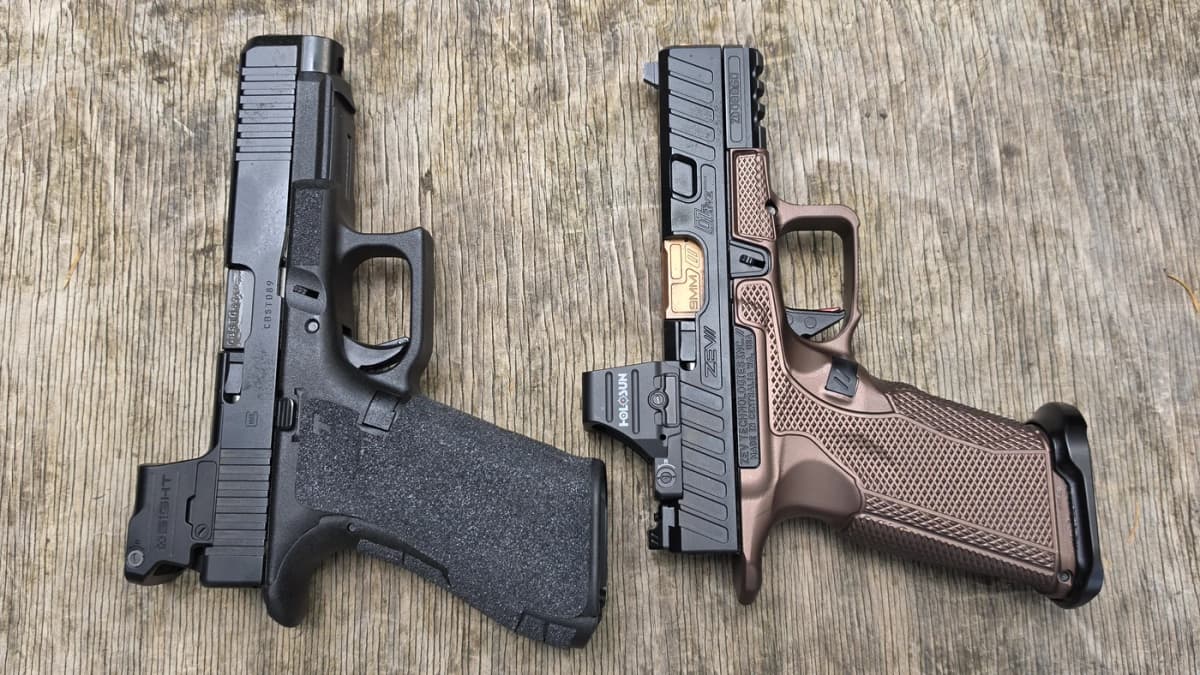
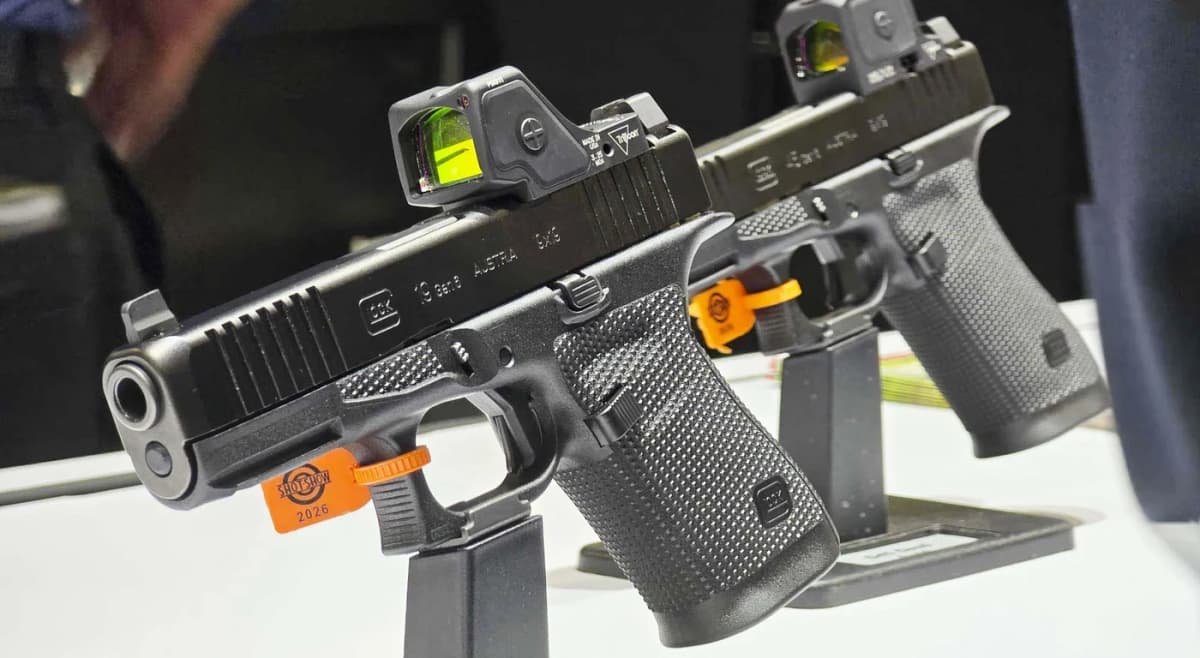
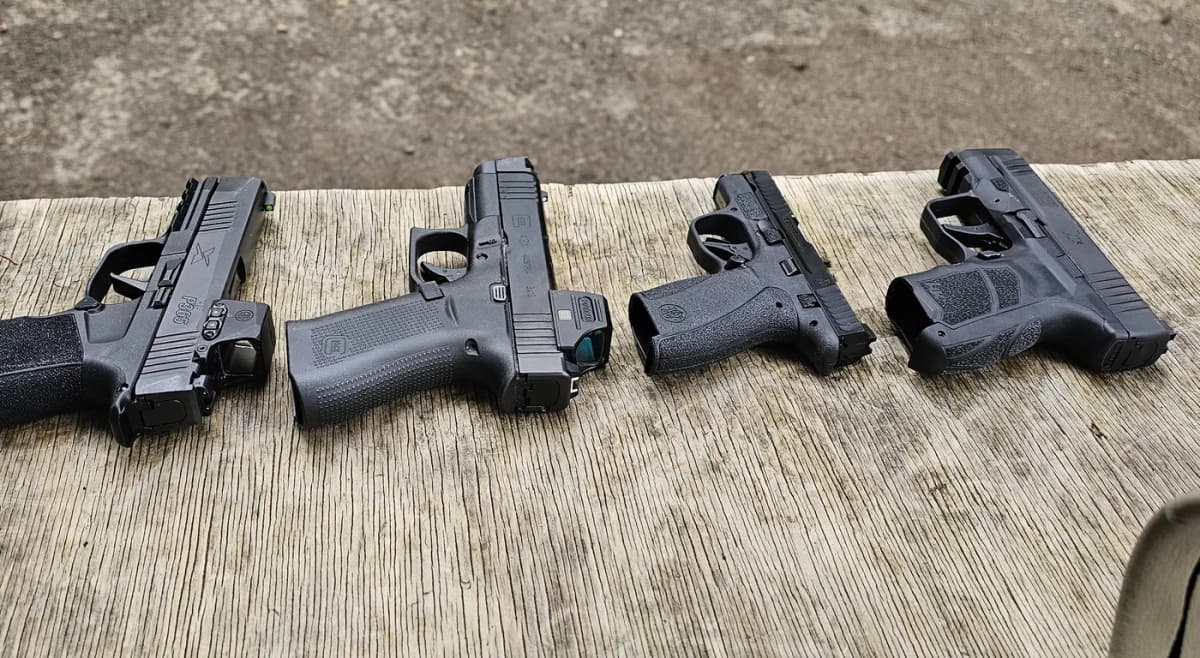
- →Same footprint, same hosts: both mount directly to the Holosun K cut and both ship with an RMSc-to-K adapter plate, so either drops onto a Glock 43X MOS, 48 MOS, SIG P365, or Hellcat.
- →Roughly 1,500 rounds and two years of carry: no battery service, no failures, and no lost zero on either optic across a Glock 43X and an HK CC9.
The Short Version
Buy the EPS Carry unless you specifically want solar. It costs about $70 less, takes a coin cell you can change in the parking lot without unmounting it, comes in red or green or gold, and has been in the field since 2022 without developing a reputation for anything. It is the enclosed-emitter carry dot that other enclosed-emitter carry dots get measured against.
Buy the SCS Carry if the idea of never touching a battery is worth $70 and a green-only reticle. Two years of near-daily carry on a Glock 43X have produced nothing to complain about on the reliability side. The dot comes on when the pistol moves, sits at a sane brightness without being asked, and has never needed service. The catch is a sealed cell: when it finally stops holding a charge the optic goes back to Holosun instead of taking a two-dollar coin cell.
Both are correct answers. Neither is a mistake. The rest of this covers where they actually differ, because the spec sheet contradicts what most people assume about the two.
Holosun SCS Carry: Two Years of Daily Carry
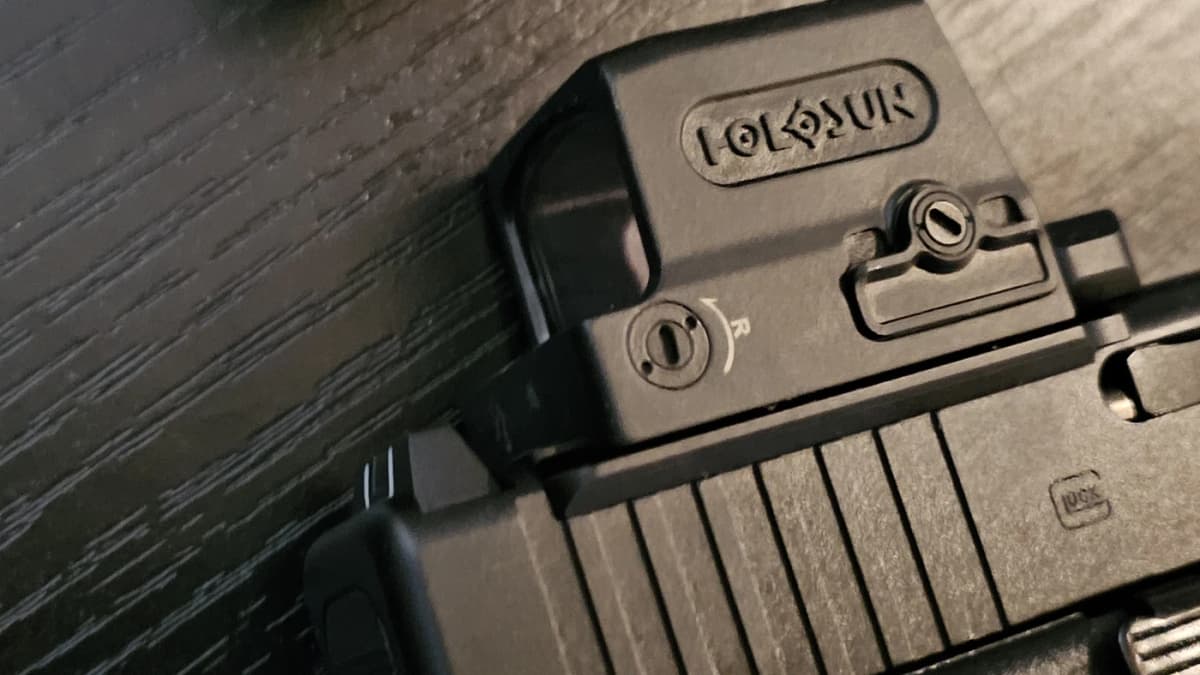
The SCS Carry earns its price on maintenance, not on optics. The integrated solar panel keeps an internal rechargeable ML1220 topped up, and Holosun rates the cell at 20,000 hours of reserve runtime with no light at all. In practice that has meant two years of carrying a pistol that is simply always on, with no scheduled battery change, no dead-dot surprise on a draw, and no calendar reminder to service an optic.
Brightness is fully automatic, which is the part that takes adjusting to if you came off a dot with manual settings. There are no up and down buttons to land on the wrong setting, and there is no manual level to leave too dim after a night session. Holosun includes a 30-minute manual high-brightness override for the cases where the sensor guesses conservatively. The automatic behavior has been correct often enough that the override rarely gets used.
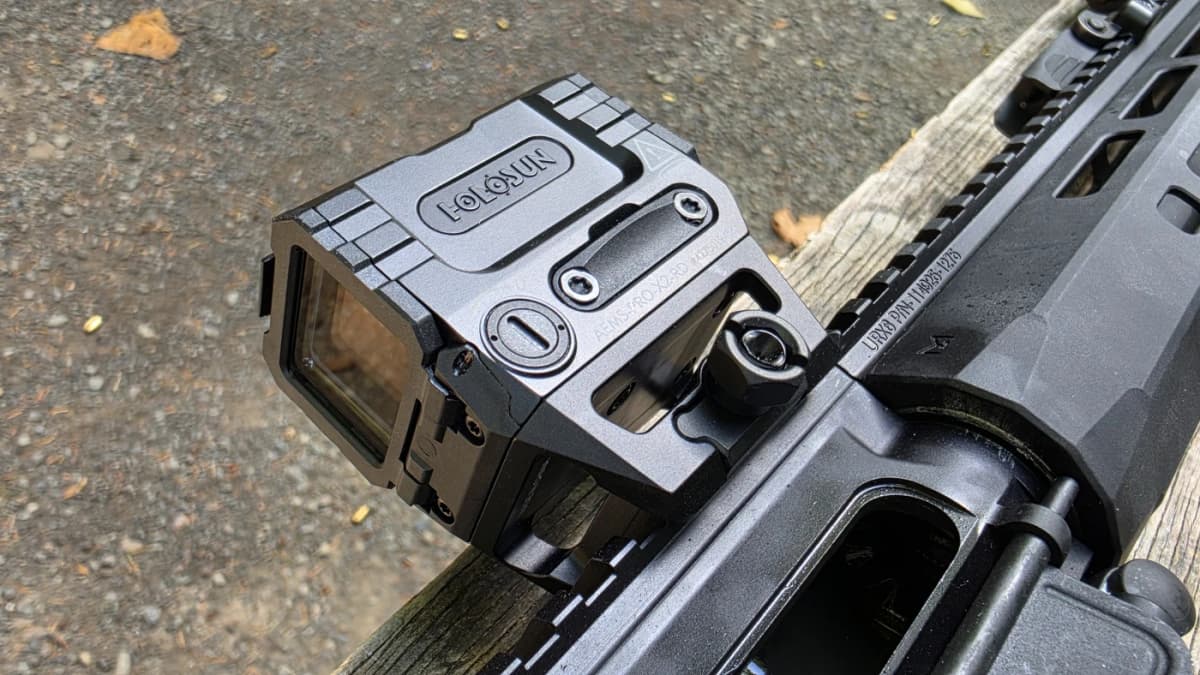
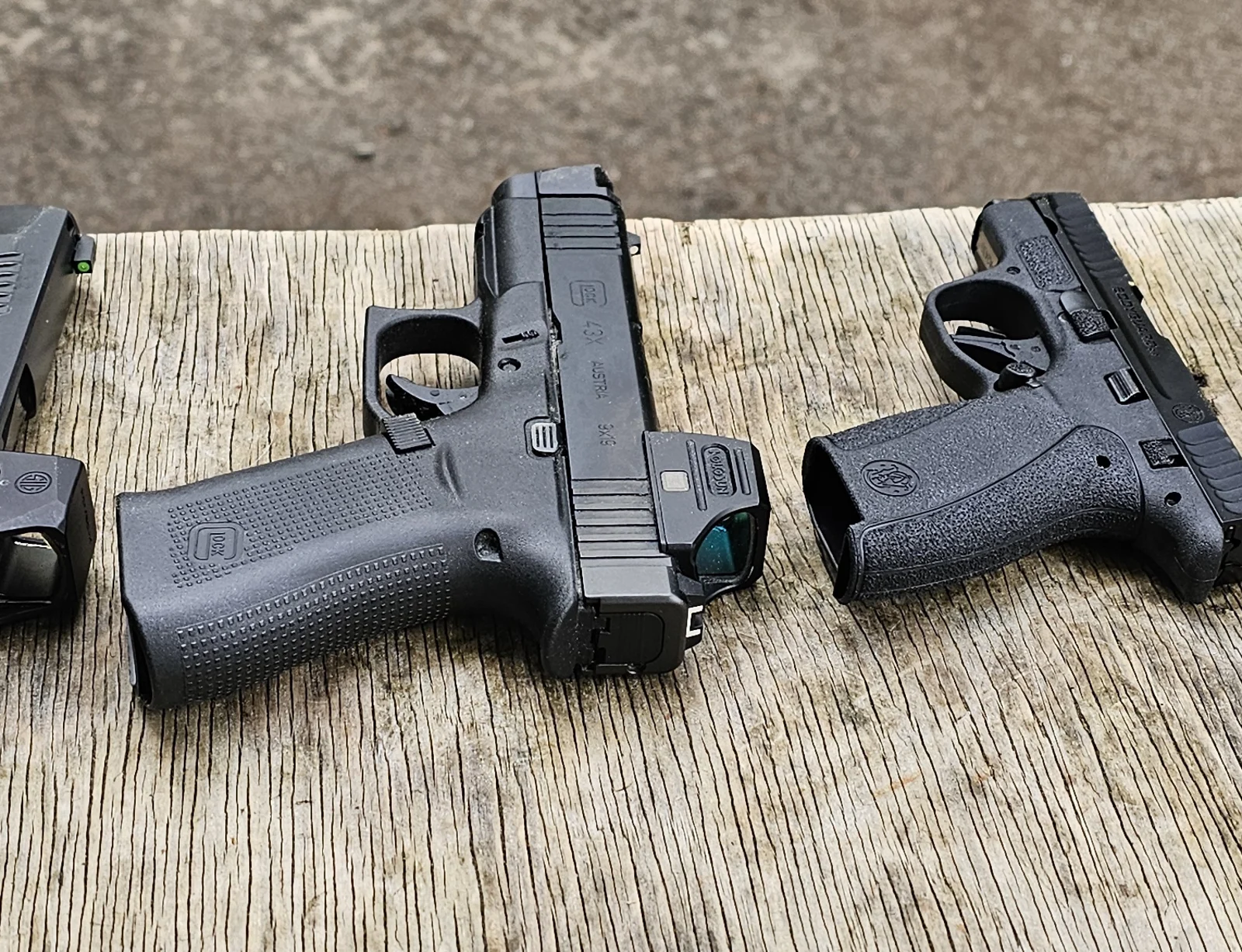
The surprise is the glass. The SCS Carry window measures 0.90 by 0.63 inches against the EPS Carry's 0.77 by 0.58, and the whole optic weighs 1.06 oz against 1.23. The solar model is the larger window and the lighter body. That runs against the assumption that bolting a solar panel to a red dot must cost size or weight, and on a slim carry gun the extra window is genuinely easier to find under speed.
Two real limits. It is green only; there is no red or gold SCS Carry SKU. And it is the newer design of the two, announced at SHOT Show in January 2024 and in shooters' hands by that fall, so it has roughly half the field history of the EPS Carry. Our experience with it has been clean, but two years is two years.
Holosun SCS Carry
Carry dot for shooters who never want to service a battery
Solar-charging enclosed micro red dot with multi-reticle system for slim carry pistols
- +Solar power effectively eliminates battery changes
- +Multi-reticle system (dot, circle, or both)
- +Auto-brightness requires zero manual adjustment
- −Premium price point over 507K and EPS Carry
- −Internal rechargeable battery is not user-serviceable
- −Green reticle only
Affiliate links (?)
Holosun EPS Carry: The EDC Default
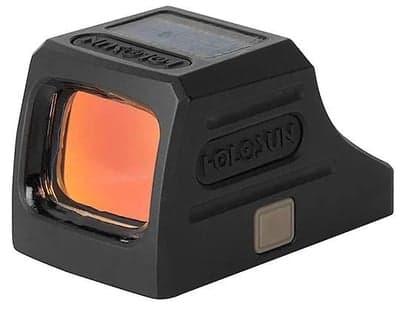
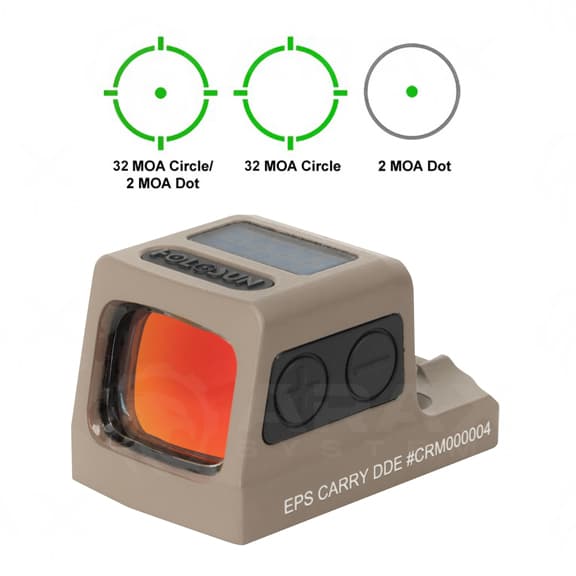
The EPS Carry is what most people should buy, and it has been the default recommendation in this category since 2022 for reasons that have not changed. The CR1620 is rated at 50,000 hours on setting 6 and loads from the side, so a battery change does not mean pulling the optic off the slide and re-zeroing afterward. That single design choice removes the main argument against a battery-powered enclosed dot.
Reticle choice is the other advantage, and it is a bigger one than it looks. Red, green, and gold are all available, in a 2 MOA dot, a 6 MOA dot, or the 2 MOA dot with a 32 MOA circle. Shooters with astigmatism often see a cleaner dot in green or gold than in red, and the SCS Carry simply does not give you that choice. If you have never compared reticle colors against your own eyes, the EPS Carry is the optic that lets you.
Everything else tracks the SCS Carry closely: enclosed emitter, 7075 T6 housing, IPX8 waterproofing, a 5,000G vibration rating, 1.5 MOA clicks with 30 MOA of adjustment in each direction, and Shake Awake. It runs 8 daylight and 4 night-vision brightness settings with memory, which is the trade against the SCS Carry's fully automatic approach: more control, one more thing to get wrong.
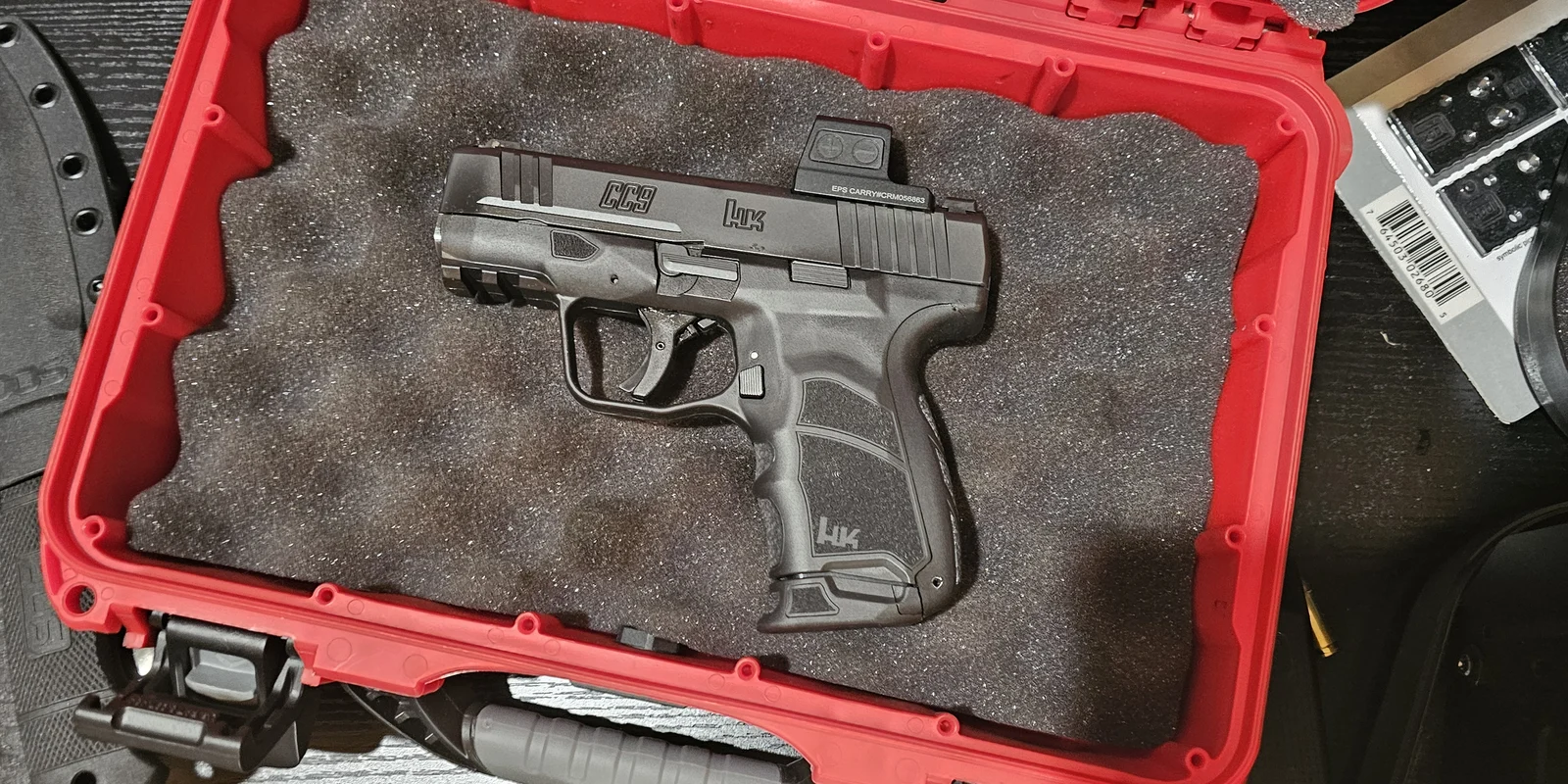
Ours has ridden an HK CC9, which mills the Holosun K cut directly into the slide, so the adapter plate stays in the box. The optic has been faultless. Worth knowing on that host specifically: the factory irons sit too low to co-witness through an enclosed dot this tall, a detail covered in our HK CC9 review. The HK CC9 upgrades guide covers the rest of the compatible carry setup.
Stay Updated on Carry Optics
New enclosed-emitter dots, footprint changes, and carry-gun optic launches, sent when they happen.
Holosun EPS Carry
The default enclosed-emitter carry dot at the lower price
Enclosed emitter compact optic for slim pistols
- +Enclosed emitter reliability for carry
- +Direct K-footprint fit, with RMSc adapter plate included for unmodified RMSc cuts
- +Same durability features as larger EPS
- −Higher price than open-emitter 507K
- −MRS versions cost more than dot-only models
- −Smaller window than 507K
Affiliate links (?)
The Specs That Actually Differ
Five specs separate these optics: power, reticle color, window size, weight, and price. Everything else is shared. Both are enclosed-emitter 7075 T6 housings on the Holosun K footprint with an RMSc-to-K adapter in the box, both are IPX8 and rated to 5,000G, and both adjust in 1.5 MOA clicks with 30 MOA of travel per direction.
Holosun Published Specs
SCS Carry
EPS Carry
- Power
- Solar + sealed cell
- CR1620, side-load (advantage)
- Rated Runtime
- 20,000 hr reserve
- 50,000 hr
- Reticle Color
- Green only
- Red, green, gold (advantage)
- Window
- 0.90 x 0.63 in (advantage)
- 0.77 x 0.58 in
- Weight
- 1.06 oz (advantage)
- 1.23 oz
- Brightness
- Automatic only
- 8 day + 4 NV
- Announced
- SHOT Show 2024
- SHOT Show 2022
EPS Core vs EPS Carry
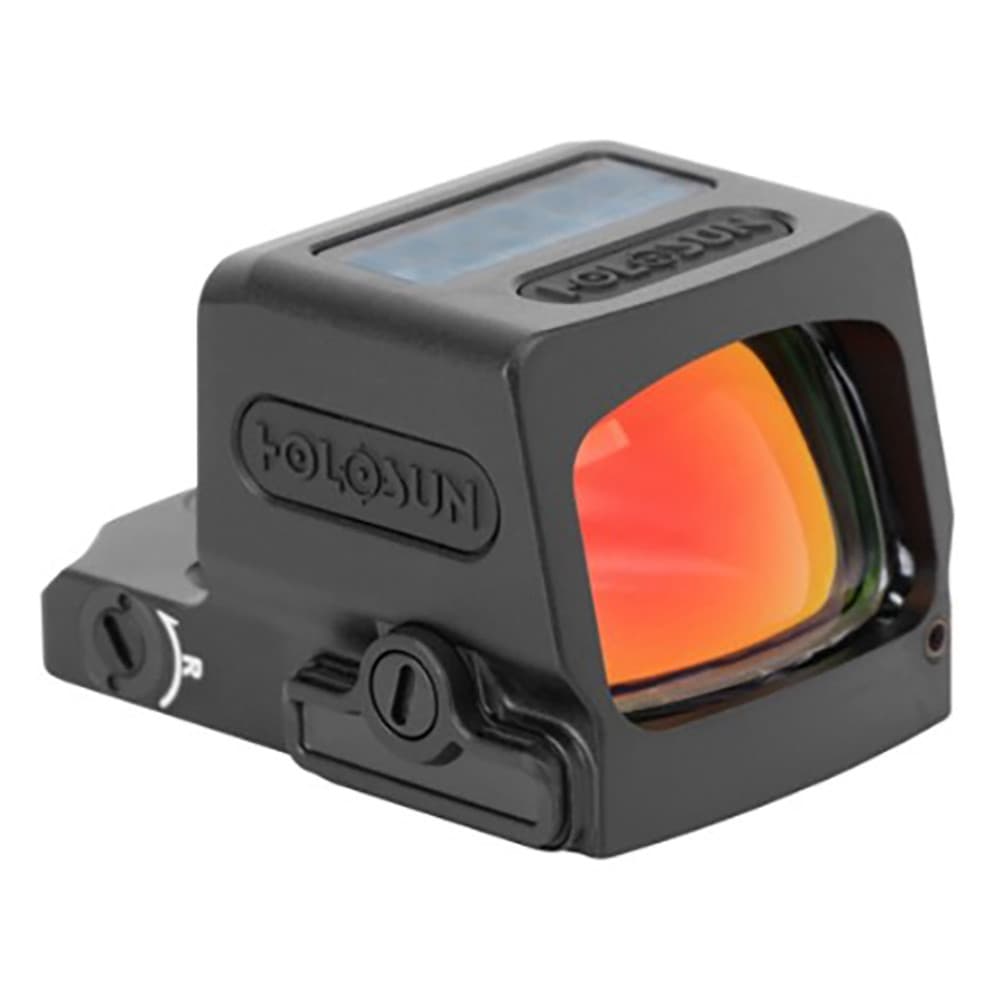
The EPS Core is the cheaper enclosed Holosun with the bigger window, and the EPS Carry is the lighter one with the harder housing and more dot sizes. The EPS Core, at $229.99, mounts directly to the Shield RMSc cut, so a Glock 43X MOS, 48 MOS, or SIG P365 takes it with no plate. The EPS Carry, at $329.99, is built on the Holosun K footprint and reaches those slides through the RMSc-to-K plate in its box.
The EPS Core uses the full-size EPS window, 0.90 by 0.63 inches, the same size as the SCS Carry and larger than the EPS Carry's 0.77 by 0.58. It pays for that in weight and material: 1.4 oz in 6061-T6 aluminum against the EPS Carry's 1.23 oz in 7075-T6. Reticles split differently too. Dot-only EPS Core models come in a single 3 MOA size, in red, green, or gold, and its MRS versions pair a 2 MOA dot with a 32 MOA circle and add Solar Failsafe. The EPS Carry gives you a 2 MOA or 6 MOA dot-only choice. Both side-load a CR1620 rated at 50,000 hours and both are IPX8.
The EPS Core has not been through our carry rotation, so this comparison runs on Holosun's published specs. On those specs, take the EPS Core for a Shield RMSc slide when window size and price matter most, and keep the EPS Carry when you want the lighter 7075-T6 housing or a 2 MOA or 6 MOA dot-only reticle.
Holosun EPS Core
Full-size EPS window on a direct RMSc mount, for less than the EPS Carry
RMSc-direct enclosed pistol optic with a full-size EPS window and six reticle variants
- +Enclosed emitter keeps dust, lint, and moisture away from the light source
- +Full-size EPS window in a compact RMSc-direct body
- +Side battery replacement does not require removing the optic
- −6061-T6 housing instead of the 7075-T6 aluminum used by the EPS and EPS Carry
- −Dot-only variants offer one 3 MOA size rather than separate 2 MOA and 6 MOA choices
- −Solar Failsafe is available only on MRS variants
Affiliate links (?)
The Multi-Reticle System Is Half a Feature
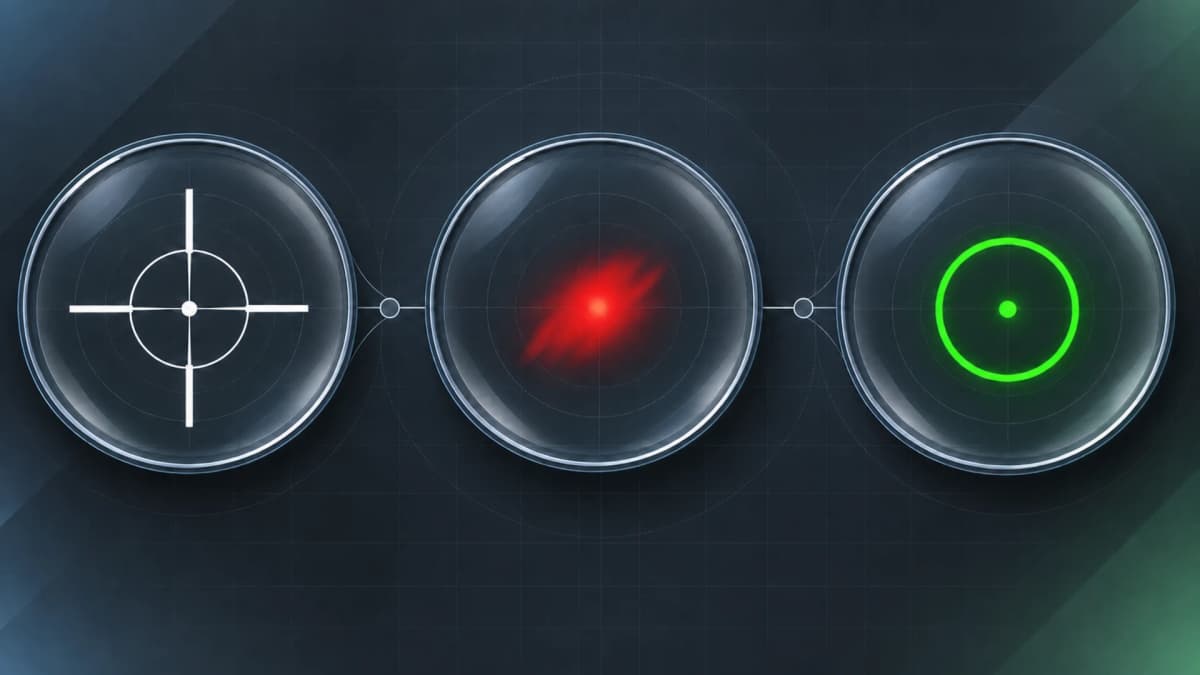
Both optics offer the 2 MOA dot with a 32 MOA circle, and in practice the circle gets switched off. The bare dot is faster and cleaner on a carry gun, and once you have picked dot-only there is no reason to go back. Treat the multi-reticle system as a setting you configure once rather than a feature you use.
The cycle itself is poorly thought out. It steps through dot, circle alone, and circle with dot. Circle alone is the mode nobody wants: it removes the precise aiming reference and leaves a 32 MOA ring, so it is worse than either of the other two for every purpose a carry optic serves. It should cycle between dot and circle-with-dot and stop there. As shipped, a third of the reticle positions are a mode you will step past on the way to something useful.
This is a small complaint about an otherwise sorted optic, and it applies to both. If you are cross-shopping the wider category, our enclosed-emitter pistol red dot guide ranks these two against the Aimpoint ACRO P-2, Trijicon RCR, and the rest of the sealed-emitter field.
What They Fit
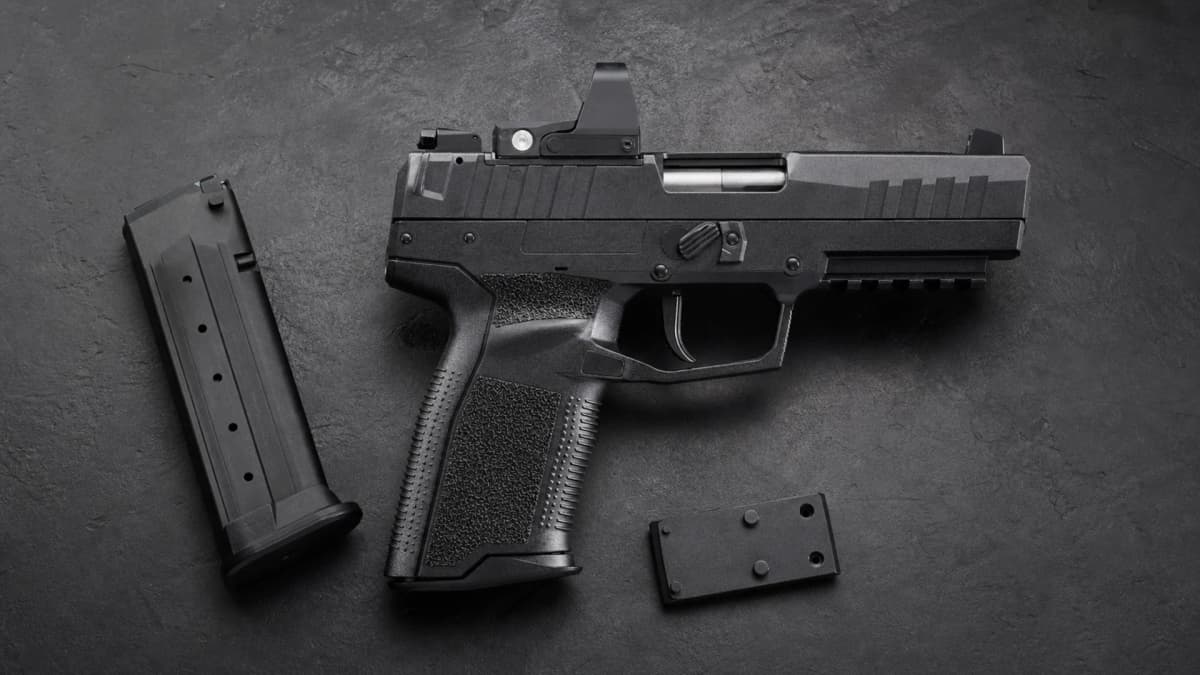
Both optics mount to the Holosun K footprint directly and to Shield RMSc slides through the adapter plate included in each box. That covers the Glock 43X MOS and 48 MOS, SIG P365, Springfield Hellcat, and the growing set of slim carry pistols milled for the K cut. The HK CC9 is one of the guns that mills Holosun K directly, so the plate is unnecessary there.
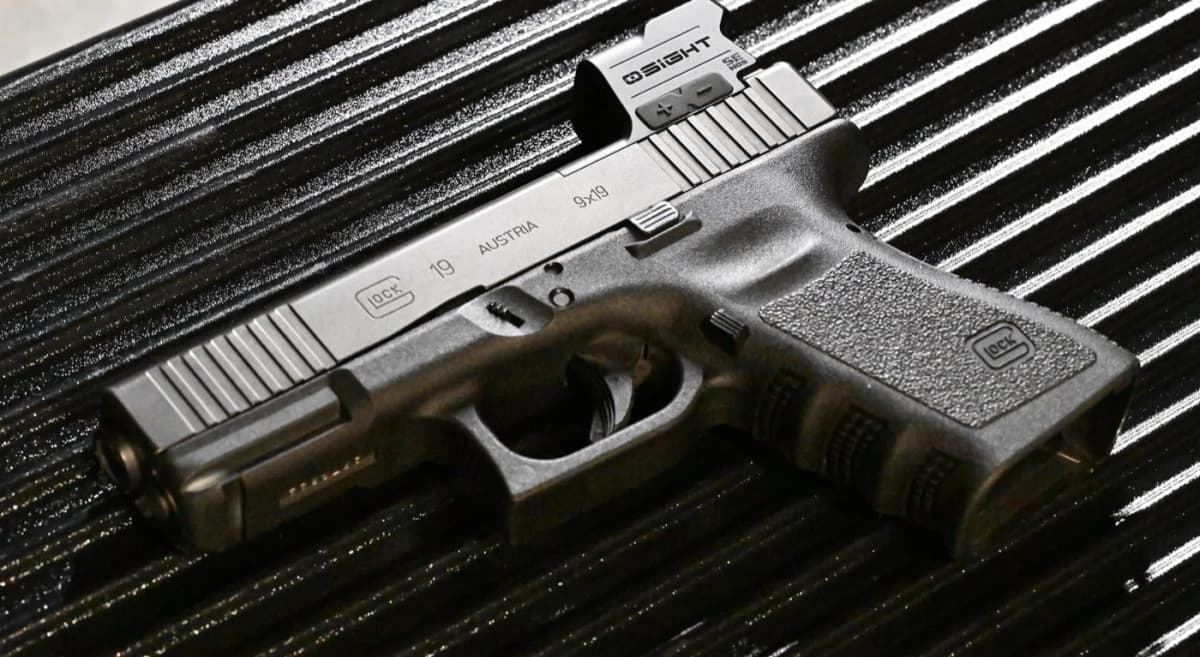
The trap is the Glock 43X. A standard 43X has a solid slide with no optic cut, and neither of these optics mounts to it. You need the MOS version, an aftermarket slide, or a milling job first. The same applies to the Glock 48. Our Glock 43X upgrade guide covers which slide and barrel combinations are worth the money on that host, and the Holosun lineup guide maps the rest of the range if neither of these is the right size. You can also check fitment against your specific pistol in the builder, which gates optics against the host's actual slide cut.
Warranty is identical across both. Holosun covers the housing and glass for the life of the product and the illumination system for 10 years from the manufacture date, and registration is required to validate it. Register the optic when it arrives.
Enclosed-Emitter Carry Dots
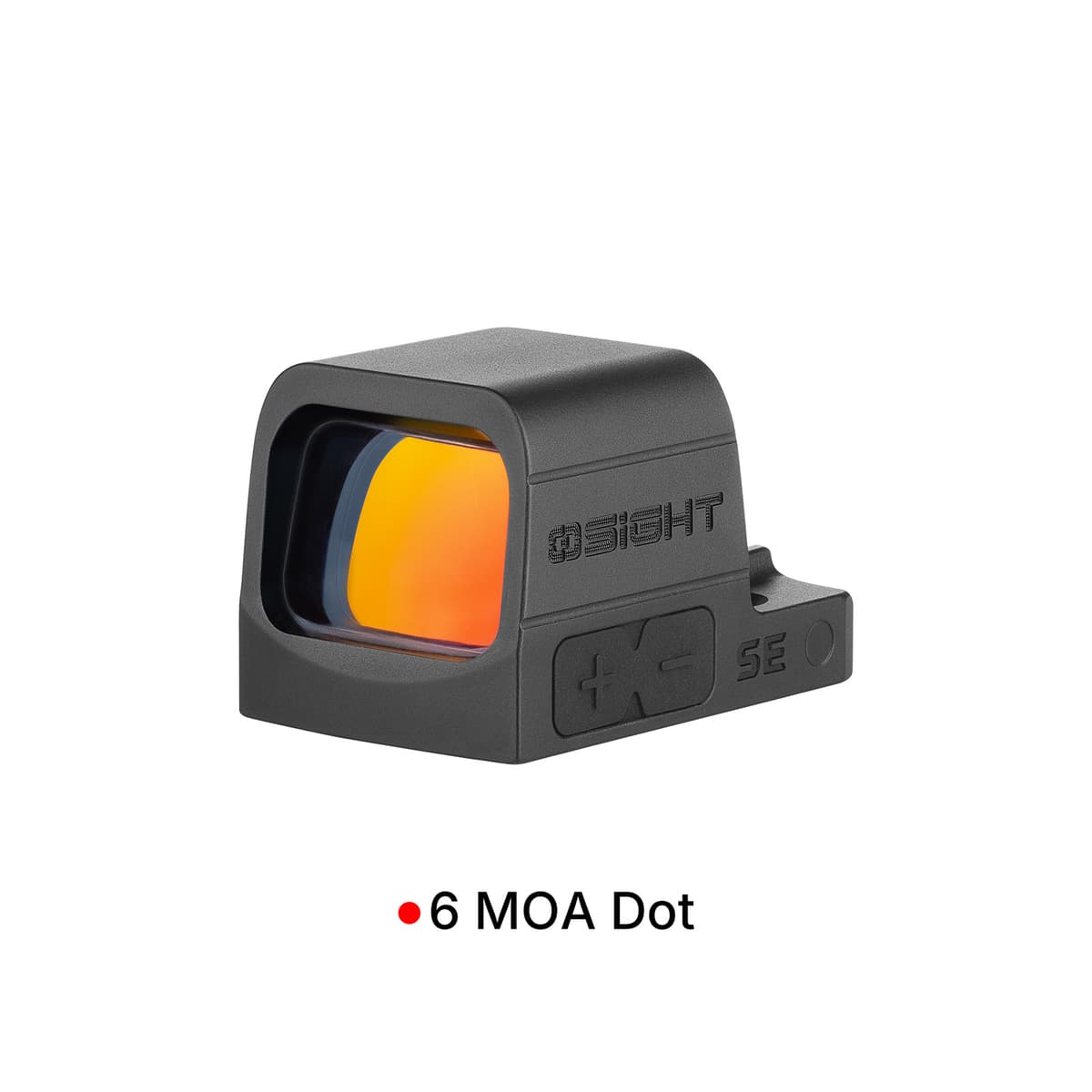
Osight SE Enclosed (6 MOA Red)
- 6 MOA red dot
- Enclosed emitter, RMSc footprint
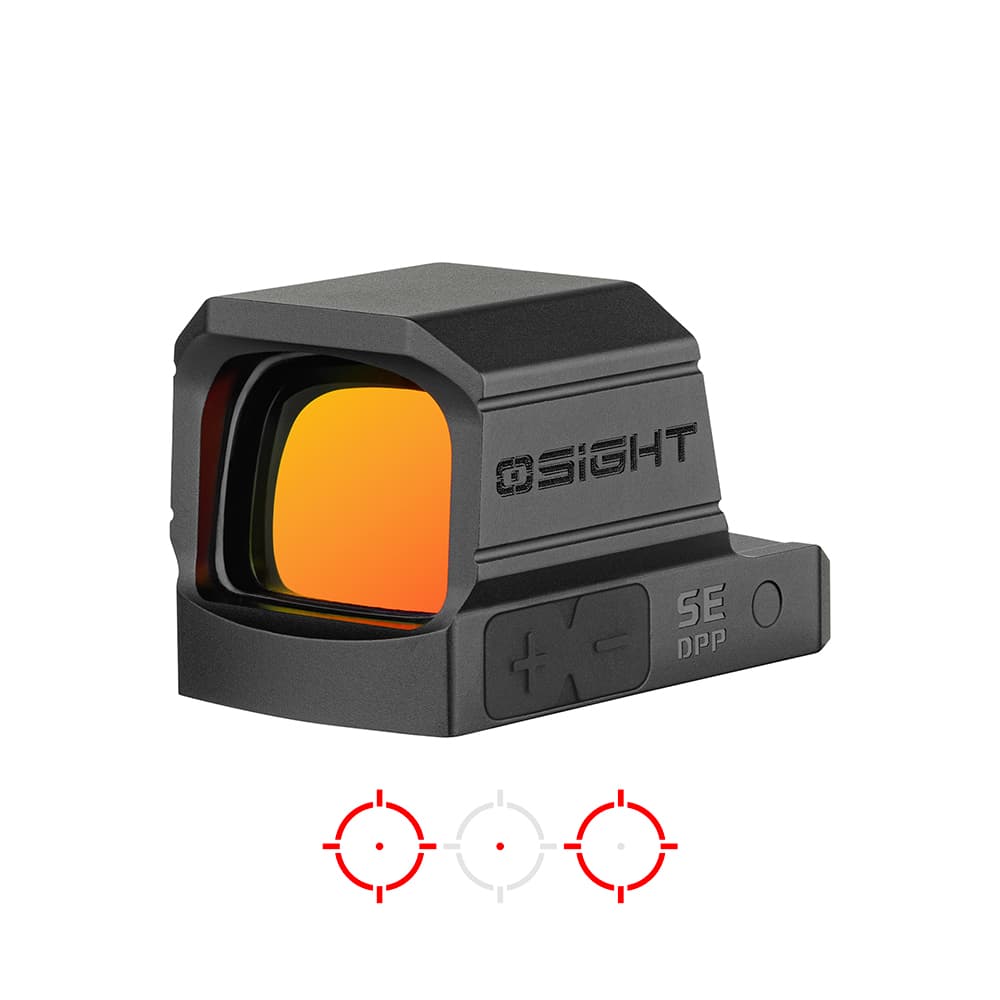
Osight SE DPP Enclosed Red Dot
- 2 MOA dot + 32 MOA circle MRS
- Enclosed emitter, DeltaPoint Pro footprint
Holosun SCS Carry
- Solar charging
- MRS (2 MOA dot + 32 MOA circle)
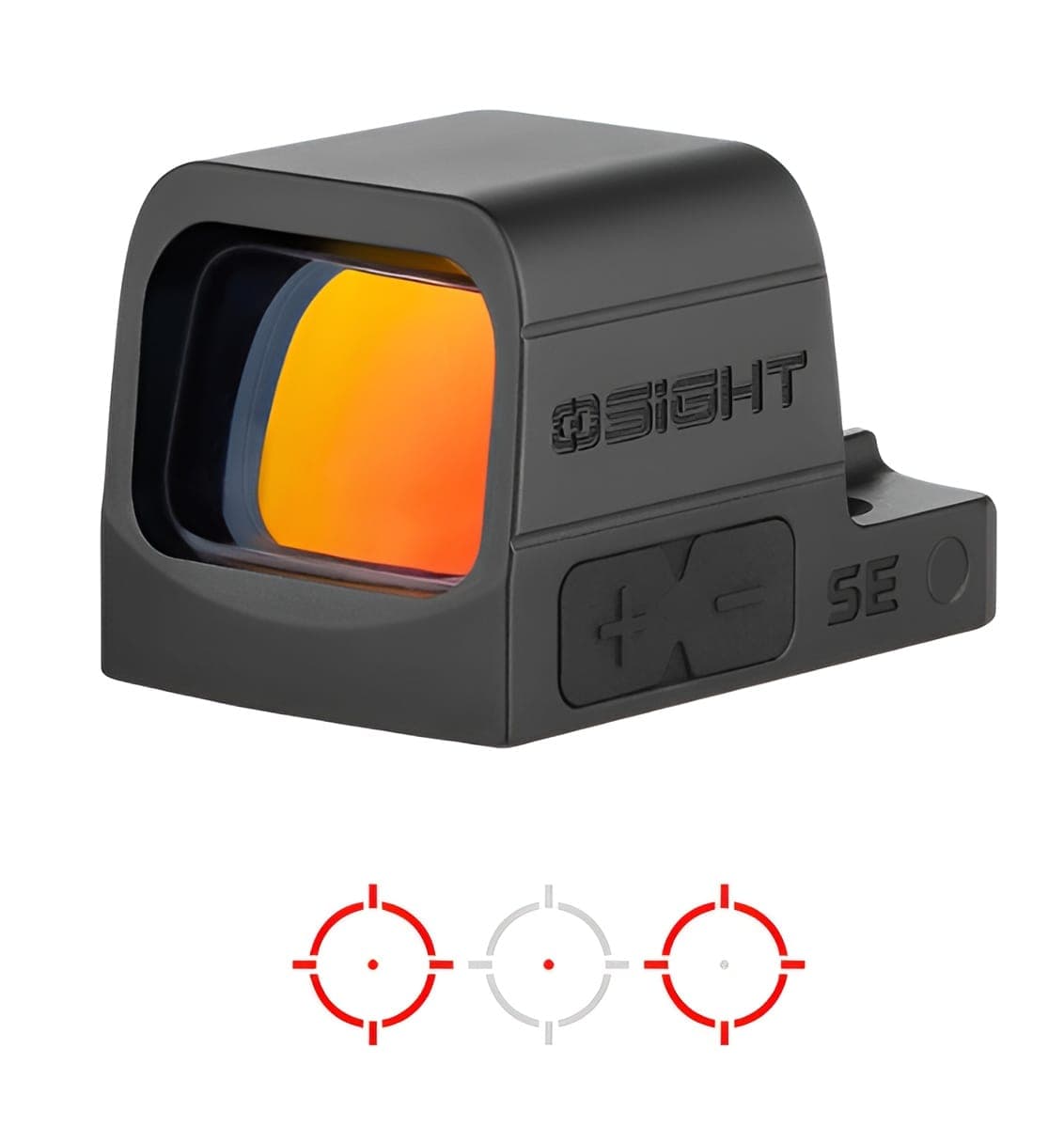
Osight SE Enclosed (2 MOA + 32 MOA Red MRS)
- 2 MOA dot + 32 MOA circle MRS
- Enclosed emitter, RMSc footprint
Holosun EPS Carry
- 2 MOA or 6 MOA dot
- Enclosed emitter
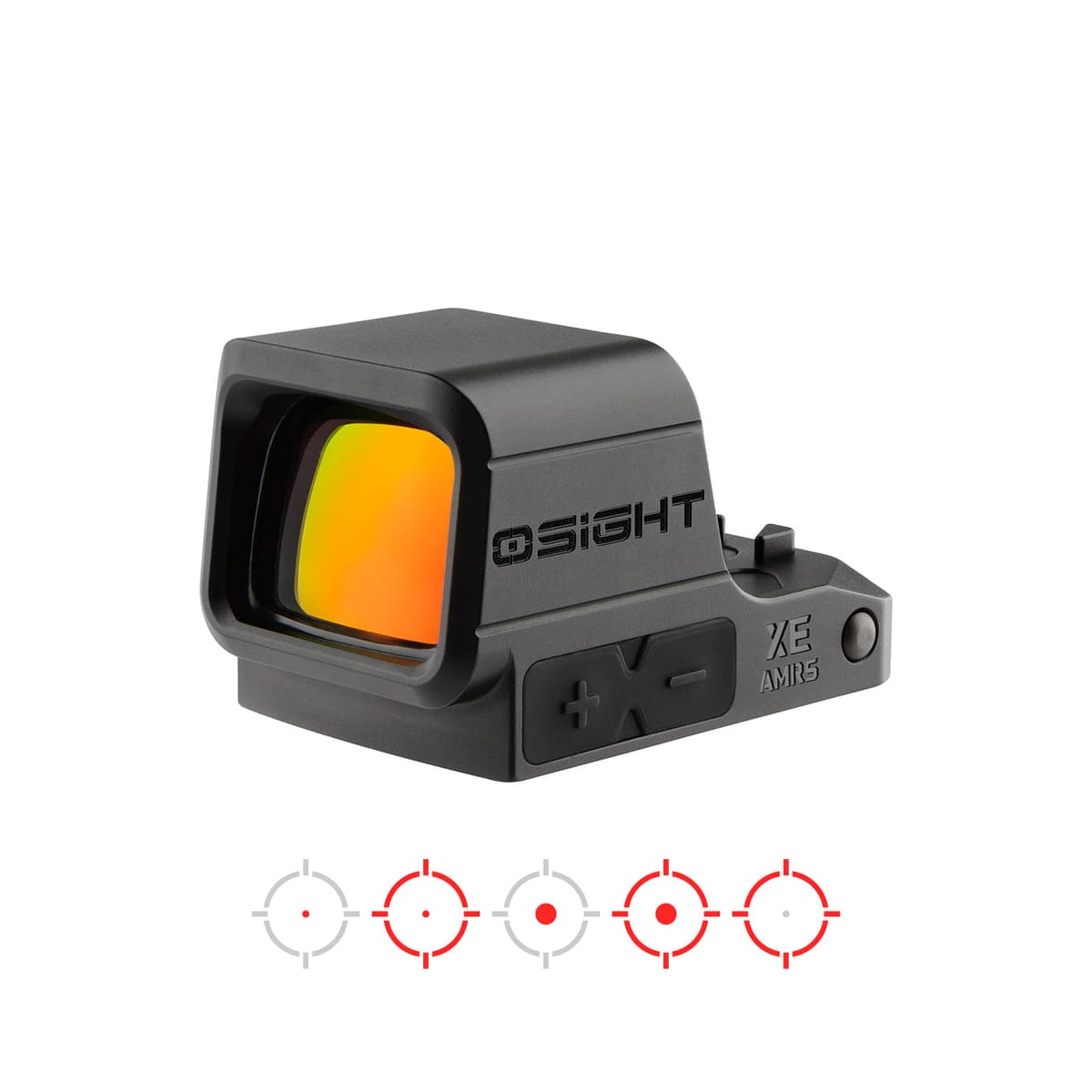
Osight XE AMRS Enclosed (RMR Footprint)
- AMRS: 5 reticles (2/6 MOA dot, 32 MOA circle)
- Enclosed emitter, RMR footprint
Affiliate links (?)
Which One Should You Buy
Buy the EPS Carry if you are buying one carry optic and want the fewest decisions. It is the cheaper optic, the coin cell is a non-event because it side-loads, and the reticle color options mean you can match the dot to your eyes rather than to what the box came with. Astigmatism alone is enough reason to take the EPS Carry, since green and gold are options and the SCS Carry does not offer either.
Buy the SCS Carry if maintenance is the thing you want engineered out. It is the better answer for a pistol that lives in a safe or a holster for long stretches and needs to work without a service schedule, and the larger window and lighter body are real advantages rather than marketing. The price of admission is a green reticle and a sealed cell, and you should decide now whether sending an optic back to Holosun in some future year is acceptable to you.
What should not factor into the decision is durability or reliability. Across roughly 1,500 rounds and two years of carry between them, neither optic has failed, drifted, or needed anything. They are the same class of product with two different answers to the power question.
Frequently Asked Questions
▶Is the Holosun SCS good for concealed carry?
▶What footprint does the Holosun SCS Carry use?
▶Is the Holosun SCS Carry Shake Awake?
▶What is the price of the Holosun SCS Carry?
▶Holosun SCS Carry vs EPS Carry: which should you buy?
▶Holosun EPS Core vs EPS Carry: what is the difference?
▶Is the Holosun SCS Carry battery replaceable?
▶Do the SCS Carry and EPS Carry fit a Glock 43X?
The Verdict
Buy the EPS Carry. Buy the SCS Carry instead if never servicing a battery is worth roughly $70 and a green-only reticle.
The EPS Carry is the safer default at the lower price, with a side-loading cell and three reticle colors. The SCS Carry is the better optic to look through, with a bigger window and less weight, and it delivers on the promise of a carry dot you never maintain. Both survived two years of carry without a complaint that mattered. If you are still deciding where a dot fits in the rest of the build, the pistol red dot guide covers footprints and astigmatism picks across the whole category.