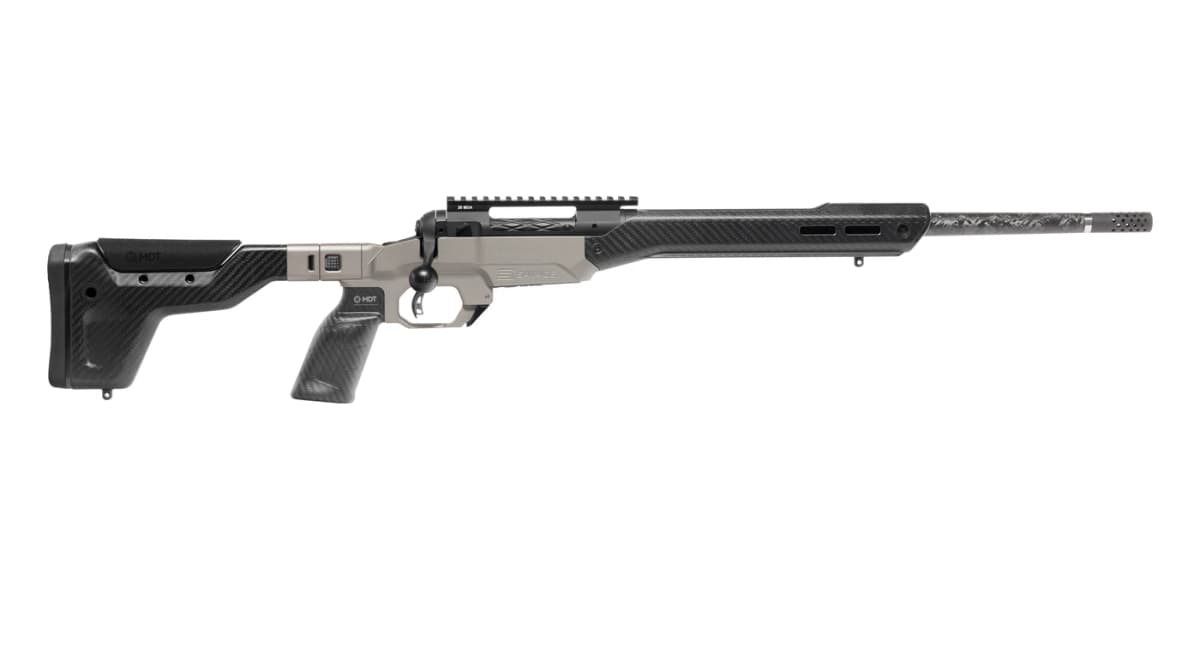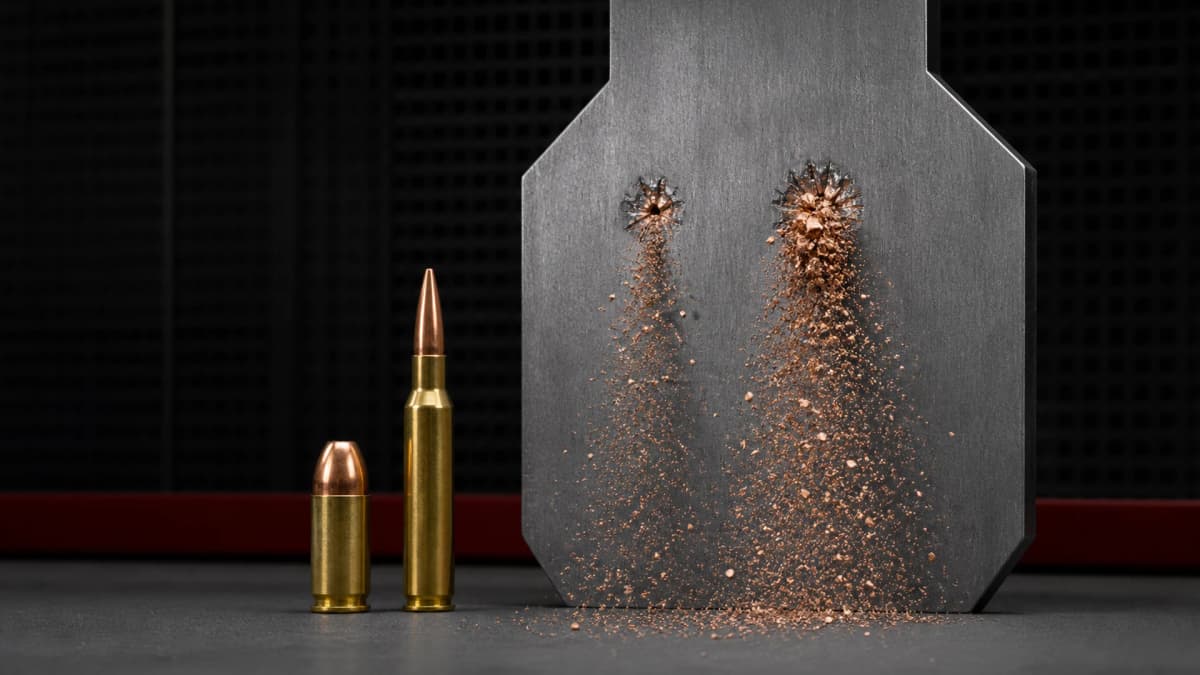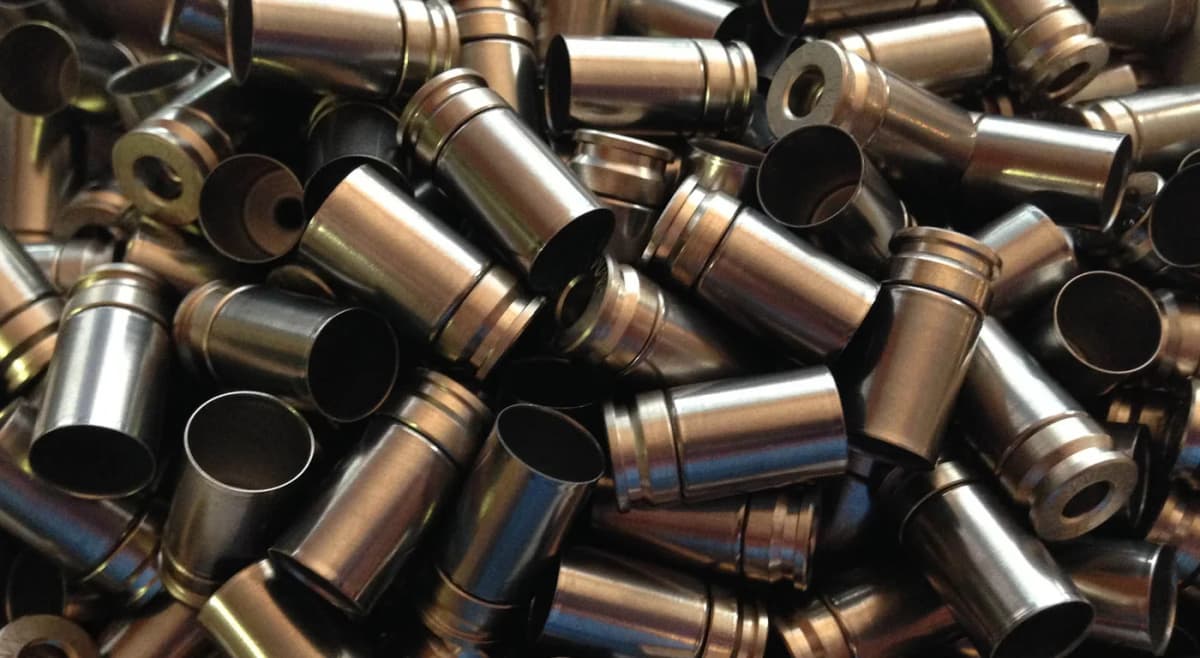
Shell Shock .338 Lapua NAS3: 30% Lighter Magnum Brass
Shell Shock Technologies commercially released the .338 Lapua NAS3 cartridge case in May 2026: a two-piece, nickel-alloy body locked to a stainless-steel head that is roughly 30% lighter than drawn brass and offers about 11% more internal volume. Available now in 250, 500, 1,000, 2,500, and 5,000 case packs direct from the manufacturer, compatible with standard .338 Lapua Magnum load data and the full range of commercial, match, and tactical projectiles.
Key Takeaways
- →Two-Piece Construction: Nickel-alloy cylindrical body mechanically locked to a stainless-steel head, the same NAS3 architecture proven in 5.56 NATO, 7.62 NATO, .300 BLK, 6.5 Creedmoor, and 9mm.
- →~30% Lighter Than Brass: Roughly 12 grams per case versus 17 to 18 grams for traditional drawn brass. Across a 10-round magazine plus spare ammo that adds up to a meaningful load reduction for backcountry hunters and dismounted precision teams.
- →~11% More Internal Volume: More room for powder at the same overall length, which Shell Shock says supports standard-bullet velocities up to approximately 3,125 fps without exceeding safe pressure margins.
- →Pack Sizes 250 to 5,000: Sold direct from shellshocktechnologies.com in 250, 500, 1,000, 2,500, and 5,000 case quantities. Bulk orders above 5,000 go through SST@shellshocktech.com.
- →Compatible With Standard Load Data:Drop-in with published .338 Lapua Magnum reloading data and the full match, hunting, and tactical projectile catalog. Reload using Shell Shock S3 Reload dies, not standard brass dies, because of the two-piece geometry.
What Is Different About a Two-Piece NAS3 Case
The NAS3 case is not brass with a coating. It is a two-piece cartridge case where the cylindrical body is a corrosion- resistant nickel alloy and the head is ultra-durable stainless steel. The two pieces are mechanically locked into a single unit during manufacturing, which is what lets Shell Shock claim a stronger case head than typical drawn brass alongside the weight reduction in the body. Brass case construction starts as a solid cup and gets drawn through progressive dies until the case wall, shoulder, and head are all one continuous piece of brass at varying thicknesses. NAS3 sidesteps that geometry by building the head and body from different materials chosen for what each part of the case actually needs to do.
The body needs corrosion resistance, ductility for obturation against the chamber wall, and enough strength to hold the bullet under recoil and chambering. Nickel alloy handles all three at lower weight than brass. The head needs to absorb the pressure spike at the moment of ignition, contain the primer pocket, and resist the bolt face wear that high-pressure cartridges put on it. Stainless steel does that better than brass at any comparable mass. Bolting the right material to each job is the engineering case for NAS3, and it is why the 7.62 NATO version of this case passed Naval Surface Warfare Center Crane testing at temperature extremes from -40 to +160 Fahrenheit in belt-fed machine guns with zero case failures.
The .338 Lapua launch extends that same architecture into one of the most demanding commercial cartridges in circulation. .338 Lapua operates at SAAMI maximum pressure of 60,000 psi (CIP rates it slightly higher at 62,366 psi) with a 91 grain typical powder charge behind a 250 to 300 grain bullet. That is real pressure on the case head, and it is also a cartridge where weight per round matters more than it does in 5.56 because shooters carry far fewer of them.
Why a 30% Lighter Case Matters for .338 Lapua
A loaded .338 Lapua round runs around 39 to 44 grams depending on bullet weight. The empty brass case is roughly 17 to 18 grams of that total, which makes the case the single heaviest component besides the bullet itself. A 30% case weight reduction shaves about 5 grams per loaded round. Multiply that by ten rounds in an AICS magazine and a second spare magazine, and a shooter is carrying roughly 100 grams (3.5 oz) less for the same twenty-round combat load. That sounds small until you add it to the rifle plus optic plus suppressor plus bipod plus spotting setup that a precision shooter already has to move with.
For the military and law enforcement precision teams that were the first market for the 7.62 NATO NAS3, the weight story is operational. For civilian shooters the math breaks two ways. Hunters running a .338 Lapua backcountry setup (Christensen MPR, Sako TRG, Barrett MRAD) get a meaningful pack weight cut on the same cartridge count. PRS and ELR competitors moving through stages with twenty to forty rounds plus barricades and bag gear get the same cut, but they care more about the second part of the story: the extra internal volume.
What 11% More Case Volume Buys You
Internal case volume in a .338 Lapua brass case runs around 7.8 to 8.3 cubic centimeters depending on brand and lot. The NAS3 case offers approximately 11% more internal capacity at the same external dimensions. More space means the powder column can be less compressed at standard charge weights, and there is room to seat a longer high-BC bullet without intruding on the powder space. Shell Shock CEO Peter Foss frames the upside as taking .338 Lapua “into a new performance class,” and the company cites standard bullets reaching approximately 3,125 fps in customer testing.
That 3,125 fps figure is at the upper end of what high- quality brass can produce with the same projectiles and barrel length. Hornady's 285 grain ELD Match factory load is rated at 2,745 fps from a 27 inch barrel. Lapua's 250 grain Scenar runs around 3,000 fps from a 27 inch barrel at maximum book charge. Closing the gap between brass- cased factory ammunition and a hand-loaded NAS3 case meaningfully extends the cartridge's effective velocity at distance. For practical context on how velocity, BC, and chamber pressure interact at long range, see our external ballistics guide.
The cautious read is that the larger case capacity means starting loads developed for traditional brass will run softer in NAS3 cases, not hotter. Reloaders should still start at the published starting load and work up with a chronograph and pressure-sign checks. The bigger volume is headroom, not a free velocity gain handed out to every load.
Long Range Optics for .338 Lapua Builds
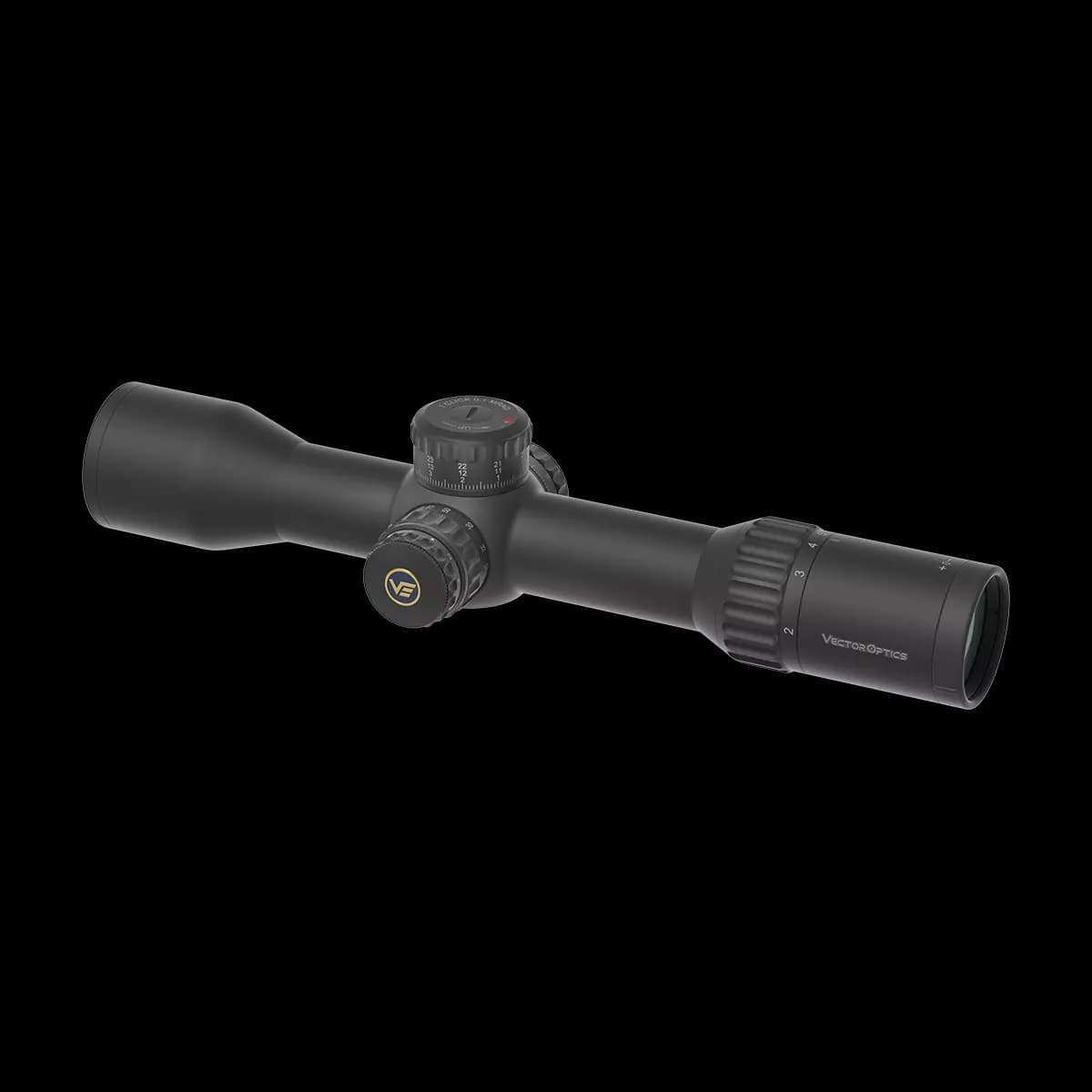
Vector Optics Continental 2-12x44 RAR FFP
- 2-12x44 FFP
- VET-RAR2 reticle
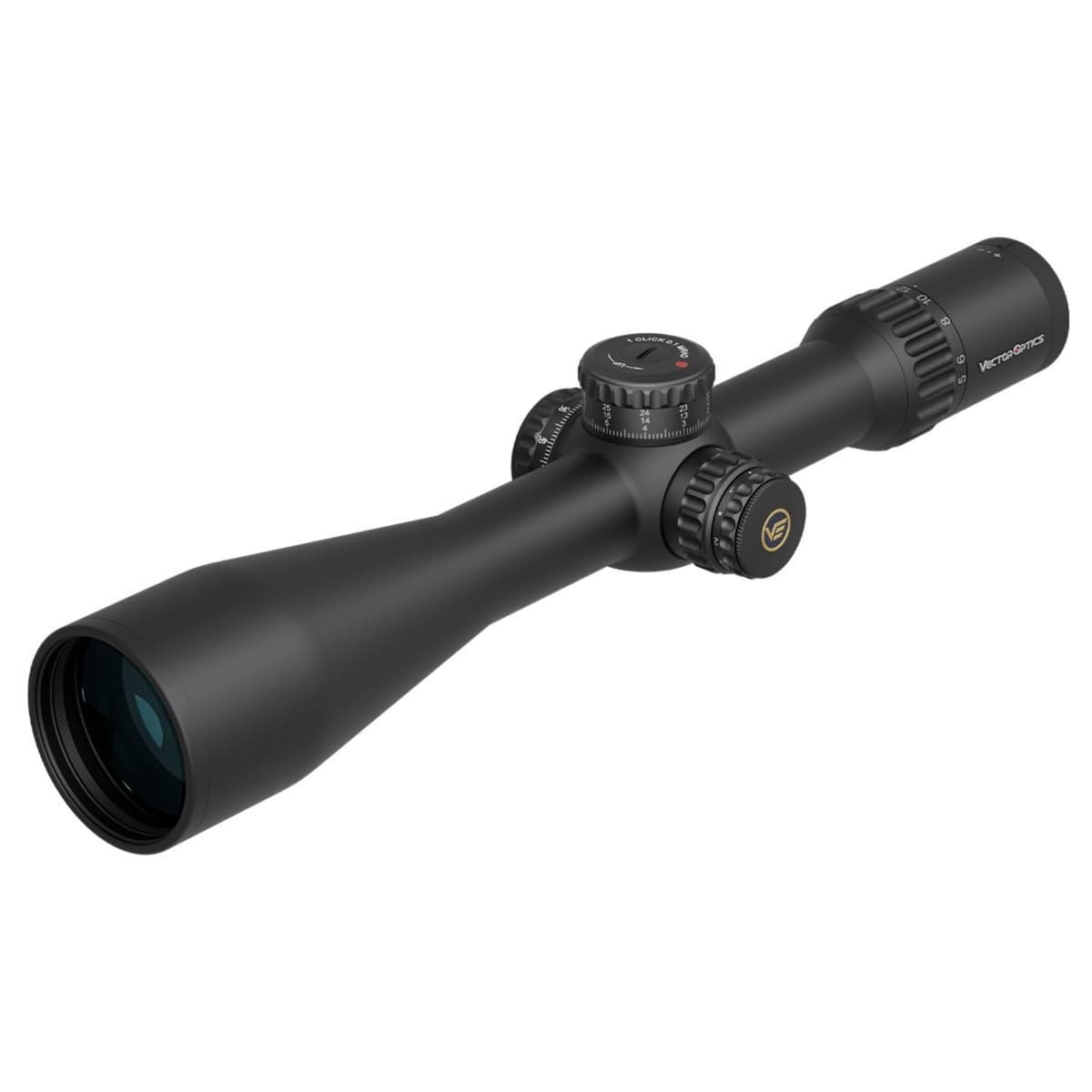
Vector Optics Continental 5-30x56 FFP
- 5-30x56mm FFP
- VCT-34FFP MIL reticle
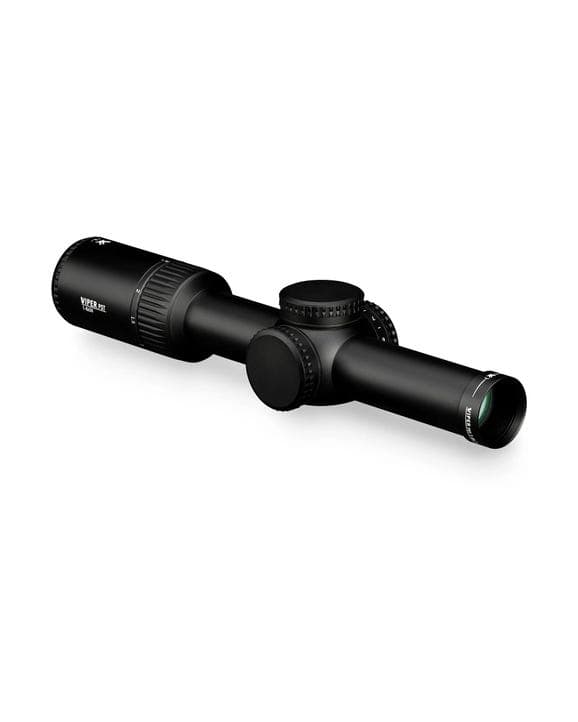
Vortex Viper PST Gen II 5-25x50
- 5-25x magnification
- First focal plane
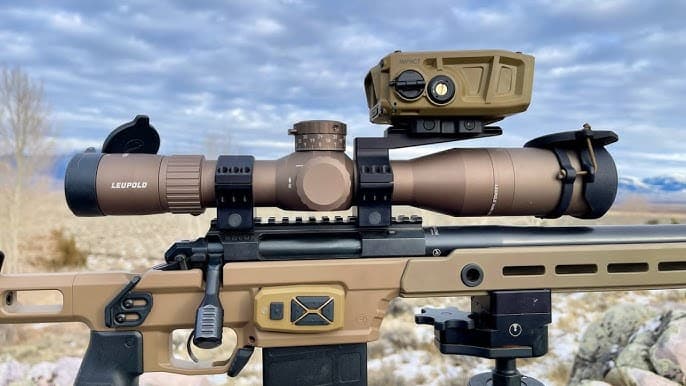
Leupold Mark 5HD 3.6-18x44
- 3.6-18x magnification
- First focal plane
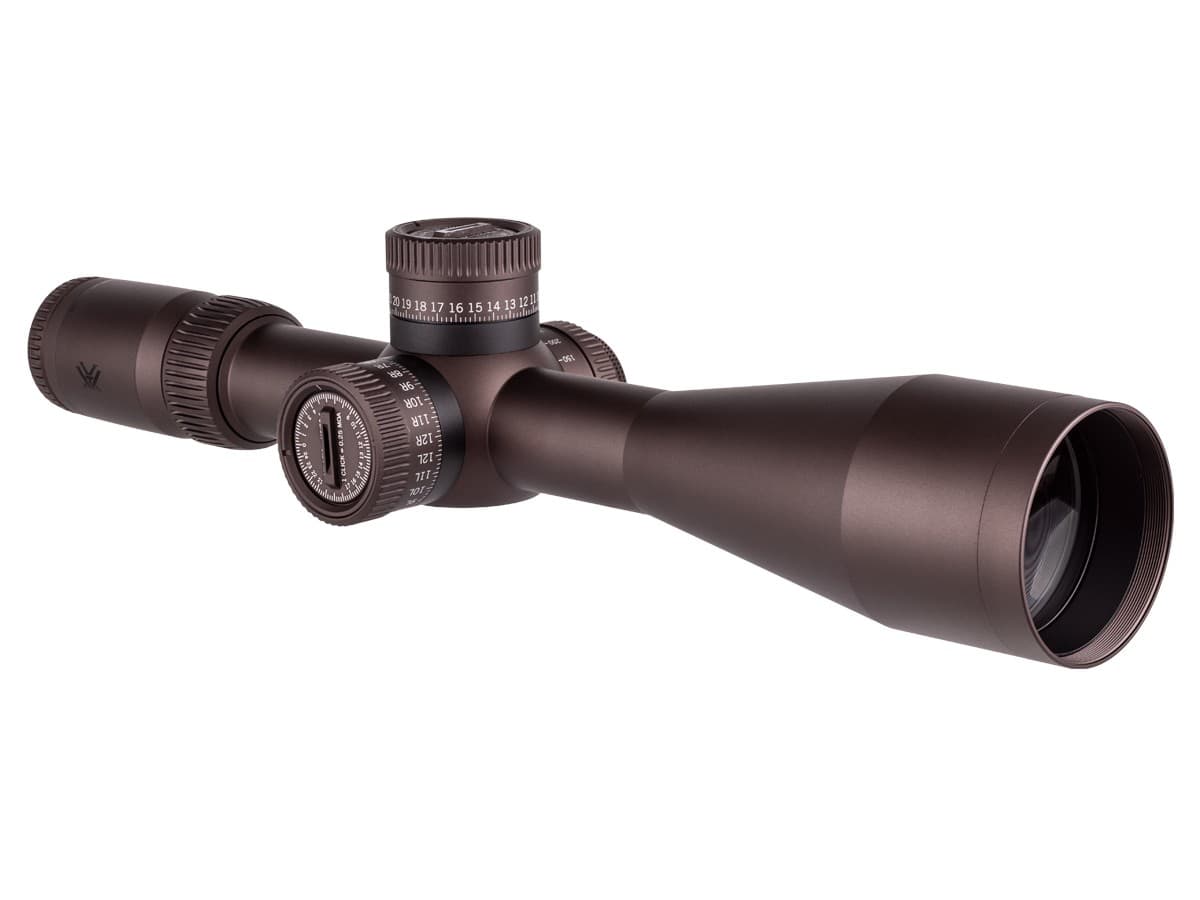
Vortex Razor HD Gen III 6-36x56 FFP
- 6-36x magnification
- 56mm objective
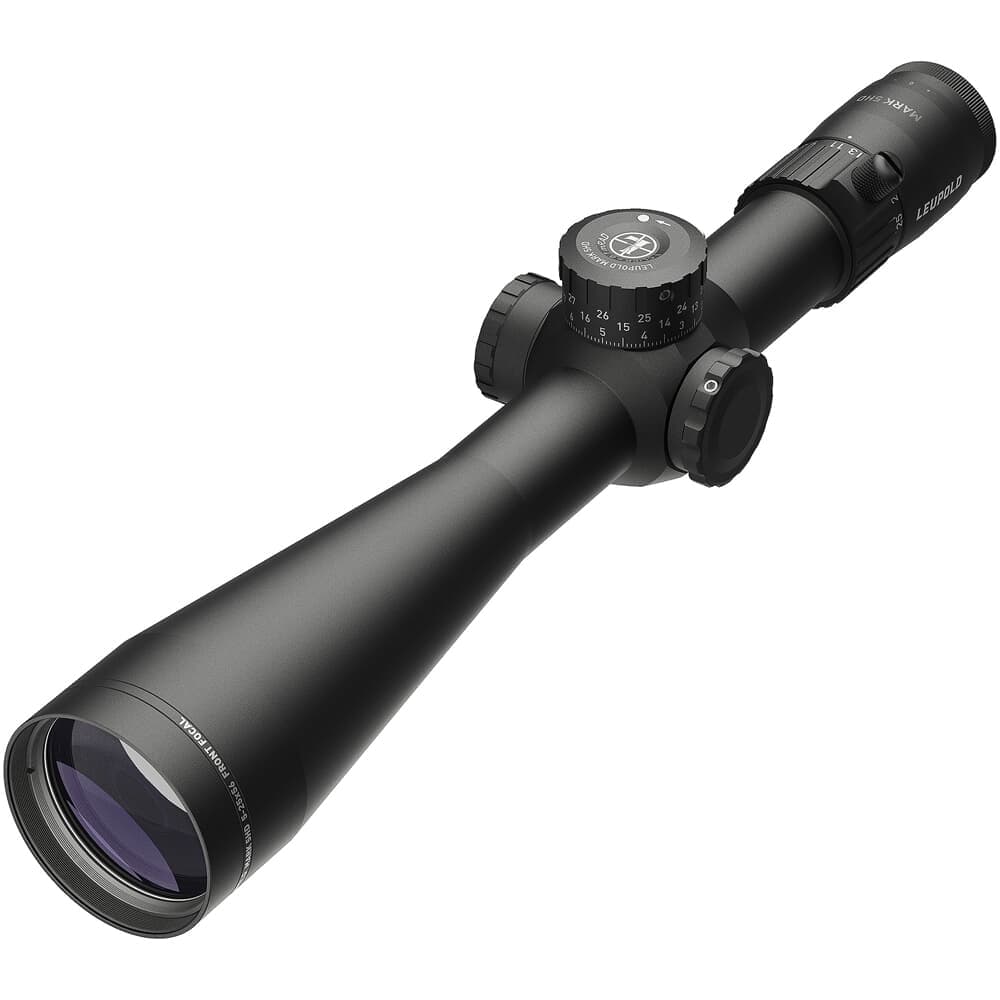
Leupold Mark 5HD 5-25x56 PR2-MIL
- 5-25x magnification
- 56mm objective
Affiliate links (?)
Reloading Workflow and Tooling
NAS3 cases are reloadable, but they require Shell Shock's S3 Reload die set rather than standard brass-die geometry. The two-piece construction changes how the case sizes under die pressure; the S3 sizing die includes a polyurethane spring that supports the case wall during extraction from the die. Shell Shock has published video of NAS3 cases reloaded well past the 5-to-7 cycle window that drawn brass typically tolerates in magnum cartridges before primer pockets loosen or case heads separate. The S3 dies for the smaller calibers run $80 to $100 per set; the .338 Lapua S3 die set is being released alongside the cases.
Primer pocket life is a function of the stainless steel head, not the nickel-alloy body, and that is where the real reload-count gain comes from. Brass primer pockets expand under repeated high-pressure firing until the primer fits loosely; stainless does not move the same way. Reloaders should still inspect each case for body-to-head integrity during prep, because case failure modes on a two-piece case are not identical to brass and a separation at the junction is the failure to watch for.
The other practical note is that NAS3 cases pick up with a magnet, which drawn brass does not, because the head is stainless steel. Shell Shock cites magnetic pickup and cooler ejection as range-cleanup advantages over brass. For most precision reloaders this is a minor point because cases are kept in trays and tracked through their reload count anyway. Shell Shock has since extended the rifle line with factory-primed NAS3 cases in .308 and 5.56, priced from $135 per 250.
How NAS3 Stacks Up Against Premium .338 Lapua Brass
Lapua brass remains the reference standard for .338 Lapua reloading, with Norma, Peterson, and Nosler as the next tier of premium options. Lapua and Peterson both offer tightly controlled neck wall thickness, consistent flash hole geometry, and reload-life in the 8 to 12 cycle range for moderate loads. NAS3 enters the conversation on a different axis: it does not try to beat Lapua brass on neck-tension consistency or annealing protocols. It competes on weight, capacity, and longer-cycle economics. For a competitive shooter who already orders Lapua brass and laps every case, NAS3 is a parallel ammunition stream rather than a replacement.
For the rifleman who buys factory brass once and reloads it until it fails, NAS3 changes the math. A 1,000-piece order at the introductory pricing band, reloaded ten to fifteen cycles per case, brings the per-shot brass cost well below premium drawn brass at five to seven cycles per case. The buyer who benefits most is the high-volume .338 Lapua shooter, which today means the PRS shooter who runs .338 in the heavy class, the ELR competitor working past one mile, and the precision-rifle training student who needs case logistics that survive a full course.
The buying argument also intersects with the platform. Owners of factory chassis rifles like the Savage 110 Precision in .338 Lapua Magnum or the Sako TRG-42 are exactly the audience that reloads enough to care. For shooters earlier in the precision rifle journey, see the best precision rifle under $2,000 guide for the rifles that justify the brass investment, and the 2026 PRS rifle build guide for the supporting chassis, action, and optic gear that pairs with the cartridge.
Pricing and Availability Summary
- ProductShell Shock .338 Lapua NAS3 Unloaded Case
- ConstructionNickel-alloy body, stainless-steel head, two-piece
- Weight Reduction~30% lighter than brass
- Internal Volume Gain~11% larger capacity
- Velocity ReferenceUp to ~3,125 fps standard bullets
- Pack Sizes250, 500, 1,000, 2,500, 5,000
- Bulk OrdersSST@shellshocktech.com
- Load DataStandard .338 Lapua Magnum data compatible
- Reload DiesShell Shock S3 Reload (required, not standard brass dies)
- Other NAS3 Calibers9mm, .380 ACP, .300 BLK, 5.56 NATO, 6.5 CM, 7.62 NATO, .308 Win
- ManufacturerShell Shock Technologies LLC, Westport, CT
- LaunchMay 2026, commercial release
Stay Updated on Precision Rifle Gear
We will be tracking Shell Shock distributor coverage, early reloader velocity data, and the rest of the .338 Lapua premium-brass landscape as more reviewers run rounds through the cases. Subscribe for hands-on precision rifle coverage, PRS build guides, and long-range ammunition deep dives.
Frequently Asked Questions
▶What is the Shell Shock .338 Lapua NAS3 case?
▶Is the .338 Lapua NAS3 compatible with standard load data?
▶How much weight do you actually save with NAS3 cases?
▶Are NAS3 cases reloadable?
▶Where do you buy Shell Shock .338 Lapua NAS3 cases?
▶Does this make sense for a hunter or only competitive shooters?
Bottom Line
Shell Shock has taken the same two-piece case architecture that earned military validation at NSWC Crane in 7.62 NATO and pushed it into the heaviest commercial bolt-action cartridge most precision shooters will run. The numbers are not subtle: 30% lighter, 11% more internal volume, compatible with standard .338 Lapua Magnum load data. That combination changes what a working .338 Lapua ammunition stream costs in weight, pack space, and reload-cycle economics over a 1,000-round commitment.
The cleanest buy case is a competitive PRS or ELR shooter running .338 Lapua in the heavy class, or a backcountry hunter who already owns a .338 Lapua rig and wants the pack weight cut. For shooters considering their first precision rifle build, the cartridge choice matters more than the case construction, and the best precision rifle under $2,000 guide and the 6.5 Creedmoor guide cover the right starting points. For builders who are deeper in and want to spec the next .338 Lapua chassis rifle, work through the rifle builder and the PROOF PXT barrel launch coverage to see what high-pressure barrel technology pairs with NAS3 cases on the case-and-barrel side of the system.