Streamlight ProTac HL-X
- ✓1,000 lumens
- ✓50,000 candela

Nine .30 caliber suppressors ranked for the .300 Blackout host, from the purpose-built Q Trash Panda to the ultra-quiet CGS Hyperion and the low-back-pressure HUXWRX Flow 762 Ti. Subsonic vs supersonic priorities, direct-thread vs QD/HUB mounting, and what actually runs clean on an 8-inch SBR.
Affiliate links (?)
The best 300 Blackout suppressor for most builds is the Q Trash Panda ($899), a compact 6.9-inch titanium can purpose-built for the short suppressed .300 BLK host. If your priority is the quietest subsonic shot, the CGS Hyperion is the quietest can in this lineup, with no first-round pop. If you run a gassy supersonic SBR, the HUXWRX Flow 762 Ti vents gas forward so the bolt and your face stay clean without an adjustable gas block. .300 Blackout was designed from the start to be suppressed, and subsonic loads make it one of the quietest centerfire combinations you can build. The federal NFA tax dropped to $0 on January 1, 2026, so this is the cheapest year on record to put a can on one.
New to the cartridge? Start with our .300 Blackout guide for ballistics, barrel length, and cost of ownership, then pair this page with the .300 Blackout ammo guide to match subsonic and supersonic loads to the can you pick.
Sling, light, backup sights, and QD mounts, the upgrades most builders add first.
Affiliate links (?)
Every can below is .30 caliber bore rated, covers .300 Blackout, and threads or adapts to the standard 5/8x24 muzzle. Placement weighs how well each one fits the short suppressed .300 BLK host: subsonic suppression, back pressure on a gassy SBR, mounting flexibility, weight, and price. The dedicated, purpose-built cans rank above the heavier multi-caliber workhorses for this specific cartridge, even though the workhorses are excellent on a .308. Prices are street estimates checked June 2026, MSRP where the maker lists it (the Canik VOID-762 at $649.99 and the CGS Hyperion at $1,999), and they move with dealer and feed pricing.
Nine .30 caliber suppressors ranked for the .300 Blackout host, from the purpose-built Q Trash Panda to the ultra-quiet CGS Hyperion and the low-back-pressure HUXWRX Flow 762 Ti. Every can is .30-cal-bore rated and threads the standard 5/8x24 muzzle.
Best overall / best dedicated .300 BLK
Best low back pressure for gassy SBRs
Quietest subsonic suppression
Best versatile multi-host can
Best proven multi-caliber value
Best budget multi-caliber
Maximum suppression, extended body
Best compact hard-use QD
Best heavy-duty workhorse
Affiliate links - purchases support this site at no extra cost to you. (?)
The ranking is holistic. These buckets are how to actually shop. Decide what you optimize for, quietest subsonic shot, lowest back pressure on a gas gun, smallest footprint on an SBR, or lowest price, and buy the can that wins on that one dimension.
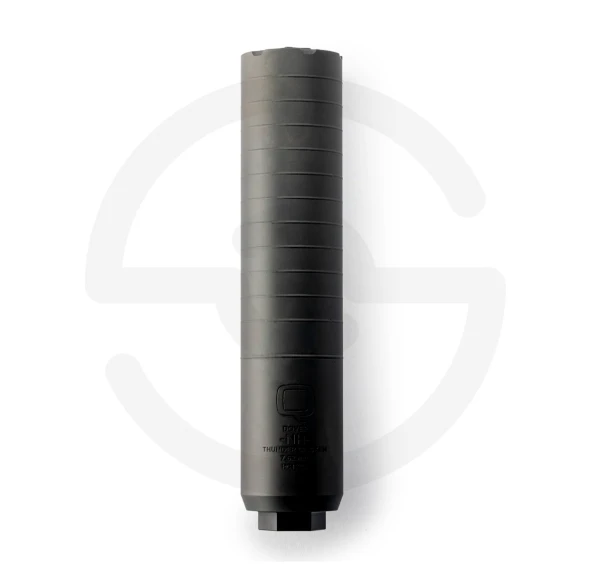
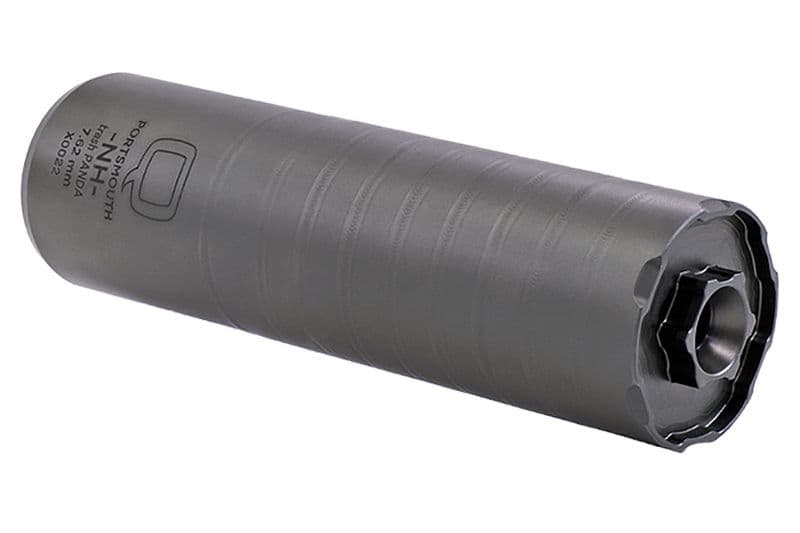
Q Trash Panda ($899)
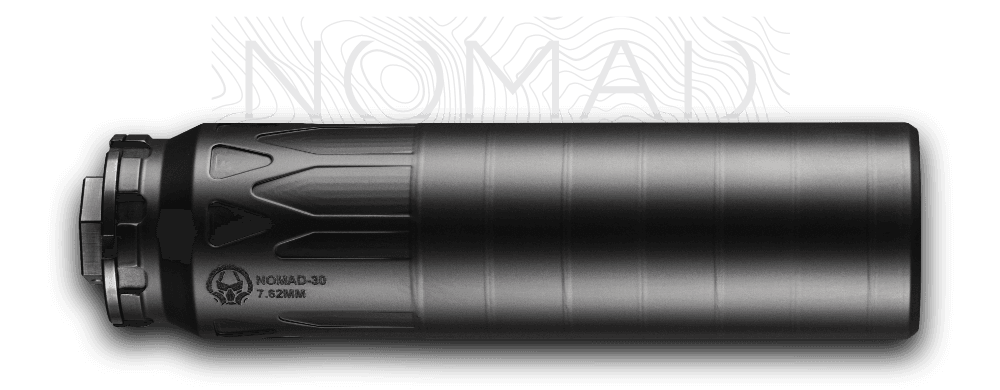
Runner-up: Dead Air Nomad 30 ($799)
The Trash Panda was designed around the short suppressed .300 BLK host: 6.9 inches, 11.8 oz titanium, Quickie Fast-Attach over a Cherry Bomb. The Nomad 30 is the do-everything backup with a 5/8x24 fixed mount and Xeno/KeyMo paths.
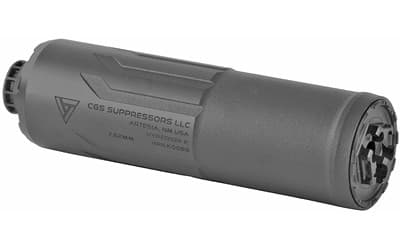
CGS Hyperion ($1,379)
Runner-up: Q Thunder Chicken (8.1 in)
The Hyperion is the quietest can here on a dedicated subsonic host, with no first-round pop so the first shot is as quiet as the rest. The Thunder Chicken is the next step down and shares the Trash Panda mount ecosystem.
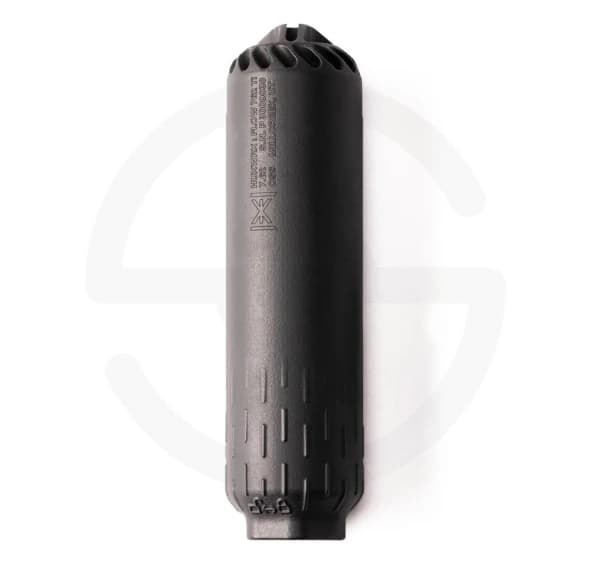
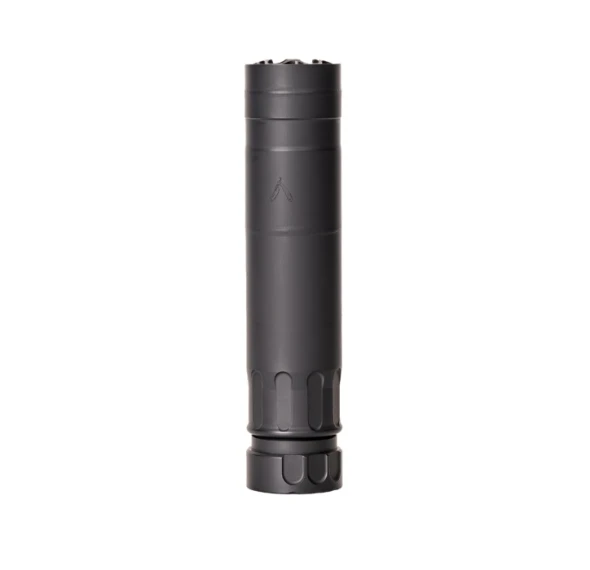
HUXWRX FLOW 762 Ti ($1,394)
Runner-up: Dead Air Nomad 30 ($799)
The FLOW 762 Ti vents gas forward instead of back at the bolt, so a gassy 8-inch supersonic host often runs clean without an adjustable gas block. The Nomad 30 is the lower-cost baffled alternative when you can tune gas yourself.
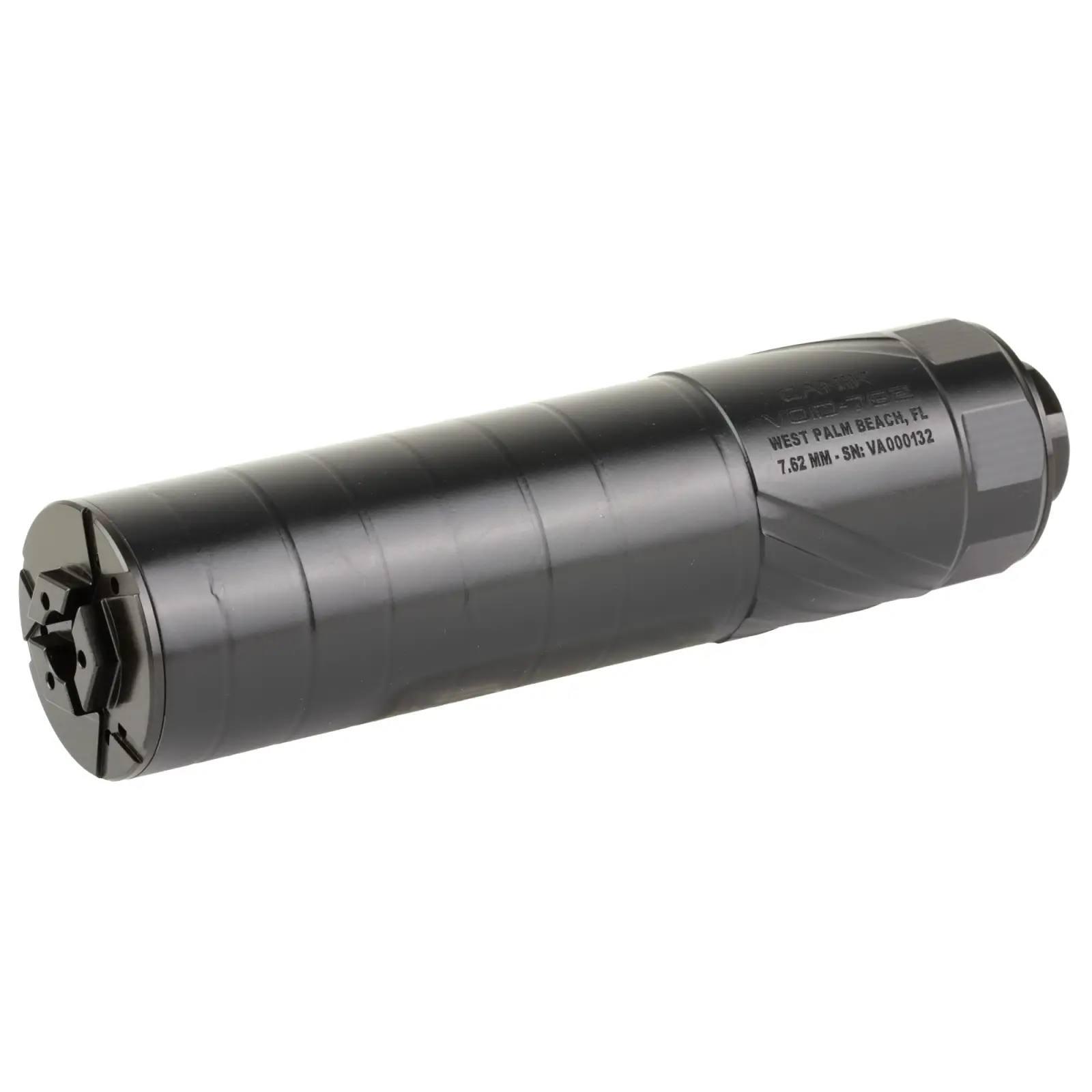
Canik VOID-762 ($649.99)
Runner-up: SilencerCo Omega 300 ($699)
The VOID-762 is the most aggressive multi-caliber .30 value, built by Otter Creek Labs, with a HUB rear thread and an included 5/8x24 adapter. The Omega 300 is the proven alternative with published dB data per caliber.
Rugged Razor 7.62 ($916)
Runner-up: Dead Air Sandman-S ($849)
The Razor 7.62 packs Belt Fed Rated durability and a Dual Taper Lock QD into 6.4 inches. The Sandman-S is the heavier Stellite-baffle workhorse on a KeyMo mount when you never want the can to be the weak link.
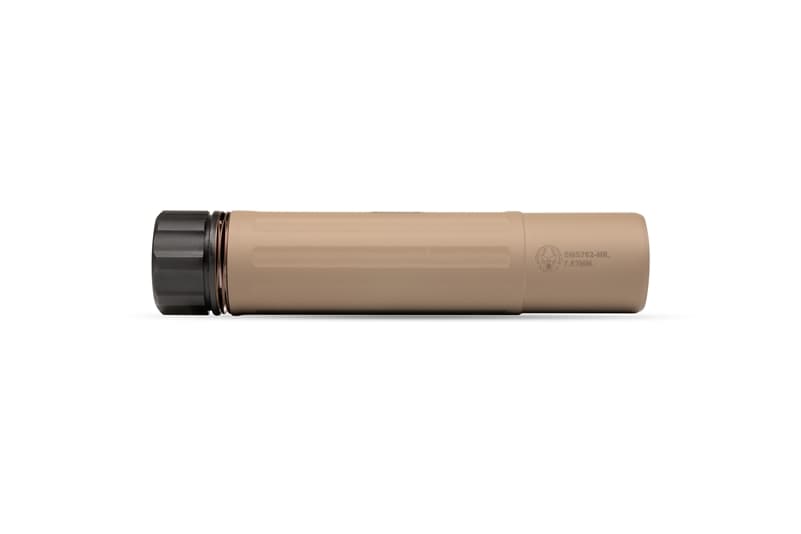
SilencerCo Omega 300 ($699)
Runner-up: Dead Air Nomad 30 ($799)
The Omega 300 spans 5.56, .300 BLK, .308, and .300 Win Mag with published sound data for each at a compact 6.98 inches. The Nomad 30 is the welded-stainless alternative with magnum capability and adapter flexibility.
The single biggest factor in which .300 Blackout can you buy is whether you shoot subsonic, supersonic, or both. Subsonic .300 BLK fires a heavy 190-220gr bullet below the sound barrier, so there is no supersonic crack downrange and the suppressor only has muzzle blast to deal with. That is why subsonic .300 BLK is among the quietest centerfire setups in existence and why a dedicated subsonic build rewards a long, maximally quiet can like the CGS Hyperion. Supersonic .300 BLK, by contrast, fires a lighter 110-125gr bullet above the speed of sound; the bullet generates its own sonic crack that the can cannot remove, and the hotter, gassier impulse hammers a short barrel harder. For a supersonic-heavy host the priority flips from quietest to lowest back pressure, which is the HUXWRX Flow 762 Ti's whole reason for existing.
| Shooting profile | Priority | Pick | Why |
|---|---|---|---|
| Subsonic-only (190-220gr, suppressed) | Maximum suppression | CGS Hyperion / Q Thunder Chicken | Bullet stays below the sound barrier, so there is no downrange crack to hide. A longer, quieter can wins because muzzle blast is all that is left. |
| Supersonic-heavy (110-125gr, gassy SBR) | Low back pressure | HUXWRX FLOW 762 Ti | Supersonic loads still crack downrange and over-gas a short barrel. A flow-through can cuts gas-to-face and bolt speed at the source. |
| Mixed subsonic + supersonic | Versatility | Dead Air Nomad 30 / SilencerCo Omega 300 | A welded multi-caliber can with adapter paths covers both load types and other .30 cal hosts without a second purchase. |
| Short PDW build, length-sensitive | Compact footprint | Q Trash Panda / Rugged Razor 7.62 | A 6.4 to 6.9 inch can keeps an 8-inch SBR maneuverable while still pulling real reduction on both load types. |
If you genuinely split your time, do not over-think it: a versatile welded can like the Dead Air Nomad 30 or the SilencerCo Omega 300 handles both load types and other .30 caliber hosts well. Match the ammo side of the equation in our .300 Blackout ammo guide, which breaks down the subsonic and supersonic loads that pair with these cans.
The standard .300 Blackout muzzle thread is 5/8x24, the universal .30 caliber rifle thread, and every can here either threads directly to it or mounts over a 5/8x24 muzzle device. Your mounting choice is direct thread, proprietary QD, or the open HUB standard, and it decides how easily the can moves between rifles.
Direct thread screws the can straight onto the 5/8x24 barrel. It is the lightest, shortest, and most repeatable mount because there is no QD interface adding length or tolerance. The CGS Hyperion is direct thread, which is part of why it is so quiet. The downside is swap speed: moving a direct-thread can between rifles means unscrewing it under heat, and it offers no carbon-locking protection on a host you run hard. For a dedicated subsonic .300 BLK rifle that the can lives on, direct thread is ideal.
Quick-detach systems mount the can over a brand-specific muzzle device for fast on and off and a repeatable point of impact. The Q Trash Panda and Thunder Chicken use Quickie Fast-Attach over a Cherry Bomb, the HUXWRX Flow 762 Ti uses Torque Lock QD, the Rugged Razor 7.62 uses Dual Taper Lock to resist carbon lock, and the Dead Air Sandman-S runs KeyMo. QD is the right call if you move one can across several rifles. The cost is lock-in: a proprietary mount ties you to that brand's muzzle devices, so buy into an ecosystem you intend to keep.
The HUB standard (1.375x24 rear threads) lets you swap mounts across brands instead of being locked to one. The Canik VOID-762 ships HUB with a 5/8x24 direct-thread adapter included, so it covers both QD and direct-thread mounting out of the box. The Dead Air Nomad 30 splits the difference, a 5/8x24 fixed mount plus Xeno and KeyMo adapter paths. If you expect to own several suppressed hosts over time, a HUB or adapter-friendly can saves money on muzzle devices. For the full host-side picture, read our suppressor compatibility basics guide, which covers thread pitch, muzzle devices, and barrel shoulder requirements before you commit to a mount.
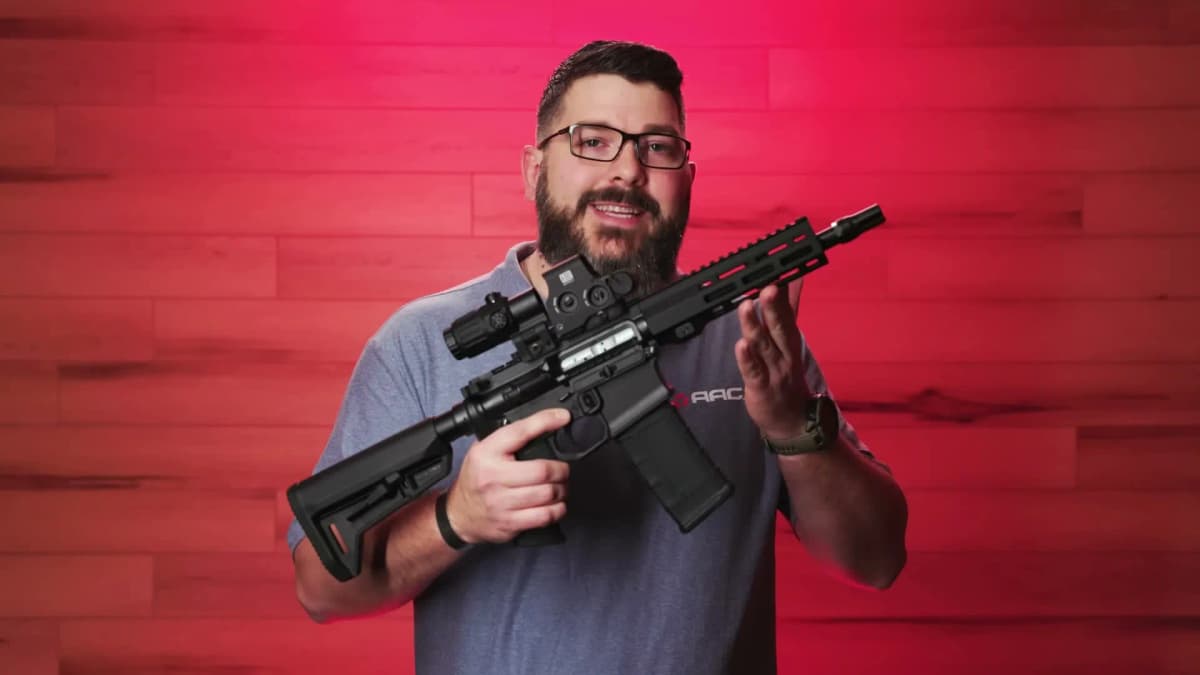
.300 Blackout is most at home on a short barrel, and the cartridge was specifically designed to make full power in an 8 to 9-inch pistol-gas SBR. Hosts like the CMMG Banshee MK4 300 (8-inch, pistol gas, adjustable gas block, 5/8x24) and the Noveske Gen4 Diplomat (7.94-inch) are exactly the platforms these cans are built for. The shorter the barrel, the more a suppressor's back pressure matters: a short host already runs gassy, and adding a can increases bolt speed and pushes more gas into your face.
On a suppressed .300 BLK SBR, an adjustable gas block is the single highest-value upgrade. It lets you cut gas for suppressed supersonic and subsonic loads so the bolt stops battering itself and blowback drops. A low-back-pressure can like the HUXWRX Flow 762 Ti reduces the problem at the source by venting forward, but the cleanest setup is both: a flow-through can plus a tuned gas block. Walk through the dial-in process in our gas system and buffer tuning guide.
Rated sound figures assume a minimum barrel length, and it is can-specific, not a single universal number. The SilencerCo Omega 300 lists a 7-inch minimum for .300 BLK; the Canik VOID-762 lists 9 inches. Build below the can's rated length and the unburned powder leaving the muzzle makes the system louder and gassier than the spec sheet promises. The 9-inch barrel is the practical sweet spot for most suppressed .300 BLK builds; our .300 Blackout barrel guide covers SBR barrel selection for these hosts.
A .300 Blackout round will chamber in a 5.56 barrel and fire, driving a .308-diameter bullet into a .224-inch bore. The result is a catastrophic kaboom that destroys the rifle and risks injury. This is a barrel and magazine discipline issue, not a suppressor issue: label your .300 BLK magazines clearly, never load them into a 5.56 upper, and keep the two calibers separated at the bench. No suppressor causes or prevents this; host discipline does.
The process is faster and cheaper than it has ever been. The $200 stamp is gone, individual approvals run in days instead of months, and the trust-versus-individual math changed now that the tax is free. Four steps to legal possession:
Silencer Central, Silencer Shop, and Capitol Armory all run streamlined kiosk and online processes. Silencer Central ships the can to your door once approved and includes a free trust, which is the simplest path for a first .300 BLK can.
eForm 4 is the clean default in 2026. Fingerprints (electronic at most dealers), a digital photo, and CLEO notification are all still required. The federal NFA registration step has not gone away; only the tax did.
The federal making and transfer tax on suppressors dropped to $0 on January 1, 2026 under the One Big Beautiful Bill Act. You still pass a NICS background check and pay the dealer transfer fee, but the old $200 tax is gone for suppressors, SBRs, SBSs, and AOWs.
Individual eForm 4 approvals are running days to a couple of weeks, not months. While you wait, dial in the host: an adjustable gas block and a labeled magazine discipline matter more on .300 BLK than the can you bought.
Civilian suppressor ownership is prohibited in California, Delaware, Hawaii, Illinois, Massachusetts, New Jersey, New York, and Rhode Island. Confirm your state's status with the American Suppressor Association before ordering, since the $0 federal tax did not change state law.
Suppressors are tag-filtered against your build's muzzle thread, so a 5/8x24 .300 BLK host surfaces exactly the .30 caliber cans that fit. Drop into the rifle builder with a .300 Blackout SBR and see which of these cans pairs with your barrel length and gas system. Torn between two picks? Put them head to head at /compare. For the muzzle-side question of which device to thread on first, see our muzzle device guide.
Ballistics, barrel length, subsonic vs supersonic, and the cost of ownership for the cartridge.
Subsonic and supersonic load selection that pairs with these cans.
Host-side requirements: thread pitch, barrel length, muzzle devices, and mounting.
How to dial in an adjustable gas block when you suppress a short .300 BLK host.
The 9-inch suppressor sweet spot and SBR barrel selection for these hosts.

Avid shooter with 9+ years of experience including competition shooting. Built 10+ AR-pattern rifles and several handgun platforms for home defense, competition, and suppressed night shooting.
This page contains affiliate links. Purchases through these links support the site at no extra cost to you. Learn more
Continue exploring with these related resources

Ballistics chart for 5.56, .300 Blackout, and .308: bullet drop, velocity, and energy at 100/200/300/500/800 yards. Includes a free trajectory calculator for custom loads, zero distances, and wind.

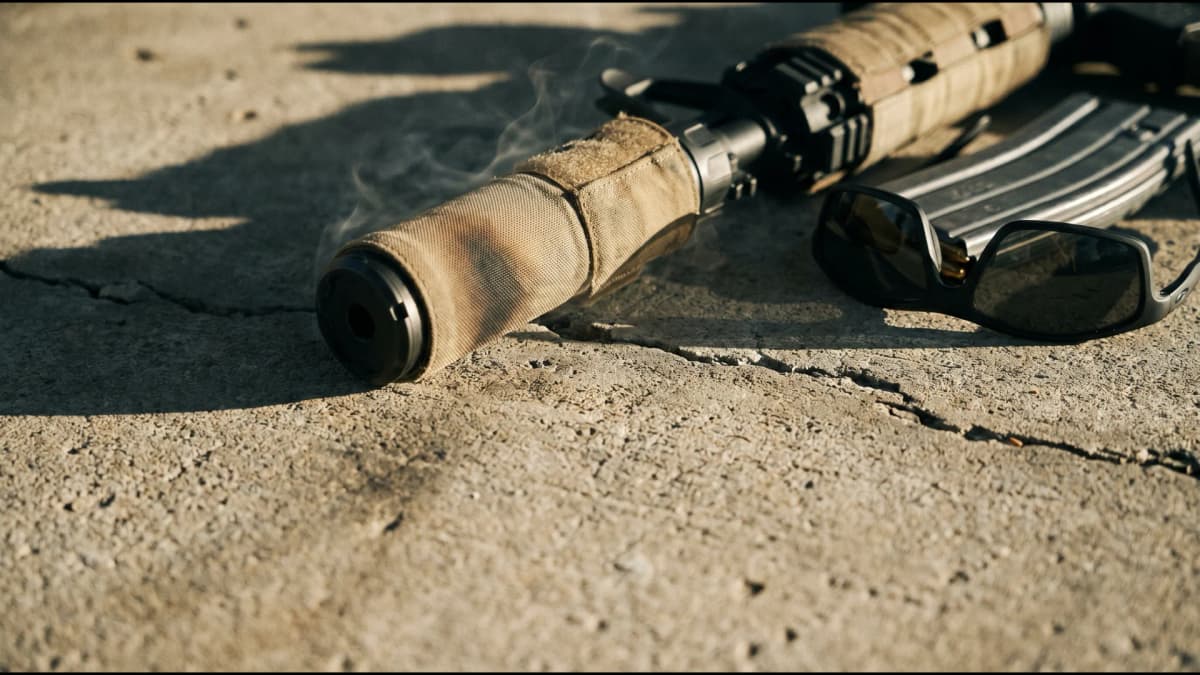
Fourteen suppressor covers compared by heat rating, mirage control, durability, and rate-of-fire envelope. The covers that work for bolt-action precision are not the covers that survive sustained 5.56, and every manufacturer publishes different limits.

The 12 best 5.56 suppressors for 2026, ranked. HUXWRX FLOW 556 Ti is the best overall, SAW Tisha is the quietest on a 10.3 inch MK18, EchoCore Sector is the quietest at the shooter's ear, SureFire RC4 is the best for duty and full-auto, and TBAC Spiro is the toughest hard-use can. Picks for every budget from $799 up. Federal NFA tax is now $0 and ATF wait times are days, not months.
Related articles and industry updates

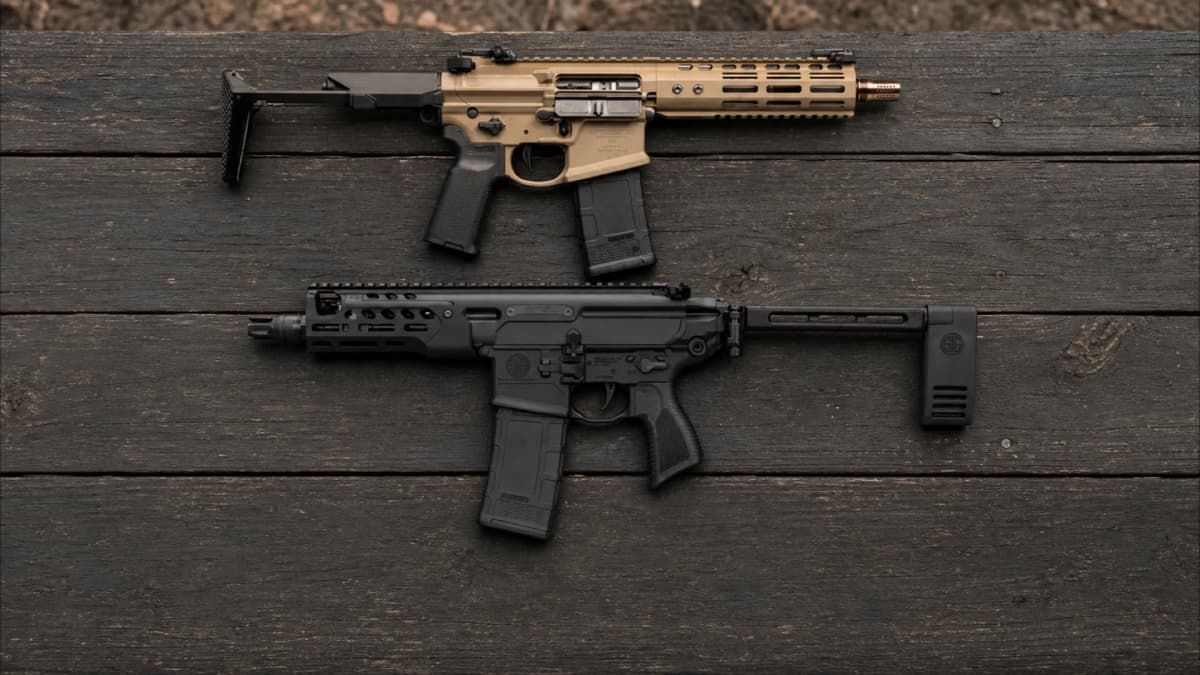
Advanced Armament Co returns to firearms manufacturing with the MPW Series: suppressor-optimized rifles in 5.56, .300 BLK, 6mm ARC, and .338 ARC featuring ambidextrous controls and enhanced gas management.

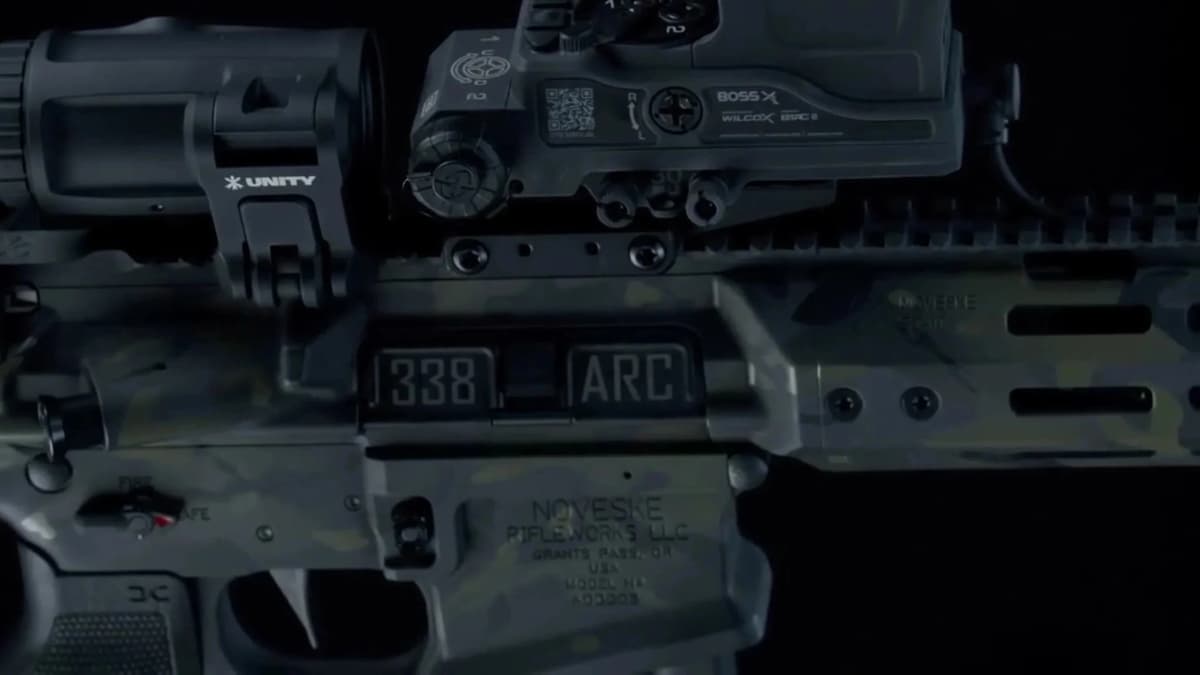
Noveske unveils the 5th Generation AR platform with cleaner cable management, optional SD Handguard with heat shield, ARCA rail integration, and new .338 ARC and .300 BLK optimized systems.

Lancer Systems launches its first complete .300 Blackout firearms: the L15 Folding .300 BLK pistol (9" Faxon barrel, $2,499.99) and the L15 Patrol Rifle (16" Rosco Bloodline, $1,910). Both run pistol-length gas with a Superlative Arms adjustable gas block, Radian controls, and carbon fiber handguards built for suppressed shooting.