Best 300 Blackout Ammo 2026: Top 8 Supersonic & Subsonic Loads Ranked (Barnes, Hornady, Lehigh) header image
Ballistics
February 27, 2026

Best 300 Blackout Ammo 2026: Top 8 Supersonic & Subsonic Loads Ranked (Barnes, Hornady, Lehigh)

Best 300 blackout ammo ranked for 2026. Barnes TAC-TX 110gr (#1 supersonic), Hornady Sub-X 190gr (#1 subsonic), Hornady V-MAX, SIG Elite Copper, Lehigh Maximum Expansion. Suppressed vs unsuppressed, home defense, hunting, and training loads with ballistic data.

Best 300 Blackout Ammo 2026: Top 8 Supersonic & Subsonic Loads Ranked (Barnes, Hornady, Lehigh)

The .300 Blackout was designed from the ground up to do two things no other AR-15 cartridge can: deliver rifle-caliber terminal performance from a 9-inch barrel, and run subsonic ammunition quietly through a suppressor. But those two missions demand fundamentally different ammunition. This guide ranks the 8 best 300 Blackout loads across every use case, from supersonic home defense to subsonic suppressed shooting, hunting, and training, with muzzle velocity, energy, bullet construction, and real-world terminal performance data for each.

By AB|Last reviewed February 2026

300 Blackout Ammo Picker

Select your use case and barrel length for a specific ammo recommendation.

1. What are you using it for?

Top 8 Best 300 Blackout Ammo (2026 Rankings)

Ranked by terminal ballistics, intended application, barrel-length compatibility, and value. We cover supersonic loads for home defense and hunting, subsonic loads for suppressed use, and training ammo for the range.

1

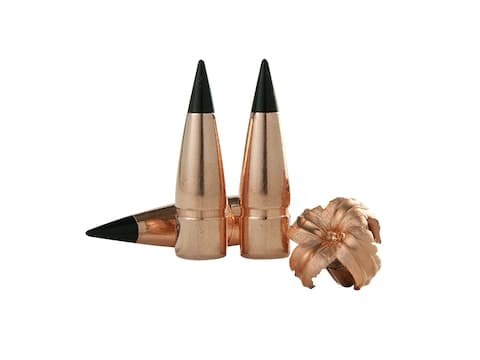
Barnes Barnes VOR-TX 110gr TAC-TX

Best Overall Supersonic - All-copper with 100% weight retention

$47.59
In Stock
110grAll-Copper2,350 fps
Pros
  • +100% weight retention from all-copper monolithic construction
  • +Reliable expansion from barrels as short as 8 inches
  • +Lead-free design meets California and state requirements
  • +Proven terminal performance in .300 BLK-specific testing
  • +Effective on medium game (deer) inside 200 yards
Cons
  • Premium pricing at $1.60-2.00/rd
  • Copper fouling requires more frequent bore cleaning
  • Lower BCBC[Ballistics]Ballistic Coefficient. A measure of how well a bullet cuts through the air. Higher numbers mean less drag and better long-range performance. than heavier supersonic loads limits long-range use
Bullet Weight: 110grVelocity (16"): 2,350 fpsEnergy (16"): 1,349 ft-lbsBullet Type: All-Copper TAC-TX
Verified Retailer
Check Price at OpticsPlanet

Affiliate links — purchases support this site at no extra cost to you. (?)

2

Hornady Hornady Sub-X 190gr

Best Subsonic Expanding - Flex Tip expands at 900 fps

$35.59
In Stock
190grSubsonicFlex Tip
Pros
  • +Expands reliably at subsonic velocities (900+ fps)
  • +Flex Tip technology prevents hollow point clogging
  • +Meets FBI protocol penetration standards (14-18")
  • +190gr weight provides deep penetration with expansion
  • +Widely available from a major manufacturer
Cons
  • Requires 1:8" twist barrel for optimal stability
  • Less expansion than Lehigh Maximum Expansion
  • Higher cost than non-expanding subsonic loads
Bullet Weight: 190grVelocity (16"): 1,050 fpsEnergy (16"): 465 ft-lbsBullet Type: Sub-X Flex Tip
Verified Retailer
Check Price at OpticsPlanet

Affiliate links — purchases support this site at no extra cost to you. (?)

3

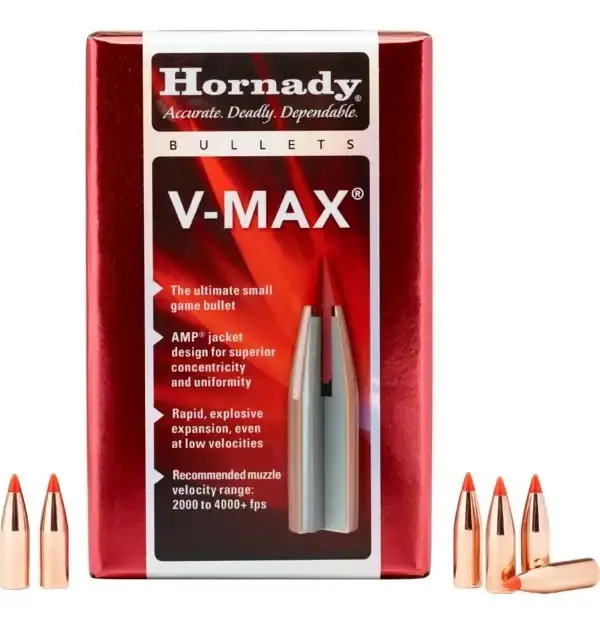
Hornady Hornady BLACK V-MAX 110gr

Best Value Supersonic - Rapid expansion at accessible pricing

$33.69
In Stock
110grSupersonic2,375 fps
Pros
  • +Excellent terminal performance from polymer-tipped design
  • +Works reliably across all AR platform configurations
  • +Flat trajectory from high velocity and .29 BCBC[Ballistics]Ballistic Coefficient. A measure of how well a bullet cuts through the air. Higher numbers mean less drag and better long-range performance.
  • +More affordable than Barnes TAC-TX
  • +Brass cases are reloadable
Cons
  • Rapid expansion limits barrier penetration capability
  • Jacketed lead construction means less weight retention than Barnes
  • V-MAX design fragments rather than mushrooming, limiting penetration depth
Bullet Weight: 110grVelocity (16"): 2,375 fpsEnergy (16"): 1,377 ft-lbsBullet Type: V-MAX Polymer Tip
Verified Retailer
Check Price at OpticsPlanet

Affiliate links — purchases support this site at no extra cost to you. (?)

4

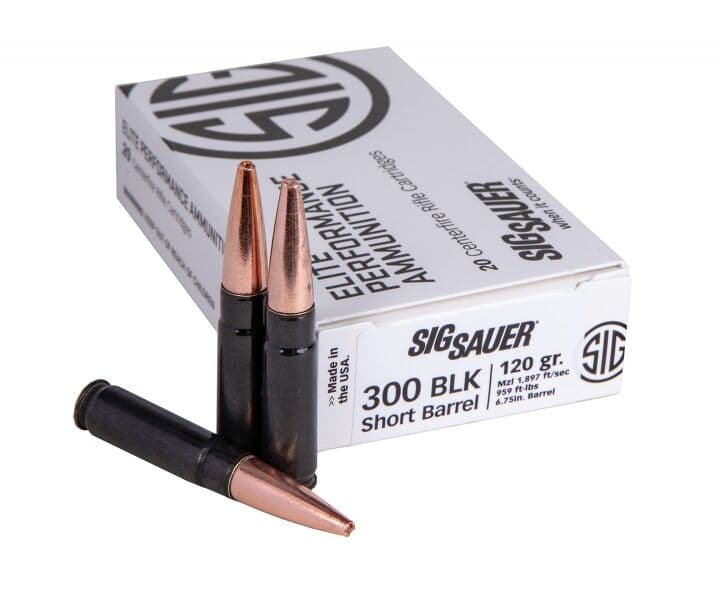
SIG Sauer SIG Sauer 120gr Elite Copper Duty

Best Duty Load - Flash-reduced with controlled copper expansion

$34.99
In Stock
120grSolid CopperFlash Reduced
Pros
  • +Solid copper ensures near 100% weight retention through barriers
  • +Flash-reduced powder for low-light home defense scenarios
  • +Controlled expansion provides consistent wound channels
  • +Optimized for short barrel performance
  • +Lead-free construction
Cons
  • Premium pricing, the most expensive load on this list
  • Limited availability compared to Hornady and Barnes
  • Copper fouling requires more frequent cleaning
Bullet Weight: 120grVelocity (16"): 2,250 fpsEnergy (16"): 1,350 ft-lbsBullet Type: Solid Copper HP
Verified Retailer
Check Price at OpticsPlanet

Affiliate links — purchases support this site at no extra cost to you. (?)

5

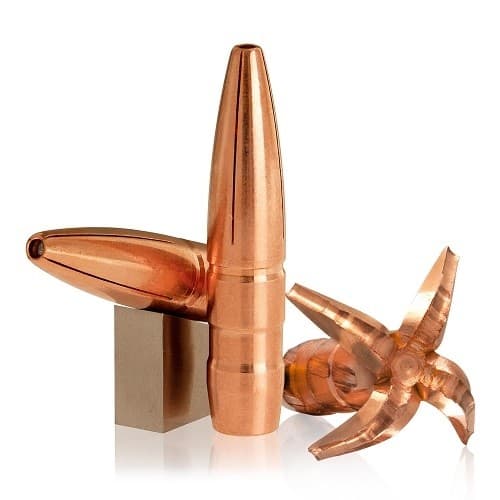
Lehigh Defense Lehigh Defense 194gr Maximum Expansion

Best Premium Subsonic - CNC copper with 2x diameter expansion

$81.89
In Stock
194grSubsonic2x Expansion
Pros
  • +Expands to 2x original diameter at subsonic velocities
  • +CNC-machined petals deploy reliably at 800+ fps
  • +Near 100% weight retention from solid copper
  • +Meets FBI protocol penetration standards (14-18")
  • +The most devastating subsonic terminal performance available
Cons
  • Extremely expensive at $2.50-3.50/rd
  • Frequently out of stock due to CNC manufacturing constraints
  • Expansion petals can deflect on heavy barriers
Bullet Weight: 194grVelocity (16"): 1,040 fpsEnergy (16"): 466 ft-lbsBullet Type: CNC Copper Max Expansion
Verified Retailer
Check Price at OpticsPlanet

Affiliate links — purchases support this site at no extra cost to you. (?)

6

Hornady Hornady Custom 125gr SST

Best Hunting Load - Interlock prevents jacket separation on game

$37.99
In Stock
125grSupersonicInterlock
Pros
  • +Interlock ring prevents jacket-core separation in game
  • +125gr provides better penetration than 110gr on deer
  • +Polymer tip ensures reliable expansion at distance
  • +Effective on whitetail deer inside 200 yards
  • +Compatible with standard 1:7 and 1:8 twist barrels
Cons
  • Not designed for subsonic/suppressed applications
  • Hunting-effective range limited to ~200 yards
  • Higher cost than V-MAX for similar supersonic performance
Bullet Weight: 125grVelocity (16"): 2,175 fpsEnergy (16"): 1,313 ft-lbsBullet Type: SST Polymer Tip + Interlock
Verified Retailer
Check Price at OpticsPlanet

Affiliate links — purchases support this site at no extra cost to you. (?)

7

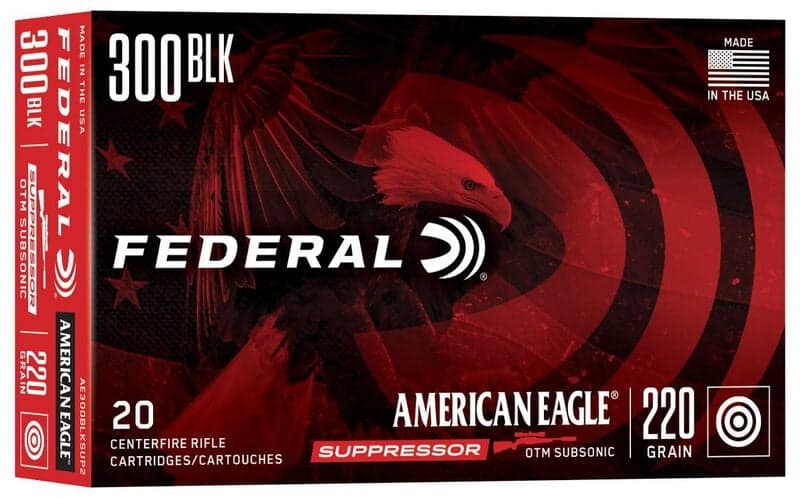
Federal Federal American Eagle 220gr OTM Subsonic

Best Value Subsonic - Match accuracy at training ammo pricing

$0.90-1.20/rd
220grSubsonicMatch OTM
Pros
  • +Excellent value for subsonic trigger time
  • +Match-grade accuracy from proven OTM design
  • +Clean-burning powder reduces suppressor fouling
  • +High .650 BCBC[Ballistics]Ballistic Coefficient. A measure of how well a bullet cuts through the air. Higher numbers mean less drag and better long-range performance. ensures stable, consistent flight
  • +Brass cases are reloadable
Cons
  • OTM does NOT expand, not suitable for defense or hunting
  • 220gr bullet may cause feeding issues in some magazines
  • Heavier recoil impulse than lighter subsonic loads
Bullet Weight: 220grVelocity (16"): 1,000 fpsEnergy (16"): 488 ft-lbsBullet Type: Open Tip Match
Verified Retailer
Check Price at OpticsPlanet

Affiliate links — purchases support this site at no extra cost to you. (?)

8

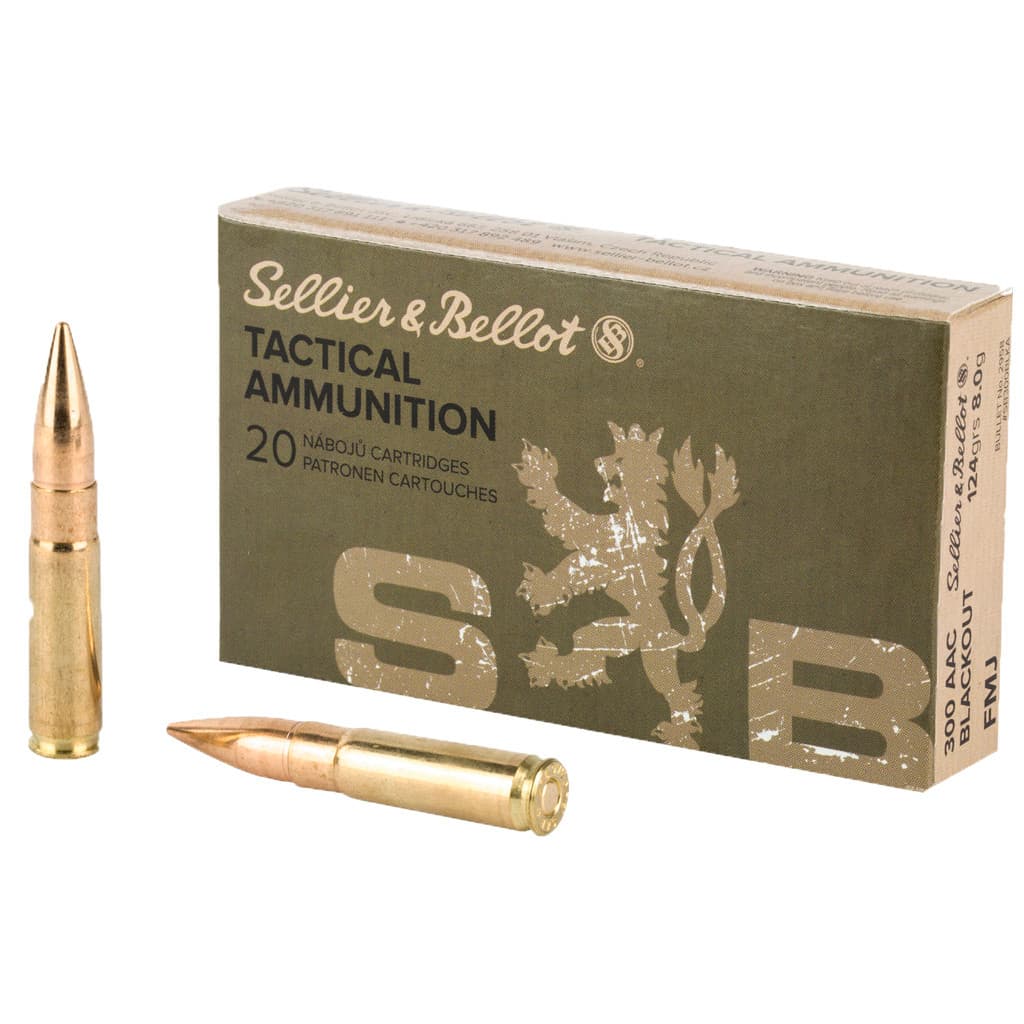
Various 300 Blackout 125gr FMJ (Training)

Best Training Ammo - Cheapest way to run your 300 BLK

$0.70-1.00/rd
125grSupersonicFMJ Training
Pros
  • +Most affordable 300 Blackout ammunition available
  • +Functions reliably across all platforms
  • +Brass cases are reloadable for further savings
  • +Good for function-testing new builds
Cons
  • FMJ does NOT expand, never use for defense
  • Supersonic, so loud through suppressors
  • 300 BLK FMJ is still 2-3x the cost of 5.56 FMJ
Bullet Weight: 125grVelocity (16"): 2,215 fpsEnergy (16"): 1,360 ft-lbsBullet Type: Full Metal Jacket
Verified Retailer
Check Price at OpticsPlanet

Affiliate links — purchases support this site at no extra cost to you. (?)

Rankings are based on published ballistic data, manufacturer specifications, and real-world terminal performance reports. Terminal performance varies by barrel length and platform configuration.

Supersonic vs Subsonic 300 Blackout Ammo: When to Use Each

The .300 Blackout's defining feature is its ability to run both supersonic and subsonic loads from the same rifle, same magazine, same bolt. No other mainstream AR cartridge does this. Understanding when to use each is the foundation of effective .300 BLK ammunition selection.

Supersonic (110-125gr)

  • +1,300-1,377 ft-lbs muzzle energy
  • +Flat trajectory effective to 300+ yards
  • +Reliable expansion from modern bullet designs
  • +Terminal performance comparable to 7.62x39
  • -Loud even with a suppressor (supersonic crack)

Best for: home defense (unsuppressed), hunting, any scenario where maximum terminal effect matters more than sound reduction

Subsonic (190-220gr)

  • +Hearing-safe with a quality suppressor
  • +No supersonic crack, only mechanical action noise
  • +Reduced felt recoil from lower velocity
  • -465-488 ft-lbs energy (1/3 of supersonic)
  • -Most bullets fail to expand at subsonic velocity
  • -Limited effective range (~100-150 yards)

Best for: suppressed defense, suppressed training, scenarios where sound signature matters (property defense, hog hunting at night)

The subsonic expansion problem: Most hollow point bullets need 1,800+ fps to expand. At subsonic velocities (~1,000 fps), conventional JHPs act like FMJ, punching a .308-caliber hole without opening. This is why purpose-built subsonic expanding bullets (Hornady Sub-X, Lehigh Maximum Expansion) exist. If you carry subsonic .300 BLK for defense, you must use ammunition specifically designed to expand at subsonic velocities. A 220gr OTM or A-MAX will not expand.

Ballistic Performance: All 8 Loads Compared

All velocity and energy figures from manufacturer data, measured from 16-inch test barrels unless noted. Real-world velocities from 9-inch barrels will be approximately 50-100 fps lower for supersonic loads. Subsonic loads show minimal velocity variation across barrel lengths.

LoadWeightVelocityEnergyTypePrice/Rd
Barnes TAC-TX110gr2,350 fps1,349 ft-lbsSupersonic$1.60-2.00
Hornady V-MAX110gr2,375 fps1,377 ft-lbsSupersonic$1.00-1.30
SIG Elite Copper120gr2,250 fps1,350 ft-lbsSupersonic$1.80-2.20
Hornady SST125gr2,175 fps1,313 ft-lbsSupersonic$1.40-1.70
FMJ Training125gr2,215 fps1,360 ft-lbsSupersonic$0.70-1.00
Hornady Sub-X190gr1,050 fps465 ft-lbsSubsonic$1.40-1.80
Lehigh Max Exp.194gr1,040 fps466 ft-lbsSubsonic$2.50-3.50
Federal 220gr OTM220gr1,000 fps488 ft-lbsSubsonic$0.90-1.20

Key takeaway: Supersonic loads carry ~3x the energy of subsonic loads (1,300+ vs 465-488 ft-lbs). This is a massive difference. Subsonic .300 BLK delivers roughly the same energy as a 9mm handgun. The tradeoff for quiet operation is real. For a deeper comparison of 300 Blackout vs 5.56 ballistics, see our caliber selection guide.

How Barrel Length Affects 300 Blackout Ammo Performance

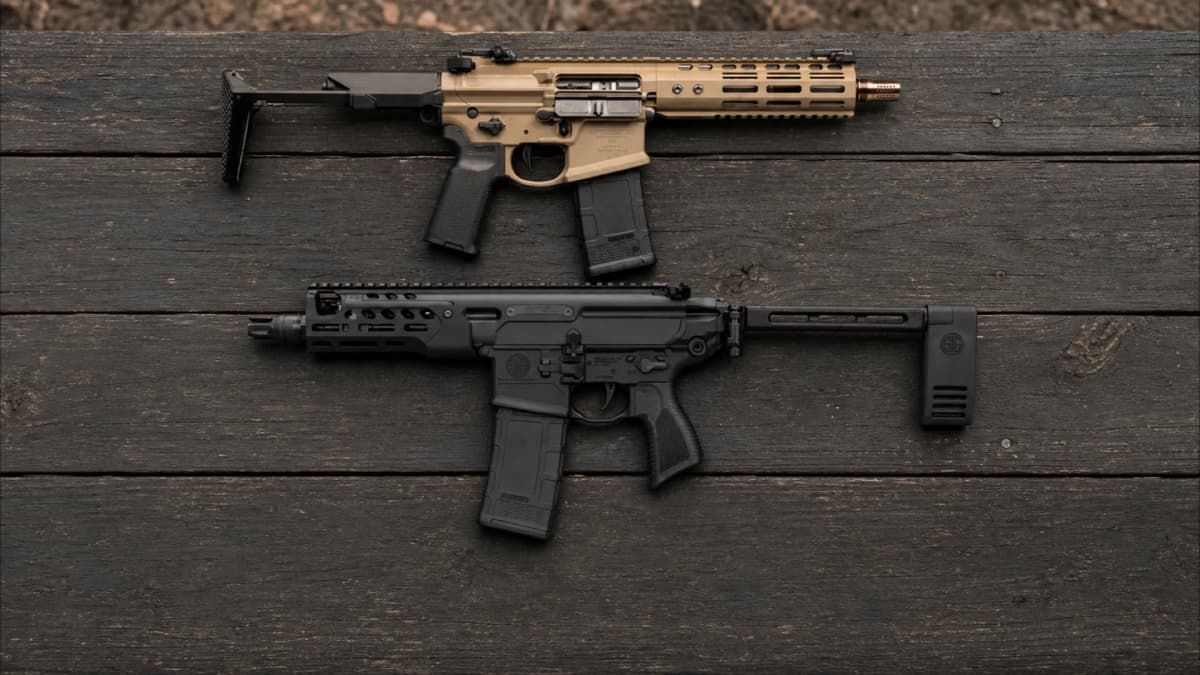
A 9-inch barrel captures 95%+ of .300 Blackout's velocity potential. This is the cartridge's signature advantage over 5.56 NATO, which loses 25+ fps per inch below 14.5 inches. The practical impact on ammo selection is significant: supersonic loads are slightly affected by barrel length, while subsonic loads perform almost identically across all barrel lengths.

Load8" Barrel9" Barrel10.5" Barrel16" Barrel
Supersonic 110gr~2,150 fps~2,250 fps~2,300 fps2,350-2,375 fps
Subsonic 190-220gr~980 fps~1,000 fps~1,020 fps1,000-1,050 fps

What This Means for Ammo Selection

  • 7.5-8.5" barrels: Prioritize all-copper bullets (Barnes TAC-TX, SIG Elite Copper) for supersonic use. Jacketed lead bullets may not expand consistently at reduced velocities. For subsonic, Lehigh Maximum Expansion is the safest bet since it deploys at 800+ fps.
  • 9-10.5" barrels: The sweet spot. All recommended loads achieve their intended performance. Any supersonic load on this list will expand reliably. Sub-X works well for subsonic defense.
  • 12.5-16" barrels: Full velocity, but these are uncommon barrel lengths for .300 BLK. The marginal velocity gain over 10.5" does not justify the extra length and weight.

For a complete barrel length analysis with velocity curves, see our 300 Blackout barrel length guide.

300 Blackout Ammo for Home Defense: Suppressed vs Unsuppressed

The best 300 Blackout home defense ammo depends on whether you run a suppressor. Unsuppressed, go supersonic for maximum terminal effect. Suppressed, the decision is more nuanced: supersonic through a can is still loud (130+ dB), while subsonic drops to hearing-safe levels (~135 dB impulse, reduced to ~115 dB at the ear with a quality can).

Unsuppressed Home Defense

#1 Barnes TAC-TX 110gr: All-copper with 100% weight retention for controlled penetration through interior walls. The copper construction means less fragmentation than V-MAX, reducing overpenetration risk through multiple walls.

#2 Hornady V-MAX 110gr: Rapid fragmentation actually reduces overpenetration risk compared to Barnes. If your primary concern is the round exiting your home, V-MAX fragments faster. The tradeoff is less penetration depth through intermediate barriers.

Suppressed Home Defense

#1 Hornady Sub-X 190gr: Flex Tip expands at 900+ fps, providing the best balance of terminal performance and price for suppressed defense. Meets FBI-protocol penetration depth (14-18").

#2 Lehigh 194gr Max Expansion: CNC-machined petals expand to 2x caliber at 800+ fps. The most effective subsonic defensive bullet available, but at 2-3x the cost of Sub-X.

For complete AR-15 home defense setup including optics, lights, and build configuration, see our best AR-15 for home defense guide. For suppressor pairing and gas tuning, see the suppressor compatibility guide.

300 Blackout Hunting Ammo: Deer, Hog, and Medium Game

300 Blackout is legal for deer hunting in most states and effective on whitetail and hog-sized game inside 200 yards with the right ammunition. The key is selecting bullets designed for controlled expansion and weight retention on game, not varmint-class bullets that fragment prematurely.

Supersonic Hunting Loads (Recommended)

  • Hornady Custom 125gr SST: Best for deer. The Interlock ring mechanically locks the jacket to the core, preventing separation on impact. 1,313 ft-lbs from a 16" barrel, effective to 200 yards. The 125gr weight provides better sectional density than 110gr for deeper penetration on deer.
  • Barnes VOR-TX 110gr TAC-TX: Best lead-free option. All-copper with 100% weight retention and reliable expansion. Required in California condor zones and preferred where lead regulations apply. Effective to 200 yards on deer.

Subsonic Hunting (Suppressed Hog at Night)

Subsonic .300 BLK can take hogs at close range (under 75 yards) with expanding ammunition (Sub-X or Lehigh), but the 465 ft-lbs of energy limits the margin for error. Shot placement must be precise. For whitetail deer, supersonic loads are strongly recommended since the energy difference (1,300+ vs 465 ft-lbs) directly affects the probability of a clean, ethical kill.

Avoid for hunting: Hornady V-MAX 110gr. Despite excellent terminal performance on varmints and in defensive scenarios, V-MAX fragments too aggressively for deer-sized game, causing surface wounds without deep penetration. Also avoid FMJ and non-expanding OTM loads.

Training and Range Ammo: Keeping Costs Down

300 Blackout training ammo costs $0.70-1.00/rd for supersonic FMJ, roughly 2-3x the cost of 5.56 FMJ. This is the platform's biggest practical drawback. Budget your range trips accordingly and consider these cost-reduction strategies.

Supersonic Training

Buy the cheapest brass-cased 125gr FMJ available. Sellier & Bellot, Winchester, and Remington all make reliable training loads. Avoid steel-cased ammunition in AR platforms since the extractor and chamber are not designed for it, and most ranges prohibit it. Run at least one magazine of your carry/defense load per range session to confirm zero and function.

Subsonic Training

Federal American Eagle 220gr OTM ($0.90-1.20/rd) is the standard. Match-grade accuracy with clean-burning powder that reduces suppressor fouling. This is a target round, not a defensive load, since OTM bullets do not expand. Hornady A-MAX 208gr is the accuracy-focused alternative at a higher price point.

Cost Reduction: Reloading

.300 Blackout is one of the easiest AR cartridges to reload. Cases can be formed from common .223/5.56 brass by cutting to length and resizing. Component cost per round drops to $0.35-0.50 for supersonic and $0.40-0.60 for subsonic. This cuts your ammo budget by 40-50% after the initial equipment investment (~$300-500 for a single-stage press setup).

For 5.56 ammo selection (if you also run 5.56 platforms), see our 5.56 ammo selection guide. For the 9mm self-defense ammo equivalent, see our best 9mm self-defense ammo guide.

Gas System Tuning for Supersonic and Subsonic

Running both supersonic and subsonic ammo in the same rifle creates a gas tuning challenge. Supersonic loads generate significantly more gas port pressure than subsonic. A rifle tuned for supersonic may short-stroke with subsonic, and a rifle tuned for subsonic will be overgassed (harsh recoil, accelerated wear) with supersonic.

The Solution: Adjustable Gas Block

An adjustable gas block (Superlative Arms, SLR, Seekins) lets you dial gas for each ammo type. Set one detent position for supersonic and another for subsonic. With a suppressor attached, the added backpressure often provides enough extra gas to cycle subsonic ammo even on a supersonic setting, simplifying the equation.

Without an Adjustable Gas Block

If running a fixed gas block, tune for your primary ammunition type. For a suppressed rifle, tune for unsuppressed subsonic (hardest to cycle), and the suppressor's backpressure will handle the rest. For an unsuppressed rifle, stick to supersonic and accept that subsonic may not reliably cycle.

For complete gas system tuning instructions, see our gas system and buffer tuning guide. For suppressor selection and mounting, see the suppressor compatibility guide.

Related Guides

Frequently Asked Questions

What is the best 300 Blackout ammo for home defense?
Barnes VOR-TX 110gr TAC-TX is the best 300 Blackout ammo for home defense. Its all-copper construction delivers 100% weight retention with reliable expansion from barrels as short as 8 inches, which matters because most 300 BLK home defense builds use 9-10.5 inch barrels. For suppressed home defense, Hornady Sub-X 190gr is the top choice: its Flex Tip technology expands reliably at subsonic velocities (900+ fps) where conventional hollow points fail. If budget allows, Lehigh Defense 194gr Maximum Expansion provides the most devastating subsonic terminal performance with CNC-machined petals that expand to 2x caliber diameter.
What grain 300 Blackout is best for suppressed?
For suppressed shooting, use subsonic loads in the 190-220gr range. The speed of sound is approximately 1,125 fps, and subsonic loads stay below that threshold to eliminate the supersonic crack that defeats suppressor effectiveness. For suppressed defense, Hornady Sub-X 190gr ($1.40-1.80/rd) is the best balance of terminal performance and price. For suppressed training, Federal American Eagle 220gr OTM ($0.90-1.20/rd) provides match-grade accuracy without the premium pricing of expanding loads. Never use supersonic ammo (110-125gr loads running 2,100-2,375 fps) through a suppressor if quiet operation is the goal.
Is 300 Blackout good for deer hunting?
Yes, 300 Blackout is effective on whitetail deer inside 200 yards with the right ammunition. Hornady Custom 125gr SST is the best 300 BLK deer hunting load. Its Interlock ring mechanically locks the jacket to the core, preventing separation on impact for deep, controlled penetration. Barnes VOR-TX 110gr TAC-TX is the lead-free alternative with similar terminal performance. Stick to supersonic loads (110-125gr) for hunting since they carry substantially more energy (1,300-1,377 ft-lbs) than subsonic loads (465-488 ft-lbs). From a 9" barrel, effective hunting range drops to approximately 150 yards.
What is the difference between supersonic and subsonic 300 Blackout?
Supersonic 300 Blackout loads (110-125gr, 2,100-2,375 fps) carry 1,300-1,377 ft-lbs of energy with flat trajectories effective to 300+ yards. They are loud even with a suppressor. Subsonic loads (190-220gr, 1,000-1,050 fps) carry only 465-488 ft-lbs of energy but stay below the speed of sound, making them hearing-safe with a quality suppressor. The tradeoff is clear: supersonic for maximum terminal effect, subsonic for quiet operation. The .300 Blackout was specifically designed to excel at both, which is its primary advantage over 5.56 NATO.
Can I shoot supersonic and subsonic 300 Blackout in the same rifle?
Yes, any .300 Blackout rifle handles both supersonic and subsonic ammunition without modification. The cartridge was specifically designed for this flexibility. However, gas-system tuning matters. A rifle tuned for supersonic may short-stroke (fail to fully cycle) with subsonic ammo, and vice versa. An adjustable gas block solves this by letting you increase gas for subsonic and reduce it for supersonic. If running a suppressor, the added backpressure from the can often provides enough gas to cycle both reliably. See our 300 Blackout guide for gas system tuning details.
How much does 300 Blackout ammo cost compared to 5.56?
300 Blackout ammunition costs roughly 2-3x more than equivalent 5.56 NATO loads. Budget 300 BLK FMJ training ammo runs $0.70-1.00/rd versus $0.30-0.45/rd for 5.56 FMJ. Premium 300 BLK defensive loads (Barnes TAC-TX, Hornady Sub-X) cost $1.40-2.00/rd versus $0.80-1.50/rd for premium 5.56 loads. Subsonic training ammo (Federal 220gr OTM) costs $0.90-1.20/rd. The higher cost is the main downside of the .300 Blackout platform. Reloading can cut costs by 40-50%, and 300 BLK is one of the easiest AR cartridges to reload since it uses standard .223 brass cut down to length.
What barrel length is best for 300 Blackout?
A 9-inch barrel is the optimal length for .300 Blackout. Unlike 5.56 NATO, which needs 14.5-16 inches for full powder burn, .300 Blackout achieves 95%+ of its velocity potential from just 9 inches of barrel. Supersonic loads lose only 50-75 fps going from 16 inches down to 9 inches, and subsonic loads are virtually identical across all barrel lengths. This makes 9 inches the sweet spot: short enough for SBR/pistol configurations, long enough for complete powder burn. See our complete 300 Blackout barrel length guide for velocity data across all barrel lengths.