Best AR-15 Buffer Systems & Springs 2026: Weights, A5 & Captured header image
Gear
May 31, 2026
Best AR-15 Buffer Systems & Springs 2026: Weights, A5 & Captured

Which AR-15 buffer, spring, or A5/MK2 system to buy for a 16-inch carbine, 14.5-inch midlength, 11.5-inch SBR, suppressed rifle, or 300 BLK build, with a weight chart and reliability starting points.

[ < Back to guides ]
AR-15Buying Guide2026

Best AR-15 Buffer Systems & Springs 2026: Weights, A5 & Captured

The H2 buffer (4.6-4.7 oz) is the upgrade most AR-15 builds actually need, and a $20 Sprinco Blue spring fixes most overgassing before you spend a cent on heavier buffers. For the smoothest cycle, intermediate-length VLTOR A5 and BCM MK2 systems spread the recoil impulse over a longer stroke. We ranked 11 buffers, springs, and complete systems, and built a weight chart so you can match the right setup to your barrel length, gas system, and whether you run a suppressor.

By AB|Last reviewed May 2026

How to Choose an AR-15 Buffer and Spring

Match buffer weight and spring strength to how overgassed your rifle is, then stop adding mass the moment reliability holds. Properly gassed 16-inch and 14.5-inch carbines run fine on a standard carbine or H1 buffer; the moment you bolt on a suppressor you generally step up to an H2 and an enhanced spring to slow the carrier and calm the ejection pattern. Short, overgassed barrels want more mass still, but piling on weight to mask a gas problem is a band-aid. If you find yourself reaching for an H3 on a 16-inch gun, the real fix is metering the gas with an adjustable gas block, not stacking tungsten. For the full diagnostic workflow, reading your brass clock and dialing a gas block, see the gas system and buffer tuning guide, the how-to companion to this buy guide.

There are three families to choose between. Fixed carbine buffers (carbine, H1, H2, H3) drop into any mil-spec tube and cover the vast majority of builds. Intermediate-length systems (the VLTOR A5 and BCM MK2) use a longer receiver extension and a rifle-length spring to spread the impulse for the smoothest, most consistent cycle. Captured spring systems (JP SCS, Armaspec SRS) ride the spring on a guide rod so it never rubs the tube wall, killing the metallic twang. Your barrel length and gas length drive the choice far more than caliber does; use our AR-15 builder to confirm buffer and stock fitment against the rest of your build.

Best AR-15 Buffer Systems & Springs Ranked

The list is ordered by what most builds should buy first, leading with the H2 and a $20 Sprinco Blue spring, then the complete BCM MK2 system, the carbine baseline kit, heavier buffers, premium springs, the VLTOR A5, and captured units. Prices are MSRP as of May 2026. Pick by gas system and suppressor use rather than chasing the most expensive option; an H2 and a Sprinco Blue beat a captured system on a basic suppressed carbine.

1

Various H2 Buffer (4.6-4.7 oz)

Most suppressed and overgassed carbine builds. The single highest-value upgrade for a 16-inch or 14.5-inch rifle once you add a suppressor.

$77.99
View at OpticsPlanet
Suppressed Baseline4.6-4.7 ozCarbine Drop-In
  • +Standard 4.6-4.7 oz starting weight for suppressed 5.56
  • +1 steel + 2 tungsten weights slow carrier velocity without short-stroking
  • +Drops into any mil-spec carbine tube
  • Can be too light for extremely overgassed short barrels
  • Heavier than needed for a properly gassed unsuppressed rifle
  • Quality varies between unbranded makers
Weight: 4.6-4.7 ozWeights: 1 steel + 2 tungstenTube: Any mil-spec carbinePairs with: Sprinco Blue spring
2

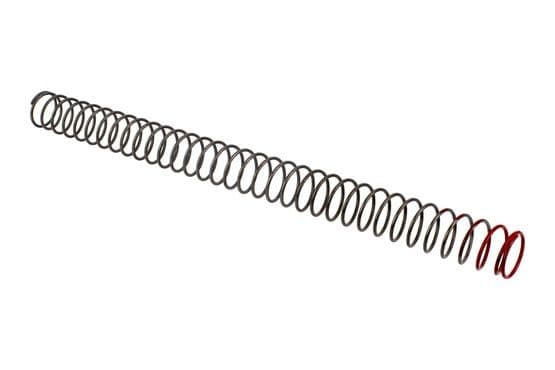
Sprinco Blue Enhanced Power Buffer Spring

Best value spring upgrade for suppressed and overgassed carbines. The cheapest part on this list and often the only one a mildly overgassed rifle needs.

$19.95
View at OpticsPlanet
~15% StrongerCarbine Length$20 Upgrade
  • +About 15% more resistance than a mil-spec spring for under $20
  • +Chrome silicon, shot-peened; resists set far better than a white spring
  • +Pairs ideally with an H2 buffer for balanced tuning
  • Can be too stiff for a properly gassed unsuppressed rifle
  • Not ideal for pistol-length gas (consider the Orange)
  • Batch-to-batch QC can vary
Type: Enhanced power, carbine lengthMaterial: Chrome silicon, shot-peenedResistance: ~15% over mil-specPairs with: H2 buffer
3

Bravo Company MFG BCM MK2 Recoil Mitigation System (Mod 1)

Complete intermediate-length system with the tube in the box. The pick for a builder who wants A5-style smoothness without sourcing a separate extension.

$115
View at OpticsPlanet
Tube IncludedT0/T1/T2 WeightsIntermediate Length
  • +Ships as a complete system WITH its own 8-position receiver extension
  • +Rifle-length M16A4 spring delivers more consistent carrier velocity
  • +Three weight tiers: T0 (3.8 oz), T1 (4.7 oz), T2 (5.6 oz)
  • Extension runs ~3/4 inch longer than carbine; some stocks won't fully collapse
  • Costs more than a carbine buffer/spring swap
  • Buffer is system-specific, not a carbine drop-in
Weights: T0 (3.8 oz), T1 (4.7 oz), T2 (5.6 oz)Spring: Rifle-length M16A4Extension: 8-position, ~3/4 in longer than carbineIncludes: Buffer, spring, and receiver extension
4

Various Mil-Spec Carbine Buffer Tube Kit

Baseline carbine system and new builds. The cheapest correct foundation before you decide whether the rifle needs more buffer weight or a stronger spring.

$61
View at OpticsPlanet
Carbine BaselineComplete Kit3.0-3.2 oz
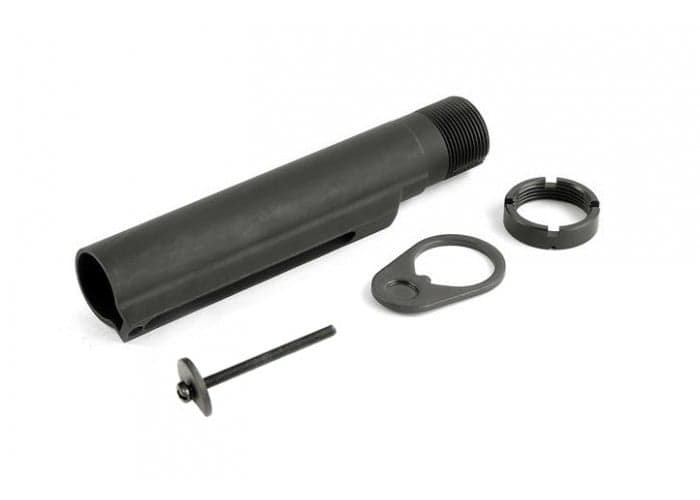
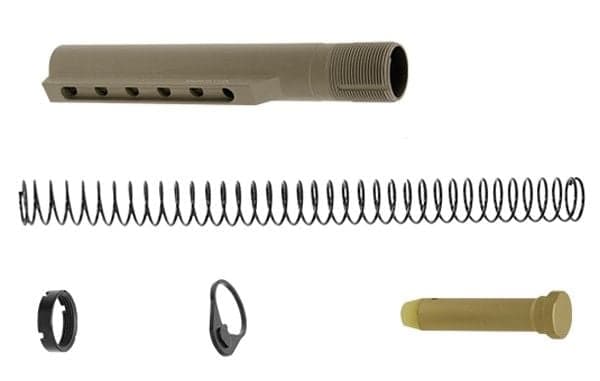
  • +Complete carbine system: 6-position tube, carbine buffer (3.0-3.2 oz), spring, castle nut, end plate
  • +Mil-spec 1.14-inch diameter fits the vast majority of quality stocks
  • +Cheapest correct starting point before tuning
  • Standard buffer and spring often need upgrading for suppressed use
  • Quality and castle-nut staking vary between makers
  • Commercial-spec stocks will not fit a mil-spec tube
Buffer weight: 3.0-3.2 oz (carbine)Tube: 6-position, 1.14 in mil-spec diameterIncludes: Tube, buffer, spring, castle nut, end plateFitment: Mil-spec stocks
5

Various H3 Buffer (5.0-5.4 oz)

Heavily overgassed short barrels and SBRs. The right call on a suppressed 10.3 to 11.5-inch upper that still cycles violently on an H2.

$93.99
View at OpticsPlanet
5.0-5.4 ozHeaviest CarbineShort-Barrel SBR
  • +Heaviest carbine-tube weight at 5.0-5.4 oz (all tungsten)
  • +Maximum carrier slowdown for short, overgassed barrels
  • +Carbine-tube drop-in, no proprietary parts
  • Too heavy for many mid-length and 16-inch setups; can cause short-stroking if undergassed
  • Masking a gas problem with weight is a band-aid; an adjustable gas block is the real fix
  • Adds reciprocating mass that some shooters dislike on semi-auto
Weight: 5.0-5.4 ozWeights: All tungstenTube: Any mil-spec carbineBest on: Suppressed 10.3-11.5 in SBR
6

Sprinco Orange Extra-Extra Power Spring

Pistol-length gas and the most overgassed short barrels. The spring you reach for when a Blue cannot deliver consistent lock-back on a sub-11.5-inch upper.

$29.99
View at OpticsPlanet
Extra-Extra PowerPistol GasSevere Overgassing
  • +Highest return force in the Sprinco line for severe overgassing
  • +Good match for sub-11.5-inch pistol-gas builds
  • +Helps consistent lock-back when a Blue is not enough
  • Too strong for most 14.5-16-inch builds; can cause short-stroking if undergassed
  • Overkill for unsuppressed rifles
  • Not recommended with light/subsonic loads
Type: Extra-extra power, carbine lengthBest on: Sub-11.5 in pistol-gas buildsReturn force: Highest in the Sprinco line
7

Geissele Super 42 Braided Spring + H2 Buffer

Best spring-and-buffer combo to kill spring twang on a carbine. The matched H2 makes it a one-box suppressed-5.56 tune for shooters who hate the boing.

$89.99
View at OpticsPlanet
Braided SpringNo TwangH2 Included
  • +Three-strand braided wire eliminates spring twang and damps harmonics
  • +About 15% stronger return force than mil-spec
  • +Ships matched with an H2 buffer for suppressed short barrels
  • Premium price for a spring-and-buffer combo
  • Carbine length only; not for rifle or A5 systems
  • Too strong for .300 Blackout subsonic
Spring: Three-strand braided wireReturn force: ~15% over mil-specBuffer: H2 (4.6-4.7 oz) includedLength: Carbine only
8

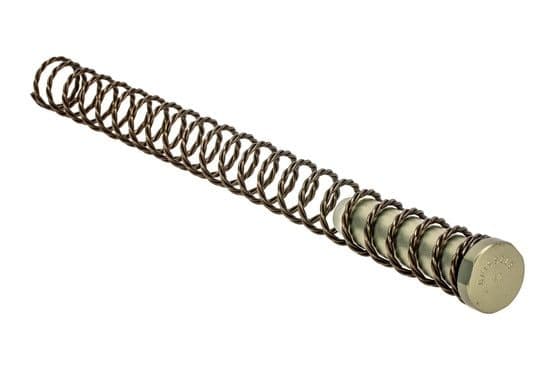
VLTOR A5 Spring and Buffer Kit

Smoothest intermediate-length impulse for builders who already run or plan to buy an A5 tube. The fine-tuning choice with five A5 weights on tap.

$85.46
View at OpticsPlanet
A5 IntermediateA5H2 5.3 ozNeeds A5 Tube
  • +A5H2 buffer (5.3 oz) + rifle-length spring smooths the impulse vs carbine
  • +Broadens the reliability envelope across ammo and conditions
  • +Five A5 buffer weights for fine tuning
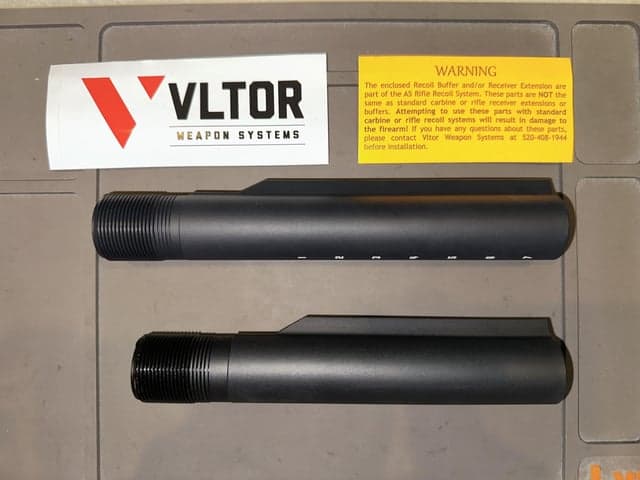
  • Does NOT include the required A5 receiver extension tube
  • A5-specific buffers are not carbine-interchangeable
  • Longer tube may interfere with some stocks
Buffer: A5H2 (5.3 oz)Spring: Rifle lengthWeights: Five A5 buffer weights availableTube: Requires A5 extension (sold separately)
9

KAK Industry Configurable Buffer Kit

One buffer that tunes across every weight. The right buy for a tinkerer or anyone running multiple uppers off one lower.

$134
View at OpticsPlanet
1.7-5.6 oz Tunable9 CombinationsCarbine
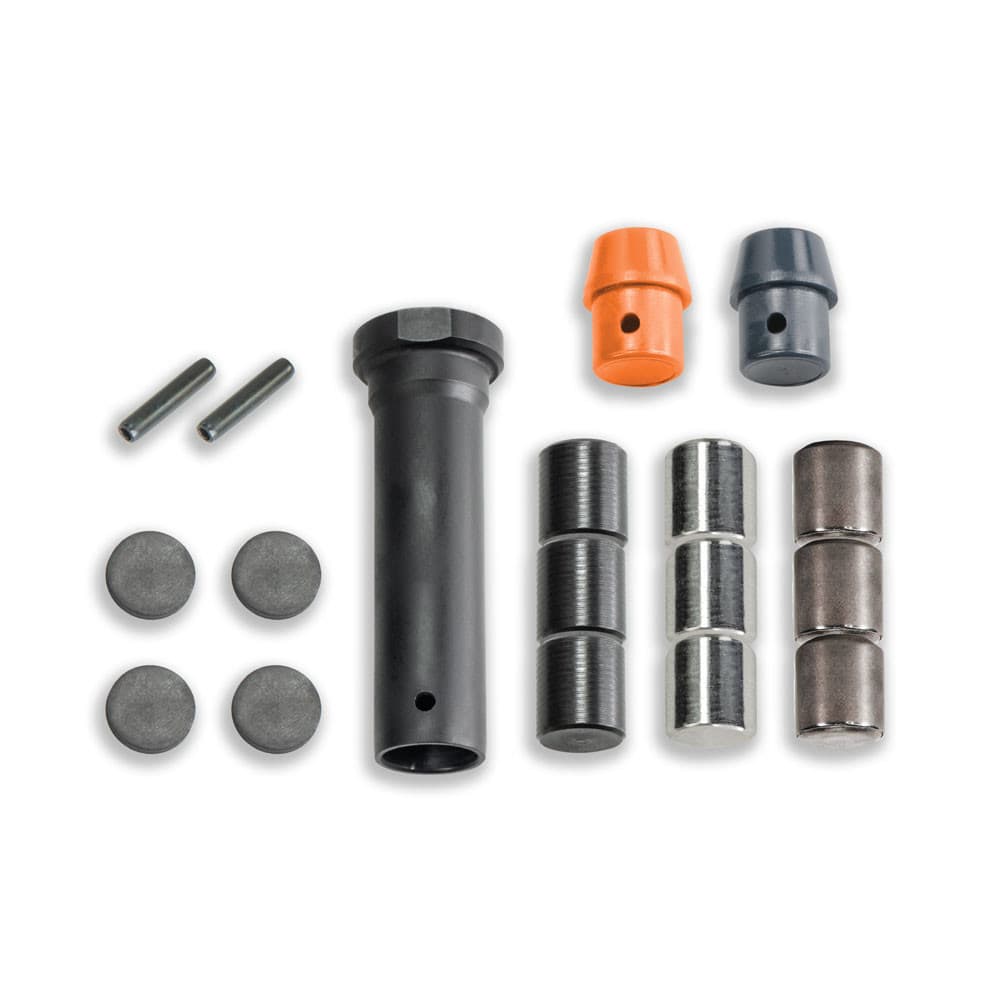
  • +Configurable from 1.7 oz (all aluminum) to 5.6 oz (all tungsten), nine combos
  • +Replaces a drawer of fixed H1/H2/H3 buffers for tuning or multi-upper use
  • +Includes 3 aluminum, 3 steel, 3 tungsten weights plus spares
  • More internal parts than a sealed fixed buffer
  • Changing weights requires disassembly, not a quick swap
  • Carbine-tube only; not an A5 or rifle-length solution
Weight range: 1.7 oz to 5.6 ozCombinations: 9 (3 aluminum, 3 steel, 3 tungsten)Tube: Standard carbine
10

Armaspec Stealth Recoil Spring SRS Gen 4 (H2)

Budget captured spring that quiets a carbine tube. The value entry point to captured cycling without the premium price.

$84
View at OpticsPlanet
CapturedC/H/H2/H3Quiet Cycling
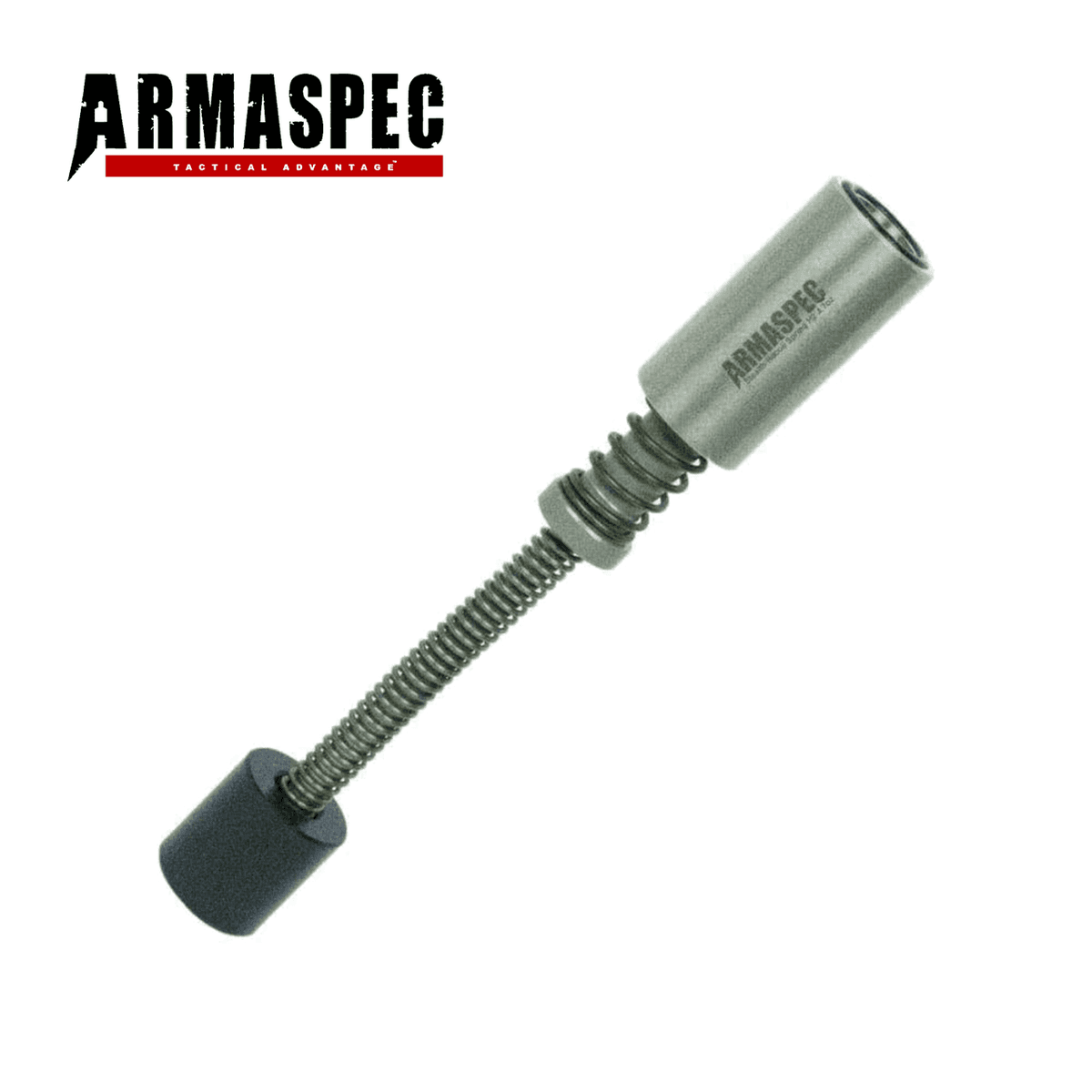
  • +Captured drop-in replacement keeps the spring off the tube wall (quiet)
  • +Multi-stage design takes some edge off felt recoil
  • +Four weights (C/H/H2/H3) to match your gas system
  • Fixed weight per unit; not adjustable like a weight-stack buffer
  • More internal parts than a plain buffer and spring
  • Carbine-tube only
Type: Captured spring, multi-stageWeights: C / H / H2 / H3Tube: Standard carbine
11

JP Enterprises Silent Captured Spring Gen 2 (H2)

Premium pick that kills twang and bolt bounce. The unit JP itself recommends for SBR, suppressed, select-fire, and piston guns.

$189
View at OpticsPlanet
CapturedCarbine or Rifle Tube6.9 oz
  • +Fully captured single unit eliminates spring twang entirely
  • +Damps bolt bounce better than a loose spring (good for full-auto/piston)
  • +Included 2.7-inch spacer fits carbine OR rifle receiver extensions
  • Most expensive way to address spring noise and bolt bounce
  • Fixed H2-equivalent weight is less granular than a weight-stack buffer
  • Overkill for a basic unsuppressed range carbine
Weight: 6.9 oz (H2 equivalent)Spacer: 2.7 in, fits carbine or rifle extensionGuide rod: Aluminum

Affiliate links - purchases support this site at no extra cost to you. (?)

Buffer Weight Chart by Barrel Length, Gas & Suppressor

These are conservative starting points, not universal prescriptions. Build the rifle, watch where it throws brass, and tune from there. Brass landing at 3 to 4 o'clock with consistent lock-back is the target; brass thrown forward of 3 o'clock means overgassed and is where the heavier buffers and stronger springs below earn their keep. Barrel and gas length pairing drives most of this, so cross-reference the AR-15 barrels guide when you spec a new upper.

16-inch carbine/mid, unsuppressed
Carbine (3.0 oz) or H1 (3.8 oz)
SpringMil-spec or Sprinco Blue
NotesStart light; only add weight if overgassed (brass landing forward of 3 o'clock).
14.5-inch midlength, unsuppressed
Carbine (3.0 oz) or H1 (3.8 oz)
SpringMil-spec or Sprinco Blue
NotesMidlength gas is already softer; rarely needs more than H1.
16-inch or 14.5-inch, suppressed
H2 (4.6-4.7 oz)
SpringSprinco Blue or Super 42
NotesH2 + enhanced spring is the de facto suppressed-5.56 baseline.
11.5-inch SBR, carbine gas
H2 (4.6-4.7 oz)
SpringSprinco Blue
NotesH2 unsuppressed; consider H3 when you add a can.
11.5-inch SBR, suppressed
H2-H3 (4.7-5.4 oz)
SpringSprinco Blue/Orange
NotesOvergassed short barrels favor more mass; an adjustable gas block is the cleaner fix.
10.3-inch / pistol-gas, suppressed
H3 (5.0-5.4 oz)
SpringSprinco Orange
NotesMost overgassed configuration; heaviest carbine weight or go A5/MK2.
300 BLK supersonic
Carbine to H2 (3.0-4.7 oz)
SpringMil-spec or Sprinco Blue
NotesTune for supersonic; verify subsonic lock-back separately.
300 BLK subsonic
Carbine (3.0 oz)
SpringMil-spec / reduced (Sprinco Yellow)
NotesAvoid braided/extra-power springs (Super 42); too much return force can short-stroke subs.
Precision / soft-shooting competition
A5/MK2 system or captured (JP SCS)
SpringRifle-length (A5/MK2) or captured
NotesIntermediate-length systems spread the impulse for the flattest, most consistent cycling.

The Sprinco Yellow noted for 300 BLK subsonic is a reduced-power spring for low-pressure subs; it is a tuning option, not one of the ranked picks above. For load-by-load 300 BLK cycling, see the 300 Blackout barrels guide.

Carbine Buffer Weights: Carbine, H1, H2, H3

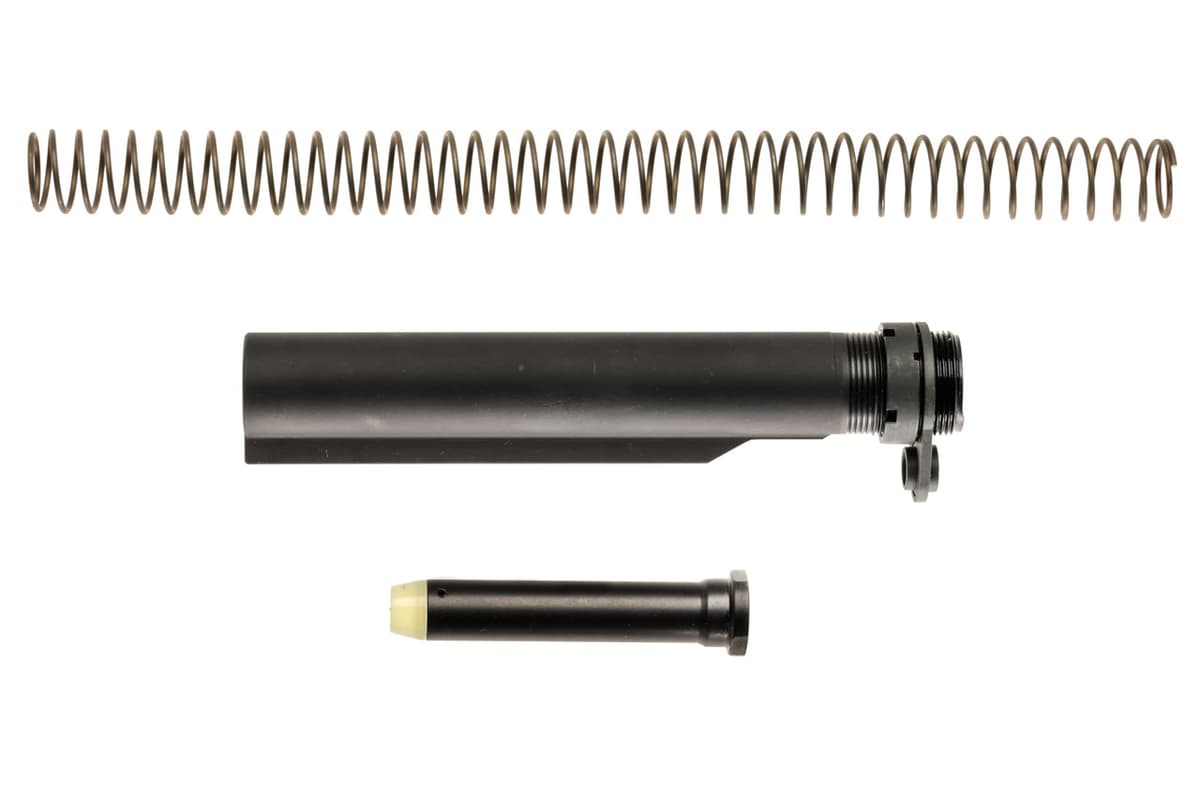
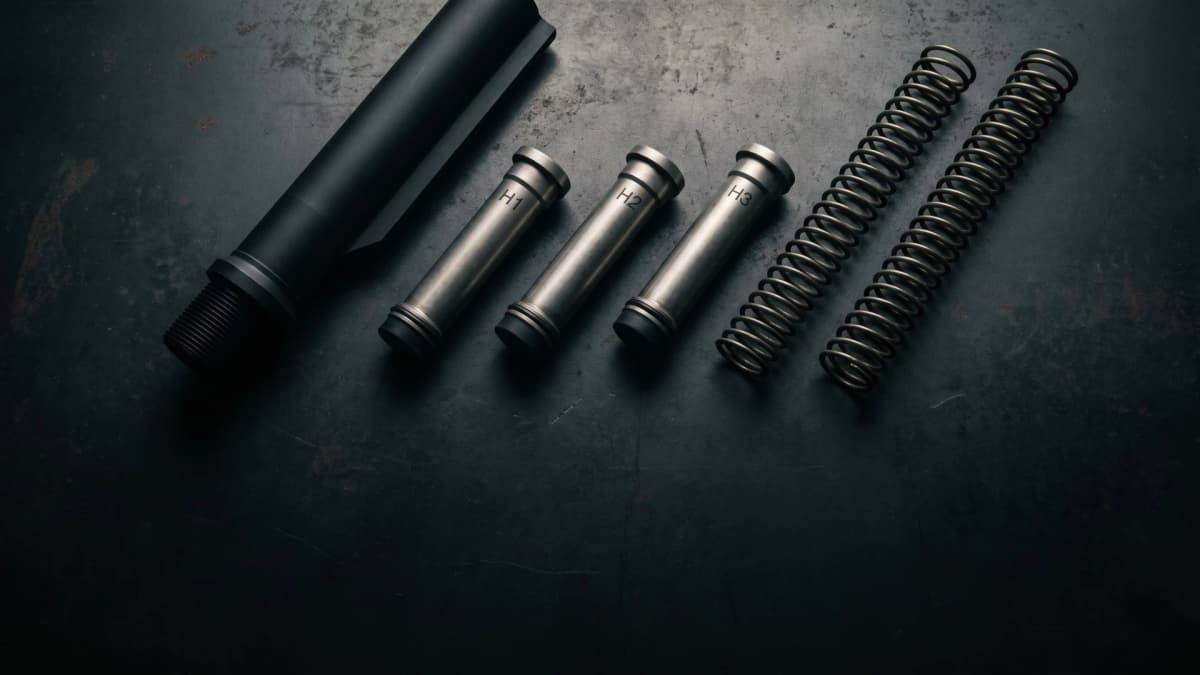
Fixed carbine buffers step up in roughly 0.8 oz increments and all drop into any mil-spec carbine tube. The standard carbine buffer is about 3.0 oz, H1 is 3.8 oz with one tungsten weight, H2 is 4.6 to 4.7 oz with one steel and two tungsten, and H3 is 5.0 to 5.4 oz all tungsten. The extra mass slows the bolt carrier's rearward travel, softening recoil and calming ejection on overgassed guns.

When the H2 Is the Answer

The H2 is the de facto suppressed-5.56 baseline. On a 16-inch or 14.5-inch rifle, adding a can spikes back pressure and carrier speed; the H2 brings the cycle back into a sane window without risking the short-stroking you can get from going straight to an H3. Pair it with a Sprinco Blue spring for the cleanest balance.

When to Reach for the H3

Reserve the H3 for heavily overgassed short barrels, a suppressed 10.3 to 11.5-inch SBR being the textbook case, where the H2 still cycles violently. On a 16-inch gun an H3 usually signals too much gas; meter it with an adjustable block rather than fight it with reciprocating mass. The KAK Configurable buffer below lets you walk weights from 1.7 to 5.6 oz to find the sweet spot without buying three buffers.

Intermediate-Length Systems: VLTOR A5 vs BCM MK2

Both the VLTOR A5 and the BCM MK2 are intermediate-length systems, not carbine buffers; they use a receiver extension roughly 3/4 inch longer than carbine and a rifle-length spring to spread the recoil impulse over a longer stroke. That longer stroke is what makes them cycle smoother and more consistently than any carbine buffer, which is why they dominate duty, precision, and soft-shooting competition builds. The critical difference is what comes in the box.

VLTOR A5: Buffer + Spring Only

The A5 kit is the A5H2 buffer (5.3 oz), a rifle-length spring, and hardware. It does not include the A5 receiver extension, which you buy separately. That makes it the right call for a builder who already owns an A5 tube or is buying one to match, and the five available A5 buffer weights make it the finest-tuning option in this class.

BCM MK2: Complete System, Tube Included

The MK2 ships as a complete system with its own 8-position receiver extension and a rifle-length M16A4 spring, so it is a true drop-in with nothing left to source. It comes in three weight tiers, T0 (3.8 oz), T1 (4.7 oz), and T2 (5.6 oz), and an internal counterweight that reduces bolt bounce. Pick the MK2 when you want A5-style smoothness without hunting down a separate extension.

Buffer Springs: When a $20 Part Fixes the Problem

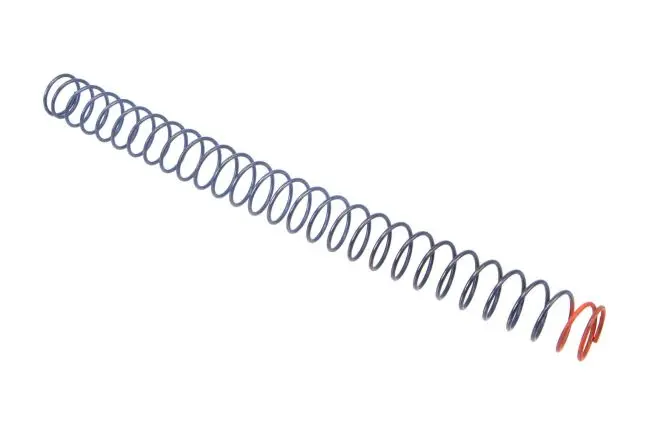
Upgrading the spring is the cheapest tuning step and often the only one a mildly overgassed rifle needs. The Sprinco Blue adds about 15% more return force than a mil-spec spring for under $20, slowing the carrier much like a heavier buffer without changing reciprocating mass. Step up to the Sprinco Orange only for pistol-length gas and the most severely overgassed short barrels, where a Blue cannot deliver consistent lock-back.

If the metallic boing through the stock is what bothers you, the Geissele Super 42 uses a three-strand braided wire that eliminates spring twang and ships matched with an H2 buffer, making it a one-box suppressed-5.56 tune. Whatever spring you run, keep it off braided extra-power options on 300 BLK subsonic loads; the higher return force can short-stroke the low-pressure subs.

Captured Spring Systems: Quiet, at a Price

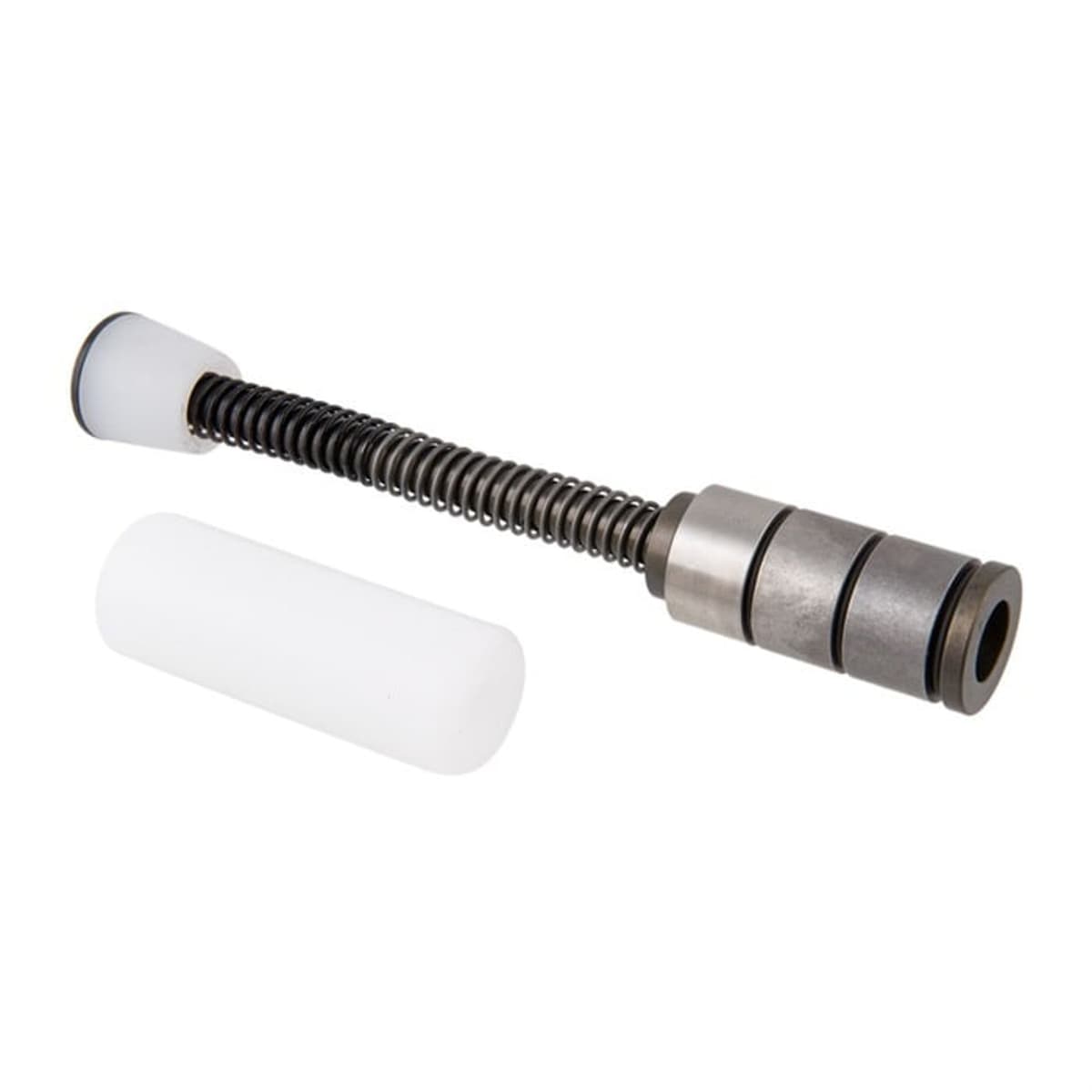
Captured systems combine the buffer and spring into one unit riding on a guide rod, so the spring never rubs the tube wall. The payoff is a quiet, smooth cycle with no twang. The premium JP Silent Captured Spring goes further, damping bolt bounce better than a loose spring, which is why JP recommends it for SBR, suppressed, select-fire, and piston builds, and its included spacer fits both carbine and rifle extensions. The Armaspec SRS is the budget entry to captured cycling with four weight options.

The tradeoff is the same for both: a captured unit carries more internal parts than a plain buffer and spring, and each one is a fixed weight rather than a tunable weight stack. That is the honest cost of the quiet, not a reliability knock. For a basic unsuppressed range carbine, a fixed buffer and a Sprinco spring do the same job for far less money.

Related Guides

Tune the rest of the recoil and gas system around your buffer choice:

Frequently Asked Questions

What is a standard AR-15 buffer weight?
A standard carbine buffer weighs about 3.0 ounces. From there, H1 is roughly 3.8 oz, H2 is 4.6 to 4.7 oz, and H3 is 5.0 to 5.4 oz, with each step adding around 0.8 oz of tungsten and steel. Most factory 16-inch carbines ship with the standard carbine buffer, and shooters step up to H2 when they suppress the rifle.
Is an H2 or H3 buffer better?
For most suppressed 5.56 rifles the H2 (4.6-4.7 oz) is the better starting point; it slows the carrier enough to tame overgassing without risking short-stroking. Reserve the H3 (5.0-5.4 oz) for heavily overgassed short barrels, like a suppressed 10.3 to 11.5-inch SBR, where the extra mass is needed. If an H3 fixes a 16-inch rifle, the real problem is usually too much gas; an adjustable gas block is the cleaner fix.
What does a heavier buffer do for an AR-15?
A heavier buffer adds reciprocating mass that slows the bolt carrier's rearward travel. That reduces the violence of the cycle, softens felt recoil, calms the ejection pattern, and cuts wear on the receiver and buffer tube. It is the simplest way to address an overgassed rifle, especially when running a suppressor, though it treats the symptom rather than the gas volume itself.
What happens if your buffer weight is too high?
Too much buffer weight can cause short-stroking: the carrier no longer travels far enough to reliably pick up the next round or lock back on an empty magazine. You may see failures to feed, failures to lock back, or sluggish cycling, especially with weaker ammunition or in cold weather. If you add weight and reliability drops, step back down or address gas volume with an adjustable block instead.
What does upgrading a buffer spring do on an AR-15?
An enhanced spring like the Sprinco Blue adds about 15% more return force than a mil-spec spring, which slows the carrier and smooths cycling much like a heavier buffer but for under $20. Braided springs like the Geissele Super 42 also eliminate the metallic twang you feel through the stock. A spring upgrade is the cheapest first step before buying heavier buffers.
What is a captured buffer spring system?
A captured spring system, like the JP Silent Captured Spring or the Armaspec SRS, combines the buffer and spring into one self-contained unit riding on a guide rod. Because the spring never rubs the buffer tube wall, it eliminates spring twang and runs quieter and smoother. The JP SCS also damps bolt bounce, which helps full-auto and piston guns. The tradeoff is cost and a fixed weight per unit.
Should I run an A5 or MK2 buffer system?
Intermediate-length systems like the VLTOR A5 and BCM MK2 use a longer receiver extension and a rifle-length spring, spreading the recoil impulse over a longer stroke for the smoothest, most consistent cycling in a collapsible-stock package. They are the go-to for duty, precision, and soft-shooting competition builds. The catch is they require their own longer tube, and some stocks may not fully collapse.
What buffer should I run on a suppressed 300 Blackout?
For 300 BLK, tune supersonic and subsonic separately. Supersonic loads run fine on a carbine-to-H2 buffer with a standard or Sprinco Blue spring. Subsonic loads are low-pressure and need an easier-to-cycle setup: a standard carbine buffer and a mil-spec or reduced-power spring. Avoid extra-power braided springs like the Super 42 on subsonic, since the higher return force can short-stroke the action.