Best AR-15 Red Dot Risers and Optic Mounts 2026
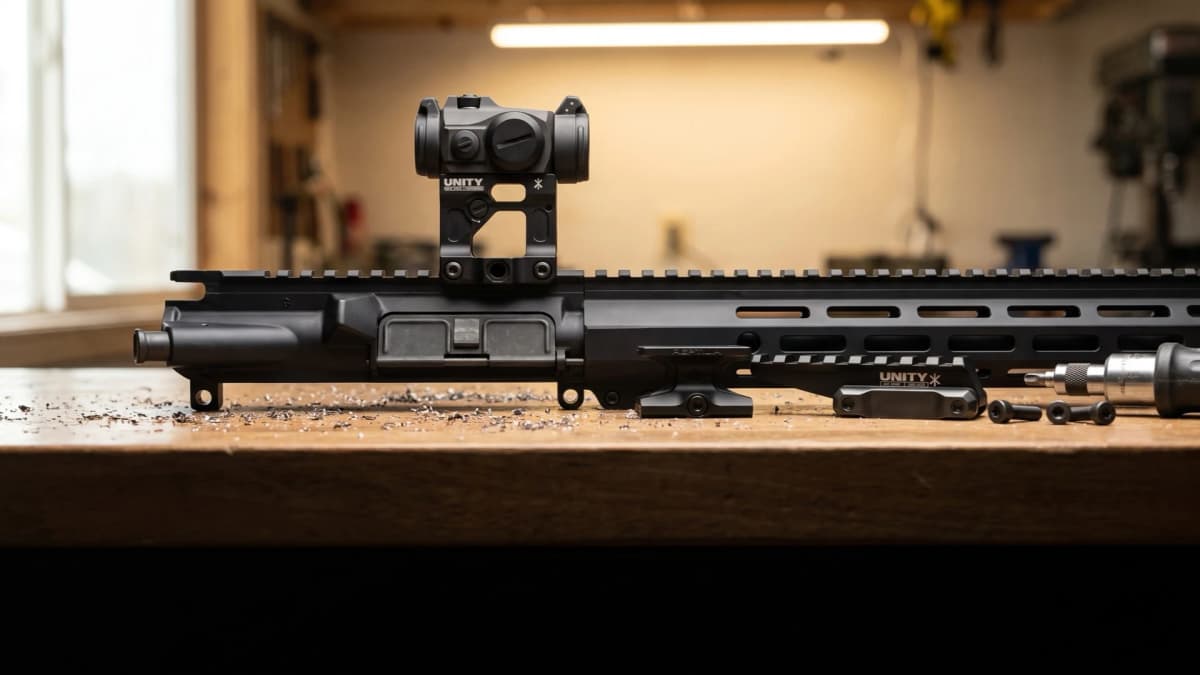
A red dot riser raises an optic that already has a mount. A red dot mount is the part the optic bolts into. Retailers use both words for both things, so the name on the box will not tell you which part you are actually buying. This guide ranks fourteen verified picks across all three classes, one-piece mounts, true Picatinny riser blocks, and the one spacer worth owning, and lists the published optical centerline for every one of them, from a $20 riser to a 2.91 inch gas mask and night vision mount. Pick the optic first with our best AR-15 red dot guide, then come back and buy the height.
Key Takeaways
- →Best overall: the Reptilia DOT Mount at $125, with published 1.93 in and 39 mm heights and three optic footprints in one product line.
- →Riser, mount, spacer are three different parts. A riser has a rail on top, a mount has an optic footprint, a spacer stacks under a base. The product name on the box will not tell you which one you are buying.
- →Lower 1/3 is a look, not a dimension. Aimpoint's 39 mm spacer anchors it, and Reptilia (39 mm), Arisaka (1.54 in) and Scalarworks (1.57 in) all land near it, but Badger calls 1.70 in lower 1/3. Shop the maker's published centerline, never the label.
- →2.26 inches is the night vision height. The Unity FAST Micro ($186), the Primary Arms SLx Microdot ($49.99), and the night vision SKU of the Midwest MK2 QD T2 (the top height in that mount's range) all reach it.
- →Cheapest credible riser: the UTG Pro Super Slim at $20, in four saddle heights from 0.5 to 1.0 in.
Best AR-15 Optic Risers and Red Dot Mounts
Fourteen ranked picks across the three classes buyers confuse: one-piece mounts the optic bolts into, true risers that raise an optic you already mounted, and spacers that stack under an existing base. Heights are the manufacturer's published optical centerline wherever the maker prints one.
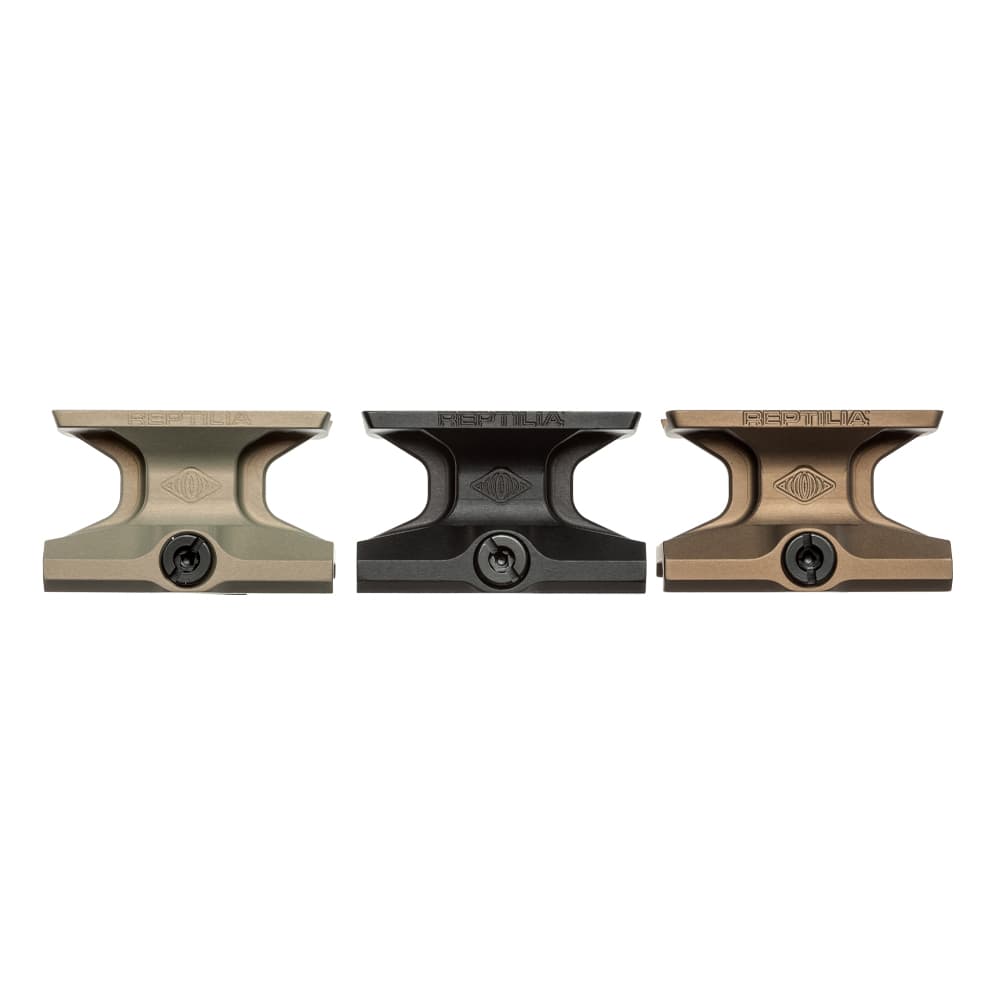
Reptilia DOT Mount
Best overall
- +Covers the three footprints that matter (Aimpoint Micro, ACRO/MPS, Trijicon MRO) at one price
- +Publishes exact optical centerline heights, so co-witness planning is arithmetic instead of guesswork
- +One-piece fixed clamp with nothing to snag or work loose under recoil
- −Not quick-detach; pulling the optic needs a driver
- −Height is fixed per SKU, so changing co-witness means buying another mount
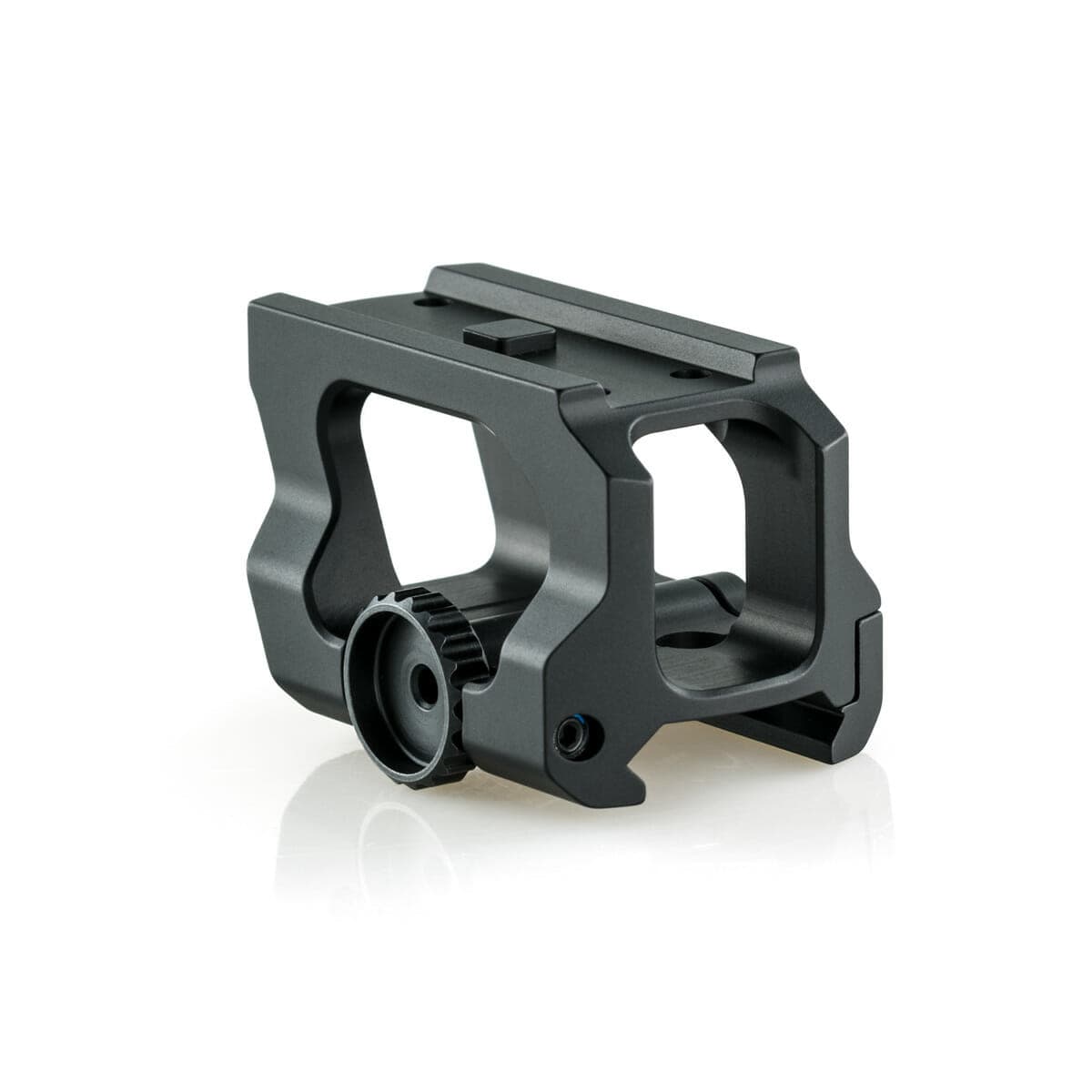
Scalarworks LEAP/01 Micro Mount
Best quick-detach
- +Lightest credible QD micro mount at 43 to 51 grams depending on height
- +ClickDrive thumbscrew is tool-free and returns to zero across removals
- +Three published heights (1.42, 1.57, 1.93) cover every co-witness scheme
- −Each height is a separate SKU; changing height means buying a new mount
- −Costs more than the Reptilia DOT for the same footprint
- −Tops out at 1.93 in; no 2.26 in night vision height in this line
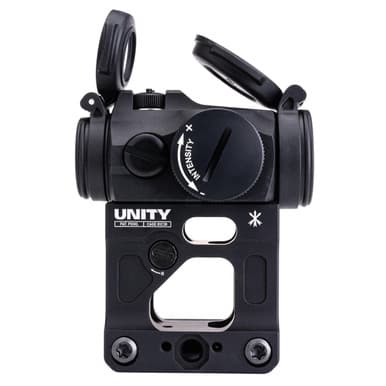
Unity Tactical FAST Micro Mount
Best for night vision
- +2.26 in optical centerline is the reference height for passive aiming under night vision
- +Integrated adjustable backup iron sights remove the need for separate BUIS
- +Clears plate carriers, gas masks and comms gear that force a low chin weld with a standard mount
- −The height feels awkward without night vision or a plate carrier
- −Most expensive mount in this guide at $186
- −The FAST QD lever is a separate purchase; it is a fixed mount out of the box
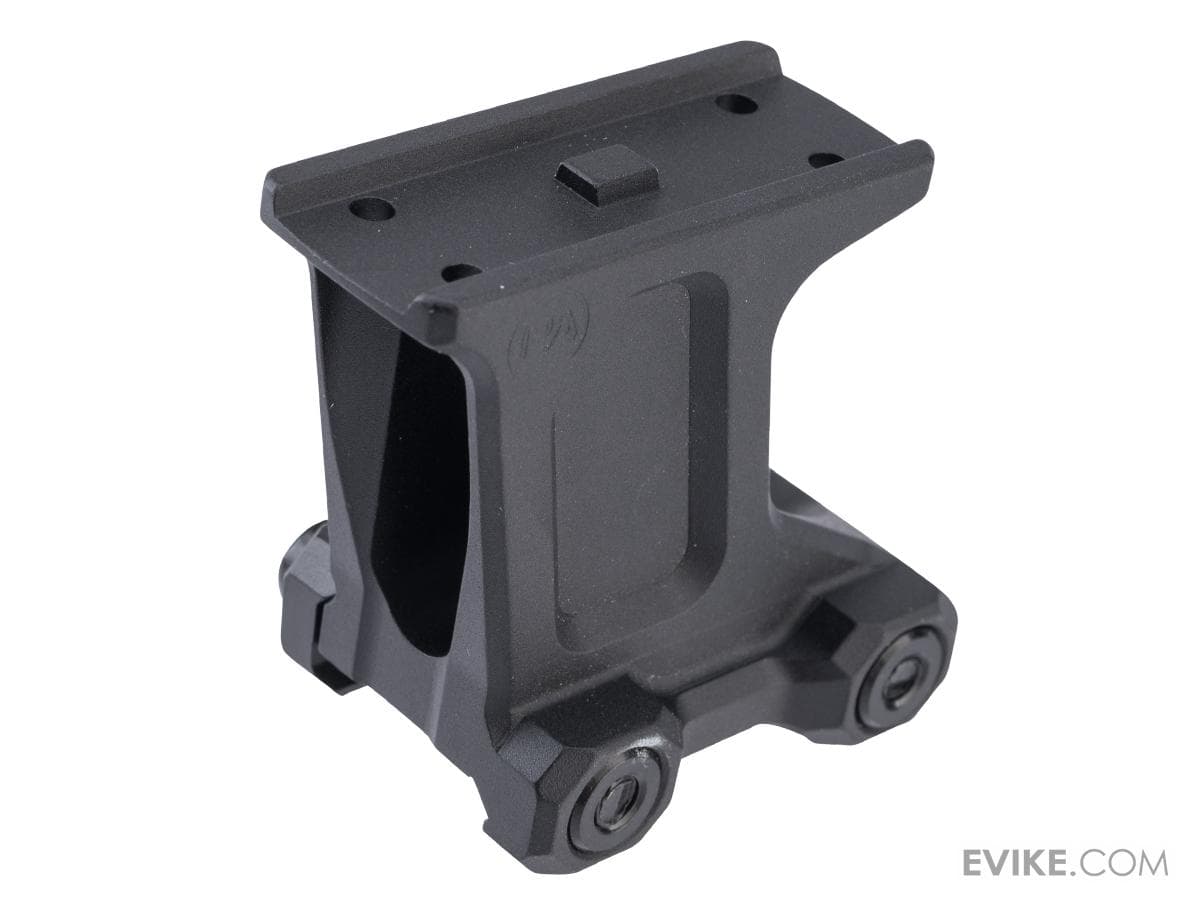
Primary Arms SLx Microdot Mount 2.26
Best budget heads-up height
- +Gets to the 2.26 in night vision centerline for roughly a quarter of the Unity FAST Micro price
- +Steel hardware and steel recoil lugs rather than all-aluminum construction
- +Fits the broadest red dot footprint on the market
- −6061-T6 aluminum rather than the 7075 used by premium mounts
- −No integrated backup sights, unlike the Unity it undercuts
- −Sold only in the 2.26 in height; there is no co-witness SKU in this product
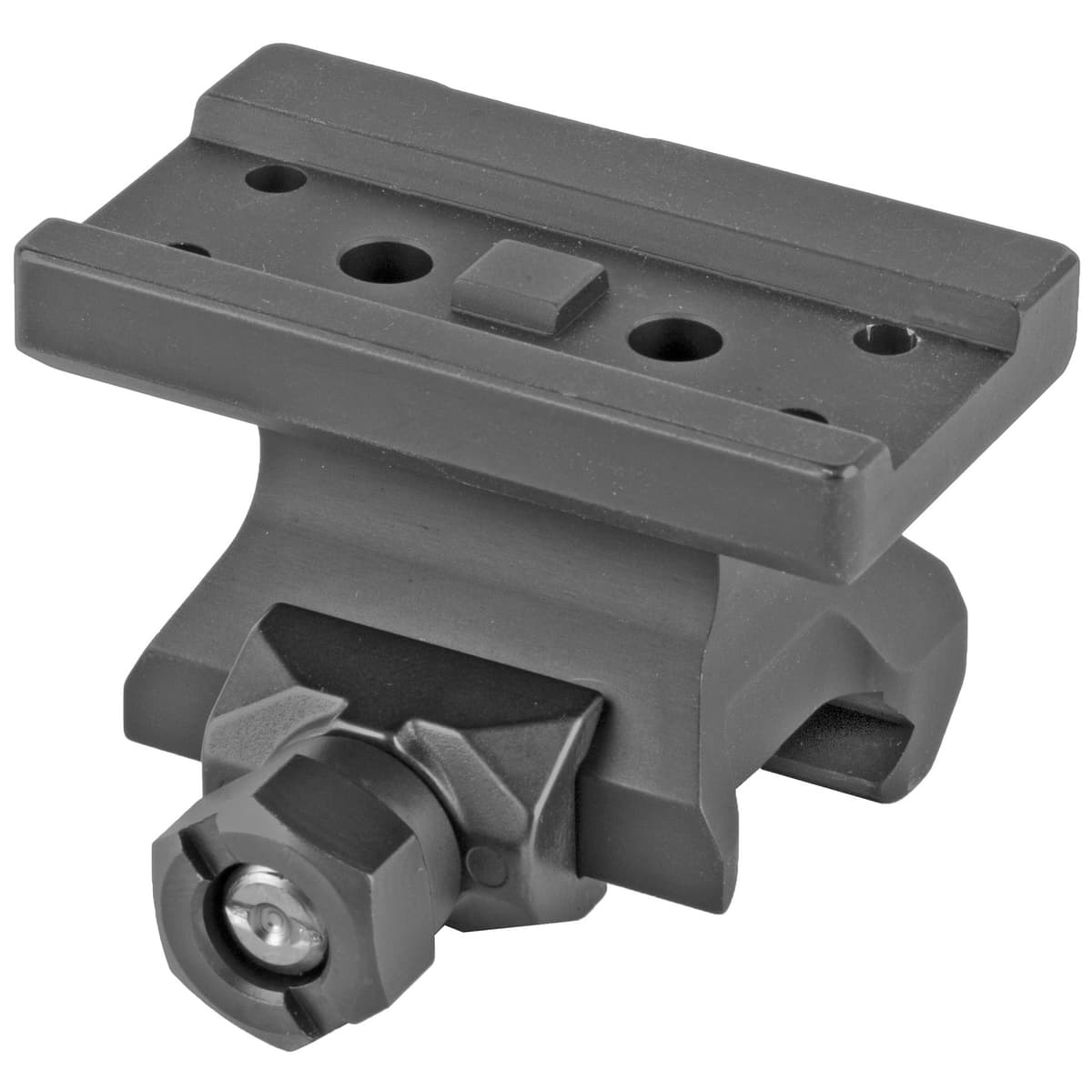
Geissele Super Precision Aimpoint Micro Mount
Best for hard use
- +Same high-clamping-force nut-and-bolt rail interface as Geissele's proven scope mounts
- +Shear lugs index the mount against recoil so it holds zero through drops
- +Three heights including a 1.93 in heads-up option
- −Not quick-detach; removal needs a driver
- −At 2.5 oz it is heavier than the Scalarworks LEAP/01
- −Geissele publishes an optical centerline figure only for the 1.93 in SKU; the absolute and lower 1/3 heights are sold by label alone
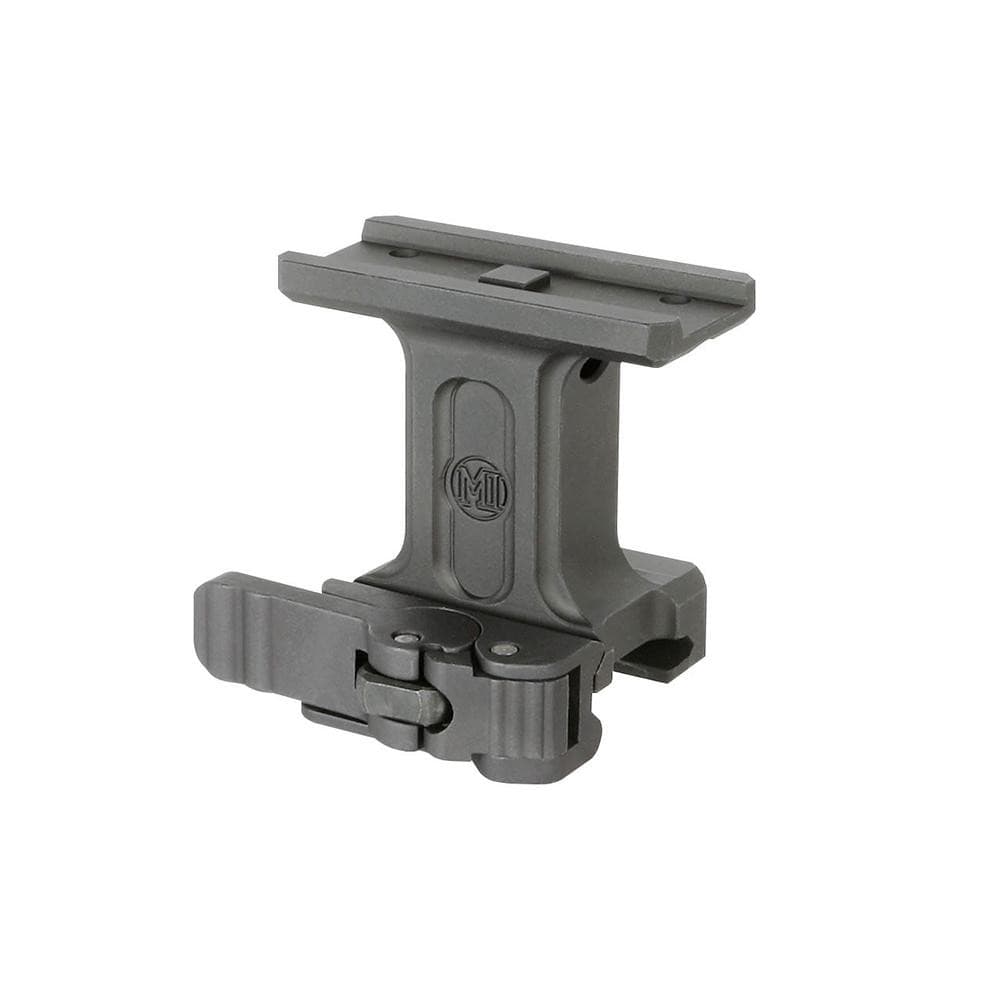
Midwest Industries MK2 QD T2 Aimpoint Mount
Best budget quick-detach
- +The cheapest quick-detach mount here that offers a true 2.26 in night vision height
- +Tool-free lever pulls the optic off the rail without a driver
- +Four heights cover low, absolute, lower 1/3 and heads-up
- −Hardcoat 6061 body rather than the 7075 used by Geissele and Badger
- −The lever adds a snag point a fixed mount does not have
- −Return to zero is less well documented than Scalarworks or Bobro
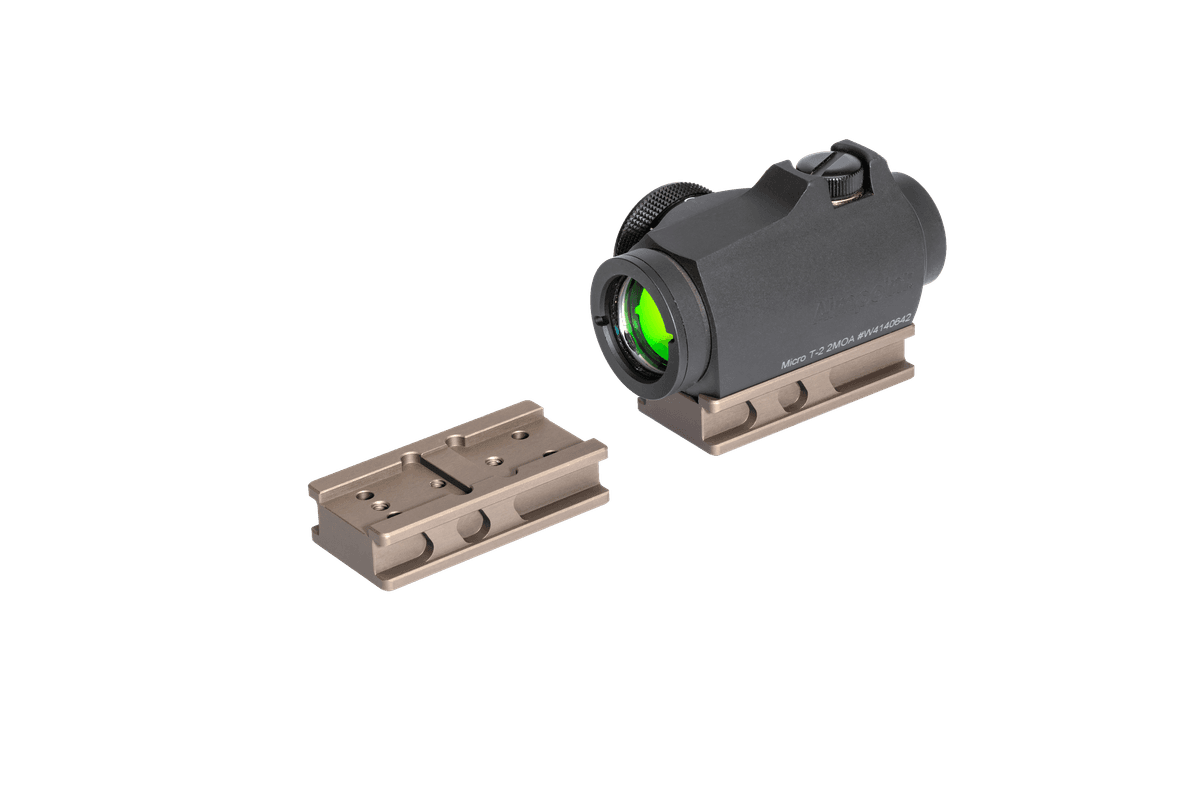
Badger Ordnance Condition One Red Dot Mount
Best precision-grade fixed mount
- +Steel clampfoot resists the deformation repeated torque cycles cause in all-aluminum clamps
- +Integral recoil lug indexes the mount into the rail slot for repeatable placement
- +Three heights covering co-witness, lower 1/3 and heads-up
- −Not quick-detach
- −Each height is a separate SKU
- −Less widely stocked than Geissele or Scalarworks, so the height you want may be backordered
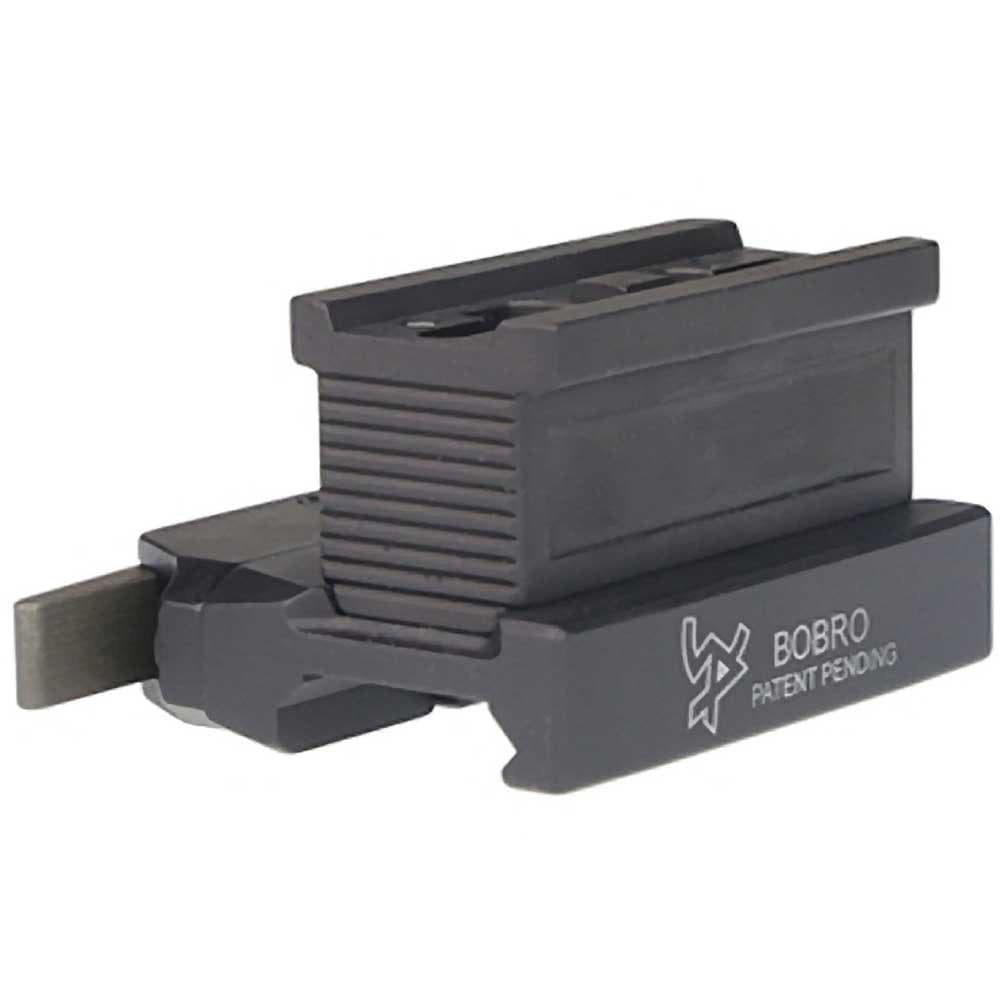
Bobro Engineering Aimpoint Micro T1/T2/CompM5 Mount
Best QD lever design
- +The BLAC lever self-tensions on clamping, so there is no tension screw to set
- +Clamps consistently on both loose commercial rails and tight mil-spec rails with no adjustment
- +Strong return-to-zero reputation across removals
- −Tops out at 1.7 in; there is no 1.93 in or 2.26 in height in this line, so it is the wrong mount for night vision
- −Heavier than the Scalarworks LEAP/01
- −Costs more than the Midwest MK2 QD without offering more heights
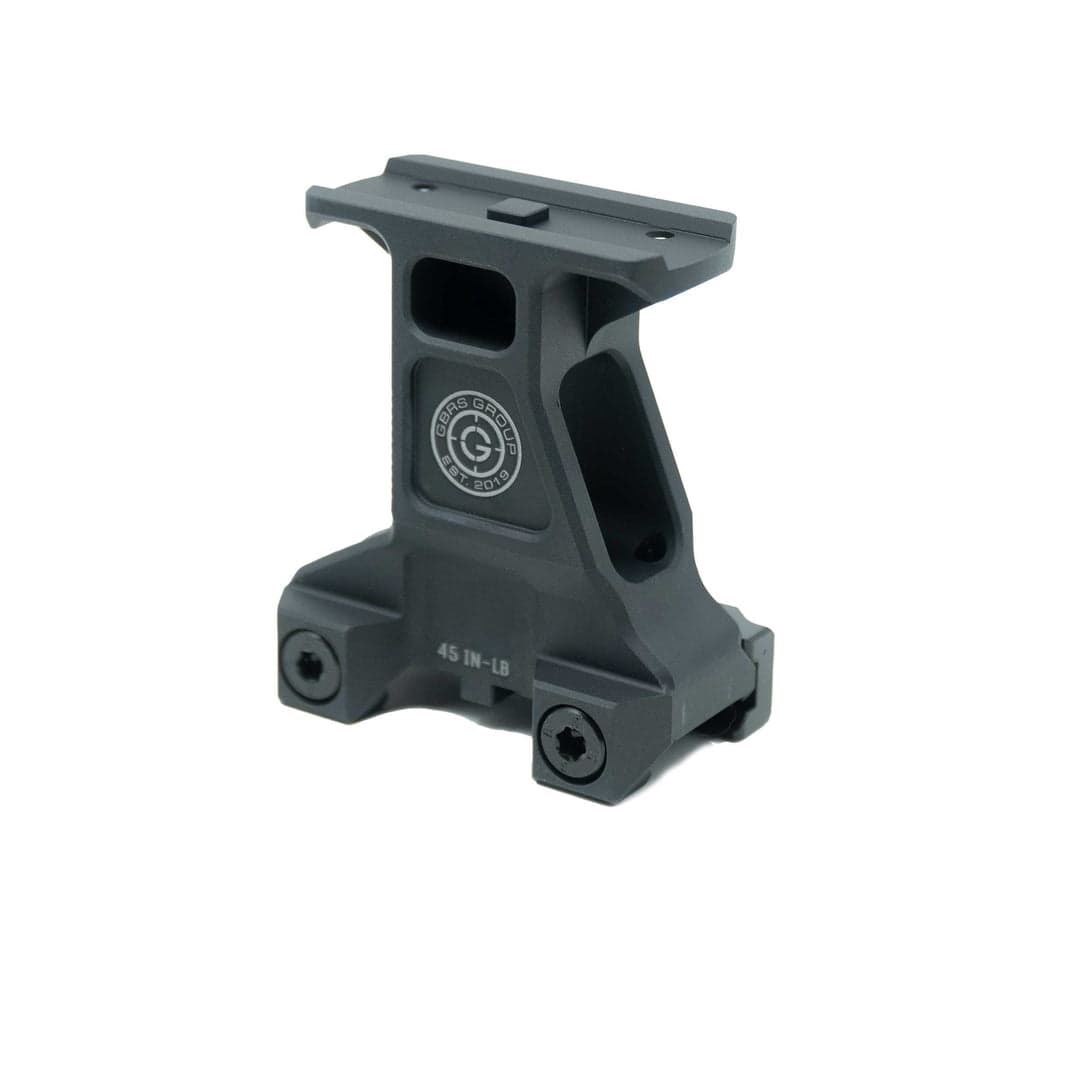
GBRS Group Lerna Mount Kit
Best 2.91 in height for the money
- +The Hydra's gas mask and night vision height for roughly half the price
- +4.8 oz on the Aimpoint builds, about 1.7 oz lighter than the Hydra
- +Aimpoint ACRO fitment, which the Hydra line does not offer
- −No accessory rail; a light or laser has to go on the handguard
- −Optic-specific, so changing dots means a new mount
- −Still costs more than a 2.26 in mount that clears most gear
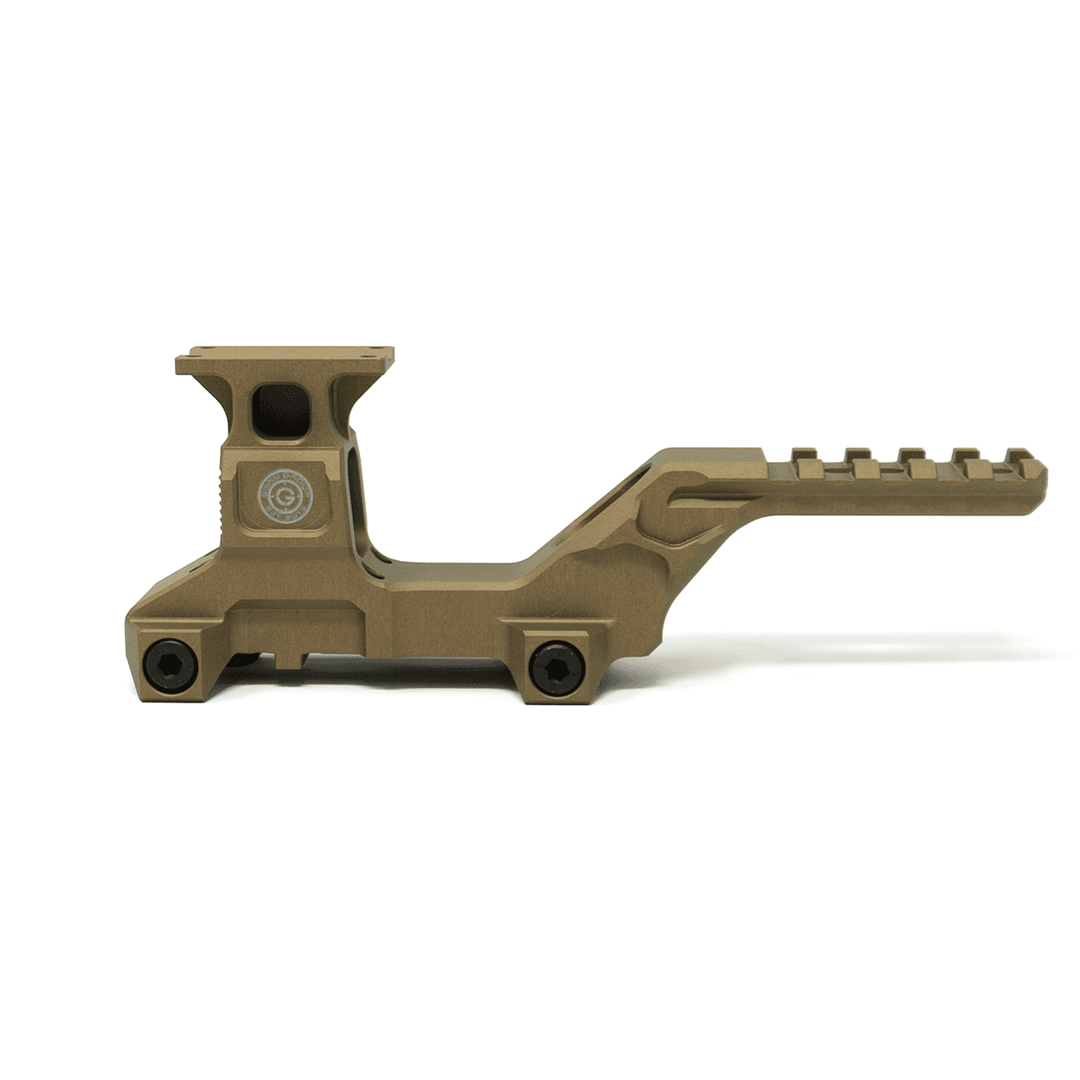
GBRS Group Hydra V2 Mount Kit
Best mount for gas masks and helmet NODs
- +2.91 in clears gear stacks that 2.26 in mounts still fight, including a mask worn under helmet NODs
- +Elevated 1913 platform carries a light or laser off the mount instead of the handguard
- +17-4 PH H900 stainless clamp bar and screws rather than aluminum hardware
- −Roughly triple the price of a purpose-built 2.26 in mount
- −6.1 to 6.5 oz depending on the optic build, heavy for a red dot mount
- −Optic-specific, so changing dots means a new mount
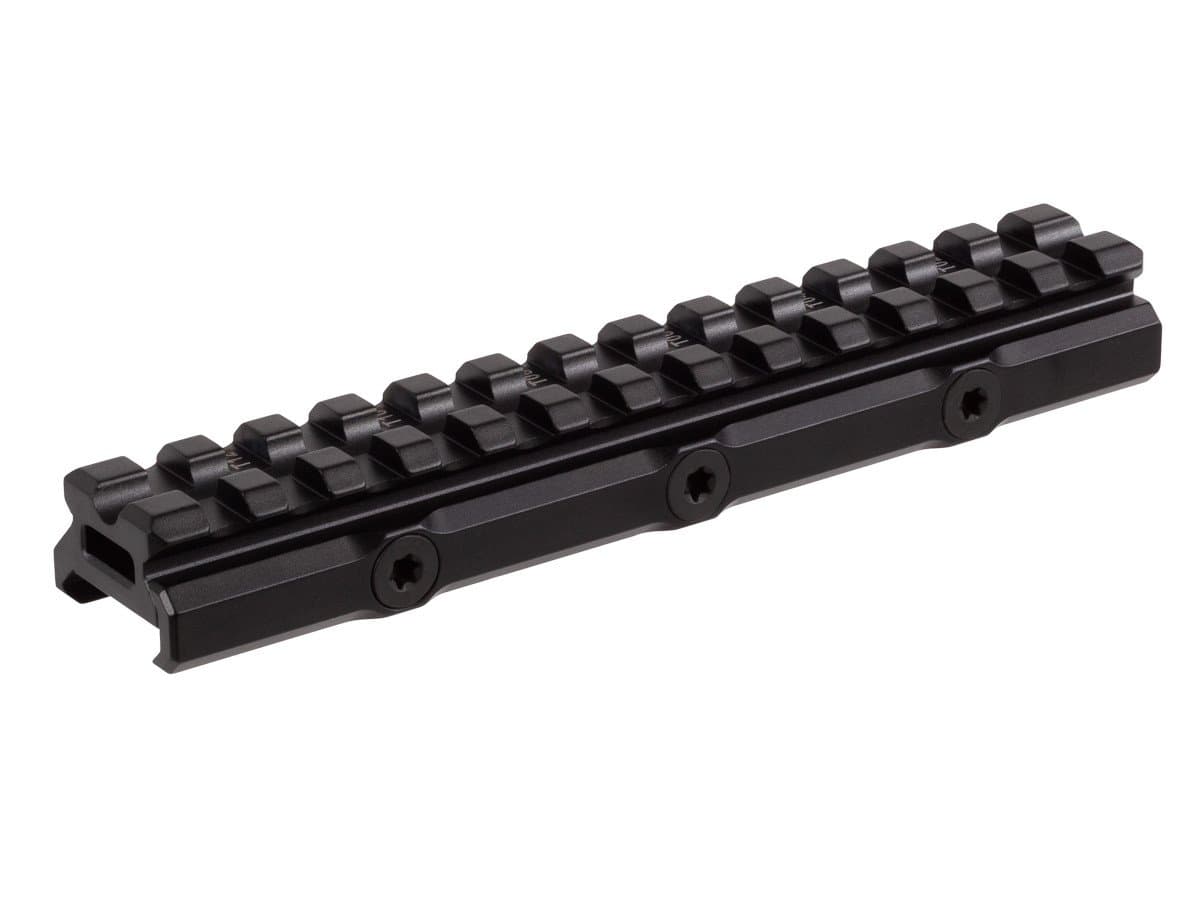
UTG Pro Super Slim Picatinny Riser
Best budget riser
- +About $20, the cheapest credible way to raise a rail-mounted optic
- +Four saddle heights and two lengths cover most co-witness needs
- +Under an ounce in the 0.83 in 3-slot version
- −This is a riser, not a mount: it will not accept a bare Aimpoint Micro footprint
- −6061-T6 and budget hardware are not duty-grade
- −Stacking it under an optic mount adds a second interface that can shift
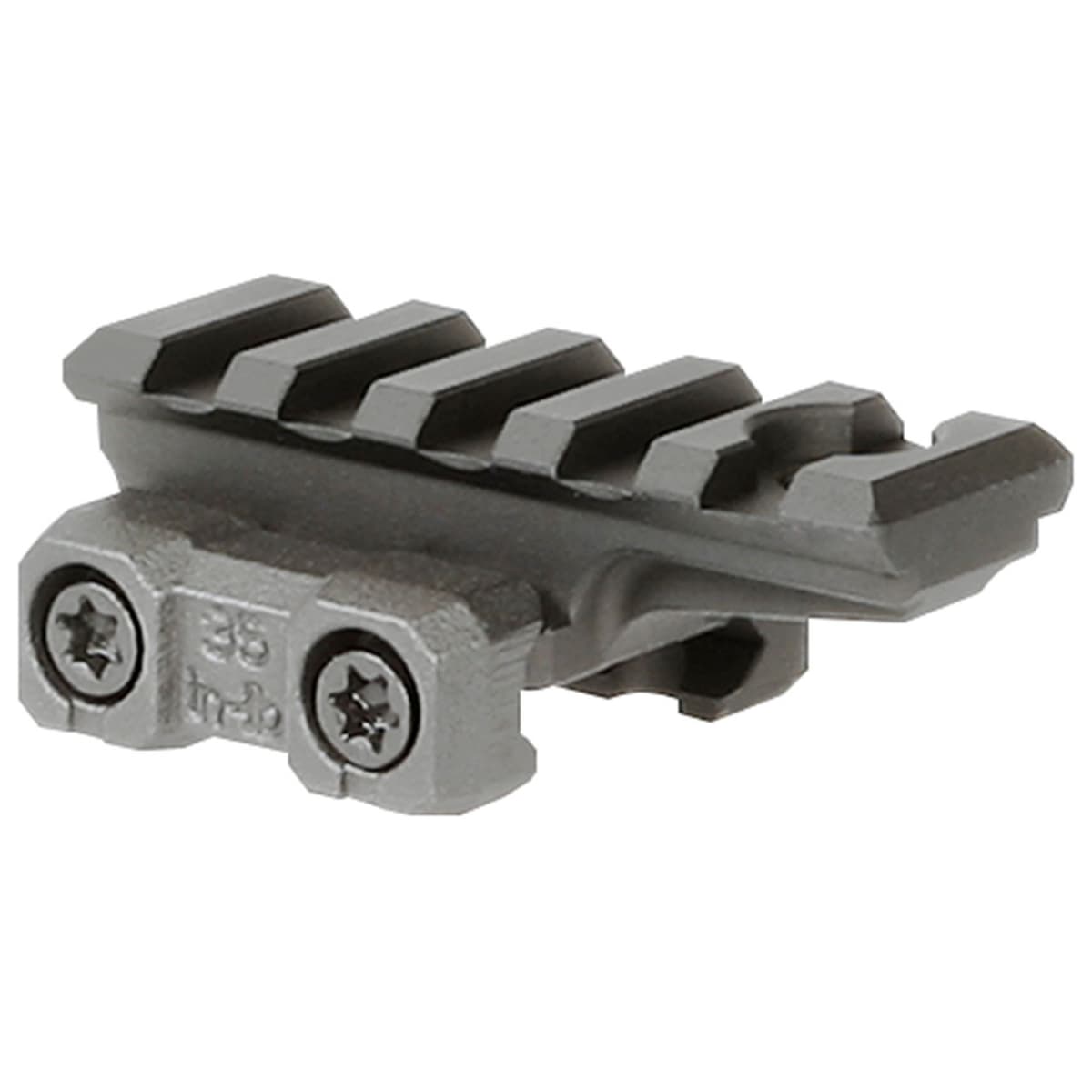
Midwest Industries MK2 1913 Riser
Best duty-grade riser
- +4140 steel clamps handle the extra leverage a riser creates better than aluminum clamps
- +The 13-slot version co-planes a red dot and a flip-to-side magnifier at one raised height
- +Raises an optic and mount you already own instead of forcing a new mount purchase
- −Stacking a riser under a mount adds height stack-up versus one purpose-built mount at the height you wanted
- −Heavy at 4.4 oz for the 9-slot
- −Only one rise height (0.625 in); the length is what changes, not the height
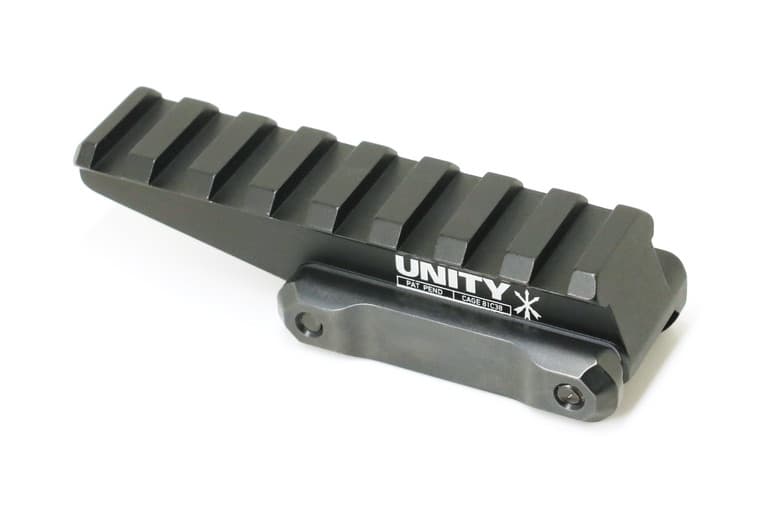
Unity Tactical FAST Absolute Riser
Best riser for night vision height
- +Takes an optic already at absolute co-witness to the 2.26 in FAST height without replacing the optic's mount
- +The 2.26 in centerline is the proven passive-aiming height for night vision and gas masks
- +7075-T6 with Type III hardcoat, appropriate for duty use
- −Only works if the optic is already at an absolute co-witness height on a Picatinny mount
- −Adds height and weight versus a single purpose-built 2.26 in mount
- −Premium pricing for what is functionally a riser block
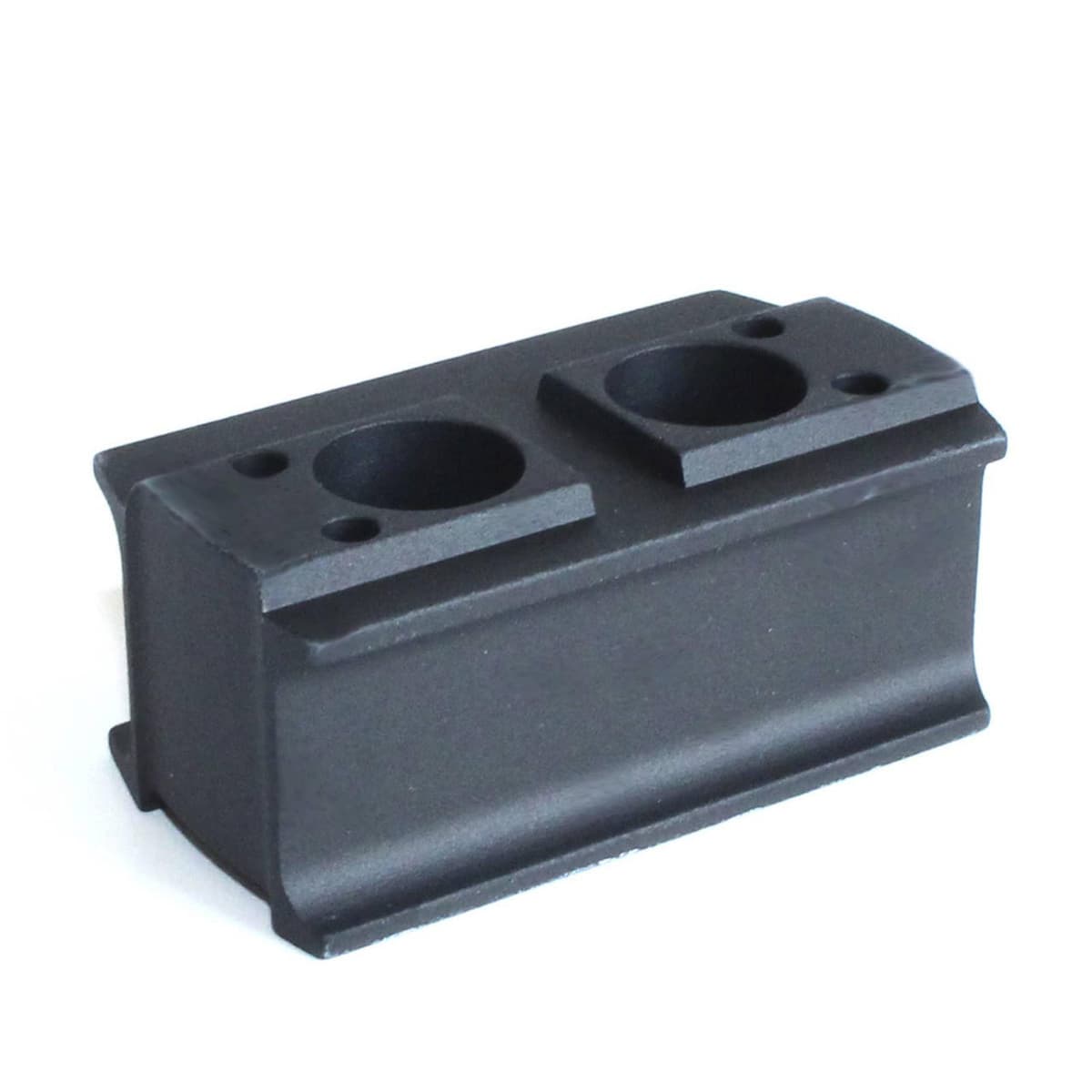
Aimpoint Micro Spacer High (39mm)
Best spacer for an existing Aimpoint base
- +Raises an Aimpoint Micro base you already own instead of replacing it
- +Factory Aimpoint part, so fitment to Aimpoint bases is guaranteed
- +39 mm is the reference height the industry's lower 1/3 labels are actually derived from
- −Useless on its own; it requires an Aimpoint Micro standard or LRP base
- −Base plus spacer usually costs more than one purpose-built mount at the same height
- −Adds a second clamping interface between the optic and the rail
Prices and availability can change.
Affiliate links - purchases support this site at no extra cost to you. (?)
Push-Button QD Mounts by Optic Footprint
KDG's SIDELOK mounts replace a protruding throw lever with a guarded push-button release. Buy the model that matches your optic, because the four footprints do not interchange: Micro for Aimpoint Micro-pattern dots, ACRO for enclosed ACRO-pattern dots at absolute co-witness, MRO for the Trijicon MRO, and the Aimpoint PRO version for PRO and CompM4 bodies. Every one of them except the ACRO sits at a 1.57-inch lower-third centerline.
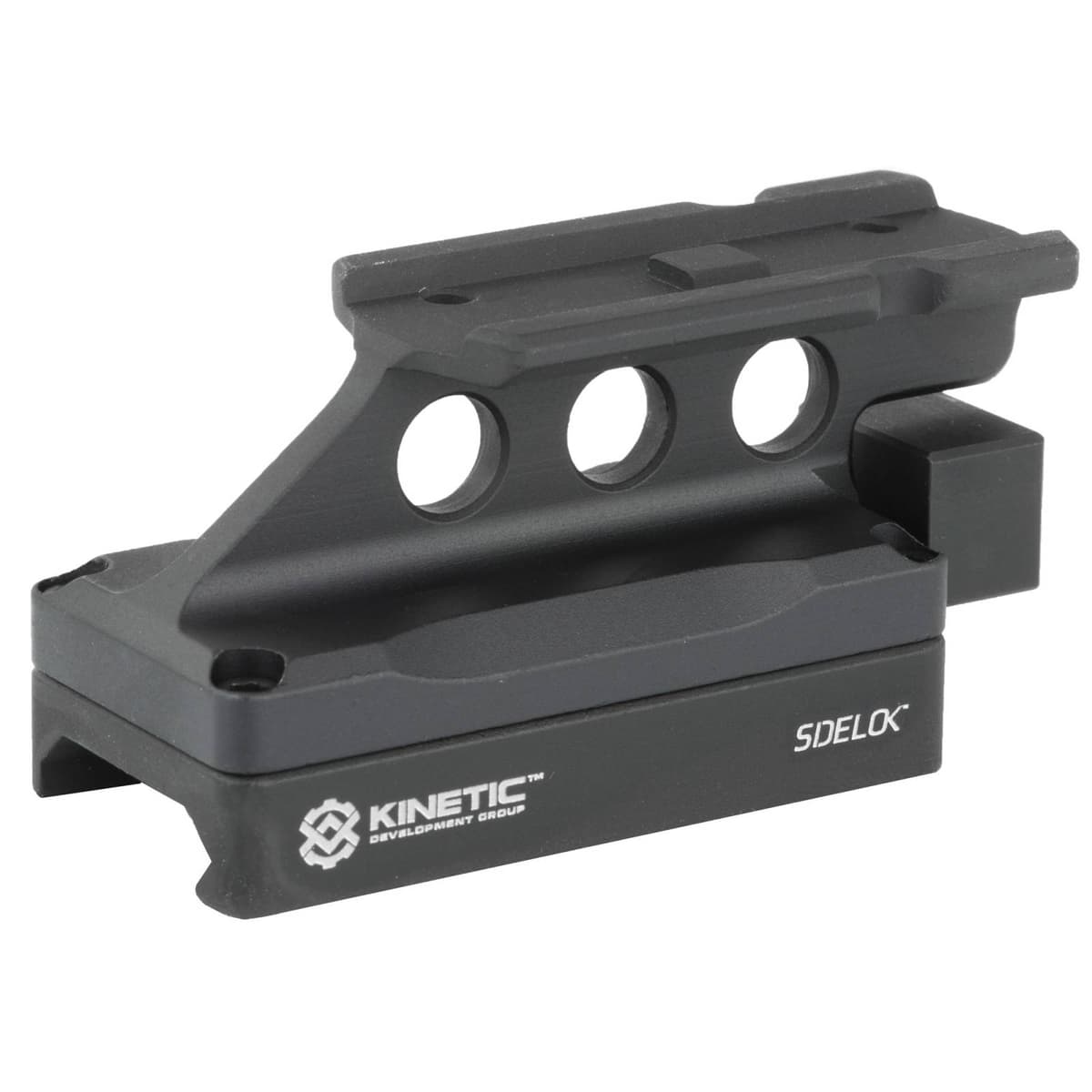
Kinetic Development Group SIDELOK Micro T2 Mount (1.57")
- 1.57-inch optical centerline
- Aimpoint Micro footprint
- Push-button QD with secondary safety
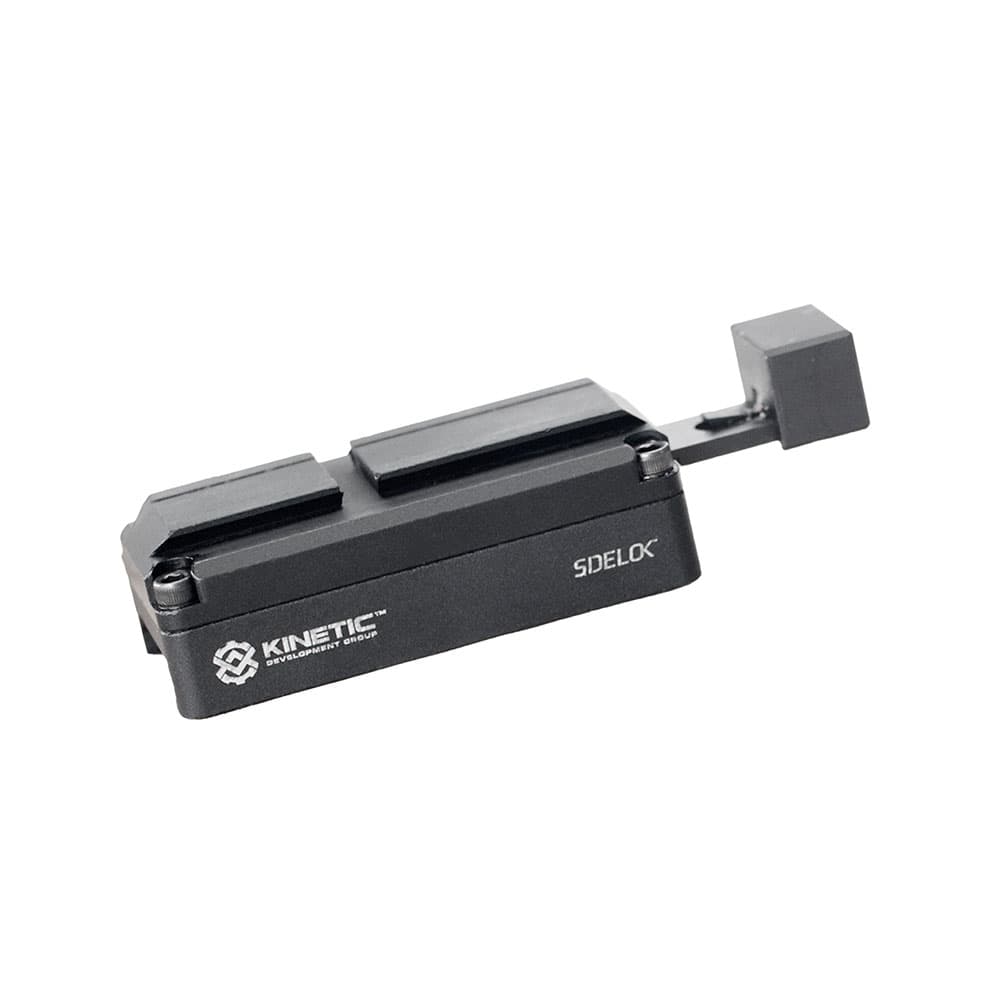
Kinetic Development Group SIDELOK ACRO Footprint Mount
- Absolute co-witness
- ACRO and Steiner MPS fitment
- 2.7 ounces
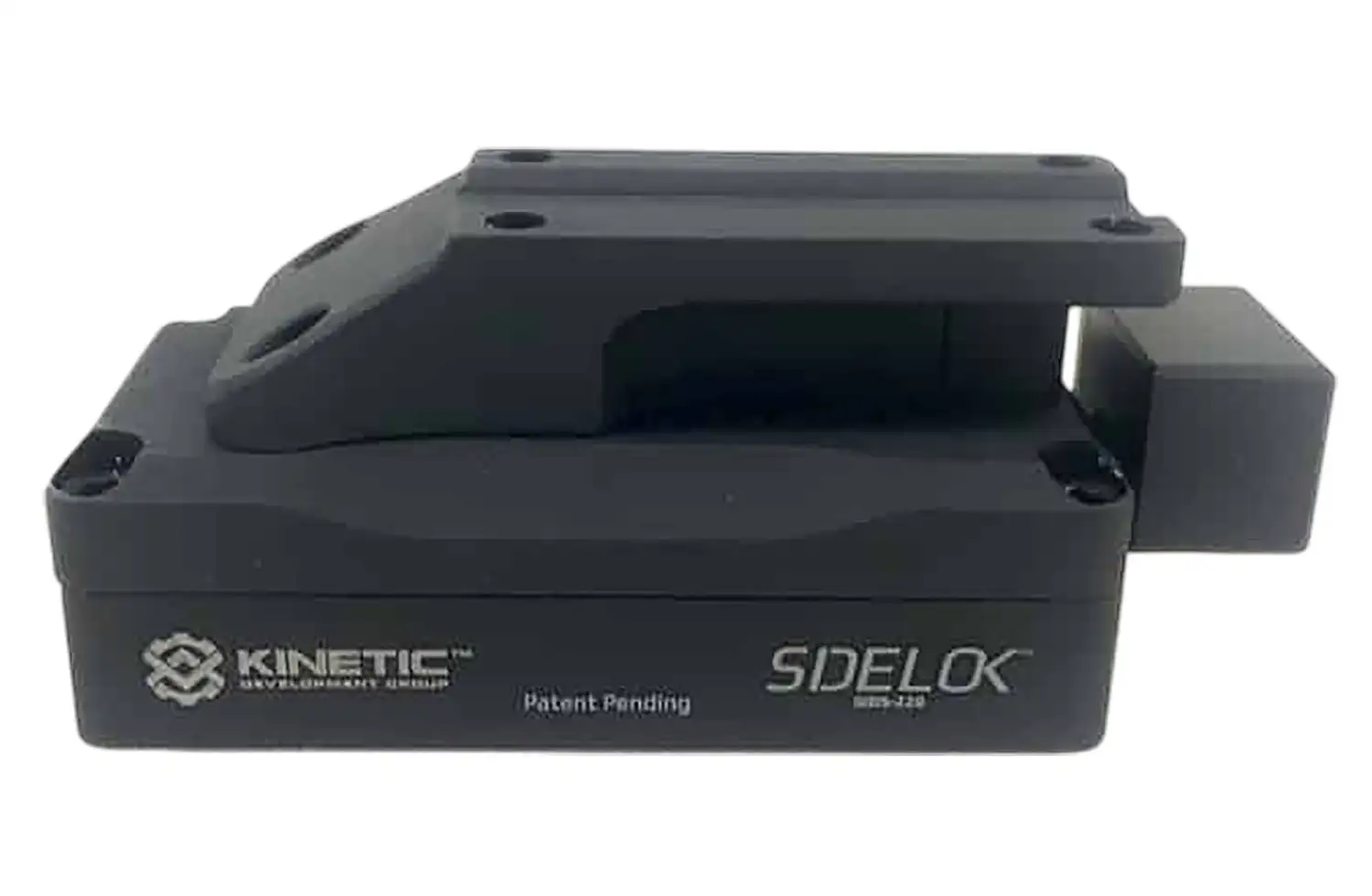
Kinetic Development Group SIDELOK Trijicon MRO Mount (1.57")
- 1.57-inch optical centerline
- Trijicon MRO footprint
- 3.9 ounces, 2.25-inch base
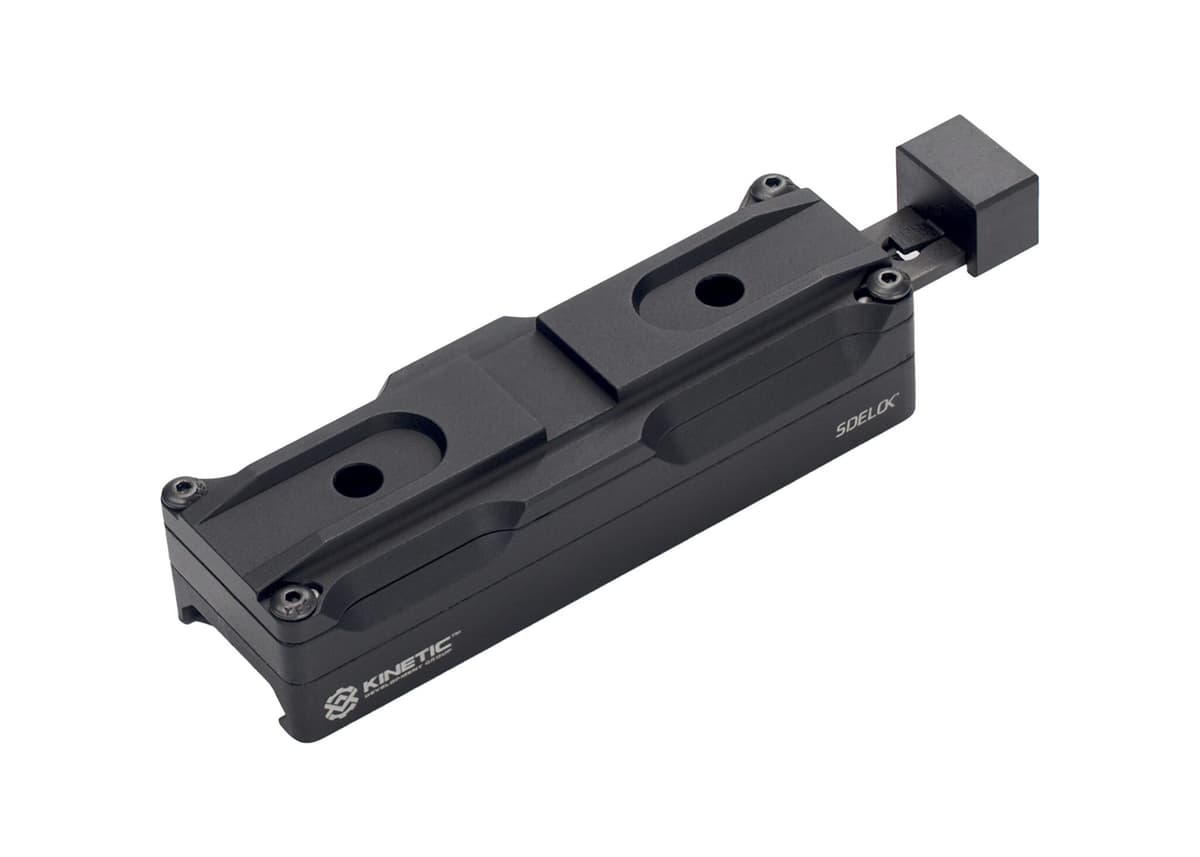
Kinetic Development Group SIDELOK Aimpoint PRO / CompM4 Mount (1.57")
- 1.57-inch optical centerline
- Aimpoint PRO and CompM4 bodies
- 4.1 ounces
Prices and availability can change.
Affiliate links - purchases support this site at no extra cost to you. (?)
Riser vs Mount vs Spacer: The Three Parts Everyone Calls a Riser
A riser has a Picatinny rail on top and raises an optic that already has its own mount. A mount has an optic footprint machined into it and the optic bolts straight in. A spacer has neither; it sandwiches under an existing base to add height. Which one you need comes down to what your optic already has bolted to it. A micro dot's body has no rail clamp of its own; it bolts to a base with a T1 footprint. If your dot shipped with a Picatinny base, a riser will lift it. If you bought the optic bare, a riser gives it nothing to attach to and you need a mount.
The names on the boxes are worse than useless. Primary Arms sells the SLx Microdot as a "Micro Dot Riser Mount," but the optic bolts directly into an Aimpoint Micro footprint on it, which makes it a mount. Meanwhile the UTG Pro Super Slim and the Midwest MK2 1913 Riser are the real thing: rail on top, no footprint, and they will not accept a bare micro dot. If you own a dot with a factory low base and you want it higher, a riser or the Aimpoint Micro Spacer High is your path. If you are starting from a bare optic, buy a mount at the height you want and skip the stack entirely.
What Height Riser Do You Need? 1.42 to 2.91 Inches
For a standard AR-15 with iron sights, 1.42 to 1.43 inches is absolute co-witness and roughly 1.54 to 1.57 inches is lower 1/3. Go to 1.93 inches for a heads-up stance behind armor, and 2.26 inches only if you are aiming passively under night vision or through a gas mask. Height is measured from the top of the Picatinny rail to the optical centerline of the dot, and it is the only spec that decides where your head sits on the gun.
- Absolute
- 1.42inIrons centered in the window
- Lower 1/3
- 1.54in39 mm; irons in the bottom third
- Heads-up
- 1.93inUpright behind a plate carrier
- Night vision
- 2.26inPassive aiming under NODs
The Scalarworks LEAP/01 is the cleanest way to buy into the lower three heights, because it publishes all of them (1.42, 1.57, 1.93) as separate SKUs at $159 and the mount weighs 43 to 51 grams depending on which you pick. If you land on 1.93, the Reptilia DOT, Geissele Super Precision Micro, and Badger Condition One all sell that height too. The Reptilia and the Badger are priced level with each other and the Geissele costs more, so pick on clamp design rather than price. For 2.26, three mounts get you there: the Unity FAST Micro at $186 with integrated backup irons, the Primary Arms SLx Microdot at $49.99 without them, and the night vision SKU of the Midwest MK2 QD T2, the priciest height in that mount's range, if you want 2.26 on a quick-detach lever. Above that sits one more step: GBRS publishes a 2.91 in centerline on the Lerna at $184 and the Hydra V2 at $349.99, which is the height for a CBRN mask worn under helmet NODs, where even 2.26 makes you drop your head. The two mounts are the same height and the same hardware; the Hydra adds an elevated 1913 platform above the optic for a light or laser. If the rifle is going under night vision, read the night vision compatibility guide before you commit to a height, because the goggle stack is what sets it.
Why Two Mounts Labeled Lower 1/3 Sit at Different Heights
Because "lower 1/3" is a description of what you see, not a dimension anyone is bound to. There is an anchor: Aimpoint's 39 mm spacer exists specifically to put a Micro at lower 1/3 co-witness on an AR-15, and 39 mm (1.535 in) is the number the market grew up around. Most makers hug it. Reptilia publishes 39 mm. Arisaka calls 1.54 inches lower 1/3. Scalarworks calls 1.57 inches lower 1/3. Those three are within about a millimeter of each other.
Nobody is required to hug it, though. Badger Ordnance sells its Condition One at 1.70 inches and calls that lower 1/3, which is roughly 4 mm above the Aimpoint anchor. In an 18 mm Aimpoint Micro window, that difference moves the front sight post from sitting on the lower-third line down to hugging the bottom edge of the glass. It does not push the post out of the window: that takes about 1.78 inches of centerline, which is exactly why 1.93 inch mounts are sold with no co-witness at all. So the label gets you close, and the number tells you where your irons actually land.
This matters most when you are matching a second optic to a first. A magnifier has to co-plane with the dot or it will not work, and an offset dot has to clear the primary. Once you know your centerline number, the rest of the build is arithmetic. Our red dot and magnifier guide covers height matching between the two, and the offset red dot mounts guide covers the 45 degree route, which is the alternative to raising the primary optic at all.
Get Optic Mount Deals and Height Data First
New mount releases, verified height figures, and price drops on the mounts in this guide, sent straight to your inbox.
Red Dot Riser and Mount Spec Comparison
Still deciding? Sort by centerline, class, or price to match the part to the optic you already own. Mounts and the spacer list an optical centerline; the three risers list the rise they add to whatever sits on top of them, which is why they sort separately. Centerline sorting uses the lowest height each maker actually publishes, so a mount that prints a figure for every SKU (Scalarworks, Badger, Bobro) sorts on its shortest, while Geissele and the Midwest QD, which print one, sort on that one.
- UTG Pro Super Slim Picatinny Riser MountClassRiserCenterline / rise0.5 to 1.0 in riseAttachmentTorx clampPricefrom $20
- Primary Arms SLx Microdot Mount (2.26")ClassMountCenterline / rise2.26 inAttachmentFixed, steel lugsPrice$49.99
- Aimpoint Micro Spacer High (39mm)ClassSpacerCenterline / rise1.535 in (39 mm) axisAttachmentIncluded Torx screwsPrice$94
- Unity FAST Absolute RiserClassRiserCenterline / rise0.85 in riseAttachmentDirect to PicatinnyPrice$95
- Midwest Industries MK2 1913 RiserClassRiserCenterline / rise0.625 in riseAttachmentTorx clamp, 4140 steelPrice$105
- Midwest Industries MK2 QD T2 Aimpoint MountClassMountCenterline / rise2.26 in (+ 3 shorter SKUs)AttachmentQD leverPricefrom $115
- Reptilia DOT MountClassMountCenterline / rise1.535 / 1.93 in (39 mm lower 1/3)AttachmentFixed clampPrice$125
- Badger Ordnance Condition One Red Dot Mount (Aimpoint Micro)ClassMountCenterline / rise1.43 / 1.70 / 1.93 inAttachmentFixed, recoil lugPrice$125
- Bobro Engineering Aimpoint Micro T1/T2/CompM5 MountClassMountCenterline / rise1.4 / 1.5 / 1.7 inAttachmentQD (BLAC lever)Price$148
- Geissele Super Precision Aimpoint Micro MountClassMountCenterline / rise1.93 in (+ abs, lower 1/3)AttachmentFixed, shear lugsPricefrom $150
- Scalarworks LEAP/01 Micro MountClassMountCenterline / rise1.42 / 1.57 / 1.93 inAttachmentQD (ClickDrive)Price$159
- GBRS Group Lerna Mount KitClassMountCenterline / rise2.91 in optic centerlineAttachmentFixed clamp, 45 in-lbPrice$184
- Unity FAST Micro MountClassMountCenterline / rise2.26 inAttachmentCross-bolt clampPrice$186
- GBRS Group Hydra V2 Mount KitClassMountCenterline / rise2.91 in optic centerlineAttachmentFixed clamp, 45 in-lbPrice$349.99
| Product | Class | Footprint | Attachment | Buy | ||
|---|---|---|---|---|---|---|
| UTG Pro Super Slim Picatinny Riser Mount | Riser | 0.5 to 1.0 in rise | None (Picatinny top) | Torx clamp | from $20 | Buy |
| Primary Arms SLx Microdot Mount (2.26") | Mount | 2.26 in | Aimpoint Micro | Fixed, steel lugs | $49.99 | Buy |
| Aimpoint Micro Spacer High (39mm) | Spacer | 1.535 in (39 mm) axis | None (stacks under a base) | Included Torx screws | $94 | Buy |
| Unity FAST Absolute Riser | Riser | 0.85 in rise | None (Picatinny top) | Direct to Picatinny | $95 | Buy |
| Midwest Industries MK2 1913 Riser | Riser | 0.625 in rise | None (Picatinny top) | Torx clamp, 4140 steel | $105 | Buy |
| Midwest Industries MK2 QD T2 Aimpoint Mount | Mount | 2.26 in (+ 3 shorter SKUs) | Aimpoint Micro | QD lever | from $115 | Buy |
| Reptilia DOT Mount | Mount | 1.535 / 1.93 in (39 mm lower 1/3) | Aimpoint Micro, ACRO/MPS, MRO | Fixed clamp | $125 | Buy |
| Badger Ordnance Condition One Red Dot Mount (Aimpoint Micro) | Mount | 1.43 / 1.70 / 1.93 in | Aimpoint Micro, ACRO | Fixed, recoil lug | $125 | Buy |
| Bobro Engineering Aimpoint Micro T1/T2/CompM5 Mount | Mount | 1.4 / 1.5 / 1.7 in | Aimpoint Micro | QD (BLAC lever) | $148 | Buy |
| Geissele Super Precision Aimpoint Micro Mount | Mount | 1.93 in (+ abs, lower 1/3) | Aimpoint Micro | Fixed, shear lugs | from $150 | Buy |
| Scalarworks LEAP/01 Micro Mount | Mount | 1.42 / 1.57 / 1.93 in | Aimpoint Micro | QD (ClickDrive) | $159 | Buy |
| GBRS Group Lerna Mount Kit | Mount | 2.91 in optic centerline | Aimpoint Micro, Duty RDS, ACRO, EOTech EXPS/XPS, MRO | Fixed clamp, 45 in-lb | $184 | Buy |
| Unity FAST Micro Mount | Mount | 2.26 in | Aimpoint Micro | Cross-bolt clamp | $186 | Buy |
| GBRS Group Hydra V2 Mount Kit | Mount | 2.91 in optic centerline | Aimpoint Micro T-2, Duty RDS, EOTech EXPS/XPS, MRO | Fixed clamp, 45 in-lb | $349.99 | Buy |
Affiliate links - purchases support this site at no extra cost to you. (?)
QD vs Fixed: Which Red Dot Mount Attachment You Actually Need
Buy a fixed mount unless you genuinely pull the optic off the rifle. Fixed mounts like the Reptilia DOT, Geissele Super Precision Micro, and Badger Condition One remove a moving part, save weight, and give a lever nothing to snag on. The Geissele uses shear lugs and Badger uses a steel clampfoot with an integral recoil lug, both of which index the mount into the rail slot so it lands in the same place under recoil.
Quick-detach earns its keep when the optic comes off for travel, cleaning, or a swap to a magnified optic. The Scalarworks LEAP/01 is the lightweight answer at $159, and it detaches on a recessed ClickDrive thumbscrew rather than a throw lever, so there is nothing sticking out to catch on gear. The Bobro Aimpoint Micro mount is the most forgiving to install, because the BLAC lever self-tensions as it closes and leaves you no clamp pressure to set. The Midwest MK2 QD T2 opens at $115 for its low SKU and is the cheapest quick-detach mount here that also offers a 2.26 inch night vision height. Budget above that entry price if the 2.26 is the one you want: it is the dearest of the mount's four heights. The Bobro tops out at 1.7 inches, so it is the wrong pick for a NODs build. Whichever you buy, torque the clamp to the maker's spec; the optic mounting basics guide walks through the torque sequence and threadlocker. An under-torqued clamp will let the mount creep under recoil and walk your zero.
When a Picatinny Riser Beats a Purpose-Built Mount
A riser wins in exactly two situations: you already own a mount you like and just need it higher, or you need to raise a red dot and a flip-to-side magnifier onto one co-planed rail. The 13-slot Midwest MK2 1913 Riser at $105 is built for the second job, with 4140 steel clamps that handle the extra leverage a raised rail creates. The UTG Pro Super Slim at $20 covers the cheap end with four saddle heights from 0.5 to 1.0 inch, and the Unity FAST Absolute Riser at $95 takes an optic already sitting at absolute co-witness and lifts it to the 2.26 inch FAST centerline without replacing the mount underneath it. That one is arithmetic you can check: a dot sitting at a 1.41 inch absolute co-witness plus the riser's 0.85 inch of lift lands exactly on 2.26, which is why it is the riser Unity sells for that job. Run your own stack through the rifle red dot height checker to see what a given riser does to the optic you actually own.
The cost of any riser is stack-up. Every clamping interface between the optic and the receiver is one more joint that can shift, and two stacked parts rarely add up to the exact centerline you wanted. If you are starting clean and you know your height, one purpose-built mount is the better engineering answer every time. The exception at the margin is the Aimpoint Micro Spacer High at $94, which is a factory part that raises an Aimpoint Micro base you already own to a 39 mm axis. Buy it only if you own the base; a base plus spacer bought from scratch usually costs more than one mount at that height. Lay the whole optic stack out in our AR-15 builder to see how the parts fit before you buy, and if you are running a magnified optic instead of a dot, the LPVO scope mounts guide covers the 30mm and 34mm tube mounts that a scoped rifle needs instead.
Frequently Asked Questions
▶What is the difference between a red dot riser and an optic mount?
▶Are red dot risers worth it?
▶Do you need a riser mount for a red dot?
▶What height riser or mount should I get for an AR-15 red dot?
▶What does 1.93 mean on a red dot mount?
▶Why do brands disagree about what lower 1/3 means?
▶Can you put a riser under a red dot mount?
Bottom Line
Buy the height, not the label. The Reptilia DOT Mount is the right default for most AR-15s; go Unity FAST Micro if the rifle runs under night vision.
The Reptilia DOT Mount at $125 publishes its centerline figures, covers the Aimpoint Micro, ACRO, and MRO footprints, and undercuts the premium quick-detach mounts here. Go up to the Scalarworks LEAP/01 if you actually detach the optic, and to the Unity FAST Micro if you are aiming passively under goggles. Buy a riser only when the mount you own is already the one you want, just too low.