Best Prism Scope for AR-15 2026: Astigmatism, ACOG & ELCAN Picks
A prism scope uses an etched glass reticle instead of relying on a projected dot. That makes a 1x prism the direct rifle answer when an LED point looks smeared. This guide ranks the best AR-15 prism optics in 2026, from the SLx 3x MicroPrism to the ELCAN SpecterDR, and walks through 1x vs 3x vs 5x magnification and the best optic for astigmatism. Every pick here uses an etched reticle that works with a dead battery.
Best AR-15 Prism Scopes Ranked
Ranked by reticle clarity, eyebox forgiveness, weight, and value for AR-15 shooters, including the astigmatism crowd.
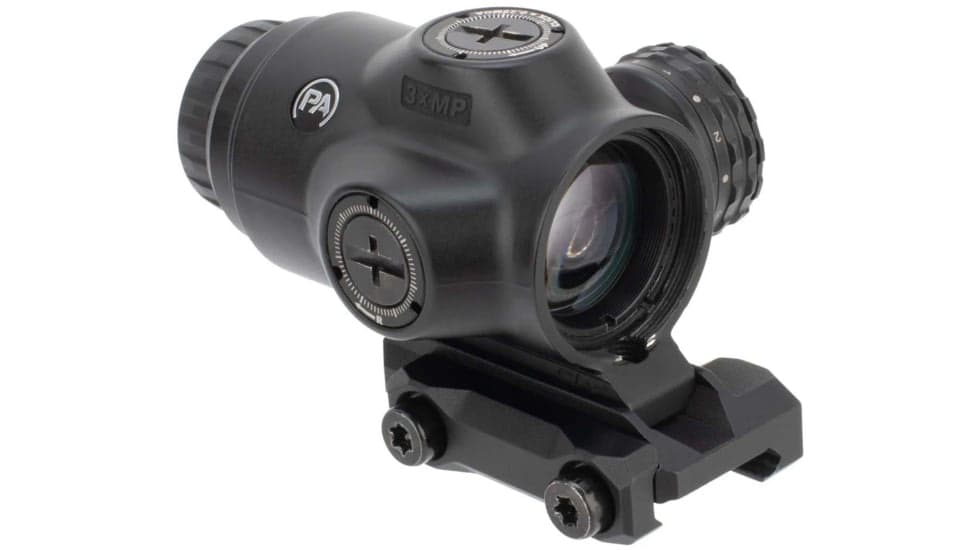
Primary Arms SLx 3x MicroPrism
Best Overall Prism Scope for AR-15
- +Etched ACSS Raptor reticle avoids the projected LED point-source starburst
- +Red dot footprint and weight at 7.95 oz
- +Wide field of view and forgiving eyebox
- −Fixed 3x is too much for pure close quarters
- −Limited to roughly 400 yards
- −Prism eye relief shorter than a red dot
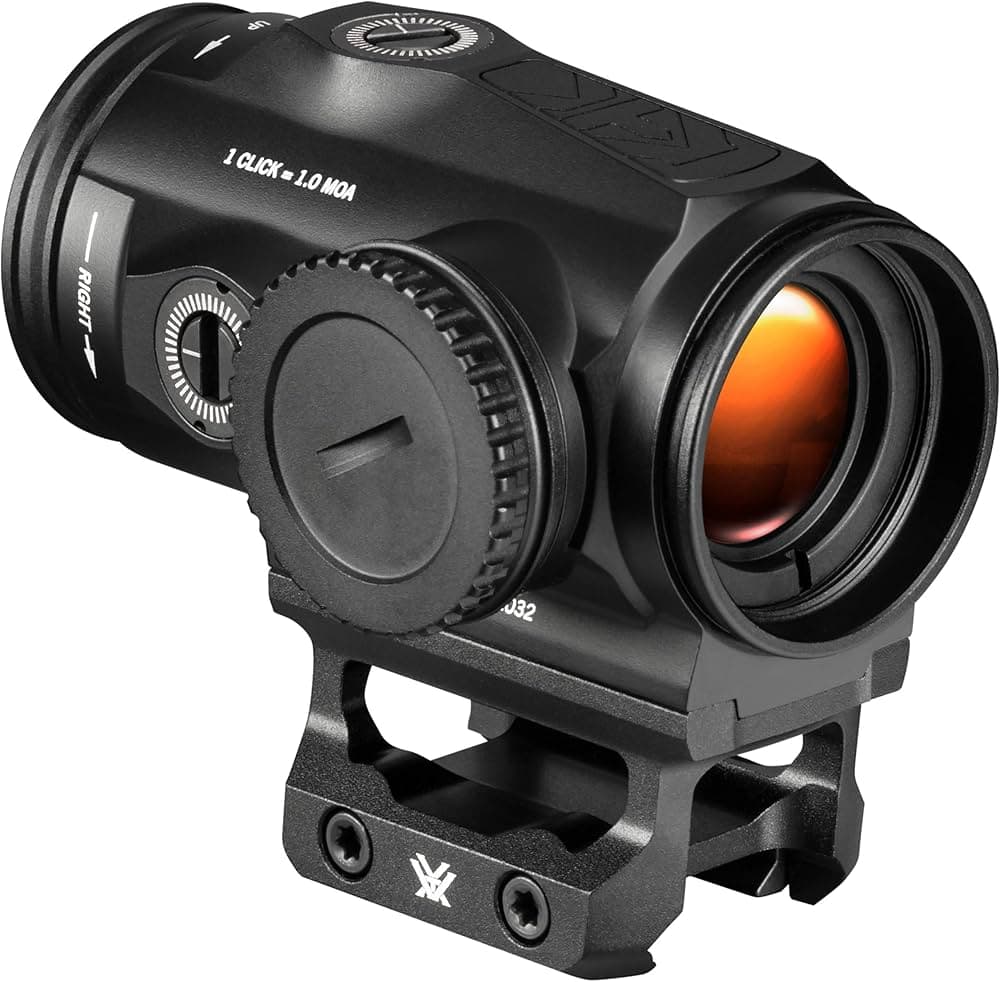
Vortex Spitfire HD Gen II 3x
Best 3x Prism for Glass and Warranty
- +Etched AR-BDC4 reticle avoids projected-dot starburst
- +Vortex VIP unconditional lifetime warranty transfers to any owner
- +HD glass sharp edge to edge
- −Fixed 3x with no variable option
- −21mm objective gathers less light than a 30mm prism
- −MSRP looks steep until street price settles
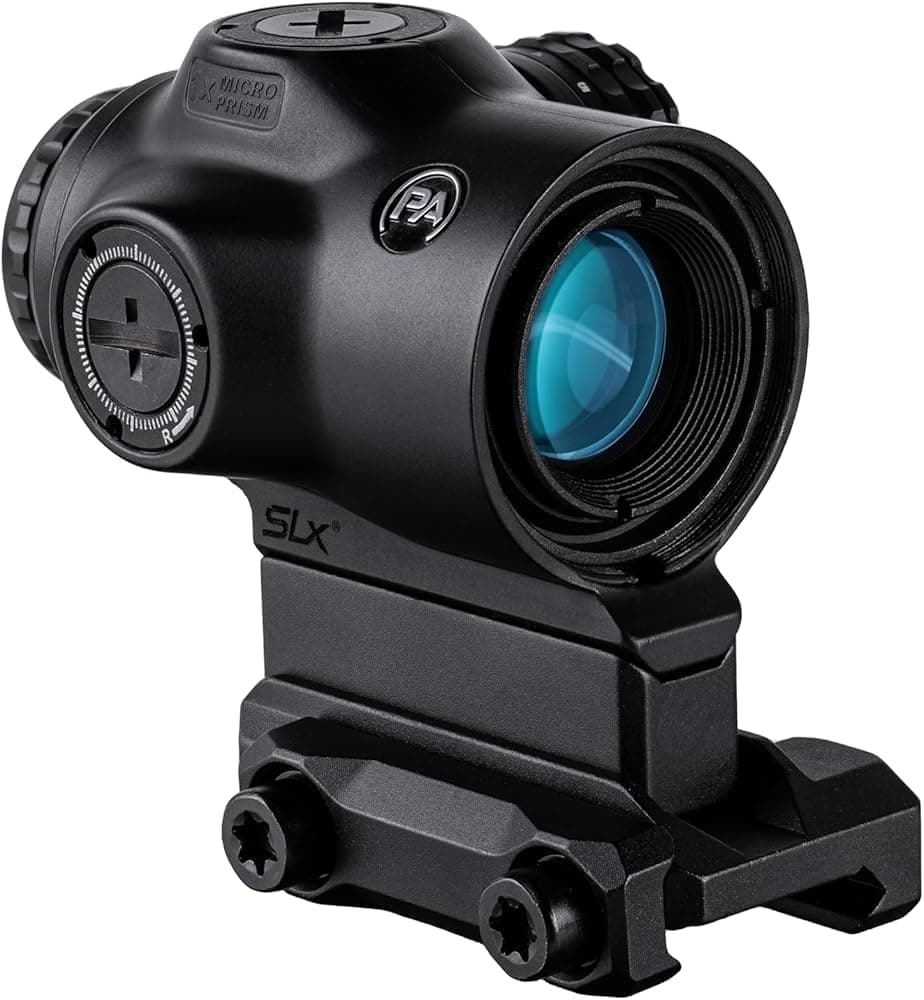
Primary Arms SLx 1x MicroPrism
Best 1x Prism (Red Dot Replacement for Astigmatism)
- +True 1x prism replaces the projected red-dot point with an etched reference
- +Near red dot size at 5.5 oz without riser
- +Etched ACSS Cyclops Gen II reticle works without battery
- −Prism eye relief less forgiving than a red dot
- −Heavier than a micro red dot with riser added
- −Frequently out of stock at Primary Arms direct
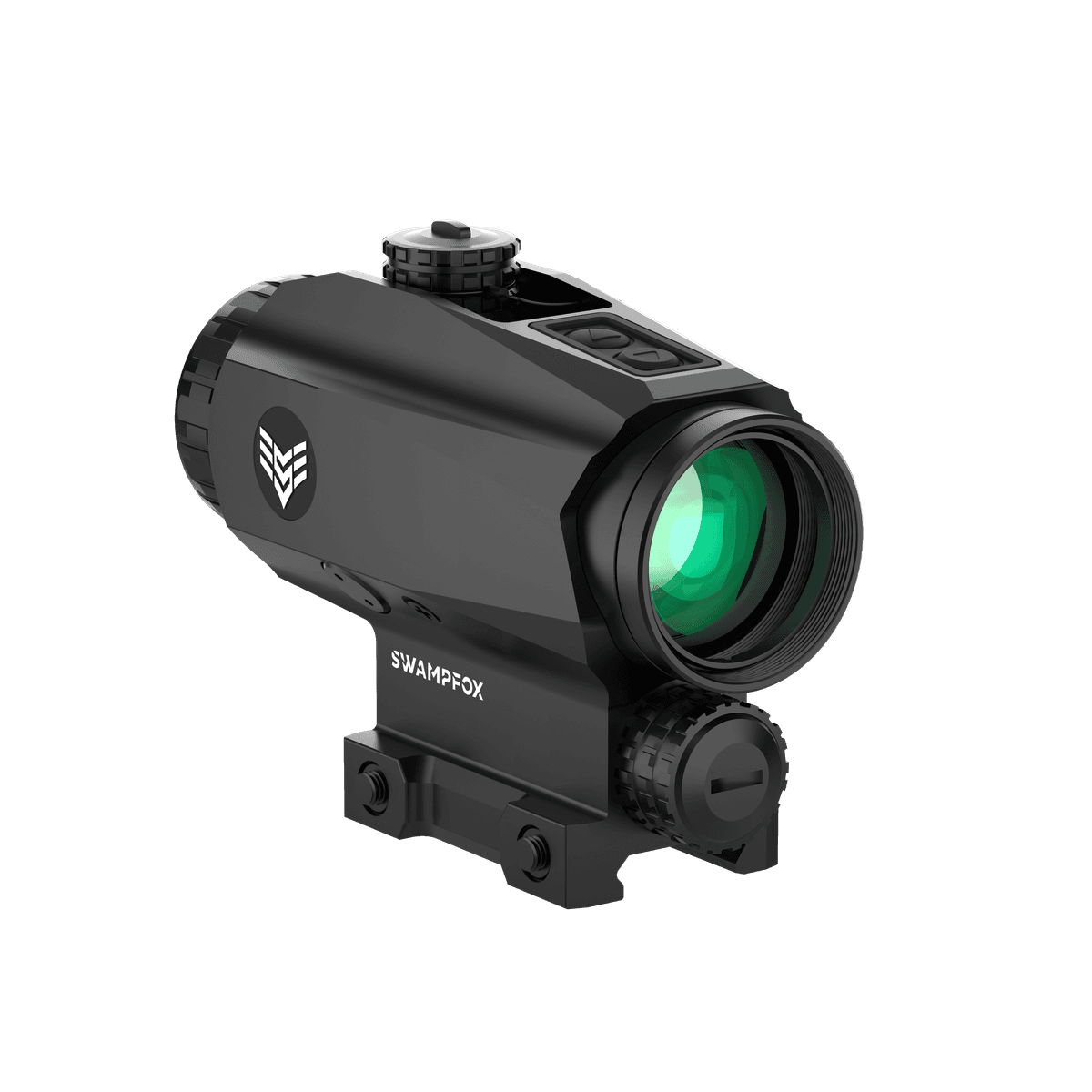
Swampfox Trihawk 3x30
Best Budget Prism with a Wide Field of View
- +Etched reticle replaces the projected LED point
- +Wide true 10-degree field of view (about 52 ft at 100 yds)
- +30mm objective brighter than MicroPrism-class optics
- −Heavier than MicroPrism and Spitfire at roughly 13 oz
- −Fixed 3x with no variable option
- −Smaller service network than Vortex or Trijicon
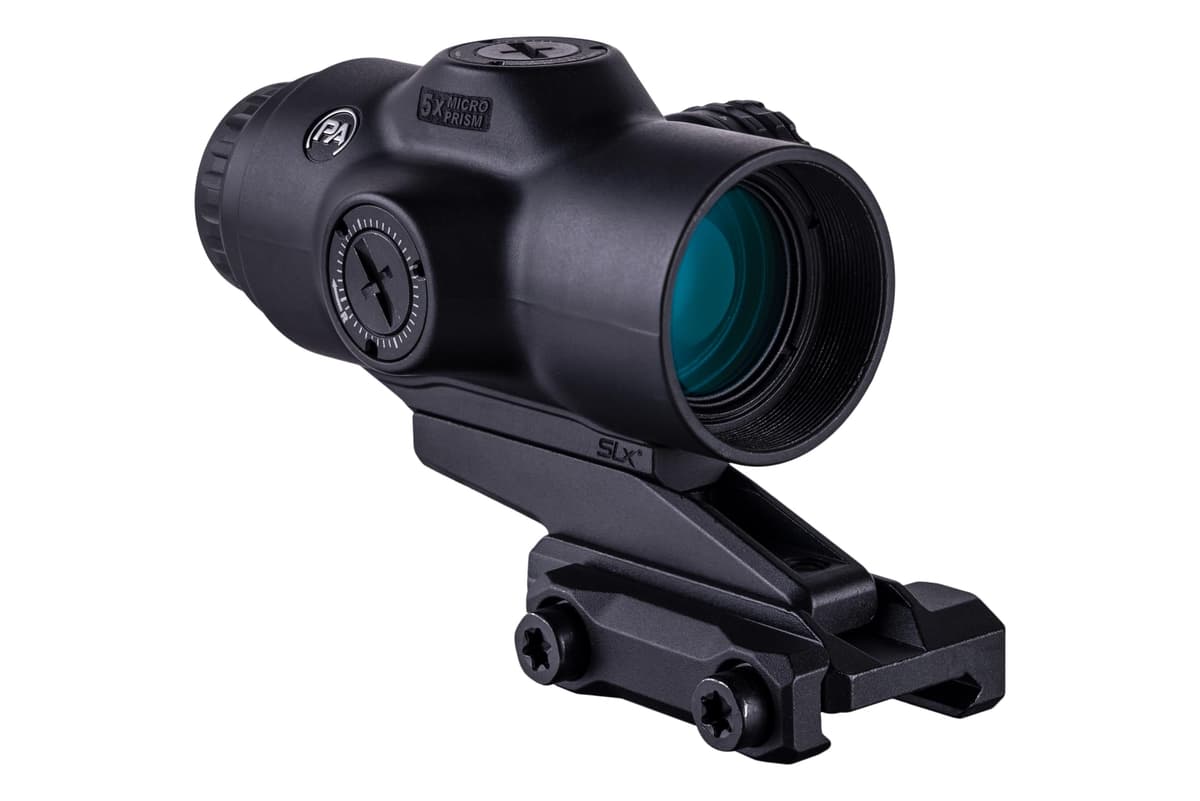
Primary Arms SLx 5x MicroPrism
Best Prism for Extended-Range AR Builds
- +5x reach in a fixed, rugged prism format
- +Etched ACSS Aurora reticle avoids the projected LED point-source starburst
- +Ranging and ballistic holds calibrated for 5.56 and .308
- −Fixed 5x is too much magnification for close quarters
- −Tighter eyebox than the 3x MicroPrism
- −Mid-tier price near $400

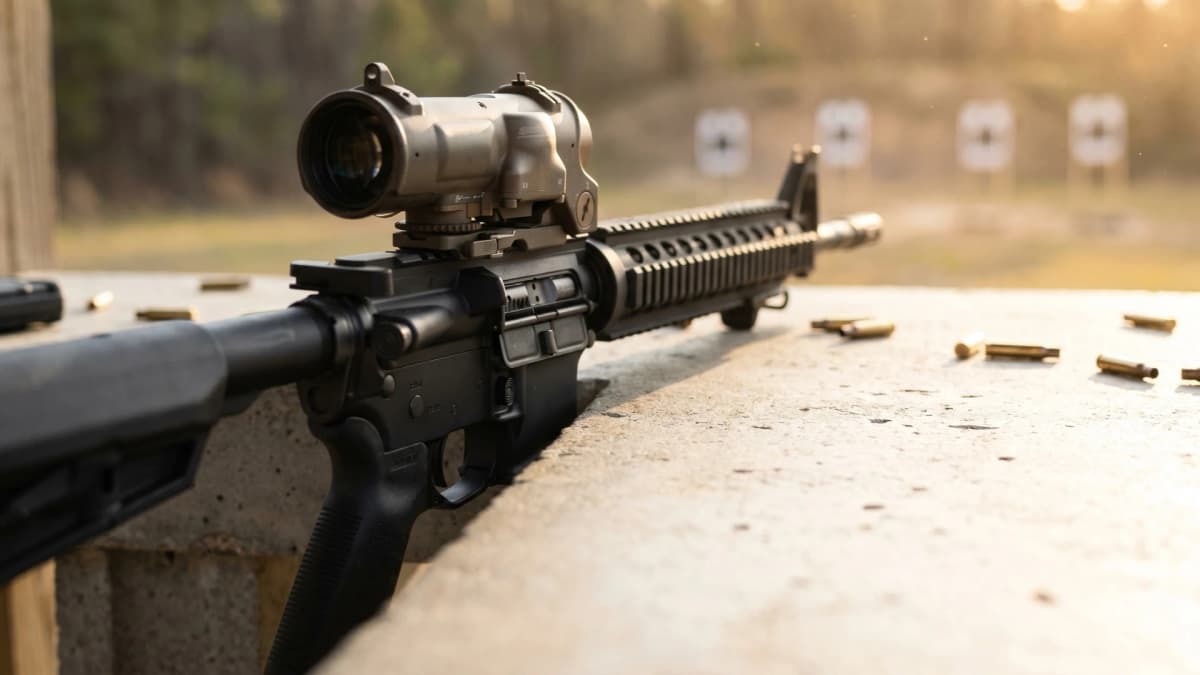
Trijicon ACOG TA31 4x32
Best Battery-Free Combat Prism
- +Battery-free fiber optic and tritium dual illumination
- +Forged 7075-T6 housing, decades of service reliability
- +BAC enables fast both-eyes-open aiming
- −Premium price over $1,000
- −1.5 inch eye relief is tight
- −Tritium half-life of 12 years
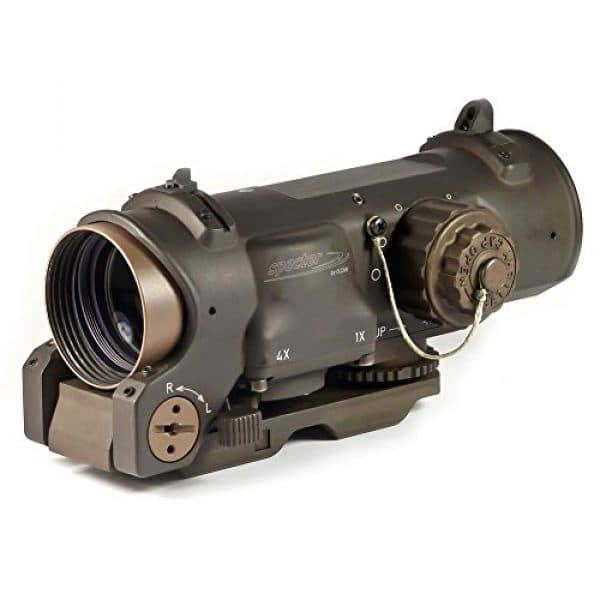
ELCAN SpecterDR 1-4x
Best Premium Dual-Role Prism
- +True 1x and true 4x with instant throw-lever switching
- +No zoom distortion or eye relief change between magnifications
- +Overbuilt construction survives sustained recoil
- −Steep price (street $1,500 and up)
- −24 oz is heavier than most LPVOs or holo plus magnifier combos
- −Only 1x and 4x, no intermediate magnification
Prices and availability can change.
Affiliate links - purchases support this site at no extra cost to you. (?)
What a Prism Scope Changes When an LED Dot Smears
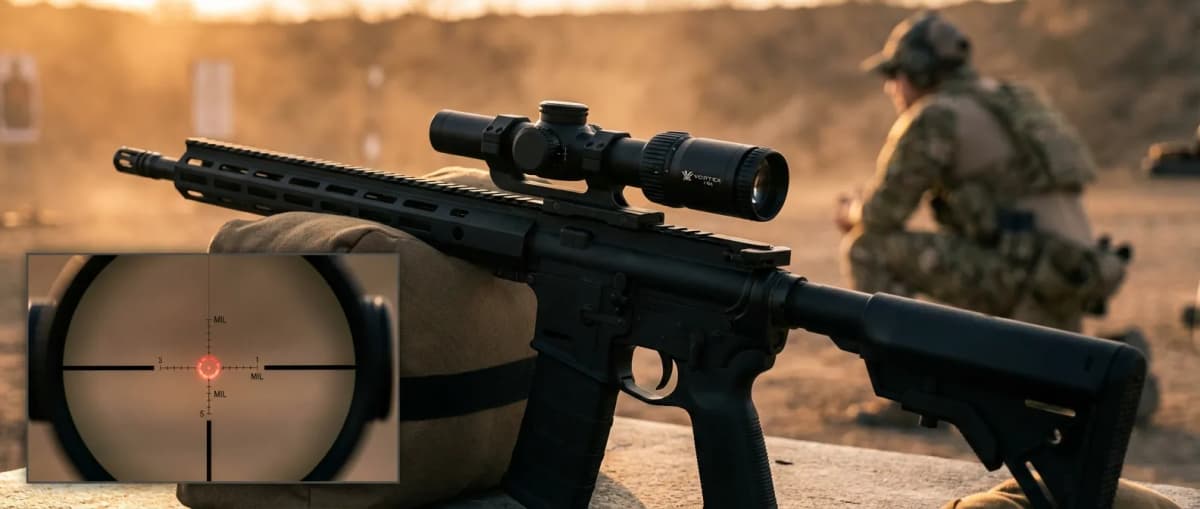
A prism scope focuses light through a glass prism and aims with a reticle that is physically etched into that glass. A red dot, by contrast, reflects an LED off a coated lens. The prism gives the shooter a physical pattern to focus with the diopter instead of relying on a luminous point. That physical reticle avoids the projected-dot starburst and remains visible with illumination off. The trade is that a prism has fixed magnification and a tighter eye box than a red dot, so you give up eye-position freedom for the etched reticle and optional magnification.
Prisms sit between red dots and LPVOs on the optic spectrum. If you want the full decision framework across red dots, magnifiers, and variable scopes, our optic selection matrix maps where each type wins. If you are cross-shopping plain red dots, the best AR-15 red dot guide covers the dot side of the aisle.
- PrismReticleEtched glassMagnificationFixed (1x, 3x, 4x, 5x)Reticle CheckAvoids projected-dot starburstBest ForAstigmatism, fixed magnification, battery-free reticle
- Red DotReticleProjected LEDMagnification1x onlyReticle CheckCan starburstBest ForSpeed, CQB, lightest weight
- LPVOReticleEtched (usually)MagnificationVariable (1-6x, 1-8x)Reticle CheckPhysical cue; larger opticBest For0-400+ yds, precision plus speed
| Type | Reticle | Magnification | Reticle Check | Best For |
|---|---|---|---|---|
| Prism | Etched glass | Fixed (1x, 3x, 4x, 5x) | Avoids projected-dot starburst | Astigmatism, fixed magnification, battery-free reticle |
| Red Dot | Projected LED | 1x only | Can starburst | Speed, CQB, lightest weight |
| LPVO | Etched (usually) | Variable (1-6x, 1-8x) | Physical cue; larger optic | 0-400+ yds, precision plus speed |
Zero the prism before you trust its holds
An etched reticle only ranges correctly from a confirmed zero, and a 50 yard zero crosses back onto the line of sight near 200 yards. Dial the capped turrets onto the paper at 50, fire a group, then push the distance out to see where that zero puts the bullet.
Fixed 4× magnification
Illustrative reticle · sources
Illustrative field of view. Illustrative housing.
Advancedsight 2.60 in · wind 0 mph · 1/2 MOA
The rifle view measures the seated optic and sets this for you.
Shots land where the solved trajectory puts them, with a group's worth of spread. Dial to walk the reticle onto the group; the next shot re-aims at the target.
How much fits in the view?
Top-down · fits the selected distanceAlong the range and across it use the same scale. The short center mark shows the object’s width.
A · 4× · 23.5 ft wide
Illustrative field of view
The lines trace the left and right edges of the view. Zoom in to see a narrower part of the scene.
Velocity at target
2,883 fps
Muzzle 3,086 fps
Mach
2.58Supersonic
Path vs. line of sight
0.0 in low
0.0 MOA · 0.00 MRAD
Time of flight
50 ms
Energy
1,015 ft-lb
55 gr
Hold to center
Hold 0.0 MOA over
or dial 0 clicks up at 1/2 MOA
Where the bullet slows
From 16 in, this load stays supersonic to 537 yd and drops below the speed of sound at 661 yd.
- Zero
- 50 yd
- Transonic from
- 537 yd
- Subsonic from
- 661 yd
- Point-blank range · 8.0 in zone
- 277 yd
Barrel length at 50 yd
| Barrel | Muzzle velocity | Drop | Transonic from | Subsonic from |
|---|---|---|---|---|
| 8 in | 2,476 fps est. | -0.0 in | 379 yd | 503 yd |
| 8.5 in | 2,533 fps est. | -0.0 in | 395 yd | 519 yd |
| 9 in | 2,590 fps est. | -0.0 in | 411 yd | 534 yd |
| 10.5 in | 2,760 fps | -0.0 in | 456 yd | 579 yd |
| 11.5 in | 2,831 fps est. | -0.0 in | 474 yd | 598 yd |
| 12.5 in | 2,902 fps est. | -0.0 in | 492 yd | 616 yd |
| 14.5 in | 3,043 fps | -0.0 in | 527 yd | 651 yd |
| 16 in | 3,086 fps | -0.0 in | 537 yd | 661 yd |
| 18 in | 3,183 fps | -0.0 in | 560 yd | 684 yd |
| 20 in | 3,193 fps est. | -0.0 in | 562 yd | 686 yd |
| 22 in | 3,202 fps | -0.0 in | 565 yd | 688 yd |
est. marks a length between two measured barrels; its velocity is interpolated.
Product reticles without verified subtensions show the manufacturer artwork as a picture; holds are not read from it. Housing, glass and eyebox are simulated.
Open the full range simulator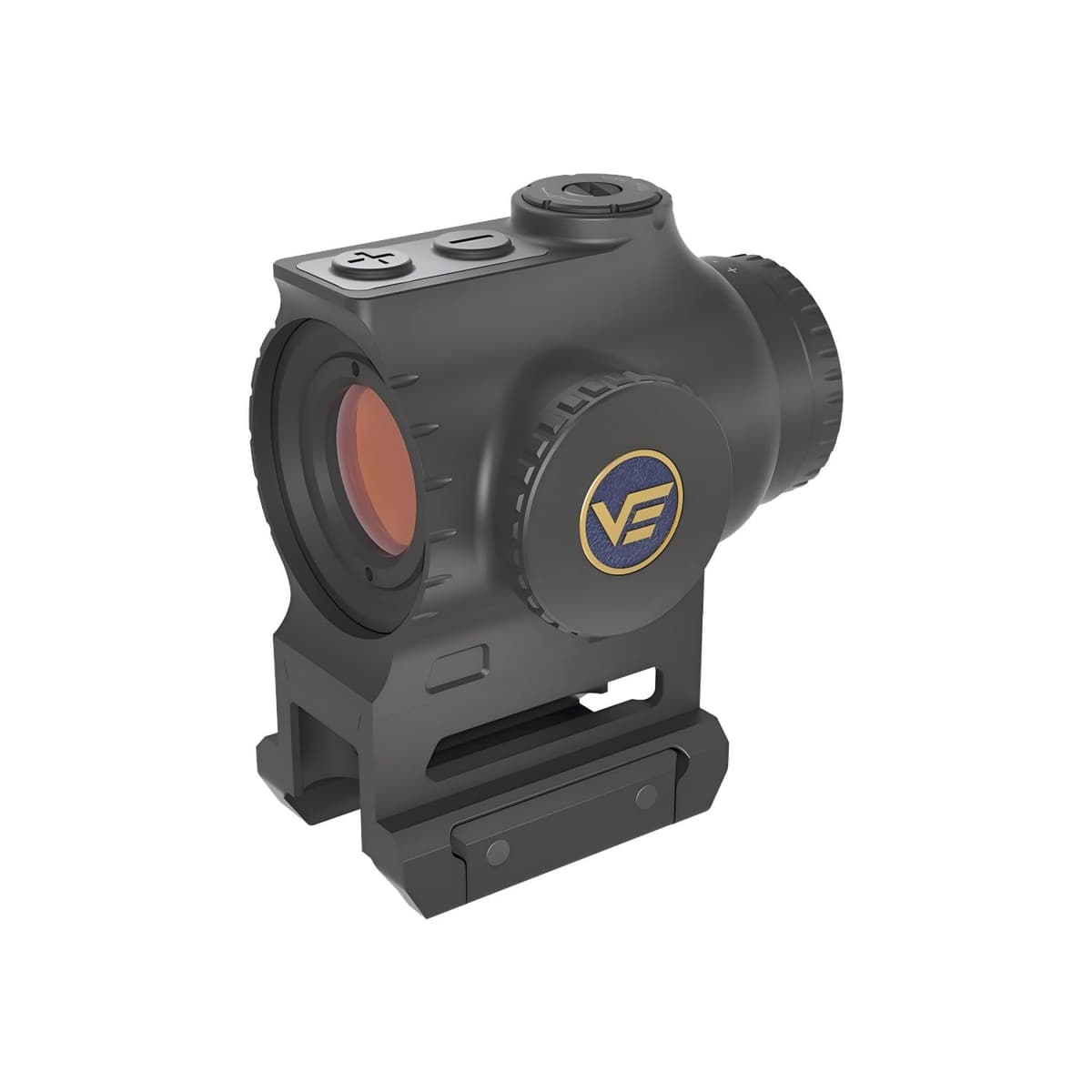
Vector Optics Paragon 1x18 Mini Prism
- Etched 2 MOA dot with 68 MOA ring, works with illumination off
- Red and green illumination
- 3.74 in eye relief
- IP67 sealed
- Lifetime warranty
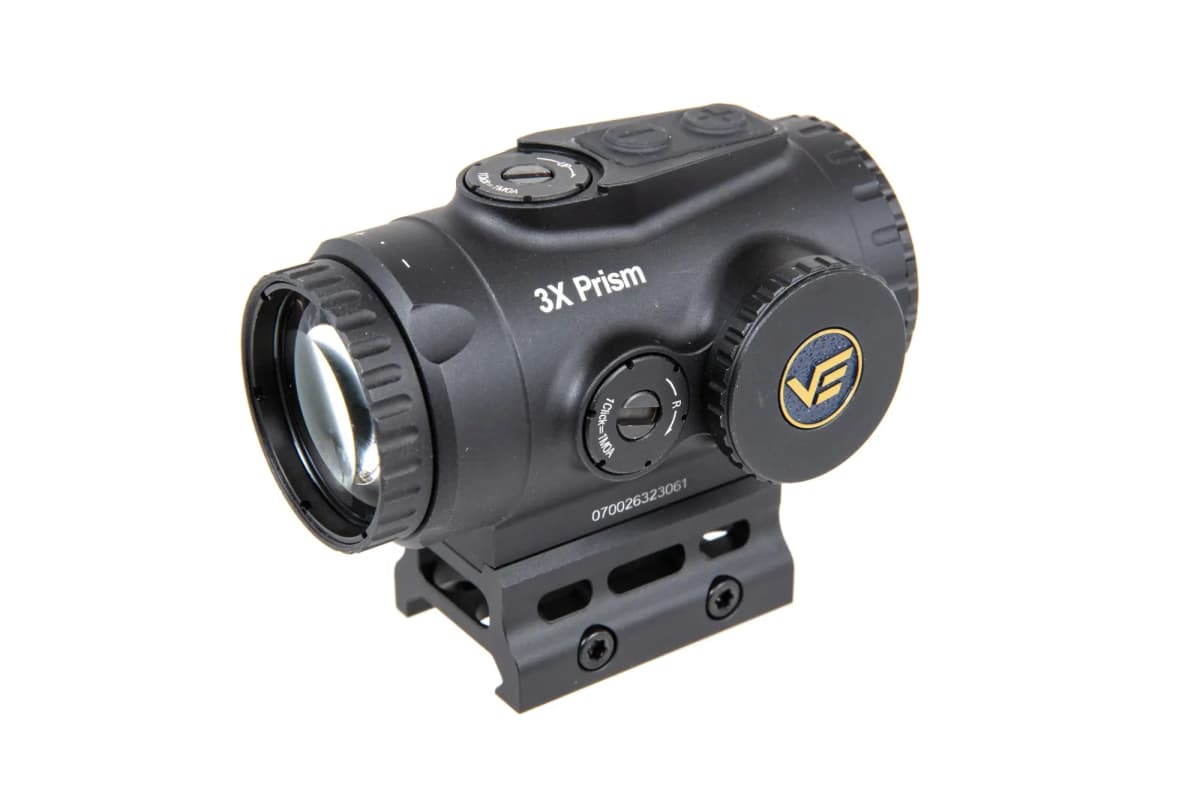
Vector Optics Paragon 3x18 Prism
- Etched VEPS-MBR .223 BDC with a 1 MOA center dot
- Picatinny riser included
- 7.9 oz
- IP67 sealed
- Lifetime warranty
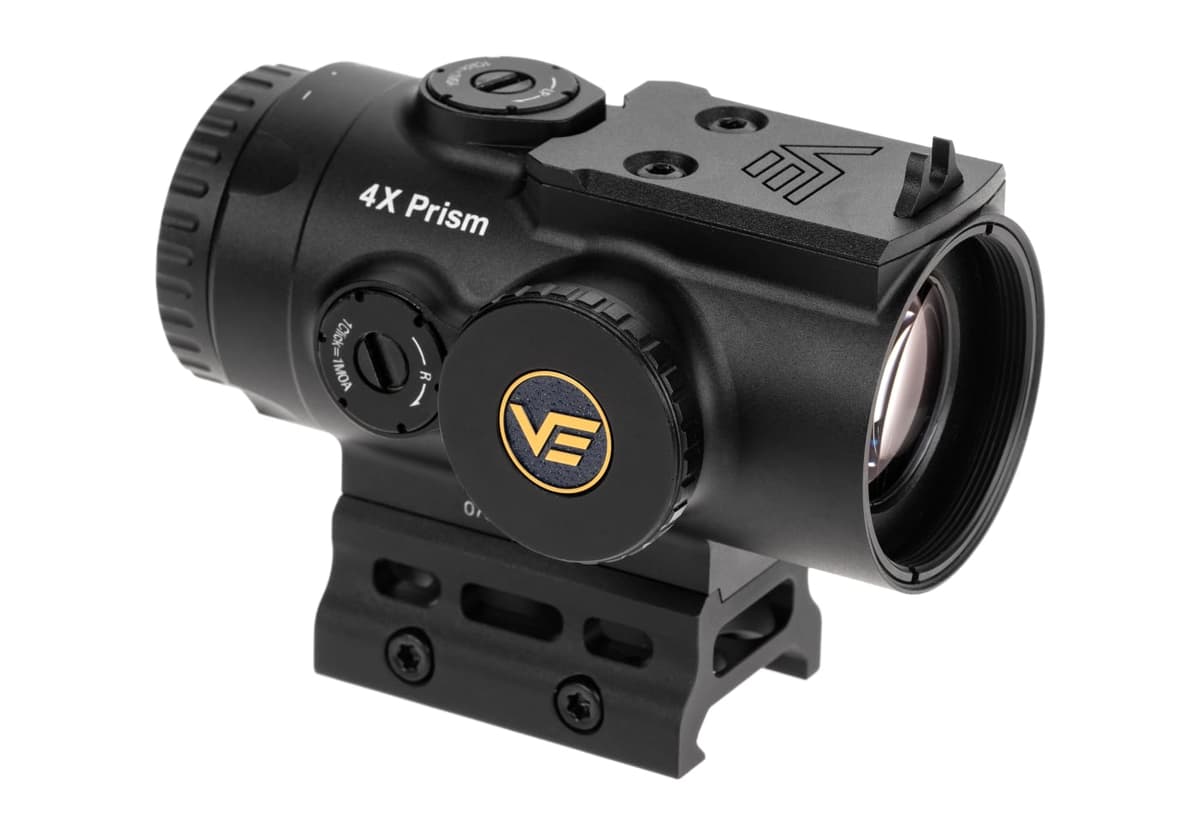
Vector Optics Paragon 4x24 Prism
- Etched VEPS-MBR .223 BDC
- Flat top surface accepts a piggyback red dot
- 8.8 oz without mount
- 5-year warranty
Prices and availability can change.
Affiliate links - purchases support this site at no extra cost to you. (?)
A Quick-Detach Mount Upgrade for the ACOG
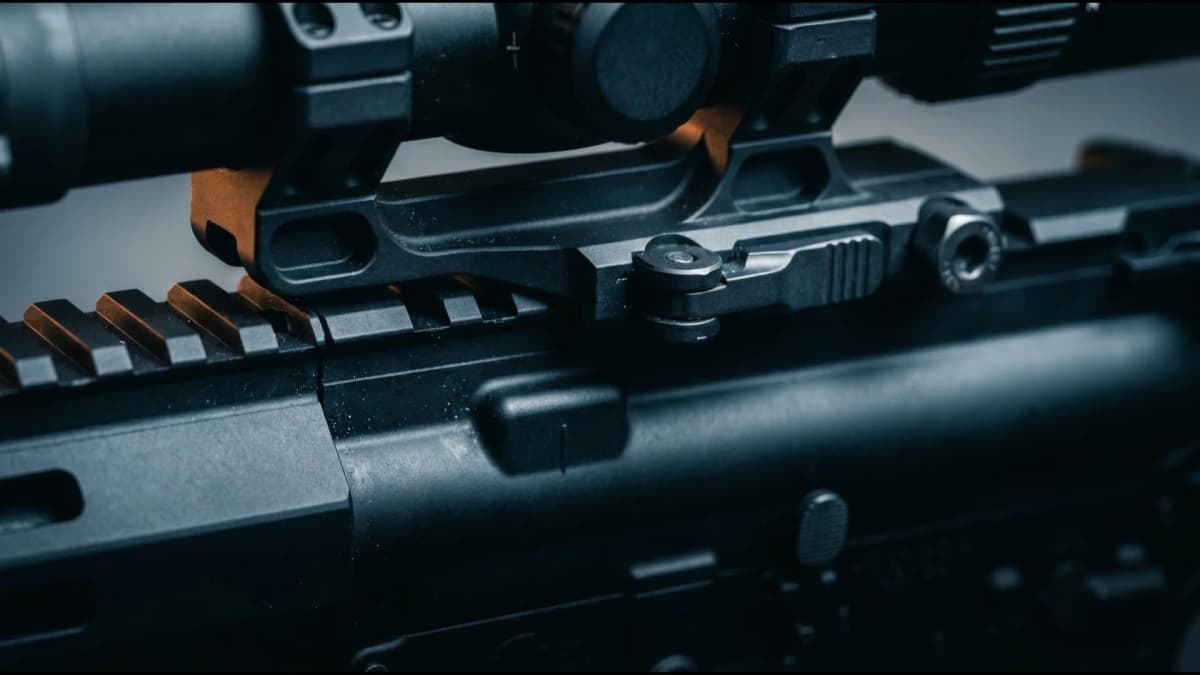
The KDG SIDELOK ACOG mount adds tool-less removal and two optic positions without changing the prism itself. Use the rearward position when eye relief or folded-sight clearance is the harder constraint; KDG excludes the 6x48 ACOG from fitment.
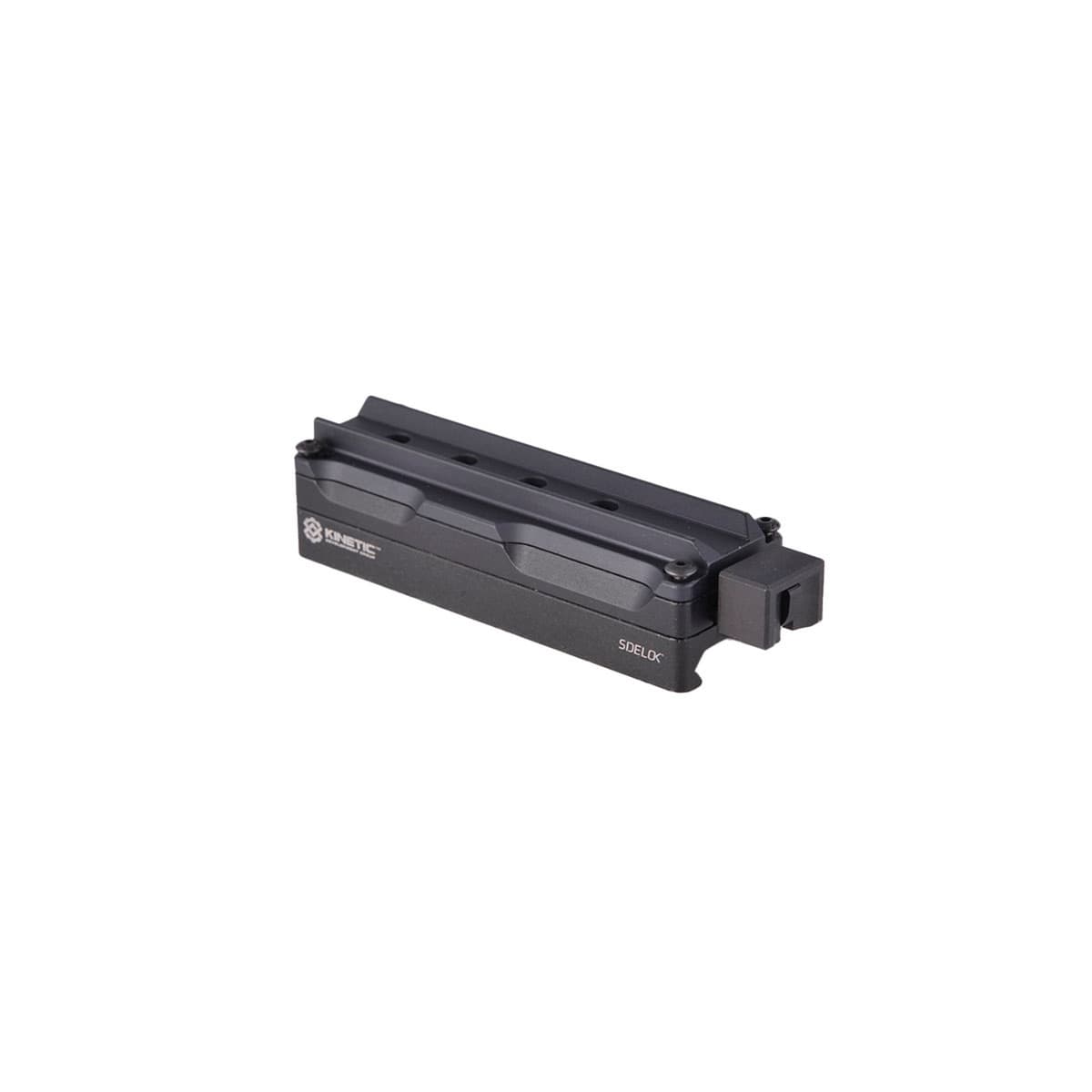
Kinetic Development Group SIDELOK Trijicon ACOG Mount
KDG's 4.02-ounce SIDELOK base accepts Trijicon ACOGs other than the 6x48 and gives the optic two mounting positions. Run it forward in a taller TA51-style layout, or move the optic rearward for a more forgiving eye position and clearance over most folded backup sights.
- Fits Trijicon ACOGs except 6x48
- Forward or rearward optic position
- Push-button QD with secondary safety
Prices and availability can change.
Affiliate links - purchases support this site at no extra cost to you. (?)
Best Optic for Astigmatism: Prism vs Holographic vs Red Dot
When an LED point smears on a rifle, start with a prism scope. Its etched glass reticle is a physical reference instead of a reflected LED point. The Primary Arms SLx 1x MicroPrism is the close-range starting point, while the SLx 3x MicroPrism adds fixed magnification. Both avoid the projected point that causes the red-dot starburst.
The etched reticle is the fix. A red dot reflects a luminous point toward the shooter. A prism puts the reticle into the glass and adds a diopter for focus. Color, brightness, and reticle size can change a projected LED cue, but none converts it into a physical reticle. Set the prism diopter with the correction you use on the range.
A 1x prism is the direct red-dot replacement. The Primary Arms SLx 1x MicroPrism gives you an etched 1x reticle at near red-dot weight. Its defined eye relief and eye box demand more consistent head position than a reflex sight. Use it when you want a non-magnified rifle optic without the projected-dot starburst.
A holographic sight wins on window and eye relief. The EOTech EXPS3 presents a laser-generated ring and center with unlimited eye relief, but it is still projected light rather than an etched reticle. Use our rifle and pistol astigmatism optic guide for the full rifle-and-pistol boundary. Choose the EOTech for its window and eye relief, not as the etched-reticle answer.
1x Holographic Alternative for Astigmatism

EOTech EXPS3
- Holographic reticle
- Night vision compatible
Affiliate links (?)
For a deeper look at the holographic side, including the EXPS3 and its magnifier pairings, see our best EOTech optics guide. The short version: start with a prism when reticle clarity leads. Move to holographic only when its actual reticle, large window, and unlimited eye relief win the comparison.
Get AR-15 Prism Scope Reviews and Optic Guides
New etched-reticle optics, 1x and 3x prism comparisons, and rifle optic decision guides delivered monthly.
1x vs 3x vs 5x: Which Prism Magnification for Your AR-15
Pick 1x for close-quarters speed and as a red dot replacement, 3x as the do-everything sweet spot, and 5x for a designated-marksman build that lives past 200 yards. Because a prism is a fixed magnification, this choice matters more than it does on a variable LPVO, so match the number to how you actually shoot.
1x: CQB and Red Dot Swap
A true 1x prism like the Primary Arms SLx 1x MicroPrism shoots with both eyes open like a red dot, which is what you want for home defense, CQB, and any work inside 100 yards. This is the starting point when an LED dot smears and you do not want magnification.
3x: The Do-Everything Pick
A 3x prism like the SLx 3x MicroPrism, Vortex Spitfire HD Gen II, or Swampfox Trihawk is the all-around AR-15 optic. It is still fast up close with both eyes open, and 3x stretches usable precision out to roughly 400 yards. If you buy one prism, buy a 3x.
5x: Designated Marksman
The Primary Arms SLx 5x MicroPrism gives you reach a 3x cannot, with a calibrated ACSS Aurora reticle for 5.56 and .308 holds. It is overkill up close and has a tighter eyebox, so save it for a distance-first build. After mounting, follow our optic zeroing guide to lock in the reticle holds.
Shopping on a Tighter Budget?
The 3x MicroPrism also leads the prism tier in our best budget AR-15 optics guide, which compares it against red dots and budget LPVOs under $200. To see how any of these prisms fit a specific build, drop one into our rifle builder.
Battery-Free and Combat-Grade Prisms: ACOG and SpecterDR
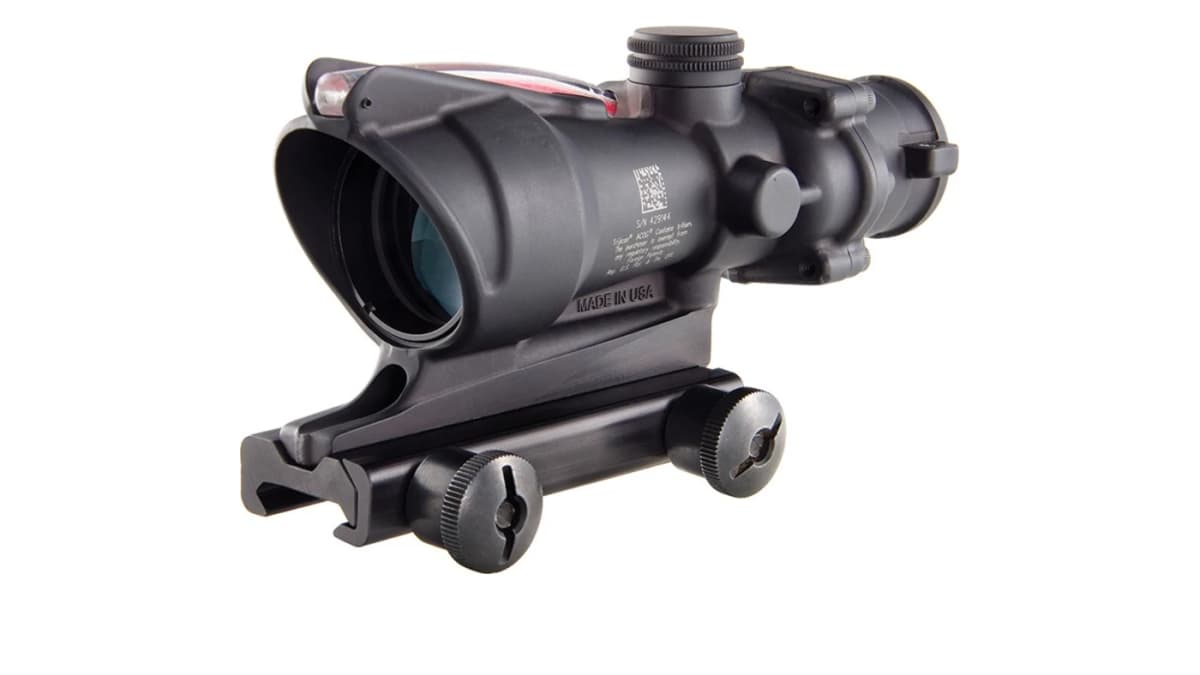
If you want a prism that never depends on a battery, the Trijicon ACOG TA31 is the answer. It runs on fiber optic and tritium dual illumination, so the reticle glows from ambient light by day and tritium at night with no electronics in the path. The forged 7075-T6 housing has decades of hard service behind it, and street pricing runs from the low $1,000s to the mid $1,400s depending on reticle and dealer. Shooters running 300 Blackout, suppressed loads, or anything off the 5.56 BDC calibration can now get the ACOG with an MRAD reticle instead of a caliber-specific BDC.
The ELCAN SpecterDR 1-4x is the premium dual-role benchmark. A throw lever flips it between a true 1x and a true 4x with no zoom distortion or eye relief change, so it behaves like a prism at each setting rather than a variable scope sweeping through a zoom range. It is overbuilt to NATO and SOCOM standards, weighs 24 oz, and carries a street price from roughly $1,500 up past $2,500. It is the benchmark, not the value pick. For the full Trijicon lineup beyond the TA31, see our best Trijicon optics guide.