Best Reloading Press 2026: Single-Stage, Turret & Progressive
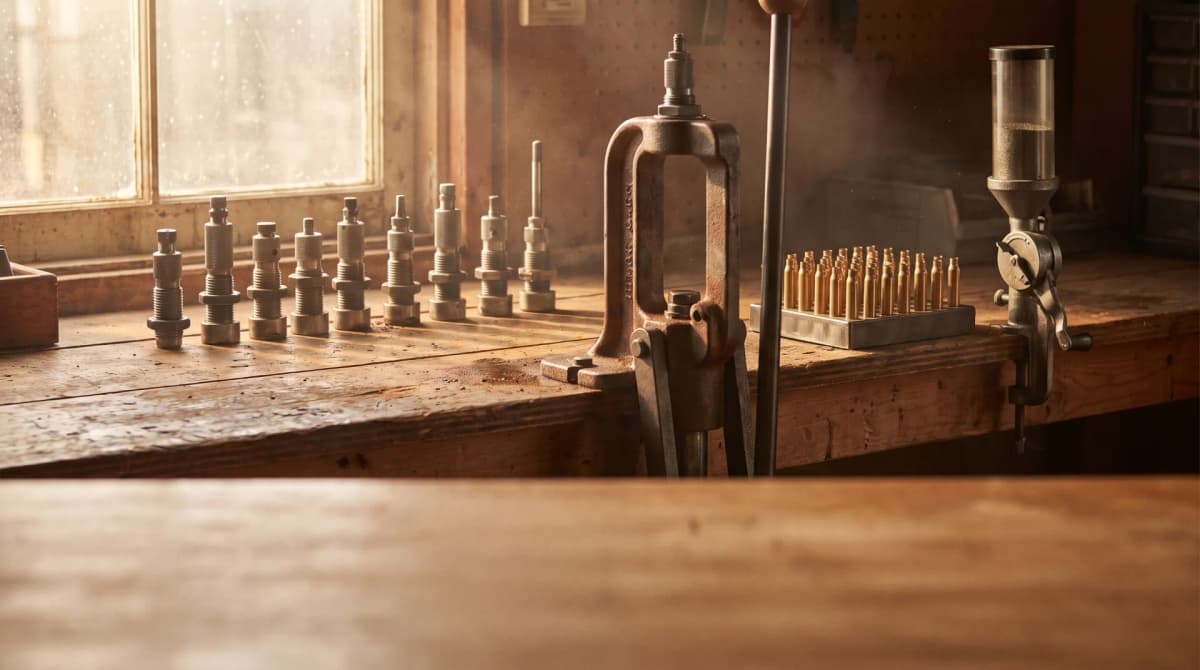
The RCBS Rock Chucker Supreme at $254.22 is the best reloading press for most people: a cast-iron single-stage that loads precision rifle and teaches every step cleanly. For volume, the Dillon XL750 at $795 hits up to 800 rounds per hour and the Hornady Lock-N-Load AP at $649.99 delivers roughly 500 for hundreds less. The right press is the one matched to your round count, not the most expensive one. This guide ranks eight presses across single-stage, turret, and progressive designs and gives you the throughput and caliber-change math to choose.
The Best Reloading Presses Ranked
Single-stage, turret, and progressive presses ranked from precision-rifle starter to high-volume pistol machine across throughput, caliber-change cost, and experience level.
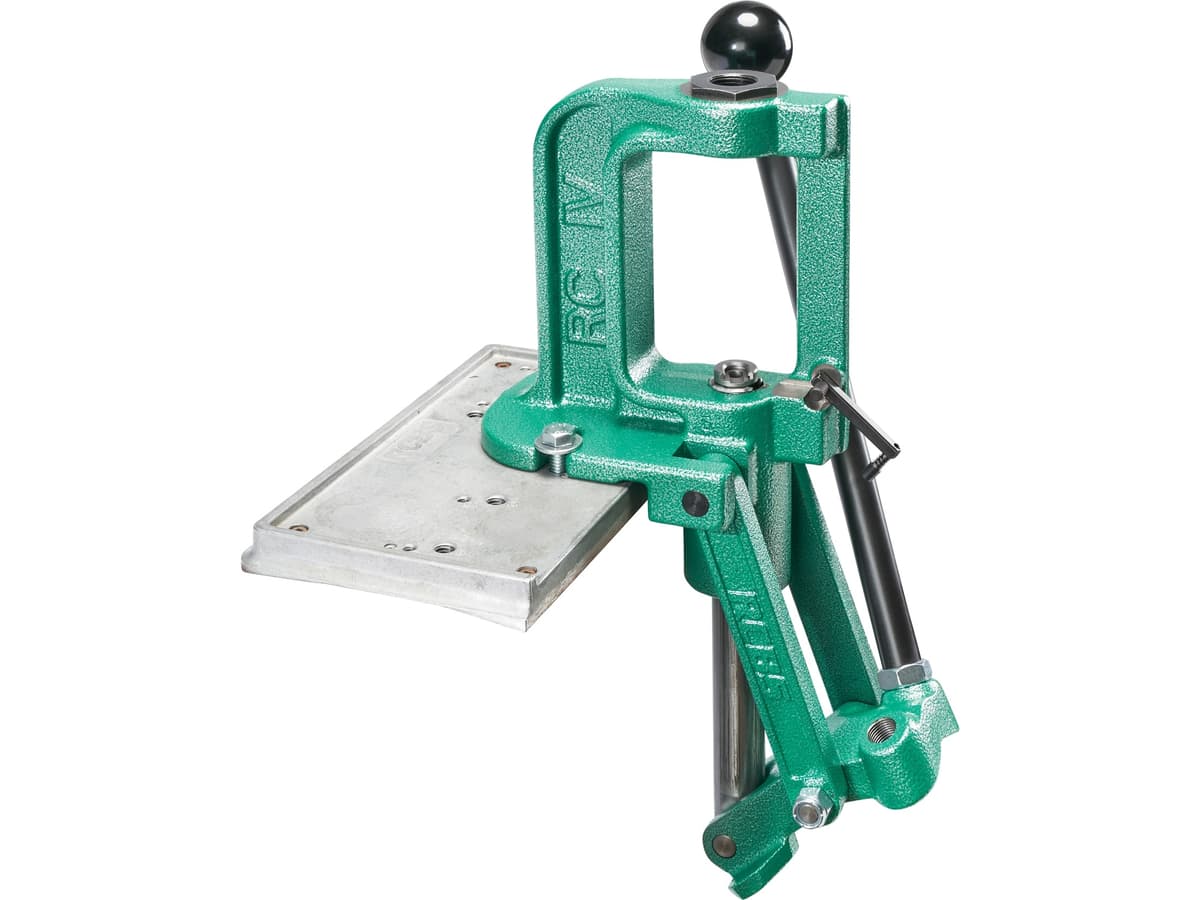
RCBS Rock Chucker Supreme
Best Overall Single-Stage
- +Cast-iron rigidity full-length sizes magnum brass without flex
- +Decades-deep parts, accessory, and upgrade ecosystem
- +Single-stage repeatability is ideal for precision rifle load development
- −Single-stage throughput tops out around 50 to 60 rounds per hour
- −No onboard powder or priming automation; you add those as accessories
- −Heavy enough that it wants a permanently bolted bench
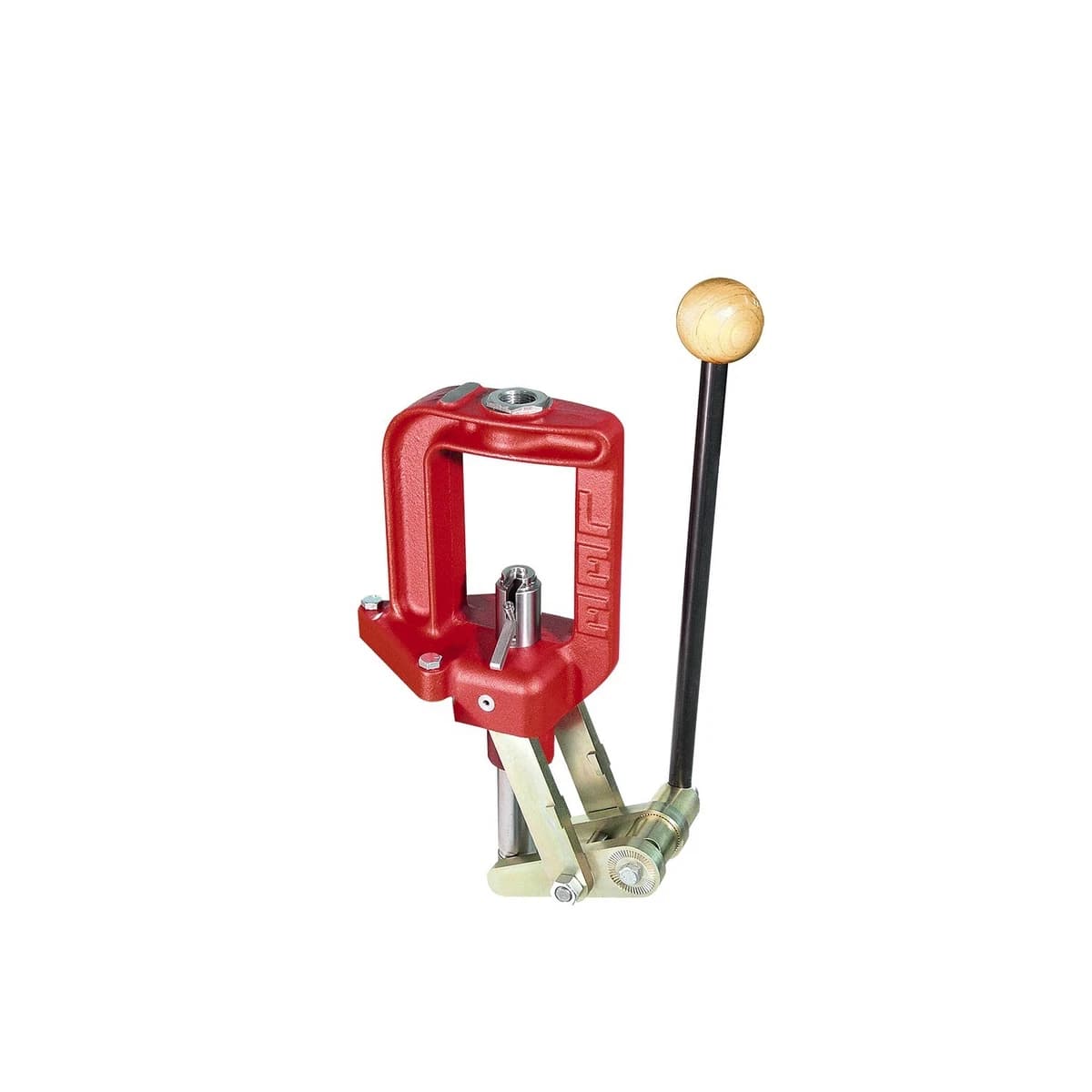
Lee Classic Cast
Best Value Single-Stage
- +Cast-iron rigidity at a meaningfully lower price than the Rock Chucker
- +Hollow-ram primer disposal is the cleanest in the single-stage class
- +Breech Lock bushing included for fast die swaps out of the box
- −Single-stage throughput, the same 50-to-60 round-per-hour ceiling
- −Breech Lock speed only pays off once your dies wear matching bushings
- −Fit and finish trail RCBS and Forster on close inspection
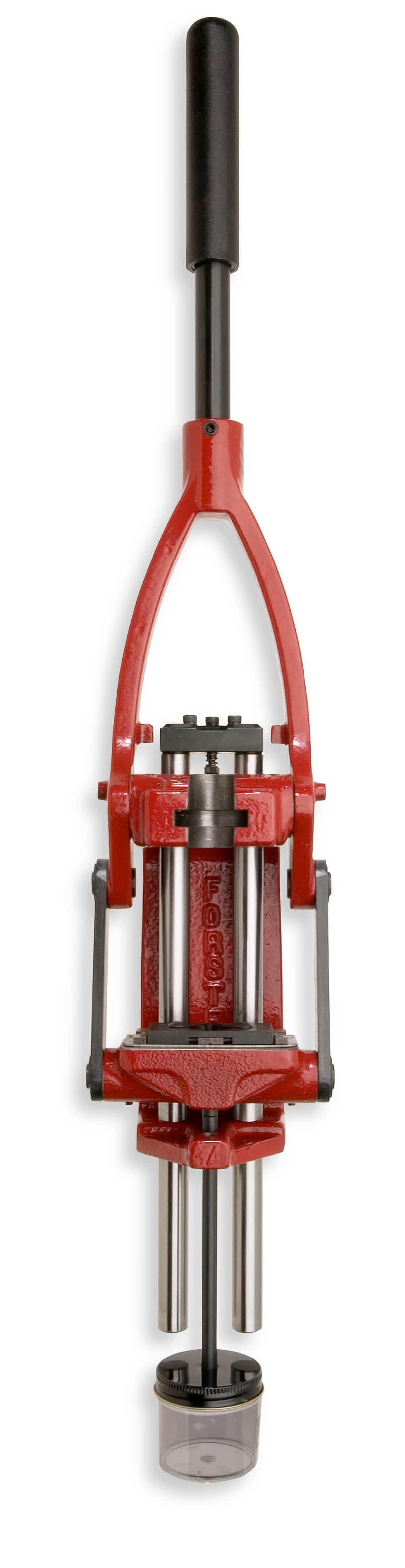
Forster Co-Ax B3
Best Precision Single-Stage
- +Floating S-jaws self-center the case under the die for low runout
- +Snap-in die slot changes dies by hand with no lock-ring reset
- +Compound linkage gives about 3x the leverage of a C-frame press
- −Premium price over a standard cast-iron O-press
- −Standard 7/8-14 dies only; no large 1-1/4-12 die support
- −S-jaws need the correct adapter plate for some rimmed and belted cases
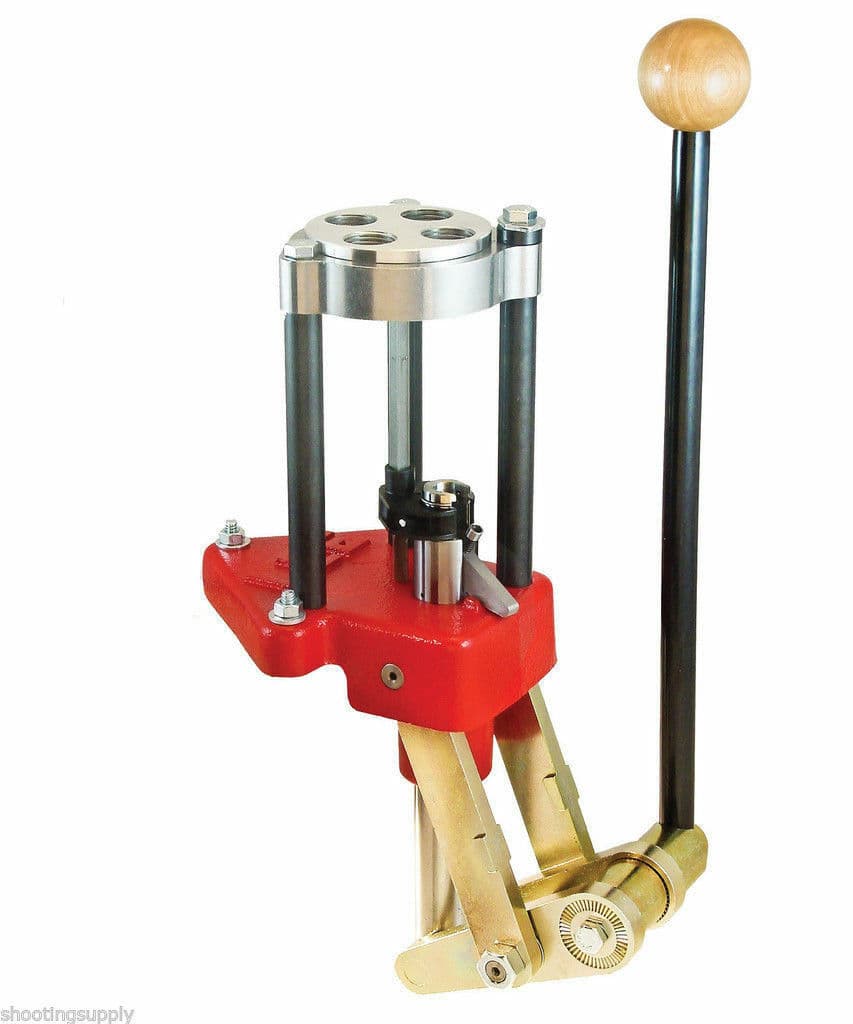
Lee Classic Turret
Best Turret
- +Auto-indexing pushes handgun output past 250 rounds per hour
- +Only one case in the press at a time keeps the process easy to learn
- +Caliber changes cost a turret head, not a full conversion kit
- −Manual case and bullet handling caps it below true progressive speed
- −Auto-index rod and ratchet wear over very high round counts
- −No onboard case feeding; you place every case by hand
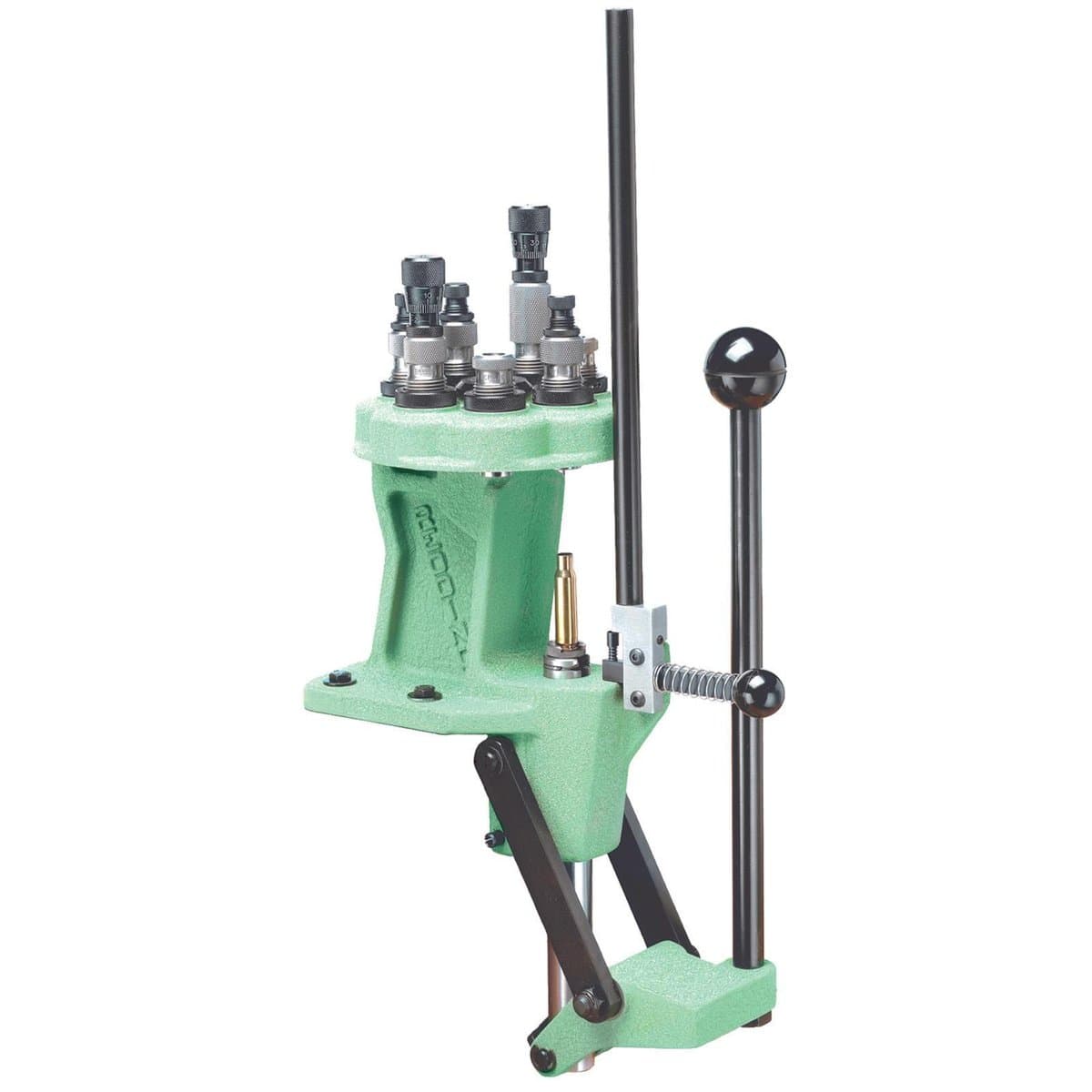
Redding T-7
Best Premium Turret
- +Seven staged stations hold a complete rifle die set plus spares
- +Cast-iron rigidity rivals a single-stage for precision sizing
- +Smart primer arm handles both primer sizes without parts changes
- −Manual indexing is slower than the auto-indexing Lee turret
- −Premium price, roughly double the Lee Classic Turret
- −Heavy seven-station head wants a stout, bolted-down bench
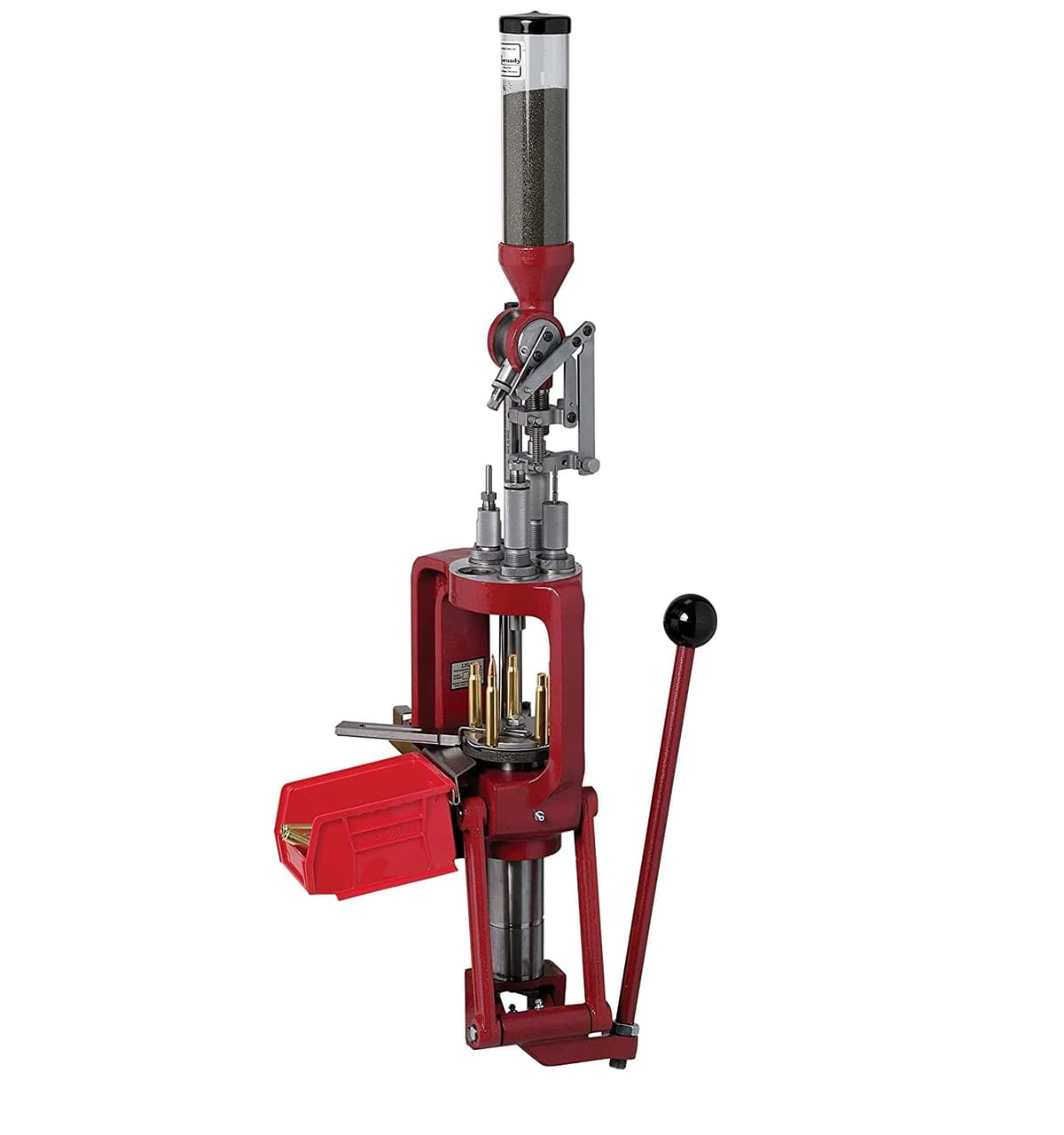
Hornady Lock-N-Load AP
Best Value Progressive
- +Roughly 500 rounds per hour for hundreds less than a Dillon XL750
- +Bushing system swaps single dies faster than any toolhead press
- +Case-activated powder drop prevents spilled-charge messes
- −Manual case feeding unless you add the optional case feeder
- −Primer feed is fussier than Dillon's under sustained high volume
- −Caliber conversions cost more steps than the Dillon manual-index 550
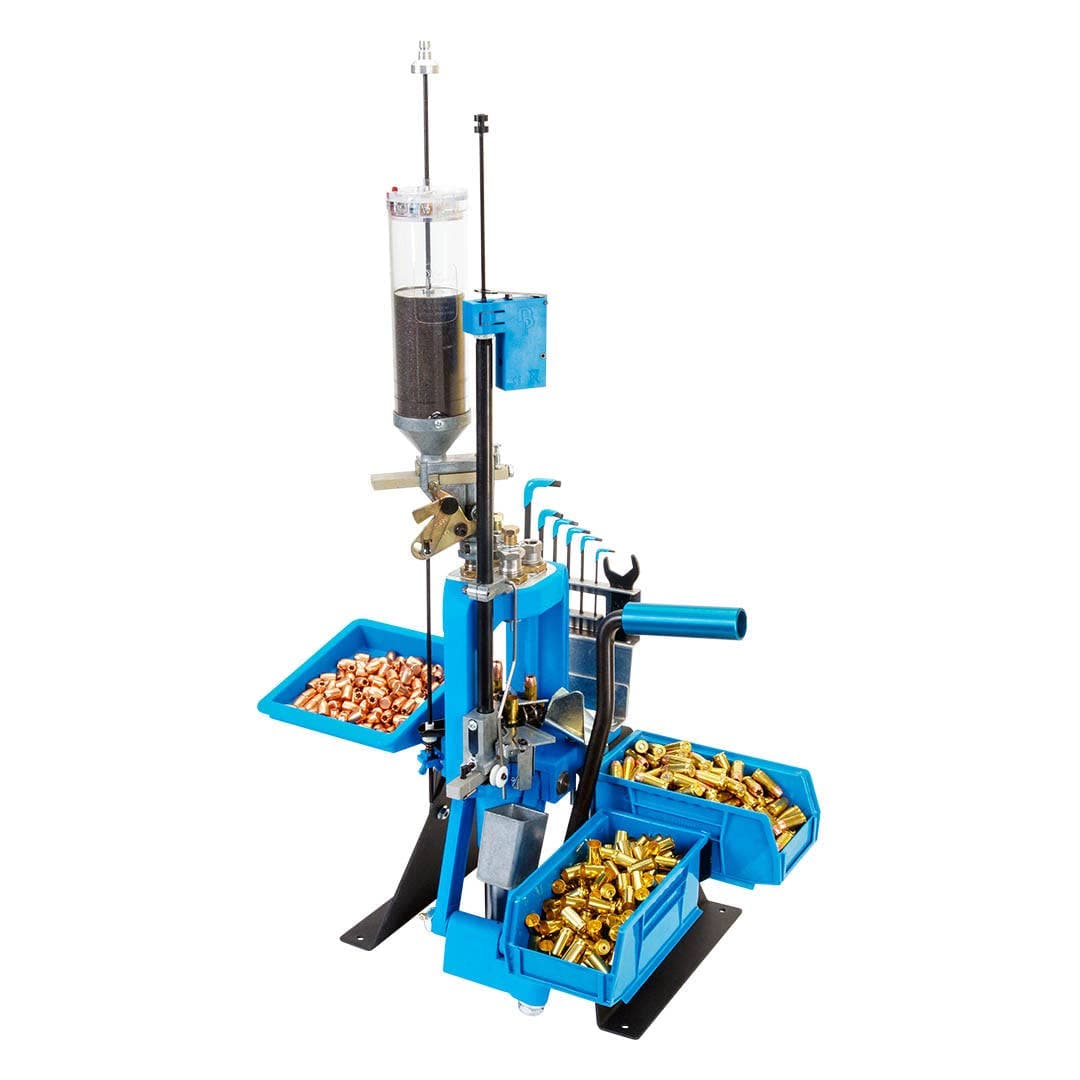
Dillon RL550C
Best Multi-Caliber Progressive
- +Fastest, cheapest caliber changes of any progressive press
- +160-plus cartridge support spans the broadest case range in the lineup
- +Manual indexing is forgiving and easy to troubleshoot
- −Manual indexing caps speed below the auto-indexing XL750
- −Direct-only purchasing; no broad retailer discounting
- −Case feeding is manual on the base machine
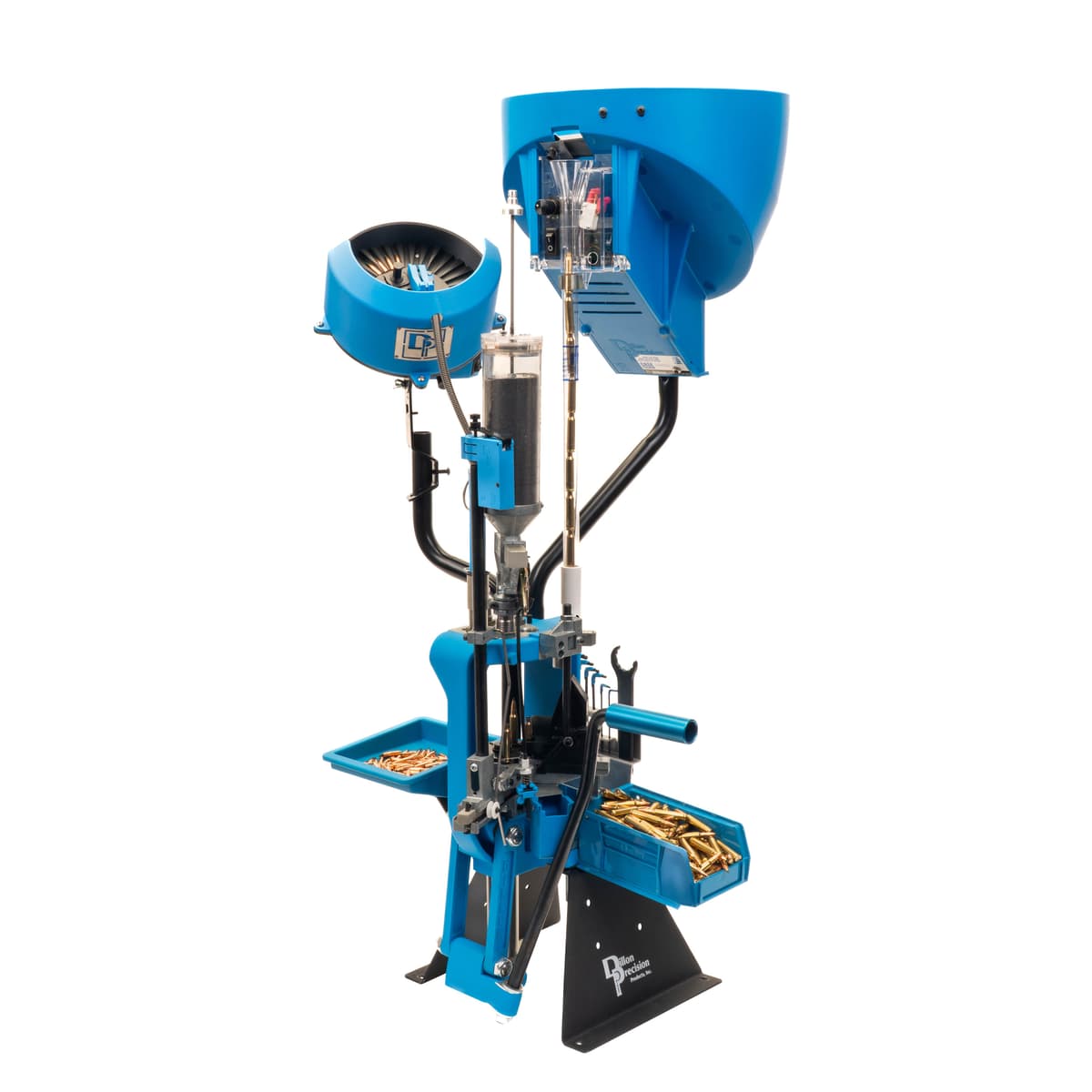
Dillon XL750
Best High-Volume Progressive
- +Up to 800 rounds per hour, the fastest manually operated press here
- +Fifth station enables a powder-check die for high-volume safety
- +Auto-indexing reduces operator workload over the 550
- −Caliber conversions cost more than the manual-index 550
- −Best value only when loading one or two calibers in bulk
- −Direct-only purchasing; case feeder is a separate cost for full speed
Throughput numbers are sustained, realistic bench rates, not marketing peak rates. A press loads safe ammunition only with a verified powder charge and a checked seating depth; the machine speeds the process, it does not replace the steps.
Affiliate links - purchases support this site at no extra cost to you. (?)
How We Ranked These Reloading Presses
Throughput, caliber-change cost, and frame rigidity decide which press earns bench space, not the price tag. The rankings weight three things in order: how well the press matches realistic round counts at each experience level, how fast and cheap it is to switch calibers, and how rigidly the frame holds the case under the die. A single-stage that flexes ruins precision sizing; a progressive that costs $150 per caliber change punishes the multi-cartridge reloader. We rank for the buyer the press is actually for.
Single-Stage vs Turret vs Progressive: How to Choose
Match the press type to your round count and experience level. Single-stage presses load 50 to 60 rounds per hour and process one die at a time, which is why they are the right answer for learning and for precision rifle load development. Turret presses load 150 to 250-plus rounds per hour by rotating dies over a single case, the natural step up for handgun volume. Progressives load 500 to 800 rounds per hour by working every station at once, the tool for bulk pistol and high-volume rifle. Before committing to a class, run your calibers through the reloading cost calculator to see your per-round savings and the round count where the press pays for itself.
Buying your first press: start single-stage. The RCBS Rock Chucker Supreme at $254.22 or the value-priced Lee Classic Cast at $198.49 make every step visible while you learn safe powder charging and case prep. If you already know you will burn through pistol ammo, the auto-indexing Lee Classic Turret at $198.49 triples your speed without hiding the process. Whether you load for a precision bolt gun or a high-round-count carbine, model the rifle the ammo feeds with the rifle builder before you commit to a press class. If you want to skip the priming pass entirely, Shell Shock now sells factory-primed NAS3 cases in .308 and 5.56 from $135 per 250.
Caliber-change cost is the hidden tax. On single-stage and turret presses, switching calibers means swapping a die set or a turret head, a few minutes and a small spend. On progressives the cost climbs: the Hornady Lock-N-Load AP swaps single dies through bushings but needs a shellplate per case head, and the Dillon XL750 needs a toolhead plus a shellplate. The Dillon RL550C is the exception; its manual-index four-station design has the fastest, cheapest caliber changes of any progressive, which is why it wins for reloaders who load many cartridges. If you load one high-volume pistol caliber and one rifle caliber, the XL750 is the better machine; if you load 9mm range ammo, .45 ACP, .223, and .308 in rotation, the 550 saves you money on every switch.
Stations and primer feed decide the safety margin. A fifth station is not marketing. On the XL750 it holds a powder-check die that catches a missed or double charge before the bullet seats, the single most valuable safety feature on a high-volume press. Primer feed reliability is where Dillon separates from the field: its primer system runs cleaner under sustained volume than the Hornady, which is fussier when you push it hard. The Redding T-7 turret carries seven stations so a complete rifle die set plus spares stays mounted, and its smart primer arm handles both primer sizes without a parts change.
Footprint and bench rigidity matter for every press. All eight presses here want a permanently bolted bench. Cast-iron single-stage and turret presses are compact but heavy; the progressives add a powder measure, primer tube, and case feeder that grow the footprint. A flexing bench undoes the rigidity you paid for in the frame, so bolt the press down before you trust the runout. Once the ammo is loaded, verify your muzzle velocity and load consistency with a shooting chronograph, the next tool every serious handloader buys.
Reloading Press Decision Matrix
Still deciding? Sort by throughput, station count, or price to match a press to your round count and experience level. Caliber change and footprint compare the ownership cost beyond the sticker.
- RCBS Rock Chucker Supreme Single Stage PressTypeSingle-stageThroughput50-60 rds/hrStations1LevelBeginner / precisionPrice$254.22
- Lee Precision Classic Cast Single Stage PressTypeSingle-stageThroughput50-60 rds/hrStations1LevelBeginner / precisionPrice$198.49
- Forster Co-Ax Single Stage Press (B3)TypeSingle-stageThroughput50-60 rds/hrStations1LevelPrecision / benchrestPrice$389.99
- Redding T-7 Turret Press KitTypeTurretThroughput150-200 rds/hrStations7 (manual index)LevelIntermediate / precisionPrice$519.99
- Lee Precision 4-Hole Classic Turret PressTypeTurretThroughput250+ rds/hrStations4-hole turretLevelBeginner-to-intermediatePrice$198.49
- Hornady Lock-N-Load AP Progressive PressTypeProgressiveThroughputUp to 500 rds/hrStations5 (auto-index)LevelIntermediatePrice$649.99
- Dillon Precision RL550C Progressive Reloading MachineTypeProgressiveThroughputUp to 500 rds/hrStations4 (manual index)LevelIntermediatePrice$625
- Dillon Precision XL750 Progressive Reloading MachineTypeProgressiveThroughputUp to 800 rds/hrStations5 (auto-index)LevelIntermediate / high-volumePrice$795
| Product | Type | Stations | Caliber Change | Footprint | Level | Buy | ||
|---|---|---|---|---|---|---|---|---|
| RCBS Rock Chucker Supreme Single Stage Press | Single-stage | 50-60 rds/hr | 1 | Swap die (minutes) | Small, bolt-down | Beginner / precision | $254.22 | Buy |
| Lee Precision Classic Cast Single Stage Press | Single-stage | 50-60 rds/hr | 1 | Swap die (minutes) | Small, bolt-down | Beginner / precision | $198.49 | Buy |
| Forster Co-Ax Single Stage Press (B3) | Single-stage | 50-60 rds/hr | 1 | Snap-in die (seconds) | Small, bolt-down | Precision / benchrest | $389.99 | Buy |
| Redding T-7 Turret Press Kit | Turret | 150-200 rds/hr | 7 (manual index) | Swap turret head | Medium, bolt-down | Intermediate / precision | $519.99 | Buy |
| Lee Precision 4-Hole Classic Turret Press | Turret | 250+ rds/hr | 4-hole turret | Swap turret head | Small, bolt-down | Beginner-to-intermediate | $198.49 | Buy |
| Hornady Lock-N-Load AP Progressive Press | Progressive | Up to 500 rds/hr | 5 (auto-index) | Bushings + shellplate | Large, bolt-down | Intermediate | $649.99 | Buy |
| Dillon Precision RL550C Progressive Reloading Machine | Progressive | Up to 500 rds/hr | 4 (manual index) | Toolhead (fast/cheap) | Large, bolt-down | Intermediate | $625 | Buy |
| Dillon Precision XL750 Progressive Reloading Machine | Progressive | Up to 800 rds/hr | 5 (auto-index) | Toolhead + shellplate | Large, bolt-down | Intermediate / high-volume | $795 | Buy |
Affiliate links - purchases support this site at no extra cost to you. (?)
Clean Fired Brass Before It Reaches the Press
A press sizes and assembles ammunition; it does not remove the residue left inside fired cases. For volume brass, the Frankford Arsenal Platinum Series Rotary Tumbler 7L handles that preparation as a separate batch. Its stainless pins reach case interiors; if you want them to scrub primer pockets, deprime the cases in a separate decapping step first. The rubber-lined drum holds up to 1,000 .223 cases, and the three-hour timer ends the cycle without constant attention.
The capacity is the reason to buy it and the boundary is just as important: this is a wet cartridge-case tumbler, not a general gun-parts cleaner. After tumbling, separate every pin, inspect every case, and dry the brass completely before resizing, priming, or charging it.
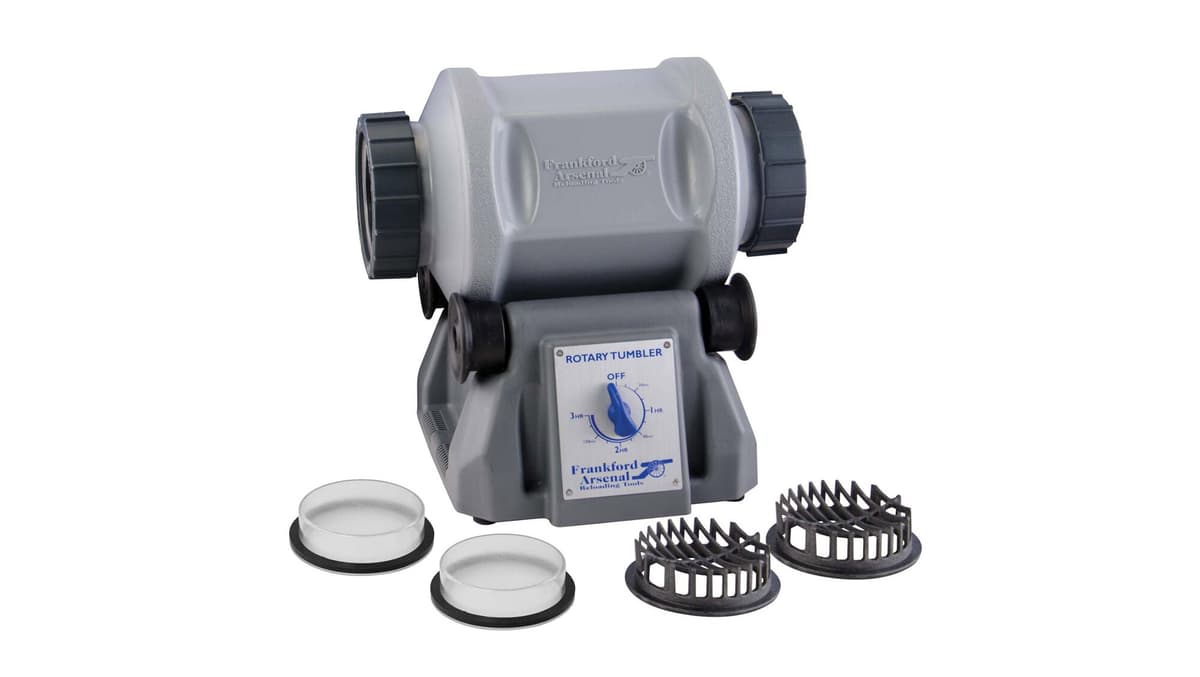
Frankford Arsenal Platinum Series Rotary Tumbler 7L
The volume-brass pick: a rubber-lined seven-liter wet tumbler that handles up to 1,000 .223 cases and includes stainless media, cleaning solution, and a three-hour timer.
Deprime first when cleaning primer pockets. After tumbling, inspect every case, separate all stainless media, and dry brass completely before resizing, priming, or charging it.
Affiliate links - purchases support this site at no extra cost to you. (?)
Get Reloading Press Reviews and Handloading Guides
New press reviews, die set releases, and handloader workflow guides delivered to your bench.
Best Single-Stage Press for Precision Rifle
The RCBS Rock Chucker Supreme is the single-stage standard, and the Forster Co-Ax B3 is the upgrade for the lowest runout. The Rock Chucker's cast-iron O-frame and compound linkage full-length size the largest cases a single-stage press will ever see without flex, which is exactly what precision rifle load development needs: identical, repeatable strokes. Decades of parts and accessories back it, so nothing on the press is a dead end.
Step up to the Forster Co-Ax B3 at $389.99 when concentricity is the priority. Floating S-jaws self-center the case under the die instead of clamping it in a fixed shellholder, which drops case-to-die runout below what an O-frame press delivers. The snap-in die slot changes dies by hand with no lock-ring reset, and the compound linkage gives about three times the leverage of a C-frame press. Benchrest and serious precision reloaders chase that low runout because it tightens groups at distance, the same payoff behind a careful .308 match load worked up against factory benchmarks. The Lee Classic Cast at $198.49 splits the difference: cast-iron rigidity and a clean hollow-ram primer disposal system at the lowest price in the single-stage class.
Turret Presses: The Step Up From Single-Stage
A turret press is the right step up when single-stage throughput stops keeping pace with your range habit. The Lee Classic Turret at $198.49 auto-indexes a fresh die into position every stroke and pushes handgun output past 250 rounds per hour, yet keeps only one case in the press, so the process stays as easy to learn and troubleshoot as a single-stage. Pull the auto-index rod and it runs as a single-stage for precision rifle work. That dual mode is why it is the best first press for a reloader who shoots a lot of pistol but wants to learn on something simple.
The Redding T-7 at $519.99 is the premium turret for precision rifle. Seven manual-index stations hold a complete rifle die set plus spares so you stage an entire cartridge workflow without touching the dies, and its cast-iron rigidity rivals a single-stage for sizing. It runs slower than the auto-indexing Lee at roughly 150 to 200 rounds per hour because you index the head by hand, the trade for precision and the staged die count. A reloader feeding a rimfire trainer alongside centerfire rifles is the exception here; .22 LR is the one round you cannot reload, so the T-7 earns its keep only on the centerfire side of the bench.
Best Progressive Press for High Volume
The Dillon XL750 at $795 is the best high-volume progressive, and the Hornady Lock-N-Load AP at $649.99 is the value alternative. The XL750 is the fastest manually operated press in this guide at up to 800 rounds per hour with its case feeder running, and its five-station auto-indexing design leaves a station for a powder-check die that catches a missed or double charge before the bullet seats. Dillon's primer feed runs cleaner under sustained volume than anything else here, and the lifetime warranty backs the whole machine. It is the right buy when you load one or two calibers in bulk and want speed plus a built-in safety check.
The Hornady Lock-N-Load AP delivers roughly 500 rounds per hour for hundreds less. Its bushing system swaps single dies faster than any toolhead press, the case-activated powder drop prevents spilled-charge messes, and the same five stations load handgun and rifle. The trade-offs are honest: primer feed is fussier than Dillon's under sustained high volume, and caliber conversions cost more steps than the Dillon manual-index 550. If your bulk loading is a high-volume carbine running 5.56 ammo you are replicating or beating, the Hornady gets you to 500 rounds per hour without the Dillon premium.
Dillon RL550C vs XL750: Which to Buy
Buy the RL550C if you load many calibers; buy the XL750 if you load one or two in bulk. The RL550C at $625 is a four-station manual-index press that supports more than 160 cartridges across the broadest case range in the lineup, and its caliber changes are the fastest and cheapest of any progressive. Manual indexing is also the most forgiving to troubleshoot, which makes the 550 the easier progressive to live with for a reloader switching between pistol and rifle cases constantly.
The XL750 at $795 trades caliber-change flexibility for speed and a safety station. Auto-indexing reduces operator workload and lifts throughput to up to 800 rounds per hour, and the fifth station holds the powder-check die the four-station 550 cannot. A caliber conversion costs more than on the 550, so the math only favors the XL750 when you run high volume in a small number of calibers. Both share Dillon's lifetime warranty and direct purchasing. Pick the 550 for variety, the 750 for volume.
Avoid the Most Common Reloading Mistake
The most common reloading mistake is a powder charge error: a double charge, a squib with no powder, or a charge thrown to the wrong weight. It is also the most dangerous, because a double charge can wreck a firearm and a squib can lodge a bullet in the bore. The press class you choose changes how easily you catch it. Single-stage and turret presses keep one case in the press, so you can look into every charged case before you seat a bullet, which is exactly why they are the recommended learning platforms.
On a progressive, the cases move too fast to eyeball each one, so the safety moves to hardware. The Dillon XL750 reserves its fifth station for a powder-check die that flags a missed or double charge before the bullet seats. The Hornady Lock-N-Load AP uses a case-activated powder drop that only throws a charge when a case is present, cutting spills and empty-case charges. Whatever press you run, verify your powder measure against a scale at the start of every session and weigh-check throws periodically; the machine speeds the process, it does not replace the verification. To stock the rest of your bench, browse the reloading tools catalog.