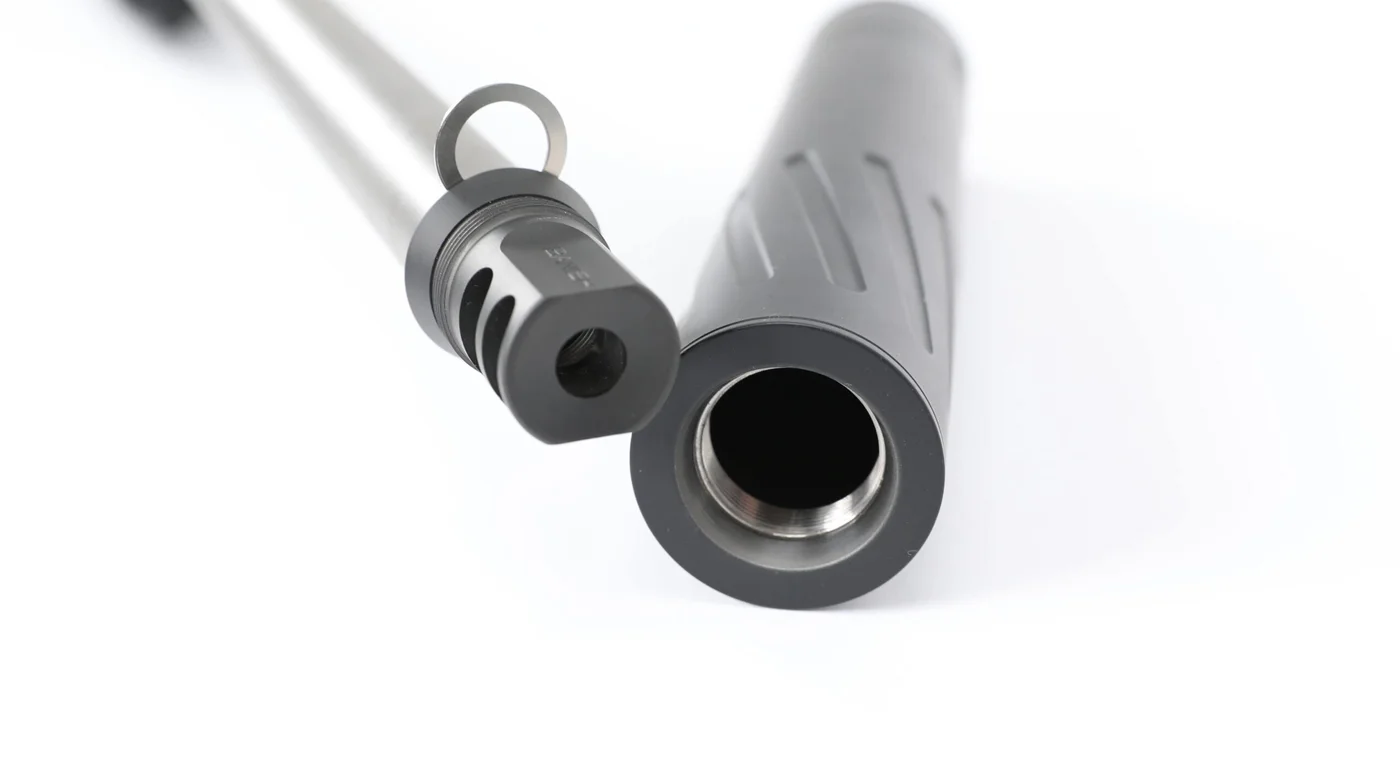
Key Takeaways
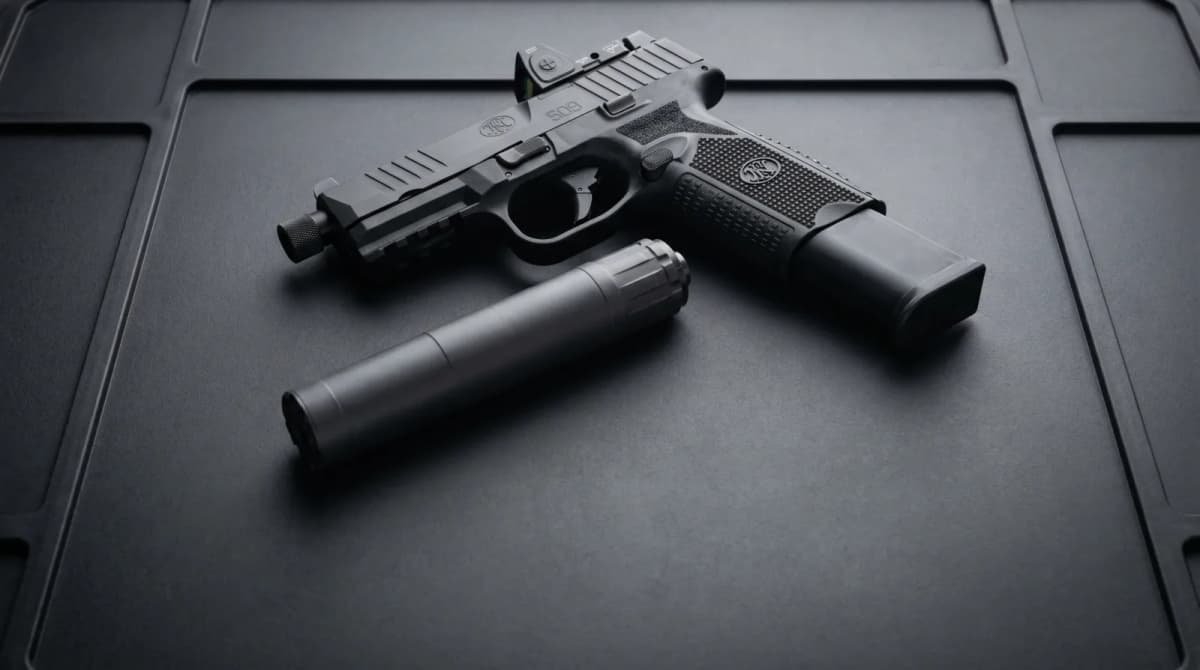
- →Effective November 20, 2026: suppressors for non-automatic and semi-automatic firearms leave USML Category I(e) and become ECCNs 0A501.f (rifle, pistol, multi-host) and 0A502.f (shotgun-only) on the Commerce Control List.
- →State's finding: these suppressors “no longer provide a critical military or intelligence advantage,” citing global civil adoption, hearing-damage reduction, numerous foreign manufacturers, and lower barriers to manufacturing.
- →Full-auto cans stay ITAR: suppressors specially designed for fully automatic firearms or fully automatic shotguns remain on the USML for their heat dissipation across sustained fire.
- →Travel gets easier: from November 20, License Exception BAG covers suppressors, so US citizens and permanent residents can take a can abroad temporarily for personal use without an individual export license.
- →Nothing changes domestically: Form 4, fingerprints, NICS, and registration all still apply. The federal tax has been $0 since January 1, 2026.
What Actually Changed
The State Department and the Commerce Department published paired interim final rules on July 23, 2026 that move civilian sound suppressors out of the ITAR regime and into the Export Administration Regulations. State's rule (RIN 1400-AG11) strikes suppressors for non-automatic and semi-automatic firearms from US Munitions List Category I(e). Commerce's rule (RIN 0694-AK35) catches them on the Commerce Control List under two new entries: ECCN 0A501.f for suppressors usable with rifles and pistols or interchangeably across host types, and ECCN 0A502.f for suppressors built exclusively for shotguns.
The jurisdiction transfer takes effect November 20, 2026, exactly 120 days after publication. A handful of the Commerce rule's amendatory instructions, covering temporary imports and tool-of-trade exports, took effect the day it published. Both agencies took comment through August 24, 2026.
The practical difference is the licensing burden on the export side. ITAR requires an exporter to register with the Directorate of Defense Trade Controls, a registration valid one year at a time with fees starting at $3,000 for the smallest tier, before it can even apply for transaction licenses. The EAR has no equivalent registration requirement, and a BIS license generally runs four years under 15 CFR 750.7, though it still authorizes only the items, end uses, and parties named in the application. BIS expects the change to produce about 200 additional license applications per year.
Why State Reversed Its 2020 Position
State considered removing suppressors from the USML in 2020 and declined, because commenters argued the devices obscure the location of weapons fire and limit an adversary's ability to counter-attack. In the 2026 review the Department reassessed those factors and concluded they no longer carry. Its stated basis was the sum of four findings: growing global adoption of suppressors for civil uses, the reported benefits of reduced firearms noise, the existence of numerous foreign manufacturers, and its assessment that “barriers to acquiring the instructions, materials, and skills to effectively manufacture these items have become appreciably lower.”
That last point is the one worth sitting with. State is openly saying the instructions, materials, and skills needed to build a suppressor have become common enough that controlling its export no longer buys the government anything.
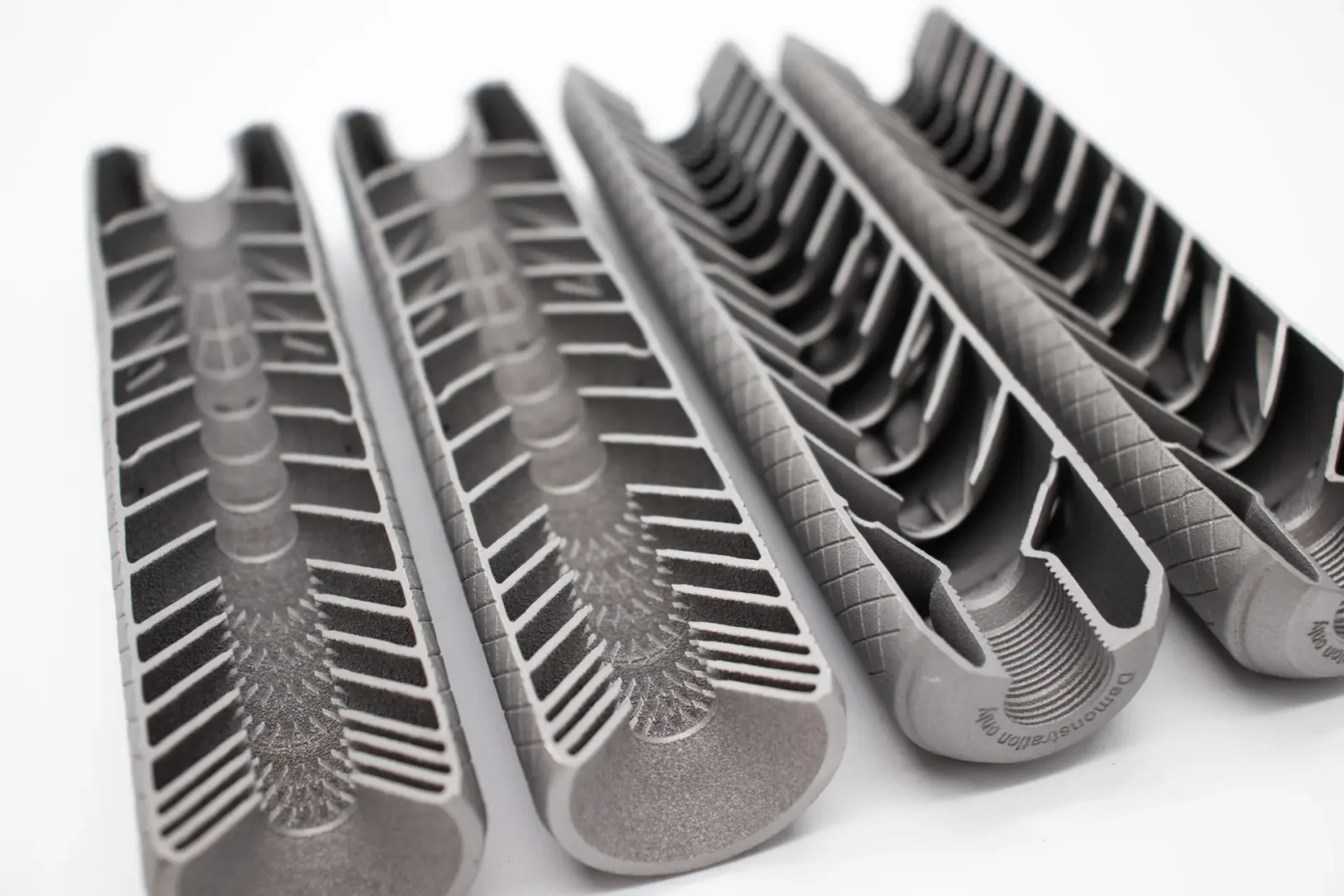
The Department also folded in hearing-protection evidence, noting that suppressors have been endorsed by a non-profit medical organization as “an effective method of reducing the risk of hearing loss” related to firearm usage, an endorsement resting on a 2011 CDC study that identified sound suppressors as “[t]he only potentially effective noise control method to reduce noise exposure from gunfire.” It is the same hearing-safety framing Judge Jerry Smith used in the Fifth Circuit's Comeaux ruling that suppressors are Second Amendment ‘Arms’, decided five weeks earlier. Two different branches of the federal government, working from the same public-health record, arrived at the same characterization of the device inside a single quarter.
The rule was signed by Thomas G. DiNanno, Under Secretary for Arms Control and International Security.
What Stays on the Munitions List
Suppressors specially designed for fully automatic firearms and fully automatic shotguns remain ITAR-controlled. The revised Category I(e) now reads: “Silencers, mufflers, and sound suppressors, specially designed for defense articles described in paragraph (b) or (d) of this category.” Category I(b) is fully automatic firearms to .50 caliber; Category I(d) is fully automatic shotguns regardless of gauge. State kept them on the list because their design properties “enable them to enhance the utility of fully automatic firearms (e.g., increased heat dissipation to handle multiple rounds)” and, given the inherent military nature of those weapons, have limited non-military use cases.
For anyone reading this as a suppressor buyer rather than an exporter, that line matters less than it sounds. A can rated for full-auto fire is not automatically “specially designed” for a machine gun in the ITAR sense; the test is whether the item was designed for the automatic host, not whether it survives the duty cycle. The bulk of the commercial market, including every rifle and pistol can you would buy on a Form 4, lands on the Commerce side.
Where a Can Can Actually Go
The two new ECCNs carry different control profiles, and the shotgun entry is meaningfully looser. ECCN 0A501.f suppressors, which is the rifle and pistol category, are controlled for national security (NS1), regional stability (RS1), firearms convention (FC1), UN embargo, and antiterrorism (AT1) reasons. ECCN 0A502.f shotgun-only suppressors carry FC1, UN, AT1, and a new regional-stability control at 15 CFR 742.6(a)(14).
That new paragraph is the notable carve-out. It requires a license to export shotgun suppressors everywhere except NATO member states, Australia, Austria, India, Ireland, Japan, Liechtenstein, New Zealand, South Korea, and Switzerland. Read that list narrowly: those destinations are exempt from the new regional-stability requirement only, and the firearms convention, UN embargo, and antiterrorism controls on 0A502.f still apply and can require authorization on their own. Rifle and pistol cans get no such list; BIS will review those applications case by case to all destinations. There is also a Shipments of Limited Value (LVS) allowance covering both entries up to $500 when the ultimate destination is Canada, which is close to academic given that Canadian civilians cannot own suppressors at all.
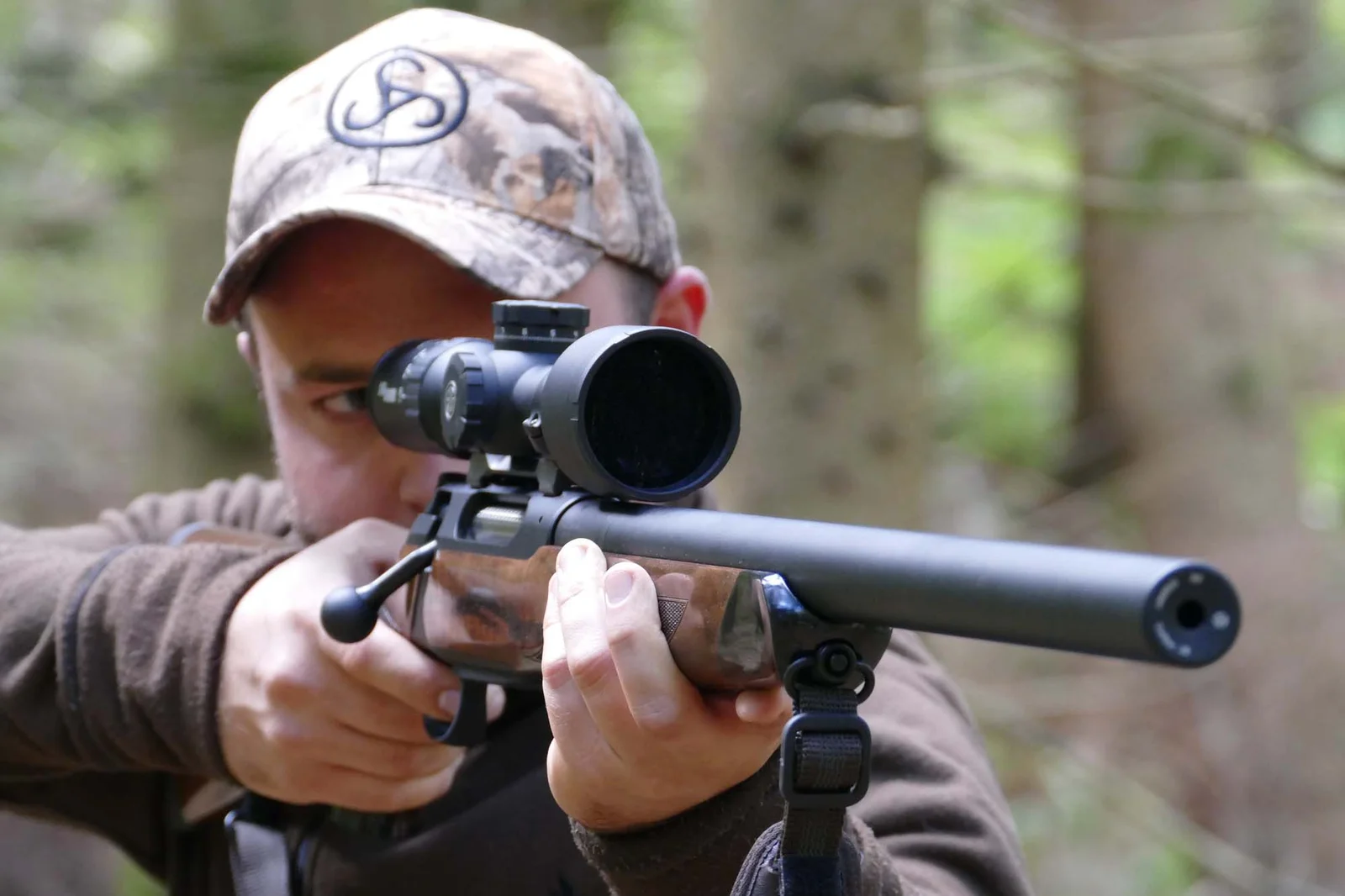
Currently Stocked Suppressors
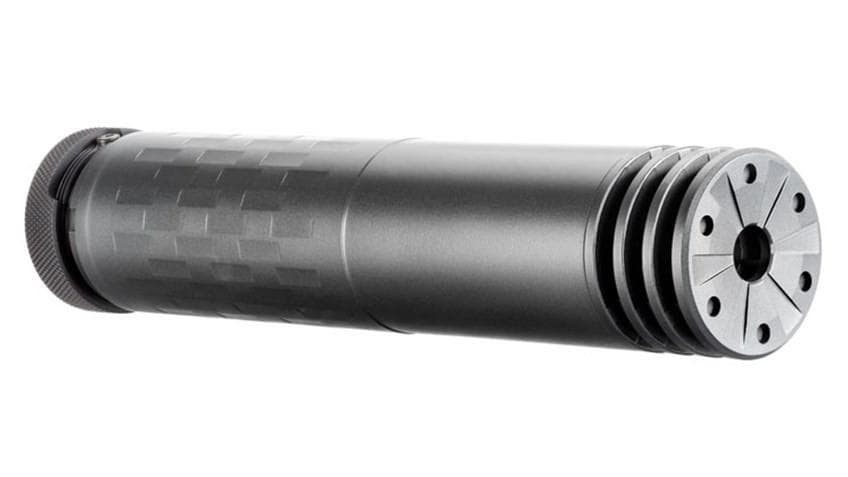
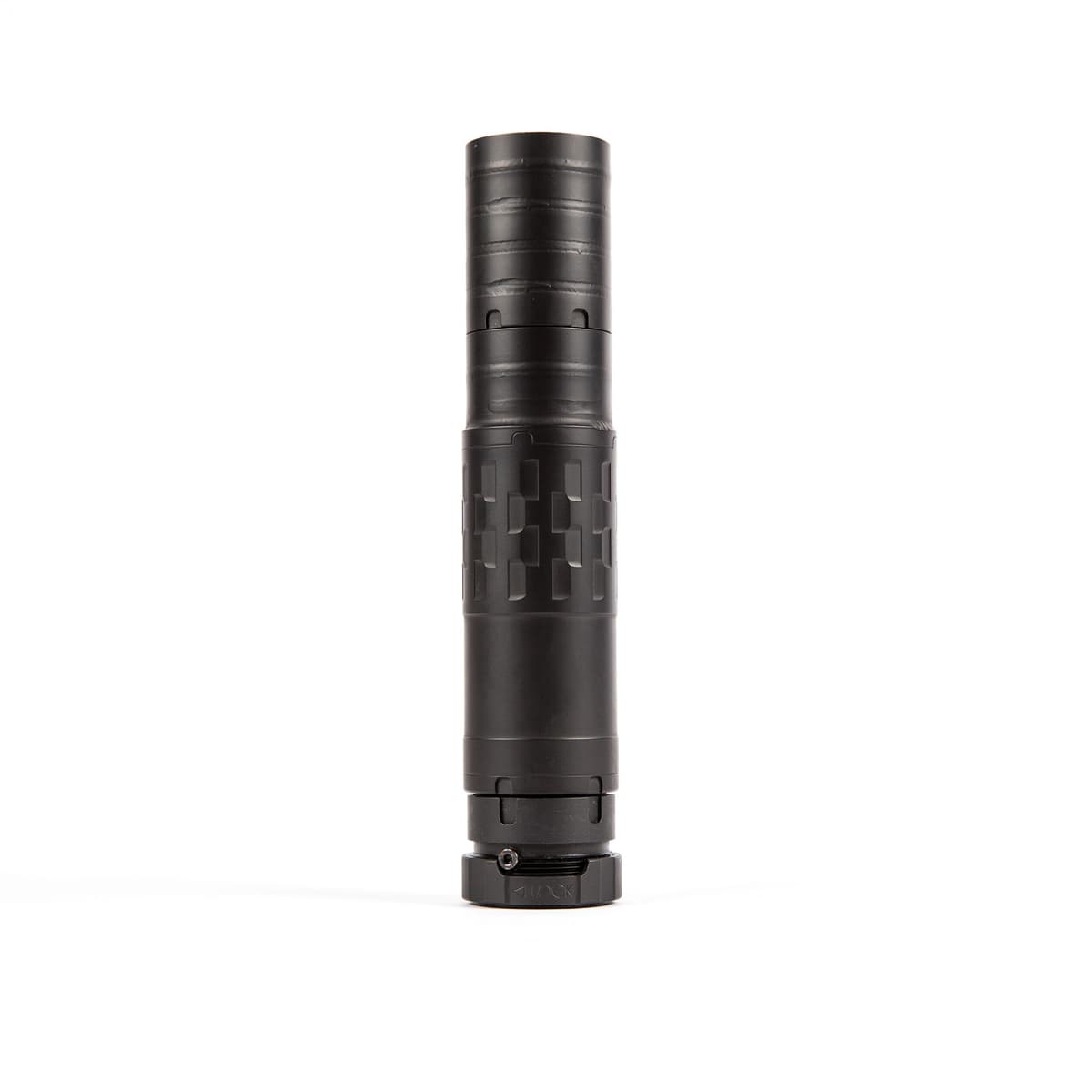
SilencerCo Omega 300
- .30 cal rated
- Direct thread + QD
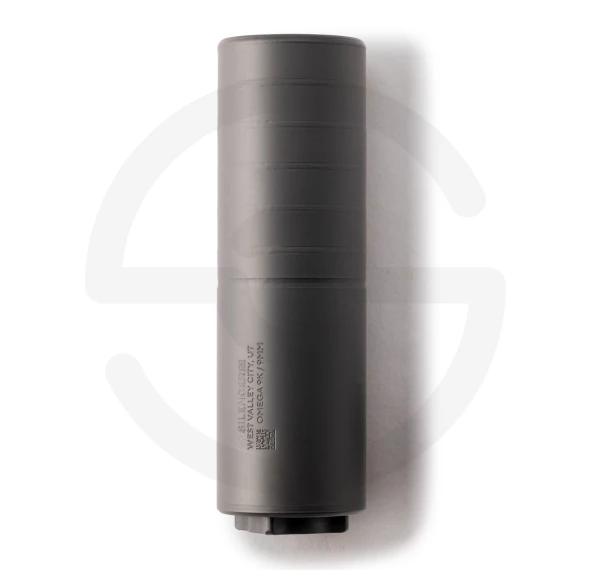
SilencerCo Omega 36M
- 5.7x28 to 9mm / 5.56 to .338 LM / .350 Legend
- 17-4 stainless, titanium, Inconel, Cobalt 6
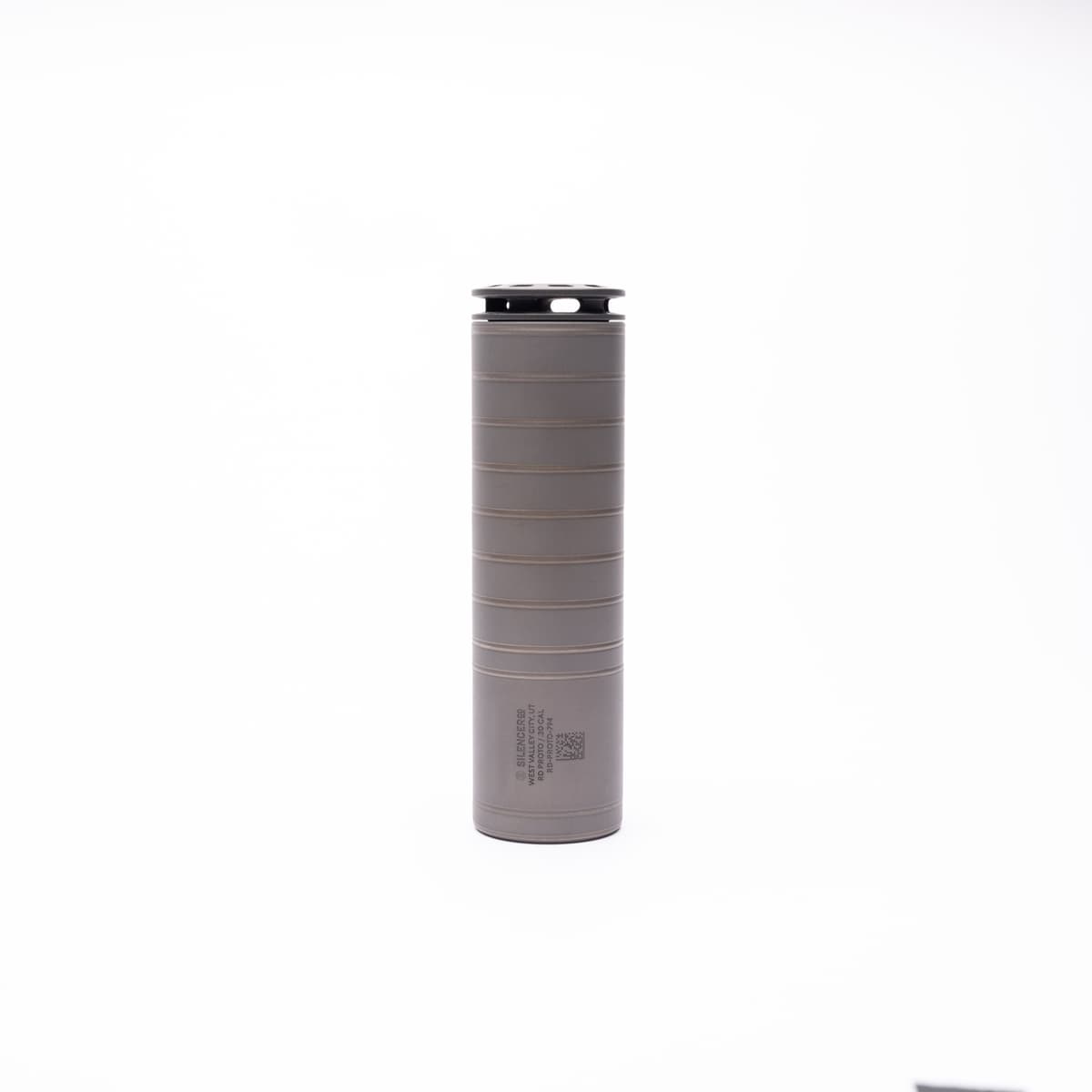
SilencerCo Omega 9K
- 9mm + .300 BLK rated
- 4.54 inches
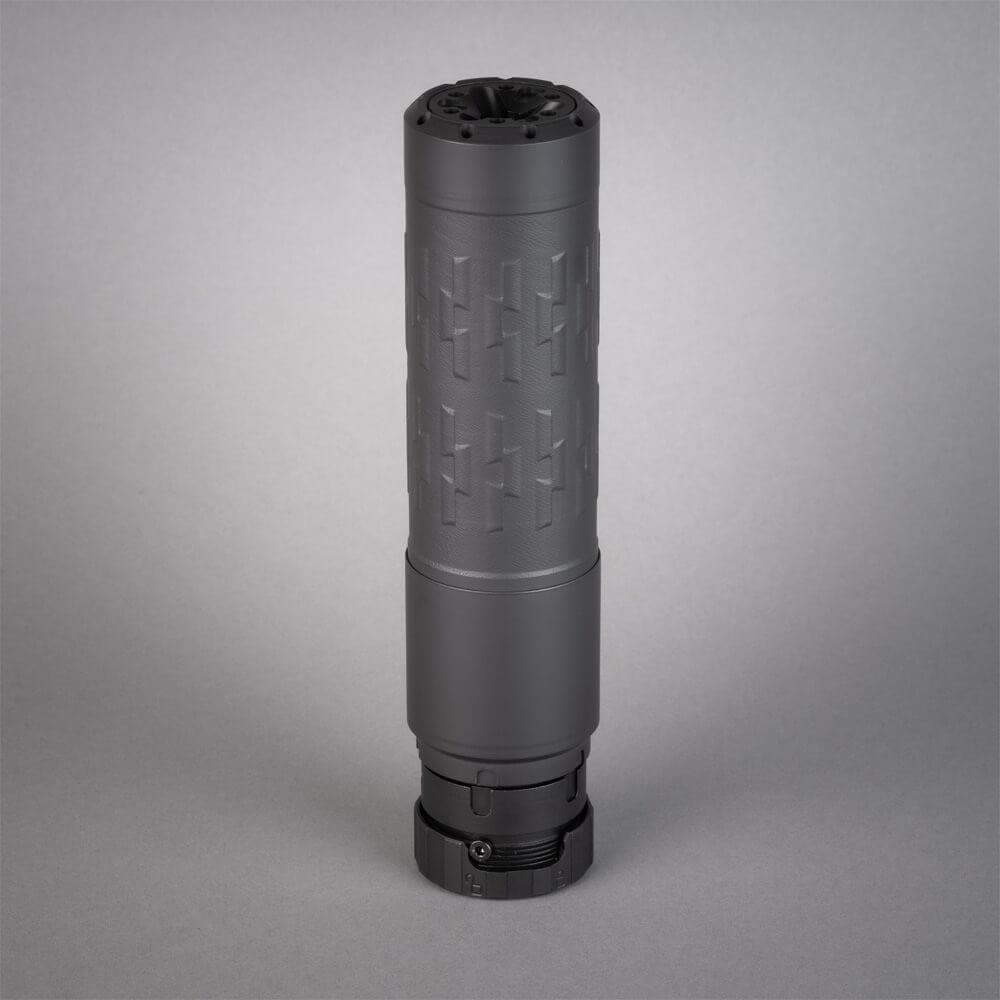
SilencerCo Scythe Ti
- .223 Rem and 5.56 NATO through .300 RUM
- 6.16 in
SilencerCo Velos LBP 762
- .223 Rem and 5.56 NATO through .300 RUM
- 6.4 in
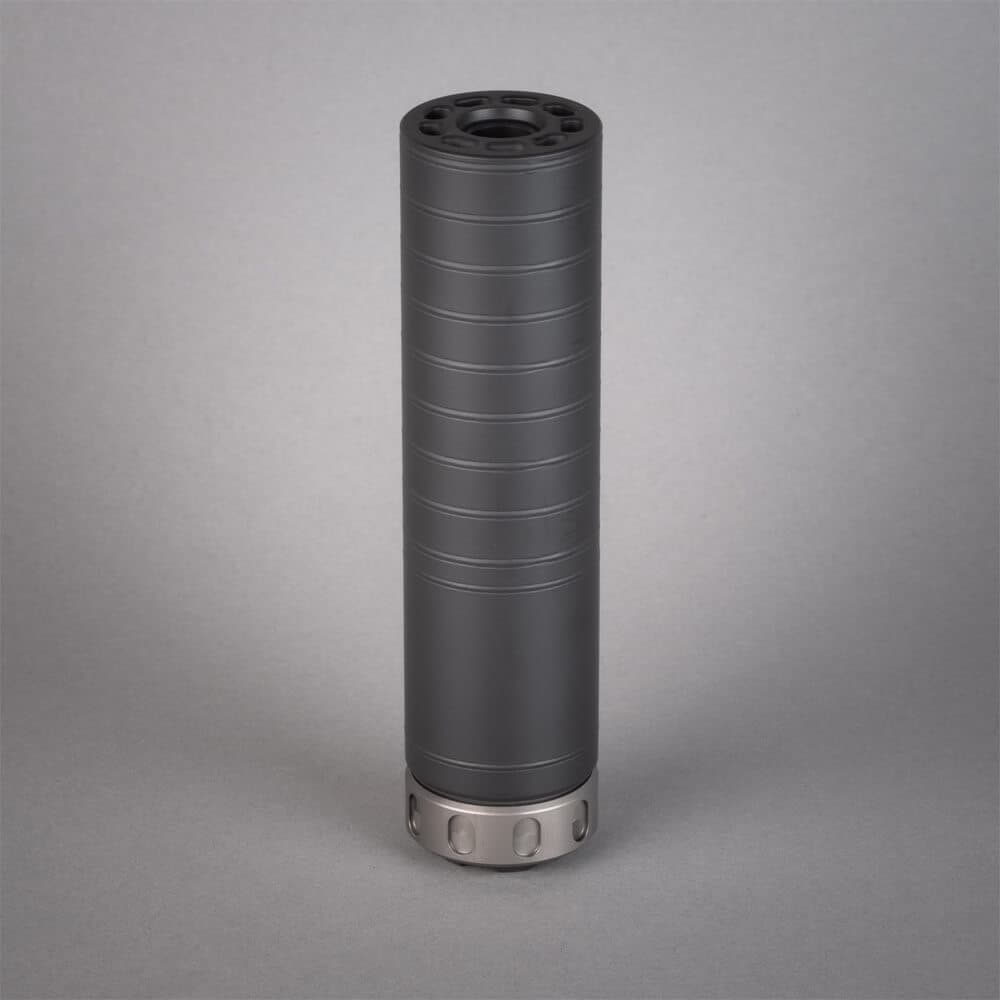
SilencerCo Spectre 9
- 9mm and .300 BLK subsonic
- 4.76 inches
Affiliate links (?)
Taking Your Suppressor Out of the Country
License Exception BAG is the part of this rule that touches individual owners rather than manufacturers. 15 CFR 740.14 lets US citizens and permanent resident aliens leaving the country temporarily take firearms for personal use while abroad, and parts, components, accessories, and attachments controlled under ECCN 0A501 already travel under paragraph 740.14(e)(3). Because the Commerce rule classifies suppressors as exactly that kind of item, they become BAG-eligible on November 20, 2026. The rule also adds shotgun parts and accessories under ECCN 0A502 to BAG, correcting what BIS calls an inadvertent omission.
In plain terms, the export-license barrier to taking a can on a European driven hunt or a New Zealand tahr trip comes down. Three things still stand in the way, and none of them are waived by this rule.
First, the destination country's import law governs independently. New Zealand regulates suppressors under its ordinary firearms framework; Canada prohibits civilian possession outright. The US letting an item leave says nothing about another country letting it in, so verify the destination rules for your specific trip.
Second, the NFA side is untouched, and ATF's own forms do not cleanly cover a round trip. Your suppressor is still a registered NFA firearm. ATF Form 9 (5320.9), the export permit required by 27 CFR 479.114, is titled Application and Permit for Permanent Exportation of Firearms, so it addresses a can you are not bringing home. ATF Form 5320.20 is the one that handles temporary export, but its mandatory scope covers machine guns, short-barreled rifles, short-barreled shotguns, and destructive devices; silencers are not on that list. Neither form squarely addresses a suppressor that leaves and comes back. Get written guidance from the ATF NFA Division for your specific itinerary before you book, and keep the response.
Third, plan the return trip. A CBP Form 4457 registering the serial-numbered item before departure is the standard way to document that a firearm or accessory left the US in your possession, which is what keeps re-entry from turning into an import question.
What It Means for US Suppressor Buyers
Nothing changes at the dealer counter, and the second-order effect is manufacturing scale. American suppressor makers have largely sized production against US demand, because NSSF says the ITAR regime made the commercial export path economically impractical. NSSF Senior Vice President and General Counsel Lawrence G. Keane framed the rules as “a tremendous boost to ensure American suppressor manufacturers can compete on an even playing field in overseas markets without burdensome and unnecessary regulatory burdens imposed on exporting USML items that made commercial export of suppressors economically impractical.” The American Suppressor Association, which has pushed the reform for over a decade, characterized it through executive director Knox Williams as a major step toward letting American businesses compete in established international commercial markets.
Stack that against the $0 federal tax stamp that took effect January 1, 2026 and you have two structural demand expansions inside one year: a domestic one that removed a $200 friction point per unit, and an international one that opens markets where suppressors are sold like any other hunting accessory. We documented the domestic half of that at SHOT Show 2026, where the $0 stamp reshaped the show floor. The export half compounds it.
What that does not mean is a price drop this year. Export licensing does not open until November 20, and manufacturing scale moves prices over years, not quarters. If you are shopping now, shop on current merits. Our suppressor buying guide covers the $0 tax process end to end, and the suppressor mounting systems guide covers HUB, KeyMo, ASR, and SOCOM lockup before you commit to an ecosystem. For host-side setup, the AR-15 suppressor compatibility and tuning guide handles gas and backpressure.
The Domestic Rules Are Unchanged
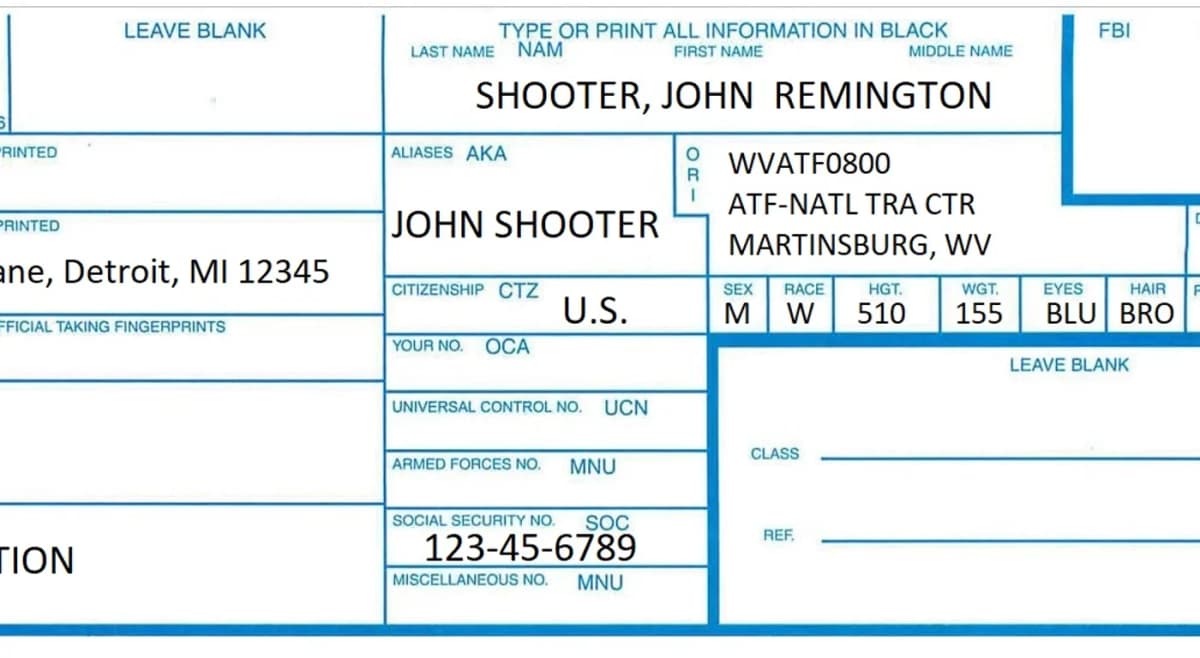
This is export-control law and it does not touch how you buy a suppressor in the US. The Form 4 transfer, fingerprints, photographs, NICS check, and federal registration all remain in force. The federal making and transfer tax on suppressors, SBRs, SBSs, and AOWs went to $0 on January 1, 2026 under the One Big Beautiful Bill Act, and eForm 4 approvals through 2026 have run from a few days to a couple of weeks.
State law is still the real constraint on ownership. Civilian suppressor possession is legal in 42 states, with California, Delaware, Hawaii, Illinois, Massachusetts, New Jersey, New York, and Rhode Island prohibiting it. Check your state law before you start a transfer, and note that a state ban on possession is a bar on the return leg of any international trip too.
Stay Updated on Suppressor Law and Launches
Rule changes, court decisions, and new can releases, sent when something actually moves. No daily digest.
Frequently Asked Questions
▶Are you allowed to travel with a suppressor?
▶What countries allow suppressors?
▶Does this rule change anything about buying a suppressor in the US?
▶Which suppressors stay on the US Munitions List?
▶When does the suppressor export rule take effect?
▶Why does suppressor export policy matter to a US buyer?
Bottom Line
November 20, 2026 is the date suppressors for non-automatic and semi-automatic hosts stop being munitions and start being export-controlled commercial goods, and the reasoning State published to get there is as significant as the rule itself. A device the government classified alongside military hardware for decades is now, in the Department's own assessment, one that provides no critical military or intelligence advantage.
For owners, the concrete win is License Exception BAG. Taking a can abroad for a hunt goes from an ITAR problem to a paperwork problem, with ATF's form gap on temporary export and the destination country's import law as the remaining work. For the industry, it is the second demand expansion of 2026 after the $0 stamp, and it lands on manufacturers who have never had access to the civilian markets where suppressors are sold off a shelf.