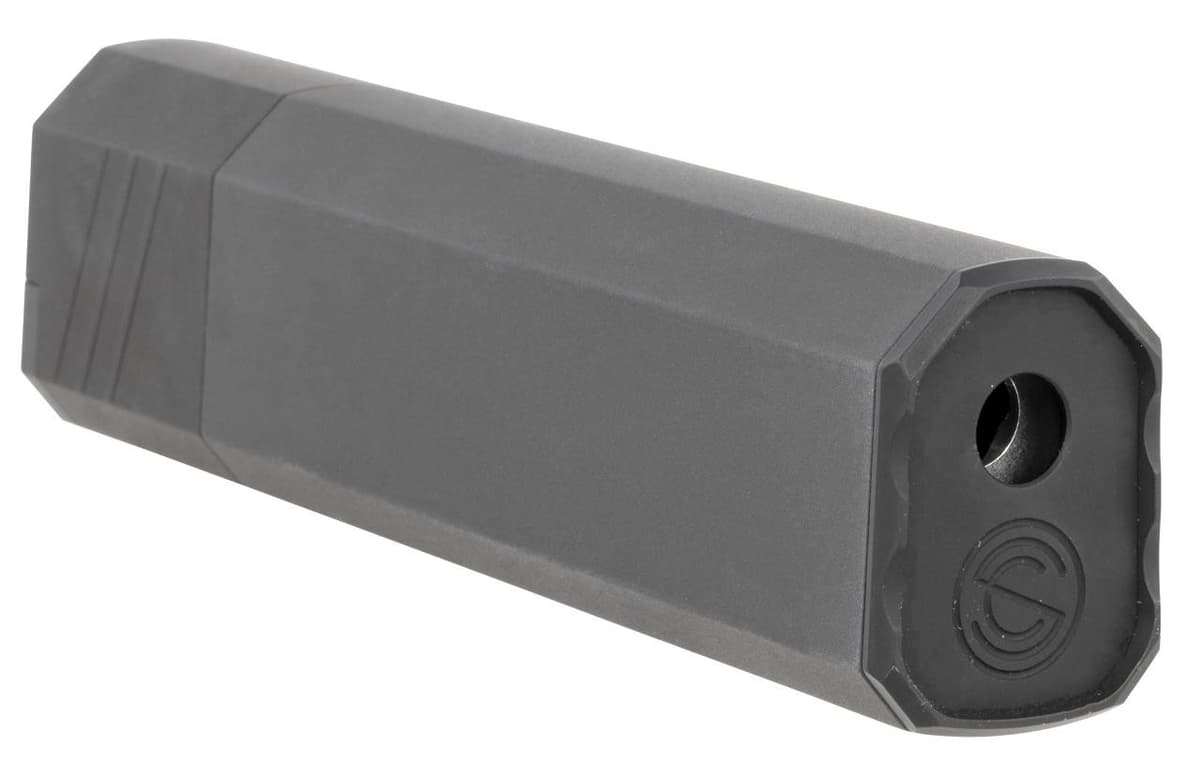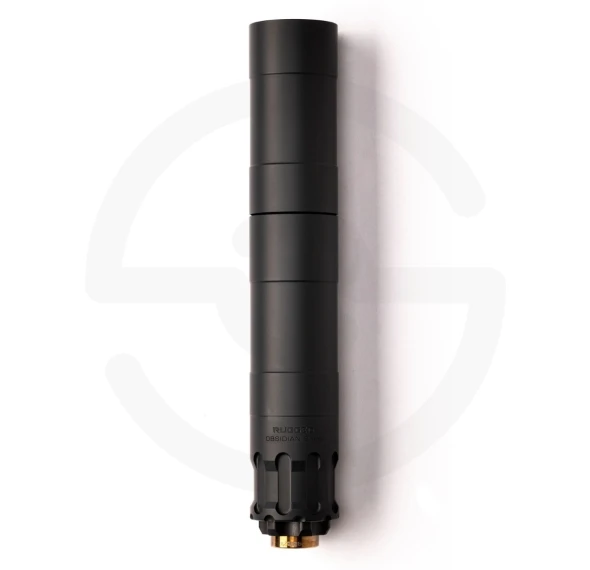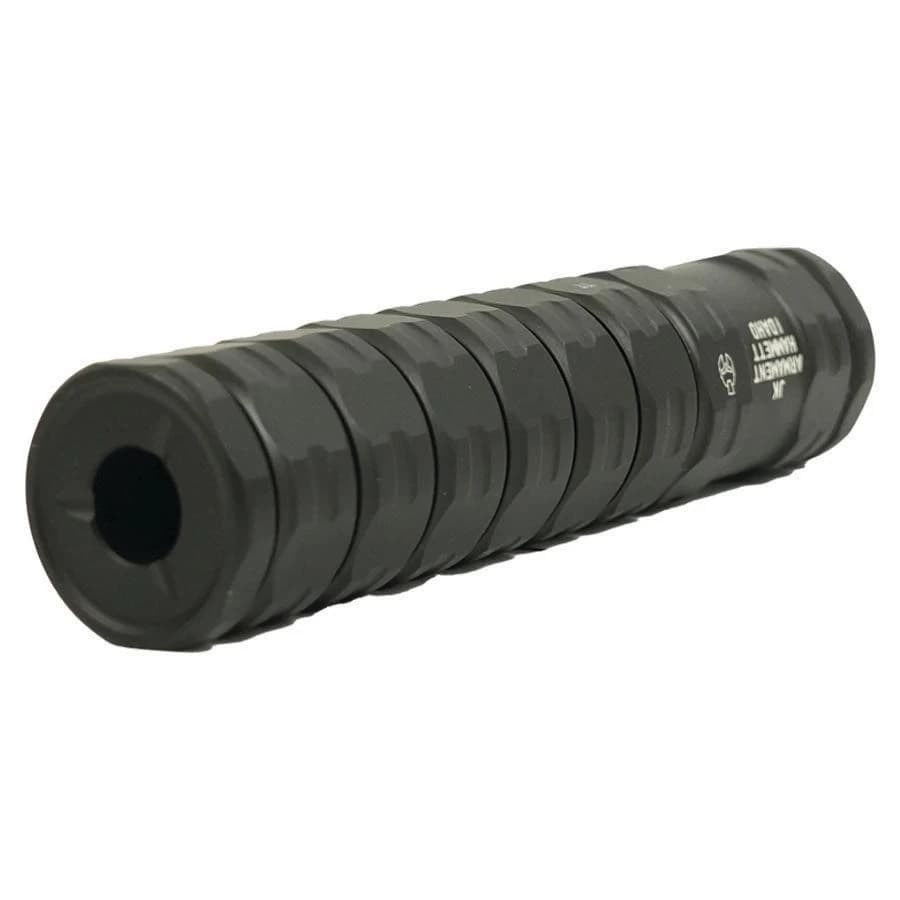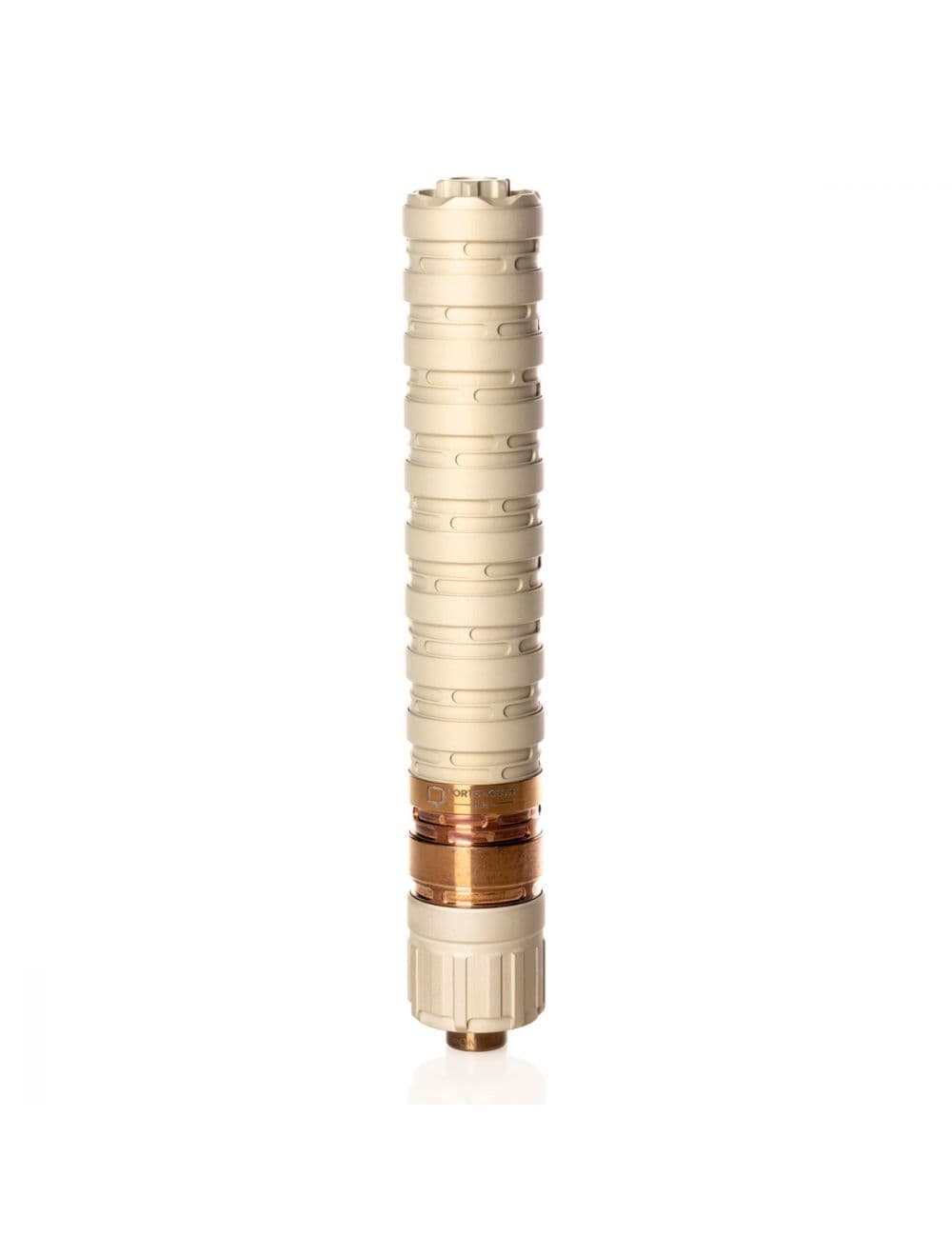
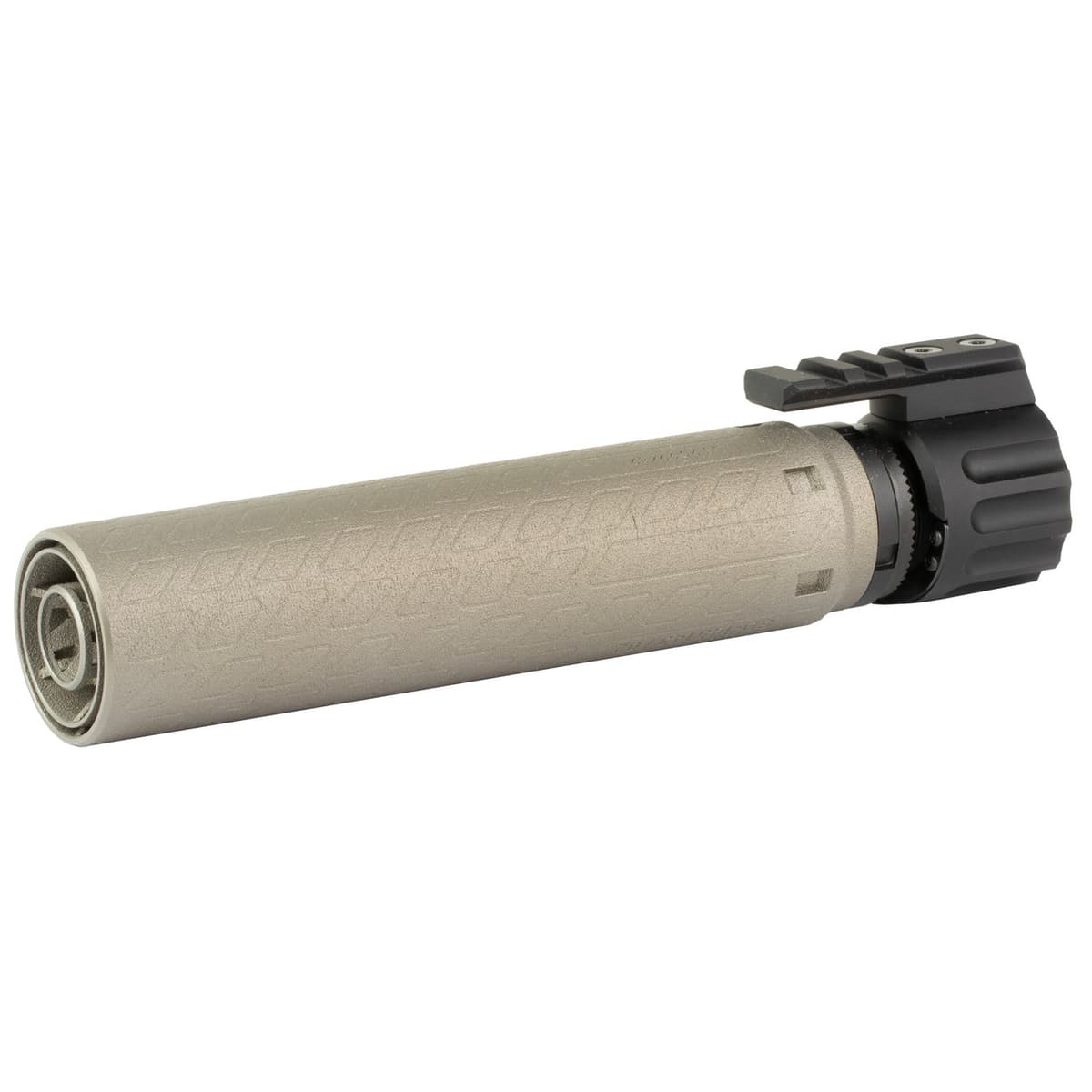
SilencerCo Osprey 9 2.0
- Eccentric bore sits below the sight line
- Push-button locking and indexing mount
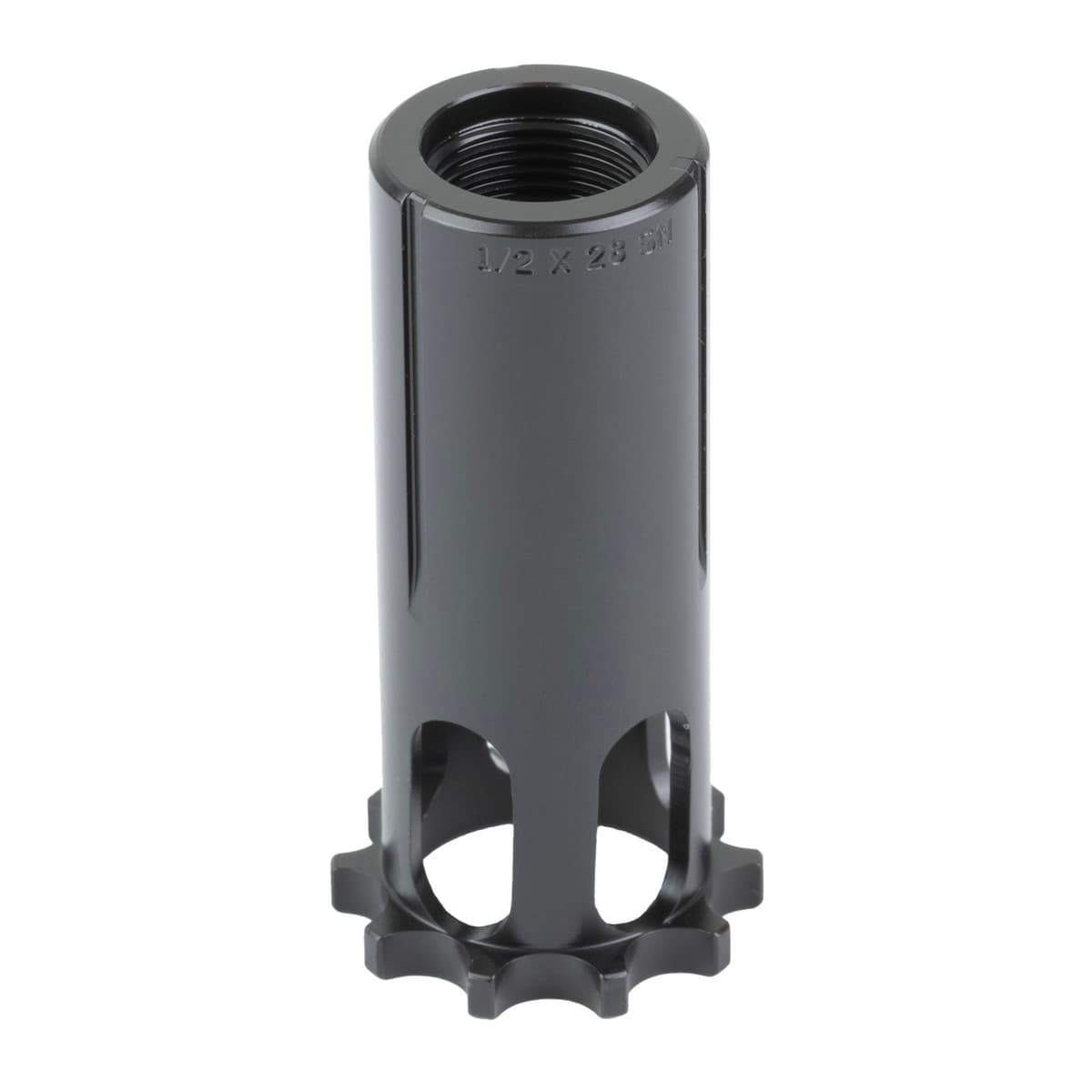
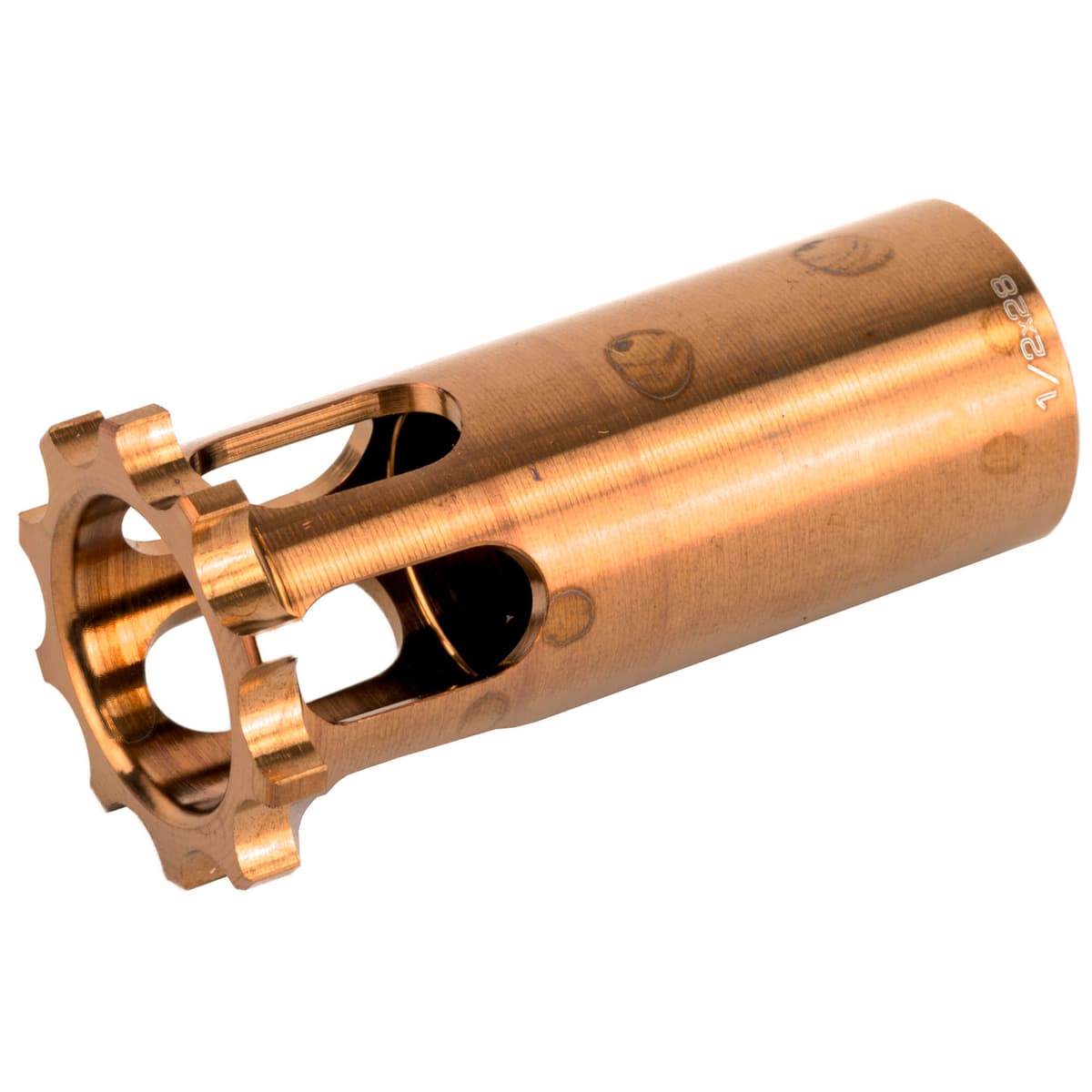
- 1/2x28 piston sold separately

Running a can on a Glock or P320 is not just thread-and-go. Here is how the booster piston makes a tilting-barrel pistol cycle, when a fixed-barrel spacer replaces it, how to match thread pitch, and which sights and holster keep the setup usable.
Affiliate links (?)
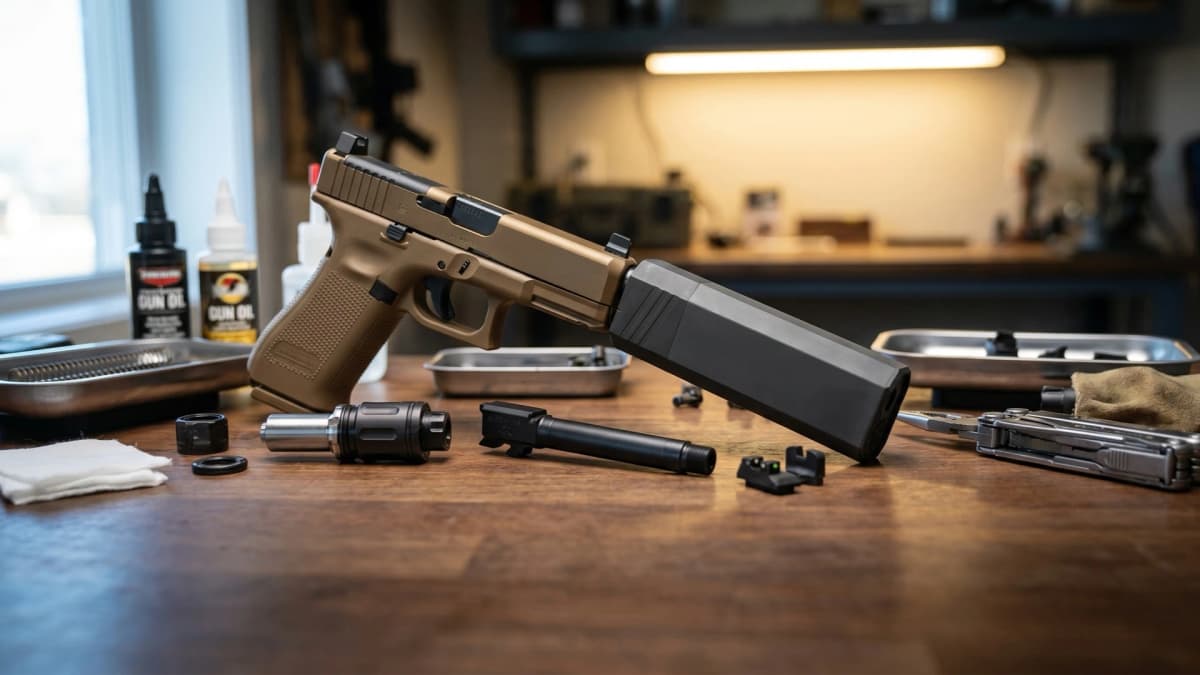
Running a can on a Glock or P320 is not thread-and-go. A tilting-barrel pistol needs a booster piston to cycle with the extra muzzle weight, a fixed-barrel host needs a rigid spacer instead, and both need the thread pitch matched before the piston ever ships. Here is the full setup, from the booster down to the holster.
A tilting-barrel pistol like a Glock or SIG P320 needs a booster piston, also called a Nielsen device, to cycle with a suppressor mounted; a fixed-barrel host like a PCC or many subguns uses a rigid spacer instead. The reason is the action. A Browning-action pistol unlocks by tilting the barrel down as the slide recoils, and the mass of a can hanging off the muzzle resists that tilt. Without help, the barrel cannot unlock cleanly and the slide short-strokes, stovepipes, or fails to feed.
The booster fixes this by letting the suppressor stay momentarily stationary while the barrel and slide recoil and unlock. A spring inside the mount absorbs and then returns the energy, so the can does not drag on the barrel during the critical unlock stroke. Once the action has cycled, the spring pushes the suppressor back to battery. This is why a Glock with a can on a static mount will choke, and the same Glock with a booster runs.
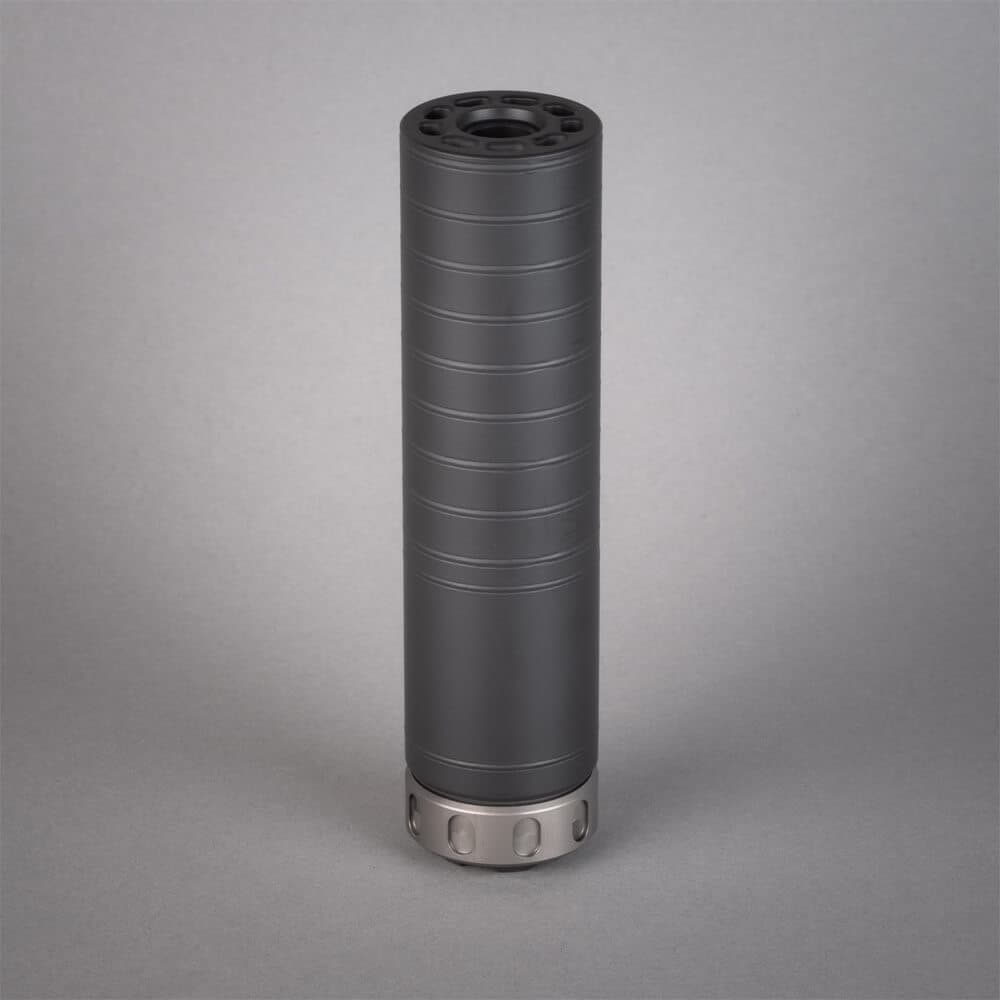
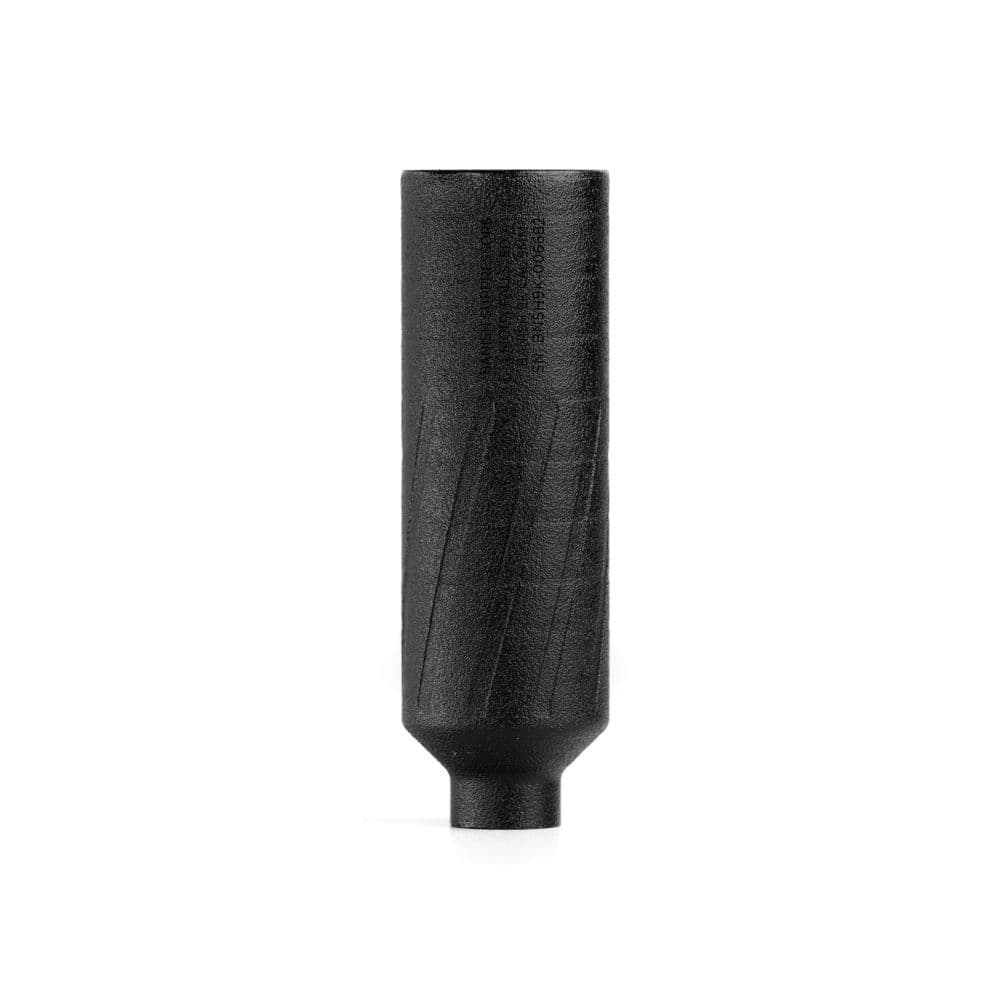
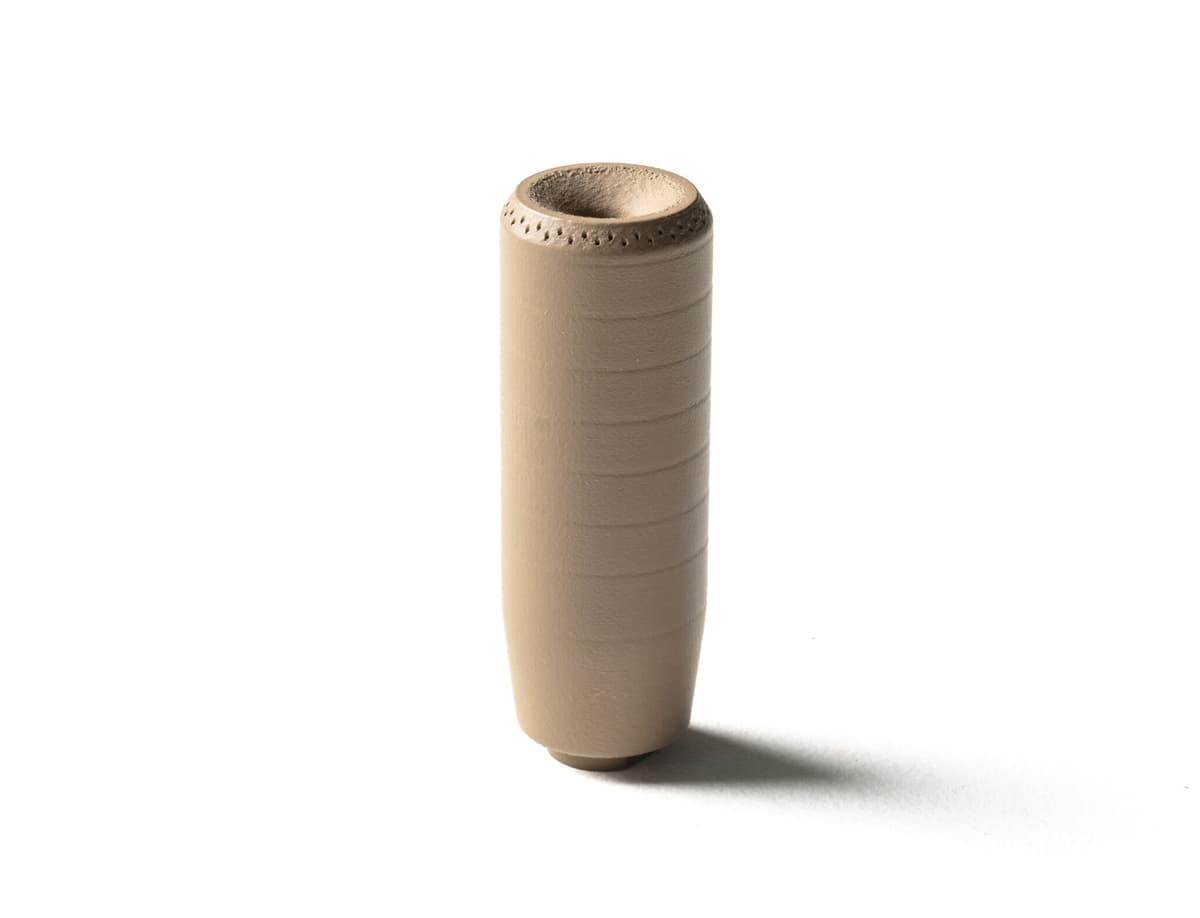
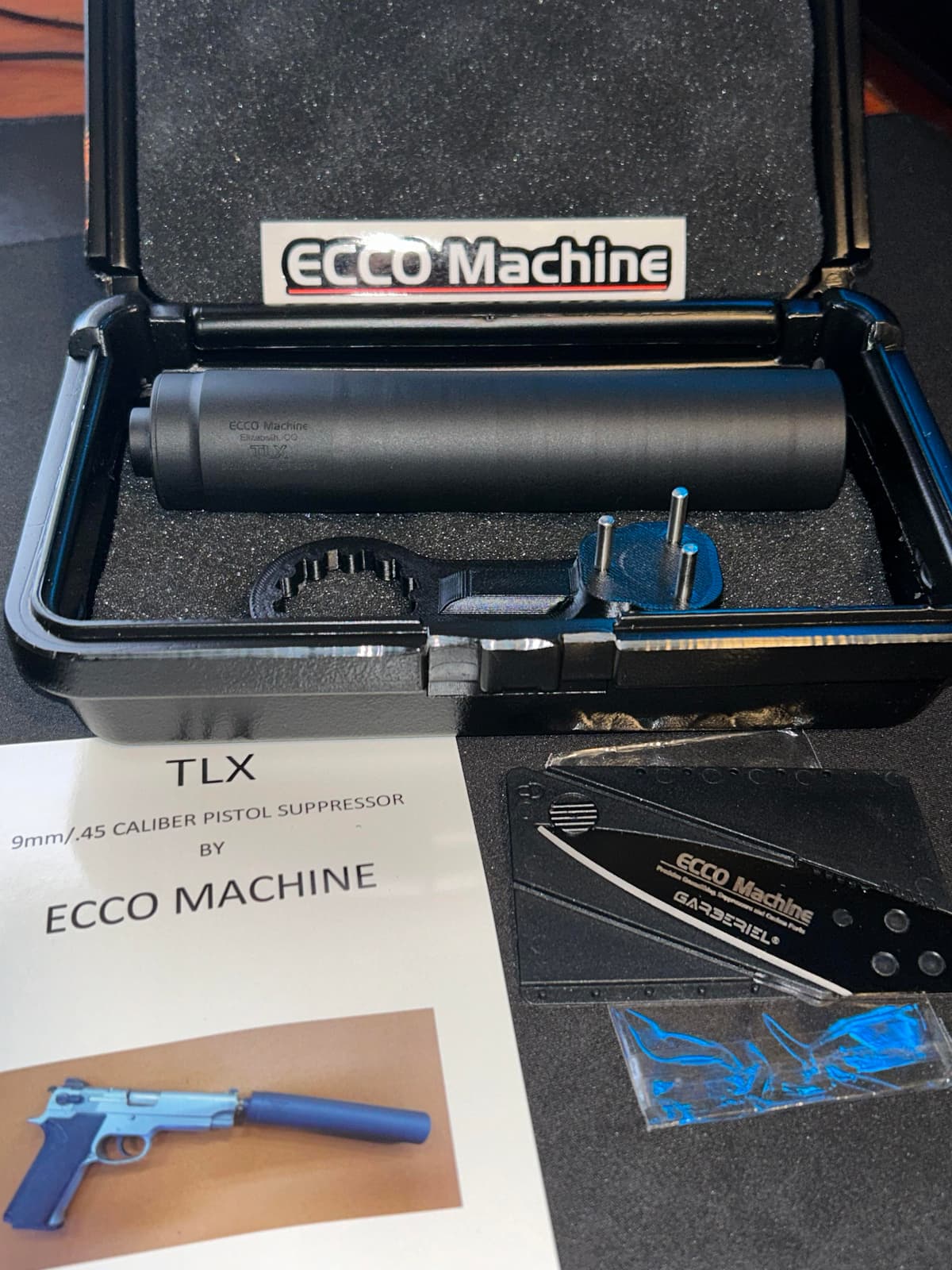
A fixed-barrel host does not tilt at all. On an AR-9, an MPX, a Vector, or a roller-delayed PCC, the barrel is locked to the receiver and never moves, so there is nothing for a booster spring to accommodate. A spring on a fixed barrel just adds slop. The fix is a fixed-barrel spacer that removes the spring and locks the can solid. Get the host type right first; everything downstream depends on it. If you have not bought the can yet, the best 9mm suppressor guide ranks pistol and PCC hosts by suppression score. Two modular cans below cover both setups: the Osprey keeps factory irons usable, and the Obsidian 9 takes either the piston or the spacer.
Affiliate links - purchases support this site at no extra cost to you. (?)
The booster piston is the single part that makes a tilting-barrel pistol cycle with a can, and it is both host-brand-specific and thread-pitch-specific. The external thread that mates to the suppressor differs by manufacturer, so a SilencerCo piston only fits a SilencerCo mount, a Rugged piston only fits the Obsidian housing, and a Dead Air P-Series piston only fits Ghost-M, Wolf-9SD, and Wolfman. The internal thread, the part that screws onto your barrel, is the pitch you have to match to the host. The three below cover the two pitches that account for nearly every 9mm pistol on the market.
Most common 9mm Glock/M&P booster piston
Value 9mm booster piston for the Obsidian 9
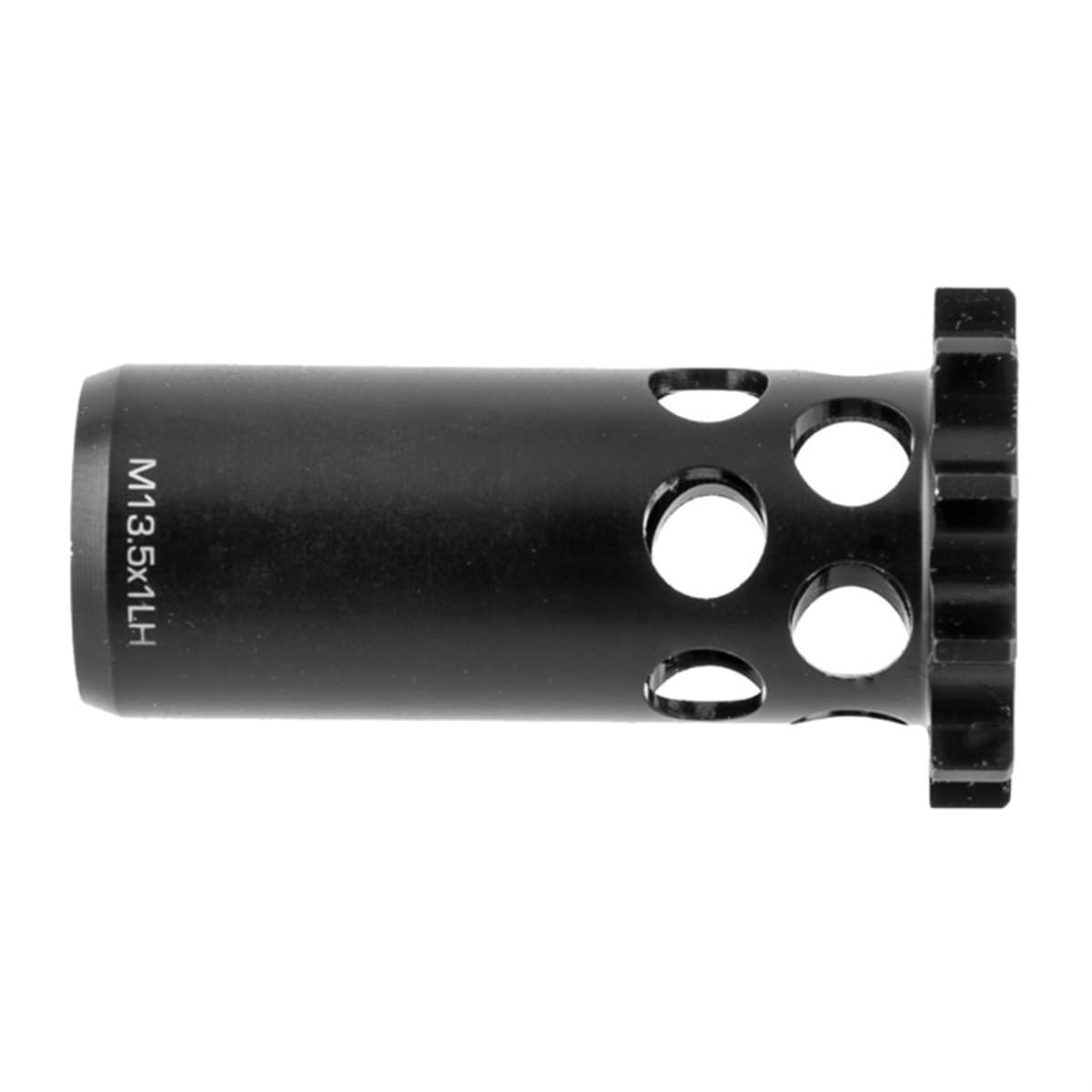
European-thread (M13.5x1 LH) 9mm hosts
Affiliate links - purchases support this site at no extra cost to you. (?)
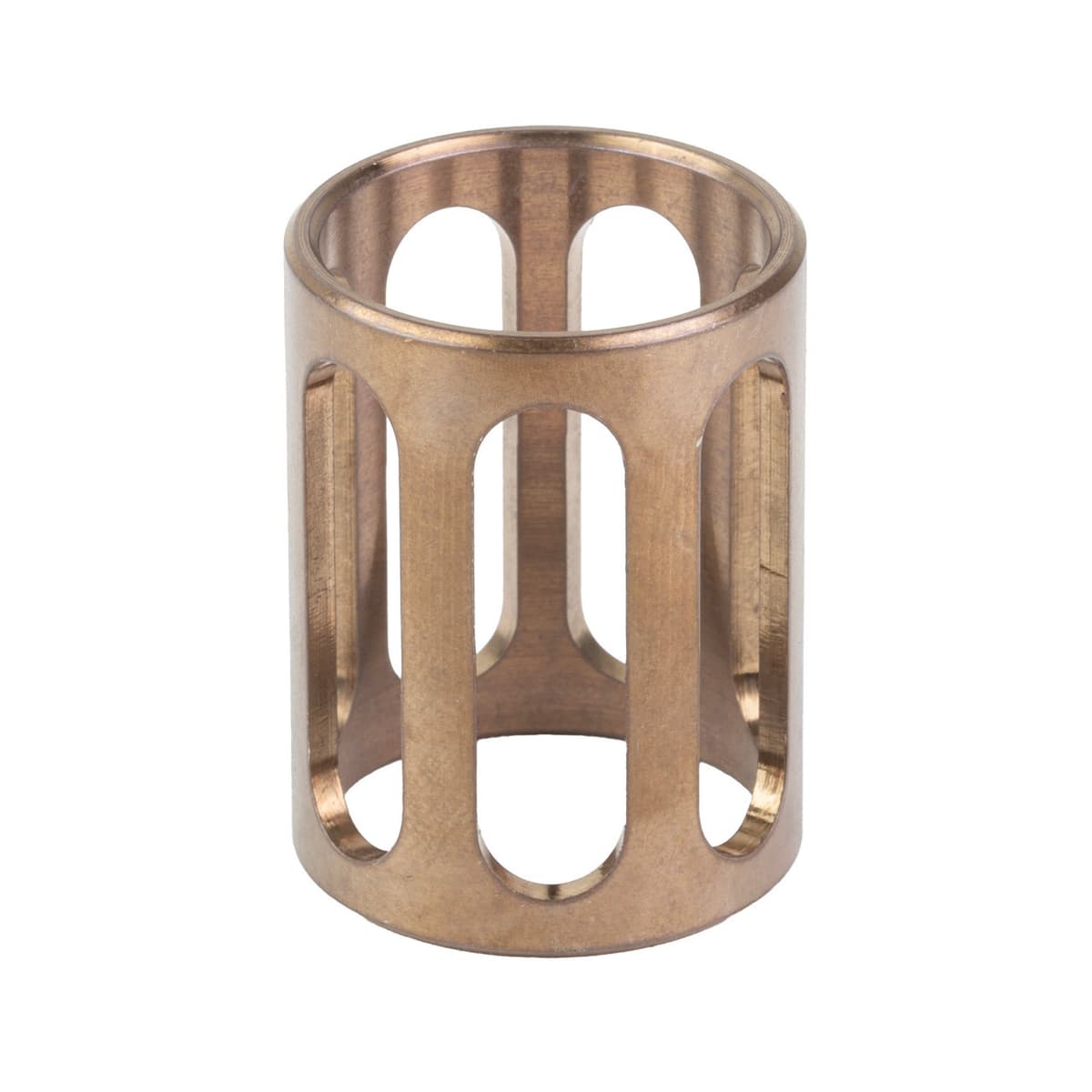
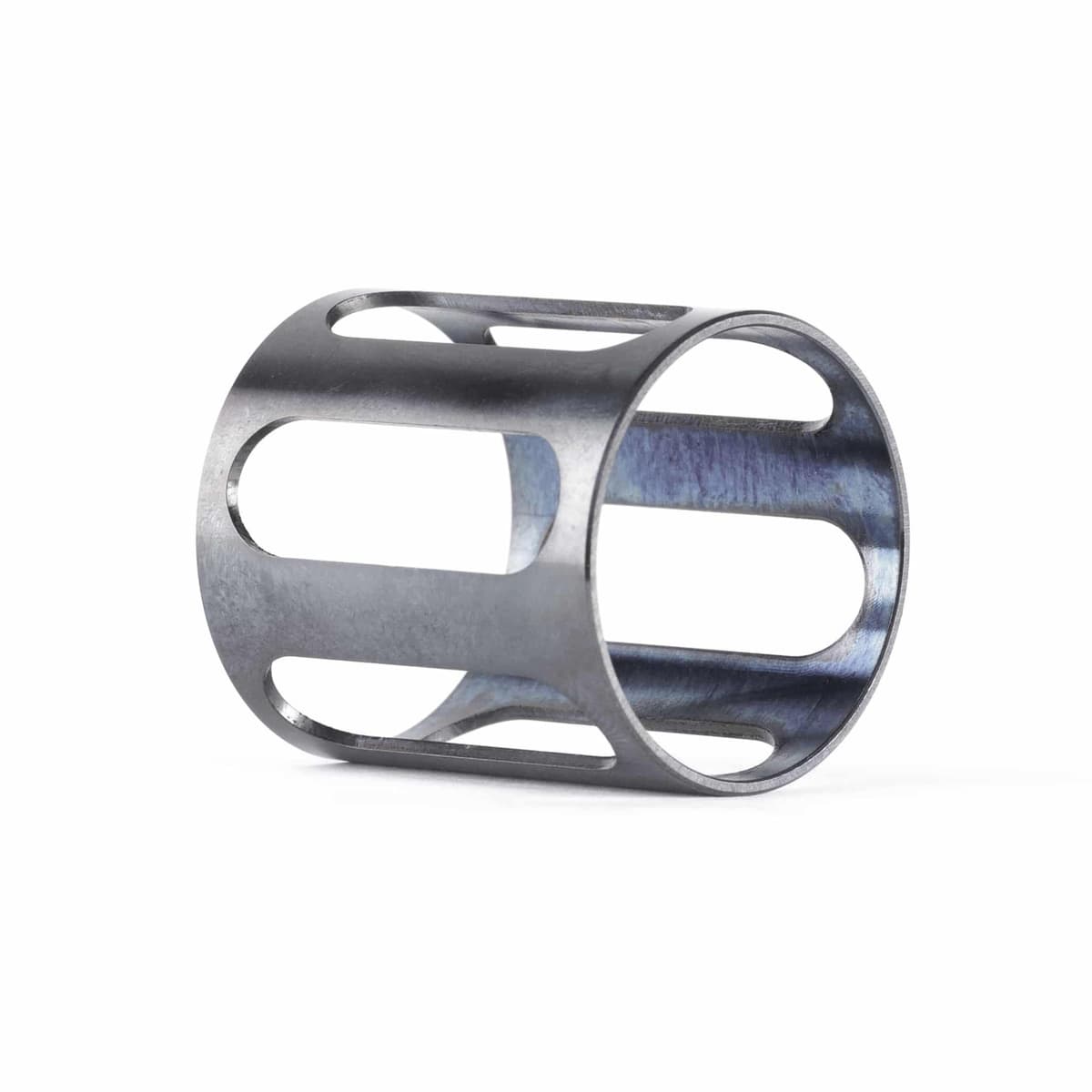
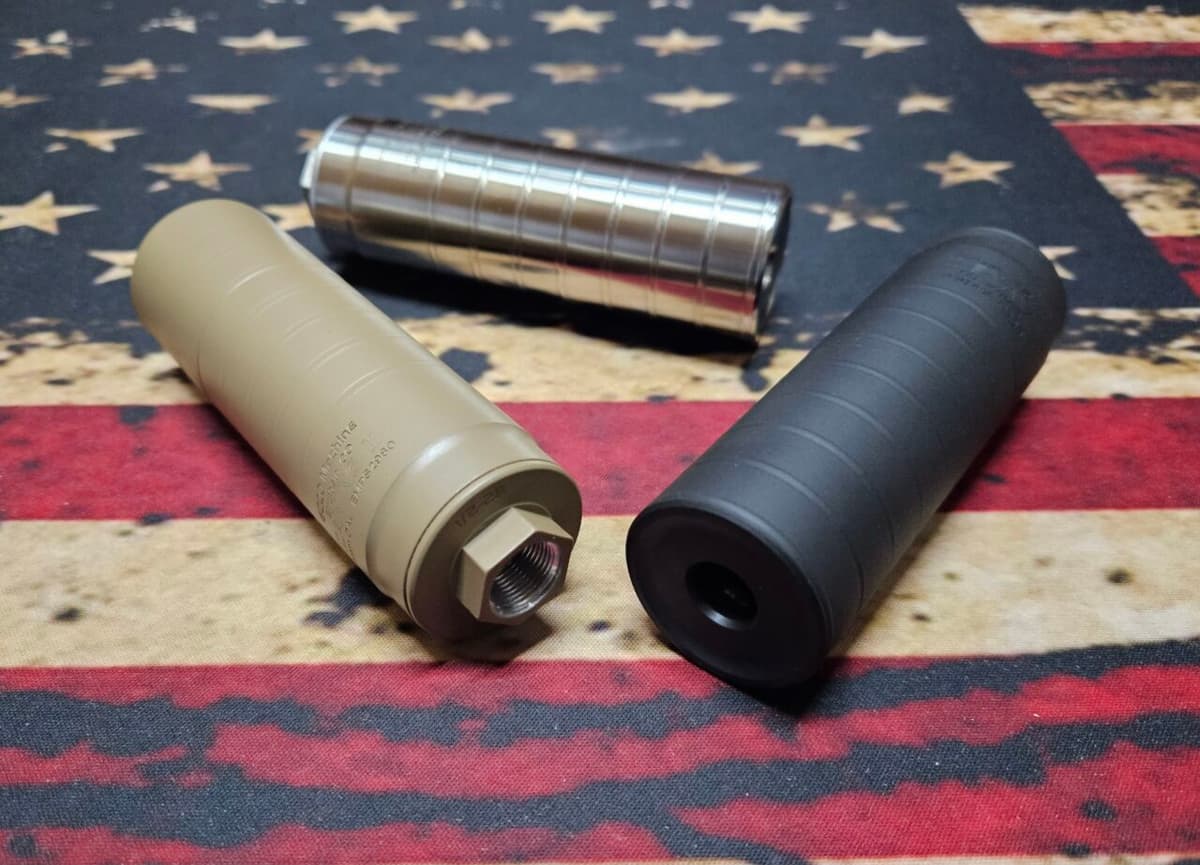
When the host barrel does not tilt, the fixed-barrel spacer replaces the booster spring so the can locks solid to the muzzle. This is the correct hardware for a direct-thread mount on an AR-9, an MPX, a Vector, or any roller-delayed or blowback PCC. Removing the spring does two things: it eliminates the piston wear that a static barrel would otherwise inflict on a booster, and it removes the small point-of-impact shift that a flexing spring can introduce on a non-tilting host. Each spacer is host-specific, matched to its own suppressor mount.
Locking a SilencerCo can to a fixed-barrel PCC
Direct-thread mounting on an AR-9 or MPX
Affiliate links - purchases support this site at no extra cost to you. (?)
Most domestic 9mm threaded barrels are 1/2x28, most European 9mm barrels are M13.5x1 LH (left-hand), and most .45 ACP barrels are .578x28. Pistons are sold by thread pitch and are not interchangeable across pitches, so a 1/2x28 piston will simply not thread onto an M13.5x1 LH barrel. Before you order anything, confirm the exact pitch stamped or specified for your host barrel. The wrong pitch is the single most common ordering mistake on a pistol can.
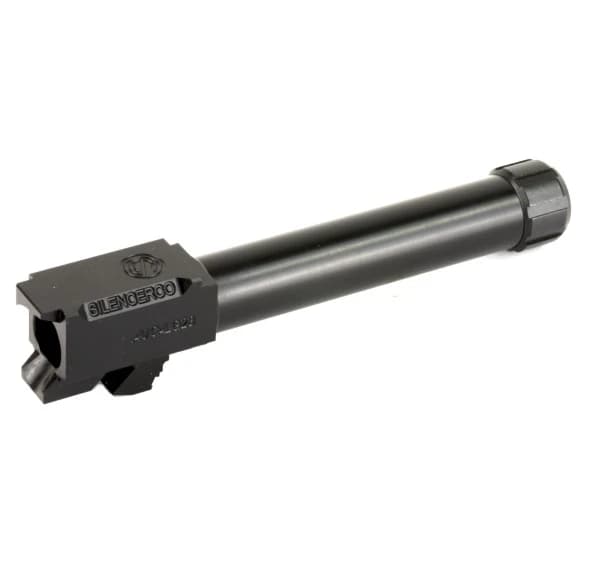
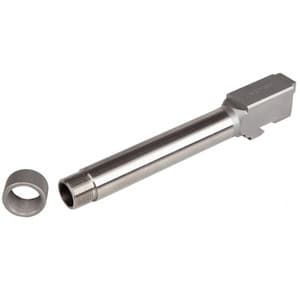
If your pistol came with a standard, non-threaded barrel, you add the threads by swapping in a drop-in threaded barrel. A threaded barrel also lets you keep a stock Glock slide and sights and still run a can, without buying a full comp barrel. The two below are 1/2x28 drop-in barrels for the most common Glock hosts; for the full lineup of threaded options, see the best Glock barrels guide. The mount on the back of the can is its own decision: the suppressor mounting systems guide compares HUB, KeyMo, and ASR for the rifle and multi-host side of the same can.
Affiliate links - purchases support this site at no extra cost to you. (?)
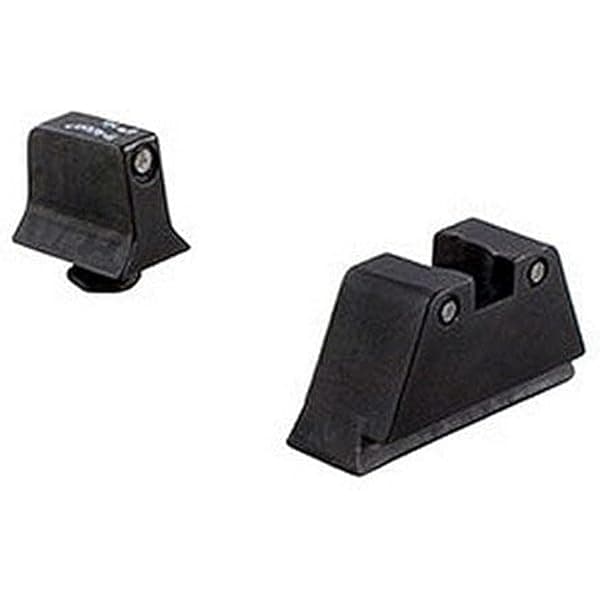
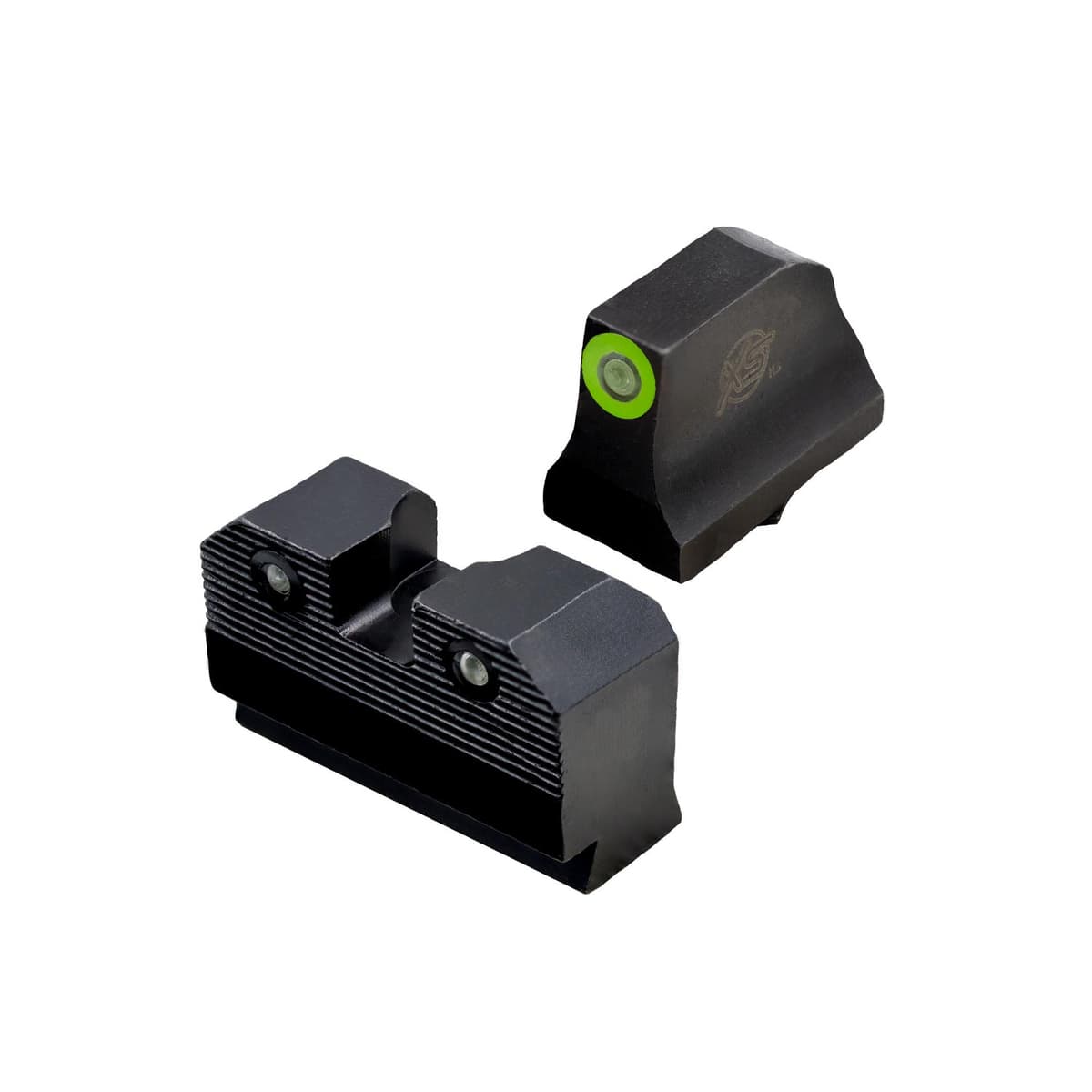
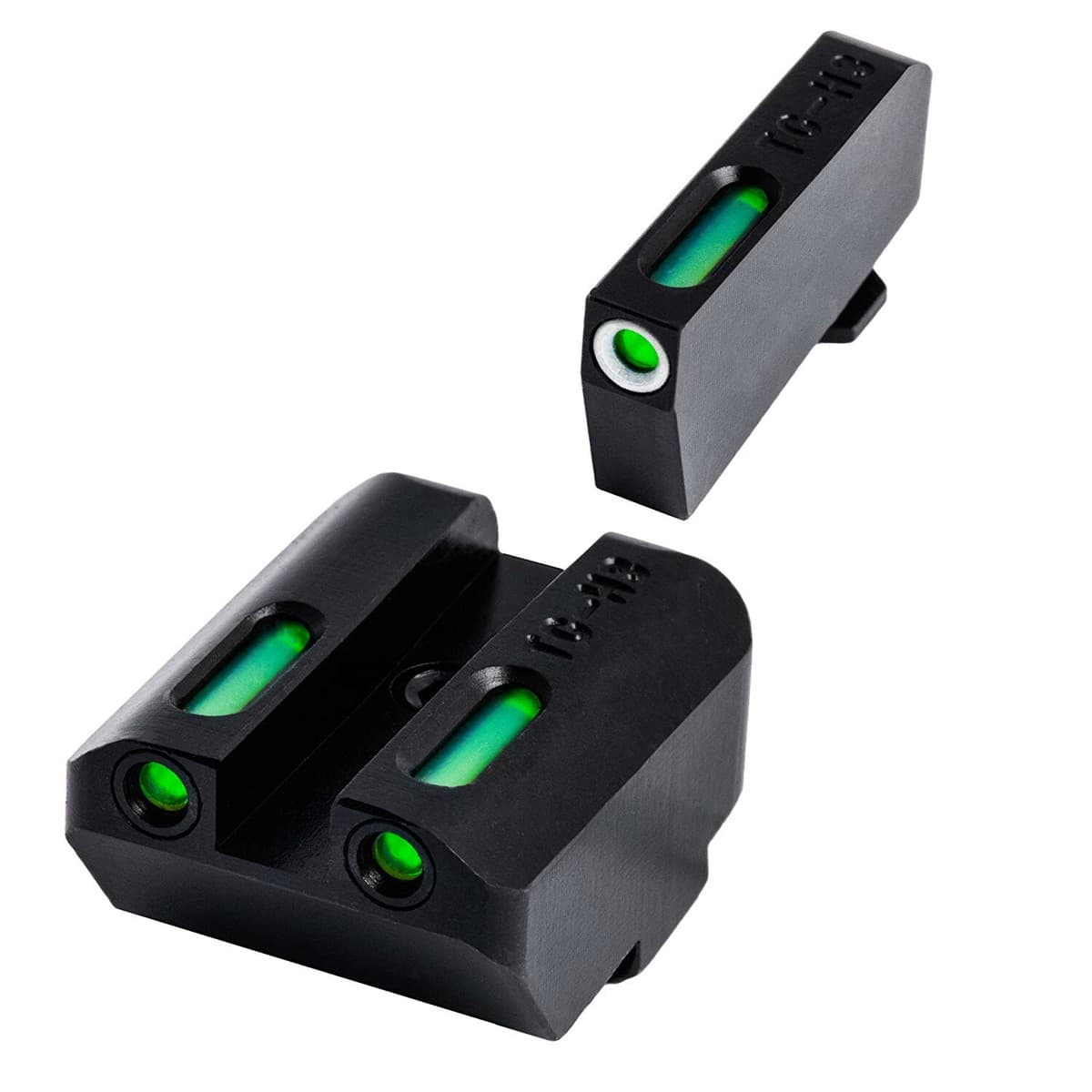
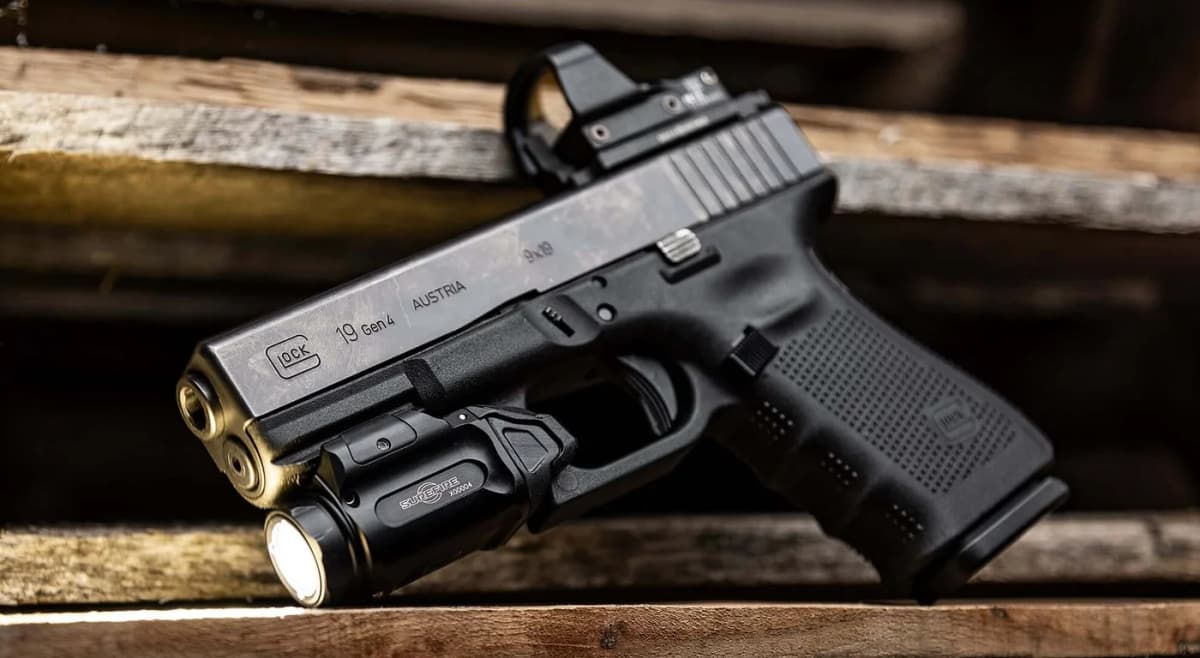
A mounted pistol can sits directly in the line of sight and blocks the factory irons, so taller suppressor-height sights are needed to see over the can. The taller front and rear raise the sight plane above the suppressor body, restoring a usable sight picture. If your slide is optic-cut, suppressor-height sights also co-witness through the red dot, giving you a backup aiming reference when the can is on. The one host that escapes this is the eccentric-bore SilencerCo Osprey, whose offset body sits below the sight line; on that can, factory irons stay usable. The three sets below are Glock-pattern picks spanning budget steel, tritium night sights, and a hybrid fiber-and-tritium front.
Budget suppressor-height co-witness for Glock
Tritium + photoluminescent suppressor-height on slimline Glocks
Hybrid fiber-optic + tritium suppressor-height set
Affiliate links - purchases support this site at no extra cost to you. (?)
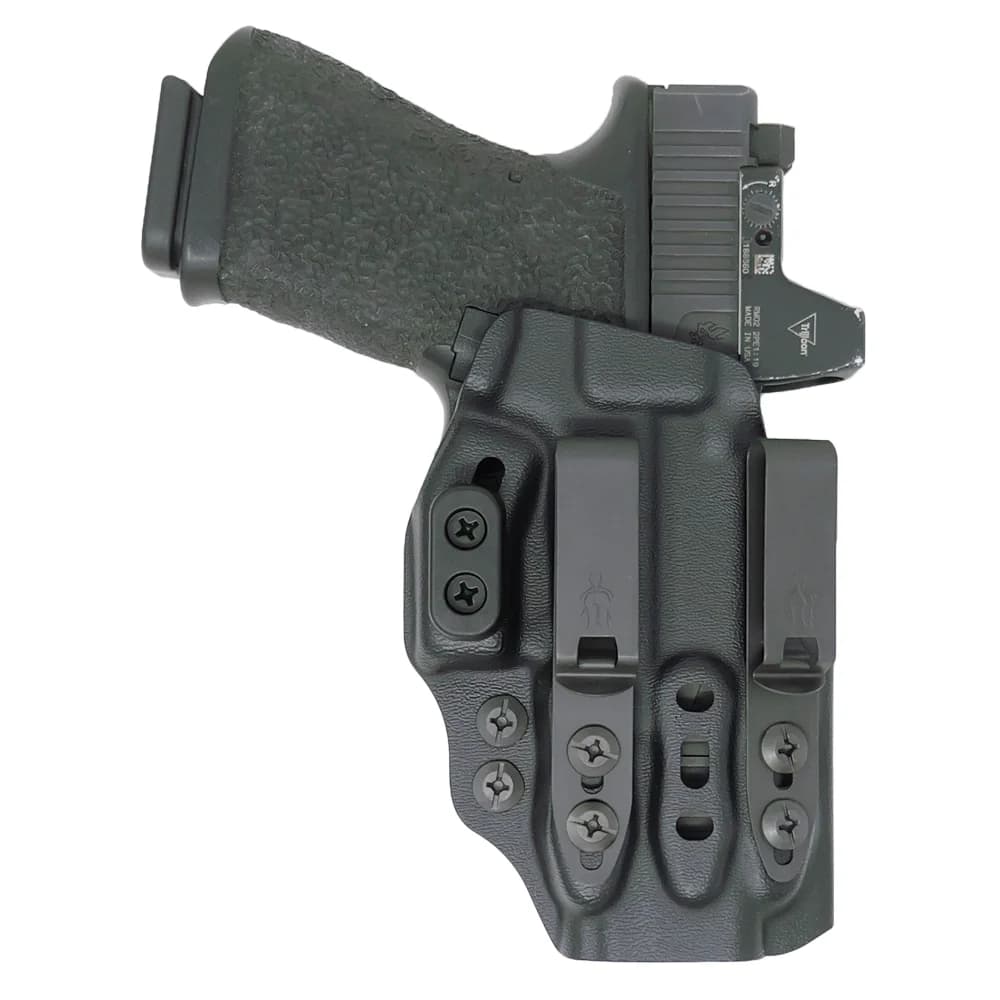
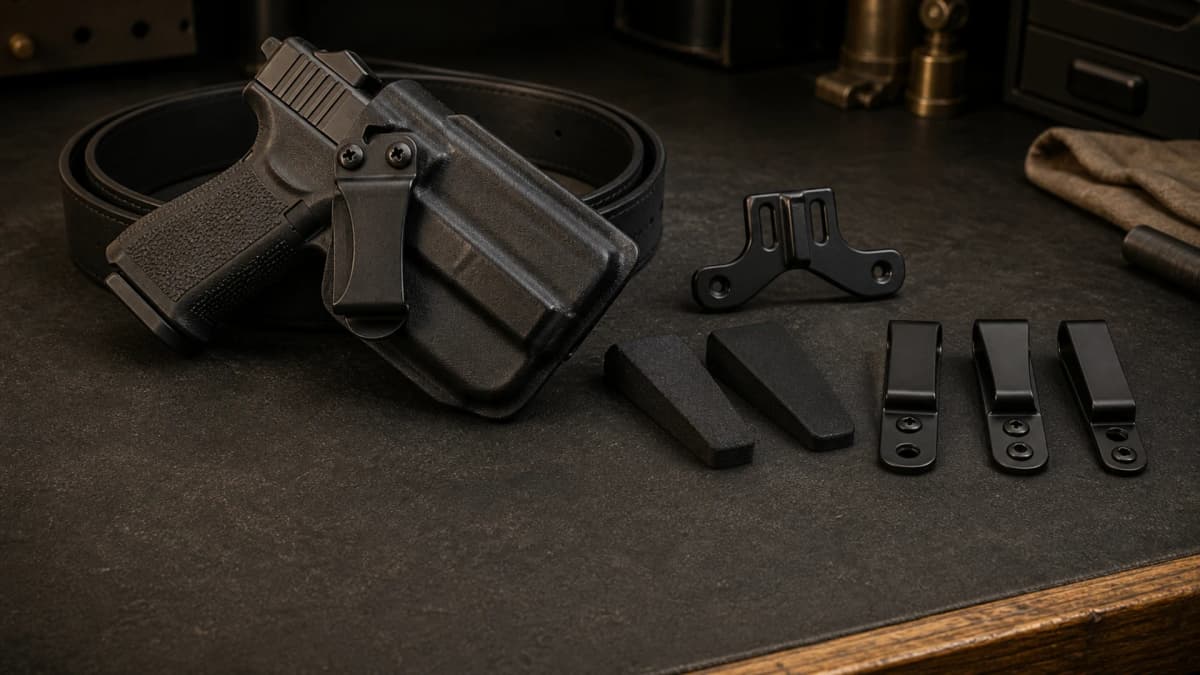
A threaded barrel and tall sights need an open-bottom holster with a raised sight channel. The threaded muzzle and any thread protector extend past the end of a standard holster body, so an open bottom lets that length pass through instead of bottoming out. The raised sight channel does the same job for the taller front sight, keeping it from dragging on every draw. The pick below is an appendix rig built for exactly this combination.
AIWB holster that clears a threaded barrel and tall sights
Affiliate links - purchases support this site at no extra cost to you. (?)
Once the hardware is sorted, the paperwork is the only thing left. The how to buy a suppressor guide walks the ATF Form 4 process end to end, and the federal tax on cans is now $0. For mounting, gas, and over-pressure behavior once the can is on, the suppressor compatibility basics guide covers thread, mount, and tuning on the rifle side.
Getting a pistol suppressor-ready is a five-step sequence, and only the first step branches: the host type decides piston or spacer, the pitch decides which piston, and the sights and holster make the finished setup carryable.
| Step | Action | What to Confirm |
|---|---|---|
| 1 | Identify host barrel type | Tilting (Glock, P320) needs a piston; fixed (PCC, subgun) needs a spacer |
| 2 | Confirm thread pitch | 1/2x28 domestic 9mm, M13.5x1 LH European 9mm, .578x28 .45 ACP |
| 3 | Install piston or spacer | Match the part to your specific can's mount, not just the pitch |
| 4 | Mount suppressor-height sights | Front and rear co-witness over the can, and through a red dot if optic-cut |
| 5 | Confirm holster clearance | Open bottom for the threaded barrel, raised channel for the tall sights |
You are responsible for complying with all federal, state, and local laws governing suppressor ownership and use, including NFA registration, transfer requirements, and state-level restrictions. Suppressors are legal to own in 42 states. This guide is informational only and is not legal advice; consult an attorney for jurisdiction-specific questions.

Avid shooter with 10+ years of experience including competition shooting, and an associate member of the Professional Outdoor Media Association (POMA). Built 10+ AR-pattern rifles and several handgun platforms for home defense, competition, and suppressed night shooting.
This page contains affiliate links. Purchases through these links support the site at no extra cost to you. Read the affiliate disclosure
Continue exploring with these related resources

Dry fire is the highest-ROI, zero-ammo-cost way to build trigger control, draw speed, and sight tracking at home. This guide covers the non-negotiable safety protocol, the core drills that actually transfer to live fire, how to use scaled printable targets in a hallway, and the dry fire aids worth buying: SIRT pistols, laser trainers, dry-fire mags, and snap caps.

Ten 9mm suppressors ranked across pistol, PCC, and MP5-pattern subgun duty, with verified specs, sound ratings, mounting paths, and the booster-versus-fixed-spacer breakdown every buyer needs.

Suppressed AR-15 blowback hits your eyes and airway through the charging handle gap. These ported, sealed, and raised-lip gas-busting handles fix it. Ranked by mechanism and value.
Related articles and industry updates

Liberty Ammunition launched SPIKE 2.0 on June 11, 2026, with a one-piece brass case that fixes the original SPIKE's feeding problems in pocket pistols with unsupported chambers. 55-grain copper hollow point, 1,500 fps, 275 ft-lbs, and now usable in the LCP Max, Bodyguard 2.0, Glock 42, and Sig P238. $45.99 per 20-round box.

PHLster announced the Enigma Micro, a beltless concealment chassis purpose-built for micro pistols. It ships June 23, 2026, with fitment for the Ruger LCP, LCP 2, and LCP Max, the Glock 42, and the Smith & Wesson Bodyguard 2.0.

Wilson Combat published the closing configuration of its Division 77 Project 1 on June 12, 2026: a 500-unit Final Edition with Black Armor-Tuff slide, black anodized aluminum frame, polished stainless 5-inch ported bull barrel with black flutes, Project 1 Pin optic system (RMR/RMSC/DeltaPoint Pro), 18+1 capacity, and a 42% felt-recoil reduction over a standard EDC X9. After this run, Project 1 retires to the Wilson Combat Vault.