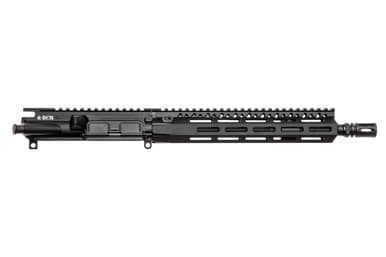
Complete Uppers • $858.95
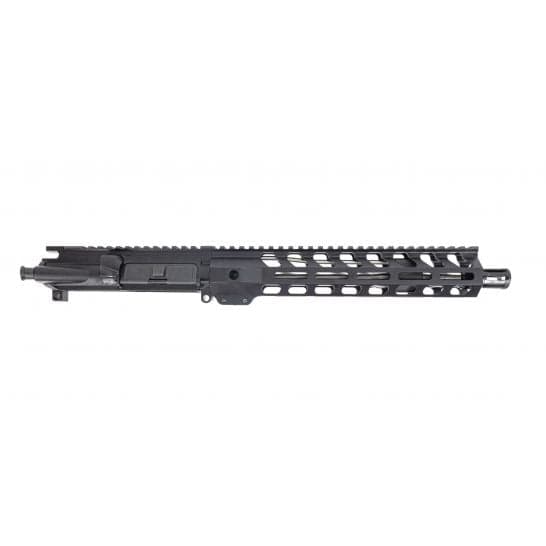
BCM 11.5" BFH Complete Upper
- 11.5" BFH barrel
- 5.56 NATO chamber
$858.95 Catalog
Shop at BCM
State Legality MatrixClass Breakdown
Statute-cited, last verified 2026-08-12
Short-barreled rifles are legal to own in 41 states, banned in five states plus Washington, D.C., and restricted in four. The ban jurisdictions are California, Hawaii, New Jersey, New York, Rhode Island, and D.C. Connecticut, Delaware, and Maryland allow SBR ownership but sweep short semi-automatic rifles into their assault-weapon or copycat laws, and Illinois limits SBRs to Curio & Relic license holders.
Short-Barreled Rifles
Since October 9, 2026, ATF does not enforce the NFA's Form 1 and Form 4 approval and registration requirements for SBRs, as a matter of enforcement discretion, and the federal making and transfer tax has been $0 since January 1, 2026. That moves the real question to state law. Of the 41 states where SBRs are legal, 8 make federal registration the condition of lawful possession, 14 require possession in compliance with federal law, and 18 have no state provision tied to federal registration at all. ATF says it cannot opine on whether an unregistered SBR held under its enforcement discretion counts as lawfully held for state purposes.
Federal rules that still apply everywhere: a dealer sale runs a Form 4473 and NICS check, an SBR needs an approved Form 5320.20 before it crosses state lines whether or not it is registered, and a voluntary $0 Form 1 or Form 4 still registers the rifle. In a registration-keyed state, filing that voluntary form is the conservative path. Watch two common errors: Minnesota and Texas add no SBR restriction, and Washington allows SBR possession but bans making or selling AR-pattern rifles in state.
Where it is restricted
These ten jurisdictions ban short-barreled rifles outright or reach common SBR configurations through another law. The six bans apply even with an approved federal form. Each row cites the controlling statute.
| State | Status | Rule | Statute / Case |
|---|---|---|---|
| California | Banned | Manufacturing, importing, keeping or offering for sale, giving, lending, or possessing a short-barreled rifle is prohibited. | Cal. Penal Code § 33215 |
| Connecticut | Restricted | No Connecticut statute ties SBR possession to federal registration, but any semi-automatic centerfire rifle with an overall length under 30 inches is an assault weapon, which sweeps in most modern SBR configurations. | Conn. Gen. Stat. § 53-202a |
| Delaware | Restricted | SBRs are lawful statewide and no Delaware statute ties them to federal registration, but the 2022 Lethal Firearms Safety Act bans new possession of any semi-automatic centerfire rifle under 30 inches overall as a copycat weapon, and Wilmington prohibits SBRs inside city limits. Effective 2022-06-30. | 11 Del. C. §§ 1464-1467 |
| Hawaii | Banned | Manufacture, possession, sale, gift, transfer, or acquisition of a rifle with a barrel under 16 inches is a class C felony. | Haw. Rev. Stat. § 134-8 |
| Illinois | Restricted | Rifles with a barrel under 16 inches are prohibited except for holders of a federal Curio & Relic license, and the separate PICA assault-weapon ban still reaches most modern semi-auto SBR patterns. | 720 ILCS 5/24-1(a)(7); exemption at 720 ILCS 5/24-2(c)(7) |
| Maryland | Restricted | An SBR is legal only if it is registered with the federal government, which the owner must prove, and a semi-automatic centerfire rifle with an overall length under 29 inches is a banned copycat weapon, so short SBR configurations are prohibited. Effective 2013-10-01. | Md. Code, Pub. Safety § 5-203; Crim. Law §§ 4-301(h), 4-303 |
| New Jersey | Banned | A rifle with a barrel under 16 inches or an overall length under 26 inches falls within the statutory 'sawed-off shotgun' definition, and knowing possession is a crime of the third degree. | N.J. Stat. §§ 2C:39-1(o), 2C:39-3(b) |
| New York | Banned | A rifle with any barrel under 16 inches or an overall length under 26 inches is a 'firearm' under the Penal Law with no civilian licensing path, so possession is criminal possession of a weapon. | N.Y. Penal Law §§ 265.00(3), 265.02 |
| Rhode Island | Banned | Possession or control of a sawed-off rifle (barrel under 16 inches or overall length under 26 inches) is prohibited, punishable by up to 10 years. | R.I. Gen. Laws §§ 11-47-2, 11-47-8(b) |
| District of Columbia | Banned | Short-barreled rifles cannot be registered, and a firearm that cannot be registered cannot be lawfully possessed in the District. | D.C. Code § 7-2502.02 |
Contested entries
Courts stay, revive, and sever these laws mid-year, and grandfather clauses change what a ban means in practice. This is where each contested entry stands.
Short-barreled rifle is defined at Penal Code § 17170 (barrel under 16 inches or overall length under 26 inches). Exemptions cover law enforcement agencies, the military, and Department of Justice permit holders (§§ 33220-33225); the DOJ Dangerous Weapons Permit path is not available to ordinary civilians in practice.
The under-30-inch prong of § 53-202a reaches AR-pattern and similar semi-auto SBRs regardless of features. The 2013 assault-weapon registration window is closed, so unregistered covered configurations are prohibited to possess. Bolt-action SBRs and semi-auto configurations at or over 30 inches overall fall outside the sweep but remain subject to the separate feature tests.
Possession lawful before June 30, 2022 is grandfathered with transport restrictions. Semi-auto SBR configurations at or over 30 inches overall, and non-semi-auto SBRs, are unaffected by the state act. Wilmington's city code separately prohibits short-barreled rifles within city limits, so Delaware is not an outright-ban state and should never be grouped with CA/NJ/NY.
Short-barreled rifles are grouped with automatic firearms and silencers in § 134-8; conviction carries a mandatory 5-year term without probation. No NFA-compliance exception exists.
The § 24-2(c)(7) exemption is keyed to the person holding the C&R license, not to the rifle being a curio or relic, and it does not run through a gun trust; a separate exemption covers bona fide military re-enactors when the weapon keeps an overall length of at least 26 inches. Independently, the Protect Illinois Communities Act (720 ILCS 5/24-1.9, upheld July 9, 2026 by the Seventh Circuit in Barnett v. Raoul; see the awb-features IL entry) bans AR-pattern and other listed semi-auto rifles regardless of barrel length, so a C&R license does not open a path to a modern factory SBR for post-2023 acquisitions.
The copycat test also reaches detachable-magazine semi-auto rifles with two listed features. Possession lawful before October 1, 2013 is grandfathered. Semi-auto SBRs configured at or over 29 inches overall, and non-semi-auto SBRs, stay legal when federally registered.
Despite the 'sawed-off shotgun' label, the § 2C:39-1(o) definition expressly covers rifles with barrels under 16 inches. No NFA-compliance exception exists; an approved federal form does not make an SBR lawful in New Jersey.
The pistol-license scheme has no route for short-barreled rifles, so an approved federal Form 1 or Form 4 does not make one lawful in New York.
The sawed-off rifle definition lives in § 11-47-2 and the possession ban in § 11-47-8(b). No NFA-compliance exception exists.
§ 7-2502.02(a) bars registration certificates for sawed-off shotguns, machine guns, and short-barreled rifles, and registration is the possession gate in DC. Do not omit DC when listing the six outright SBR bans.
Iowa Code § 724.1C adopts the federal SBR definition and makes possession a class D felony only when it violates federal law, so a registered SBR is lawful. Iowa is sometimes wrongly listed as an SBR-ban state.
Ch. 269, § 10(c) prohibits sawed-off shotguns and machine guns only; some third-party NFA tables wrongly extend it to rifles. A rifle with a barrel under 16 inches meets the ch. 140, § 121 'firearm' definition, so it is possessed under LTC rules. The assault-style firearm feature test (two-feature test for semi-auto rifles, as amended by Ch. 135 of the Acts of 2024) applies to SBR configurations the same way it applies to any semi-auto rifle; it has no overall-length prong.
§ 609.67 defines and restricts machine guns and short-barreled shotguns only; it does not reach short-barreled rifles. Do not group Minnesota with Illinois as C&R-only; that conflates the short-barreled-shotgun rule, and several third-party SBR state tables make exactly this error.
RCW 9.41.190 expressly exempts short-barreled rifles possessed in compliance with federal law (2014 amendment). The 'Washington bans SBRs' or 'pre-1994 only' line is outdated. RCW 9.41.390 (2023) bans the manufacture, import, distribution, and sale of assault weapons, and RCW 9.41.010 names 'AR15, M16, or M4 in all forms', so an AR-pattern SBR cannot be built or bought in state; possession of one already owned stays lawful. Bolt-action and other non-listed SBRs are not reached by that ban. Short-barreled shotguns remain banned in Washington; do not conflate the two.
Where it is legal
SBRs are legal to own in 41 states, including Texas, Florida, Arizona, Georgia, Ohio, Pennsylvania, Minnesota, and Washington. Whether an unregistered SBR is lawful in each of them depends on the state-law tie in the table below.
Unregistered items
ATF no longer enforces NFA registration, so the state statute decides whether an unregistered item is lawful. Registration-keyed states make federal registration the condition of possession; compliance-keyed states require possession in compliance with federal law, which ATF says it cannot interpret for state purposes. In either, a voluntary $0 federal form is the conservative path.
| State | State-law tie | Statute | What it means |
|---|---|---|---|
| Alabama | Federal compliance required | Ala. Code §§ 13A-11-62, 13A-11-63 | Possessing a short-barreled rifle in violation of federal law is a Class C felony. |
| Alaska | Registration required | Alaska Stat. § 11.61.200(c), (h)(1)(D) | A rifle with a barrel under 16 inches is a prohibited weapon with the same NFA-registration defense as a suppressor. |
| Arizona | Federal compliance required | Ariz. Rev. Stat. §§ 13-3101(A)(8)(a)(iv), (B) | A rifle with a barrel under 16 inches is a prohibited weapon unless it is possessed in compliance with federal law. |
| Arkansas | No state tie | Ark. Code § 5-73-104 (short rifles removed by Act 1051 of 2019) | Arkansas removed short-barreled rifles and shotguns from its prohibited-weapons law in 2019. |
| California | Banned | Cal. Penal Code §§ 17170, 33215 | Possessing a short-barreled rifle is prohibited; the only exceptions are law enforcement, the military, and rarely issued state DOJ permits. |
| Colorado | Registration required | Colo. Rev. Stat. §§ 18-12-101(1)(h), 18-12-102 | A short rifle is a dangerous weapon with the same permit-and-license defense as a silencer. |
| Connecticut | Restricted, no registration tie | Conn. Gen. Stat. § 53-202a(1)(E)(iii) | No SBR statute ties to federal registration, but a semi-auto centerfire rifle under 30 inches overall is a banned assault weapon. |
| Delaware | Restricted, no registration tie | 11 Del. C. §§ 1465(6), 1466 | No SBR statute ties to federal registration, but a semi-auto centerfire rifle under 30 inches overall is a banned copycat weapon unless owned before June 30, 2022. |
| Florida | Federal compliance required | Fla. Stat. § 790.221 | Possessing a short-barreled rifle is a second-degree felony unless it is lawfully owned and possessed under federal law. |
| Georgia | Registration required | Ga. Code §§ 16-11-121, 16-11-124(4) | A rifle with a barrel under 16 inches falls under the same ban and the same NFA-registration exception as a silencer. |
| Hawaii | Banned | Haw. Rev. Stat. § 134-8 | Rifles with barrels under 16 inches are banned under the same statute as silencers, with no NFA exception. |
| Idaho | No state tie | Idaho Code tit. 18, ch. 33 (no short-barreled rifle provision) | Idaho has no state short-barreled rifle restriction. |
| Illinois | Restricted, no registration tie | 720 ILCS 5/24-1(a)(7), 5/24-2(c)(7) | Short-barreled rifles are banned except for holders of a federal Curio and Relic license and military re-enactors; NFA registration alone does not qualify. |
| Indiana | No state tie | Ind. Code 35-47-5 (no short-barreled rifle provision) | Indiana has no state short-barreled rifle restriction. |
| Iowa | Federal compliance required | Iowa Code § 724.1C | Knowingly possessing a short-barreled rifle in violation of federal law is a class D felony. |
| Kansas | No state tie | K.S.A. 21-6301 (no short-barreled rifle provision) | Kansas weapons law has no short-barreled rifle offense. |
| Kentucky | No state tie | KRS chs. 237 and 527 (no short-barreled rifle provision) | Kentucky has no state short-barreled rifle restriction. |
| Louisiana | Registration required | La. Rev. Stat. §§ 40:1781(3), 40:1785 | The same unregistered-weapon ban covers rifles with barrels under 16 inches. |
| Maine | No state tie | 17-A M.R.S. § 1051 (machine guns only) | Maine has no short-barreled rifle statute. |
| Maryland | Registration required | Md. Code, Pub. Safety § 5-203; Crim. Law § 4-303 | An SBR is legal only if registered with the federal government, which the owner must prove; a semi-auto centerfire rifle under 29 inches overall is also a banned copycat weapon. |
| Massachusetts | Restricted, no registration tie | Mass. Gen. Laws ch. 140, § 121; ch. 269, § 10(c) | No statute ties SBRs to federal registration, but a state firearms license is required and the assault-style firearm ban still applies. |
| Michigan | Federal compliance required | Mich. Comp. Laws § 750.224b | Short-barreled rifles are legal only if lawfully made, transferred, or possessed under federal law, and one over 26 inches must travel with its federal registration. |
| Minnesota | No state tie | Minn. Stat. § 609.67 (shotguns and machine guns only) | Minnesota's short-barrel statute covers shotguns, not rifles. |
| Mississippi | No state tie | Miss. Code Ann. § 97-37-1 (concealed carry only) | Mississippi does not regulate SBR possession; carrying one concealed follows the pistol carry rules. |
| Missouri | Federal compliance required | Mo. Rev. Stat. § 571.020.1(6)(b) | Possessing a short-barreled rifle is a class D felony only when it violates federal law. |
| Montana | Registration required | Mont. Code Ann. § 45-8-340(3)(f) | A rifle cut below 16 inches of barrel or 26 inches overall is illegal unless the owner holds a valid federal tax stamp. |
| Nebraska | Federal compliance required | Neb. Rev. Stat. §§ 28-1201(15), 28-1203(2) | Possessing a short rifle is a Class IV felony unless you are qualified under federal law. |
| Nevada | Registration required | Nev. Rev. Stat. § 202.275 | Possessing a short-barreled rifle is a category D felony unless it is federally registered to you. |
| New Hampshire | No state tie | RSA ch. 159 (no short-barreled rifle provision) | New Hampshire has no short-barreled rifle statute. |
| New Jersey | Banned | N.J. Stat. §§ 2C:39-1(o), 2C:39-3(b) | New Jersey's sawed-off shotgun definition includes rifles with barrels under 16 inches, and possession is a third-degree crime with no NFA exception. |
| New Mexico | No state tie | NMSA 1978, ch. 30, art. 7 (no short-barreled rifle provision) | New Mexico has no short-barreled rifle statute. |
| New York | Banned | N.Y. Penal Law §§ 265.00(3), 265.01-b | A rifle under 16 inches of barrel or 26 inches overall is a firearm New York will not license, so possession is a felony. |
| North Carolina | Federal compliance required | N.C. Gen. Stat. § 14-288.8(b)(5), (c)(3) | The same Class F felony and NFA-compliance exception cover rifles under 16 inches of barrel or 26 inches overall. |
| North Dakota | Federal compliance required | N.D. Cent. Code § 62.1-02-03 | Possessing a short-barreled rifle is a class C felony unless you comply with the NFA. |
| Ohio | Registration required | Ohio Rev. Code §§ 2923.11(F), 2923.17(C)(5) | A short-barreled rifle is dangerous ordnance, a felony to possess unless it is registered in the NFRTR or covered by a state license. |
| Oklahoma | Federal compliance required | 21 O.S. § 1289.18 | Possessing a sawed-off rifle is a felony unless it is lawfully possessed under federal law. |
| Oregon | Registration required | Or. Rev. Stat. § 166.272 | Short-barreled rifles fall under the same Class B felony and the same federal-registration defense. |
| Pennsylvania | No state tie | 18 Pa. Cons. Stat. § 908(c) (no short-barreled rifle provision) | Pennsylvania's offensive-weapons list covers short shotguns but not short-barreled rifles. |
| Rhode Island | Banned | R.I. Gen. Laws §§ 11-47-2, 11-47-8(b) | Possessing a rifle under 16 inches of barrel or 26 inches overall is banned with no NFA exception. |
| South Carolina | Federal compliance required | S.C. Code §§ 16-23-230, 16-23-250 | Possessing a sawed-off rifle is a felony unless a federal agency has authorized you to possess it. |
| South Dakota | No state tie | S.D. Codified Laws §§ 22-1-2(8), 22-14-6 | South Dakota's controlled-weapon list covers short shotguns and machine guns, not short rifles. |
| Tennessee | No state tie | Tenn. Code Ann. § 39-17-1302 (short-barrel rifles removed in 2022) | Tennessee removed short-barrel rifles and shotguns from its prohibited-weapons list in 2022. |
| Texas | No state tie | Tex. Penal Code § 46.05 (short-barrel firearms removed by SB 1596, 2025) | Texas removed short-barrel firearms from its prohibited-weapons statute effective September 1, 2025. |
| Utah | No state tie | Utah Code § 76-11-203 | Utah does not ban short-barreled rifles, but concealing an unlawfully possessed one within reach is a second-degree felony. |
| Vermont | No state tie | 13 V.S.A. ch. 85 (no short-barreled rifle provision) | Vermont has no short-barreled rifle statute. |
| Virginia | Federal compliance required | Va. Code §§ 18.2-300(B), 18.2-303.1 | Possessing a sawed-off rifle is a Class 4 felony unless it is possessed in compliance with federal law. |
| Washington | Federal compliance required | Wash. Rev. Code § 9.41.190(2) | Short-barreled rifles are legal if the owner complies with applicable federal law; a semi-auto rifle under 30 inches overall is an assault weapon that cannot be made or sold. |
| West Virginia | No state tie | W. Va. Code ch. 61, art. 7 (no short-barreled rifle provision) | West Virginia has no short-barreled rifle statute. |
| Wisconsin | Federal compliance required | Wis. Stat. § 941.28(4) | Possessing a short-barreled rifle is a Class H felony, but the statute exempts any firearm that may be lawfully possessed under federal law. |
| Wyoming | No state tie | Wyo. Stat. tit. 6, ch. 8 (no short-barreled rifle provision) | Wyoming has no short-barreled rifle statute. |
| District of Columbia | Banned | D.C. Code § 7-2502.02(a)(3) | Short-barreled rifles cannot be registered in the District, and an unregistered firearm cannot be possessed. |
By state type
No state tie (18 states): no state provision conditions SBR possession on federal registration, so a dealer sale on a Form 4473 and NICS check, or a stock added to a braced pistol, is complete at the state level. A voluntary $0 Form 1 or Form 4 is optional insurance against a future federal reversal.
Registration required (Alaska, Colorado, Georgia, Louisiana, Maryland, Montana, Nevada, Ohio, and Oregon): the statute makes NFA registration the condition for lawful possession. File the voluntary Form 4 to buy, or Form 1 to make, and let it clear before you take possession or install the stock.
Federal compliance required (Alabama, Arizona, Florida, Iowa, Michigan, Missouri, Nebraska, North Carolina, North Dakota, Oklahoma, South Carolina, Virginia, Washington, and Wisconsin): the statute allows an SBR possessed in compliance with federal law. ATF says it cannot say whether its enforcement discretion satisfies that condition, and no state in this group has said it does, so treat these states like the registration group and file.
Restricted (Connecticut, Delaware, Illinois, and Massachusetts): no registration tie, but a separate state rule (an assault-weapon length test, a license requirement, or a Curio and Relic limit) still governs which SBRs you can own. Check that rule before you buy or build.
Banned (California, Hawaii, New Jersey, New York, Rhode Island, and District of Columbia): nothing changes. These laws prohibit civilian SBR possession even with an approved federal form.
Interstate
An SBR needs an approved Form 5320.20 before it crosses state lines, registered or not, because the rule comes from 18 U.S.C. 922(a)(4). ATF also warns it is unclear whether state courts will apply the federal transport safe harbor in 18 U.S.C. 926A to an unregistered NFA item, so check every state on the route, not just your own.
Reversal risk
ATF's change is enforcement discretion, not repeal. Enforcement could resume if Congress imposes a new tax, the Silencer Shop Foundation v. ATF injunction is dissolved or overturned, or the department rescinds its guidance, and unregistered SBRs would then be contraband with no automatic grandfathering. A registered SBR stays federally lawful under every one of those outcomes and satisfies every state registration or compliance condition. The federal making and transfer tax has been $0 since January 1, 2026.
What to buy
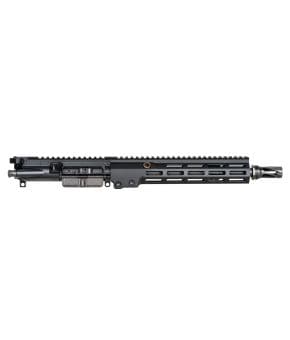
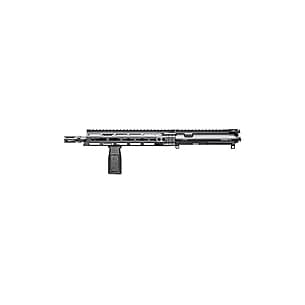
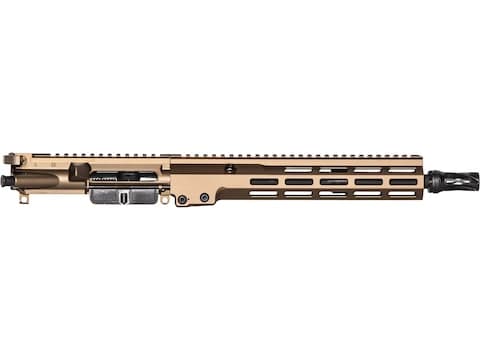
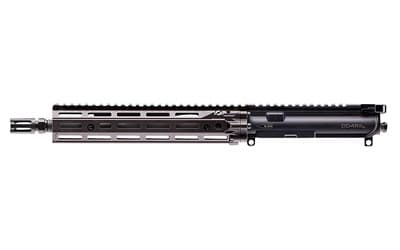
With no federal tax and no Form 1 wait, the fastest route to an SBR is a short complete upper on a lower you already own. These are the 10.5 to 12.5 inch uppers we recommend.
Affiliate links (?)
Federal law
SBRs are federally legal to own. As of January 1, 2026 the One Big Beautiful Bill Act (signed July 2025) zeroed the federal making and transfer tax on SBRs, formerly $200. Since October 9, 2026, ATF does not enforce the NFA's Form 1 and Form 4 approval and registration requirements for SBRs, SBSs, suppressors, and AOWs, as a matter of enforcement discretion announced by Attorney General Todd Blanche after the Justice Department did not appeal the August 5, 2026 Silencer Shop Foundation v. ATF ruling, whose injunction covers only the plaintiffs, their members, and their customers. ATF also does not enforce the NFA prohibitions on making, receiving, transferring, or possessing an unregistered SBR (other than 26 U.S.C. 5861(h) and (k)), the 5861(j) ban on interstate transport of unregistered items, or the NFA marking requirement. 18 U.S.C. 922(b)(4) still requires Attorney General authorization for a dealer to sell an SBR; no non-NFA mechanism exists yet, and ATF will not enforce 922(b)(4) while it drafts regulations and forms. An approved Form 5320.20 is still required before interstate transport of an SBR, registered or not, under 18 U.S.C. 922(a)(4). Dealer transfers keep the Form 4473 and NICS background check. This is enforcement discretion, not repeal: ATF says enforcement could resume if Congress imposes a new tax, the injunction is dissolved or overturned, or the department rescinds its guidelines, and there is no automatic grandfathering for unregistered items. ATF still accepts Form 1 and Form 4 voluntarily. Most states tie NFA-item possession to federal registration or compliance, and ATF says it cannot opine on whether an unregistered SBR held under its enforcement discretion counts as lawfully held for state purposes.
Federal baseline verified 2026-10-09.
Common questions
Short-barreled rifles are legal to own in 41 states. They are banned in California, Hawaii, New Jersey, New York, Rhode Island, and Washington, D.C. Connecticut, Delaware, and Maryland allow ownership but restrict short semi-automatic rifles under their assault-weapon or copycat laws, and Illinois allows SBRs only for Curio & Relic license holders.
Not under federal enforcement policy. The One Big Beautiful Bill Act zeroed the $200 making and transfer tax on January 1, 2026, and since October 9, 2026, ATF does not enforce Form 1 or Form 4 approval or NFA registration for SBRs, as a matter of enforcement discretion. A voluntary Form 1 still registers the rifle, which matters in states that tie SBR possession to federal registration.
It depends on how your state's statute is written. Eighteen SBR-legal states, including Texas, Pennsylvania, Minnesota, and Tennessee, have no provision tied to federal registration. Eight, including Georgia, Ohio, Colorado, and Louisiana, make NFA registration the condition of lawful possession, so an unregistered SBR there is a state-law risk. Fourteen, including Florida, Arizona, and North Carolina, require possession in compliance with federal law, and ATF says it cannot say whether its enforcement discretion satisfies that.
Federally, ATF does not enforce Form 1 approval or registration for SBRs since October 9, 2026, so adding a stock to a pistol with a barrel under 16 inches makes an SBR without federal paperwork under that policy. State law still controls: it is a crime in the six ban jurisdictions, and in registration-keyed states a voluntary Form 1 should clear before you install the stock. Taking an SBR across state lines still needs an approved Form 5320.20.
Yes. An approved Form 5320.20 is required before moving an SBR across state lines, registered or not, because the rule comes from the Gun Control Act at 18 U.S.C. 922(a)(4), not the NFA. Check every state on the route; a rifle that is legal at home can be a felony in a ban state you pass through.
Possession is legal when in compliance with applicable federal law under RCW 9.41.190. Washington's 2023 assault-weapon law, RCW 9.41.390, bans making or selling listed semi-automatic rifles, including AR-15 pattern rifles in all forms, so an AR-pattern SBR cannot be built or bought in state. Short-barreled shotguns remain banned in Washington.