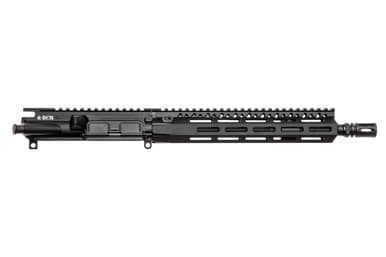
Complete Uppers • $858.95
BCM 11.5" BFH Complete Upper
- 11.5" BFH barrel
- 5.56 NATO chamber
$858.95 Catalog
Shop at BCM
State Legality MatrixShort-Barreled RiflesWashington
Statute-cited, last verified 2026-08-12 · State verdict verified 2026-10-09
Legal
Yes. SBRs are legal to own when in compliance with applicable federal law, but Washington's assault-weapon law bans making or selling AR-pattern and other listed semi-auto rifles, which covers most modern SBRs.
Controlling law: RCW 9.41.190; RCW 9.41.390
Contested entry
RCW 9.41.190 expressly exempts short-barreled rifles possessed in compliance with federal law (2014 amendment). The 'Washington bans SBRs' or 'pre-1994 only' line is outdated. RCW 9.41.390 (2023) bans the manufacture, import, distribution, and sale of assault weapons, and RCW 9.41.010 names 'AR15, M16, or M4 in all forms', so an AR-pattern SBR cannot be built or bought in state; possession of one already owned stays lawful. Bolt-action and other non-listed SBRs are not reached by that ban. Short-barreled shotguns remain banned in Washington; do not conflate the two.
Unregistered items
Federal compliance required. Short-barreled rifles are legal if the owner complies with applicable federal law; a semi-auto rifle under 30 inches overall is an assault weapon that cannot be made or sold.
Since October 9, 2026, ATF does not enforce NFA registration, so this state-law condition decides whether an unregistered short-barreled rifle is lawful here. Controlling law: Wash. Rev. Code § 9.41.190(2). Verified 2026-10-09.
Federal law
SBRs are federally legal to own. As of January 1, 2026 the One Big Beautiful Bill Act (signed July 2025) zeroed the federal making and transfer tax on SBRs, formerly $200. Since October 9, 2026, ATF does not enforce the NFA's Form 1 and Form 4 approval and registration requirements for SBRs, SBSs, suppressors, and AOWs, as a matter of enforcement discretion announced by Attorney General Todd Blanche after the Justice Department did not appeal the August 5, 2026 Silencer Shop Foundation v. ATF ruling, whose injunction covers only the plaintiffs, their members, and their customers. ATF also does not enforce the NFA prohibitions on making, receiving, transferring, or possessing an unregistered SBR (other than 26 U.S.C. 5861(h) and (k)), the 5861(j) ban on interstate transport of unregistered items, or the NFA marking requirement. 18 U.S.C. 922(b)(4) still requires Attorney General authorization for a dealer to sell an SBR; no non-NFA mechanism exists yet, and ATF will not enforce 922(b)(4) while it drafts regulations and forms. An approved Form 5320.20 is still required before interstate transport of an SBR, registered or not, under 18 U.S.C. 922(a)(4). Dealer transfers keep the Form 4473 and NICS background check. This is enforcement discretion, not repeal: ATF says enforcement could resume if Congress imposes a new tax, the injunction is dissolved or overturned, or the department rescinds its guidelines, and there is no automatic grandfathering for unregistered items. ATF still accepts Form 1 and Form 4 voluntarily. Most states tie NFA-item possession to federal registration or compliance, and ATF says it cannot opine on whether an unregistered SBR held under its enforcement discretion counts as lawfully held for state purposes.
Federal baseline verified 2026-10-09. Scope: Short-barreled rifles as defined by the NFA: a rifle with any barrel under 16 inches or an overall length under 26 inches. Excludes short-barreled shotguns and brace-equipped firearms that remain pistols; the 2023 ATF brace rule was vacated, but classification still turns on whether the specific weapon is designed and intended to be fired from the shoulder.
Common questions
Yes. SBRs are legal to own when in compliance with applicable federal law, but Washington's assault-weapon law bans making or selling AR-pattern and other listed semi-auto rifles, which covers most modern SBRs. Controlling law: RCW 9.41.190; RCW 9.41.390.
The controlling law is RCW 9.41.190; RCW 9.41.390. SBRs are legal to own when in compliance with applicable federal law, but Washington's assault-weapon law bans making or selling AR-pattern and other listed semi-auto rifles, which covers most modern SBRs.
SBRs are federally legal to own. As of January 1, 2026 the One Big Beautiful Bill Act (signed July 2025) zeroed the federal making and transfer tax on SBRs, formerly $200. Since October 9, 2026, ATF does not enforce the NFA's Form 1 and Form 4 approval and registration requirements for SBRs, SBSs, suppressors, and AOWs, as a matter of enforcement discretion announced by Attorney General Todd Blanche after the Justice Department did not appeal the August 5, 2026 Silencer Shop Foundation v. ATF ruling, whose injunction covers only the plaintiffs, their members, and their customers. ATF also does not enforce the NFA prohibitions on making, receiving, transferring, or possessing an unregistered SBR (other than 26 U.S.C. 5861(h) and (k)), the 5861(j) ban on interstate transport of unregistered items, or the NFA marking requirement. 18 U.S.C. 922(b)(4) still requires Attorney General authorization for a dealer to sell an SBR; no non-NFA mechanism exists yet, and ATF will not enforce 922(b)(4) while it drafts regulations and forms. An approved Form 5320.20 is still required before interstate transport of an SBR, registered or not, under 18 U.S.C. 922(a)(4). Dealer transfers keep the Form 4473 and NICS background check. This is enforcement discretion, not repeal: ATF says enforcement could resume if Congress imposes a new tax, the injunction is dissolved or overturned, or the department rescinds its guidelines, and there is no automatic grandfathering for unregistered items. ATF still accepts Form 1 and Form 4 voluntarily. Most states tie NFA-item possession to federal registration or compliance, and ATF says it cannot opine on whether an unregistered SBR held under its enforcement discretion counts as lawfully held for state purposes.
Federal compliance required. Short-barreled rifles are legal if the owner complies with applicable federal law; a semi-auto rifle under 30 inches overall is an assault weapon that cannot be made or sold. Since October 9, 2026, ATF does not enforce NFA registration, so this state-law condition decides whether an unregistered short-barreled rifle is lawful in Washington. Controlling law: Wash. Rev. Code § 9.41.190(2).
What to buy
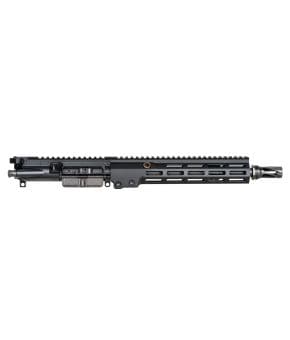
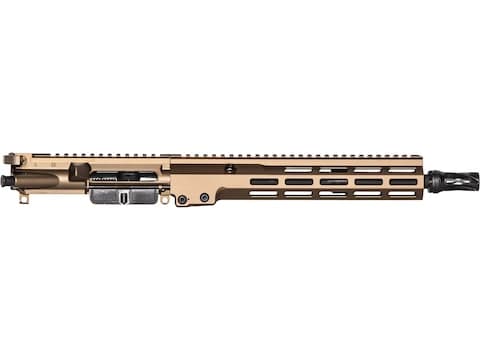
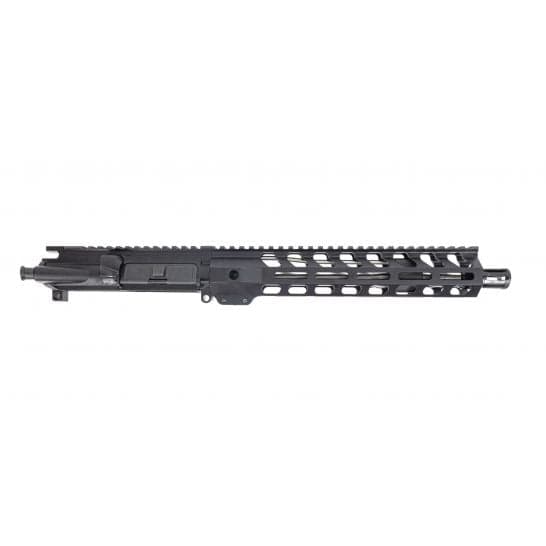
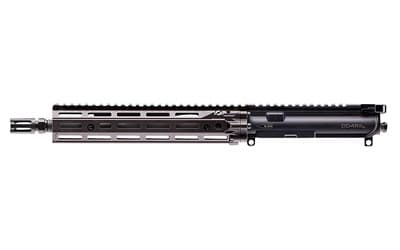
With no federal tax and no Form 1 wait, the fastest route to an SBR is a short complete upper on a lower you already own. These are the 10.5 to 12.5 inch uppers we recommend.
Affiliate links (?)