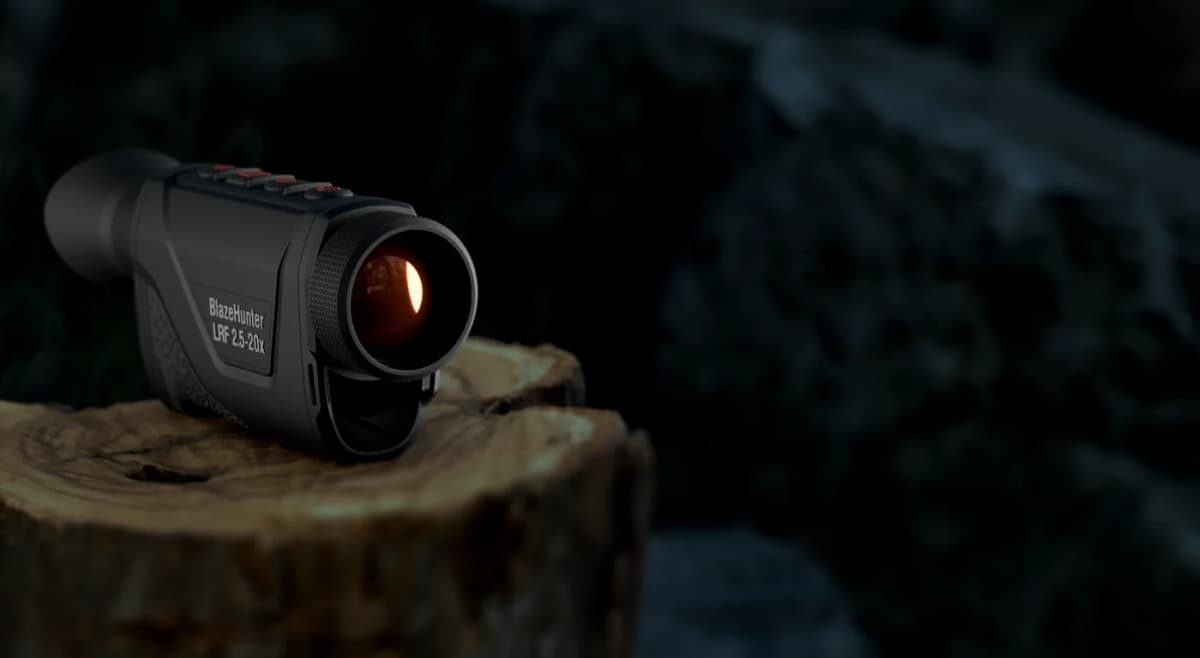
ATN Blaze Series Gen 6: Thermal Monoculars From $569
ATN rolls out the Blaze Series Gen 6 handheld thermal monoculars: four models on one 6th-generation core, from a $569 256x192 scanner to a $4,995 1,280x1,024 flagship with a built-in rangefinder. SharpIR AI imaging, 50 Hz refresh, and Hot Point Tracking carry across the whole line.
Key Takeaways
- →Four models, one core: BlazeSeeker 6 210 ($569), BlazeTrek 6 325 ($1,195), BlazeHunter 650 LRF ($2,895), BlazeHunter XD LRF ($4,995). All four share the 6th-gen thermal engine, SharpIR processing, and 50 Hz refresh.
- →Sensor ladder: 256x192 on the BlazeSeeker, 384x288 on the BlazeTrek, 640x512 on the BlazeHunter 650, and a 1,280x1,024 extreme-definition sensor on the XD flagship.
- →NETD & detection: ≤20 mK with 460 m detection on the 210; sub-18 mK with 1,300 m on the 325; sub-15 mK with 3,400 m-plus on the XD.
- →Built-in rangefinders: the two BlazeHunter models add a laser rangefinder (1,000 yd on the 650, 1,000 m on the XD). The BlazeSeeker and BlazeTrek do not.
- →Handheld scanner, not a clip-on: these are spotting monoculars for finding warm targets, not weapon sights. IP67 housing, six color palettes, onboard recording, and ATN Connect 6 Wi-Fi across the line. Available now.
What the Blaze Series Gen 6 Actually Is
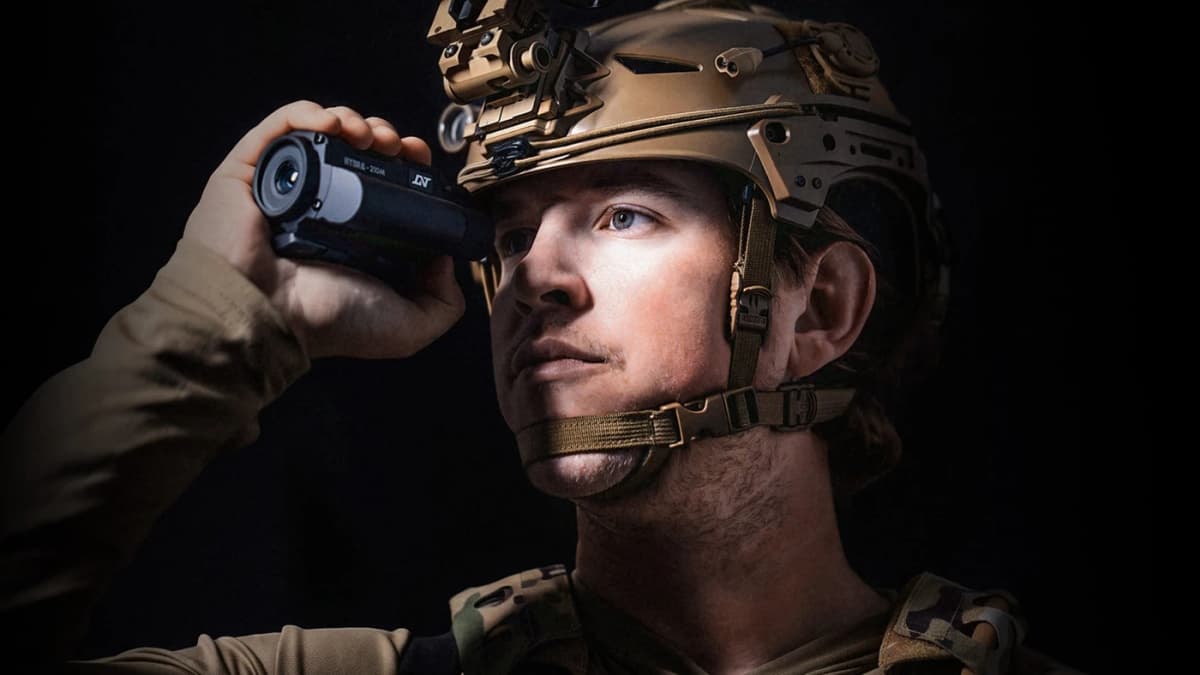
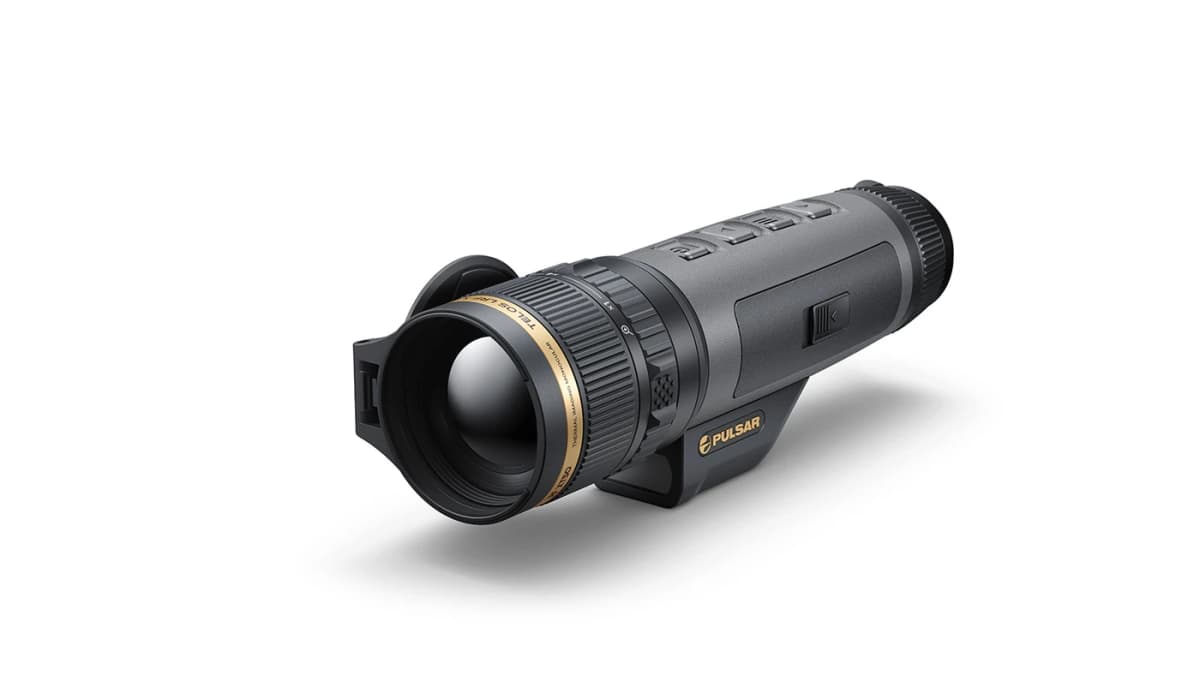
The Blaze Series Gen 6 is a family of handheld thermal monoculars built for scanning and spotting, not for mounting on a rifle. You carry the unit in a pocket or on a lanyard, sweep a field or treeline to pick up warm targets in total darkness, then transition to your rifle and a dedicated optic for the shot. That workflow is the whole reason the monocular category exists: a handheld scanner is faster and safer to glass with than a weapon-mounted thermal, because you are not pointing a loaded rifle at every heat signature you want to investigate.
The new piece here is ATN building four price tiers on a single 6th-generation thermal core. The same engine, the same SharpIR onboard image processor, and the same 50 Hz refresh rate run from the $569 BlazeSeeker up through the $4,995 BlazeHunter XD; the models separate on sensor resolution and whether they carry a rangefinder. For shooters weighing a handheld scanner against a weapon-mounted unit, our Vortex Veil 400 monocular coverage walks through the same scan-then-shoot logic from a competing brand, and the AR-15 clip-on thermal guide covers the weapon-mounted side of the same hunt.
Picking Between the Four Models
Match the model to your shot distance and whether you need ranging built in. The $569 BlazeSeeker 6 210 is the entry scanner: a 256x192 sensor rated at 20 mK NETD or better, 460 meters of detection range, and an 8-hour battery in a 270-gram body. It is the right call for the hunter who takes shots inside 200 yards and wants a thermal scanner that finally costs less than the rifle it rides alongside.
The $1,195 BlazeTrek 6 325 is the volume seller. The 384x288 sensor and sub-18 mK NETD sharpen target edges in warm summer air where thermal contrast collapses, the 25mm germanium lens and 2.8-22x magnification range cover both wide scanning and target confirmation, and the 1,300-meter detection range comfortably outreaches the distance at which most hunters actually identify and shoot game. For mixed predator and hog work, the 325 is the unit to beat.
The two BlazeHunter models add resolution and a rangefinder. The $2,895 BlazeHunter 650 LRF steps the sensor to 640x512 and bakes in a 1,000-yard laser rangefinder, so one device handles both scanning and ranging before you raise the rifle. The $4,995 BlazeHunter XD LRF is the flagship: a 1,280x1,024 extreme-definition sensor, sub-15 mK NETD, 2-16x magnification, 3,400-meter-plus detection, a 50mm objective, and a 1,000-meter rangefinder. The XD is a ranch-management and long-range detection tool, not a typical walking-hunt scanner. If you want the rangefinder math without the thermal, our rangefinder buying guide covers standalone laser rangefinders that pair with a cheaper non-LRF monocular.
For a handheld scanner comparison, our thermal monocular buying guide weighs field of view, native resolution, and battery systems across six picks.
Compare Thermal Optics
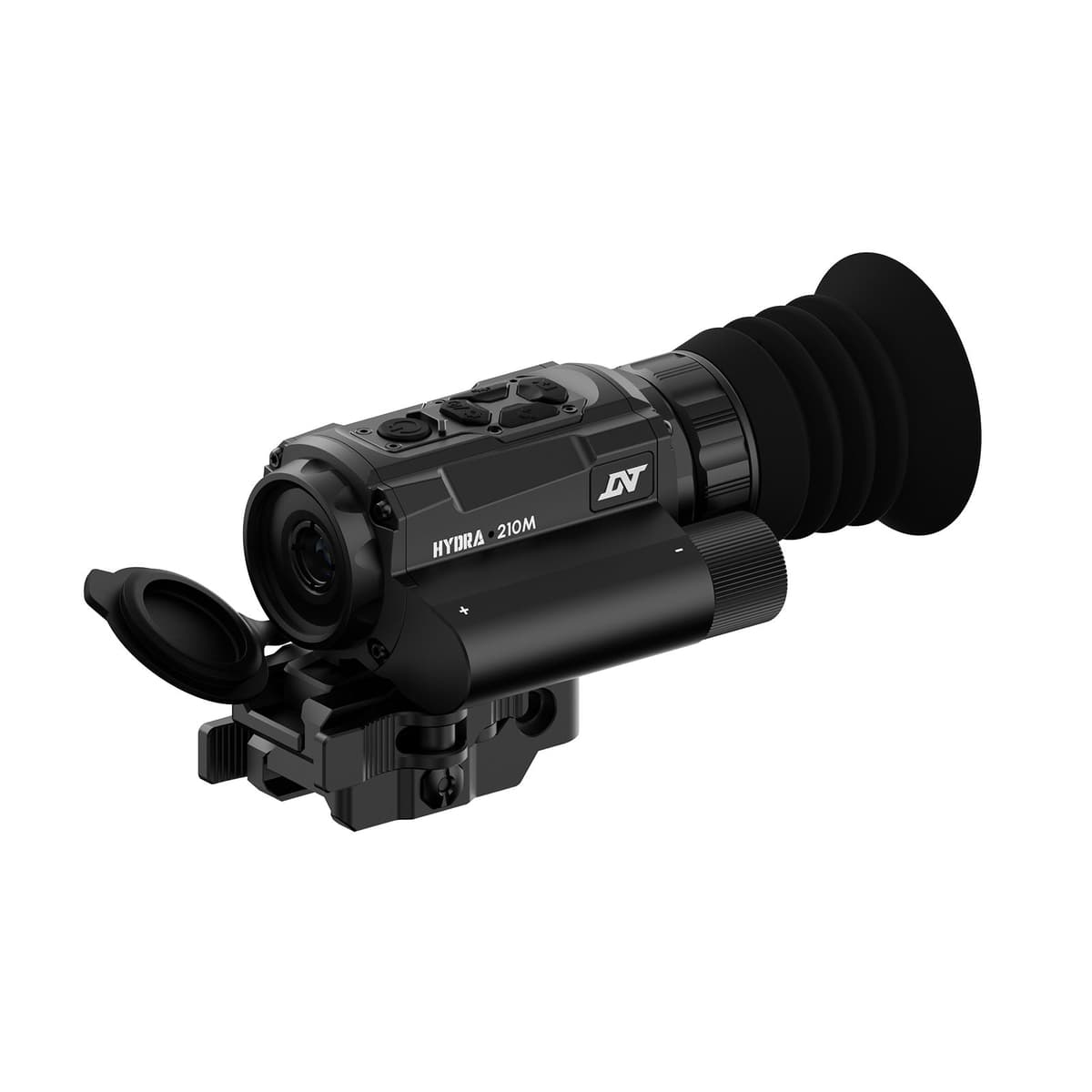
DNT Optics HYDRA-Mini HS210M
- 256x192 thermal sensor, 10 mm lens, <=18 mK NETD
- 1x base magnification, 30.7 x 23 yd field of view at 100 yd
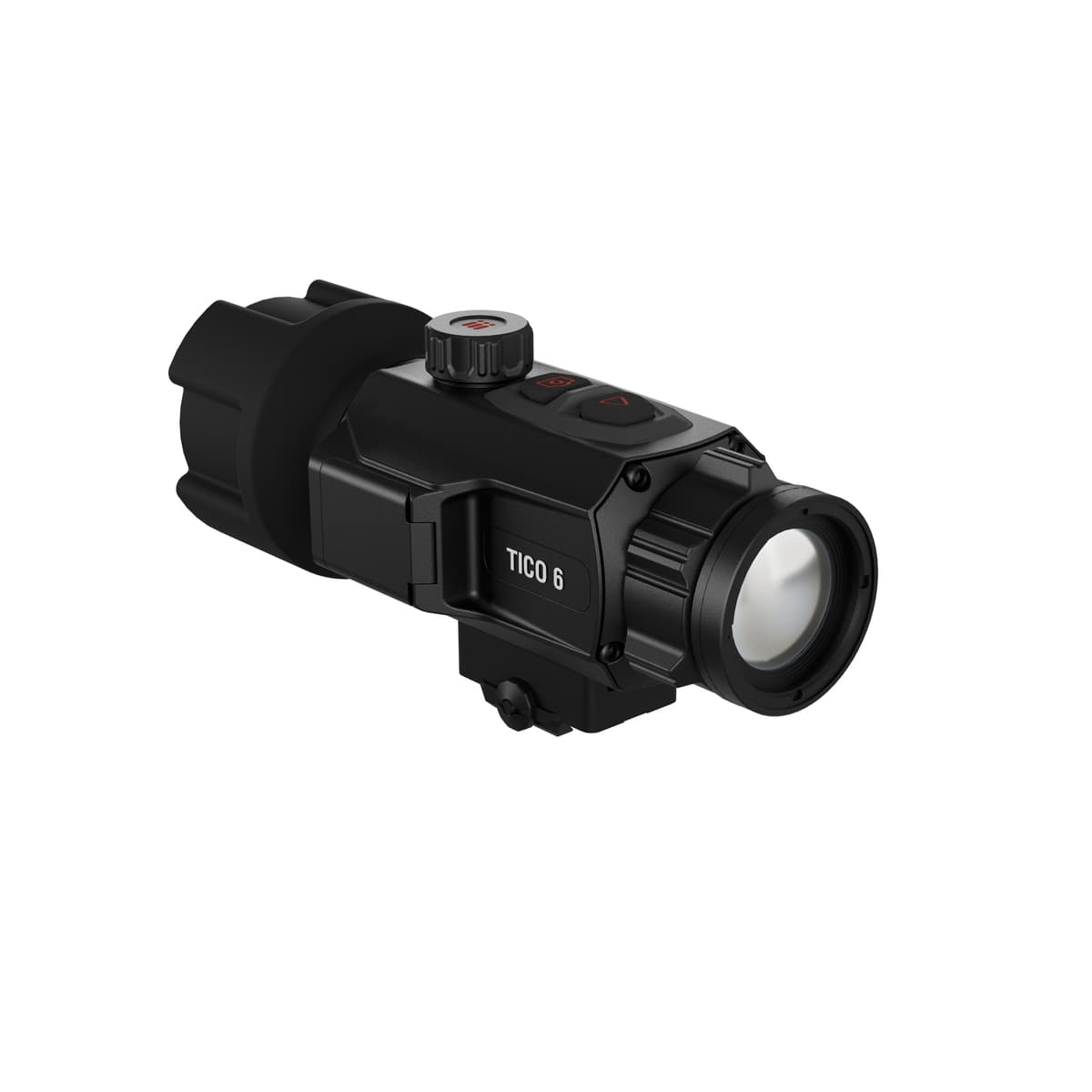
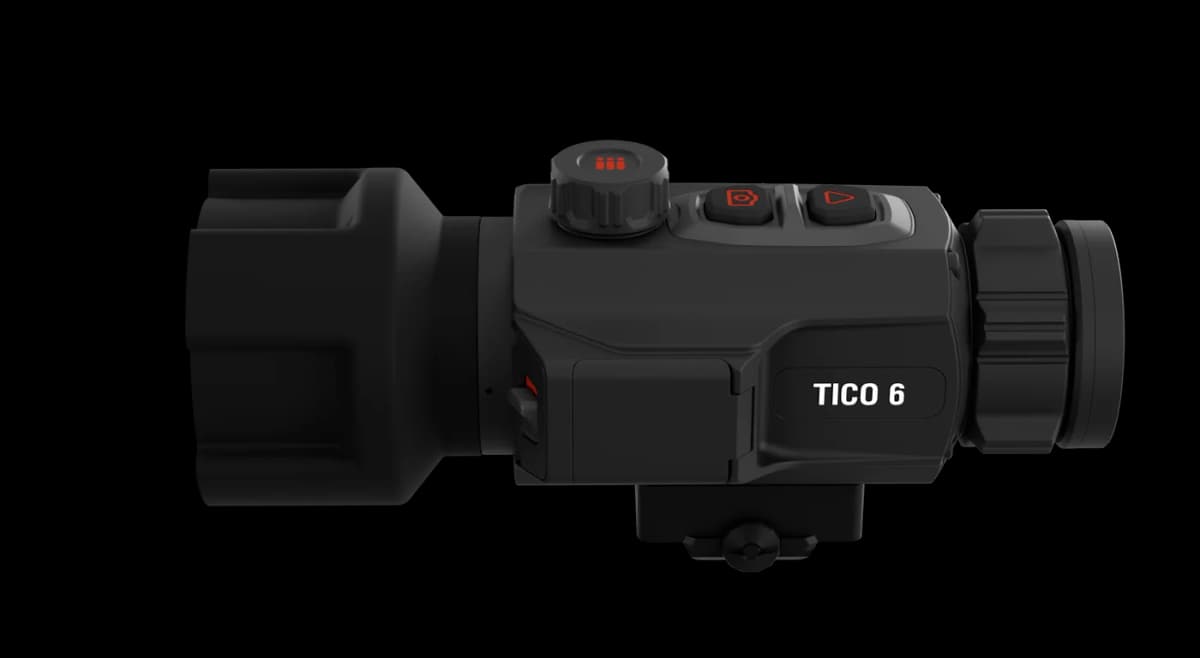
ATN TICO 6 256-192 Thermal Clip-On
- 256x192 sensor (12um, 50Hz, <=20mK)
- 1x clip-on, 1500m detection
InfiRay Outdoor RH25 V2 (Rico Micro)
- 640x480 sensor (12um, 60Hz, ≤15mK)
- 25mm f/1.0 lens, 1375 yd detection
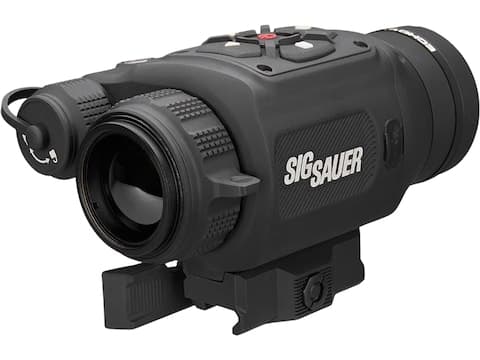
Sig Sauer Echo CV25 Clip-On Thermal
- 640x512 sensor (12um, 50Hz, 20mK)
- 25mm objective, 17 deg FOV
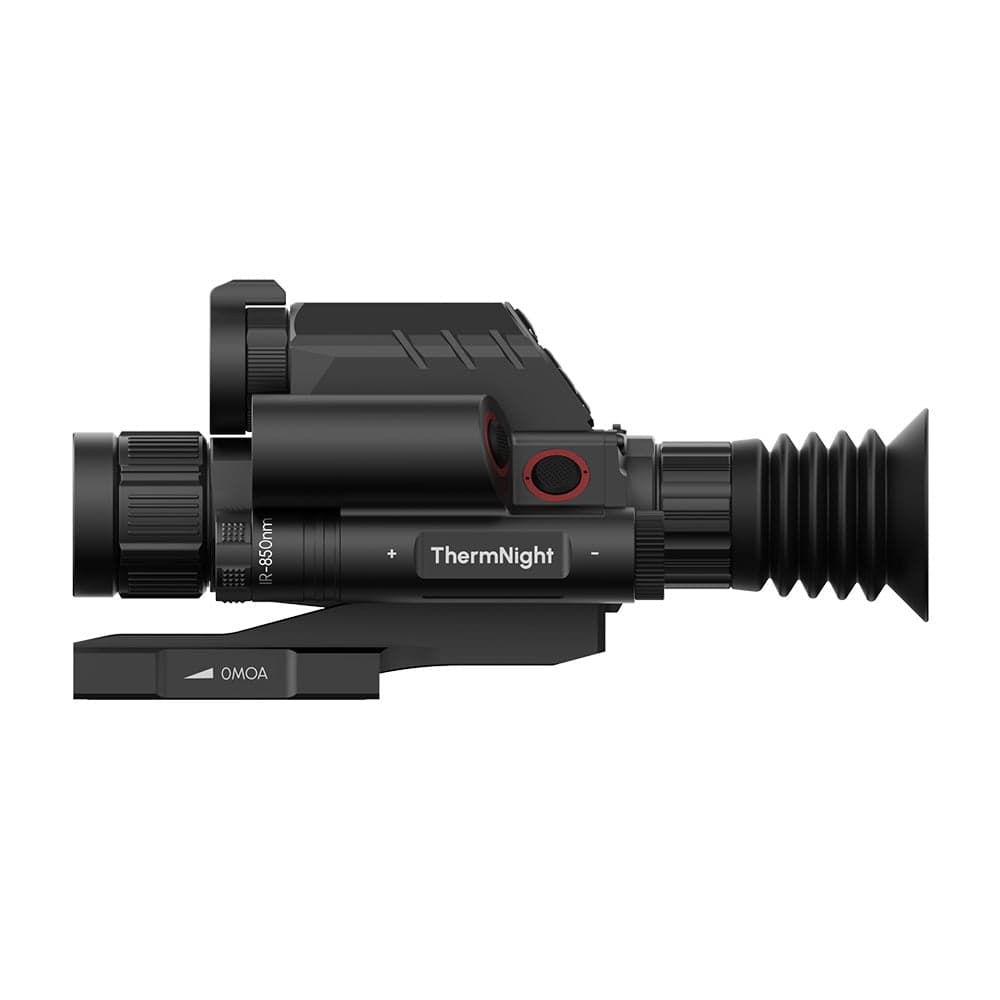
DNT Optics ThermNight TNC225R
- 256x192 thermal (12um) + 1920x1080 Sony Starvis2 day/night camera
- Thermal 3-12x, night vision 5-20x, 1,200-yard laser rangefinder
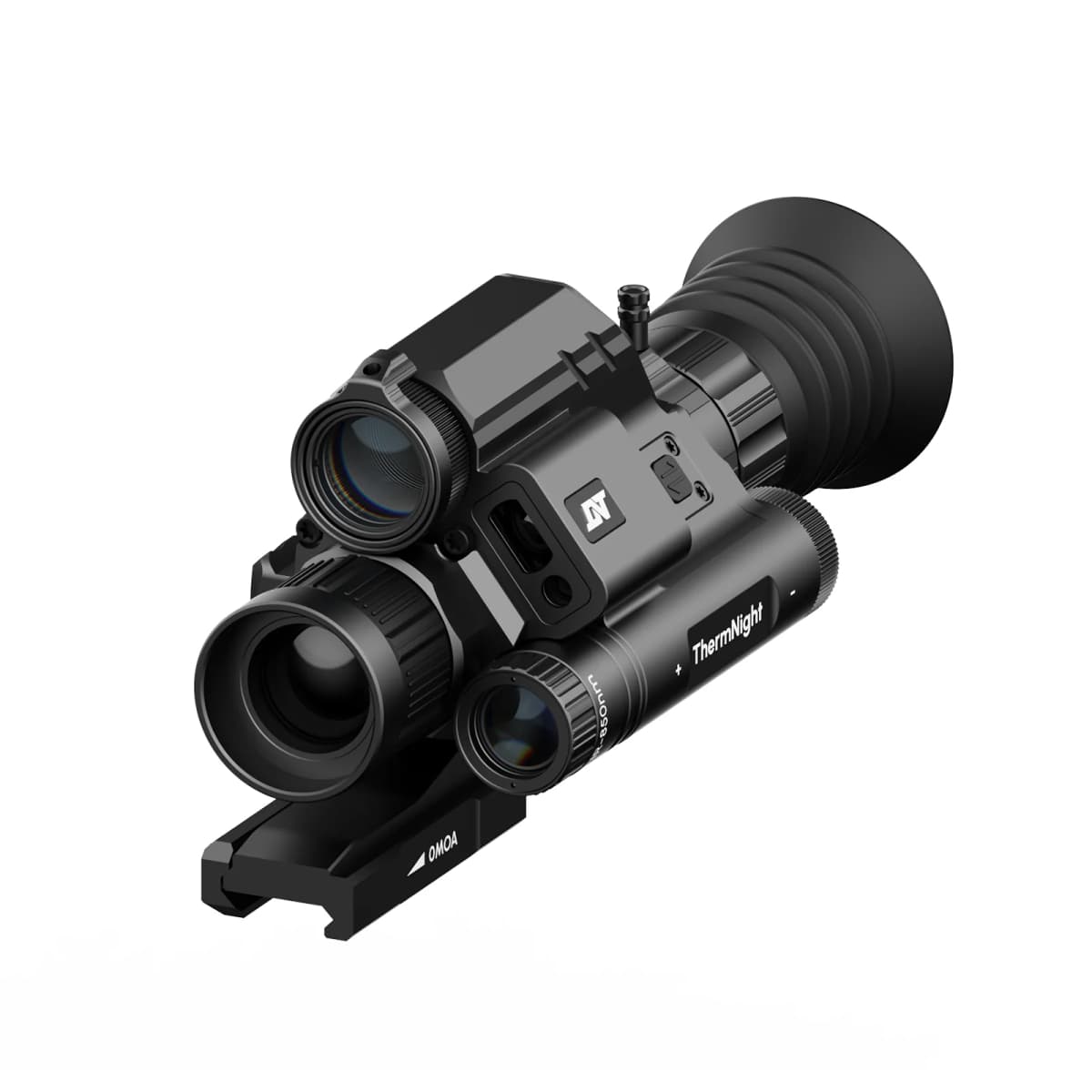
DNT Optics ThermNight TNC335R
- 384x288 thermal (12um) + 1920x1080 Sony Starvis2 day/night camera
- Thermal 2.5-10x, night vision 5-20x, 1200-yard laser rangefinder
Affiliate links (?)
SharpIR, Hot Point Tracking, and the Shared Feature Set
SharpIR is ATN's on-device image processor, and it is the reason the cheaper sensors punch above their pixel count. The chip runs the live feed through edge-sharpening and contrast-boost models that target the specific failure mode of budget thermals: a raw sensor blurs a warm hog into the warm grass behind it, and the shooter loses the animal's outline. SharpIR runs in real time at the 50 Hz refresh, so no perceptible lag enters the image, and its effect is most visible on the BlazeSeeker 210, where it pulls perceived sharpness closer to what a bare 384 sensor delivers.
Hot Point Tracking flags the warmest pixel cluster in the field of view with an on-screen indicator, which is most useful during first detection when you are sweeping a brushline and want the unit to call out a bedded animal before you see it. The rest of the shared stack is consistent across all four models: six color palettes, an OLED display, IP67 weather sealing, onboard photo and video recording, and ATN Connect 6 Wi-Fi for streaming to a phone. The result is a full-feature scanner at every tier rather than a stripped sensor on the cheap end and a loaded unit only at the top.

ATN Blaze Series Gen 6 Specifications
- BlazeSeeker 6 210256x192, ≤20 mK, 460 m detection, 8 hr battery, $569
- BlazeTrek 6 325384x288, ≤18 mK, 1,300 m, 2.8-22x, 25mm lens, $1,195
- BlazeHunter 650 LRF640x512, ≤18 mK, 1,000 yd LRF, $2,895
- BlazeHunter XD LRF1,280x1,024, sub-15 mK, 3,400 m+, 2-16x, 50mm, 1,000 m LRF, $4,995
- Refresh Rate50 Hz (all models)
- Image ProcessorSharpIR onboard AI (all models)
- DisplayOLED
- Target AcquisitionHot Point Tracking, six color palettes
- Recording & Wi-FiOnboard recording, ATN Connect 6 Wi-Fi
- HousingIP67 weather-sealed
- AvailabilityNow, atncorp.com and authorized dealers
How the Blaze Stacks Up Against Other Monoculars
The handheld monocular bracket is where the Blaze pricing does the most damage. The Vortex Veil 400 ($1,499.99 MAP) runs a 400x300 sensor and the brand's VIP lifetime warranty, and it sits between the BlazeTrek 325 and the BlazeHunter 650 on price. The Blaze answer to it is the BlazeTrek 325 at $1,195, which undercuts the Veil on price while matching it for typical hog and predator scanning inside 300 yards. At the budget end, the $569 BlazeSeeker 210 has almost no current-generation competition; most 256x192 monoculars from established thermal brands still start north of $700.
Resolution is the trade you make for the lower price. A 256x192 or 384x288 sensor will not resolve a small predator at the distances a 640 or higher unit will, and the BlazeHunter XD's 1,280x1,024 sensor is in a different identification class entirely. The honest read: buy the cheapest Blaze whose resolution covers your real shot distances, then spend the savings on the rifle-side optic that actually takes the shot. A full side-by-side of thermal cores, detection ranges, and current pricing lives in the thermal optics catalog.
Monocular or Clip-On: Where the Blaze Fits
A handheld monocular and a weapon-mounted thermal solve different halves of a night hunt, and serious hog and predator hunters usually run both. The monocular is for detection: it is faster to glass with, it keeps a loaded rifle pointed at the ground while you investigate a heat signature, and it lets the whole party scan without anyone shouldering a gun. The clip-on or dedicated thermal scope is for the shot. ATN's own TICO 6 clip-on is the natural rifle-side companion to a Blaze monocular, mounting in front of a day optic with no re-zero so the same carbine works day or night.
If you are building the rifle that takes the shot after the Blaze finds the target, start the configuration in our rifle builder to match a host carbine, free-float handguard, day optic, and a suppressor or linear comp that keeps muzzle blast off a clip-on's sensor window. For NVG-side context on how thermal and image intensification differ at night, the night vision compatibility guide covers where a thermal scanner beats a PVS-14 and where it does not.
Stay Updated on Thermal Releases
Get notified when the Blaze Series Gen 6 hits OpticsPlanet and dealer inventory and when street pricing settles below MSRP. We also cover hands-on reviews of handheld thermals, clip-ons, and the host rifles that turn a scan into a shot.
Frequently Asked Questions
▶How much does the ATN Blaze Series Gen 6 cost?
▶What is the difference between the four Blaze Gen 6 monoculars?
▶Is the ATN Blaze a clip-on or a handheld monocular?
▶Which ATN Blaze model is best for hog and coyote hunting?
▶Do any Blaze Gen 6 models have a built-in rangefinder?
▶What are SharpIR and Hot Point Tracking on the Blaze Series?
▶Does a thermal monocular require ATF paperwork or a tax stamp?
Bottom Line
The Blaze Series Gen 6 is ATN doing to handheld thermal what the TICO 6 did to clip-ons: putting a current-generation core at a price that drags thermal scanning down out of the premium-only bracket. The $569 BlazeSeeker 210 is the headline, a 6th-gen 256x192 scanner that costs less than a quality day optic, and the $1,195 BlazeTrek 325 is the model most hog and predator hunters should actually buy. The BlazeHunter 650 and XD are for the shooters who want resolution and a built-in rangefinder in one unit, and the XD's 1,280x1,024 sensor pushes into long-range detection territory.
Treat the Blaze as the detection half of a two-device night setup. Pair the monocular you can afford with a dedicated thermal scope or the TICO 6 clip-on on the rifle, lean on the clip-on thermal guide for the mounting and zero workflow, and build the host carbine in the rifle builder. Scan with the handheld, shoot with the scope, and let each device do the job it is actually good at.