Key Takeaways
- →Filed November 23, 2026: Foster v. Sig Sauer Inc., No. 1:26-cv-00995, is a proposed nationwide antitrust class action in the U.S. District Court for the District of New Hampshire.
- →Eight defendants: Sig Sauer, Smith & Wesson, Ruger, Glock, FN America, Beretta U.S.A., Bass Pro Shops and Cabela's. The six makers account for roughly two-thirds of domestically made pistols, according to the complaint.
- →Class period from January 1, 2015: The proposed class is every U.S. retail buyer, not for resale, of a firearm made by one of the six manufacturers from 2015 through the present.
- →The claim is coordination, not MAP itself: The complaint alleges competing makers agreed with each other and with Bass Pro to adopt and enforce minimum advertised price policies, a per se Sherman Act violation if proven.
- →Nothing changes at checkout: No class is certified, no court has ruled on the allegations, and there is no claims process or payout.
What the Gun Price-Fixing Lawsuit Alleges
Foster v. Sig Sauer alleges that six of the largest U.S. gun makers and two of the largest gun retailers conspired, starting on or around January 1, 2015, to adopt, maintain and enforce minimum advertised price (MAP) policies and related pricing restrictions that stopped retailers from competing on price. The 95-page complaint calls the arrangement a per se unlawful price fixing conspiracy covering pistols, revolvers, rifles and shotguns sold at retail.
The complaint was filed November 23, 2026 by William Foster, an Alabama resident and Bass Pro Shops customer who says the firearms he bought there, made by the manufacturer defendants, cost more because of the alleged conspiracy. He is represented by DiCello Levitt, Shaheen & Gordon of Concord, New Hampshire, and Mastando & Artrip of Huntsville, Alabama. The case was filed in New Hampshire because Sig Sauer is headquartered there.
Three counts are pleaded: a violation of Section 1 of the Sherman Act, violations of state antitrust and consumer protection laws, and unjust enrichment. Foster asks for treble damages, a permanent injunction, disgorgement and restitution, and a jury trial. The facts described below are the plaintiff's allegations. None has been proven, and no court has ruled on any of them.
Who Is Sued and Who the Proposed Class Covers
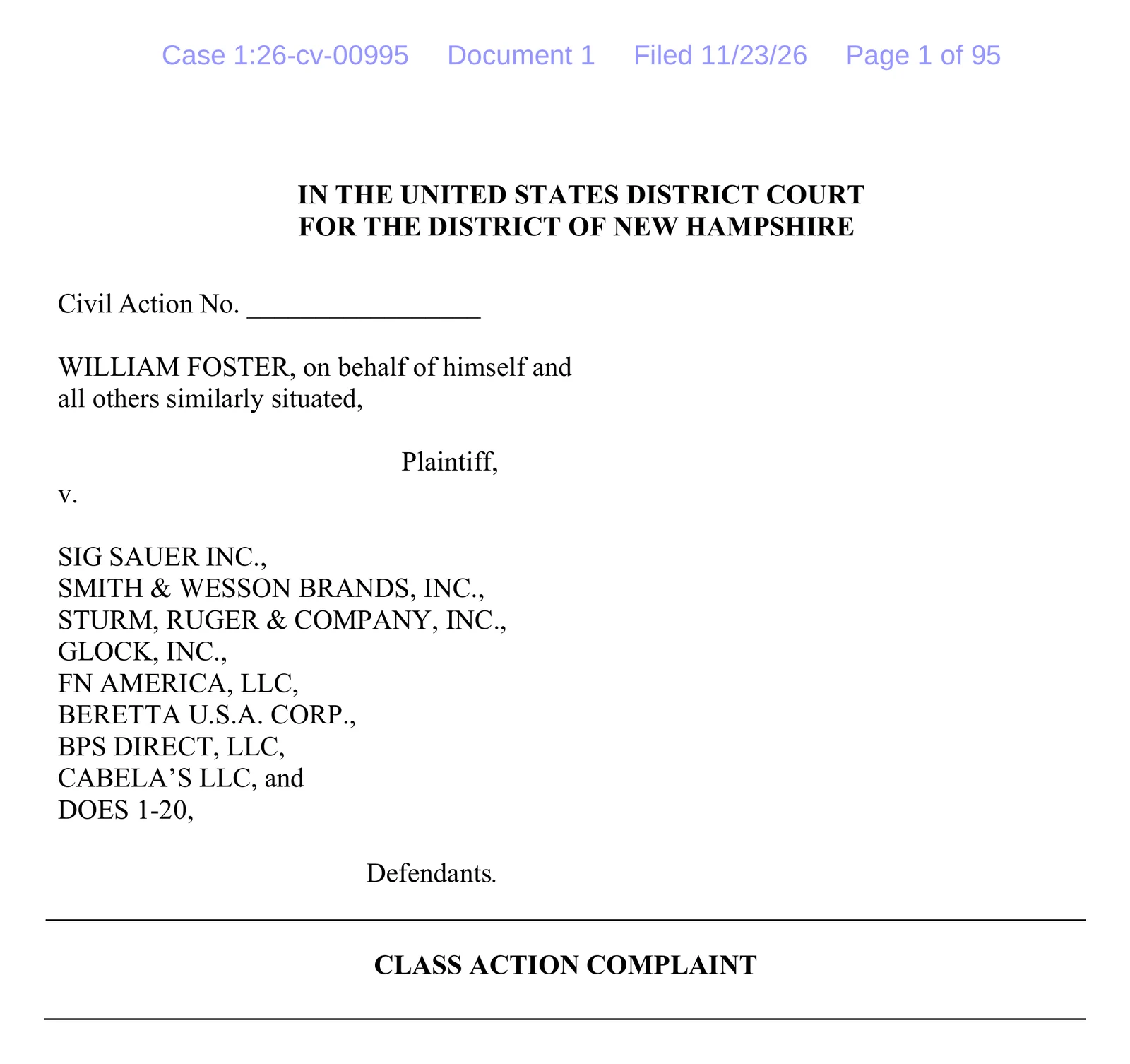
The named defendants are Sig Sauer Inc., Smith & Wesson Brands, Inc., Sturm, Ruger & Company, Inc., Glock, Inc., FN America, LLC, Beretta U.S.A. Corp., BPS Direct, LLC (doing business as Bass Pro Shops) and Cabela's LLC, plus 20 unnamed Doe defendants. The complaint says the six manufacturers account for roughly two-thirds of domestic pistol production, with Sig Sauer, Smith & Wesson, Ruger and Glock the four largest U.S. pistol makers in that order. Bass Pro completed its roughly $5 billion purchase of Cabela's in September 2017, and the complaint refers to the two together as BPS/Cabela's.
The proposed class is "all persons and entities in the United States and its territories" who bought at retail, not for resale, firearms produced by any of the six manufacturer defendants from January 1, 2015 through the present. That is not limited to Bass Pro and Cabela's customers. A Glock bought from a local shop or a Ruger shipped from an online retailer to an FFL falls inside the proposed definition. Defendants, their employees, government entities, counsel and court personnel are excluded. The complaint estimates about 200 million firearms were sold in the United States during the class period; that is the whole market, not a count of class purchases.
Two of the defendants already have a financial link. Beretta Holding's tender offer for Ruger shares brought its beneficial ownership of Ruger to about 25 percent in October 2026. The complaint names Beretta U.S.A. and Ruger as separate competitors.
MAP vs MSRP vs the Price You Actually Pay
MSRP is a suggestion, MAP is an enforced floor on advertising, and the transaction price is what you pay at checkout. The FTC explains that the key word in manufacturer's suggested retail price is "suggested": a dealer may charge the MSRP or any other price, as long as it decides on its own. A minimum advertised price is different because the manufacturer attaches consequences to advertising below it, which the complaint lists as warnings, suspended shipments, loss of authorized-dealer status or termination.
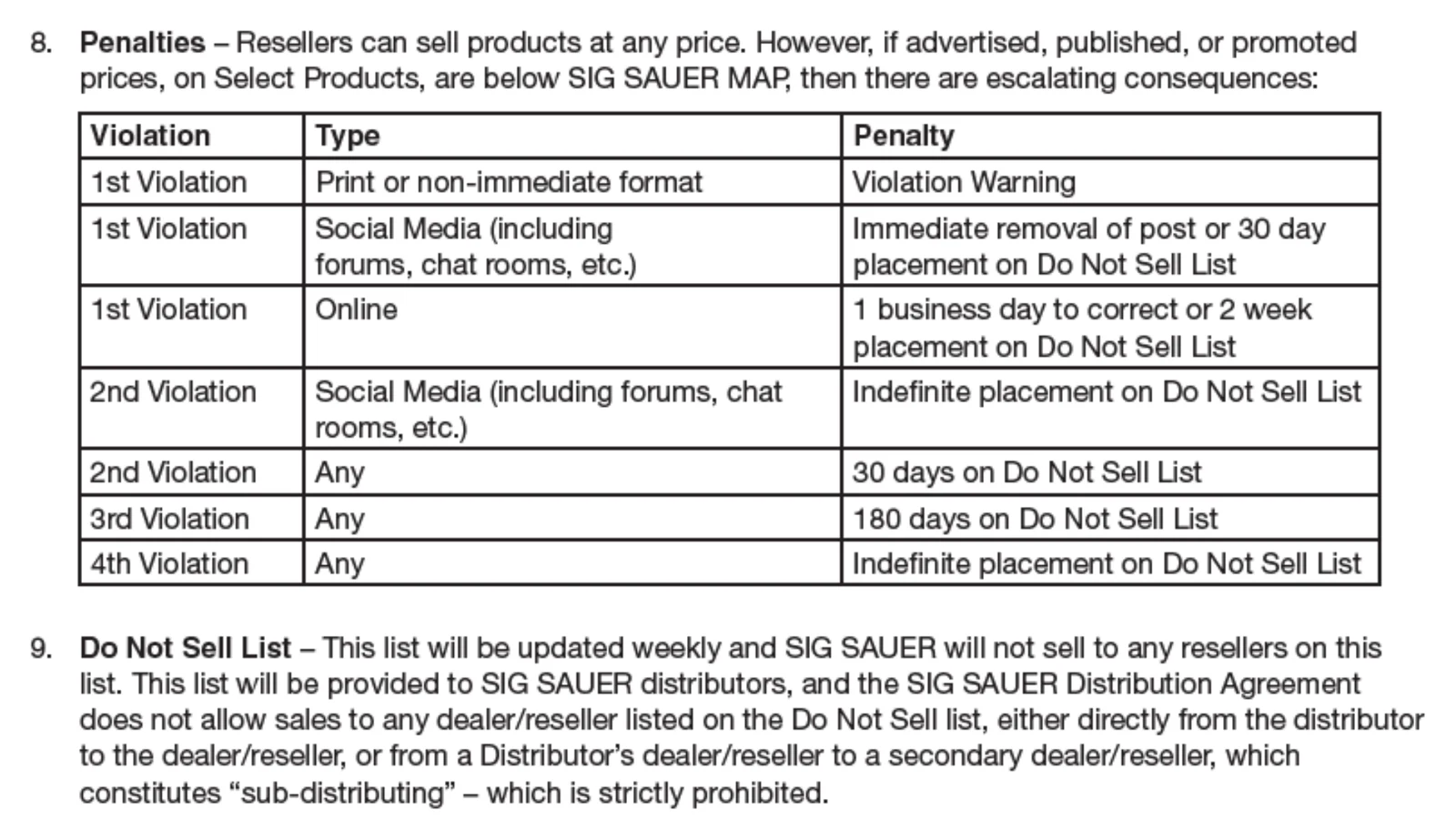
On paper, MAP governs only the advertised number. Sig Sauer's policy, reproduced in the complaint, opens its penalty section with "Resellers can sell products at any price," then sets escalating consequences for advertised, published or promoted prices below MAP, up to indefinite placement on a Do Not Sell list. The plaintiff's argument is that the gap between advertised and real prices has largely disappeared in the gun business: the complaint alleges retailers generally do not go below MAP, so the MAP price shown to buyers is the price they pay in most situations.
This is also why a given pistol tends to show the same advertised price across retailers. A manufacturer's MAP schedule sets one floor per SKU for every authorized seller, and the complaint alleges retailers generally do not advertise below it, so stores land on the same number. "Add to cart for price" and "click for price" listings are the workaround: the complaint describes cart-revealed prices and "call for price" messages as ways retailers communicate a lower price, and alleges many policies restrict them too. It quotes Sig Sauer's policy as stating that MAP includes "click for price," "in the cart pricing," checkout pricing and automated price features, and Glock's policy as applying to prices displayed in shopping carts and checkout pages.
Follow the Gun Price-Fixing Case
Get the weekly briefing when the defendants answer, a judge rules on dismissal, or a class is certified, plus the deals worth your money.
The 2015 Webinar, the 2017 Bass Pro Meeting and MAP Holidays
The complaint builds its conspiracy case on two events and a shared enforcement system. The first is a September 17, 2015 webinar hosted by the National Association of Sporting Goods Wholesalers, a trade group the complaint says counts every manufacturer defendant as a member. A Sig Sauer executive told an audience the panelists described as about 75 percent firearm manufacturers that dealer complaints about the lack of a formal MAP policy, plus follow-up conversations with "other manufacturers that aggressively enforce MAP," led Sig Sauer to adopt a formal MAP policy on July 1, 2015. He said the policy "has teeth," that Sig Sauer uses technology to crawl for violations, and that dealers help identify competitors who violate it. The plaintiff characterizes that presentation as a signal to competitors that it was safe to follow.
The second is a supplier meeting Bass Pro allegedly convened at its Springfield, Missouri headquarters around September 2017, attended by roughly 150 to 200 executives from firearm makers and other suppliers, including representatives of each manufacturer defendant. Over the following year, the complaint alleges, Bass Pro met or spoke separately with each manufacturer and demanded that it adopt or enforce MAP, stop online retailers from advertising below Bass Pro's prices, meet margin targets and pay "markdown money" to offset discounts. The complaint alleges representatives of the competing manufacturers then discussed those demands with one another in informal settings and assured each other they would comply.
Enforcement allegedly ran through overlapping channels: Bass Pro and Cabela's monitoring rival retailers' prices and forwarding screenshots of below-MAP ads to manufacturers, and the manufacturers using web crawlers, third-party monitoring services and reports from sales staff and distributors. The complaint cites a 2018 example in which Sig Sauer allegedly threatened to cut off a New York dealer's supply until he raised his advertised prices, which he did.
MAP holidays are the pressure valve in the plaintiff's theory. During a MAP holiday, manufacturers temporarily suspend or relax the floor so retailers can advertise lower prices and clear inventory; the complaint quotes Sig Sauer's policy as letting it "periodically pre-announce 'MAP holidays' when prices may be adjusted below MAP." It alleges Bass Pro demanded markdown money to cover lost margin during those promotions, and that the floors resume when the holiday ends. It also cites Ruger's 2014 earnings calls, in which then-CEO Michael Fifer described "the aggressive price discounting of many of our competitors"; the complaint says he admitted Ruger's own price discipline was costing it market share, particularly at Black Friday sales events at large chain stores.
The complaint goes beyond pricing mechanics. It argues the industry sustained demand through fear- and identity-based marketing, cites a July 6, 2026 report by the gun-control group Guns Down America, and lists defendant employees it says attended SHOT Show during the class period as evidence of opportunities to communicate. Those claims support the plaintiff's account of why high prices held; the Section 1 question is still whether competitors agreed with one another.
Is MAP Pricing Legal? One Maker Acting Alone vs Competitors Agreeing
A MAP policy adopted by one manufacturer on its own is generally legal; the same policy adopted by agreement among competing manufacturers is not. The FTC puts it directly: "the critical distinction is between a unilateral decision to impose a restraint (lawful) and a collective agreement among competitors to do the same (unlawful)." Since the Supreme Court's 2007 decision on vertical price restraints, programs a manufacturer imposes on its own dealers are judged under the rule of reason, which weighs benefits such as dealer service against reduced competition. A manufacturer may deal only with retailers that follow its price policy and may stop supplying one that does not. Some state antitrust laws remain stricter than the federal standard.
Horizontal coordination is treated far more harshly. The FTC describes a naked agreement among competitors to fix prices as almost always illegal, whether the price is a minimum, a maximum or a range, and says antitrust issues arise when a manufacturer agrees with competing manufacturers to impose price restraints on dealers, or when dealers act together to push a manufacturer into one. That is the theory here: the complaint does not attack any single company's MAP policy as unlawful by itself, it alleges the six makers and Bass Pro agreed with each other, which it argues is per se illegal with no need to define a market.
Similar policies alone do not prove an agreement. Under the Supreme Court's 2007 Twombly decision, parallel conduct without more does not suggest conspiracy; a Section 1 complaint must plead facts that plausibly suggest an actual agreement. That is why the Foster complaint leans on alleged direct communications (the webinar remarks and the manufacturers' alleged assurances to one another after the Bass Pro meeting) and on "plus factors" such as common monitoring methods, a concentrated industry and repeated opportunities to meet. Whether those allegations are enough is the first thing the court decides.
Factory Glock Magazines
Glock OEM G17 Magazine 17-Round
- 17 rounds
- 9mm
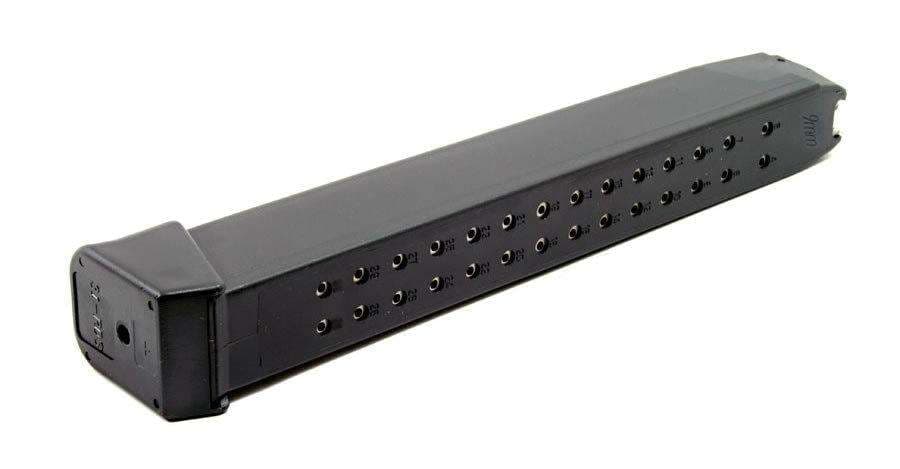
Glock OEM G17 Magazine 33-Round
- 33 rounds
- 9mm
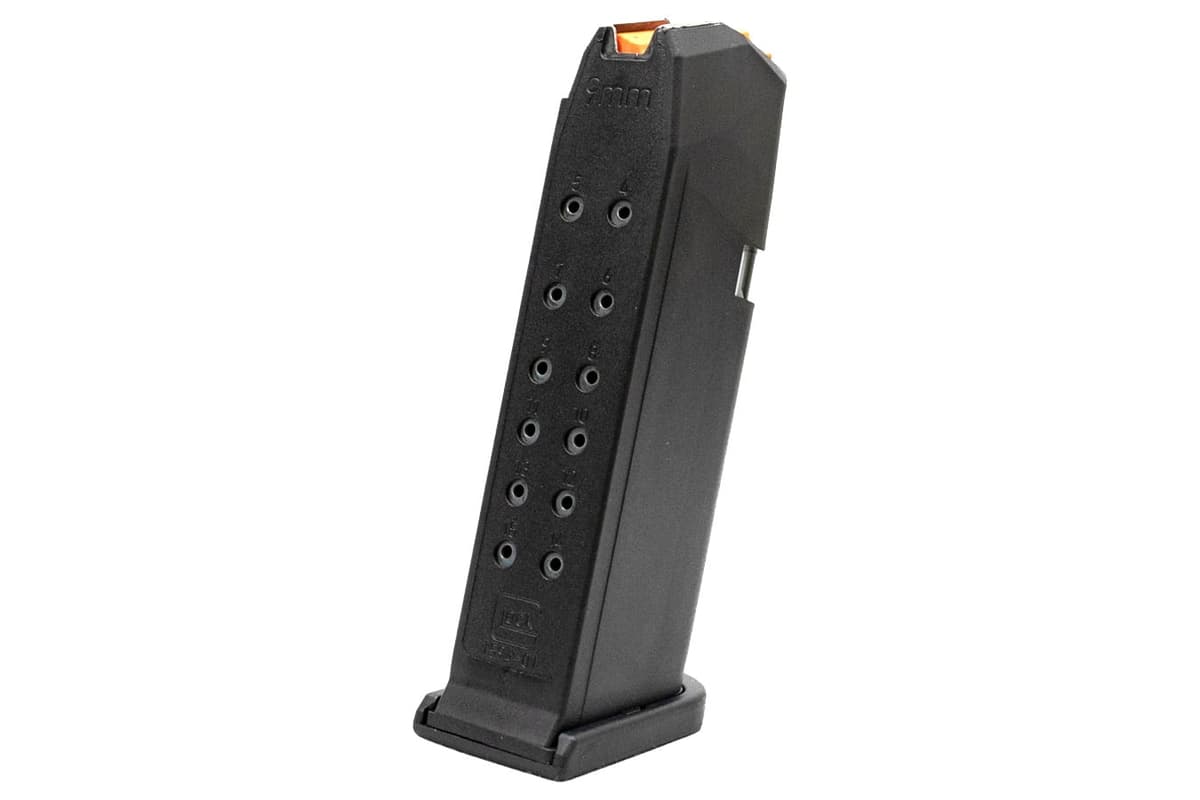
Glock OEM G19 Magazine 15-Round
- 15 rounds
- 9mm
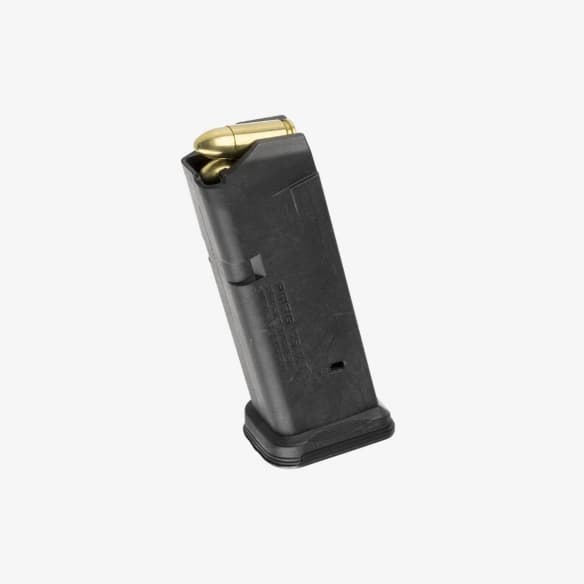
Magpul PMAG 15 GL9
- 15 rounds
- 9mm
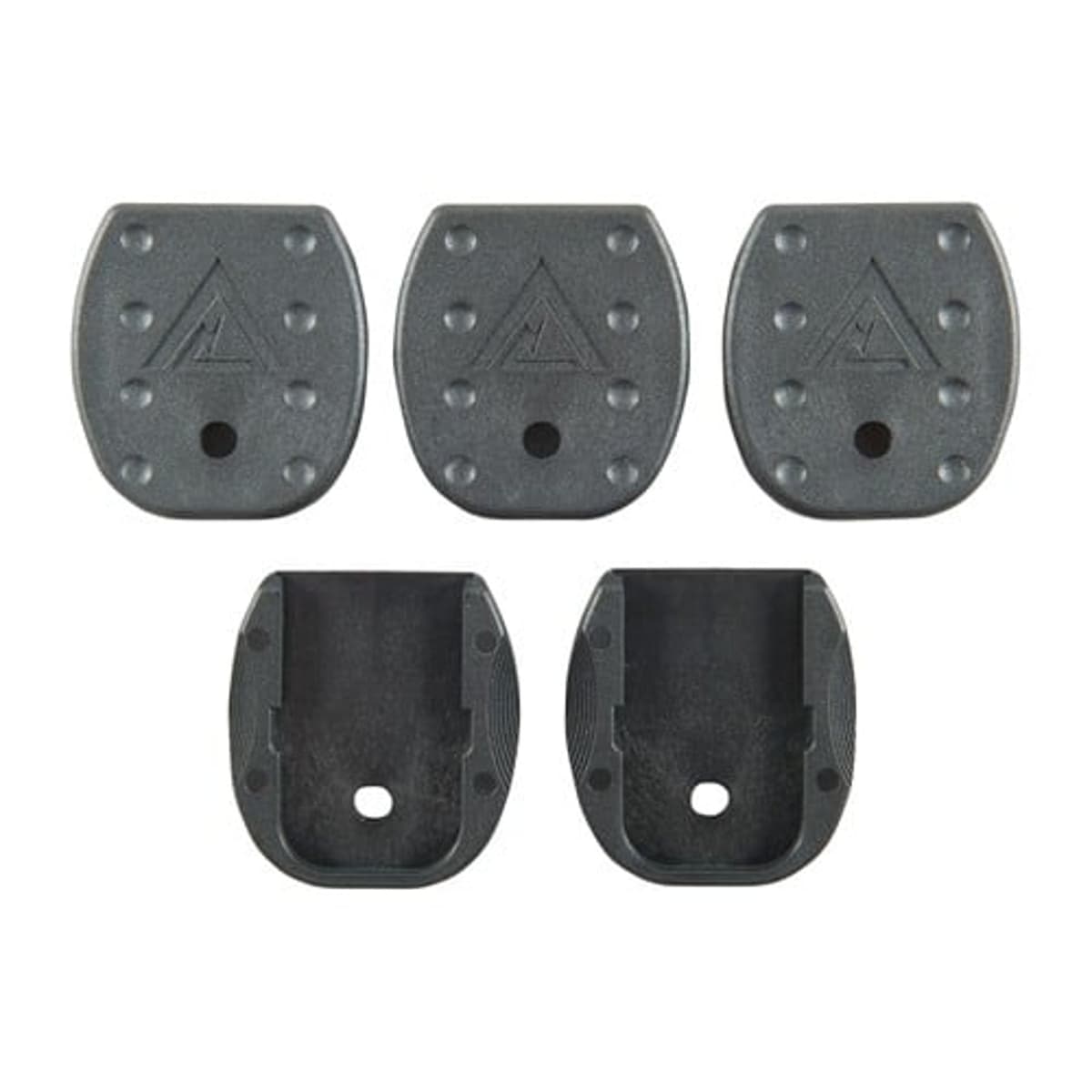
Vickers Tactical Magazine Floor Plates (Glock 9mm/.40)
- +0 capacity
- Glass-filled nylon
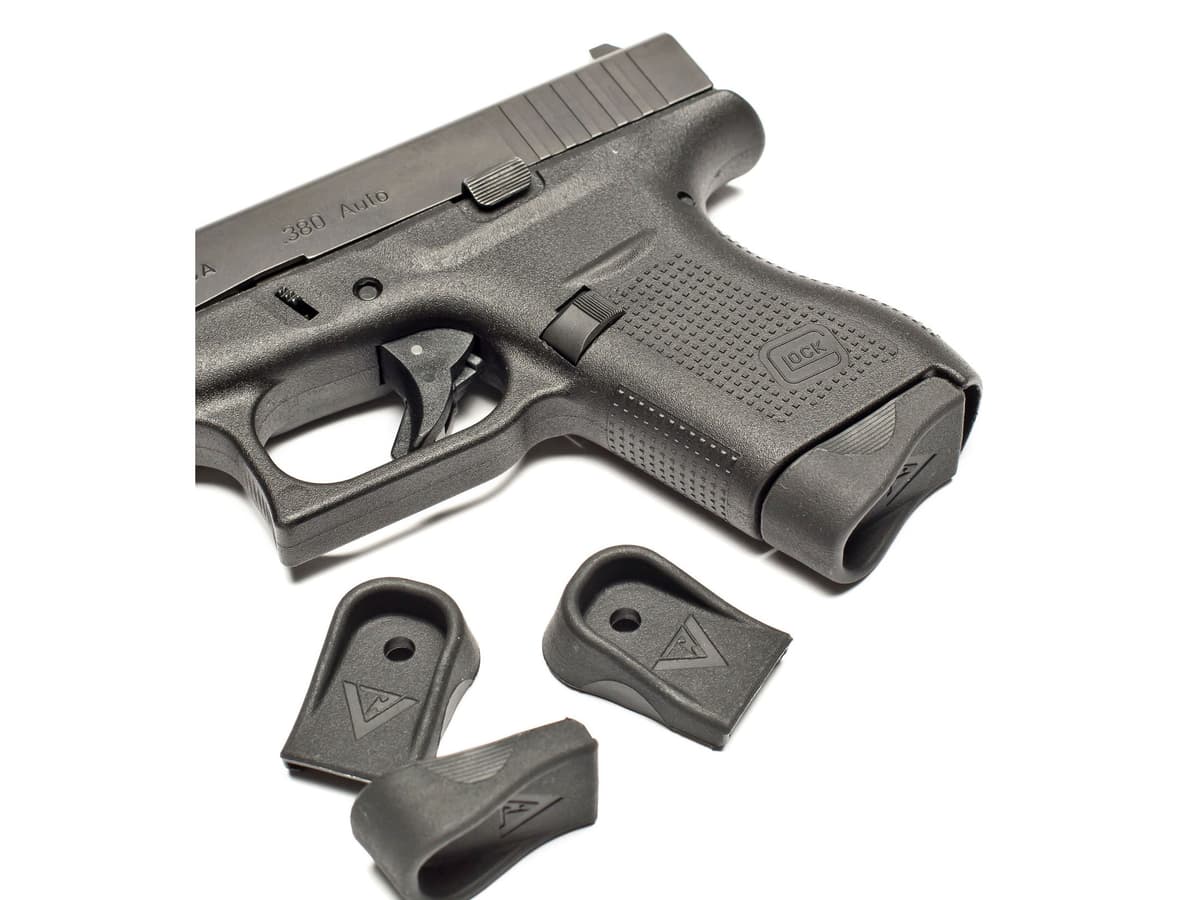
Vickers Tactical Floor Plates for Glock 42 (VTMFP-003)
- +0 capacity
- Glock 42 only
Affiliate links (?)
What the Lawsuit Means for Gun Buyers Right Now
Nothing changes for buyers today. A complaint is one side's account; it does not alter any company's pricing policy, and no court has ordered one changed. There is no class, no settlement, no claims form and no deadline for buyers to act. If a class is ever certified, notice to class members would follow under the federal class action rules, which the complaint itself requests.
For this week's shopping, the practical facts are the ones the complaint describes: advertised prices on these brands tend to sit at the manufacturer's floor, cart and checkout prices can differ from the listing, and manufacturer-approved promotions are when advertised prices drop below the usual floor. Our Black Friday gun deals page lists this year's sale prices and codes. Because advertised prices on the same model often match across stores, compare the guns on features: the best 9mm pistols guide ranks handguns from Glock, SIG and others on fit and features, the best AR-15 rifles guide does the same for rifles, and the comparison tool puts specifications side by side.
What Happens Next in Foster v. Sig Sauer
The next step is the defendants' response, most likely a motion to dismiss for failure to state a claim. Under Federal Rule of Civil Procedure 12, a defendant must answer within 21 days of being served, or within 60 days of a waiver request if it waives formal service, and may instead move to dismiss. In a Section 1 case that motion tests the Twombly standard: whether the complaint pleads facts plausibly showing an agreement rather than parallel conduct. Reuters reported on November 24 that Sig Sauer, Smith & Wesson, Glock and Bass Pro Shops did not immediately respond to requests for comment.
If the case survives dismissal, discovery follows, and then the fight over class certification. Foster asks the court to certify a class under Rules 23(a) and 23(b)(3), which requires showing that common questions predominate over individual ones and that a class action is the superior way to resolve the claims. Summary judgment motions can come before or after that ruling, and any class-wide settlement needs court approval under Rule 23(e), which can certify a class for settlement purposes at the same time.