Key Takeaways
- →Maxim 1910 patent, modern guts: The Model 1910 keeps the original offset-bore silhouette so it clears iron sights, but uses a modern monocore internal stack rather than original Maxim baffles.
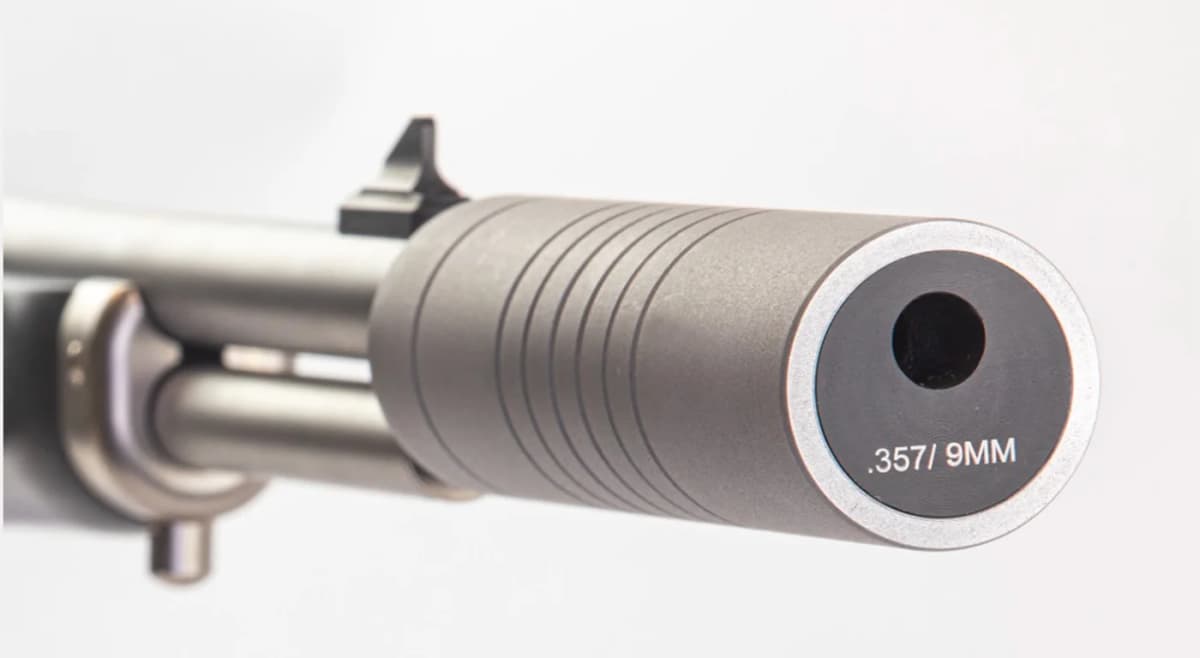
- →Two calibers at launch: Inland offers the Model 1910 in .30 caliber and .357/9mm, covering both the Inland M1 Carbine line and a modern handgun pairing.
- →Permanent install, no-removal service: The monoblock build is designed to stay on the barrel for the life of the can. The monocore cleans in place.
- →Throwback two-can package: Inland pitches the Model 1910 as the companion can to its M1 Carbine Advisor pistol, giving collectors a period-styled host and silencer with zero federal tax in 2026.
What Inland Showed at GunCon 2026
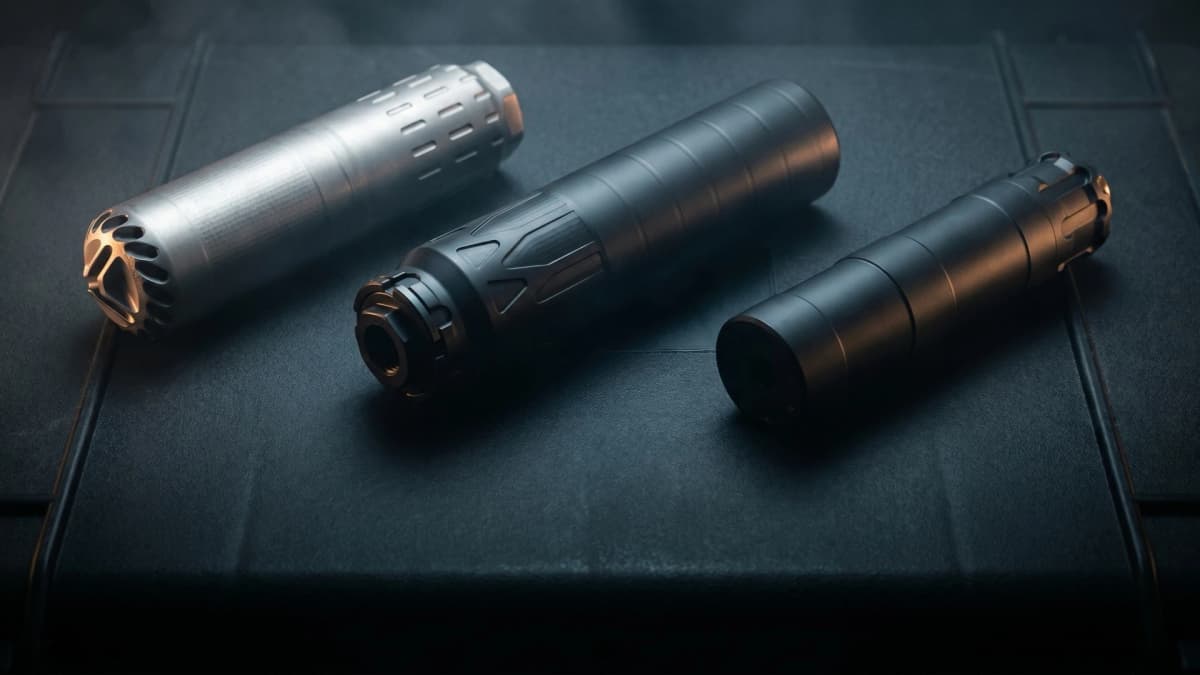
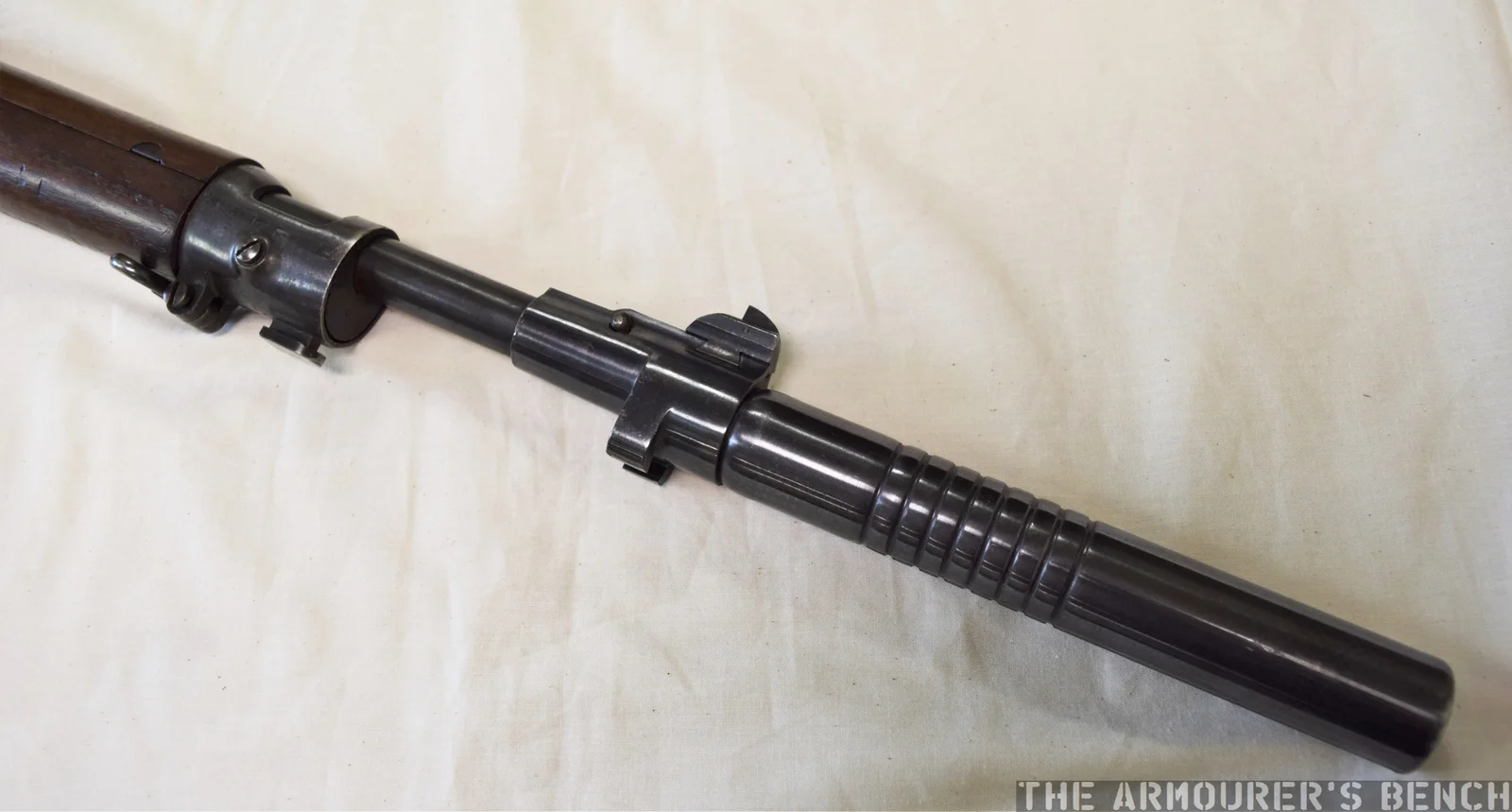
Inland Manufacturing unveiled the Model 1910 suppressor at GunCon 2026 in late June, the second suppressor family from the brand best known for its WWII reproduction rifles. The Model 1910 launches in two calibers, .30 caliber and .357/9mm, and revives the offset-bore silhouette that Hiram Percy Maxim patented in 1909 and sold through his Maxim Silencer Company as the Model 1910. The external shape is the point: a tube that sits below the line of sight rather than over it, leaving iron sights clear.
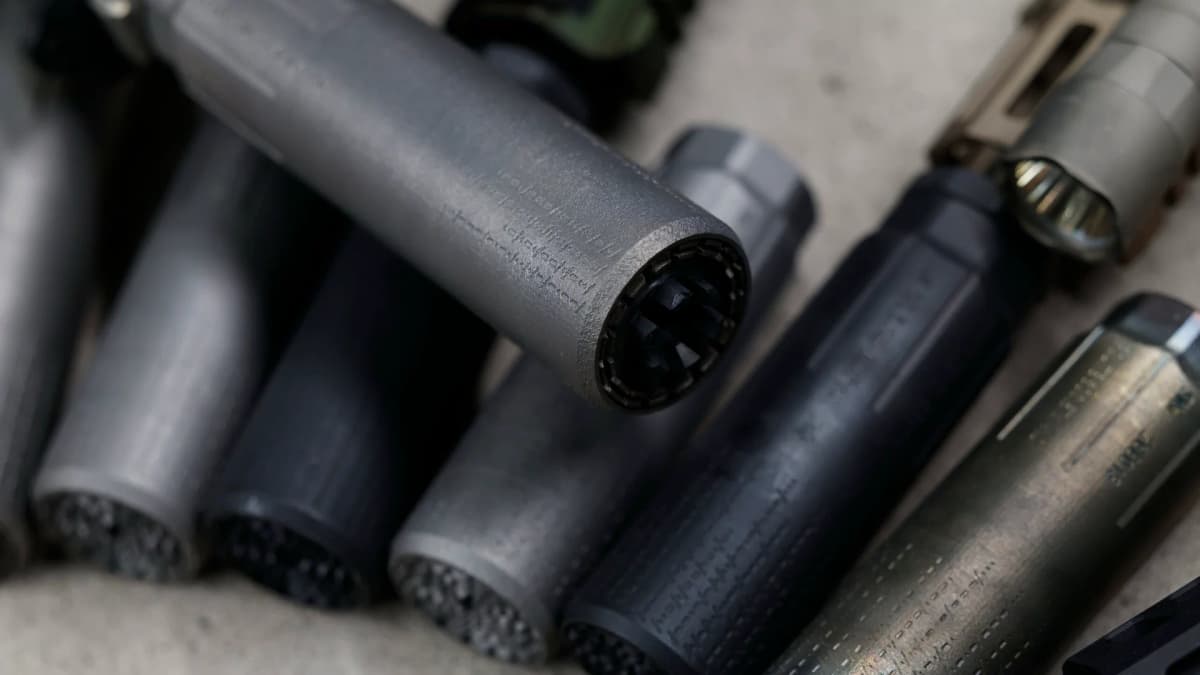
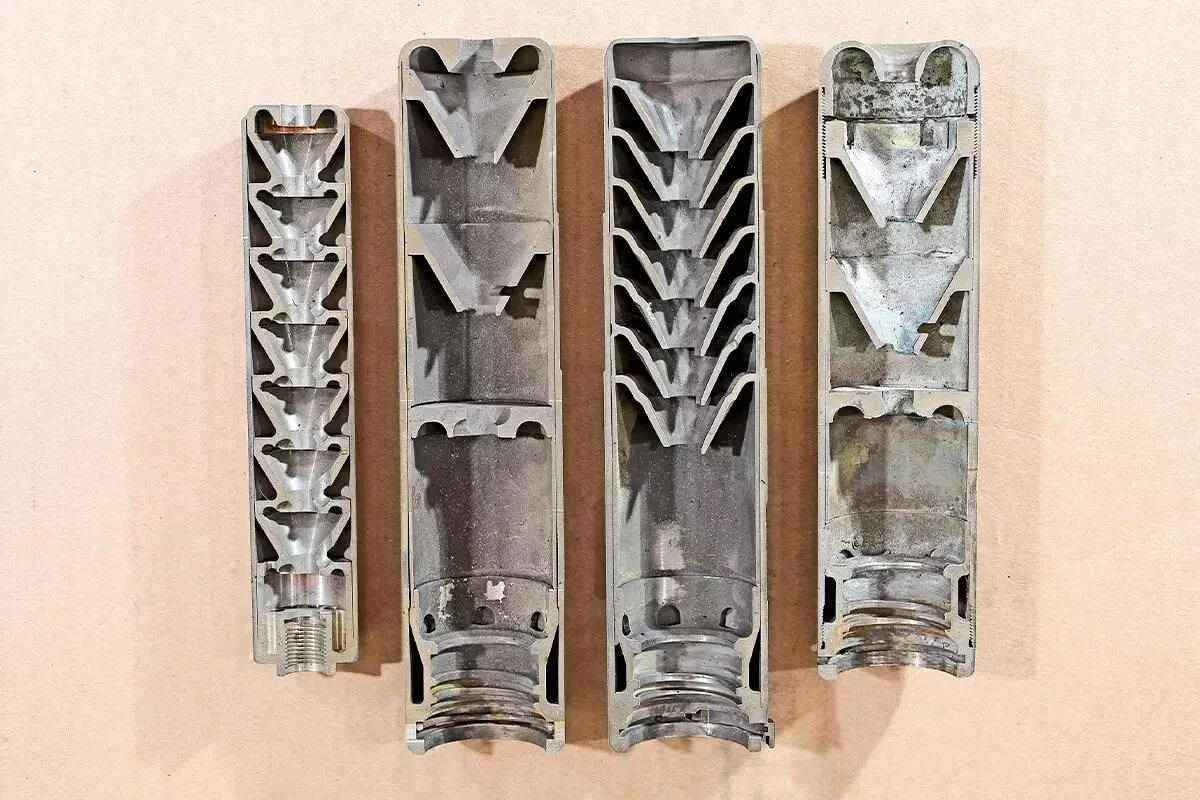
Internally the Model 1910 is not a museum piece. Inland replaced the original Maxim baffle geometry with a modern monocore stack and a monoblock outer body. The brand describes the install as permanent, with the can pinned or welded to the host barrel and serviced in place rather than removed. That puts the Model 1910 in a small but growing category of dedicated, host-locked cans, a category that has become more attractive now that the federal making and transfer tax on suppressors is zero.
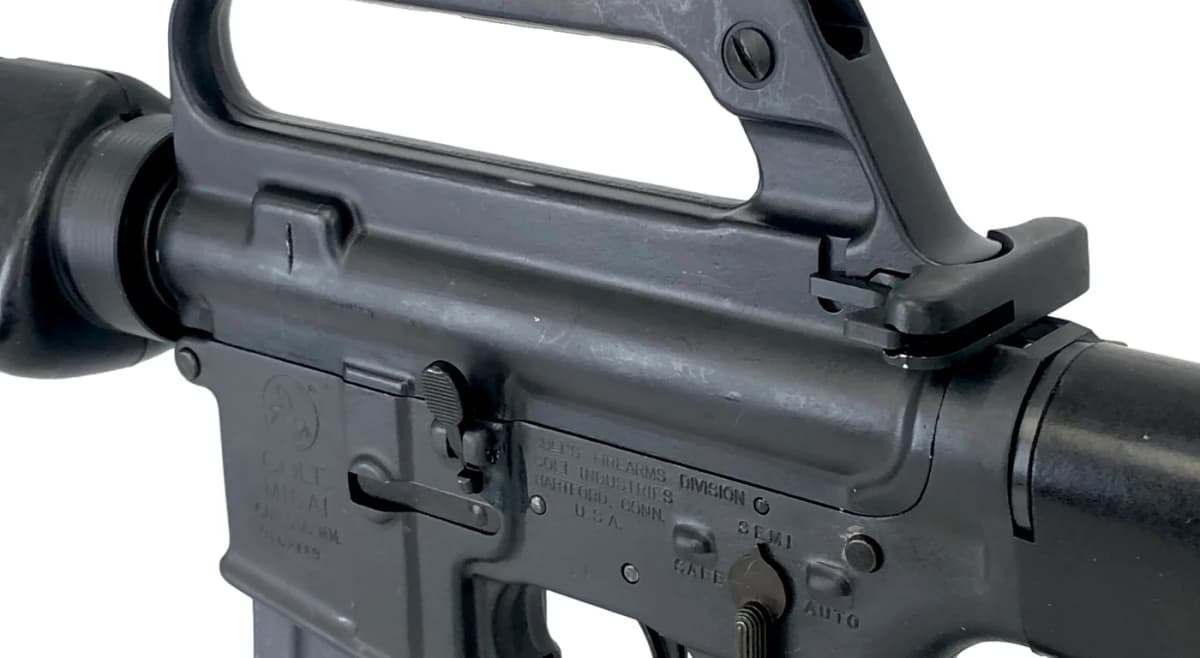
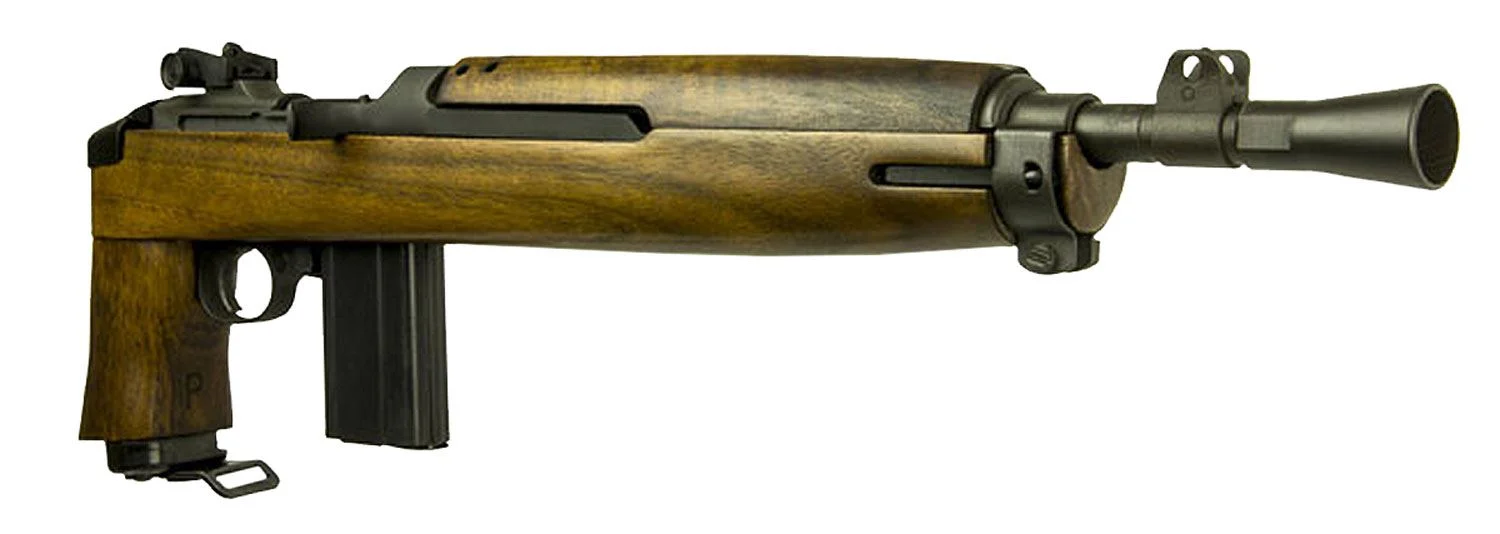
Inland frames the launch as a companion to its existing Inland M1 Carbine Advisor pistol. The Advisor is a short, pistol-grip configuration of the M1 Carbine in .30 Carbine that already has a threaded muzzle. Pair the Advisor with a .30-caliber Model 1910 and you have a period-styled two-stamp build that looks like something a clandestine operator might have carried in the 1940s. For a broader look at how a $0 NFA tax has reshaped the suppressor market, see our coverage of the SHOT Show 2026 suppressor boom. For the optics side of GunCon 2026, our Chestnut Mountain OKP-7 launch coverage covers the show's other retro-pattern release.
Why the Offset Bore Still Matters
The offset bore solves an iron-sight problem that modern shooters have papered over with raised sights and co-witnessed red dots. A 1.5-inch-diameter suppressor on a typical rifle barrel sits about 0.75 inches above the bore line. That is high enough to cover a factory front sight post on a Garand, an M1 Carbine, a Lee-Enfield, or any traditional sporting rifle with a barrel-mounted front sight. Maxim's 1910 solution routed the bullet through a passage near the top of the tube, so the rest of the can volume hung below the sight line and left the factory irons usable.
Modern shooters working around the same problem usually buy taller sights or mount an optic high enough to clear the can. That works on a modern host with a Picatinny rail or a tall front sight base, but it does not work on a period rifle without modification. The Model 1910 is one of very few current production options that lets a collector use a vintage host with iron sights and a suppressor at the same time. For a tour of how the rest of the suppressor market handles mount geometry, see our suppressor mounting systems guide.
.30 Caliber and .357/9mm: The Two Versions
The .30-caliber version is the headline. It covers .30 Carbine, .308 Winchester, 7.62x39, .300 Blackout, and the rest of the .30-bore family that dominates retro and modern carbine builds. The .30 Carbine pairing with the Inland M1 Carbine Advisor pistol is the obvious build: short barrel, threaded muzzle, factory irons, and now a period-correct can that does not obstruct the front sight. The .308 use case is more limited because most .308 hosts are bolt actions or long-barreled rifles where iron-sight clearance is not a problem, but a Model 1910 still works there.
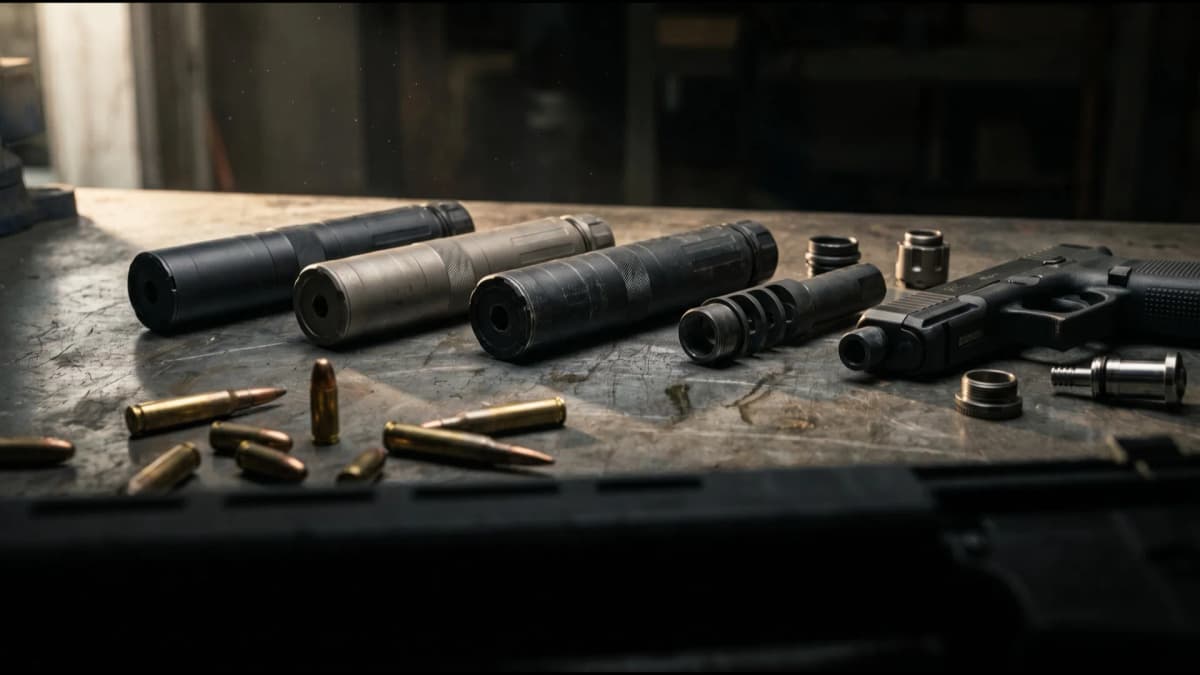
The .357/9mm version is the unusual one. The bore covers 9x19, .38 Special, .357 Magnum, and .357 SIG, which bridges pistol-caliber carbines and revolver-cartridge lever guns. A pinned-and-welded .357/9mm Model 1910 on a short-barreled 9mm PCC or a .357 Magnum lever action is a niche configuration, but it lands in the same family of small-bore sporting cartridges the original Maxim was sold against in the early 1900s. For broader pistol-caliber suppressor options, our best 9mm suppressor guide covers the modern field.
Shop Current .30-Caliber Suppressors
Rugged Micro30
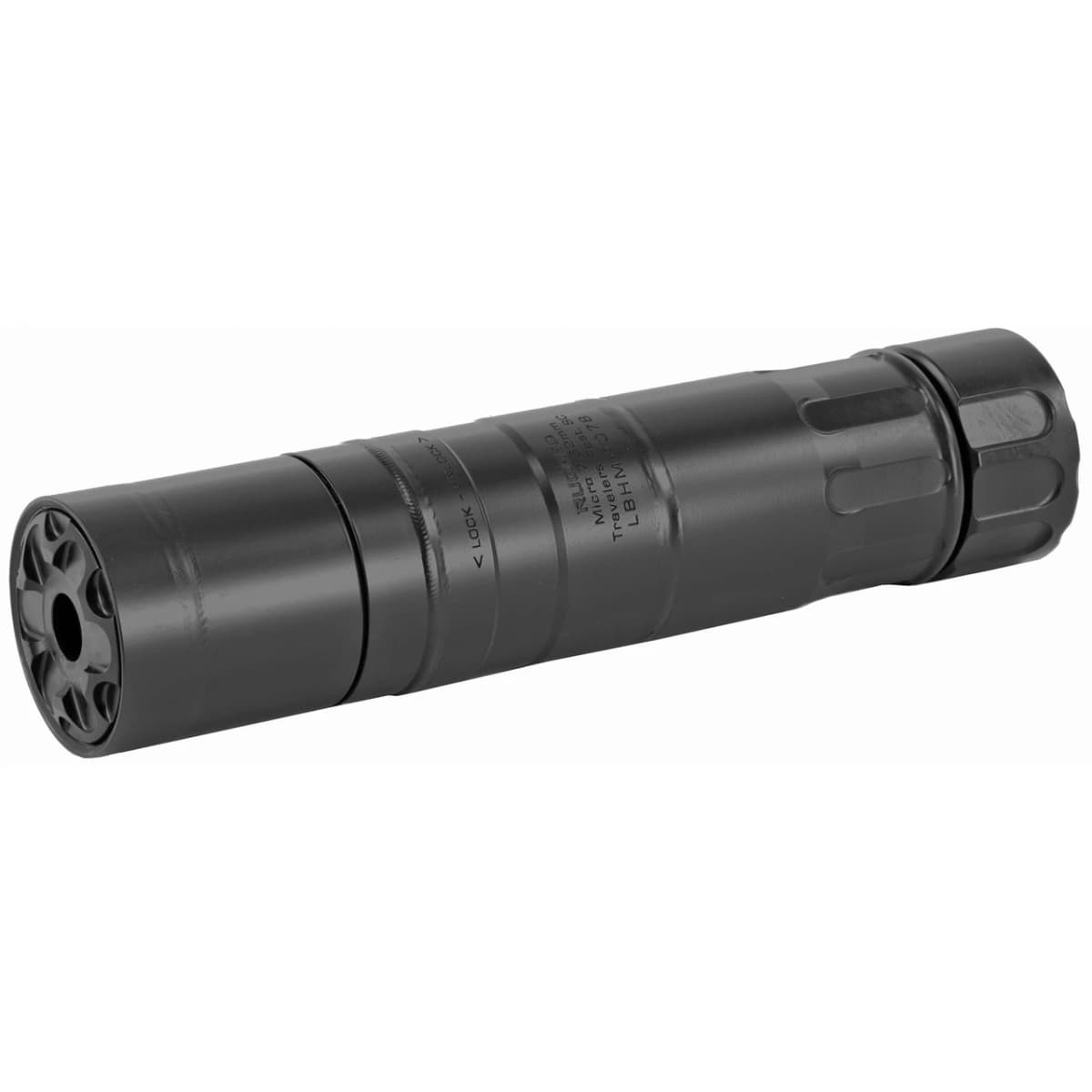
- Center-fire rifle through .300 RUM
- 6.5 in and 15.1 oz long
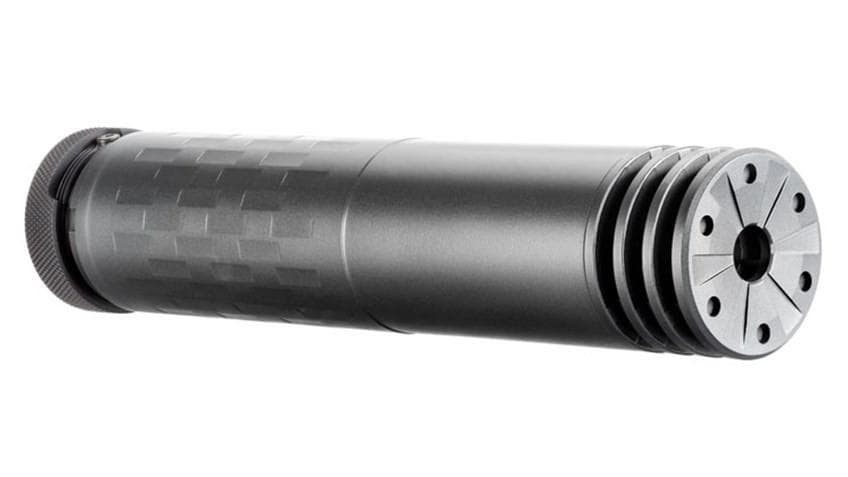
SilencerCo Omega 300
- .30 cal rated
- Direct thread + QD
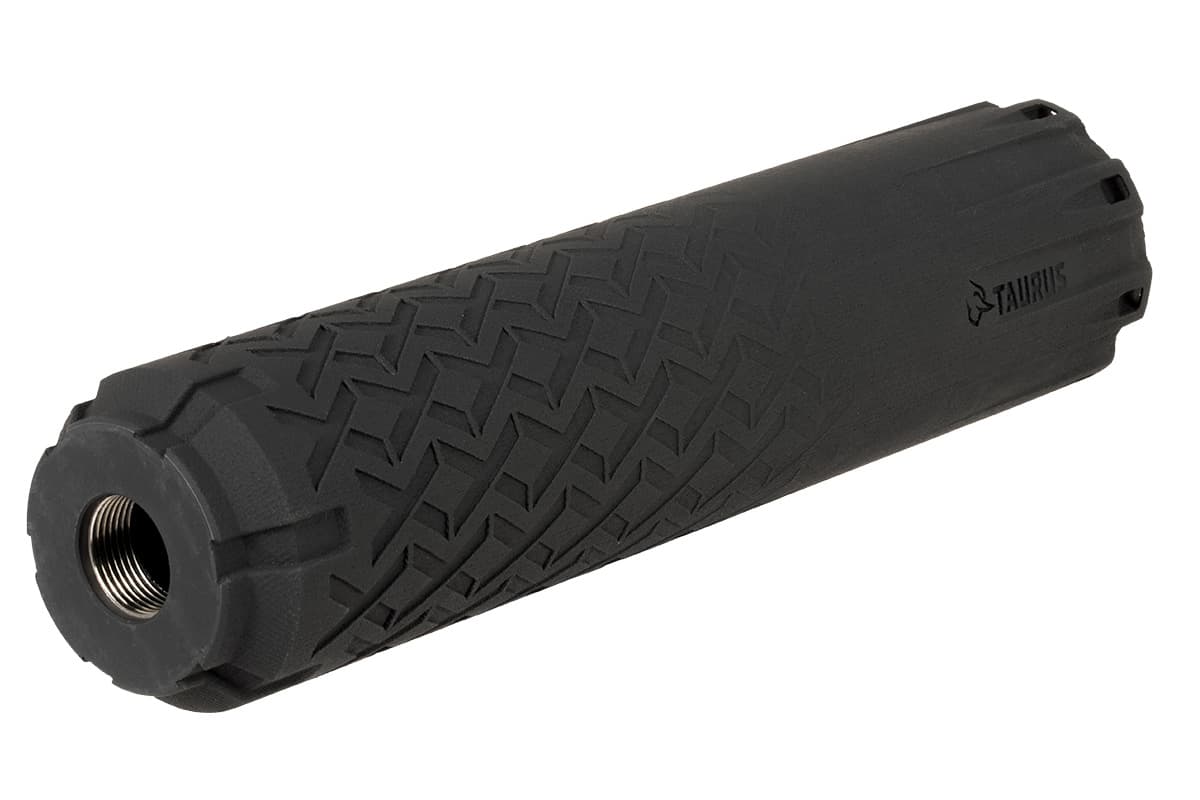
Taurus TTX30
- 7.5 in, 1.75 in diameter, 14.31 oz
- 3D-sintered titanium monocore
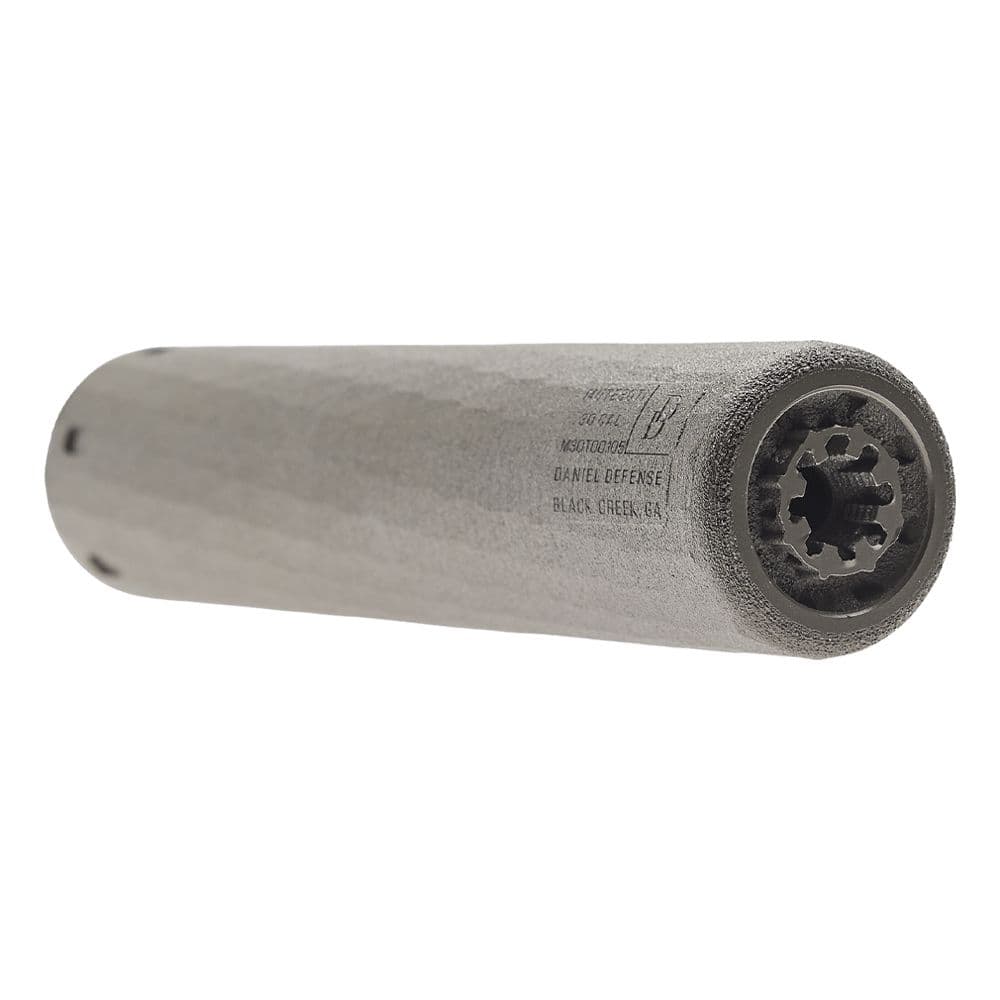
Daniel Defense MUTE 30Ti
- Up to .300 Win Mag
- Weldless 3D-printed titanium
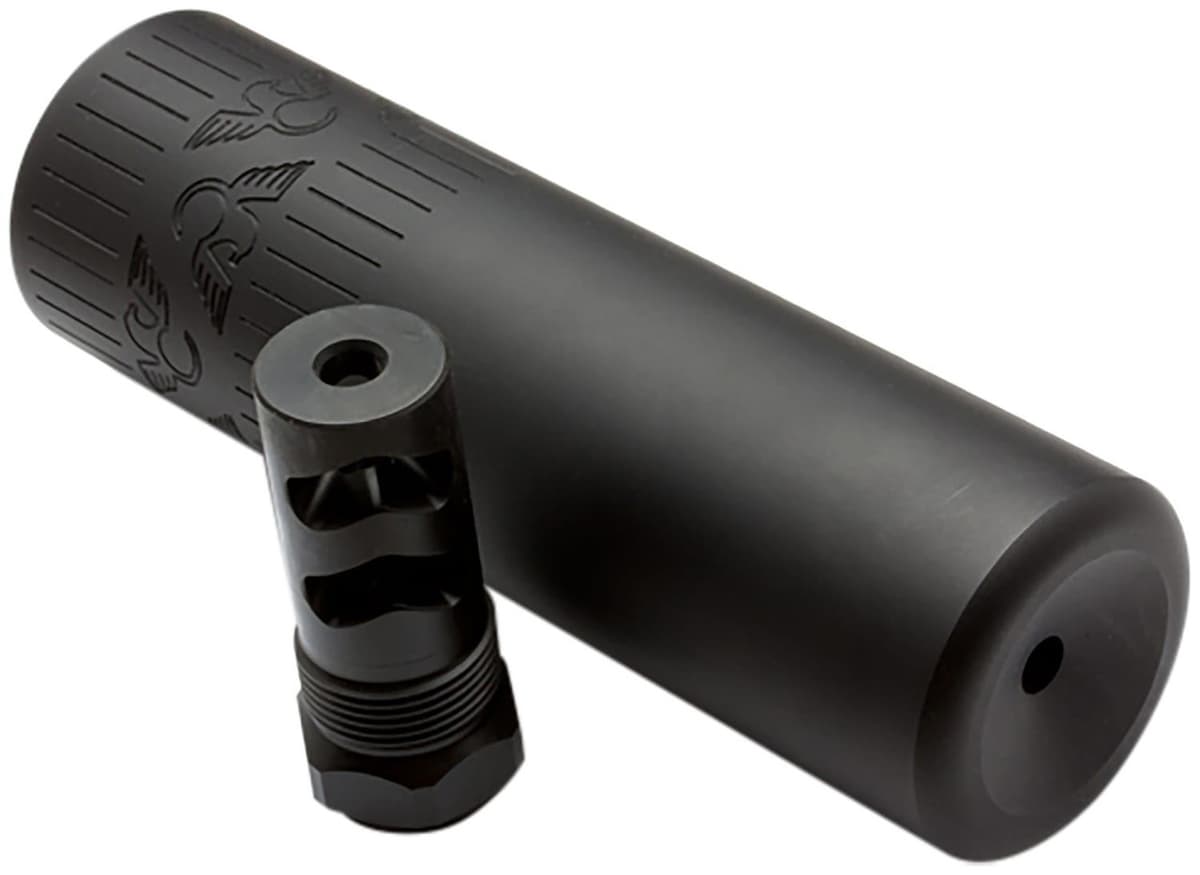
Bersa B762 Suppressor
- 6.75 in, 17.2 oz
- Inconel 718 and 17-4 H900 stainless steel
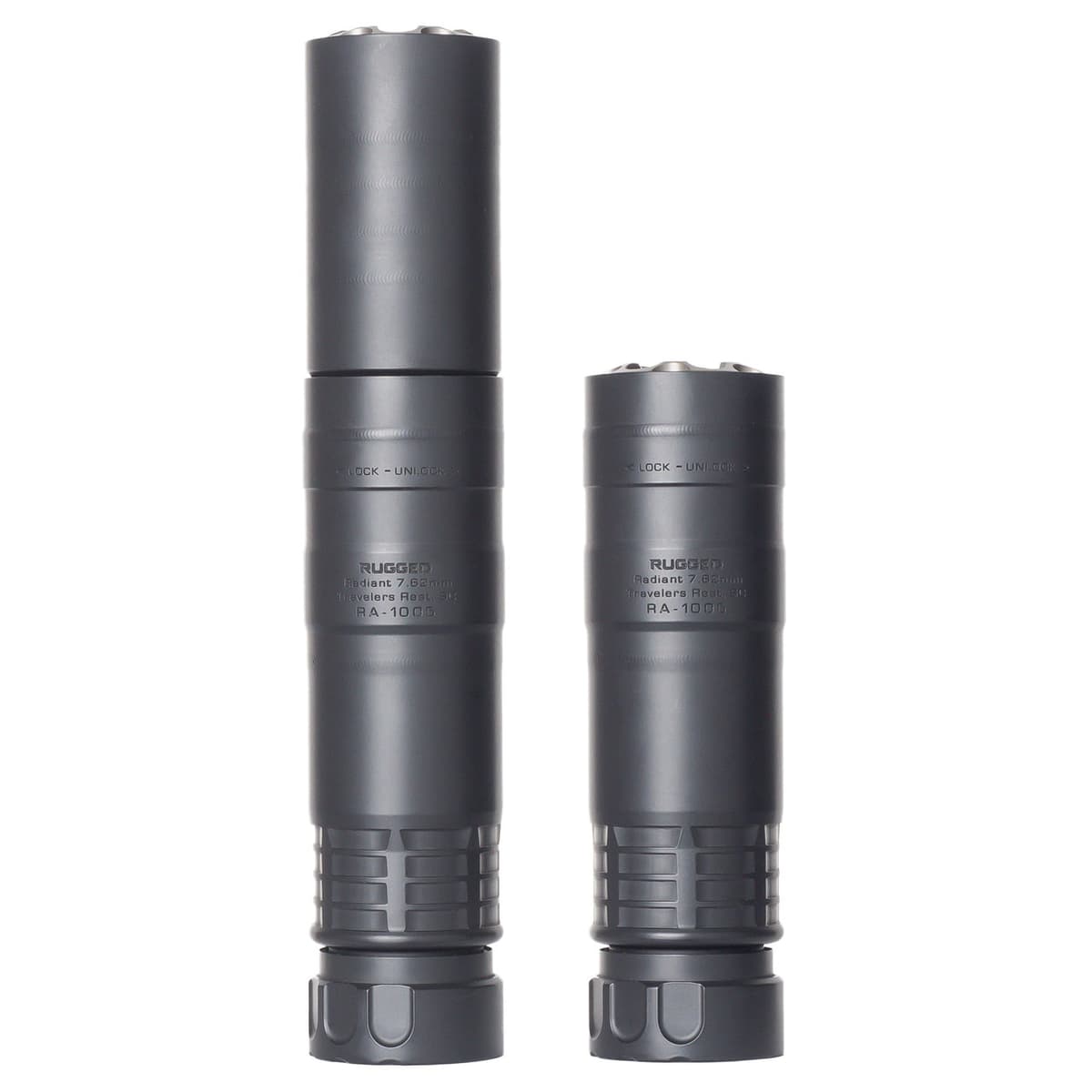
Rugged Radiant762
- Center-fire rifle through .300 RUM
- 7.5 in and 12.5 oz long
Affiliate links (?)
The Permanent-Install Trade-off
A permanent-install can is a deliberate choice, not a cost-cutting one. Pinning and welding the suppressor to the host barrel means the suppressed length counts as barrel length for NFA purposes, which can take an otherwise short-barreled rifle out of SBR territory. It also means there is no QD or thread mount to fail, no carbon to clean off the shoulder of a removable mount, and no accidental cross-threading. The penalty is total commitment: the can is married to that barrel for life.
Inland leans into the trade-off. The monoblock body is built to never come off, and the monocore is designed to be cleaned in place by spraying solvent through the bore and letting it drain. That keeps the can serviceable without compromising the permanent attachment. A buyer considering the Model 1910 should be sure about the host barrel before pulling the trigger on a Form 4. For a broader breakdown of the trade between permanent, direct thread, and QD mounts, see our suppressor buying guide.
What the 2026 NFA Picture Looks Like
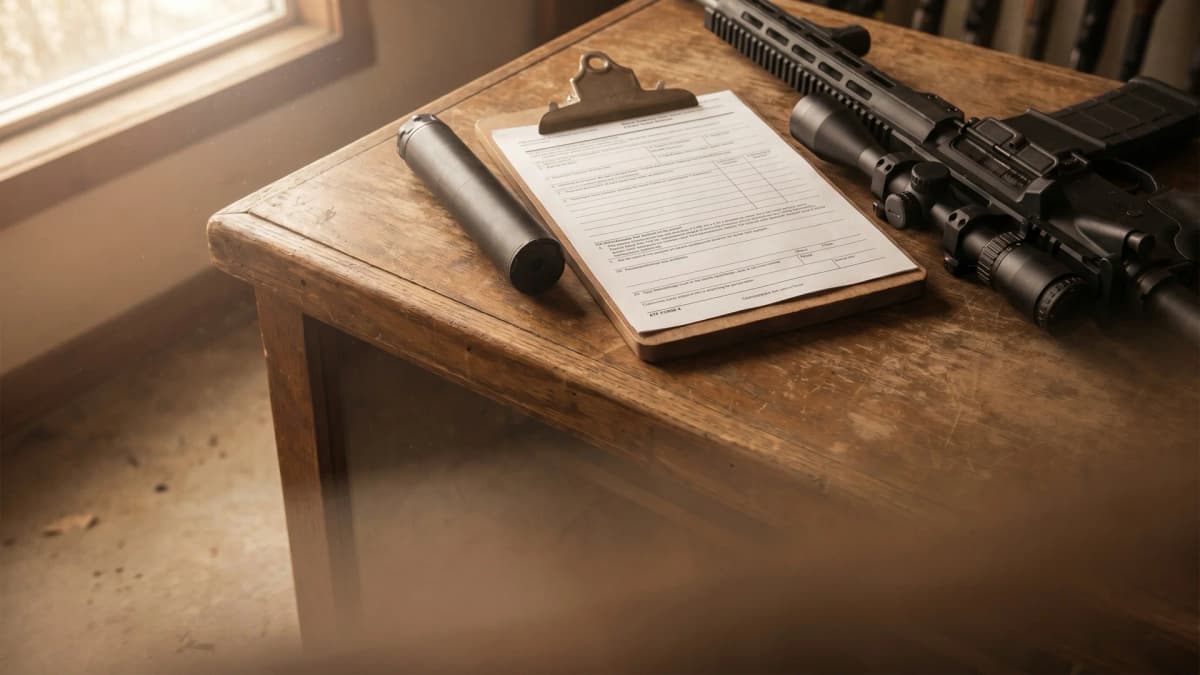
The 2026 regulatory picture changes the math on a niche, collector-flavored can like the Model 1910. The One Big Beautiful Bill Act zeroed the federal making and transfer tax on suppressors, SBRs, SBSs, and AOWs, effective January 1, 2026. A buyer pays for the can, the Form 4 processing fee at the dealer, fingerprints, and the background check, but the $200 line item is gone. ATF eForm 4 approvals on suppressors are running on the order of a few days to a couple of weeks for clean applications.
That changes who is in the market. A first-time stamp holder who would never have paid $200 to put a vintage can on a collectible carbine now might. The Model 1910 is targeted at exactly that buyer. State law still controls in the eight states that restrict civilian suppressor ownership (CA, DE, HI, IL, MA, NJ, NY, RI), and the Form 4, fingerprints, CLEO notification, and NFA registry entry all still exist. For the full walk-through, see our how to buy a suppressor guide or browse the suppressor catalog for current options across price tiers.
Stay Updated on Inland Model 1910 Pricing
Get notified when Inland publishes Model 1910 MSRP, ship dates, and dealer availability. We also cover new suppressor launches, ATF eForm processing trends, and the rest of the post-OBBBA suppressor market as it develops.
Frequently Asked Questions
▶What is the Inland Manufacturing Model 1910 suppressor?
▶Why does the Maxim 1910 use an offset bore?
▶Can the Inland Model 1910 suppressor be removed from the host barrel?
▶What does an NFA suppressor cost in 2026?
▶Is the Inland Model 1910 shipping now?
Bottom Line
The Inland Model 1910 is a deliberately narrow product. It is a permanent-install can in two calibers built to solve a sight-line problem that most modern shooters do not have, paired with a host (the Inland M1 Carbine Advisor pistol) that most shooters do not own. It will not compete with a Banish, a HUXWRX, or a SilencerCo Spectre on weight, sound numbers, or mount versatility, and Inland has not pretended otherwise. What it does is give the small but real population of M1 Carbine collectors, retro builders, and Maxim history fans a production can that works the way Hiram Percy Maxim drew it in 1909.
That audience is bigger than it would have been a year ago. With the federal tax stamp at $0 and approvals landing in days, a specialty can paired with a reproduction M1 Carbine pistol is a realistic build that does not require the buyer to wait months or write a check to the Treasury for the stamp. Inland has not yet posted MSRP or a ship date for the Model 1910, and the can is not on Inland's website alongside the I-CAN, I-CAN II, Monocore, and PM-22 yet. When dealer pricing lands, the Model 1910 should slot in as the only modern production answer to a 116-year-old design question. For shoppers in the broader market while they wait, our multi-caliber suppressor guide covers the cans that handle both .30 and pistol calibers in one package.