How to Buy a Suppressor in 2026: $0 Tax, Form 4 Walkthrough header image
Setup
June 9, 2026
How to Buy a Suppressor in 2026: $0 Tax, Form 4 Walkthrough

The complete 2026 walkthrough for buying a suppressor: pick the can, find a Class III dealer, a Silencer Shop kiosk, or Silencer Central direct shipping, file ATF Form 4 (individual vs trust), fingerprints, photo, and pickup. The federal tax is now $0 and eForm 4 approvals run days, not months.

[ < Back to guides ]
BeginnerSuppressorsNFA

How to Buy a Suppressor in 2026: $0 Tax, Form 4 Walkthrough

Buying a suppressor in 2026 is the simplest it has ever been. The federal tax is now $0, eForm 4 approvals come back in days, and the whole process is six clear steps from picking the can to walking it out of the shop.

By AB|Last reviewed June 2026

The short version

  • 1) Pick a can rated for your caliberand confirm your host's muzzle thread (1/2x28 for most 5.56 and 9mm, 5/8x24 for .30-cal).
  • 2) Choose how you buy: a local Class III dealer, a Silencer Shop kiosk, or Silencer Central's mail-to-your-door model.
  • 3) Decide individual or trust, file ATF Form 4 (federal tax $0), submit fingerprints and a photo, pass the background check, and pick up the can once the stamp clears.

What Changed in 2026: $0 Tax, Days-Not-Months Waits

Two things made 2026 the year suppressors went mainstream: the federal transfer tax dropped to $0 and ATF approvals collapsed from months to days. The One Big Beautiful Bill Act, signed in July 2025 and effective January 1, 2026, zeroed the $200 NFA making and transfer tax on suppressors, short-barreled rifles, short-barreled shotguns, and AOWs. The old "$200 stamp" line you still see repeated on older forums simply does not apply to cans anymore.

The wait is the other half of the story. As of June 9, 2026, Silencer Shop's ATF tracker puts the median eForm 4 approval at roughly 6 days for individual filings and about 23 days for trusts. A decade ago the same paperwork ran 6 to 12 months. Our suppressor tracker keeps the current approval windows by filing type next to a price index of every can in the catalog.

What did not change: the suppressor is still a regulated NFA item. You file ATF Form 4, register the can with the ATF, pass a NICS background check, and submit fingerprints. The tax went to zero; the paperwork and the federal registration did not go away. Anyone telling you suppressors are now "no paperwork" or "over the counter" is wrong. If you want the full breakdown of which can fits which host before you start, the suppressor buying guide ranks cans by caliber, and the suppressor compatibility basics guide covers thread, mount, and over-gassing once your stamp clears.

Step 1: Pick the Suppressor (and Confirm Your Host's Thread)

Start with the gun you shoot most, then pick a can rated for that caliber and confirm the muzzle thread pitch. Most 5.56 and 9mm hosts use 1/2x28; most .30-caliber rifles use 5/8x24. A 9mm pistol with a tilting barrel also needs a booster (Nielsen device) so the action cycles with the can attached. Get the thread and mount right at this stage and the rest of the process is paperwork.

For a true first stamp, the best move is to suppress the caliber you burn through the most. A 5.56 can earns its keep on an AR-15, a 9mm can quiets a pistol and doubles on a PCC, a .30-cal multi-host can covers a whole safe on one stamp, and a rimfire can is the cheapest way to learn the NFA process before you commit serious money. The four below are the cans most worth filing on, sorted by host.

Starter Suppressors Worth Filing On

Four cans that make sense as a first stamp, sorted by host. Match the can to the gun you shoot most and confirm the thread before you file.

1

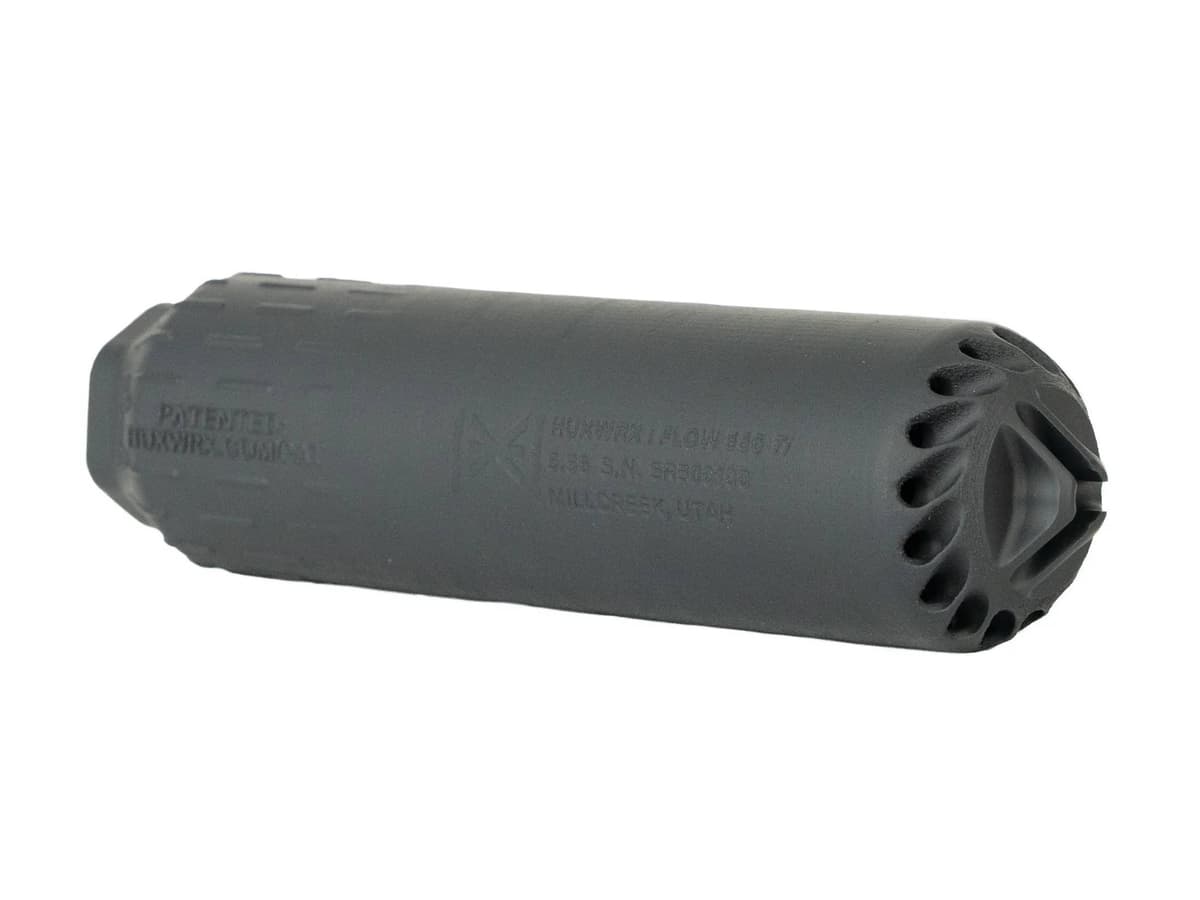
HUXWRX FLOW 556 Ti

Best 5.56 / AR-15 starter can

$1185.00
Shop at Silencer Central
  • +DMLS Grade 5 titanium flow-through build, 11.4 oz
  • +No minimum barrel length and full-auto rated
  • +Strong PEW Suppression Rating on both MK18 (41.3) and M4A1 (41.1)
  • Torque Lock QD mount is proprietary and needs a HUXWRX-compatible muzzle device
  • 200-round break-in before it hits peak performance
  • Visible flash signature typical of flow-through designs
2

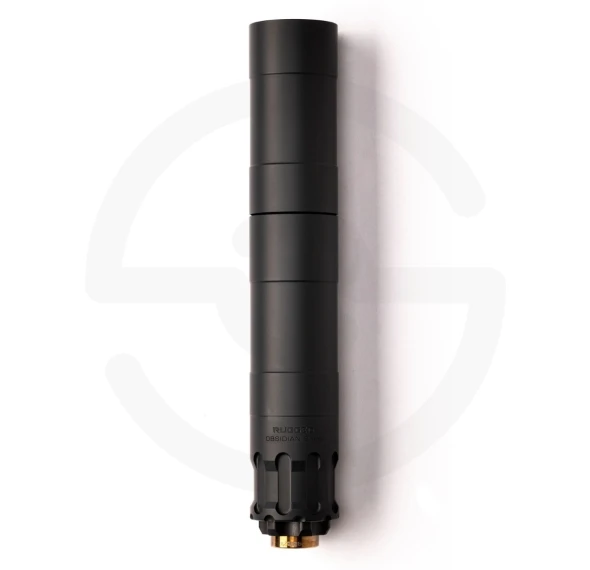
Rugged Obsidian 9

Best 9mm / pistol starter can

$842
Shop at Silencer Central
  • +Modular 4.85 in short or 7.8 in full configuration on one stamp
  • +Ships with a booster and 1/2x28 piston for tilting-barrel pistols
  • +Optional fixed, 3-lug, and dual-taper mounts cover PCC hosts
  • Full-length configuration is long for a pistol
  • Heavier than compact-only 9mm cans
  • 3-lug and other mounts cost extra
3

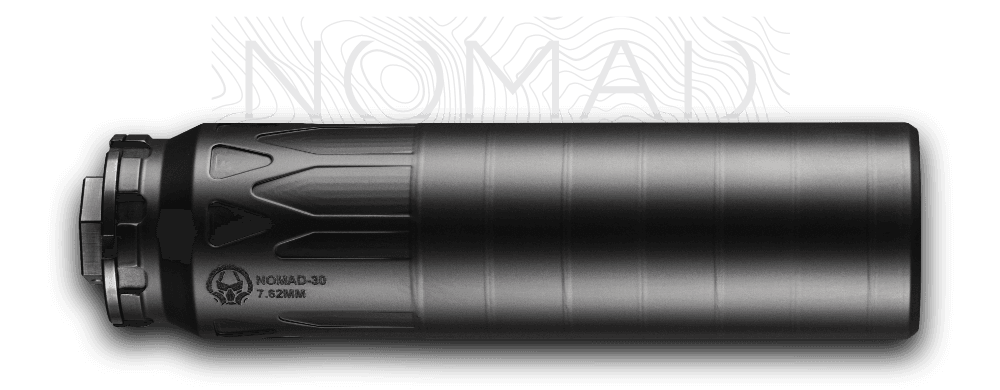
Dead Air Nomad 30

Best one-stamp do-it-all can

$778.99
Shop at KYGUNCO
  • +One can covers .223/5.56, .300 BLK, .308/7.62, up to .300 Norma Mag
  • +Ships with a 5/8x24 fixed mount for simple direct-thread use
  • +Xeno and KeyMo adapters open up wide host compatibility
  • 1.735 in diameter may not clear some handguards
  • Heavier than dedicated titanium cans at 14.5 oz
  • Not as quiet as a purpose-built .300 BLK can
4

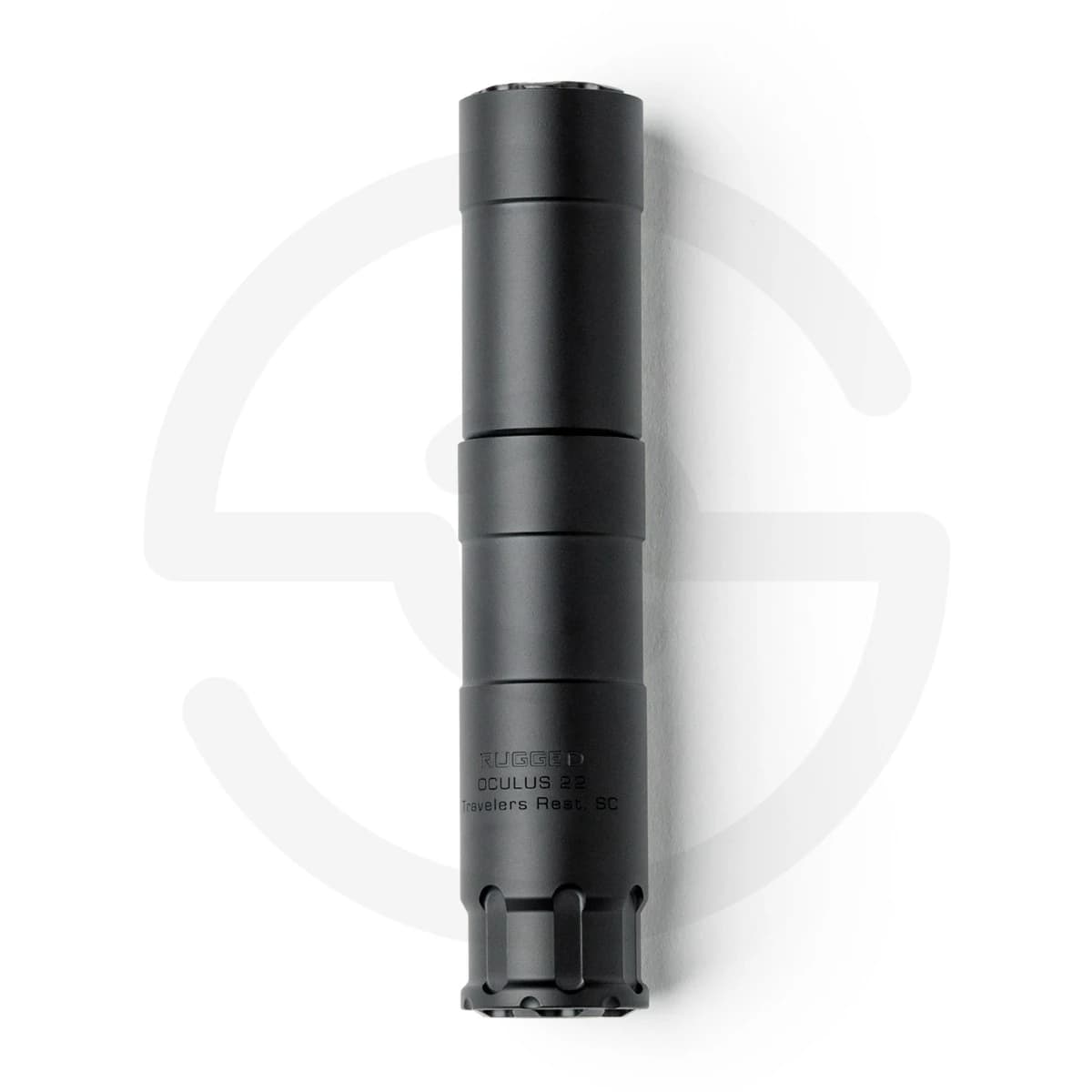
Rugged Oculus 22

Best budget / rimfire first stamp

$542
Shop at Silencer Central
  • +Cheapest entry into the NFA process at roughly $434 street
  • +Modular 5.25 in standard or 3.25 in short via the ADAPT system
  • +All-stainless, belt-fed rated on .22 LR, and easy to tear down for cleaning
  • All-stainless build is heavier (6.9 oz) than titanium rimfire rivals
  • Short configuration trades suppression for length

Purchasing through these links may generate a commission that supports this site at no extra cost to you.

Affiliate links - purchases support this site at no extra cost to you. (?)

Want the deep dives before you commit? The best 5.56 suppressors guide ranks AR-15 cans by suppression score, the best 9mm suppressors guide covers pistol and PCC hosts, the best .300 Blackout suppressors guide handles the subsonic crowd, the best .22 suppressors guide covers rimfire first stamps, and the best multi-caliber suppressors guide ranks the one-can-for-everything picks from 9mm to .308.

Step 2: Choose How You Buy (Class III Dealer, Silencer Shop Kiosk, or Silencer Central Direct Mail)

For most first-time buyers, a Silencer Shop kiosk inside a local dealer is the cleanest path: digital fingerprints and a pre-filled Form 4 in one stop, with the passport photo uploaded through the companion app. If the nearest Class III dealer is hours away, Silencer Central's direct-mail model wins. All three paths end with the same ATF Form 4; they differ in how much you do in person and where the can finally lands in your hands.

A local Class III (SOT) dealer is the traditional route. You buy the can in the shop, the dealer files the Form 4 on your behalf, and you return to pick it up once approved. This is the best path if you want a person across the counter to walk you through the form and answer mount and thread questions on the spot.

A Silencer Shop kiosk sits inside many local dealers and automates the slow parts. The kiosk captures your fingerprints, demographics, and signature digitally and pre-fills the Form 4, which removes the most common paperwork errors; the passport-style photo is taken and uploaded through the Silencer Shop mobile app. You still pick up the suppressor at a participating dealer, but your biometrics are stored and reusable for future purchases, so your second and third stamps go faster.

Silencer Central is a licensed dealer in all 42 suppressor-legal states that runs the whole process remotely. You buy online, they handle the paperwork, and once the stamp clears they ship the approved suppressor directly to your door. You never set foot in a storefront. This is the path for buyers in states where the nearest Class III dealer is hours away, or anyone who would rather not make two trips.

Step 3: Decide Individual, Trust, or Corporation

Register as an individual if you are the only person who will ever possess the can and you want the cheapest, fastest path. Use an NFA gun trust if you want more than one person to legally handle the suppressor or you want the trust to keep holding it after your death. A corporation is rarely the right answer for a single private buyer and mostly makes sense for dealers and businesses. Here is how the three compare for a normal first-time buyer.

Individual
~6 days median
Setup Cost$0 beyond the can
Who Can Possess ItOnly you, while present
Best ForSolo owners who want the simplest, fastest stamp
NFA gun trust
~23 days median
Setup Cost~$100-300 to draft
Who Can Possess ItAny named trustee (spouse, family)
Best ForShared possession and passing the can to an heir
Corporation
Varies
Setup CostFiling + annual fees
Who Can Possess ItAuthorized officers
Best ForDealers and businesses, not private buyers

The tax being $0 changed the trust math. People used to buy a trust partly to amortize that $200 stamp across multiple items. Now the reason to use a trust is purely possession and inheritance: a trust lets your spouse or adult kids legally use the can without you standing next to them, and because the trust itself keeps owning the suppressor when you die, a successor trustee takes over with no new transfer. Without a trust, moving a can from an estate to an heir requires a tax-free ATF Form 5 and ATF approval before the heir can take it. Solo owners with no shared-possession or inheritance plans should file as an individual and save both the drafting fee and the extra two-plus weeks of wait.

Step 4: File ATF Form 4 (eForm 4)

ATF Form 4 is the transfer application that moves the suppressor from the dealer to you, and you file it electronically through the eForm portal. Your dealer initiates the eForm 4 from their side and you certify your half; the federal transfer tax line reads $0 for suppressors as of January 1, 2026. The electronic filing is the single biggest reason approvals dropped from months to days, paper Form 4s still exist but they are slower and there is no reason to use one.

One distinction trips up first-timers: Form 4 is for buying an existing suppressor from a dealer. ATF Form 1 is for making your own suppressor, which is a separate application and out of scope here. If you are buying a finished can off the shelf, Form 4 is your path. Both run through the same eForm pipeline and both now carry a $0 federal tax, but you file the one that matches what you are doing.

Suppressors are not the only $0-tax NFA buy worth knowing about. If you are weighing a short-barreled rifle on the same trip, the best SBRs guide covers the identical Form 4 and eForm process for those builds.

Step 5: Fingerprints, Photo, and CLEO Notification

Every responsible person on the application submits fingerprints and a passport-style photo, and you send a notification copy to your chief law enforcement officer (CLEO). Fingerprints go in either as two FD-258 cards or as an electronic capture at a kiosk; a Silencer Shop kiosk captures the prints digitally and stores them for reuse, while the photo is taken and uploaded through the Silencer Shop app. For an individual filing, the responsible person is just you. For a trust, it is every trustee.

The CLEO notification is still required as of mid-2026. The ATF published a proposed rule in May 2026 to remove the CLEO notification requirement (RIN 1140-AA65), with a public comment period that closes July 6, 2026. That is a proposed rule, not a final one. Until the ATF publishes a final rule, you still send the CLEO copy as part of your Form 4. Do not skip it on the assumption that it has already gone away, because it has not.

A NICS background check runs as part of the transfer. This is the same check you pass to buy any firearm from an FFL, and it is why a suppressor purchase is gated to people who can legally own guns. The $0 tax did not loosen the background check; it only removed the fee.

Step 6: Wait for Approval and Pick Up Your Can

Expect roughly 6 days on an individual eForm 4 and about 23 days on a trust, per Silencer Shop's tracker as of June 9, 2026. Some filings clear in a day or two and a few outliers stretch to a month or more, but individual filings are consistently faster than trusts under the current eForm pipeline. Once the ATF issues the approved stamp, you take possession.

Where you pick up depends on the path you chose in Step 2. With a local dealer or a Silencer Shop kiosk, you return to the shop, the dealer logs the approved transfer, and you walk out with the can. With Silencer Central, the approved suppressor ships to your door. Either way, keep a copy of the approved Form 4 with the suppressor, you are required to be able to produce it. Once it is in hand, the suppressor compatibility basics guide walks through mounting and tuning the host for the added backpressure.

Where Suppressors Are Legal

Suppressors are legal to own in 42 states. Eight states restrict or ban civilian suppressor ownership: California, Delaware, Hawaii, Illinois, Massachusetts, New Jersey, New York, and Rhode Island. If you live in one of those eight, the federal $0 tax does not help you, state law controls and a Form 4 will not clear you to possess a can there.

State law sits on top of the federal process, not under it. Even in the 42 legal states, confirm your county and city have no additional restrictions before you file. The Form 4 registration is the federal authorization; it does not override a state or local ban.

Legal disclaimer

You are responsible for complying with all federal, state, and local laws governing suppressor ownership, including NFA registration, transfer requirements, and state-level restrictions. This guide is informational only and is not legal advice; consult an attorney for jurisdiction-specific questions.

How to Buy a Suppressor FAQ

Do you still have to pay $200 to buy a suppressor?
No. The One Big Beautiful Bill Act zeroed the federal NFA transfer tax on suppressors effective January 1, 2026, so the old $200 tax stamp no longer applies. You still file ATF Form 4 and complete a background check; the federal tax line is now $0. Dealers may charge their own transfer or trust fees, but the federal stamp is free.
Is it hard to get approved for a suppressor?
No. If you can legally own a firearm, you can almost certainly own a suppressor in the 42 states that allow them. You pass a NICS background check and submit fingerprints and a photo with ATF Form 4. As of mid-2026, eForm 4 approvals are running roughly 6 days for individual filings and about 23 days for trusts (Silencer Shop, updated June 9, 2026), not the 6-to-12-month waits of the past.
Are civilians allowed to buy silencers?
Yes. Civilians can legally buy and own suppressors in 42 states. They remain regulated NFA items, so you register the suppressor with the ATF, pass a background check, and submit fingerprints. Eight states restrict or ban civilian suppressor ownership: California, Delaware, Hawaii, Illinois, Massachusetts, New Jersey, New York, and Rhode Island.
Do I need a permit to purchase a suppressor?
No special federal permit or license. You file ATF Form 4 through a Class III (SOT) dealer, pass a NICS background check, submit fingerprints and a photo, and register the suppressor with the ATF. There is no separate federal suppressor permit; the Form 4 approval is the federal authorization. Confirm any state or local permit, licensing, or possession rules before you file.
Should I buy a suppressor as an individual or in a trust?
Buy as an individual if you are the only person who will ever use the can and you want the fastest, cheapest path. Use an NFA gun trust if you want multiple people (spouse, family) to legally possess the suppressor, or if you want the trust to keep holding it after your death so a successor trustee takes over without a new transfer; distributing a can out of an estate to an heir still requires a tax-free ATF Form 5 approval. Trusts cost a bit more to set up and currently average longer eForm 4 approval times (about 23 days vs roughly 6 for individuals as of June 2026), but the possession and inheritance flexibility is why many buyers still choose them even though the tax is now $0.
What is the difference between Silencer Shop and Silencer Central?
Both simplify the NFA paperwork, but the models differ. Silencer Shop runs in-store kiosks that capture your fingerprints, demographics, and signature and pre-fill the Form 4; the passport-style photo uploads through the Silencer Shop mobile app, and you still pick up the can at a participating local dealer. Silencer Central is a licensed dealer in all 42 suppressor-legal states that handles the paperwork remotely and ships the approved suppressor directly to your door, so you never visit a storefront.
Is the CLEO notification still required to buy a suppressor in 2026?
Yes, as of mid-2026 you still notify your chief law enforcement officer when you file. The ATF published a proposed rule in May 2026 to remove the CLEO notification requirement (RIN 1140-AA65), with a public comment period closing July 6, 2026, but it is a proposed rule, not final. Until a final rule is published, the CLEO notification copy remains part of the Form 4 process.