Key Takeaways
- →Fulcrum, $899: Inconel 718, 14.0 oz, 6.02 inches, rated for 6mm and under, and full-auto rated.
- →Fulcrum-Ti, $899: identical 6.02 by 1.6 inch envelope in Grade 5 titanium at 7.7 oz, rated safe to 900°F rather than full-auto. Same price as the Inconel version.
- →Lotus, $779: a 5.2 oz, 5.08 inch Grade 5 titanium 9mm can for pistol, sub gun, and carbine use.
- →Three names for one idea: APEX on the Fulcrum, DRIFT on the Lotus, Flow-Through at HUXWRX. The acronym is branding; no measured gas or sound data has been published for these three cans.
- →Undercuts the category: $899 lands below the established low back pressure 5.56 field, where the current catalog prices run from roughly $995 to $1,299.
What Angled Spade Announced
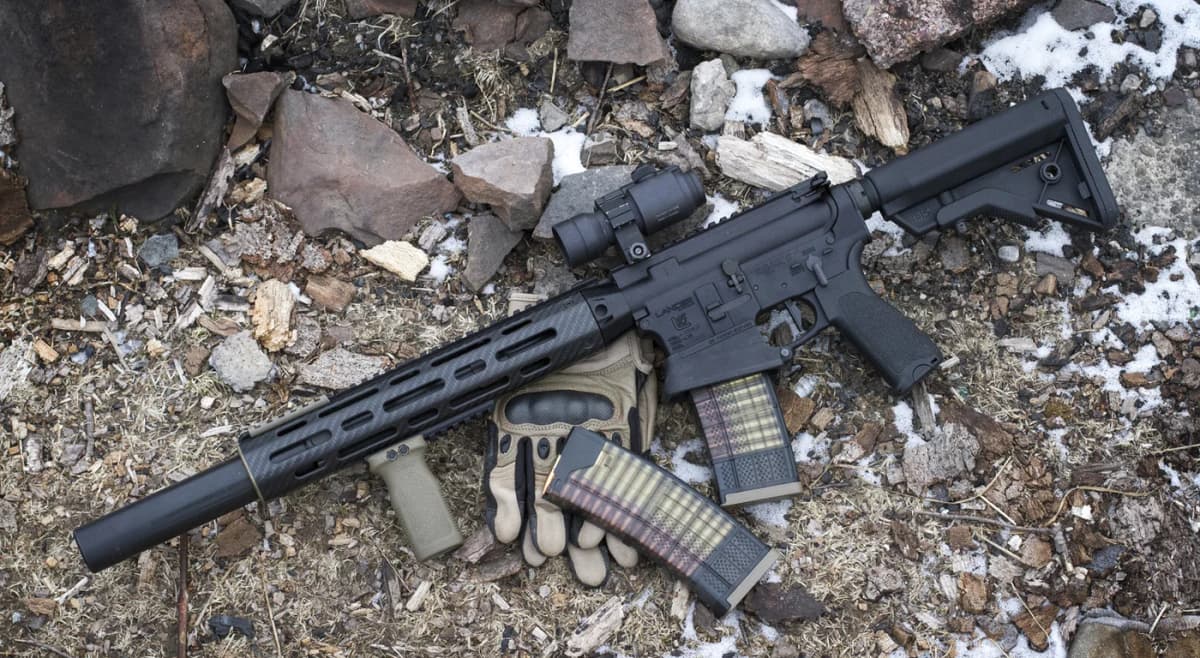
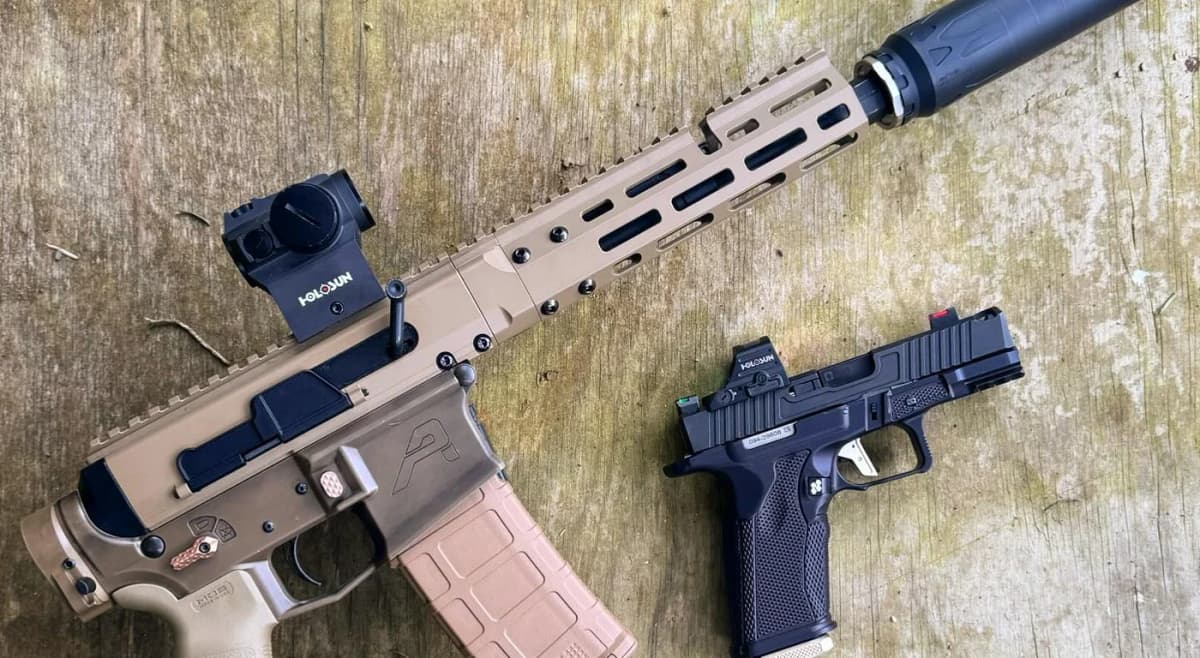
Angled Spade Technologies launched three suppressors on August 7, 2026: the Fulcrum and the Fulcrum-Ti, both at $899, and the Lotus 9mm at $779. All three are available now, sold directly and through what the company describes as an authorized and expanding dealer network. The two Fulcrum models are rifle cans rated for 6mm and under; the Lotus is a 9mm can for pistol, sub gun, and carbine use.
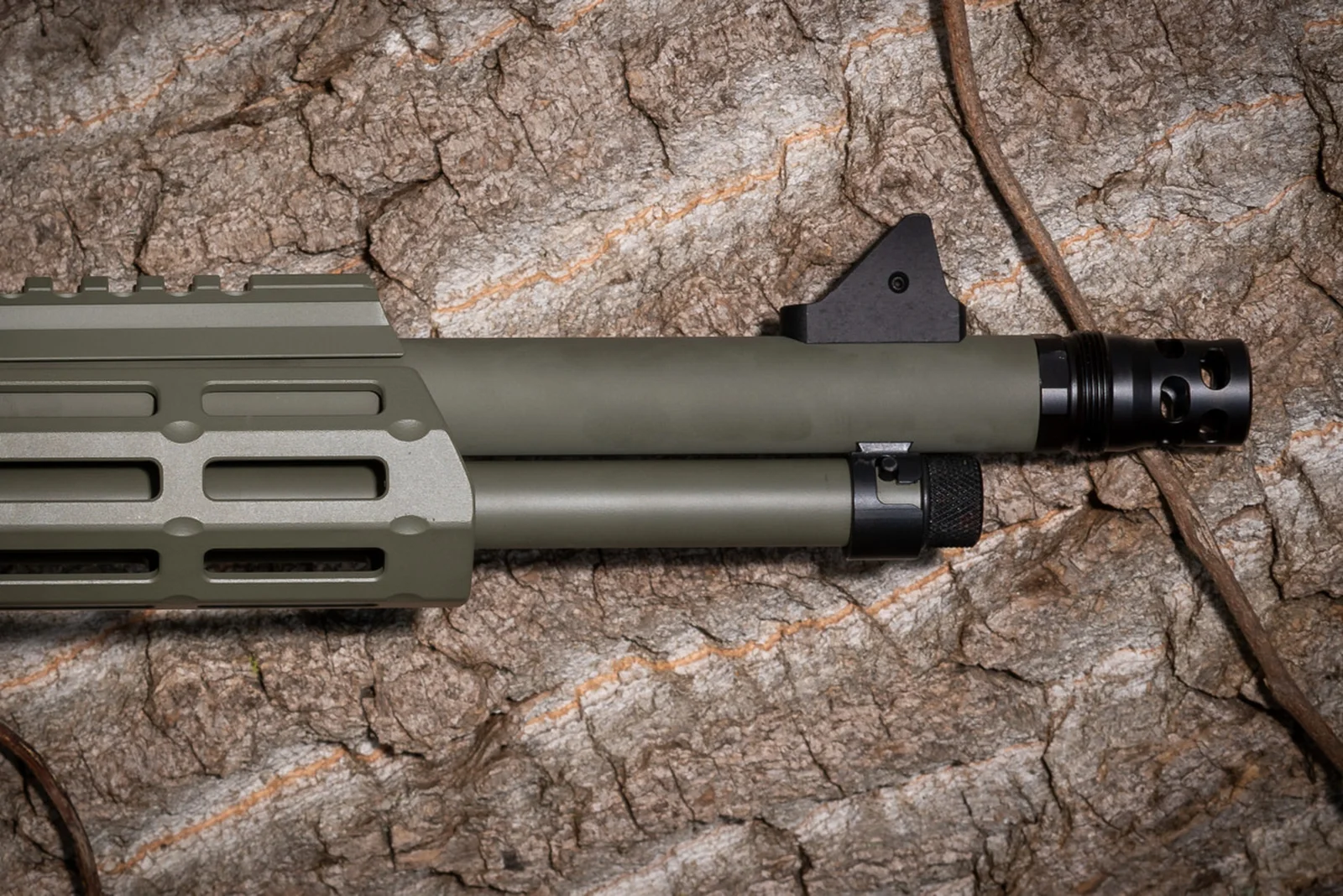
The company is not new, but it has been a muzzle device and adapter maker rather than a suppressor maker. Its Scepter-PB radial-ported brake is the part Ruger-Marlin hangs on the factory Mad Pig Customs Model 1894, where it doubles as a suppressor host on a 1/2x28 muzzle, and the Plan B mounting language carries straight into these cans. This launch is the jump from hosting other companies' suppressors to building them.
Co-founder Matt Dulude framed the design goal around gas rather than sound: “Most of the industry treats back pressure as the price you pay for suppression. We treat it as a variable you control.” That places all three products in the low back pressure category, which has become the most contested segment in suppressors, and it is where the pricing below gets interesting.
Fulcrum and Fulcrum-Ti: Same Size, Same Price, 6.3 Ounces Apart
The Fulcrum and Fulcrum-Ti are dimensionally identical and cost the same $899, so the entire decision between them is material. The Fulcrum is Inconel 718 at 14.0 oz and carries a full-auto rating. The Fulcrum-Ti is Grade 5 titanium at 7.7 oz and is rated safe to 900 degrees Fahrenheit, with no full-auto rating attached. Both are 6.02 inches long and 1.6 inches in diameter.
Pricing two materials identically is the unusual choice here. Across the rest of the market a titanium can commands a premium over a superalloy one of the same size, because titanium is the weight-saving upgrade. Angled Spade has instead made it a straight trade: pay the same money, and decide whether you want 6.3 fewer ounces on the muzzle or the ability to run the can on a full-auto schedule. For a semi-auto rifle that never sees a belt-fed volume of fire, the Ti is the obvious pick at that price. For a suppressed SBR that gets shot hard in strings, the Inconel rating is what you are buying.
Angled Spade Fulcrum
| Caliber | 6mm and under |
| Material | Inconel 718 |
| Weight | 14.0 oz |
| Length | 6.02" |
| Diameter | 1.6" |
| Rating | Full-auto |
| System | Axial Pressure Exchange (APEX) |
| Mount | APB Plan B hub, 1.375" x 24 |
| Paired Brake | Dominion 5.56, 1/2-28 Plan B |
| MSRP | $899 |
Angled Spade Fulcrum-Ti
| Caliber | 6mm and under |
| Material | Grade 5 titanium |
| Weight | 7.7 oz |
| Length | 6.02" |
| Diameter | 1.6" |
| Rating | Safe to 900°F |
| System | Axial Pressure Exchange (APEX) |
| Mount | APB Plan B hub, 1.375" x 24 |
| Paired Brake | Dominion 5.56, 1/2-28 Plan B |
| MSRP | $899 |
The 6mm-and-under rating is the fitment detail to read carefully. These cover 5.56 NATO, .223 Remington, and 6mm cartridges, and they do not cover .308 or anything else in .30 caliber. If the goal is one can across a 5.56 carbine and a .308 rifle, this is the wrong product and a multi-caliber .30 can is the right one. Both Fulcrum models use the APB Plan B hub in 1.375x24, the common HUB thread, so they take third-party HUB mounts rather than locking you to one proprietary system. Our suppressor mounting systems guide covers how HUB adapters, direct thread, and QD mounts differ in repeatability and length.
Lotus: A 5.2 oz 9mm Can
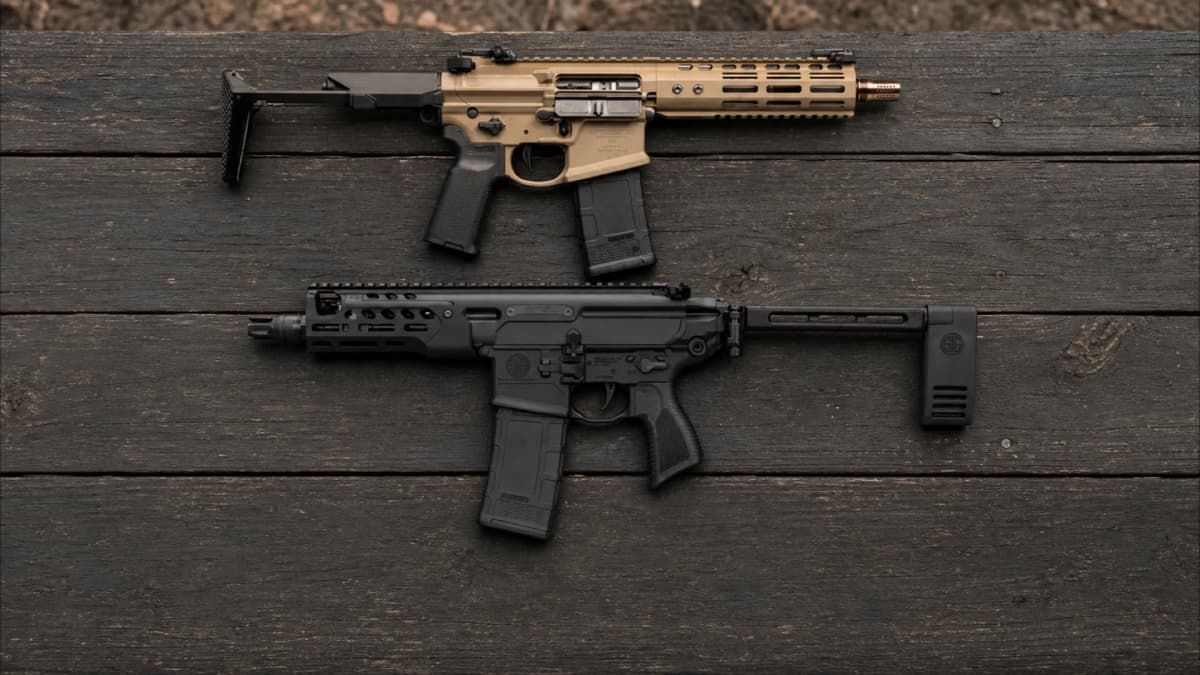
The Lotus is a 5.2 oz, 5.08 inch Grade 5 titanium 9mm suppressor at $779, rated for pistol, sub gun, and carbine use. At 1.5 inches in diameter it is slightly slimmer than the Fulcrum, and at 5.2 ounces it is light enough that a host pistol's recoil spring and booster tuning matter more than the mass itself.
Angled Spade calls the internal architecture Diffused Radial Internal Flow Technology, or DRIFT, built around what the company describes as a proprietary Lotus baffle. That is a different system from the APEX stack in the Fulcrum, so the two product lines are not simply the same design scaled to two calibers. The Lotus mounts via a 1/2-28 direct thread to hub adapter, which is the standard 9mm pistol thread pitch on most threaded barrels.
Angled Spade Lotus
| Caliber | 9mm |
| Material | Grade 5 titanium |
| Weight | 5.2 oz |
| Length | 5.08" |
| Diameter | 1.5" |
| Rating | Pistol / sub gun / carbine |
| System | Diffused Radial Internal Flow (DRIFT) |
| Baffle | Proprietary Lotus baffle |
| Mount | 1/2-28 direct thread to hub adapter |
| MSRP | $779 |
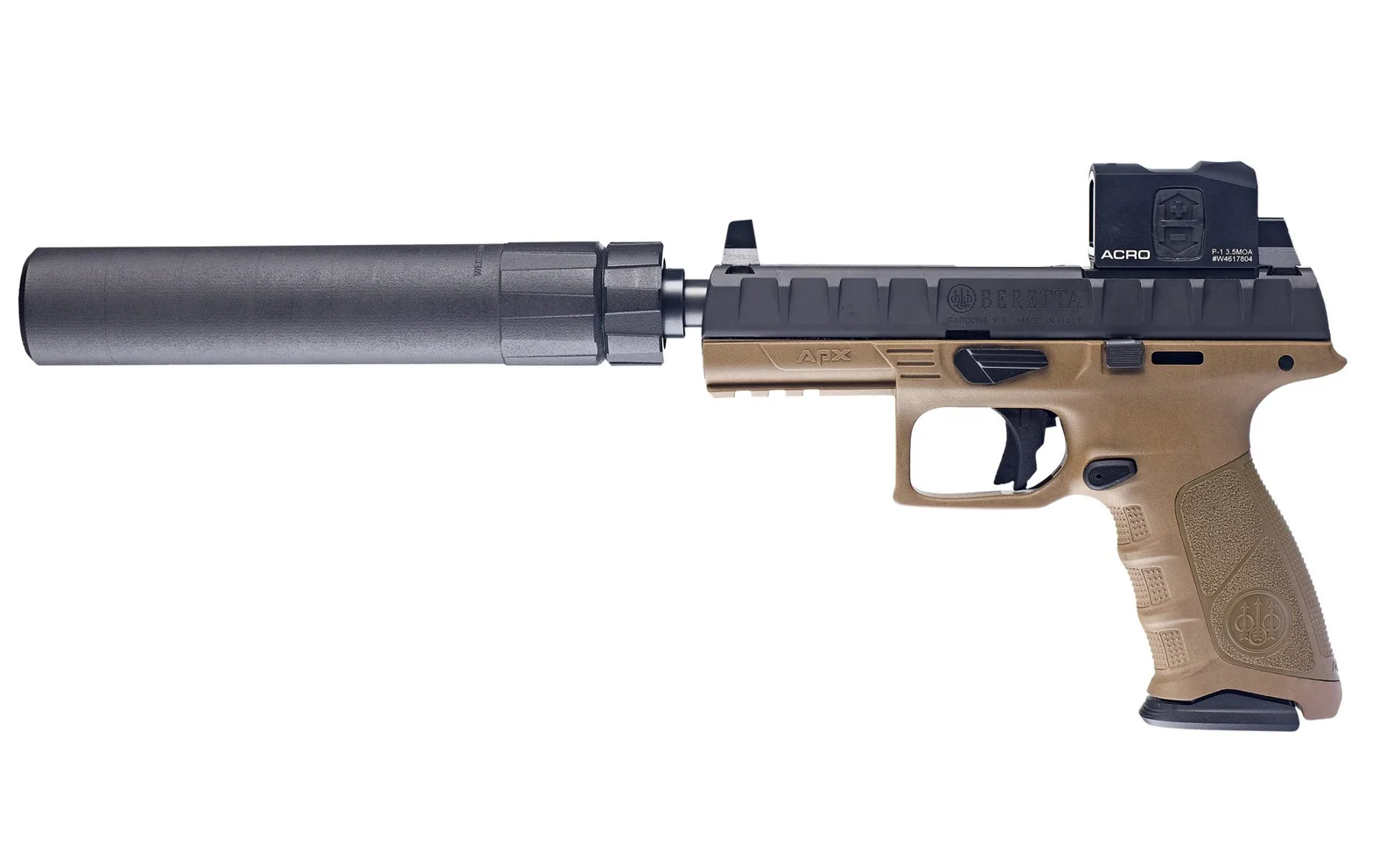
A rimfire or pistol can lives or dies on how easy it is to keep clean and how it behaves on a tilting-barrel host. Our 9mm suppressor rankings cover which designs are user-serviceable and which are sealed, and the pistol suppressor setup guide covers booster and sight-height issues that come with hanging any can off a handgun.
What Low Back Pressure Actually Buys You
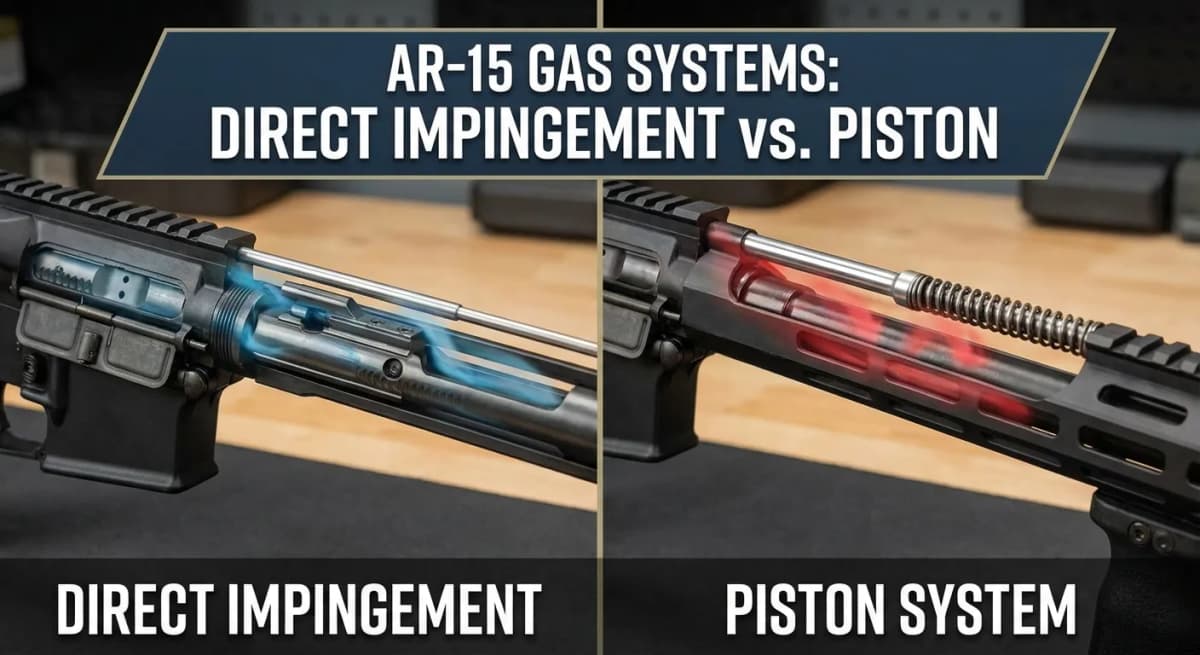
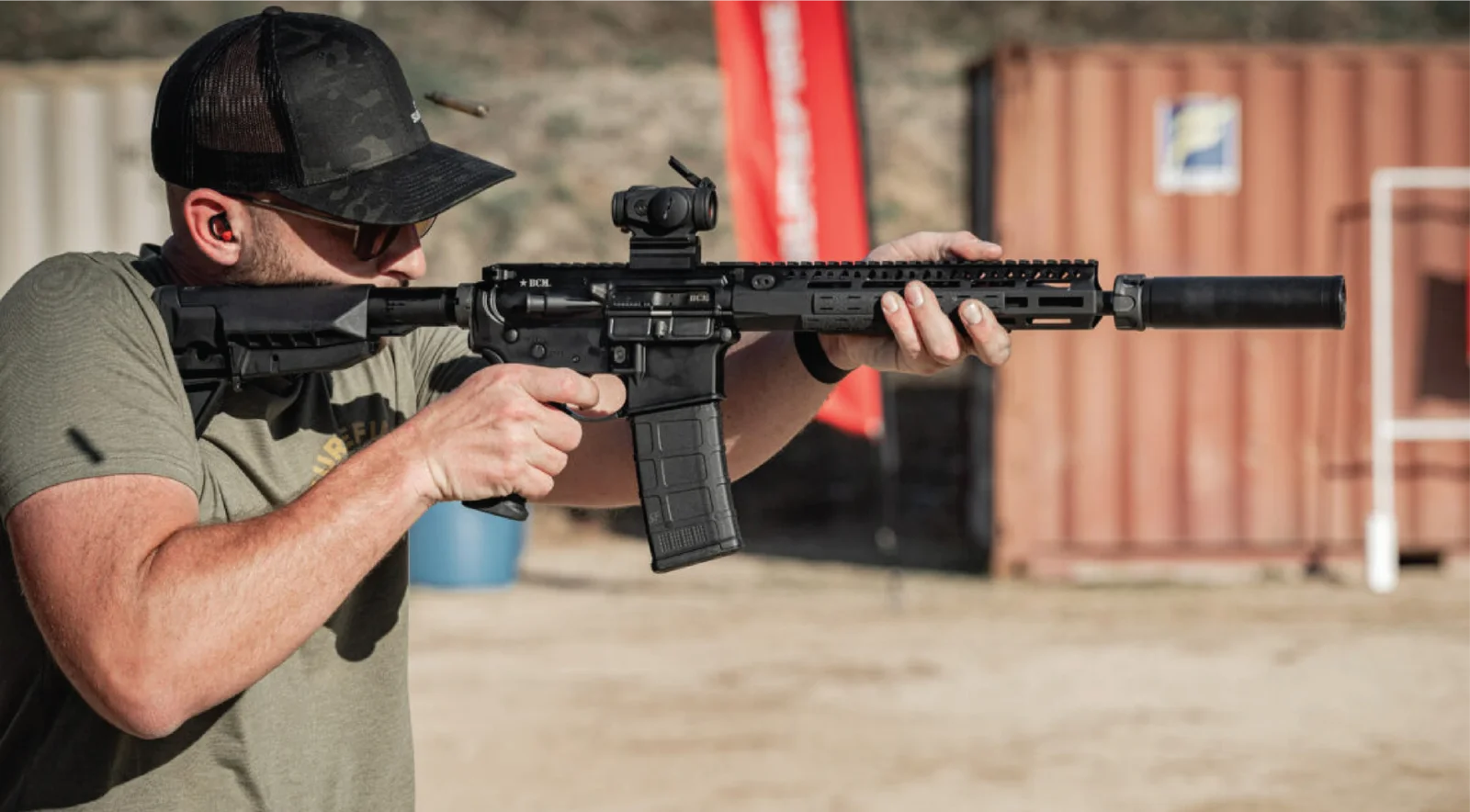
A low back pressure suppressor reduces the gas pushed back down the bore and into the action, which cuts gas to the face, keeps the cyclic rate closer to unsuppressed, and lowers fouling in the receiver. On a gas-operated rifle, a conventional can raises port pressure; the bolt carrier unlocks earlier and moves faster, the rifle vents through the ejection port, and the shooter eats the difference.
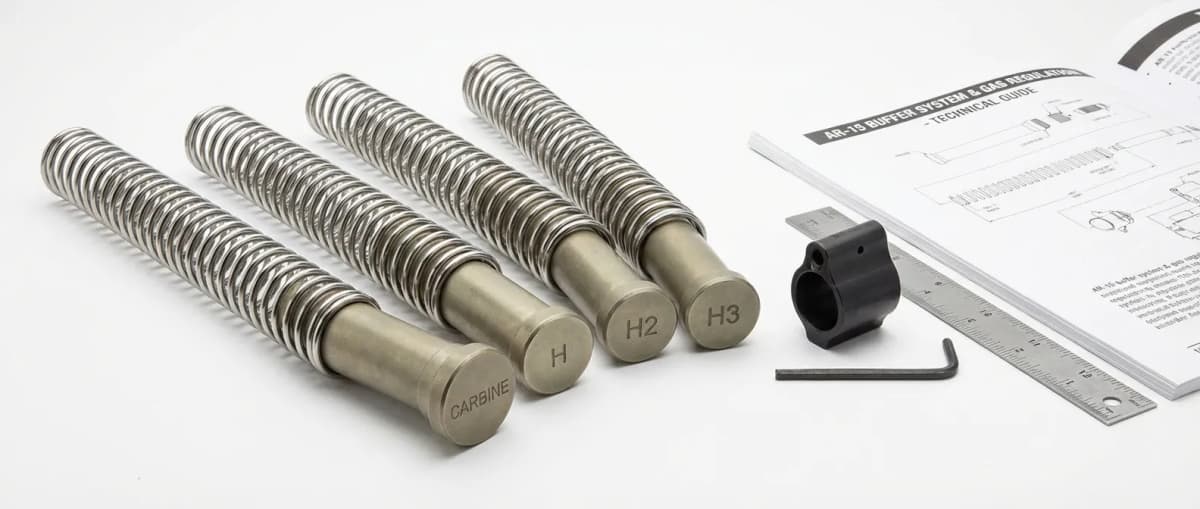
The effect is largest on short barrels, where port pressure is already high. That is why the segment matters most to anyone running a 10.3 or 11.5 inch carbine, and why the usual fix without a low back pressure can is an adjustable gas block and a heavier buffer. The honest trade is that gas management is not free: designs that move gas away from the shooter tend to be longer, or louder at the ear, than a sealed conventional can of the same size. Sound at the muzzle and sound at the ear are not the same measurement, and the marketing for this whole category tends to quote whichever one flatters the product.
Why Every Brand Has Its Own Acronym for This
Gas-routing suppressors all do broadly the same thing and almost every maker calls it something different, which makes the category harder to cross-shop than it should be. Angled Spade calls the Fulcrum's system APEX, short for Axial Pressure Exchange, and describes it as an internal bypass baffle system in a fully sealed design. The Lotus gets a second name, DRIFT, for Diffused Radial Internal Flow Technology. HUXWRX calls its version Flow-Through.
The naming is not purely marketing. Flow-Through is a registered trademark of HUXWRX Safety Co. for firearm noise suppressors, so it is HUXWRX's brand name for its implementation rather than a generic label any manufacturer can put on the shelf. Competitors building in the same space have to name their own, which is how one design idea ends up with a different acronym on every box.
The practical consequence for a buyer is that the acronym tells you almost nothing comparable. What separates these designs is where the gas goes, how much of it comes back at your face, and what the can costs in length, weight, and sound at the ear, and those are measured numbers rather than branding. Note also that Angled Spade gives the Fulcrum and the Lotus two different system names, so the two should not be assumed to behave alike just because they share a brand. For the broader mechanics of how baffle stacks, materials, and mounts interact, our suppressor compatibility basics covers the fundamentals.
Low Back Pressure Cans
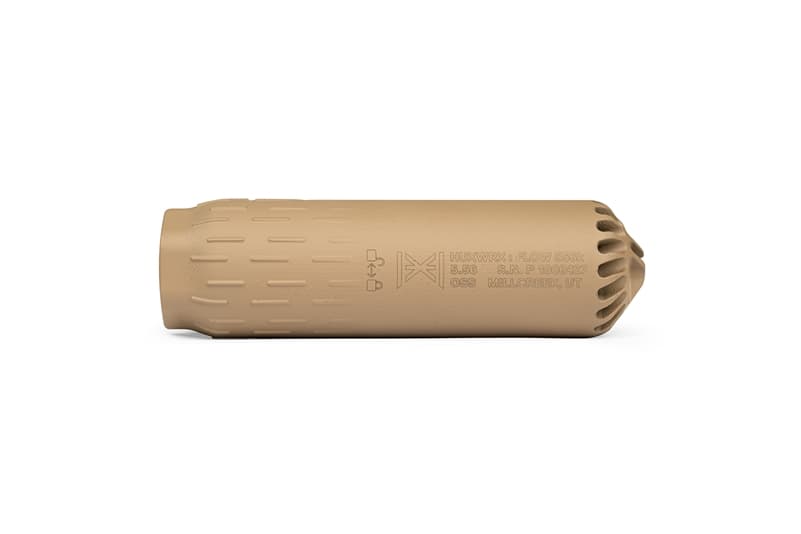
Huxwrx Flow 556k
- 5.56mm rated
- Flow-through design
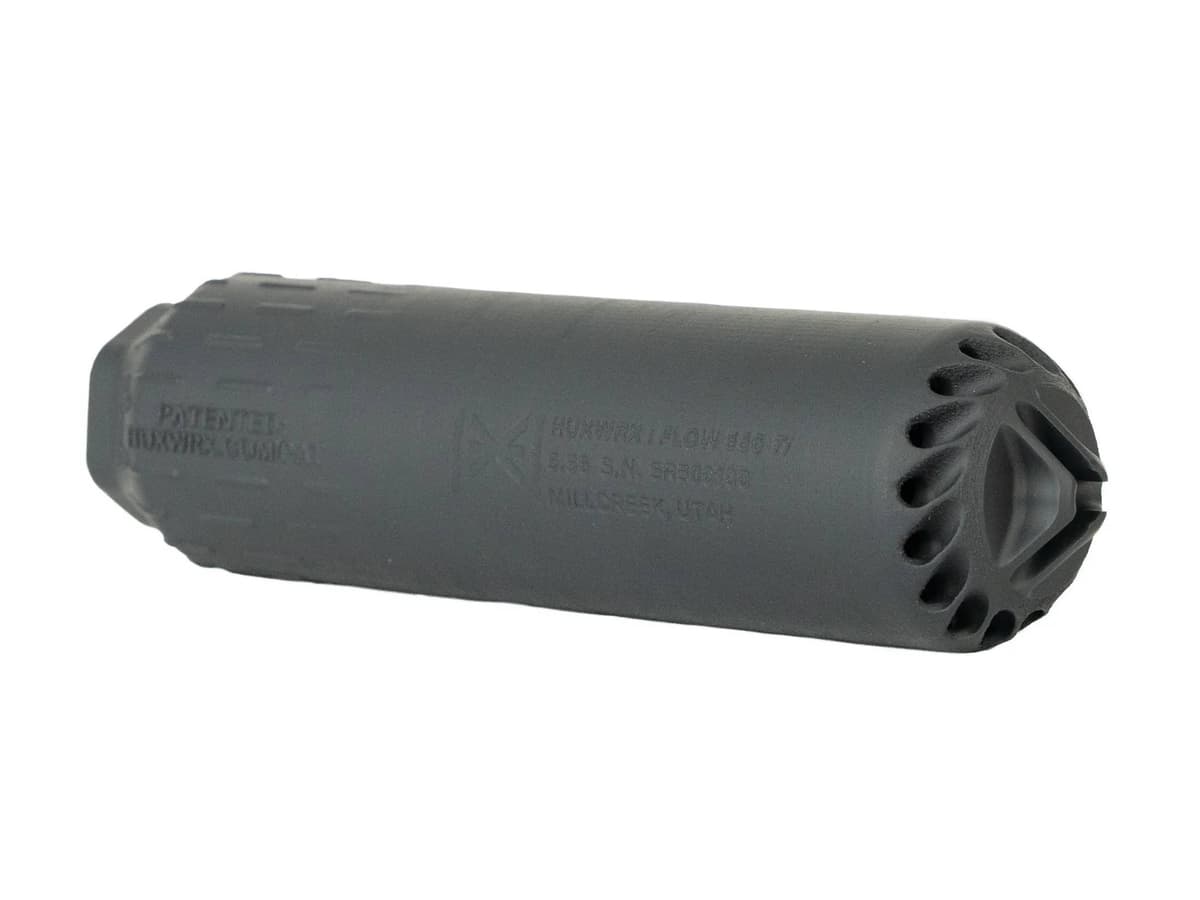
HUXWRX FLOW 556 Ti
- 5.56 NATO
- Flow-through DMLS titanium
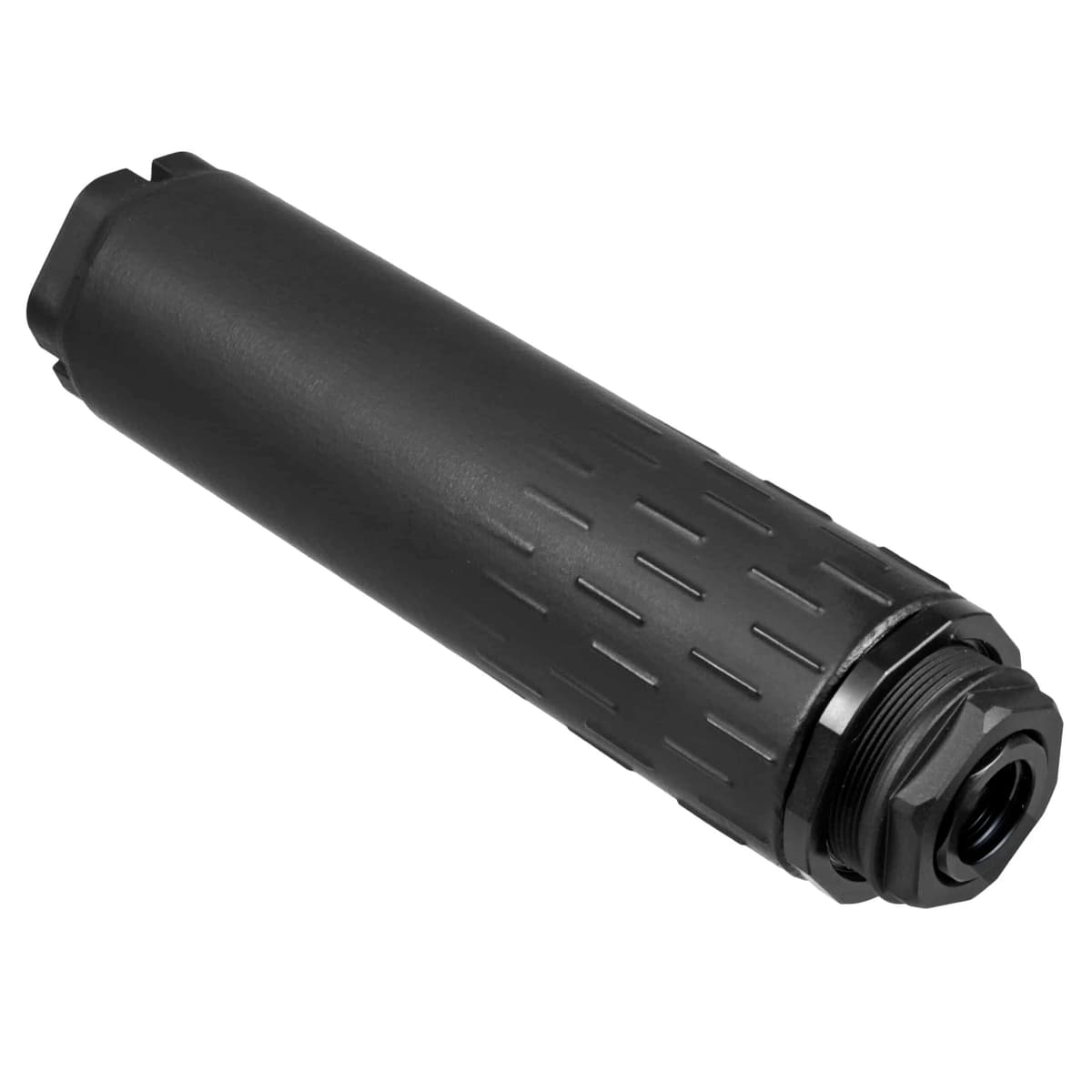
HUXWRX Flow 9K Ti
- 9mm rated
- Grade 5 titanium DMLS
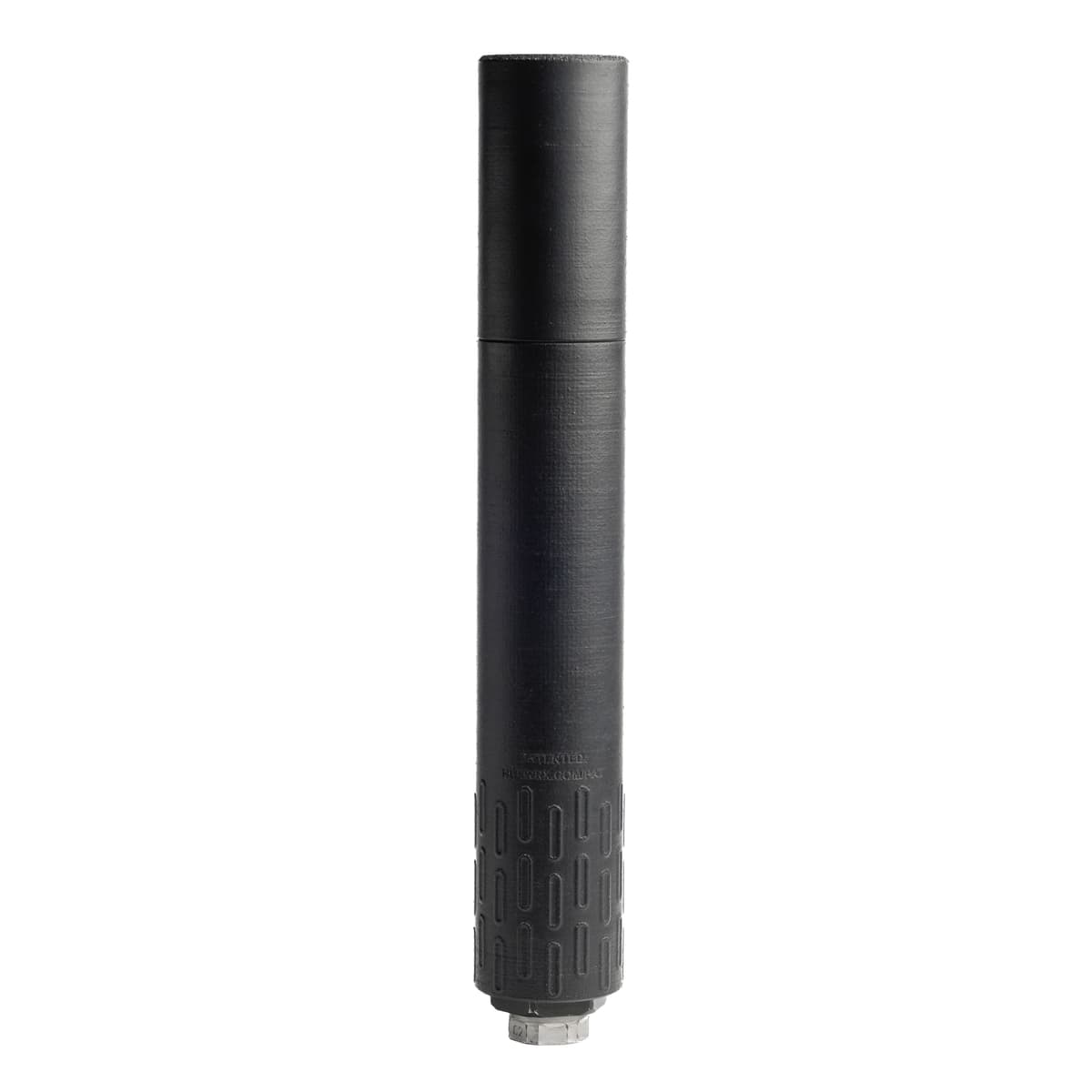
HUXWRX Flow 45M
- 9mm / 10mm / .45 ACP rated
- Flow-through low backpressure
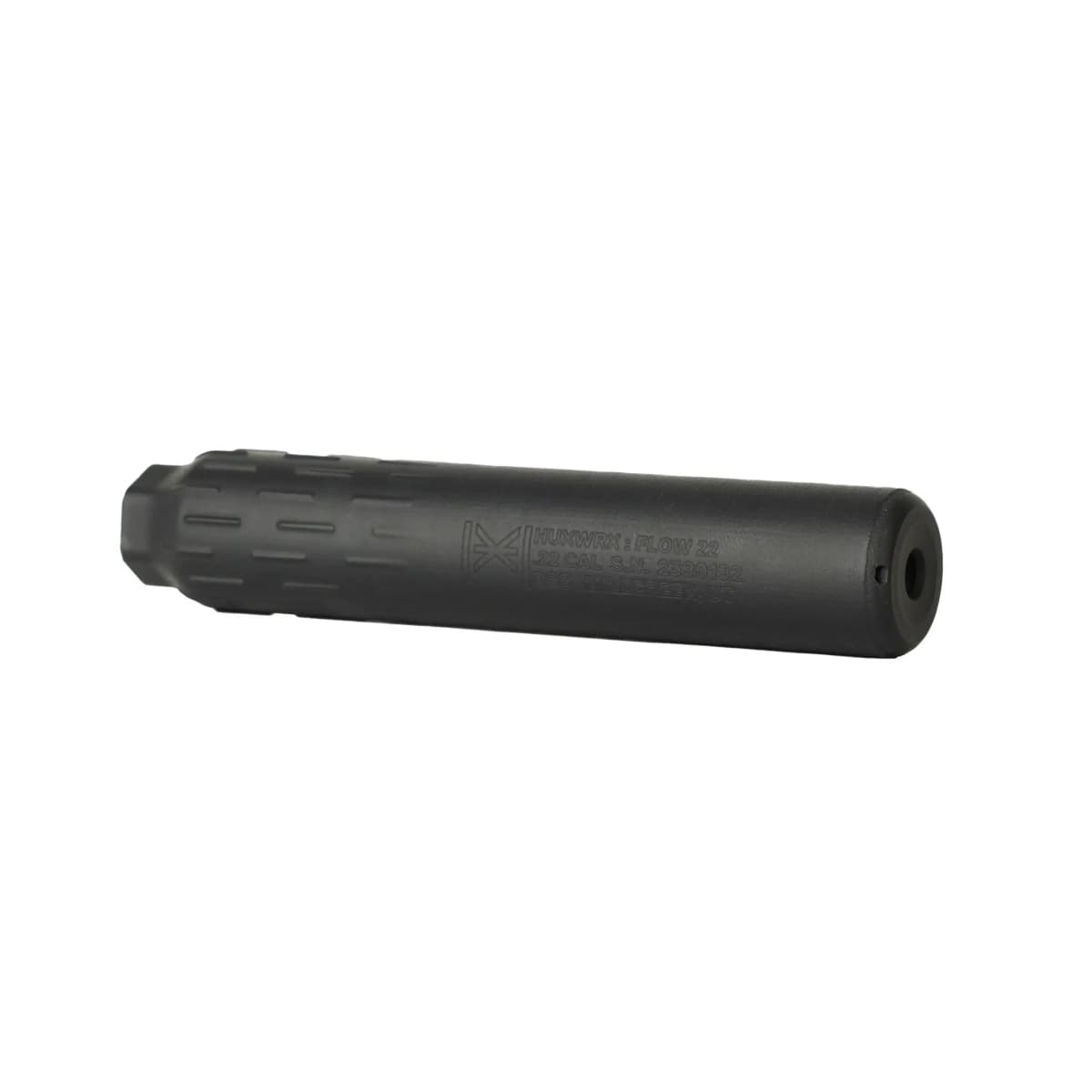
HUXWRX Flow 22 Ti
- 5.53 in length, 3.9 oz
- Grade 5 titanium DMLS Flow-Through
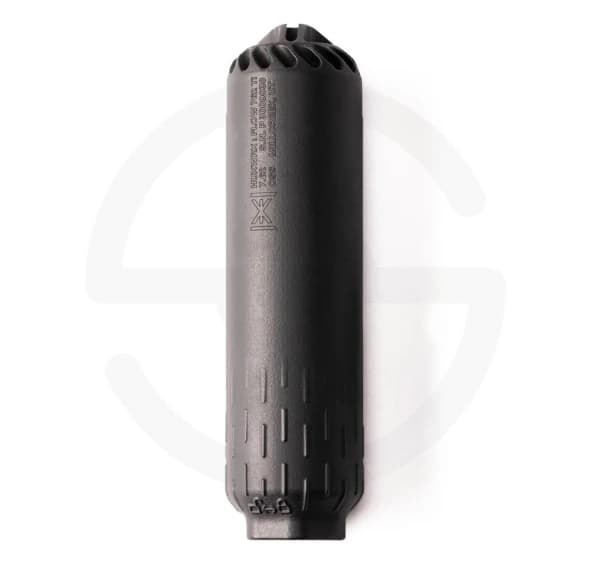
HUXWRX FLOW 762 Ti
- .30 cal rated
- Torque Lock QD
Affiliate links (?)
How $899 Compares
At $899 the Fulcrum undercuts every established low back pressure 5.56 can in our catalog. The Thunder Beast Arms Spiro 5.56 is $995, the SilencerCo Velos LBP 556 is $997.90, and the HUXWRX FLOW 556 Ti is $1,299. Angled Spade is entering at the bottom of that range with the Inconel model and matching it with the titanium one.
Weight is where the Fulcrum-Ti is genuinely aggressive. At 7.7 oz it is lighter than the HUXWRX FLOW 556 Ti at 11.4 oz, the SilencerCo Velos LBP at 15.2 oz, and the TBAC Spiro at 15.5 oz. The established cans buy their weight back with documented performance data: the Spiro carries a full-auto rating validated across SOCOM SURG cycles on an 8 inch barrel, the Velos LBP is belt-fed rated with no barrel length restriction, and the HUXWRX has published suppression ratings on both MK18 and M4A1 hosts. Angled Spade has published dimensions, materials, and a full-auto rating on the Inconel Fulcrum, and no third-party sound or back-pressure measurements exist for these cans yet.
That is the actual risk in buying at launch, and it is a real one given how much of this category's marketing rests on numbers. If you want measured data before committing to a multi-week transfer, the 5.56 suppressor rankings cover the cans that have been through independent testing, and you can put their full spec sheets side by side.
Stay Updated on Suppressor Launches
We cover new cans, mounting standards, and the NFA process changes that affect what a suppressor actually costs to own.
Frequently Asked Questions
▶How much do the Angled Spade Fulcrum and Lotus suppressors cost?
▶What is the difference between the Fulcrum and the Fulcrum-Ti?
▶What does a low back pressure suppressor actually do?
▶What is APEX on the Angled Spade Fulcrum?
▶What calibers do the Angled Spade suppressors cover?
▶How do the Fulcrum and Lotus mount?
▶Do you still need a tax stamp to buy a suppressor in 2026?
Bottom Line
The Fulcrum-Ti at $899 and 7.7 oz is the most interesting product in this launch. It is the lightest can in the low back pressure 5.56 class by a wide margin and it costs less than the established alternatives, which is a combination that usually does not happen at the same time. The catch is that it trades the full-auto rating for the weight, and that no independent sound or gas measurements exist for it yet.
The Inconel Fulcrum is the one to want if the host is a short-barreled rifle that gets shot in long strings, where the full-auto rating is the spec that matters and 14.0 oz is acceptable. The Lotus is the straightforward one: 5.2 oz and $779 is competitive for a titanium 9mm can, and it is the least demanding application of the three.
The federal math also changed this year. The One Big Beautiful Bill Act zeroed the transfer tax on suppressors effective January 1, 2026, so the stamp costs $0 and eForm 4 approvals are running days to a couple of weeks. The Form 4, the fingerprints, the NFA registration, and the background check all still apply, and state law still decides whether you can own one. If this is a first can, our suppressor buying walkthrough covers the process end to end.