Key Takeaways
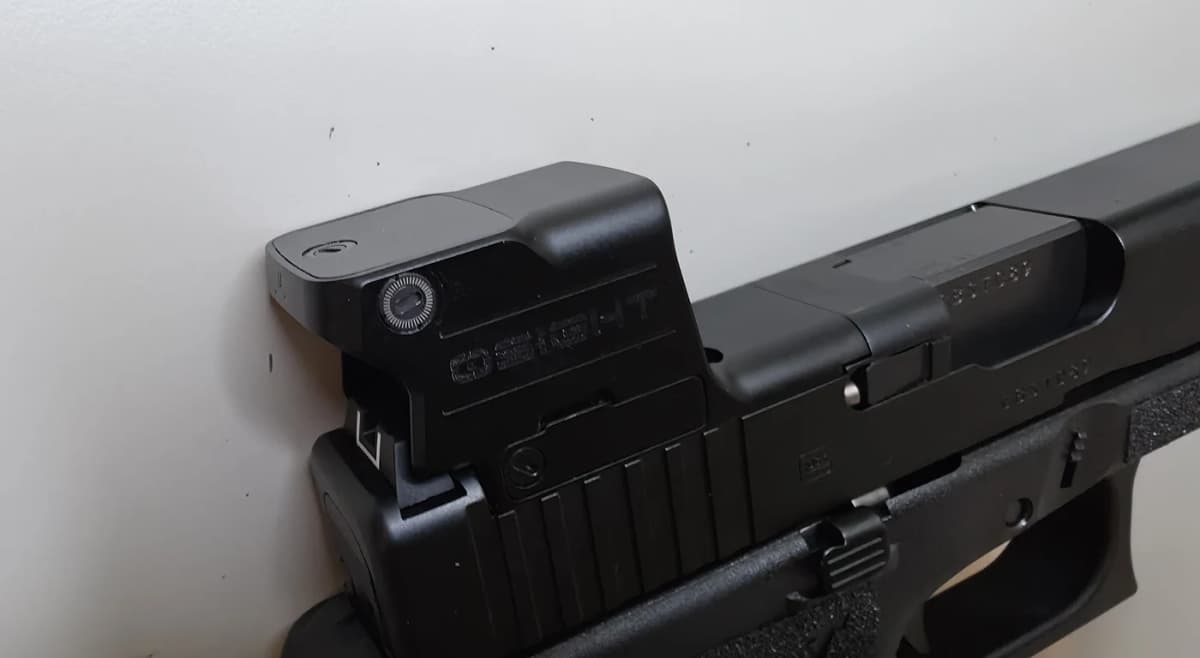
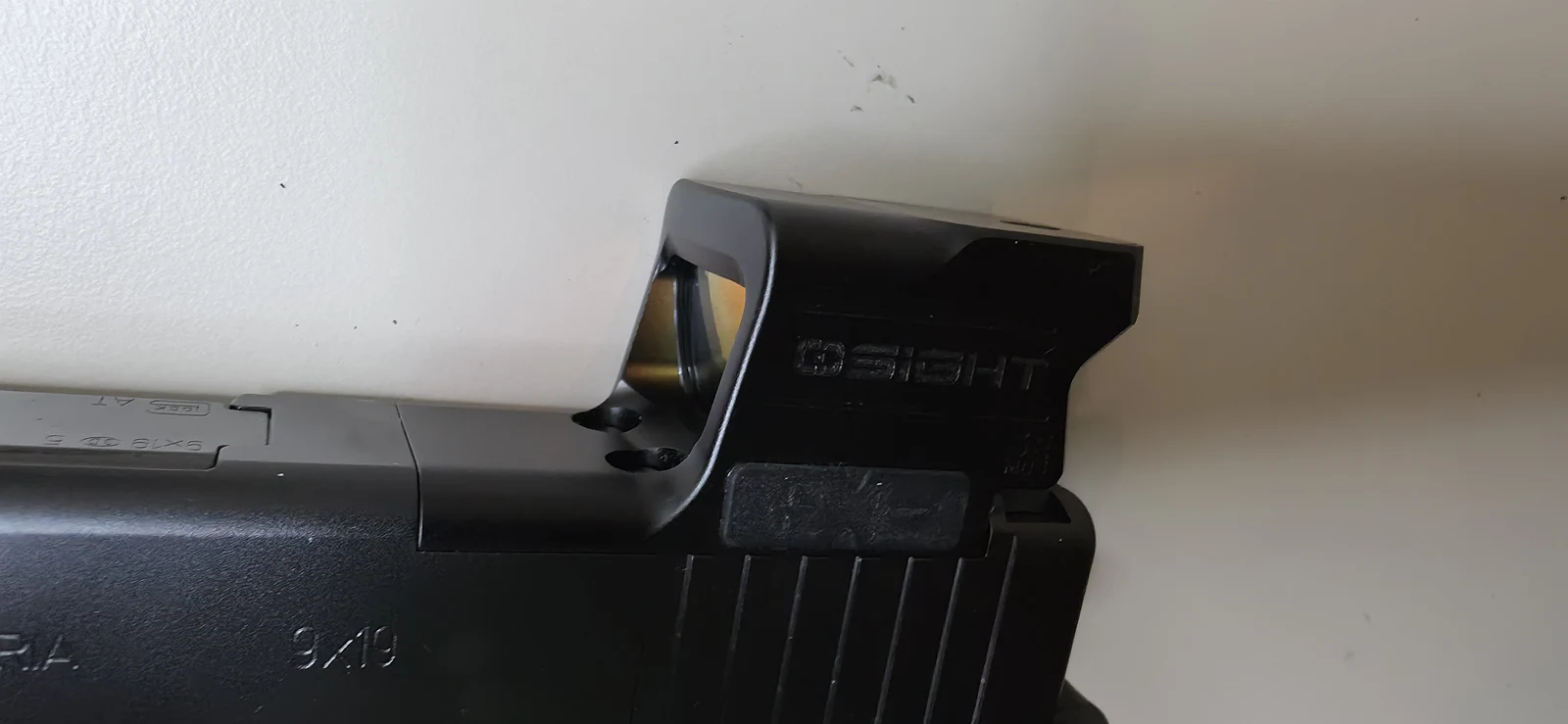
- →The Plate Is Genuinely Gone: The SE MOS seats in the Glock 47 MOS cut and takes three M3 screws straight into the slide. No plate, no shims, no second bolted joint.
- →Complete In The Box: Install driver, mounting screws, spare battery-compartment screws, blue threadlocker, a printed manual, and a cleaning cloth. No trip to the hardware store.
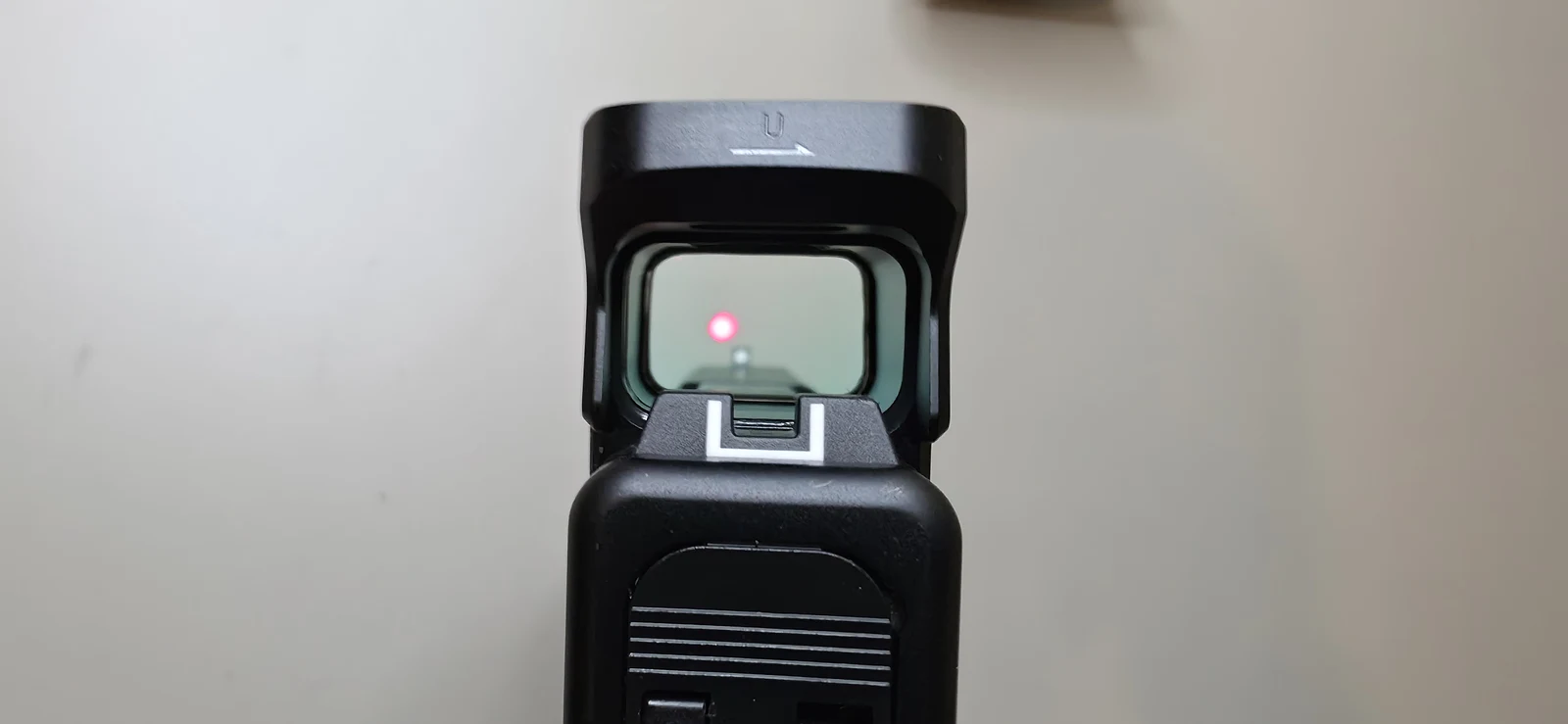
- →Factory Irons Co-Witness: The Glock 47's factory white-outline rear notch fills the bottom of the window with the dot sitting above it. No suppressor-height sights needed.
- →The Battery Seats Backwards: The CR1632 loads into the side tray in a counterintuitive orientation. Read the card before you force it.
- →Priced At $249.99: GlockStore sells it under SKU 21155-RED. Osight's own store opens orders at 8:00 pm EDT on August 24, 2026.
What This First Look Covers
This is an out-of-the-box and on-the-gun report on the Osight SE MOS, not a durability verdict. Osight sent a unit for review, it is mounted on a Glock 47 MOS, and nothing has been fired through it yet. What follows is what can be verified with the optic in hand: what ships in the box, whether the plate-free mounting claim holds up against a real MOS slide, where the dot sits relative to factory iron sights, and how the controls and battery tray are laid out.
The SE MOS is the enclosed-emitter entry in a very short field. Optics that bolt to a Glock MOS slide without an adapter plate number in the single digits, led by the open-emitter Holosun SCS-MOS at $349.99 and the C&H Precision direct-mount MOS optic. Everything else reaches a MOS slide through a plate, which raises the optic above iron-sight height and adds a joint that recoil can work loose. Our Glock MOS optic plate guide covers that side of the decision for anyone who would rather keep the plate and shop the whole optics market.
What Ships In The Box
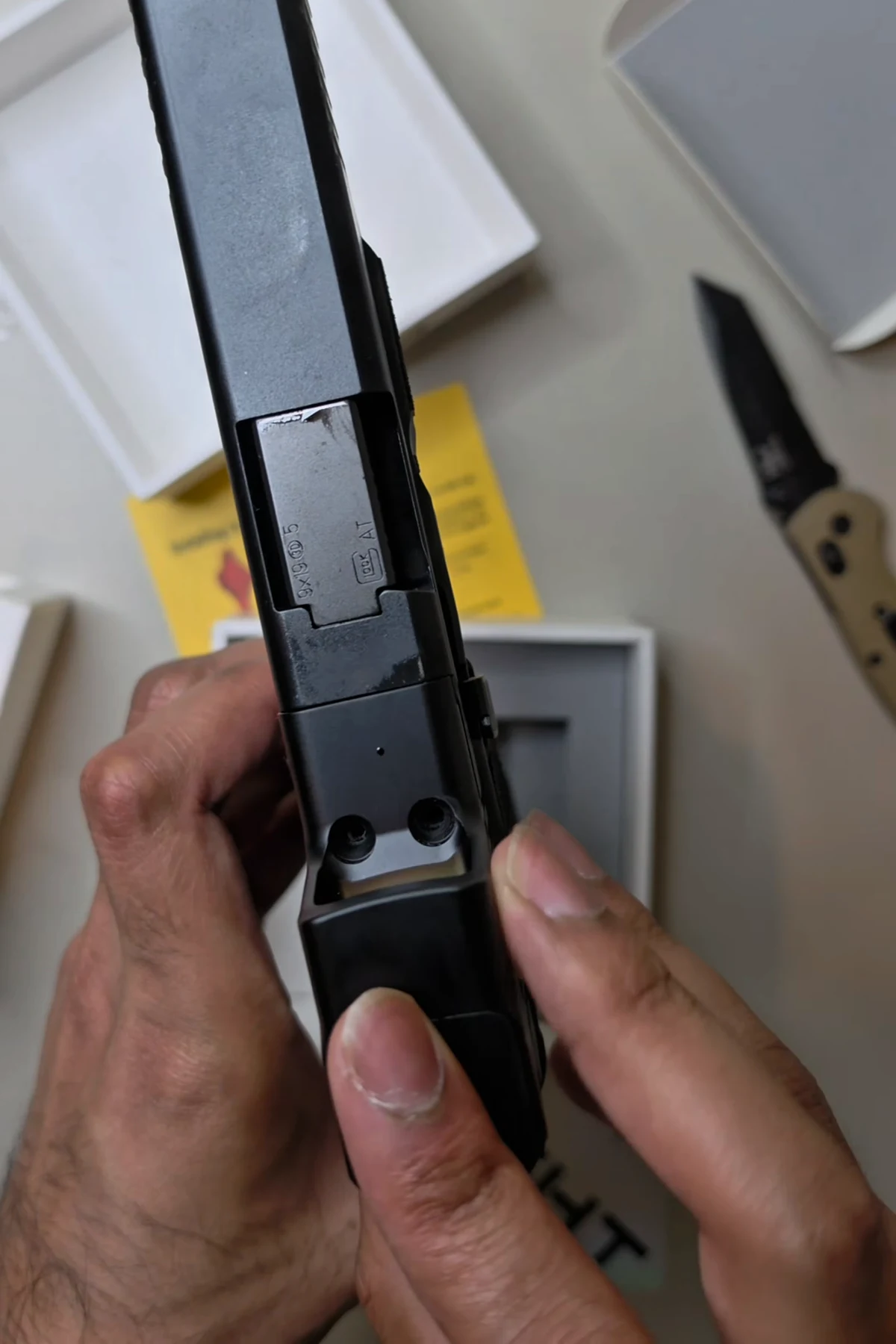
Everything needed to mount the optic is in the box, including the threadlocker. The packaging is a two-tray white box holding the optic, a shaped install driver, and a clear screw case with three M3 mounting screws plus spare battery-compartment screws. Under those sits a printed user manual, a lens cleaning cloth, a sticker sheet, and a note card. The battery comes preinstalled behind a pull tab, so first power-up takes one tug rather than a battery run.
The item worth reading is the yellow READ ME card, which carries the two instructions Osight cares about: place the optic directly on a full-size MOS slide with no adapter plate, and apply non-permanent medium-strength blue threadlocker to the included screws before torquing each one to the value printed on the card. Including a threadlocker packet rather than assuming the buyer owns some is the difference between an optic that holds zero and one that walks it loose over a few hundred rounds. Every slide-mounted sight needs re-torquing at a normal cleaning interval, this one included.
The Plate-Free Mount, Verified
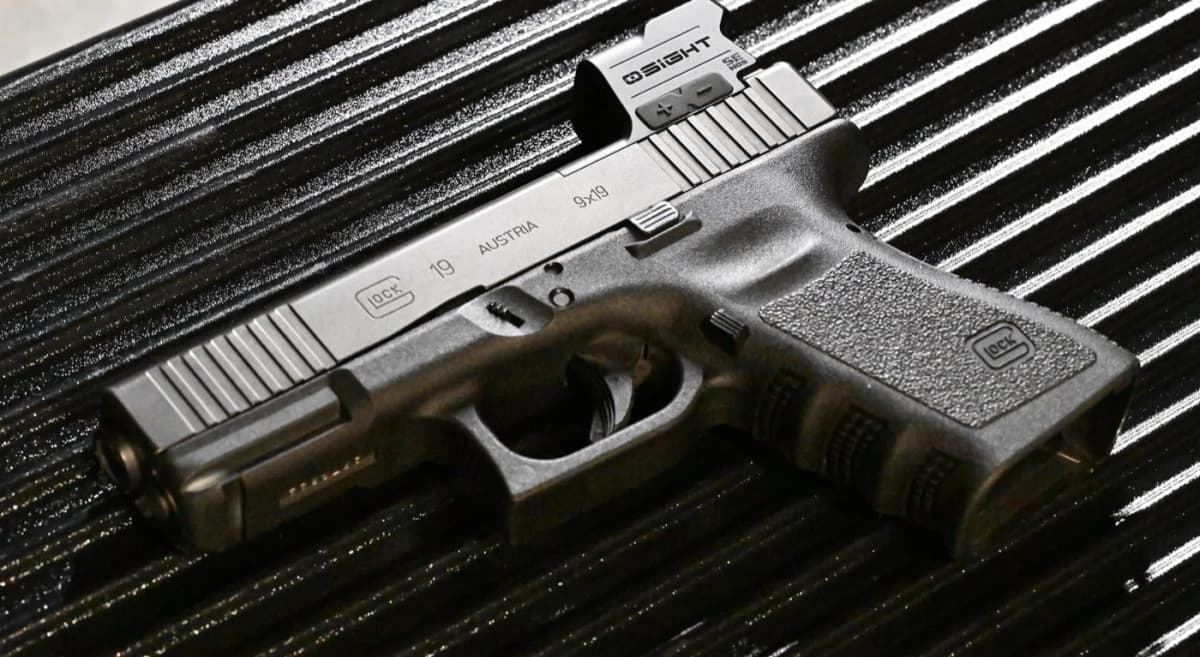
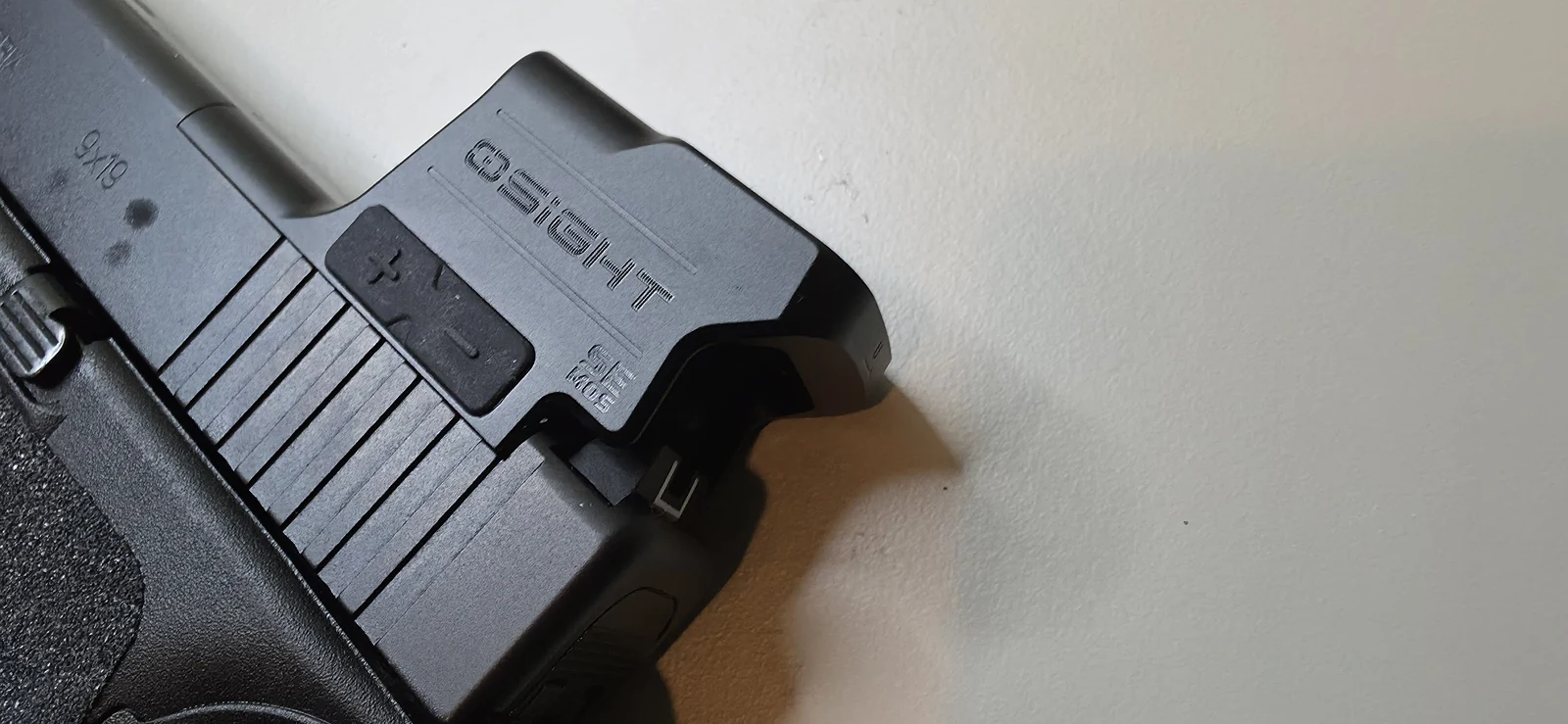
The SE MOS drops into a bare Glock 47 MOS cut and sits flat with no adapter under it. The MOS pocket on that slide is a shallow rectangular recess with two threaded posts in it, and the optic base is machined to land on that geometry directly. Three identical M3 screws hold it down. Thread all three by hand first, then alternate tension between them the way you would lug nuts, so the optic pulls down square instead of canting toward whichever screw got torqued first.
Deleting the plate is the whole argument for this category. A Glock MOS plate inserts a second bolted interface between optic and slide, raises the sight line above factory iron height, and gives recoil one more place to loosen. The cost of skipping it is that a direct-mount optic fits one slide pattern and nothing else, so this is a Glock MOS purchase rather than a dot you move between guns. Osight excludes Gen6 Glocks and the Slimline MOS 43X and 48, which use a smaller and different cut.
The Co-Witness Is Real
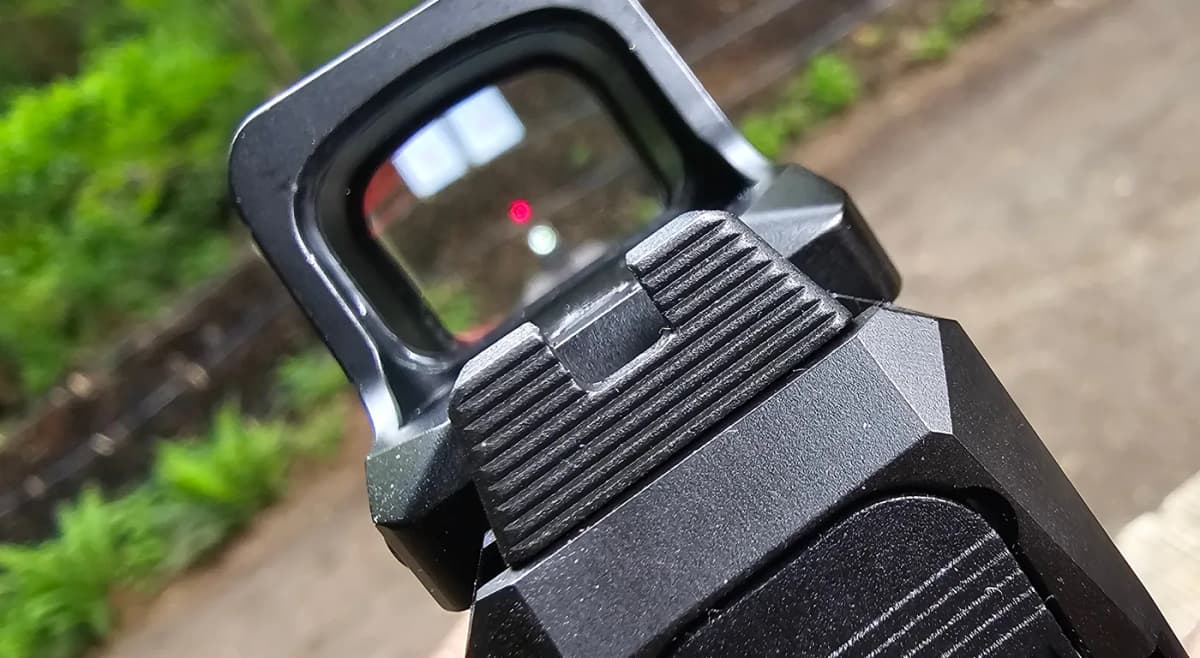
The Glock 47's factory sights co-witness through the bottom of the window with no sight change. Looking through the glass, the factory front sight dot sits inside the lower half of the viewport with the white-outline rear notch framing it from below, and the red dot rides above both. That is a lower-third picture rather than an absolute co-witness. Nothing about that requires suppressor-height or optic-height sights, and that is the practical payoff of the low deck height a direct-mount optic buys you.
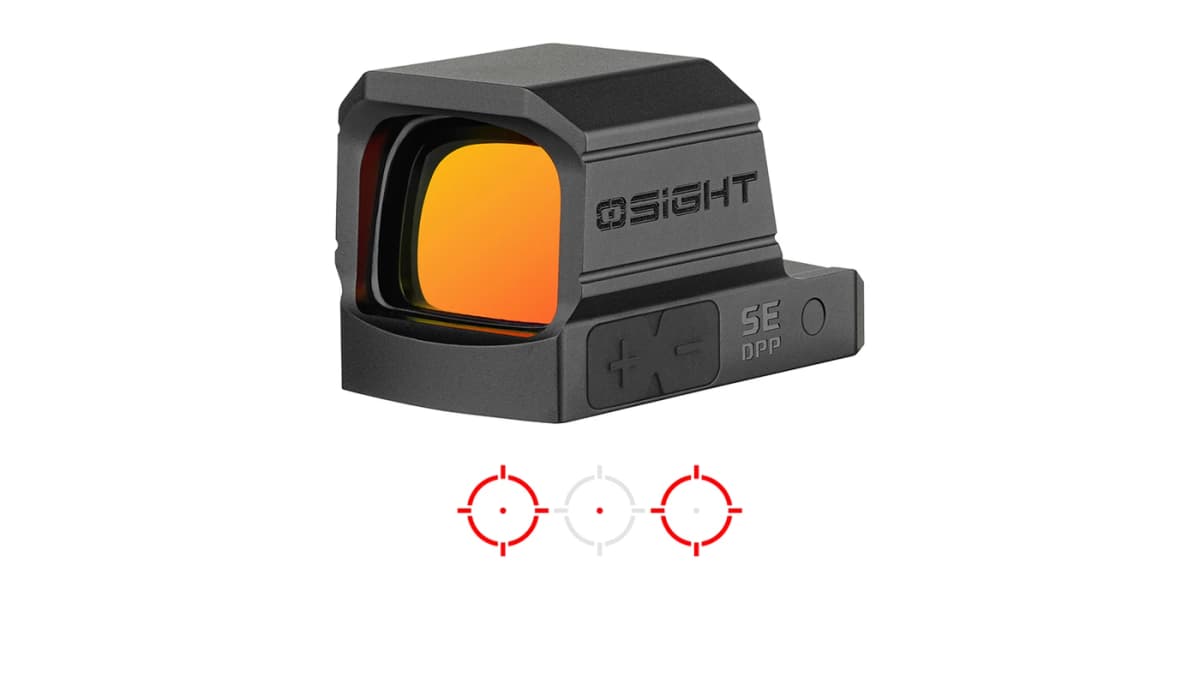
The reticle is a 2 MOA dot inside a 32 MOA circle, switchable to dot only, circle only, or both from the side buttons. The 32 MOA ring covers roughly three inches at 10 yards, which makes it a fast coarse index up close while the 2 MOA dot handles anything needing precision. If you are moving to a dot from irons for the first time, our pistol red dot zeroing guide covers the procedure, and the enclosed-emitter rankings place this optic against the rest of the sealed field.
Osight SE MOS Enclosed (Glock MOS Direct Mount)
The enclosed direct-mount option for full-size Glock MOS slides
Enclosed-emitter red dot machined for the Glock MOS slide cut, so it bolts to the slide with no adapter plate and co-witnesses with factory-height Glock irons.
- +One of the only enclosed-emitter optics that mounts to a Glock MOS slide with no plate
- +Factory-height Glock irons co-witness through the bottom of the window
- +User-replaceable side-loading battery, unlike the sealed Holosun SCS-MOS cell
- −Fits Glock MOS slides and nothing else, so it does not move between guns
- −Not compatible with Gen6 Glocks or the Slimline 43X/48 MOS cut
- −Osight track record is short next to Holosun or Trijicon
Affiliate links (?)
Against the Holosun SCS-MOS, Side by Side
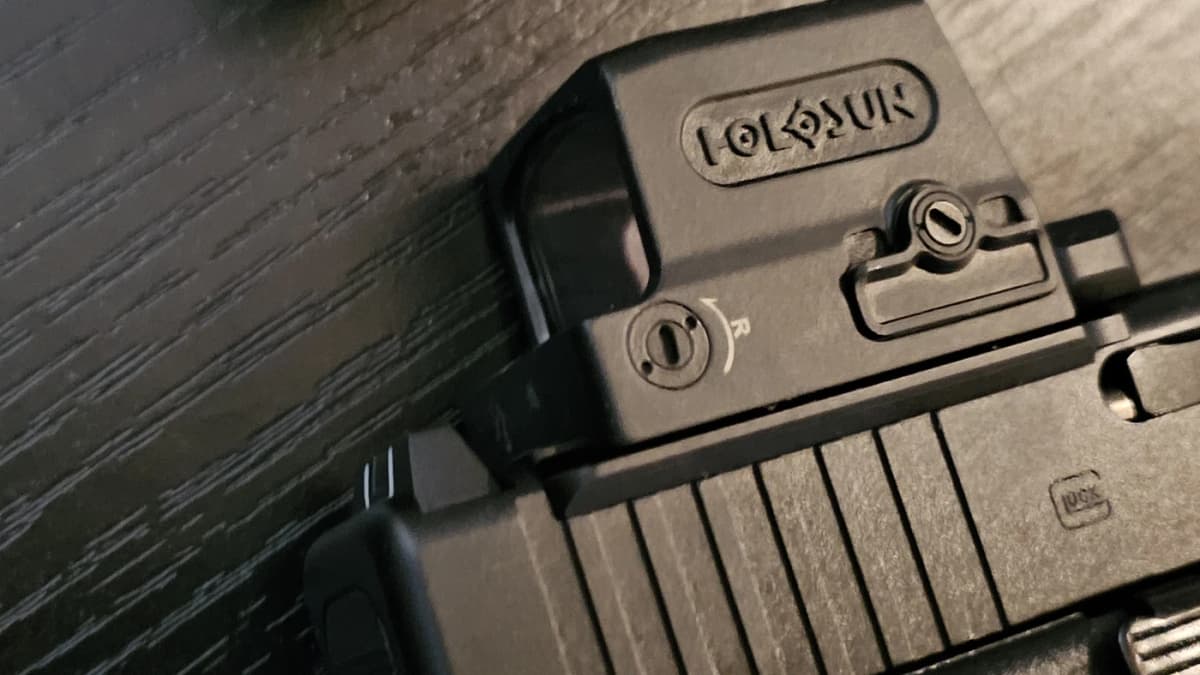
Put the two direct-mount MOS optics next to each other and the split is emitter and power, not mounting. Both skip the adapter plate, both sit low enough for factory irons, and both run a 2 MOA dot inside a 32 MOA circle. From there they diverge: the Osight seals the diode behind glass and feeds it a CR1632 you can pull from a side tray, while the Holosun runs an open emitter, a green reticle, and a sealed internal cell topped up by the solar panel on its spine. Our comparison unit is an SCS-MOS-GR on a Glock 19 Gen5, against the SE MOS on the Glock 47.
Osight SE MOS vs Holosun SCS-MOS
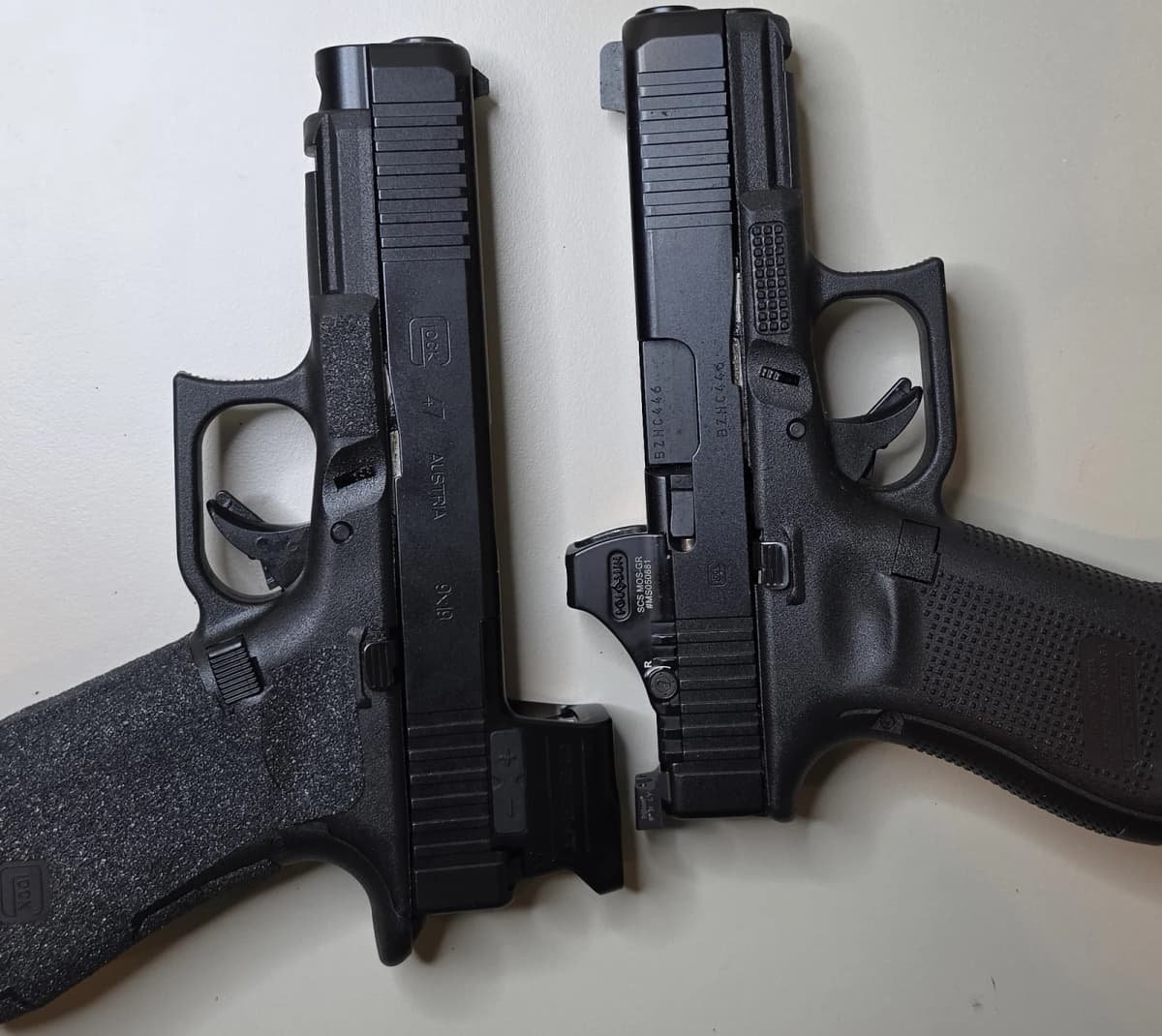
Both optics bolt to the MOS cut with no plate. The Holosun housing is stamped SCS.MOS-GR; the Osight carries its brightness panel on the side of the body.
The Holosun answers the battery question by removing it, which is genuinely low-maintenance until the sealed cell degrades and the optic turns out not to be user serviceable. The Osight answers it with a commodity coin cell and a door. Solar also wants ambient light, so a pistol that lives in a safe or a nightstand drawer runs on reserve rather than on the panel. Against that, Holosun has years of field record and a Grade 5 titanium housing rated IP67, where Osight brings 7075-T6 at IPX7 and a much shorter track record. If you are working out which optics your own slide cut will take before you spend anything, the pistol red dot fit checker resolves the footprint question against a specific pistol.
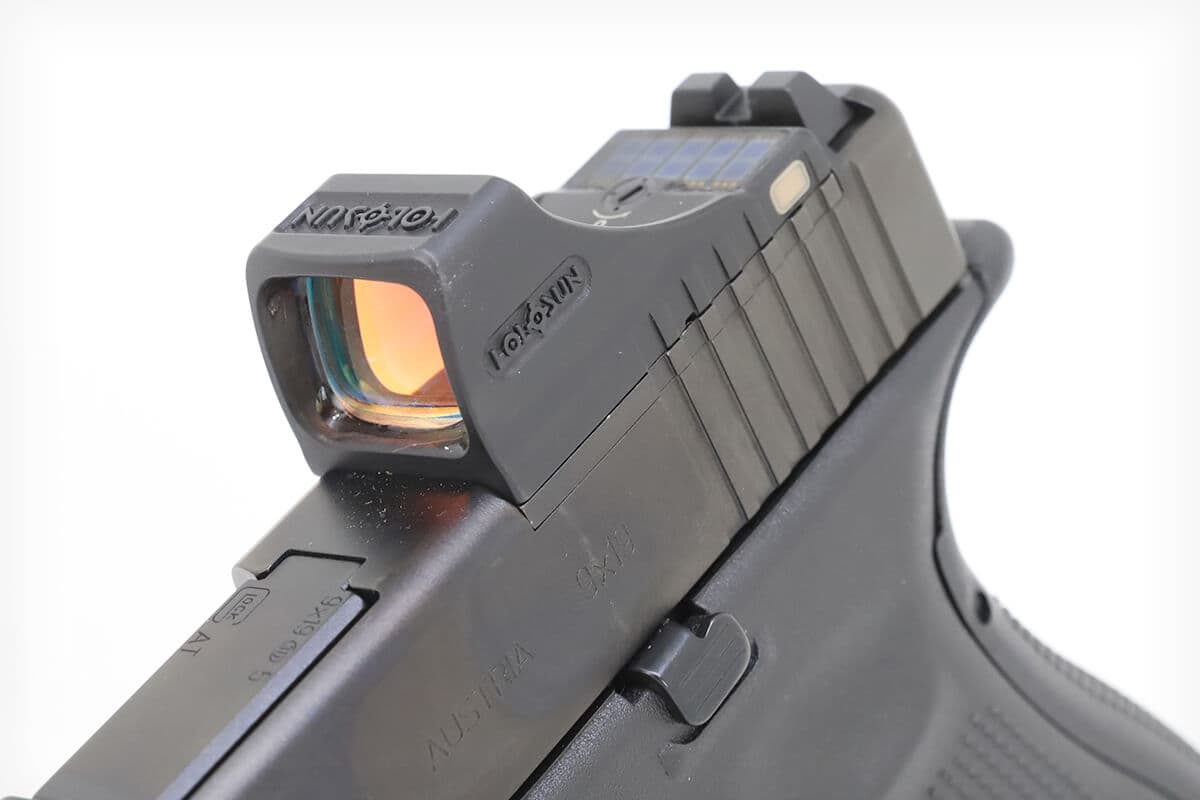
Holosun SCS-MOS
The open-emitter, solar-fed direct-mount MOS benchmark
Solar-powered open Glock MOS direct-mount optic; no plate required
- +Direct mount eliminates Glock MOS plate height and zero-shift issues
- +Solar Charging Sight removes battery management entirely
- +Direct-mount open body sits lower than plate-mounted optics
- −Glock MOS only; does not fit any other pistol or G43X/G48 MOS
- −Internal rechargeable battery is not user-serviceable
- −Smaller 0.58 x 0.77 inch window than the SCS Carry or 507C
Affiliate links (?)
Enclosed Pistol Red Dots Shipping Now
Osight SE MOS Enclosed (Glock MOS Direct Mount)
- 2 MOA dot + 32 MOA circle MRS
- Enclosed emitter, Glock MOS direct mount
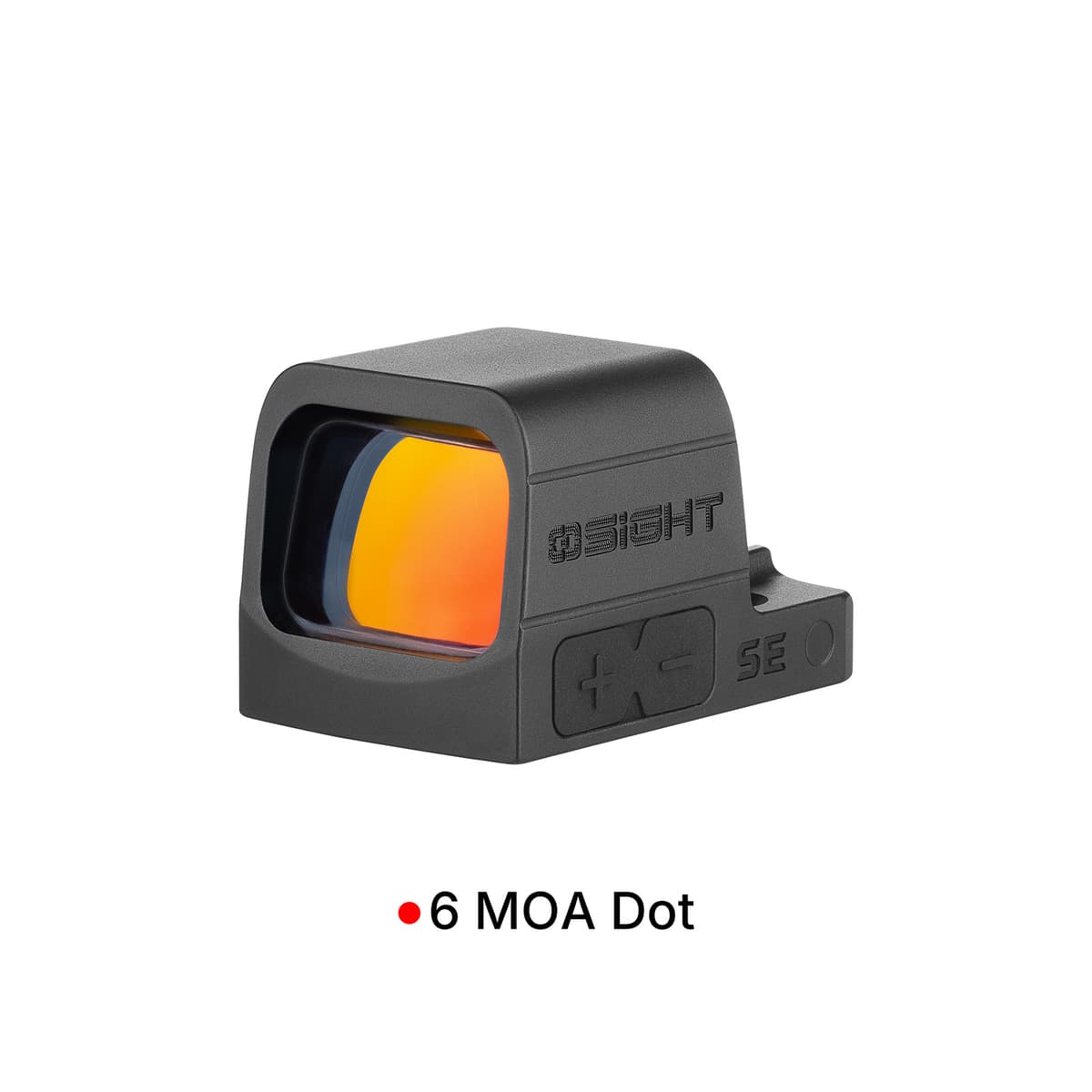
Osight SE Enclosed (6 MOA Red)
- 6 MOA red dot
- Enclosed emitter, RMSc footprint
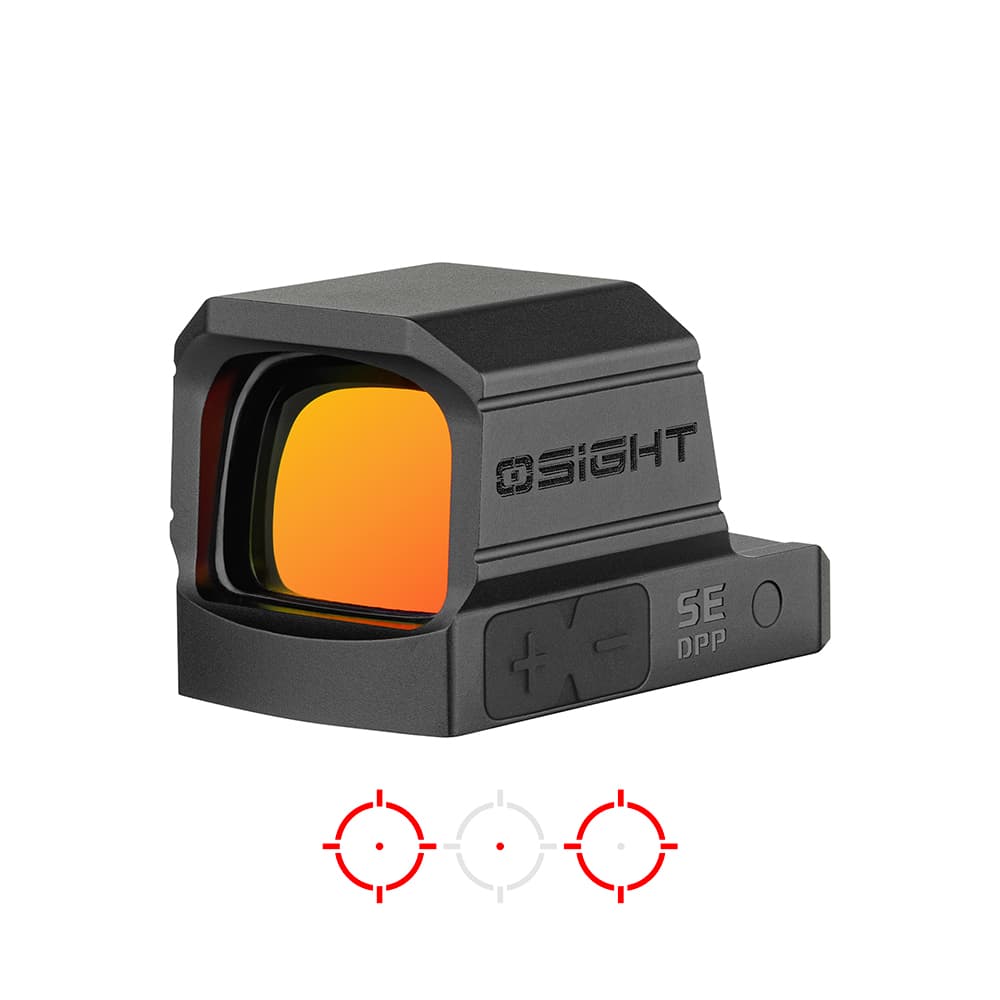
Osight SE DPP Enclosed Red Dot
- 2 MOA dot + 32 MOA circle MRS
- Enclosed emitter, DeltaPoint Pro footprint
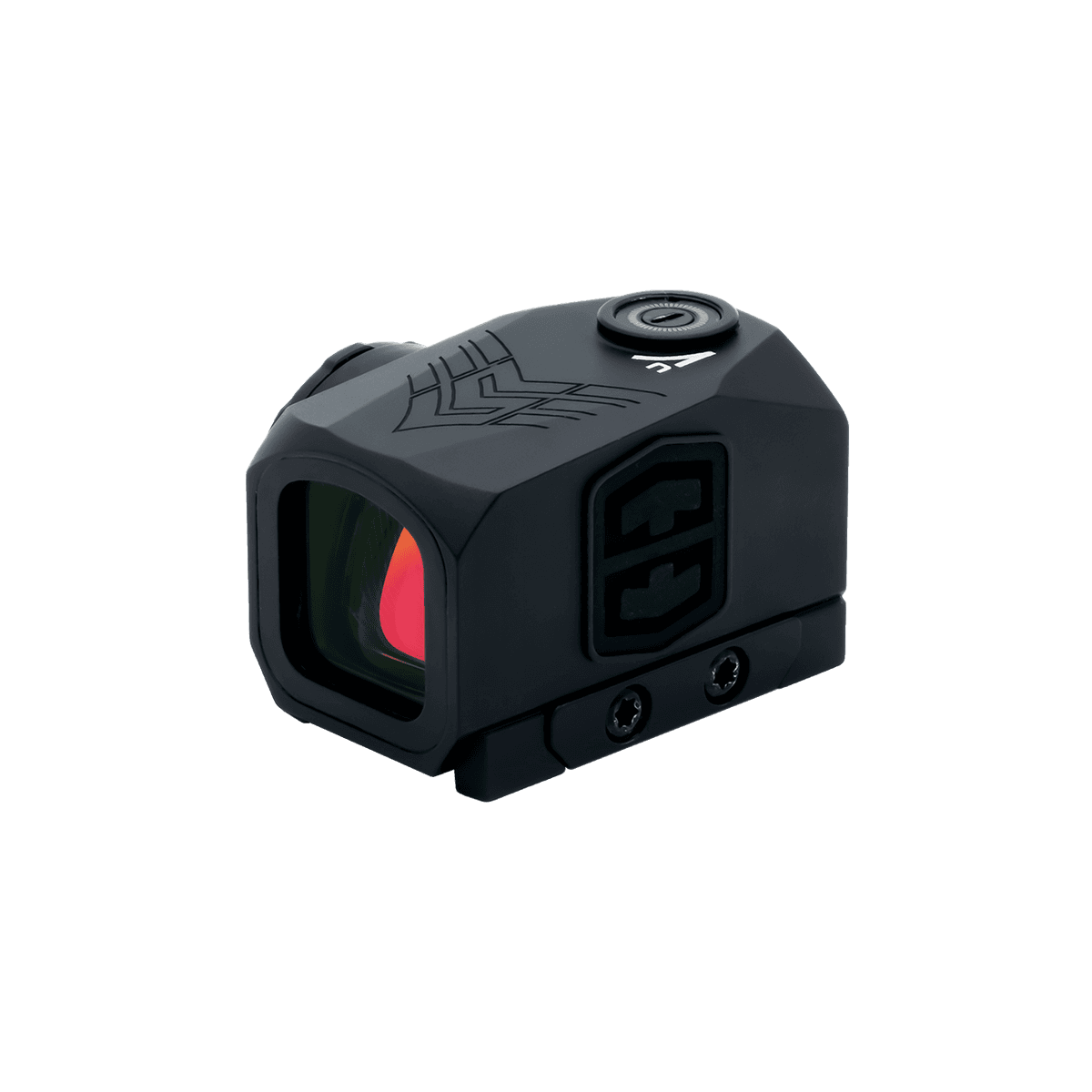
Swampfox Kraken Closed Emitter
- 3 MOA red or green dot
- RMR + Glock MOS plates included
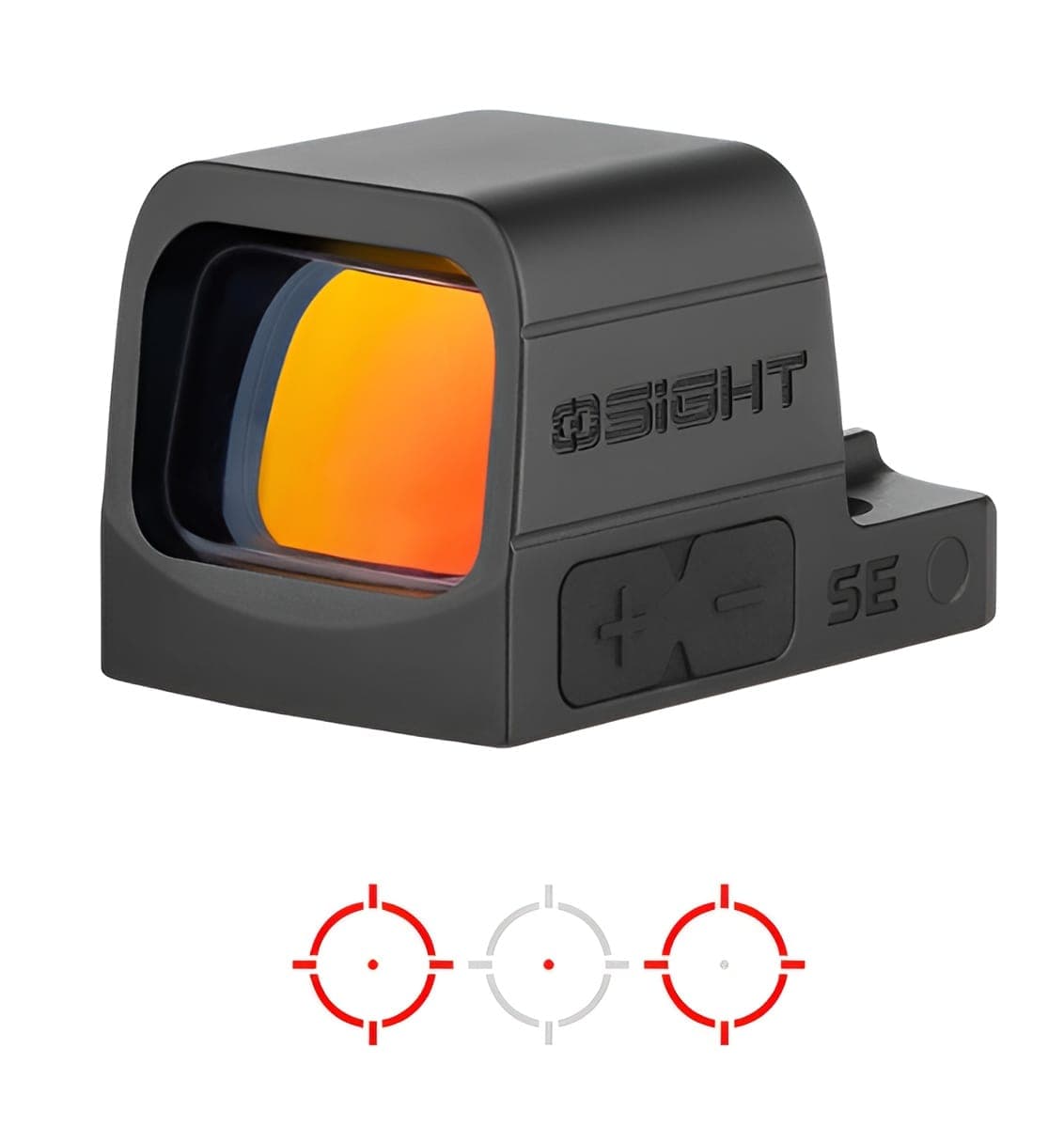
Osight SE Enclosed (2 MOA + 32 MOA Red MRS)
- 2 MOA dot + 32 MOA circle MRS
- Enclosed emitter, RMSc footprint
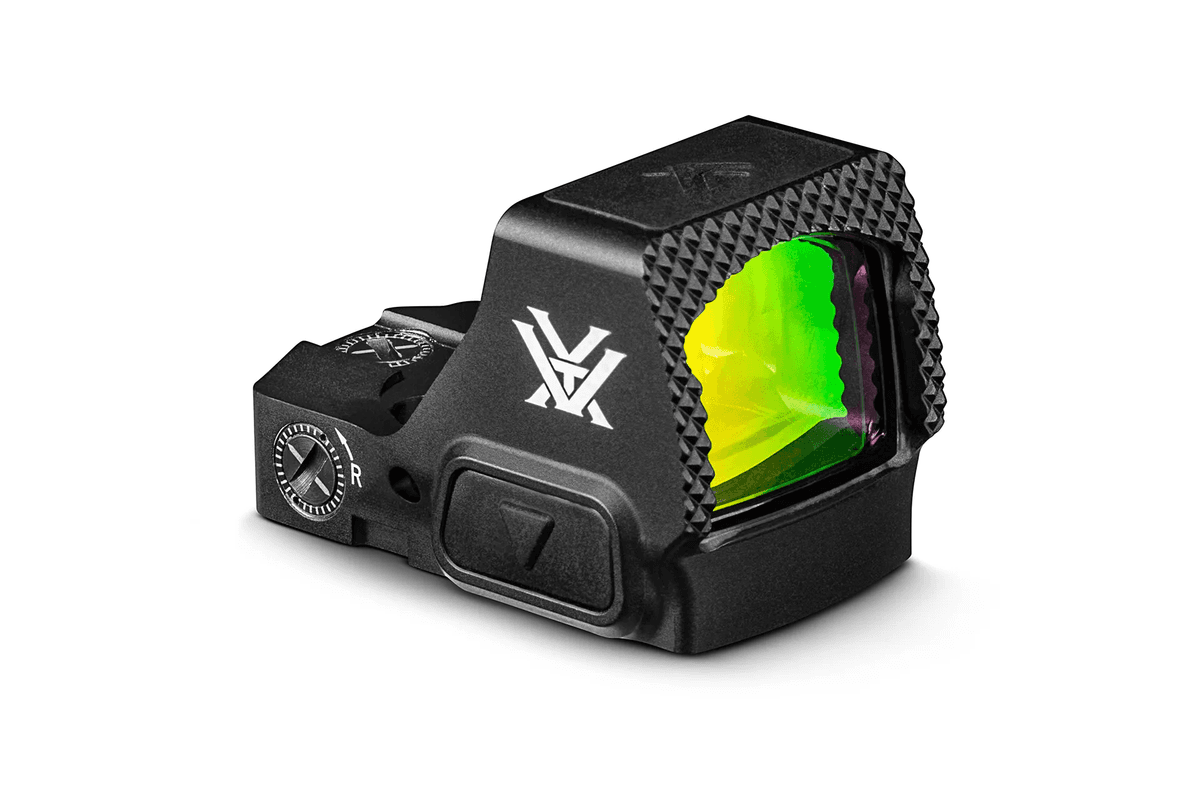
Vortex Defender-ST Micro Red Dot
- 3 or 6 MOA red dot
- DeltaPoint Pro footprint
Affiliate links (?)
Controls, Housing, and the Battery Tray
The brightness buttons sit in a recessed panel on the side of the housing, marked with a raised plus and minus, and holding them is what cycles the reticle between dot, circle, and circle-dot. The housing carries the OSIGHT wordmark above them with an SE MOS marking below. The rear face is squared off and vertical rather than rounded, which is the profile one-hand racking against a belt or a barricade needs.
The CR1632 loads into a tray in the side of the housing, so a cell swap never requires breaking the optic loose from the slide or re-zeroing afterward. That is the specific thing sealed-battery optics give up: the Holosun SCS-MOS runs an internal rechargeable cell fed by a solar panel, which is genuinely low-maintenance right up until the cell degrades, at which point the optic is not user serviceable. The one surprise on this unit is orientation. The cell seats in the tray in a direction most people will get backwards on the first attempt, and the manual is worth a look before forcing it.
Osight SE MOS Specifications
Osight SE MOS Specifications
| Footprint | Glock MOS (direct mount, no plate) |
| Emitter | Enclosed, top-mounted diode |
| Reticle | 2 MOA dot & 32 MOA circle |
| Reticle Color | Red, 650 nm |
| Magnification | 1x, parallax-free |
| Window Size | 0.83 x 0.55 in / 21 x 14 mm |
| Lens | Aspherical, multi-coated |
| Adjustment | 1 MOA per click |
| Power Source | CR1632, side-loading tray |
| Battery Life | 140,000 h (dot only, mode 3) |
| Low Battery Warning | Triple flash per minute below 2.2V |
| Auto Shutoff | Motion sensor, 3 minutes idle |
| Housing | CNC 7075-T6 aluminum |
| Waterproof | IPX7 |
| Mounting Hardware | 3 x M3 screws, blue threadlocker supplied |
| Not Compatible | Gen6 Glocks, Slimline MOS (43X/48) |
| Price | $249.99 |
What Testing Still Has To Answer
Three things decide whether this optic is worth $249.99, and none of them are visible on a bench. The first is zero retention across a real round count, which is the question that matters most on a young brand and the one an install video cannot touch. The second is daylight brightness: the top settings have to wash out a bright range at noon or the enclosed window works against you. The third is holster fit, since a direct-mount optic changes the slide profile enough that not every optic-cut holster clears the housing.
The enclosed emitter is the reason to care about the answers. An open optic projects across an exposed channel, so rain running off a slide, pocket lint, and unburned powder land on the diode and dim or block the dot. Sealing it moves all of that onto an outer lens a shirt tail cleans. Our Osight XR review covers how the enclosed RMR-footprint version held up in live fire, and the pistol red dot guide handles footprint selection for anyone not locked to a Glock.
Stay Updated on Osight Optics
Get the live-fire follow-up on the SE MOS when it lands. We also cover new pistol red dot launches, hands-on optic reviews, and Glock MOS mounting updates.
Frequently Asked Questions
▶Does the Osight SE MOS need an adapter plate?
▶What comes in the Osight SE MOS box?
▶Does the Osight SE MOS co-witness with factory Glock sights?
▶How much does the Osight SE MOS cost and where can you buy it?
▶What Glocks does the Osight SE MOS fit?
▶Which battery does the Osight SE MOS use and how do you change it?
Bottom Line
Everything you can check without firing it checks out, and the price undercuts the only direct-mount rival by $100.
The SE MOS delivers what the category promises. It seats in a Glock 47 MOS cut with no plate, the factory irons co-witness through the bottom of the glass, and the box contains the driver, the screws, and the threadlocker rather than a parts list. At $249.99 against $349.99 for the open-emitter Holosun SCS-MOS, it asks $100 less and gives you a sealed emitter and a battery tray you can open, in exchange for a shorter brand track record and no solar failsafe.
Buy it now if you own a full-size Glock MOS slide, want the emitter behind glass, and want a coin cell you can swap at the range rather than a sealed battery you cannot service. Wait if zero retention over thousands of rounds is your deciding factor, because that is the one thing this unit has not been asked to do yet. Our launch coverage of the SE MOS announcement has the full spec breakdown and the comparison against Holosun's side of this bracket.