Key Takeaways
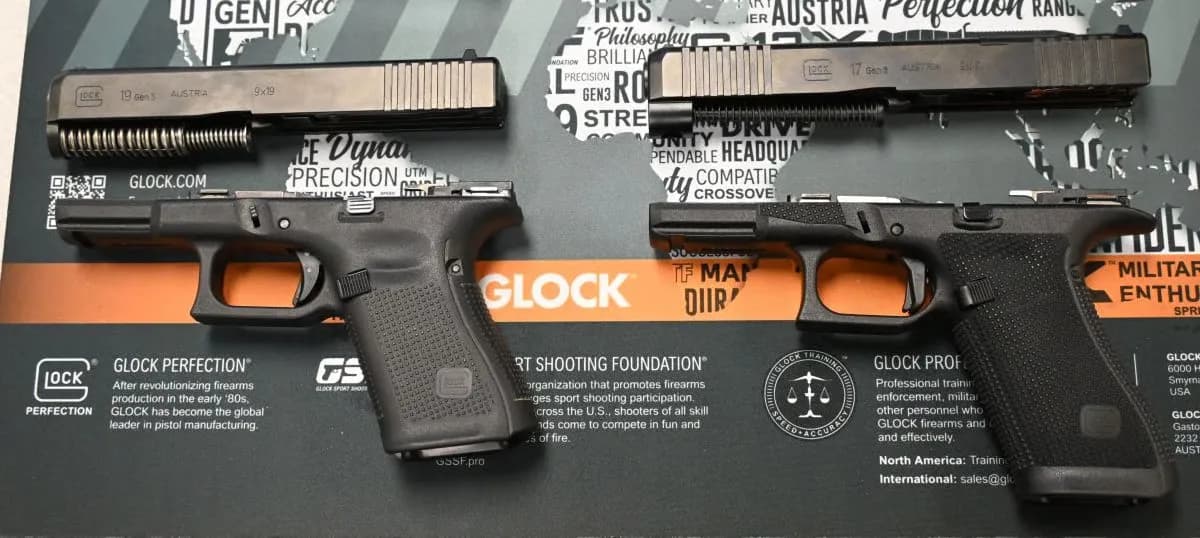
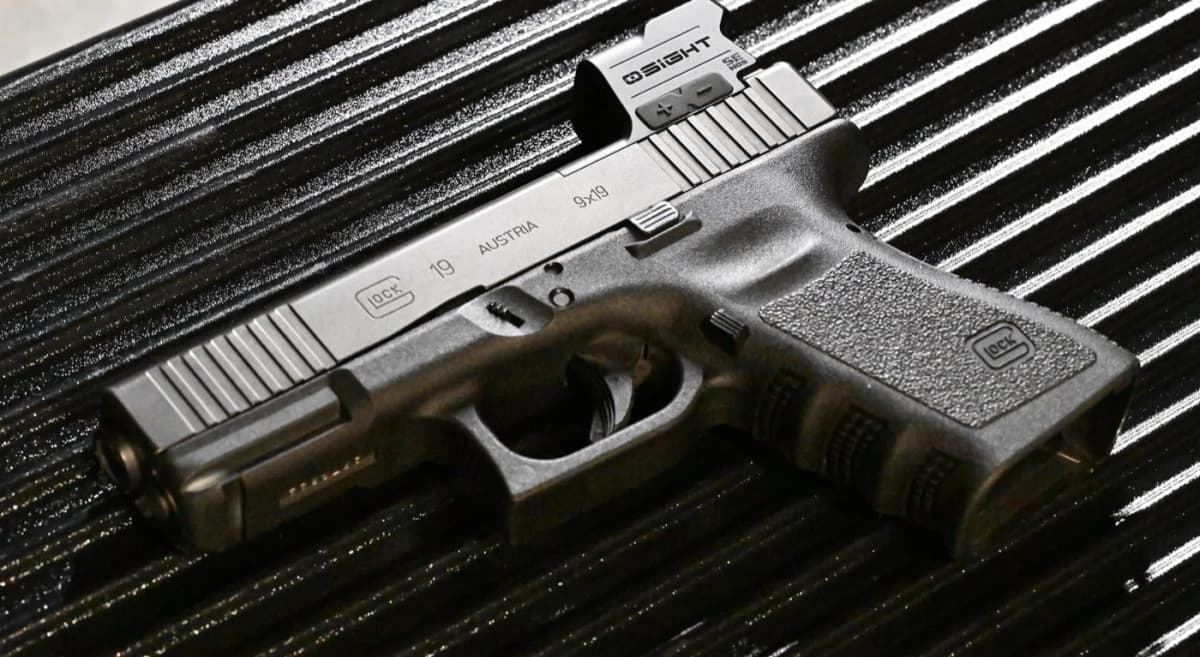
- →The Direct Mount Is Real: The SE MOS seated flat in a bare Glock 47 MOS cut on the two supplied M3 screws. No plate, no shim, no taller sights.
- →Factory Irons Co-Witness: The Glock 47's standard-height sights ride in the bottom third of the window, there if the dot ever dies.
- →Daylight-Usable Reticle: The 32 MOA ring and 2 MOA center dot stayed visible against green-and-black targets in bright, broken sunlight.
- →Battery Changes Never Touch the Mount: The CR1632 loads from a side tray, so swapping it costs nothing in screw torque or zero. Shake-awake wakes to the last brightness after the three-minute standby.
- →200 Clean Rounds: Zeroing was uneventful and the point of impact never moved through the session. That rules out a lemon; it does not yet make this a duty optic.
Osight SE MOS Enclosed (Glock MOS Direct Mount)
Full-size Glock MOS owners who want an enclosed direct-mount optic
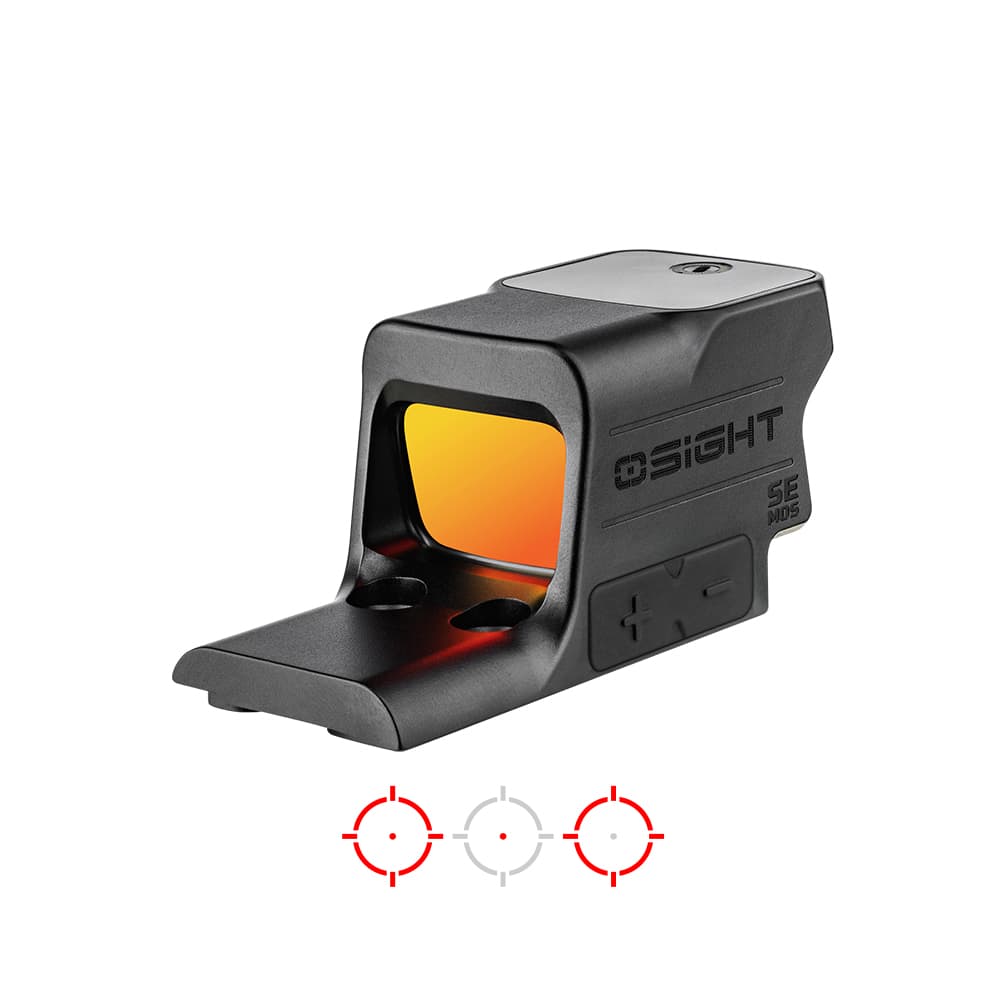
Enclosed-emitter red dot machined for the Glock MOS slide cut, so it bolts to the slide with no adapter plate and co-witnesses with factory-height Glock irons.
- +One of the only enclosed-emitter optics that mounts to a Glock MOS slide with no plate
- +Factory-height Glock irons co-witness through the bottom of the window
- +User-replaceable side-loading battery, unlike the sealed Holosun SCS-MOS cell
- −Fits Glock MOS slides and nothing else, so it does not move between guns
- −Not compatible with Gen6 Glocks or the Slimline 43X/48 MOS cut
- −Osight track record is short next to Holosun or Trijicon
What This Osight SE MOS Review Covers
This is a live-fire review, not a first look. Our test unit went onto a Glock 47 MOS, took a zero, and ate about 200 rounds without a stoppage, a flicker, or a point-of-impact shift. That is enough trigger time to judge the install, the controls, the co-witness, and how the glass behaves in daylight. What it cannot judge yet is years in a holster, and the verdict at the bottom is scoped to match.
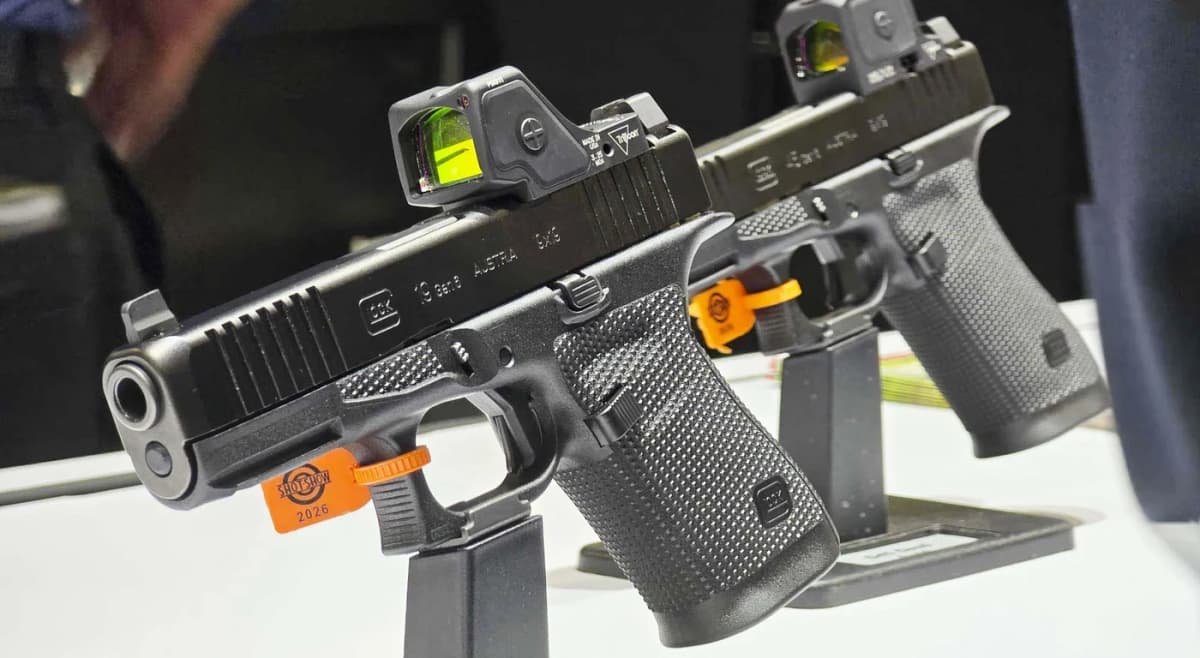
The product exists because of the adapter plate. Enclosed pistol dots almost always reach a Glock MOS slide through one, and the plate adds a second bolted joint that recoil can work loose plus enough height to demand taller iron sights. The SE MOS pairs a sealed emitter with a base machined for the full-size MOS cut itself, so the plate and both of its penalties disappear. Glock owners who would rather keep the plate and shop the whole optics market should start with our Glock MOS optic plate guide.
What Comes in the Box
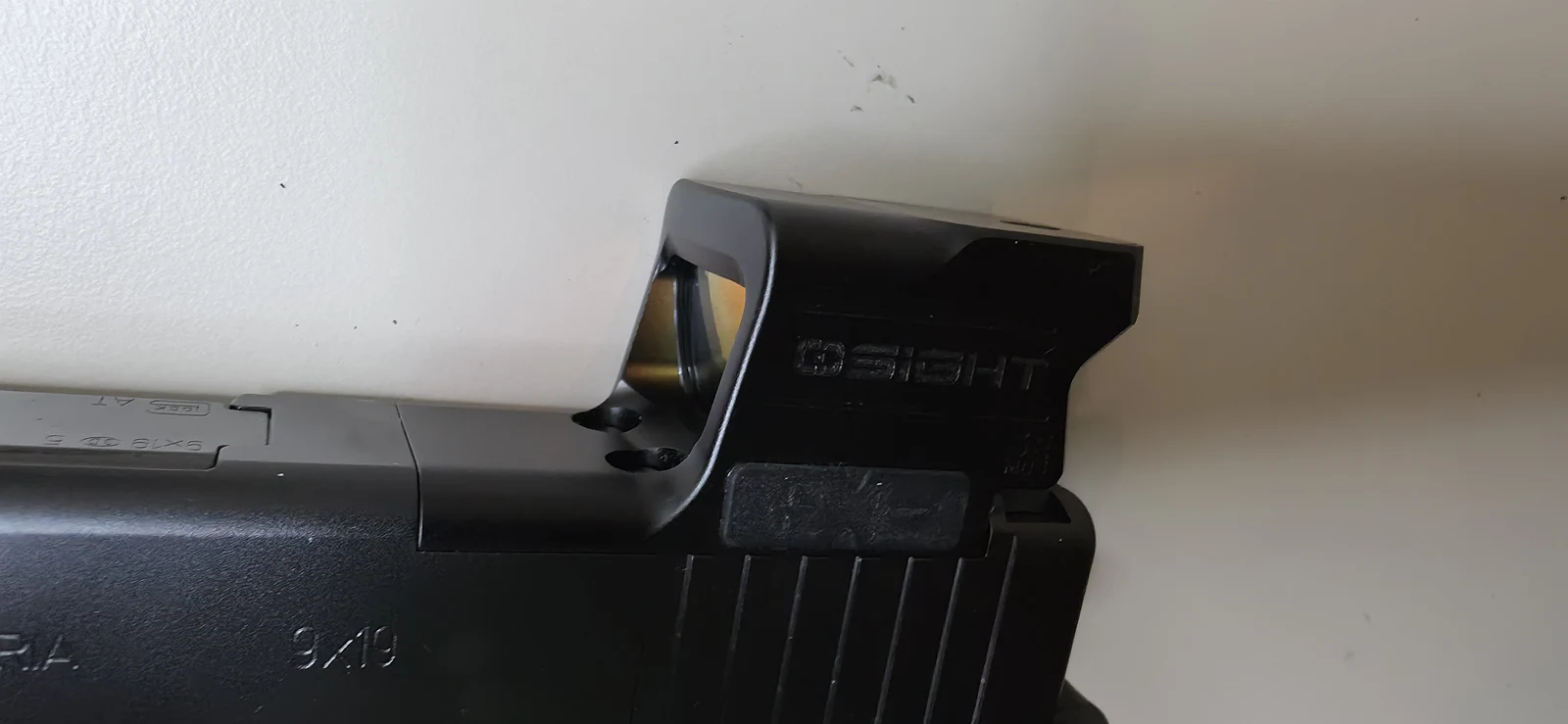
Everything needed for the install is in the box: the optic, a driver, two M3 mounting screws, spare battery-compartment screws, blue threadlocker, a cleaning cloth, a printed manual, and an install card. The CR1632 arrives behind a pull tab. You supply the slide and nothing else.
Read the install card before you open the battery tray. The cell goes in backwards from where instinct puts it, and a tray forced shut against a reversed battery is the one mistake in this install that can actually break something. The card also carries the two numbers that decide whether the optic stays put, the torque spec and the call for medium-strength threadlocker.
Glock 47 Installation: Two Screws, No Plate
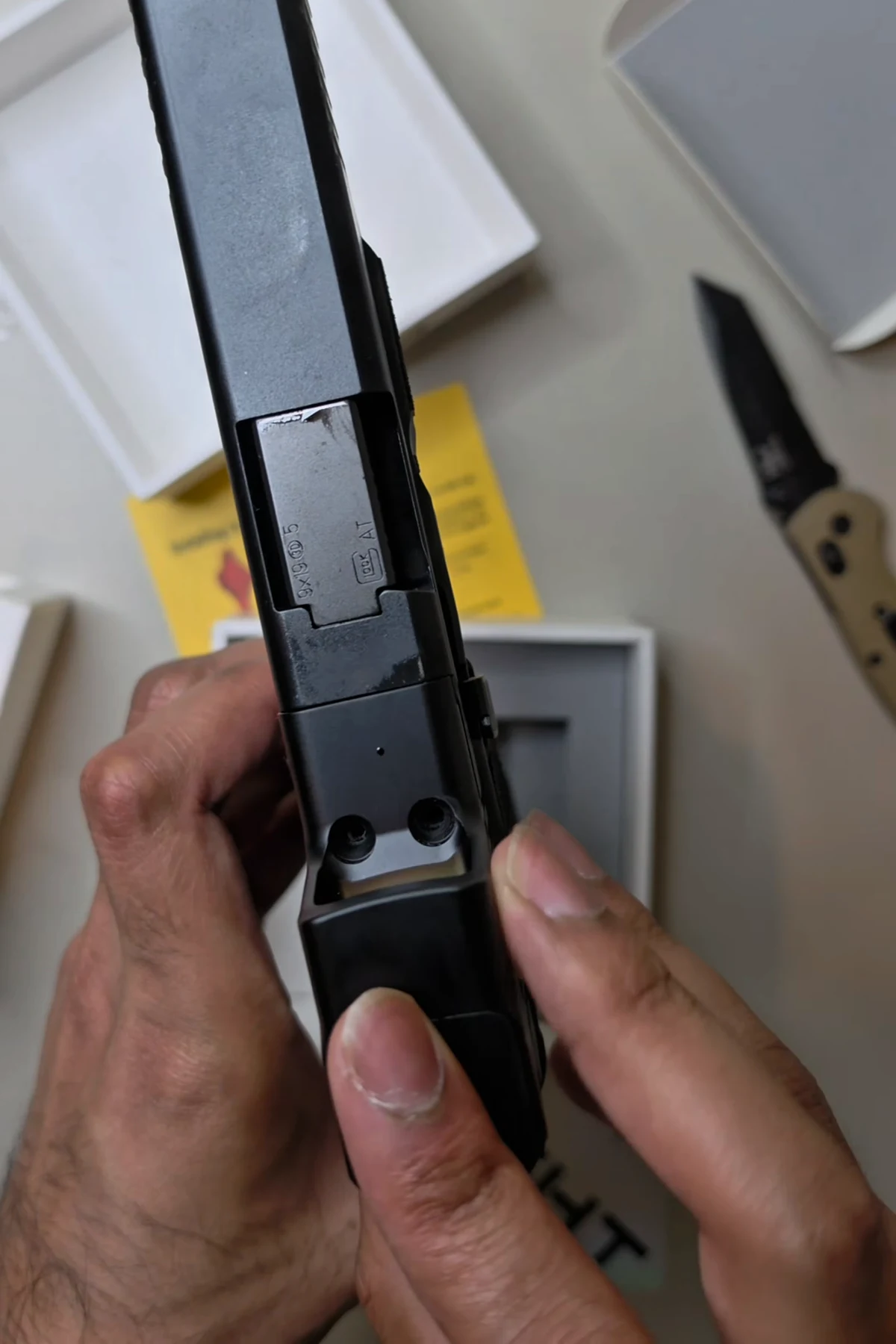
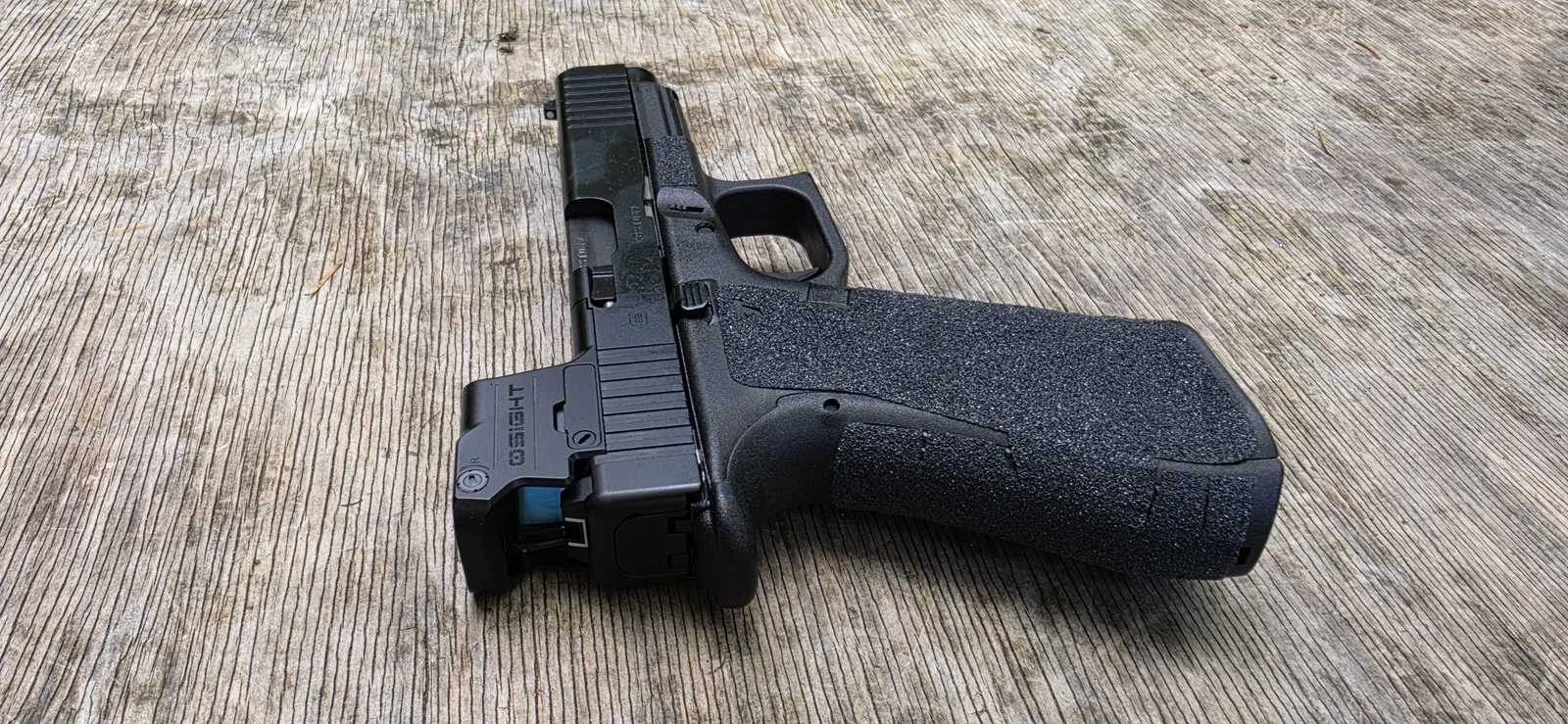
The SE MOS dropped into the bare Glock 47 pocket, sat flat, and torqued down on the two supplied M3 screws. Start both screws by hand, then walk them down alternately in small increments so the housing pulls square instead of cocking toward whichever screw got tight first. That was the entire install; there is no plate to index, no shim to lose, no second torque spec.
The bill for that simplicity is specialization. A plate-mounted optic can follow you to the next gun; this base fits the standard full-size Glock MOS pattern and nothing else, not the smaller Slimline cut on the 43X and 48, not a non-MOS slide. Run the pistol red dot fit checker before assuming it will land on another host.
Stay Updated on Osight Optics
Get the longer-term SE MOS round-count and zero-retention follow-up, plus new pistol optic reviews and Glock MOS fitment updates.
Osight SE MOS Range Sight Picture
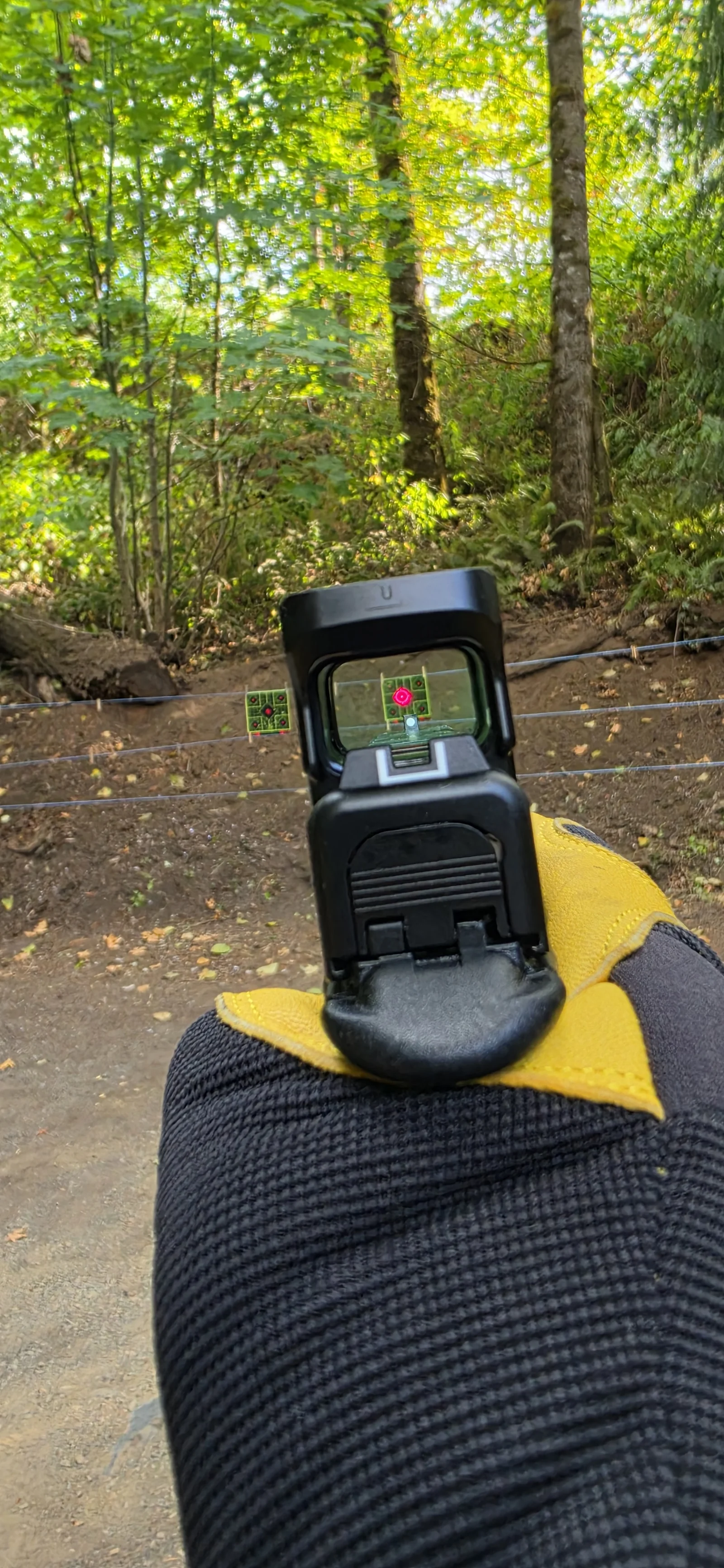
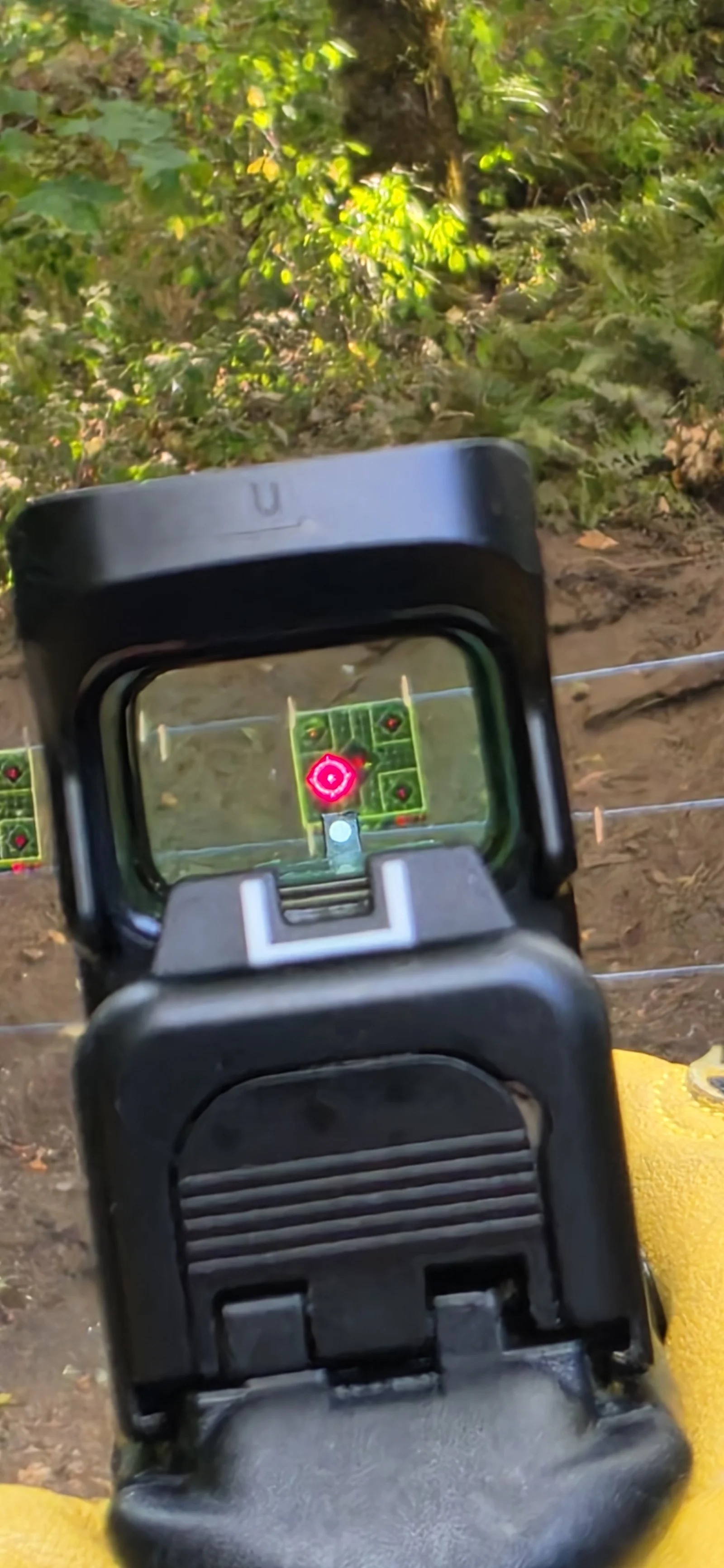
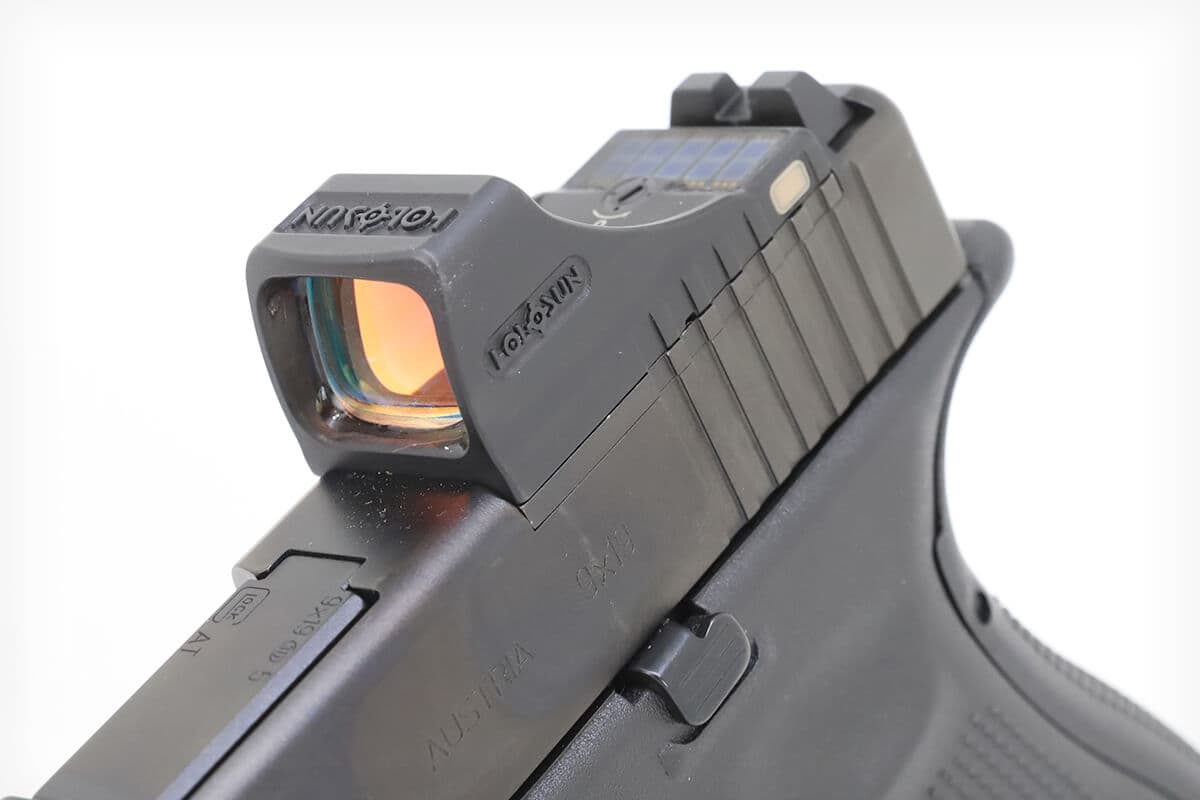
The 32 MOA ring is what the eye catches on the way up, and the 2 MOA center dot does the precise work once the gun settles. That is the whole argument for a circle-dot on a pistol, and it held up in bright, broken sunlight against green-and-black targets without the brightness maxed out. Because the emitter sits behind glass, everything the range day threw at the gun landed on an outer lens instead of the diode.
Factory-height Glock sights stay visible in the bottom of the glass through the presentation. The lower-third picture keeps most of the window clear for the dot while leaving the irons in reserve if the reticle ever quits mid-string. Shooters still building that presentation can use our pistol red dot zeroing guide to set a repeatable confirmation distance.
Zeroing was uneventful, and the point of impact stayed where we put it for the rest of the session, about 200 rounds. Nothing flickered, nothing loosened. Two hundred clean rounds rules out a lemon and proves the direct mount holds torque under live fire, which is exactly what a first session can prove and no more.
Osight SE MOS vs Holosun SCS-MOS
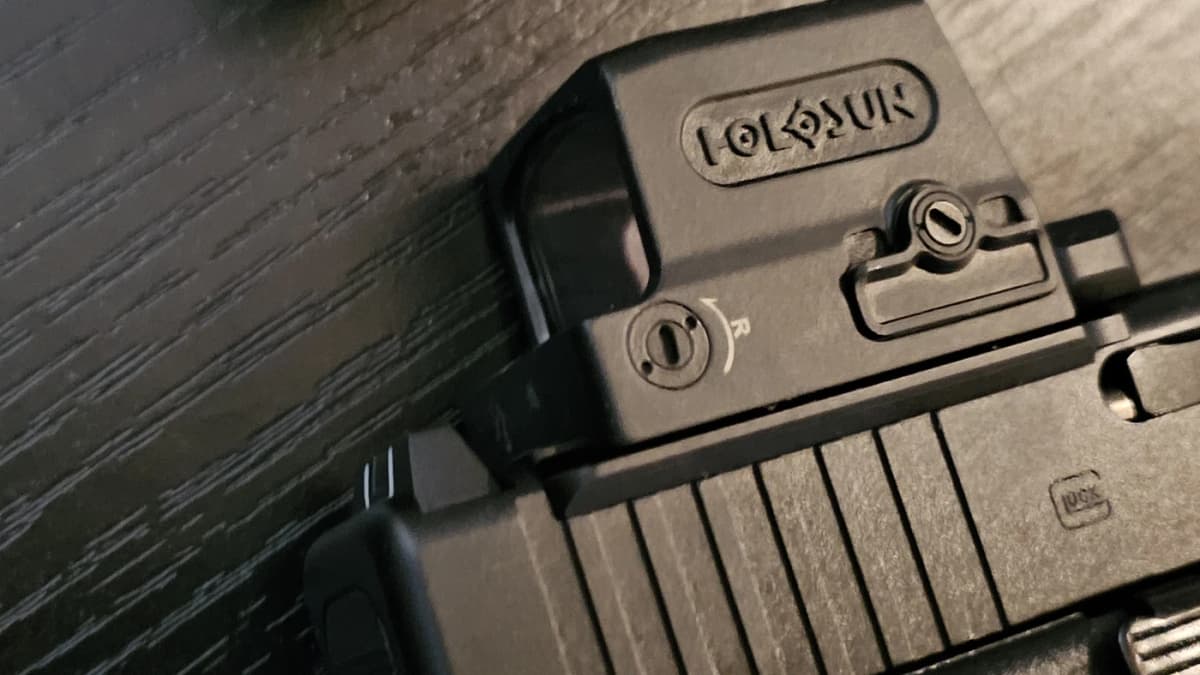
Both bolt straight to the standard Glock MOS cut, both sit low enough for factory irons, and the similarities stop there. The Osight seals its diode behind glass and feeds from a replaceable CR1632 in a side tray. The Holosun leaves the emitter channel open and runs a sealed internal battery topped up by a solar panel. Those are the two failure modes carry shooters actually argue about, an emitter that fouls and a battery you cannot get to, and each optic fixes one while accepting the other.
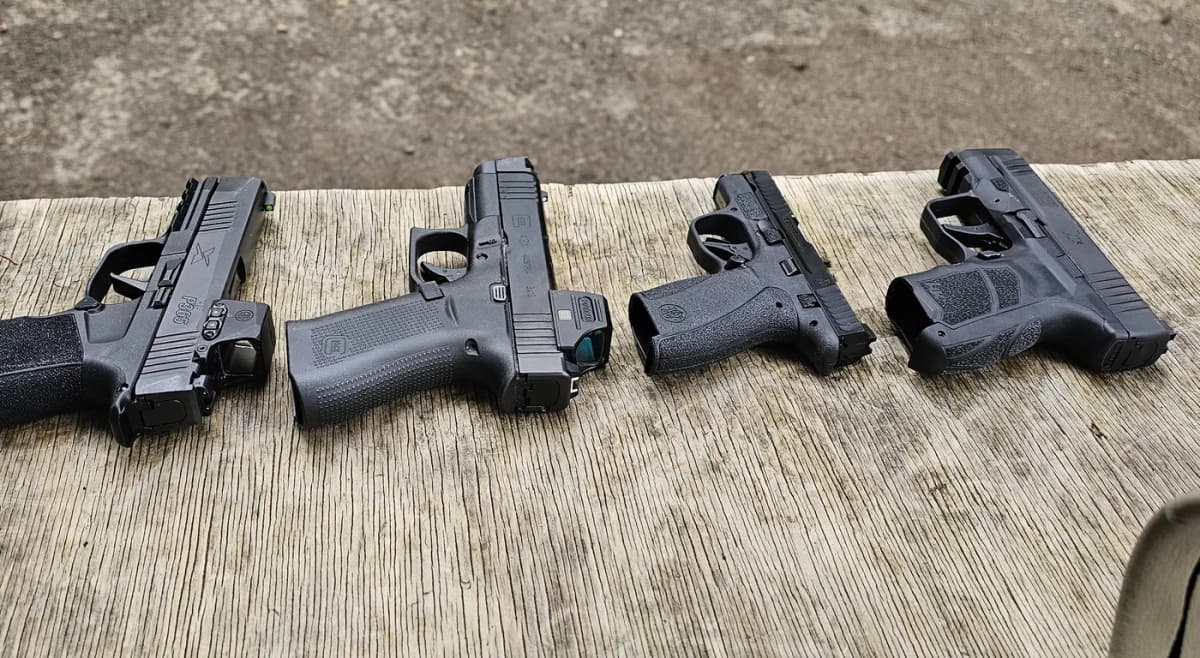
So the pick sorts itself. A sealed emitter and a battery you can swap at the bench favor the Osight. The smaller housing, the solar backup, and Holosun's much longer field record favor the SCS-MOS. Shooters willing to run a plate have a far wider field to choose from; the enclosed-emitter pistol red dot guide ranks it.
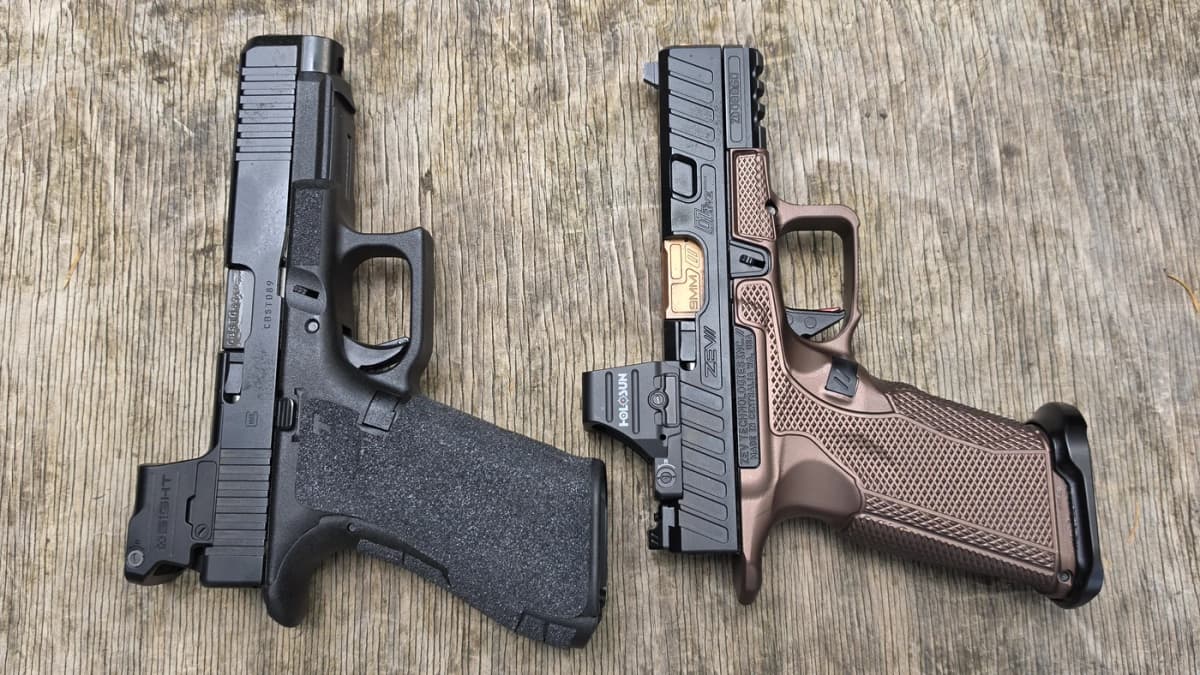
Osight SE MOS and Holosun SCS-MOS Side by Side
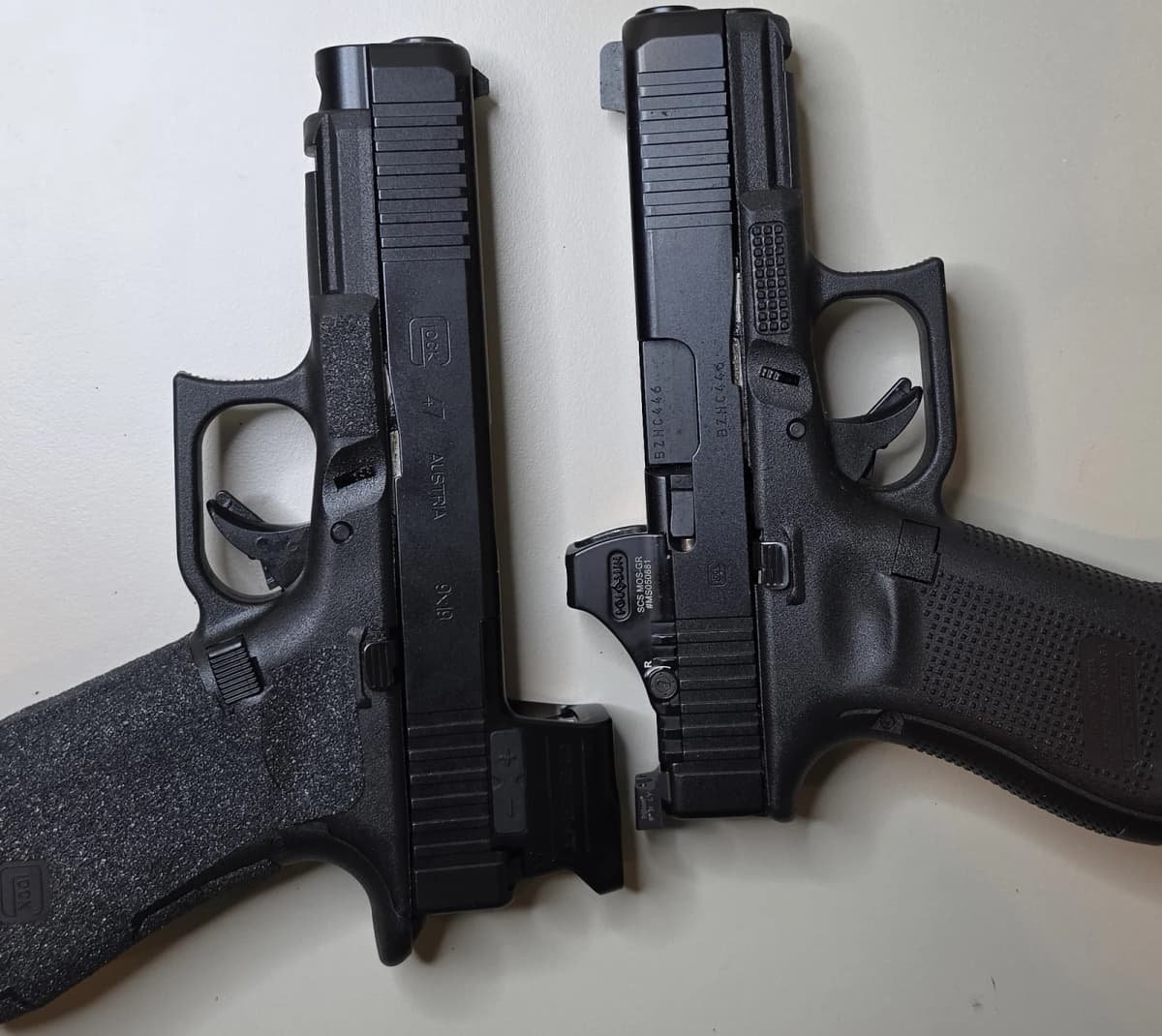
Both optics direct-mount to the standard MOS cut. The Osight encloses the emitter while the Holosun leaves the channel open.
Holosun SCS-MOS
The smaller solar-supported direct-mount Glock MOS alternative
Solar-powered open Glock MOS direct-mount optic; no plate required
- +Direct mount eliminates Glock MOS plate height and zero-shift issues
- +Solar Charging Sight removes battery management entirely
- +Direct-mount open body sits lower than plate-mounted optics
- −Glock MOS only; does not fit any other pistol or G43X/G48 MOS
- −Internal rechargeable battery is not user-serviceable
- −Smaller 0.58 x 0.77 inch window than the SCS Carry or 507C
Affiliate links (?)
Controls and the Side Battery Tray
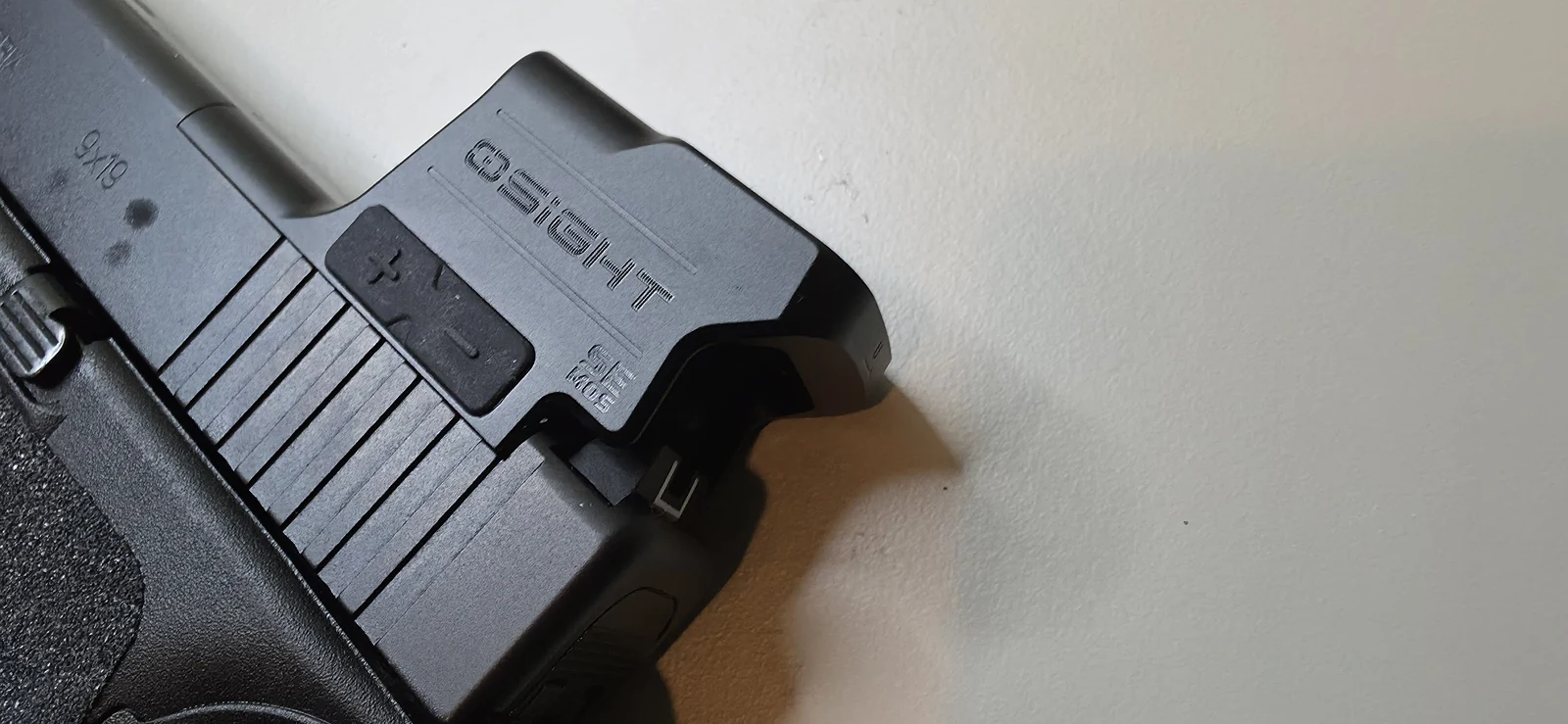
Everything lives on two recessed side buttons: plus and minus for brightness, hold to cycle dot, circle, and circle-dot. Motion wakes the sight, three minutes of stillness puts it in standby, and it wakes back to whatever brightness you left it on. None of it needs the manual after the first five minutes.
The side battery tray is the quiet win here. Because the CR1632 loads from the side, a battery change never touches the mounting screws, which means it never costs a trip to the range to confirm zero. Osight rates the 2 MOA dot at 140,000 hours on brightness mode 3 and flashes the reticle in a repeating triple pattern once the cell drops below 2.2 volts. Those are manufacturer numbers; change the battery on a calendar anyway.
Osight SE MOS Specifications
Osight SE MOS Specifications
| Footprint | Glock MOS, direct mount |
| Emitter | Enclosed, top-mounted diode |
| Reticle | 2 MOA dot and 32 MOA circle |
| Reticle Color | Red, 650 nm |
| Magnification | 1x |
| Window | 0.83 x 0.55 in / 21 x 14 mm |
| Adjustment | 1 MOA per click |
| Windage and Elevation | Plus or minus 35 MOA |
| Power | CR1632, side-loading tray |
| Battery Rating | 140,000 h, dot only, mode 3 |
| Brightness | 8 daylight, 2 night-vision settings |
| Housing | CNC 7075-T6 aluminum |
| Water Rating | IPX7 |
| Dimensions | 2.44 x 1.02 x 1.10 in |
| Weight | 1.59 oz / 45 g |
| Mounting Hardware | 2 x M3 screws |
| Catalog Price | $249.99 |
What the Next Range Test Still Needs to Answer
A first session answers the basic function question and nothing else. What is left is time: whether the direct mount keeps its zero across more ammunition and separate range days, whether the lens sealing shrugs off solvents and weather, how the rated battery life translates on a gun that gets carried, and how the housing wears against kydex. Logging the starting zero and the cumulative round count turns those questions into a measured point-of-impact shift instead of an impression, on this optic or any other.
Until that data exists, the SE MOS is a range and general-use optic with a strong opening argument. A pistol whose optic cannot be an experiment still belongs behind a dot with years of documented service.
Frequently Asked Questions
▶Is Osight SE shake awake?
▶Does Osight SE fit Glock 19?
▶How much does the Osight cost?
▶Is Osight a Chinese company?
▶Is the Osight SE reliable?
▶Are there any problems with the Osight SE?
Bottom Line
After 200 clean rounds on a Glock 47 with zero held, the SE MOS earns a recommendation for range and general-use MOS guns. The duty verdict waits on round count.
Every claim that sells this optic survived contact with the Glock 47. It mounted with no plate, the factory irons stayed visible, the controls made sense without the manual, and the battery tray opens without touching the mount. Two hundred rounds went by without a flicker or a shifted zero. At $249.99, that buys a sealed direct-mount alternative to the open-emitter SCS-MOS.
The enclosed emitter, low deck height, and swappable battery make the case for the Osight. The smaller housing, solar assist, and longer field record make the case for the Holosun at $349.99. And if footprint flexibility matters more than either direct-mount design, work from the pistol red dot guide and pick the plate deliberately.