Key Takeaways
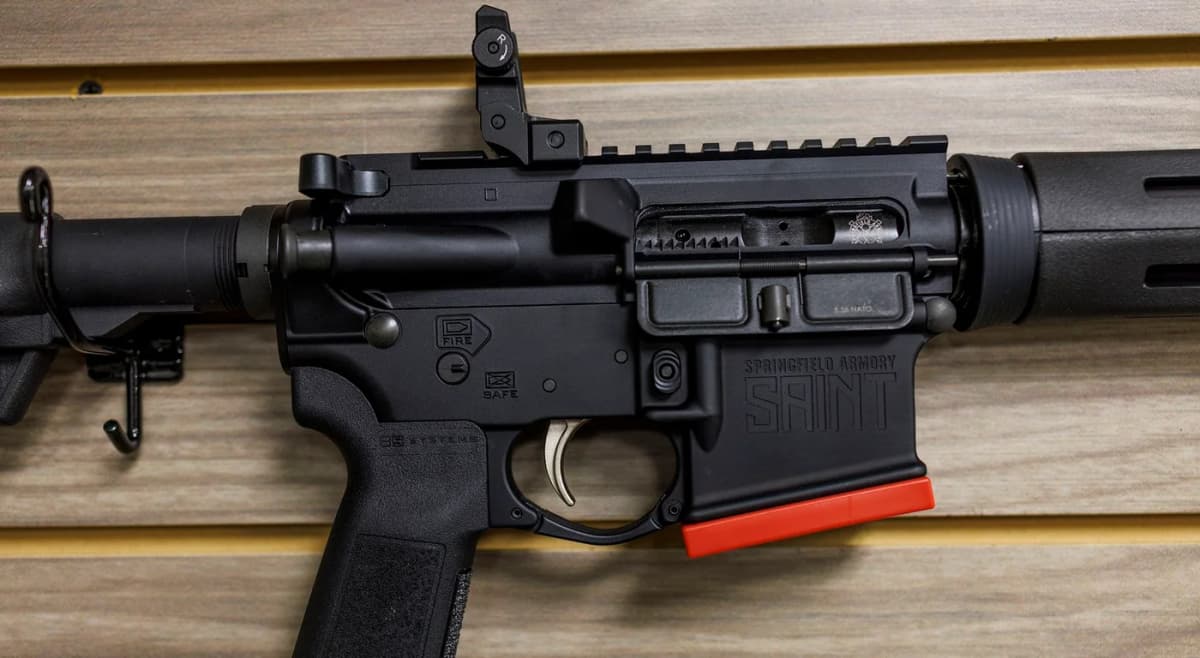
- →Certiorari Granted: The Supreme Court agreed on June 30, 2026 to hear consolidated challenges to AR-15 bans in Cook County, Illinois and Connecticut.
- →The Question: Whether the Second and Fourteenth Amendments guarantee the right to possess AR-15 platform and similar semi-automatic rifles.
- →Timeline: Oral arguments in the fall 2026 term. A ruling is expected by June 2027.
- →What Is at Stake: Assault weapons bans in roughly a dozen states covering California, Connecticut, Illinois, Maryland, Massachusetts, New Jersey, New York, and more.
- →Current Law Unchanged: The cert grant does not alter any existing state ban. AR-15s remain legal to purchase in states without bans; state bans remain in effect in states that have them, pending the ruling.
What Happened on June 30
On the final day of its October 2025 term, the Supreme Court released an order list that included certiorari grants in Viramontes v. County of Cook and Grant v. Higgins. The court consolidated the two cases and will hear them as one. Both cases ask the same question: whether banning the AR-15 and similar semi-automatic rifles violates the Second and Fourteenth Amendments. Lower courts had upheld both bans, the 7th Circuit in Cook County and the 2nd Circuit in Connecticut, and the plaintiffs petitioned for Supreme Court review.
The grant was widely expected. In 2025, after the court declined to hear a challenge to Maryland's assault weapons ban, Justice Brett Kavanaugh wrote separately that the court had a “strong argument” for eventually deciding the AR-15 question and that it “should and presumably will address the AR-15 issue” in a future term. Justices Thomas, Alito, and Gorsuch had previously said they would have taken the Maryland case. With four votes already signaled and Kavanaugh now effectively a fifth, the grant in Viramontes is the expected result of years of lower-court litigation filtering up.
The Two Cases: Cook County and Connecticut
Viramontes v. County of Cook challenges Cook County's assault weapons ordinance, first enacted in 1993. The ordinance lists 125 specific prohibited rifles including the AR-15 and AK-47, bans any semi-automatic rifle that accepts a detachable magazine and has certain features (pistol grip, folding stock, grenade launcher mount, flash suppressor, or barrel shroud), and prohibits magazines holding more than 10 rounds. Violation is a criminal offense with up to six months imprisonment and a minimum $5,000 fine. The plaintiffs, Cook County residents Cutberto Viramontes and Christopher Khaya along with the Firearms Policy Coalition and Second Amendment Foundation, filed suit in August 2021 arguing the ban violates the Second Amendment. The 7th Circuit upheld the ban.
Grant v. Higgins challenges Connecticut's statewide assault weapons and large-capacity magazine ban. The Second Amendment Foundation and Connecticut Citizens Defense League are the organizational plaintiffs. The 2nd Circuit upheld the ban, finding that assault weapons may be constitutionally protected under some circumstances but that Connecticut's law fell within a historical tradition of regulating “dangerous and unusual” weapons. The court consolidated the two cases because both turn on the same constitutional question and both circuits have upheld the bans, creating a factual backdrop without a circuit split but with uniform lower-court outcomes the Supreme Court can now review directly.
The Legal Framework: Heller, Bruen, and “Common Use”
The constitutional standard the Court will apply comes from two of its own prior decisions. In District of Columbia v. Heller (2008), the Court held the Second Amendment protects firearms in “common use at the time” for lawful purposes. Handguns passed that test because tens of millions of Americans own them for self-defense. Semi-automatic rifles are even more common. The newer 2026 National Firearms Survey estimates 40 million AR-15-type rifles in civilian hands and 26.4 million adults who own an AR-15 or another similarly styled semi-automatic rifle. If the common-use test applies equally to rifles, the bans almost certainly fall.
In New York State Rifle & Pistol Ass'n v. Bruen (2022), the Court replaced the two-step interest-balancing test lower courts had used with a text-and-history standard: a gun regulation is constitutional only if the government can show it is consistent with the historical tradition of firearms regulation in America. Modern assault weapons bans have no direct historical analog, which is the core of the plaintiffs' argument. The governments defending the bans counter that the historical tradition of regulating particularly dangerous weapons provides sufficient grounding, and that AR-15s, with their military lineage and use in mass shootings, fall into the same category as weapons historically reserved for organized military use.
The 7th Circuit upheld the Cook County ban on the theory that AR-15s are closer to military weapons than to arms protected for civilian self-defense. The 2nd Circuit took a slightly different path, acknowledging AR-15s may be protected but holding that Connecticut's ban survived the Bruen test anyway. Both courts effectively read Heller and Bruen as permitting some category-based ban on semi-automatic rifles; the Supreme Court will say whether that reading is correct.
Which States Have Assault Weapons Bans
A ruling in Viramontes that the Second Amendment protects AR-15s would directly imperil bans in approximately a dozen states. States currently enforcing assault-weapons feature bans include California, Connecticut, Delaware, Hawaii, Illinois (statewide, separate from the Cook County ordinance), Maryland, Massachusetts, New Jersey, New York, Rhode Island, and Washington, plus the District of Columbia. Colorado's 2025 law restricts purchases and transfers of specified semi-automatic rifles rather than possession, and Oregon's Measure 114 remains enjoined and has never taken effect. New Jersey nearly dropped off that list: the Third Circuit's July 17, 2026 en banc ruling in ANJRPC v. Platkin struck down the state's assault-firearm definition and 10-round magazine cap, but the court stayed its own ruling on August 4 before the effective date arrived, so the New Jersey ban remains enforced while the state's cert petition, likely held for Viramontes and Grant, plays out. See our Third Circuit NJ ruling coverage for the underlying decision. Virginia passed a ban in spring 2026 but two state court judges issued preliminary injunctions blocking enforcement; the law is on hold pending appeal. For the full Virginia injunction story, see our Virginia AWB blocked coverage.
Gun owners in those states cannot currently buy covered semi-automatic rifles legally. A favorable Viramontes ruling would strike those bans and open the market. Owners in ban states watching the case closely should note that no ruling takes effect immediately on release: enforcement injunctions and state legislative responses follow a decision, and the practical window to buy changes based on how individual states respond. For a comparison of what configurations remain legal in various states under feature-based restrictions, the best AR-15 rifles guide covers which platforms accept featureless configurations and fixed-magazine conversions.
The day after certiorari was granted, the Justice Department filed its own federal lawsuits against Virginia's AR-15 sales ban and California's Glock sales ban, using the same Bruen framework Viramontes will apply but asking judges to act well before the Supreme Court rules. See our DOJ lawsuit coverage for what each complaint argues and the current enforcement status in both states.
The Court's Recent Second Amendment Record
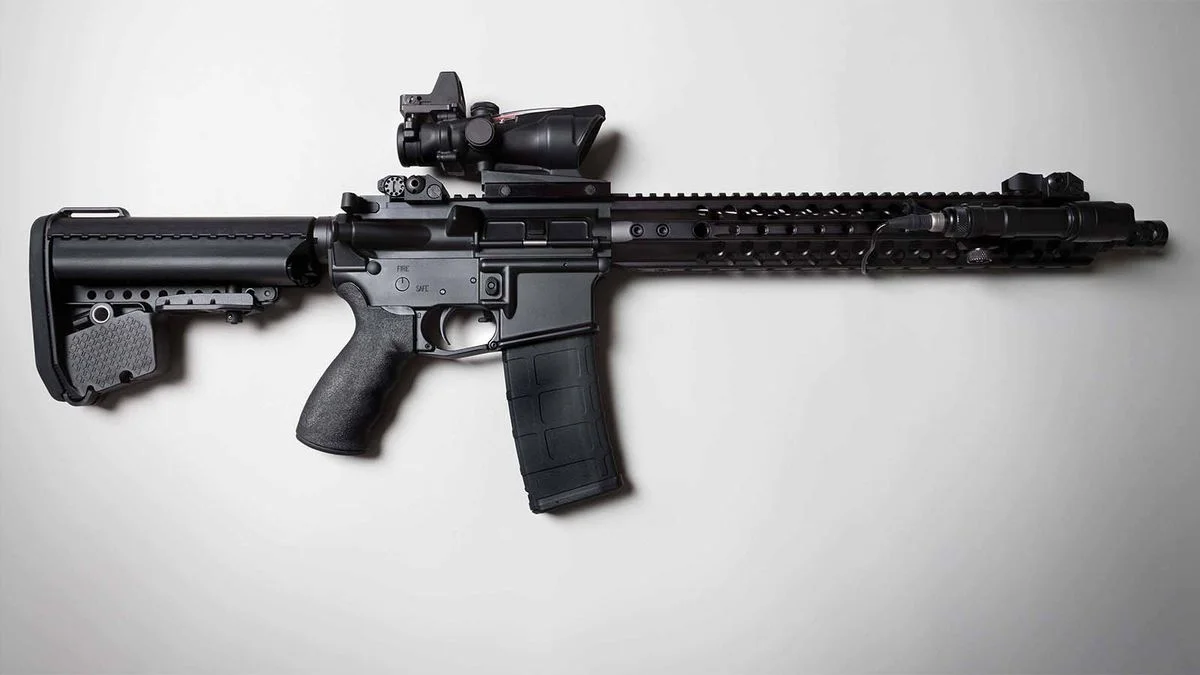
The current Court majority has ruled for gun rights in every major Second Amendment case since Bruen. In Bruen itself, the Court struck down New York's may-issue carry regime that had restricted concealed carry permits for over a century. In United States v. Rahimi (2024), the Court upheld disarming domestic violence restraining order subjects, but only after reaffirming Bruen's text-and-history test as the controlling standard. This term, the Court struck down Hawaii's “vampire rule” requiring carry permit holders to get express affirmative consent from property owners before entering, in Wolford v. Lopez. It also ruled in United States v. Hemani that marijuana use alone cannot automatically disqualify a person from possessing firearms under 18 U.S.C. 922(g)(3). Both decisions came down June 2026. For the Fifth Circuit's earlier ruling on suppressors under the Second Amendment, see our Fifth Circuit suppressors ruling coverage.
The consistent direction of the case law matters for Viramontes. The government defendants need to find a historical analog for banning commonly owned civilian arms, a bar the Court has repeatedly said must be grounded in actual historical evidence, not analogy or policy interest-balancing. The AR-15's commercial prevalence (outselling every other rifle category for years) and its use in home defense, competitive shooting, and hunting all feed the “common use” argument. The government's best counter is the military origins of the platform and the severity of the harm when these rifles are misused, an argument the Court has been skeptical of when applied to arms in widespread civilian ownership.
AR-15 Magazines to Stock Up On
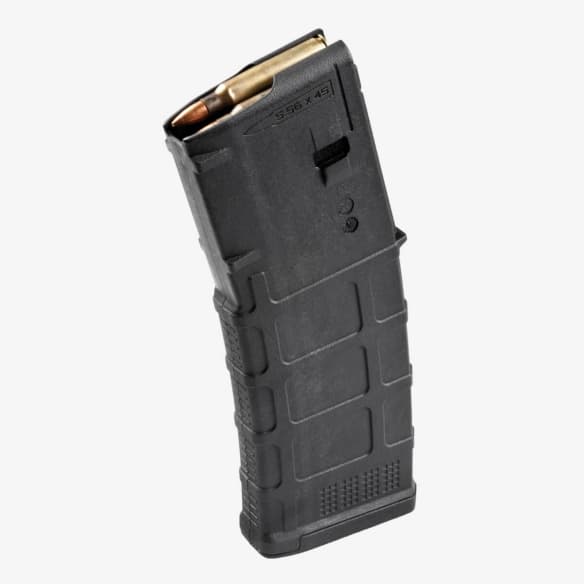
Magpul PMAG 30 AR/M4 GEN M3
- 30 rounds
- 5.56/.223

DURAMAG SPEED 30-Round Aluminum Magazine
- 30 rounds
- 6061-T6 aluminum
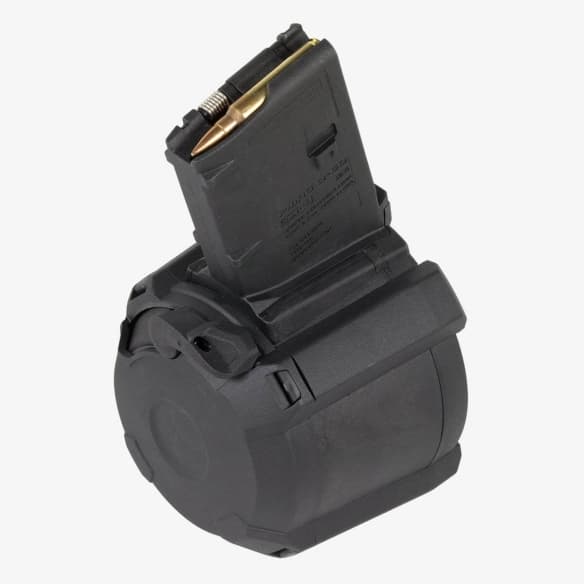
Magpul D-60 Drum Magazine
- 60 rounds
- Polymer construction

Daniel Defense 32-Round Magazine
- 32 rounds
- 5.56/.223

Daniel Defense 32-Round Magazine 12-Pack
- 12 magazines
- 32 rounds each

DURAMAG SS 6.5 Grendel 26-Round Magazine
- 26 rounds
- 6.5 Grendel
Affiliate links (?)
Timeline: What Happens Next
The October 2026 term begins October 5, 2026. The court schedules oral arguments from October through April, with opinions typically releasing through the end of June. Viramontes v. Cook County has not yet been scheduled for argument, but the case will be argued during the fall 2026 to spring 2027 window. A final opinion is expected before the term closes in June 2027. The case name in court filings is Viramontes v. County of Cook; it will also appear as Grant v. Higgins in references to the Connecticut side of the consolidated case.
Between now and oral arguments, both sides will brief the case. The plaintiffs' opening brief will argue that AR-15s are in common use for lawful purposes and that no historical tradition supports a categorical ban on the most popular civilian rifle in America. The government briefs will argue for a military-weapons exception or a “particularly dangerous” carve-out from Second Amendment protection. Amicus briefs from gun rights organizations, gun violence prevention groups, state attorneys general, and the federal government are certain to follow. The full briefing schedule will appear on the Supreme Court's docket once set.
What AR-15 Owners Should Know Right Now
Nothing about current law changed on June 30. AR-15s are legal to purchase in states without bans, with a standard NICS background check at your FFL. State bans remain in effect where they exist. The cert grant is the court agreeing to take the case, not a ruling in either direction.
Gun owners in states with current bans (California, Connecticut, Illinois, Maryland, Massachusetts, New Jersey, New York, and others) are in the same legal position as yesterday. Buying a banned firearm in those states is still a crime regardless of pending Supreme Court review. A ruling in your favor, if it comes in June 2027, will open the market at that point, not retroactively legalize past transactions during the litigation window.
Gun owners outside ban states who have been waiting on a purchase have no specific urgency created by the cert grant. The more practical consideration is whether your state legislature will move to pass a ban during the year before a ruling, as Connecticut passed before federal review and Virginia passed in 2026. The best AR-15 for home defense guide covers the configurations and platforms that remain the most defensible under both current law and plausible regulatory scenarios. Use the rifle builder to configure a compliant build for your state.
Track the Viramontes Docket
We'll publish briefs, oral argument dates, and analysis as the case moves toward a June 2027 ruling. Subscribe for updates on every major Second Amendment case, state-level ban litigation, and product releases affected by the legal landscape.
Frequently Asked Questions
▶What did the Supreme Court decide on June 30, 2026?
▶Which states have assault weapons bans that could be affected?
▶What is the legal question in Viramontes v. Cook County?
▶What is Viramontes v. Cook County about?
▶What is Grant v. Higgins about?
▶Can I still buy an AR-15 right now?
▶How has the Supreme Court ruled on Second Amendment cases recently?
▶When will the Supreme Court rule on AR-15 bans?
Bottom Line
The Supreme Court's June 30, 2026 cert grant in Viramontes v. Cook County is the most significant Second Amendment development since Bruen in 2022. For the first time, the Court will directly answer whether states can ban the AR-15 and similar semi-automatic rifles. The 6-3 conservative majority that decided Bruen, Rahimi, Wolford, and Hemani will hear the case. Every circuit to consider the question has upheld state assault weapons bans, and the Supreme Court is now positioned to either affirm or reverse that consensus.
The practical stakes: roughly a dozen states have active bans covering AR-15s, AK-pattern rifles, and semi-automatic pistols with certain features. A ruling that the Second Amendment protects these arms would invalidate all of them. A ruling upholding the bans would leave the existing patchwork in place and likely accelerate legislative action in states that have not yet passed restrictions. Oral arguments begin in the fall 2026 term. A decision lands by June 2027.
For current state-by-state legal status on related issues, see our binary trigger legal states guide, which follows the same state-level pattern. For platform options that remain available regardless of how Viramontes resolves, the best AR-15 rifles guide covers the full range from budget builds to premium duty rifles.