Best .38 Special Ammo 2026: Snub, +P & Wadcutter Picks header image
Gear
August 26, 2026
Best .38 Special Ammo 2026: Snub, +P & Wadcutter Picks

.38 Special ammunition sorted by barrel length and pressure rating: 2-inch snubs, standard-pressure revolvers, +P-rated service guns, wadcutter carry, and range practice, with maker-published short-barrel velocity data.

BeginnerRevolverBuying Guide

Best .38 Special Ammo 2026: Snub, +P & Wadcutter Picks

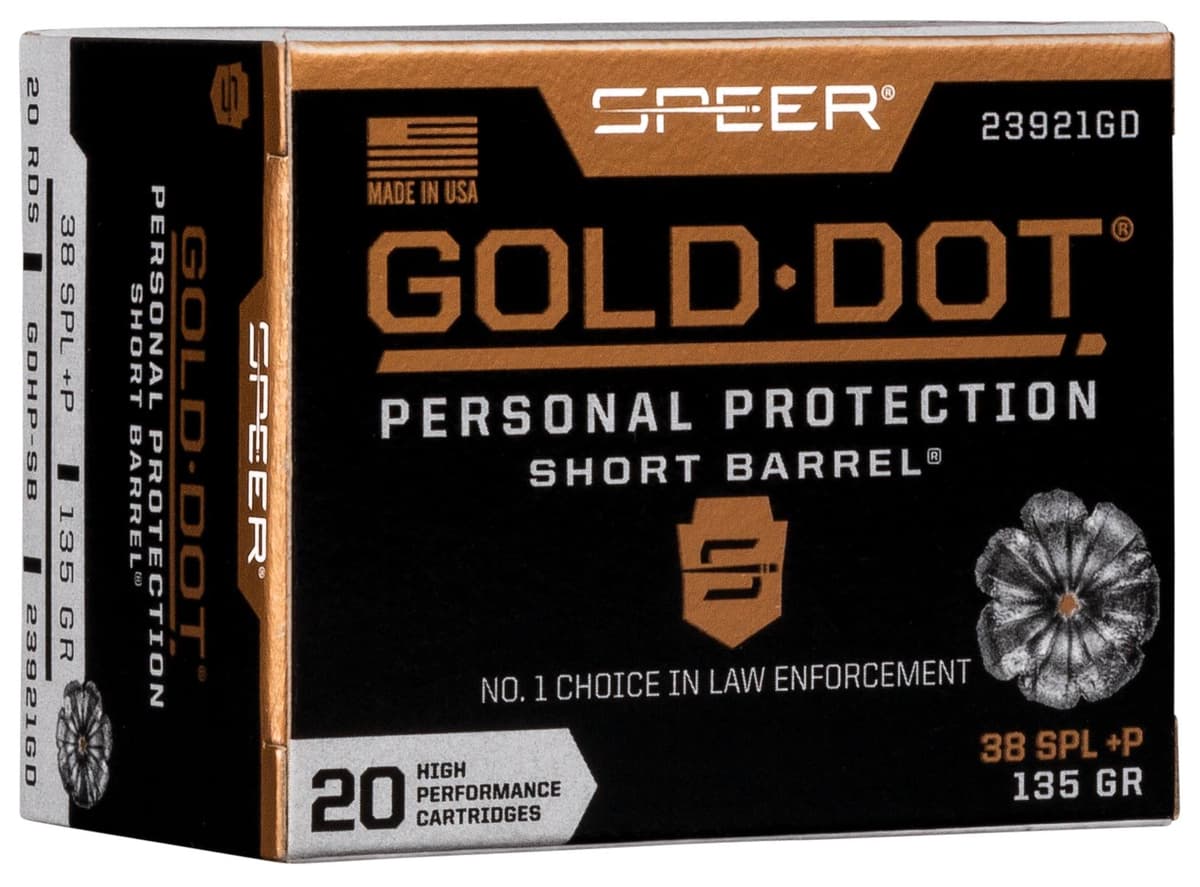
The best .38 Special ammo for a carry revolver rated for +P is Speer's 135gr Gold Dot Short Barrel, because Speer both designs it for barrels as short as 1.9 inches and rates it from a 2-inch vented test barrel instead of the 4-inch barrel most makers publish. It is not the only maker publishing short-barrel data: Buffalo Bore chronographs actual revolvers from 2 through 4 inches, and Federal publishes 1.875-inch revolver gelatin results for the Hydra-Shok Deep. If your revolver is not rated for +P, buy Hornady's standard-pressure 110gr Critical Defense. For practice, Magtech's 158gr lead round nose puts the classic service bullet weight downrange at the lowest listed velocity of any 158gr load here. This guide ranks sixteen current loads across the five jobs .38 Special is actually asked to do: snub-nose carry, standard-pressure carry, +P service use, wadcutter work, and volume practice. If you have not settled on the cartridge yet, our 9mm vs .38 Special comparison covers the platform tradeoff first.

By AB|Last reviewed August 2026

Key Takeaways

  • Best for a +P-rated snub: Speer's 135gr Gold Dot Short Barrel publishes 860 fps and 222 ft-lbs from a 2-inch vented test barrel, the only 2-inch vented test-barrel rating in this set, though Buffalo Bore chronographs real revolvers and Federal publishes 1.875-inch gelatin results.
  • Best standard-pressure pick: Hornady's 110gr Critical Defense (SKU 90310) lists 1,010 fps and 249 ft-lbs and needs no +P approval. Do not substitute the separate 90311 +P version.
  • Wadcutters are not recoil-free: Buffalo Bore Item 20D earns its place on 16-plus inches of independently tested bare gelatin penetration from a 2-inch revolver, not on a recoil claim nobody has measured.
  • Highest output: Buffalo Bore Item 20A, a 158gr +P LSWCHP, publishes 1,040 fps and 379 ft-lbs from a 2-inch revolver, the top of the .38 Special envelope.
  • Practice math: our recoil calculator estimates the standard-pressure 158gr load at about 2.26 ft-lbs of free recoil in a 2.2-pound steel revolver and 4.97 ft-lbs in a 1-pound alloy one, which is why light guns need light practice ammunition.

Best .38 Special Ammo 2026: Defensive Loads Ranked

The ranking is ordered by the job each load is built for: snub carry first, then standard-pressure carry, then +P service use, then the non-expanding wadcutter, then the heavy 158gr loads that need a 4-inch barrel to earn their velocity. Inside the defensive hollow points, loads whose makers publish their own short-barrel data rank ahead of loads advertised only from a 4-inch vented test barrel, because a 1.875- or 2-inch number is one you can actually use. What a published short-barrel figure does not tell you is whether the bullet opens. That is a function of the bullet, and of what it has to punch through first.

Ranks one through five are hollow points, split between two standard-pressure loads that run in any modern .38 Special and three +P loads that require maker approval for the exact gun. Rank six is the hard-cast defensive wadcutter, which trades expansion for penetration. Ranks seven and eight are the 158gr +P service loads built for 4-inch and 6-inch guns, where the extra barrel earns the heavier bullet its velocity.

Speer Gold Dot Short Barrel 38 Special +P 135gr
1

Speer Gold Dot Short Barrel 38 Special +P 135gr

Best Overall for a +P-Rated Snub-Nose

$47
Shop at Ammunition Depot
  • +Speer identifies the design for barrels as short as 1.9 inches
  • +Published 860 fps and 222 ft-lbs come from a 2-inch vented test barrel
  • +Bonded Gold Dot core resists jacket separation
  • Requires a revolver whose maker approves .38 Special +P
  • More recoil than the standard-pressure carry loads here
Bullet: 135gr GDHP-SBPressure: .38 Special +PVelocity: 860 fpsEnergy: 222 ft-lbs
2

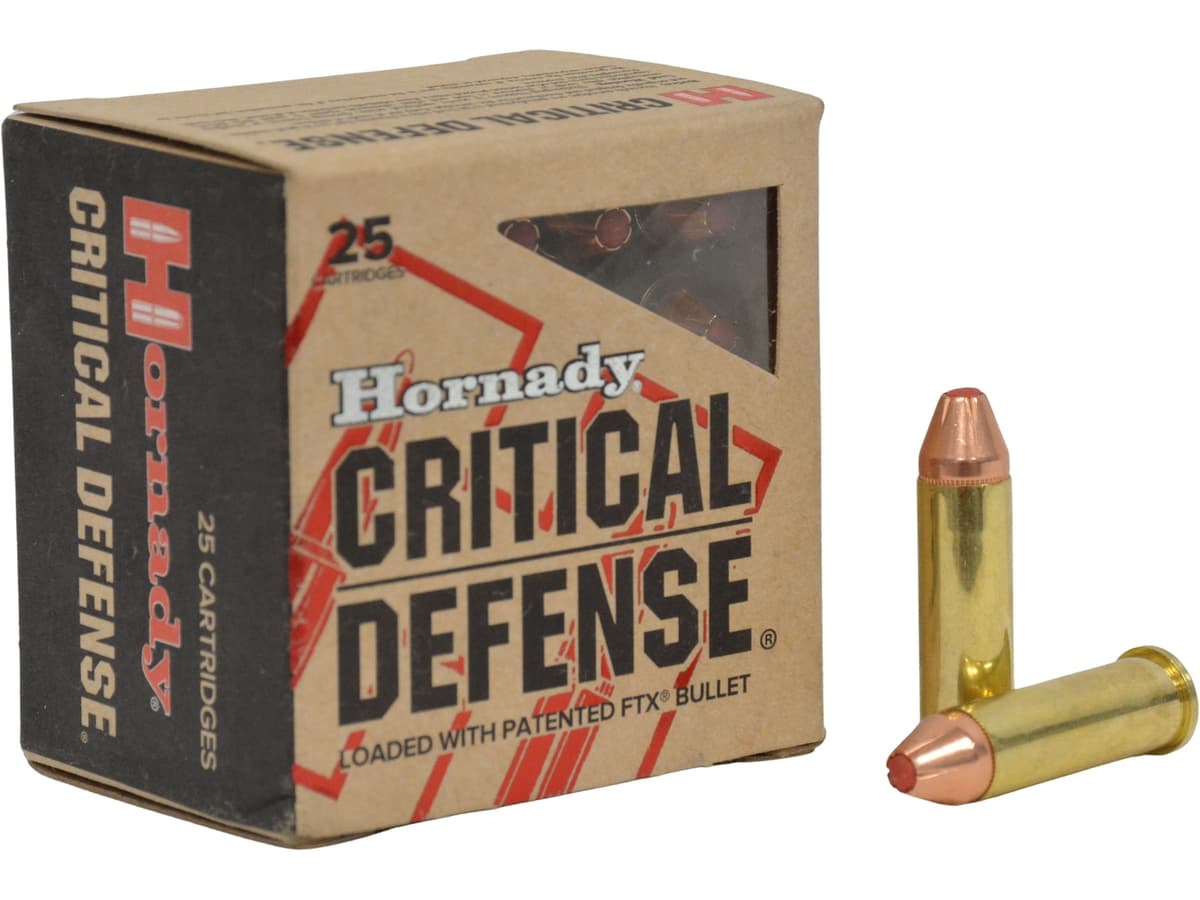
Hornady Critical Defense 38 Special 110gr FTX

Best Standard-Pressure Hollow Point

$40
Shop at Ammunition Depot
  • +Standard pressure runs in any modern .38 Special revolver
  • +Heavier bullet than Hornady's 90gr Critical Defense Lite
  • +FTX polymer tip fills the cavity so clothing cannot pack it
  • Published velocity comes from a 4-inch vented barrel, not a snub
  • Easy to confuse with the separate 90311 +P version
Bullet: 110gr FTXPressure: .38 SpecialVelocity: 1,010 fpsEnergy: 249 ft-lbs
3

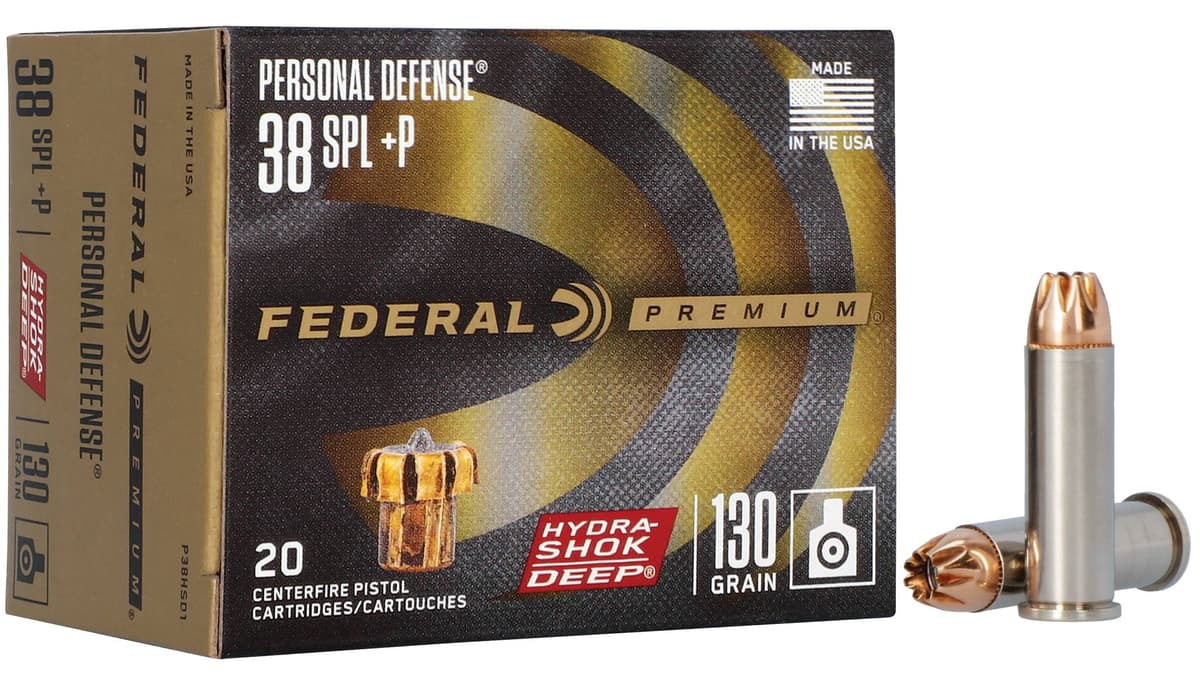
Federal Hydra-Shok Deep 38 Special +P 130gr JHP

Best Maker-Documented Short-Barrel +P Data

$40
Shop at Ammunition Depot
  • +Federal publishes gelatin results from a 1.875-inch revolver
  • +Current production, listed in Federal's 2026 catalog as P38HSD1
  • +130gr weight sits between the 120gr Punch and 135gr Gold Dot
  • Requires a revolver whose maker approves .38 Special +P
  • Headline velocity is still a 4-inch vented barrel number
Bullet: 130gr Hydra-Shok JHPPressure: .38 Special +PVelocity: 900 fpsEnergy: 234 ft-lbs
4

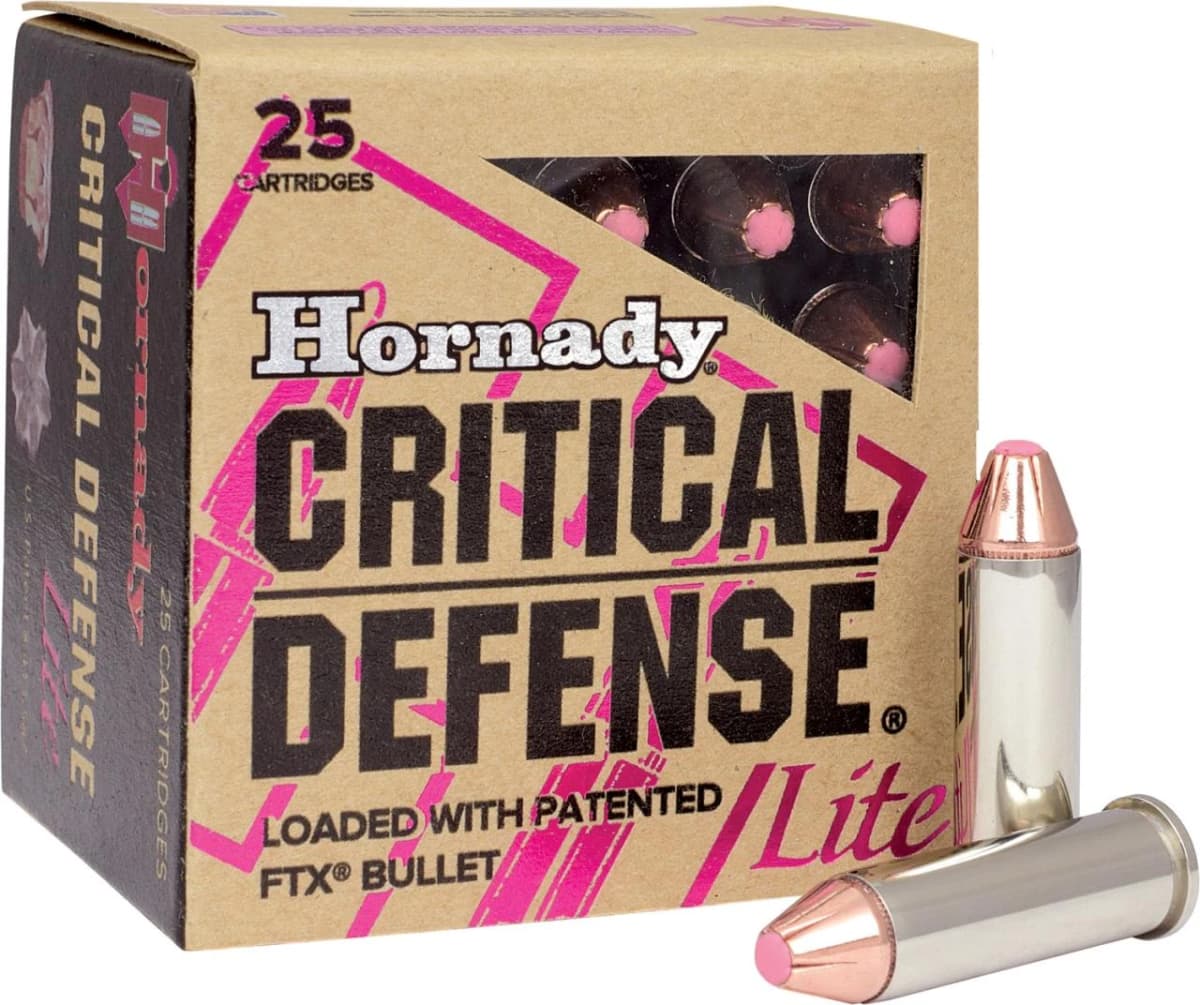
Hornady Critical Defense Lite 38 Special 90gr FTX

Best Light-Bullet Standard-Pressure Carry Load

$33
Shop at Ammunition Depot
  • +Standard pressure runs in any modern .38 Special revolver
  • +Lightest ejecta weight of the carry loads here, at 90 grains
  • +FTX tip fills the hollow cavity against clothing
  • Published 1,200 fps comes from a 4-inch barrel
  • Stopped at 11.84 inches in Lucky Gunner Labs' 2-inch-revolver gel test, under the 12-inch FBI floor
  • No measured-recoil dataset supports calling it the softest-shooting carry load
Bullet: 90gr FTXPressure: .38 SpecialVelocity: 1,200 fpsEnergy: 288 ft-lbs
5

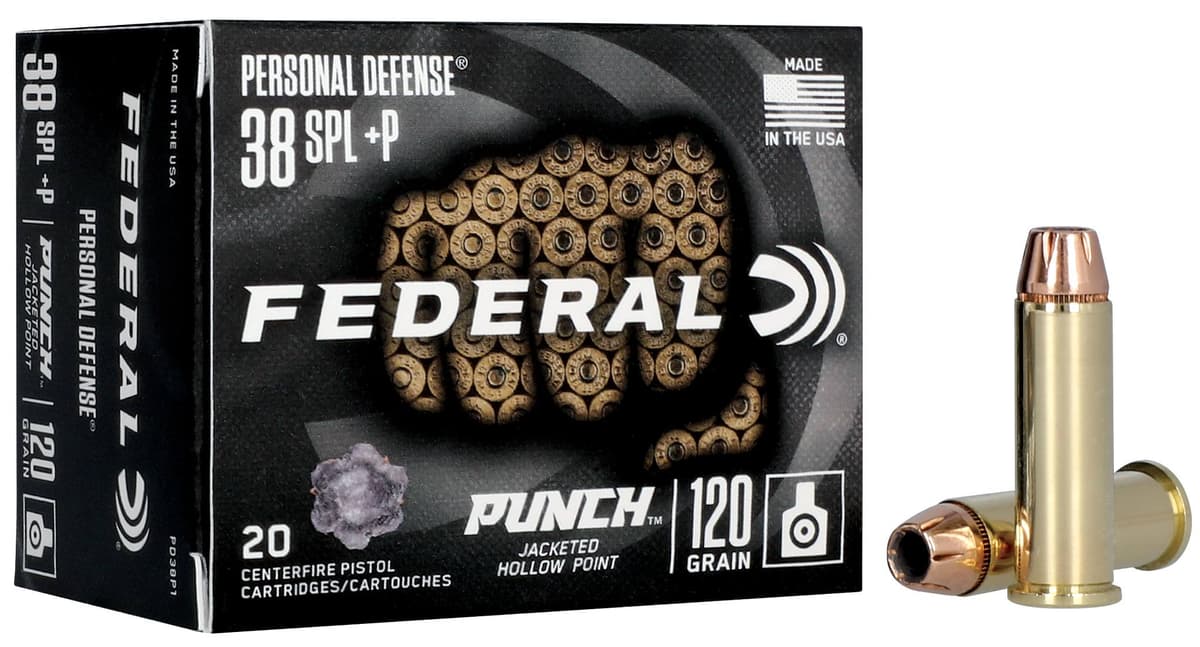
Federal Punch 38 Special +P 120gr JHP

Best Value +P Jacketed Hollow Point

$32
Shop at Ammunition Depot
  • +Sits at the value end of the premium +P hollow points
  • +Current exact PD38P1 product with a brass case
  • +1,000 fps and 266 ft-lbs published from a 4-inch vented barrel
  • Requires a revolver whose maker approves .38 Special +P
  • Published velocity comes from a 4-inch vented barrel
Bullet: 120gr JHPPressure: .38 Special +PVelocity: 1,000 fpsEnergy: 266 ft-lbs
6

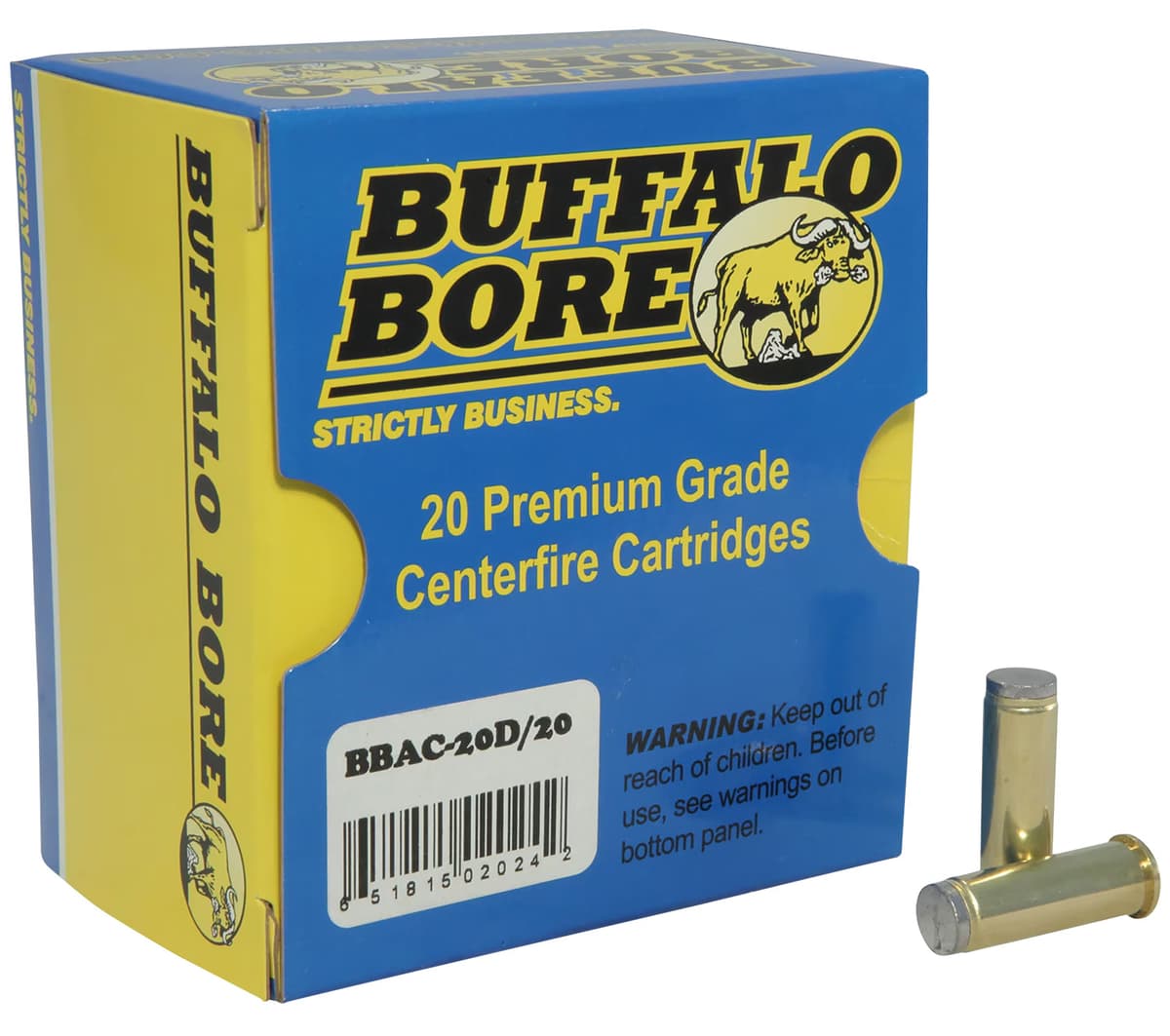
Buffalo Bore Standard Pressure Short Barrel 38 Special 150gr Hard Cast Wadcutter

Best Standard-Pressure Defensive Wadcutter

$31
Shop at KYGUNCO
  • +Standard pressure runs in any modern .38 Special revolver
  • +Buffalo Bore publishes 868 fps from a 2-inch revolver up to 1,005 fps from a 4-inch
  • +Independent 2021 bare-gelatin testing from a 2-inch revolver recorded 16+ inches
  • Hard-cast bullet is designed not to expand
  • No measured-recoil source supports the popular no-recoil claim
  • Sold in a 20-round carry pack, so it is priced for the cylinder rather than for range volume
Bullet: 150gr hard-cast wadcutterPressure: .38 SpecialVelocity: 850 fps advertisedEnergy: 241 ft-lbs
7

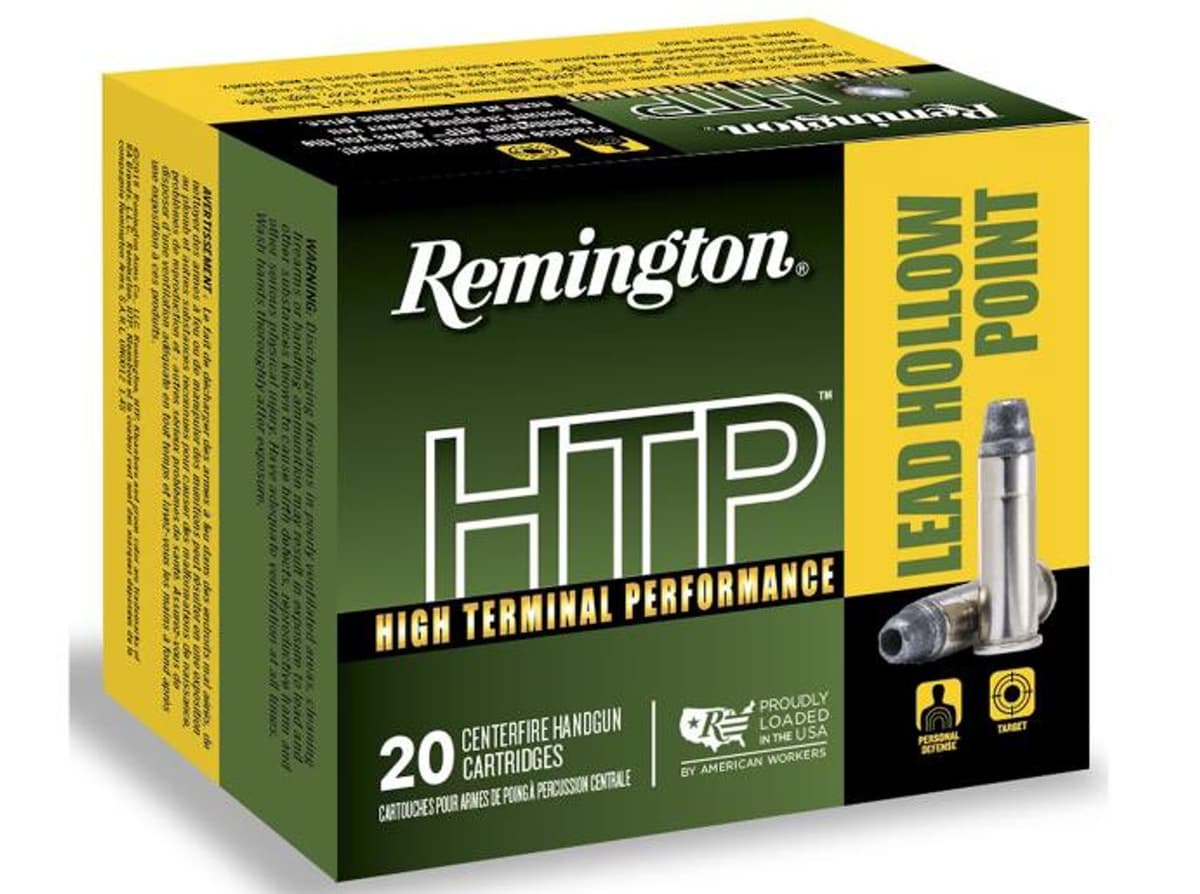
Remington HTP 38 Special +P 158gr Lead Hollow Point

Best Classic 158gr +P Service-Revolver Value

$20
Shop at MidwayUSA
  • +Current-production version of the classic 158gr +P load profile
  • +Soft lead hollow point deforms at ordinary .38 Special velocities
  • +Sits at the value end of the defensive tier
  • Requires a revolver whose maker approves .38 Special +P
  • Published 890 fps uses a 4-inch test barrel
  • Exposed lead bullet fouls more than a jacketed load
Bullet: 158gr lead hollow pointPressure: .38 Special +PVelocity: 890 fpsEnergy: Not published
8

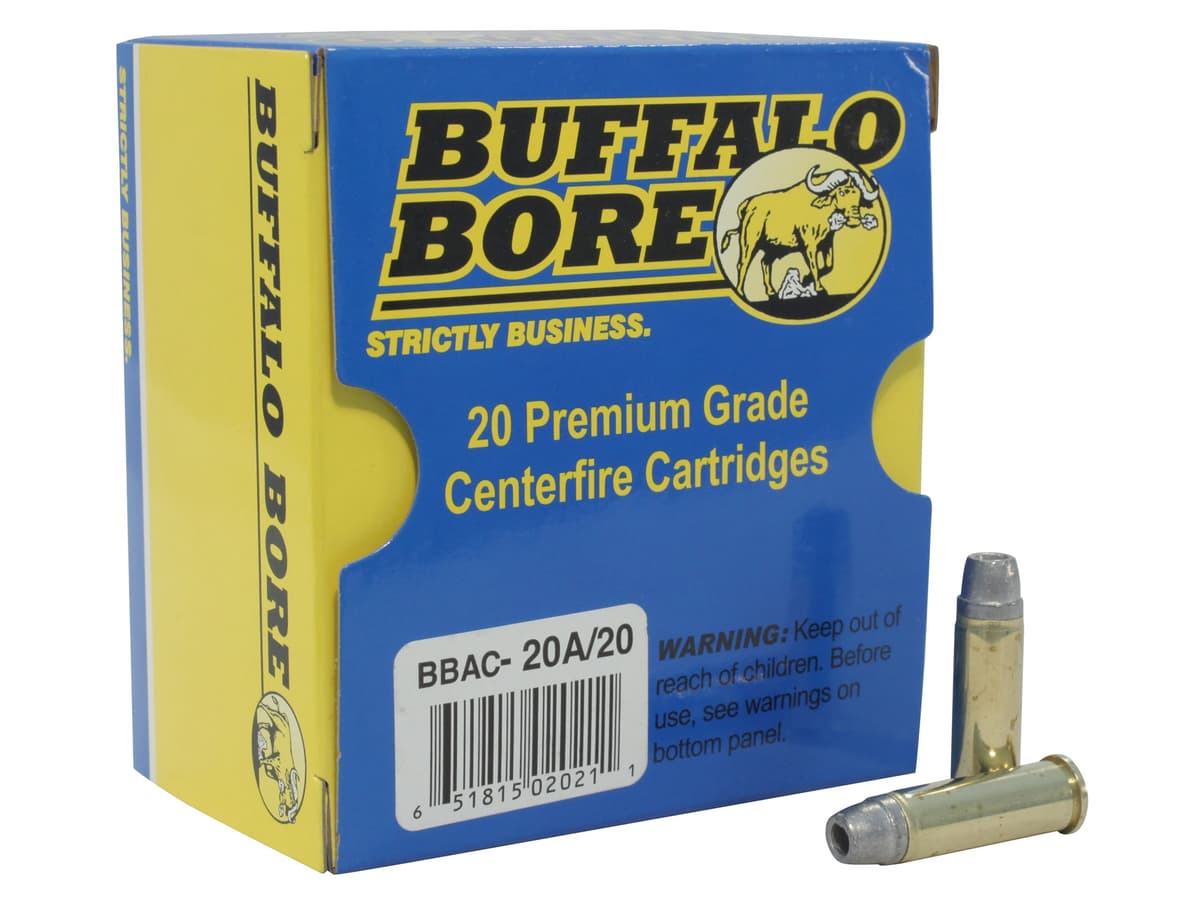
Buffalo Bore Heavy 38 Special +P 158gr LSWCHP-GC

Best High-Output 158gr +P Service Load

$34
Shop at MidwayUSA
  • +Highest published energy of any load in this guide, at 379 ft-lbs from a 2-inch revolver
  • +Buffalo Bore publishes velocities from 2-inch through 4-inch revolvers
  • +Gas check keeps the soft-cast bullet from leading the bore at speed
  • Requires a revolver whose maker approves .38 Special +P
  • Stout recoil makes it a poor general practice load
  • Premium cost per round
Bullet: 158gr soft-cast LSWCHP-GCPressure: .38 Special +PVelocity: 1,000 fps advertisedEnergy: 351 ft-lbs advertised, 379 from a 2-inch revolver

Rankings use manufacturer-published velocity, energy, and test-barrel data plus cited independent gel testing. Velocity from your revolver will differ from any published figure. Function-test and pattern any carry load in the exact gun before trusting it.

Affiliate links - purchases support this site at no extra cost to you. (?)

Best .38 Special Ammo for a 2-Inch Snub-Nose Revolver

The best .38 Special ammo for a snubbie is Speer's 135gr Gold Dot Short Barrel in a +P-rated gun, and Hornady's 110gr Critical Defense in one that is not. Both answer the same problem: a 1.875- or 2-inch barrel gives the powder less time to work, and a bullet designed to open at 4-inch velocity may open only partly, or not at all, at what a snub actually produces.

Read the test barrel before you read the velocity. Speer rates the Gold Dot Short Barrel from a 2-inch vented test barrel and says the design works in barrels down to 1.9 inches, so its 860 fps is a number a snub owner can use directly. Federal's 130gr Hydra-Shok Deep publishes 900 fps from a 4-inch vented barrel, but Federal separately publishes gelatin results from a 1.875-inch revolver, which is the next-best form of evidence. Hornady's 90310 and 90300 loads and Federal's 120gr Punch all publish 4-inch numbers only, so treat their headline velocity as an upper bound rather than what your gun will make.

Then hold that evidence loosely, because a short-barrel rating is a velocity claim, not an expansion guarantee. Lucky Gunner Labs fired all of these through four layers of fabric into Clear Ballistics gel from a 2-inch Kimber K6s and got 13.64 inches of penetration and 0.444 inch of expansion from the Speer at 821 fps, and 14.12 inches and 0.438 inch from Hornady's standard-pressure 110gr at 858 fps. The 90gr Critical Defense Lite stopped at 11.84 inches, under the 12-inch FBI floor. Two things follow. The +P short-barrel load and the standard-pressure load land in the same place from a snub, so a revolver without +P approval is not giving much up. And both expanded to about 0.44 inch against a common 0.54-inch benchmark for this caliber, so buy .38 Special for penetration you can count on rather than expansion you cannot.

Maker-Published 2-Inch Revolver Velocities
Speer 135gr +P
860fps2-inch vented test barrel
Buffalo Bore 150gr WC
868fps2-inch S&W Model 60
Buffalo Bore 158gr +P
1,040fps2-inch S&W Model 60

Bullet weight also moves point of impact in a gun with fixed sights, which most snubs have. A 90gr Critical Defense Lite and a 158gr service load will not hit the same place at 15 yards from the same revolver, and no amount of ammunition selection fixes a load that shoots a foot low. Buy a box, shoot it at a target at the distance you actually train, and keep the one that lands where the sights point. Still choosing the gun itself? Our concealed carry revolver ranking covers the hosts these loads go into.

Standard Pressure vs +P: Check Your Exact Revolver

Check the maker's documentation for your exact model before buying +P, and do not infer approval from frame material, age, or model family. Ruger's current spec sheets label the LCR 5401 and the LCRx 5430 as 38 Spl +P, both with 1.87-inch barrels. Smith and Wesson's spec sheet for the Model 638 (SKU 163070) states the gun is rated for continuous +P use. Taurus designates the Model 856 for +P in the current manual and adds that +P use can affect service life, which is a different statement from a blanket approval. A revolver that says only ".38 Special" on the maker's page has not been approved for +P by that page.

What +P buys you is roughly 10 to 20 percent more velocity and the expansion margin that comes with it. What it costs you is recoil, and recoil in a .38 Special revolver is mostly a function of how much the gun weighs. Feed our recoil calculator the standard-pressure 158gr .38 Special preset and it estimates 2.26 ft-lbs of free recoil energy in a 2.2-pound steel revolver and 4.97 ft-lbs in a 1-pound alloy one, more than double, from an identical cartridge. That is the real reason a lightweight carry gun is unpleasant, and why the same shooter can be accurate with a heavy service revolver and hopeless with an airweight (run your own gun weight).

The practical rule: if the revolver is +P rated, carry a +P load and practice mostly with standard-pressure ammunition, using a box or two of +P before you trust it. If the revolver is not +P rated, the standard-pressure hollow points here are not a consolation prize. Hornady's 110gr Critical Defense and the Buffalo Bore 150gr hard-cast wadcutter both do real work at standard pressure.

Are .38 Wadcutters Good for Self-Defense?

Yes, for the specific job of penetrating deeply from a barrel too short to drive expansion. An independent 2021 bare Clear Ballistics test fired from a 2-inch revolver recorded Buffalo Bore Item 20D at 16 or more inches with no expansion, which is the entire case for the shape: it does not need velocity to work because it was never going to open. Buy one if your revolver is short, standard-pressure only, and you would rather have depth than an expanded wound channel.

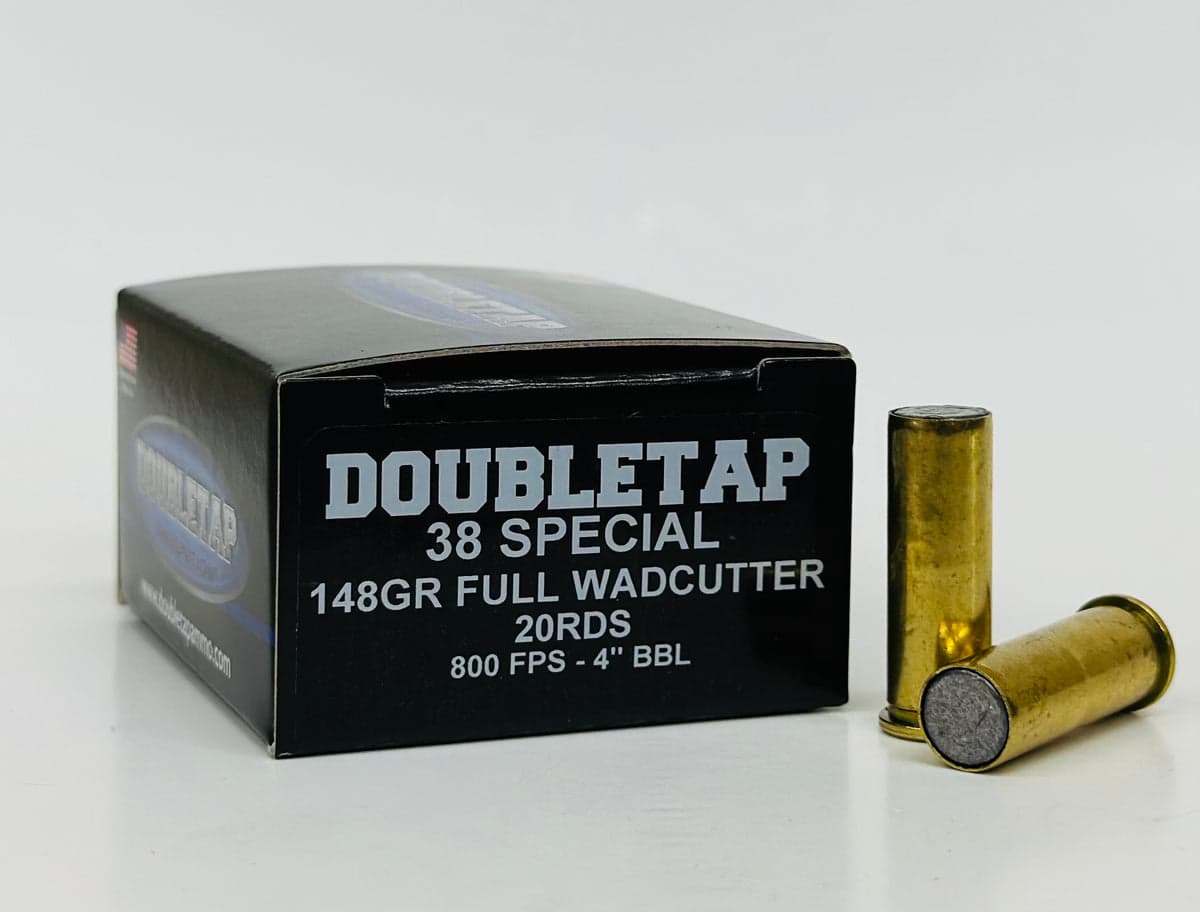
Three wadcutters run in this guide and the line that matters between them is bullet hardness, not price or box count. Buffalo Bore Item 20D and DoubleTap's 148gr Full Wadcutter Match are both hard cast, and DoubleTap states its 21 BHN bullet will not deform on impact. That is the property the defensive argument rests on. Federal's Gold Medal GM38A is a plain lead wadcutter in Federal's match line, and Federal publishes no hardness figure for it. Only Item 20D has been through a published penetration test, so it is the one to carry; the DoubleTap shares its bullet shape and stated hardness but not its test record, and the GM38A shares neither.

Within the two hard-cast loads, the split is packaging and marketing. Item 20D is the 20-round defensive-marketed version at 150 grains, built around short revolvers, and it is the one with the independent gel record. The DoubleTap is the 50-round match-grade version of the same shape, which makes it the load to shoot when you want to practice the profile rather than carry it.

Wadcutter Spec Sheet

DoubleTap 148gr Match

Buffalo Bore 20D

Bullet
148gr hard-cast WC
150gr hard-cast WC
Pressure
Standard
Standard
2-inch velocity
740 fps
868 fps (advantage)
4-inch velocity
800 fps
1,005 fps (advantage)
Maker role
Match target
Short-barrel defense
Box count
50 rounds (advantage)
20 rounds
Same non-expanding bullet shape, two different jobs. Take the DoubleTap to shoot the profile in volume and the 20D when a deep penetrator is the carry plan.

A full-profile wadcutter cuts a clean full-caliber hole instead of tearing a ragged one, which is why bullseye shooters have used the shape for a century and why it scores unambiguously on paper. The defensive argument is different: a hard-cast wadcutter is built not to expand at all, so it trades the expanded wound channel for depth and consistency in a barrel too short to drive expansion reliably. Neither hard-cast load expands, and neither is trying to.

Skip the folklore about wadcutters having no recoil. Neither maker publishes a measured recoil figure for these loads, and a 150gr bullet at 850 fps is not a light-recoiling cartridge in a lightweight revolver. Buy 20D for its penetration record, not for a comfort claim nobody has tested.

.38 Special Range Ammo: What to Buy for Practice

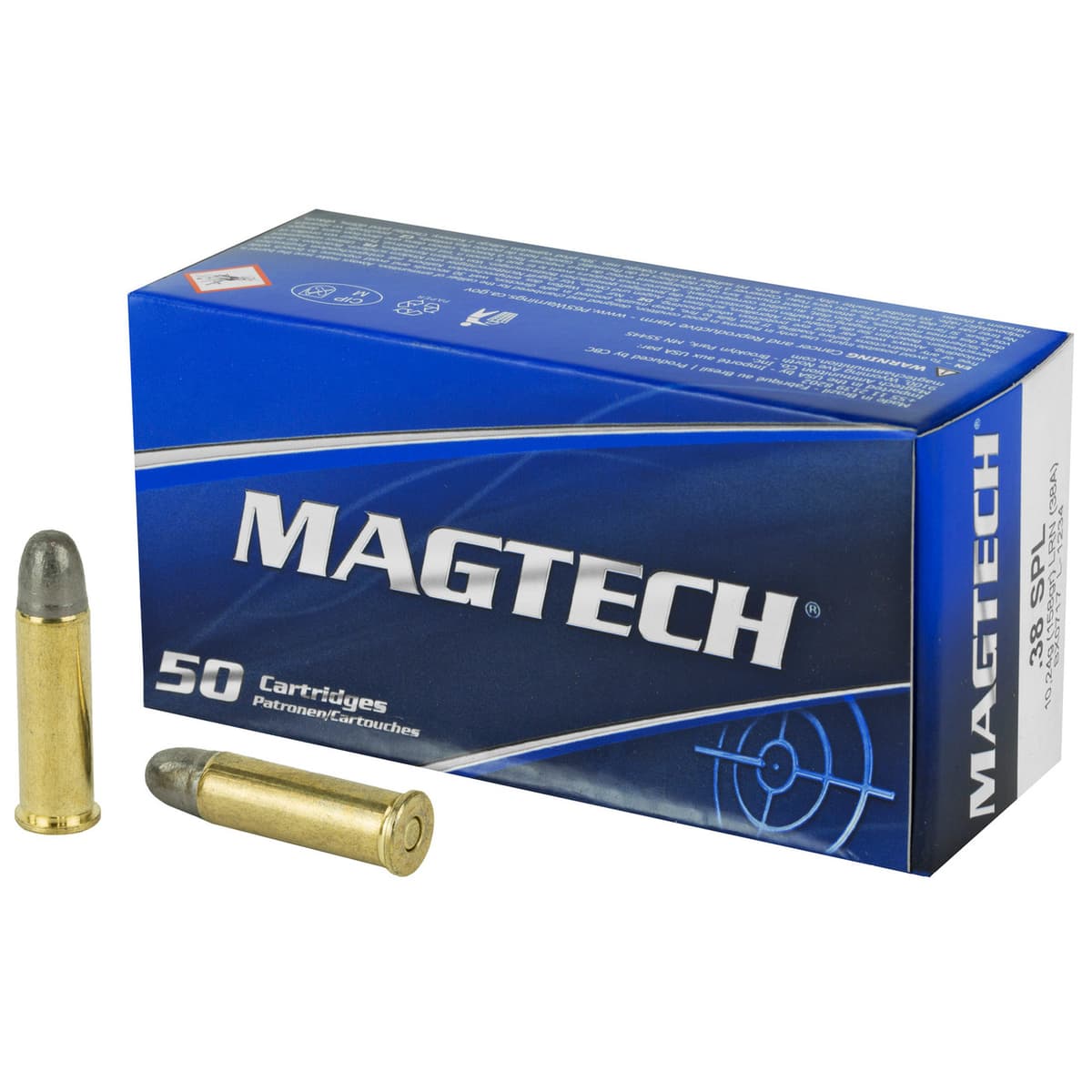
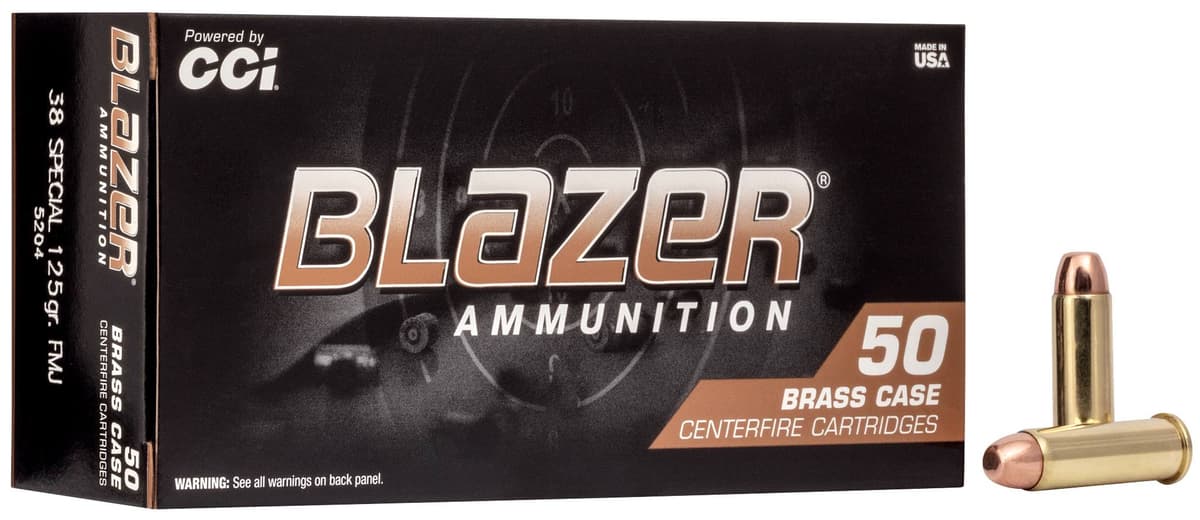
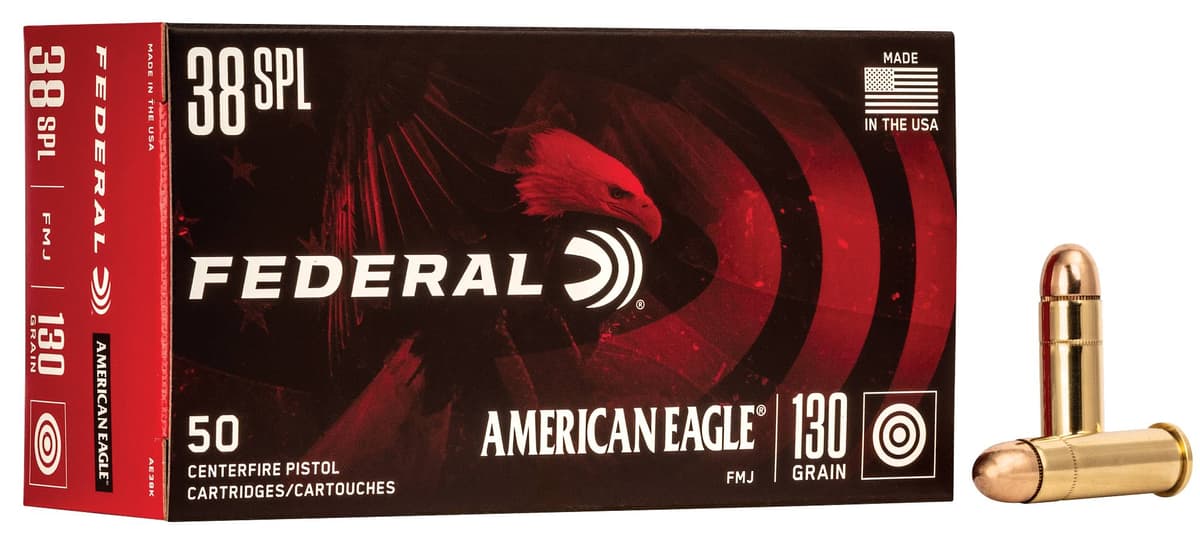
Buy Magtech's 158gr lead round nose to practice at the classic service bullet weight. Magtech lists 755 fps against 850, 889, and 900 fps for the other three 158gr practice loads here, so at an identical bullet weight it leaves the muzzle with the least momentum of the four, which is the part of recoil the ammunition controls. The tradeoff is exposed lead that fouls a bore faster than a jacketed bullet does. Federal American Eagle's 130gr FMJ is the load to shoot if you carry a standard-pressure 130gr round, because its 890 fps and 229 ft-lbs put recoil and point of impact close to your carry ammunition.

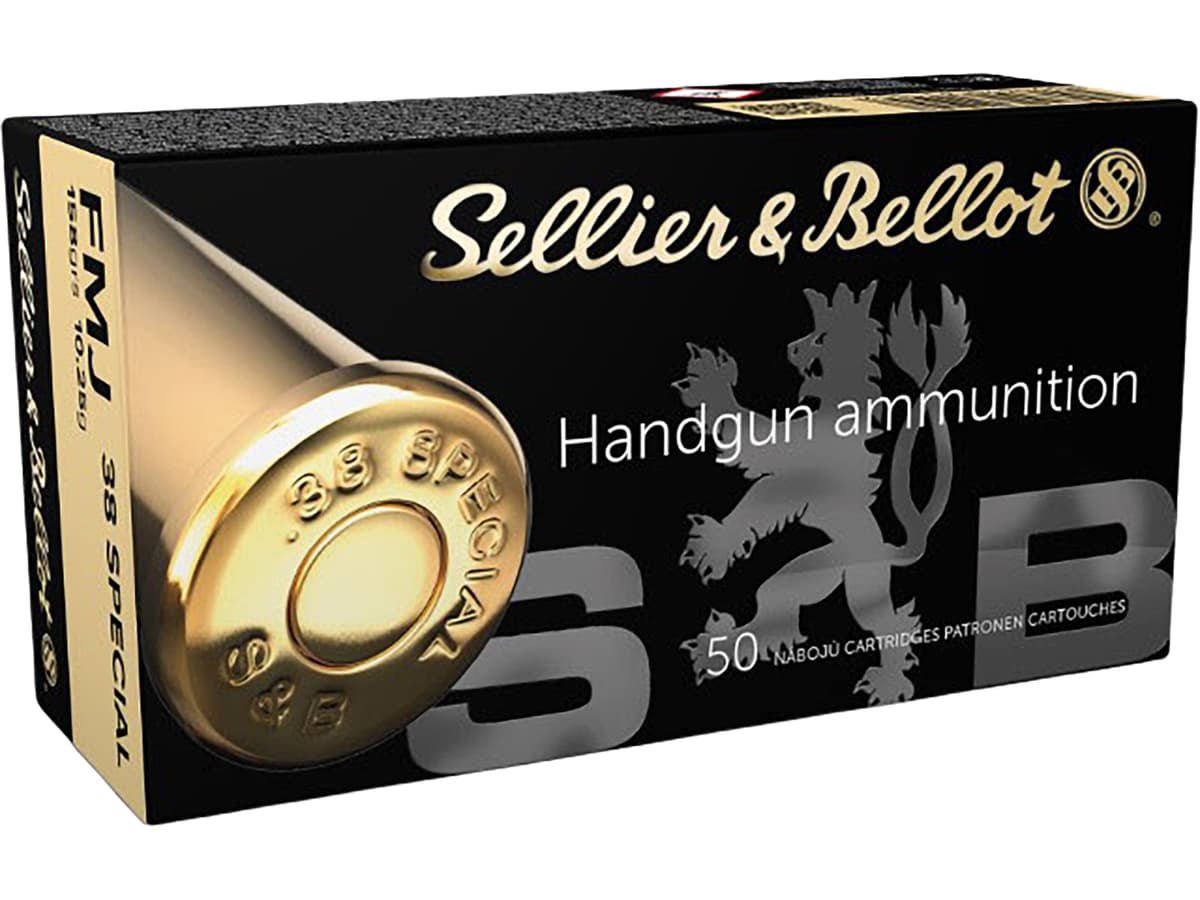
Case material decides the rest. CCI's Blazer Brass 125gr FMJ and Sellier & Bellot's 158gr FMJ are both jacketed and brass-cased, and the S&B is the one to take to an indoor range that bans exposed-lead bullets at the heavy bullet weight.

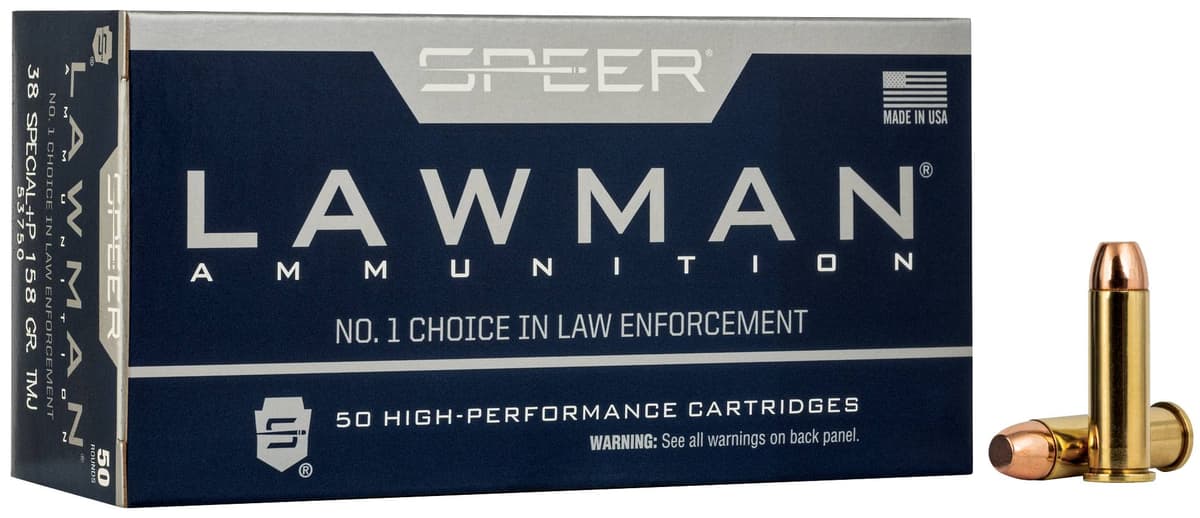
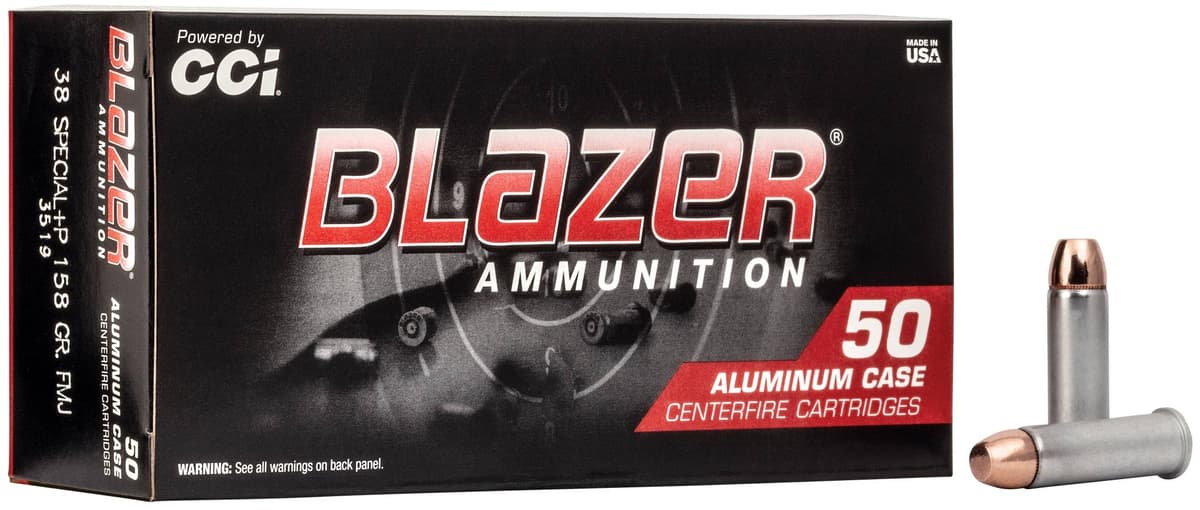
Two loads here are +P, and both exist so an owner of a +P-rated revolver can train at carry-load recoil instead of drifting through range sessions on soft standard-pressure ammunition. Choose between them on the case. Speer's Lawman 158gr TMJ is brass, so you get it back to reload, and its jacket fully encloses the lead core. CCI's Blazer Aluminum 158gr is aluminum, which is not reloadable, making it the one to burn in volume when you have no intention of saving brass. Neither belongs in a revolver its maker has not approved for +P.

One .38 Special practice note has nothing to do with the load: revolver brass stays in the cylinder instead of scattering across the range floor, so a reloadable brass case is worth more here than in a semi-auto caliber. Blazer Brass, American Eagle, Sellier & Bellot, Magtech, and the Speer Lawman all give you the case back. The aluminum-cased Blazer does not, and DoubleTap does not publish a case material for the wadcutter.

148gr hard-cast full wadcutter · Standard pressure · 21 BHN

DoubleTap 38 Special 148gr Full Wadcutter Match

9
Best Hard-Cast Match Wadcutter
  • Maker publishes 2-inch, 4-inch, and 6-inch revolver velocities
  • Cast to 21 BHN, so it is built not to deform
$28.49 Catalog
Shop at Ammunition Depot
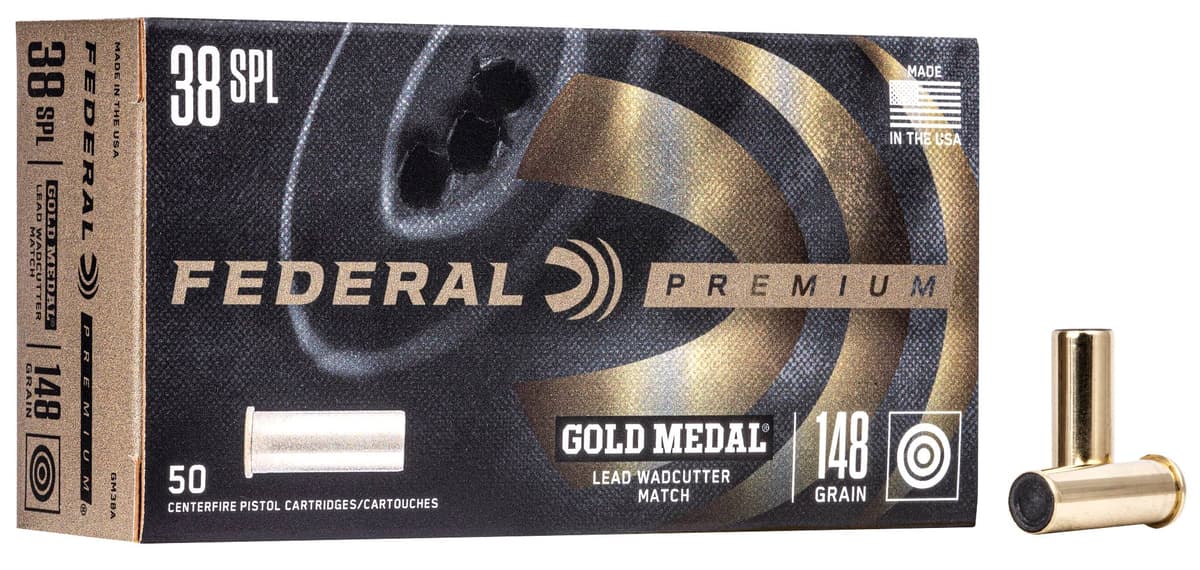
148gr soft lead wadcutter · Standard pressure · Match line

Federal Gold Medal 38 Special 148gr Lead Wadcutter

10
Best Soft-Lead Match Wadcutter
  • Federal publishes no hardness figure, so it is not a documented hard-cast bullet like the defensive wadcutters
  • 690 fps and 155 ft-lbs, the gentlest load in this guide
$39.99 Catalog
Shop at KYGUNCO
158gr LRN · Standard pressure · 755 fps

Magtech Range Training 38 Special 158gr LRN

11
Best Full-Weight Practice Load
  • Lowest listed velocity of any 158gr load here at 755 fps, so the least muzzle momentum at that bullet weight
  • Classic 158gr revolver bullet weight
$29.99 Catalog
Shop at Ammunition Depot
125gr FMJ flat nose · Standard pressure · 865 fps

CCI Blazer Brass 38 Special 125gr FMJ

12
Best Light-Recoiling Jacketed Practice Load
  • Lightest jacketed practice bullet here at 125 grains
  • Reloadable brass case
$35.99 Catalog
Shop at Ammunition Depot
130gr FMJ · Standard pressure · 890 fps

Federal American Eagle 38 Special 130gr FMJ

13
Best 130gr FMJ Practice Analogue
  • 890 fps and 229 ft-lbs mirrors a standard-pressure 130gr carry load
  • Reloadable brass case
$28.99 Catalog
Shop at Ammunition Depot
158gr FMJ · Standard pressure · 271 m/s

Sellier & Bellot 38 Special 158gr FMJ

14
Best 158gr Jacketed Range Load
  • Full-weight 158gr bullet with no exposed lead
  • Usable on ranges that ban exposed-lead bullets
$30.49 Catalog
Shop at Ammunition Depot
158gr TMJ · +P · Brass case

Speer Lawman 38 Special +P 158gr TMJ

15
Best Reloadable +P Training Load
  • The +P training load whose brass case you get back
  • TMJ jacket fully encloses the lead core
$32.99 Catalog
Shop at KYGUNCO
158gr FMJ · +P · Aluminum case

CCI Blazer Aluminum 38 Special +P 158gr FMJ

16
Best High-Volume +P Training Load
  • Full-weight 158gr bullet at 850 fps and 253 ft-lbs
  • Aluminum case, so nothing comes back to reload
$27.69 Catalog
Shop at Ammunition Depot

Affiliate links - purchases support this site at no extra cost to you. (?)

158gr +P Loads for 4- and 6-Inch Service Revolvers

A 4-inch or 6-inch revolver changes which loads make sense, because the heavy 158gr bullets that lose the most to a short barrel are exactly the ones that gain the most from a longer one. Buffalo Bore Item 20A publishes 1,040 fps and 379 ft-lbs from a 2-inch S&W Model 60 and 1,162 fps and 474 ft-lbs from a 4-inch S&W Mountain Gun, a 122 fps spread between two specific revolvers that differ in barrel length and in frame, and it is the highest-output load in this guide at either end. Remington's HTP 158gr lead hollow point, catalogued as RTP38S12A under order 22297, publishes 890 fps from a 4-inch test barrel and is the current production version of the load profile that armed American police for decades.

Choose between them on construction and recoil rather than nostalgia. The Remington uses a soft lead hollow point that deforms at ordinary .38 Special velocity, which is the reason the old service load worked at all from a service-length barrel. The Buffalo Bore uses a soft-cast semi-wadcutter hollow point with a gas check, which is what lets it run fast enough to make those numbers without leading the bore. Both are +P, so both need a maker-approved revolver, and the Buffalo Bore recoils hard enough that it belongs in a steel-frame gun.

Do not carry a 4-inch velocity figure into a 2-inch gun. If your revolver is a service-size .357 Magnum shooting .38 Special for practice and lower recoil, these are the two loads that use the barrel you paid for, and our .357 Magnum revolver ranking covers the hosts that shoot both.

All 16 .38 Special Loads Compared

Every load in this guide on the four attributes that decide whether it fits your revolver. The test-barrel column is the one most buyers skip and the one that explains why two loads with similar advertised velocity behave differently from a snub.

What Grain Bullet Is Best for a .38 Special?

There is no single best grain weight in .38 Special, and the cartridge is unusual in how wide the useful range is: the loads in this guide run from 90 to 158 grains, a 75 percent spread that would be extreme in 9mm or .380. Light bullets from 90 to 120 grains reach expansion velocity sooner from a short barrel and recoil less. Heavy bullets at 148 to 158 grains penetrate deeper, hit harder from a 4-inch gun, and shoot closer to where most fixed revolver sights are regulated.

Sort it by gun rather than by preference. A 1.875- or 2-inch alloy snub does best with 90 to 135 grains, where the light bullet offsets both the velocity loss and the recoil the gun's weight cannot absorb. A 4-inch or heavier steel revolver does best with 148 to 158 grains, where the barrel gives the heavy bullet the speed it needs and the mass soaks up the recoil. The 130gr loads in the middle, Federal's Hydra-Shok Deep and American Eagle, are the compromise that works acceptably in both.

Two comparisons put the numbers in context. Against a semi-auto carry gun, our 9mm defensive ammo ranking shows what the extra case capacity buys. Against the other short-barrel carry caliber with the same expansion problem, our .380 ACP ammo guide covers loads engineered around the same constraint from the opposite direction.

Track Carry Ammo and Revolver Buying Guides

New defensive load testing, revolver rankings, and short-barrel ballistics work as it publishes.

Free targets, drill cards, and weekly reviews by email.

Frequently Asked Questions

What grain bullet is best for a 38 Special?
Match bullet weight to the gun and the job rather than looking for one universal answer. Hornady's 110gr Critical Defense (SKU 90310) is the standard-pressure carry pick, Speer's 135gr Gold Dot Short Barrel is the +P snub pick, 148gr and 150gr wadcutters cover target work and hard-cast defensive use, and 158gr loads cover both classic service-revolver duty and full-weight range practice.
Is 38 Special +P as powerful as 9mm?
The cartridge name alone does not answer that. Barrel length, bullet weight, and the specific load decide velocity and energy, and a 2-inch revolver gives up meaningful speed against a 4-inch one firing the same round. Buffalo Bore's 158gr +P Item 20A publishes 379 ft-lbs from a 2-inch revolver, which overlaps common 9mm defensive loads, while Federal's 120gr +P Punch publishes 266 ft-lbs from a 4-inch vented test barrel, which does not. Compare the exact load in the exact gun, not the headstamp.
What is the most powerful 38 Special bullet?
Buffalo Bore Item 20A, a 158gr soft-cast LSWCHP with a gas check, is the highest-output load here. Buffalo Bore advertises 1,000 fps and 351 ft-lbs, then publishes chronographed results of 1,040 fps and 379 ft-lbs from a 2-inch S&W Model 60 and 1,162 fps and 474 ft-lbs from a 4-inch Mountain Gun. It is a +P load, so it belongs only in a revolver whose maker approves +P, and its recoil makes it a poor choice for high-volume practice.
Are 38 wadcutters good for self-defense?
Buffalo Bore Item 20D is the defensive wadcutter in this set: a standard-pressure 150gr hard-cast load with maker-published velocities from 2-inch through 4-inch revolvers, and an independent 2021 bare-gelatin test from a 2-inch revolver that recorded 16 or more inches of penetration without expansion. DoubleTap's 148gr Full Wadcutter Match is the same non-expanding bullet shape in a 50-round match-grade box, cast to 21 BHN so it will not deform, which makes it the one to practice the profile with. Neither expands by design, and no source measured recoil for either, so do not buy a wadcutter expecting a recoil-free carry load.
What is the best 38 Special ammo for snubbies?
Start with Speer 23921GD, the 135gr Gold Dot Short Barrel +P, when the exact revolver is rated for +P. Speer designs it for barrels as short as 1.9 inches and publishes its 860 fps and 222 ft-lbs from a 2-inch vented test barrel rather than the usual 4-inch one. If the revolver is not +P rated, start with Hornady 90310, the standard-pressure 110gr Critical Defense, then verify point of impact and control with the sights that gun actually has.
Does 38 Special +P damage a revolver?
It depends entirely on the model. Ruger labels the LCR 5401 and LCRx 5430 spec sheets for 38 Spl +P, and Smith and Wesson's Model 638 spec sheet states it is rated for continuous +P use. Taurus designates the Model 856 for +P and warns in the current manual that +P use can affect service life. Frame material, model family, and age do not tell you the answer. Read the maker's documentation for the exact model before feeding it +P.

The Verdict

Buy Speer's 135gr Gold Dot Short Barrel if your revolver is +P rated, Hornady's 110gr Critical Defense if it is not, and Magtech 158gr for practice.

Every other decision on this page follows from two facts about your specific gun: its barrel length and its pressure rating. A 2-inch gun wants a load whose maker published short-barrel data. A gun the maker has not approved for +P wants standard pressure, and the standard-pressure options here are good enough that this is not a compromise worth fighting. Confirm both from the maker's own documentation, then buy one box of the carry load, shoot it, and check where it lands before it goes in the cylinder for real.

Header image: AI-generated editorial illustration | Gold Dot Short Barrel 23921GD specifications: Speer | Critical Defense 110gr FTX specifications: Hornady | Critical Defense Lite 90gr FTX specifications: Hornady | Punch PD38P1 specifications: Federal | 148gr Full Wadcutter Match velocity, 21 BHN hardness, and the 50- and 20-round box options: DoubleTap Ammunition | Gold Medal GM38A match wadcutter specifications: Federal | Lawman 53750 +P training load specifications: Speer | Item 20D standard-pressure wadcutter data: Buffalo Bore | Item 20A Heavy +P velocity data: Buffalo Bore | 2-inch revolver bare-gelatin wadcutter test: Active Response Training | Hydra-Shok Deep 1.875-inch revolver penetration and expansion results: Federal | Kimber K6s 2-inch and Ruger GP100 4-inch .38 Special gel results through four-layer fabric: Lucky Gunner Labs | LCR 5401 +P rating and barrel length: Ruger | LCRx 5430 +P rating and barrel length: Ruger | Model 638 continuous +P rating: Smith & Wesson | Model 856 +P designation and service-life note: Taurus | Blazer Aluminum item 3519 specifications: CCI Ammunition