Labor Day gun deals are live through Monday. See the deals
Concealed Carry for Big Guys 2026: Comfortable All-Day CCW Setup header image
Gear
September 2, 2026
Concealed Carry for Big Guys 2026: Comfortable All-Day CCW Setup

For a larger build, start with a slim Glock 43X, carry it at 4 or 5 o'clock in the T.REX Ironside Hybrid, and tune the belt, clothing, and wedge before changing the pistol.

Concealed Carry for Big Guys 2026: Comfortable All-Day CCW Setup

The best concealed carry for big guys is a slimline pistol in a hybrid holster carried at 4 or 5 o'clock on a belt stiff enough to hold it there. That is the whole setup, and the order matters: the Glock 43X, the T.REX ARMS Ironside Hybrid, and a 1.5-inch belt sized to your actual carry position solve more of the problem than any single accessory. Concealment on a larger build is a geometry problem, not a willpower problem. You also do not need to be especially large for any of this to apply: enough midsection to push a grip out of line is enough to make appendix carry miserable when seated, and the fix is the same at every size. This guide works through the three decisions that matter most, then the belt, cover garment, and tuning hardware that make the setup comfortable for a full day. For a wider look at slim pistols before you commit, the best subcompact 9mm pistols guide compares the field.

By AB|Last reviewed September 2026

Key Takeaways

  • Slimline pistol first: the Glock 43X pairs a 0.87-inch slide and 3.41-inch barrel with a full-length grip, so it loses width at the waist without losing purchase.
  • Hybrid holster second: the T.REX ARMS Ironside Hybrid backs a .093-inch Kydex shell with Alcantara over closed-cell PE foam, spreading body contact instead of concentrating it.
  • Carry at 4 or 5 o'clock: behind the hip, the body curves away from the holster and there is less compression when seated than at appendix.
  • Size the belt to the carry position: the Kore Essentials X1 covers 24 to 54 inches with a 54 to 72 inch EXL option and adjusts in quarter-inch steps.
  • Tune last, one change at a time: a Rounded Claw Kit works from the belt side and a PHLster Wedge Rx works from the body side.

1. Buy a Slimline Pistol

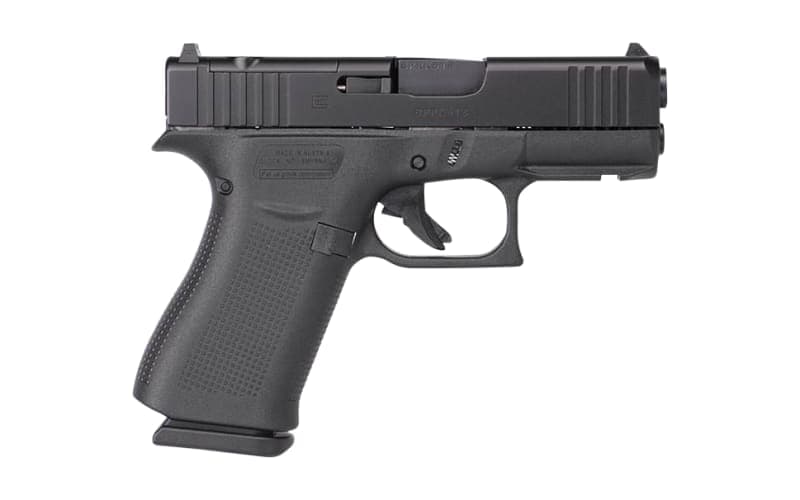
The Glock 43X is the beginner pick, and the reason is width. Its slide measures 0.87 inches across, which is the dimension that decides how far the whole package stands off your body once it is inside the waistband. A double-stack compact adds roughly a quarter inch of slide and frame width, and that quarter inch is multiplied by the cover garment stretched over it. Width, not length, is what prints.

What separates the 43X from smaller single-stacks is that it gives up width without giving up grip. The frame runs the full length of a compact pistol, so all three fingers land on it, and Glock builds in a beavertail so the web of the hand indexes the same way every draw. That matters more on a larger build than it sounds: you are drawing from behind the hip, often past a cover garment, and a grip you have to re-establish after the draw is a grip you did not really get. The 3.41-inch barrel and short slide do give a shorter sight radius than a compact pistol, and the slim grip can feel narrow in larger hands. Both are real, and both are worth trading for a pistol you will still be carrying at 6 p.m.

The 43X also carries a slim mounting rail, so a light is on the table later without changing pistols. Start here and change the rest of the setup around it. Swapping guns is the most expensive way to fix a concealment problem and usually the least effective, because the belt and the holster are doing more of the work than the pistol is. To put the 43X next to other slim 9mm options on width, weight, and capacity before you buy, run them through our side-by-side comparison tool.

2. Buy a Hybrid Holster

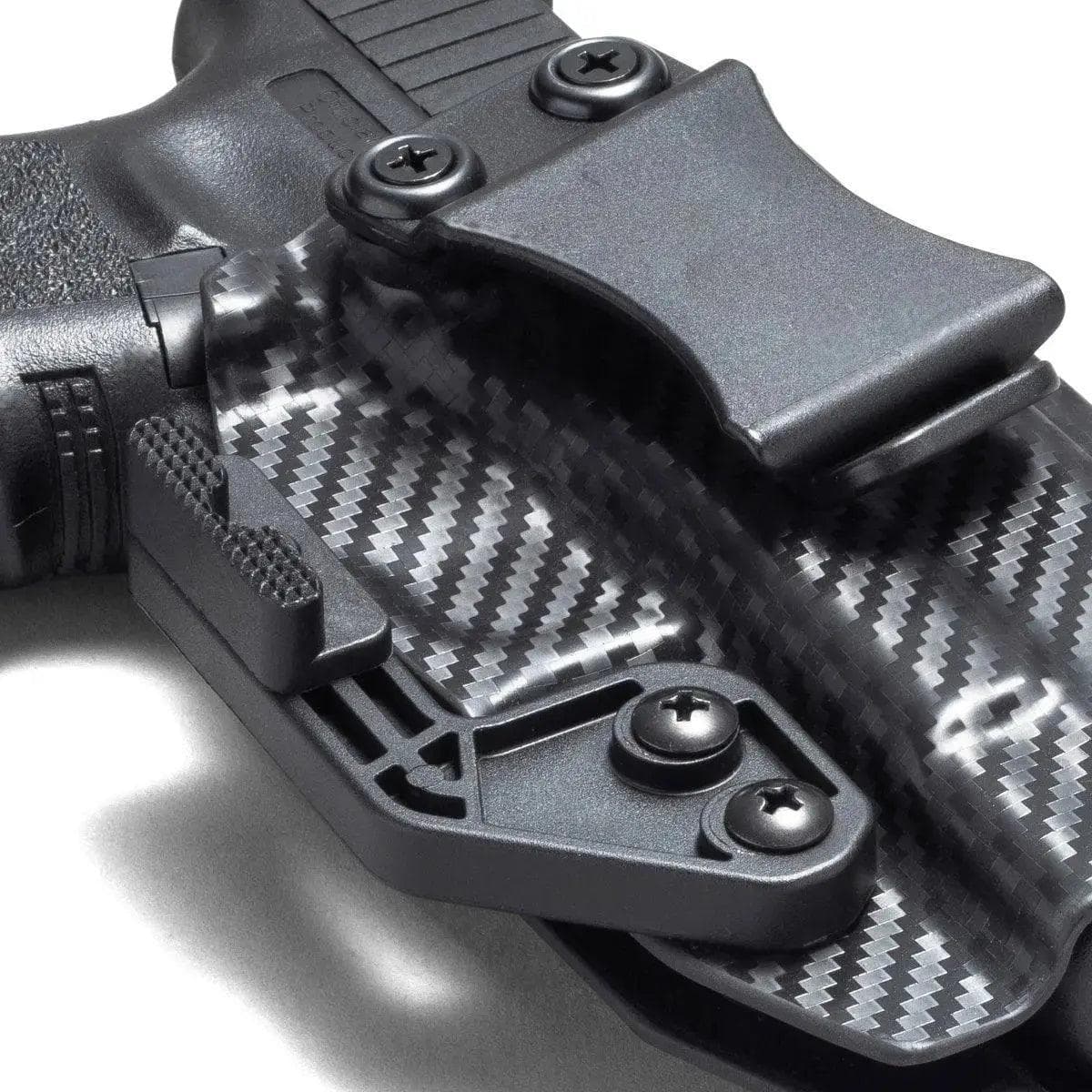
The T.REX ARMS Ironside Hybrid is the primary holster recommendation for a larger build, and the backer is the specific reason. Its body-facing surface is Alcantara over closed-cell PE foam, and that foam layer spreads the holster's contact across a wider area of skin instead of loading it onto the two hard edges of a bare Kydex shell. Pressure that would concentrate on an inch of waistband gets distributed over several. That is the difference between a holster that is fine for two hours and one that is fine for twelve.

The foam is closed-cell, so it does not soak up sweat the way a leather backer does, and the Alcantara face stays breathable against skin. Behind that comfort layer, the shell is still a full .093-inch Kydex shell rather than a soft pocket, which is what keeps the trigger guard covered and keeps the mouth of the holster open so you can reholster with one hand and without looking. Both halves matter. A soft-sided holster is comfortable and collapses; a bare Kydex shell holds its shape and digs in. The hybrid keeps the shell and softens what touches you.

The tuckable clips give +5 to +20 degrees of cant, which is the adjustment that angles the grip forward and away from the ribs while tipping the muzzle back along the line of the leg. That range is the single most useful holster feature for a larger carrier, because it lets you find the angle your torso actually wants instead of accepting a fixed one. The holster supports optics and weapon lights, so it does not become the limiting part of the setup later. The tradeoffs are honest: the hybrid backer has a larger footprint than a minimalist shell, it is built for 4 o'clock rather than appendix, and OWB belt loops are a separate purchase.

The backer also costs you something, and it is worth knowing before you buy. A wide panel that spans several inches of waistband is harder for a claw to lever against, because the claw works by pushing off the belt to rotate the grip inward and a broad backer resists that rotation the way a snowshoe resists sinking. PHLster makes this argument against hybrids directly, and on the concealment side it holds: a minimal shell with a claw and a wedge will tuck a grip harder than a hybrid will. What the hybrid buys back is contact comfort across a wider area, which is the variable that usually decides whether a larger carrier still has the gun on at hour ten. Pick the hybrid when all-day comfort is the binding constraint and the pistol is slim enough that grip print is manageable; pick a minimal shell with a wedge when printing is the thing you cannot solve.

Leave the clips alone. The Ironside Hybrid ships with polymer tuckable clips installed, and T.REX sells metal clips separately as an upgrade. We have carried this holster both ways and the metal clips are noticeably worse against the body: a steel clip is thinner and far stiffer, so it does not flex with the belt and it puts a hard narrow edge exactly where the soft backer was supposed to be spreading load. The optional part is the wrong call here, which is not what an upgrade usually implies.

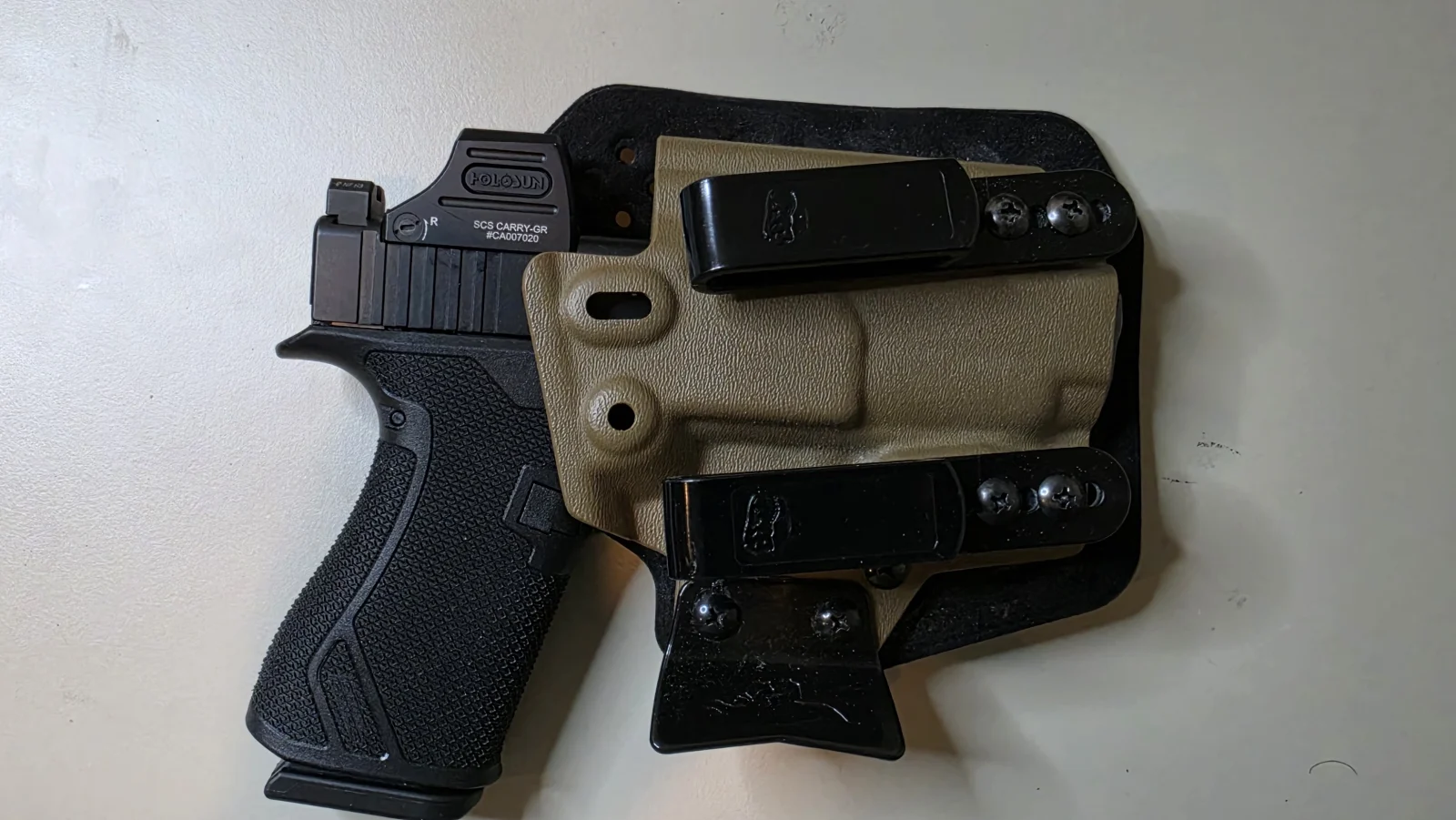
T.REX ARMS Ironside Hybrid holster with a coyote Kydex shell on a black soft backer, twin black tuckable belt clips and a black claw, laid beside a modified slimline Glock: a 43X upper on a Grit Grips frame with a Radian Ramjet barrel and a Holosun SCS Carry-GR enclosed green dot
The backer runs past the Kydex on every edge, which is what spreads body contact instead of loading it onto the shell's corners. Twin tuckable clips set the cant, and the claw at the lower front levers the grip inward. The slimline Glock alongside it is the author's modified gun, not the factory configuration recommended above. (Credit: Rifle Configurator)

3. Carry at 4 or 5 O'Clock

Carry at 4 or 5 o'clock. Behind the hip, the torso curves away from the holster, so the pistol follows the body line instead of standing proud of it, and sitting down folds the body in front of the holster rather than onto it. This is the position that works across the widest range of builds, which is why it is the default recommendation here rather than appendix.

The principle underneath the clock number is what actually matters: get the pistol off the roundest part of the midsection. Four to five o'clock is the furthest expression of that and it is where most larger carriers land, but it is not the only answer. PHLster, which disagrees with the recommendation here and is worth reading for that reason, argues that larger carriers should move the gun toward the strong side rather than abandon the front, putting many of them at 2 or 3 o'clock depending on how the abdomen projects. That is the same insight arriving at a different number. If 4 o'clock buries the grip against your ribs, or the draw asks for more shoulder rotation than you have, walk it forward an hour at a time instead of concluding the position is wrong.

Appendix is genuinely faster to draw from and conceals well under a plain t-shirt, and plenty of people carry there happily. The common complaint from larger carriers is seated comfort: at 12 to 1 o'clock the pistol sits between the front of the midsection and the top of the thigh, and sitting compresses it from both directions. Driving is where most people notice it first. If you have tried appendix and it pinches when you sit, that is a geometry result, not a technique failure, and moving the holster back two hours on the clock usually resolves it.

  • Appendix
    12 to 1
    What it does wellFastest draw, easiest to conceal under a plain tee, easy to check by glance
    Tradeoff on a larger buildMany larger carriers find it pinches when seated, since the pistol is compressed between midsection and thigh
  • Strong-side IWB
    4 to 5
    What it does wellSits behind the hip where the body curves away; the most forgiving position across body types
    Tradeoff on a larger buildSlower draw than appendix and harder to conceal under a tucked shirt
  • Beltless band
    Wearer's choice
    What it does wellCarries in athletic clothing and anywhere belt loops do not exist
    Tradeoff on a larger buildNo belt to anchor against, and the molded shell rules out lights and optics

Move in small steps. An hour at 4 o'clock, an hour at 4:30, an hour at 5, all with an unloaded pistol at home before you carry anywhere, will tell you more than any recommendation will. Note where the grip presses and where the muzzle end digs; those two complaints have different fixes, and the tuning section below covers both.

The Core Setup, In Buying Order

Buy in this order. The Glock 43X is the slimline pistol that starts the setup, the T.REX ARMS Ironside Hybrid is the holster that carries it at 4 o'clock, and a belt that fits your actual carry position keeps both where you put them. The Alien Gear Low-Pro Belly Band closes the gap on days a belt is not an option.

Glock 43X
1

Glock 43X

Best beginner pistol for a slim, full-grip concealed-carry setup

$448.99
Shop at PSA
  • +Slimline frame and slide reduce bulk at the waist
  • +Built-in beavertail and full-length grip give a complete purchase
  • +Slim rail supports compatible light options
  • The short subcompact slide gives a shorter sight radius than a compact pistol
  • The slim grip can feel narrow in larger hands
Caliber: 9mm LugerBarrel: 3.41 inchesSlide width: 0.87 inchesCapacity: 15+1 with the factory Slimline magazine
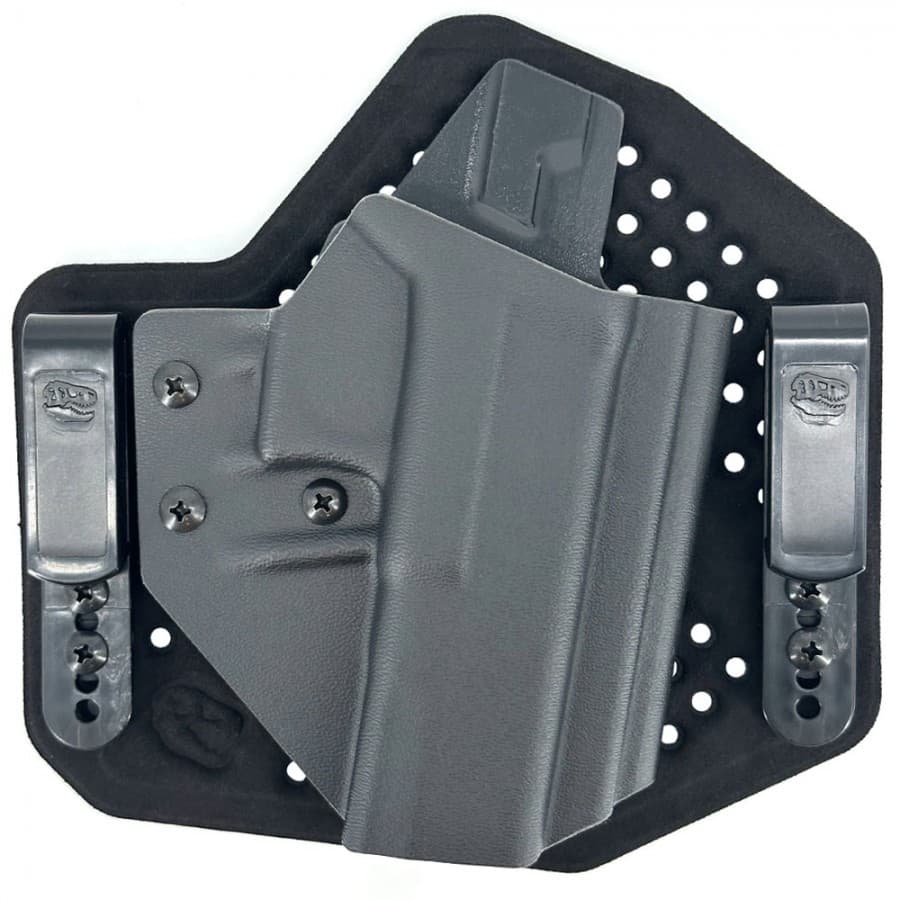
T.REX ARMS Ironside Hybrid
2

T.REX ARMS Ironside Hybrid

Best primary 4 o'clock hybrid holster for larger builds

$95
Shop at T.REX ARMS
  • +Full .093-inch Kydex shell keeps the holster open for reholstering
  • +Alcantara and closed-cell PE foam backer is soft, breathable, and water-resistant
  • +Tuckable clips provide +5 to +20 degrees of cant
  • The hybrid backer has a larger footprint than a minimalist shell
  • It is optimized for 4 o'clock rather than appendix carry
  • OWB belt loops are separate
Position: 4 o'clock IWBShell: .093-inch KydexBacker: Alcantara over closed-cell PE foamCant: +5 to +20 degrees
Kore Essentials X1 Gun Belt
3

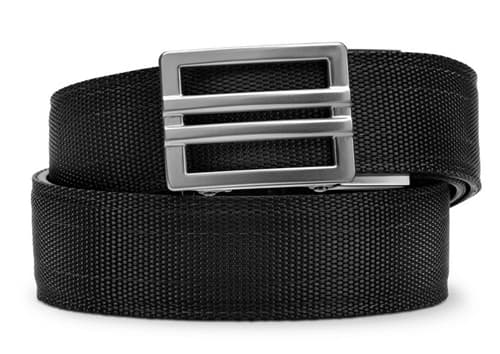
Kore Essentials X1 Gun Belt

Best large-waist belt for precise all-day adjustment

$69
View at Amazon
  • +Quarter-inch ratchet positions land between the holes a punched belt gives you
  • +Polymer core carries an IWB holster and loaded pistol without sagging
  • +The ratchet re-tensions through the day without unthreading the belt
  • The ratchet buckle is thicker than a standard low-profile buckle
  • The ratchet track is visible if the belt is left exposed
  • It is less rigid than a premium dual-layer nylon belt
Width: 1.5 inchesAdjustment: Quarter-inch increments, 40+ positionsConstruction: Reinforced nylon with a polymer coreLoad rating: Up to 10 lb
Blue Alpha Low Profile EDC Belt
4

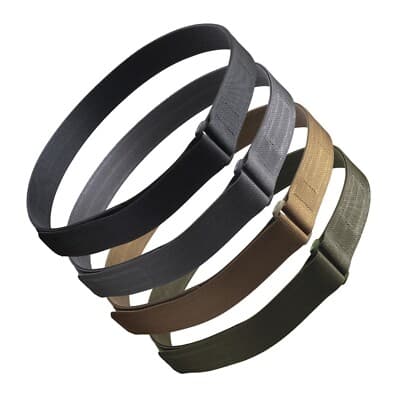
Blue Alpha Low Profile EDC Belt

Best low-profile belt with custom sizing above 48 inches

$44
View at Amazon
  • +Dual 1.5-inch nylon webbing supports daily IWB carry
  • +Low-profile buckle keeps bulk down under a cover garment
  • +Custom sizing is available above 48 inches
  • Hook-and-loop adjustment is less formal than a leather belt
  • It is not intended for heavy MOLLE or duty loads
  • Hook-and-loop can wear over long-term use
Width: 1.5 inchesConstruction: Dual nylon webbingAdjustment: Hook-and-loop, plus or minus one sizeMade in: Georgia, USA
Alien Gear Low-Pro Belly Band
5

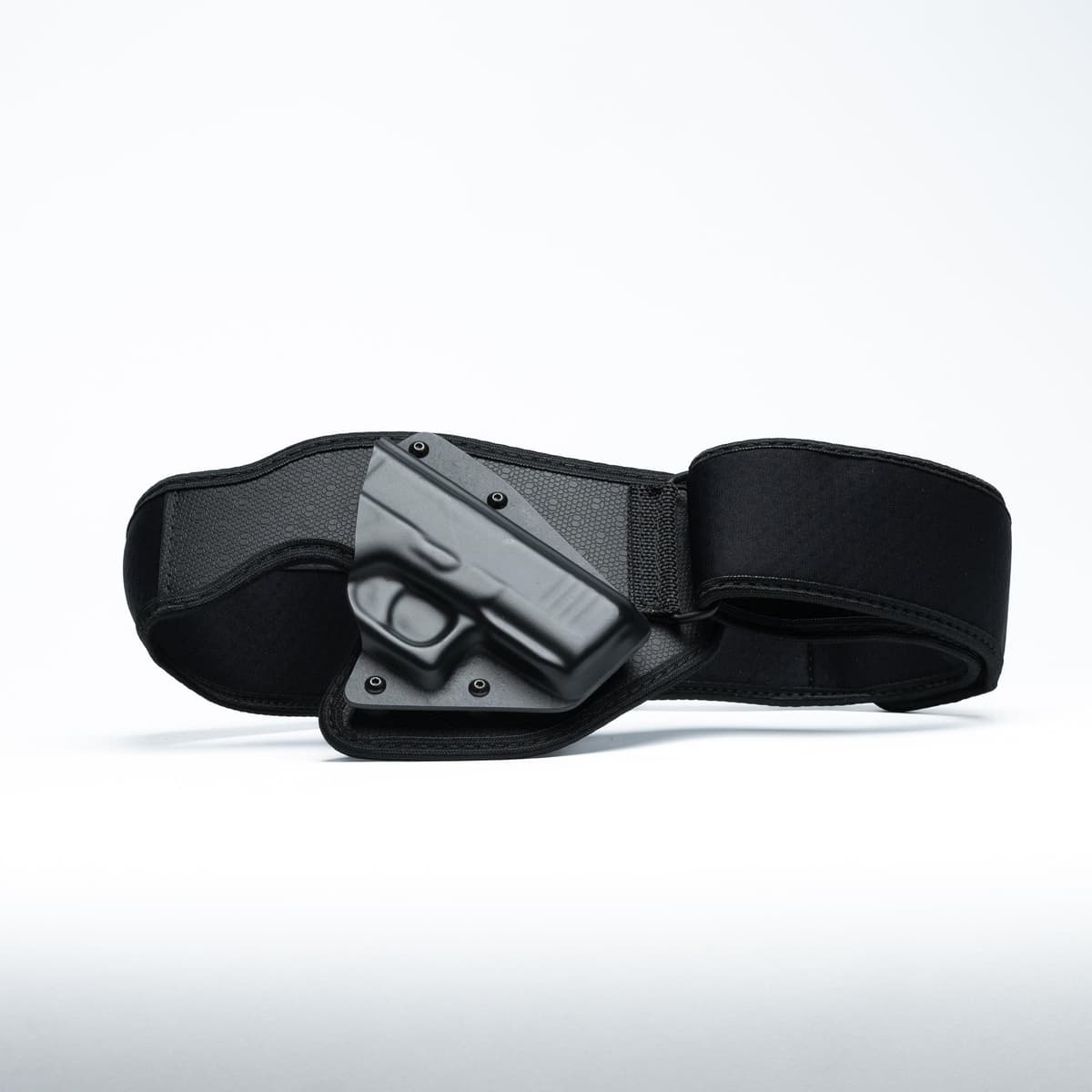
Alien Gear Low-Pro Belly Band

Best beltless option for athletic clothing

$99
Shop at Alien Gear Holsters
  • +Wraparound breathable elastic band carries without belt loops
  • +Custom-molded polymer shell covers the trigger guard and gives positive retention
  • +The band can be positioned at appendix, strong side, or crossdraw
  • It is not compatible with lights, optics, or lasers
  • The shell is gun-specific rather than universal
  • Fit depends on measuring the actual carry position, not just pants size
Type: Beltless belly bandRetention: Molded polymer shell, adjustableBand: Breathable medical-grade elasticSizes: XS 23.8-28.5 in through XXL 47.5-52.3 in

Holster and belly-band fitment is gun-specific and hand-specific. Confirm the exact pistol model, hand, and any mounted light before ordering, and measure your waist at the height you actually wear the belt rather than using pants size.

Affiliate links - purchases support this site at no extra cost to you. (?)

The Belt Does the Work

A dress belt cannot carry a pistol, and this is where most uncomfortable setups actually fail. An IWB holster and loaded handgun hang two to three pounds off one point on your waistband, and a belt without vertical stiffness answers that by rolling outward at the top, which tips the grip away from your body and prints. The fix is a purpose-built 1.5-inch belt with a stiffening core.

The $69.95 Kore Essentials X1 is the pick when sizing precision matters most. It covers 24 to 54 inches with an EXL version running 54 to 72 inches, and its ratchet track replaces punched holes with more than 40 positions in quarter-inch increments. On a punched belt the two nearest holes are often two inches apart, which means one is loose enough to let the holster shift and the next is tight enough to be uncomfortable after lunch. Quarter-inch steps remove that choice, and the ratchet re-tensions without unthreading anything. The reinforced nylon carries a polymer core rated to 10 pounds, which is well past what an IWB rig asks of it. The buckle is thicker than a plain low-profile buckle, and the track shows if you leave the belt exposed.

The $44.97 Blue Alpha Low Profile EDC Belt goes the other direction and minimizes bulk. Dual 1.5-inch nylon webbing supplies the support, and a slim polymer buckle keeps the front of the belt flat under a cover garment, which is the half of the belt a tucked or thin shirt shows. Blue Alpha offers custom sizing above 48 inches, so waists past the standard rack range are covered without resorting to a belt that is merely long rather than actually sized. Hook-and-loop adjustment is less formal than leather, and it is not built for heavy MOLLE or duty loads.

Cover Garments

The cover garment is the cheapest concealment upgrade available, and the rule is simple: pick fabric with drape and pattern, and enough length that reaching up or bending over does not expose the grip. A structured fabric tents over the pistol and holds the outline; a softer one falls back against the body between movements. Vertical texture and print break up the shape that draws the eye. Length matters most on a larger build, because a shirt that rides up over the belly line is a shirt that stops covering the holster exactly when you move.

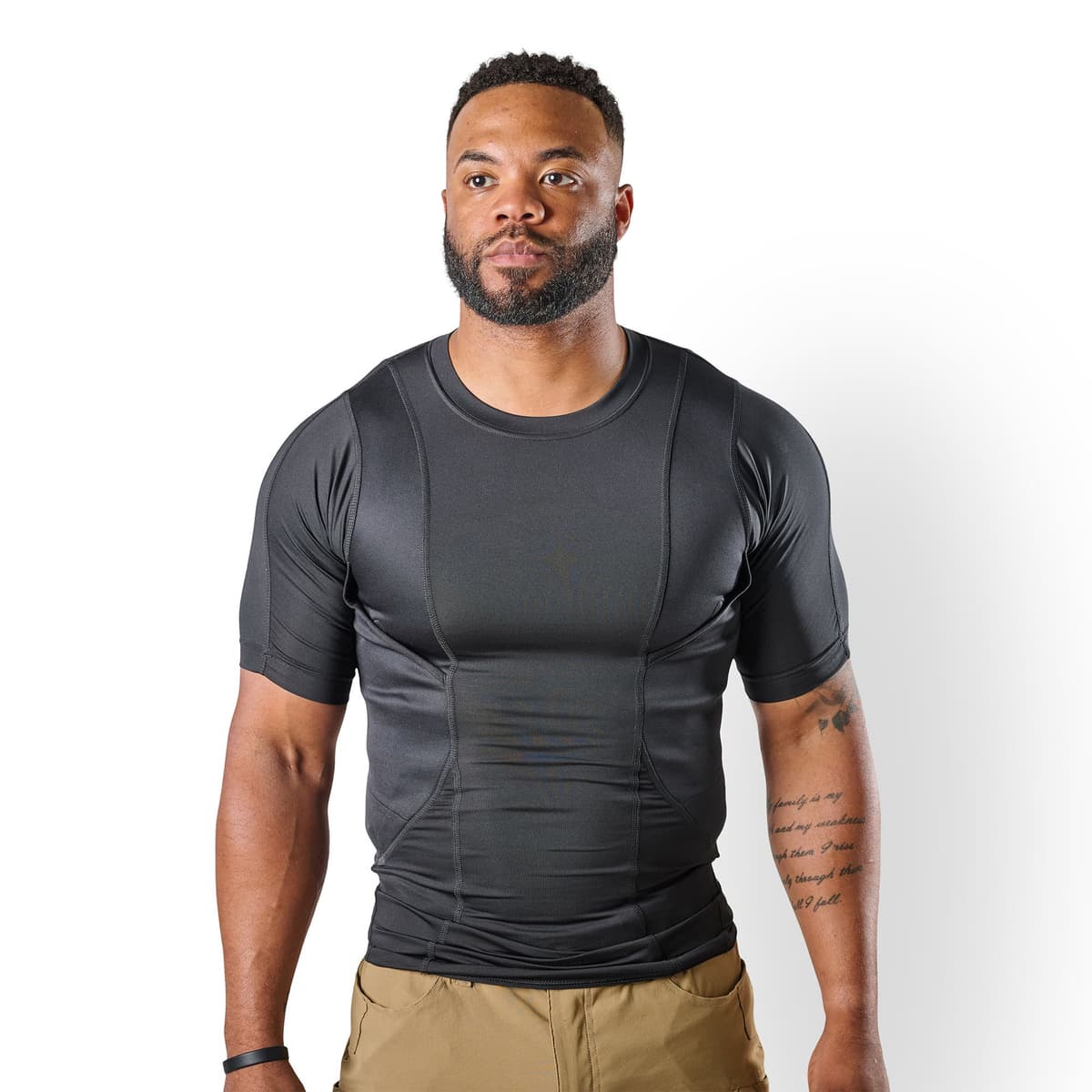
The TRU-SPEC Concealed Carry Tee is a compression base layer in an 85% polyester and 15% spandex blend, with a holster pocket on each side so it works for either draw hand, and dense outer mesh over the pocket area to mask its outline. TRU-DRI moisture wicking, an antimicrobial treatment, and flat-lock seams are aimed at long wear against skin. Worn as a base layer under a loose shirt it adds a second barrier between the holster and your skin. Two limits are worth knowing before ordering: the compression fit is close by design and can feel restrictive around a larger midsection, and TRU-SPEC lists sizes only through 3XL.

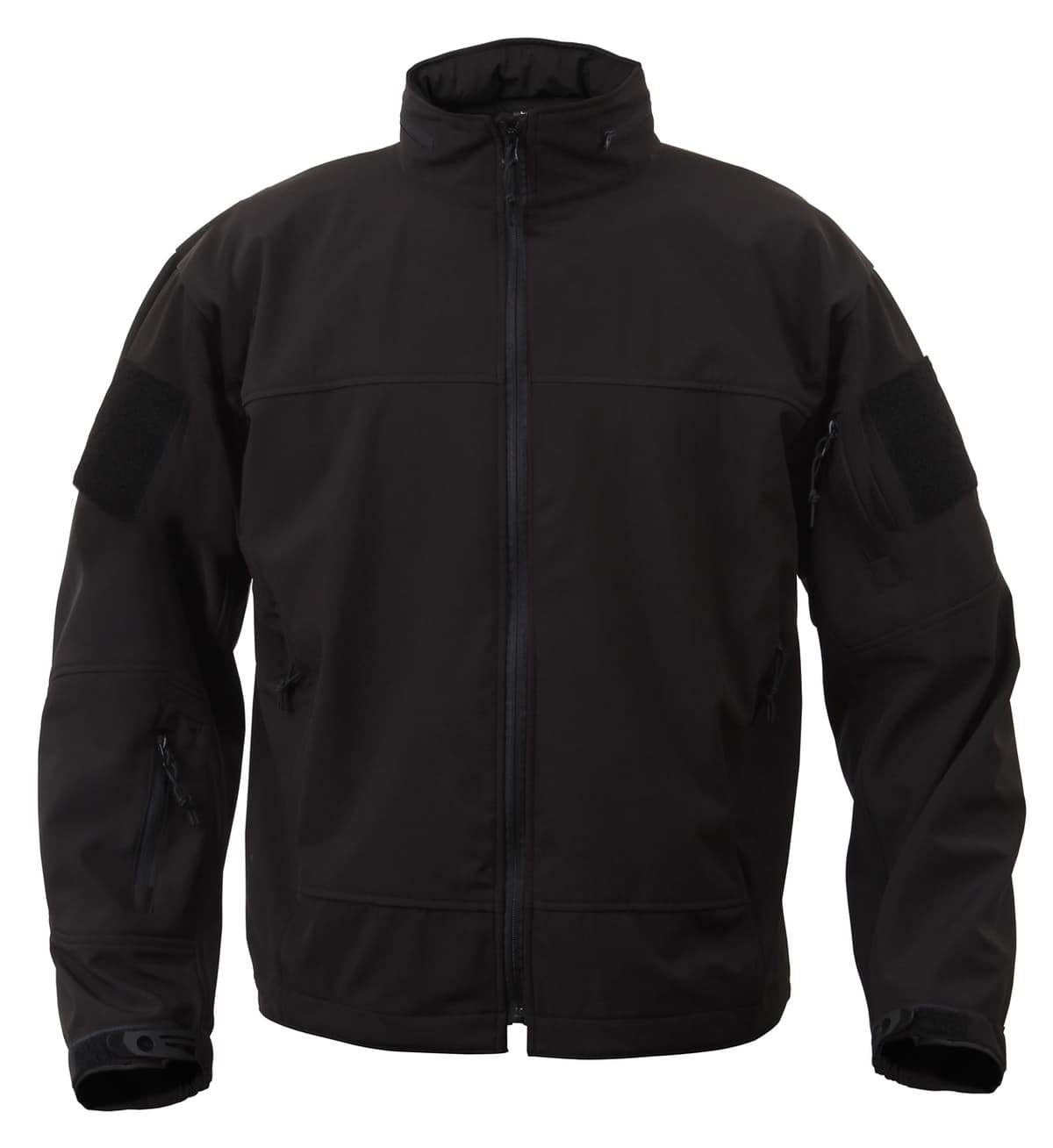
For cool weather the $99 Rothco Covert Ops softshell is the outer layer. Its 93% polyester and 7% spandex bonded shell stretches through the shoulders so it does not bind on a draw, and two padded interior holster pockets sit on both sides of the front opening, which means one jacket works for left- or right-handed carry. An interior pass-through connects the slash hand pockets to the waistband, so a belt holster stays reachable without unzipping. The shell is windproof and water-resistant with no published waterproof rating, so treat it as a three-season layer. The interior pockets also lack the retention adjustment a dedicated holster gives you, which is why they are a supplement to the Ironside Hybrid rather than a replacement for it. More options are in our concealed carry shirts guide.

TRU-SPEC Concealed Carry Tee
Compression base layer · Dual pockets

TRU-SPEC Concealed Carry Tee

Beltless base layer or extra concealment under a loose cover shirt
  • 85% polyester, 15% spandex
  • Holster pocket on each side
  • Dense outer mesh over the pocket area
  • TRU-DRI moisture wicking, sizes XS to 3XL
View at Amazon
Rothco Covert Ops Concealed Carry Soft Shell Jacket
Softshell · Ambidextrous pockets

Rothco Covert Ops Concealed Carry Soft Shell Jacket

Cool-weather cover garment with built-in ambidextrous carry pockets
  • 93% polyester, 7% spandex bonded softshell
  • Dual padded ambidextrous interior holster pockets
  • Interior pass-through to the waistband for belt-holster access
  • Windproof and water-resistant
$99.00Catalog
View at Amazon

Affiliate links - purchases support this site at no extra cost to you. (?)

Claws, Wedges, and Ride Height

Tuning hardware is the last step, not the first. A claw and a wedge each fix a different complaint, and adding both at once guarantees you will not know which one helped. Get the pistol, holster, belt, and position settled, carry that combination for a week, then add exactly one piece.

A claw works from the belt side. The $15.49 Rounded Claw Kit bolts onto compatible Rounded IWB holsters and bears against the belt, and Rounded states that the resulting leverage pushes the grip toward the body. That is the fix when the complaint is the grip standing off your side and printing through a shirt. The kit is reversible for right- or left-hand holsters and includes short and tall standoffs so the belt-contact point can be tuned. Check fitment before ordering: it needs two retention holes at 0.60-inch spacing, and Rounded states it is not compatible with its Universal holster or its listed weapon-light holsters.

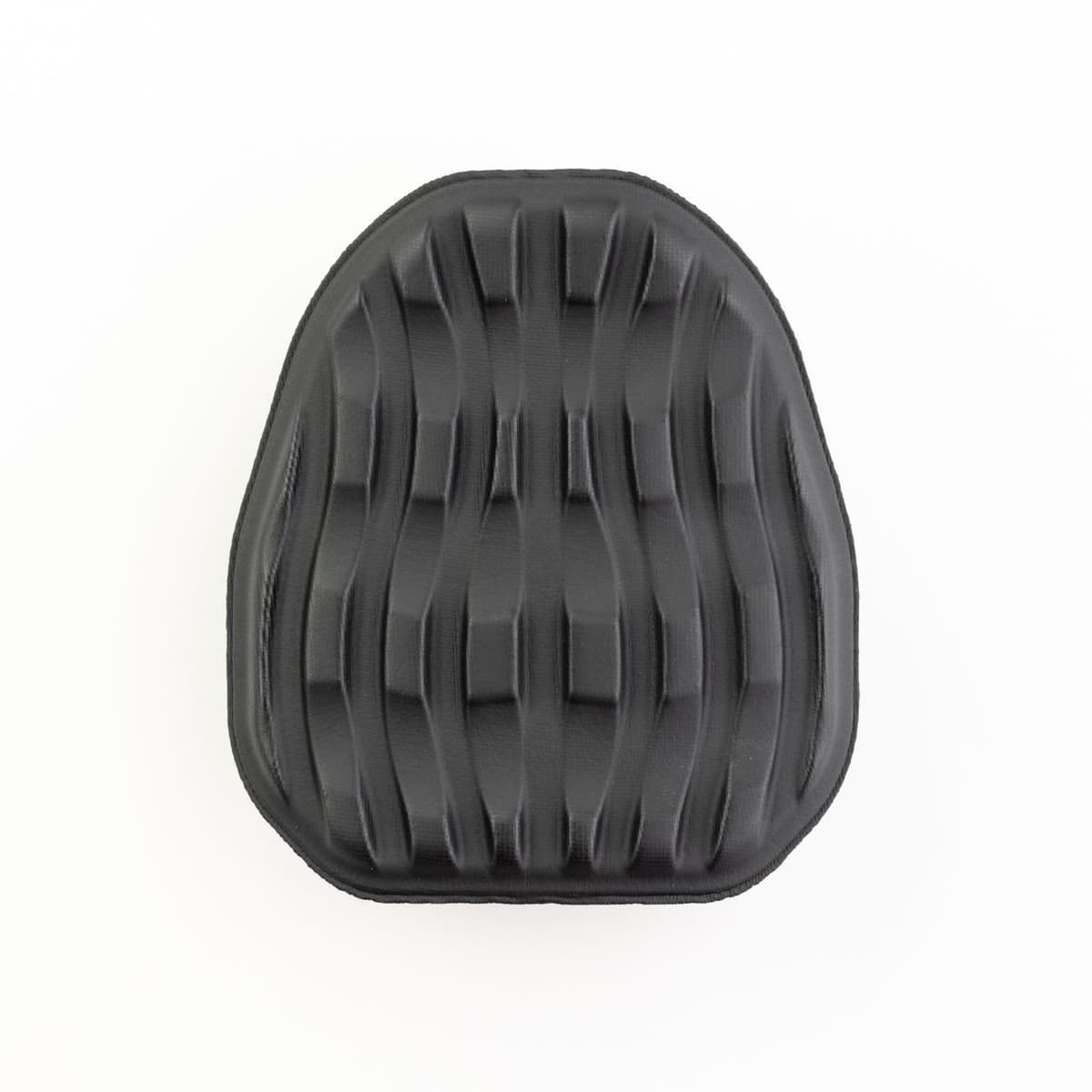
A wedge works from the body side. The $14 PHLster Wedge Rx attaches with hook-and-loop to a rigid Kydex, Boltaron, or polymer IWB holster and pads the body-facing surface while tipping the holster's angle. It uses orthotic-grade foam with a medical-grade skin-contact coating, which is the material spec that matters for something worn against skin all day. It comes in small, medium, and large, and PHLster specifically recommends the large size for larger people and rounder bellies; that size measures 5 by 4 by 1.25 inches. Because a wedge changes both pressure distribution and grip angle, expect to re-tune the holster position after adding one. Our concealment tuning guide covers ride height and cant adjustment in more depth.

Rounded Claw Kit for IWB Holster
Belt-side claw · Reversible

Rounded Claw Kit for IWB Holster

Belt-side grip-tuck adjustment on compatible Rounded IWB holsters
  • Reversible for right- or left-hand holsters
  • Short and tall standoffs tune the belt-contact point
  • Requires two retention holes at 0.60-inch spacing
  • Not compatible with the Rounded Universal or listed WML holsters
$15.49Catalog
Shop at MidwayUSA
PHLster Wedge Rx
Body-side wedge · Three sizes

PHLster Wedge Rx

Body-side padding and grip-tuck tuning for a rigid IWB holster
  • Small, medium, and large, in left and right geometry
  • Orthotic-grade foam with a medical-grade skin-contact coating
  • Large size measures 5 x 4 x 1.25 inches
  • Hook-and-loop attachment to rigid Kydex, Boltaron, or polymer
$14.00Catalog
View at OpticsPlanet

Affiliate links - purchases support this site at no extra cost to you. (?)

Summer, Sweat, and Skin Contact

In heat, the material touching your skin becomes the whole question. Two of the picks here were chosen partly for this: the Ironside Hybrid's foam layer is closed-cell, so it does not absorb sweat the way a leather backer does, and the Wedge Rx uses a medical-grade skin-contact coating over orthotic-grade foam rather than bare foam. Sweat trapped between a holster and skin is what turns a comfortable setup into an unpleasant one by mid-afternoon, and closed-cell materials are what keep it from soaking in.

Summer also thins out the cover garment, which is when the belt and the claw earn their keep. A thin cotton tee shows an outline that a flannel would have hidden, so the grip needs to be tucked in tighter rather than merely covered. That is a claw adjustment and a belt-tension adjustment, not a reason to switch pistols. A wicking base layer such as the TRU-SPEC tee under a loose outer shirt also puts a fabric barrier between the holster and your skin, which is worth more in July than any other change on this page.

When a Belt Is Not an Option

The $99.99 Alien Gear Low-Pro Belly Band is the answer for gym shorts, sweatpants, and anything else without belt loops. It wraps the torso on breathable medical-grade elastic and carries a custom-molded polymer shell with adjustable retention, so unlike a fabric-pocket band it still covers the trigger guard with a rigid shell. The band rotates, which means the same holster can sit at appendix, strong side, or crossdraw depending on what the clothing allows that day.

Two constraints decide whether it fits your setup. It does not support slide-mounted optics, weapon lights, or lasers, so a light-equipped pistol will not work on it. And the shell is gun-specific rather than universal, so it is ordered to your pistol and hand. Alien Gear sizes run from XS at 23.8 to 28.5 inches through XXL at 47.5 to 52.3 inches, measured around the position where you intend to wear the band rather than at your pants line, which on a larger build are two different circumferences. Broader alternatives are compared in our belly band holster guide.

Get New CCW Gear Breakdowns

Holster, belt, and carry-setup guides as we publish them. No spam, unsubscribe anytime.

Free targets, drill cards, and weekly reviews by email.

Frequently Asked Questions

What is the best concealed carry option for fat guys?
Start with the Glock 43X in a rigid-shell IWB holster worn at 4 or 5 o'clock, then tune belt tension, cover garment, cant, and grip tuck before changing anything else. The T.REX ARMS Ironside Hybrid is the primary holster pick because its Alcantara and closed-cell PE foam backer spreads contact across a wider area of the body instead of concentrating it on one Kydex edge. A 1.5-inch belt with real vertical stiffness, such as the Kore Essentials X1 or the Blue Alpha Low Profile EDC, is what keeps that setup from rolling outward through the day.
Can fat guys conceal carry?
Yes. Concealment is a function of the pistol's profile, the carry position, belt support, cover garment, and adjustment, not of body size. A larger build often favors 4 or 5 o'clock over appendix because the holster sits behind the hip rather than against the front of the midsection, but the comfortable position is personal and should be tested unloaded and safely before it is carried. A slimline pistol like the Glock 43X and a holster with wide cant adjustment such as the Ironside Hybrid give the most room to dial the setup in.
What is the best concealed carry holster for fat guys?
The T.REX ARMS Ironside Hybrid is the backbone pick for 4 o'clock IWB carry. Its full .093-inch Kydex shell preserves trigger coverage and stays open for reholstering, while the Alcantara and closed-cell PE foam backer gives a softer, breathable, water-resistant surface against the body. Tuckable clips provide +5 to +20 degrees of cant, which is the adjustment range that lets you angle the grip out of the ribs and the muzzle away from the leg. For days when a belt is not an option, the Alien Gear Low-Pro Belly Band carries the same pistol on a breathable elastic band instead.
How to conceal carry with a big belly?
Try 4 or 5 o'clock first, wear a belt sized to your actual carry position rather than your pants size, use an untucked cover garment, and adjust cant and ride height in small steps. Only after the basic setup is stable should you add hardware: a Rounded Claw Kit levers the grip inward from the belt side, and a PHLster Wedge Rx pads and pivots the holster from the body side, with PHLster recommending its large size for larger people and rounder bellies. Change one variable at a time so you can tell which adjustment actually helped.
What size gun belt do I need for concealed carry?
Measure around your waist at the height you actually wear the belt, over the clothing you carry in and with the holster in place, then buy to that measurement rather than your pants size. The Kore Essentials X1 covers 24 to 54 inches with an EXL option running 54 to 72 inches, and its ratchet gives quarter-inch adjustment across more than 40 positions instead of the two-inch jumps a punched belt forces. The Blue Alpha Low Profile EDC Belt offers custom sizing above 48 inches for waists past the standard range.
Is appendix carry bad for larger builds?
It is not universally bad, but many larger carriers find that appendix pinches when seated because the pistol is trapped between the front of the midsection and the thigh. Moving the holster back to 4 or 5 o'clock puts it behind the hip, where the body curves away and there is less compression when you sit. The T.REX ARMS Ironside Hybrid is built for the 4 o'clock position specifically. If appendix works for you when seated, keep it; the position that stays comfortable through a full day is the one you will actually carry.

The Verdict

Slim pistol, hybrid holster, 4 o'clock. The Glock 43X in a T.REX ARMS Ironside Hybrid on a properly sized 1.5-inch belt is the setup, and everything else on this page is tuning.

Buy in that order and stop after each step long enough to know whether the next one is still necessary. Most setups that get abandoned were never belt-limited or holster-limited; they were position-limited, and the owner replaced the pistol instead of moving the holster two hours back on the clock. Add the claw or wedge only once the base setup is stable, keep the belly band for days the belt cannot come along, and let the cover garment do more of the work than you think it can.