Concealment Tuning 2026: Claws, Wedges, Wings & Ride Height header image
Setup
August 12, 2026
Concealment Tuning 2026: Claws, Wedges, Wings & Ride Height

Tune an existing carry setup by changing one variable at a time: belt-side leverage, body-side wedge pressure, ride height, cant, attachment spacing, and belt tension.

Concealment Tuning 2026: Claws, Wedges, Wings & Ride Height

A concealment claw and a wedge do different primary jobs, and changing both at once is why most people never learn which one they needed. The claw bears on the belt and rotates the grip horizontally inward. The wedge sits near the muzzle against your body and pitches the muzzle out so the slide and grip tuck back. Ride height, cant, clip geometry, and belt tension move the same outline again. This is how to conceal appendix carry the way it is actually done: one variable at a time, in order, so gun printing becomes a problem you can diagnose instead of a shopping list.

By AB|Last reviewed August 2026

Key Takeaways

  • Overlapping, not interchangeable: a claw's primary output is horizontal grip rotation, a centered muzzle wedge's is front-to-back tuck, and an asymmetrical or slide-side wedge produces both.
  • Appendix is where this pays most: behind the hip a claw and wedge still work, but returns fall off fast, so forward cant, attachment spacing, and shell wrap lead there.
  • Claws are not universal: the $15.49 Rounded Claw Kit needs two retention holes at 0.60-inch spacing and ships with short and tall standoffs.
  • Start thin on wedges: the $14 PHLster Wedge Rx runs from 3 x 2.5 x 0.75 inches to 5 x 4 x 1.25 inches, and an oversized wedge moves the print below the waistband.
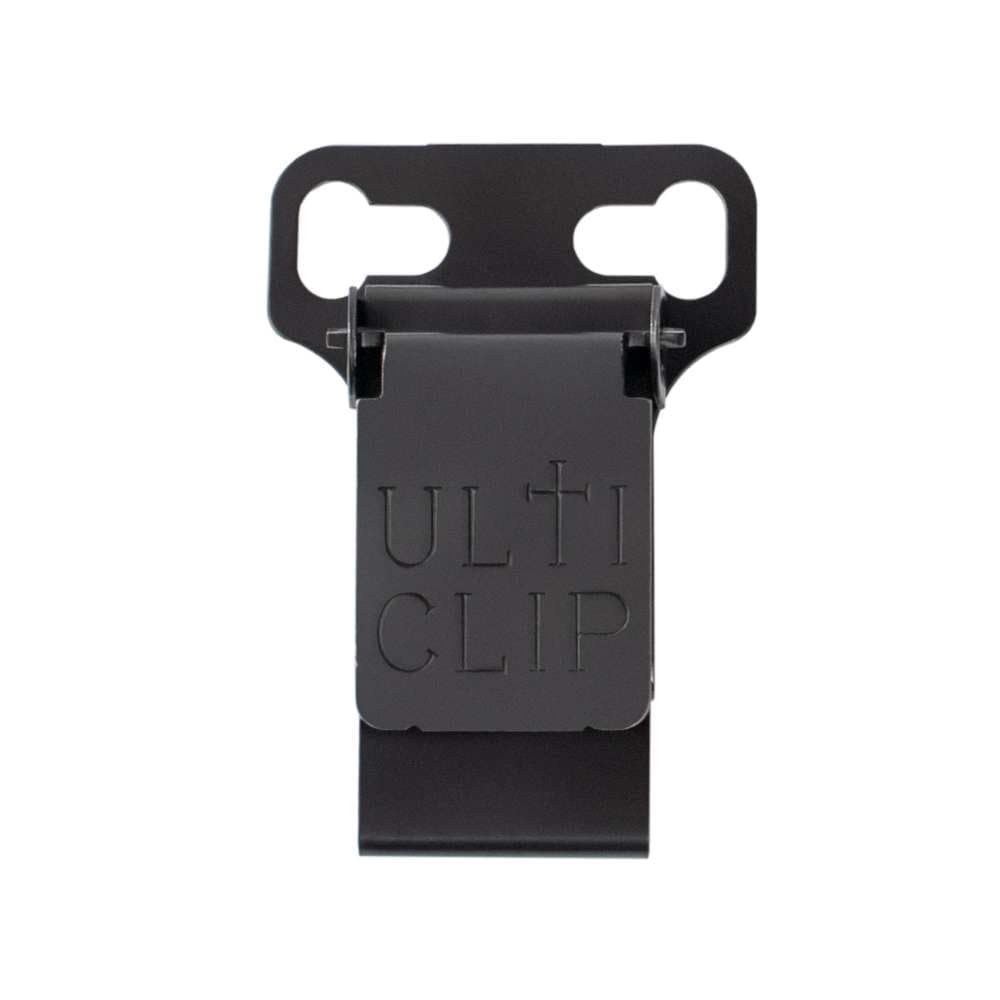
  • Clip geometry sets the range: UltiClip mounting spans a 2.2-inch single-slot body up to the $15.99 3+ at 1.7-inch hole spacing, so the clip that fits decides how much ride height and cant you can change.

Diagnose the Print Before Changing Hardware

Printing is a repeatable hard edge or a recognizable gun shape through the garment, and the part of the gun that shows tells you which adjustment to make. A grip corner at the rear of the belt line is a rotation problem. A flat slide reading through the shirt is a front-to-back tuck problem. A new bulge below the waistband is a wedge that is too thick or in the wrong place.

Soft tissue and fabric drape are not printing. Cloth moving over a body contour changes shape as you move; a printed grip holds the same hard corner in the same spot every time you stand the same way. Take a photo in the same stance, same shirt, and same belt setting before you buy anything, and take that photo again after every change. Without a fixed reference you are grading your shirt, not your hardware.

  • Grip corner at the rear of the belt line
    Claw leverage or molded inward geometry
    What It Usually MeansThe grip is angled away from the body
  • Slide and rear sight above the belt
    Ride height at the clip
    What It Usually MeansThe gun rides too high for the garment
  • The whole slide reading flat through the shirt
    Wedge near the muzzle
    What It Usually MeansThe gun is not tucked front to back
  • A new bulge below the waistband
    Wedge size and position
    What It Usually MeansThe wedge is too thick or badly placed
  • A gap between belt and shirt at the holster
    Belt tension, buckle location, belt width
    What It Usually MeansBelt tension or buckle position is fighting the holster
  • The whole outline moving as one slab
    Clip choice and mounting spacing
    What It Usually MeansThe attachment is too rigid or spaced wrong for your waist

If the honest answer is that nothing on your holster adjusts, this is a selection problem rather than a tuning problem. Start with the appendix carry holster guide and buy a shell with mounting holes, then come back here.

How a Claw Creates Belt-Side Leverage

A concealment claw is a small wing mounted to the outside of the holster that bears against the inside of your belt. Belt pressure pushes back on the claw, and because the claw sits off the holster's centerline, that push becomes leverage around the holster body: the grip rotates horizontally inward, toward your ribs.

Read that as primarily an appendix-carry mechanism. It still functions behind the hip: a wedge fills the gap at the bottom of the holster and levers the grip in, and a wing or claw still uses belt pressure to rotate the grip inward. What changes at 3 to 5 o'clock is the payoff. Your hip and flank do not give the way the abdomen does, so the same rotation buys less concealment and the returns fall off quickly; past a point the claw pushes your belt out instead of pulling the gun in. Start strong-side work with forward cant, widely spaced attachments, a shell that wraps the curve of the hip, and belt tension, then add less claw and less wedge than you would run at appendix.

The mechanism has one dependency, and it is the belt. The Rounded Claw Kit ships with a short and a tall standoff for exactly that reason: the taller standoff moves the contact point deeper into the belt and increases rotation, but leverage is a setting to tune rather than maximize. Too much of it conceals the pistol and feels bad enough that you stop carrying, and past a point the holster stops rotating and starts rolling. Fit the short standoff first.

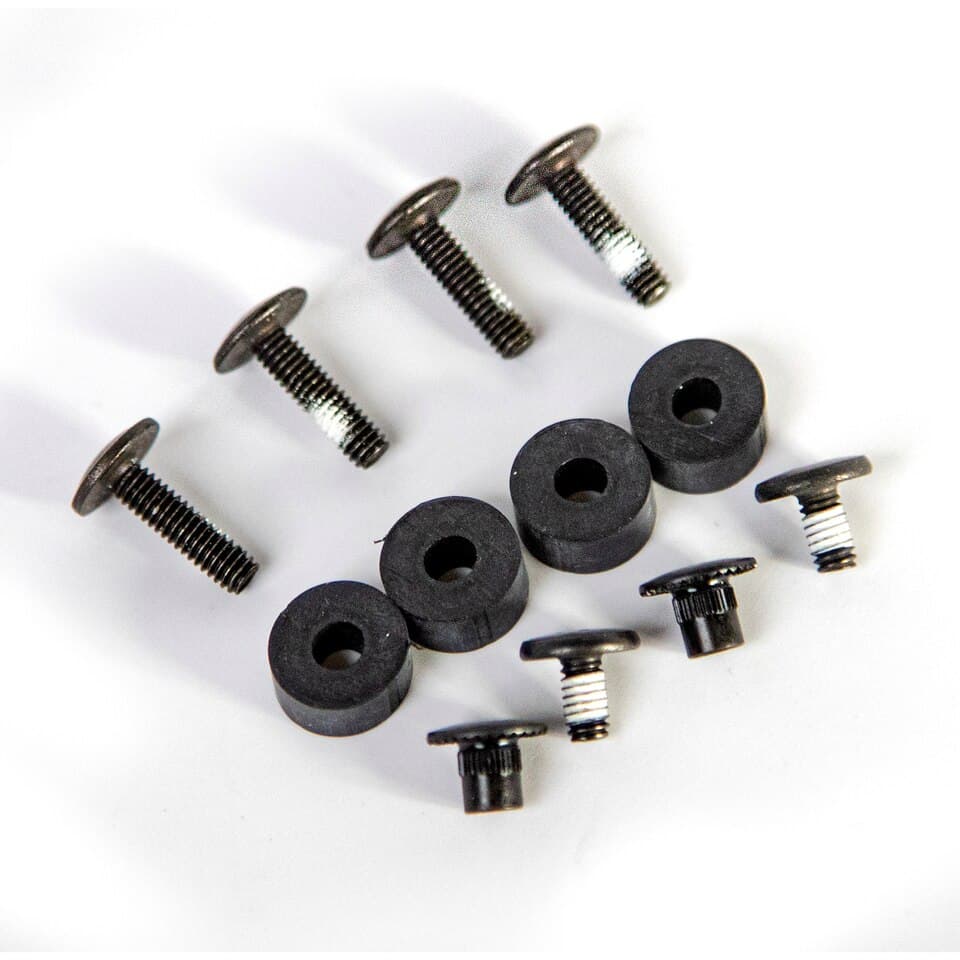
Claws are also not universal hardware. The kit mounts through the holster's existing retention holes, and the Rounded kit specifically requires two retention holes at 0.60-inch spacing. Count and measure before ordering. It is reversible for right- or left-hand setups and includes the screws, nut, and spacers.

Rounded Claw Kit for IWB Holster

Best bolt-on claw when the holster already has the hole pattern

$15.49

Reversible bolt-on claw that uses belt pressure to rotate the pistol grip inward on compatible Rounded IWB holsters.

0.60-in hole spacingShort + tall standoffReversible
Sku: CE-CLAW-KITMounting Slots: Two retention holes at 0.60-inch spacingFits: Rounded IWB and Tuckable holsters with two retention screws at 0.60-inch spacing. Rounded states its weapon-light (WML) holsters and its Universal holster are NOT Claw Kit compatible

Know the failure modes before you blame the part. An unstructured waistband lets the claw push the garment outward instead of rotating the grip. Inadequate belt tension leaves neither the claw nor the wedge activated at all. A very rigid belt that will not conform to your waist can hold the whole pistol away from the body, which no amount of claw height fixes. A claw that is the wrong size, in the wrong position, or on the wrong support does not do nothing; it moves the bulge somewhere else.

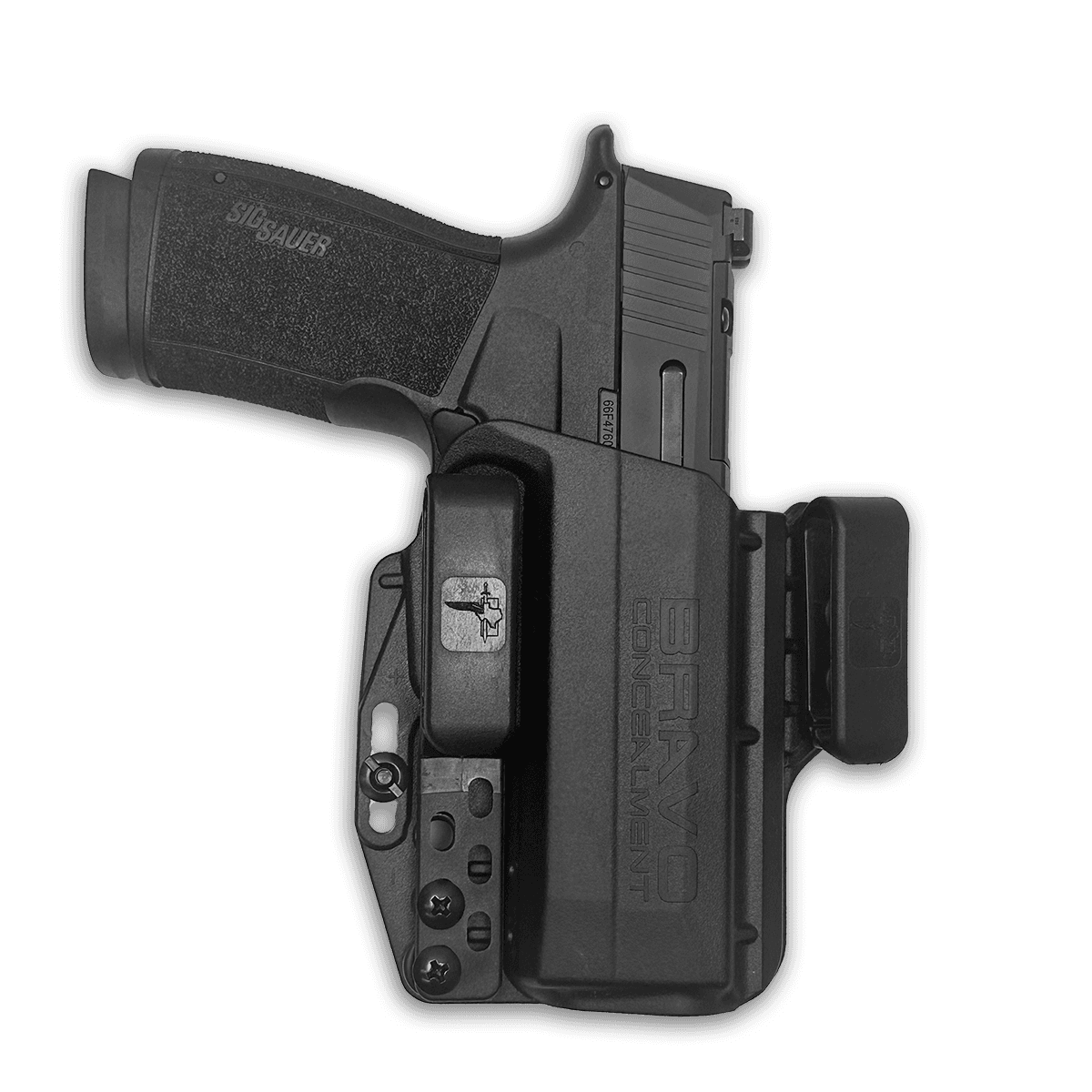
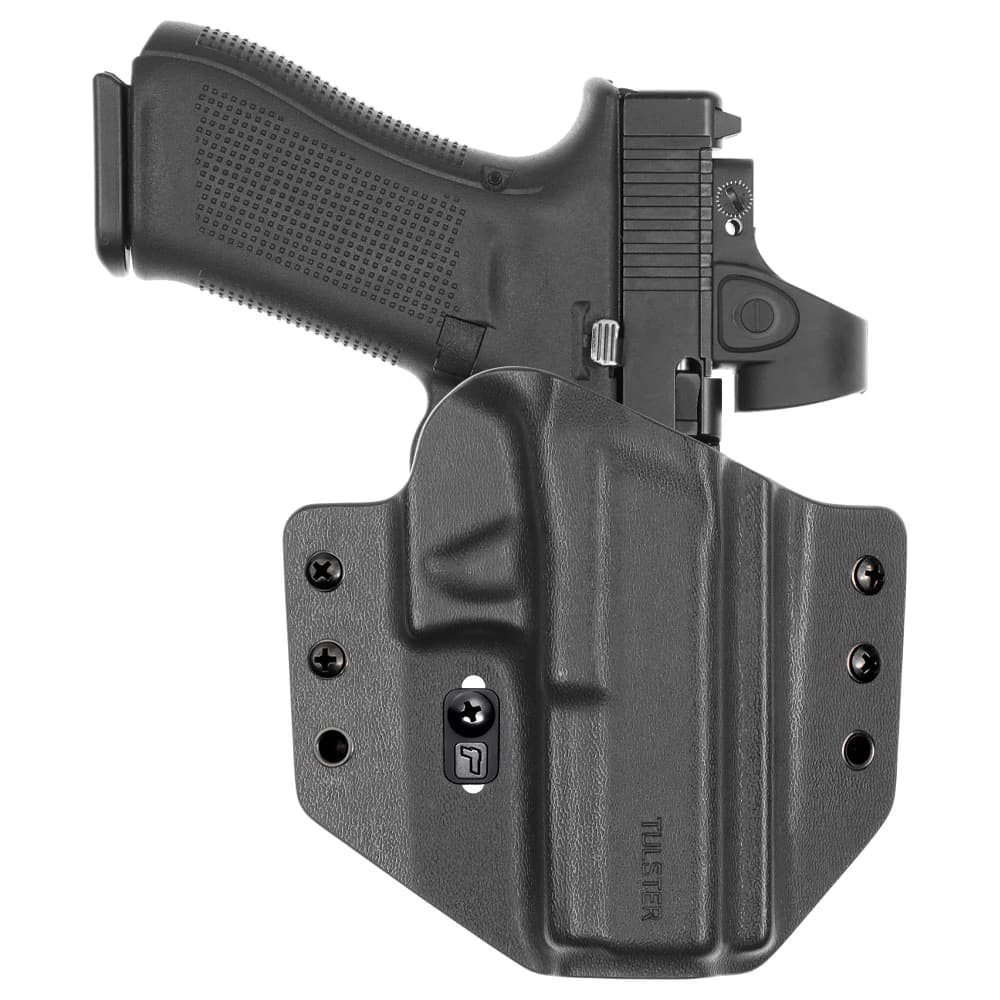
Some holsters build the same belt-side leverage into the shell. Bravo Concealment molds a 10-degree inward Torsion into the Torsion 3.0 IWB, and Crucial Concealment's Covert IWB uses a belt-reactive trigger bump that takes belt pressure and angles the grip inward. Both sit with the other built-in geometry below. One naming warning while you shop: BlackPoint Tactical's WING series is named for its flexible leather attachment wings, which wrap the holster around your waist. Those are not concealment claws and do not work the way this section describes.

Wedge Placement: Tip the Muzzle Out to Tuck the Grip In

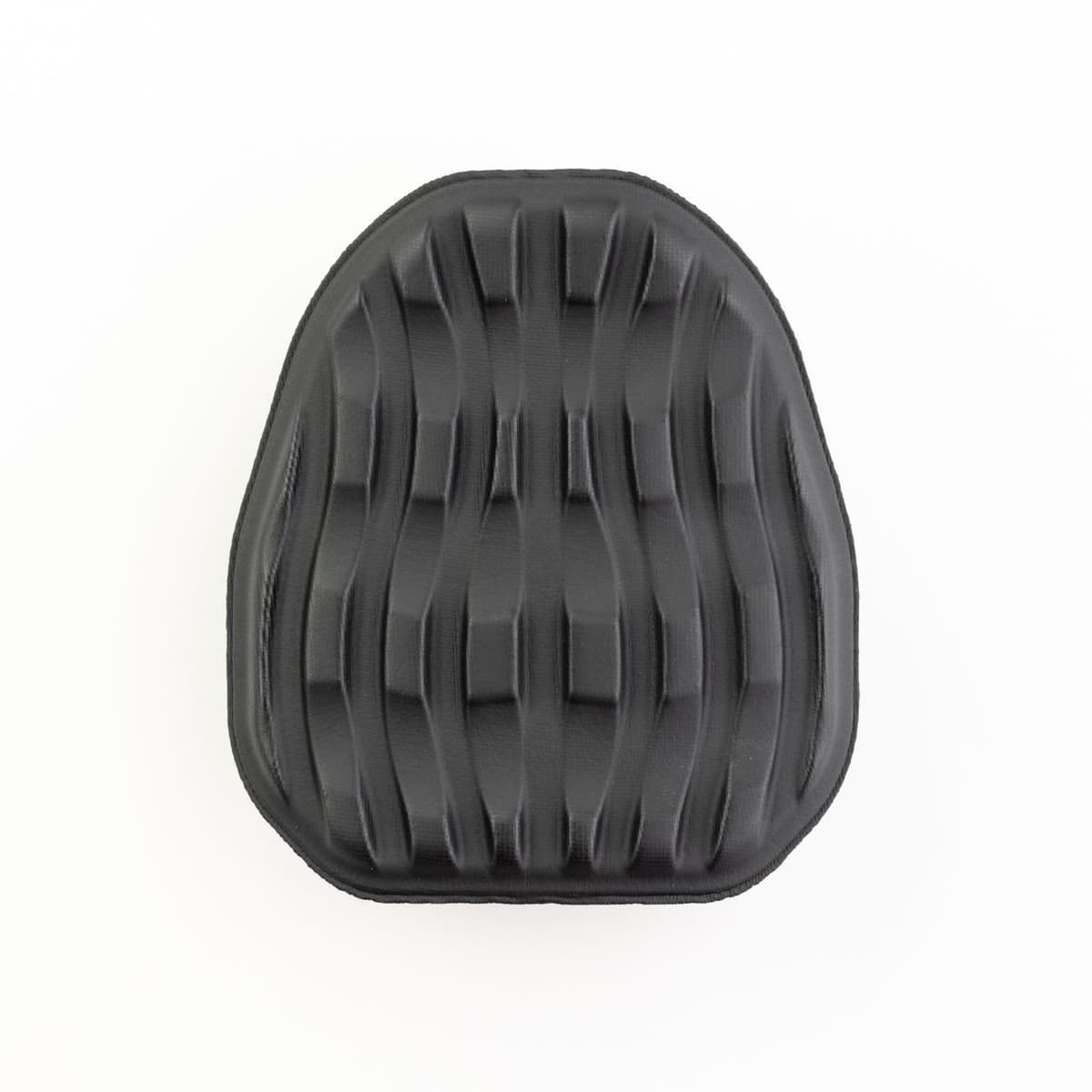
A wedge is a foam block on the body side of the holster, usually near the muzzle and below the waistband. It creates a fulcrum against your body at the muzzle end and redirects belt or chassis pressure into front-to-back pitch: the muzzle is pushed away from you and the slide and grip tuck back toward you. The claw works on the belt. The wedge works on you.

They are not two names for one fix, and they are not mutually exclusive either. The claw's primary output is horizontal grip rotation; a centered muzzle wedge's primary output is that front-to-back tuck. An asymmetrical wedge, or one shifted toward the slide side, produces both, and it can create more grip rotation than the wing does on its own. What a claw cannot reproduce is the wedge's muzzle-side pitch, its cushioning, or the way it fills the gap between a rigid shell and a body that is not flat. Use whichever the observed print calls for, or both.

Not every piece of foam rotates anything. A flat pad centered on the shell mostly fills a void and spreads pressure, which is a comfort change rather than a concealment change. If rotation is the goal, you are choosing thickness, footprint, and lateral placement, not simply adding padding.

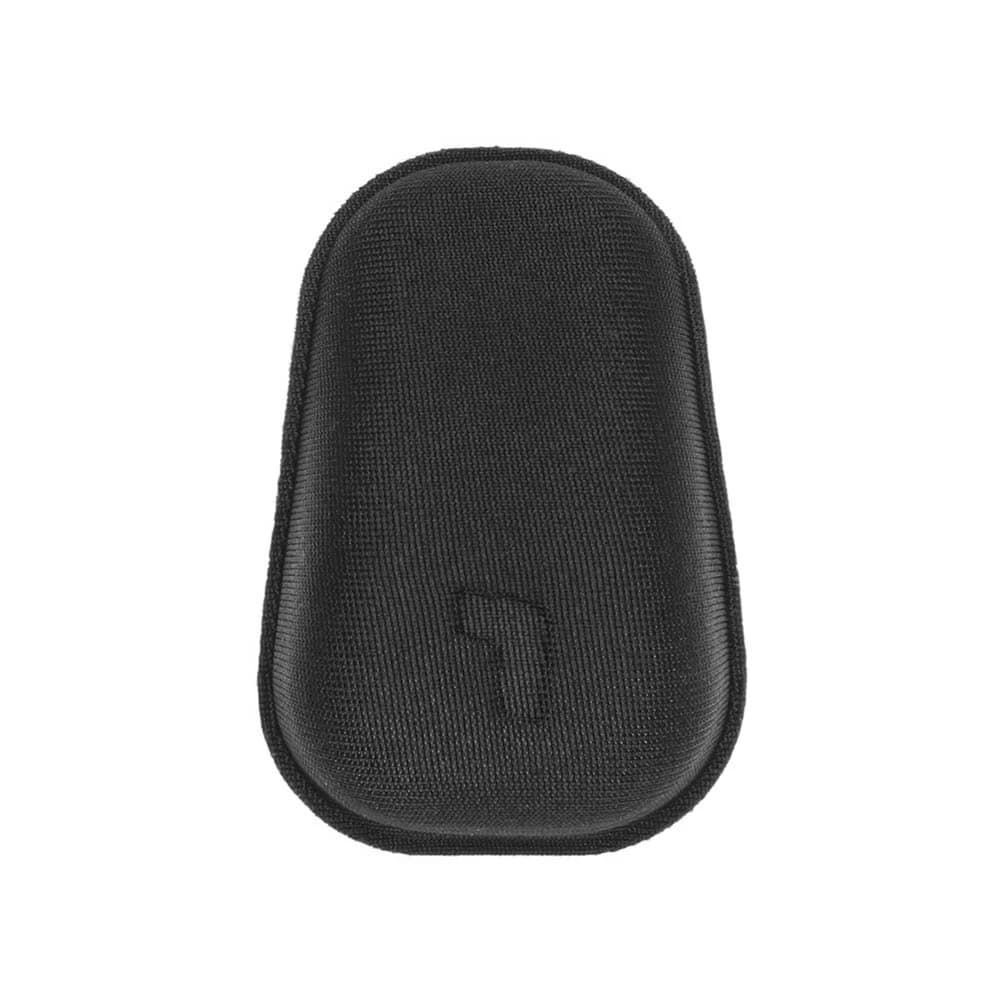
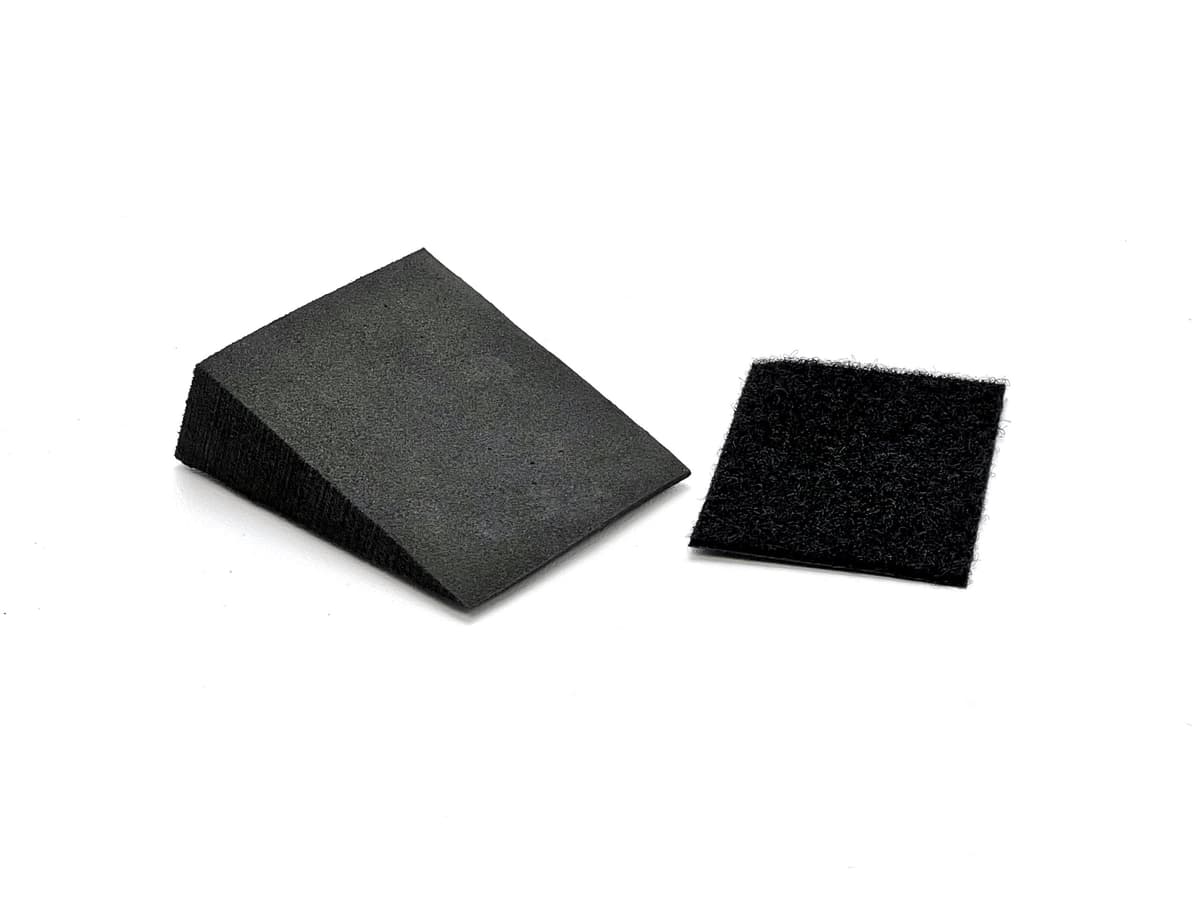
PHLster's Wedge Rx is the adjustable version: six variants across small, medium, and large in left and right geometry, from 3 x 2.5 x 0.75 inches up to 5 x 4 x 1.25 inches, in orthotic-grade foam with a skin-contact coating, attached with hook-and-loop so you can slide it up, down, or off. The handed asymmetry is the point. It puts the thick part of the wedge where the rotation is needed and keeps load off the areas that cannot take it all day.

Tulster's Foam Concealment Wedge is the cheap way to find out whether a wedge is your answer at all: small at 0.375 inch thick, medium at 0.75 inch, antimicrobial fabric over foam with 8217 adhesive backing. Adhesive means one committed placement instead of a movable one, so mock the position with tape, wear it for a day, and stick it once.

6 variants / S-M-L / left or right

PHLster Wedge Rx

Most tunable foam wedge system
  • Small 3 x 2.5 x 0.75 in up to large 5 x 4 x 1.25 in
  • Hook-and-loop, so placement stays movable
  • Orthotic-grade foam with a skin-contact coating
$14.00MSRP
View at OpticsPlanet
2 thicknesses / adhesive mount

Tulster Foam Concealment Wedge

Cheapest way to test whether a wedge is your fix
  • Small 0.375 in thick, medium 0.75 in thick
  • 8217 adhesive backing, one committed placement
  • Black antimicrobial fabric over the body contact face
$12.99MSRP
Shop at MidwayUSA

Affiliate links - purchases support this site at no extra cost to you. (?)

More is not automatically better. A large wedge can reduce how much the claw is actually doing, and an excessive or badly placed one creates fresh printing below the waistband: the grip stops showing and the muzzle end starts. Poorly sized pads often make the gun print more even when they feel better. Start with the thinnest wedge that visibly moves the grip, and add thickness only when the thinner one does nothing.

Clips Set Ride Height and Cant

The clip decides how much ride height and cant you can adjust, because both are functions of where the clip bolts to the shell and how far it slides before it runs out of slot. Changing the clip changes the adjustment range, not just the attachment method.

Ride height is a two-sided trade. Riding higher puts more grip above the belt line, which makes the firing grip easier to establish and the draw cleaner, and it also leaves more grip out where a shirt can drape over it and show the outline. Riding lower buries the grip and simultaneously crowds your firing hand against the belt, so you fish for the grip instead of taking it. Set ride height at the highest position where the grip still disappears under your real cover garment, then leave it alone.

Cant rotates the holster in the plane of your waist, moving the grip forward toward the buckle or back toward the hip. It is the adjustment for a grip corner sitting in the wrong place rather than at the wrong angle, and behind the hip it is a primary concealment lever rather than a secondary one. Test cant on the belt you actually wear: the same rotation reads differently against a 1.5-inch belt than a 1.75-inch one, and the clip's belt clearance changes with it.

Which clip you can fit is decided by the holster, not by preference. Hole count, hole spacing, slot orientation, and how much flat shell sits above the trigger guard all gate the field. Measure the spacing between your holster's mounting holes and match it against the ranges below before ordering anything.

  • UltiTuck
    0.60 to 1 in hole widths
    Size / BodyT-slot body
    Choose It WhenYou want tuckability and cant adjustment from the same clip
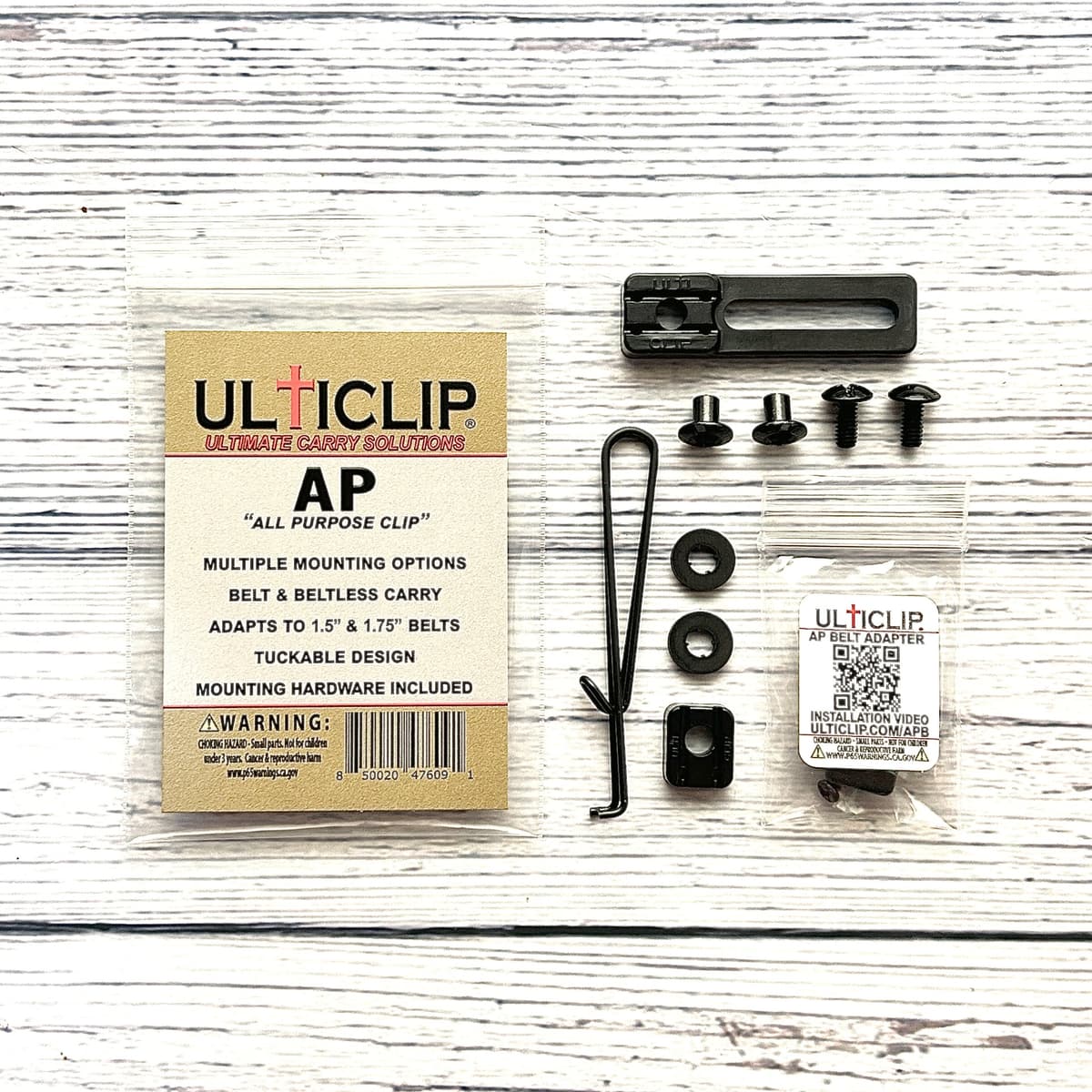
  • AP
    Adapters for 1.5 and 1.75 in belts
    Size / Body2.88 in
    Choose It WhenYou tuck a shirt over the gun, or carry with no belt at all
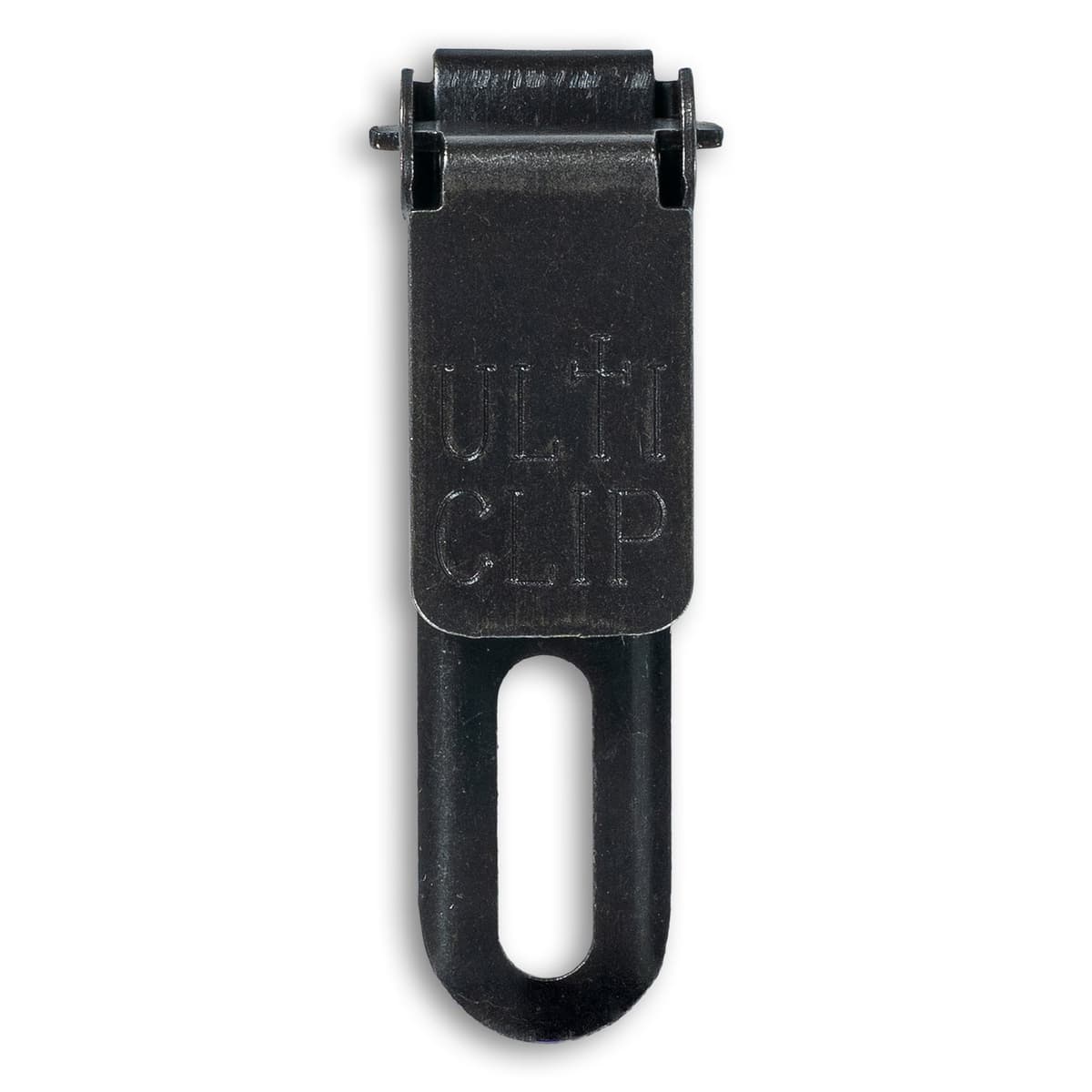
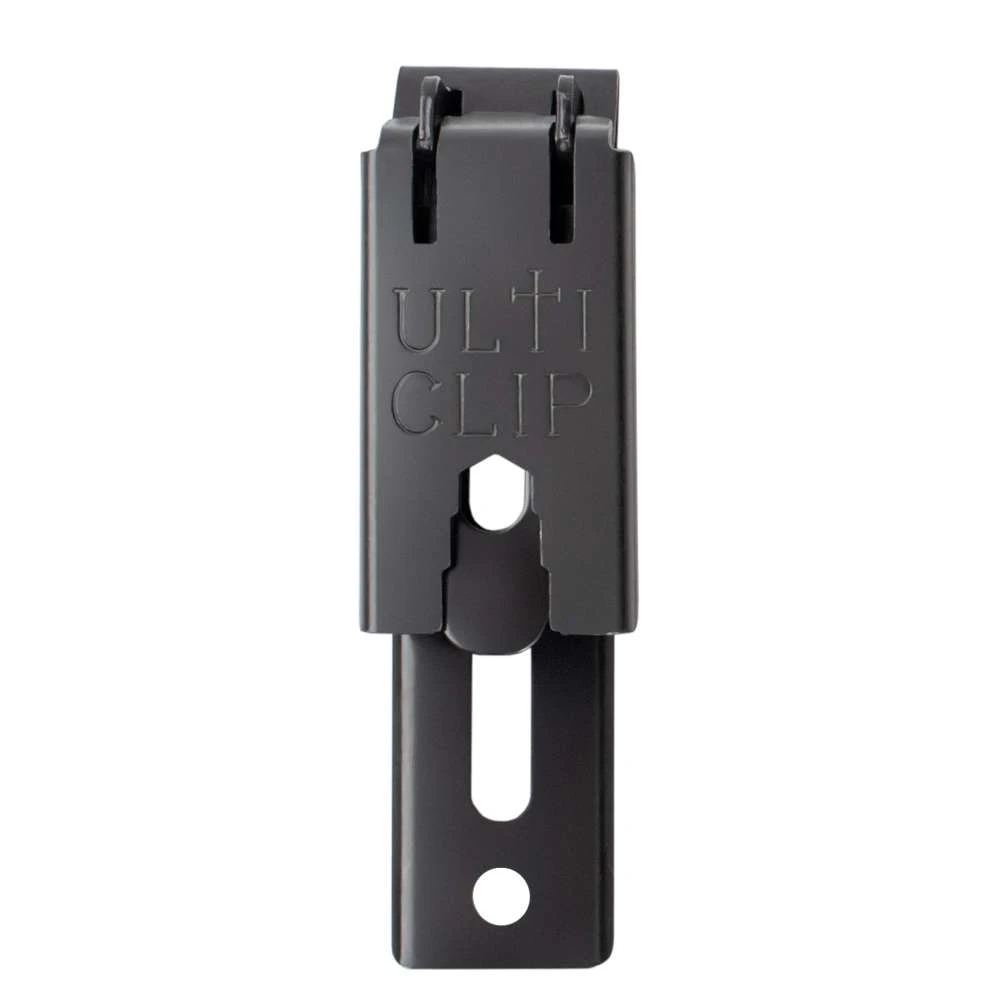
  • Slim 2.2
    One slotted two-screw area
    Size / Body2.2 in, just over 0.5 in wide
    Choose It WhenThe holster has a short vertical mounting area
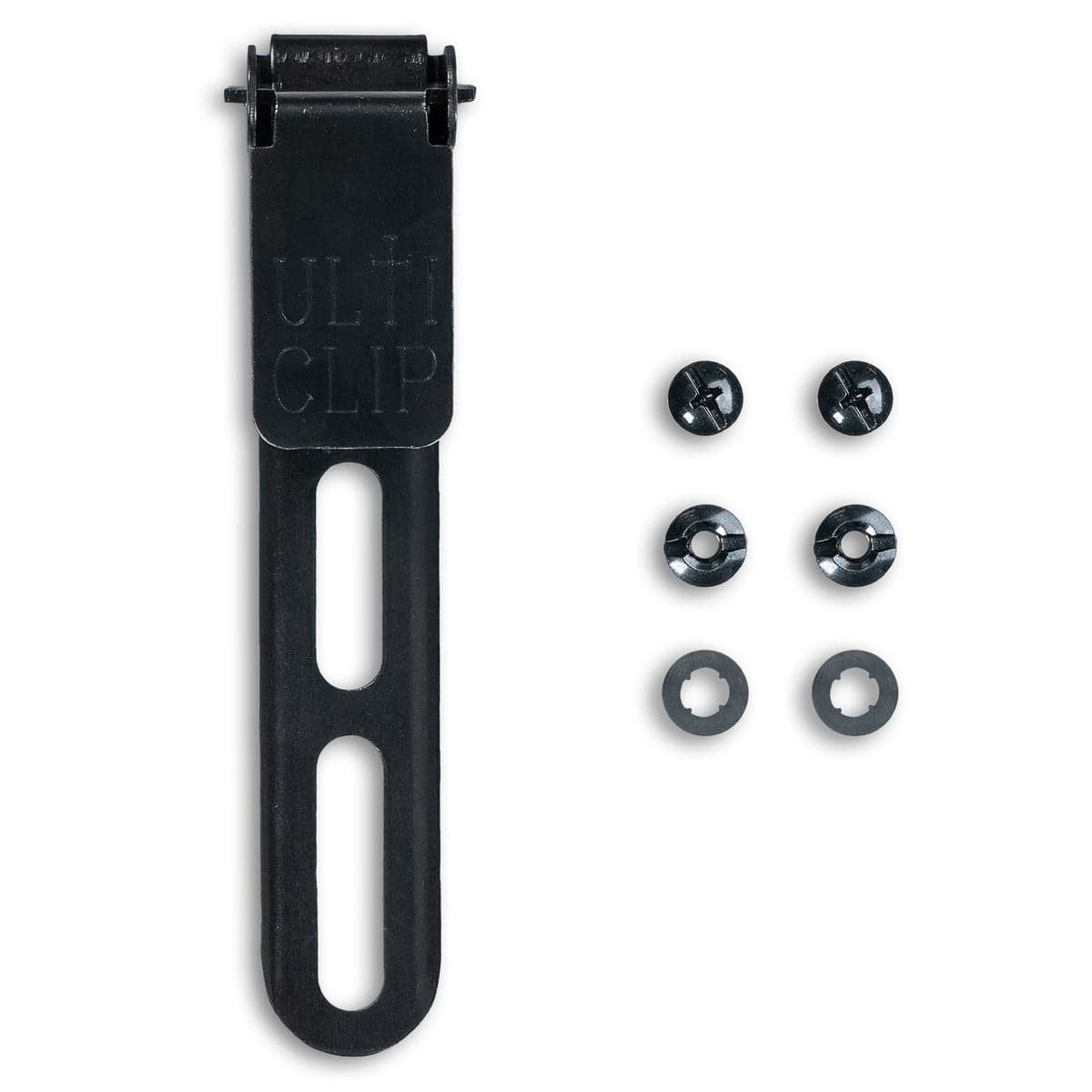
  • Slim 3.3
    Dual slots, to 1.5 in hole spacing
    Size / Body3.3 in
    Choose It WhenYou want vertical adjustment room on a narrow clip
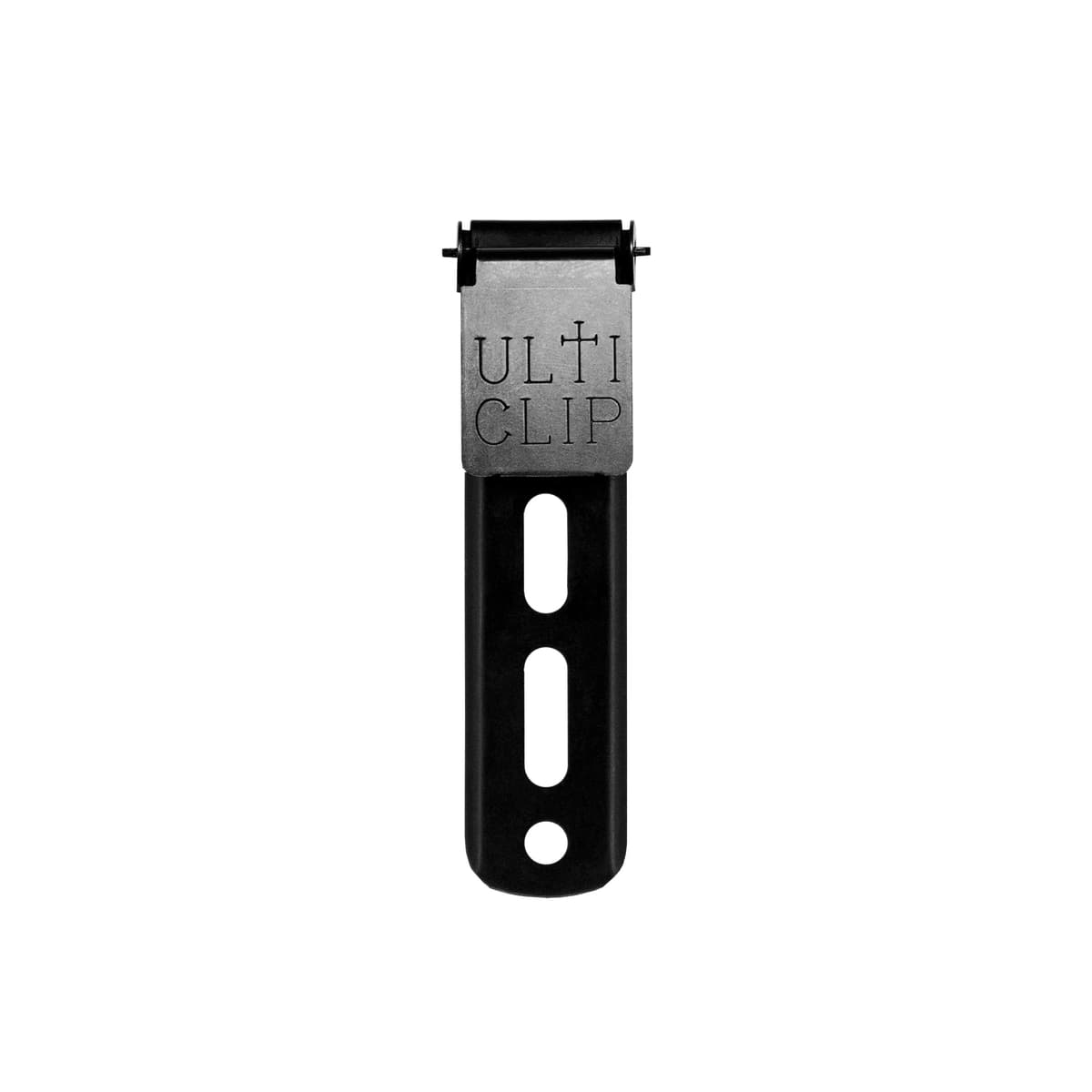
  • 3+
    Slots to 1.7 in hole spacing
    Size / Body3.63 in
    Choose It WhenThe holster's holes are wider than the Slim 3.3 accepts
  • Classic
    Dual mounting bracket
    Size / Body3.5 x 0.875 in, 0.78 oz
    Choose It WhenYou want a full-size locking clip that grips the garment
  • APH
    0.30 in slots, 1.5 and 1.75 in belts
    Size / BodyHorizontal wire clip
    Choose It WhenThe cant change you want needs a horizontal hole pattern
  • XL
    1.5 in belt, to 0.375 in thick
    Size / Body3.5 x 0.875 in, 1.37 oz
    Choose It WhenYou want the attachment locked around the belt, not the garment

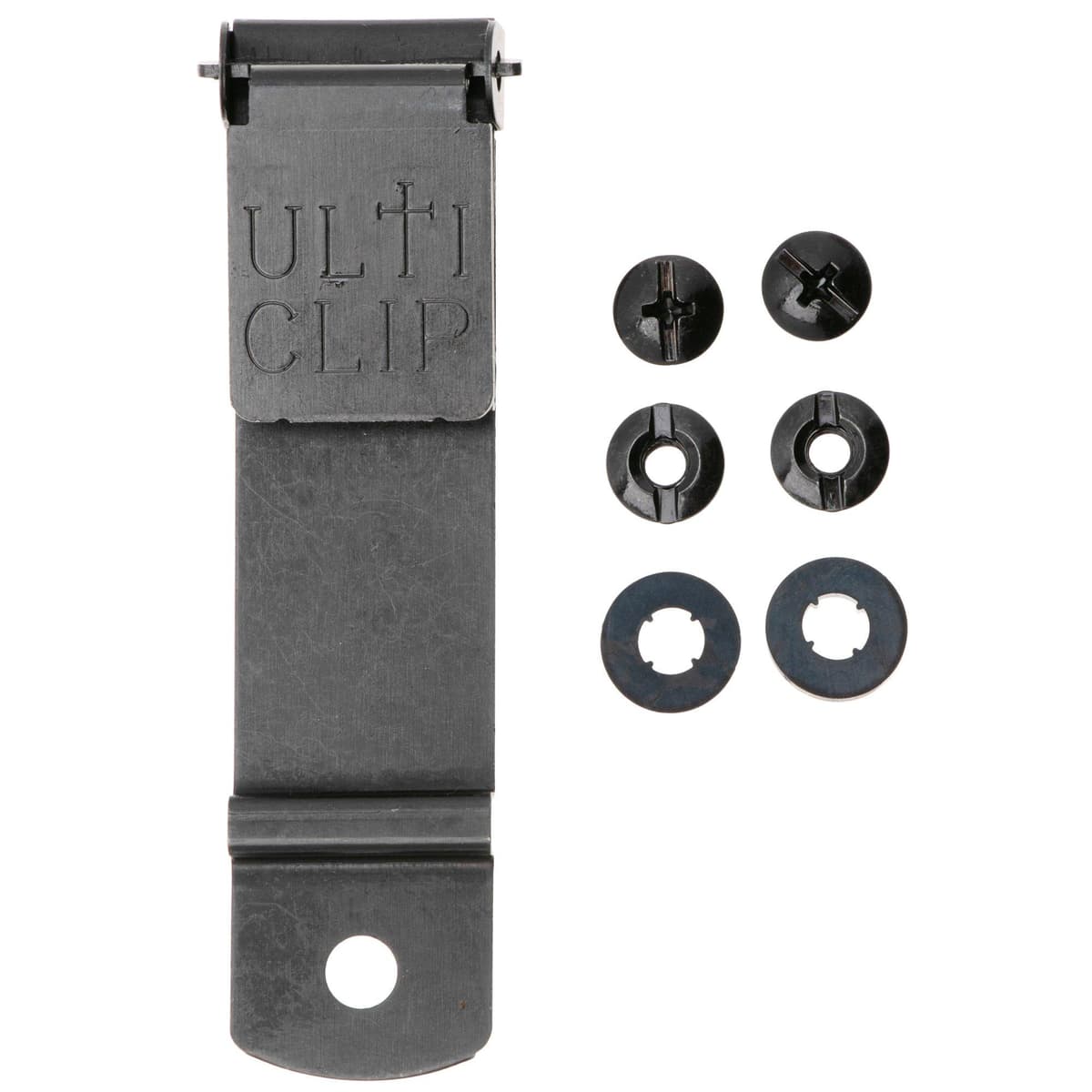
Three practical groups fall out of that table. If you tuck a shirt over the gun or carry with no belt, the AP and the UltiTuck are the two verified for tuckable and beltless use, and the UltiTuck's T-slot is the one that gives you cant adjustment at the same time. If you want the attachment locked to the belt itself rather than pinching the garment, the XL is a steel belt loop sized for a 1.5-inch belt up to 0.375 inch thick. Everything else is a mounting-range decision: Slim 2.2 for a short mounting area, Slim 3.3 for dual-slot adjustment out to 1.5-inch hole spacing, 3+ when the holes are wider than that, Classic for the full-size locking garment clip, and APH when the holes run horizontally and cant is what you are chasing.

Blackhawk's Stache IWB DCC Compatibility Kit is a different kind of part and gets misread constantly. It is mounting hardware and spacers only: screws, bushings, and barrel nuts that create the correct standoff and use the Stache's existing hole spacing so a set of Discreet Carry Concepts Mod 4 clips sits straight on the shell. The clips are not in the box and neither is the holster. Buy it when you already own a Stache and already have the clips you want to move onto it.

Tuckable / T-slot / 0.60-1 in holes

UltiClip UltiTuck

Tuckability and cant adjustment from one clip
  • T-slot geometry adjusts cant
  • Belt or beltless carry
$15.99 MSRP
Shop at MidwayUSA
Tuckable / 2.88 in / belt adapters

UltiClip AP

Tucked shirts and beltless carry
  • Adapters for 1.5- and 1.75-inch belts
  • Vertical mounting on a short 2.88-inch body
$15.99 MSRP
Shop at MidwayUSA
2.2 in / single slot

UltiClip Slim 2.2

Holsters with a short vertical mounting area
  • Shortest of the Slim clips at 2.2 inches
  • Just over 0.5 inch wide, two-screw slotted mount
$15.99 MSRP
Shop at MidwayUSA
3.3 in / dual slots / to 1.5 in spacing

UltiClip Slim 3.3

Ride-height range on a narrow clip
  • Dual slots accept hole spacing up to 1.5 inches
  • 3.3-inch body with a narrow profile
$15.99 MSRP
Shop at MidwayUSA
3.63 in / to 1.7 in spacing

UltiClip 3+

Mounting holes wider than the Slim 3.3 accepts
  • Slots support up to 1.7-inch hole spacing
  • Mounting hardware included
$15.99 MSRP
Shop at MidwayUSA
3.5 x 0.875 in / 0.78 oz / locking

UltiClip Classic

Full-size locking clip for beltless carry
  • C-1075 spring steel with a dual mounting bracket
  • Secures to the garment rather than a belt loop
$15.99 MSRP
Shop at MidwayUSA
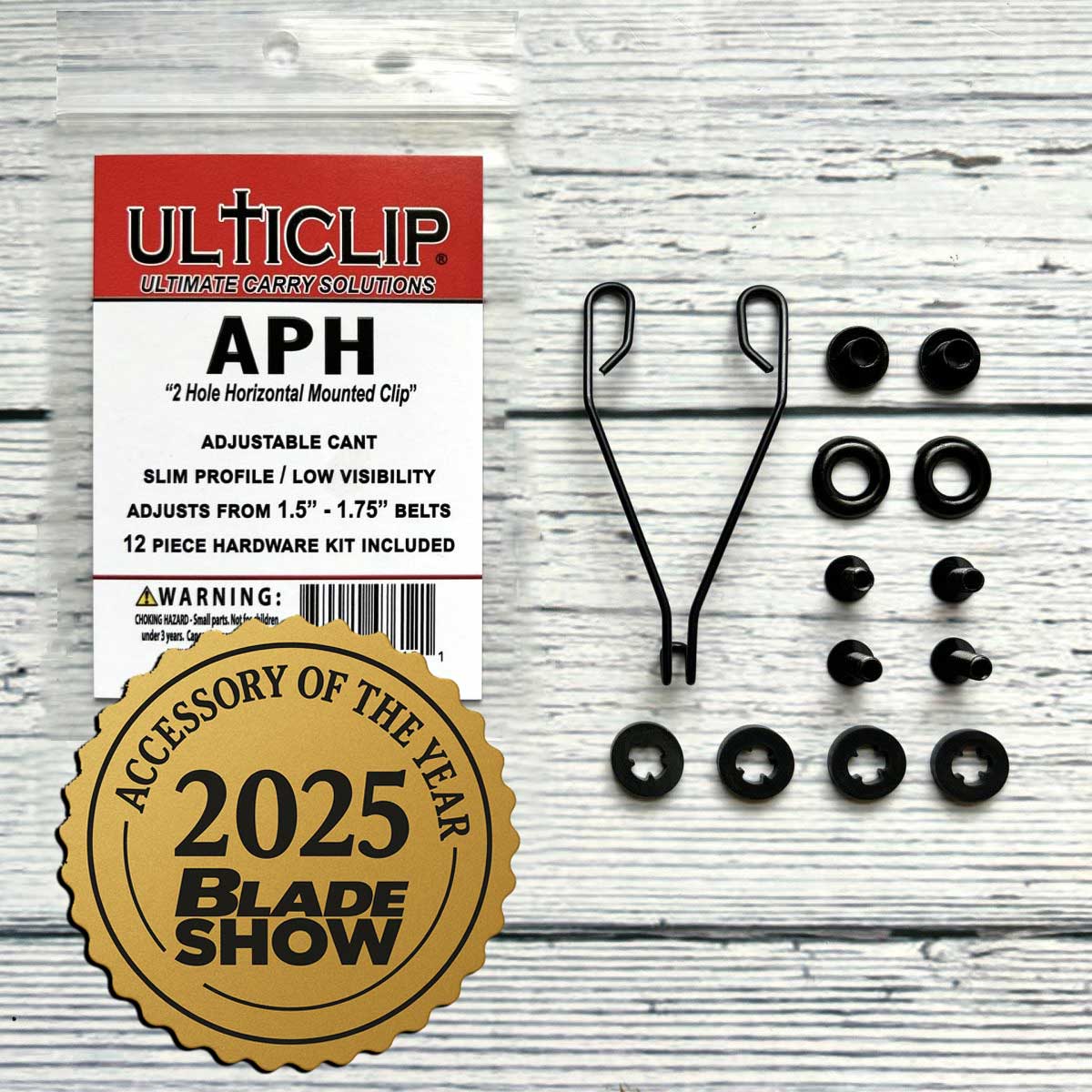
Horizontal two-hole / 0.30 in slots

UltiClip APH

Cant changes on a horizontal hole pattern
  • Horizontal two-hole wire clip with adjustable cant
  • Accommodates 1.5- and 1.75-inch belts
$15.99 MSRP
Shop at MidwayUSA
1.5 in belt loop / 1.37 oz / locking

UltiClip XL

Locking the attachment around the belt itself
  • Takes 1.5-inch belts up to 0.375 inch thick
  • 1075/1050 spring steel with a removable multitool
$18.99 MSRP
Shop at MidwayUSA
Hardware only / SKU 416A06BK

Blackhawk Stache IWB DCC Compatibility Kit

Mounting separately bought DCC Mod 4 clips on a Stache
  • Screws, bushings, and barrel nuts set the clip standoff
  • Uses the Stache IWB's existing hole spacing
$20.99 MSRP
View at OpticsPlanet

Affiliate links - purchases support this site at no extra cost to you. (?)

Holsters with Built-In Wings, Torsion, and Body Wrap

Some holsters put the geometry in the shell so there is nothing to bolt on. That trades adjustability for a setup that is already shaped correctly, and it splits into three distinct mechanisms: molded inward torsion that works against the belt, flexible struts that let the holster wrap the waist, and outside-the-waistband wings that pull the shell around the body.

Bravo Concealment's Torsion 3.0 IWB molds a 10-degree inward angle into the shell, so the grip is already rotated toward the body before the belt does anything. Retention is adjustable, it runs 1.5-inch clips, and dropping to a single clip makes it tuckable. It is model-specific, and optic support depends on the configuration you order. Crucial Concealment's Covert IWB reaches a similar place through a belt-reactive trigger bump that catches belt pressure and angles the grip inward, in 0.080-inch Kydex with an optic cut, full cant range, and ambidextrous hardware. It is also model-specific, so pick your pistol on the product page before ordering.

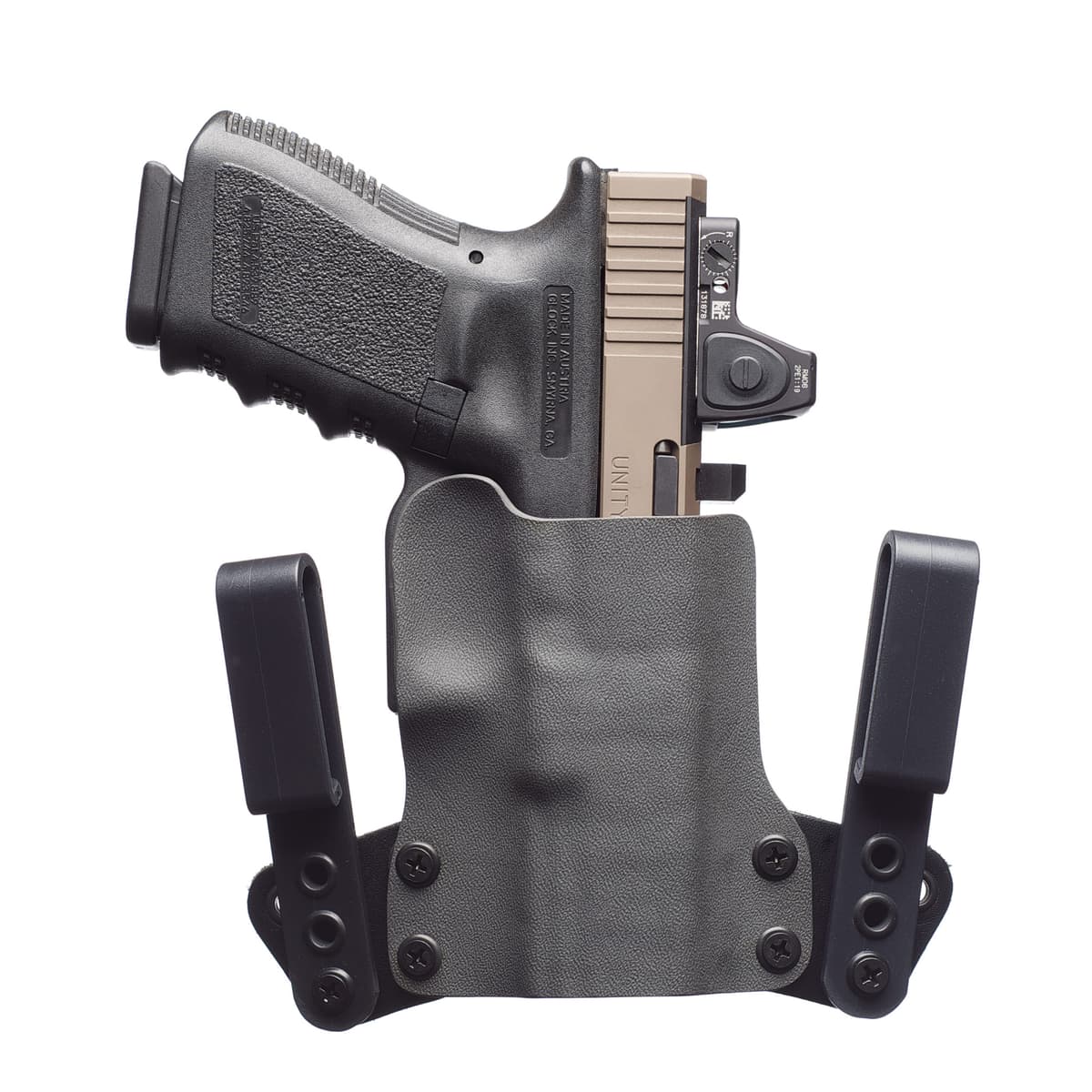
BlackPoint Tactical's Mini WING is the strut approach, and it is a different mechanism from a claw. Instead of one rigid attachment, leather mini-wings flex at each side of the Kydex shell so the holster wraps the contours of your waist as your shape changes through the day, and ride height and cant change by where you mount on the wings. The hardware is thread-locked, and the shell is model-specific, so confirm your pistol before ordering.

The last two are outside-the-waistband and belong to a different conversation. BlackPoint's Leather WING uses the same flexible leather to pull a Kydex shell around the body on metal OWB loops, with a fixed 15-degree forward cant, a tension screw, and a sweat guard. Tulster's Contour OWB molds asymmetrical wings straight into 0.080-inch Kydex, with a 0.75-inch ride-height range, adjustable cant, an optic cut, and loops for 1.5-, 1.75-, and 2-inch belts. Both are cut per pistol, and the Contour price here tracks the Sig P320 4.7-inch shell, so set your model on the product page and expect the number to move with it. Wings change how flat an OWB holster sits; they do not substitute for a cover garment that actually closes over the gun. For the wider comparison of carry positions and holster styles, see the concealed carry holster guide.

IWB / molded 10-degree Torsion

Bravo Concealment Torsion 3.0 IWB Holster

Inward rotation without a bolt-on claw
  • Adjustable retention on 1.5-inch clips
  • Single-clip setup is tuckable
$39.99 MSRP
View at OpticsPlanet
IWB / belt-reactive trigger bump

Crucial Concealment Covert IWB Holster

Belt-driven grip rotation with full cant range
  • 0.080-inch Kydex with an optic cut
  • Ambidextrous setup with adjustable retention
$65.99 MSRP
Shop at MidwayUSA
IWB / flexible leather mini-wings

BlackPoint Tactical Mini WING

A shell that follows the waist instead of fighting it
  • Ride and cant change through mounting position
  • Kydex shell with thread-locked hardware
$102.00 MSRP
Shop at MidwayUSA
OWB / 15-degree fixed cant

BlackPoint Tactical Leather WING

Pulling an OWB shell around the body
  • Leather wings on metal OWB loops
  • Tension screw and sweat guard
$92.06 MSRP
Shop at MidwayUSA
OWB / molded asymmetrical wings

Tulster Contour OWB Holster

Independent ride and cant tuning on an OWB shell
  • 0.75-inch ride-height range on 0.080-inch Kydex
  • 1.5-, 1.75-, and 2-inch belt loops
$79.99 MSRP
Shop at MidwayUSA

Affiliate links - purchases support this site at no extra cost to you. (?)

Tune the Belt and Holster as One System

A claw is only as good as what it pushes against, so belt tension is a tuning variable rather than background. A rigid belt at the right tension gives the claw a firm surface and keeps ride height from sagging through the day. Too little tension and neither the claw nor the wedge is activated at all. Too much, or a belt so stiff it will not conform, and the belt stops following your waist: it stands off as a visible hoop through the shirt, holds the pistol away from the body, and concentrates wedge pressure into one small patch.

Buckle position matters for the same reason. A buckle sitting directly over the holster stacks two rigid objects at one point and makes a bulge neither creates alone, so move it a position or two before blaming the holster. Belt width is the third variable: a 1.5-inch clip on a 1.75-inch belt leaves the belt riding proud of the clip and un-tunes the ride height you just set. Match the clip's belt spec to the belt you own. The gun belt setup guide covers stiffness, buckle types, and width selection in detail. If the attachment slips under load, the UltiClip XL locks around the belt instead of pinching it.

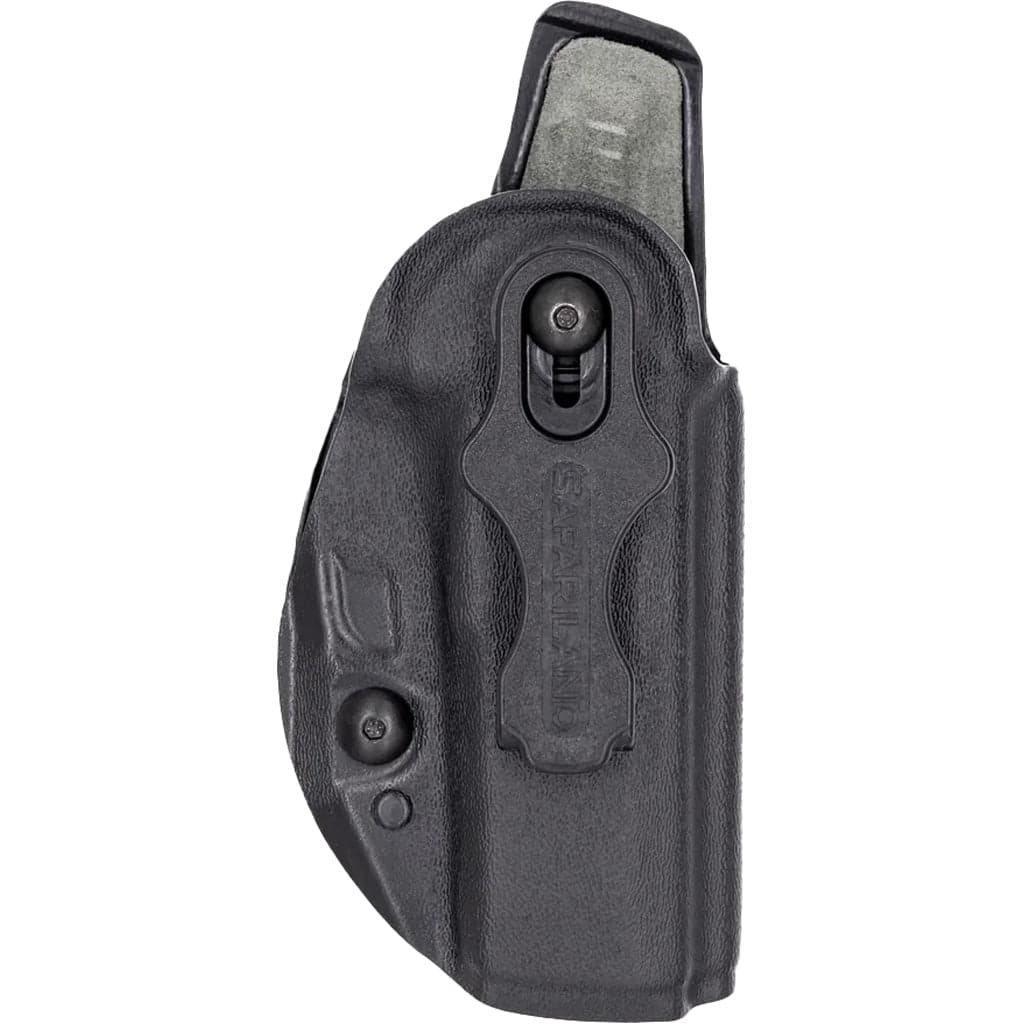
For isolating ride height and cant with no concealment hardware in the way, Safariland's Species IWB is the plain baseline: a clip adjustable both vertically and for cant, adjustable passive retention at the trigger guard, and a suede-lined SafariLaminate shell on a 1.5-inch belt. It is model-specific, and Safariland's product note limits it to right-hand configurations.

Raven Concealment's VanGuard 3 is the minimalist version of the same exercise. It adjusts ride height and cant, it is ambidextrous, and it indexes on a SureFire X300U A/B rather than a pistol shell, so the light drives fitment. Raven lists it as not RCS Claw compatible, which makes it a clean illustration of what is and is not on the table: everything about how the gun sits is yours to adjust, and belt-side leverage is not part of the package.

When the belt itself is the constraint, a beltless chassis changes the problem rather than tuning it, and our PHLster Enigma Micro coverage walks through what that setup does differently. If a waistband is wrong for the use case entirely, pocket carry is a different geometry with its own rules.

IWB / vertical and cant adjustment

Safariland Species IWB Holster

A plain baseline for isolating ride height and cant
  • Adjustable passive retention on a 1.5-inch belt clip
  • Suede-lined SafariLaminate shell, right-hand per Safariland's note
$56.49MSRP
Shop at Safariland
IWB / indexes on SureFire X300U A/B

Raven Concealment Systems VanGuard 3

Minimalist light-indexed ride and cant
  • Adjustable ride height and cant, ambidextrous
  • Raven lists it as not RCS Claw compatible
$54.99MSRP
View at OpticsPlanet

Affiliate links - purchases support this site at no extra cost to you. (?)

Match Pressure and Position to the Wearer

Concealment is a pressure and geometry problem, not a body-type problem. The hardware has to remove a recognizable shape without creating a new one, and the useful inputs are landmarks and pressure tolerance: where your belt line actually sits, where the waistband rolls when you bend, and how much load a given patch of skin will take for eight hours.

Test in four positions, not one. Standing in front of a mirror is where every setup looks fine. Sitting compresses the waistband and drives the muzzle end of an appendix holster into your thigh. Bending forward pulls the shirt tight over the grip. Walking tells you whether the clip holds position or the whole rig migrates. Photograph all four after each change.

Read the result carefully. A hard corner that appears in the same place every time is geometry, and rotation, ride height, or a wedge will move it. A broad, shifting contour is soft tissue and fabric, and no amount of claw height changes that. Chasing the second problem with more hardware is how people end up with a setup that conceals well on paper and lives in a drawer.

Where the pressure lands is the real limit on how far you can push the geometry. A larger wedge rotates more and concentrates load on a smaller footprint, which is exactly why the Wedge Rx ships handed shapes in three sizes and the Tulster wedge ships two thicknesses: they let you move the contact area instead of only increasing it. The Mini WING solves the same problem from the attachment side by letting the shell follow the waist rather than holding a fixed shape against it.

A Repeatable Concealment Tuning Sequence

Run the changes in this order and change one thing at a time. The order matters because each step's result depends on the one before it: ride height set against a loose belt is not the same ride height once the belt is right, and claw pressure set at one ride height changes the moment you move the clip.

  1. 1Set the belt first. Tension the belt where it stays put through a full day and note the hole you used. Move the buckle a position or two off the holster so two rigid objects are not stacked at the same point. Nothing above the belt can be evaluated until this is fixed.
  2. 2Record the baseline. Photograph the same stance, same shirt, and same belt setting before touching hardware. Every later comparison is against this frame, not against memory.
  3. 3Set ride height. Move the clip to the highest position where the grip still disappears under the cover garment you actually wear. Higher makes the firing grip easier to establish; lower buries the grip and crowds your hand against the belt.
  4. 4Set cant. Rotate the holster to move the grip corner along the waistline, then retest seated and bent forward. Cant fixes a grip that is in the wrong place; it does not fix a grip that is at the wrong angle.
  5. 5Add or change claw leverage. On an appendix setup, fit the shorter standoff first and go taller only if the grip still angles outward and the holster is not rolling. Confirm the mounting-hole spacing before buying: the Rounded kit needs two retention holes at 0.60-inch spacing.
  6. 6Add the smallest useful wedge. Place the wedge near the muzzle, below the waistband, and use the thinnest one that visibly tucks the slide and grip back. Add thickness only if the thinner wedge does nothing. An oversized wedge trades a printing grip for a printing waistband.
  7. 7Verify clip stability. Unload and clear the pistol before any fit testing that involves repeated draws. Draw and reholster several times, slowly and with the garment held clear of the holster mouth, then walk. The clip must not migrate or release. If it does, the mounting geometry is the problem, not the claw or the wedge.
  8. 8Retest the movements and the garment. Repeat standing, sitting, bending, and walking in the shirt you actually wear, and photograph the same four positions. Change one variable at a time so a failed result points at a single cause.

Two passes through that list will usually settle a setup. If the print survives all eight steps, the limit is the shell or the carry position rather than the hardware bolted to it, and the fix is a different holster or a different position. Every part named on this page lives in the gear catalog with current pricing.

Get Carry Setup Breakdowns and New Holster Coverage

Concealment hardware tests, holster reviews, and EDC gear notes, sent when there is something worth reading.

Free targets, drill cards, and weekly reviews by email. Follow us on Instagram and Facebook for daily builds and gear picks.

Follow

Frequently Asked Questions

What does a concealment claw do?
A claw presses against the inside of your belt. That contact creates leverage around the holster body and rotates the pistol grip horizontally toward the wearer, reducing the grip corner that commonly prints through a cover garment. It is an appendix-carry mechanism: behind the hip, concealment comes mainly from forward cant, widely spaced belt attachments, a shell that wraps the hip, and belt tension.
Is a holster wedge the same as a claw?
No, but they overlap. A claw bears on the belt and mainly produces horizontal grip rotation. A wedge sits between the holster and your body, usually near the muzzle and below the waistband, and mainly pitches the muzzle away from you so the slide and grip tuck back. Place a wedge asymmetrically toward the slide side and it produces grip rotation too, sometimes more than the claw alone. A claw cannot reproduce the wedge's muzzle-side pitch, cushioning, or gap filling.
Can any IWB holster accept a claw or replacement clip?
No. Hole count, spacing, screw size, slot orientation, shell clearance, and retention hardware all matter. The Rounded Claw Kit requires two retention holes spaced 0.60 inch apart, and the Raven Concealment VanGuard 3 is listed by Raven as not RCS Claw compatible. Measure your holster's mounting holes before ordering anything.
Should ride height or cant be adjusted first?
Set a usable ride height first so the firing grip and belt-line exposure are stable, then adjust cant to move the grip around the waistline. Recheck claw and wedge pressure after either change, because moving the clip changes where the claw meets the belt and where the wedge sits against your body.
What is the difference between softness and printing?
Printing is a repeatable hard edge or recognizable gun and holster shape visible through the garment. Soft tissue and fabric drape create broader contours that change as you move. Test the same stance and movement before deciding which problem the hardware has to solve, because more claw and more wedge will not change a fabric problem.

The Bottom Line

Fix the belt, then ride height, then cant, then leverage. Change one variable at a time and photograph the result, or you will never know which part worked.

A claw rotates the grip horizontally against the belt. A wedge near the muzzle pitches the muzzle out so the slide and grip tuck back, and shifted toward the slide side it rotates the grip as well. Neither replaces a belt that holds tension or a clip that puts the gun at the right height, which is why the sequence starts there. Start with the $15.49 Rounded claw kit if your shell has the hole pattern, add the smallest $14 Wedge Rx that moves the grip, and get the foundation right first with the gun belt guide and the appendix holster rankings.