Key Takeaways
- →The verdict: Bodycam may be the closest a game has come to the look of current combat video, especially in its burned forest and trench footage.
- →Why it reads as Ukraine: the body-camera lens, muddy fieldworks, shattered tree line, FPV drones, and uneven exposure match a visual language viewers now recognize.
- →Why the guns feel real: reloads change under stress, weapon position varies, the full body drives the camera, and optics render as glass instead of a simple screen zoom.
- →New weapons: the v0.8 release added the BK-101 shotgun, Rivington sniper rifle, SG9-X and Veaper machine pistols, and CR-75 pistol, and brought back the SG5-X.
Watch the Locked & Loaded Dev Diary
Watch the full animation and weapons breakdown before reading the frame-by-frame analysis below.
This May Be Gaming's Most Realistic Modern Combat Yet
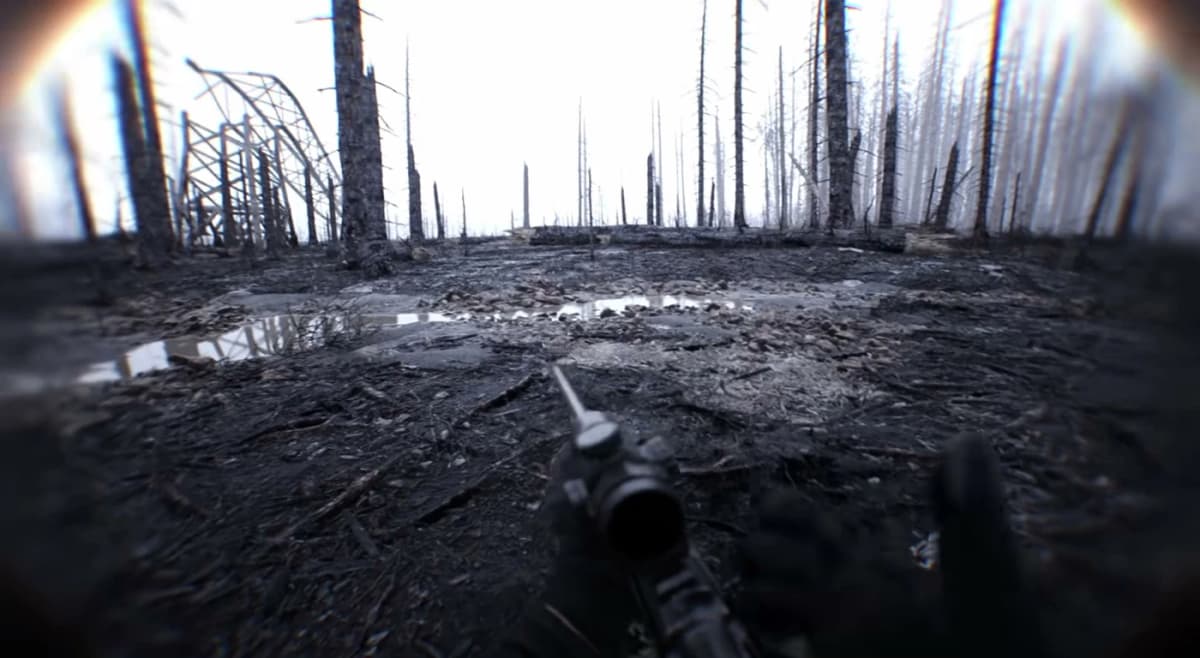
The first seconds of Bodycam's Locked & Loaded dev diary could pass for compressed combat footage. A rifle enters the bottom of a wide, imperfect body-camera image. The operator moves through wet earth and a forest reduced to black trunks. The sky clips to white. The edges smear and split into faint colors as the camera turns.
That is not the polished realism of a military movie. It is the uglier, less legible look of a small camera trying to record violent movement in bad light. That distinction is why Bodycam can feel more real than games with sharper textures, larger maps, or more exact vehicle models.
Reissad Studio calls Bodycam a tactical multiplayer FPS with a true body-camera view. It runs in Unreal Engine 5 and remains in Early Access. Locked & Loaded, version 0.8, released September 2, 2026. Its first dev diary covers the systems that sell the illusion: animation, physical weapon handling, attachments, optics, FPV drones, and reconnaissance vehicles.
Why It Looks So Much Like Ukraine Footage
The comparison is hard to miss, but it needs one clear boundary: this is game footage, and the dev diary does not identify the map as Ukraine. What it recreates is the visual vocabulary of the war.
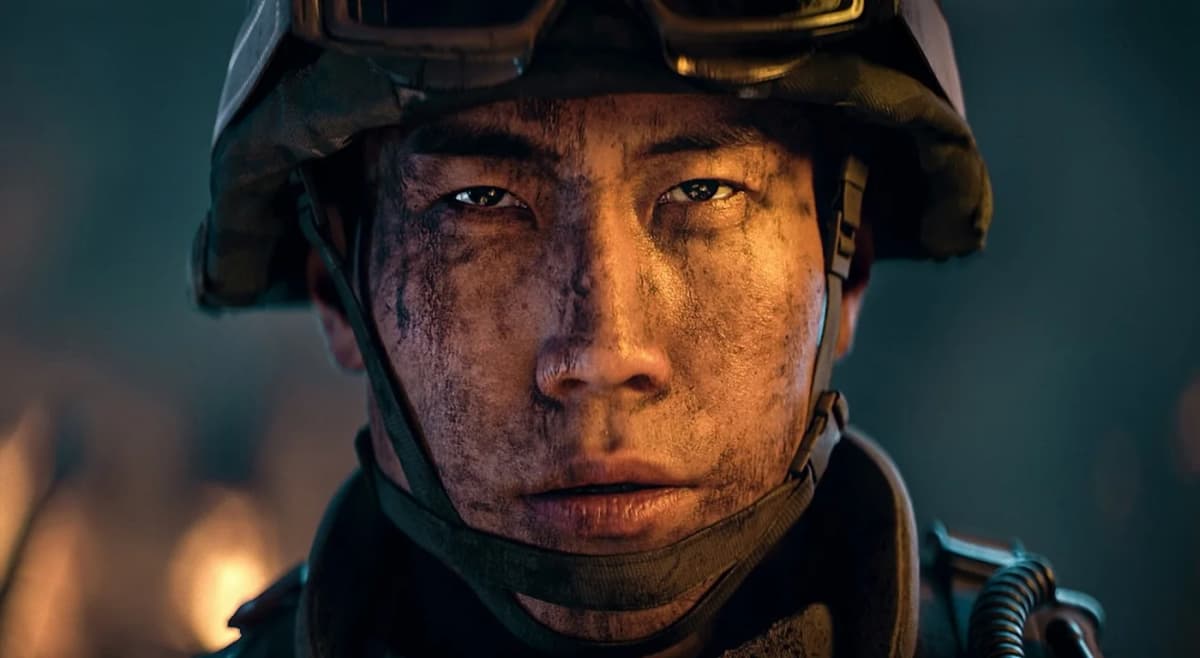
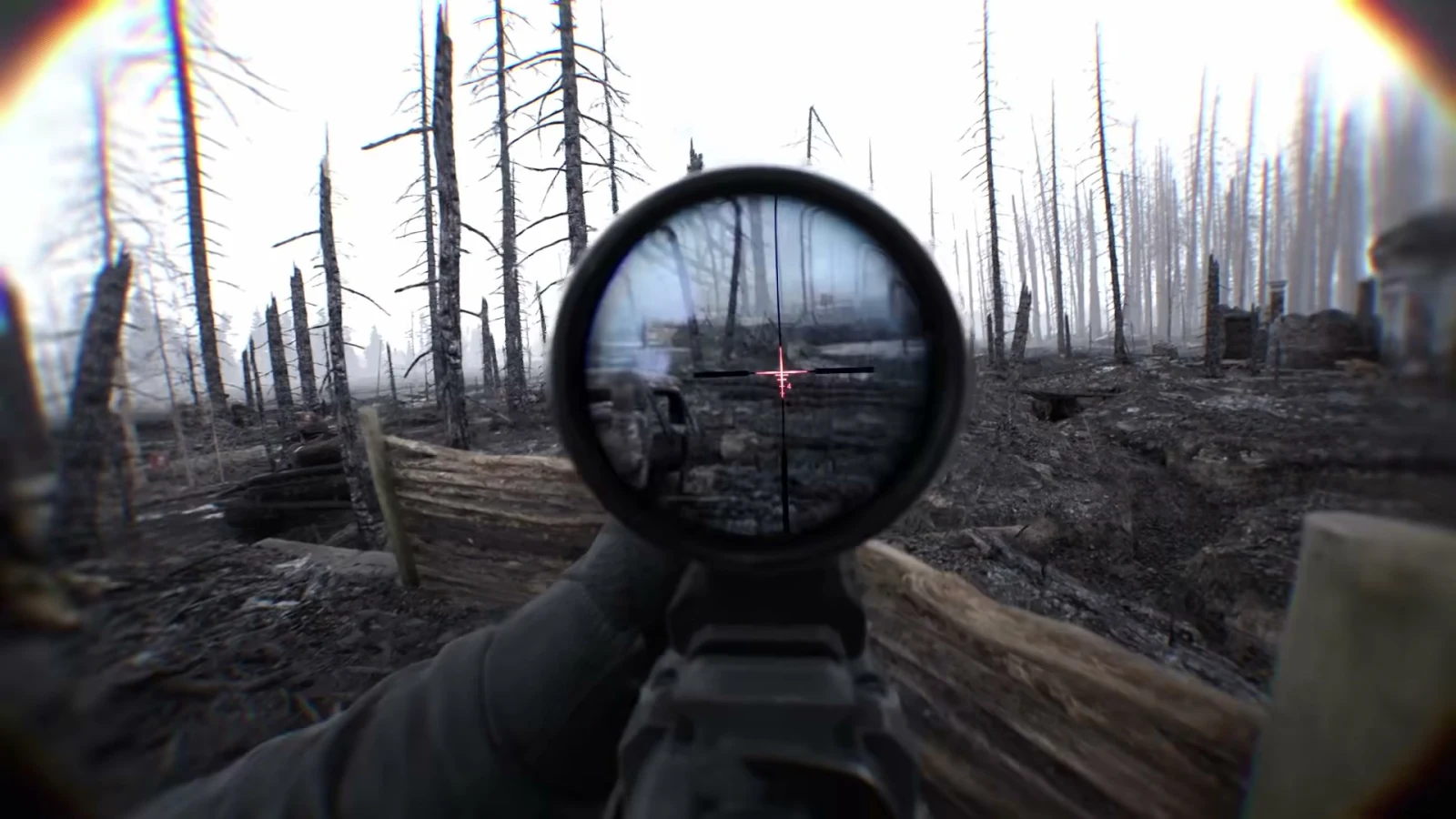
Burned tree lines and shallow timbered positions replace the clean concrete lanes of a normal multiplayer map. The horizon is often obscured. Mud, smoke, branches, and blown-out light remove information instead of decorating the scene. The camera sits on the chest rather than floating at eye level, so the gun swings below the operator's gaze and the body arrives late into turns.
Then come the drones. Bodycam already had FPV aircraft, but the new system adds manual acro-style control, adjustable rates, throttle curves, and flight profiles. The trailer also shows small RC scouts. These are not science-fiction rewards dropped onto a modern map. They are cheap cameras, flying explosives, and reconnaissance tools integrated into the fight. That makes the game's picture of modern warfare feel current rather than merely contemporary.
Our reporting on how small drones changed warfare and the FPV drone system guide explain why the control model matters. The game is copying the awkward physical tool, not just the overhead-camera effect.
The Guns Stop Acting Like Fixed Animations
The largest realism change is not a texture. It is uncertainty. Most shooters play the same reload at the same speed every time. Bodycam now tracks a calm state and a stressed state, then selects from multiple reloads with different hand paths and timing.
Under pressure, the hands shake and the reload becomes rougher. A bolt-action operator can fumble a loose round. A shotgun does not receive one perfect shell-loading loop. A revolver reload changes with the number of fired chambers, down to replacing one round after one shot or filling all eight after an empty cylinder.
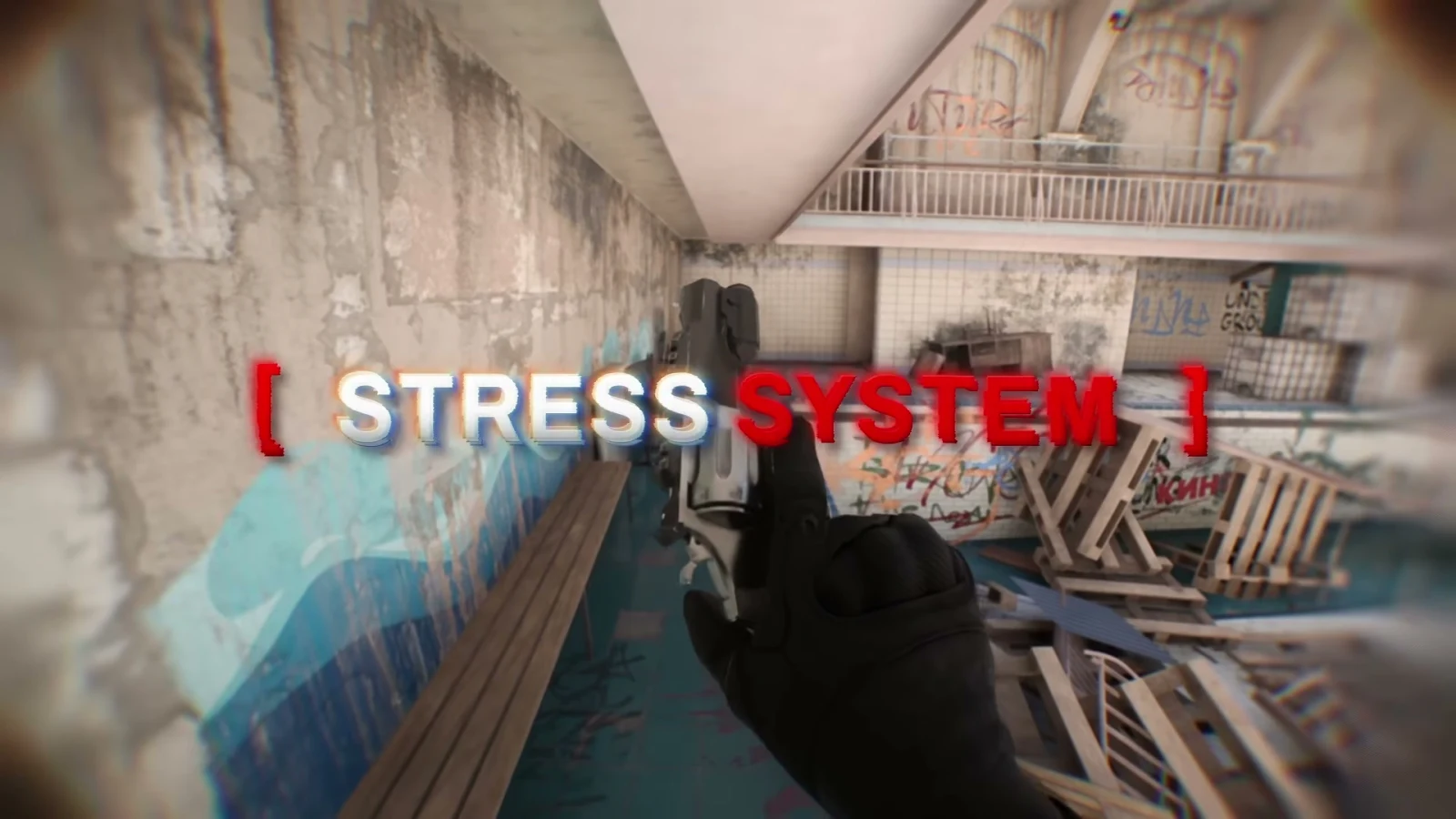
Reissad Studio says its creative director records a real reference performance for the animator and that one weapon can take more than a month. The result is not a claim that every reload is the one safe or correct technique. It is a better model of a human being handling a mechanical object while breathing, moving, and losing fine motor control.
Procedural positioning adds another small break from the standard FPS. The weapon can sit slightly high, low, left, or right instead of returning to one exact screen coordinate. That variation matters because real support hands, shoulders, slings, and stocks do not form a perfect camera rig.
The Camera, Body, and Optic Finally Agree
Bodycam builds the first-person view around a complete operator body. Looking down to inspect a magazine means moving the camera with the body and actually seeing the magazine. Arms are not floating props pasted beneath a free camera. That is why quick turns can feel loose and why the weapon sometimes falls outside the clean center of the image.
The optic work follows the same rule. A normal game can magnify the whole screen when a scope reaches the center. True picture-in-picture rendering keeps the world outside the optic at normal scale but can be expensive to render. Reissad Studio says it extended Unreal's rendering pipeline with custom shading to imitate that effect at a lower cost.
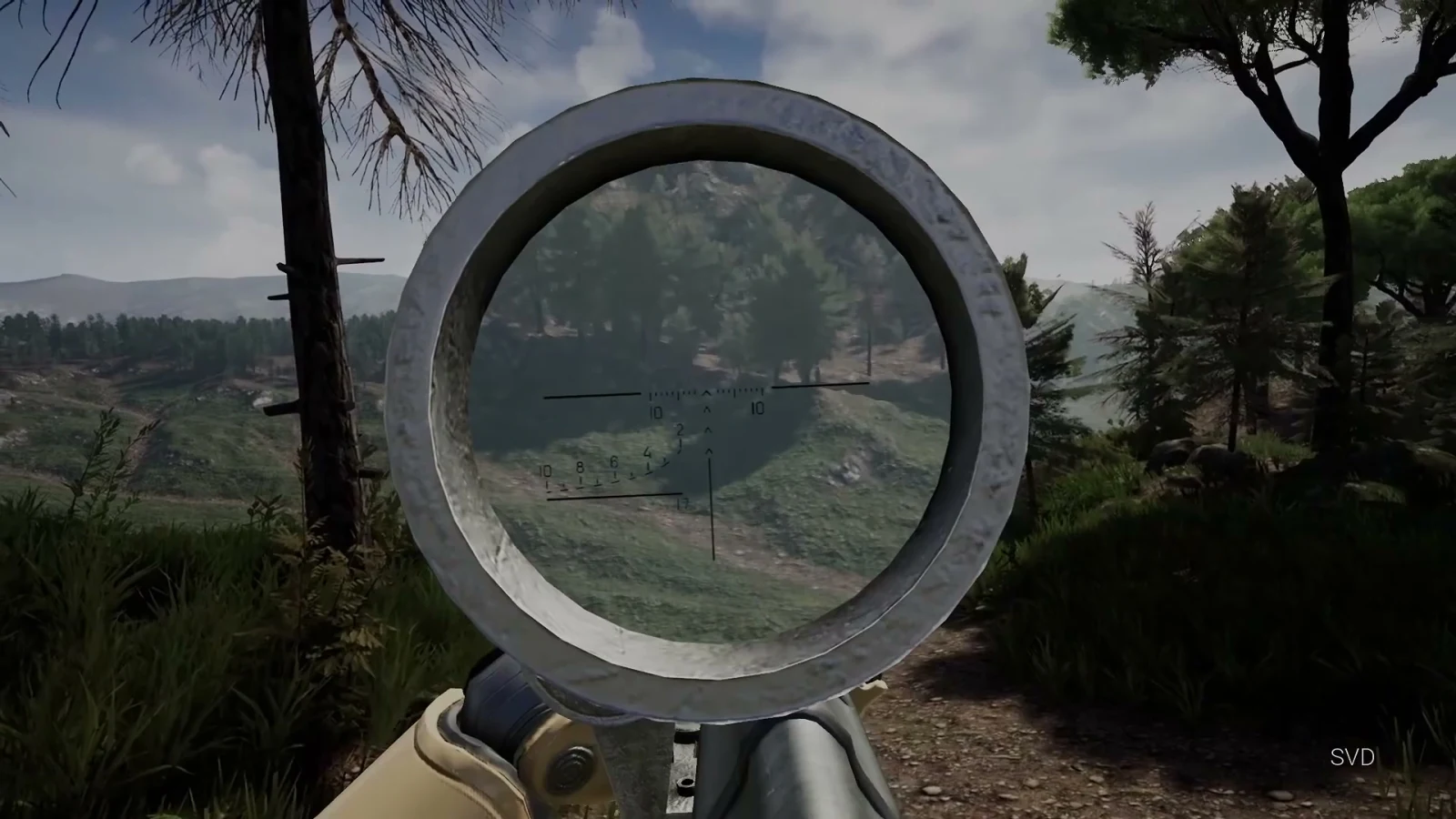
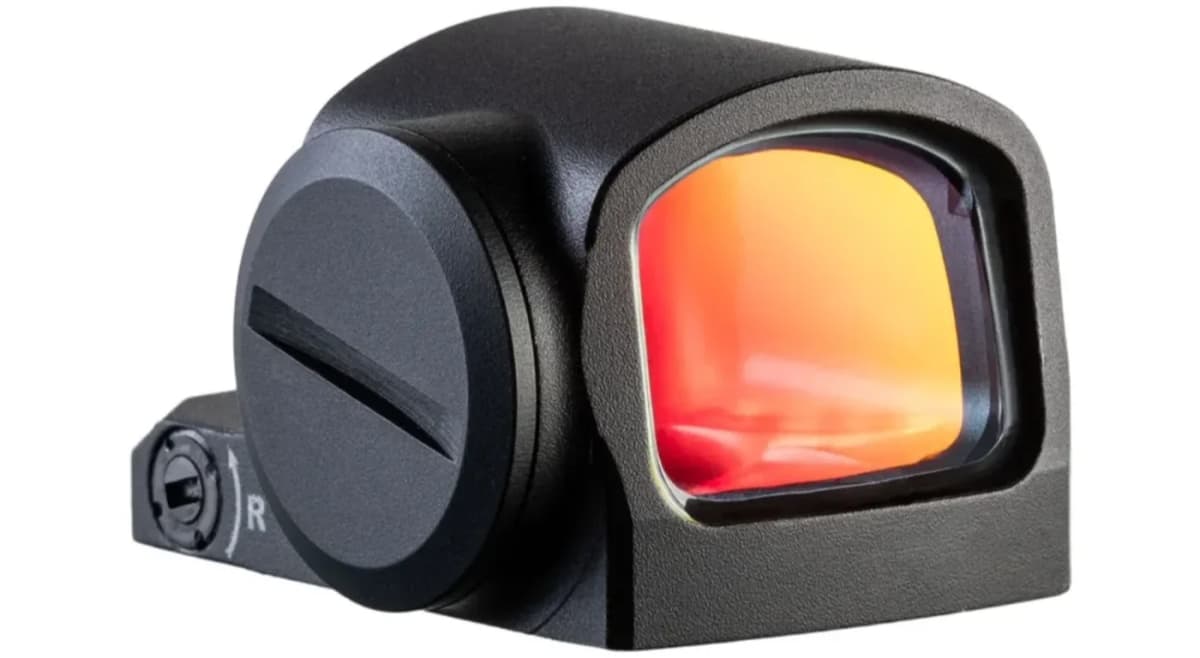
Glass tint, reflections, reticle distortion, and changing light are part of the model. Those effects can be overdone, but their purpose is sound: a sight is a physical tube with lenses and eye-position limits, not a circular HUD sticker. See our rifle scope guide for the real parts and tradeoffs that games often flatten into a single zoom statistic.
Compact Rifle Optics
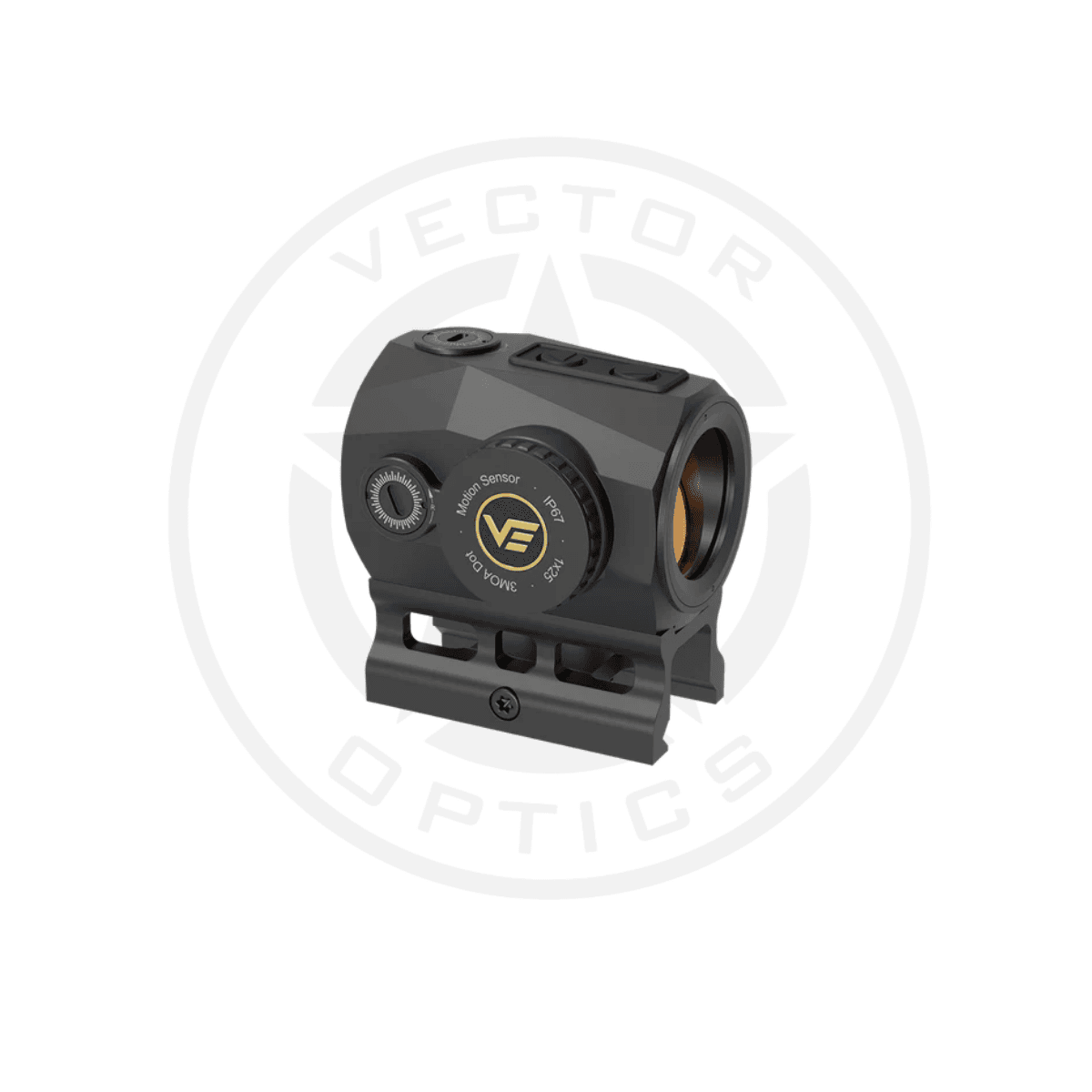
Vector Optics Scrapper Nano 1x25 Enclosed Red Dot
- 3 MOA enclosed dot
- 25mm window
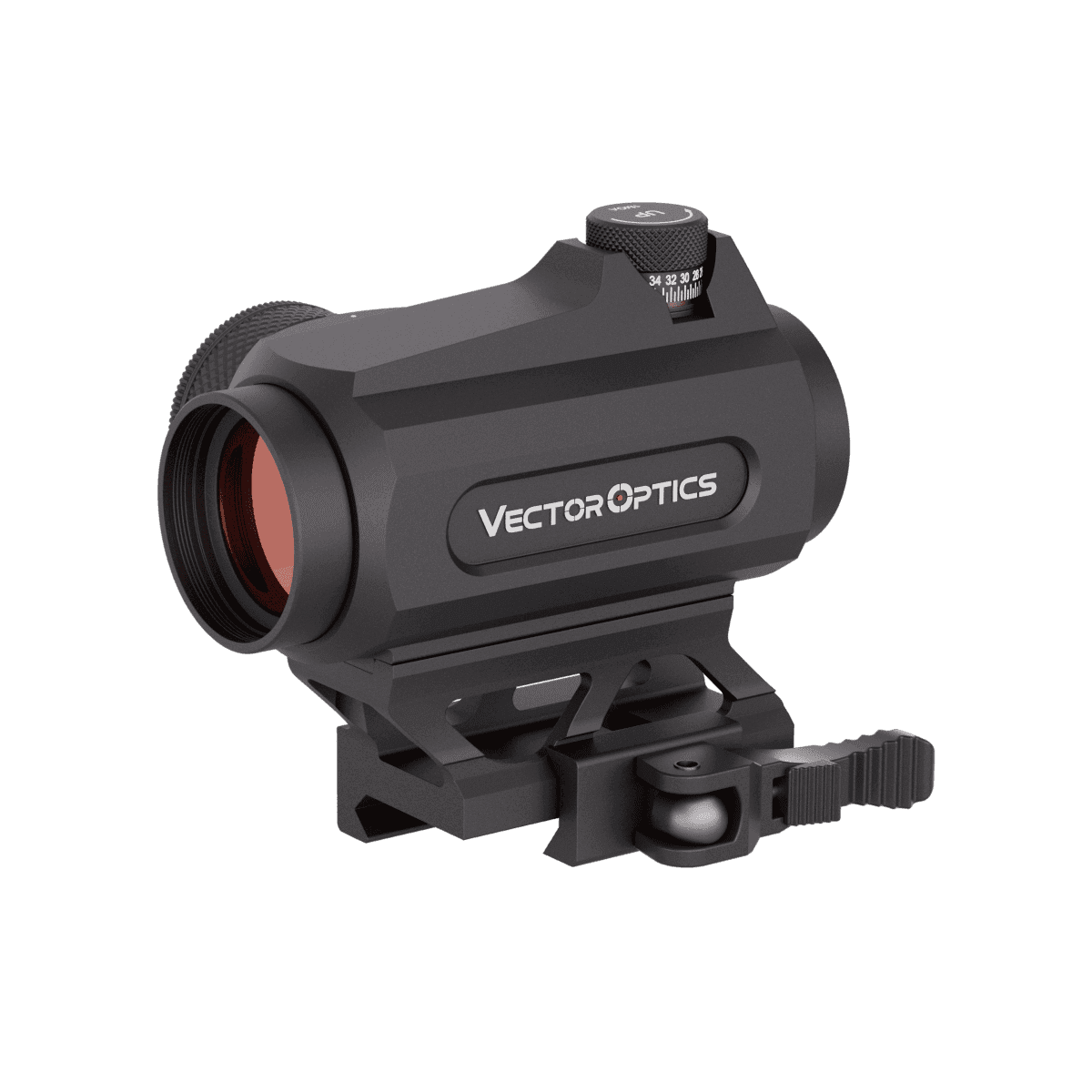
Vector Optics Maverick-II 1x25 GenII
- 3 MOA dot
- 25mm window lens
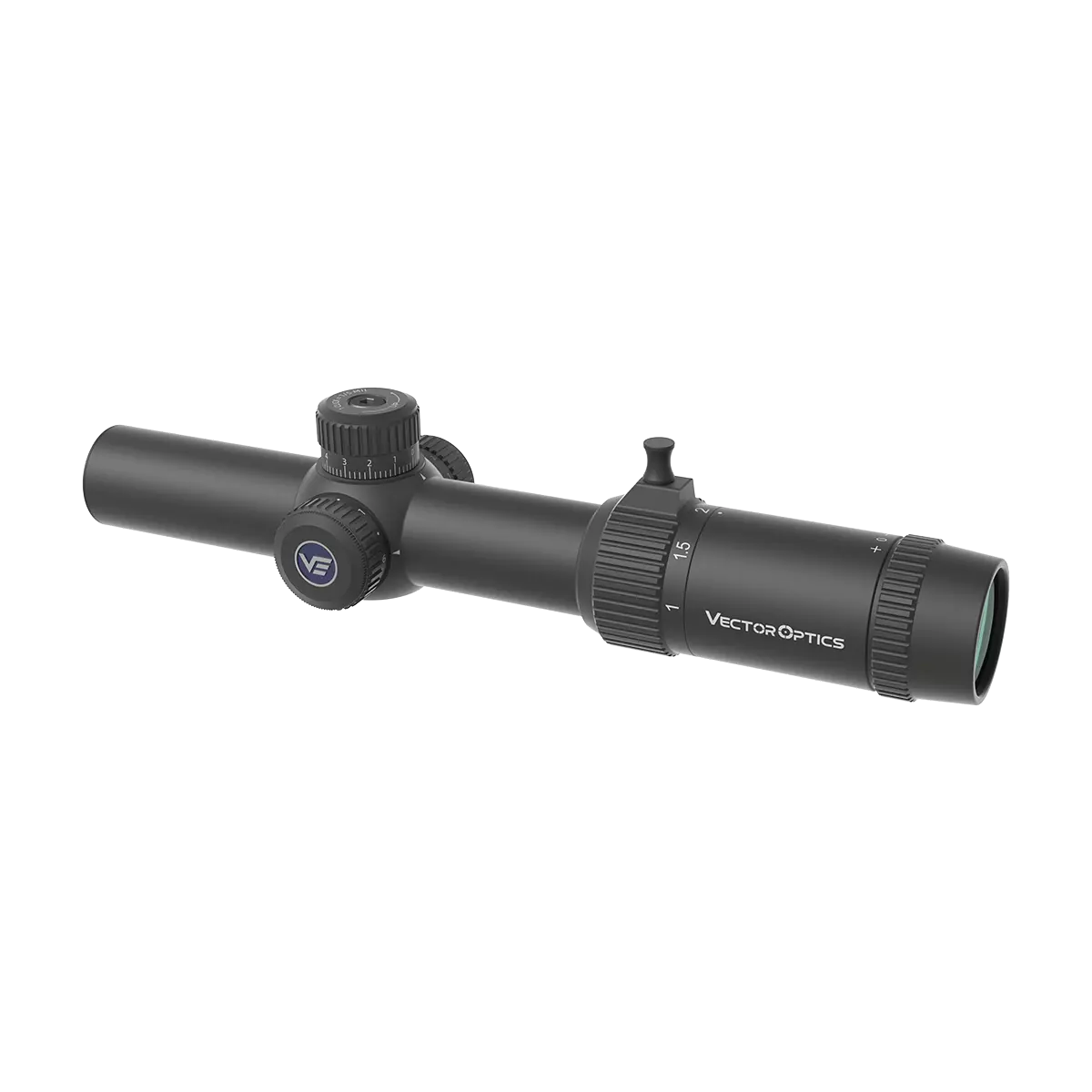
Vector Optics Forester 1-5x24i Fiber SFP
- 1-5x24mm SFP
- Fiber-optic center dot reticle
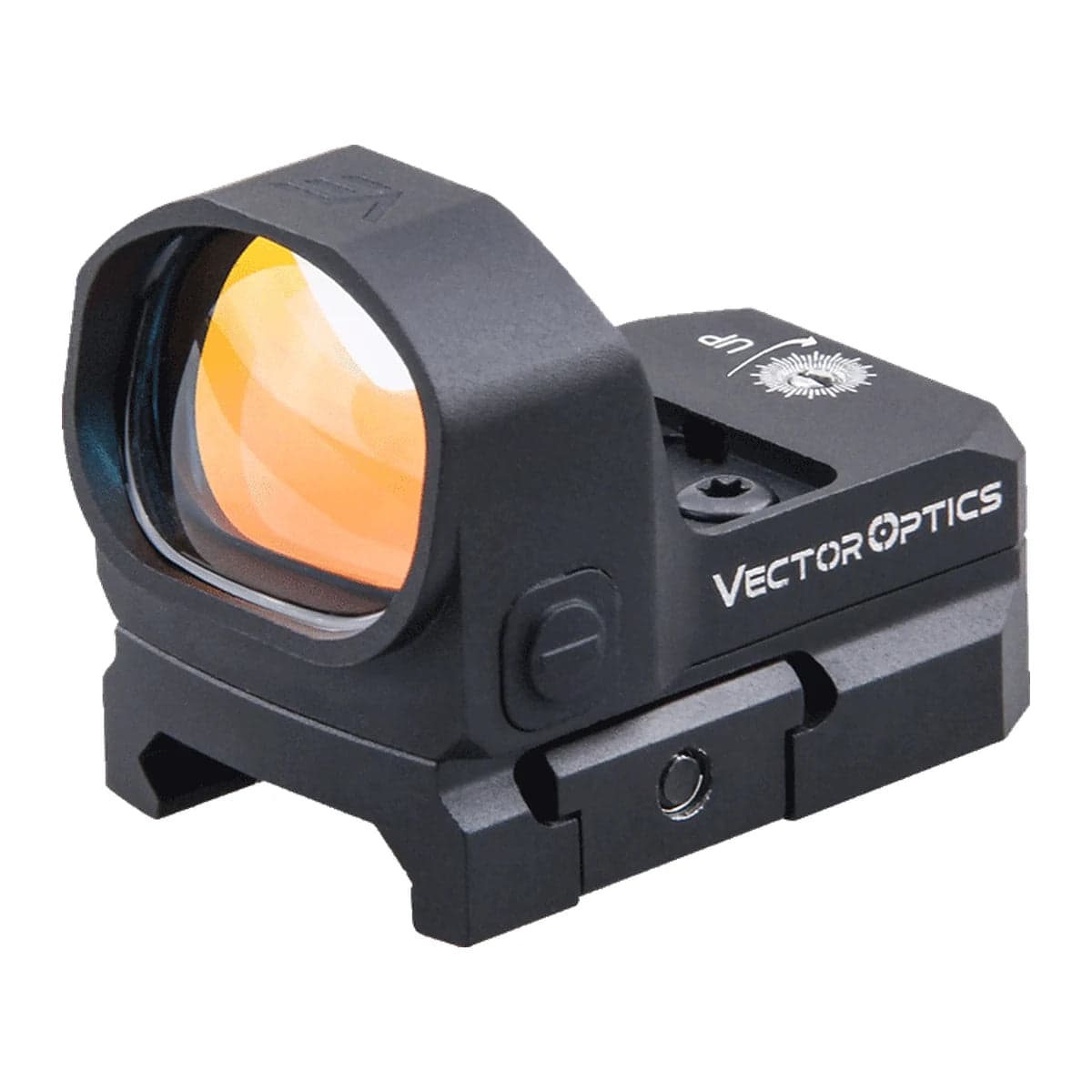
Vector Optics Frenzy FM 1x20x28 6 MOA (SCRD-40)
- 6 MOA red dot
- 20x28mm window
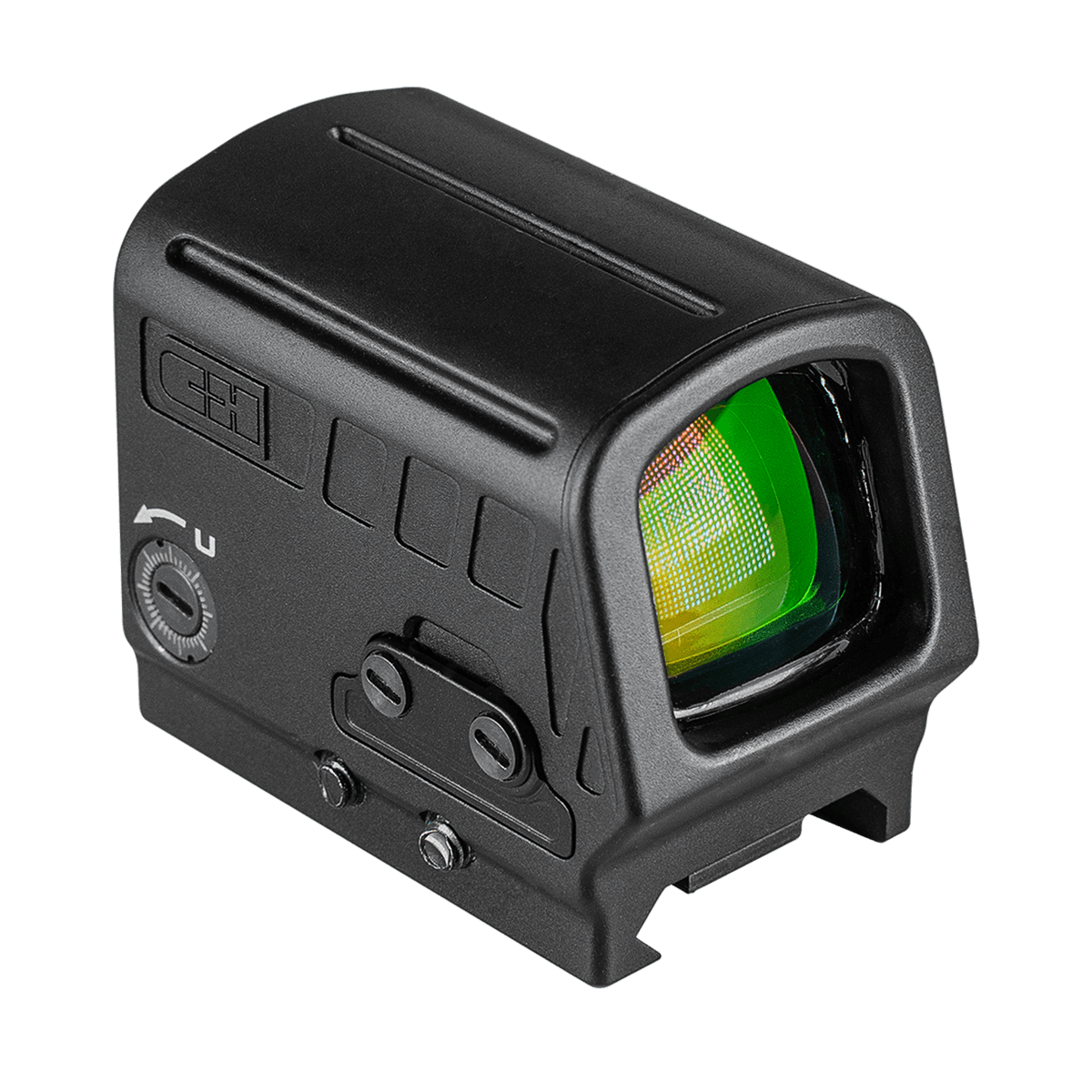
C&H STRYKR Red Dot for FLUX Raider and PDWs
- 3 MOA dot / 33 MOA circle / circle-dot
- 1913 Picatinny mount, 0.76in riser included
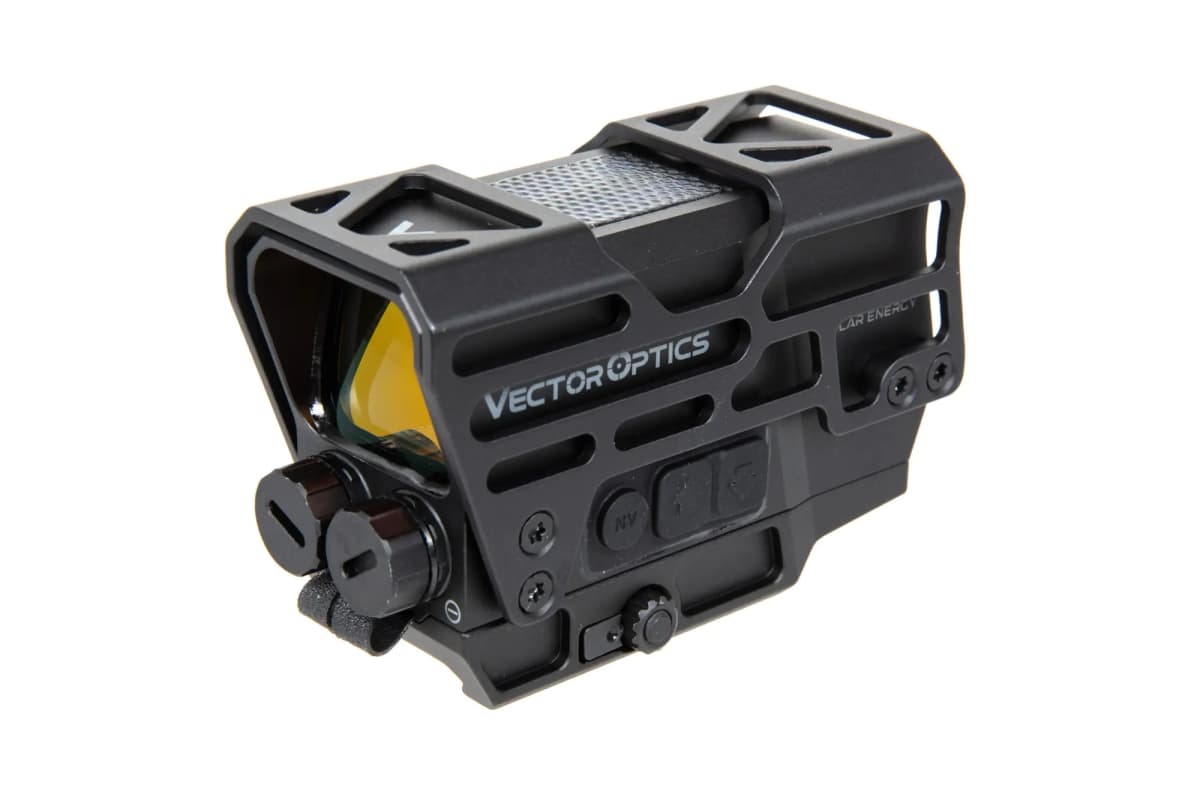
Vector Optics Frenzy Plus 1x31x26 Solar
- 3 MOA dot
- 26x31mm window
Affiliate links (?)
Every Gun Shown or Named in Locked & Loaded
The safest way to identify these weapons is to keep three layers separate: the name spoken by Reissad Studio, the firearm family visible on screen, and any exact real-world model the footage does not prove. A familiar silhouette is not enough to assign a caliber.
- Earlier rifle footageWhat the footage supportsSCAR-family rifle; exact SCAR-H/17 variant and caliber not shownConfidenceHigh family / medium exact model
- Earlier rifle footageWhat the footage supportsAK-pattern rifle; exact national variant not shownConfidenceHigh family / low exact model
- Earlier pump shotgunWhat the footage supportsTube-fed pump-action shotgun; exact model not shownConfidenceHigh action / low exact model
- Eight-shot revolverWhat the footage supportsModern large-frame revolver; exact make and model not shownConfidenceHigh type / low exact model
- SG9XWhat the footage supportsCompact semiautomatic pistol with a slide-mounted opticConfidenceHigh game name / medium real-world basis
- ViperWhat the footage supportsStrong KRISS Vector-style receiver and magazine layoutConfidenceHigh visual match
- R12 automatic shotgunWhat the footage supportsCompact, magazine-fed semiautomatic shotgunConfidenceHigh game name / medium real-world basis
- Remington 700What the footage supportsTraditional bolt-action Model 700 configurationConfidenceHigh; named by Reissad Studio
- DracoWhat the footage supportsShort AK-pattern pistolConfidenceHigh; named by Reissad Studio
- CR-75What the footage supportsCZ 75-inspired full-size hammer-fired pistolConfidenceHigh game name / medium exact analog
- BK-101What the footage supportsShotgun added in the v0.8 release; no real-world model namedConfidenceGame name only
- RivingtonWhat the footage supportsSniper rifle added in the v0.8 release; no real-world model namedConfidenceGame name only
- VeaperWhat the footage supportsMachine pistol added in the v0.8 release; no real-world model namedConfidenceGame name only
- SG5-XWhat the footage supportsMachine pistol reintroduced in the v0.8 release; no real-world model namedConfidenceGame name only
| Game name or view | What the footage supports | Confidence |
|---|---|---|
| Earlier rifle footage | SCAR-family rifle; exact SCAR-H/17 variant and caliber not shown | High family / medium exact model |
| Earlier rifle footage | AK-pattern rifle; exact national variant not shown | High family / low exact model |
| Earlier pump shotgun | Tube-fed pump-action shotgun; exact model not shown | High action / low exact model |
| Eight-shot revolver | Modern large-frame revolver; exact make and model not shown | High type / low exact model |
| SG9X | Compact semiautomatic pistol with a slide-mounted optic | High game name / medium real-world basis |
| Viper | Strong KRISS Vector-style receiver and magazine layout | High visual match |
| R12 automatic shotgun | Compact, magazine-fed semiautomatic shotgun | High game name / medium real-world basis |
| Remington 700 | Traditional bolt-action Model 700 configuration | High; named by Reissad Studio |
| Draco | Short AK-pattern pistol | High; named by Reissad Studio |
| CR-75 | CZ 75-inspired full-size hammer-fired pistol | High game name / medium exact analog |
| BK-101 | Shotgun added in the v0.8 release; no real-world model named | Game name only |
| Rivington | Sniper rifle added in the v0.8 release; no real-world model named | Game name only |
| Veaper | Machine pistol added in the v0.8 release; no real-world model named | Game name only |
| SG5-X | Machine pistol reintroduced in the v0.8 release; no real-world model named | Game name only |
The Existing Arsenal Holds Up CloseHigh confidence
The long rifle used through much of the animation demonstration is a SCAR-family design. The divided upper and polymer lower, side-control layout, stock hinge, and receiver proportions are all readable. The footage supports a SCAR-H/17-style match, but it does not expose a clear magazine or marking long enough to lock down the exact variant or chambering.
An AK-pattern rifle is just as easy to place at the family level. Its top cover, rear sight area, charging side, and magazine relationship are consistent with the Kalashnikov pattern. The dev diary moves too quickly to name a national model. Our AK guide shows how much can change while the core architecture stays recognizable.
The pump shotgun and eight-shot revolver deserve the same restraint. Their actions are clear because Bodycam spends time on shell insertion, cylinder state, and hand placement. Their exact brands are not. The mechanical behavior is more convincing than a guessed roll mark would be.
Six New Locked & Loaded WeaponsHigh confidence
The September 2 release notes list the shipped additions as the BK-101 shotgun, the Rivington sniper rifle, the SG9-X and Veaper machine pistols, and the CR-75 pistol, plus the returning SG5-X machine pistol. The notes do not tie any of them to a real-world model.
The dev diary names six additions in its final weapon montage. The SG9X is a compact optic-ready pistol. The Viper is a close visual match for the KRISS Vector, including its low bore line, blocky receiver, forward magazine position, and sharply angled lower body.
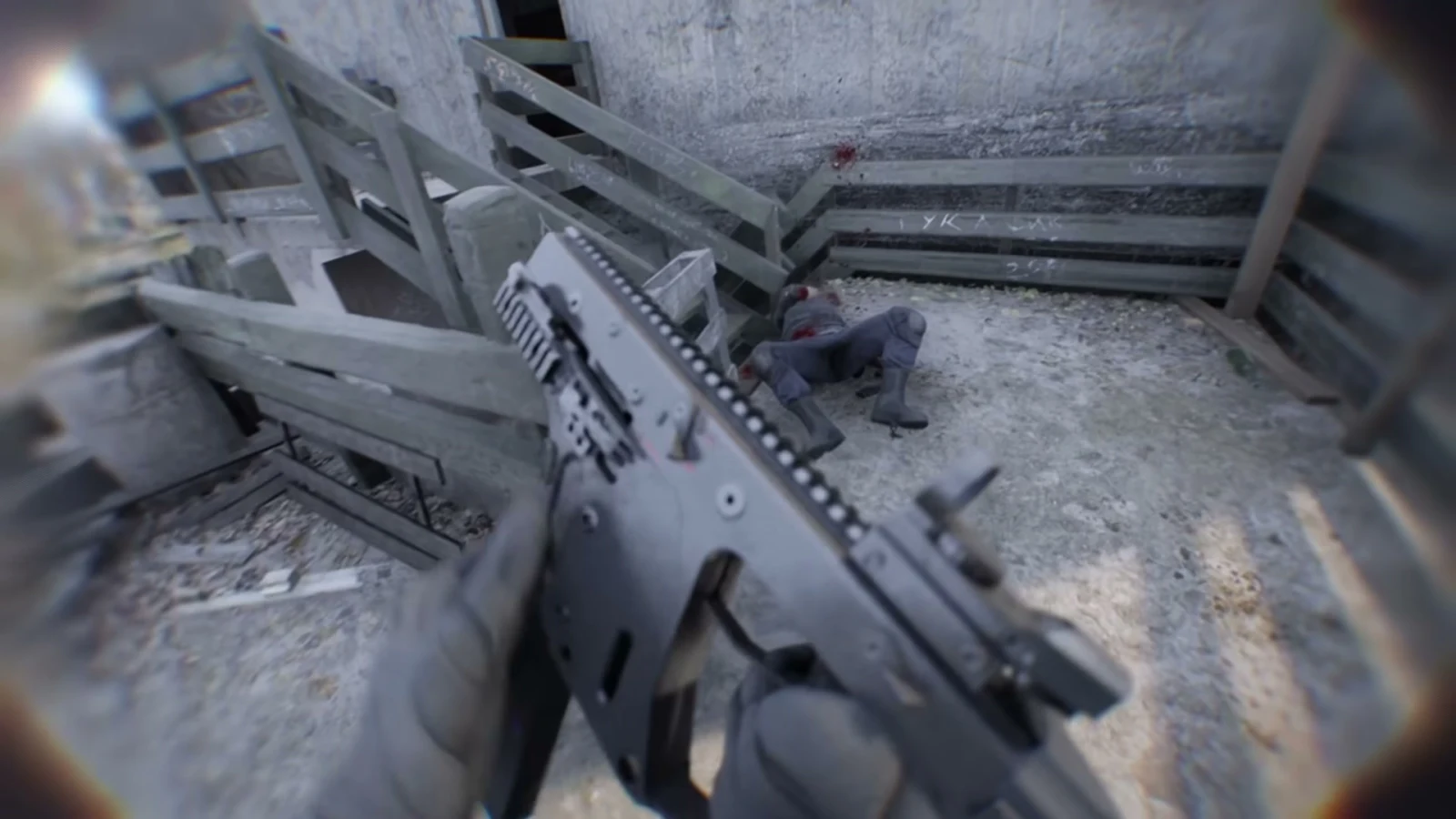
The R12 is described as an automatic shotgun and appears as a short, magazine-fed design. The Remington 700 is the rare direct real-world name in the list and appears in a traditional bolt-action layout. The Draco is a compact AK-pattern pistol. The CR-75 is a clear name and shape reference to the CZ 75 family, but the fictional model's optic-ready upper keeps it from being one exact factory CZ.
Customization reaches barrels, stocks, grips, magazines, and optics. Some attachments depend on others: the video uses an AK optic rail as its example. Compact parts are meant to improve speed while making the weapon harder to control; heavier assemblies slow the gun but steady it. Players can move between primary sights, canted optics, and irons instead of treating every attachment as a flat upgrade.
That dependency model is where visual realism becomes firearm realism. A rail must exist before it can hold a sight. An optic must sit where the eye can use it. Our firearm builder applies the same basic idea to compatible real-world platforms and parts.
The Realism Is About Friction, Not Just Photorealism
Bodycam's burned forest is the image people will share because it can be mistaken for a clip from a conflict feed. The stronger work sits beneath that image. Hands do not always find the magazine the same way. A bolt gun can lose a round under pressure. A scope changes the image inside its glass. A body-camera view gives up perfect information. A drone must be flown instead of steered like a missile camera.
No game can make a firefight real, and visual similarity should not turn an ongoing war into a graphics benchmark. But as a depiction of how present-day combat looks through cheap cameras, improvised earthworks, small drones, and cluttered weapon systems, Bodycam is making a serious claim to the top spot.
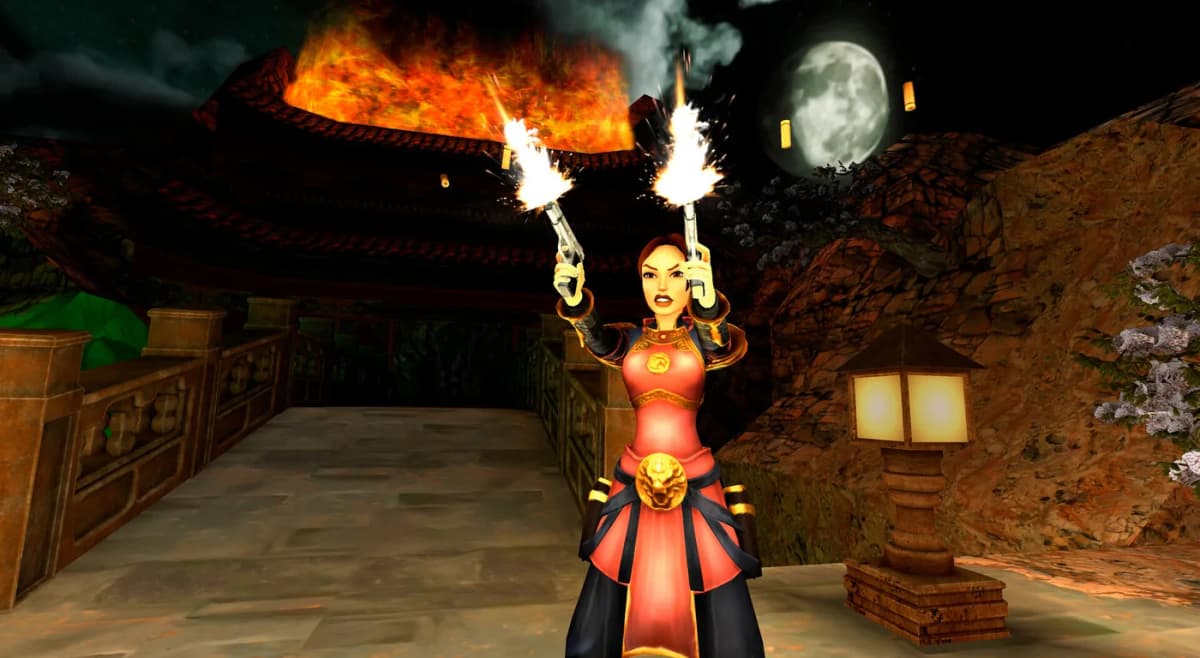
For the other end of the design spectrum, our history of Lara Croft's guns follows a series that turns real firearm shapes into readable arcade, adventure, and progression systems.
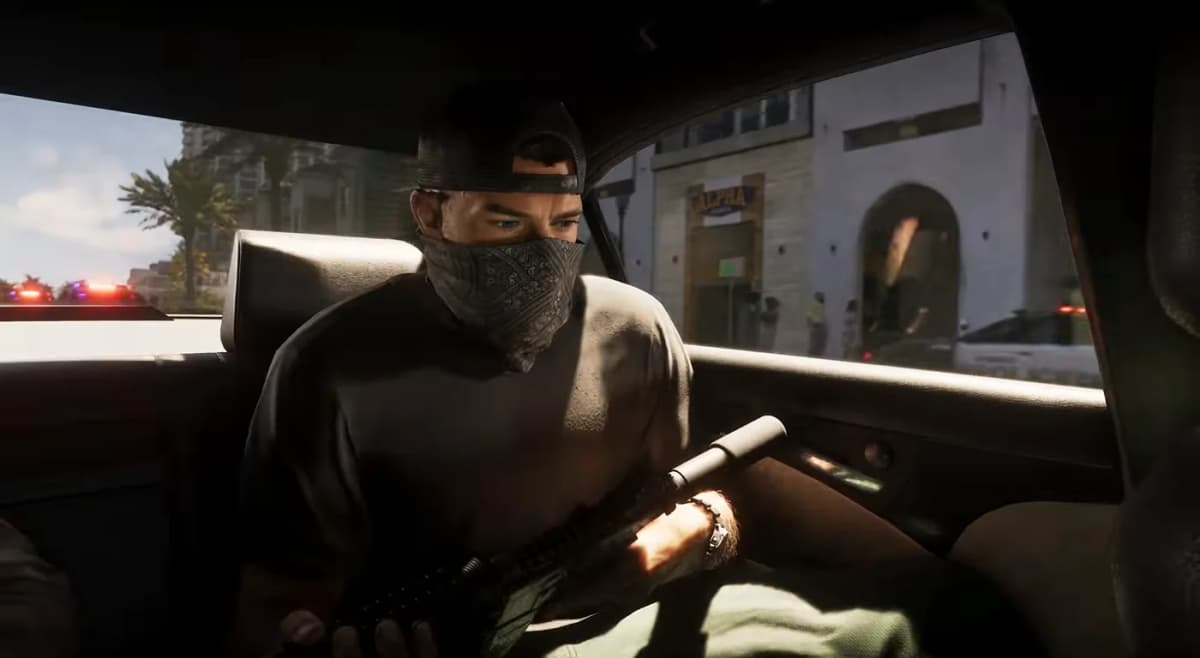
Rockstar takes a third approach in the GTA 6 gun breakdown: recognizable AR, AK, shotgun, and pistol shapes paired with fictional model names such as the Duke 556.
Follow the Locked & Loaded Gun List
Get new Bodycam weapon breakdowns and real-world gun matches in your inbox.