Key Takeaways
- →1,200-lumen flood, 16,900-candela spot: two white beams on a side rocker, the spot rated to 260 m, plus a Class 3R green laser marked 510-530 nm at under 5 mW.
- →Held zero through 300 rounds: mounted on a Glock 19 Gen 5, seated flush on the 1913 insert it ships with and needed no swap, with no accidental activation across the session.
- →Two switches, no mode cycling: a three-position selector underneath picks light, laser, or both; a side rocker picks flood or spot. Neither emitter is buried behind the other.
- →Standard USB-C, no proprietary dock: the single biggest change from the Olight lineup we have criticized before. The 620 mAh cell refills in about 80 minutes and a four-dot indicator on top reports charge.
- →Seventeen holster makers at launch: Olight lists compatible cuts from seventeen manufacturers, and twelve of them, CrossBreed, Werkz, Red Hill Tactical and Rounded Gear among them, carry launch-window discounts running September 19 to October 31, 2026.
- Rounds Fired
- 300Glock 19 Gen 5
- Flood Output
- 1,200lm
- Spot Intensity
- 16,900cd
- Rated Throw
- 260m
- Runtime
- 95min200-lm spot low; 9 h laser only
- Laser
- Class 3R510-530 nm, under 5 mW
What the PL X GL Actually Is
The Olight PL X GL is a pistol-rail light that puts a wide flood beam, a focused spot beam, and a visible green laser into one housing, and it keeps the external profile of the existing PL X so holsters cut for that pattern carry it directly. The flood beam opens at 1,200 lumens and 2,255 candela; the spot beam opens at 900 lumens and 16,900 candela for a rated 260 meters of throw. Both step down from those figures within a few minutes, and the published long runtimes are the low settings: 75 minutes on a 300-lumen flood, 95 minutes on a 200-lumen spot, up to 9 hours on the laser by itself. It lists at $149.99, is rated through 10,000 rounds of live-fire testing, and is built from 6061-T6 aluminum rated IPX7 and to a 1.5-meter drop.
The candela figure is the one worth reading closely, because it is lower than the light this is based on. The standard PL X is rated 22,500 candela and 300 meters; the GL variant’s spot gives up roughly a quarter of that intensity and 40 meters of reach. That is not a regression so much as a physical trade: the laser aperture sits in bezel real estate that would otherwise belong to the spot reflector. You are buying an aiming reference with throw as the currency.
For context on where that lands, the SureFire X300U-A that anchors the duty end of our best pistol lights guide is rated 11,300 candela. The PL X GL is meaningfully more intense than that benchmark while carrying a laser the X300U does not have. You can put those numbers side by side in our spec comparison tool if candela is the axis you buy on.
We Have Been Hard on Olight, and Two of Those Reasons Just Changed
This site has published a section called “Lights to Avoid: Why We Skip Olight” and it rested on two specific engineering complaints: proprietary magnetic charging that leaves you with a dead light if the dock goes missing, and proprietary rail mounts that cut you off from the mainstream kydex ecosystem. Those were the stated conditions. The PL X GL meets both of them. It charges over a standard USB-C cable with no dock in the loop, and it launched with seventeen holster makers already cutting for it.
The rest of Olight’s reputation deserves accuracy rather than repetition. The documented safety event is a March 2022 CPSC recall of 215,000 M2R Pro and Warrior Mini handheld flashlights that could switch on inside a pocket or holster and overheat. Olight logged 127 reports of inadvertent activation, 22 burn injuries, and 3 second-degree burns. That is a real failure and it belongs in any honest assessment of the brand. It is also a recall about handheld lights activating themselves in storage, not about weapon lights coming apart under recoil, and the distinction matters when you are deciding what to bolt to a pistol.
The charging objection has not gone away across the whole lineup, either. Olight’s rail lights for carbines, the Odin GL Mini among them, still run proprietary magnetic contact charging, which is why our AR-15 parts-to-avoid guide still counts it against them. The PL X GL is the pistol side of the catalog answering that complaint, not the whole company changing at once.
Olight PL X GL
Dual-beam pistol light with an integrated green laser. A bottom selector picks light, laser, or both; a side switch picks flood or spot.
- +Light and laser run independently or together without cycling through modes
- +Green laser stays visible outdoors in direct daylight
- +USB-C charging uses any standard cable rather than a proprietary dock
- −16,900 candela trails the non-laser PL X, which is rated 22,500
- −Requires a holster cut for the PL X pattern rather than an X300 or TLR shell
- −620 mAh cell steps output down within minutes and holds less than a pair of CR123A primaries
Affiliate links (?)
Controls: Two Switches, Nothing Buried in a Mode Cycle
The control layout is the best thing about this light. A three-position selector under the rear of the body picks white light, laser, or both at once, and a separate rocker on the side switches the white beam between flood and spot. Because those are two independent controls rather than one button counting clicks, you never cycle past an emitter you did not want in order to reach the one you did.
That sounds like a small thing until you compare it to the alternative. Combination light-laser units traditionally bury mode selection in a click-count sequence off the same paddle, which means the difference between white light and a laser is a timing exercise. Setting the mode you want before the gun comes out of the holster, and knowing by feel which state it is in, is a meaningfully better design.
Across 300 rounds there was no accidental activation, in either direction. The paddles are ambidextrous and take a deliberate press. Nothing switched itself on in the bag between strings, which is worth saying out loud given that inadvertent activation is the exact failure that drove Olight’s 2022 handheld recall.
Mounting and Zero: 300 Rounds on a Glock 19 Gen 5
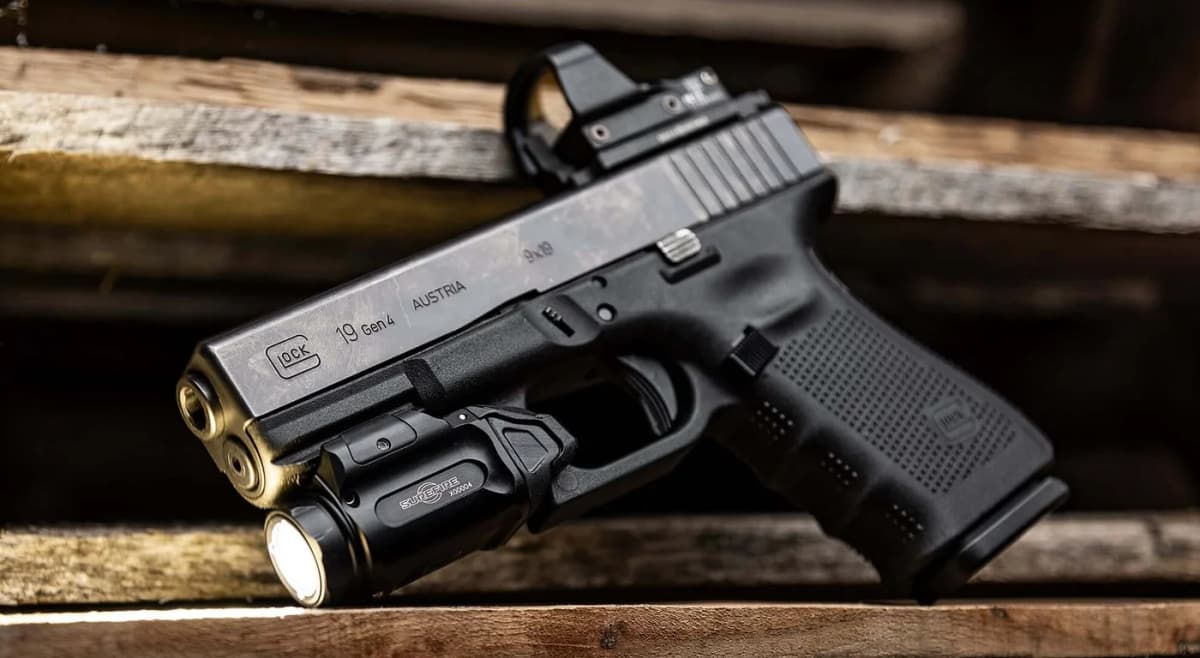
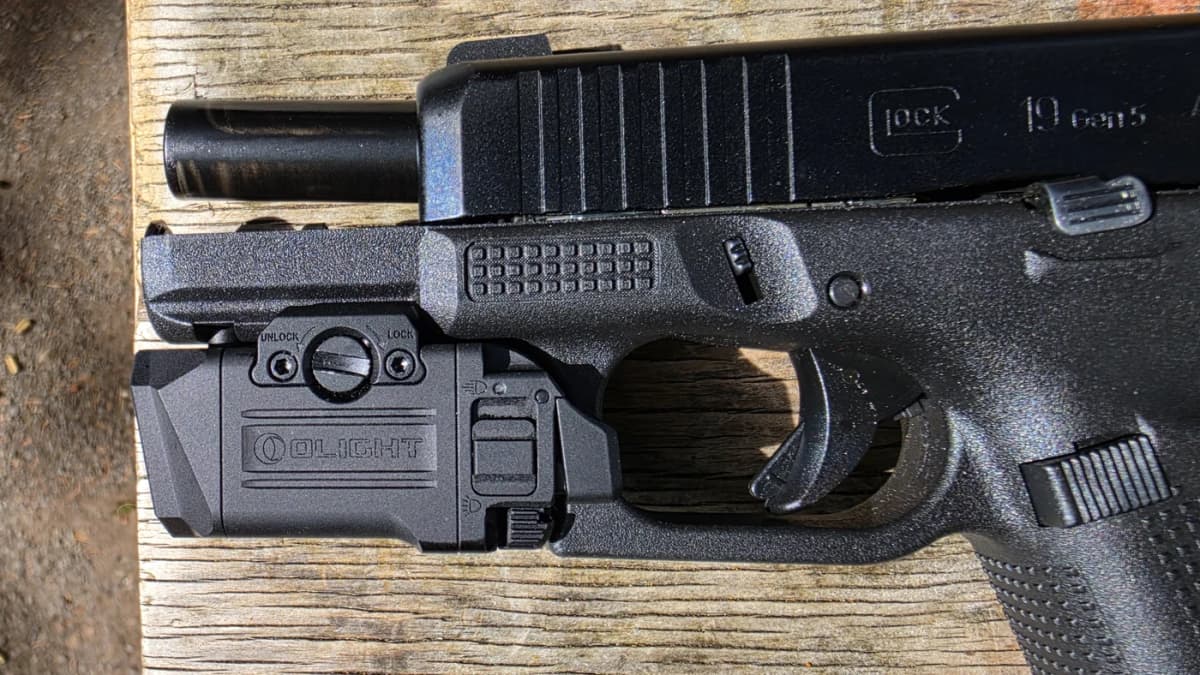
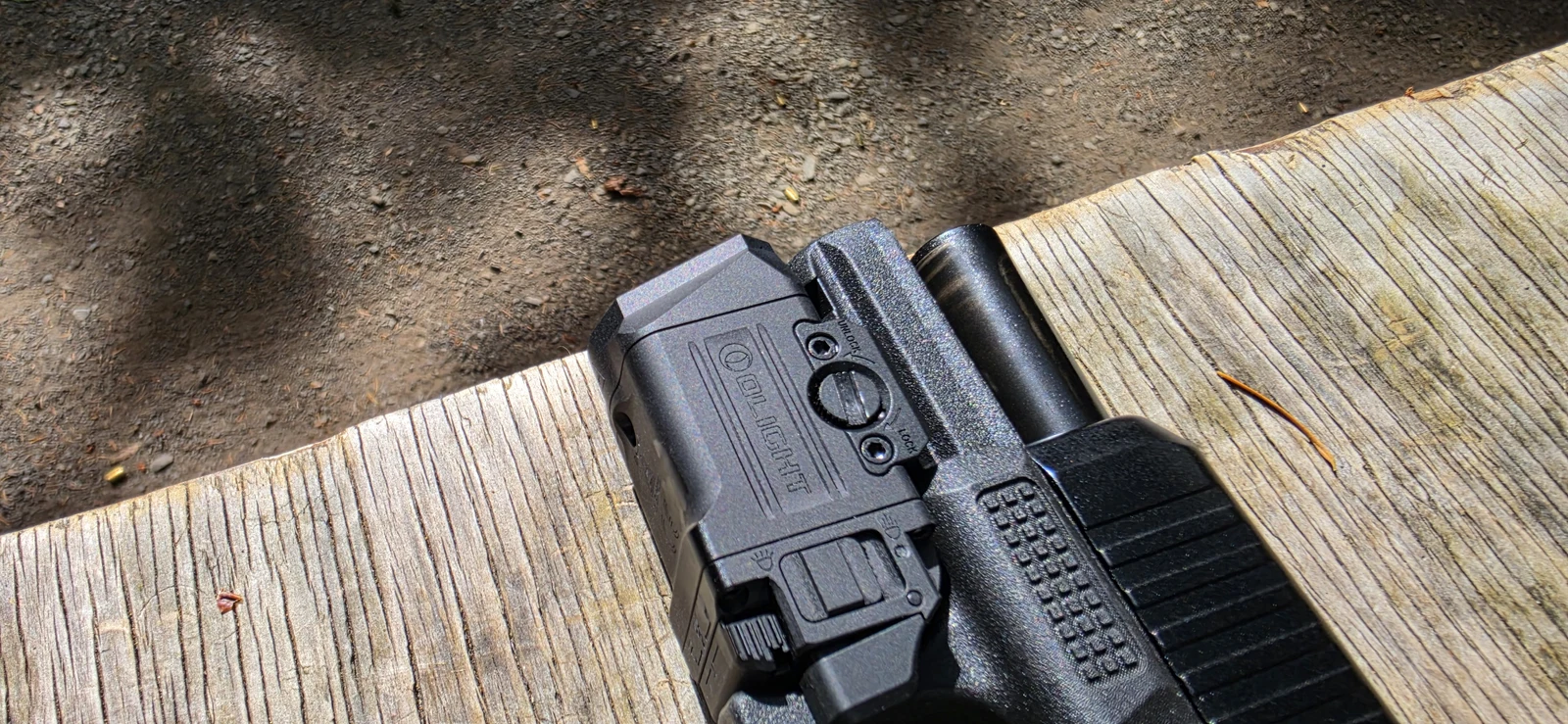
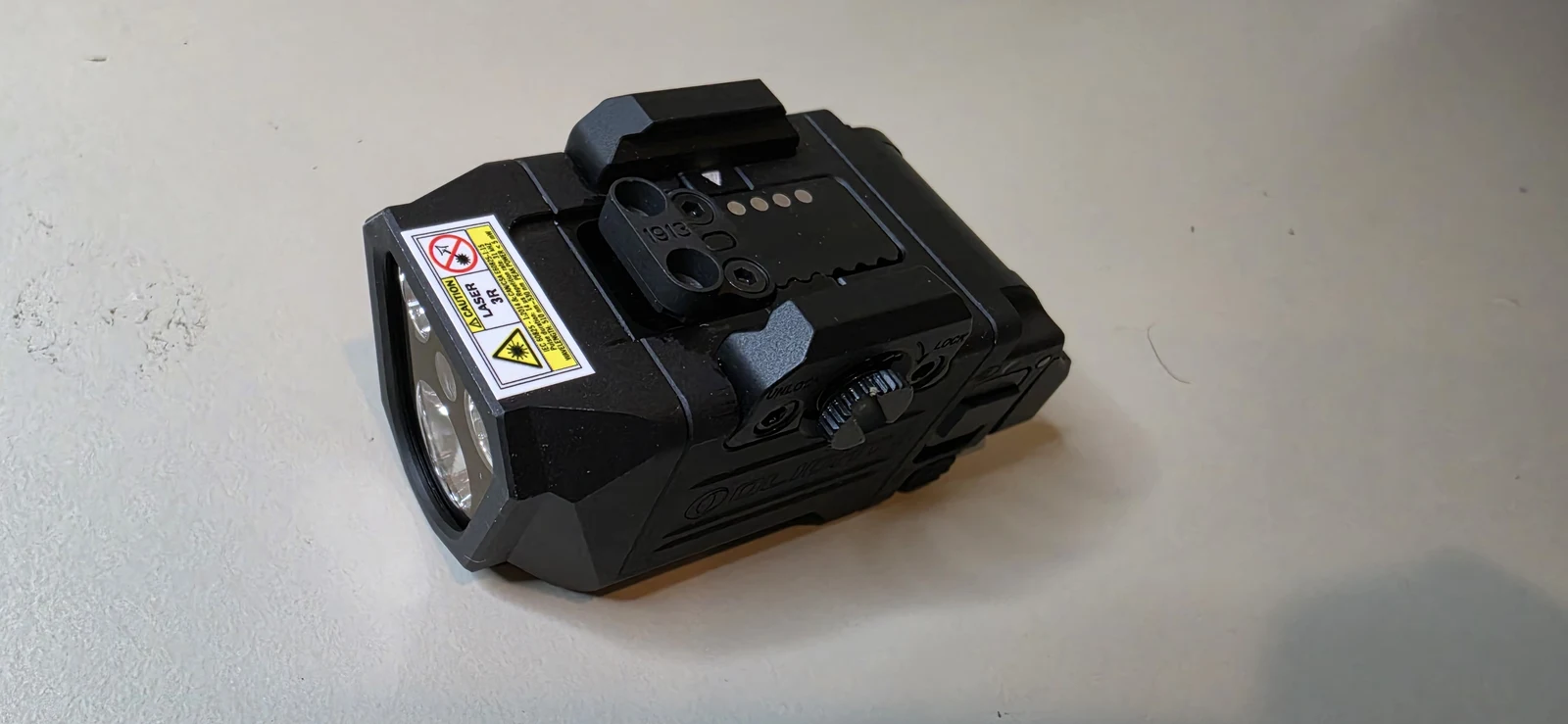
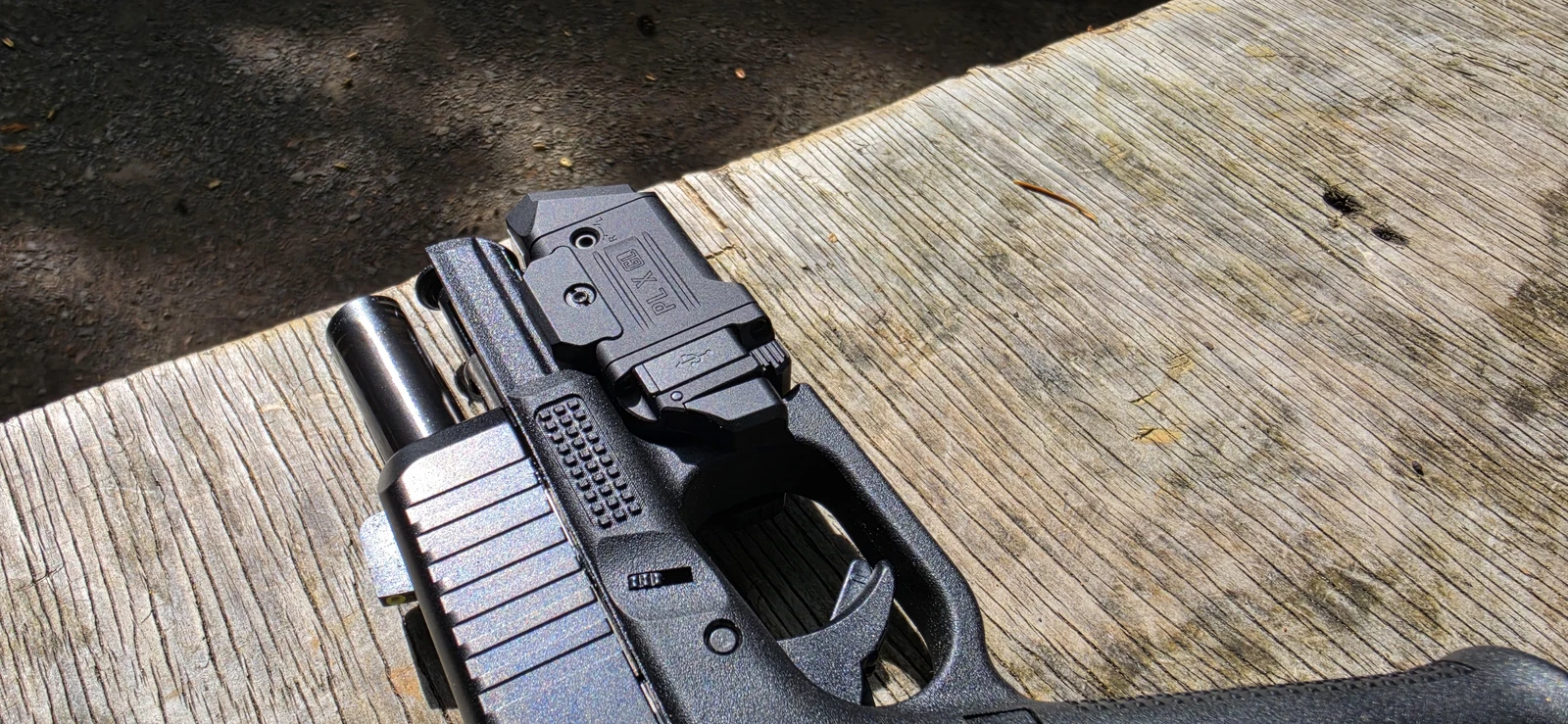
The PL X GL mounted flush on a Glock 19 Gen 5 on the insert it shipped with, with no swap needed. The dual-screw lug adapter takes two inserts, one cut for 1913 Picatinny and one for the Glock-style rail, and the 1913 insert is the one installed in the box. It seated correctly on the Glock rail as delivered; sliding the body to the right distance from the trigger guard was the only adjustment. That pair of inserts is the reason one housing covers both rail standards without the usual stack of proprietary rail keys. The clamp then ratchets shut and locks with a rotary screw marked UNLOCK and LOCK.
Laser zero survived the session. Three hundred rounds of 9mm is not a torture test and nobody should read it as one, but it is enough to shake loose a mount that was going to walk, and this one did not move. The anti-loosening ratchet is doing real work; the common failure mode on a light-laser combination is the laser drifting off zero as the clamp backs out under recoil, and there was no sign of it here.
The Green Laser Reads in Direct Daylight
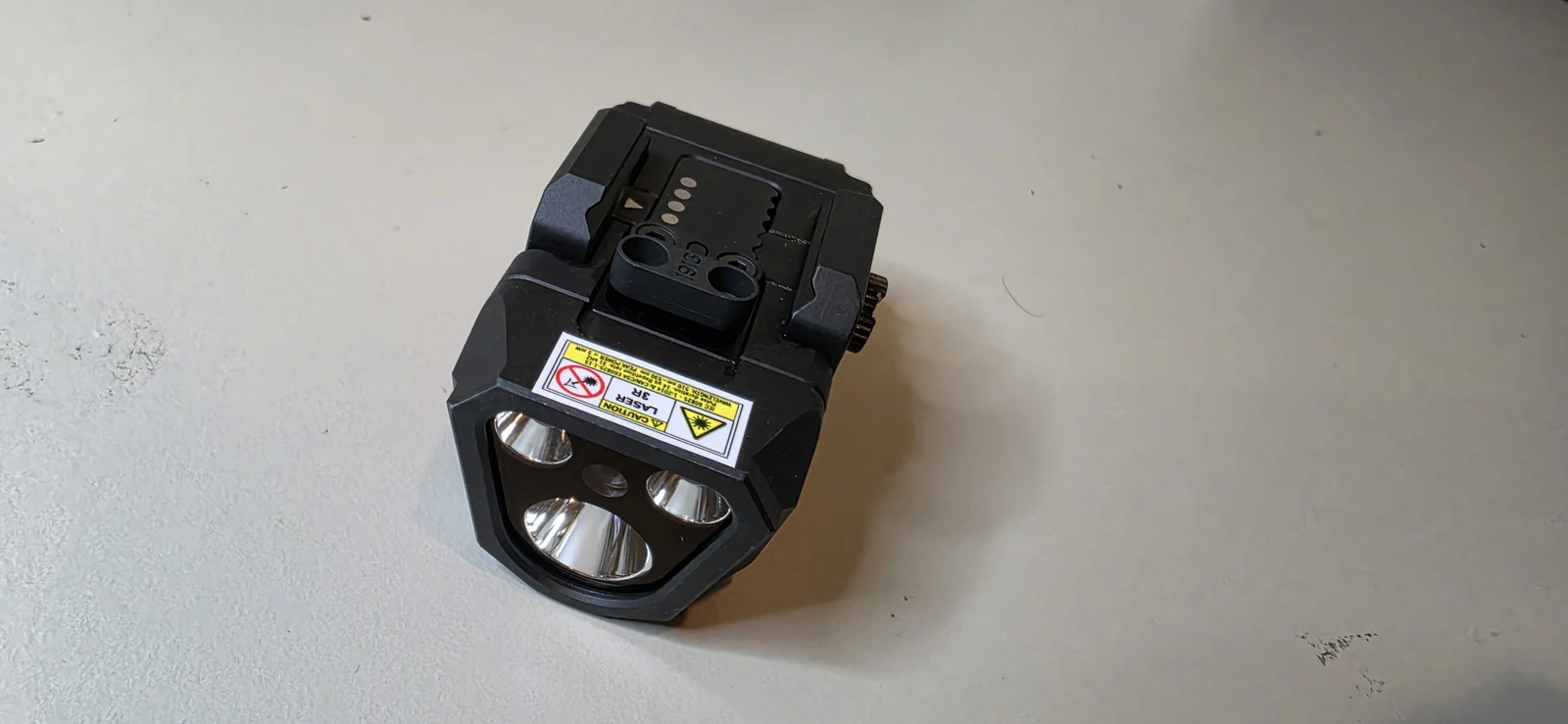
The green laser stayed visible outdoors in direct daylight, which is the bar most visible lasers fail. The label on the unit explains how: it is a Class 3R emitter at 510 to 530 nanometers with peak power under 5 milliwatts, pulsed at a 31 kHz repetition rate with a 14 microsecond pulse duration.
That pulsing is the whole trick. Average optical power has to stay under the Class 3R ceiling to keep the light in a class civilians can buy without restriction, but the eye integrates brief bright flashes as a continuous dot. Running the diode in short high-peak pulses buys apparent brightness that a continuous-wave emitter at the same average power cannot match. The 510 to 530 nanometer window also sits near the peak of human photopic sensitivity, which is why green reads brighter than a red laser of identical output.
Treat it as a laser, not a novelty. Class 3R means direct intrabeam viewing is potentially hazardous, so the same rule that governs the muzzle governs the dot: it does not cross anything you are unwilling to destroy.
Charging Over Standard USB-C
The PL X GL charges through a USB-C port on the side of the body with no proprietary cable and no magnetic dock, and a four-dot indicator on the top deck reports remaining charge. For a brand whose charging system has been the single most common technical objection against it, moving to the connector already in every bag and every truck is the correct answer.
The residual trade is capacity. A 620 mAh cell refills in about 80 minutes over that port, but it is holding a lot less energy than a pair of CR123A primaries: the beams step down from their opening output within a few minutes, and the long rated numbers, 95 minutes on the low spot and 9 hours on the laser alone, are low-draw settings rather than fighting output. A rechargeable light is also one you have to remember to charge rather than one you top off with a fresh cell from a drawer. That is the honest cost of the format, and it is the argument the CR123A holdouts will keep making.
Holster Support: Seventeen Makers on Day One
The PL X GL shares the PL X shell, so any holster already molded for that pattern takes it. Olight lists compatible cuts from seventeen manufacturers, and twelve of them came to launch with a discount attached. This is the part that matters more than any spec on the sheet. A weapon light with no holster ecosystem is a range toy regardless of output, because holster fit keys off the light body rather than the pistol.
Olight’s launch-window pricing across those makers runs from September 19 through October 31, 2026.
| Launch Offer | Holster Makers |
|---|---|
| 20% off with code PLXGL20 | Rounded Gear, CrossBreed, Bucks Holster, Just Holster It, CQC, The Holster Mill, Stay Frosty Holster Worx, McKinatec Holster, Righteous Response |
| 10% off with code PLXGL10 | Werkz |
| Discount applied automatically on PL X and PL X GL holsters | Red Hill Tactical, Slimfit |
One consequence to plan for: an existing SureFire X300 or Streamlight TLR rig will not take this light. That is not a knock on Olight, it is how light-bearing holsters work, but it does mean the true cost of entry includes a holster unless you already run the PL X pattern. Our light-bearing holster guide covers how to think about that fit.
Compare Pistol Lights
SureFire X300U-A Ultra
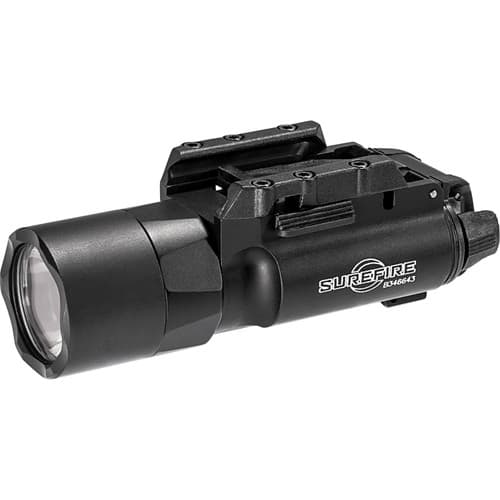
- 1,000 lumens
- 11,300 candela
SureFire X300T-A Turbo
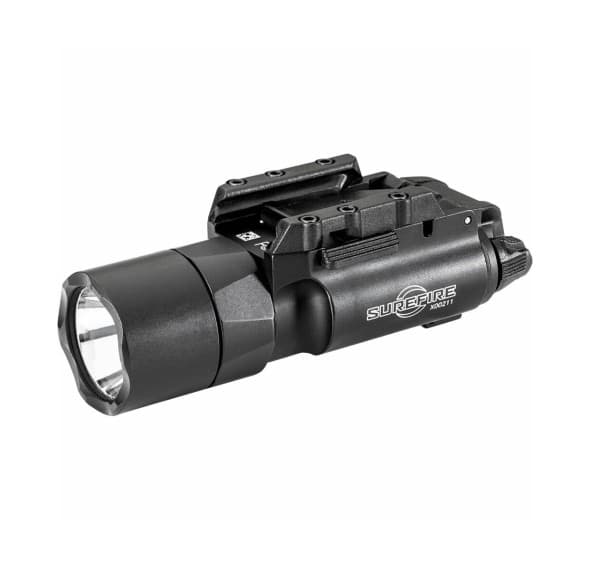
- 650 lumens
- 66,000 candela
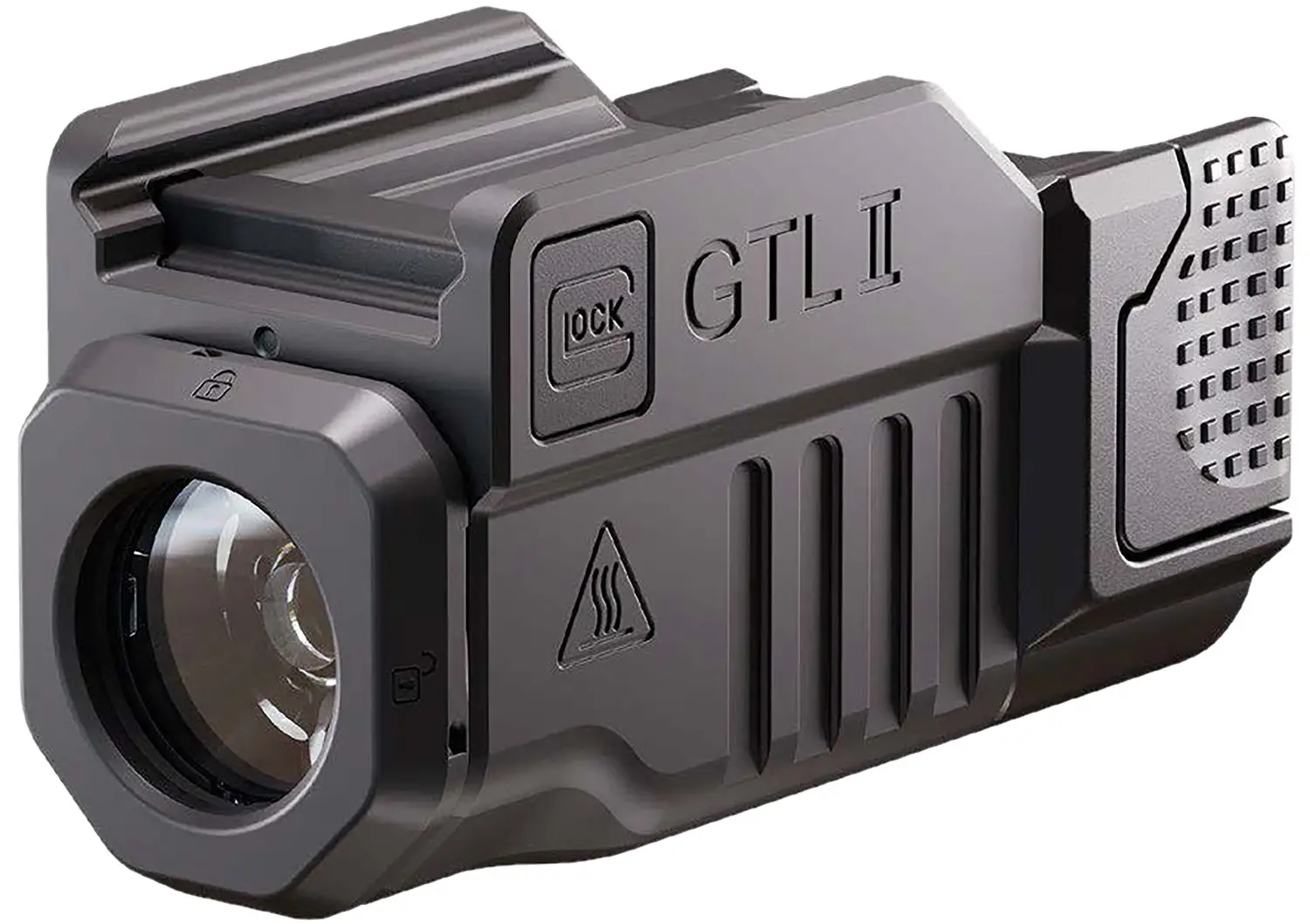
GLOCK Tactical Light II
- ~600 lumens
- ~11,100 candela
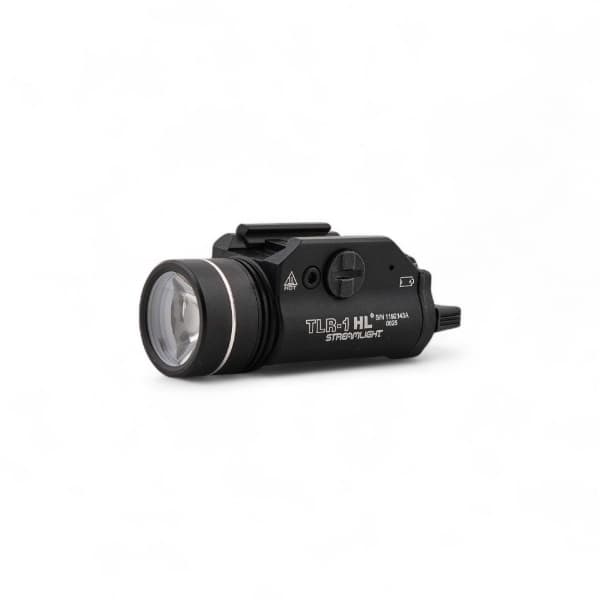
Streamlight TLR-1 HL
- 1,000 lumens
- 20,000 candela
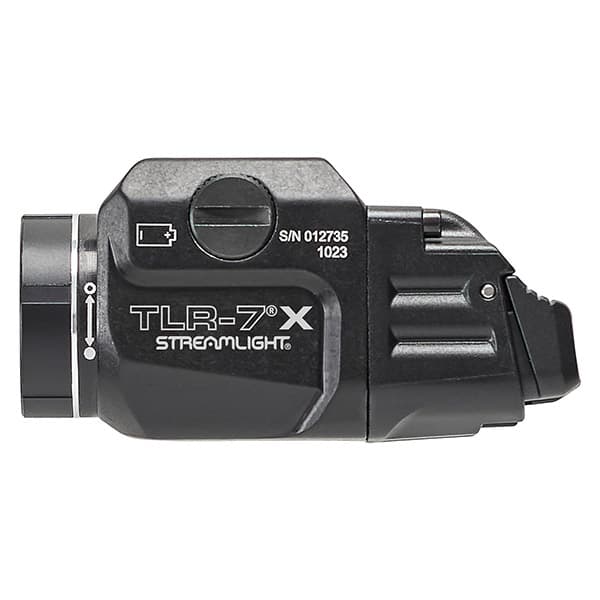
Streamlight TLR-7 X
- 500 lumens
- 5,000 candela
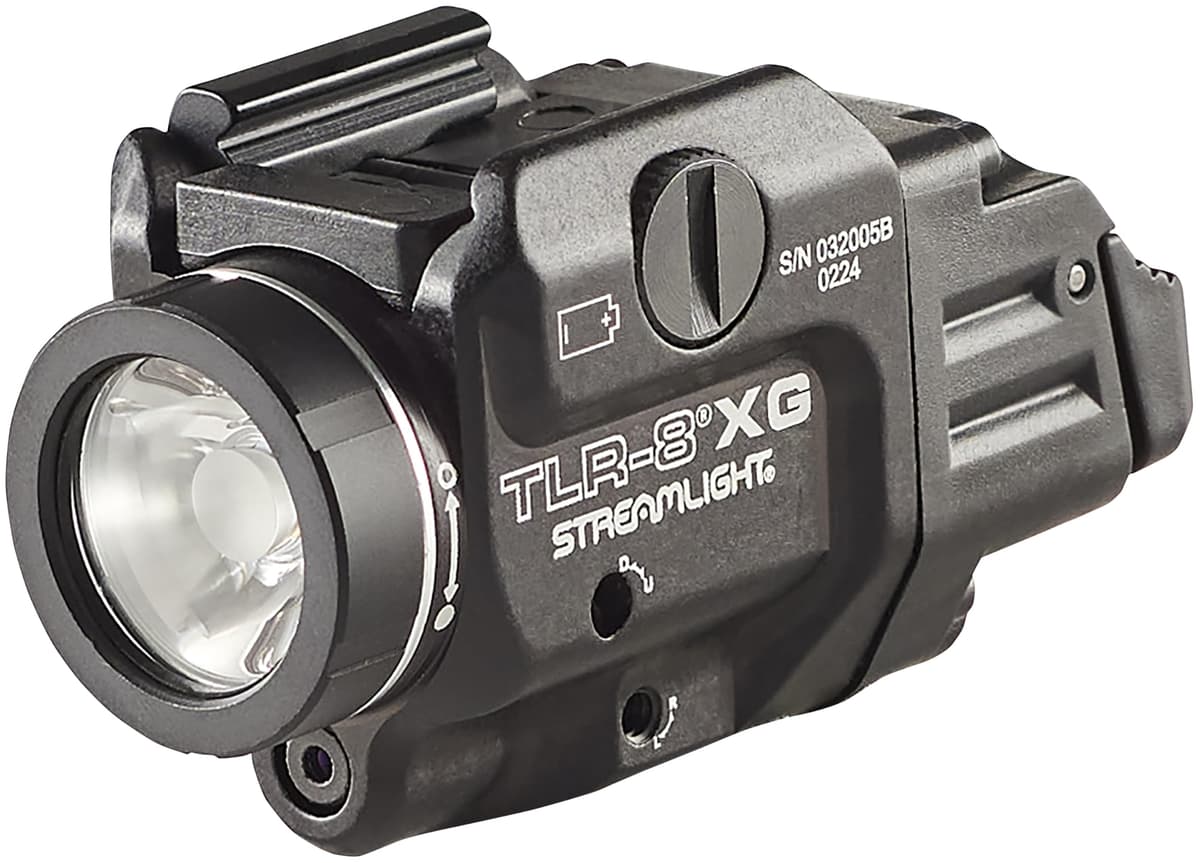
Streamlight TLR-8A G Flex
- 500 lumens / 5,000 candela
- Green Class 3R laser
Affiliate links (?)
What This Test Has Not Answered
Beam performance at distance in the dark is untested. The 260 meter throw figure is Olight’s rating, not a number verified here, and a daylight range session says nothing about how the spot beam resolves a target at the far end of its claimed reach. That measurement is still owed.
Long-term durability is also open. Three hundred rounds proves the clamp does not walk in a single session; it does not speak to where this light sits after a year of carry, holster abrasion, and charge cycles. Olight cites 10,000 rounds of internal live-fire validation, and that is their figure, not a verified one. The brand’s track record on duty-cycle longevity is exactly what has been in question, so it is the thing that needs time rather than an opinion.
Stay Updated on Weapon Lights and Lasers
Hands-on reviews, launch coverage, and holster compatibility notes for pistol lights, sent when there is something worth reading.
Frequently Asked Questions
▶Why does Olight have a bad reputation?
▶Is the Olight PL X GL good?
▶What is the difference between the Olight PL X and the PL X GL?
▶Does the Olight PL X GL fit X300 holsters?
▶How bright is the Olight PL X GL?
▶Is the green laser on the PL X GL eye-safe?
Bottom Line
The PL X GL is a well-executed light, and it answers the two specific objections this site has published against Olight for years.
Standard USB-C charging and a seventeen-maker holster ecosystem on day one remove the proprietary-lock-in arguments entirely. The two-switch control layout is better than what most combination units ship with, the green laser reads in direct sun, and zero held through 300 rounds on a Glock 19 Gen 5. Against that, it gives up throw to its own non-laser sibling, a 620 mAh cell is thin next to a primary-cell duty light, and it needs a holster cut for the PL X pattern rather than an X300 shell.
The boundary is time, not design. If you want a light and a daylight-visible laser in one compact housing and you are buying a holster anyway, this earns the look. If your standard is a decade of documented duty service, Olight has not accumulated that yet and this light is too new to have started the clock.
Affiliate links - purchases support this site at no extra cost to you. (?)