Key Takeaways
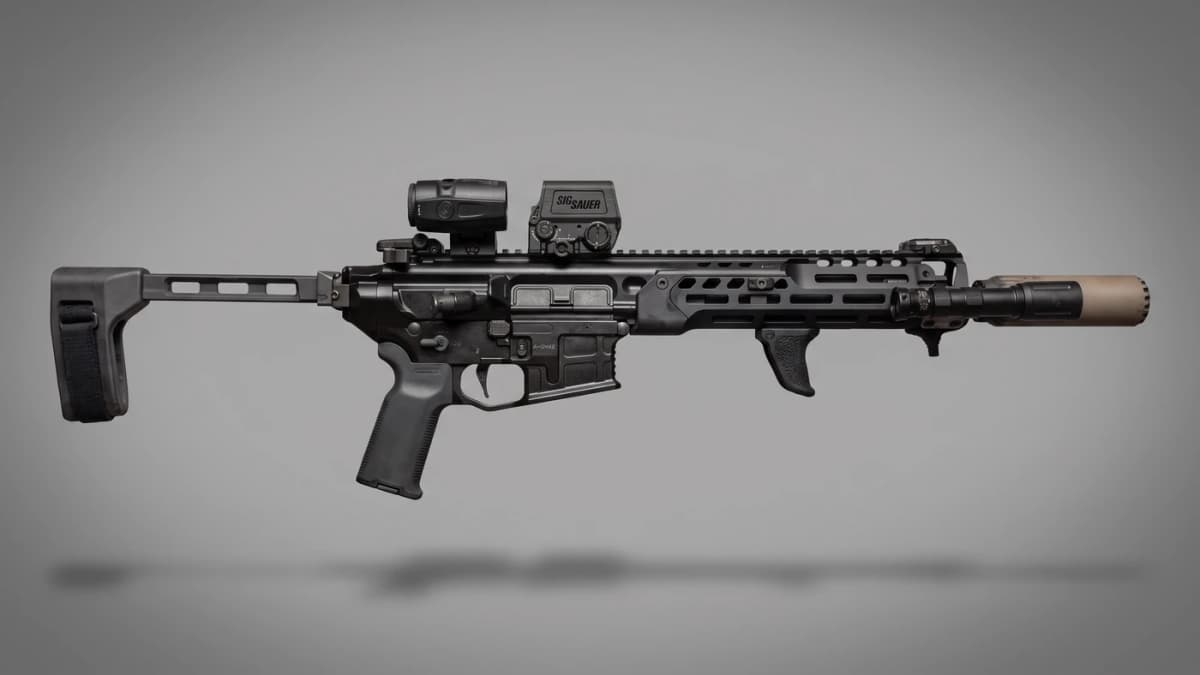
- →The reticle changes itself: a magnet in the paired magnifier trips a sensor in the sight, so the pattern and brightness swap the instant the magnifier swings into line. We run a 65 MOA circle-dot at 1x and ballistic holds at 3x and never touch a button.
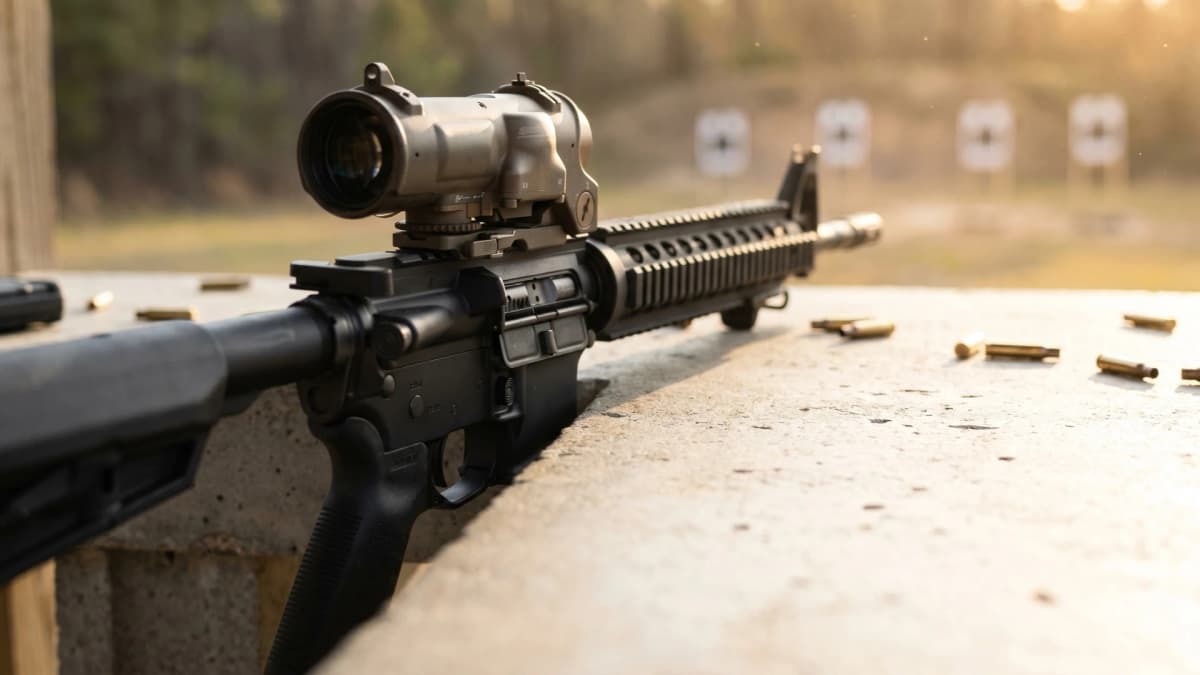
- →1,500 rounds, zero failures: suppressed SIG MCX SPEAR LT, several 2-gun matches, one of them in heavy rain, nothing failed.
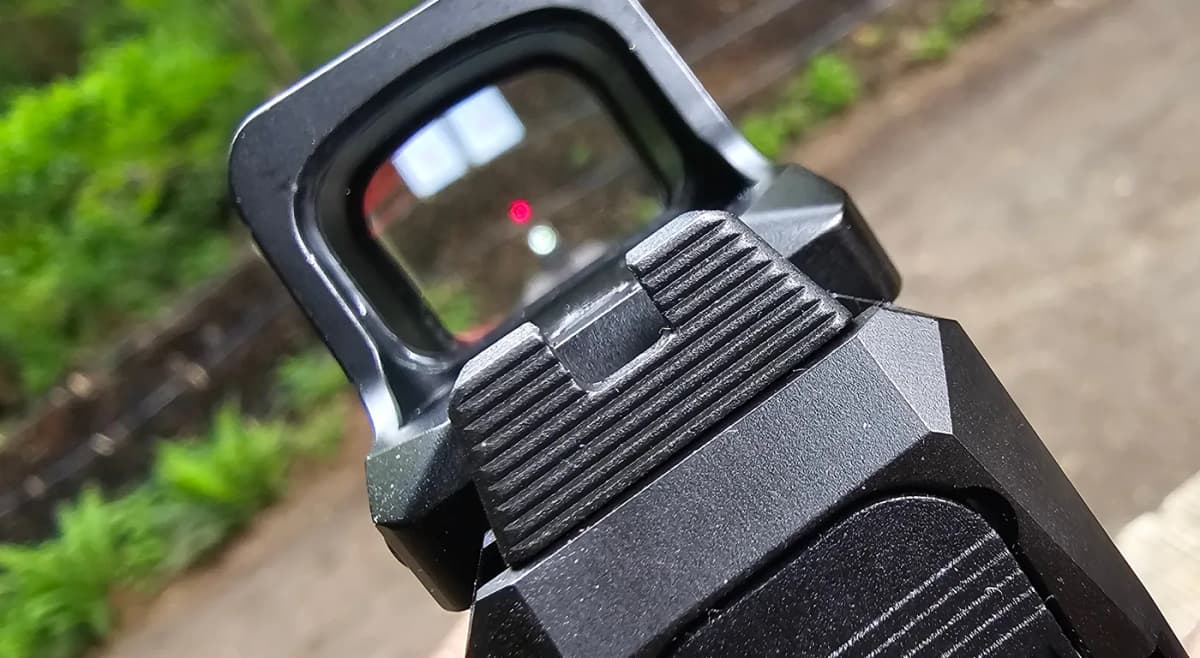
- →The objective is a Mangin lens: a 40mm rear-surface reflector that corrects the spherical aberration a plain reflex mirror introduces. It is the most interesting spec on the sight and SIG barely mentions it.
- →The clear flip cap earns its keep: it rides closed in the rain and takes the dirt instead of the glass. Flipping it down out of the way took a bit of fiddling on the clock.
- →AMR is inert without the magnifier: the headline feature needs an AMR-capable magnifier or mount. A G33 or HM3X you already own will not trigger it.
Sig Sauer Romeo 8T AMR
Shooters who actually run a magnifier and want a different reticle magnified than unmagnified, without touching a menu on the clock
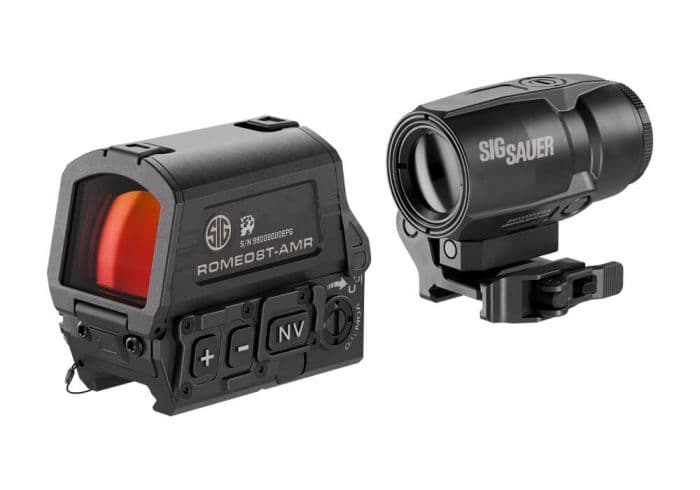
Enclosed 1x40 rifle red dot whose reticle auto-switches when an AMR magnifier swings in
- +AMR removes the menu dive when swapping between magnified and unmagnified reticles
- +Mangin objective holds a round dot and parallax-free picture across a 40mm window
- +NV button doubles as the power-on-at-max control and the reticle-failure recovery step
- −AMR does nothing without a separately sold AMR-capable magnifier or magnifier mount
- −Integral 1.41 inch absolute co-witness base means a riser is the only way to reach 1.93, though SIG hosts with a taller receiver rail need it less
- −Heavier than micro dots at 9.5 oz bare and 11.3 oz shrouded
Affiliate links (?)
What AMR Actually Does
AMR stands for Automatic Modified Reticle, and the mechanism is a magnet. An array in the front of an AMR-capable magnifier trips a sensor on the rear of the sight, and the reticle and brightness switch to a second stored preset the moment the magnifier swings into alignment. Flip it off and both revert. There is no button press and no menu.
That solves the two things that make a dot and magnifier combination a compromise. The first is that you want a different reticle at 3x than at 1x. A 65 MOA circle is fast up close and cluttered at distance; a stack of holdover dots is the reverse, and at 1x those dots are too small to read. Changing between them used to mean holding buttons mid-stage. The second is that a magnifier magnifies the reticle too, so a dot set for daylight at 1x blooms behind glass. Separate brightness memory per state fixes it.
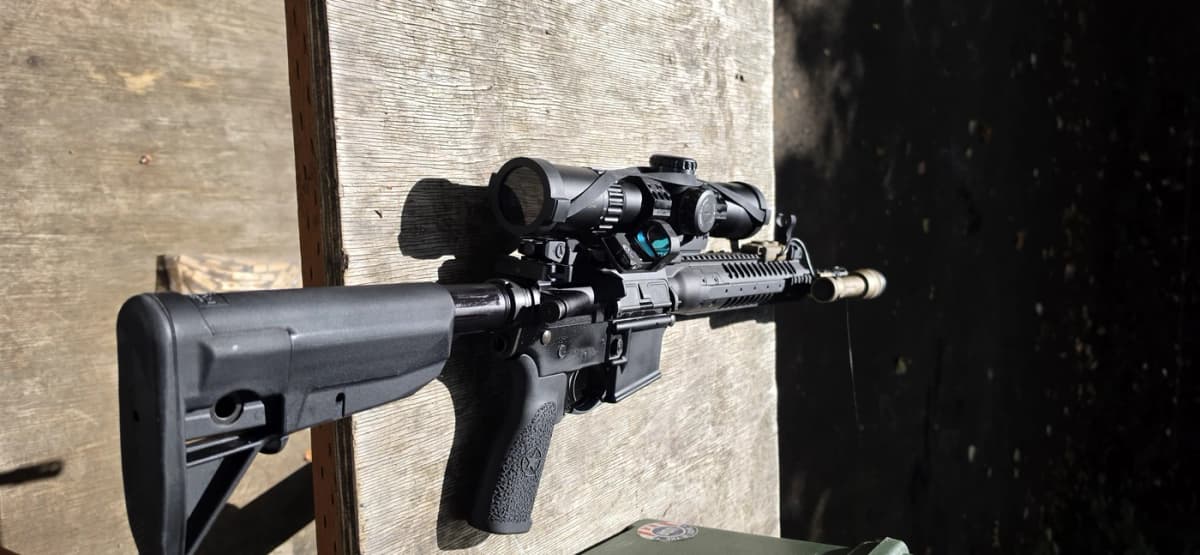
We run the 65 MOA circle-dot unmagnified and the ballistic holds magnified. That is not a clever setup we invented, it is the exact example SIG walks through in the manual, and arriving at it independently says the feature is aimed at a real problem. In a 2-gun stage with close paper and steel at distance, the transition costs nothing. You flip the magnifier and the sight has already changed.
The 1x pattern: 65 MOA circle, 2 MOA dot
This is the unmagnified preset, drawn as a vector reticle at true angular size from the ROMEO8T manual's dimensioning: a 2 MOA dot inside a 65 MOA circle. It is a rendering of the reticle geometry over real ballistics, not a photograph through the sight.
Scoring zones follow the USPSA Competition Rules, Appendix B1 dimensions. Hits are scored where they land.
Fixed 1× magnification
Reticle from the published subtensions · sources
Published window at eye relief. Illustrative housing.
Reticle drawn from the subtensions on this sheet; holds and the BDC table come from it.
Advanced
How much fits in the view?
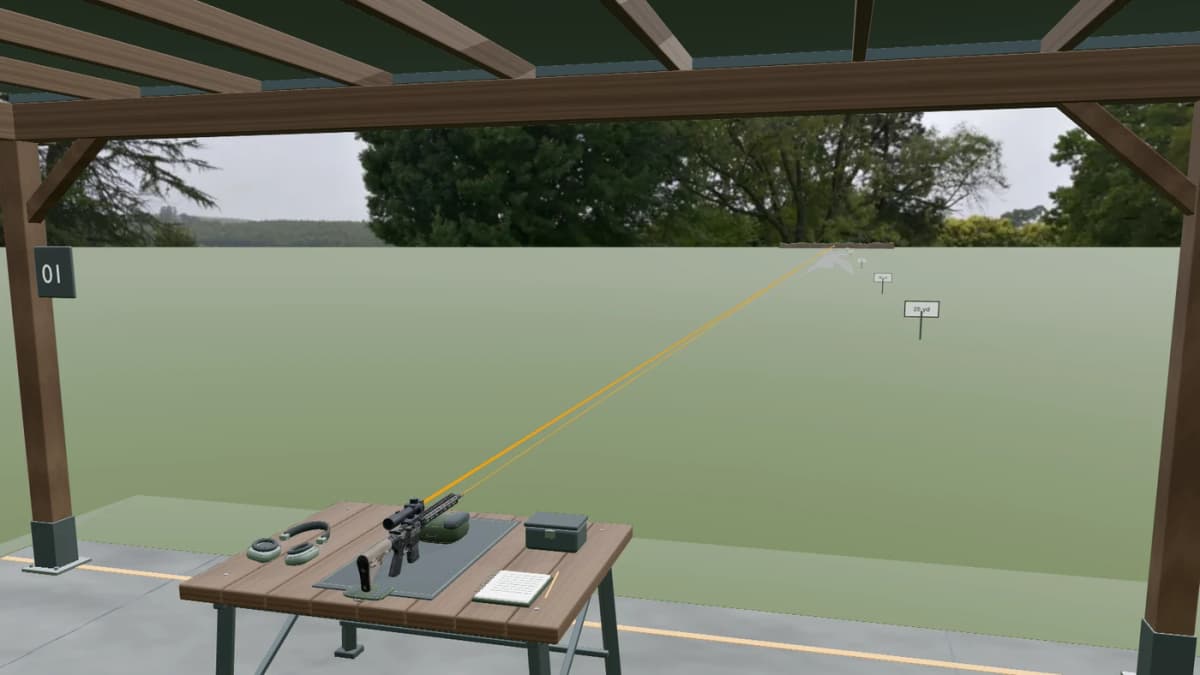
Top-down · fits the selected distanceAlong the range and across it use the same scale. The short center mark shows the object’s width.
A · 1× · 20 ft wide
Published window at eye relief
The lines trace the left and right edges of the view. Zoom in to see a narrower part of the scene.
Reticle drawn from the manufacturer's published subtensions. Housing, glass, brightness and eyebox are simulated.
Open the full range simulatorThe Three-Slot Rule Nobody Mentions
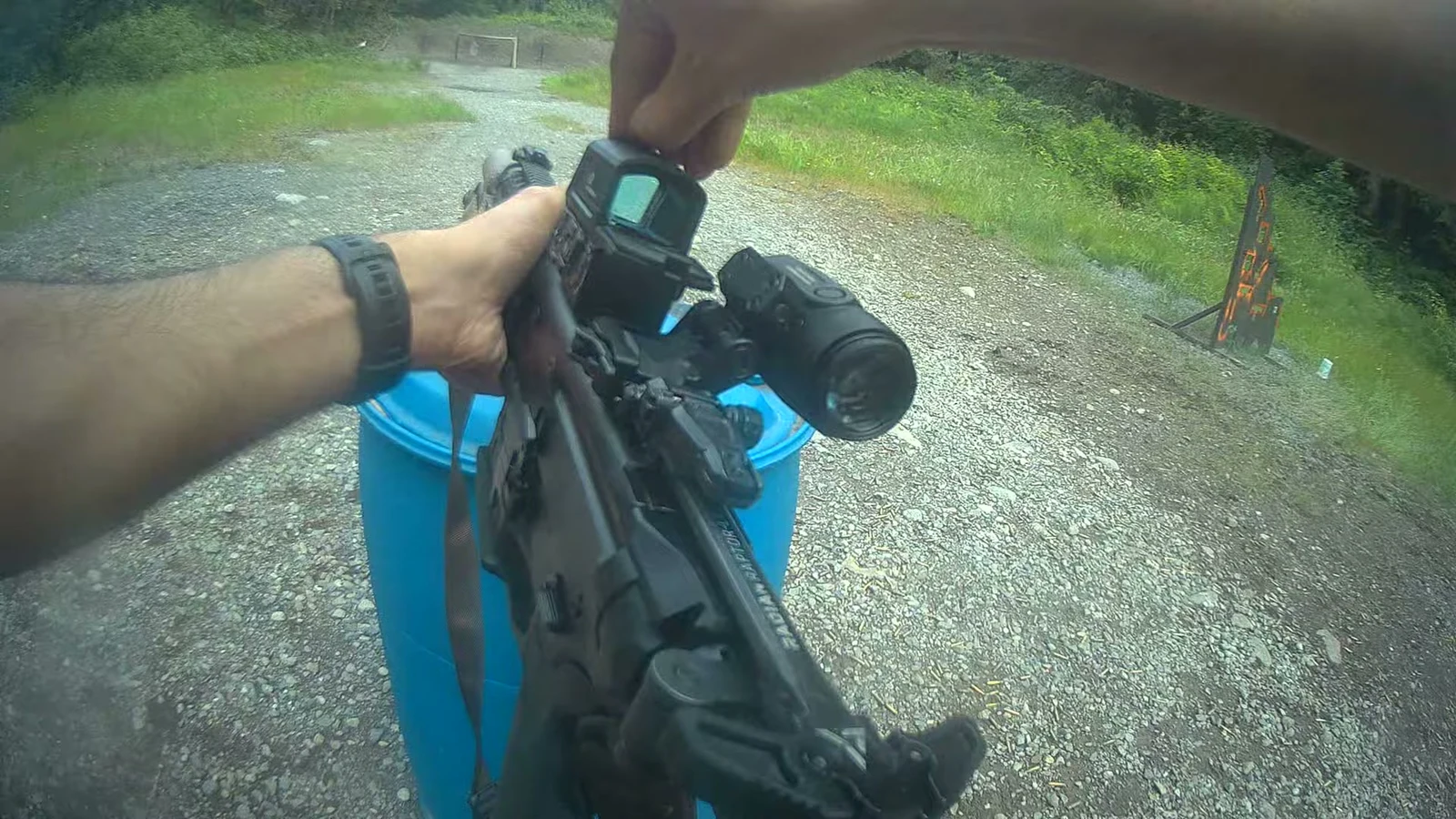
The magnet only reaches so far. SIG specifies that the magnifier must sit within three Picatinny slots behind the sight for detection to stay reliable, and the troubleshooting section names two failure modes: too much gap, or debris on the facing surfaces of the sight, magnifier and mount. If AMR works intermittently, that is a mounting problem, not a fault.
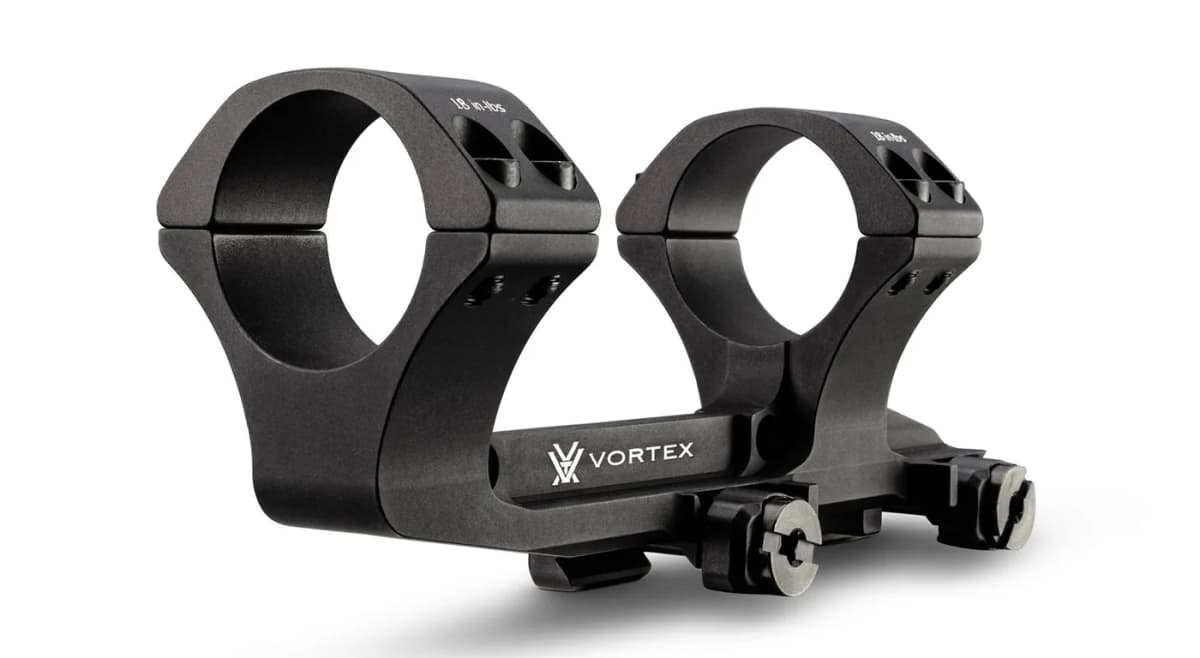
Plan the rail before you commit: magnifier first, sight within three slots ahead of it. The half-inch nut takes 65 inch-pounds, and our AR-15 optic mounting guide covers the sequence that keeps the zero repeatable.
One button trap. Holding up and down together powers-on enters reticle selection; holding the same two with the sight off opens the AMR menu, one blink disabled, two blinks enabled.
The magnified pattern: ballistic holds
The second stored preset, the one the magnet calls up. The ROMEO8T manual dimensions the holds as 1 MOA dots at 5, 9 and 15 MOA below center. Again a vector rendering of the geometry, not a photograph, and the simulator does not draw the view through the magnifier itself.
Scoring zones follow the USPSA Competition Rules, Appendix B1 dimensions. Hits are scored where they land.
Fixed 1× magnification
Reticle from the published subtensions · sources
Published window at eye relief. Illustrative housing.
Reticle drawn from the subtensions on this sheet; holds and the BDC table come from it.
Advanced
How much fits in the view?
Top-down · fits the selected distanceAlong the range and across it use the same scale. The short center mark shows the object’s width.
A · 1× · 140 ft wide
Published window at eye relief
The lines trace the left and right edges of the view. Zoom in to see a narrower part of the scene.
Reticle drawn from the manufacturer's published subtensions. Housing, glass, brightness and eyebox are simulated.
Open the full range simulator1,500 Rounds and What Broke
Nothing failed. Fifteen hundred rounds on a suppressed SIG MCX SPEAR LT across several 2-gun matches, including one run in heavy rain, with no failures of any kind. That is reliability, not longevity; nobody has run one to 15,000 yet.
A suppressor drives fouling back over the receiver and the glass, which is the case an enclosed emitter is built for and an open-emitter dot is not. If you are weighing that question generally, our enclosed versus open emitter comparison lays out the trade.

The Clear Flip Cap
The front cover is clear, so the sight works with it closed and it rides closed in the rain. In a wet match the cover took the dirt instead of the glass. Flipping it down out of the way took a bit of fiddling on the clock, which is the one cost.
The rear cover is clear and flips the same way, and it tears away by design: unclip the locking tab, twist, pull one side off the housing.
The 40mm Mangin Lens Is the Real Story
The most interesting specification on this sight is one SIG lists once and never explains. The objective is a 40mm multi-coated Mangin lens, which is not how most reflex sights are built. A Mangin element is a negative meniscus lens with the reflective coating on its back surface, so light refracts going in, reflects off the rear, and refracts again coming out. The point of that geometry is to cancel the spherical aberration a plain spherical mirror produces.
Almost every reflex sight collimates off a single coated surface. Aberration in the collimator is what makes a dot lose its shape and parallax creep off axis, which is how SIG prints parallax-free next to a window this wide. Our best AR-15 red dots guide ranks the rest of the enclosed field.
The tint is on the strong side, blue enough to pick out if you go looking for it. We never noticed it shooting.
- Objective
- 40mmMangin, multi-coated
- Weight
- 9.5oz11.3 oz shrouded
- Sight height
- 1.41inabsolute co-witness
- Travel
- 100MOA0.5 MOA per click
Where the Design Came From
The ROMEO8T-AMR reads like a duty optic because its predecessor was one. In September 2023 SIG won a place in the British Armed Forces SWESS program, the Support Weapons Enhanced Sighting Systems buy, with the original ROMEO8T alongside the JULIET3 and JULIET4 magnifiers. SIG's own statement scoped it to withstanding the rigors of 5.56 and 7.62 light and medium machine gun platforms.
SWESS is the buy SIG can name. Special forces purchases rarely get a press release, and SIG glass shows up on their weapons more than the public record suggests, the ROMEO9T and ROMEO4T Pro especially.
It shows in the hardware: the huge window, the absolute co-witness height, the shroud, a nut instead of a lever.
The AMR is where SIG cut weight. The original carried an integral steel shroud; the AMR moved to a removable titanium one that adds 1.8 ounces when fitted and comes off with four T10 screws. The objective grew from 1x38 to 1x40 at the same time. SIG rates the whole reduction at over 30 percent.
Check which one you are buying: SIG sells the sight with and without the shroud. Ours predates the shroud option, so every round here is on the bare 9.5 ounce sight.
Three Things That Will Annoy You
MOTAC sleeps after two minutes. It wakes on any movement and returns to your last reticle and brightness, so in practice you rarely see it, but two minutes is far shorter than the ten-minute default common elsewhere and it is not adjustable.
The mount is integral at 1.41 inches. That is absolute co-witness, which sits low against a 1.93 inch habit, and a riser is the only route up. It matters less than it reads: SIG hosts tend to carry a taller receiver rail than a standard AR flat-top, so on an MCX the eye line lands about right. Our red dot riser and mount height guide covers which height suits which build, and you can price the whole setup in the rifle builder.
And the big one: AMR needs a magnet. At $699.99 the sight alone is the whole spend, and the entire reason to pick it over a cheaper enclosed dot does nothing until a magnet comes within three rail slots of the sensor. SIG sells that magnet inside its AMR-capable magnifiers and mounts, so a G33 or an HM3X you already own will sit there inert. The trigger is only a magnet, not a handshake, and shooters have fitted their own to non-AMR magnifiers; SIG does not spec it and placement is your problem. Budget for the pair or buy something else.
Where SIG Is Taking This
AMR is the rare new feature that immediately feels like every dot should have it, and it is not where SIG stops. The XRAY5 throws out mechanical zeroing entirely for a 15x15 LED matrix and saved zero profiles, and its LightFight feature raises dot brightness when a paired SIG weapon light comes on. The belt-fed XRAY7-CO shown at SHOT Show 2026 adds rangefinder-driven ballistic holds, firmware-defined reticles and magnifier detection, and SIG told GunsAmerica that commercial versions were in development and would likely be scaled down for M4-sized rifles.
Line those up and the carbine optic at the end of this road syncs with your light and your magnifier and carries its own zeros. The one division missing from the plan is thermal, which SIG already builds and has so far kept outside it.
Shop Current Enclosed Rifle Red Dots
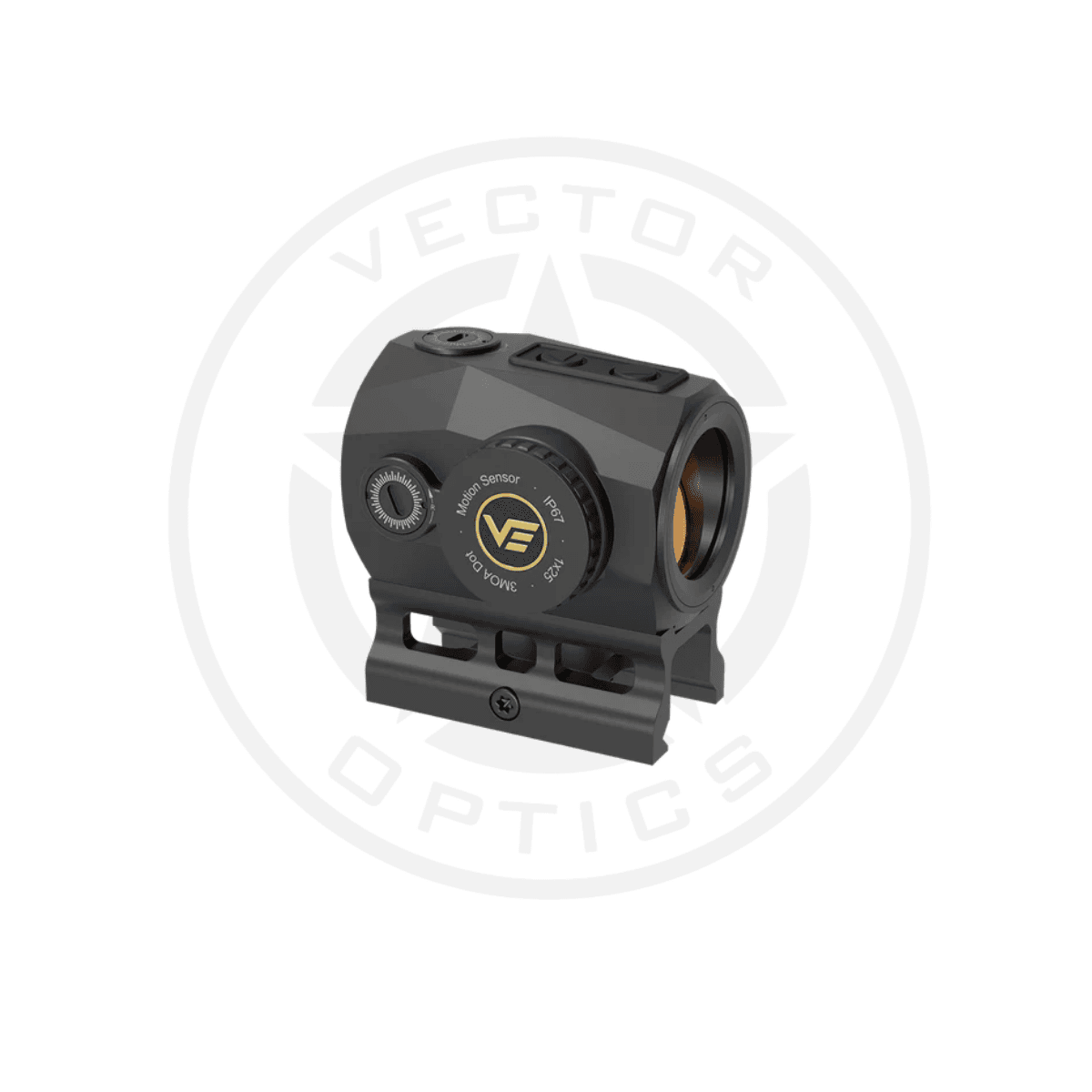
Vector Optics Scrapper Nano 1x25 Enclosed Red Dot
- 3 MOA enclosed dot
- 25mm window
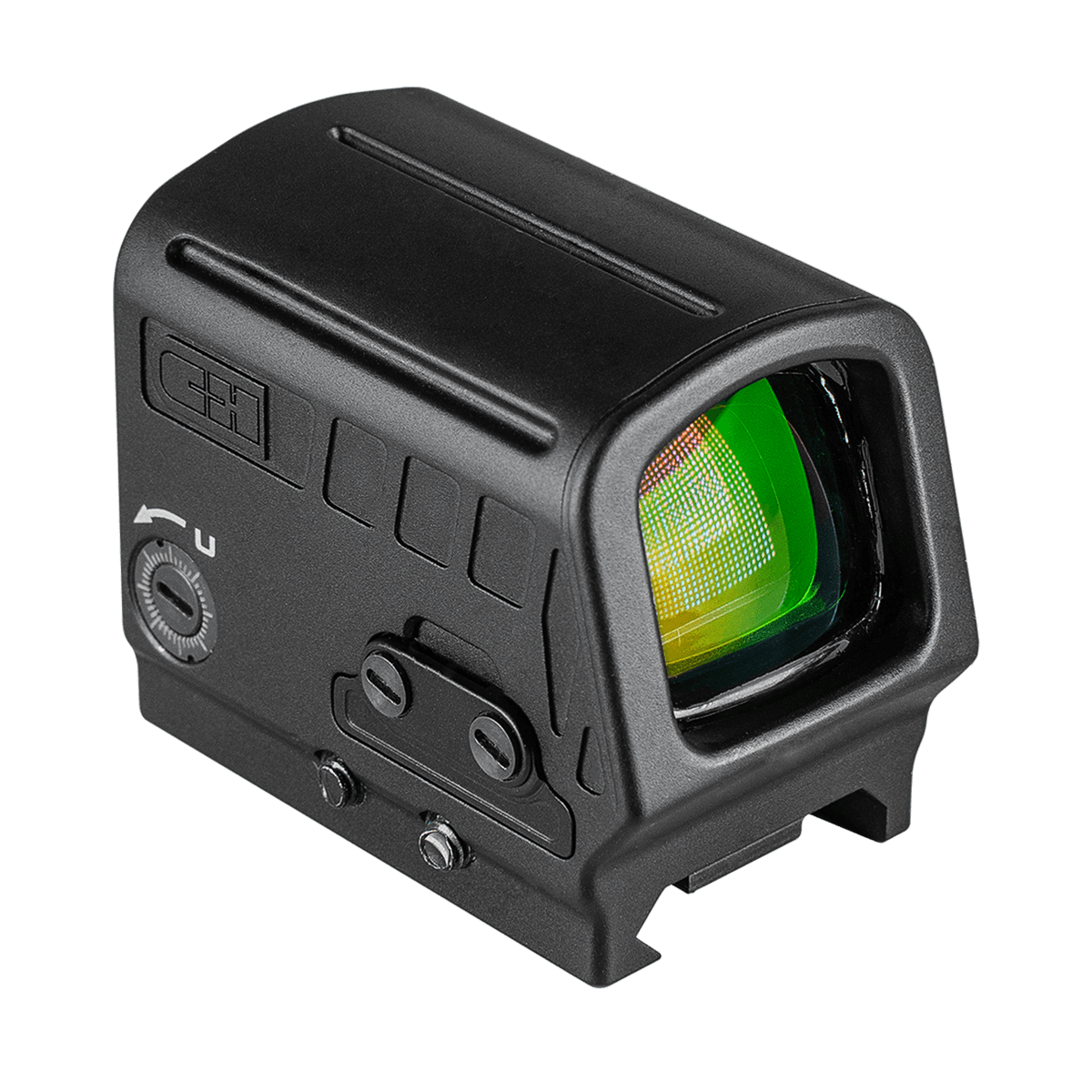
C&H STRYKR Red Dot for FLUX Raider and PDWs
- 3 MOA dot / 33 MOA circle / circle-dot
- 1913 Picatinny mount, 0.76in riser included
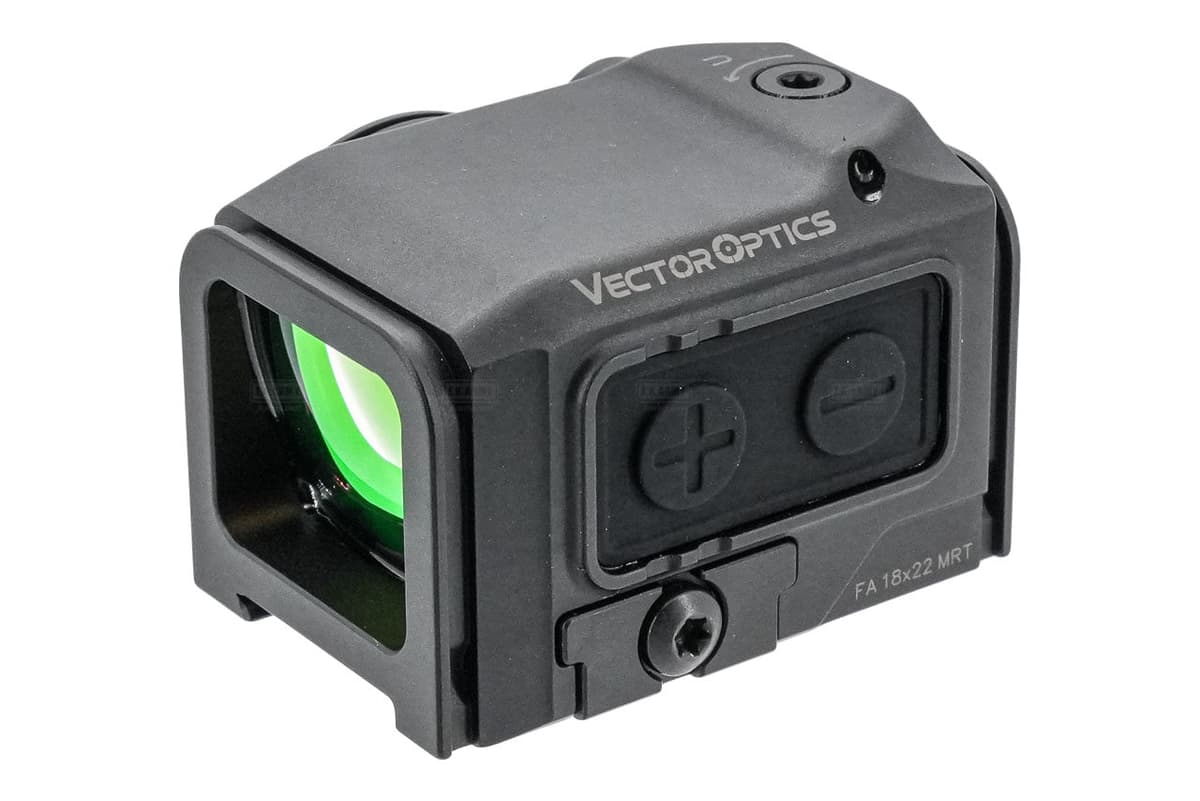
Vector Optics Frenzy FA Enclosed (SCRD-M75)
- 2 MOA dot / 65 MOA circle
- 18x22mm enclosed window
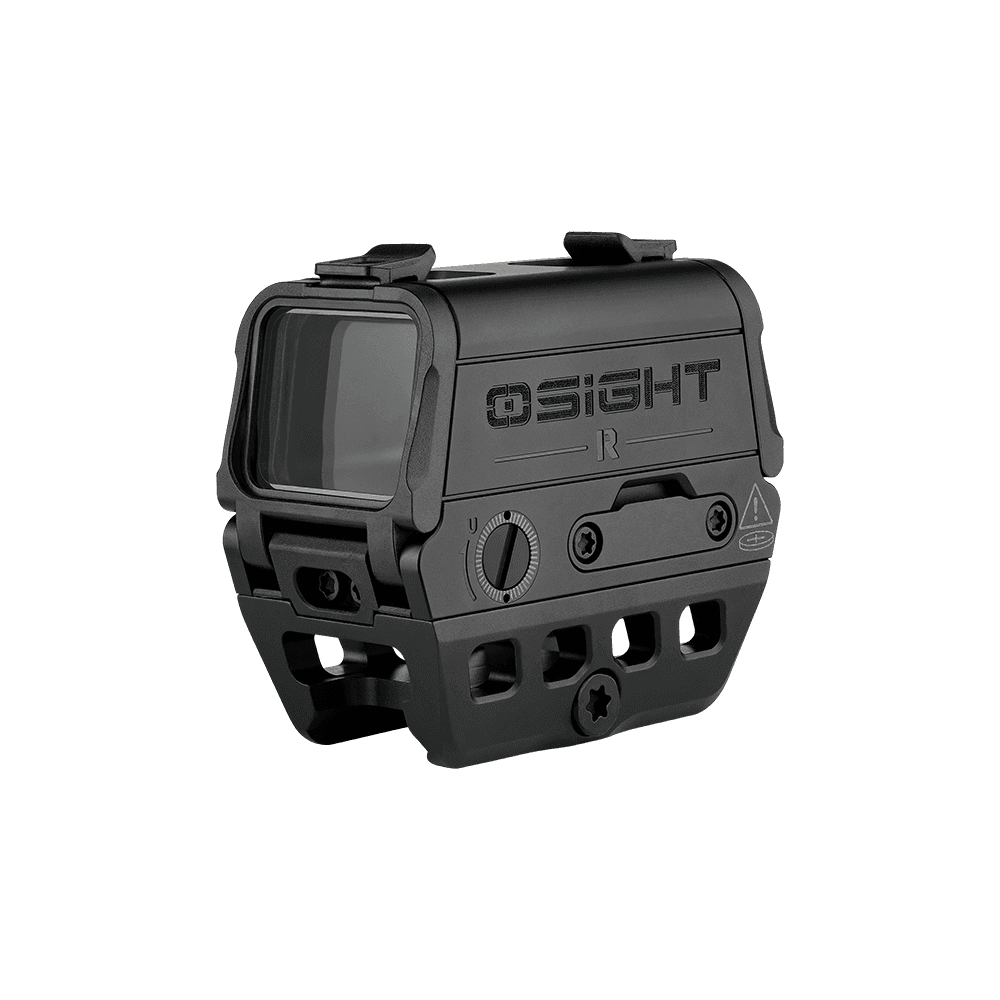
Osight R
- 2 MOA dot / 65 MOA circle / both
- Enclosed emitter, IPX8
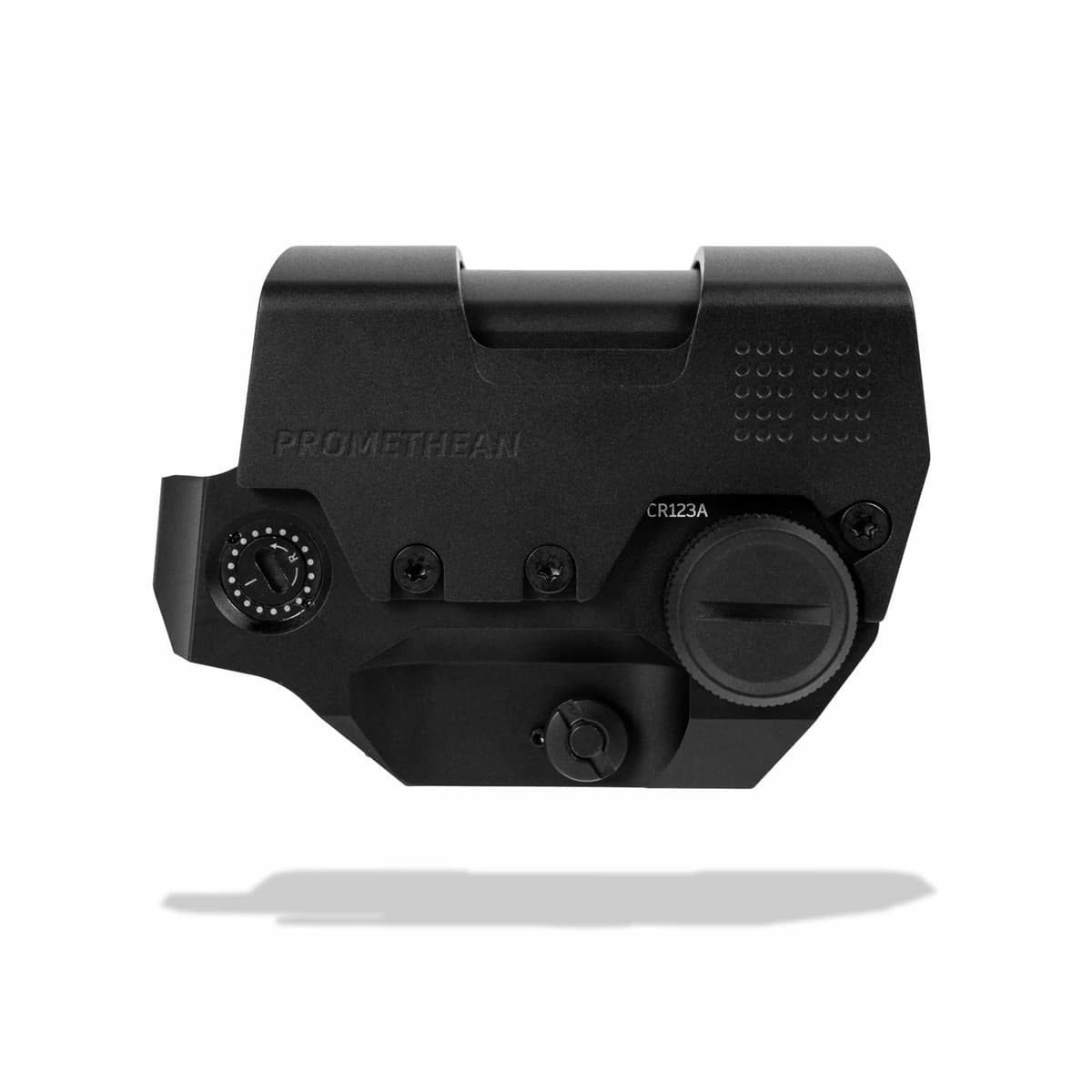
Lead & Steel Promethean LP-1
- Enclosed emitter, IPX8 waterproof
- 1.37 x 1.04 in viewing window
Sig Sauer Romeo 8T AMR
- 40mm Mangin lens
- AMR auto-switching reticle
Affiliate links (?)
Optic Reviews When We Actually Shoot Them
New optic reviews, mount compatibility notes, and price changes on the sights we run.
Frequently Asked Questions
▶What are the differences between the ROMEO8T and 8T AMR?
▶What does AMR stand for on the SIG ROMEO8T-AMR?
▶Does the ROMEO8T-AMR need the magnifier?
▶What is the price of the SIG ROMEO8T-AMR?
▶Is the ROMEO8T good?
▶Which is better for me, the ROMEO4T Pro or 8T AMR?
▶Does the SIG ROMEO8T-AMR work with night vision?
▶What reticle does the ROMEO8T-AMR use?
Bottom Line
Recommended, with the magnifier. Paired, it is the least compromised dot and magnifier setup we have run.
Fifteen hundred rounds across several 2-gun matches, zero failures, and a reticle that changes itself exactly when you want it to. Innovative and still reliable, which is a rare pair, and it feels like a serious bit of kit built for actual warfighters. The Mangin objective is better optical engineering than the category norm and the machine gun lineage shows in how it is built. Against that: the cover is fiddly to flip clear on a timer, MOTAC naps after two minutes, and the headline feature is inert without an AMR magnifier. Budget for the pair and it is hard to go wrong. If you want a big enclosed window for a lot less money, read our Osight R review instead.