Key Takeaways
- →Four deployment modes: standalone thermal scope, handheld monocular, helmet-mounted viewer, and true 1x clip-on. Helmet mounting is the new mode; the previous HYDRA series covered the other three.
- →11.3 oz and 256x192: a 10 mm lens over a 256x192 core with a NETD rating of 18 mK or lower, plus always-on AI Image Super Resolution. Field of view is 30.7 x 23 yd at 100 yards at 1x base magnification (1.14x actual).
- →Ships with the QDF193 mount: a dual quick-detach flip-to-side mount that sits 1.93 inches over the rail and holds zero through removal. DNT also lists 1.5-inch (QDM150, QDS150) and 1.7-inch (QDF170) heights.
- →Helmet mode needs parts you buy separately: a helmet shroud, a helmet mount, and a Wilcox- or KVC/RQE-compatible dovetail binocular bridge. None of those are in the box.
- →Launched September 16, 2026. DNT sells it direct at $1,110.99, with two 18650 batteries included for roughly 14 hours of total runtime.
DNT Optics HYDRA-Mini HS210M
Hunters who want one thermal that moves between rifle, hand, and helmet
Compact four-mode 256 thermal optic for standalone, handheld, helmet-mounted, and clip-on use
- +Four deployment modes cover weapon-mounted, handheld, helmet-mounted, and clip-on use
- +Wide true 1x clip-on view keeps the day optic's reticle visible and usable
- +Lighter and more compact than the three-mode HYDRA series
- −256x192 core trails 384 and 640 cores on detail and range
- −True 1x provides no optical reach of its own in standalone or clip-on mode
- −Helmet use requires a separate shroud, helmet mount, and compatible dovetail bridge
Affiliate links (?)
What the HYDRA-Mini Actually Is
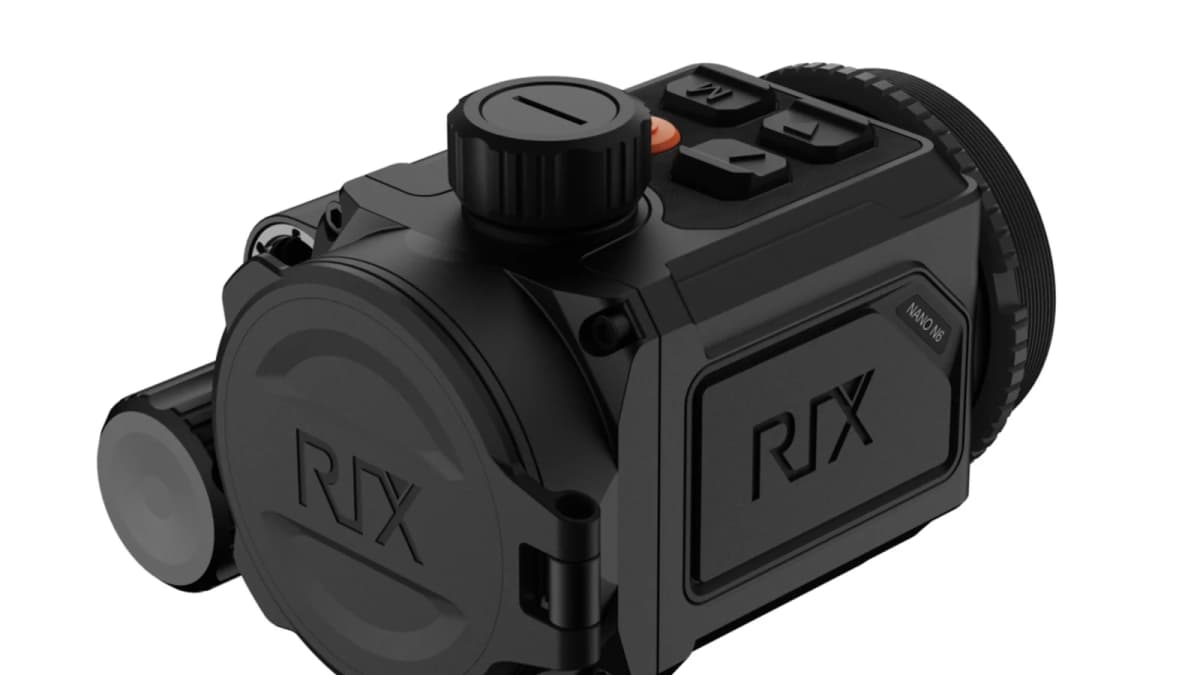
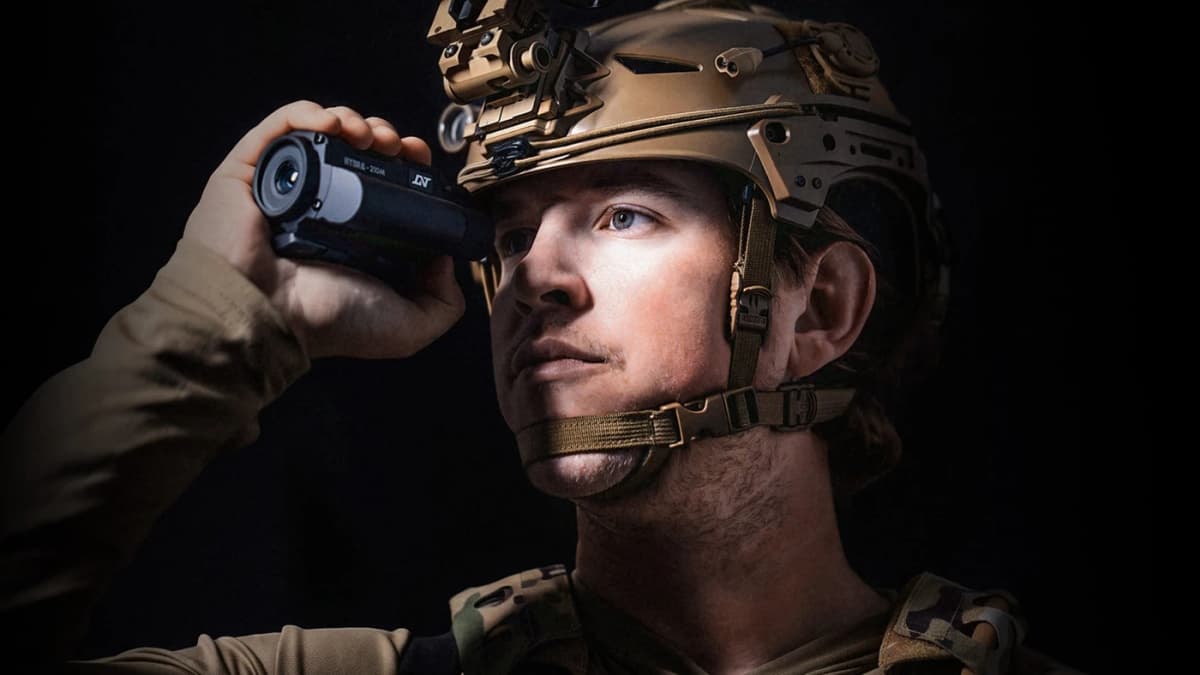
The HYDRA-Mini HS210M is an 11.3-ounce thermal optic that DNT launched on September 16, 2026, built so one unit covers four jobs: a standalone thermal riflescope, a handheld scanning monocular, a helmet-mounted viewer, and a clip-on that sits in front of a day optic. The helmet-mounted mode is the new part. DNT's existing HYDRA line already did standalone, handheld, and clip-on, and the HS210M adds a fourth configuration while cutting weight.
The imaging hardware is entry-level by 2026 standards and DNT is not hiding it. A 256x192 core behind a 10 mm lens puts this at the small end of the thermal market, with a NETD rating of 18 mK or lower and an always-on AI Image Super Resolution pass that sharpens perceived detail. Magnification is 1x base, 1.14x actual, over a 30.7 x 23 yd field of view at 100 yards. That combination is built for scanning and close-to-medium engagement, which is why DNT points it at hog hunting and pest control rather than long-range work.
The pitch, then, is not image quality. It is that one 11.3-ounce device replaces a handheld scanner, a clip-on, and a helmet-mounted viewer, and that moving between those roles takes seconds rather than a re-zero. Whether that is worth buying depends entirely on whether you actually use more than one of those roles.
Standalone and Handheld: The Two Easy Modes
Standalone and handheld are the modes that need no extra hardware at all. On the rifle, the HS210M runs as a dedicated thermal scope with its own reticle at 1x base magnification. Detach it from the QDF193 and it becomes a handheld monocular for scanning a field line or a tree edge before you commit to a shot, which is where the 11.3-ounce weight earns its keep against a dedicated scanner you would otherwise carry as a second device.
For hunters who currently carry a separate scope and a separate handheld, that consolidation is the strongest argument this optic makes. It is also the argument with the clearest cost: a purpose-built scanner in our thermal monocular roundup will generally out-detect a 256 core at distance, and a dedicated thermal scope will out-magnify a true 1x. The HS210M trades peak performance in each role for never having to swap devices.

Clip-On Mode: True 1x in Front of Your Day Optic
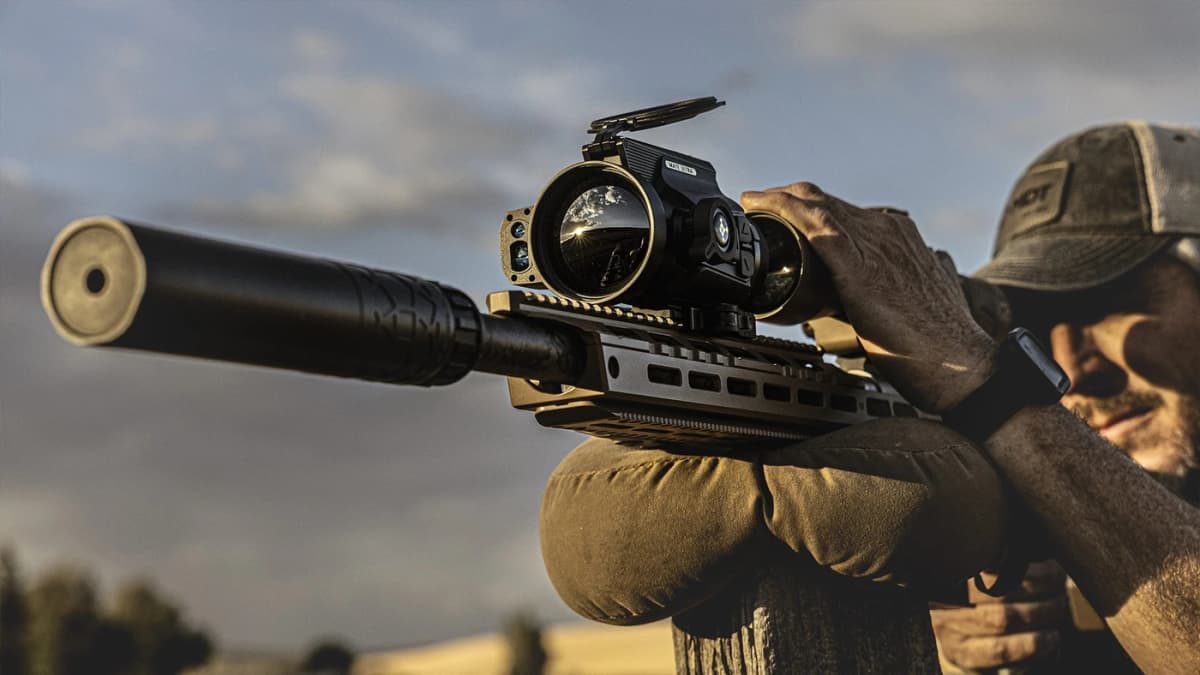
In clip-on mode the HS210M delivers a fixed true 1x thermal image and your day optic does everything else. Magnification, aiming, and holdover all stay with the host scope, and its reticle remains visible and usable through the thermal image. That is the whole point of the clip-on format: your zero does not move and you do not learn a second sighting system for night work.
DNT recommends pairing it with day optics in the 1-2x base magnification range. That is a real constraint worth reading twice. An LPVO at the low end of its range or a low-power prism works; a high-magnification precision scope does not, because its narrow low end throws away the wide field of view the HS210M is designed around. If you are weighing this format generally, our clip-on versus dedicated scope breakdown covers when each one wins, and the AR-15 clip-on thermal guide compares the HS210M's competition on mounting and zero workflow.
Helmet-Mounted: The New Mode, and What It Costs You
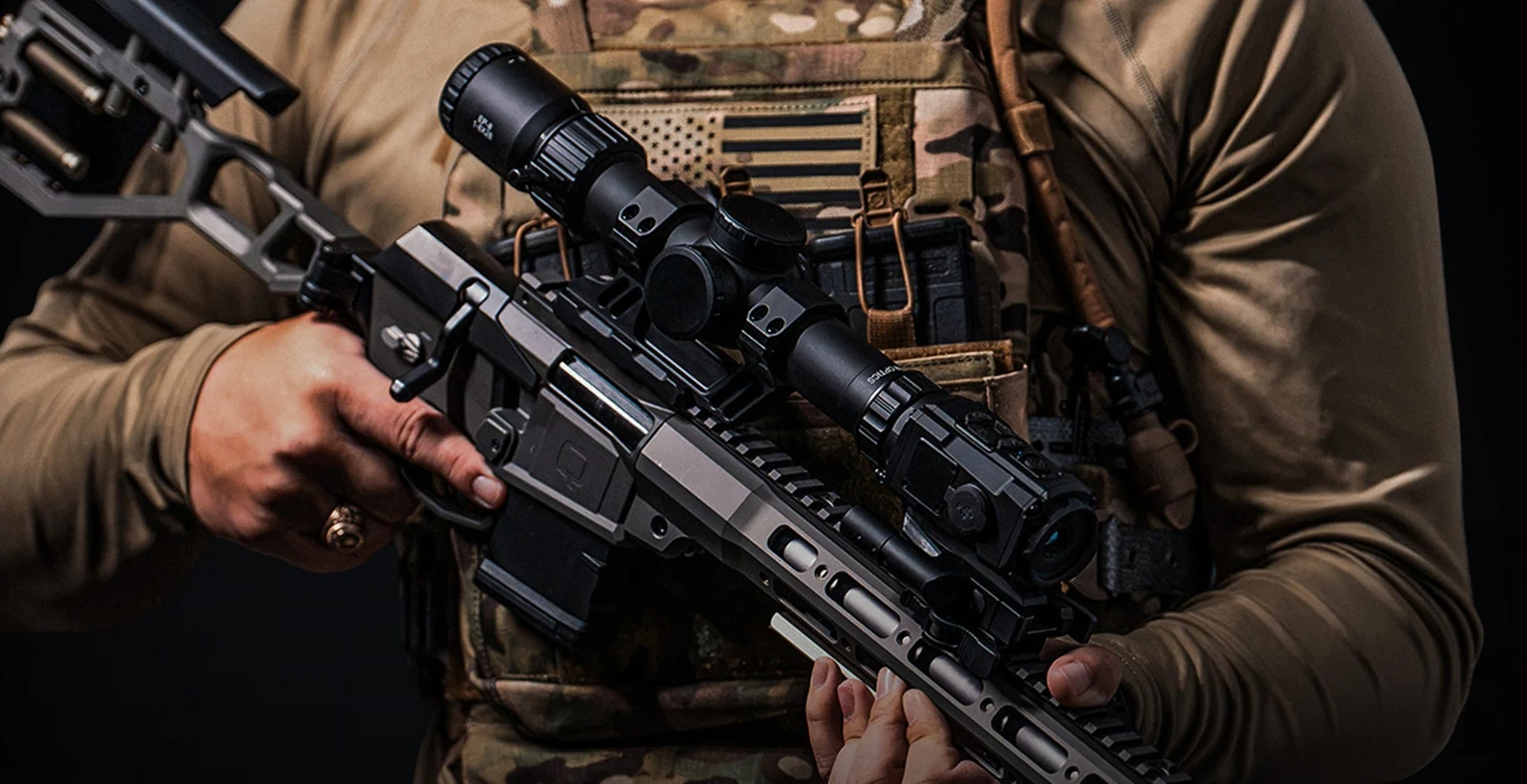
Helmet mounting is the HS210M's headline feature and the one with the largest hidden bill. To run it on a helmet you need a compatible helmet shroud, a helmet mount, and a dovetail binocular bridge in either Wilcox or KVC/RQE format. DNT ships none of those. The QDF193 in the box handles rail mounting; the helmet side is a separate purchase that can add meaningfully to the total depending on which bridge you buy.
DNT describes three helmet configurations. The first pairs the HS210M with its own ZULUS V2 or ZULUS 4K digital day-night optics so thermal handles detection while the digital optic handles aiming. The second runs two HS210M units side by side on the bridge for a wider field of view and depth perception, which doubles the purchase price and is the configuration DNT's own marketing leans on hardest. The third adds the HS210M alongside conventional night vision so heat signatures that are hard to pick out through an image intensifier become visible.
That third configuration is the practical one for most buyers who already own night vision. Thermal detects heat through light brush and haze that defeat an image intensifier, while night vision resolves detail that thermal flattens. Running both is a real capability gain. Just price the bridge before you treat helmet mode as something the HS210M includes.
The QDF193 Mount Is What Makes Four Modes Practical
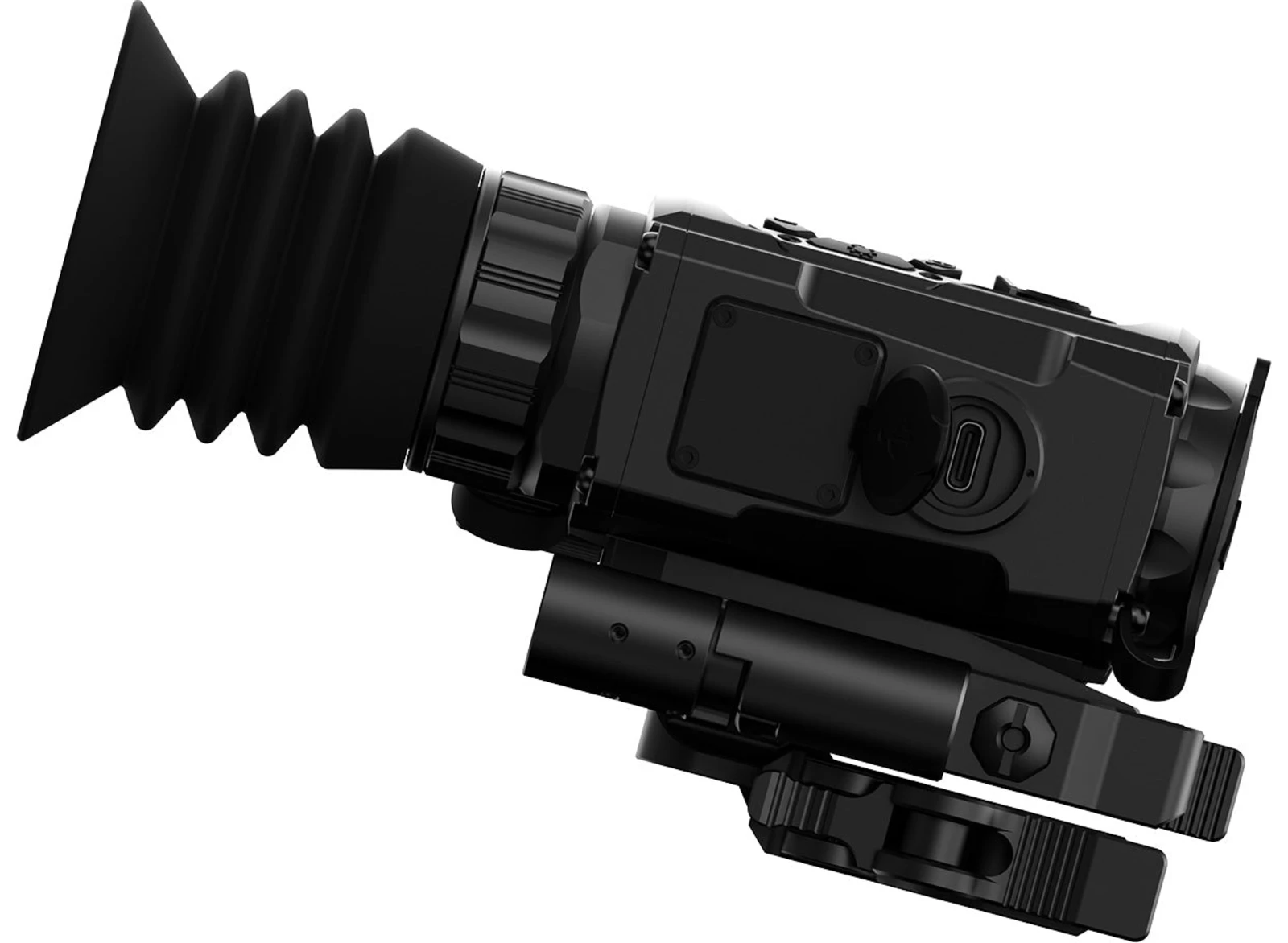
The included QDF193 Dual Quick-Detach Flip-to-Side Mount is the part that turns four theoretical modes into four usable ones. Because the optic and the mount move as a single unit, switching between weapon-mounted and helmet-mounted setups takes seconds, and DNT specifies zero retention after the mount is removed and reattached. Without that, every configuration change would mean a re-zero and the four-mode pitch would collapse.
The QDF193 positions the optic 1.93 inches above the rail. That is tall for a rifle optic, so check it against your cheek weld before you commit. DNT lists shorter alternatives for shooters who only ever run the optic on a rifle: the QDM150 and QDS150 at 1.5 inches and the QDF170 at 1.7 inches.
Sensor, Reticles, and Runtime
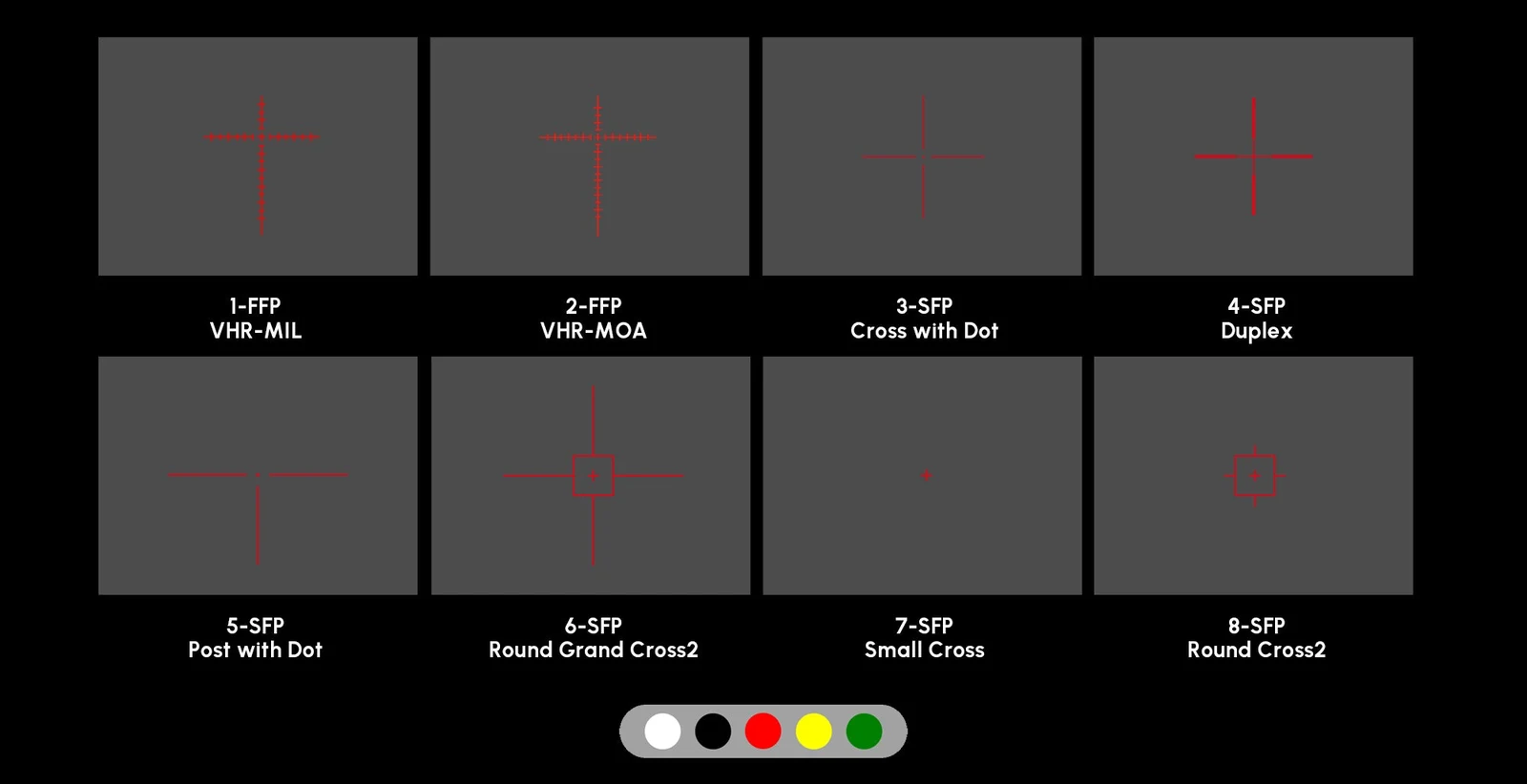
The HS210M gives you four thermal color palettes, eight reticle styles, and five reticle colors, which is a wider aiming menu than most optics in this price band. The reticle set spans first focal plane MIL and MOA options through simpler duplex, post, and small cross patterns, selectable in white, black, red, yellow, or green. Picture-in-Picture adds a 2x magnified window over the top of the wide view, so you can examine a heat signature without giving up situational awareness around it.
Power is a rechargeable 18650, one at a time, at roughly 7 hours per cell. DNT includes two batteries for up to 14 hours of consecutive runtime. Eye relief is 65 mm, about 2.6 inches. The housing carries an IP67 rating and a .50 BMG recoil rating, and onboard recording captures video with audio, either on demand with the record button or automatically through Recoil Activated Video. The DNT app connects with a single tap for a live feed and playback of saved footage.
DNT's launch announcement and product page do not list a display specification, a pixel pitch, a frame rate, or a detection range for the HS210M. Those are the numbers that would let you put it directly against a competitor on paper, so the comparison that holds up today is limited to sensor size, lens, weight, and price.
Thermal Optics Worth Comparing
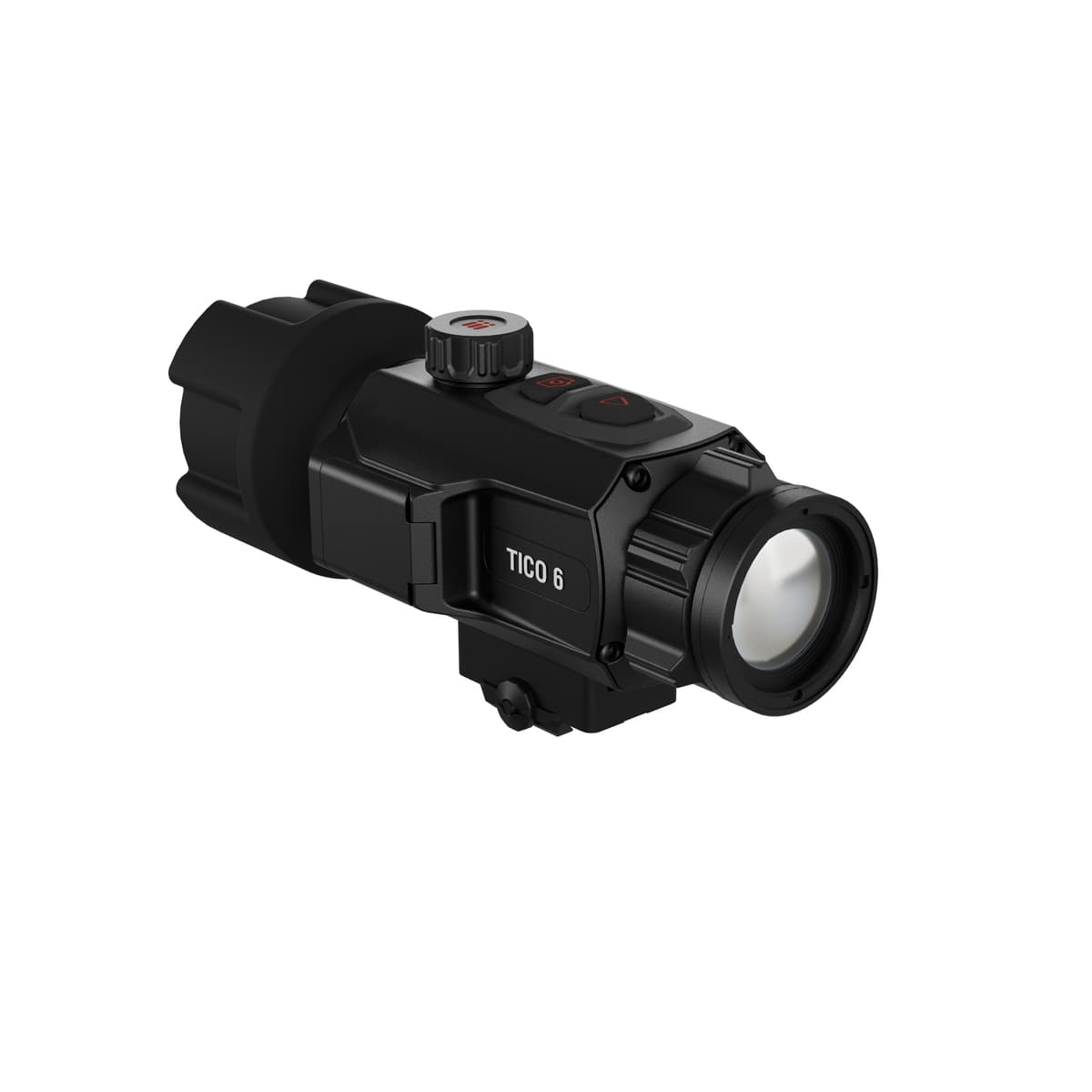
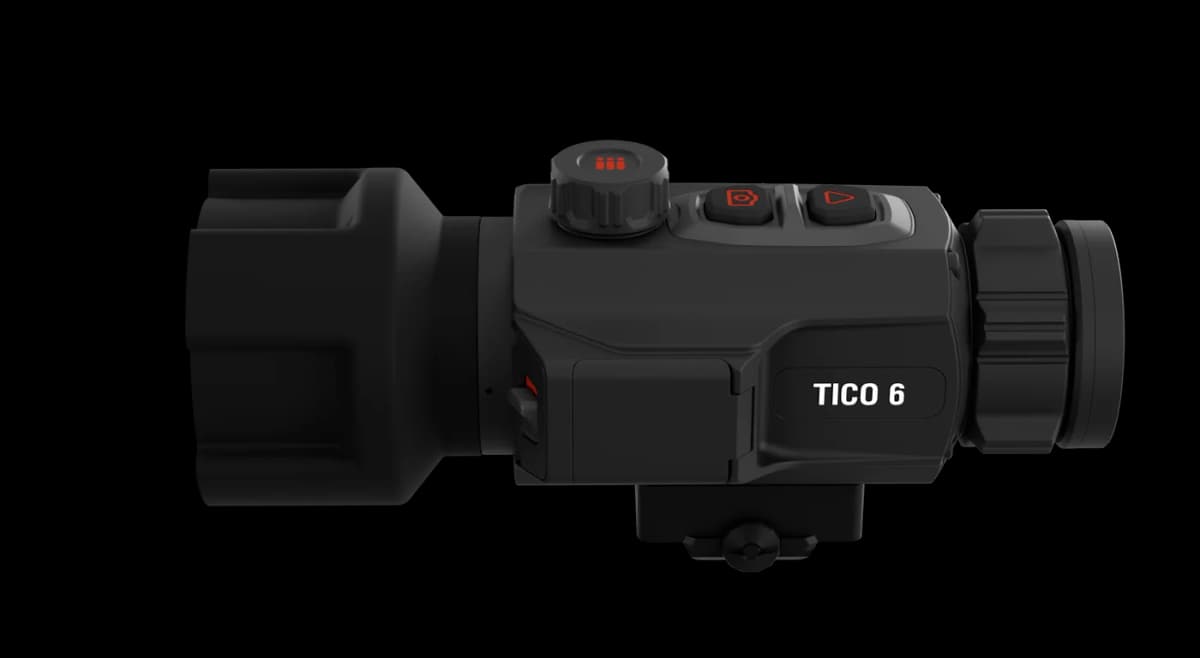
ATN TICO 6 256-192 Thermal Clip-On
- 256x192 sensor (12um, 50Hz, <=20mK)
- 1x clip-on, 1500m detection
AGM Rattler V3 LRF 35-640
- 640x512 sensor (12um, 50Hz, <15mK)
- 35mm f/1.0 lens, integrated LRF to 1000m
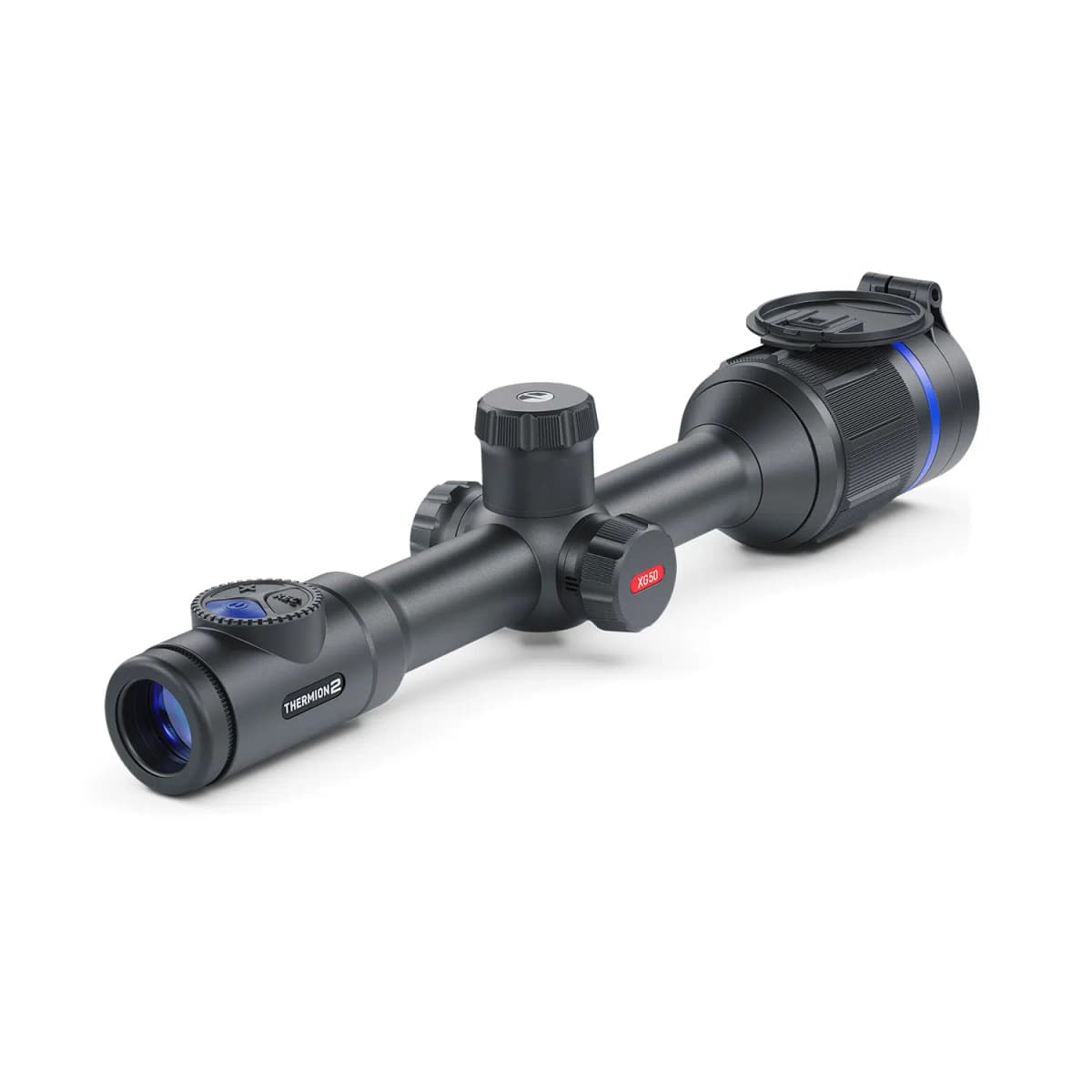
Pulsar Thermion 2 XG50
- 640x480 sensor (12um, 50Hz, <40mK)
- 50mm f/1.0 lens, 2500 yd detection
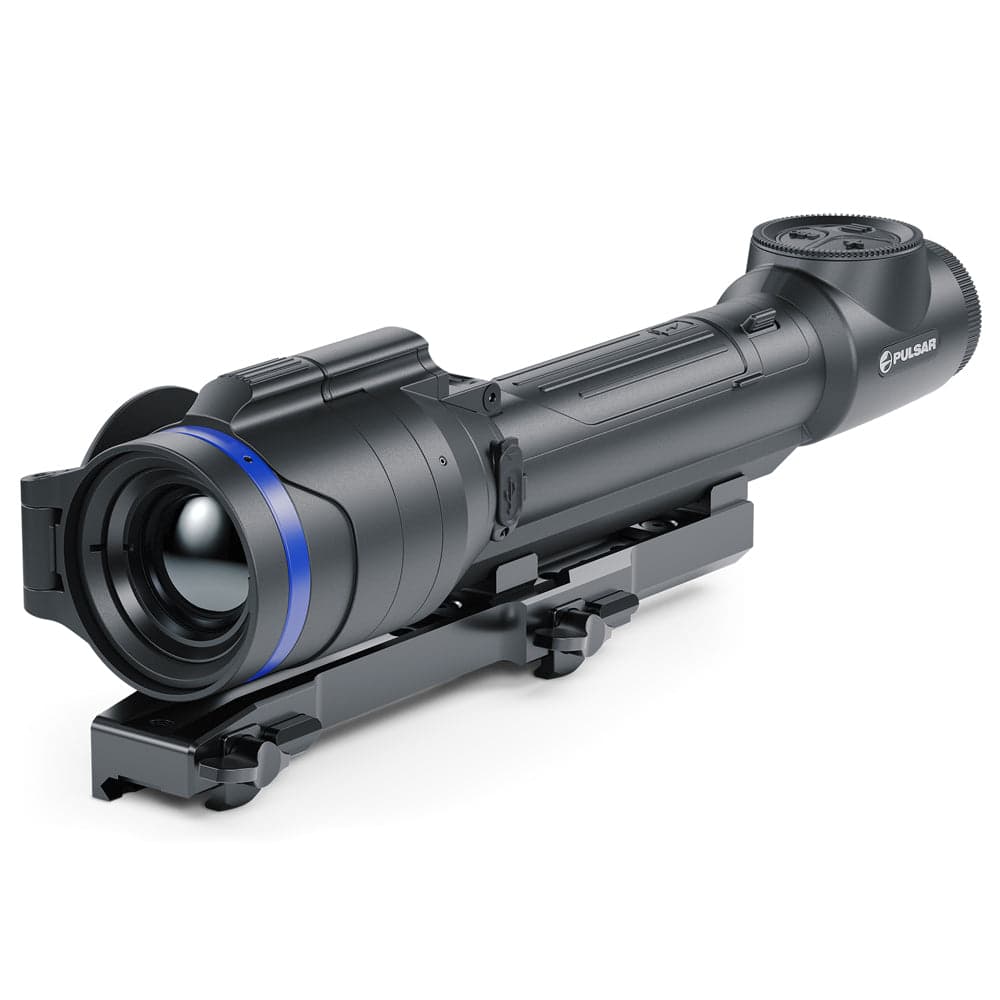
Pulsar Talion XQ35 Pro
- 384x288 sensor (17um, 50Hz, sNETD <15mK)
- 35mm f/1.0 lens, 1475 yd detection
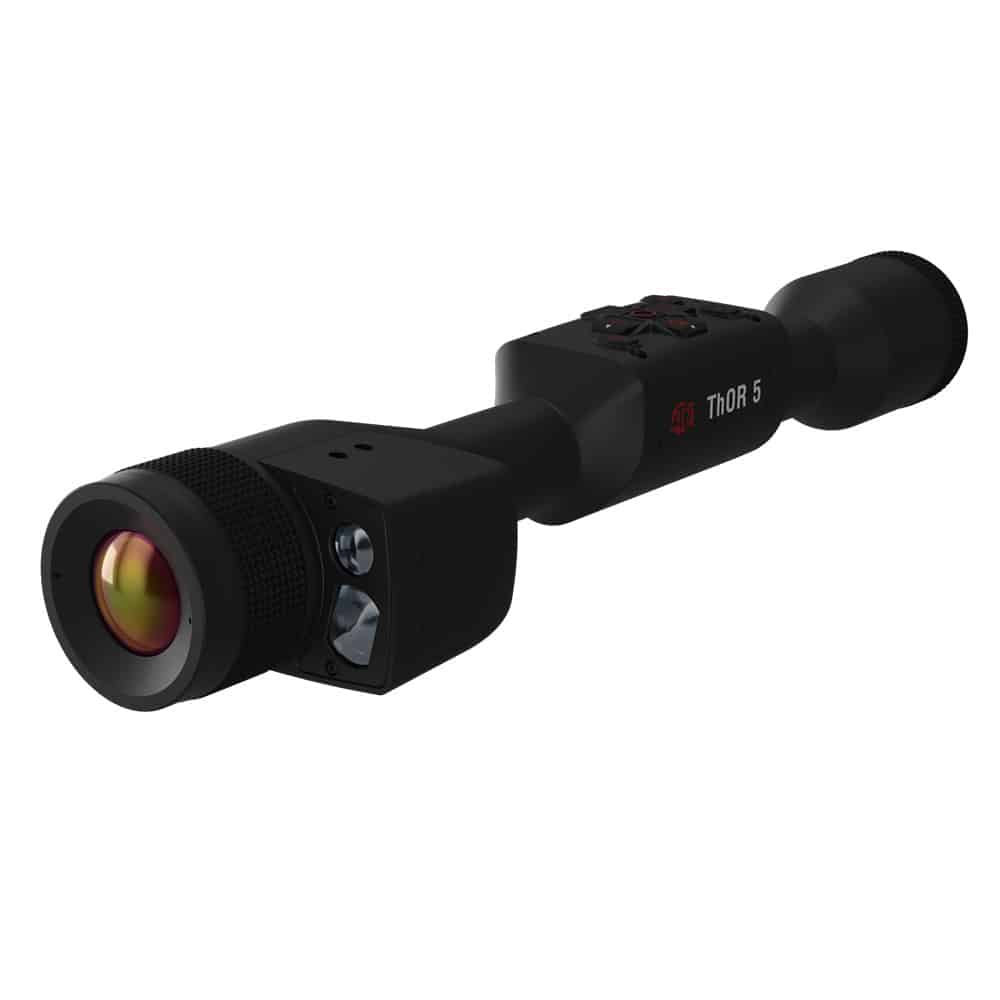
ATN ThOR 5 LRF 640 3-24x
- 640x480 sensor (12um Gen5, 60fps)
- 3-24x magnification, 2900 yd detection

Trijicon REAP-IR Type 4 35mm
- 640x480 sensor (12um, 30/60Hz)
- 35mm lens, 1.75x optical to 14x
Affiliate links (?)
Where the HS210M Fits in the Thermal Market
At $1,110.99 the HS210M competes against dedicated thermal scopes with larger sensors, and on pure image quality it loses that fight. A 384x288 or 640x512 core at a similar price resolves more detail and detects further, which is the tradeoff you accept for the four-mode flexibility and the 11.3-ounce weight. Our thermal scope rankings lay out what each sensor tier actually buys you in detection range.
Inside DNT's own catalog the HS210M sits below the ThermNight line rather than above it. The ThermNight TNC225R runs the same 256x192 thermal core but pairs it with a Sony Starvis2 day-night camera, a laser rangefinder good to 1,100 m (1,200 yd), and 3-12x thermal magnification for a comparable price, at 22.8 oz. DNT sells it as a riflescope, and only the HYDRA line is marketed for switching between clip-on, handheld, and standalone use. That is the real decision for a DNT buyer: magnification and a rangefinder in one fixed role, or 1x across four roles at half the weight.
The broader context is that entry and mid-tier thermal has gotten genuinely competitive, and our budget thermal and night vision guide tracks that field. The HS210M's case is not that it beats those units on image. It is that a hunter who wants thermal on the rifle, in the hand, and on the helmet can buy one device instead of three.
Stay Updated on Thermal and Night Vision
New thermal launches, price movement, and hands-on breakdowns, sent when something actually changes.