Streamlight ProTac HL-X
- ✓1,000 lumens
- ✓50,000 candela

Buffer-tube cuff braces, ultra-compact PDW systems, and folding adapters for AR pistols, ranked by fit, weight, rigidity, and price, with the current legal status and tube-fit rules.
Affiliate links (?)
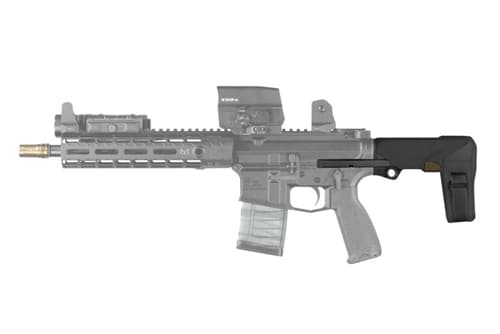
A pistol brace turns a stubby AR pistol into something you can actually shoulder and shoot accurately, and as of 2026 it does so with no NFA paperwork. The 2023 ATF brace rule was vacated in court and the DOJ dropped its appeal in July 2025, so a braced AR pistol is not a short-barreled rifle under federal law right now. The real decision is fitment and form factor: a lightweight cuff on a mil-spec carbine tube, an ultra-compact PDW system that collapses to almost nothing, a rigid hook for a positive index, or a folding adapter that shrinks the whole gun for transport. This guide ranks the nine AR pistol braces worth buying and tells you which buffer tube each one needs.
A pistol brace is federally legal and unregulated as of 2026. The ATF's 2023 Final Rule 2021R-08F, which would have reclassified most braced pistols as short-barreled rifles, was vacated by the Fifth Circuit in Mock v. Garland, and the DOJ dropped its appeal in July 2025. There is no brace ban in force, no registration requirement, and no tax to put a brace on an AR pistol. State law is the only remaining gate: states like California, New Jersey, New York, and a handful of others restrict braced pistols or short-barreled configurations, so confirm your state before building.
The brace-versus-SBR calculus also changed. The One Big Beautiful Bill Act zeroed the federal making tax, so converting to a true short-barreled rifle now costs $0 in tax and an eForm 1 that clears in days to weeks rather than months. If you want a fixed stock, a longer length of pull, or a high cheek riser for an LPVO, an SBR is now cheap and fast to file. The brace stays the right answer when you want zero paperwork, when you travel across states with mixed short-barreled-rifle rules, or when you want the gun to transfer as a handgun rather than a registered NFA item. For how barrel length plays into a braced build, see our AR-15 barrel length guide and the Mk18 short-barrel build, which often runs a brace before an owner files an SBR.
Sling, light, backup sights, and QD mounts, the upgrades most builders add first.
Affiliate links (?)
Buffer-tube cuff braces, ultra-compact PDW systems, a rigid hook brace, and the folding adapter for standard receiver-extension builds. Ranked by fit, weight, rigidity, and price.
Best Overall Buffer-Tube Brace
Best for Stability and Cheek Weld
Best Ultra-Compact PDW Brace
Best Rigid Hook-Style Brace
Best Value PDW Brace
Best Mid-Weight Adjustable Cuff
Most Compact Previous-Gen PDW
Best Budget Fixed Brace
Best Folding Adapter to Pair With Any Brace
Purchasing through these links may generate a commission for Rifle Configurator at no extra cost to you.
Affiliate links - purchases support this site at no extra cost to you. (?)
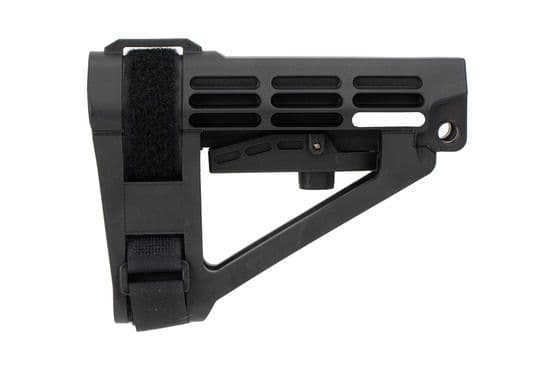
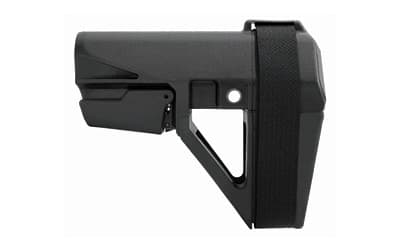
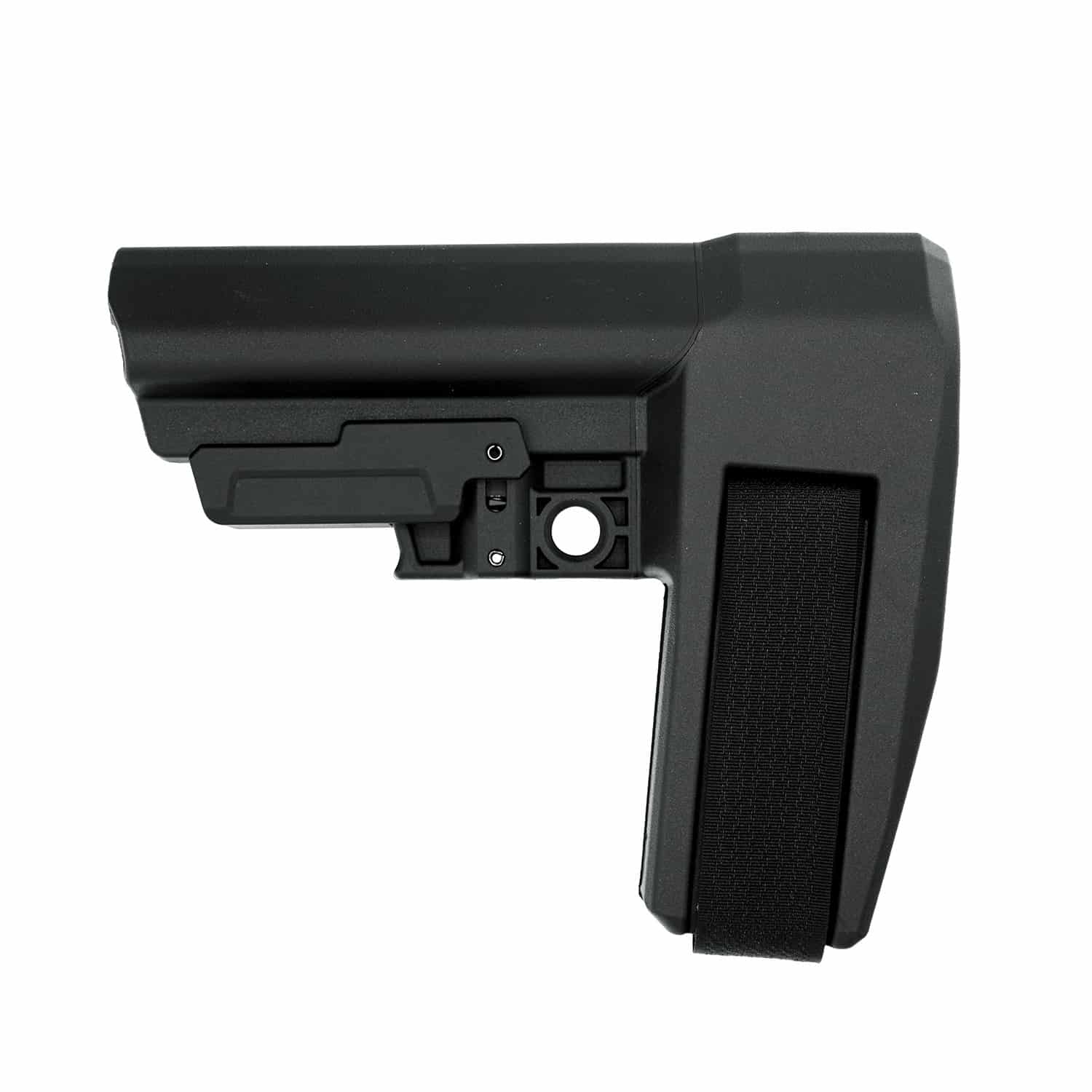
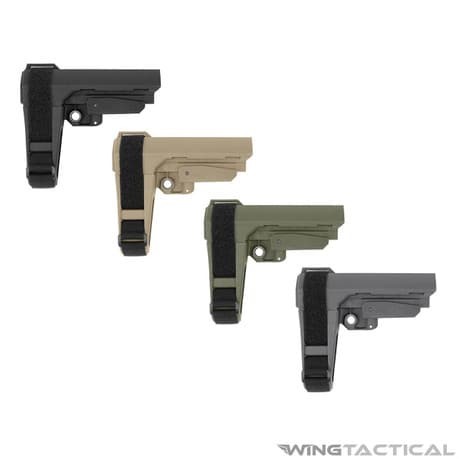
Buffer-tube cuff braces are the default AR pistol brace: a forearm cuff that slides onto a standard receiver extension, no proprietary buffer required. The SB Tactical SBA3 ($99.99) is the one most builders should buy. At 6.75 oz it is the lightest adjustable cuff here, it telescopes across 5 positions on any mil-spec carbine tube, and it carries an integral ambidextrous QD socket. It is the brace that fits the widest range of AR pistols with no extra parts.
Step up to the SB Tactical SBA4 ($99.99) when you want a firmer hold and a real cheek surface. Its rigid rubber strap flexes less than the SBA3's split rear and the larger body gives a more stock-like cheek weld, at the cost of about 3 more ounces (10 oz). The SBA5 ($99.99) splits the difference at 9 oz with the same 5-position adjustment and ambidextrous QD socket, a good pick if you want the SBA3's lighter feel with a slightly more substantial cuff. All three need a mil-spec, not commercial, carbine tube.
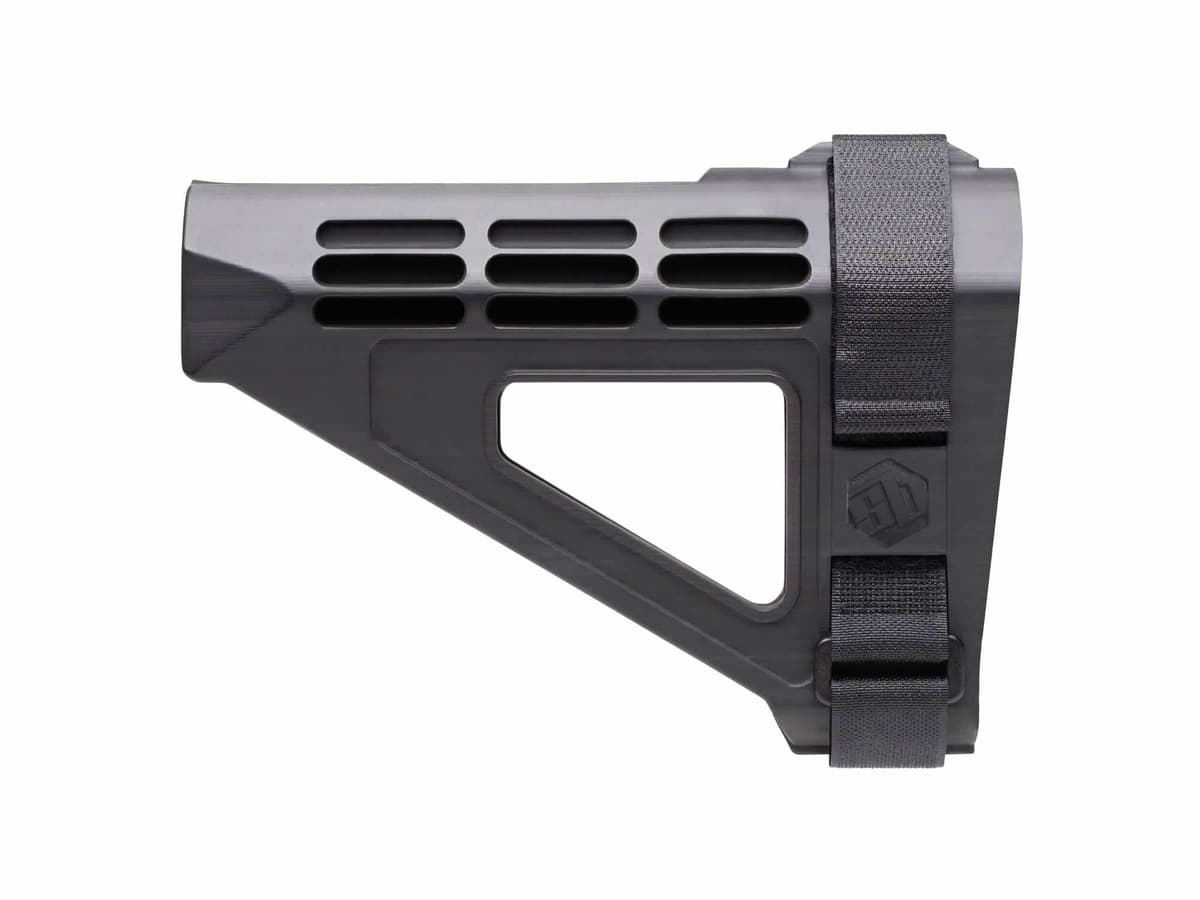
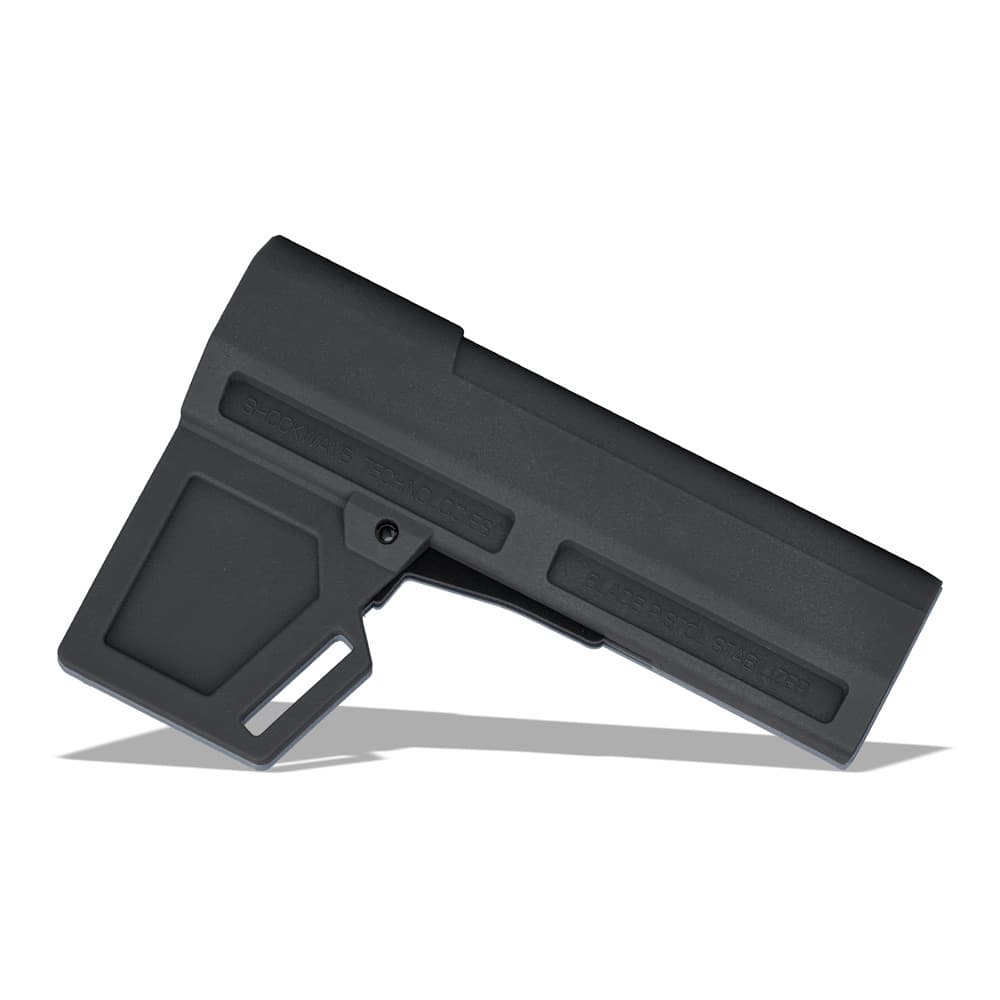
The SB Tactical SBM4 ($44.99) is the outlier and the budget anchor. It is fixed length and slides directly over a 1.1-1.25 inch AR pistol buffer tube, so it needs no carbine receiver extension or castle nut. At 8.4 oz and under $45 it is the cheapest, simplest brace on the list. The tradeoff is a single fixed length of pull, so taller shooters or anyone running optics at varying heights should pay for an adjustable cuff instead. Spec your full pistol in the rifle builder to see how a brace pairs with your buffer tube and barrel.
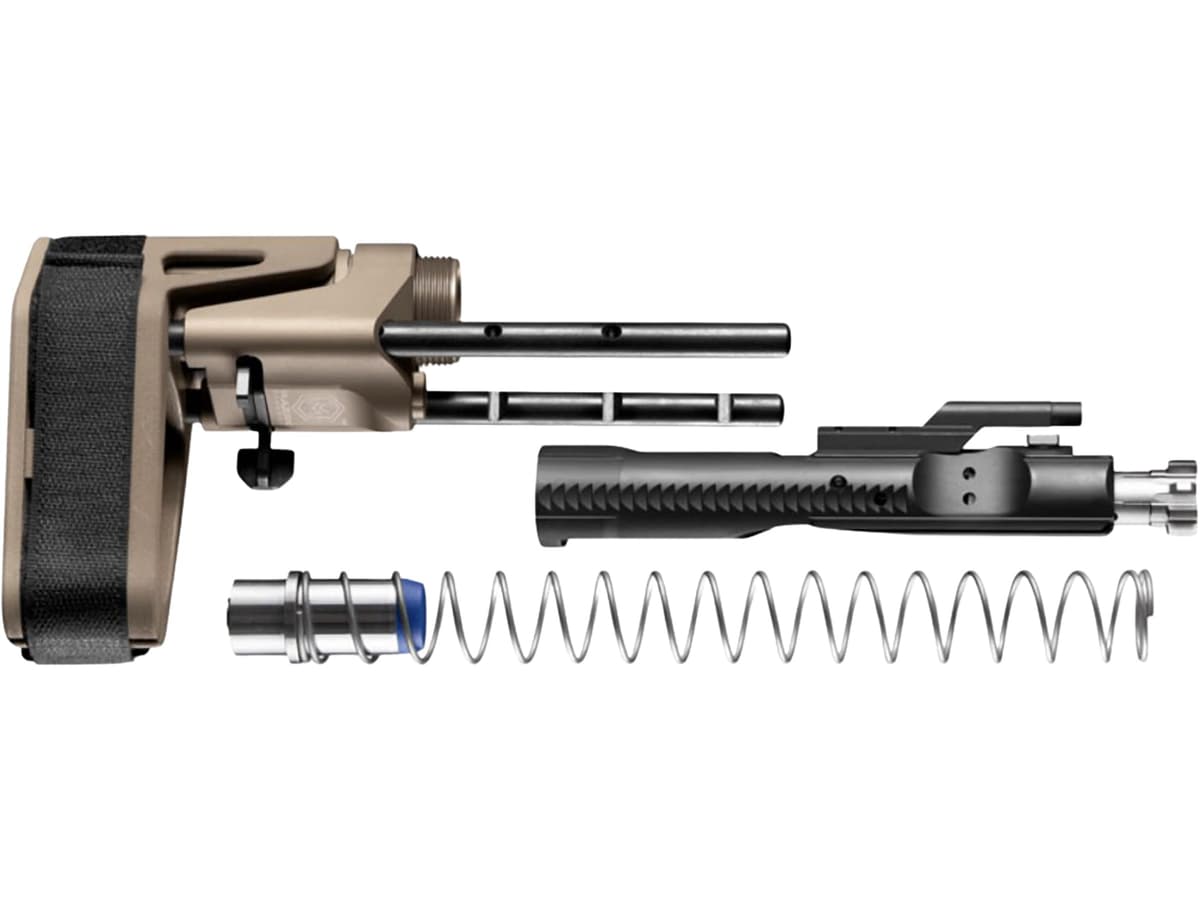
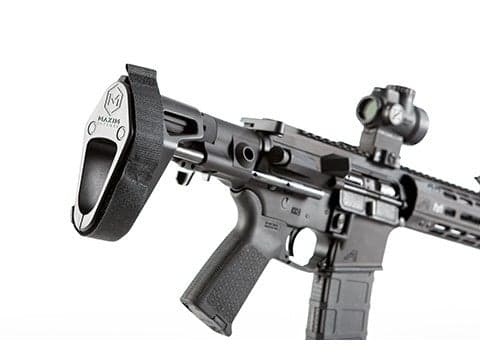
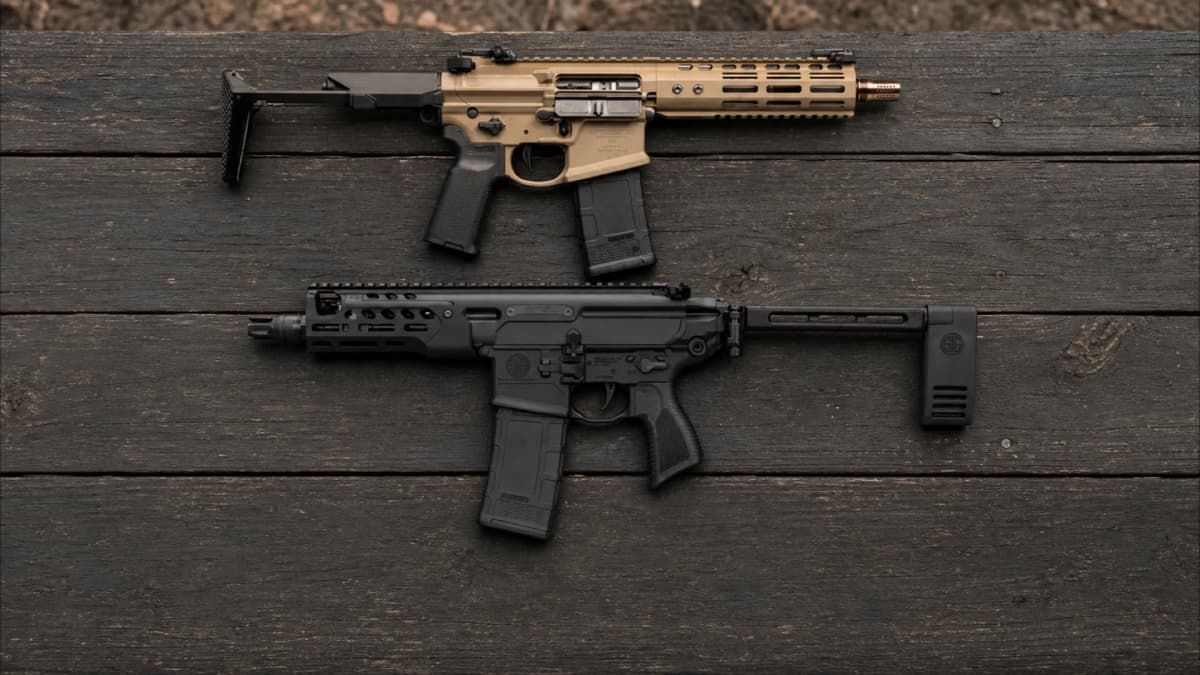
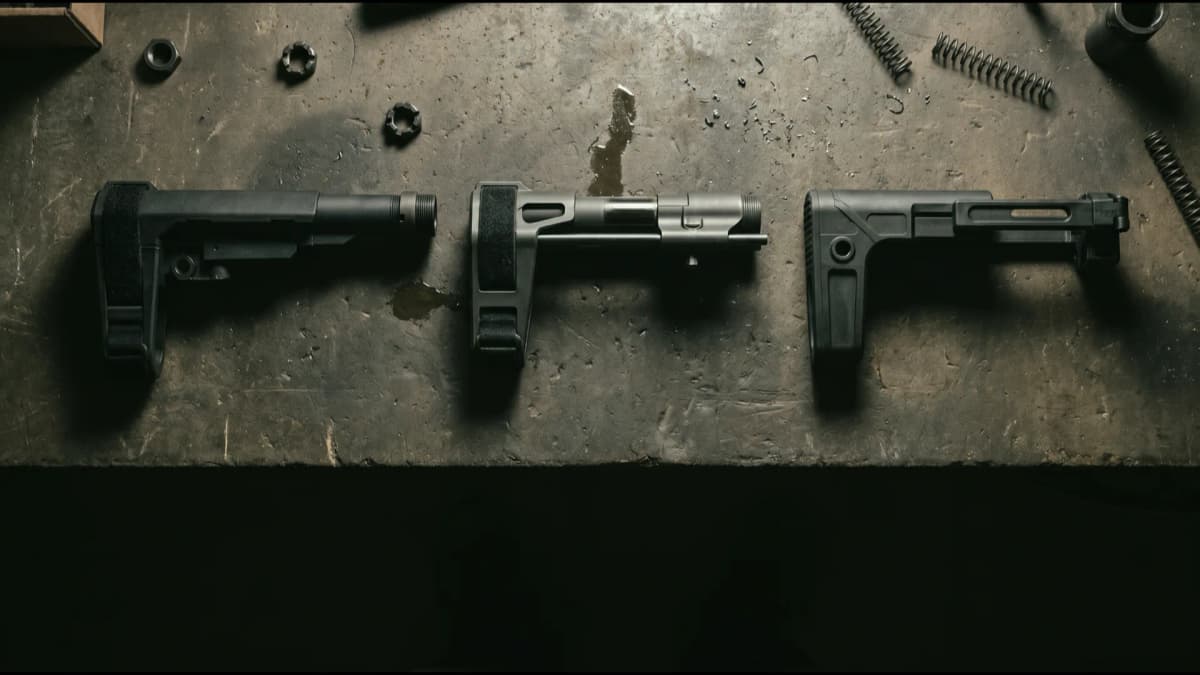
PDW braces ship with their own proprietary buffer system and collapse far shorter than any cuff brace, which is the entire point: minimum overall length for a vehicle gun, a pack gun, or a covert build. The Maxim Defense SCW Gen 7 ($449.95) is the benchmark. It adds only 4 inches collapsed, extends to 8.75 inches across 5 positions, and rides on a 7075 aluminum housing, all at 14.6 oz, meaningfully lighter than the older CQB. Maxim sells it in caliber-tuned 5.56, 7.62x39, and .300 BLK configurations so the reciprocating mass matches the host.
The Maxim Defense CQB ($319.99) is the previous-generation system and still has a reason to exist. It collapses to add 5.375 inches to the receiver, runs an integrated buffer system (Maxim or JP Silent Captured Spring options), and drops with a one-hand collapse lever. That is very compact, though the newer SCW is both shorter (4 inches collapsed) and several ounces lighter. The CQB pays for its size in weight at 18.59 oz and locks you into the same proprietary Maxim ecosystem. Buy it when you want a proven Maxim PDW brace below the SCW's price; if minimum length and weight are the priority, the SCW is the better modern buy.
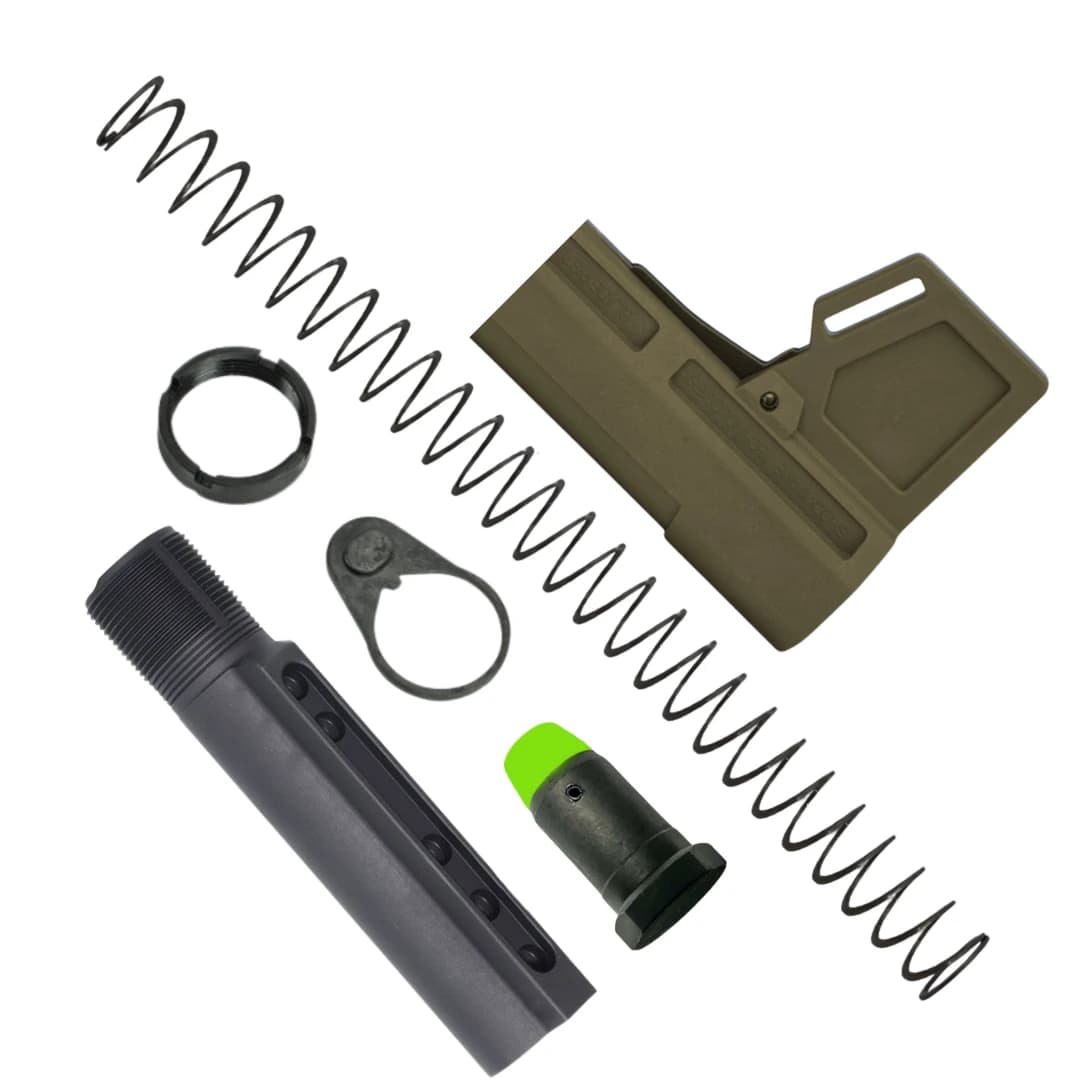
The SB Tactical HB AR brace ($255.99) is the value PDW option. It descends from the Honey Badger design, ships as a complete kit with buffer, spring, tube, and hardware, and collapses to 5.75 inches across 3 positions while weighing less than the Maxim CQB. It is longer collapsed and has fewer positions than the Maxim braces, but it costs well under the SCW and gets you most of the way to a true PDW form factor. For a full PDW-pattern build with exact overall lengths, see the PDW pistol guide.
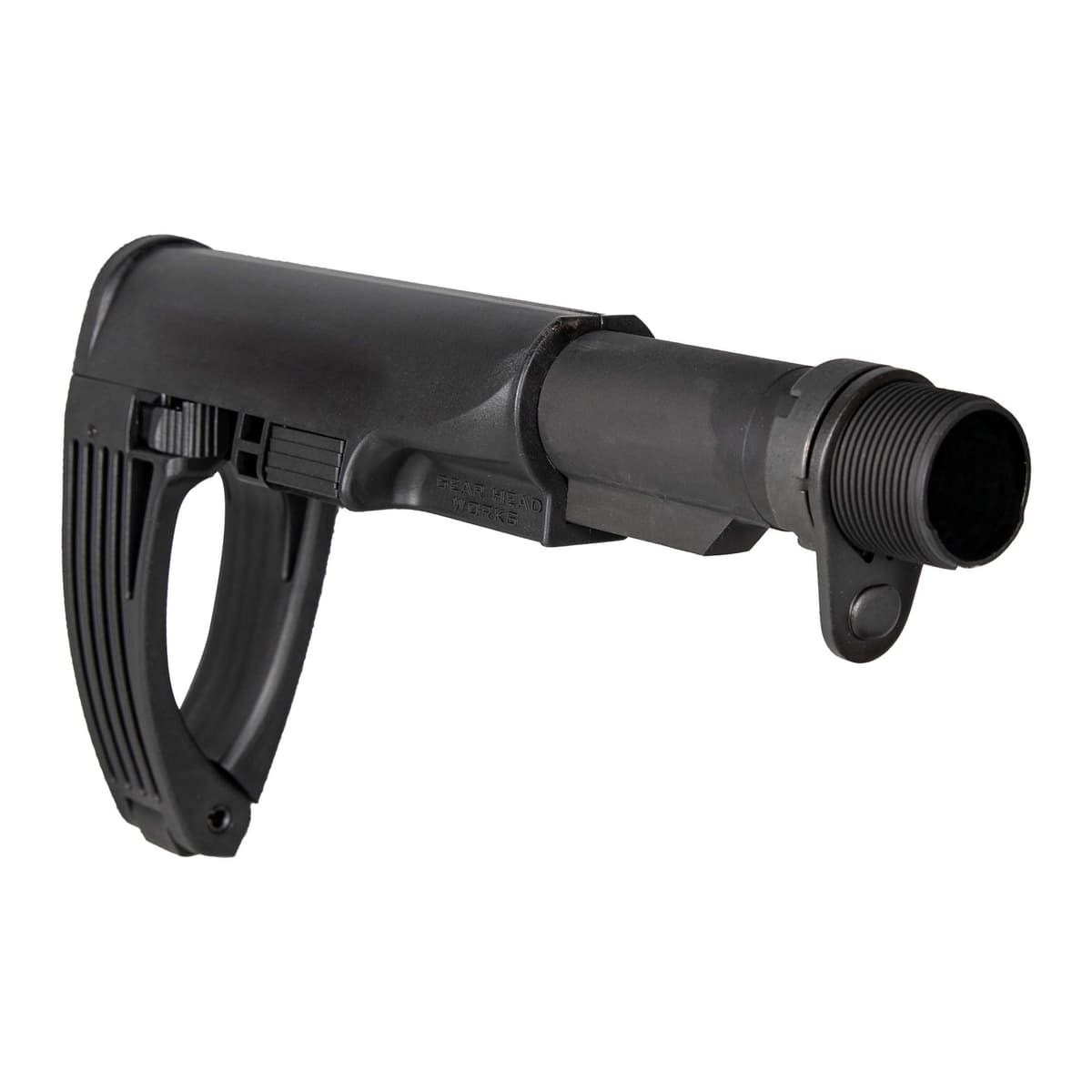
The Gear Head Works Tailhook MOD 2 ($165.50) is the answer when a nylon strap feels too vague. Instead of a cuff, it uses a rigid fold-out hook that indexes against the forearm or the shoulder pocket, giving a far more positive and repeatable hold. It telescopes across 5 positions up to a 12.75 inch length of pull, ships with its own proprietary receiver extension, and takes any standard carbine buffer and spring. It is bulkier than a minimalist cuff and the fold-out arm adds storage width, but for shooters who want the most rigid mainstream brace, it is the pick.
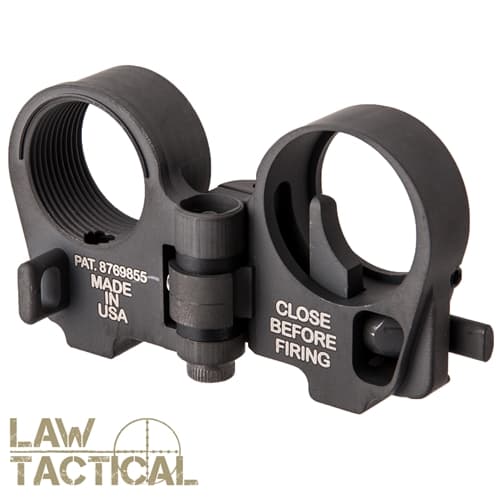
The Law Tactical Folding Stock Adapter ($269.99) is not a brace, it is the part that makes a standard receiver-extension brace fold. It installs between the lower receiver and the receiver extension and lets the entire brace and buffer tube swing to the side for transport. The current GEN-S version uses a 17-4 stainless housing with adjustable hinge tension and works with A2, carbine, mil-spec, and commercial tubes; proprietary PDW systems like the Maxim SCW run their own buffer and bolt-carrier hardware and are not compatible. It adds 1.3 inches of length of pull and 9.4 oz, and critically, the AR will not cycle while folded because the bolt carrier extension is offset from the receiver, so you must never fire it folded. Unfold and lock before shooting. Pair it with a standard-tube cuff or hook brace to drop a braced AR pistol into a pack or behind a seat. A braced, folding AR pistol is one of the strongest vehicle-gun setups, as covered in the best truck gun guide.
If your host ends in a Picatinny 1913 rear rail instead of a buffer tube, none of these buffer-tube braces apply. See the best 1913 braces guide for universal 1913-mount and folding braces that fit MPX, Stribog, Scorpion, and AR pistols converted to a 1913 endplate.
Buffer tube diameter is the single most common reason a brace does not fit. A mil-spec carbine tube measures 1.148 inches in diameter with a straight rear profile; a commercial tube is 1.168 inches and tapers toward the back. Cuff braces are sized for one or the other and do not interchange, so a mil-spec SBA3 will not seat correctly on a commercial tube. Almost every modern AR brace, including the entire SB Tactical SBA series, is built for mil-spec carbine tubes, which is also what most quality builds run, so this is usually a non-issue if you bought a quality lower.
Still deciding? Sort by weight or price to match a brace to your build priorities, then check each one against the buffer tube your pistol runs.


| Product | Material | Positions | Sling Mount | Buy | ||
|---|---|---|---|---|---|---|
SB Tactical SBA3 Brace | Polymer | 5-position adjustable | Integral ambidextrous QD socket | 6.75 oz | $99.99 | Buy |
Gear Head Works Tailhook MOD 2 Brace | Injection-molded reinforced polymer | 5-position telescoping | - | 7 oz | $165.5 | Buy |
SB Tactical SBM4 Pistol Stabilizing Brace | Polymer | Fixed (non-adjustable) | - | 8.4 oz | $44.99 | Buy |
SB Tactical SBA5 Pistol Brace | Advanced polymer | 5-position adjustable | Integral ambidextrous QD socket | 9 oz | $99.99 | Buy |
Law Tactical Folding Stock Adapter | 17-4 stainless steel housing with DLC finish | Fixed | Quick-detach attachment point | 9.4 oz | $269.99 | Buy |
SB Tactical SBA4 Brace | Polymer with rigid rubber strap | 5-position adjustable | Integral ambidextrous QD socket (front-mounted) | 10 oz | $99.99 | Buy |
Maxim Defense SCW Pistol PDW Brace (Gen 7) | 7075 Aluminum Alloy | 5-position adjustable | - | 14.6 oz | $449.95 | Buy |
SB Tactical HB AR Brace | Polymer with proprietary buffer system | 3-position adjustable | Integral ambidextrous QD socket | 16 oz | $255.99 | Buy |
Maxim Defense CQB Pistol Brace | 7075 Aluminum Alloy | 4-position (5.375, 6.875, 8.375, 9.24 inches) | - | 18.59 oz | $319.99 | Buy |
Affiliate links - purchases support this site at no extra cost to you. (?)

Avid shooter with 9+ years of experience including competition shooting. Built 10+ AR-pattern rifles and several handgun platforms for home defense, competition, and suppressed night shooting.
This page contains affiliate links. Purchases through these links support the site at no extra cost to you. Read the affiliate disclosure
Continue exploring with these related resources

A single vetted mid-tier AR-15 build for the buyer stepping up from a budget rifle. Part-by-part picks for a ~$1,000-1,300 rifle that runs a class without babysitting, with a running cost tally, why each slot beats the budget pick, and a separate optic add-on tier.

Prism scopes use an etched glass reticle that stays crisp for astigmatic eyes where a red dot starbursts. Here are the best AR-15 prism optics in 2026, from the $265 Primary Arms 1x MicroPrism to the ELCAN SpecterDR, plus the holographic alternative for astigmatism.

Block 2 SOPMOD M4A1 clone built two ways. The strict lane mirrors the SOCOM spec part-for-part, substituting Steiner DBAL-A3 for the ITAR-restricted PEQ-15 and the current SureFire M640 series for the discontinued M951. The practical lane keeps the same SOPMOD silhouette using currently-buyable, in-stock variants of the same brands.
Related articles and industry updates

Oil infrastructure attacks, AI-driven semiconductor demand, and geopolitical instability are creating supply chain pressure on ammunition, optics, and emergency gear. Prioritized buying checklist: ammunition, magazines, optics, spare parts, and general emergency preparedness.

Complete comparison of forced reset triggers and super safeties for AR-15: Triggered Company Disruptor FRT (formerly Partisan), new LAT trigger, Arc-Fire V2 (now shipping), Atrius FRS, and Mars Super Safety. Performance, pricing, legality, and which system fits your build.

Virginia background checks topped 75,000 in May 2026, more than double May 2025, as gun shops report selling AR-15s, standard-capacity magazines, and NFA items at record pace ahead of the July 1 assault weapons ban. Virginia ranked second in the nation for NFA checks in May.