Labor Day gun deals are live through Monday. See the deals
Belt-Fed AR-15 FRT Guide: MFR56 Upper, Trigger & Fitment header image
Gear
August 25, 2026
Belt-Fed AR-15 FRT Guide: MFR56 Upper, Trigger & Fitment

A buyer-focused map of the Cloak MFR56 belt-fed AR-15 system: what the upper includes, which trigger fits it, how its feed containers differ, what 12,000 rounds of testing broke, and the compatibility, heat, and safety checks to run before buying.

[ < Back to guides ]

Belt-Fed AR-15 FRT Guide: MFR56 Upper, Trigger & Fitment

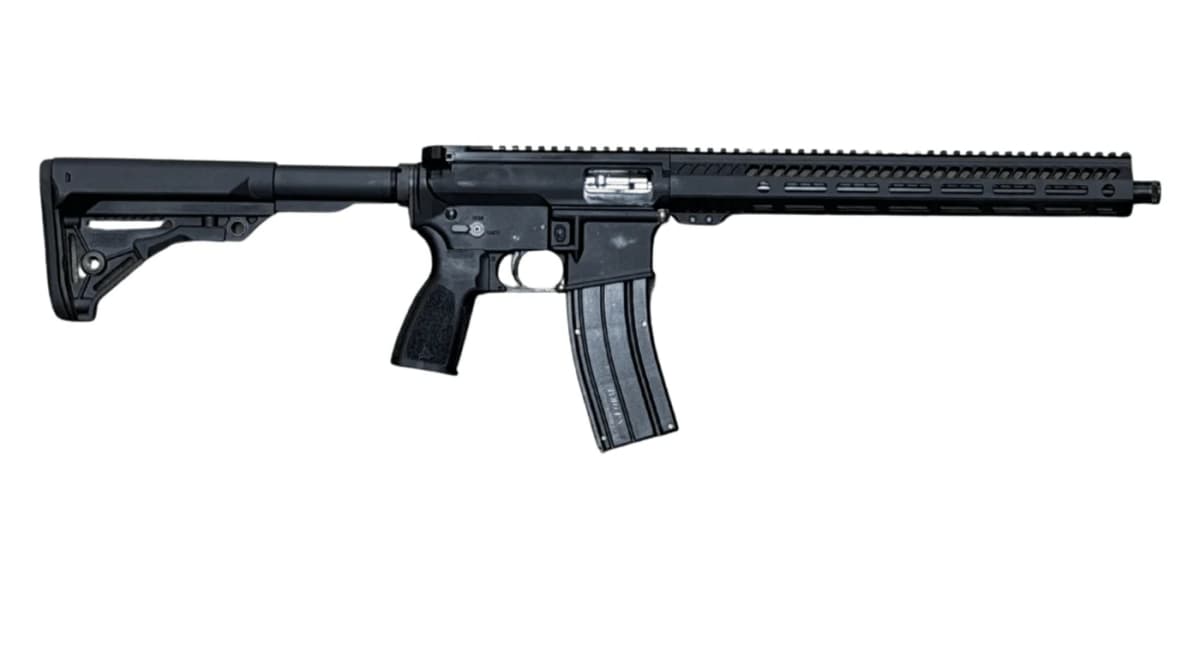
One purchase settles most of this build. The Cloak MFR56 upper is the core belt-fed conversion package: a 16-inch, short-stroke-piston action that feeds 5.56 from M27 links or from the same STANAG magazines you already own, boxed with the container, links, buffer, and lower-control parts it needs. What is left to decide is whether assisted reset belongs in the configuration, how much belt you want to carry, and whether the lower in your safe qualifies as a host.

By Aditya Bawankule|Last reviewed August 2026

Key Takeaways

  • →One upper, two feed paths: 7.6 pounds of 16-inch upper that runs M27-linked 5.56 or standard STANAG magazines
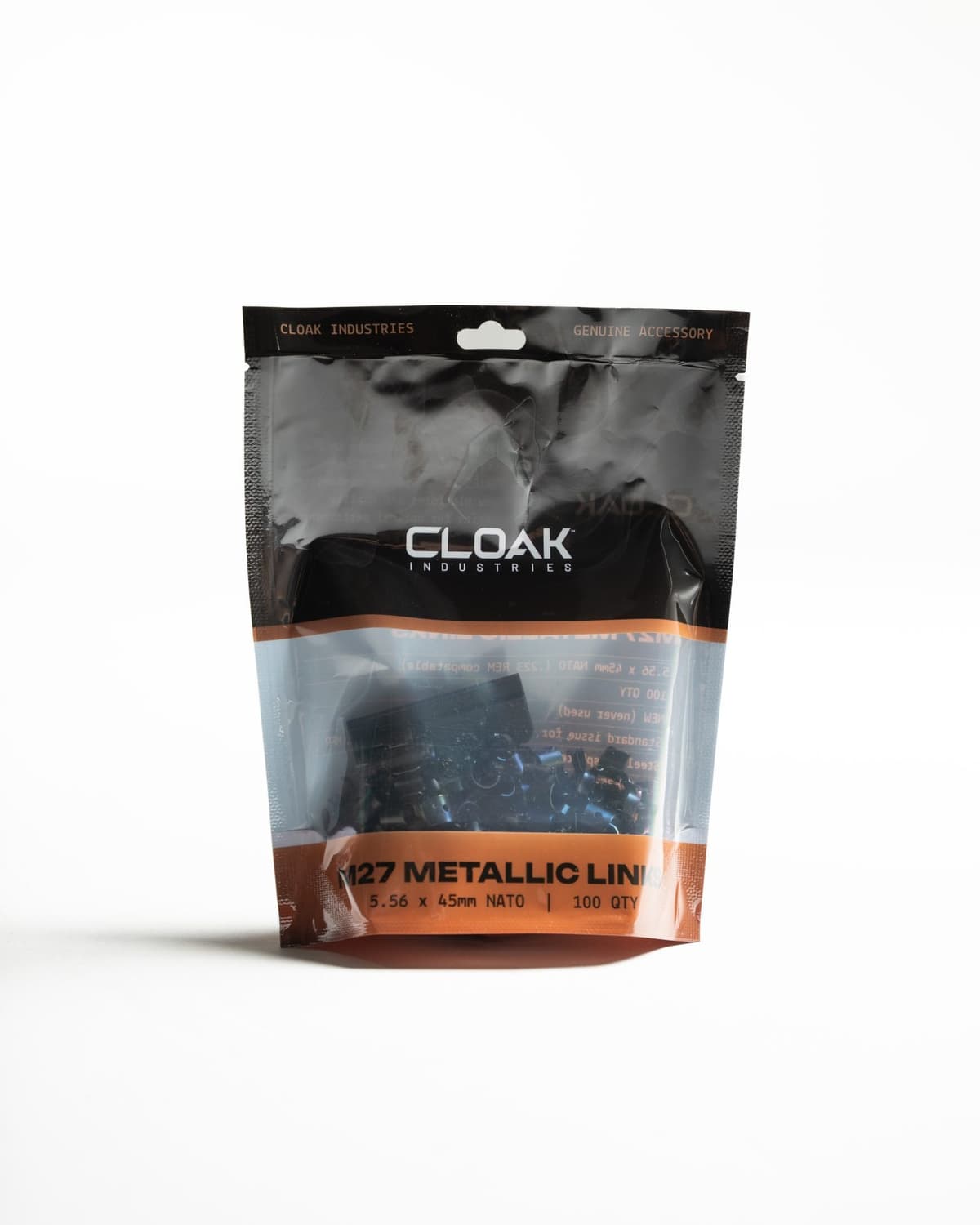
  • →Feed package included: the bundle ships the 100-round container, 100 links, a starter tab, and the H3 buffer and spring
  • →Assisted reset is the point: a separate host-specific trigger with a 3.75 to 4.1-pound published pull, sold apart from the upper
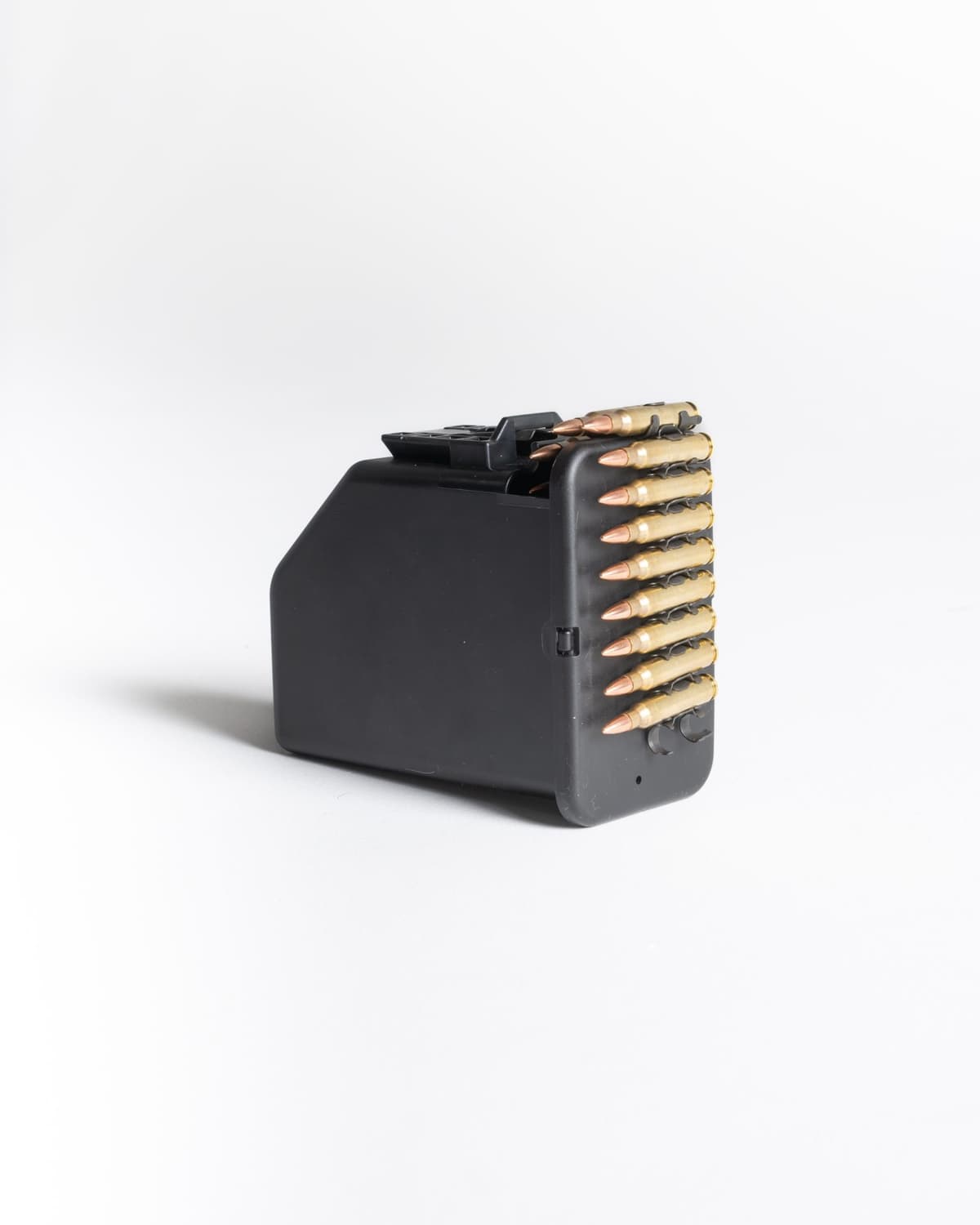
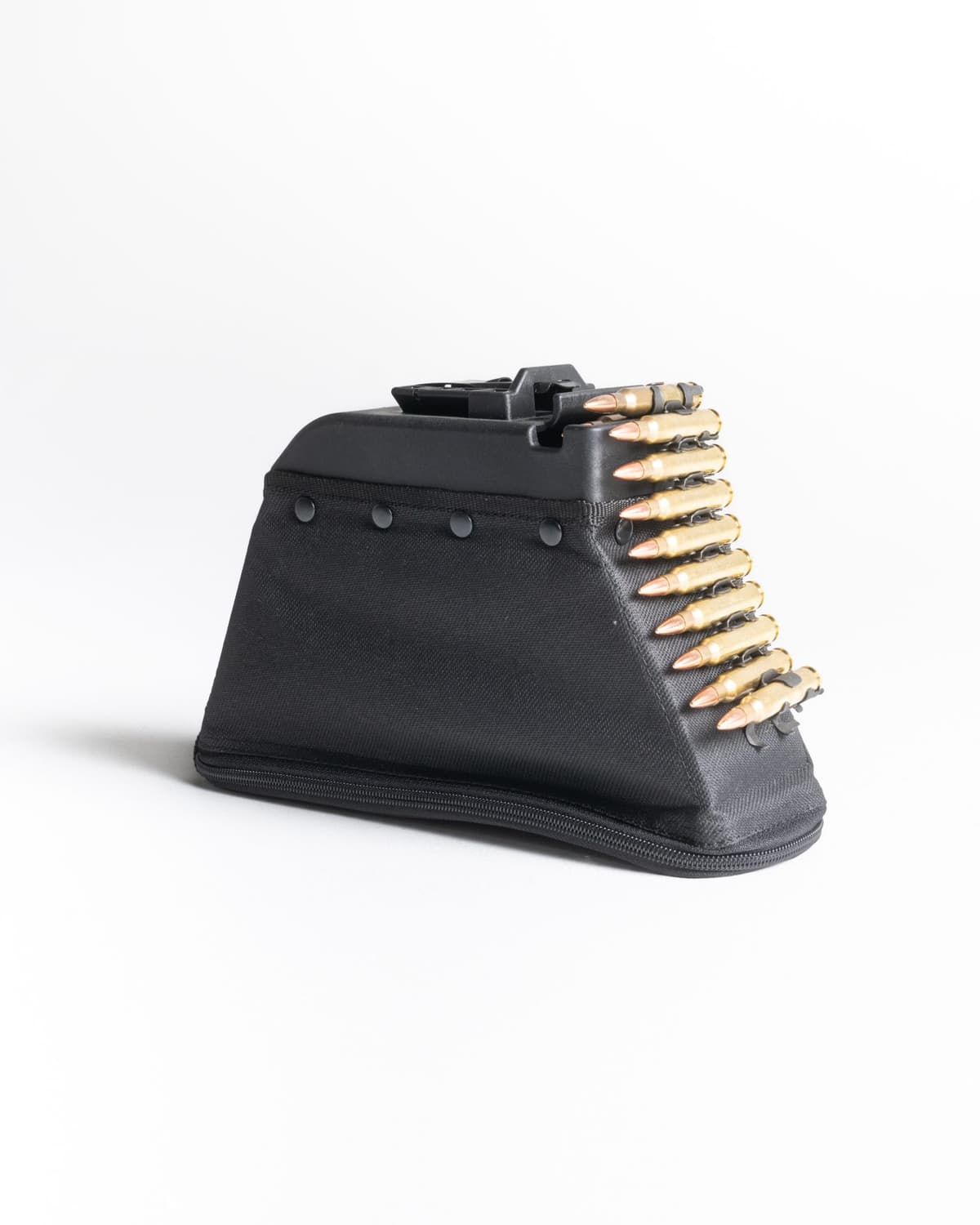
  • →Capacity choice: the included rigid box holds 100 rounds, the cloth container holds 150 with less belt protection
  • →Short host list: a Mil-Spec or billet lower, a Mil-Spec receiver extension, and the supplied extended bolt and magazine catches
  • →Heat is the real limit: roughly 300 rounds of continuous rapid fire is where a 12,000-round test saw the closed-bolt action start cooking off

Why This Guide Focuses on the MFR56

The MFR56 is the system this guide maps in detail, and it is a dual-feed upper: it runs a linked M27 belt out of a container or standard STANAG-pattern AR-15 magazines. Linked ammunition is therefore not a precondition for taking it out. If a magazine-fed IAR-style rifle is the shape you actually want, because it keeps the normal AR feed path rather than adding a belt, our civilian IAR guide covers that route instead.

Treat the MFR56 as one manufacturer ecosystem rather than a bin of interchangeable belt-fed parts. Its upper, trigger paths, containers, and links all carry Cloak-specific fitment boundaries, and parts from another belt-fed upper family are not assumed to cross. The upper itself is built by System Defence in Ankara, Turkey and imported exclusively for Cloak, which is why the durability questions on this platform have centered on internal parts sourcing rather than on the design. For separate coverage of the FightLite DFX architecture, read our belt-fed upper launch coverage.

What the MFR56 Upper Includes

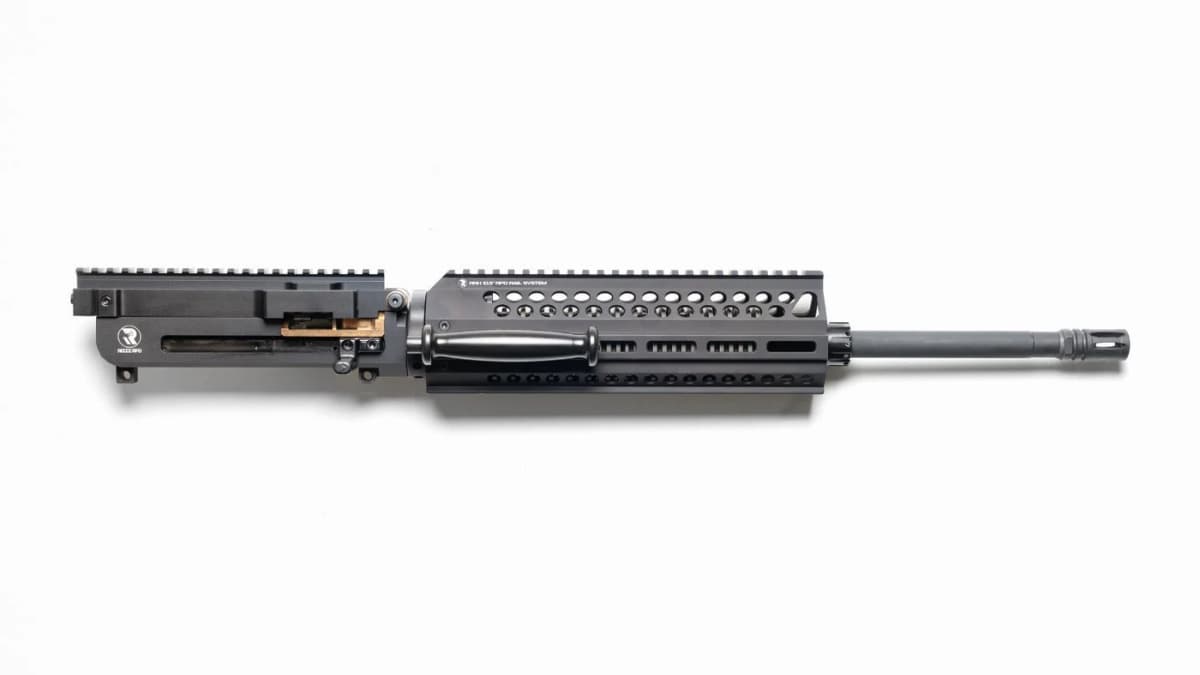
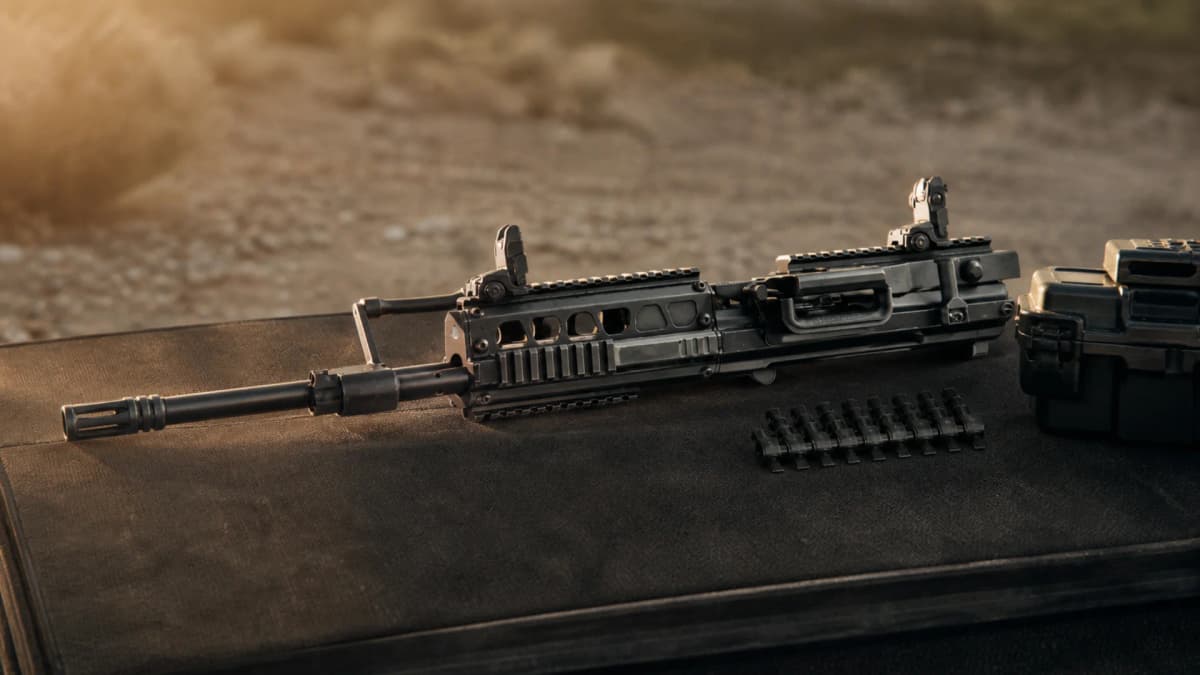
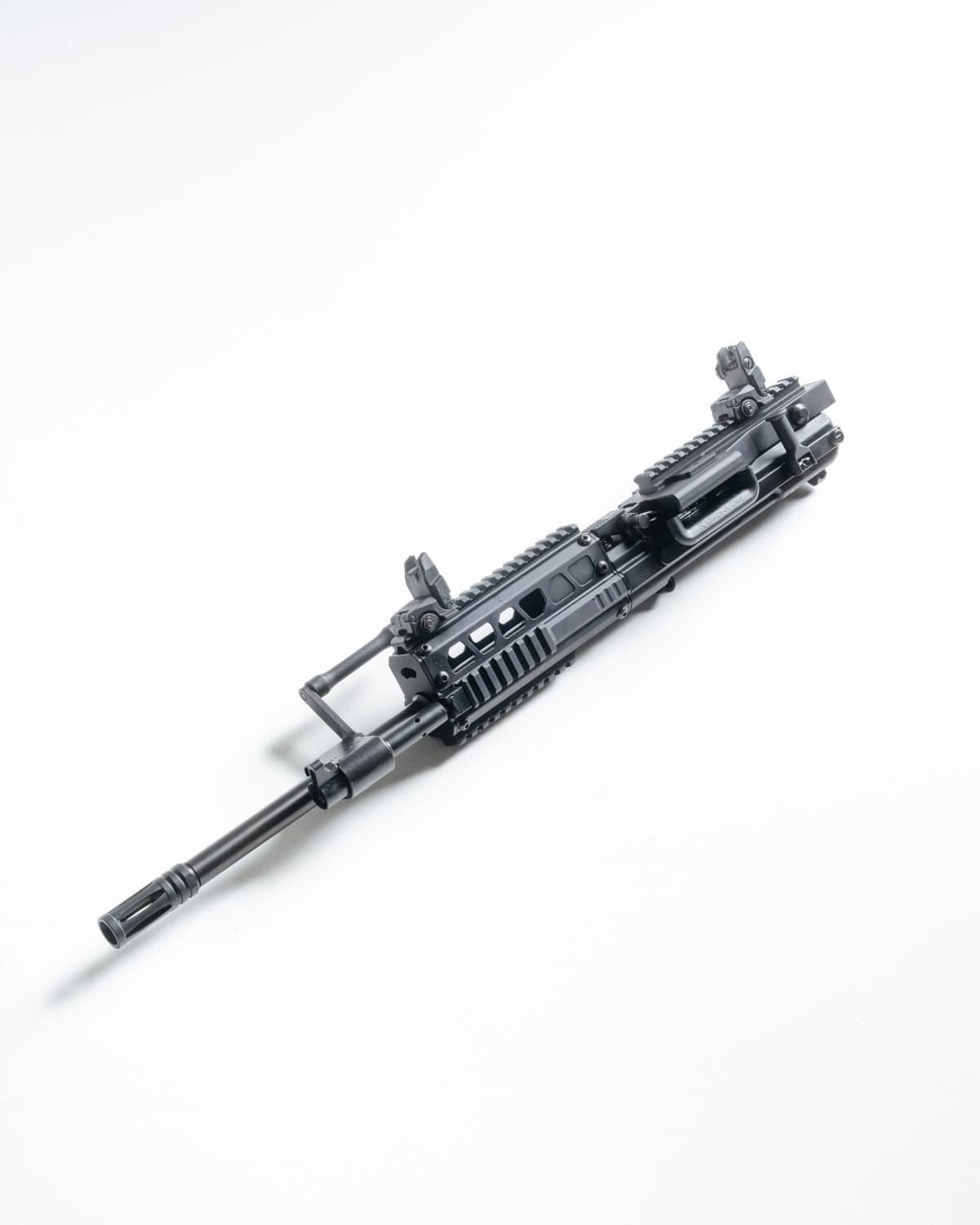
The bundle is the core conversion package. A new MFR56 upper ships with one 100-round plastic container, 100 M27 links and a starter tab, an H3 buffer and spring, the extended bolt and magazine catches the conversion requires, sights, a sling, a cleaning kit, and a case. Buy the upper by itself. Every accessory below exists to replace or extend what is already in that box, not to complete it.

Then account for the 7.6 pounds. That is the manufacturer's figure for the upper alone, before a lower, an optic, a loaded container, or the belt inside it. A finished MFR56 is a rifle you carry to a position and shoot from it: prone, off a bipod, off a bench, off a truck hood. Anyone shopping for an upper to run offhand through a carbine class is shopping for a different rifle.

Two design choices separate it from a conventional AR upper. The short-stroke piston keeps operating gas at the block instead of routing it back into the receiver. And the 16-inch CrMo barrel is a quick-change design, with barrel service handled through Cloak's own documented procedure.

Two smaller details matter once you are behind it. The top cover rides on a spring-loaded detent, so it closes with the bolt forward or back rather than forcing you to chase bolt position before you can reload a belt. And the charging handle is non-reciprocating and folds out of the way, which keeps it clear of a support hand riding the handguard.

Cloak Industries MFR56 Belt-Fed Upper (16")
16-inch dual-feed upper

Cloak Industries MFR56 Belt-Fed Upper (16")

The complete MFR56 starting point

Short-stroke-piston 5.56 upper that feeds from STANAG magazines or M27 linked belts.

  • Feeds M27-linked 5.56 or STANAG magazines
  • Includes one 100-round container and 100 links
  • Includes the H3 buffer and spring plus lower-control parts
$4409.00$4449.00Save 1%at Optics Planet
View at OpticsPlanet
Affiliate links - purchases support this site at no extra cost to you. (?)

12,000 Rounds: What Held and What Broke

The most useful long-term record on this upper comes from Micah Mayfield, who put more than 12,000 rounds through an MFR56 and published what survived and what did not. The short version: the headline mechanisms held, and the small internal parts were the ones that failed.

Micah Mayfield's high-round-count MFR56 review. We have no relationship, sponsorship, or partnership with the channel. We are fans of the work, and this is the most thorough look at the upper under real round counts that we have found.

The quick-change barrel is the part that earned its keep. Mayfield reports the spring-loaded button latch never carbon-locked or seized across double-digit thousands of rounds, which is the failure people reasonably expect from a consumer-priced quick-change system. The captured piston assembly sits right behind the barrel and comes out with it, so the parts that take the most fouling are also the easiest to reach.

What broke were two firing pins and the feed-tray spring. Mayfield reports Cloak has since moved off the Turkish-supplied firing pins in favor of in-house pins and a revised spring. Cloak does not publish that change on its product page, so treat it as the reviewer's account rather than a published specification, and ask Cloak which parts ship in a current unit before you order. Budget for spare firing pins either way. A rifle you feed 100 rounds at a time eats consumables at a rate a carbine never will.

Plan on the gas block needing real cleaning, not a wipe. Carbon builds at the block on a piston gun by design, and at high round counts Mayfield had to work the block loose rather than slide it free. That is a maintenance interval to schedule, not a malfunction to diagnose.

The accuracy picture sets expectations honestly: roughly 5 MOA, with consistent impacts from 100 out to 400 yards and a widening cone of fire by 600. That is the design intent rather than a shortfall. The MFR56 is built to put strings of five to eight rounds into a beaten zone, which is what a belt buys you and what a magazine-fed precision rifle does not. Judge it on whether it keeps feeding, not on group size.

Choose the MFR56 Trigger Path

Buying a belt-fed upper and then skipping the assisted-reset trigger wastes the entire point of the platform. The upper is built to eat a belt at a rate a standard trigger finger cannot feed it. Budget for the trigger with the upper, not later.

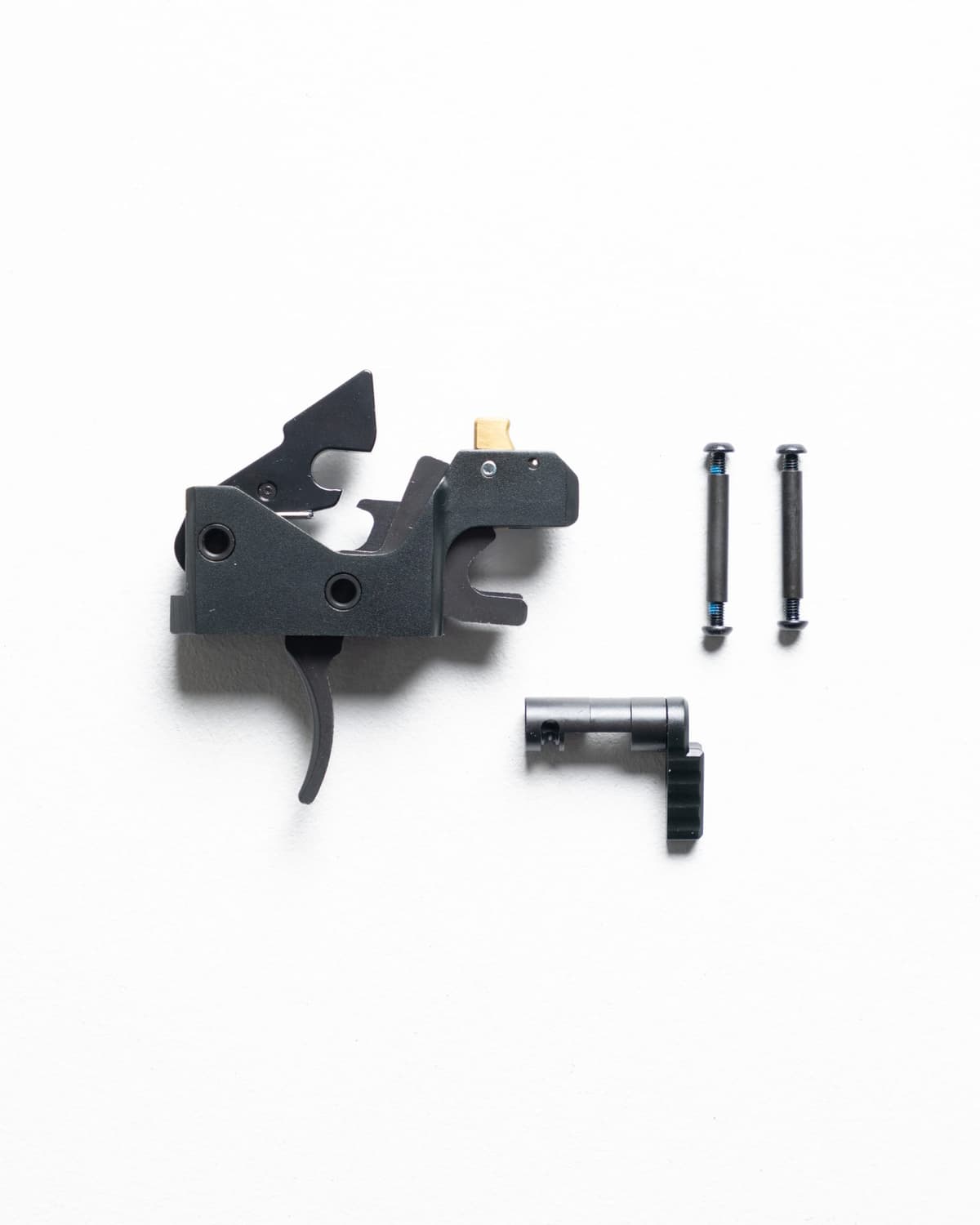
If you are buying one, buy the MFR56-specific trigger at $345.80. Its 17-4 steel toggle is longer than the toggle in the standard AR-15 Disruptor, and that standard toggle is too short to cycle this action reliably, so a Disruptor pulled out of another rifle is not a substitute at any price. The complete unit keeps three selector positions, Safe, Semi, and Enhanced Semi, and publishes a 3.75 to 4.1-pound pull. Owners who already run a Disruptor may need only the MFR56 toggle rather than a second complete trigger, because Cloak sells that toggle on its own.

The recoil requirement is already covered. Cloak calls for an H2 buffer at minimum and recommends H3, and the H3 buffer and spring ship inside the upper bundle, so the trigger does not drag a second purchase behind it. For assisted-reset options on other hosts, see our FRT-compatible gun map and the AR-15 FRT guide, which covers conventional direct-impingement hosts rather than this piston action.

The Triggered Company Assisted Reset Trigger for MFR56
MFR56-specific assisted reset

The Triggered Company Assisted Reset Trigger for MFR56

Buyers who need a complete host-specific trigger

MFR56-specific Disruptor with a longer toggle engineered for the belt-fed upper's action.

  • Longer 17-4 steel toggle made for the MFR56 action
  • Safe, Semi, and Enhanced Semi positions
  • Published 3.75 to 4.1-pound pull range
$345.80at Optics Planet
View at OpticsPlanet
Affiliate links - purchases support this site at no extra cost to you. (?)

Host and Fitment Checks Before You Buy

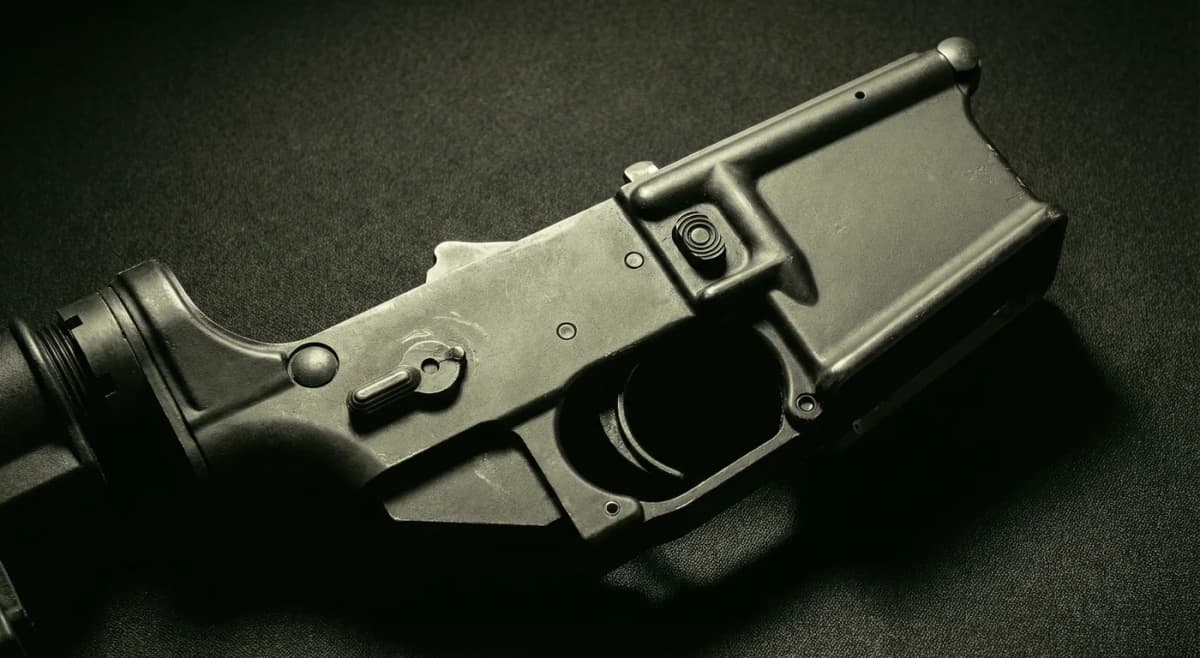
Four conditions decide whether the lower in your safe is a host. Cloak names Mil-Spec and billet AR-15 lowers as compatible. The receiver extension has to be a Mil-Spec buffer tube, matching the carbine recoil setup the bundle ships. The supplied extended bolt catch and magazine catch are part of the conversion rather than accessories that can stay in the bag. And carrier-to-lower clearance has to be verified with the spacers Cloak supplies for that check.

Treat that list as a purchase condition, not a project. A lower you cannot match against all four is the wrong lower to put a $4,449 upper on; source a lower that already meets the four conditions instead of modifying one that does not. Recoil questions beyond the supplied H3 parts come down to the general relationship between gas, carrier speed, and buffer mass, which our AR gas and buffer guide explains.

Heat, Cook-Off, and Manufacturer Support

Heat is the operating limit on this rifle, and the specific hazard has a name: cook-off. A cook-off is a round firing because the chamber is hot enough to ignite the primer on its own, with no trigger pull involved. Every civilian belt-fed semi-automatic is exposed to it, because it has to fire from a closed bolt and therefore leaves a live round sitting in that hot chamber between shots. Belt-fed guns issued for sustained fire avoid the problem by firing from an open bolt, which leaves the chamber empty until the moment of firing. That option is not on the table here.

In Mayfield's testing the MFR56 reached that point after roughly 300 rounds of continuous rapid fire. Treat that number as the outer edge of a string rather than a target to hit. Break for cooling well before it, use the quick-change barrel if you have a spare, and keep the muzzle pointed downrange for the entire belt, because a cook-off on a linked gun does not necessarily stop at one round. It can keep feeding itself until the container runs out, and the only thing standing between that and a serious incident is where the rifle is pointed.

The routine rules still apply underneath all of that. Let the barrel and gas parts cool before handling them, keep eye and hearing protection on, and stop the moment the rifle malfunctions or shows wear the Cloak manual does not describe. The manual governs the specifics for this system.

Follow New AR Platform Guides

Get new fitment, product, and legal-reference guides when they publish.

Free targets, drill cards, and weekly reviews by email.

Frequently Asked Questions

▶Does the MFR56 replace the whole AR-15?
No. The MFR56 is an upper that mounts to a compatible AR-15 lower. Cloak Industries names Mil-Spec and billet lowers as compatible, and the system also requires its supplied extended bolt and magazine catches, a Mil-Spec buffer tube, and a carrier-to-lower clearance check using the supplied spacers. A lower that meets all four conditions is a host. One that does not should be replaced rather than modified.
▶Can the MFR56 feed from AR-15 magazines?
Yes. The MFR56 is a dual-feed upper that runs M27-linked 5.56 from a belt container or standard STANAG-pattern AR-15 magazines, so a belt and container are not required to shoot it.
▶Do I need to buy a belt container and links with a new MFR56 upper?
No. A complete MFR56 upper bundle includes one 100-round plastic container, 100 M27 links, a starter tab, an H3 buffer and spring, and the extended bolt and magazine catches. The 150-round cloth container, a second rigid container, and extra link packs are capacity and resupply purchases, not requirements for a working belt-fed AR-15.
▶Can I use a standard Disruptor with the MFR56?
Not as it comes. The standard Disruptor toggle is too short to cycle the MFR56 action reliably. A new buyer wanting assisted reset should get the complete MFR56-specific trigger, which uses a longer 17-4 steel toggle, keeps Safe, Semi, and Enhanced Semi positions, and publishes a 3.75 to 4.1-pound pull. An owner who already has a Disruptor may need only Cloak's separate MFR56 toggle rather than a second complete trigger.
▶Will a belt-fed AR-15 cook off?
It can, because a civilian belt-fed rifle has to fire from a closed bolt, which leaves a live round sitting in a hot chamber between shots. In Micah Mayfield's testing the MFR56 began cooking off rounds after roughly 300 rounds of continuous rapid fire. That is a property of closed-bolt operation rather than a defect in this upper. Break long strings for cooling, swap the quick-change barrel when it is available, and keep the muzzle pointed downrange for the whole belt, because a cook-off on a linked gun can keep feeding until the container is empty.
▶How accurate is the MFR56?
Around 5 MOA in Mayfield's high-round-count testing, which put consistent hits on target from 100 to 400 yards and opened into a cone of fire by 600. The MFR56 is built to put strings of five to eight rounds into a beaten zone rather than to shoot groups. Anyone buying it for precision is buying the wrong upper.
▶Are belt-fed AR-15 legal?
A belt feed describes how ammunition reaches the action; it does not by itself decide a firearm's legal classification. The trigger and the complete configuration do, and an assisted-reset trigger carries its own separate legal analysis. State law can be broader than federal law. Check current federal, state, and local law for the exact configuration before buying.
▶Is the MFR56 assisted-reset trigger legal?
Its federal treatment is not answered by the Rare Breed settlement. ATF's current notice limits that settlement to eligible FRT-15 and WOT devices, does not name this product, and states that state restrictions still apply. Forced-reset devices are restricted or banned outright in more than a dozen US jurisdictions. Check the state legality tool for your jurisdiction and confirm the exact product and configuration with qualified local counsel.

The Verdict

Buy the MFR56 upper first. It is the core belt-fed package, and the 150-round cloth container is the capacity upgrade the standard bundle does not include.

Confirm the lower against the four fitment conditions before you order, because the host decides whether the upper works at all. Budget for the assisted-reset trigger alongside it, and clear that trigger against your own state's law before you buy. Then plan the shooting itself around heat: 12,000 rounds of testing say the mechanism holds up, and that the closed-bolt chamber, not the barrel latch or the piston, is what sets the ceiling on a string.