Best Ammo Cans 2026: Steel, MTM Polymer & Dry Storage header image
Gear
June 6, 2026
Best Ammo Cans 2026: Steel, MTM Polymer & Dry Storage

Steel surplus cans, MTM polymer boxes, and the humidity control that actually keeps ammunition dry. Eight verified picks plus the dry-storage discipline that protects a stockpile for decades.

Best Ammo Cans 2026: Steel, MTM Polymer & Dry Storage

Ammunition does not have a shelf life; it has a humidity problem. Modern brass-cased ammo stored cool, dry, and sealed lasts decades, and the container that does the sealing is the ammo can. This guide ranks eight verified picks, from the steel mil-surplus M2A1 that set the standard to MTM's rust-proof polymer line and the reusable desiccant that turns any can into a dry vault, then covers the steel-versus-polymer decision and the storage discipline that actually protects a stockpile.

By AB|Last reviewed June 2026

The Best Ammo Cans & Storage for 2026

Steel surplus cans, MTM polymer boxes, and the humidity control that actually keeps ammunition dry. Ranked by seal quality, durability, capacity, and price across long-term storage and bulk-handling use.

1

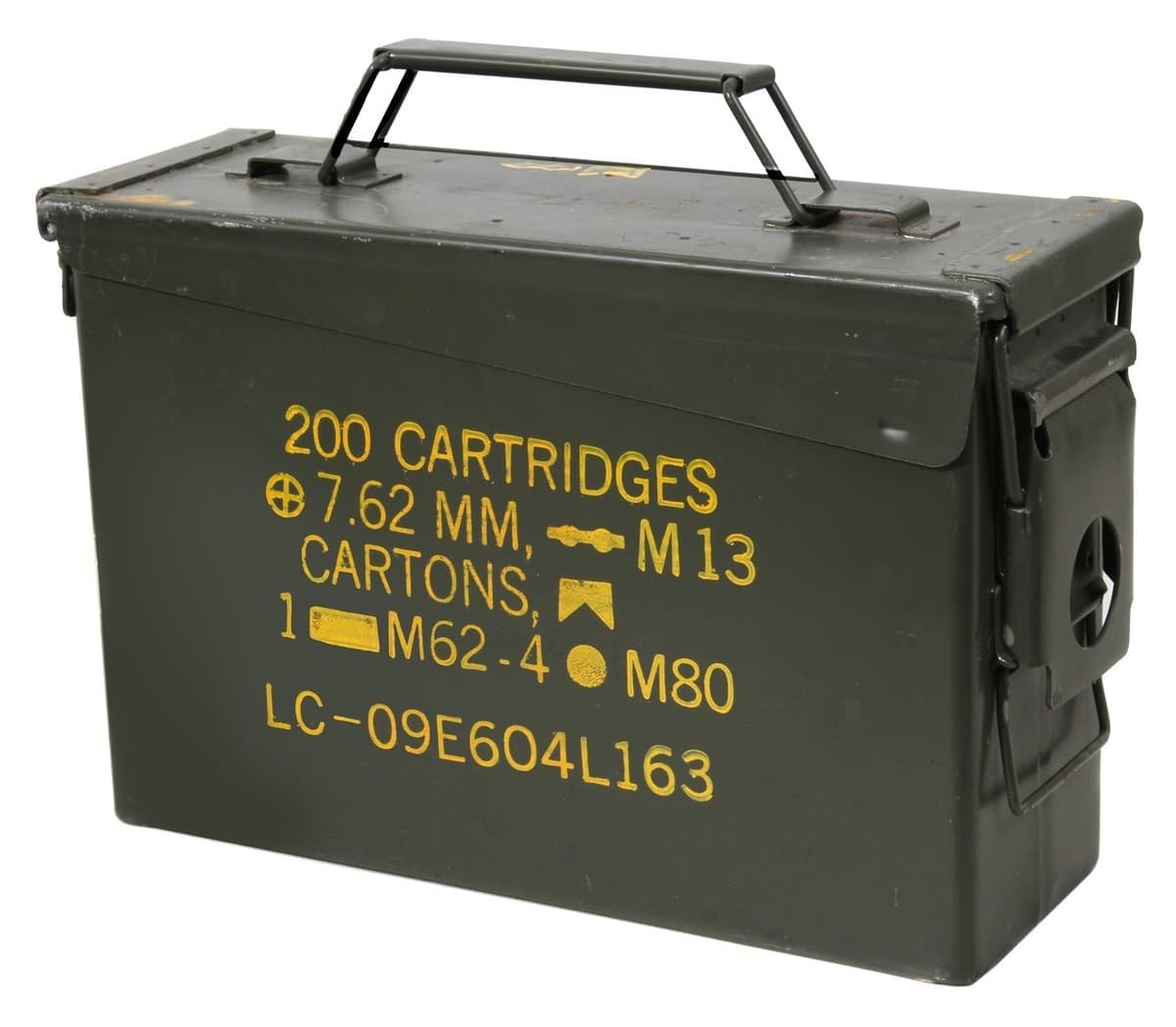
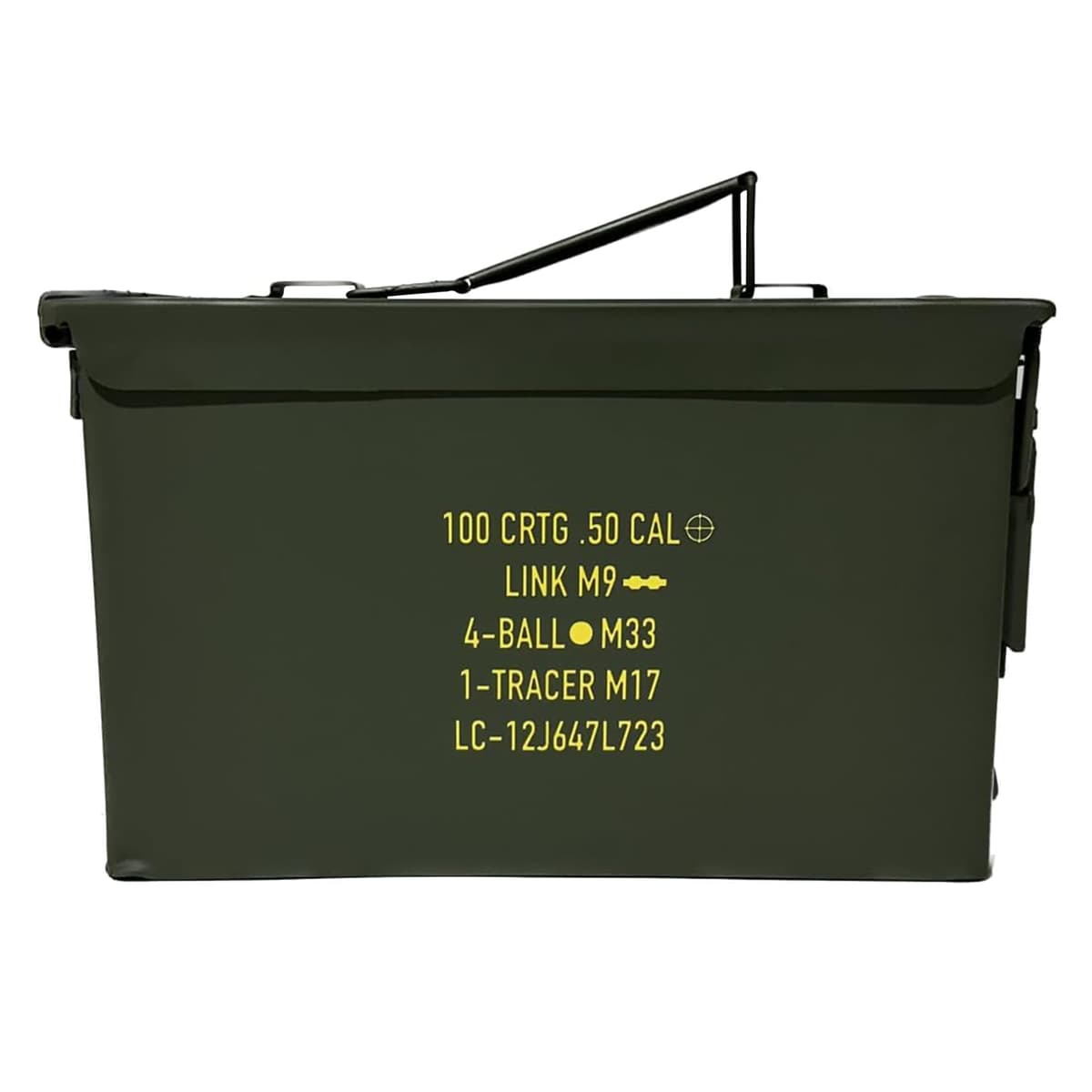
Ammo Can Man M2A1 .50 Cal Steel Ammo Can

Best overall / best steel can

$17
Shop at KYGUNCO
SteelWaterproof~1,200 5.56
  • +Seam-welded carbon steel body is far more durable than polymer
  • +Integral rubber lid gasket gives a genuine waterproof seal
  • +Cheap for the protection it provides
  • Heavier than polymer alternatives
  • Surplus gasket condition varies; inspect or replace on arrival
  • Bare steel can surface-rust if stored damp
Interior: 11 x 5.5 x 7 inSeal: Waterproof gasketCapacity: ~1,200 loose 5.56Grade: Grade 1 surplus
2

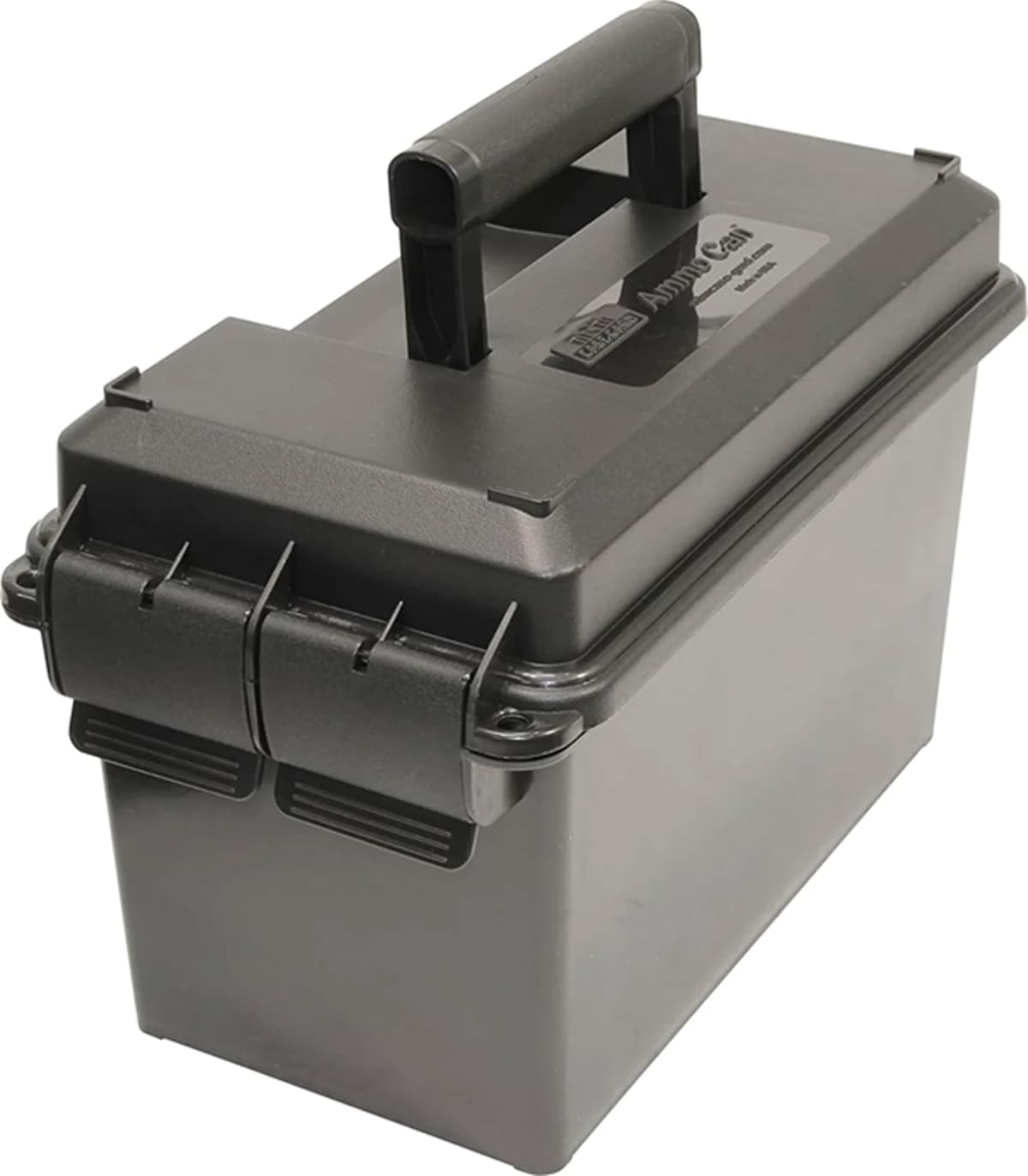
MTM AC50C .50 Caliber Ammo Can

Best polymer can / best value

$15
View at OpticsPlanet
PolymerO-ringUSA made
  • +Rugged polypropylene body will never rust
  • +Much lighter than a comparable steel .50 cal can
  • +Tongue-and-groove O-ring seal keeps humidity out
  • Water-resistant but not submersible
  • Polymer is less puncture-resistant than steel
  • Latches less robust than a steel lever latch under abuse
Exterior: 13.5 x 7.4 x 8.5 inSeal: O-ringMaterial: PolypropyleneOrigin: USA made
3

Ammo Can Man M19A1 .30 Cal Steel Ammo Can

Best compact steel can

$15
Shop at KYGUNCO
SteelWaterproof~400 5.56
  • +Lighter and easier to carry than a .50 cal can when full
  • +Same waterproof steel seal as the larger M2A1
  • +Perfect size for organizing one caliber per can
  • Limited capacity for true bulk stockpiling
  • Surplus gasket condition varies; inspect or replace on arrival
  • Bare steel surface-rusts if stored damp
Interior: ~10 x 3.5 x 6.75 inSeal: Waterproof gasketCapacity: ~400 loose 5.56Grade: Grade 1 surplus
4

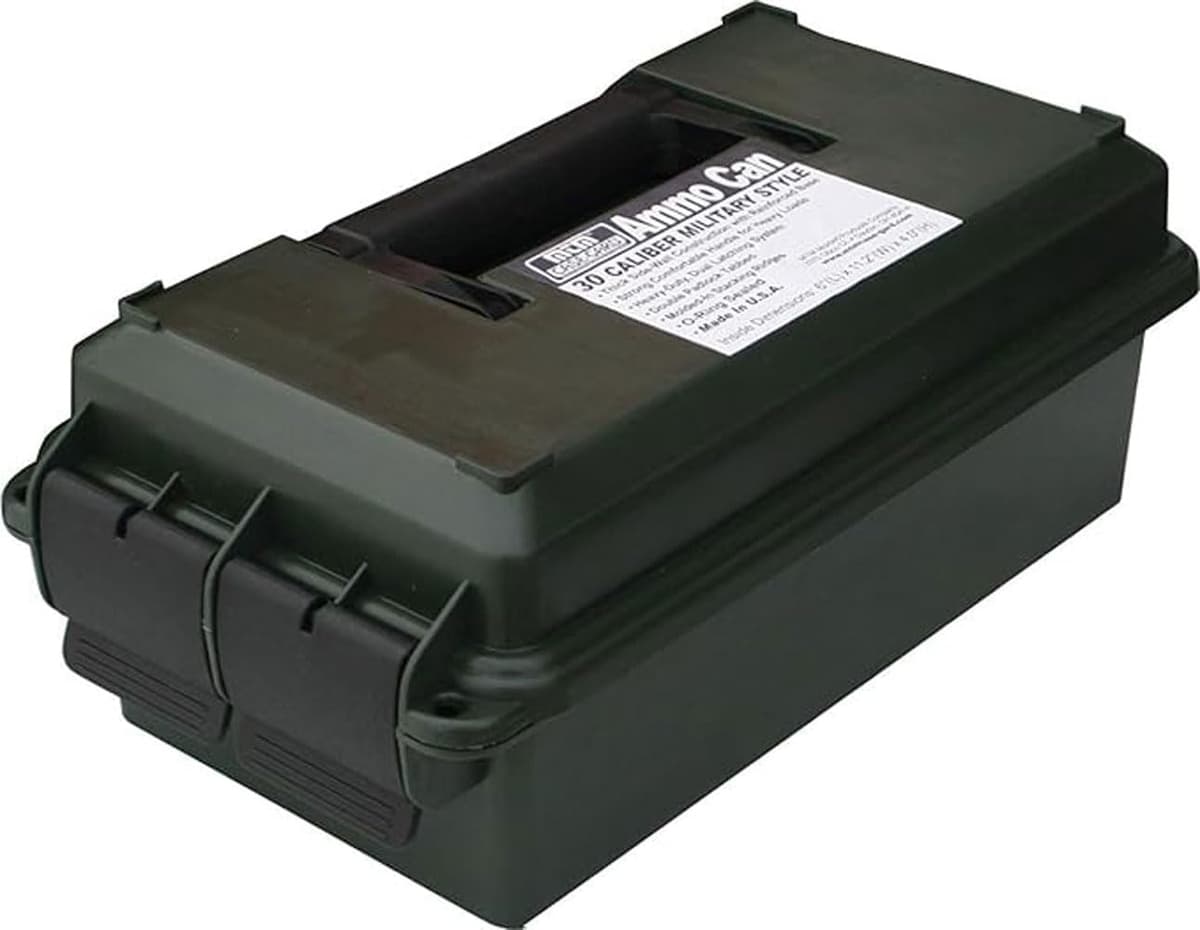
MTM AC30C .30 Caliber Ammo Can

Best compact polymer can

$17
View at OpticsPlanet
PolymerO-ringUSA made
  • +Rust-proof and lighter than a steel M19A1
  • +Ideal size for one-caliber-per-can organization
  • +O-ring seal keeps humidity out
  • Water-resistant but not submersible
  • Lower capacity than a .50 cal can
  • Polymer latches less rugged than a steel lever latch
Exterior: 13.5 x 7.4 x 5.1 inSeal: O-ringMaterial: PolypropyleneOrigin: USA made
5

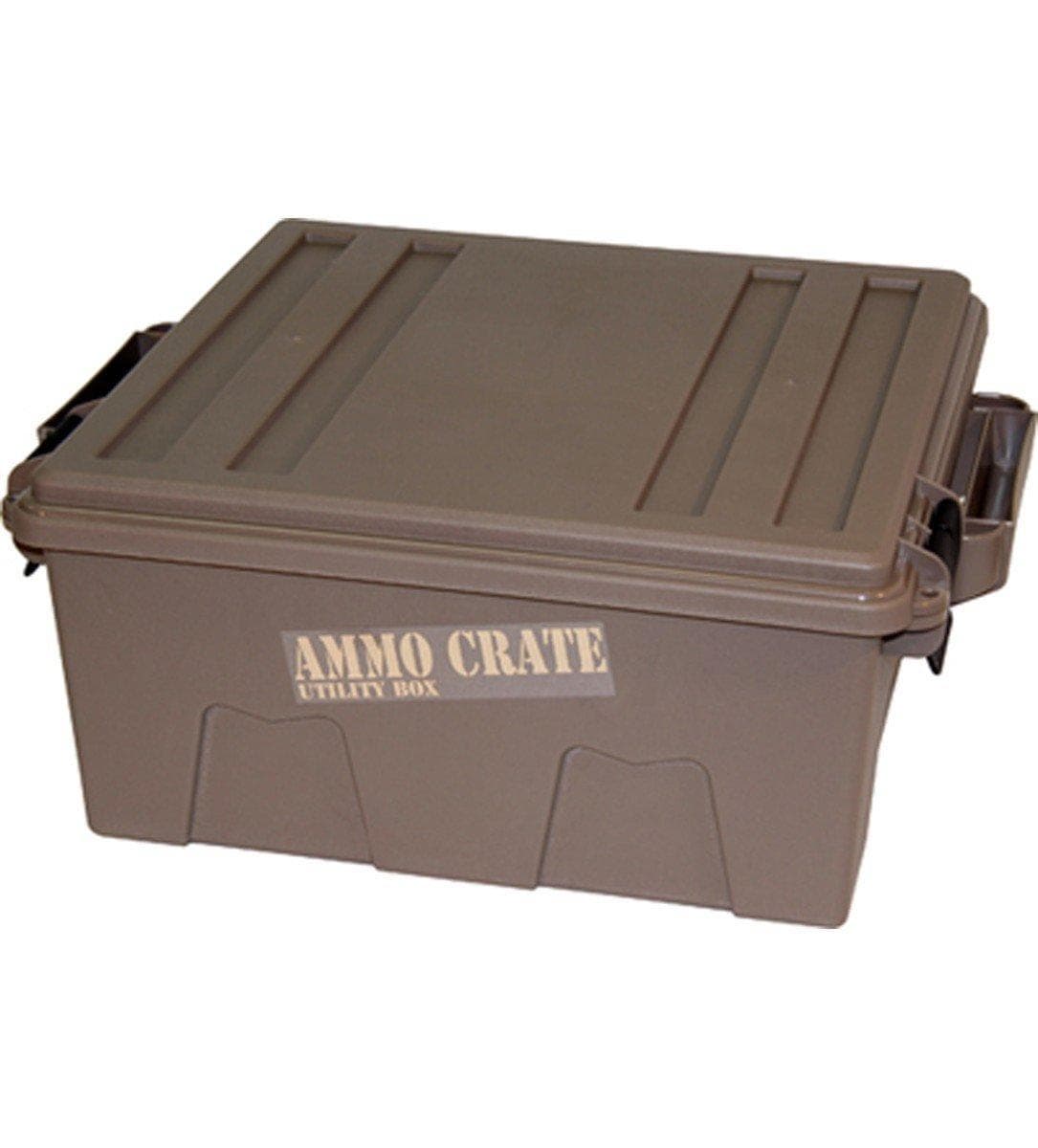
MTM ACR8-72 Ammo Crate Utility Box

Best for bulk storage

$37
View at OpticsPlanet
Crate85 lb ratedO-ring
  • +Large 14 x 13.5 x 7.25 in interior consolidates several cans
  • +Two reinforced handles rated to carry up to 85 lbs
  • +Same O-ring dry-storage seal as the smaller cans
  • Large footprint takes significant shelf space
  • Water-resistant but not submersible
  • Heavy and awkward to move when fully loaded
Interior: 14 x 13.5 x 7.25 inCarry rating: 85 lbSeal: O-ring
6

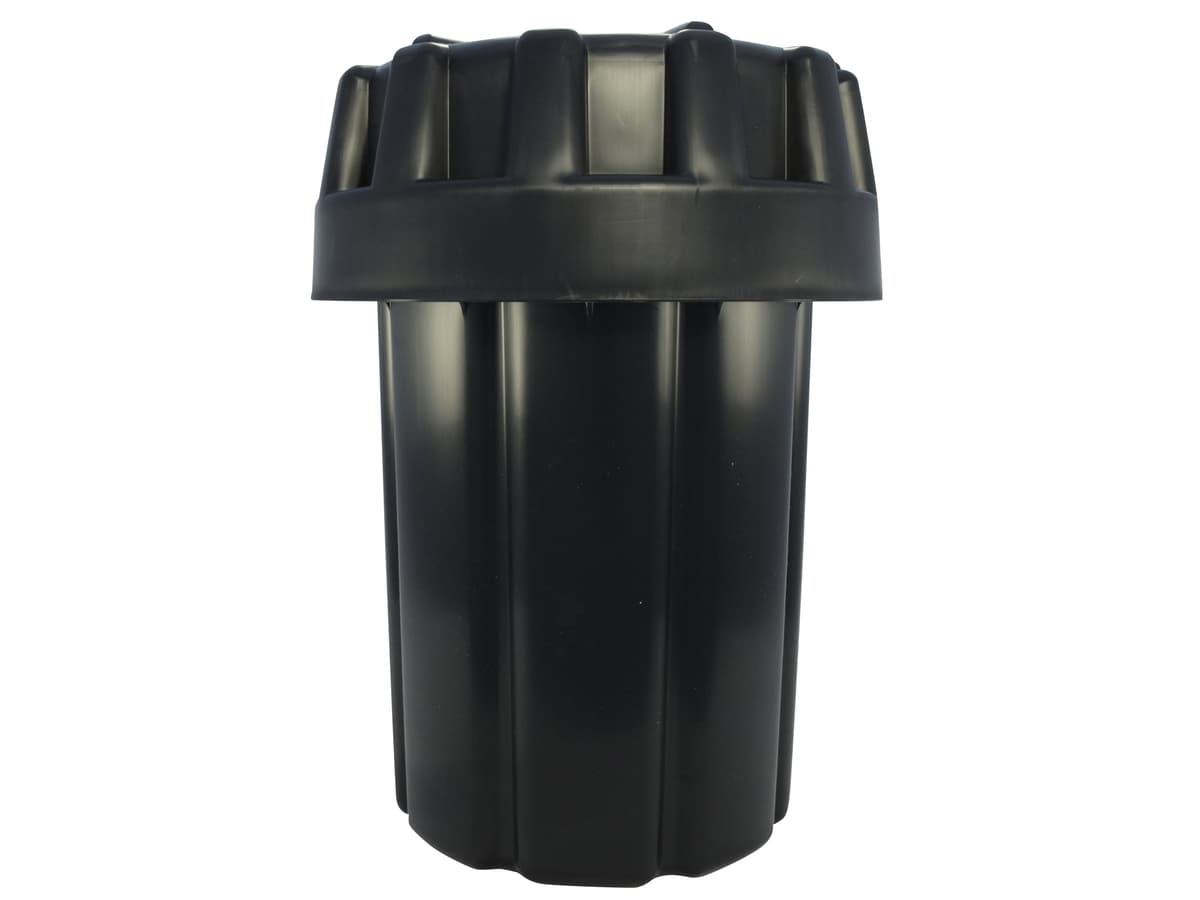
MTM SAC Survivor Ammo Can

Best for long-term caching

$44
View at OpticsPlanet
Double O-ringVCI + desiccantCache
  • +Strongest seal in the MTM line via double O-ring screw-down lid
  • +Ships with VCI bag and desiccant for built-in moisture control
  • +Tall bucket interior suits loaded magazines and bulk pistol ammo
  • Screw-down lid makes frequent access slow
  • More expensive than a standard hinged ammo can
  • Round body wastes some shelf space compared to a boxy can
Interior: 7 in dia x 12.4 inSeal: Double O-ring lidIncluded: VCI bag + desiccant
7

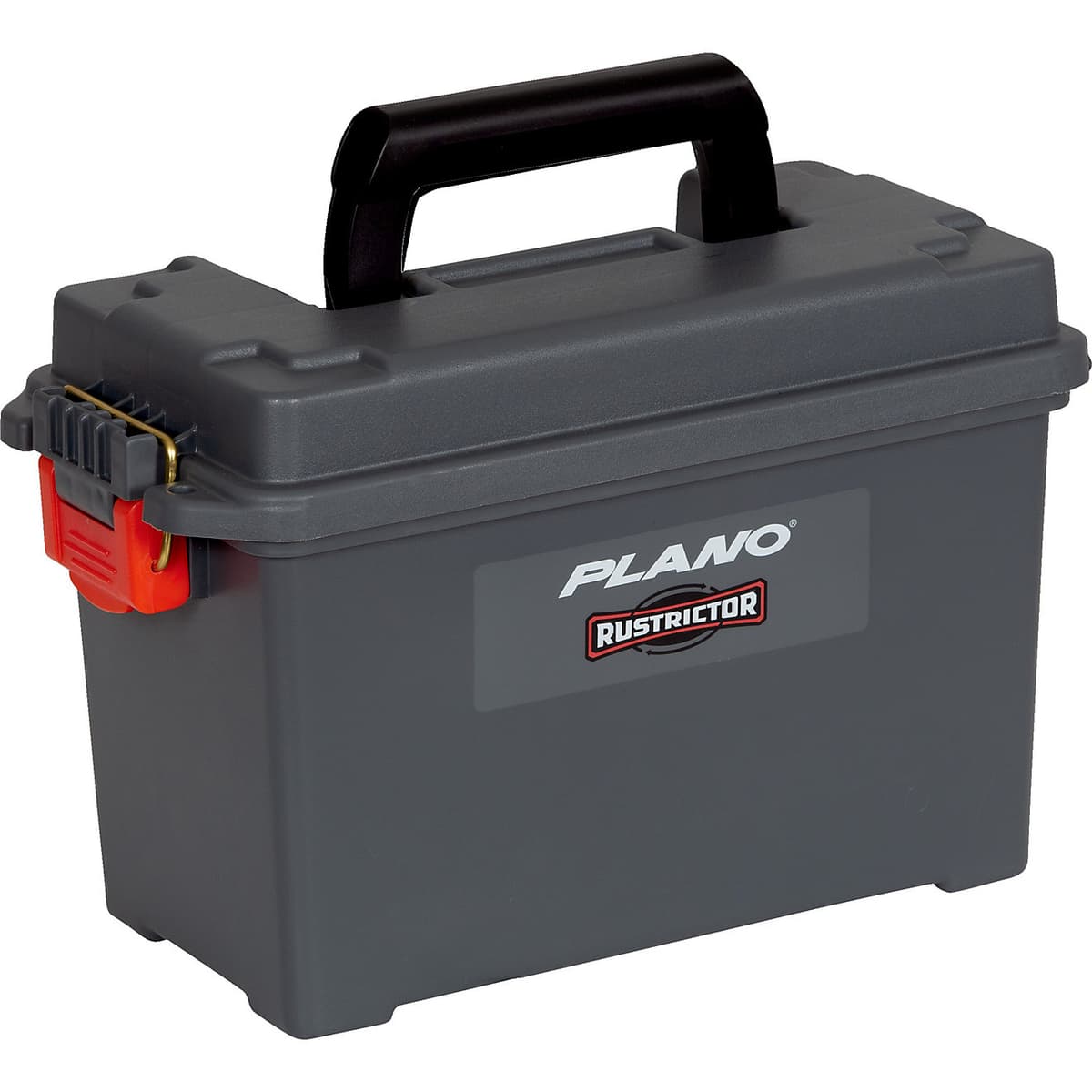
Plano 1612 Rustrictor Field/Ammo Box

Best built-in corrosion control

$33
View at OpticsPlanet
Rustrictor VCIO-ringLid storage
  • +Rustrictor VCI molded into the plastic protects exposed metal without a separate desiccant
  • +Water-resistant O-ring seal for dry storage
  • +Top-access lid storage aids organization
  • Water-resistant but not submersible
  • Pricier than a plain polymer ammo can
  • VCI benefit is wasted if you only store sealed factory ammo boxes
Exterior: 15 x 8 x 10 inCorrosion: Rustrictor VCI in plasticSeal: O-ring
8

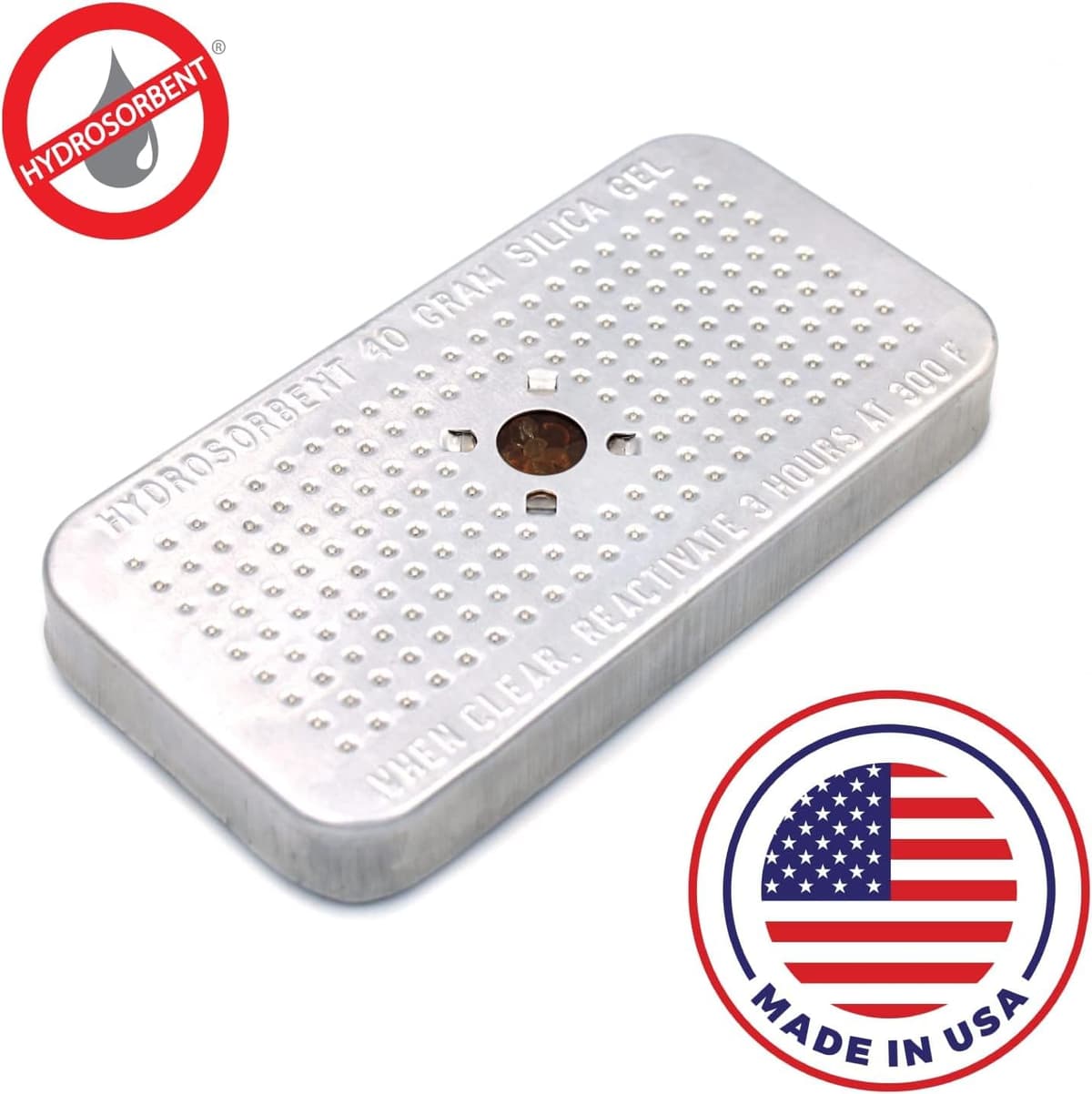
Hydrosorbent Reusable Silica Gel Desiccant Canister (40g)

Best humidity control accessory

$14
View at Amazon
40gIndicatingReusable
  • +Removes the only realistic threat to sealed ammo: humidity
  • +Color indicator takes the guesswork out of maintenance
  • +Recharges indefinitely in a household oven
  • Must be recharged when saturated or it stops working
  • One 40g canister covers a single ammo can, not a whole safe
  • Indicator beads can be hard to read in low light
Coverage: ~3 cu ftIndicator: Indicating beadsRecharge: 280-300F oven

Rankings reflect seal integrity, build durability, capacity, and street price. Surplus steel can condition varies; inspect or replace the gasket on arrival.

Affiliate links - purchases support this site at no extra cost to you. (?)

Steel vs Polymer: Which Ammo Can Should You Buy?

Buy steel for durability and a true waterproof seal; buy polymer for weight, rust immunity, and the price that lets you stack cans by the dozen. Both keep ammunition dry, so the choice comes down to how you handle and store it, not whether one will protect the rounds inside. Most shooters who own more than a few cans run a mix: steel for long-term sealed storage that rarely moves, polymer for the working cans they carry to the range.

Steel (M2A1 / M19A1)

  • +Seam-welded body resists punctures and crushing
  • +Integral gasket seals genuinely waterproof
  • +Cheapest protection per cubic inch in surplus
  • -Roughly three times the weight of polymer
  • -Bare steel surface-rusts if stored damp

Best for: long-term sealed storage, rough handling, anyone who wants a can that will outlive them

Polymer (MTM / Plano)

  • +Will never rust, no gasket to replace
  • +A third the weight of a steel can
  • +O-ring seal keeps humidity out
  • -Water-resistant, not submersible
  • -Latches less rugged than a steel lever latch

Best for: working range cans, bulk stacks, damp basements where a steel can would rust

The one steel weakness worth planning around is the gasket. A seam-welded carbon steel body is effectively indestructible, but the rubber lid gasket is the single part that fails: if it has hardened, cracked, or gone missing, the can no longer seals and the steel is just a box. This is the entire reason to buy Grade 1 surplus over Grade 2. Grade 1 ships with a serviceable factory seal; Grade 2 is cheaper and structurally fine but the gasket is a coin flip, so budget a few dollars for a replacement seal. Polymer cans sidestep this with a molded O-ring that does not age out the way old surplus rubber does.

Whichever material you choose, the can is only half the system. If you are still deciding how much ammunition to put in those cans before you buy them, the supply-chain prep checklist covers how deep to stock by caliber and where magazines and spare parts fit alongside the ammo. The cans store the rounds; matching cases move the guns that fire them, so see the best rifle hard cases and best rifle soft cases guides for long-gun transport and the best pistol cases guide for handguns. Browse the full range of cans, crates, and desiccants in the survival gear catalog.

Humidity Control: Where Moisture Actually Kills Ammo

Moisture is the only realistic threat to sealed ammunition, and a reusable silica gel desiccant canister is how you defeat it. Brass cases and primers do not age out on a timer; they corrode when humid air condenses inside the case mouth or attacks the primer pocket. Seal the air dry and the rounds are stable for decades. That is why a $15 desiccant is the highest-value item in this entire guide: it protects every dollar of ammunition in the can it sits in.

A 40-gram Hydrosorbent canister covers roughly three cubic feet, enough for a single ammo can, and its indicating beads change color when the gel is saturated. When they signal, you bake the canister at 300F to drive the moisture back out and reuse it indefinitely. Drop one in every sealed can, not just the long-term ones. The cans you open and close at the range exchange humid air every time the lid comes off, so the working cans need moisture control as much as the buried cache does.

For a maintenance-free option, the Plano Rustrictor box molds vapor corrosion inhibitor straight into the plastic, so it protects exposed metal without a separate desiccant; the MTM Survivor can ships with a VCI bag and desiccant already inside for the same reason. Either approach beats the most common storage mistake, which is sealing humid air into a can on a muggy day and assuming the seal alone will protect the rounds. The seal keeps new moisture out; the desiccant removes what was already trapped inside.

Humidity Control & Dry Storage

Survival Gear • $14.95

Reusable Silica Gel Desiccant Canister (40g)

  • 40-gram indicating silica gel
  • Protects up to 3 cubic feet
$14.95 MSRP
View at Amazon
Survival Gear • $33.99

Plano 1612 Rustrictor Field/Ammo Box

  • Exterior 15 x 8 x 10 in
  • Interior ~12.5 x 6 x 8.5 in
$33.99 MSRP
View at OpticsPlanet
Survival Gear • $44.39

MTM SAC Survivor Ammo Can

  • Interior 7 in dia x 12.4 in tall
  • Double O-ring screw-down lid (6 stainless screws)
$44.39 MSRP
View at OpticsPlanet

Affiliate links (?)

Bulk Organization, Labeling & Rotation

Organize a stockpile one caliber per can, label every can by caliber and date, and rotate oldest stock to the front so nothing sits forgotten. A pile of unlabeled cans is just as useless in an emergency as no ammo at all, and the discipline costs nothing but a paint pen. The compact M19A1 and MTM AC30C are sized almost perfectly for a single rifle or pistol caliber, which is why they earn their place alongside the larger .50 cal cans even though they hold less.

For true bulk, consolidate into a crate rather than stacking a dozen loose cans. The MTM ACR8 crate swallows several smaller cans or loose bulk and carries up to 85 pounds on two reinforced handles, which keeps a caliber's worth of ammunition in one liftable unit instead of an unstable tower. Keep every can off bare concrete, which wicks moisture into anything resting on it, and store the stack cool, dry, and out of direct sun.

Loose storage maximizes capacity and is exactly how the military issued ammunition for decades, so there is nothing wrong with it in a sealed can. The tradeoff is that loose rounds scuff case finishes and make counting harder; keeping ammunition in its factory trays or boxes inside the can preserves organization and makes rotation obvious at a glance. Match the cans to what you are actually storing: see the 5.56 ammo selection guide for what bulk rifle ammo belongs in a .50 cal can, the best 9mm range ammo guide for the pistol training stock that fills a compact can fastest, and the best .22 LR ammo guide for rimfire bulk that packs into a single can by the thousands.

Dry storage protects the ammunition; corrosion control protects the firearms that fire it. The same humidity that pits brass rusts a bore, so pair your sealed cans with a maintenance plan from the best gun oils and CLPs guide. And once the ammunition is squared away, the rifle builder lets you configure the rifle it feeds.

Frequently Asked Questions

Who makes the best ammo cans?
For steel, surplus M2A1 (.50 cal) and M19A1 (.30 cal) cans sold Grade 1 by vendors like Ammo Can Man are the benchmark: seam-welded carbon steel with a waterproof gasket for around $16-18. For polymer, MTM Case-Gard owns the category with the AC50C and AC30C cans and the ACR8 crate, all USA-made with a tongue-and-groove O-ring seal. Plano's Rustrictor line stands out for molding rust-fighting VCI directly into the plastic.
Are metal or plastic ammo cans better?
Steel cans win on durability and a true waterproof seal; they resist punctures and crushing that crack polymer. Polymer cans win on weight (roughly a third the weight of steel), never rust, and never need a replacement gasket. Buy steel for long-term sealed storage and rough handling; buy MTM polymer when you want light, rust-proof cans you can stack by the dozen. Both work, and most serious shooters own a mix.
What is the difference between Grade 1 and Grade 2 ammo cans?
Grade 1 surplus cans show light handling wear but have a fully serviceable factory gasket and seal, ready to use out of the box. Grade 2 cans are cheaper and structurally sound but cosmetically rougher, and the rubber gasket is more likely to be hardened, cracked, or missing. If you buy Grade 2, budget a few dollars for a replacement seal, because a gasket that no longer compresses is the only real failure point on an otherwise indestructible steel can.
What is the best way to store ammo?
Store ammunition cool, dry, and dark in a sealed can with an intact gasket or O-ring, and drop in a reusable silica gel desiccant canister to control humidity. Moisture, not air, is what kills ammo over time, so a sealed can plus a charged desiccant defeats the only realistic threat. Keep cans off concrete floors that wick moisture, label each by caliber and date, and rotate oldest stock to the front so nothing sits forgotten for decades.
How long should ammo be stored?
Modern, factory-loaded brass-cased ammunition stored cool, dry, and sealed reliably lasts decades; there is no hard expiration date. The limiting factor is moisture, not age. Ammunition kept in a sealed can with a working desiccant and protected from temperature swings will outlast the shooter. Corrosion of the case or primer, caused by humidity, is what actually degrades stored ammo, which is why dry storage discipline matters far more than the calendar.
Is it bad to store ammo loose in an ammo can?
No. Storing loose rounds in a sealed ammo can is fine and is how military ammunition was issued for decades. The brass cases are durable and the sealed can protects them from humidity. Loose storage maximizes capacity, but it can scuff case finishes and makes counting harder; many shooters keep ammo in its factory trays or boxes inside the can for organization and rotation, or use plastic dividers. Either way, add a desiccant canister.
How much do ammo cans cost?
Grade 1 steel surplus cans run about $16 for a .30 cal M19A1 and $18 for a .50 cal M2A1. MTM polymer cans are similar at $13-16 for the AC30C and AC50C. Larger options cost more: the MTM ACR8 crate is around $37, the Plano Rustrictor field box about $34, and the MTM Survivor cache can roughly $44. A reusable silica gel desiccant canister adds about $15 and protects an entire can.
What's the point of an ammo can?
An ammo can keeps ammunition dry, organized, secure, and portable. The gasket or O-ring seal blocks the humidity that corrodes brass and primers, which is the main thing that degrades stored ammo. Beyond storage, the cans stack efficiently, carry a heavy load by the handle, accept a padlock, and let you organize a stockpile one caliber per can. They also double as durable dry boxes for tools, documents, and electronics.