Key Takeaways
- →What it is: M855A1 is the Enhanced Performance Round, the U.S. Army's standard 5.56 NATO cartridge since 2010 and the Marine Corps' since 2018, replacing M855 green tip.
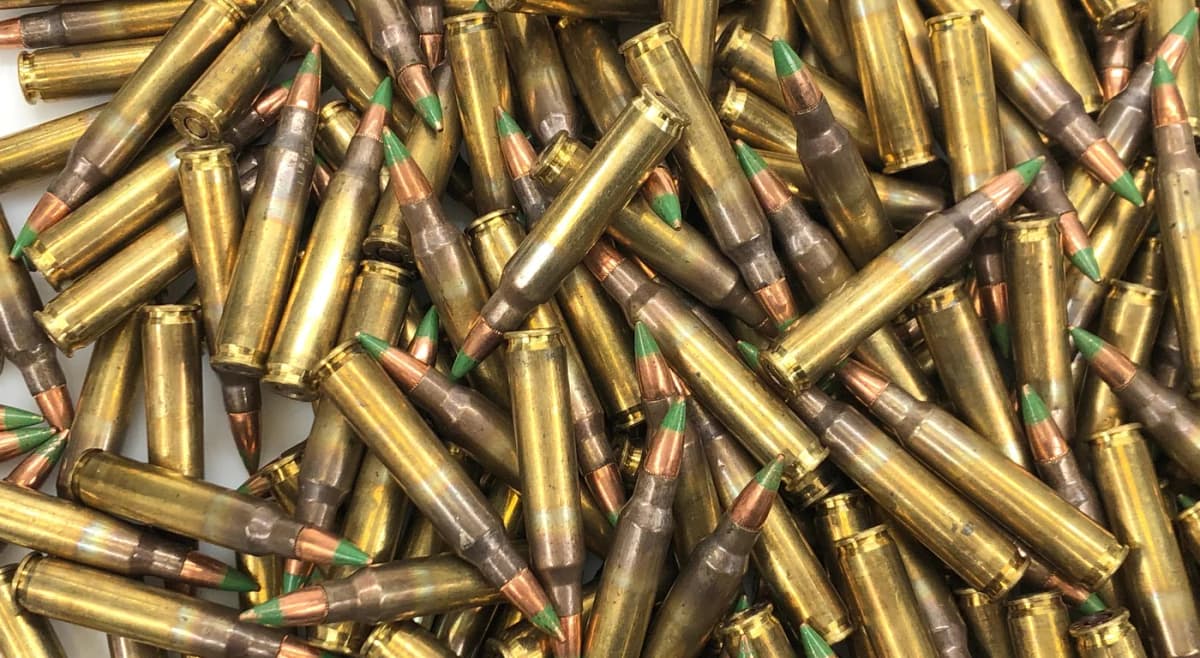
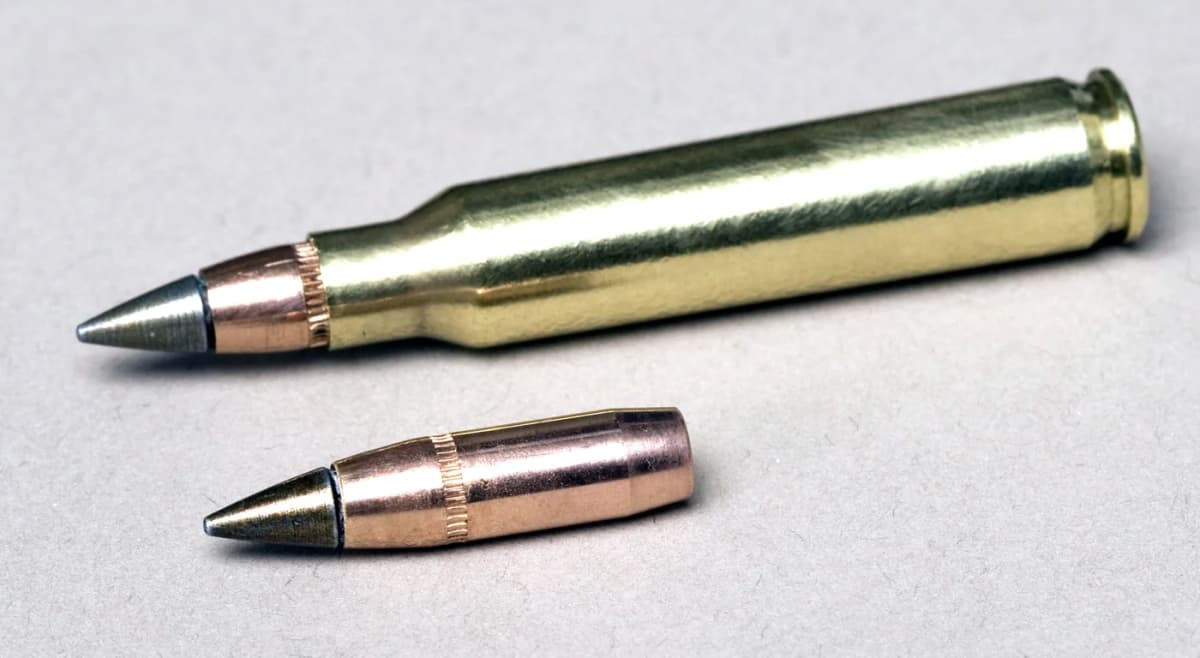
- →Construction: A 62-grain lead-free projectile with an exposed 19-grain hardened steel penetrator over a solid copper slug, jacketed in reverse-drawn copper. The bronze-colored tip is an anti-corrosion coating, not paint.
- →Penetration: Defeats 3/8-inch mild steel approaching 400 meters and has defeated Level III steel plates in close-range testing. Level IV ceramic stops it.
- →Price and availability: No manufacturer sells M855A1 commercially. Surplus and pulled rounds run $2-3 per round, 3-5x the cost of commercial M855 green tip.
- →The catch: It runs roughly 62,000 PSI, about 10,000 PSI over M855, and Army testing tied it to accelerated bolt and barrel wear. For range use, commercial green tip does the training job at a fraction of the price.
What Is M855A1?
M855A1 is the U.S. military's current standard-issue 5.56x45mm NATO cartridge, called the Enhanced Performance Round (EPR). The Army fielded it in 2010 to replace M855, and the Marine Corps standardized on it in 2018, dropping the Mk318 SOST round it had used in the interim. The program started as an environmental mandate, removing the roughly 32 grains of lead in the M855 projectile, but the redesign ended up fixing M855's two biggest complaints at the same time: inconsistent terminal performance and weak barrier penetration.
The projectile is where all the changes live. M855A1 stacks a 19-grain hardened steel penetrator, fully exposed at the tip, on top of a solid copper slug inside a reverse-drawn copper jacket. Total weight stays at 62 grains, same as M855, but the bullet is slightly longer because copper is less dense than the lead it replaced. The exposed tip looks bronze rather than bare steel because it wears an anti-corrosion coating. Unlike M855, whose wounding depended heavily on the angle of yaw at impact, the M855A1 projectile performs consistently regardless of yaw angle, which was the Army's core terminal-performance fix.
M855A1 vs M855: What Actually Changed
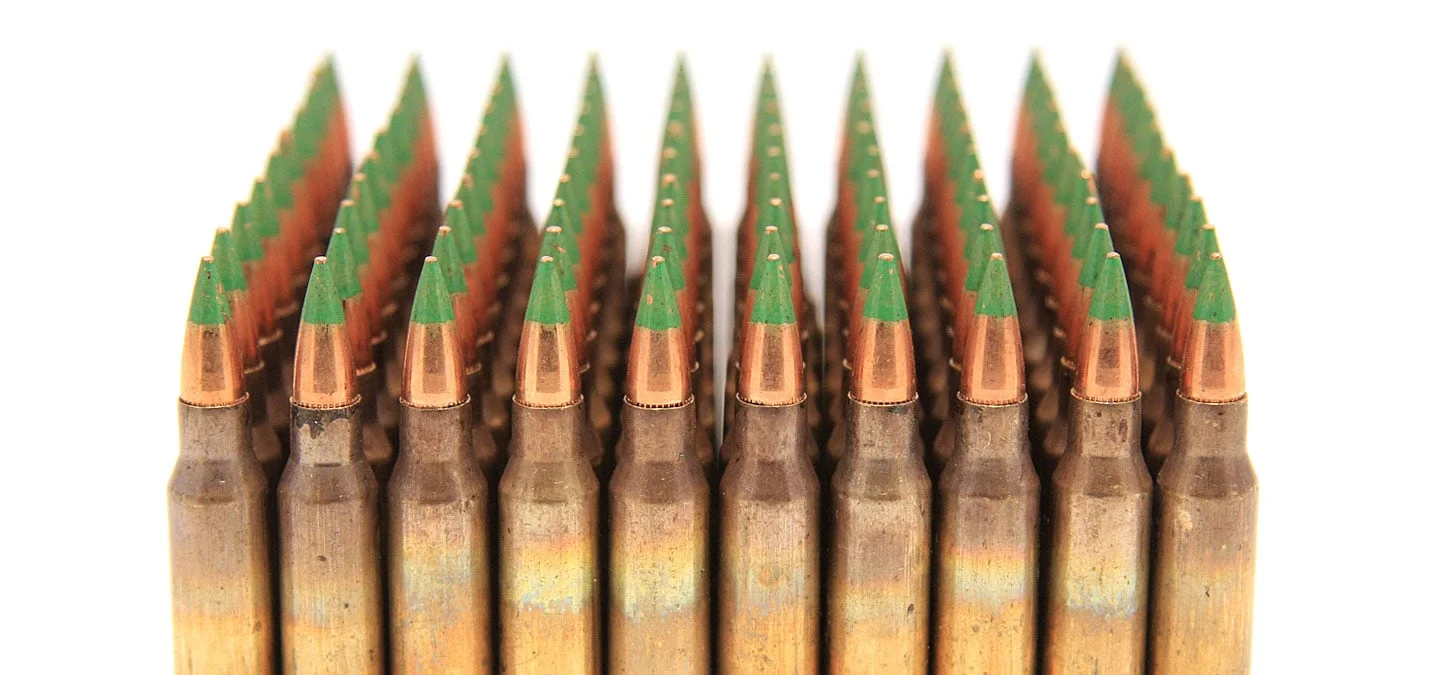
The difference between M855 and M855A1 comes down to the core and the pressure. M855 uses a lead core with a small steel penetrator hidden under the jacket and a green-painted tip. M855A1 deletes the lead entirely, enlarges the steel penetrator, exposes it at the tip, and loads the cartridge hotter: one published pressure-trace test measured M855A1 at 61,830 PSI against 51,522 PSI for M855. That extra pressure buys velocity, around 3,000 fps from the M4's 14.5-inch barrel, which a 20-inch-barrel load like M855 needed the longer tube to reach.
The two rounds also do not shoot to the same point of aim. The same test series recorded roughly a 1.5-inch shift between M855 and M855A1 groups at 100 yards, enough to matter if a rifle is zeroed with one and fed the other. If you are picking a training load for an AR, our 5.56 ammo selection guide covers how green tip, M193, and match loads slot into a practice rotation, and our M193 vs M855 vs M855A1 comparison puts all three side by side on velocity, twist, and barrier data.
What Does M855A1 Penetrate?
M855A1 penetrates 3/8-inch mild steel at distances approaching 400 meters, per Army testing, and it has defeated Level III steel plates in close-range testing, though results vary by plate model and construction. One published side-by-side test at 25 yards put the gap in plain terms: against half-inch armor plate, M193 left a dent, M855 barely broke the surface, M855A1 buried itself roughly halfway through, and only dedicated M995 tungsten AP passed clean through. Certified NIJ Level IV ceramic plates stop M855A1; they are rated against .30-06 M2 AP, a much harder threat.
Against intermediate barriers, concrete block, cinder block, car doors, and windshields, the exposed hardened penetrator holds together where M855's jacketed lead core deforms and deflects. That barrier performance is the round's actual job description. It is not a precision load; the steel-tipped projectile trades match accuracy for consistent terminal effect, the same trade every SS109-pattern load makes.
M855A1 Price: Can You Actually Buy It?
You can own M855A1, but you cannot buy it new. Current production runs at Lake City Army Ammunition Plant in Independence, Missouri under military contract, and no manufacturer loads it for the commercial market. Every round on the civilian market is military surplus or pulled-down stock sold through secondary-market retailers, typically at $2-3 per round as of mid-2026. One secondary-market retailer recently sold 10-round stripper clips of surplus M855A1 for $20, and bulk lots surface occasionally at similar per-round money. For comparison, commercial M855 green tip runs roughly $0.60-0.70 per round, so the real round carries a 3-5x collector premium.
Treat sellers accordingly. Loose surplus rounds have no manufacturer warranty, no lot traceability, and no guarantee they were stored properly. A 10-pack as a curiosity is one thing; stockpiling $2.50-per-round ammunition of unknown provenance for serious use makes no sense when purpose-built commercial loads outperform it on the jobs civilians actually have.
Stay Updated on 5.56 Ammo
Price movements on bulk 5.56, new factory loads worth testing, and ammo deals from retailers we track.
Where to Buy It, and What to Buy Instead
If you want the green-tip experience without the collector premium, buy commercial SS109-spec ammunition. PMC's X-TAC 62gr LAP ($11.09 per 20) loads the same steel-penetrator-over-lead-core construction as M855 on fresh reloadable brass, made by Poongsan, the same factory that supplies the South Korean military. Winchester loads Lake City M855 for the commercial market at roughly $0.63-0.70 per round in 150 to 1,000-round packs. Either delivers the 62-grain NATO trajectory for zeroing and drills at a quarter of surplus M855A1 money.
Running a barrel shorter than 16 inches changes the math: 62-grain penetrator loads lose their velocity floor fast, and our short-barrel 5.56 ammo guide ranks the loads that stay effective from 10.5-14.5-inch guns. And if the mission is home defense, skip the penetrator class entirely; over-penetration through interior walls is the exact property you paid for.
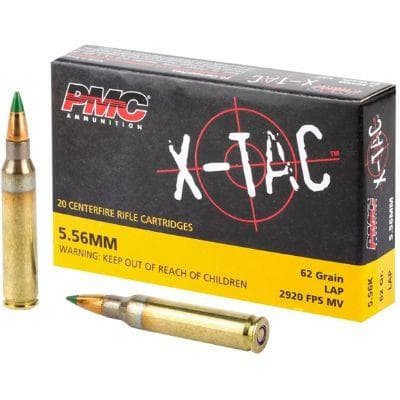
PMC X-TAC 5.56 NATO 62gr LAP (Green Tip)
Commercial M855/SS109-spec green tip on reloadable brass for training where range rules allow steel core
PMC's M855-equivalent green tip at a competitive price. Brass-cased, reloadable, consistent quality from a proven manufacturer.
- +Current commercial SKU is easier to track than mixed-source surplus
- +Fresh reloadable brass cases vs crimped primer surplus
- +Consistent lot-to-lot quality from a single manufacturer
- −Steel core prohibited at many indoor ranges
- −Less accurate than M193 or match ammunition beyond 200 yards
- −Over-penetration risk makes it unsuitable for home defense
5.56 Training Ammo Picks
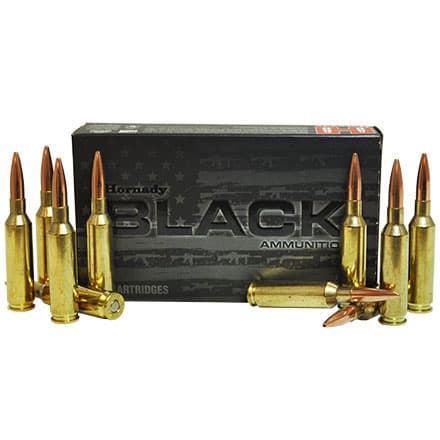
Hornady BLACK 5.56 NATO 62gr FMJ
- 62 grain FMJ
- 5.56 NATO
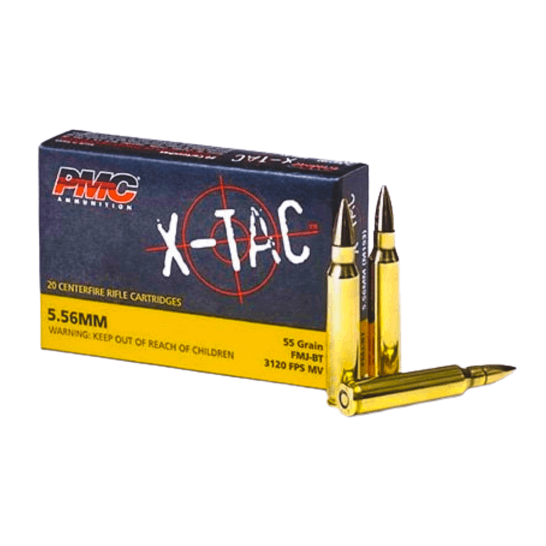
PMC X-TAC 5.56 NATO 55gr FMJ
- 55 grain FMJ-BT
- 5.56 NATO
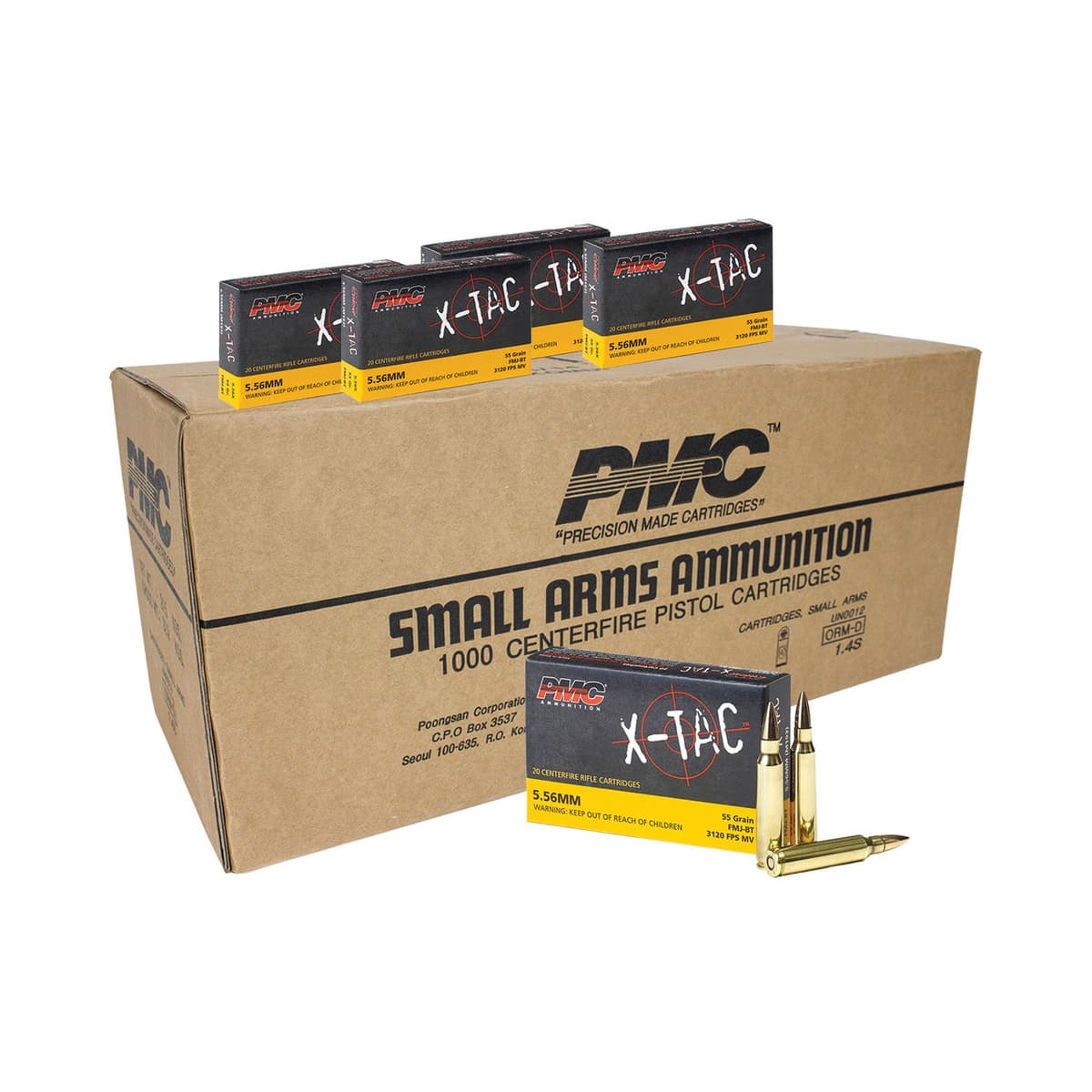
PMC X-TAC 5.56 NATO 55gr FMJ XM193 (1,000 Rounds)
- 55 grain FMJ-BT
- 5.56 NATO (XM193)
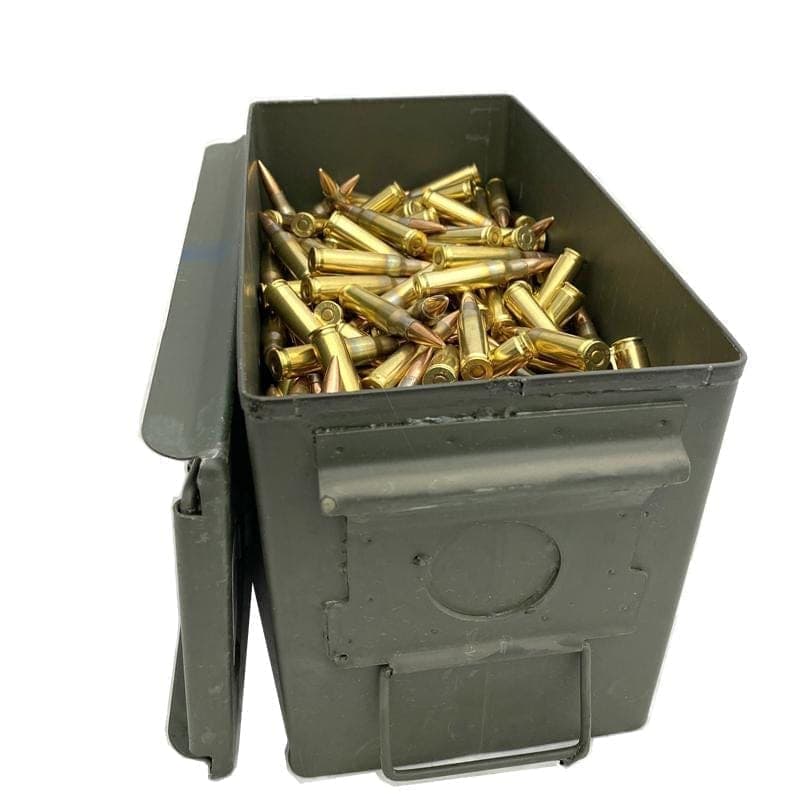
Hornady Frontier FR390 150gr FMJ 7.62x51 NATO
- 150 grain FMJ
- 7.62x51 NATO
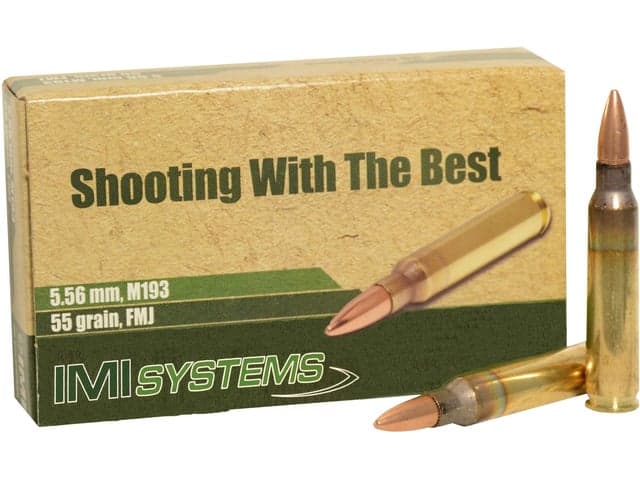
IMI 5.56 NATO M193 55gr FMJ
- 55 grain FMJ
- 5.56 NATO
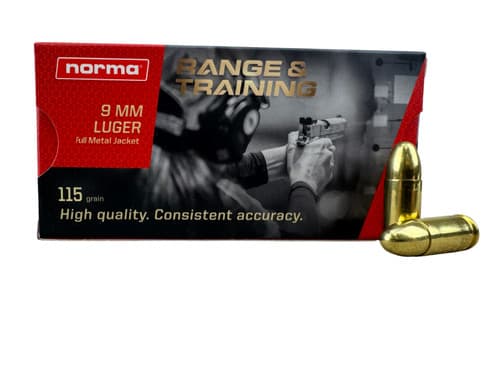
Norma Range & Training 9mm 115gr FMJ
- 115 grain FMJ
- 9mm Luger
Affiliate links (?)
Should You Shoot M855A1 in Your AR?
Occasionally, in a modern rifle in good condition, fine. As a steady diet, no. M855A1 runs roughly 10,000 PSI over M855, and Army reporting and independent testing document the cost in accelerated bolt and barrel wear; one published evaluation reported bolt failures inside 3,000 rounds, barrel life cut by as much as half, and a faster cyclic rate that beats up the whole gas system. The Army even fielded the Enhanced Performance Magazine, the tan follower PMAG-era redesign, partly because the exposed steel tip chewed feed ramps in older aluminum magazines.
Layer on the practical problems: it shoots to a different zero than M855, most indoor ranges ban magnet-attracting ammunition outright, and steel-penetrator rounds destroy AR500 targets and spark on rock. If you are speccing a barrel and bolt for a build, the rifle builder lets you compare barrel and BCG options that hold up to hot NATO pressure loads; a quality 1:7 or 1:8 twist barrel stabilizes the long 62-grain projectile without issue. Our AR-15 caliber guide covers how 5.56 pressure specs compare across chamberings if you are deciding what to build next.
Is M855A1 Legal to Own?
Federal law does not prohibit owning, buying, or shooting M855A1, and secondary-market retailers sell it openly. No published ATF determination classifies M855A1 as armor piercing, and the Army itself describes the EPR as not an armor-piercing round. The federal armor-piercing definition in 18 U.S.C. 921(a)(17)(B) hinges on a projectile core constructed entirely from listed materials such as steel, iron, brass, bronze, tungsten alloys, or depleted uranium; the M855A1 core pairs its steel penetrator with a solid copper slug, and copper is not on that list. Standard M855, for its part, has carried an explicit ATF sporting-purposes exemption since the 1980s, and the 2015 attempt to revoke that exemption was abandoned after public comment.
State law is a separate question, and a handful of states restrict ammunition by construction or sales channel, so check your own statutes before ordering. The more common practical restriction is the range, not the state: most indoor ranges run a magnet test and turn away anything with a steel core or penetrator, which covers M855A1, M855, and every SS109-pattern clone equally.