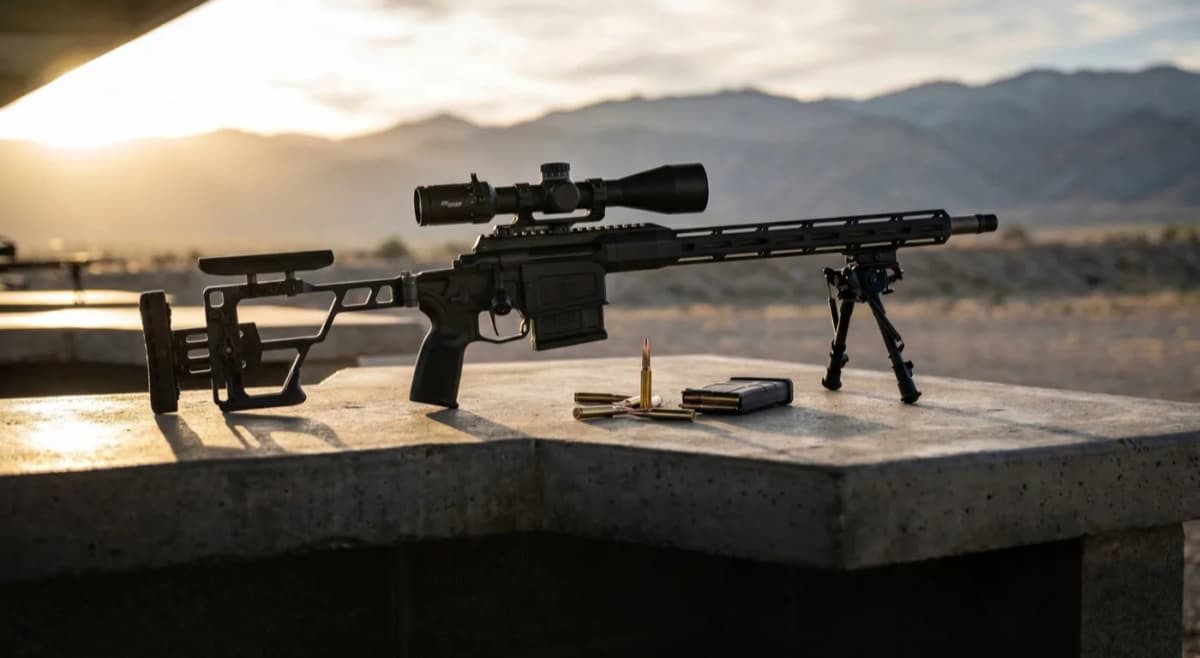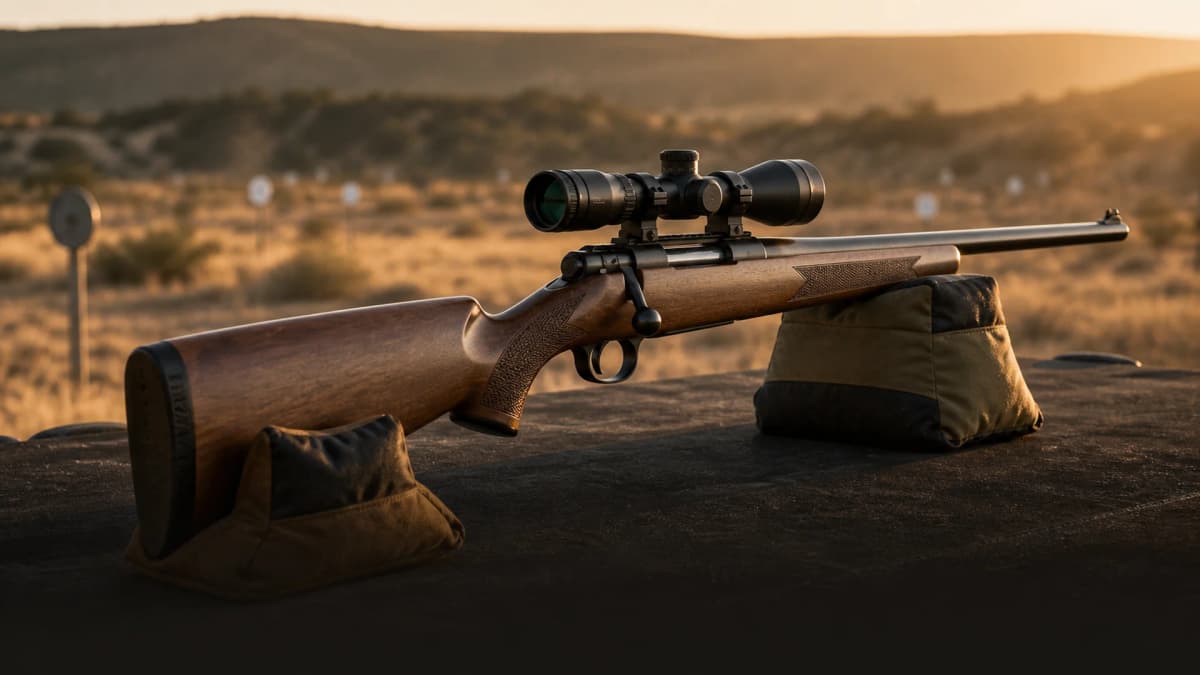
Best .22 Rifle Scopes 2026: Rimfire Picks for Hunting & NRL22 header image
Gear
August 23, 2026
Best .22 Rifle Scopes 2026: Rimfire Picks for Hunting & NRL22

Seven verified .22 rifle scopes ranked for small-game hunting, plinking, rimfire target work, and NRL22 competition.

IntermediateOpticsBuying guide

Best .22 Rifle Scopes 2026: Rimfire Picks for Hunting & NRL22

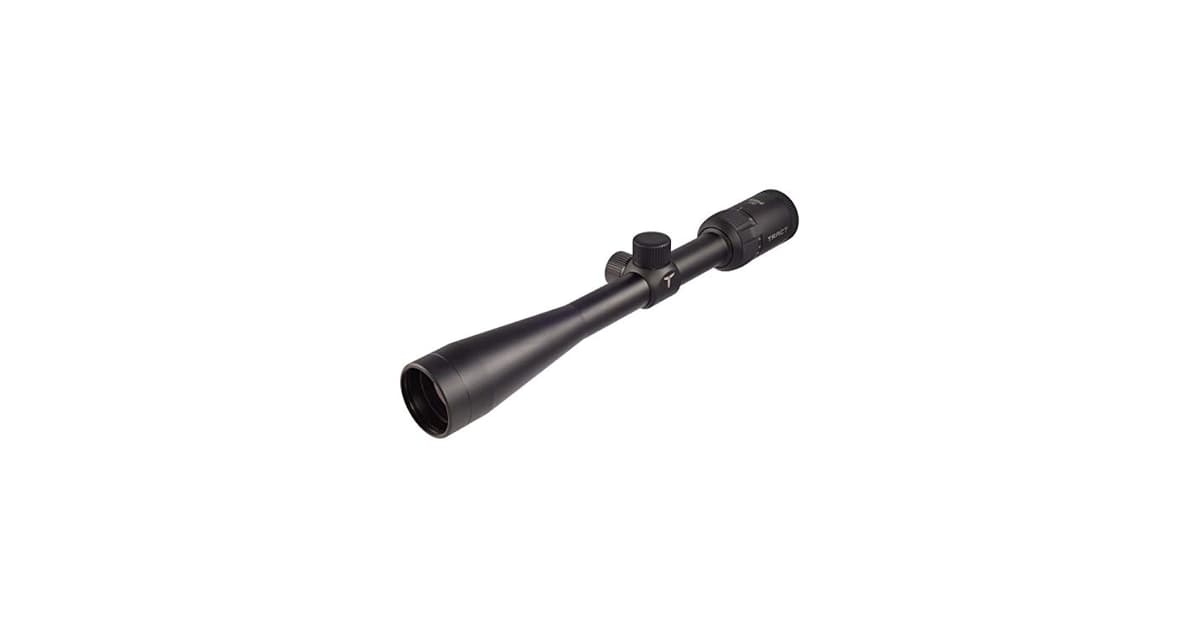
The best .22 rifle scope for most shooters is the TRACT Optics 22 FIRE 4-12x40 AO. Its close adjustable focus, fine center dot, and 16-ounce build bridge hunting and target use better than the other six scopes here. Buy the Vortex Optics Diamondback 2-7x35 Rimfire for a compact small-game rifle. Buy the Bushnell Match Pro ED 5-30x56 when NRL22 features matter more than weight. If you still need the rifle under the glass, start with our .22 LR rifle guide.

By AB|Last reviewed August 2026

Key Takeaways

  • Fixed focus is enough when distance stays stable: choose a 50- or 60-yard model for hunting and plinking near that range. Adjustable close focus matters when targets move from about 10 yards to 100-plus yards.
  • Keep a field rifle light: the Leupold, Burris, and Vortex picks weigh 12.2 to 13.7 ounces. The TRACT weighs 16 ounces, while the match-focused Bushnell reaches 32 ounces.
  • Buy match features for match work: a first-focal-plane grid, close side focus, locking turrets, and a zero stop can justify the Bushnell's weight on an NRL22 rifle, not on a walking rifle.
  • Match both ring interfaces: six picks use 1-inch tubes, while the Bushnell uses 34mm. The clamp must also match the rifle's dovetail, Weaver base, or Picatinny rail.
  • Verify every hold: test ballistic marks with your rifle, ammunition, sight height, and zero. On a variable second-focal-plane scope, confirm the power at which the marks are calibrated.

How We Ranked Rimfire Scopes

We ranked close-focus and parallax behavior first. A .22 LR spends much of its life on small targets at short distance, where a scope set for a distant centerfire target can leave the image soft and make precise head position more important. A fixed 50- or 60-yard setting is useful for common hunting and zero distances. An adjustable objective or side-focus control is better when the same rifle must shoot much closer and farther.

Magnification came next, but more power did not always score higher. We looked at the usable low end and field of view for moving through woods, the top end for seeing small aim points, and the weight that range adds to a light rifle. Reticle utility, repeatable controls, tube diameter, and ring requirements then separated scopes aimed at similar jobs.

The final list contains seven exact configurations. That distinction matters most with the Burris Droptine: the 200019 rimfire version is set at 50 yards. The similar 200017 scope is set at 100 yards. Check the model number before mounting.

Best .22 Rifle Scopes 2026, Ranked

These picks split by job: one all-around scope, three field scopes, one NRL22 optic, one fixed-power hold system, and one stripped-down budget model.

1

TRACT 22 FIRE 4-12x40 AO Extended Focus Range T-Plex Dot

Best overall .22 rifle scope

$344
Buy Direct from TRACT Optics
  • +Adjustable objective covers close rimfire targets through infinity
  • +T-Plex Dot uses a fine crosshair and a 0.25-inch center dot at 50 yards on 12x
  • +Four-to-twelve-power range spans field positions and small rimfire targets
  • Objective-mounted focus control requires reaching forward instead of using a side knob
  • Reticle is not illuminated
  • Rings are not included
Magnification: 4-12x40Parallax: Adjustable, about 10 yards to infinityReticle: SFP T-Plex DotTube: 1 inch
2

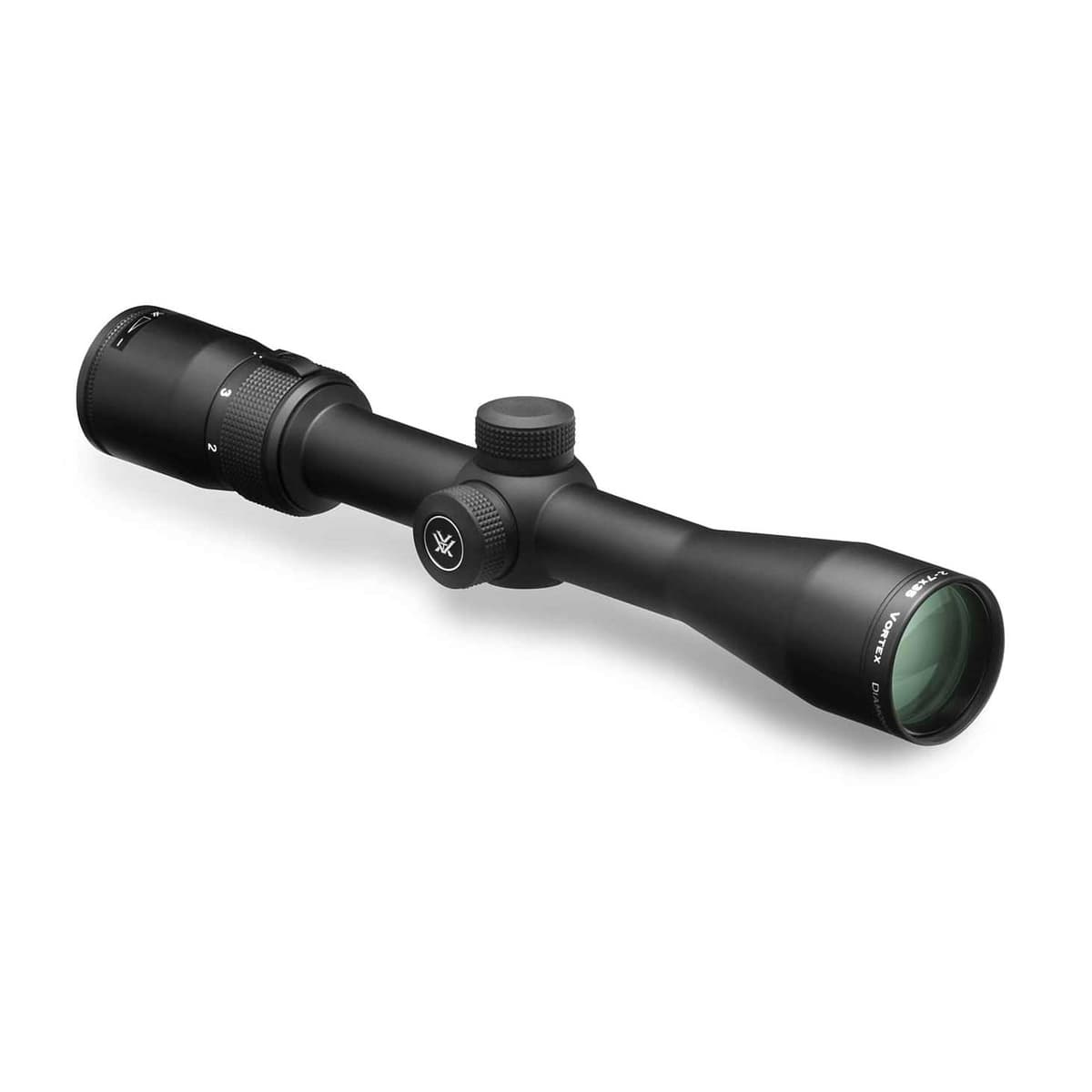
Vortex Diamondback 2-7x35 Rimfire

Best for small-game hunting

$239
View at OpticsPlanet
  • +Two-power low end and 64.3-foot field of view at 100 yards suit close woods
  • +Fixed 50-yard parallax matches common rimfire hunting and zero distances
  • +Thirteen-point-seven-ounce, 11.6-inch body is compact for a field rifle
  • Fixed 50-yard parallax cannot be corrected for very close or distant targets
  • Three-point-one-inch eye relief is shorter than the Leupold in this ranking
  • Simple V-Plex reticle has no ranging or holdover grid
Magnification: 2-7x35Parallax: Fixed at 50 yardsReticle: V-Plex MOATube: 1 inch
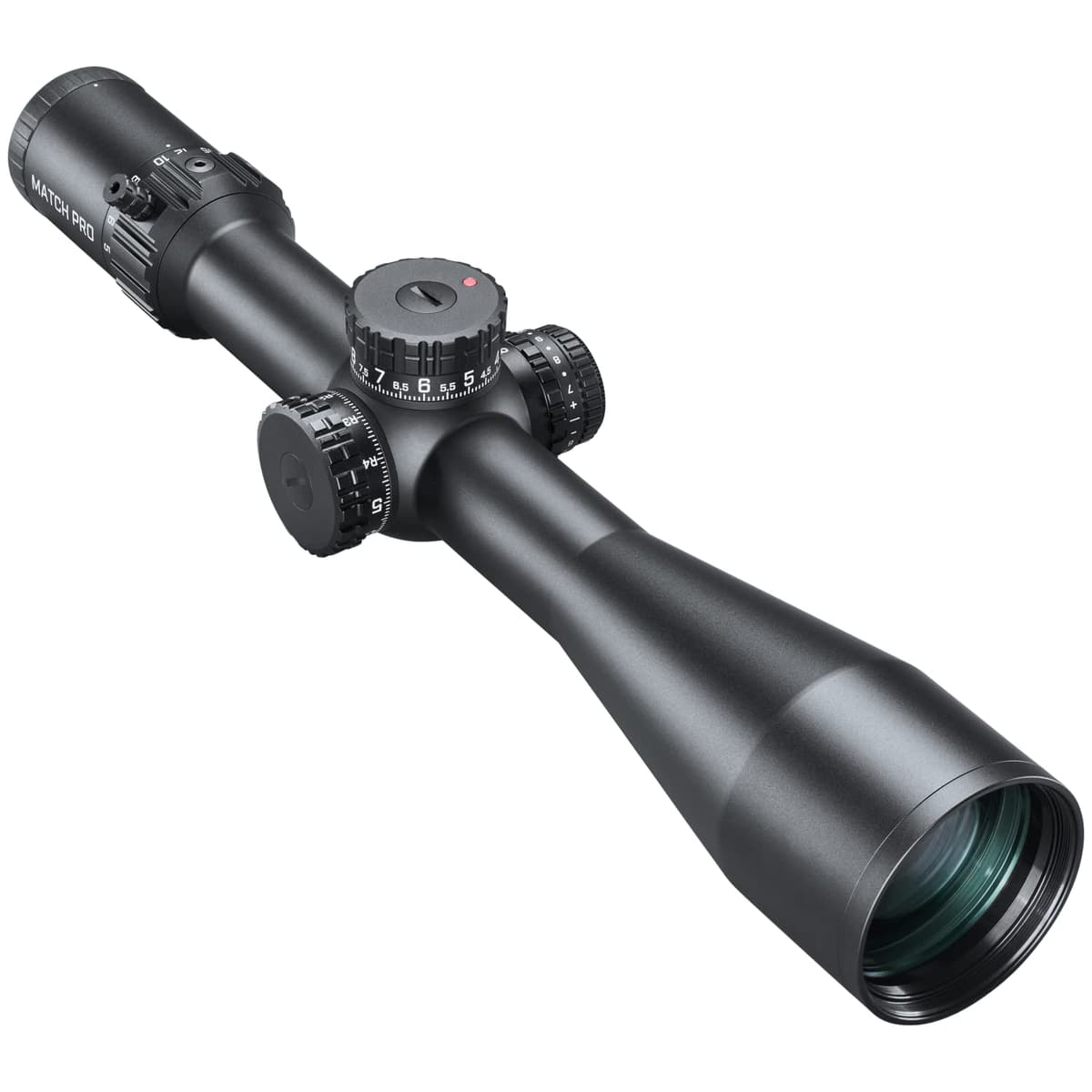
Bushnell Match Pro ED 5-30x56 FFP
3

Bushnell Match Pro ED 5-30x56 FFP

Best for NRL22 and rimfire precision

$899.95
View at OpticsPlanet
  • +Side focus reaches 15 yards for close rimfire stages
  • +First-focal-plane DM2 MOA grid supports holds at every magnification
  • +Locking turrets, Easy Set zero stop, and 100 MOA total elevation support match dialing
  • Thirty-two-ounce weight is the heaviest in this ranking
  • Thirty-four-millimeter tube requires larger rings than the six one-inch scopes
  • Five-power low end is less suited to close woods than a 2x or 3x low end
Magnification: 5-30x56Parallax: Side focus, 15 yards to infinityReticle: Illuminated FFP DM2 MOATube: 34mm
4

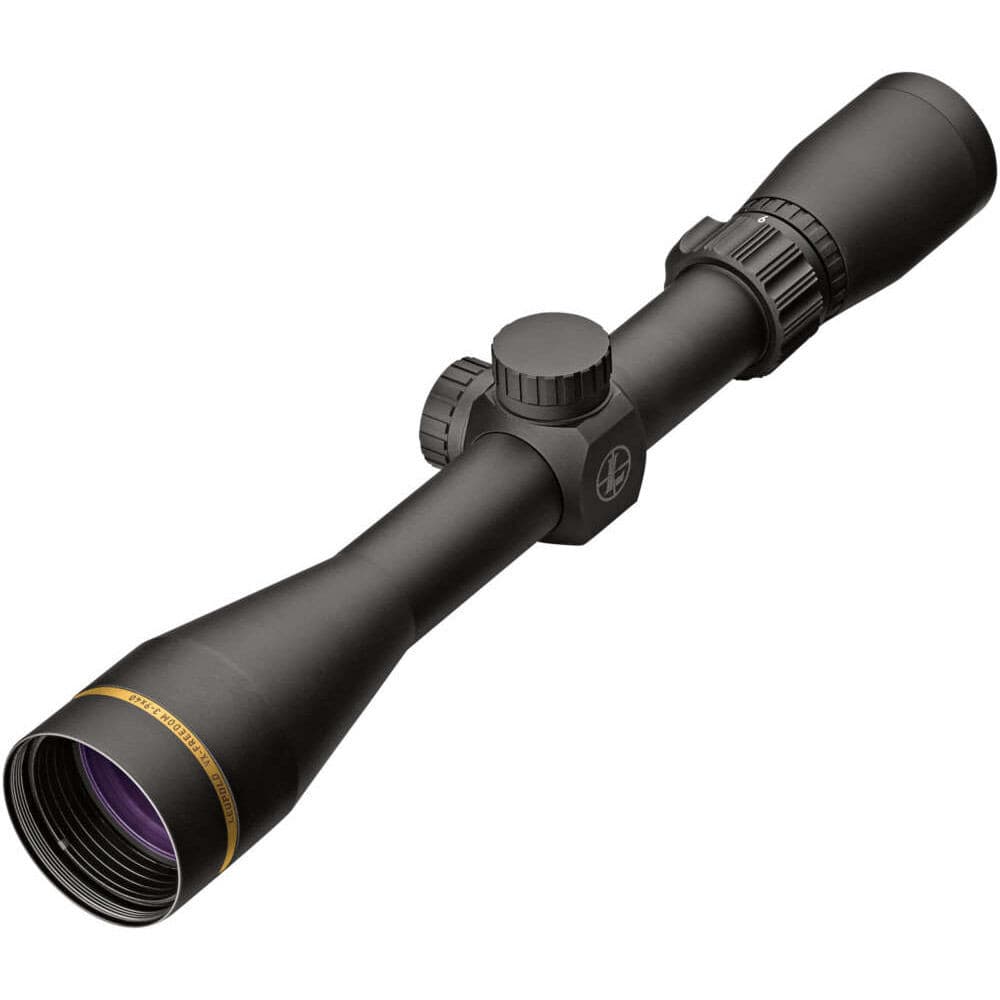
Leupold VX-Freedom 3-9x40 Rimfire MOA

Best lightweight premium hunting scope

$399
View at OpticsPlanet
  • +Twelve-point-two-ounce weight keeps a light rimfire rifle balanced
  • +Fixed 60-yard focus is purpose-set for rimfire distances
  • +Rimfire MOA reticle provides one-MOA hashes across 25 MOA of measurement
  • No adjustable objective or side focus
  • Reticle is not illuminated
  • Fixed 60-yard parallax is less adaptable than a close-focus adjustable system
Magnification: 3-9x40Parallax: Fixed at 60 yardsReticle: SFP Rimfire MOATube: 1 inch
5

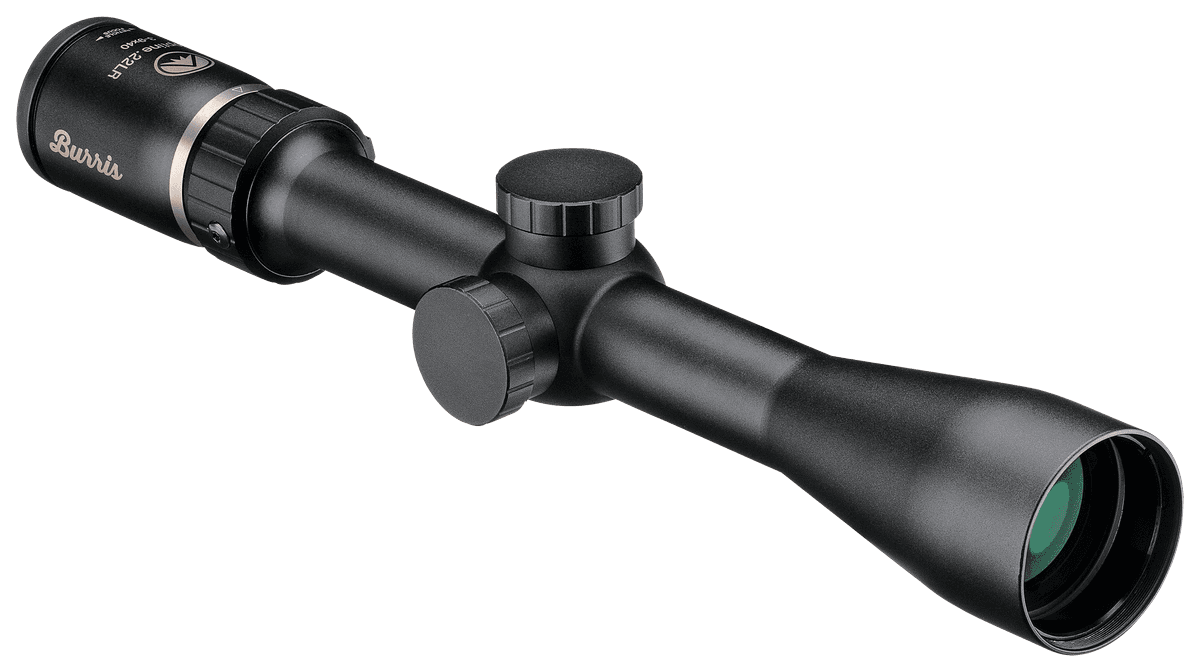
Burris Droptine 3-9x40 Rimfire

Best-value 3-9x rimfire scope

$139
View at OpticsPlanet
  • +Exact 200019 variant is factory-set at 50 yards rather than the 100-yard centerfire sibling
  • +Ballistic Plex reticle adds trajectory reference marks without a dense grid
  • +Thirteen-ounce, one-inch-tube build fits a light hunting rifle
  • No adjustable objective or side focus
  • Reticle is not illuminated
  • Eye relief tightens to 3.1 inches at the high end
Magnification: 3-9x40Parallax: Fixed at 50 yardsReticle: SFP Ballistic PlexTube: 1 inch
6

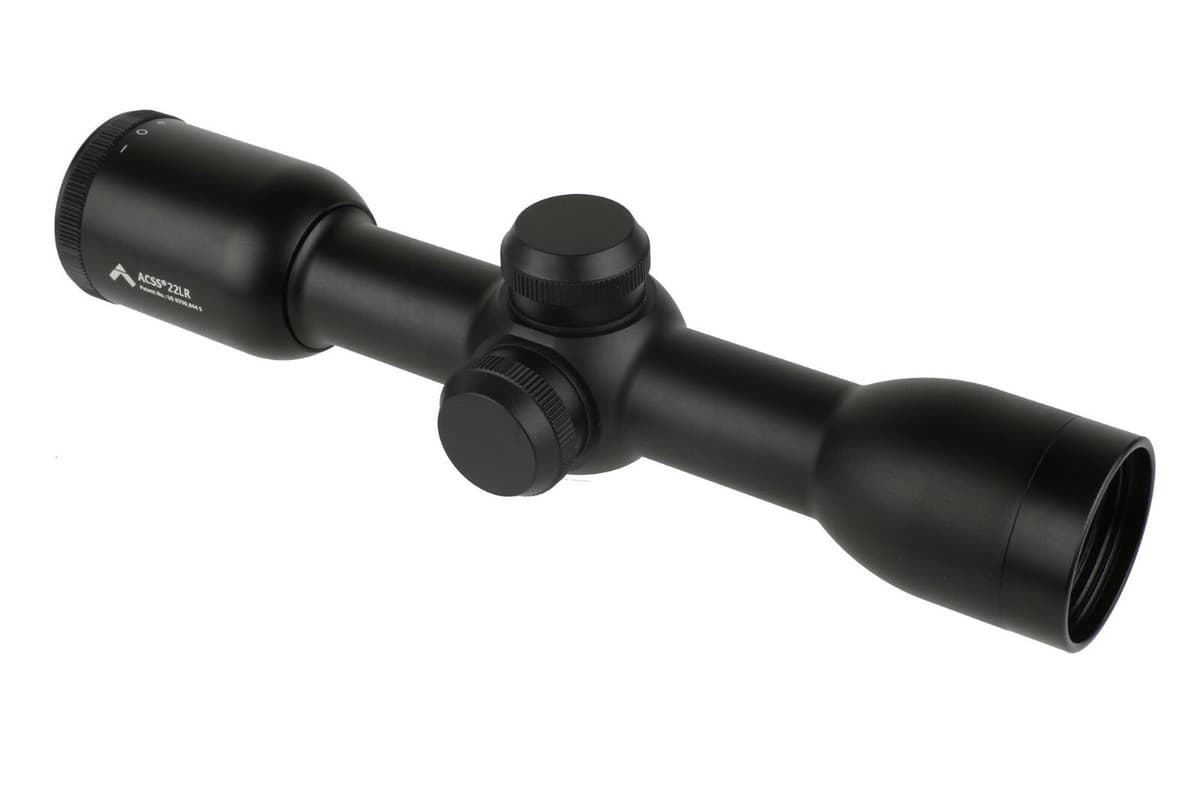
Primary Arms Classic Series 6x32 ACSS-22LR

Best fixed-power rimfire BDC

$153
View at OpticsPlanet
  • +ACSS-22LR combines range estimation, bullet-drop references, and wind holds
  • +Eleven-point-seven-ounce, 9.05-inch body keeps the fixed-power optic compact
  • +Fixed 6x removes magnification-setting ambiguity from the second-focal-plane reticle
  • Fixed 6x provides no low-power setting for close woods
  • Reticle is not illuminated
  • Manufacturer does not publish a parallax distance on the current product page
Magnification: Fixed 6x32Parallax: Not publishedReticle: SFP ACSS-22LRTube: 1 inch
7

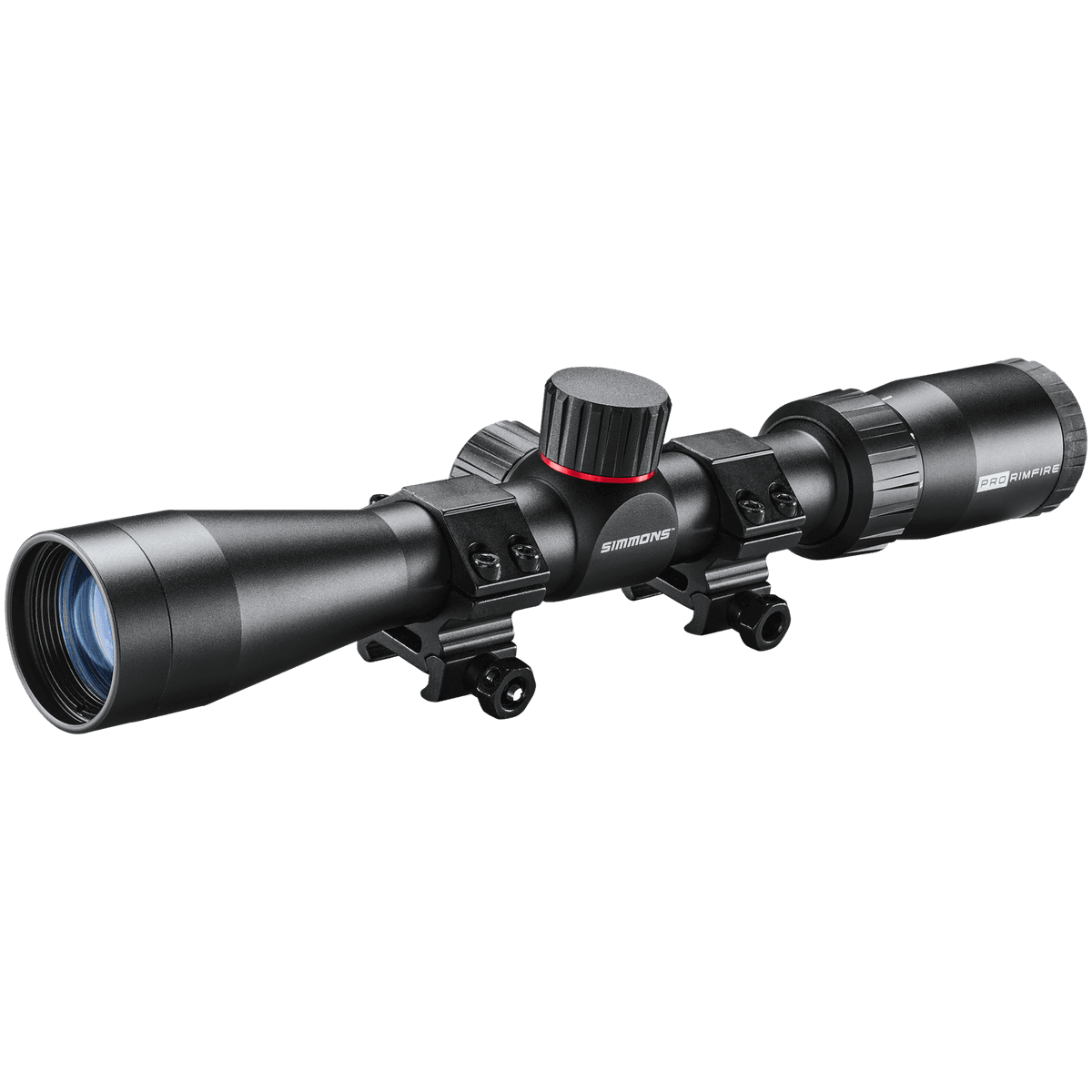
Simmons Pro Rimfire 3-9x32

Best budget rimfire scope

$89
Shop at Classic Firearms
  • +Fixed 50-yard rimfire parallax matches common plinking and zero distances
  • +One-inch aluminum tube is IPX7 waterproof and fogproof
  • +Weaver-style one-inch rings and lens covers are included
  • Fixed 50-yard parallax cannot be corrected at other distances
  • Fully coated lenses are a simpler coating system than the fully multi-coated alternatives here
  • Thirty-two-millimeter objective is the smallest variable-power objective in this ranking
Magnification: 3-9x32Parallax: Fixed at 50 yardsReticle: Second focal planeTube: 1 inch

Confirm the exact model, tube diameter, reticle, and ring-to-base interface before mounting.

Affiliate links - purchases support this site at no extra cost to you. (?)

Magnification and Parallax for .22 LR

For small-game hunting and informal plinking, 2-7x and 3-9x are the practical ranges. The Vortex Diamondback opens at 2x and shows 64.3 feet at 100 yards on that setting, which helps when the target appears close or moves through cover. The Leupold VX-Freedom, Burris Droptine, and Simmons Pro Rimfire start at 3x and add a 9x top end without turning a light .22 into a bench rifle.

The TRACT 22 FIRE's 4-12x range is the middle ground. Twelve power gives a finer view of small paper targets, while 4x remains usable from field positions. Its adjustable objective is the reason it wins overall. It focuses from about 10 yards to infinity.

The Bushnell Match Pro ED is a different tool. Its 5-30x range, 56mm objective, and 32-ounce body belong on a precision-oriented rifle. The key number is not 30x; it is the 15-yard side-focus minimum. That control lets a match shooter sharpen the target and reduce parallax error on close stages, then refocus as distance changes.

Parallax error shows up when the reticle seems to move across the target as your eye shifts behind the scope. A fixed-parallax model reduces that effect near its set distance, but it cannot be tuned elsewhere. If your shooting stays around 50 or 60 yards, fixed focus is simple and light. If the course or range changes distance often, adjustable focus is worth more than another few points of top-end magnification.

Pick the Scope for the Job

For a walking small-game rifle, choose the Vortex Diamondback. Its 2x low end, wide field of view, 13.7-ounce weight, and fixed 50-yard parallax all serve close field shooting. The Leupold VX-Freedom is the lighter premium alternative at 12.2 ounces. It adds a Rimfire MOA reticle with one-MOA hash marks across 25 MOA, but its fixed 60-yard focus gives up the TRACT's distance tuning.

For a conventional 3-9x, the Burris Droptine is the value pick. Its Ballistic Plex provides trajectory references without a dense grid, and the exact rimfire model is set at 50 yards. The Simmons Pro Rimfire is the stripped-down budget pick and includes Weaver-style 1-inch rings and lens covers. It uses fully coated lenses and a 32mm objective; the Burris adds Hi-Lume multicoating and a 40mm objective while staying at 13 ounces.

The Primary Arms Classic 6x32 is for a shooter who wants one magnification and a dedicated hold system. Its ACSS-22LR reticle combines range estimation, bullet-drop references, and wind holds. Fixed 6x also removes the magnification-setting question that comes with a second-focal-plane reticle. The trade is direct: you lose a low setting for close woods, and Primary Arms does not publish a parallax distance for this model.

For NRL22 and precision training, choose the Bushnell. The first-focal-plane DM2 MOA grid keeps its angular references useful across the zoom range, while locking turrets, a zero stop, and 100 MOA of total elevation support dialing. It is the least sensible hunting scope here because its 5x low end and 32-ounce weight solve a match problem, not a carry problem. For a broader look at the rifle side of that setup, see the semi-auto .22 upgrade guide.

Choose a Reticle You Will Actually Use

A plain aiming point is enough when you zero once and keep shots close. That is the appeal of the Vortex V-Plex: the view stays clean, though it offers no ranging or holdover grid. The TRACT T-Plex Dot is also simple but much finer at center, with a 0.25-inch dot at 50 yards on 12x for a precise aim point on small targets.

The Leupold Rimfire MOA and Burris Ballistic Plex add references without becoming match grids. The Primary Arms ACSS-22LR goes farther by combining range, drop, and wind information in one reticle. Those three are second focal plane, so the marks represent their intended values only at the magnification specified for the design; the fixed 6x Primary Arms avoids that variable by never changing power.

The Bushnell DM2 MOA is the match answer. It sits in the first focal plane, so the grid grows and shrinks with the target image and its angular holds remain consistent through the zoom range. It is also the only illuminated reticle in this ranking. That detail is useful when the grid needs contrast, but it does not make the scope smaller, lighter, or better for a simple hunting zero.

Match the Scope Tube to the Rifle Base

Scope-ring fit has two separate measurements. The upper ring must match the tube, and the lower clamp must match the base. Six scopes here use a 1-inch tube. The Bushnell Match Pro ED uses a 34mm tube, so a spare set of 1-inch rings will not work even if the lower clamp fits the rifle.

The receiver side is less uniform than the scope side. Rimfire rifles may have a 3/8-inch or 11mm dovetail cut into the receiver, a Weaver base, or a Picatinny rail. These interfaces can look close in a product photo but are not one universal standard. Identify the actual base on your rifle, then buy the ring clamp that names that interface. Our scope-ring guide covers ring diameter, height, and mounting choices in more detail.

Ring height should leave the objective clear of the barrel and base while keeping the scope low enough for a repeatable cheek weld. The 56mm Bushnell objective will usually need more clearance than the 32mm and 35mm field scopes. Measure the rifle and selected base instead of choosing height from the objective number alone.

Rimfire Scope Spec Comparison

Sort by power, weight, tube diameter, or price. The table makes the main split clear: six light 1-inch scopes and one heavier 34mm match optic. Open the optics catalog to compare these scopes with other optics.

  • Simmons Pro Rimfire 3-9x32
    Magnification3-9x32
    Parallax / FocusFixed at 50 yards
    Weight -
    Price$89.95
  • Burris Droptine 3-9x40 Rimfire
    Magnification3-9x40
    Parallax / FocusFixed at 50 yards
    Weight13 oz
    Price$139.99
  • Primary Arms Classic Series 6x32 ACSS-22LR
    MagnificationFixed 6x32
    Parallax / FocusNot published
    Weight11.7 oz
    Price$153.99
  • Vortex Diamondback 2-7x35 Rimfire
    Magnification2-7x35
    Parallax / FocusFixed at 50 yards
    Weight13.7 oz
    Price$239
  • TRACT 22 FIRE 4-12x40 AO Extended Focus Range T-Plex Dot
    Magnification4-12x40
    Parallax / FocusAdjustable, about 10 yards to infinity
    Weight16 oz
    Price$344
  • Leupold VX-Freedom 3-9x40 Rimfire MOA
    Magnification3-9x40
    Parallax / FocusFixed at 60 yards
    Weight12.2 oz
    Price$399.99
  • Bushnell Match Pro ED 5-30x56 FFP
    Bushnell Match Pro ED 5-30x56 FFP
    Magnification5-30x56
    Parallax / FocusSide focus, 15 yards to infinity
    Weight32 oz
    Price$899.95

Affiliate links - purchases support this site at no extra cost to you. (?)

Mount and Zero the Scope as a System

Start with the rifle base, ring clamp, and tube diameter. Set the scope far enough forward or rearward to get a full image in your normal shooting position, then confirm the objective clears the barrel and the bolt handle clears the eyepiece. Level the reticle, torque the base and ring screws to the hardware maker's values, and leave an even gap across split ring caps where the design calls for one.

Zero near the distance you shoot most, then confirm impact at the closer and farther distances that matter to you. A reticle with drop marks is only useful after you verify those marks with your rifle, ammunition, sight height, and conditions. The optic mounting guide walks through that setup, and our rimfire LPVO alternative explains when a 1-6x layout makes more sense than a traditional rimfire scope.

Stay Updated on Rimfire Optics

New scope rankings, rimfire setup guides, and verified gear comparisons as they publish. No spam, unsubscribe anytime.

Free targets, drill cards, and weekly reviews by email.

Frequently Asked Questions

What is the best .22 rifle scope overall?
TRACT Optics makes our best .22 rifle scope overall: the 22 FIRE 4-12x40 AO. Its adjustable objective, fine T-Plex Dot, 4-12x range, and 16-ounce weight cover the widest mix of rimfire uses. Choose the Vortex Optics Diamondback 2-7x35 Rimfire for a lighter small-game rifle, or the Bushnell Match Pro ED 5-30x56 for NRL22 and precision stages.
What is the best magnification for a rimfire scope?
A 2-7x or 3-9x rimfire scope is the best fit for plinking and small-game hunting. Move to 4-12x when small targets and bench work matter more. For NRL22, a higher-power scope such as the Bushnell Match Pro ED 5-30x56 adds a detailed first-focal-plane grid and 15-yard side focus, but it also weighs 32 ounces and starts at 5x.
What makes a scope rimfire-specific?
Focus distance and reticle design make a scope useful on a rimfire. The Vortex Diamondback, Burris Droptine, and Simmons Pro Rimfire are fixed at 50 yards; the Leupold VX-Freedom Rimfire is fixed at 60 yards; and the TRACT 22 FIRE adjusts from about 10 yards to infinity. A centerfire-rated scope can still work if it focuses at the distances you shoot.
Do I need adjustable parallax on a .22 LR scope?
You do not need adjustable parallax when most shooting stays near a scope's fixed 50- or 60-yard setting. It becomes useful when targets move from very close range to 100 yards and beyond. The TRACT 22 FIRE uses an adjustable objective for that range, while the Bushnell Match Pro ED uses side focus down to 15 yards for rimfire match stages.
What scope rings fit a rimfire rifle?
Match both sides of the ring. The ring diameter must match the scope tube, and the clamp must match the rifle base. Six scopes in this ranking use a 1-inch tube; the Bushnell Match Pro ED needs 34mm rings. Rimfire rifles may have a 3/8-inch dovetail, an 11mm dovetail, a Weaver base, or a Picatinny rail, so no one ring set fits every .22 rifle.

The Verdict

Buy the $344 TRACT Optics 22 FIRE 4-12x40 AO if one scope must cover hunting, paper, and varied rimfire distances.

The TRACT wins because adjustable close focus changes what the scope can do, while 4-12x and 16 ounces avoid the weight of a full match optic. Choose the Vortex Diamondback for the lighter 2-7x hunting path. Choose the Bushnell Match Pro ED when a first-focal-plane grid, 15-yard side focus, locking turrets, and a zero stop justify a 32-ounce scope. For a conventional 3-9x with a 50-yard setting, choose the Burris Droptine.

Related guides

Continue exploring with these related resources

View all guides →