Key Takeaways
- →Good camera, easy recommendation: From $600, the S28-TSC Max FFDR recorded clean through-the-scope footage on a Vector Optics Continental 2-12x44 and never lost position under recoil.
- →The screen earns its place: A built-in touchscreen on the camera lets you focus and frame at the rifle instead of on your phone.
- →Phone live view, no cloud: The app streams the sight picture over the camera's own local Wi-Fi, connected reliably, and pulled files off the camera without trouble.
- →Fiddly mount, solid once set: The eyepiece clamp uses two screws, which spreads the clamping load. We never ran the 18650 battery flat; ScopeMate rates it at up to 13 hours.
- →Built for distance, not speed: At 280 g on the eyepiece it suits bench, bipod, and hunting positions, and is too bulky for an action-style run-and-gun match.
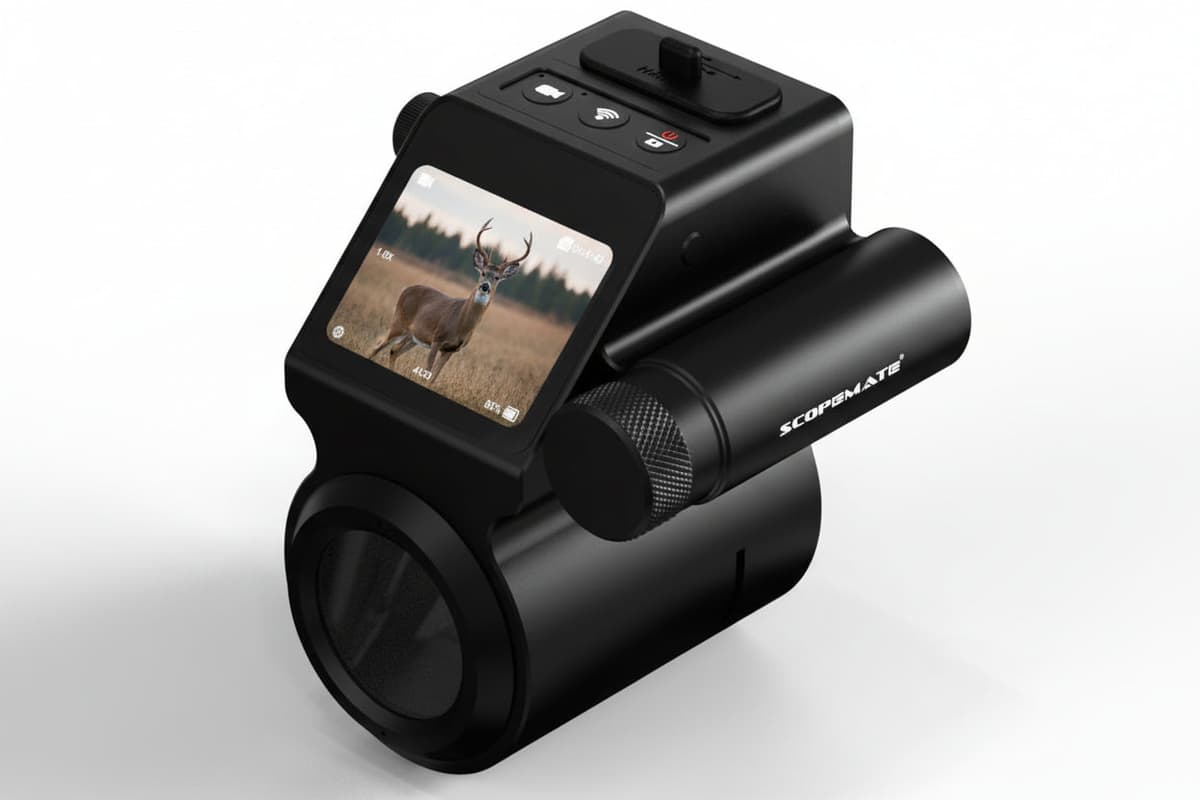
ScopeMate S28-TSC Max
Long-range shooters and hunters who want touchscreen setup, phone live view, and full-circle through-the-scope recording
Touchscreen S28 camera with standard or FFDR configurations, 4K60 capture, and fit for oculars within 52 mm.
- +Touchscreen controls distinguish it from the standard S28 Gen2
- +4K60 and high-frame-rate 1080p and 720p modes cover both normal and slow-motion capture
- +FFDR offers a full-field dual-axis recording configuration
- −Standard and FFDR are separate configurations rather than one switchable mode
- −Oculars beyond the stated 52 mm limit are outside its fit range
- −The 280 g body adds mass at the rear of the riflescope
Affiliate links (?)
How We Tested the ScopeMate S28-TSC
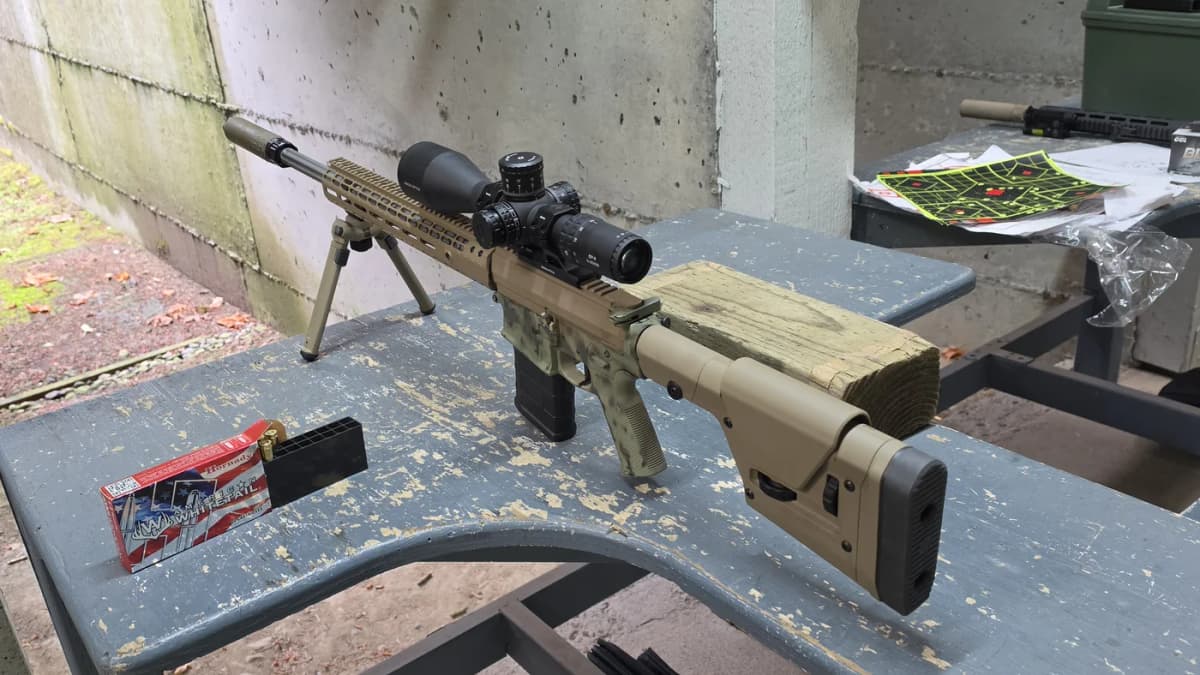
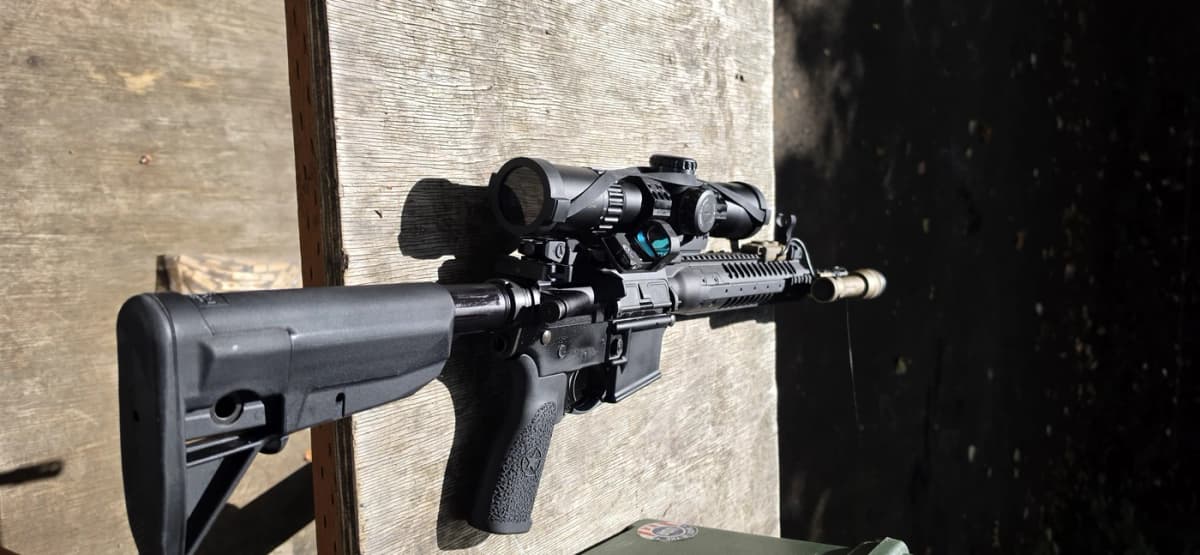
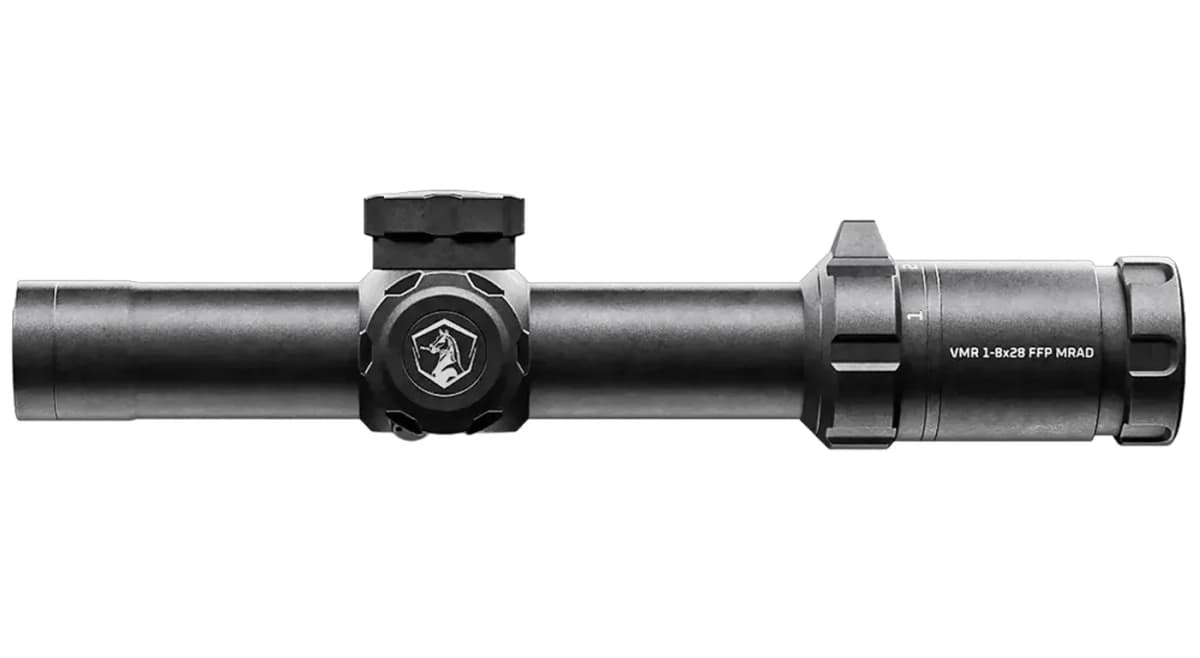
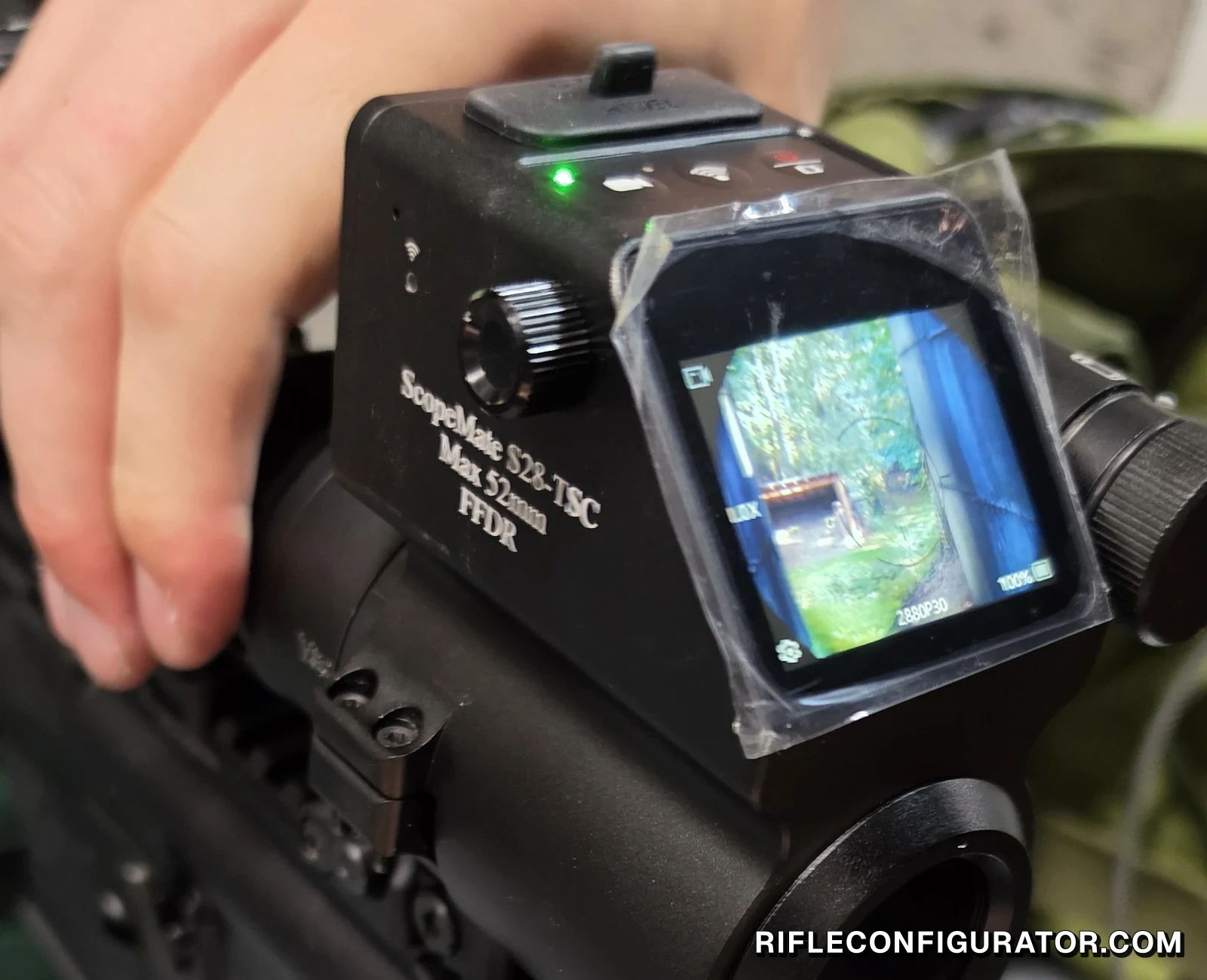
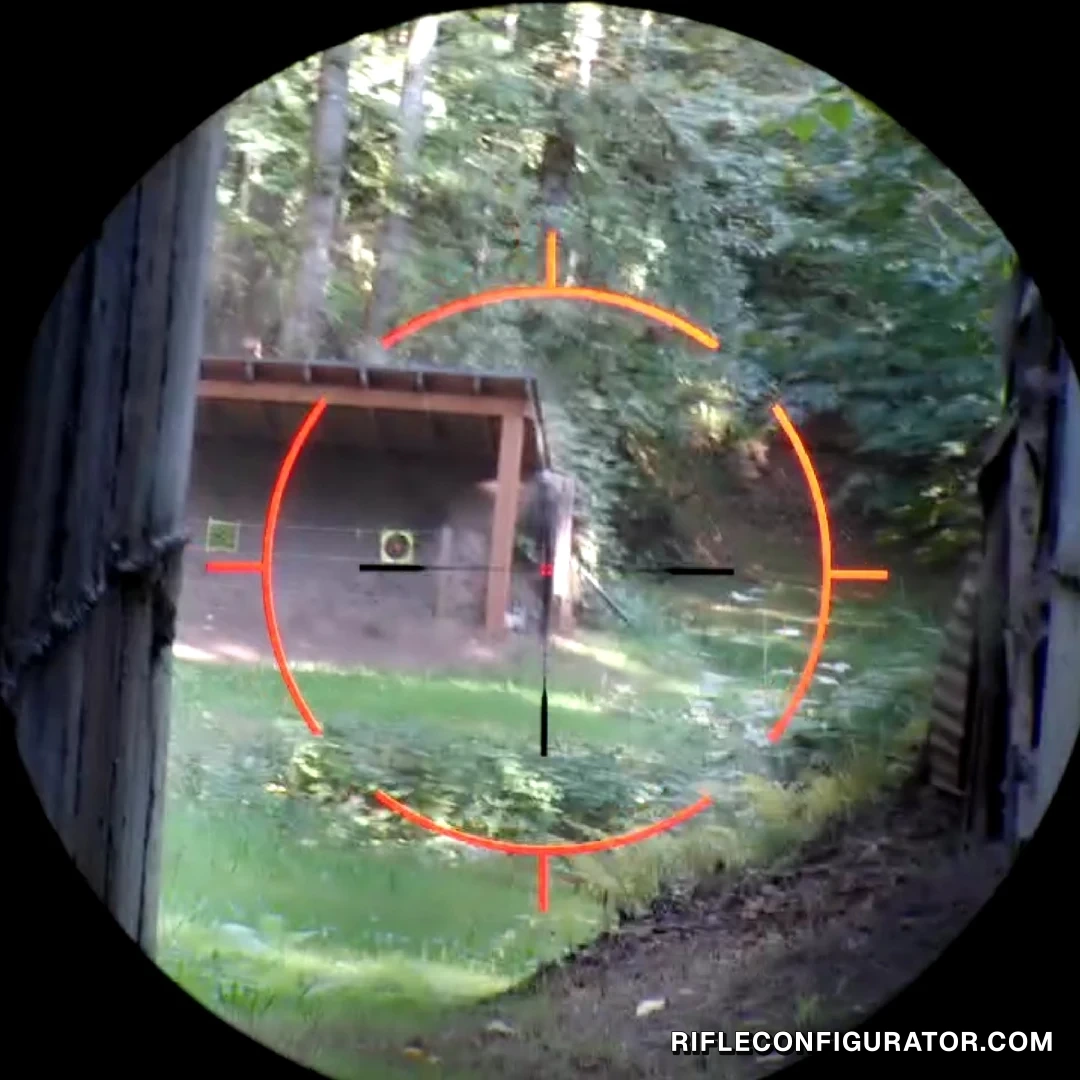
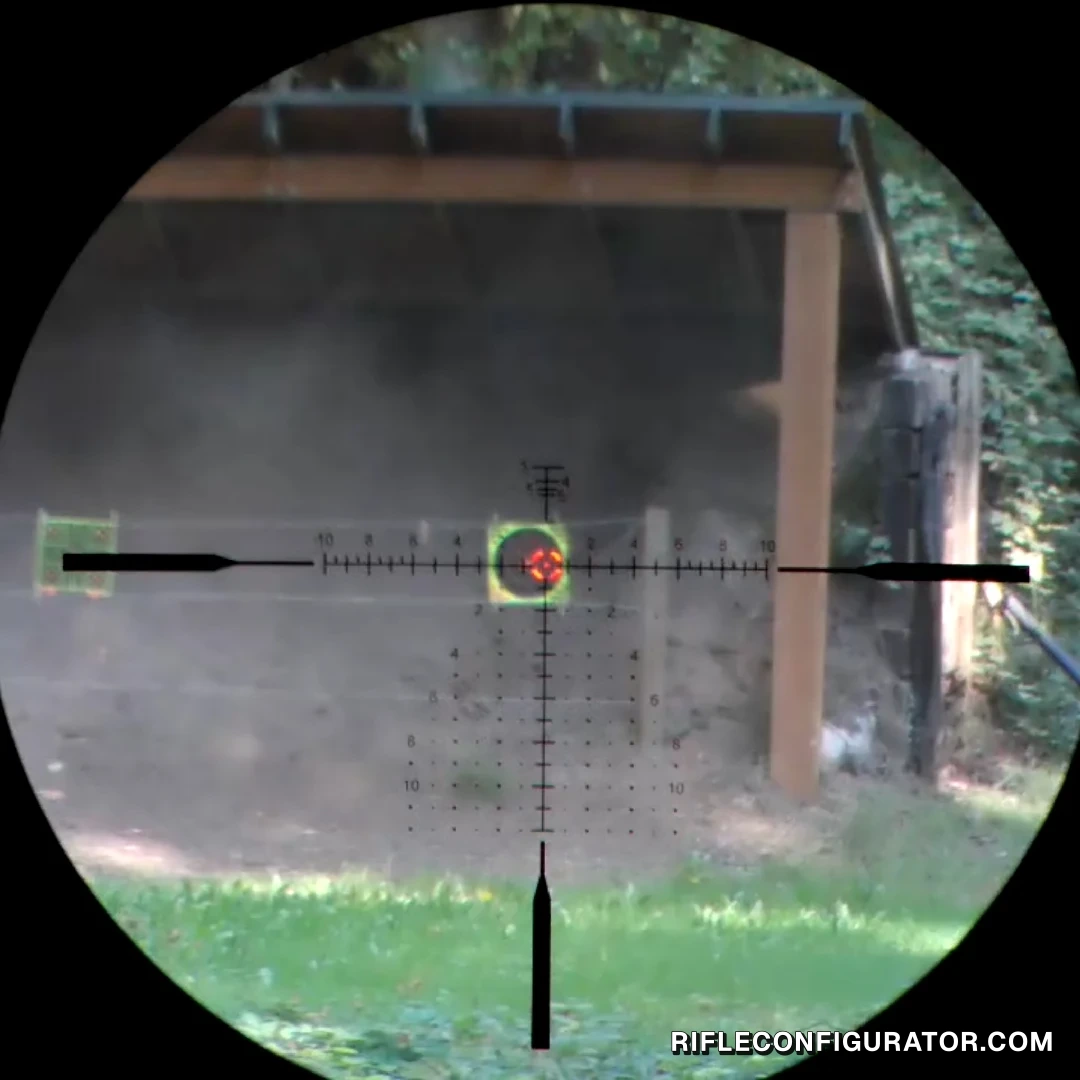
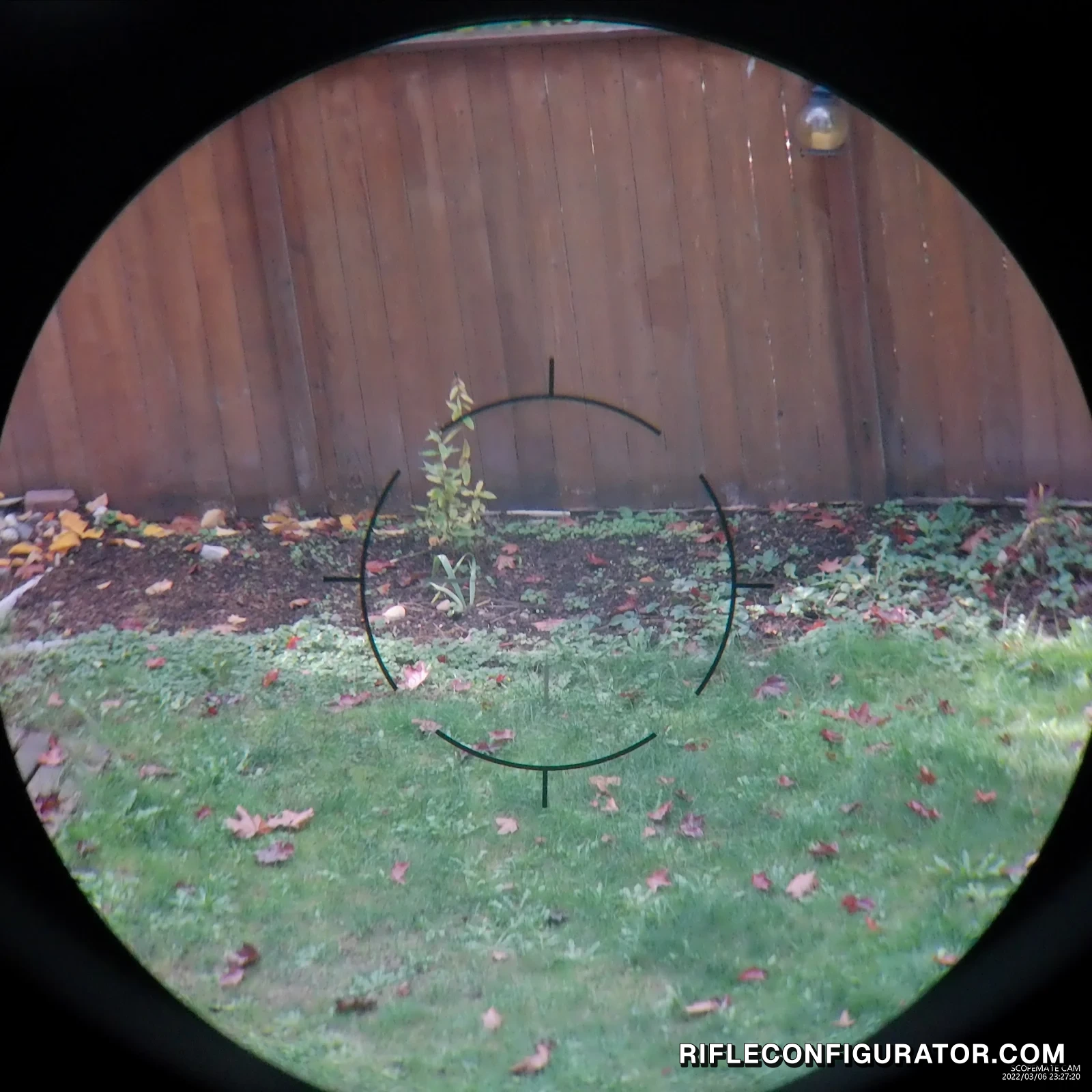
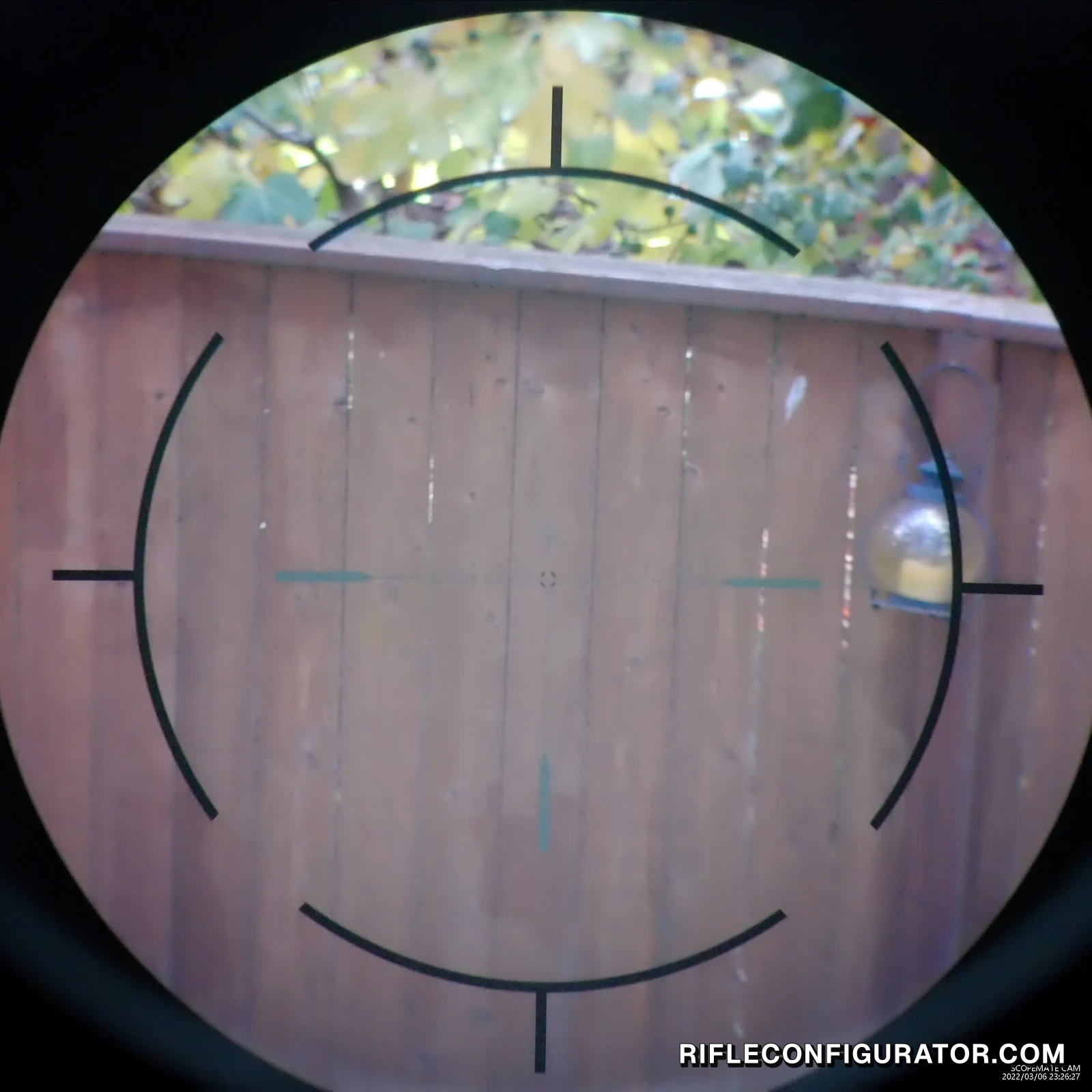
We ran the S28-TSC Max FFDR on a Vector Optics Continental x6 2-12x44, a first focal plane scope, mounted on an LWRC rifle. That gave us both halves of the reticle to record: the illuminated rapid ring at low power and the full hold grid at high power. We shot with it at the range, ran the phone app from the bench, and recorded more footage at home afterward.
Our unit is the FFDR version. The scope's full review is in the Vector Optics Continental 2-12x44 review.
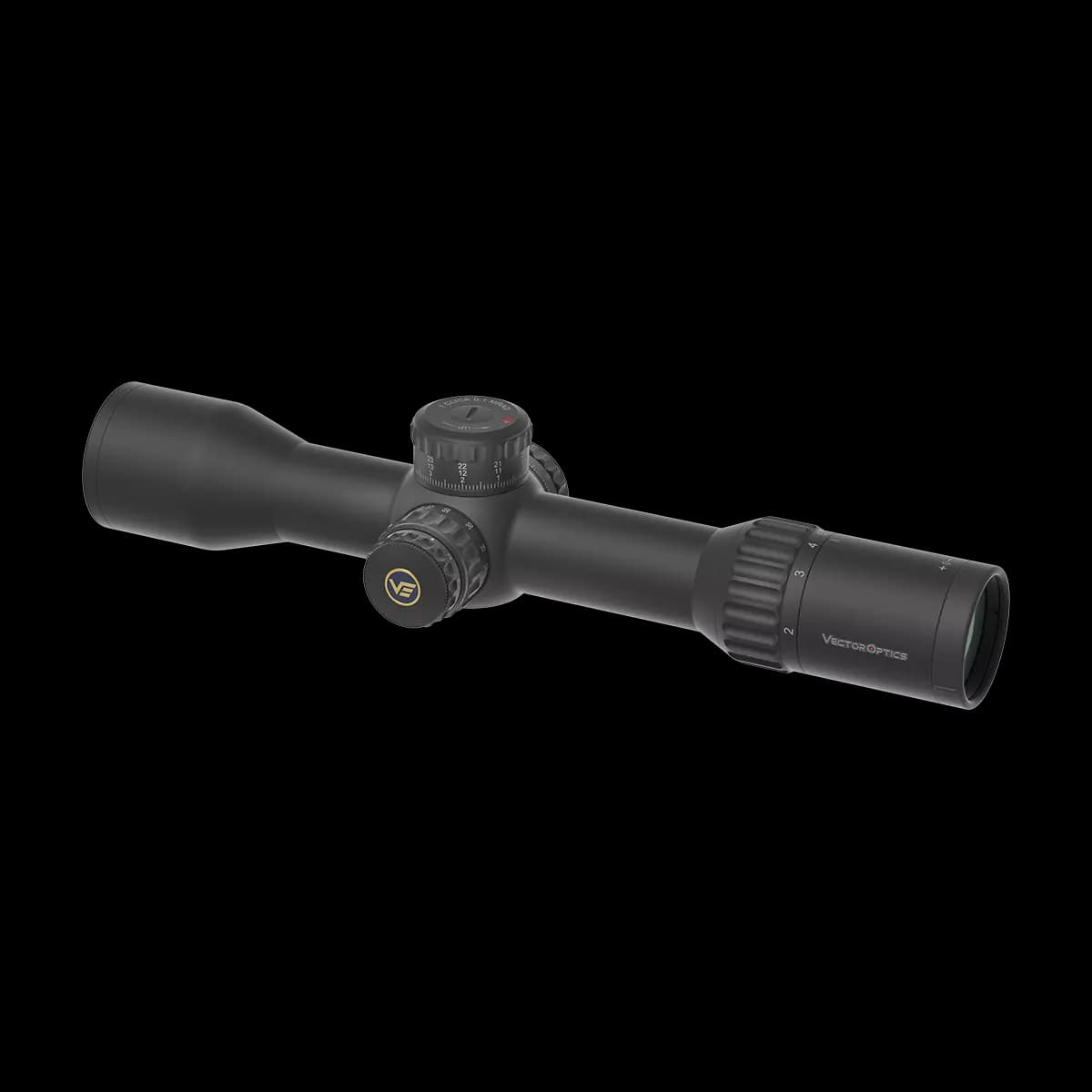
Vector Optics Continental 2-12x44 RAR FFP
The first focal plane 2-12x we recorded through for this review
DMR-oriented 2-12x MPVO with an illuminated rapid ring and Christmas-tree RAR2 reticle
The Touchscreen Makes Setup Fast
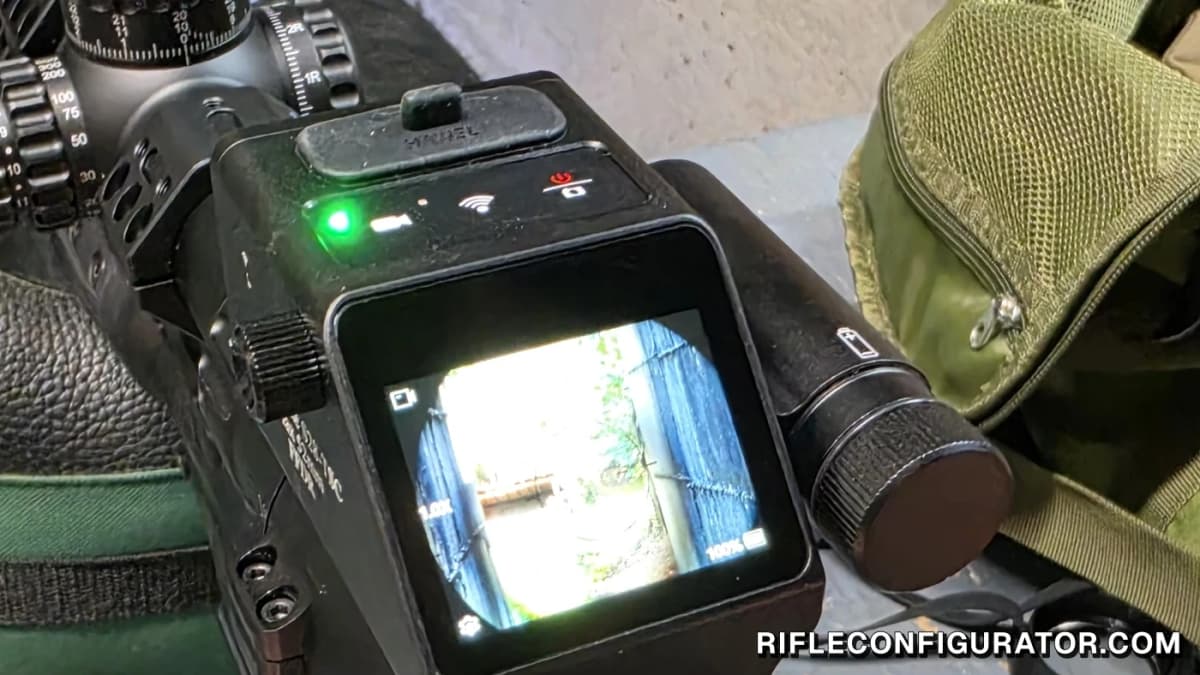
The built-in touchscreen is the reason to buy the S28-TSC over a screenless scope camera. Setting up any through-the-scope camera means checking focus, framing, and settings while the camera is on the rifle, and doing that on a screen mounted to the camera is much quicker than juggling a phone.
ScopeMate lists the screen for settings, preview, and playback, so you can check a string right after you shoot it without leaving the rifle. The rest of the S28 platform carries over: 4K at 60 fps, 2.7K at 60 or 30, 1080p at up to 120, and 720p at up to 240 for slow motion.
Stay Updated on Optics and Scope Camera Reviews
Hands-on reviews of the scopes and gear we actually shoot, plus price drops worth knowing about. One email a week.
Phone Live View Is the Biggest Upgrade
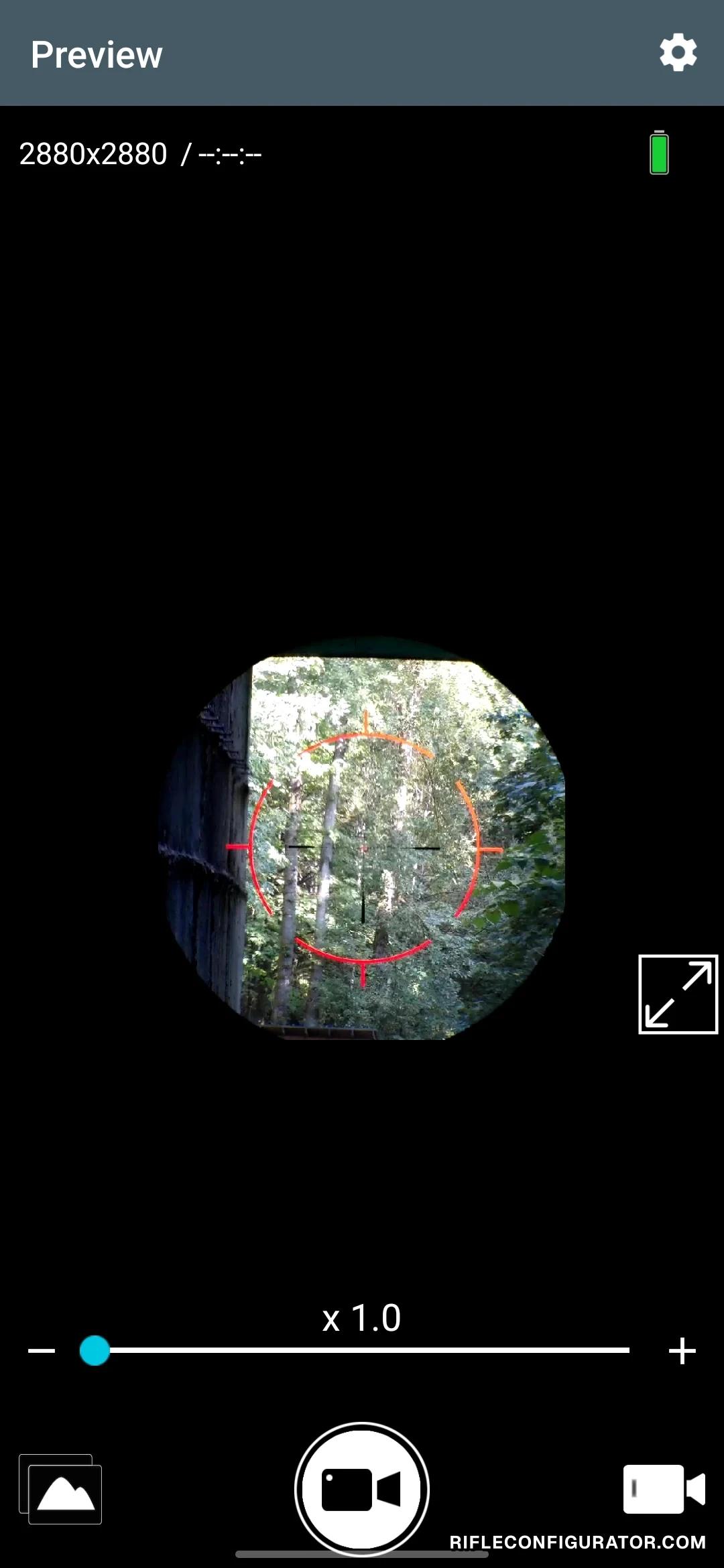
Live streaming to your phone is a massive quality-of-life improvement. The ScopeMate CAM app connects to the camera over the camera's own local Wi-Fi, with no servers or cloud account in the loop, and it connected reliably in our testing. From the bench you get a full-screen view of the sight picture, a digital zoom slider, and record and gallery controls.
That changes how you use the camera. A spotter or coach can watch the sight picture on the phone while you shoot, and you can review a string without lifting your head off the rifle. Downloading footage from the camera to the phone through the app worked without issues.
FFDR Records the Whole Eyepiece Circle
FFDR, short for Full FOV Dual-axis Recording, records the full circle of the eyepiece instead of cropping the top and bottom of the sight picture. Our FFDR files came off the microSD card at 2880 x 2880 pixels at 30 fps: a square frame with the entire eyepiece inside it, edge to edge. On a first focal plane scope that means the lower hold marks stay in the recording, which is exactly what you want for reviewing holdovers after a long-range string.
FFDR and Standard are two versions of the S28-TSC Max that you pick when you order, not a menu setting. ScopeMate's own demo clips show the full-circle default, an oval frame with the lens angle set to Narrow, and a square frame at 1.5x digital zoom. If you shoot holdovers, buy the FFDR version.
Mounting Is Fiddly, Then It Stays Put
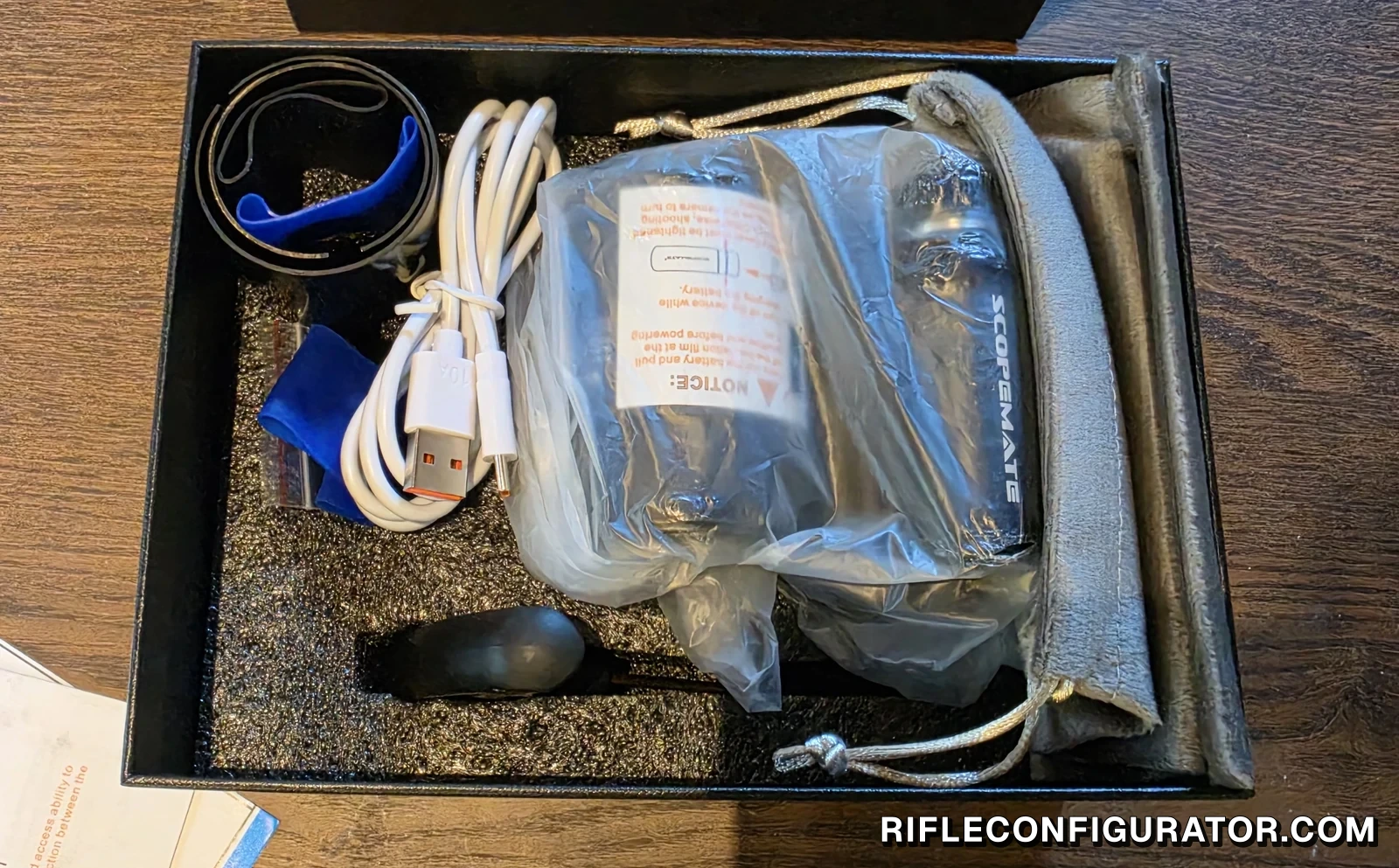
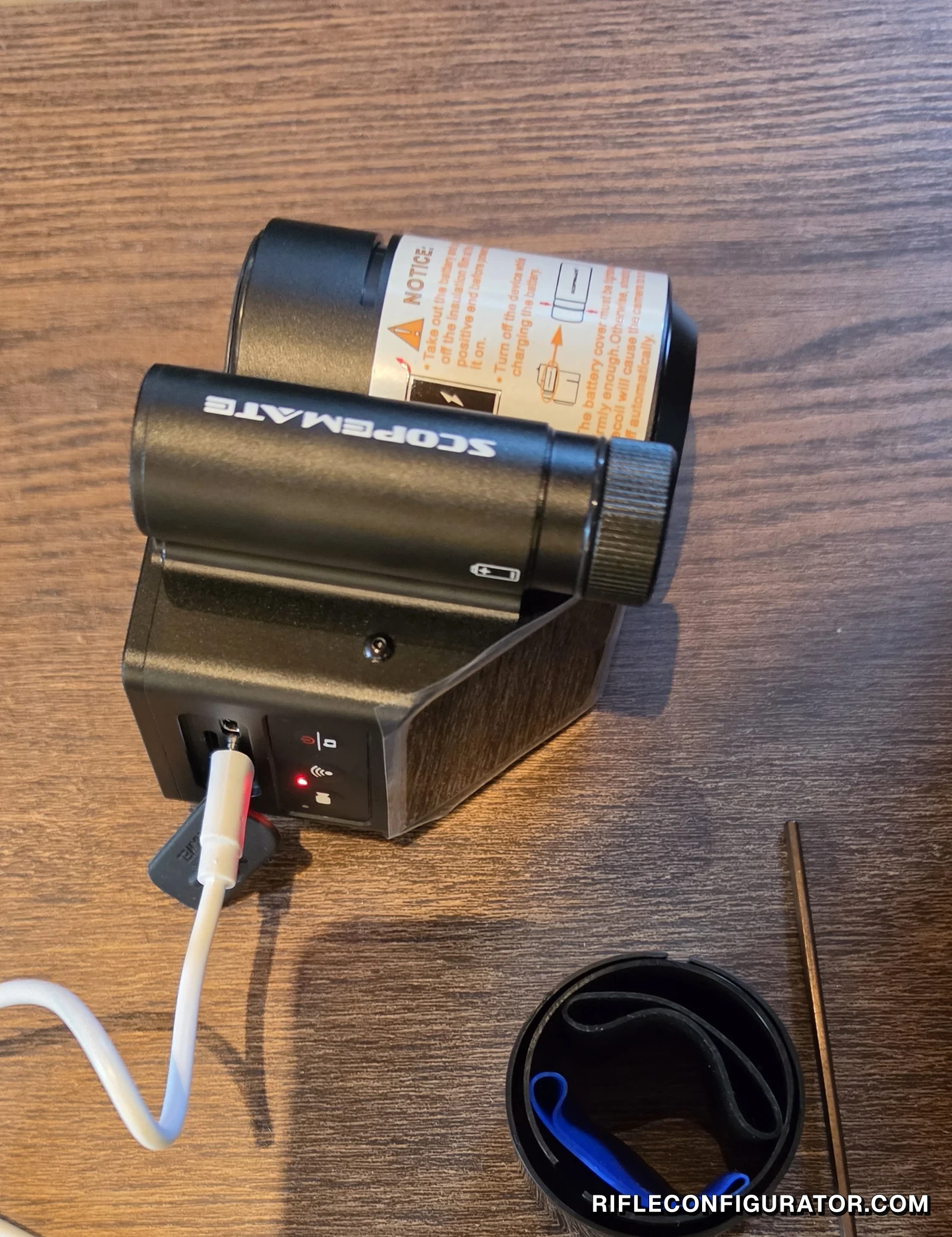
Attaching the S28-TSC to the scope is a little fiddly, the same as almost every scope camera: you build up the adapter inserts that match your eyepiece, seat the clamp, and tighten it with the included T-handle hex key.
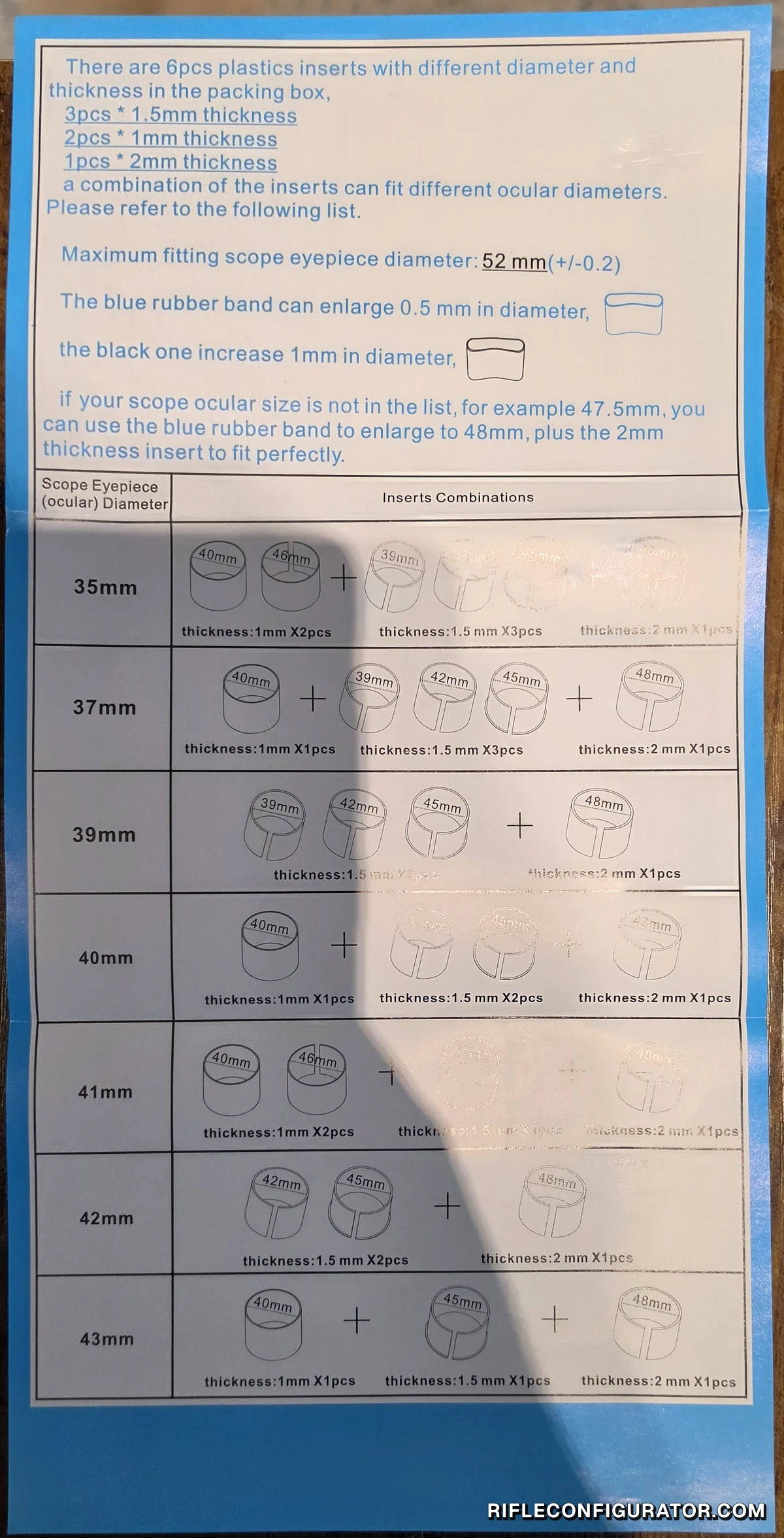
ScopeMate ships six plastic inserts, three 1.5 mm, two 1 mm, and one 2 mm thick, plus a printed chart of which combination to stack for each eyepiece diameter. The maximum is 52 mm, plus or minus 0.2 mm. For sizes between chart rows, a blue rubber band adds 0.5 mm of diameter and a black one adds 1 mm; ScopeMate's example is a 47.5 mm eyepiece, which takes the blue band plus the 2 mm insert. Measure your eyepiece with calipers before you start stacking.
Once it is properly attached, it stays there. The clamp uses two screws rather than one, which spreads the clamping force and eases the stripped-screw problem that single-screw clamps are prone to. We saw no shift in the camera's position after shooting the LWRC, so the framing we set at the bench was still there at the end of the session.
Focus the scope's reticle with the diopter before you mount the camera, then use the parallax adjustment to sharpen the target at each distance. ScopeMate stresses this order, and it is the difference between crisp footage and a soft one. We had no trouble getting a sharp image. Our optic mounting guide covers setting eye relief before the camera goes on.
Battery Life Outlasted Our Sessions
Battery life is generous: we were not able to run the S28-TSC flat during any of our testing. ScopeMate rates the single 18650 cell at up to 13 hours of recording, and the cell is replaceable, so a charged spare in your pocket puts a fresh battery in the camera in seconds. ScopeMate sells a package with two batteries, and the camera charges its cell over USB-C.
Storage is just as generous. The camera takes microSD cards up to 512 GB, which ScopeMate rates at about 25 hours of 4K footage, and it recommends a U3 card.
Who Should Buy the S28-TSC
Buy the S28-TSC Max for long-range shooting and hunting. It is a good product, it works well, and recording exactly what you saw through the scope is valuable for reviewing holds, follow-through, and recoil management. On a bench, a bipod, or a hunting rest the extra mass on the eyepiece does not matter.
Skip it for action-style, run-and-gun matches. You can see through the scope just fine with the camera mounted, but it adds a lot of bulk at the eyepiece, and a 280 g camera is not something you want to slam around through position changes and barricades. For the scopes we would put it behind, see our best long range rifle scopes and best MPVO scopes guides.
ScopeMate S28-TSC Max Specifications
ScopeMate S28-TSC Max (manufacturer specifications)
| Versions | FFDR (full-circle) or Standard |
| Video | 4K 60/30, 2.7K 60/30, 1080p 120/60/30, 720p 240/120 |
| Display | Built-in HD touchscreen |
| Connectivity | Wi-Fi app preview, control, download; live stream to iOS/Android |
| Battery | 1 x 18650, replaceable, up to 13 hours recording |
| Storage | microSD up to 512 GB (about 25 hours of 4K) |
| Ocular fit | Up to 52 mm, 6 adapter inserts included |
| Weight | 280 g (9.8 oz) |
| Housing | Aluminum, IP64 |
| Warranty | 2 years |
S28-TSC vs S28 Gen2 vs S18 Gen3
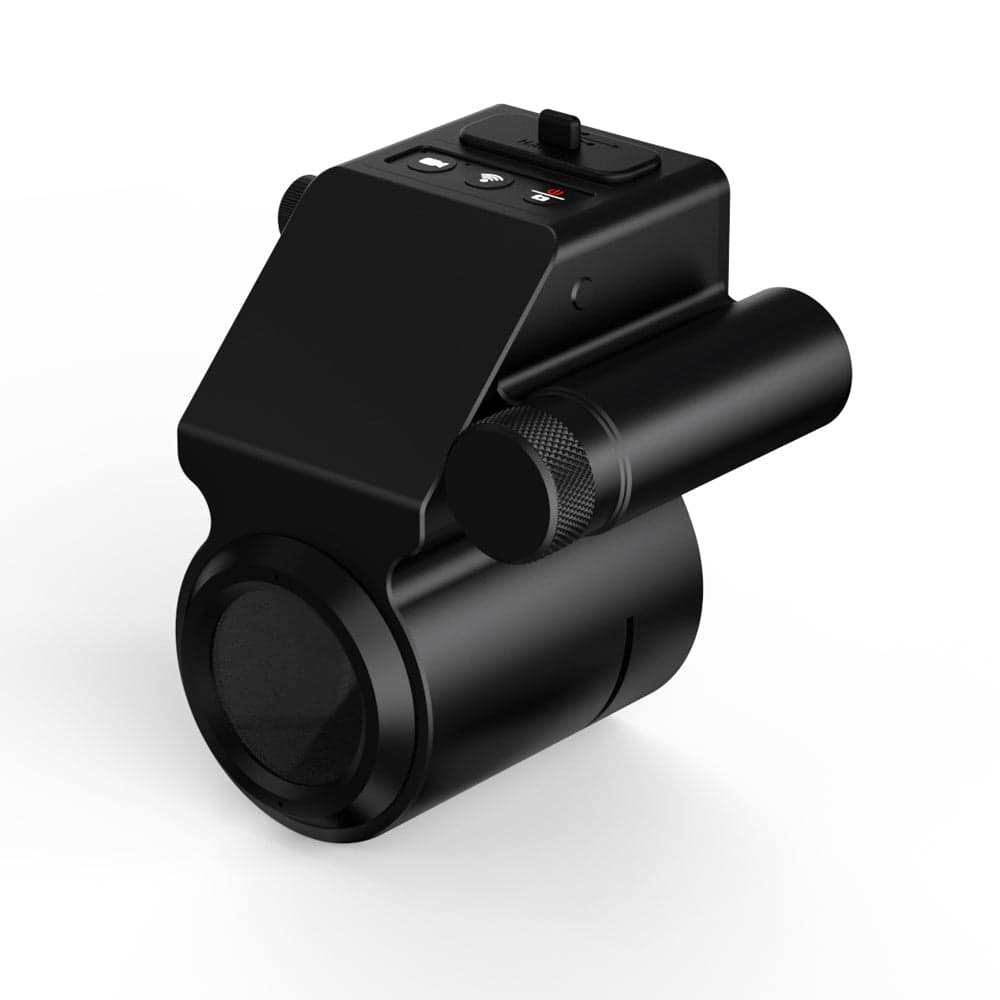
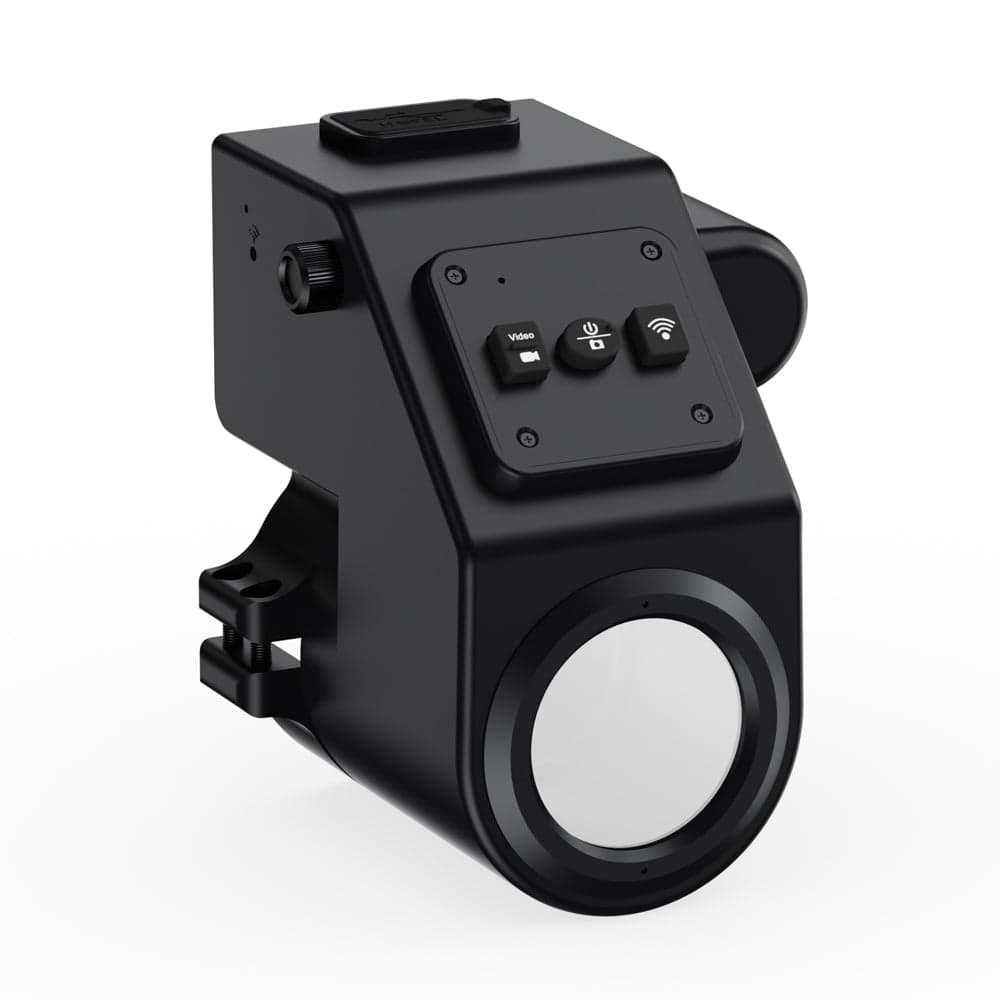
The S28 Gen2 at $480 is the same 4K S28 platform without the touchscreen, with a 51.6 mm maximum ocular. Buy it if you are happy setting up from your phone and do not need the FFDR full-circle version. The S18 Gen3 at $350 tops out at 2.7K60, fits 36 to 48 mm eyepieces, and weighs 260 g; it is the budget pick for smaller scopes. Our best scope cameras guide ranks all three against the rest of the field.
ScopeMate S28 Gen2 4K
The same 4K S28 platform without the touchscreen
Records 4K60 through a riflescope, with a 51.6 mm maximum eyepiece fit and replaceable 18650 power.
ScopeMate S18 Gen3
A lower-cost 2.7K camera for 36 to 48 mm eyepieces
Records 2.7K60 through 36 to 48 mm eyepieces, with 1080p slow-motion modes and replaceable 18650 power.
Scopes Worth Recording Through
Vortex Viper PST Gen II 5-25x50
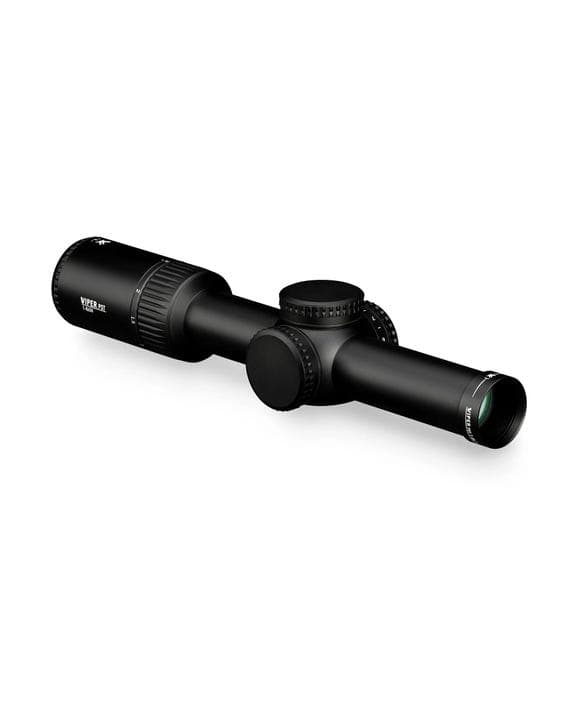
- 5-25x magnification
- First focal plane
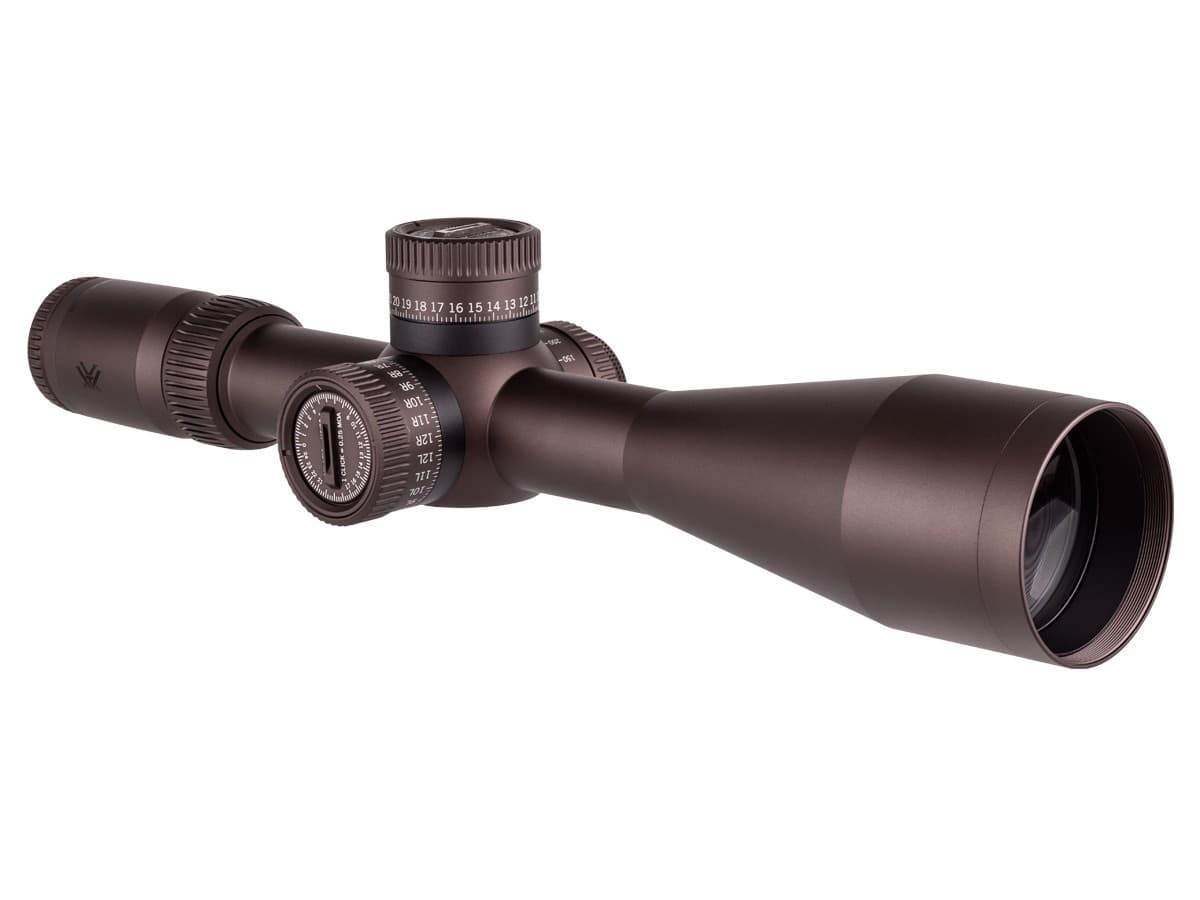
Vortex Razor HD Gen III 6-36x56 FFP
- 6-36x magnification
- 56mm objective
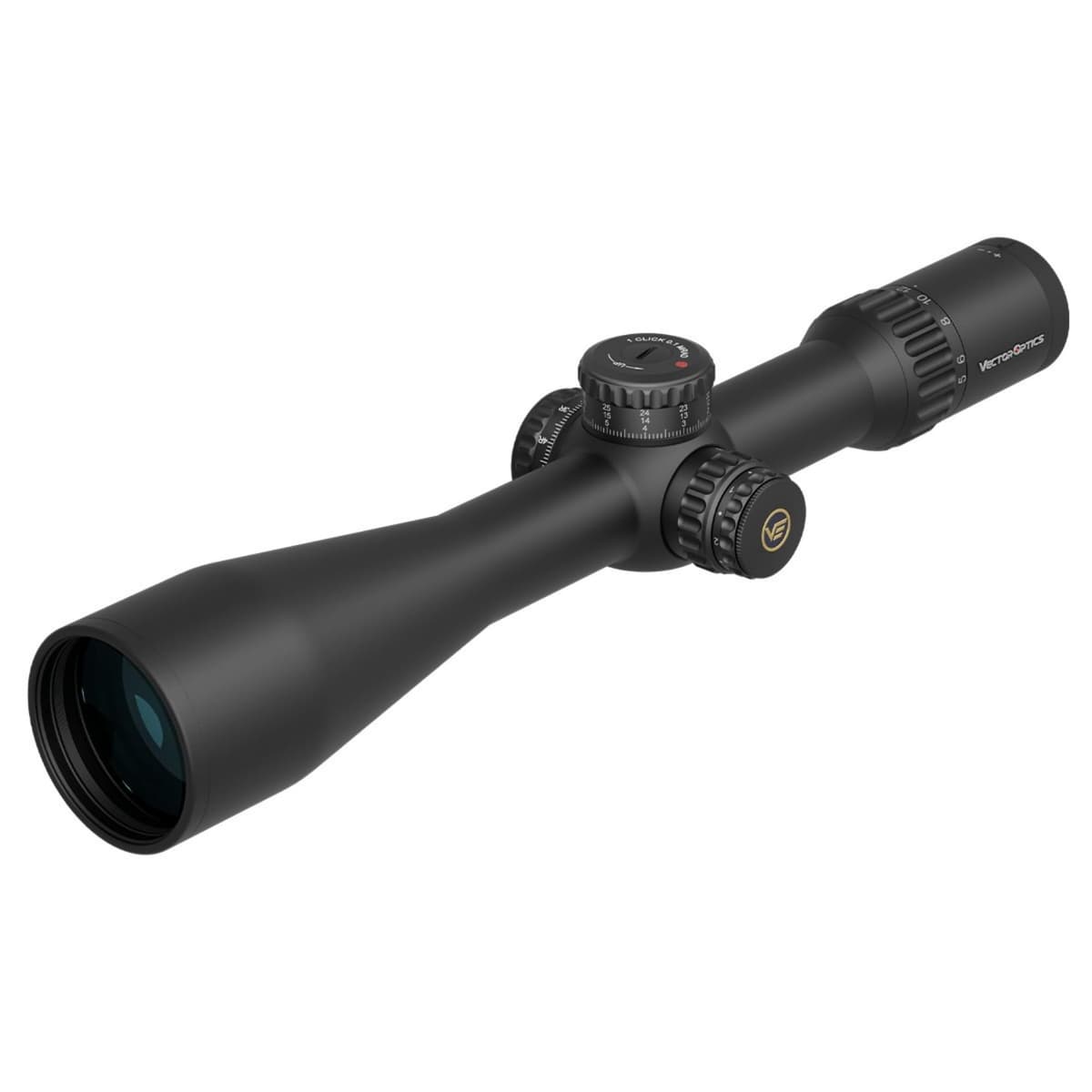
Vector Optics Continental 5-30x56 FFP
- 5-30x56mm FFP
- VCT-34FFP MIL reticle
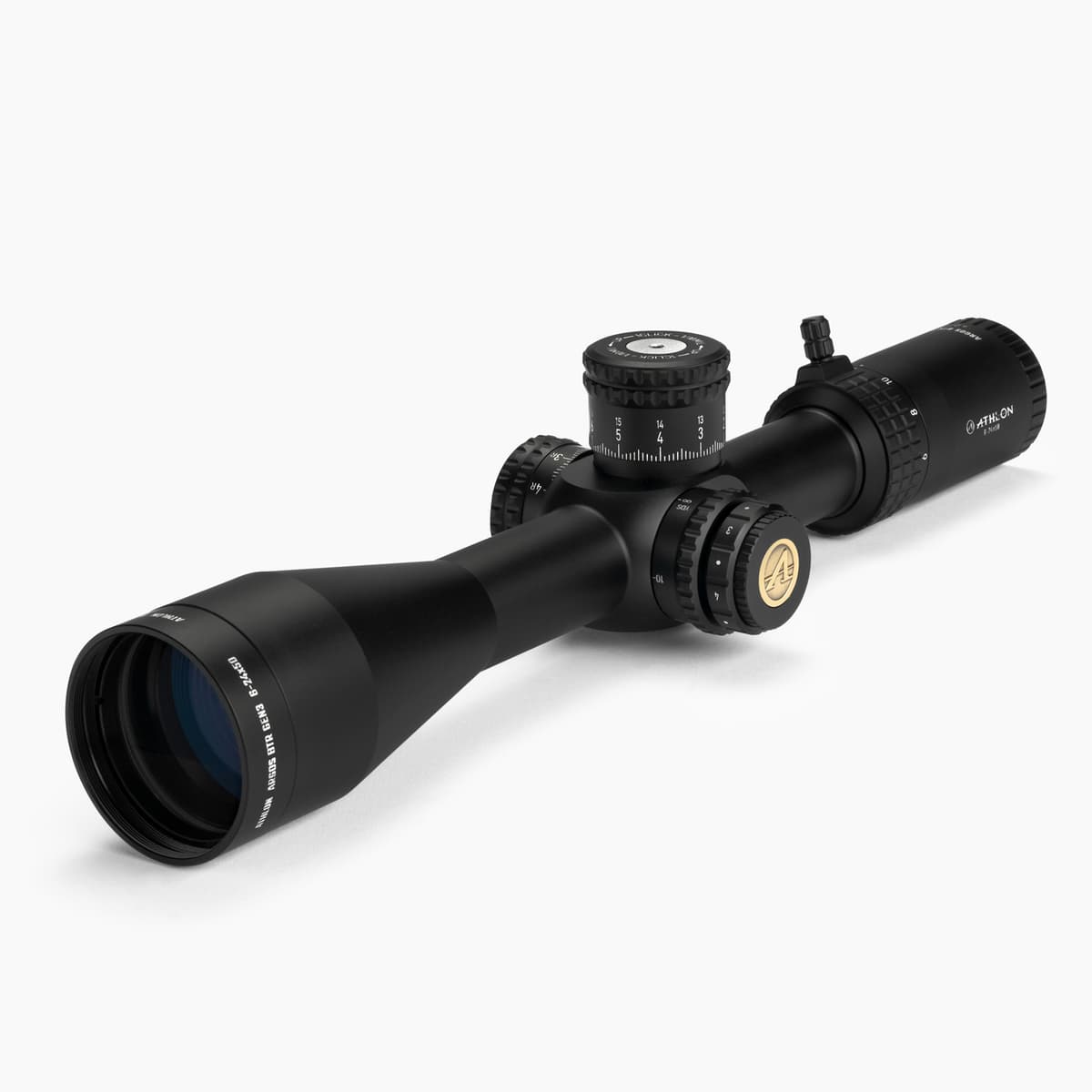
Athlon Argos BTR Gen3 6-24x50 FFP
- 6-24x magnification
- 50mm objective
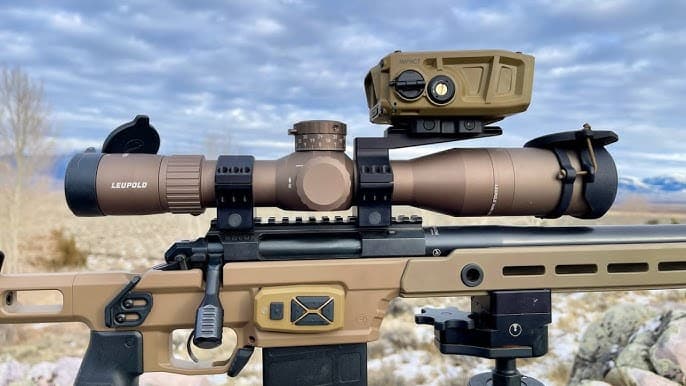
Leupold Mark 5HD 3.6-18x44
- 3.6-18x magnification
- First focal plane

Steiner T6Xi 3-18x56
- 3-18x magnification, 56mm objective
- First focal plane, SCR2 MIL reticle
Affiliate links (?)
Frequently Asked Questions
▶Is the ScopeMate S28-TSC worth it?
▶What is ScopeMate FFDR?
▶What is the difference between the ScopeMate S28 Gen2 and S28-TSC?
▶Can you still look through the scope with a ScopeMate mounted?
▶How long does the ScopeMate S28-TSC battery last?
▶Will the ScopeMate S28-TSC fit my scope?
Bottom Line
Four and a half out of five. The ScopeMate S28-TSC Max FFDR is a good scope camera that works well, and the touchscreen plus phone live view make it easier to live with than a screenless camera. The half point is the fiddly mounting and the bulk it adds at the eyepiece.
Buy it for long-range shooting and hunting, and pick the FFDR version if you want your holdovers in the recording. Skip it for run-and-gun matches. If you do not need the screen, the S28 Gen2 at $480 records the same 4K footage for less, and the S18 Gen3 at $350 covers smaller eyepieces on a budget.