Concealed Carry for Hiking and Fishing: Chest Pack Setup header image
Gear
August 26, 2026
Concealed Carry for Hiking and Fishing: Chest Pack Setup

A chest-pack-first carry method for hikers and anglers: pack-belt clearance, water access, gun weight, bear spray, retention, and the land and boat rules to check before a trip.

[ < Back to guides ]

Concealed Carry for Hiking and Fishing: Chest Pack Setup

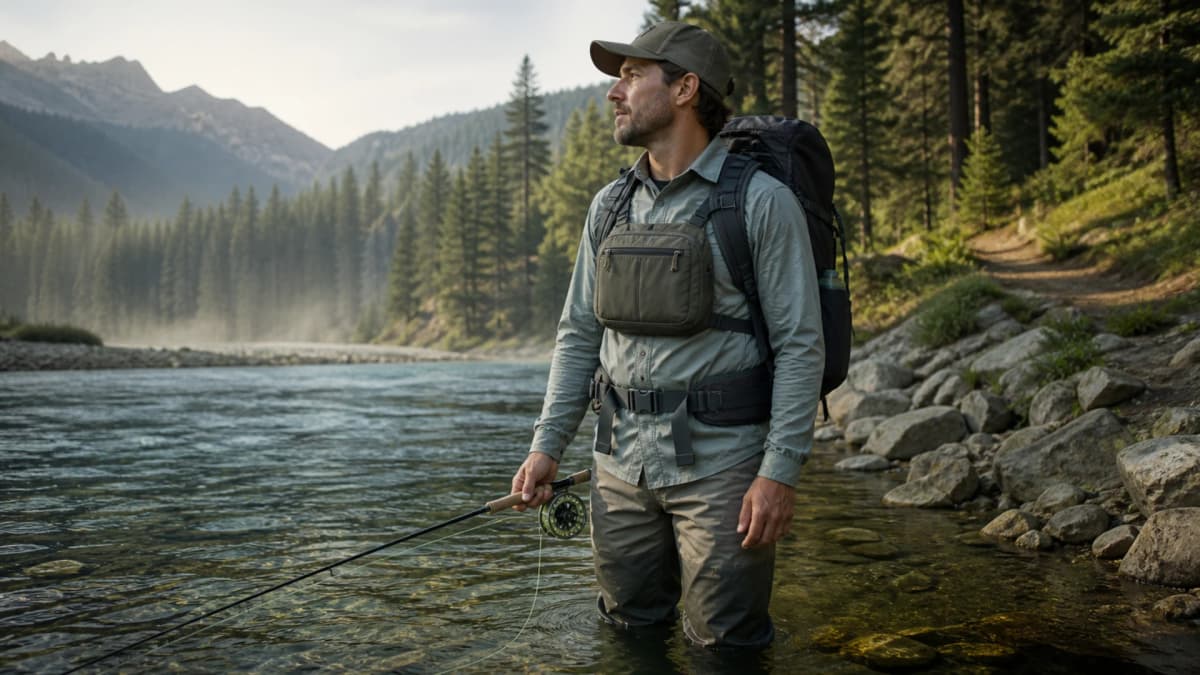
The carry setup that works walking to the truck stops working about ten minutes into a real hike. A loaded backpack puts a padded hip belt across the exact band of your waist where an appendix or strong-side holster lives, and a wading belt or a fishing sling does the same job in a smaller way. The fix is to move the gun up. A chest pack sits above the belt line, stays reachable with the pack on, and rides higher than the water when you are thigh-deep in a river. This is the method: build the chest-pack system first, set access and retention around it, then pick a trail gun you can actually carry all day.

By AB|Last reviewed August 2026

Key Takeaways

  • The hip belt is the whole problem: a loaded pack belt occupies the same waist band as appendix and strong-side carry, buries the grip, and turns every sit-down, scramble, and boat seat into a fight with the holster.
  • A fitted holster is not optional: the pistol needs a holster that fully covers the trigger and anchors inside the compartment. A loose handgun rattling in a bag has no trigger protection and no retention during a fall.
  • A light pack changes what you will actually carry: the $60 5.11 Skyweight SP26 weighs one pound in a 2-liter body, and the rear compartment behind its padded pass-through holds a holster in firsthand use.
  • Weight is the real caliber argument: the spread from a 21-ounce compact 9mm to a 47-ounce .44 Magnum revolver is more than a pound and a half of unloaded gun hanging off your chest for every mile of the trip.
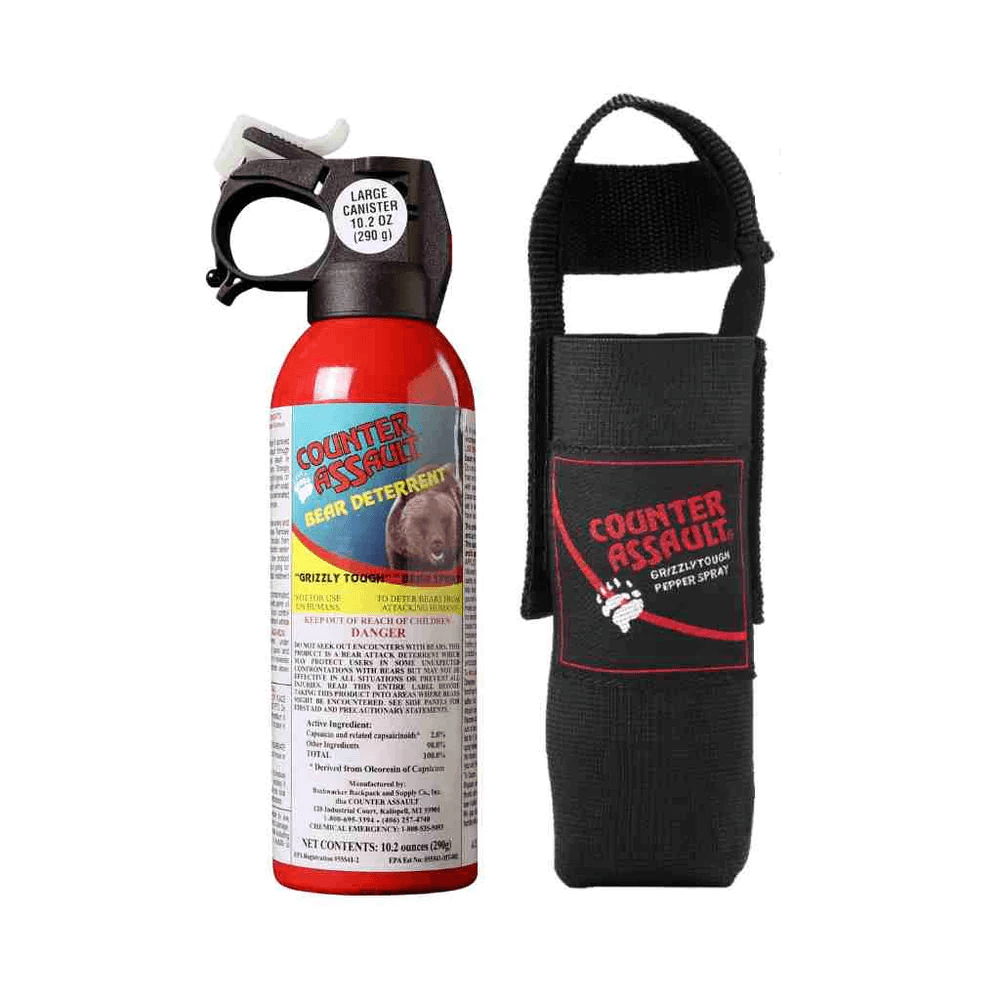
  • Spray and gun are different tools: the National Park Service recommends bear spray and says to keep it on a belt or chest holster rather than inside a pack. The $67.99 Counter Assault 10.2 oz canister reaches 44 feet with 10 seconds of spray time.

Why Waist Carry Fails Under a Real Backpack

Waist carry fails on the trail because a loaded backpack’s hip belt occupies the same three or four inches of your waist that an appendix or strong-side holster needs. The belt is doing real work, transferring most of the pack weight to your hips, so it is cinched tight and it is not moving. The holster loses. The grip ends up buried under padding, the draw stops being a draw and becomes a two-handed excavation, and the pressure point on top of a Kydex shell becomes the thing you think about for six miles.

Everything else on a trip stacks onto that same band. A wading belt cinches at the waist by design. A fishing sling or lumbar pack rides across the small of the back and rotates forward when you reach. A rain shell layers over all of it. Sitting on a log, scrambling over deadfall, kneeling to net a fish, and dropping into a canoe seat each fold your body at exactly the point where the gun lives. That is why the summer-carry playbook in our hot-weather concealed carry guide does not transfer to the backcountry unchanged: it optimizes for a thin shirt over a bare waist, not for a pack belt over the same real estate.

Water adds a second failure. Wading, even calf-deep, puts the waistline near the splash zone, and thigh-deep puts it under. Sweat under a pack belt does the same thing more slowly. Salt is corrosive, and a pistol pressed against a wet waistband under a pack strap for eight hours collects both. Moving the gun to the chest solves the geometry problem and the water problem in one decision, which is why chest carry is the default answer for hikers, backcountry hunters, and anglers rather than a niche preference.

  • Chest pack
    The default for a loaded pack
    Under a Loaded Hip BeltClears it entirely
    Wading and Boat AccessAbove the normal wade line, reachable seated
  • Appendix IWB
    Day hikes with no pack belt
    Under a Loaded Hip BeltBelt sits on the grip
    Wading and Boat AccessAt or below the wade line
  • Strong-side IWB or OWB
    Works only with the belt unbuckled
    Under a Loaded Hip BeltBelt and pack frame both interfere
    Wading and Boat AccessAt or below the wade line
  • Pack hip-belt pocket
    Not a holster; skip it
    Under a Loaded Hip BeltFits, but no trigger coverage
    Wading and Boat AccessSubmerges first
  • Inside the backpack
    Storage, not carry
    Under a Loaded Hip BeltNo interference
    Wading and Boat AccessDry, but unreachable

Build the Chest-Pack Carry System

A chest-pack carry system is three parts: a pack with a compartment that will hold a handgun, a fitted holster anchored inside that compartment, and a harness that rides under or around your backpack straps without fighting them. Get those three right and the position handles everything the trail throws at it. Skip any one of them and you have a bag with a gun rolling around in it.

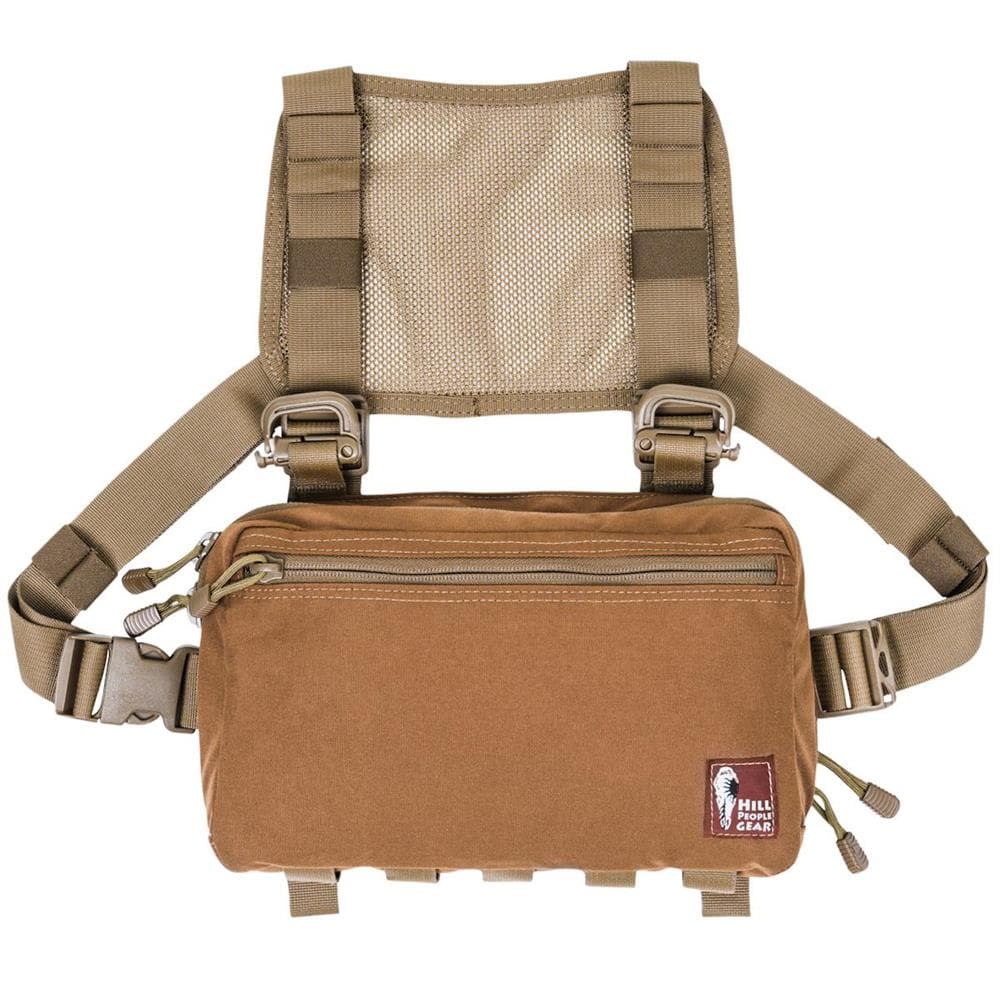
Two packs bracket the useful range. The Hill People Gear Original Kit Bag is the dedicated-compartment benchmark: HPG built the Kit Bag line specifically to carry a pistol without interfering with a full-size backpack, and the Original full uses a separate quick-access pistol compartment with a loop panel and a dummy-cord attachment point, on a mesh-backed H-harness designed to run under pack straps. It lists at $155 and weighs 1.3 pounds in a 2.5 by 11.5 by 7.5 inch footprint. The full, medium, and snubby sizes mark the gun-size boundary, and full-size autos and large-frame revolvers belong in the full. Our chest holster guide for hunting and hiking ranks the Kit Bag against the Kydex and leather rigs in the same role.

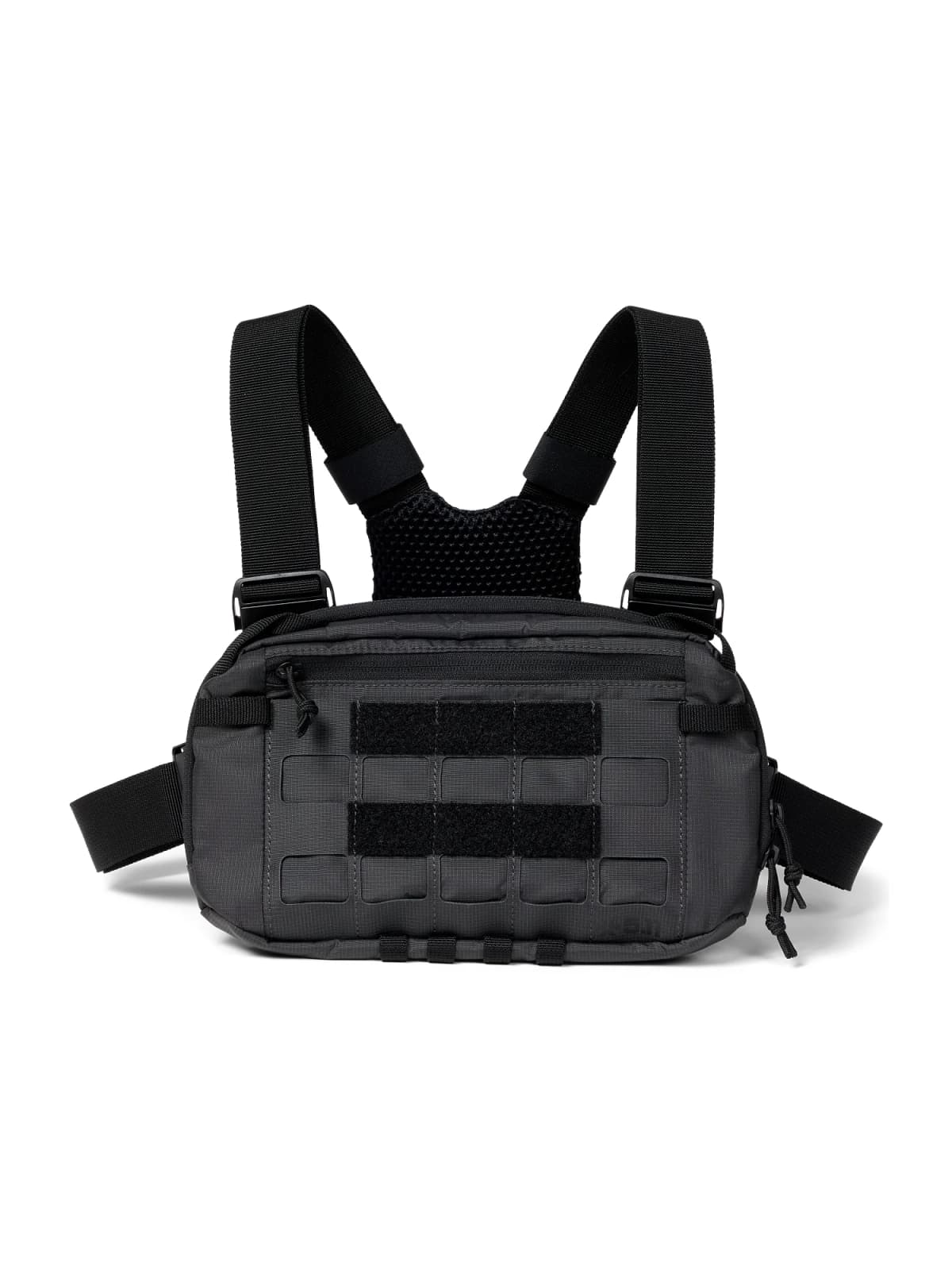
The 5.11 Skyweight Survival Chest Pack SP26 sits at the light end at $60. It is a one-pound, 2-liter pack in 330D nylon ripstop with a water-repellent finish, a breathable anti-odor mesh panel against the body, and a removable harness that converts between chest, waist, and standalone carry. It has a rear compartment behind a padded pass-through. We carry a pistol there in our own holster on hiking and fishing trips with this exact pack, Style 5860165. Verified buyers on 5.11’s page set the honest boundary on it: one reports it runs small for a full-size pistol, and that the quick release is slower than the name suggests. Both are fair. This is a compact-pistol pack, and the access is deliberate rather than instant.

Hill People Gear Original Kit Bag

Hill People Gear Original Kit Bag

Dedicated pistol compartment for full-size autos and large-frame revolvers

$155

500D nylon chest pack with a concealed pistol compartment, the low-profile way to carry a handgun and kit under pack straps.

1.3 lbQuick-access compartmentH-harness
Pros
  • +Concealed pistol compartment keeps the sidearm discreet
  • +Doubles as kit storage for phone, GPS, and essentials
  • +Rides under pack straps and clears a hip-belt
Cons
  • Draw is slower than an open-top chest holster
  • Soft compartment holds the gun less rigidly than a molded shell
  • Larger frames need the bigger, pricier bag sizes

5.11 Skyweight Survival Chest Pack SP26

Lightest chest-pack setup for a compact pistol and a full trail day

$60

Lightweight 2-liter chest pack with a breathable mesh back, convertible harness, and a rear compartment we use with our own holster.

1 lb2 LMesh back panel
Pros
  • +One-pound carry weight
  • +Breathable mesh back works well during high-output activity
  • +Compact profile stays out of the way while hiking, wading, or sitting
Cons
  • One buyer found the exact pack a little small for a full-size gun
  • One buyer said the quick release is not genuinely quick
  • Holster fit and retention must be set up and tested by the user
Dimensions: 6"H x 10"W x 2.5"DCapacity: 120 cu in / 2 LMaterial: 330D nylon ripstop with DWR C0 and HeiQ Barrier Eco Dry finishWeight: 1 lb

Chest Pack Comparison

HPG Original Kit Bag (full)

5.11 Skyweight SP26

Pistol Space
Dedicated compartment (advantage)
Rear compartment
Access Speed
Purpose-built pull (advantage)
Slower, deliberate
Retention
Loop panel, dummy cord (advantage)
User-fitted holster
Gun Size
Up to full-size (advantage)
Compact
Weight
1.3 lb
1 lb (advantage)
Body Panel
Mesh-backed harness
Anti-odor mesh
Price
$155
$60 (advantage)
Both are legitimate trail-carry packs. The Kit Bag buys a purpose-built compartment and full-size capacity; the Skyweight buys a third of a pound, more airflow, and a much lower price with a compact pistol.

Pick by gun size first and weight second. A full-size auto or a large-frame revolver needs the dedicated compartment. A compact 9mm on a hot, high-output summer trip is where the lighter, more breathable pack wins, because the pack you will still be wearing on mile twelve is the one that carries the gun. If you want the position without a chest pack at all, the fanny and sling options in our concealed carry bag guide cover the off-body alternatives and their tradeoffs.

Set Access, Retention, and Water Protection

Set access by rehearsing the draw in the full trip kit, not in the driveway in a t-shirt. Put on the loaded backpack, the fishing sling, the rain shell, and the life jacket if the trip includes a boat, then check whether the compartment still opens and whether your hand still reaches the grip with either arm. A sternum strap crossing the pack, a rain jacket hem riding over the zipper, and a PFD sitting on top of the harness are the three things that quietly take the gun away from you, and all three only show up when you wear the whole load at once.

Retention is a holster question, not a zipper question. The pistol goes in a fitted holster that fully covers the trigger and anchors inside the compartment, either by hook-and-loop against a loop panel or by a dummy cord to a fixed point. That combination is what keeps the muzzle oriented and the gun in place through a stumble, a scramble over wet rock, or a swamped canoe. Anchored, the holster also stops the gun rotating grip down inside the bag, which is the version of this failure people actually discover at the worst moment.

Water protection is a routine, not a product. A chest position rides above the normal wade line, but rain, spray, sweat, and a slip all still get in. Open the compartment at the end of the day and let it drain and dry rather than stuffing the pack in a truck bed overnight. Wipe the pistol down and re-oil it after any trip with sustained sweat or saltwater exposure, and check the usual corrosion spots: the muzzle, the pins, the underside of the slide, and any bare or worn finish. On multi-day trips a dry bag inside the pack is the right home for the spare magazine and ammunition, which sit still and are the first things to corrode.

Choose a Trail Gun by Weight, Fit, and Shootability

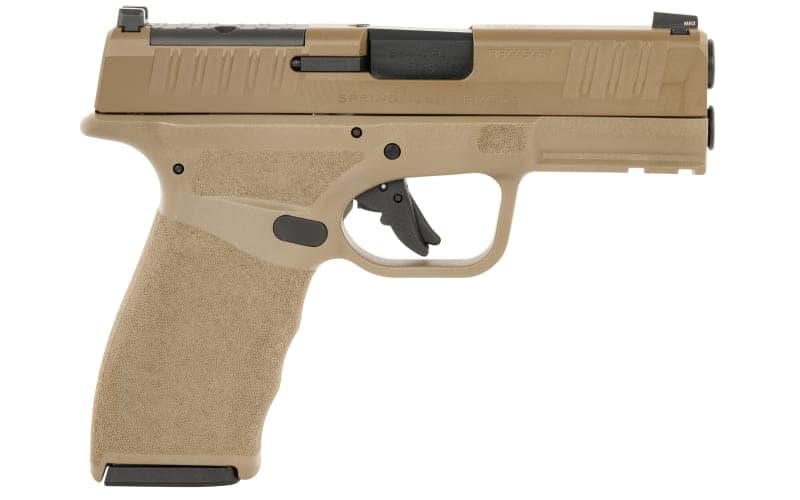
Choose the trail gun by unloaded weight, by whether it fits the compartment you actually own, and by what you can shoot well under stress. Those three axes decide more than the cartridge does. The practical band runs from a 21-ounce compact 9mm like the Springfield Hellcat Pro up to a 47-ounce Ruger Redhawk in 4.2-inch .44 Magnum, and that spread is a pound and a half of unloaded steel and polymer before you add ammunition, a holster, and the pack itself.

  • Springfield Hellcat Pro OSP
    21 oz
    Cartridge9mm
    What the Weight BuysThe lightest carry option here; fits the smallest chest compartments
  • PSA Dagger Compact
    22.4 oz
    Cartridge9mm
    What the Weight Buys15+1 capacity and an RMR cut at a compact 7.15-inch overall length
  • Springfield XD-M Elite 4.5 OSP
    31 oz
    Cartridge10mm Auto
    What the Weight Buys16+1 of 10mm for 8.6 oz more gun than the compact 9mm
  • Ruger Redhawk 4.2 inch
    47 oz
    Cartridge.44 Magnum
    What the Weight BuysThe heaviest common woods option, at nearly a pound over the 10mm

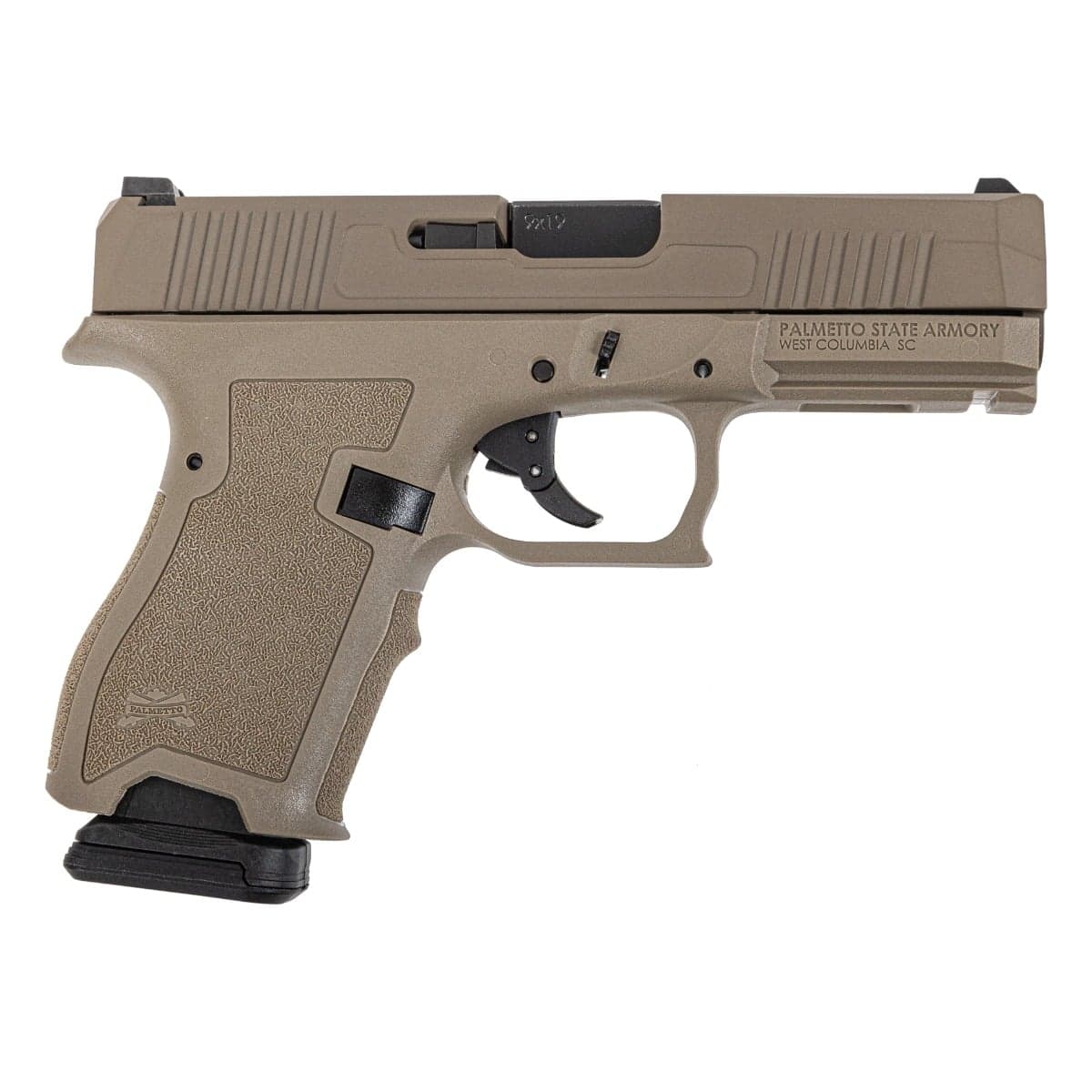
A compact 9mm is the honest starting point for most trips. The $309.99 PSA Dagger Compact carries 15+1 at 22.4 ounces unloaded in a 7.15-inch overall length with a 3.9-inch barrel and a factory RMR-pattern optic cut, which is the smallest footprint that still shoots like a service pistol. One fitment note matters more here than usual: the Dagger’s frame geometry means most hard-sided Glock 19 Kydex holsters will not retain it correctly, so buy a Dagger-specific holster and confirm it anchors in your compartment before the trip.

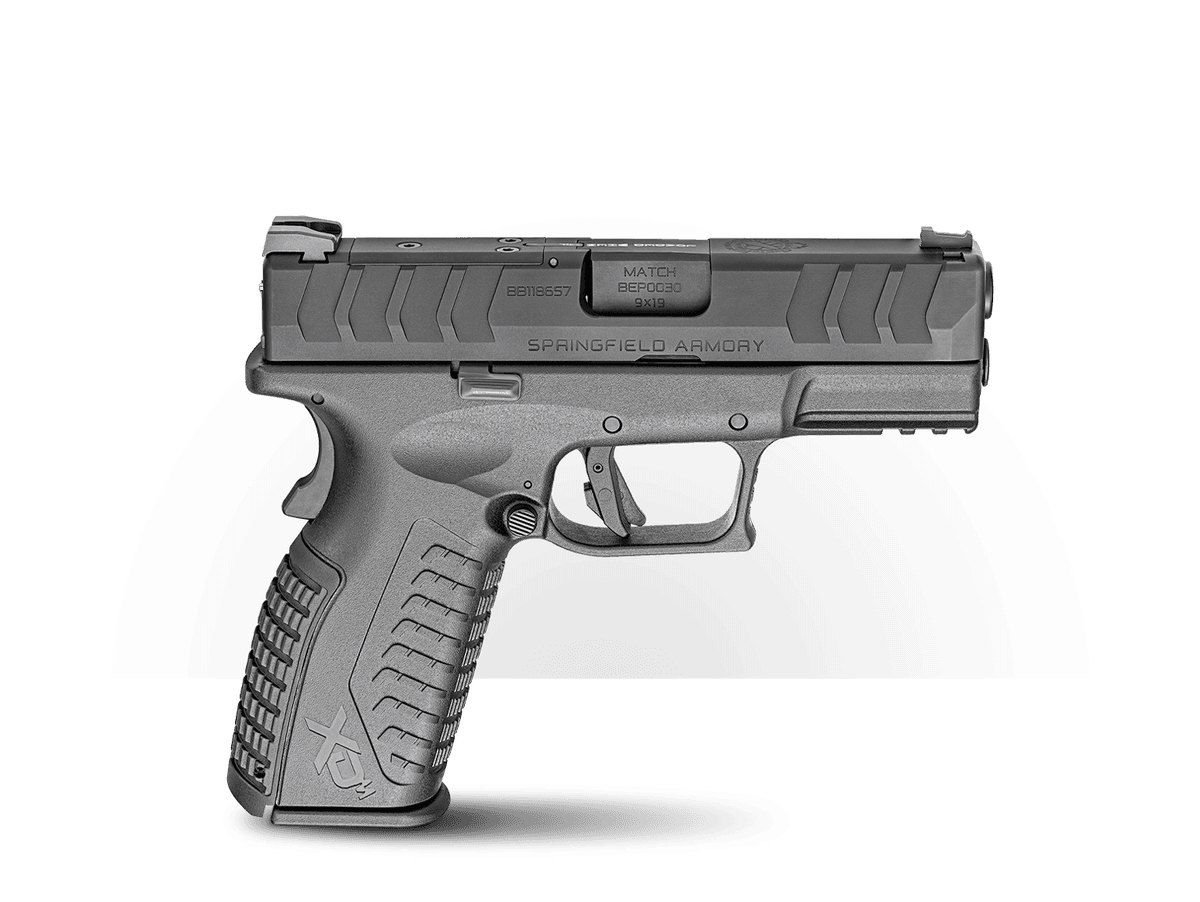
Stepping up to 10mm is a weight and training decision, not a free upgrade. The $592.99 Springfield XD-M Elite 4.5 OSP holds 16+1 of 10mm at 31 ounces unloaded, which is 8.6 ounces over the compact 9mm and still well under a large steel revolver. It costs more recoil, more money per round, and more practice to shoot at the same speed and accuracy. That is the trade the cartridge actually asks for, and our 9mm versus 10mm comparison works through it in detail. If you have already made that call, the field of dedicated options is in our best 10mm pistols guide, and the heaviest end of the spectrum is covered in the .44 Magnum revolver guide. Run the specs side by side in our comparison tool before you commit to a frame size.

Springfield Hellcat Pro
Springfield Armory

Springfield Hellcat Pro

Lightest end of the trail-gun band at 21 ounces

$670
MSRP

Best-in-class capacity micro-compact with 15+1 in a sub-compact frame

Pros
  • +Best-in-class capacity for its size
  • +Factory optic cut eliminates slide milling
  • +Comfortable grip texture for all-day carry
Cons
  • Shield RMSc footprint limits optic choices
  • Smaller aftermarket than Glock/SIG
  • 3.7-inch barrel limits velocity vs 4-inch compacts
Caliber: 9mmCapacity: 15+1 flush / 17+1 extendedBarrel: 3.7 inchesWeight: 21 oz
PSA Dagger Compact 9mm Extreme Carry Cuts RMR, Black
Palmetto State Armory

PSA Dagger Compact 9mm Extreme Carry Cuts RMR, Black

Compact 9mm baseline for long trail days

$309.99
MSRP

Glock 19 Gen 3 clone at half the factory Glock price; accepts G19 Gen 3 mags, triggers, and Glock-dovetail sights

Pros
  • +Roughly half the price of a factory Glock 19
  • +Accepts Glock 19 Gen 3 magazines and trigger components
  • +Glock dovetail sights drop in directly
Cons
  • Standard Glock 19 magwells do NOT fit due to modified grip geometry
  • Most Glock 19 hard-sided Kydex holsters do NOT retain a Dagger
  • Reliability data thinner than 100,000-round Glock test samples
Caliber: 9mmCapacity: 15+1Barrel: 3.9 inchesWeight: 22.4 oz
Springfield XD(M) Elite 10mm
Springfield Armory

Springfield XD(M) Elite 10mm

Higher-energy 10mm that still beats a steel revolver on weight

$592.99
MSRP

Budget polymer 10mm with OSP optic cut, META trigger, match barrel, under $700

Pros
  • +OSP optic-ready slide included at under $700
  • +META trigger: flat face, shorter reset, cleaner break
  • +Match-grade Melonite barrel for competitive accuracy
Cons
  • Smaller aftermarket than Glock 10mm platforms
  • Grip safety polarizing for some shooters
  • Limited holster selection compared to Glock 20
Caliber: 10mm AutoCapacity: 16+1Barrel: 4.5 inchesWeight: 31 oz

Do not turn muzzle energy into a ranking. A 2012 study in the Journal of Wildlife Management analyzed 269 bear-firearm incidents and found no significant difference in success between handguns and long guns, found that firearm variables did not predict the outcome, and concluded that only proficient users should rely on a firearm at all. Read that as a proficiency finding rather than a caliber verdict. The gun you shoot well, carry every trip, and can reach with a pack on beats the heavier one that stays in the truck.

Bear Spray and a Handgun Have Different Jobs

Bear spray is the deterrent the agencies recommend, and a handgun is a separate lethal fallback for a trained carrier. The National Park Service recommends bear spray, describes both spray and firearms as last tools after prevention and avoidance, and specifically says to keep spray immediately accessible on a belt or chest holster rather than buried inside a backpack. NPS also notes that some parks prohibit bear spray outright, which is a unit-level check, not a national rule.

The $67.99 Counter Assault 10.2 oz canister is the full-size version of that tool: a 2% capsaicin and related capsaicinoids formula with a 44-foot maximum range and 10 seconds of total spray time, in a 0.83-pound canister with a nylon belt-and-pack holster included. The holster is the part that matters for this setup. It keeps the canister on a strap or belt outside the pistol compartment, so the spray stays reachable with either hand while the chest pack stays closed.

Counter Assault 10.2 oz Specifications
Max Range
44ftPublished maximum
Spray Time
10secTotal discharge
Canister
0.83lbCarried weight

Counter Assault 10.2 oz Bear Spray with Holster

Belt- or strap-mounted deterrent that stays outside the pistol compartment

$67.99

EPA-registered 2% bear deterrent with a 44-foot range, 10-second spray duration, and a belt-or-pack holster for immediate trail access.

44 ft10 secHolster included
Pros
  • +Long reach and generous spray duration
  • +Included holster keeps the canister immediately accessible
  • +Atomized cloud requires less precision than a narrow stream
Cons
  • Larger and heavier than compact trail canisters
  • Wind, rain, snow, and cold can reduce effective reach
  • Some parks restrict bear spray, so unit rules must be checked before travel
Range: 44 ftSpray Duration: 10 secondsFormula: 2% capsaicin and related capsaicinoidsDimensions: 8.5" x 2.25"

Carry both in different places and practice both draws. Wind, rain, and cold shorten the useful reach of any aerosol, and a canister you have never pulled from its holster is a canister you will fumble. Buy an inert practice can, run the draw and the safety-tab pull until it is automatic, and keep the live canister where either hand reaches it without opening the chest pack. Then confirm the unit you are visiting allows it before the trip starts.

Check the Rules for the Land, Water, and Route

Possession, hunting, and discharge are three separate questions, and a single trip can cross land where the answers differ. NPS guidance says firearm possession in a national park generally follows the law of the state where that park area is located, that firearms remain prohibited in federal facilities unless expressly authorized under 18 U.S.C. 930, and that discharge is generally prohibited. A lawful possession answer tells you nothing about whether you may shoot, and neither one tells you what a hunting season permits.

Federal land is not one rulebook. Forest Service material for a National Forest states that concealed weapons there are regulated by state law, and separately lists discharge restrictions around buildings, campsites, occupied areas, roads, trails, bodies of water, and caves. BLM guidance says recreational shooting is generally allowed on BLM land but not in developed recreation sites, and remains subject to state and local law, closures, and site restrictions. Both are discharge guidance rather than blanket concealed-carry authorization, and orders differ by unit. Verify the current rules with the specific park, forest, district, or state park rather than generalizing one unit’s answer across a region.

State parks and boats add their own layer, and states draw the lines differently. Wisconsin’s DNR, as one example, writes separate rules for handgun possession, loaded handguns in boats, state-park carry, hunting, and discharge. Do not read that as a national pattern; read it as proof that these are distinct categories your own state may also treat separately. A boat can also cross jurisdictions mid-trip, and launch areas, refuges, dams, and federal facilities each carry their own rules.

Driving to the trailhead is its own legal question. Federal law under 18 U.S.C. 926A can protect interstate transport between places where possession is lawful when the firearm is unloaded and not readily accessible, with a locked container required when the vehicle has no separate trunk. That is transport protection, not authorization to carry concealed once you arrive. Check every state on the route, permit recognition, vehicle rules, and magazine limits before you leave, and check the destination unit separately.

Get Backcountry Carry Gear Breakdowns

Weekly gear analysis on chest carry, trail guns, and outdoor setups, with new guides as they publish.

Free targets, drill cards, and weekly reviews by email.

Frequently Asked Questions

Are you allowed to conceal carry while hiking?
It depends on state law, permit recognition, and the specific land unit. National Park Service guidance says firearm possession in a park generally follows the law of the state where that park area sits, while firearms remain prohibited in federal facilities unless expressly authorized under 18 U.S.C. 930, and discharge rules are separate. National forests, BLM land, and state parks can add closures or site rules on top of that. Verify the current rules for your state and the exact park, forest, BLM district, or state park before the trip.
Where should you carry a pistol while hiking?
A chest pack is usually the cleanest position when a loaded backpack has a hip belt. It keeps the pistol above the belt, reachable with the pack on, and higher than the normal water line while wading. Put the pistol in a fitted holster that fully covers the trigger and anchors inside the compartment, then test access with the backpack, fishing sling, rain layer, and life jacket you will actually wear.
What is the 20% rule for backpacking?
The 20% rule is a common packing guideline that keeps a loaded backpack near or below 20% of body weight. It is not a firearm rule and it is not a universal safety limit. Trip length, terrain, conditioning, pack fit, water, and medical needs matter more than a single percentage. Count the loaded pistol, holster, spare magazine, chest pack, and bear spray in the real carried weight, which is roughly two to four pounds on a compact 9mm setup with a full-size spray canister.
What does Mexican carry mean?
Mexican carry means tucking a handgun into the waistband without a holster. That leaves the trigger unprotected and gives the gun no reliable retention during a climb, fall, scramble, or boat entry. Use a fitted holster that covers the trigger and anchors to the chest pack, belt, or other carry system.
Can you carry a handgun on a fishing boat?
Boat carry follows the law of the waters and jurisdictions you enter, plus any rules for the launch, park, refuge, or federal facility. State rules can treat a loaded handgun, a hunting firearm, and a transported firearm differently. Wisconsin, for example, writes separate rules for handgun possession, loaded handguns in boats, state-park carry, hunting, and discharge, and other states draw those lines differently. Check the current rules for every state and land or water unit on the route, and secure the handgun against loss during boarding, rough water, and a capsize.
Can you drive across state lines with a handgun for a hiking or fishing trip?
Federal law under 18 U.S.C. 926A can protect interstate transport between places where possession is lawful when the firearm is unloaded and not readily accessible, with a locked container required when there is no separate trunk. That transport protection is not permission to carry concealed at the destination. Check every state on the route, permit recognition, vehicle rules, magazine limits, and the specific land unit before leaving.

The Verdict

Move the gun to your chest, anchor it in a fitted holster, and carry the lightest pistol you shoot well. The $60 Skyweight SP26 does that job at one pound for a compact 9mm.

The method matters more than the gear list. A loaded pack belt takes the waist, so the chest is where the pistol goes, and everything after that is fitting a holster into a compartment and rehearsing the draw in the kit you will actually wear. A compact 9mm like the $309.99 Dagger Compact at 22.4 ounces is the setup most hikers and anglers will still be carrying on the last mile; step up to a 10mm only if you will train for it. Carry the $67.99 Counter Assault canister on a strap where either hand reaches it, and check the possession, discharge, and hunting rules for every unit on the route before you go. For the ranked field of dedicated chest rigs, start with our chest holster guide.