Key Takeaways
- →.300 Blackout is not close to second: it peaked at the full 100 in June 2020 and averaged 78 across 2026, while no other cartridge in the set averaged above 15 that year.
- →6mm ARC is the only one rising every single year: from a 2021 yearly average of 6 to 15 in 2026 with no down year, and it has outdrawn 6.5 Grendel in every month of 2026 so far.
- →6.5 Grendel peaked in 2020 and has fallen since: a monthly high of 34 in November 2020 down to a 2026 average of 11, giving up second place to a cartridge that did not exist until 2020.
- →.224 Valkyrie is the cleanest hype cycle on record: first data point October 2017, monthly peak of 21 in January 2018, and a 2026 average of 2. Four years from launch to irrelevance.
- →6.8 SPC never recovered from 2007: USSOCOM and the Marine Corps both declined to field it that year, its interest peaked at 18 in December 2012, and it has sat at 3 since 2024.
Twenty-Two Years of AR-15 Cartridge Search Interest
One cartridge won the AR-15 market outside 5.56, and it was not close. The chart below plots US Google search interest in five AR-15 cartridges from January 2004 through August 2026, and .300 Blackout accounts for so much of the total that the other four spend most of the period compressed against the floor. That compression is itself the finding.
These are relative values on a 0 to 100 scale, indexed within this five-term set only. The 100 marks the single highest month any of the five reached, which is .300 Blackout in June 2020. They describe how the five cartridges rank against each other over time. They are not search volumes, and they are not sales.
.300 Blackout Won Because It Changed Only the Barrel
.300 Blackout dominates this data because it is the only cartridge in the set that asks the buyer for one part. It shares the .378-inch case head of 5.56 NATO, so a .300 Blackout upper runs the standard AR-15 bolt and feeds from standard 30-round magazines at full capacity. Every other cartridge here asks a 5.56 owner for a new bolt and different magazines before the first round goes downrange, though 6mm ARC and 6.5 Grendel at least share that bolt and those magazines with each other.
That was the design brief, not a happy accident. AAC developed the cartridge with Remington Defense, and AAC research director Robert Silvers has described the requirement as a military customer wanting .30-caliber bullets out of an M4 while using normal bolts and magazines without losing the full 30-round capacity. SAAMI issued the chamber drawing on January 17, 2011, and search interest in the term first registers in this data set in October 2010, three months ahead of it.
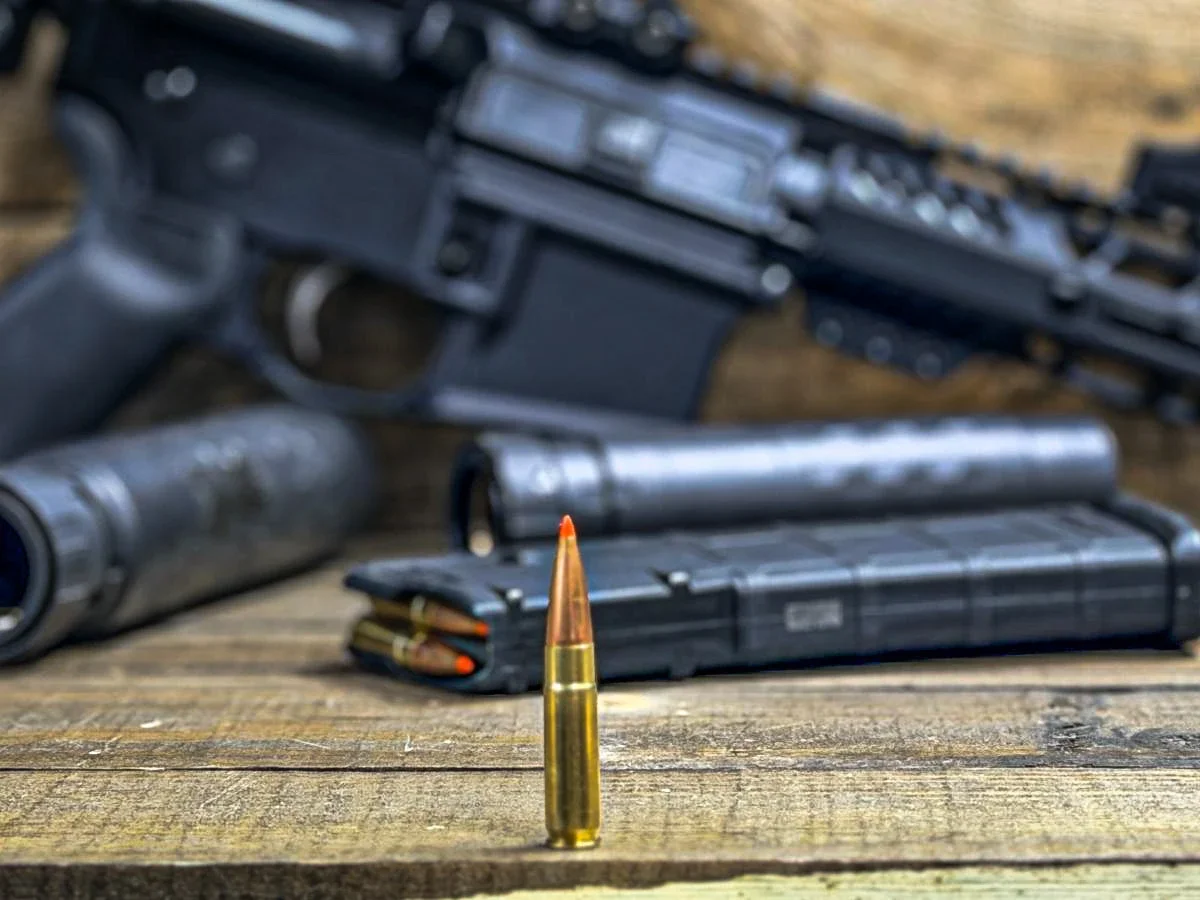
The climb was steady rather than explosive. Yearly averages run 6 in 2011, 22 in 2012, 35 in 2014, and 53 in 2016, then jump to 82 in 2020 with the June peak at 100. What is more interesting is what happened after. Interest settled around 57 for four straight years from 2021 through 2024, then climbed again: 63 in 2025 and 78 across the first eight months of 2026, with an 85 reading in August 2026. The cartridge is not coasting on a decade-old wave. It is having a second one.
The timing lines up with suppressor economics. The $200 federal NFA transfer and making tax dropped to $0 on January 1, 2026, under the budget bill signed July 4, 2025. For buyers outside the party-specific August 2026 Silencer Shop Foundation v. ATF injunction, registration and the Form 4 or Form 1 still apply, and for them a sub-16-inch .300 Blackout barrel on a rifle lower is still a short-barreled rifle that needs an approved Form 1 before assembly. Every dealer transfer still runs a background check regardless of that coverage. What changed is that the cost of entry to a suppressed host fell by $200 per stamp, and .300 Blackout is the default suppressed AR chambering. Our .300 Blackout suppressor and barrel-length guide covers which barrel lengths actually pay off, and the .300 Blackout versus 5.56 breakdown works through the cost-per-round math that decides most of these builds.
The performance is honest about its limits. Hornady lists the 125-grain American Gunner load at 2,175 fps and 1,313 ft-lbs from a 16-inch barrel, and SAAMI's reference for a 220-grain subsonic is 1,020 fps from the same 16 inches, a rare departure from the 24-inch test barrel SAAMI uses for most centerfire rifle cartridges. Nobody buys .300 Blackout for reach. They buy it because a 9-inch upper and a can make a quiet, controllable rifle out of parts they already own.
6mm ARC Passed 6.5 Grendel and Is Still Climbing
6mm ARC is the only cartridge in this set whose yearly average has risen every single year since it launched: 6 in 2021, 7 in 2022, 8 in 2023, 11 in 2024, 13 in 2025, and 15 across the first eight months of 2026. .300 Blackout is climbing again too, but off a plateau; 6mm ARC has never had a down year. It overtook 6.5 Grendel on the yearly average in 2025 and has led it in every single month of 2026 so far.
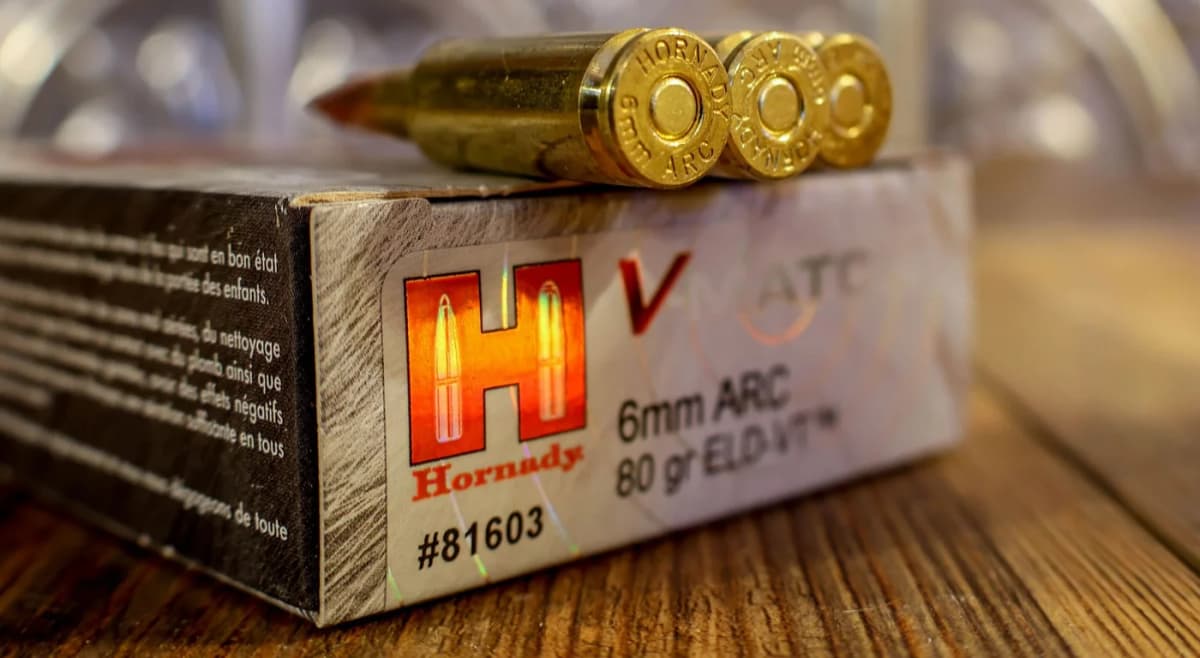
Hornady announced the cartridge on June 3, 2020, and the launch spike is visible and short: the series jumps to 19 that month, then falls to 6 by July. What matters is that it never went back to zero. Hornady's own announcement described the cartridge as recently tested, selected, and fielded by a specialized group within the US Department of Defense for its multipurpose combat rifle program, and no unit has ever been named. SAAMI had issued the chamber drawing that January.
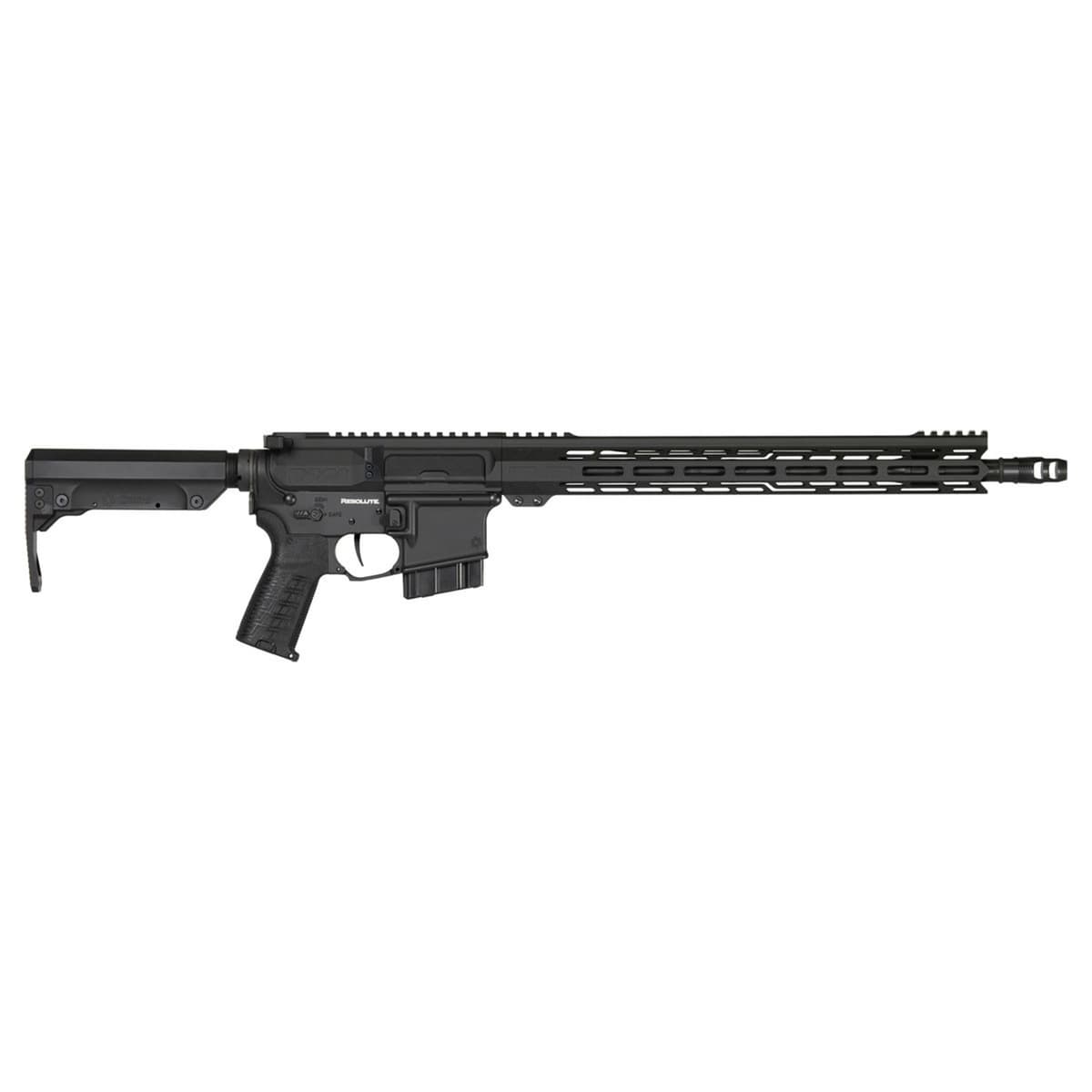
CMMG Resolute Mk4 6mm ARC 16.1"
Turnkey 6mm ARC AR-15 for coyotes and deer past the range 5.56 covers
Flat-shooting 6mm ARC small-frame AR-15 for predator and varmint hunting past the range where 5.56 runs out of energy.
- +Reaches 400-500 yard coyotes that 5.56 cannot
- +High-BC 6mm bullets buck wind far better than 5.56
- +Mild recoil keeps you on target for fast follow-ups
- −MSRP runs well above a budget 5.56 coyote AR
- −Requires 6.5 Grendel/6mm ARC-pattern magazines and bolt
- −Ammo costs more and is less common than 5.56
Affiliate links (?)
The reason the curve keeps rising is that 6mm ARC sits in a growing cartridge family. It shares the .220 Russian case lineage and the .441-inch case head of 6.5 Grendel, which lets host makers support both with the same bolt-face family. Hornady then put 22 ARC on that case lineage in 2024 and .338 ARC in 2025. That common ancestry can lower the parts burden inside a maker-documented system, but it does not promise universal bolt or magazine reuse. In particular, .338 ARC bolt or BCG fit and magazine fit must be checked separately for the exact host. For a finished rifle instead of a parts build, the best 6mm ARC rifles ranking compares AR-15s and bolt-actions by barrel, weight, and magazine.
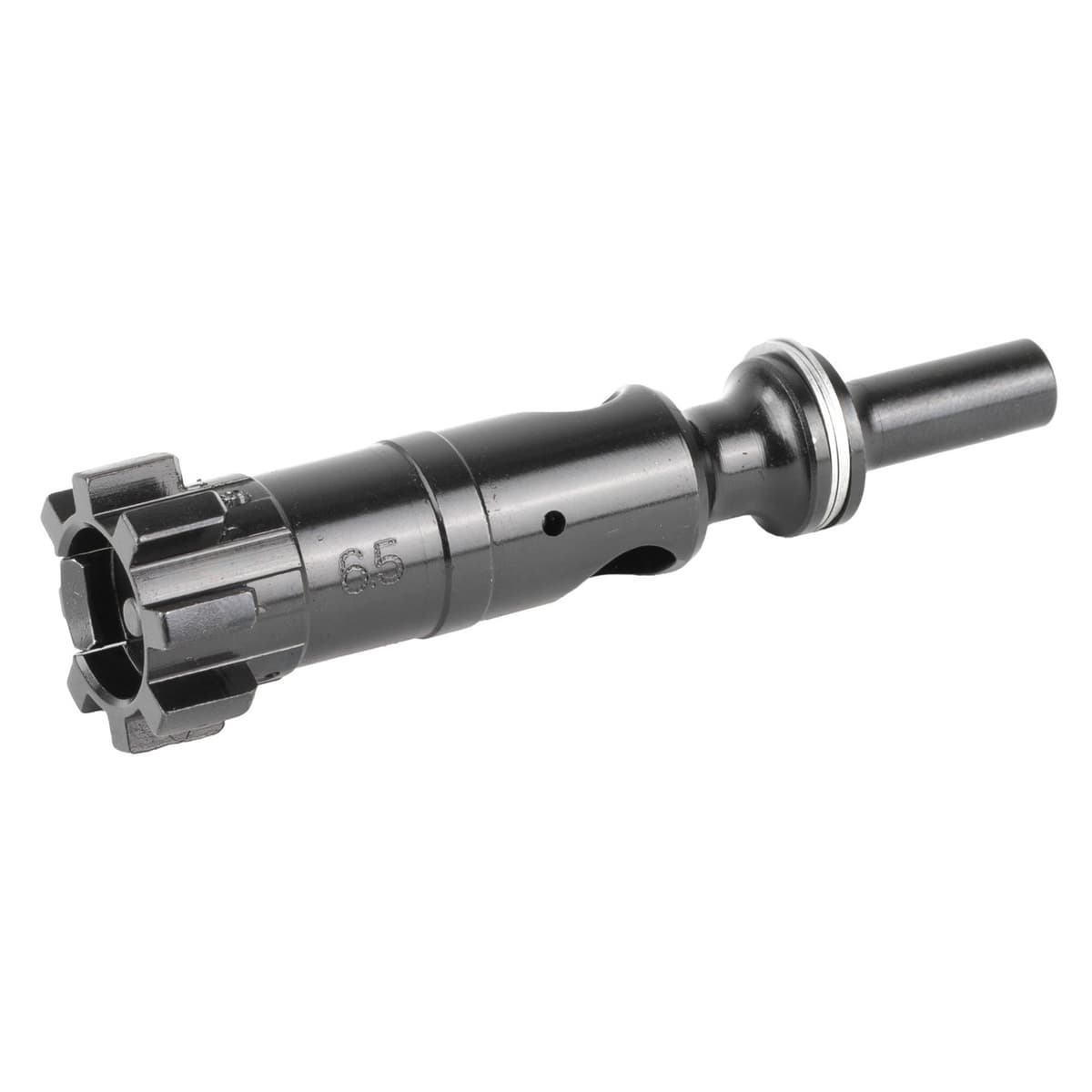
Faxon 6.5 Grendel/ARC Type 2 .136 Bolt
Faxon Type 2 .136 bolt for compatible Faxon Grendel/ARC barrels
9310 steel Type 2 (.136) bolt head; Faxon offers this bolt as the matching option on its .338 ARC barrel page.
- +Primary manufacturer support for the Faxon .338 ARC barrel build path
- +9310 steel construction with a nitride finish
- +Keeps the custom-build bolt choice tied to the barrel maker
- −Bolt head only; requires a separate 6.5 Grendel/ARC carrier
- −Not needed if the complete upper already ships with a Grendel/ARC bolt
- −Cannot be used with 5.56 or .300 Blackout (wrong bolt face)
Affiliate links (?)
On paper 6mm ARC gets its edge from bullet shape rather than pressure. It and 6.5 Grendel share a 52,000 psi SAAMI maximum average pressure, and 6mm ARC's 108-grain ELD Match runs 2,750 fps from a 24-inch test barrel against 2,580 fps for Grendel's 123-grain reference load. Those are test-barrel numbers. A real 16-inch AR barrel gives roughly 2,650 fps in 6mm ARC and about 2,450 fps in Grendel, and the practical gap is the higher-BC 6mm projectile holding velocity and resisting wind further out. The AR-15 hunting rifle guide covers where that reach actually changes the shot you can take.
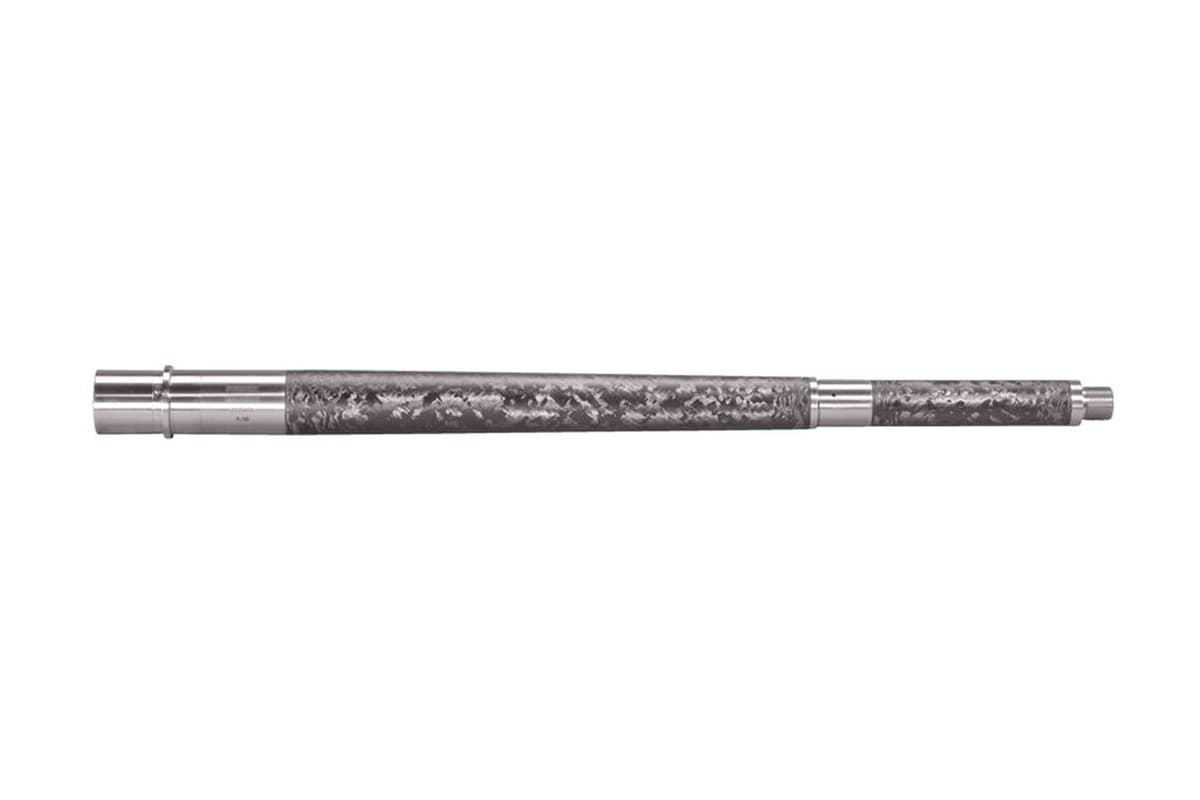
PROOF Research PR15 Carbon Fiber Barrel 16" 6mm ARC
Carbon-fiber 16-inch 6mm ARC barrel for gas-gun PRS and match builds
Carbon-fiber-wrapped 416R stainless 6mm ARC barrel for AR-15 PRS and gas-gun match builds, roughly half the weight of a comparable steel bull contour.
- +Significant weight savings without giving up bull-barrel accuracy
- +CAMGAS port tuning produces softer recoil impulse than off-the-shelf gas barrels
- +6mm ARC unlocks high-BC long-range performance from an AR-15 frame
- −$1,149 MSRP is roughly 3-5x a quality steel barrel
- −Carbon wrap limits low-profile gas-block clamping options
- −6mm ARC bolt and magazine costs add to the build beyond the barrel
Affiliate links (?)
6.5 Grendel Peaked in 2020 and Handed Over Second Place
6.5 Grendel spent seventeen years building an audience and then lost the lead in five. Its yearly average climbed slowly from 4 in 2004 to 14 in 2016, jumped to 23 in 2018, and peaked at 27 in 2020 with a monthly high of 34 in November 2020. From there it has declined every year: 21 in 2021, 18 in 2022, 16 in 2023, 13 in 2024, 12 in 2025, and 11 in 2026.
Bill Alexander of Alexander Arms developed it with Janne Pohjoispää of Lapua starting in 2003, necking the .220 Russian case up to 6.5mm to get high-BC bullets into an AR-15 magazine well. SAAMI standardized it in 2011, the same year as .300 Blackout. It worked, and it is still a good cartridge; it did not fail on performance.
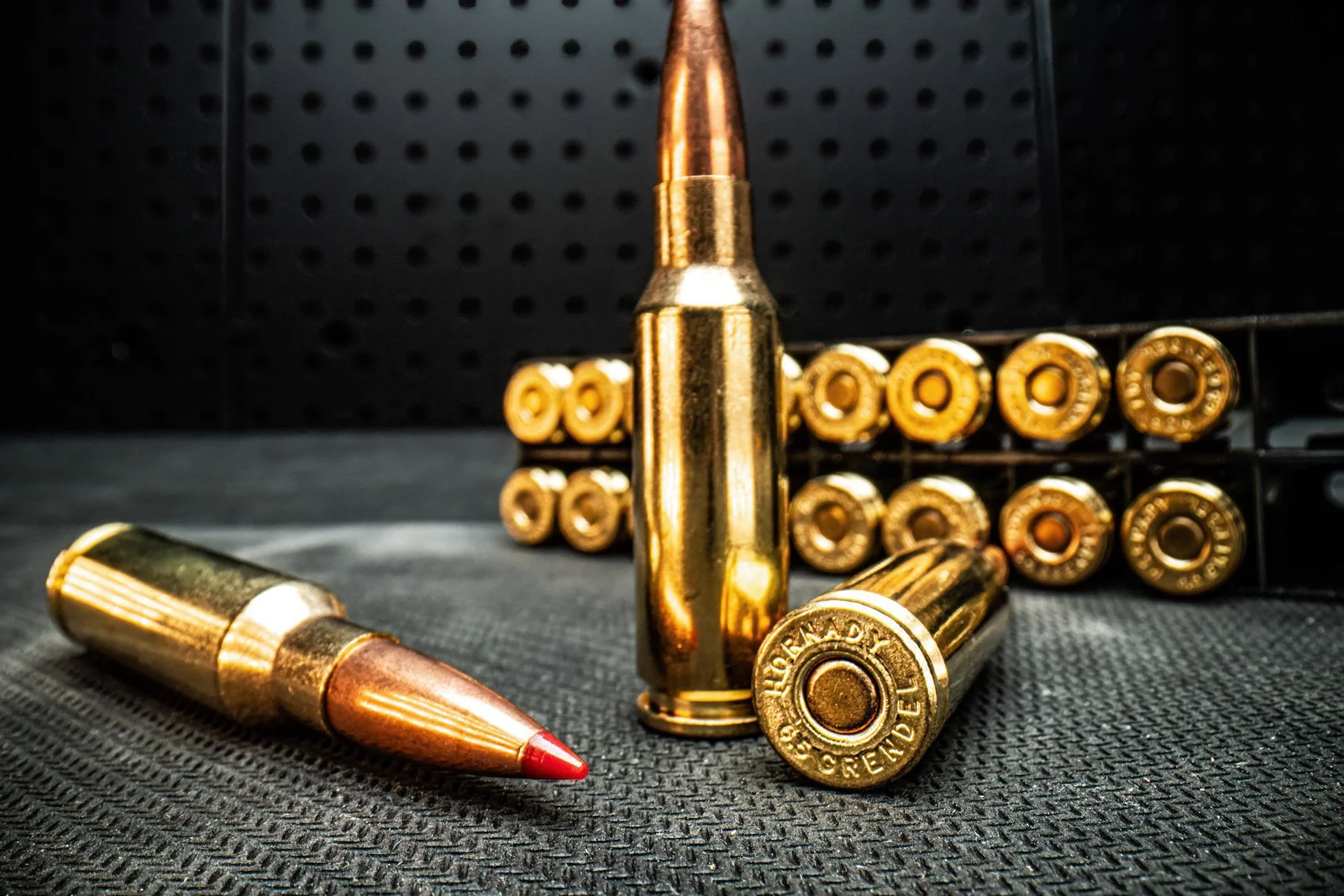
What happened is that 6mm ARC arrived using Grendel's own case head, its own bolt, and its own magazines. A shooter comparing the two is not comparing two ecosystems, because they are the same ecosystem with different barrels. Given identical parts costs everywhere except the barrel, the newer chambering with the flatter trajectory and the factory-ammunition momentum takes the sale. The timing supports that reading: Grendel's decline begins in 2021, the first full year 6mm ARC was on the market.
6.8 SPC Has Been Sliding Since 2012
6.8 SPC is the only cartridge here that peaked before 2015 and never got a second act. Its monthly high is 18 in December 2012, its yearly average peaked at 11 that same year, and it has read 3 every year since 2024. It started this data set in 2004 roughly level with 6.5 Grendel and finishes it at roughly a quarter of Grendel's value.
The cartridge came out of a real military requirement. Remington developed it with the Army Marksmanship Unit and USSOCOM in the early 2000s, with MSG Steve Holland of 5th Special Forces Group and AMU gunsmith Chris Murray driving the work, and SAAMI issued the chamber drawing on June 23, 2004. It was the first serious attempt to fix 5.56 terminal performance inside the AR-15 magazine well, built on a shortened .30 Remington case.
Then the adoption never came. Period accounts record that USSOCOM and the Marine Corps both passed on fielding it in 2007, citing logistics and cost. The military demand that would have underwritten ammunition production and rifle availability never materialized, and the commercial market had already started moving toward .300 Blackout for suppressed work and 6.5 Grendel for reach. SAAMI's velocity table lists 115-grain loads at 2,610 and 2,760 fps from a 24-inch barrel, respectable numbers. They were not enough to hold a niche against two cartridges that each did one job better.
.224 Valkyrie: Launch to Irrelevance in Four Years
.224 Valkyrie is the cleanest hype cycle in this data set: no search interest before October 2017, a peak of 21 in January 2018, and a 2026 average of 2. The entire arc from first appearance to terminal decline takes about four years, and unlike every other cartridge here it has no plateau. It goes up, it comes down, and it keeps coming down.
Federal announced the cartridge in October 2017 with a specific and aggressive claim: the first AR-15 cartridge to offer controlled recoil and supersonic velocities past 1,300 yards. SAAMI issued the chamber drawing on January 22, 2018, and the launch coverage peaked with it. The design is a 6.8 SPC case necked down to .224, which is why both cartridges carry the same .422-inch case head.
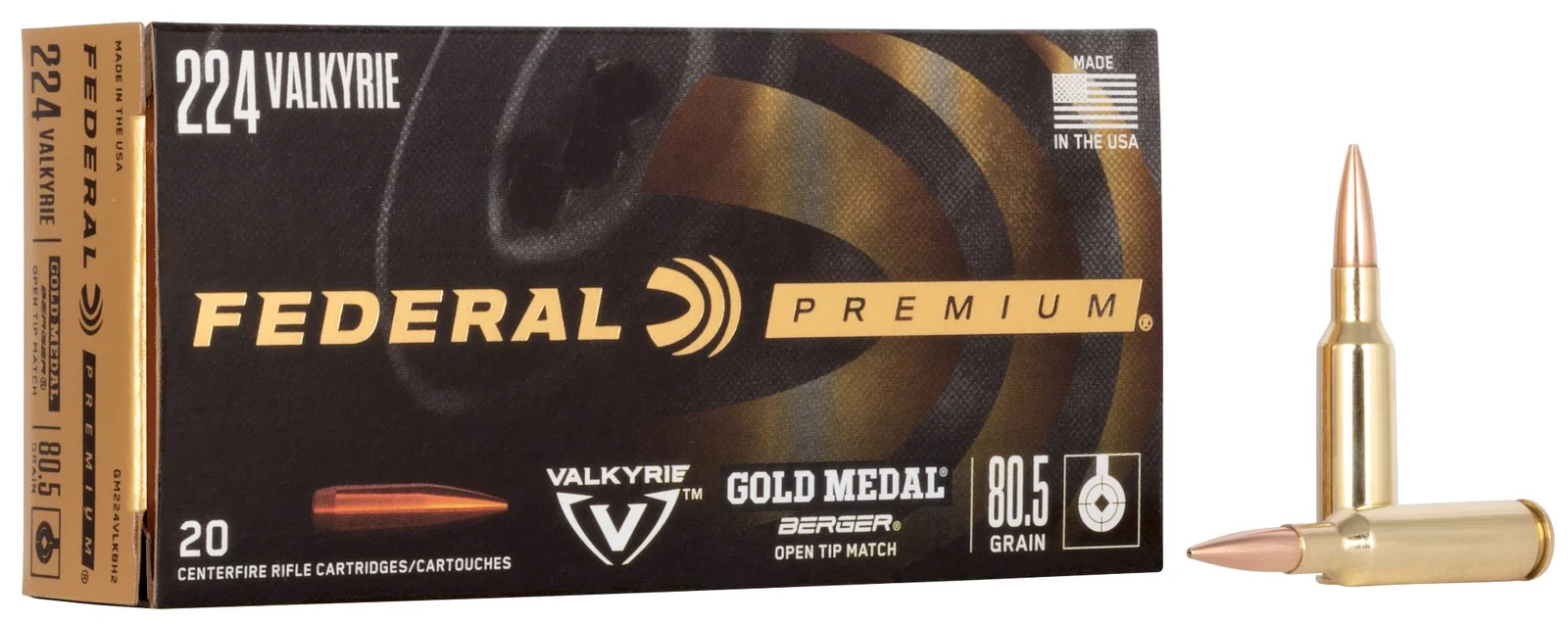
The decline is not a story about the cartridge being bad. Shooter consensus points at early factory barrels twisted too slowly for the heavy bullets and inconsistent factory-rifle accuracy in the first two years, which is enough to lose a long-range crowd that has alternatives. Then .22 Creedmoor and Hornady's 22 ARC took the .22-caliber long-range niche outright, and 22 ARC did it on a case head that shares parts with two cartridges people already own. Federal still catalogs .224 Valkyrie, and SAAMI posted a revised chamber drawing in April 2026 carrying a November 18, 2025 revision date, so this is a cartridge with no audience rather than a discontinued one.
The Same Four Cartridges Without .300 Blackout
Removing .300 Blackout from the comparison makes the other four legible. The table below is a separate Google Trends request for just 6mm ARC, 6.5 Grendel, 6.8 SPC, and .224 Valkyrie, retrieved the same day. A new request rescales every value inside the new set, so 100 here is 6.5 Grendel in November 2020 rather than .300 Blackout in June 2020. These numbers are internally consistent and describe the four-way race accurately. They cannot be compared to the five-term figures above.
Read this way, the crossover is unmistakable. 6.5 Grendel runs from 11 in 2004 to a peak of 79 in 2020, then falls to 31 in 2026. 6mm ARC runs from 19 in its launch year to 45 in 2026 and takes the lead outright. .224 Valkyrie hits 44 in 2018 and lands at 5. 6.8 SPC never exceeds its 2012 mark of 33.
| Year | 6mm ARC | 6.5 Grendel | 6.8 SPC | .224 Valkyrie |
|---|---|---|---|---|
| 2004 | – | 11 | 12 | – |
| 2008 | – | 17 | 19 | – |
| 2012 | – | 25 | 33 | – |
| 2016 | – | 41 | 21 | – |
| 2018 | – | 66 | 21 | 44 |
| 2020 | 19 | 79 | 19 | 24 |
| 2022 | 21 | 52 | 14 | 12 |
| 2024 | 31 | 37 | 9 | 7 |
| 2025 | 36 | 35 | 9 | 6 |
| 2026 | 45 | 31 | 9 | 5 |
Current .300 Blackout Barrels
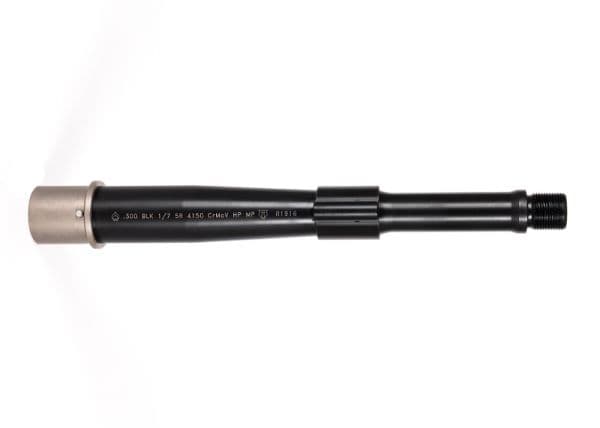
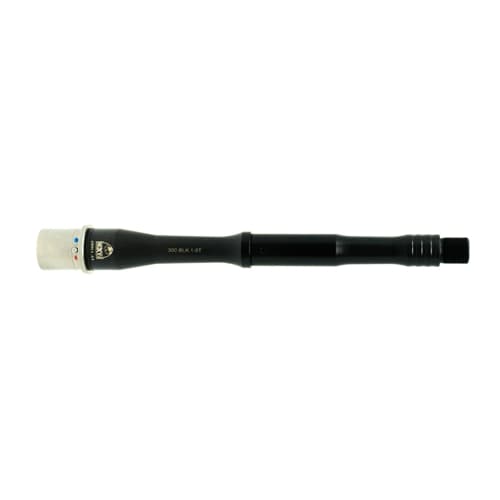
Ballistic Advantage 8.3" .300 Blackout BA Hanson Premium Barrel
- 8.3" length
- .300 AAC Blackout
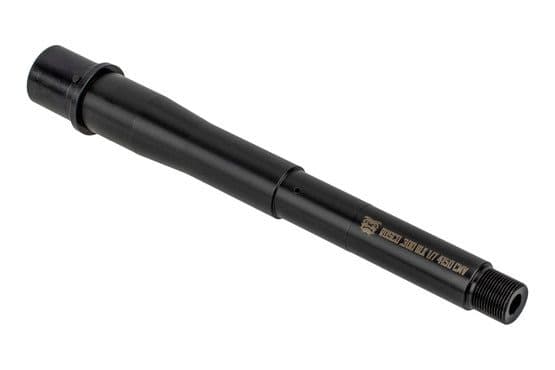
Faxon 9" .300 Blackout Gunner Barrel
- 9" length
- .300 AAC Blackout
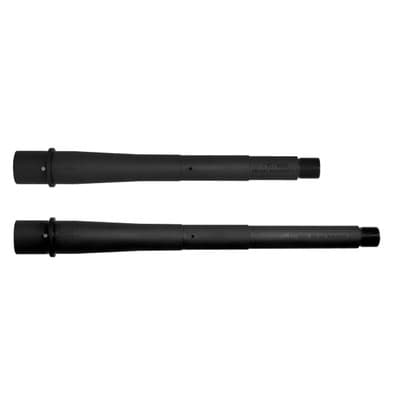
Rosco Bloodline 8.2" .300 Blackout Barrel
- 8.2" length
- .300 AAC Blackout
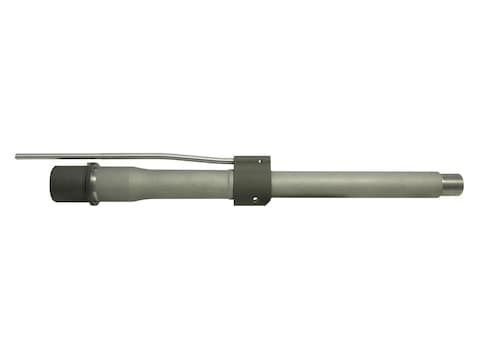
Criterion 8.5" .300 Blackout CORE Barrel
- 8.5" length
- .300 AAC Blackout
Noveske 10.5" .300 Blackout Shorty Stainless Barrel
- 10.5" length
- .300 AAC Blackout
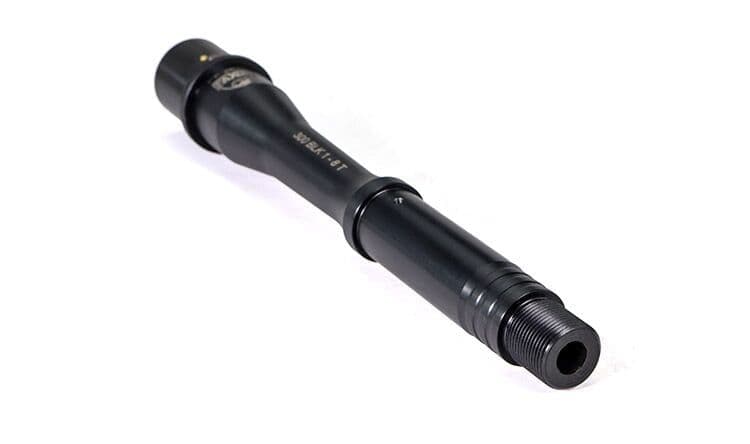
Faxon 7.5" .300 Blackout Gunner Barrel
- 7.5" length
- .300 AAC Blackout
Affiliate links (?)
What This Means If You Are Picking a Second Upper
Pick by what the cartridge asks you to replace, then by what it does. .300 Blackout costs you a barrel and nothing else, which is why it wins on volume and why it is the right answer for a suppressed short-barreled host. 6mm ARC costs you a barrel, a bolt, and magazines, and it buys reach that neither 5.56 nor .300 Blackout can deliver from an AR-15 magazine well. Those are the two live options in this data.
6.5 Grendel remains a capable cartridge with a shrinking audience and, critically, no parts advantage over 6mm ARC, because they use the same bolt and the same magazines. If you already own a Grendel upper, keep shooting it. If you are buying the ecosystem for the first time, the newer chambering is where the factory ammunition and the new rifles are going. 6.8 SPC and .224 Valkyrie are legacy purchases; both are still supported, and neither is where new development is happening. You can compare any of these builds side by side in the rifle builder, which enforces the bolt and magazine compatibility rules this article keeps circling, and the AR-15 caliber selection guide works through cost per round and recoil for each.
Yearly Data Table
Calendar-year means of the monthly relative-interest values from the five-cartridge set, per series. 2026 covers January through August. Dashes mark years with no data for that term.
| Year | 6mm ARC | 6.5 Grendel | .300 Blackout | 6.8 SPC | .224 Valkyrie |
|---|---|---|---|---|---|
| 2004 | – | 4 | – | 4 | – |
| 2005 | – | 3 | – | 4 | – |
| 2006 | – | 3 | – | 4 | – |
| 2007 | – | 4 | – | 5 | – |
| 2008 | – | 6 | – | 7 | – |
| 2009 | – | 6 | – | 8 | – |
| 2010 | – | 7 | 1 | 8 | – |
| 2011 | – | 8 | 6 | 10 | – |
| 2012 | – | 9 | 22 | 11 | – |
| 2013 | – | 7 | 30 | 10 | – |
| 2014 | – | 7 | 35 | 8 | – |
| 2015 | – | 9 | 42 | 7 | – |
| 2016 | – | 14 | 53 | 7 | – |
| 2017 | – | 19 | 48 | 7 | 8 |
| 2018 | – | 23 | 48 | 7 | 15 |
| 2019 | – | 23 | 50 | 6 | 9 |
| 2020 | 7 | 27 | 82 | 6 | 8 |
| 2021 | 6 | 21 | 57 | 5 | 5 |
| 2022 | 7 | 18 | 58 | 5 | 4 |
| 2023 | 8 | 16 | 57 | 4 | 3 |
| 2024 | 11 | 13 | 57 | 3 | 2 |
| 2025 | 13 | 12 | 63 | 3 | 2 |
| 2026 | 15 | 11 | 78 | 3 | 2 |
Embed this chart
The chart above is a standalone SVG at rifleconfigurator.com/research/trends/rifle-cartridges/chart, 880 by 460, with its source line built in.
The chart and both tables above are free to reuse, in whole or in part, in commercial and non-commercial work, with attribution to Rifle Configurator Research and a link to this report. More published data sets live at Rifle Configurator Research.
Methodology
The series come from Google Trends, United States, web search, retrieved August 15, 2026, covering January 2004 through August 2026. All five terms in the main set were compared in a single request, which is what makes their values comparable to one another. The four-term table in the boutique-cartridge section is a second, separate request; a new request rescales the whole set, so those values are valid against each other and invalid against the five-term figures.
Values are relative interest on a 0 to 100 scale within a keyword set. They are not search volumes, not unit sales, and not impressions. A value of 100 marks the highest month any term in that set reached. Yearly figures in this report are calendar-year means of the monthly values, and 2026 covers January through August, so it is a partial year.
Two caveats travel with search data. Interest in a cartridge name includes people researching, arguing, and reading, not only people buying, so this measures attention rather than revenue. And a term like "300 blackout" collects some traffic that is not about the AR-15 cartridge at all. The relative shape of each curve over 22 years is the durable signal; any single month is not. The frozen data set behind this report, along with our other published research, lives at Rifle Configurator Research, and the Rifle Build Index measures the same market from configuration behavior instead of search.
Stay Updated on AR-15 Cartridge Data
New trend studies, build-index editions, and cartridge coverage as they publish.