Best Reloading Dies 2026: Brass, Powder & Primers
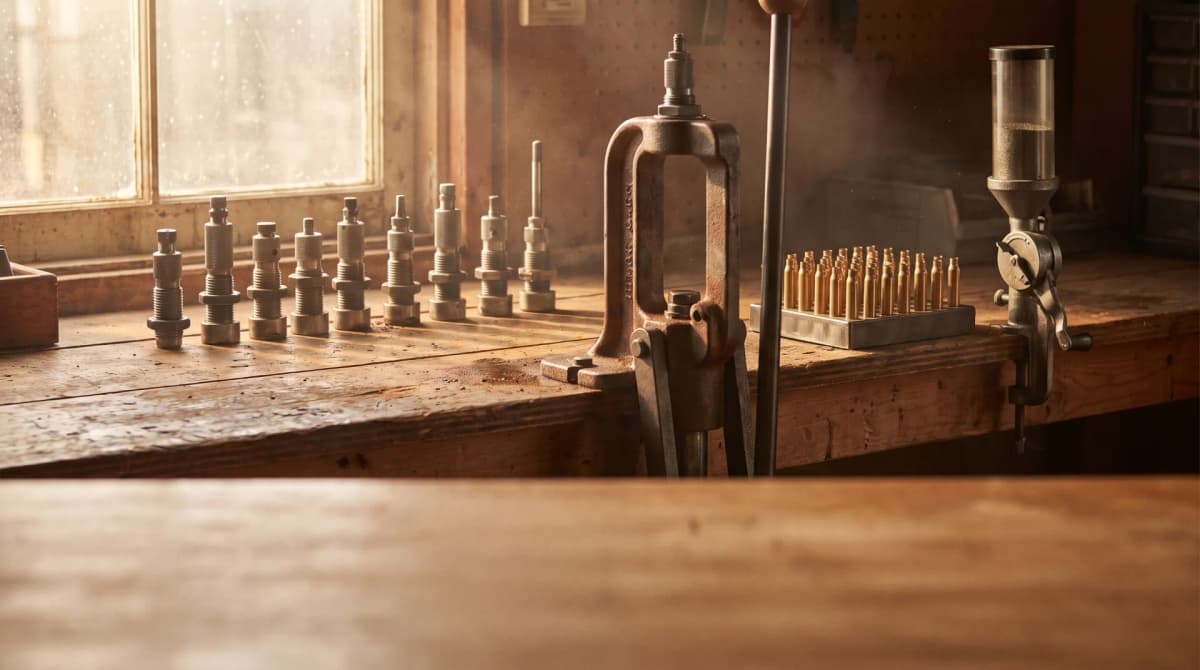
The RCBS Group A full-length two-die set at $52.99 is the die set most reloaders should buy: it sizes and seats everything a bottleneck rifle cartridge needs, and it costs less than a box and a half of match ammunition. Move up to the Forster Bench Rest set at $130.99 when seating concentricity starts limiting your groups, and to the Redding Type S Match bushing set at $264.99 when you want to tune neck tension directly. For pistol, carbide is the whole argument: it sizes without lube. This guide ranks nine rifle and pistol die sets, then covers the brass, powder, and primers that turn a press and a die set into loaded ammunition.
The Best Reloading Dies Ranked
Rifle and pistol die sets ranked across sizing method, seating precision, and price. Rifle sets are specified and priced at .308 Winchester and pistol sets at 9mm Luger; die sets are sold per cartridge, so confirm the SKU and price for your chambering.
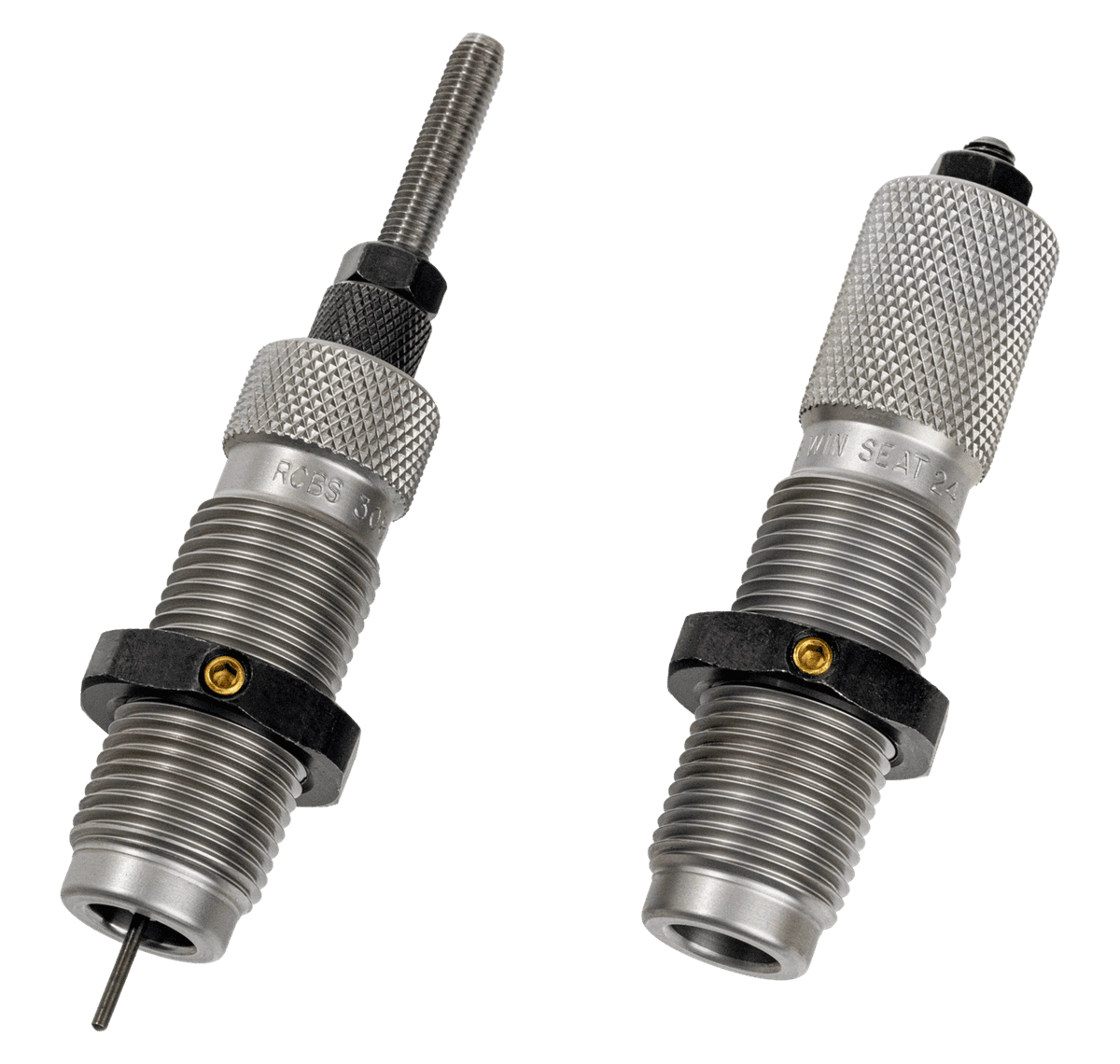
RCBS Group A Full Length Die Set
Best Overall Rifle Die Set
- +Lowest-risk first die set: covers sizing and seating with no gaps
- +SAAMI-minimum sizing produces ammunition that chambers anywhere
- +Vented body avoids the dented shoulders unvented dies cause
- −Steel sizing die, so case lubricant is mandatory on every case
- −Fixed expander ball sets neck tension for you with no adjustment
- −Seating depth is set by a lock ring rather than a micrometer
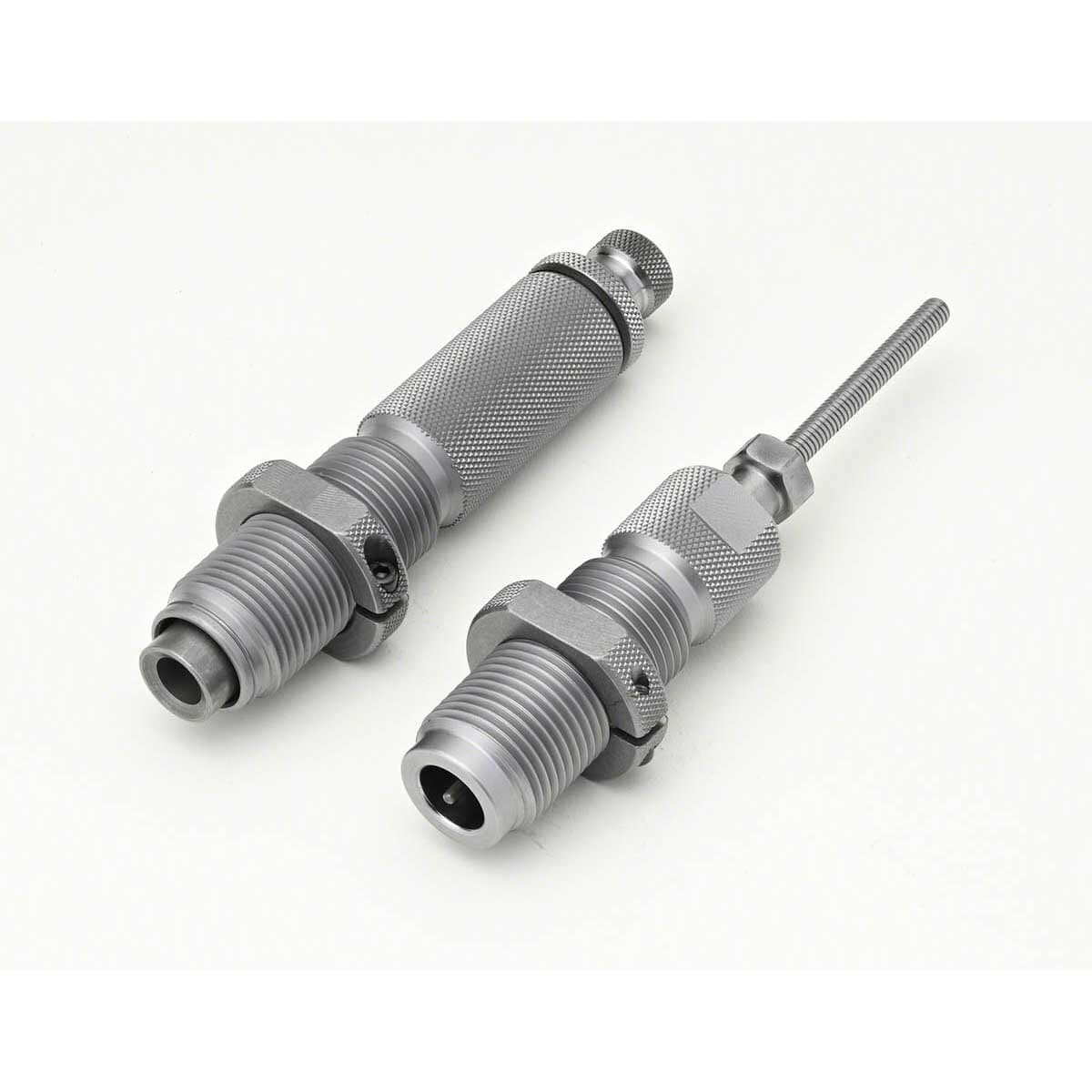
Hornady Custom Grade New Dimension
Best All-Around Rifle Die Set
- +Elliptical expander is a genuine improvement over a plain expander ball
- +Floating seater sleeve improves seating concentricity for little money
- +Zip Spindle makes decap-stem setup tool-free and repeatable
- −Rifle sizing die is steel, so case lubricant is still mandatory
- −Neck tension is fixed by the expander rather than selectable
- −Costs a few dollars more than a basic full-length set
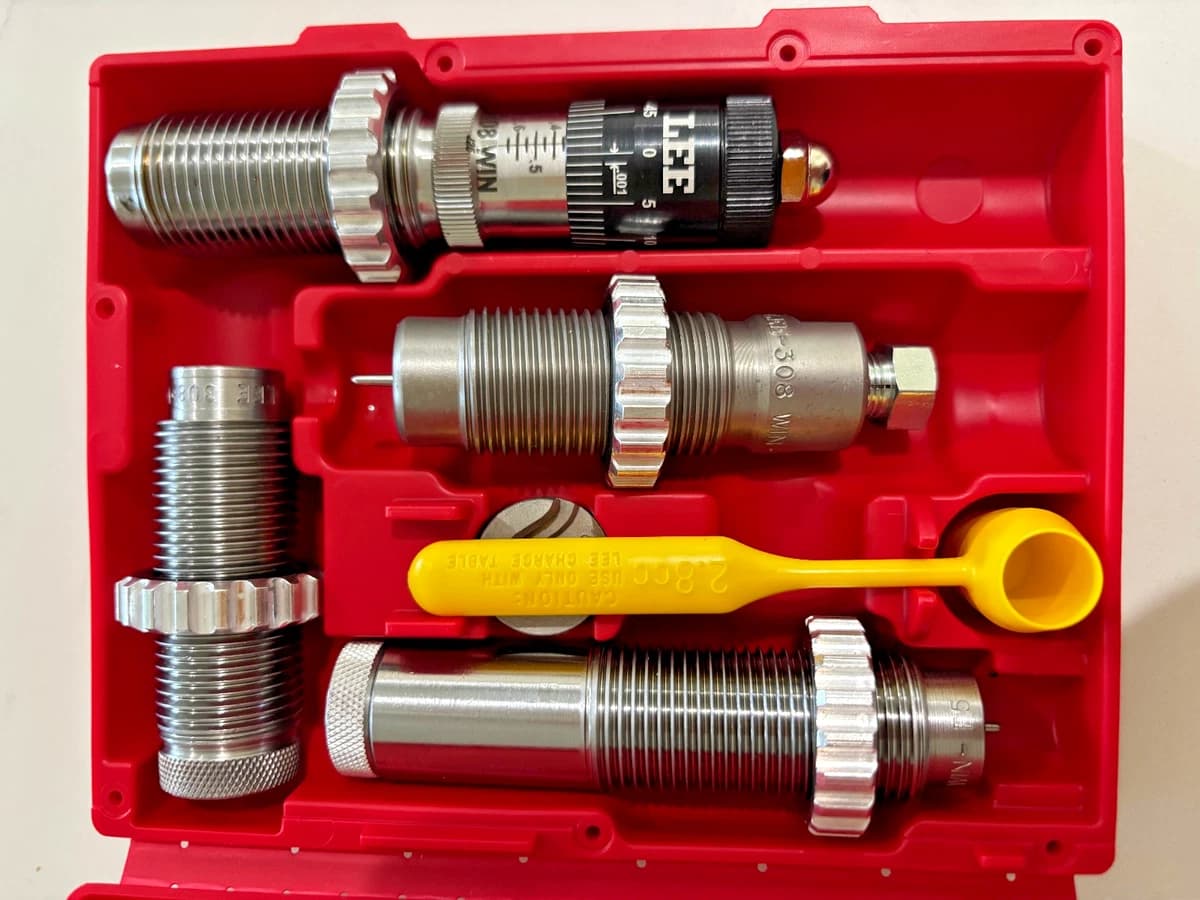
Lee Pacesetter Micrometer 3-Die Set
Best Budget Die Set
- +Cheapest complete rifle die set, and it includes a micrometer seater
- +Factory Crimp Die is genuinely useful on semi-auto and tube-magazine ammunition
- +Ships with shell holder, powder measure, and load data
- −Steel sizing die, so case lubricant is mandatory
- −Fit and finish trail RCBS, Hornady, Forster, and Redding
- −No bushing option, so neck tension is not adjustable
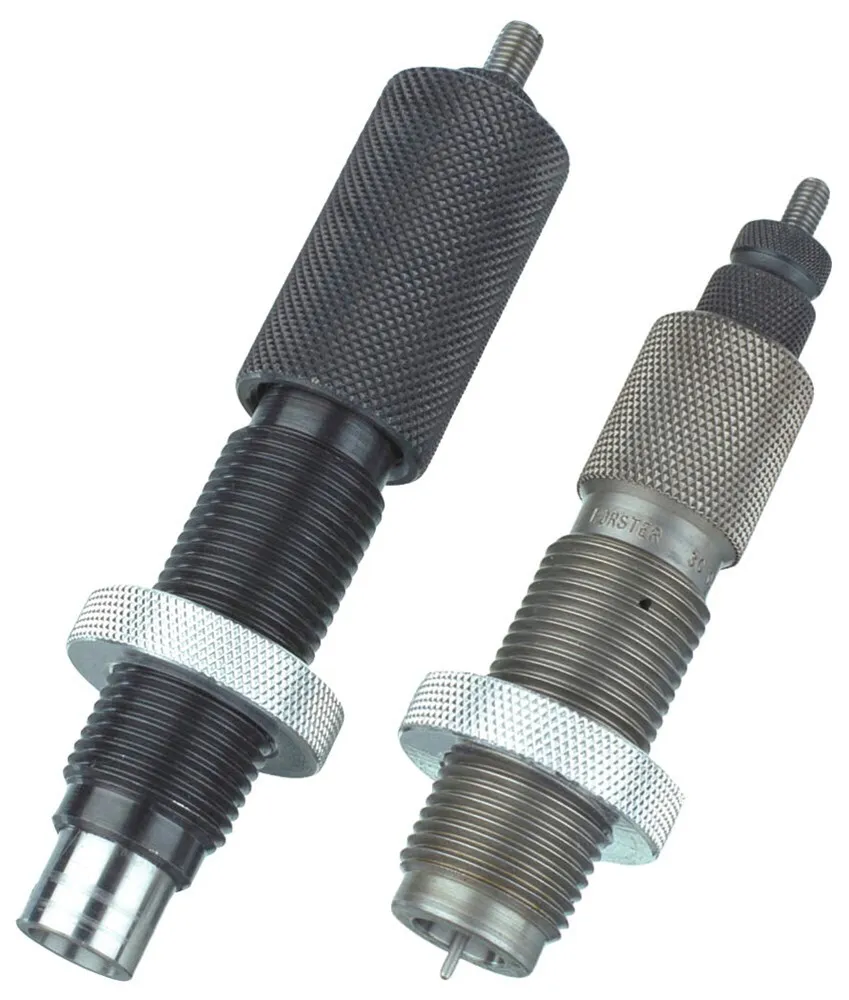
Forster Bench Rest 2-Die Set
Best Precision Value
- +Best seating concentricity mechanism available at this price
- +Whole-case support beats neck-only alignment on ordinary seaters
- +Expander works at the bottom of the stroke where leverage is highest
- −Seater does not crimp, so tube-magazine and some semi-auto loads need another die
- −Steel sizing die requires high-pressure case lubricant
- −Thick-necked brass such as Lapua may need Forster's neck honing service
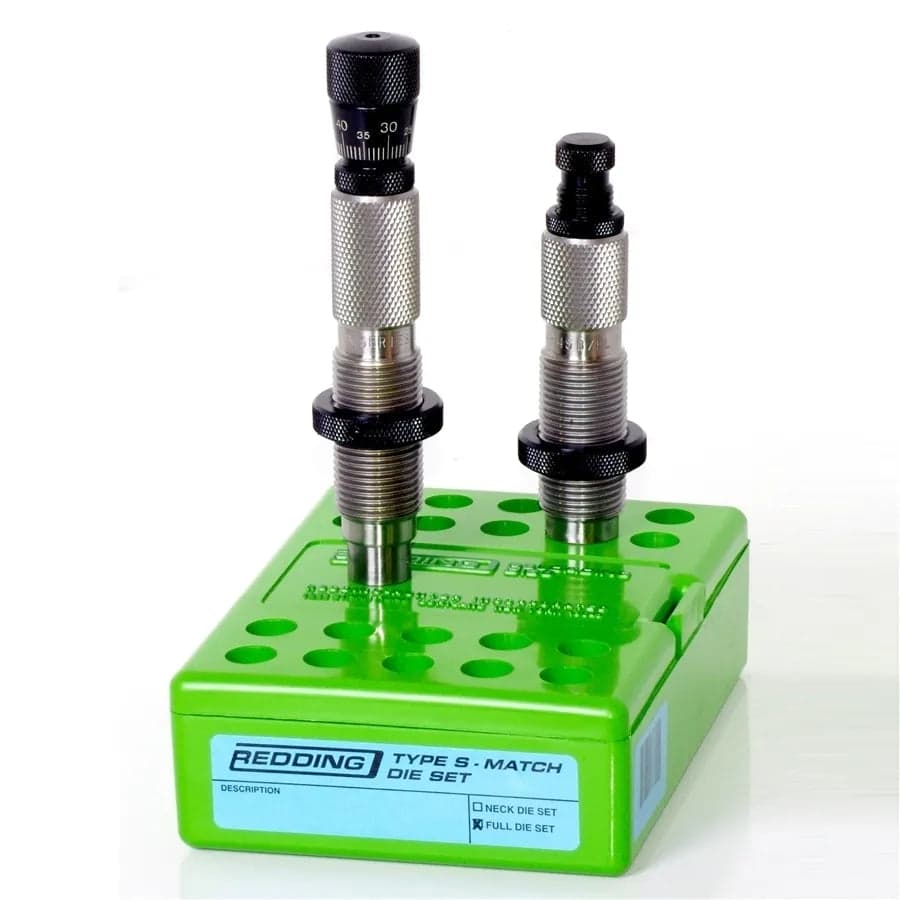
Redding Type S-Match Bushing Set
Best Neck Tension Control
- +Neck tension becomes a variable you select and can test against targets
- +Bushing self-centering avoids the runout an expander ball can induce
- +Doubles as a body die when the bushing is removed
- −Bushings are sold separately, so the real cost exceeds the set price
- −Redding advises keeping the expander button unless necks are turned uniform
- −Steel dies still require case lubricant on the body
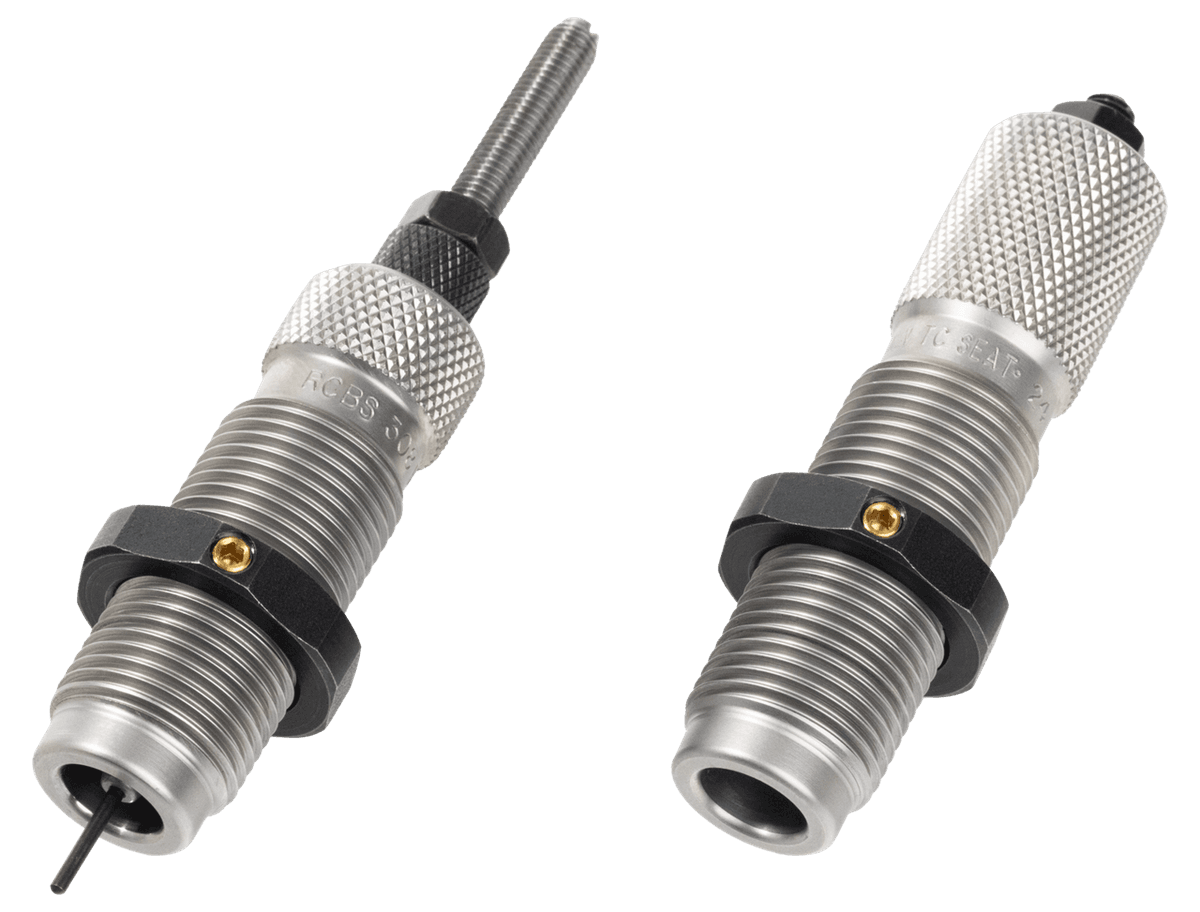
RCBS AR Series Small Base Set
Best for AR-10 and Gas Guns
- +Solves the failure-to-go-into-battery problem standard dies can leave
- +Taper crimp guards against bullet setback in a semi-automatic
- +Costs barely more than a standard full-length set
- −RCBS does not recommend it for bolt-action ammunition
- −Extra sizing works the brass harder and shortens case life
- −Steel dies require case lubricant
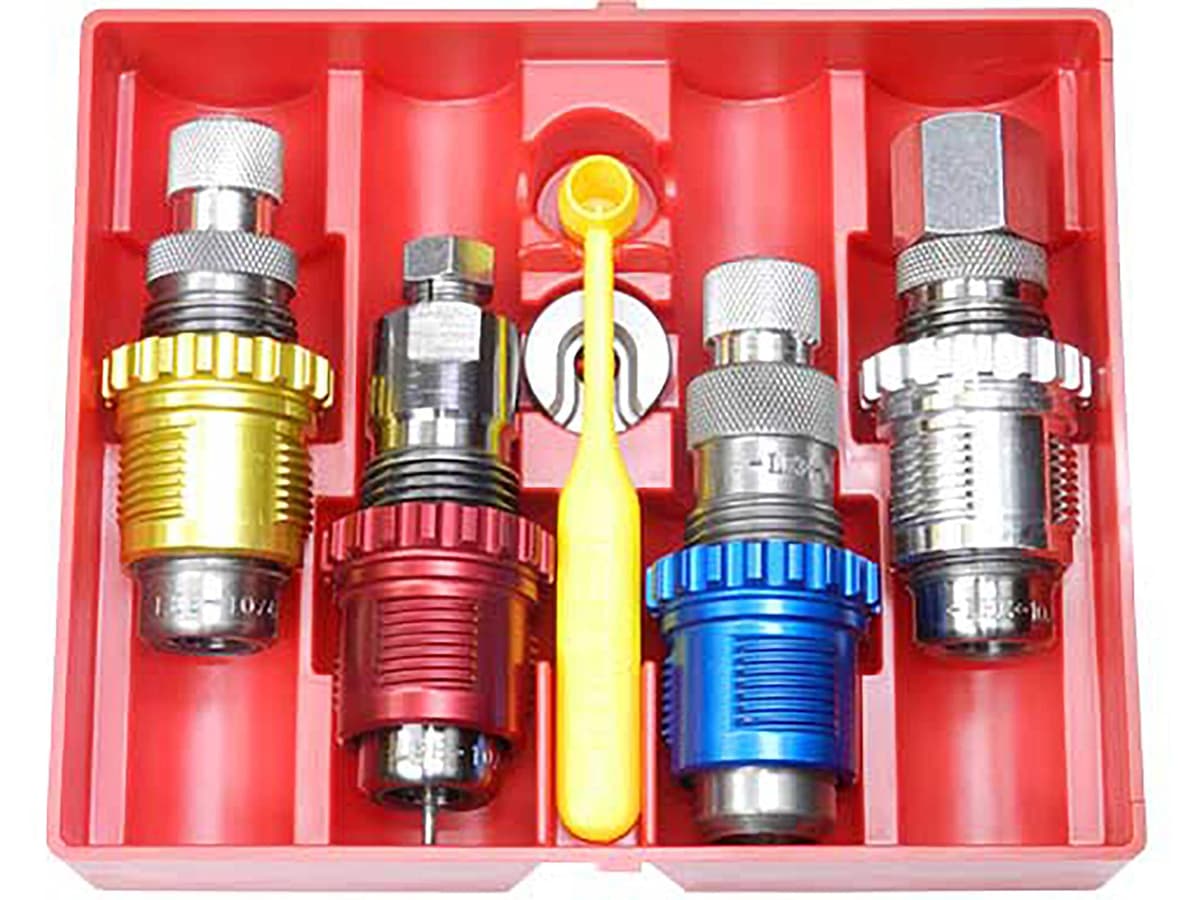
Lee Breech Lock Carbide 4-Die Set
Best Value Pistol Dies
- +Lube-free sizing removes an entire step from high-volume pistol loading
- +Four-die layout separates crimp from seating, ideal on a progressive
- +Factory Crimp Die post-sizes so finished rounds chamber reliably
- −Fit and finish trail Dillon and Redding pistol dies
- −Lee's own parts list is ambiguous about whether this SKU seats by micrometer
- −Breech Lock bushings only pay off once your dies all wear them
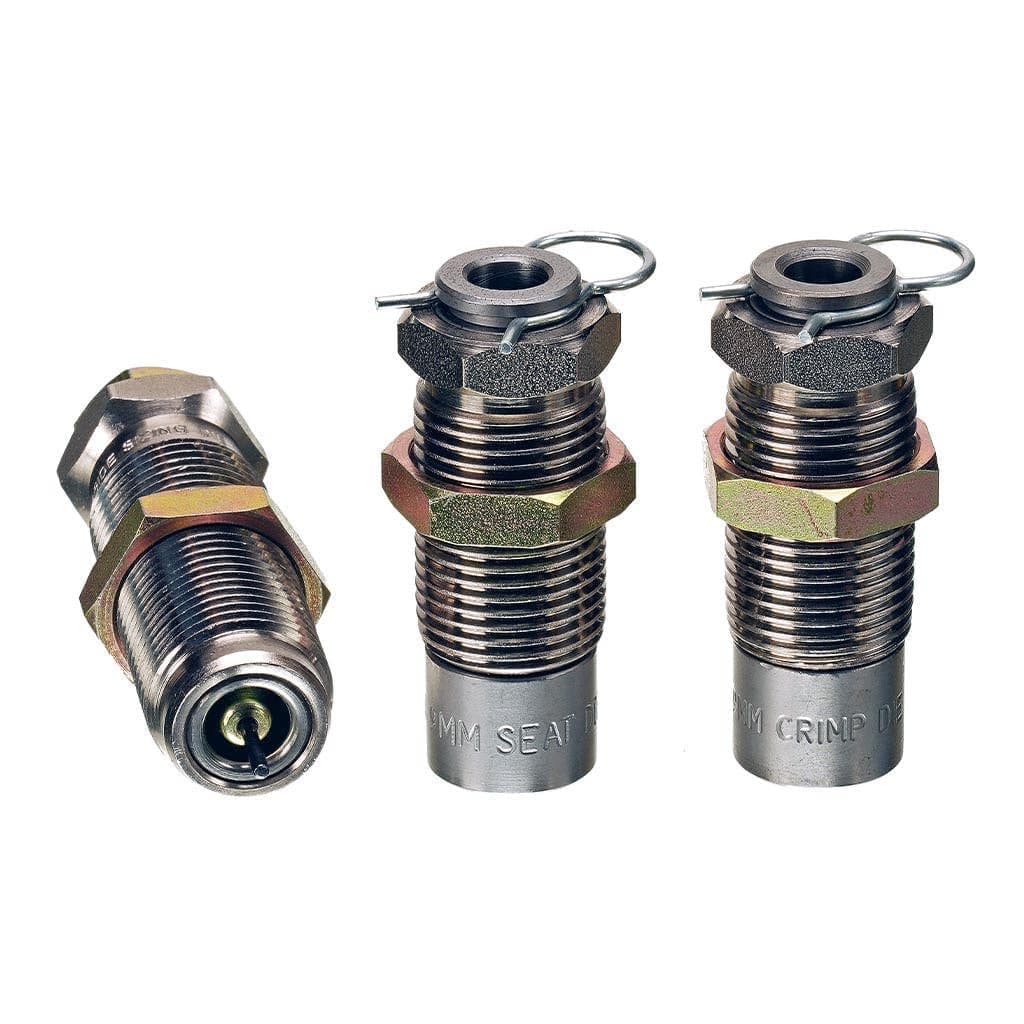
Dillon Carbide Pistol 3-Die Set
Best Pistol Dies for Progressives
- +Every design choice targets progressive-press speed and misalignment
- +Cleaning the seater or crimp die does not cost you the adjustment
- +Floating decapper handles military brass better than a fixed pin
- −Twice the price of the Lee carbide set for the same three operations
- −Not compatible with Dillon's own Square Deal B press
- −Three-die layout crimps in a separate die but omits a fourth station option
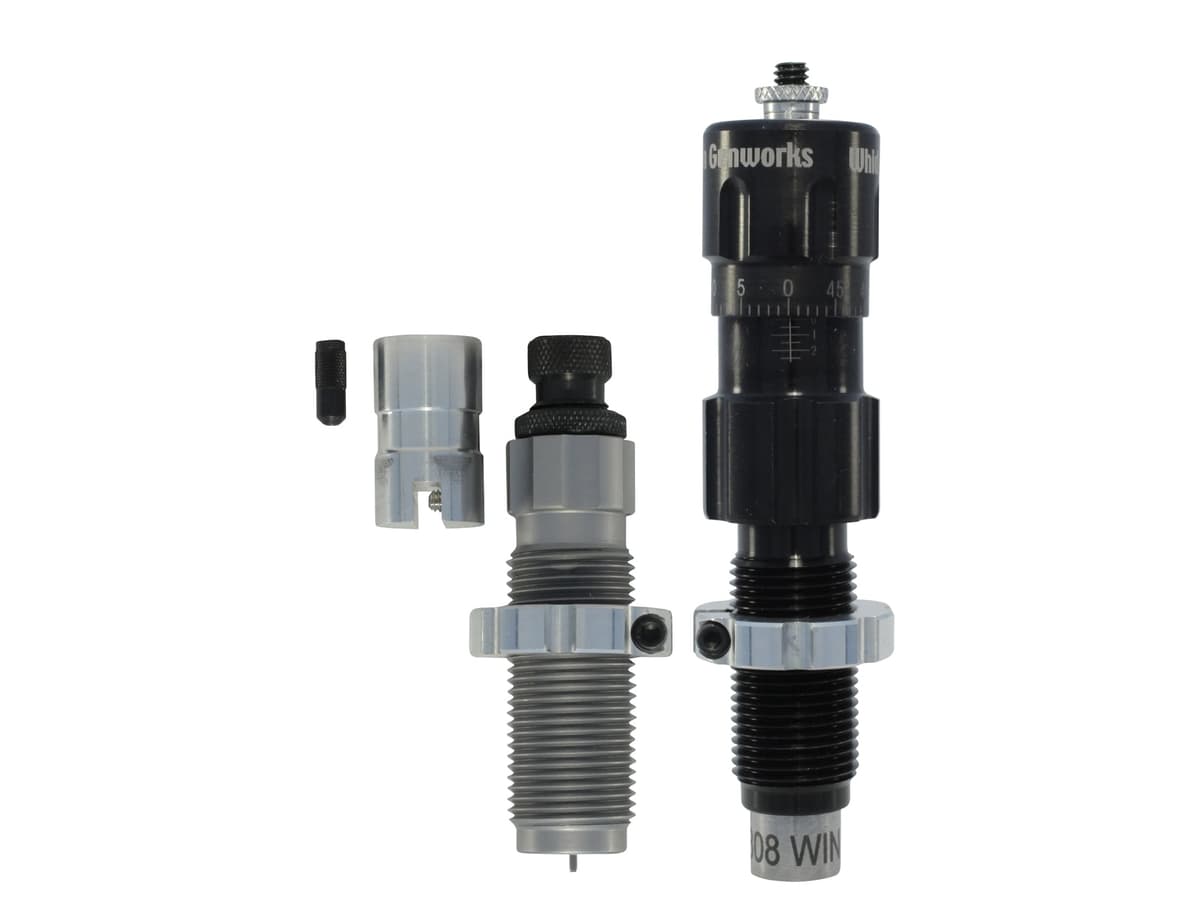
Whidden Click Adjustable Bushing Set
Best Competition Die Set
- +Shoulder bump becomes a repeatable dialed number, not a feel adjustment
- +Micrometer seater and bump gauge make the whole set measurable
- +Bushing compatibility across three brands avoids lock-in
- −Will not work with a Dillon 550 or 650 press
- −Bushings are sold separately on top of an already premium price
- −Overkill for anyone not measuring headspace and seating depth already
Prices are for the cartridge noted on each card. Die sets are sold per cartridge, so confirm the chambering before checkout. Dies size and seat; they do not verify a powder charge. Weigh charges against a scale and work loads up from the powder maker's current published starting data.
Affiliate links - purchases support this site at no extra cost to you. (?)
How We Ranked These Reloading Dies
Dies are ranked on how repeatably they size and seat, not on brand prestige. Three things decide the order: how much control the set gives you over the two dimensions that actually move groups, shoulder bump and neck tension; how concentrically the seating die aligns a bullet to the case; and what all of that costs against a set that simply works. A $53 set that produces ammunition indistinguishable from factory match on a hunting rifle outranks a $340 set for the reader who owns one deer rifle. The premium sets earn their place only where the shooter can measure the difference.
Rifle sets are priced and specified at .308 Winchester and pistol sets at 9mm Luger so the comparison is apples to apples. Die sets are sold per cartridge, and the August 2026 prices here are for those two chamberings specifically, so verify the exact SKU and current price for your cartridge before buying. The ranking itself reads on each die line's design, which does not change between chamberings.
Die Types Explained: What You Actually Need
Full-length sizing is the right default, and neck sizing is mostly a solved argument. A full-length die resizes the case body and pushes the shoulder back so the round chambers anywhere; a neck sizing die works only the neck and leaves the fire-formed body alone. Neck sizing was promoted for decades as the accuracy choice because it works the brass less, but it produces ammunition tied to one chamber and still needs a body die eventually. Current practice, up through the competitive ranks, is full-length sizing with the shoulder bumped back a controlled one to three thousandths. The sizing dies in this guide follow that practice; the one deliberate outlier is the RCBS AR Series set, whose small base sizer squeezes the case body below SAAMI minimum for semi-autos rather than to standard full-length dimensions.
Die count describes operations, not quality. A two-die rifle set is a full-length sizer plus a seater, which is everything a bottleneck cartridge requires. A three-die rifle set adds a standalone crimp die. On straight-wall pistol cartridges the arithmetic changes: a three-die set is sizer, case-mouth expander, and seater, and a four-die set splits the crimp out of the seating die so bullet depth and crimp are adjusted independently. That separation is why four-die pistol sets are the common choice on progressive presses, where you set a station once and stop touching it.
Carbide is a pistol answer, not a rifle answer. A carbide sizing ring is slick and hard enough to size a straight-wall case without lubricant, which removes the lube and degrease steps from a 500-round pistol session. That is a genuine workflow change, and it is why every pistol set here is carbide. Bottleneck rifle cases still have to be squeezed through a tapered die that reforms the shoulder, so rifle sizing needs case lube whether or not the die has a carbide ring. Skip the lube on a rifle case exactly once and you will spend the evening driving a stuck case out of the die.
Bushing dies and micrometer seaters are load-development tools. A standard sizing die squeezes the neck undersize and then drags a fixed expander ball back out through it, which sets neck tension for you and can pull the neck off-axis. A bushing die sizes the neck with an interchangeable ring of a chosen inside diameter instead, so neck tension becomes a variable you select. A micrometer seater does the same thing for seating depth, turning it into a repeatable numbered adjustment rather than a lock-ring guess. Both matter when you are chasing the last tenth of an inch at distance and neither matters much on a hunting rifle. Bushings are sold separately from the dies that use them.
Gas guns have their own failure mode. A semi-automatic strips rounds from a magazine and slams them into a chamber that was not hand-fitted to your brass, so cases that chamber fine in a bolt gun can stop an AR short of battery. Small base dies size the case body a touch smaller to fix that, and a taper crimp keeps the feed cycle from shoving bullets deeper into the case. If you are loading for an AR-10 or a .308 semi-automatic, start with a standard full-length set and step up to small base only if you actually see failures to go into battery.
Reloading Die Decision Matrix
Sort by price or scan the sizing and seating columns to match a set to the rifle or pistol you are feeding. The case lube column is the one that changes your bench routine.
- Lee Precision Pacesetter Micrometer 3-Die Set (.308 Winchester)Dies3 (sizer, seater, crimp)SizingFull-lengthBest ForCheapest complete startPrice$42.99
- RCBS Group A Full Length Die Set (.308 Winchester)Dies2 (sizer, seater)SizingFull-length, SAAMI minBest ForFirst rifle die setPrice$52.99
- Hornady Custom Grade New Dimension 2-Die Set (.308 Winchester)Dies2 (sizer, seater)SizingFull-length, elliptical expanderBest ForBest value upgradePrice$57.99
- RCBS AR Series Small Base Taper Crimp Die Set (.308 Winchester)Dies2 (small base sizer, seater)SizingSmall base, below SAAMI minBest ForSemi-automatic riflesPrice$61.99
- Lee Precision Breech Lock Carbide 4-Die Set (9mm Luger)Dies4 (sizer, expander, seater, crimp)SizingCarbide, lube-freeBest ForPistol volume on a budgetPrice$69.99
- Forster Bench Rest 2-Die Set (.308 Winchester)Dies2 (sizer, BR seater)SizingFull-length, E-Z Out expanderBest ForPrecision riflePrice$130.99
- Dillon Precision Carbide Pistol 3-Die Set (9mm Luger)Dies3 (size/decap, seat, crimp)SizingCarbide, radiused openingBest ForDillon progressive pressesPrice$140
- Redding Type S-Match Bushing Full Die Set (.308 Winchester)Dies2 (bushing sizer, seater)SizingBushing, .001 in stepsBest ForLoad developmentPrice$264.99
- Whidden Gunworks Click Adjustable Bushing Full Length Die Set (.308 Winchester)Dies2 plus bump gaugeSizingClick adjustable, .001 in/clickBest ForCompetition load developmentPrice$339.99
| Product | Dies | Sizing | Seating | Case Lube | Best For | Buy | |
|---|---|---|---|---|---|---|---|
| Lee Precision Pacesetter Micrometer 3-Die Set (.308 Winchester) | 3 (sizer, seater, crimp) | Full-length | Micrometer | Required | Cheapest complete start | $42.99 | Buy |
| RCBS Group A Full Length Die Set (.308 Winchester) | 2 (sizer, seater) | Full-length, SAAMI min | Lock ring | Required | First rifle die set | $52.99 | Buy |
| Hornady Custom Grade New Dimension 2-Die Set (.308 Winchester) | 2 (sizer, seater) | Full-length, elliptical expander | Floating alignment sleeve | Required | Best value upgrade | $57.99 | Buy |
| RCBS AR Series Small Base Taper Crimp Die Set (.308 Winchester) | 2 (small base sizer, seater) | Small base, below SAAMI min | 7-degree taper crimp | Required | Semi-automatic rifles | $61.99 | Buy |
| Lee Precision Breech Lock Carbide 4-Die Set (9mm Luger) | 4 (sizer, expander, seater, crimp) | Carbide, lube-free | Separate crimp die | Not required | Pistol volume on a budget | $69.99 | Buy |
| Forster Bench Rest 2-Die Set (.308 Winchester) | 2 (sizer, BR seater) | Full-length, E-Z Out expander | Sliding chamber, straight-line | Required | Precision rifle | $130.99 | Buy |
| Dillon Precision Carbide Pistol 3-Die Set (9mm Luger) | 3 (size/decap, seat, crimp) | Carbide, radiused opening | Quick-disassembly, flip-flop stem | Not required | Dillon progressive presses | $140 | Buy |
| Redding Type S-Match Bushing Full Die Set (.308 Winchester) | 2 (bushing sizer, seater) | Bushing, .001 in steps | Competition micrometer | Required | Load development | $264.99 | Buy |
| Whidden Gunworks Click Adjustable Bushing Full Length Die Set (.308 Winchester) | 2 plus bump gauge | Click adjustable, .001 in/click | Micrometer, sliding sleeve | Required | Competition load development | $339.99 | Buy |
Affiliate links - purchases support this site at no extra cost to you. (?)
Get Handloading Guides and Component Updates
Die releases, component pricing, and load workflow guides delivered to your bench.
Best Reloading Dies for Precision Rifle
The Forster Bench Rest set at $130.99 is the best precision die per dollar, and the Redding Type S Match at $264.99 is the answer when you want to control neck tension directly. Forster's seating die is the reason to buy it: the case and bullet are held in alignment inside a chamber-style sleeve before the seating stem ever pushes, so the bullet enters the neck straight instead of being nudged crooked. That is the single mechanical change most likely to tighten a group, and Forster charges a third of what a full competition set costs for it.
Redding's Type S Match set attacks the other variable. Instead of sizing the neck undersize and dragging an expander ball back through it, you install a bushing of the exact inside diameter that produces the neck tension you want. Change bushings, change tension, and see what the target says. The Whidden Click Adjustable set at $339.99 attacks the third variable, shoulder bump: its sizing die and lock ring detent like a scope turret, and each click moves the bump one thousandth, so you can dial headspace instead of guessing at a lock ring. It will not fit a Dillon 550 or 650. Both sets are load-development instruments; buy them when you are already measuring your results with a chronograph and reading groups seriously, not before.
Best Pistol Dies for High-Volume Loading
The Lee Breech Lock carbide four-die 9mm set at $69.99 is the best value in pistol dies, and the Dillon carbide three-die set at $140 is the one to buy if you run a Dillon progressive. Both size without case lube, which is the entire point of carbide on straight-wall brass. Lee's four-die layout separates the crimp from the seater so you can set bullet depth and case-mouth crimp independently, and it includes a powder-through expanding die that drops a charge as it flares the case mouth, which is exactly what a progressive toolhead wants.
Pistol reloading economics differ from rifle. You are not chasing quarter-MOA; you are trying to shoot more for the same money, which means volume and consistency of feel. Pistol brass is also the cheapest to acquire because range pickup is free and straight-wall cases last many firings. If you mostly shoot factory, compare your real cost against 9mm range ammo before committing, and run your own numbers through the reloading cost calculator. Loading 9mm saves less per round than loading match rifle, so the break-even round count is much higher.
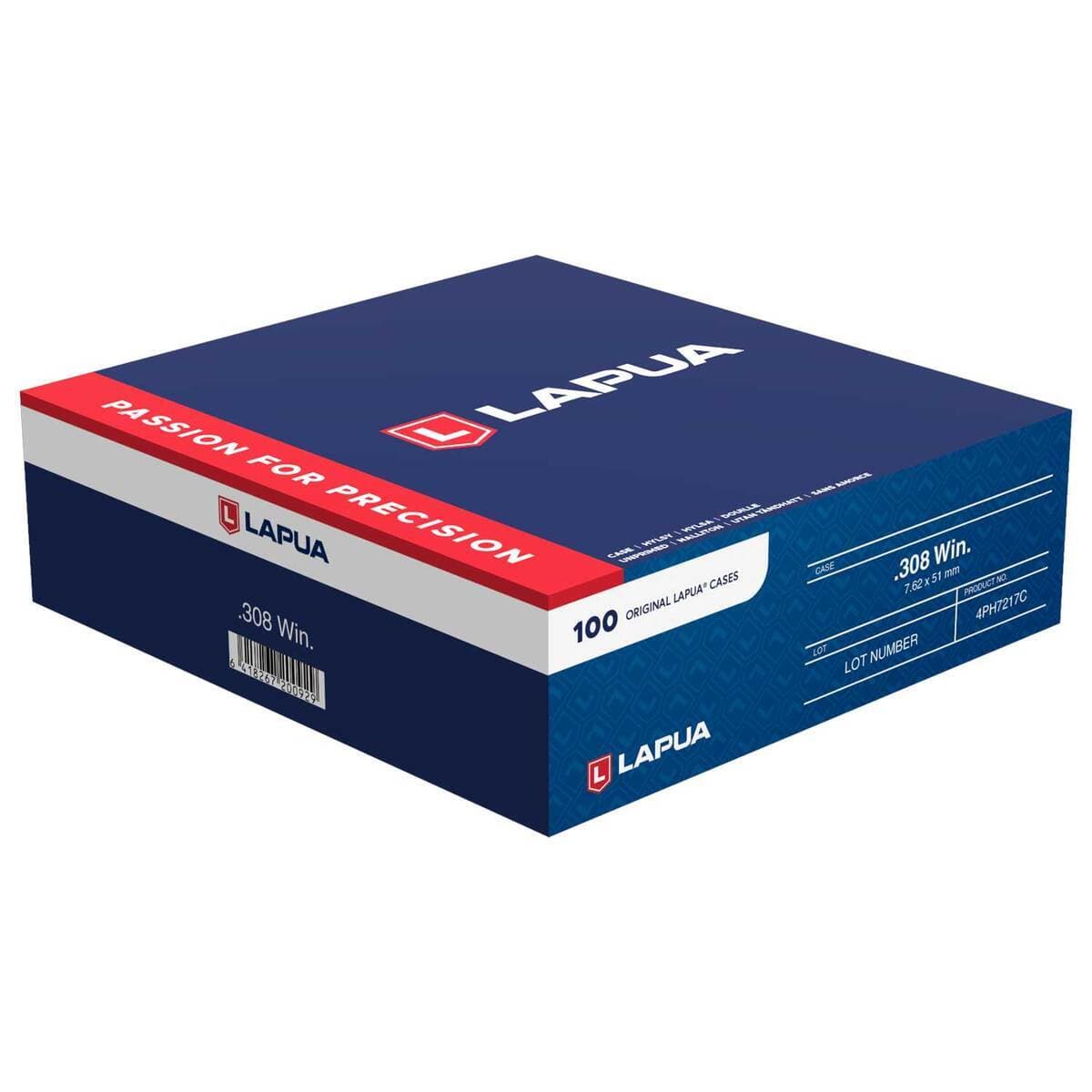
Lapua .308 Winchester Brass
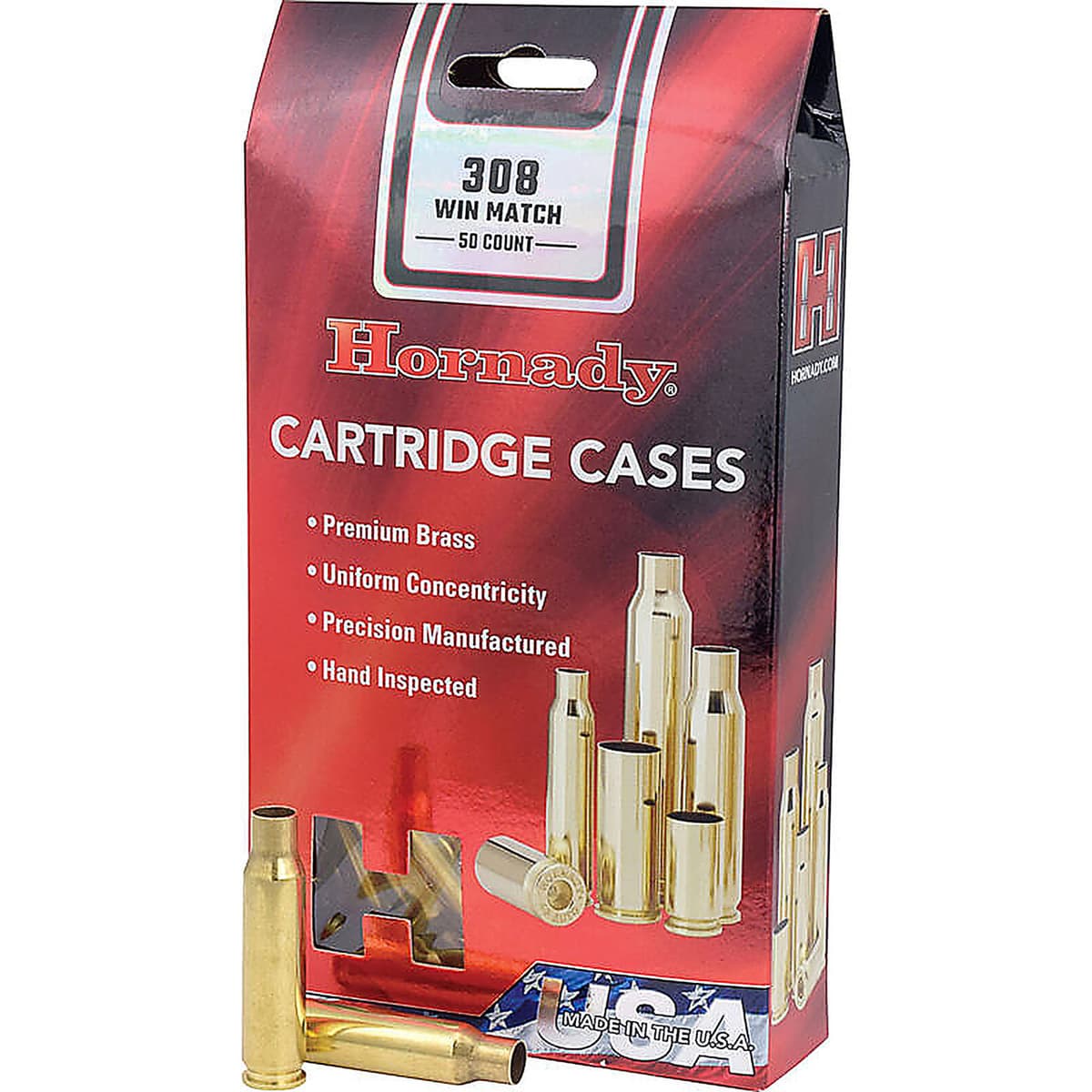
Hornady .308 Winchester Brass
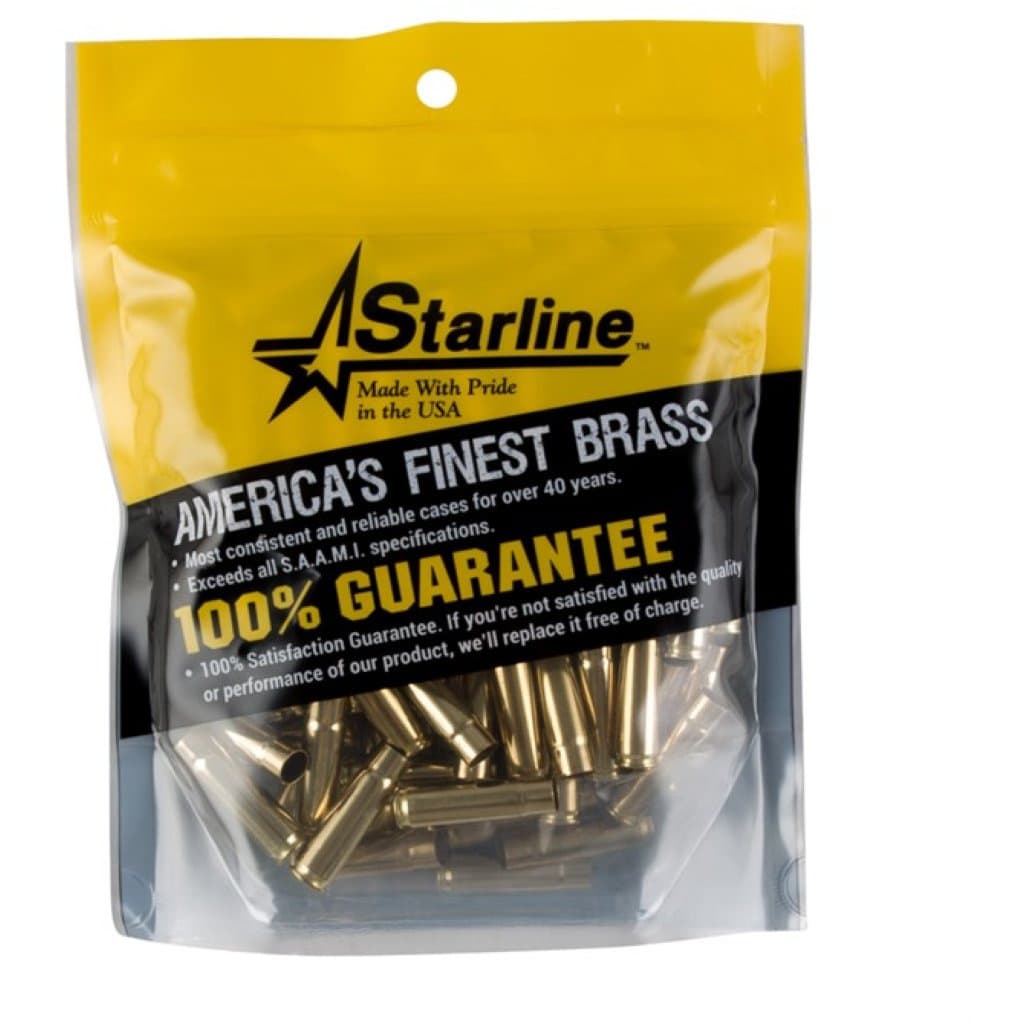
Starline 9mm Luger Brass
Affiliate links - purchases support this site at no extra cost to you. (?)
Brass: New vs Once-Fired
Buy new brass for precision rifle and use once-fired for everything else. The case is the only component you reuse, so its wall-thickness uniformity and weight consistency set the ceiling on what your dies can deliver: sort inconsistent brass and you are correcting a problem you paid for. New match brass from Lapua costs $104.22 per hundred in .308 Winchester, which looks expensive until you divide it across five or more firings and land near $0.21 per round. Hornady's .308 brass at $63.99 per hundred is the value option that still gives you a known, single-headstamp lot.
Once-fired range brass is free or nearly so and perfectly good for pistol and for high-volume semi-automatic rifle loading, with two caveats. Mixed headstamps mean mixed case capacity, so a charge worked up in one brand can behave differently in another; keep loads away from maximum when brass is mixed. And range brass needs inspection for split necks, incipient case head separation, and crimped primer pockets on military cases, which have to be swaged or reamed before a new primer will seat. Starline 9mm at $27.49 per hundred is the counterargument for pistol: new brass cheap enough that sorting range pickup may not be worth your evening.
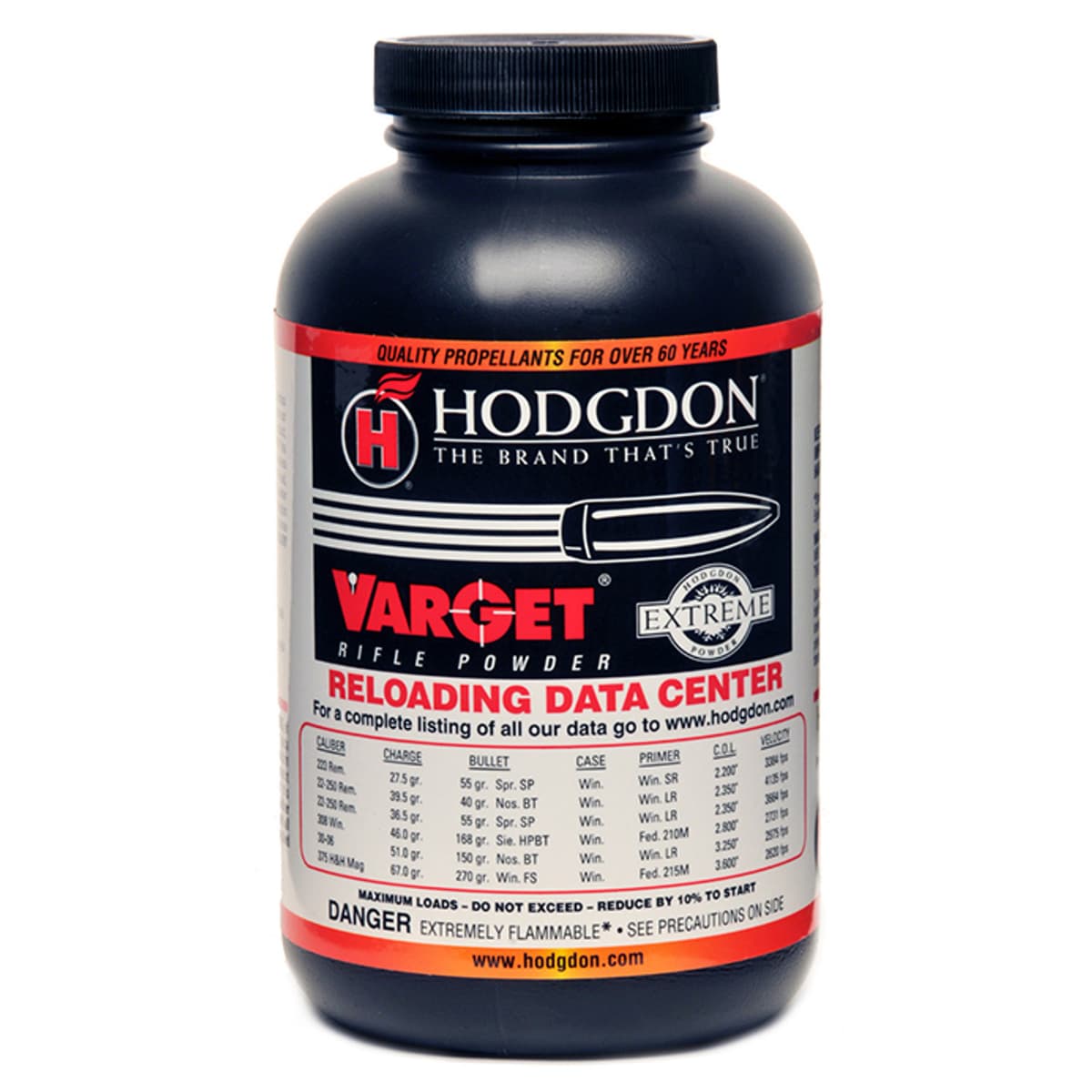
Hodgdon Varget
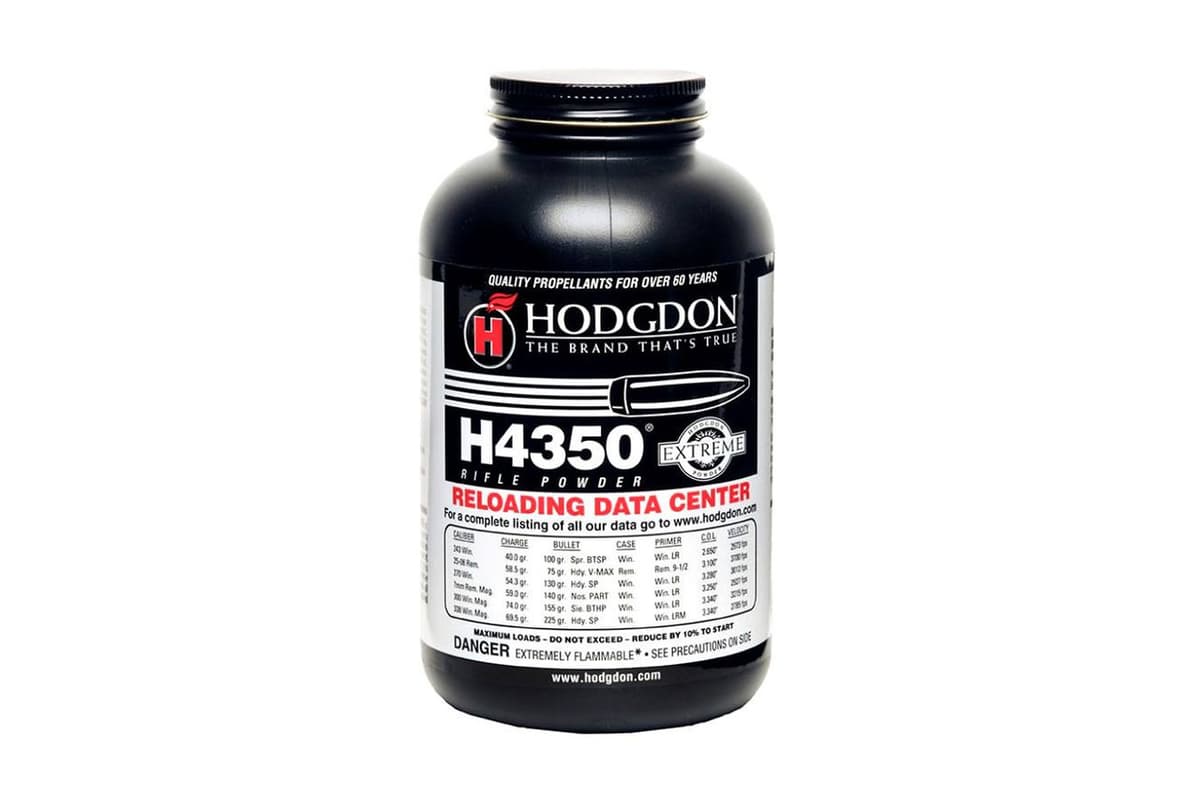
Hodgdon H4350
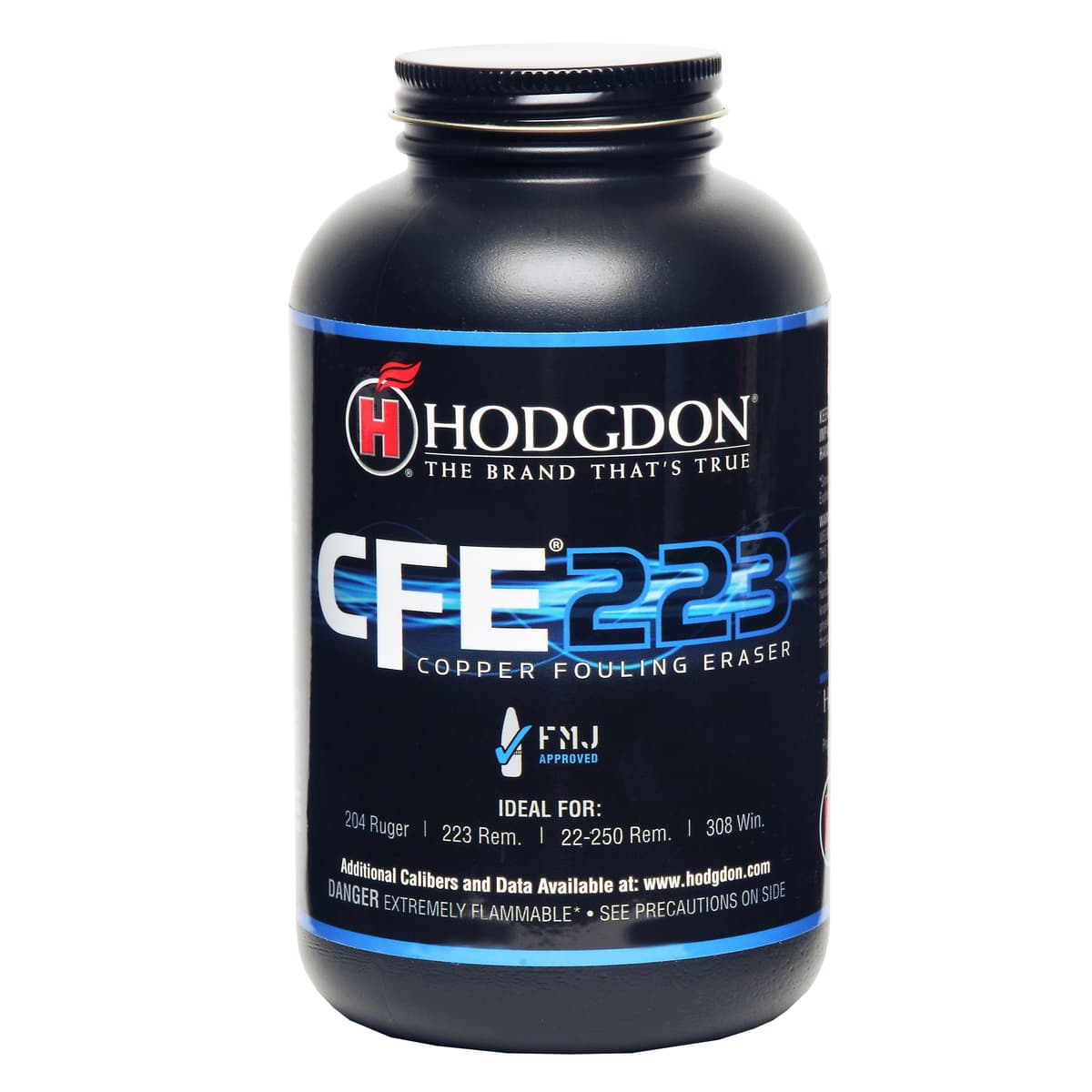
Hodgdon CFE 223
Affiliate links - purchases support this site at no extra cost to you. (?)
Choosing Powder: Burn Rate, Temperature, and Availability
Pick a powder whose burn rate suits your cartridge and bullet weight, then narrow to what holds velocity across temperature and what you can actually buy. Burn rate is the first filter: a cartridge wants a propellant that fills the case and reaches peak pressure at the right point in the barrel, which is why Varget suits .308 Winchester with mid-weight match bullets and H4350 suits the slightly larger, longer-bullet 6.5 Creedmoor. Using a powder far off the recommended burn rate for a case is not a tuning choice, it is a pressure problem.
Temperature stability is the second filter and the one that separates a load you trust from one that surprises you. A propellant that shifts velocity with ambient temperature will shoot a different elevation in January than the load you developed in July, which shows up as vertical stringing at distance. Hodgdon's Extreme series, which includes both Varget and H4350, is the company's answer to that: it describes those powders as insensitive to hot and cold temperatures, and that is why they dominate precision benches despite periodic availability problems. Not every good powder is in that line. CFE 223 is a spherical powder built around a copper-fouling additive rather than temperature performance, which is a reasonable trade for high-volume blasting ammunition and a poor one for a load you intend to shoot at distance across seasons. For a 6.5 Creedmoor, H4350 sits in the burn-rate window the case wants behind heavy-for-caliber bullets, and it is where most handloaders start.
Availability is a real constraint, not an afterthought. Developing a load around a propellant you cannot buy again means redoing the work when the can runs dry, because you cannot substitute powders at the same charge weight. Buy the eight-pound keg of a powder you have settled on rather than four separate one-pound cans of whatever the shelf had that day, and always pull current charge weights from the powder maker's own published data for your exact bullet and cartridge. Smokeless powder and primers both ship as hazardous materials, so a single larger order costs far less in shipping surcharges than several small ones.
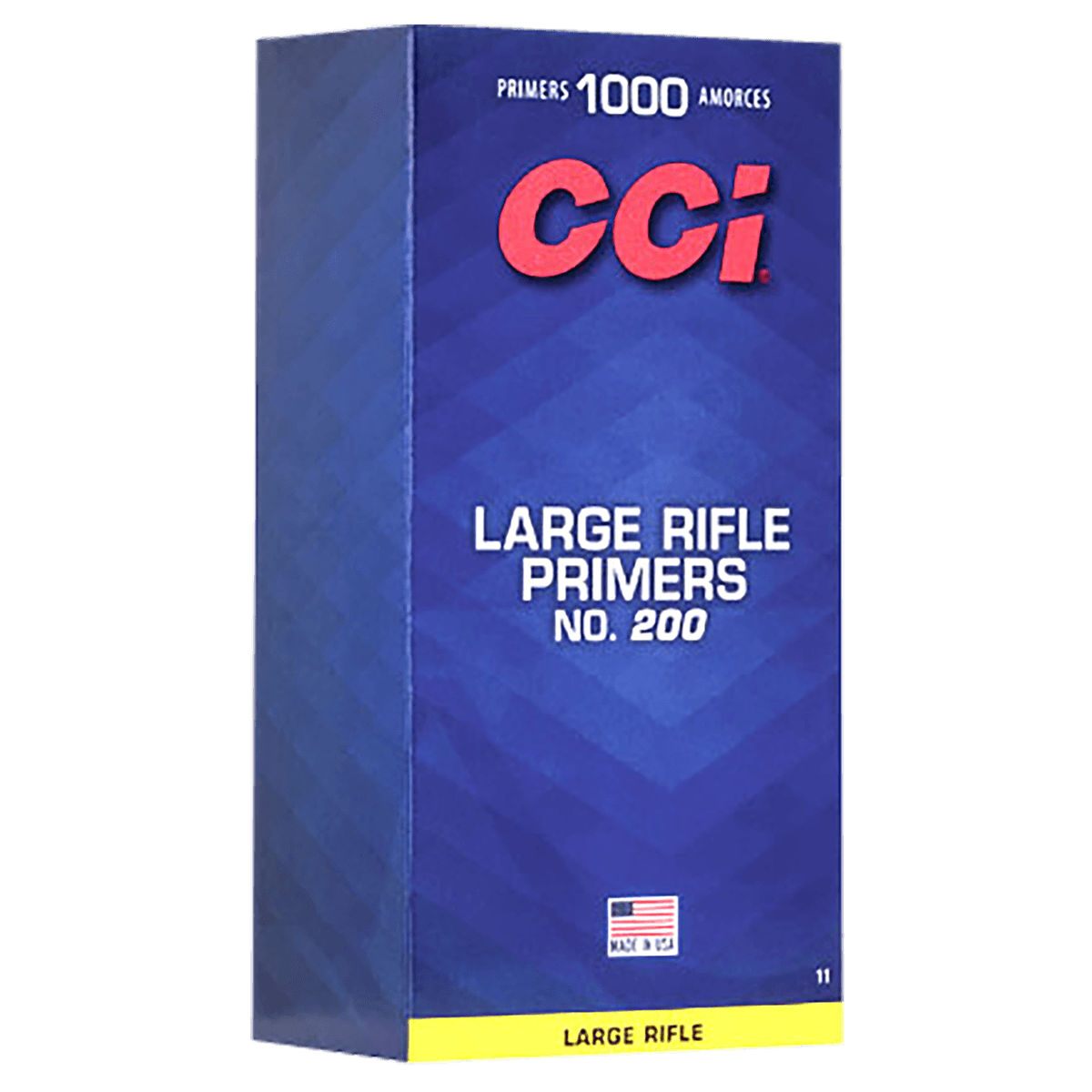
CCI #200 Large Rifle Primers
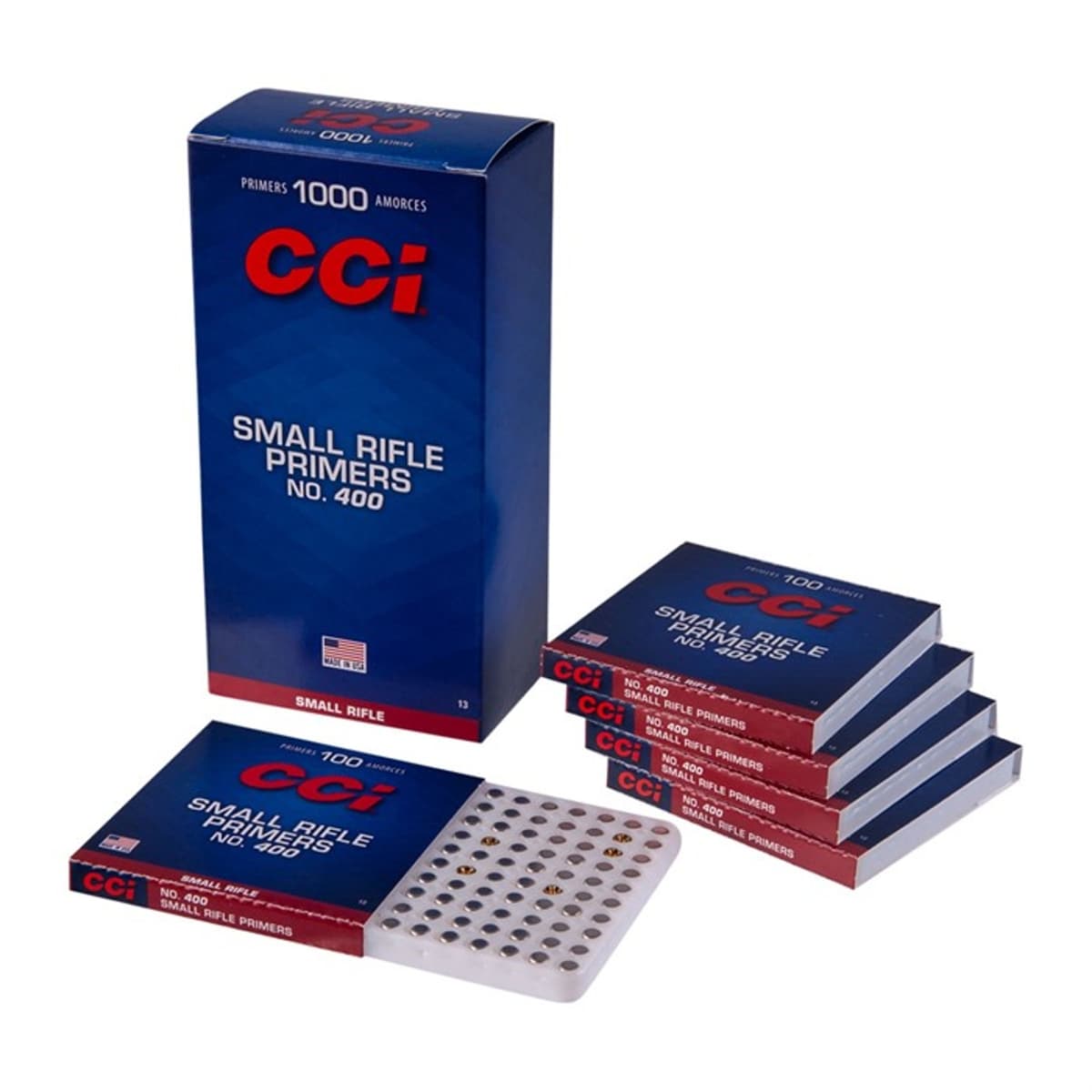
CCI #400 Small Rifle Primers
Affiliate links - purchases support this site at no extra cost to you. (?)
Primers: Match the Pocket, Then the Application
Primer selection starts with a dimension, not a preference: the case tells you whether it takes a large rifle or small rifle primer, and there is no substitution. Complicating this, cartridges that were historically large-rifle-primer are now sold in both, .308 Winchester and 6.5 Creedmoor among them, so check the headstamp and the case rather than assuming. Loading a small rifle primer case with large rifle primers is not a judgment call, it simply will not seat.
Beyond size, the meaningful distinction is standard versus match versus military-specification. Standard primers like the CCI #200 large rifle and #400 small rifle cover the great majority of loading and are what most published data is developed with. Match and bench rest primers are made to tighter tolerances for more uniform ignition, worth chasing only once your loads and your shooting are consistent enough to see the difference. Military-specification primers are the third case: CCI builds its No. 41 to military specification and designates it for 5.56 cartridges, with the No. 34 filling the same role in large rifle for 7.62. That designation is the reason to pick them for an AR-15 running 5.56, where a free-floating firing pin can tap a chambered round's primer during the feed cycle. Primer makers publish very little about cup dimensions, so treat specific cup-thickness numbers you see quoted as unofficial.
Whatever you buy, seat primers fully below flush and handle them as the one component in the process that is genuinely energetic on its own. Keep them in their original packaging until use, never force one into a crimped military pocket that has not been swaged, and do not decap live primers on a progressive if you can avoid it. To stock the rest of the bench around them, the reloading press guide ranks the machines these components run through.
What It Actually Costs to Load a Round
A .308 Winchester match handload runs about $1.15 to $1.24 per round in components as of August 2026, against $2.22 per round for factory Federal Gold Medal Match 168-grain. The breakdown: Lapua brass at $104.22 per hundred amortized across five firings is $0.21 a round; a CCI #200 primer at $58.49 per thousand is $0.06; Varget at $63.99 per pound is $0.37 to $0.46 depending on charge weight, since a pound covers roughly 140 to 175 rounds; and a Hornady ELD Match 168-grain bullet at $51.99 per hundred is $0.52. The bullet, not the powder, is the largest line item.
That is close to a dollar saved per round, which means a $52.99 die set pays for itself in roughly 53 rounds and a full bench pays back over a season rather than a decade. The math is far less dramatic for bulk pistol and bulk .223, where factory ammunition is cheap and the savings per round are measured in cents; there the honest reason to reload is control over the load, not the money. Run your own components and round count before you buy, and browse the reloading tools catalog for the scale, trimmer, and case prep gear the dies assume you already own.