Daniel Defense Rifles Ranked: Which Model to Buy header image
Gear
August 29, 2026
Daniel Defense Rifles Ranked: Which Model to Buy

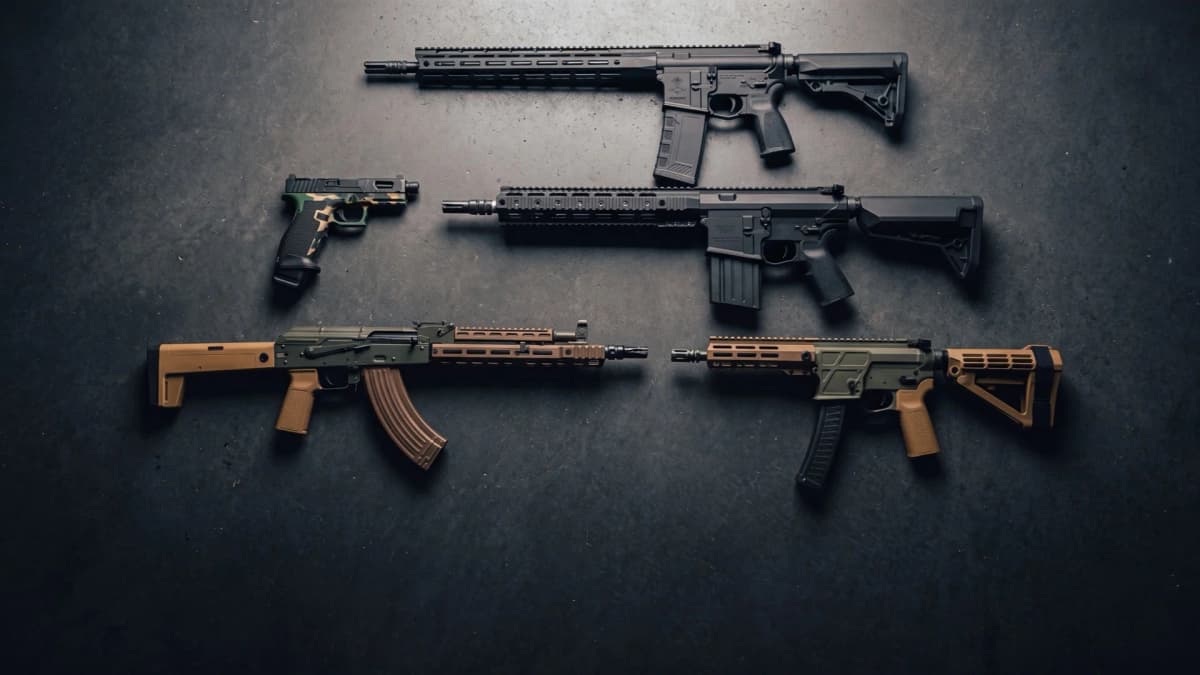
Daniel Defense builds one grade of rifle and then sells it in a dozen barrel lengths, so the decision is never quality. It is which configuration. The DD4 RIII S, DD4 V7 SLW, DDM4 PDW SBR, M4A1 and MK18, and the SPRIII, ranked by what each one actually does better than the next.

IntermediateDaniel DefenseAR-15

Daniel Defense Rifles Ranked: Which Model to Buy

Daniel Defense builds one grade of rifle and then sells it in a dozen barrel lengths. That makes the usual buying question, which one is better made, useless here. Every rifle below has the same cold hammer forged barrel, the same magnetic-particle inspected M16 bolt carrier, the same 7075-T6 receivers. The real question is which configuration, and the answers separate fast once you look at four things: barrel length, gas system, whether the controls are ambidextrous, and whether the muzzle is free to take a suppressor. Ranked on those terms, the DD4 RIII S wins and the M4A1 everybody recognizes finishes fourth.

By AB|Last reviewed August 2026

What Every Daniel Defense Rifle Already Gives You

The parts most buyers agonize over are already settled across the entire lineup, which is the whole reason this ranking is about configuration rather than quality. Every rifle here ships a cold hammer forged barrel with a 1:7 twist, and Daniel Defense states HP and magnetic-particle testing on most of them. Every bolt carrier is M16 profile, MP tested, chrome lined, with a properly staked gas key. Every receiver set is 7075-T6 aluminum under Type III hard coat anodizing, with an enhanced flared magwell and a rear receiver QD point. Every rifle arrives in a full-latch impact case.

The handguards share an architecture too. Both the RIS II quad rail and the RIS III M-LOK rail use Daniel Defense's patented 6-bolt Bolt-Up System. Six bolts clamp the rail to a Bolt-Up mounting plate captured between the upper receiver and the barrel nut, which is what free-floats the barrel and gives the rail its rigidity. It is the part of the rifle the company actually sells to USSOCOM, and it is why a rail-mounted laser holds zero on these guns.

What you do not get, on most of the rifles below, is a trigger worth the price of the rifle. The SPRIII ships a Geissele SSA and the V7 SLW an upgraded DD Enhanced trigger; the other four are mil-spec, and owners say so in Daniel Defense's own review sections: the trigger is the complaint that recurs on the MK18, the PDW, and the PCC alike, often from reviewers who rated the rifle five stars otherwise. Budget for one the way you would budget for glass. Our AR-15 trigger guide covers the drop-in options that fit any of these lowers.

The Four Things That Actually Separate Them

Barrel length. For 5.56, 11.5 inches is the sweet spot: short enough to handle indoors and in a vehicle, long enough that terminal performance does not become a function of which box of ammunition you bought. At 10.3 inches you give up roughly 150 fps, which pushes you toward heavier match loads. At 14.5 inches you lose almost nothing ballistically and skip the paperwork entirely. Below 10 inches, 5.56 stops making sense and 300 Blackout starts.

Gas system. Longer is softer. The V7 SLW's mid-length gas on a 14.5-inch barrel is the most pleasant impulse in the lineup; the SPRIII's rifle-length gas on 18 inches is the flattest. Carbine gas behind a 10.3-inch barrel, as on the MK18, is the harshest, and it gets worse when you add a suppressor and its back pressure.

Controls. Daniel Defense now offers a genuinely fully ambidextrous lower, with the bolt catch, safety selector, and magazine release all mirrored, on the DD4 RIII S, the V7 SLW, and the SPRIII. The M4A1, MK18, and PDW SBR stop at an ambidextrous safety selector and the GRIP-N-RIP charging handle, leaving the bolt catch and magazine release single-sided. This is not a left-handed shooter's footnote: an ambi bolt catch means you clear a malfunction and reload without ever taking your firing hand off the grip.

Paperwork, as a tiebreaker. Five of the six rifles here have barrels under 16 inches, but the V7 SLW and the M4A1 reach the legal 16 inches through permanently attached muzzle devices, which leaves three short-barreled rifles in the ranking and a fourth in the DD PCC SBR below. The federal transfer tax has been $0 since 2026-01-01, but a dealer purchase still needs an approved Form 4, and state law bans or restricts them outright in ten jurisdictions. This does not change which rifle is better, and it is not why the ranking is ordered the way it is. It does decide whether a given rifle is buyable where you live, so check it before you fall in love with the DD4 RIII S.

Muzzle. A 14.5-inch barrel needs a permanently attached muzzle device to clear 16 inches without NFA registration, and how a rifle solves that determines whether you can ever suppress it. The M4A1 pins and welds a plain flash suppressor, which closes the door. The V7 SLW pins and welds a Dead Air Xeno QD, which is itself a quick-detach mount, so the permanent part is the solution rather than the problem. Xeno is Dead Air's proprietary taper mount rather than the 1.375x24 HUB rear thread, so budget for a Xeno adapter on the can end if your suppressor is HUB. Everything else in the lineup leaves the threads bare.

The Daniel Defense Lineup, Ranked

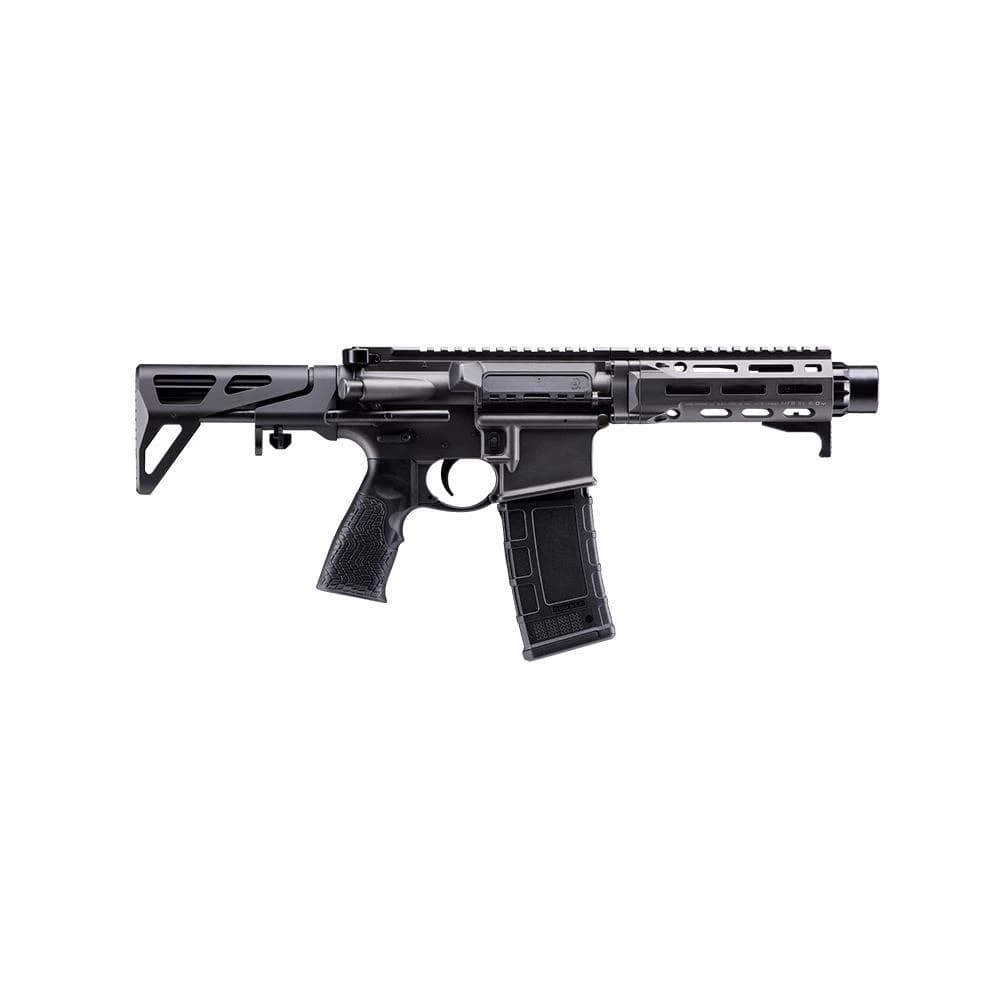
Daniel Defense DD4 RIII S
1

Daniel Defense DD4 RIII S

Best Daniel Defense rifle overall

$2,554
Shop at Daniel Defense
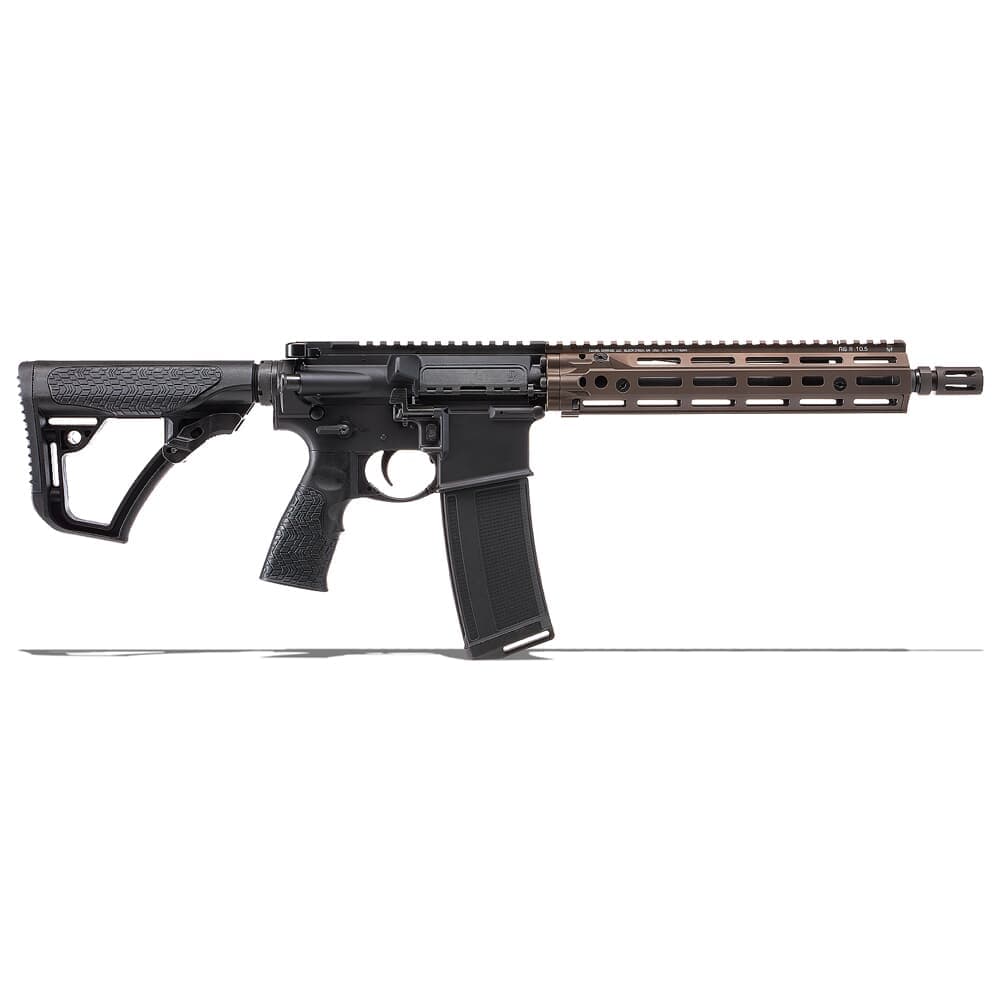
  • +11.5 inches is the 5.56 sweet spot: it holds enough velocity for reliable terminal performance while cutting nearly five inches off a 16-inch carbine
  • +Fully ambidextrous lower plus the ambi GRIP-N-RIP charging handle means the bolt catch, selector, and magazine release all work without breaking your firing grip
  • +RIS III 10.5 keeps the SOCOM-derived 6-bolt Bolt-Up architecture but drops the quad rail's weight and bulk for M-LOK, with flush integral QD points and a removable bottom rail section
  • Short-barreled rifle: dealer purchase requires an approved ATF Form 4 (federal tax is $0 since 2026-01-01 under OBBBA, but registration and the wait remain)
  • Still over $2,500 before an optic, a light, or the suppressor the free threads invite
  • Mil-spec trigger at a price where the SPRIII ships with a Geissele SSA
Daniel Defense DD4 V7 SLW
2

Daniel Defense DD4 V7 SLW

Best non-NFA DD and best suppressor host

$2,363
Shop at Daniel Defense
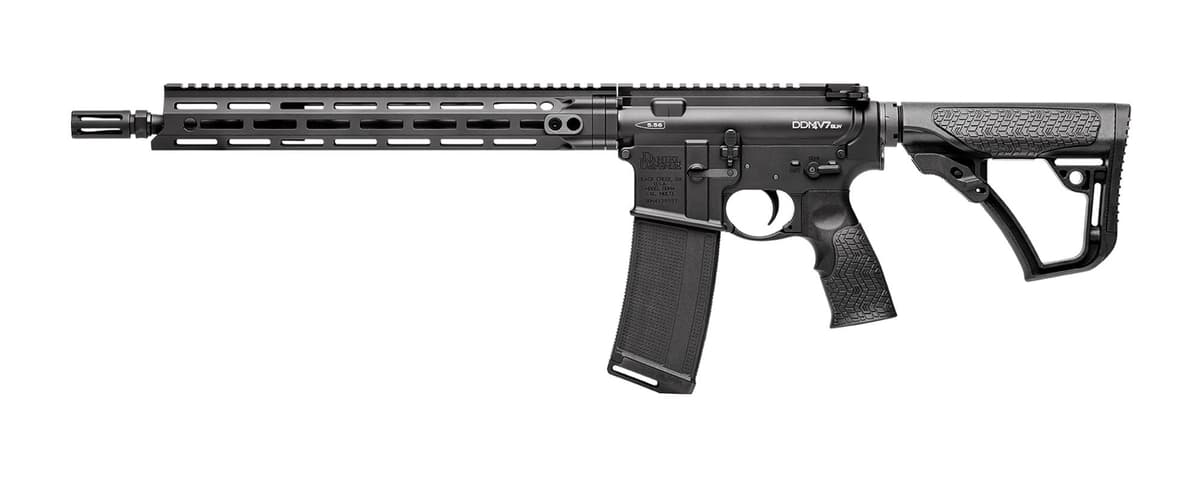
  • +Mid-length gas on a 14.5-inch barrel is the softest-shooting configuration Daniel Defense sells in a fighting carbine
  • +The pinned-and-welded Dead Air Xeno is a quick-detach flash hider, so the permanent muzzle device is the suppressor mount rather than an obstacle to one; Xeno is Dead Air's own taper mount, so a HUB can needs Dead Air's Xeno adapter
  • +Lightweight profile barrel and the slim flat-front DD4 13.5 rail bring it in at 6.2 lb, half a pound under the M4A1
  • The pinned-and-welded Xeno is permanent; if you want a different mounting standard later, that means a gunsmith and a new barrel-length calculation
  • Lightweight profile heats faster than the Government or S2W barrels under sustained strings
  • Still enough money to buy two competent mid-tier carbines
Daniel Defense DDM4 PDW SBR
3

Daniel Defense DDM4 PDW SBR

Most compact package, built around a suppressor

$2,556
Shop at Daniel Defense
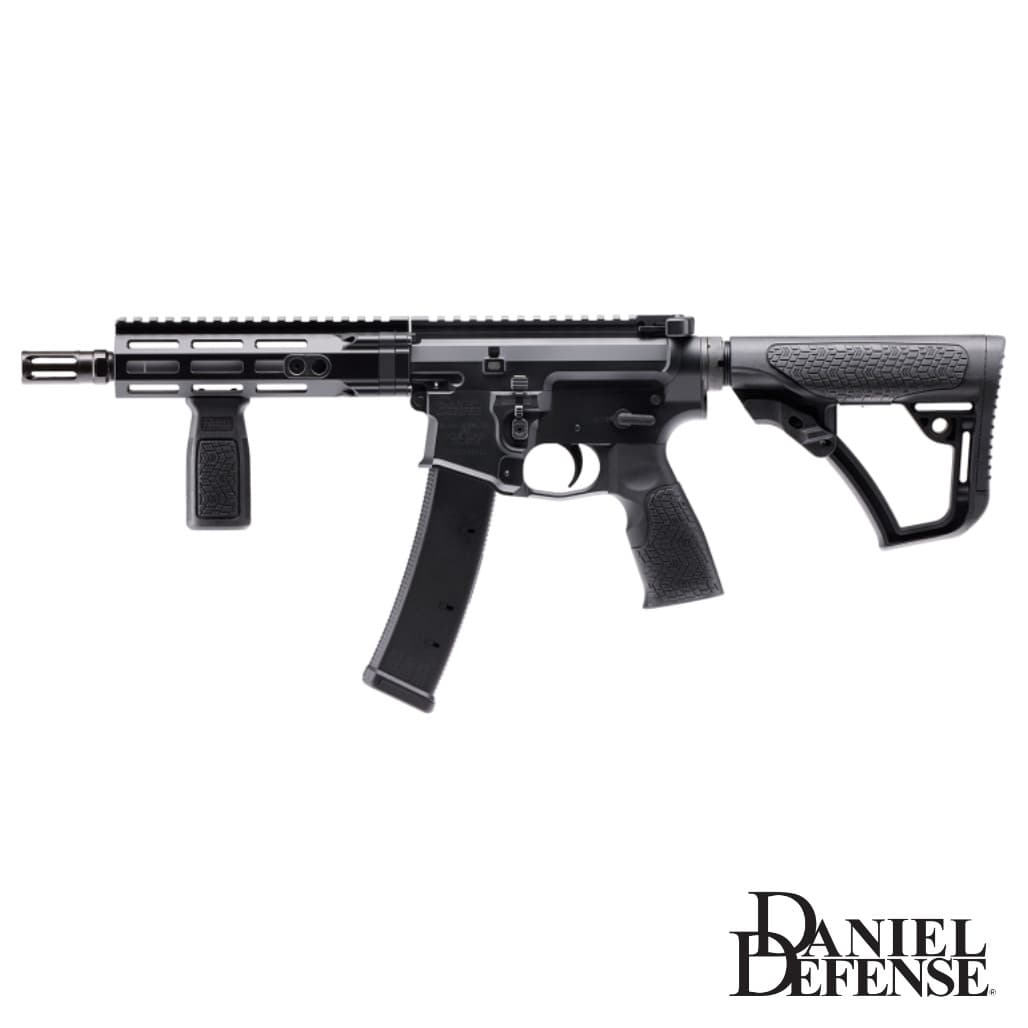
  • +21 inches collapsed with a real stock, not a brace, is the shortest usable package Daniel Defense builds
  • +300 Blackout was designed around short barrels, so a 7-inch tube is the length it was built for rather than a compromise, and subsonic loads are what this configuration is meant to run
  • +Subsonic 300 BLK through a can is the quietest centerfire rifle configuration widely available, and this gun is purpose-built for it
  • Only worth buying if you are also buying a suppressor; unsuppressed, a 7-inch 300 BLK is loud, flashy, and hard to justify against the RIII S
  • Short-barreled rifle: dealer purchase requires an approved ATF Form 4
  • Lower is plain mil-spec, not the fully ambidextrous lower on the RIII S, V7 SLW, and SPRIII
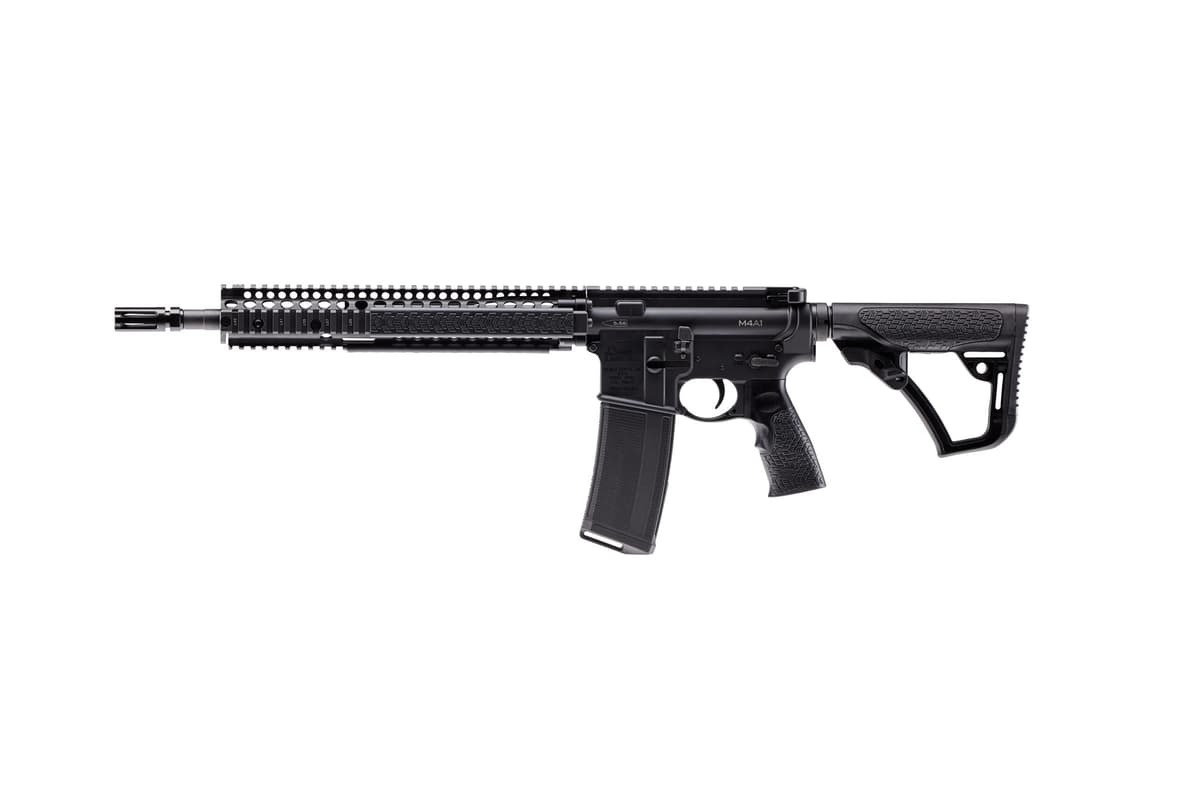
Daniel Defense M4A1 RIS II
4

Daniel Defense M4A1 RIS II

GWOT icon, the 14.5-inch M4A1

$2,599
Shop at Daniel Defense
  • +The RIS II quad rail is the literal handguard Daniel Defense supplies to USSOCOM for the SOPMOD Block II program, in service since 2005
  • +Pinned and welded flash suppressor takes a 14.5-inch barrel past 16 inches, so there is no NFA paperwork
  • +The non-NFA route into the RIS II aesthetic and the clone-correct GWOT profile
  • Carbine-length gas behind 14.5 inches is a harsher impulse than the V7 SLW's mid-length at the same barrel length
  • The flash suppressor is pinned and welded, which makes this a poor suppressor host: you cannot swap the muzzle device for a mount
  • Ambi safety selector and GRIP-N-RIP charging handle, but the bolt catch and magazine release are single-sided, unlike the RIII S and V7 SLW lowers
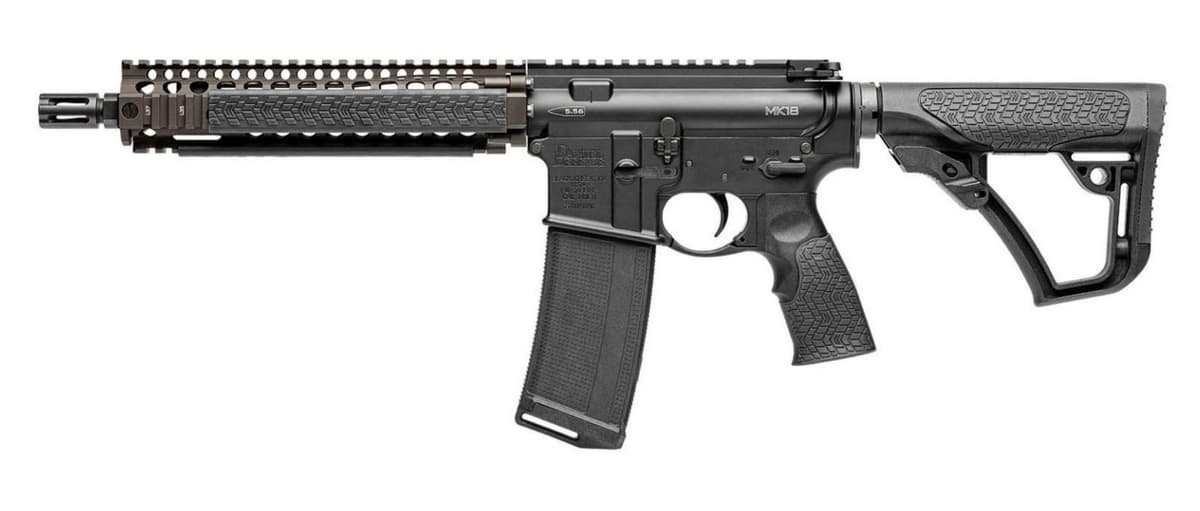
Daniel Defense MK18 SBR (10.3", RIS II)
4

Daniel Defense MK18 SBR (10.3", RIS II)

GWOT icon, the 10.3-inch MK18

$2,499
Shop at Daniel Defense
  • +The 10.3-inch MK18 is the CQB standard the SOCOM upper was built around, and this is the factory version of it
  • +Unlike the M4A1, the flash suppressor is not pinned, so the 1/2x28 threads are free for a suppressor mount
  • +5.88 lb and 26.75 inches collapsed make it genuinely easier to work with in vehicles and hallways than any 14.5-inch build
  • 10.3 inches costs real velocity against 11.5, which is why the RIII S outranks it: terminal performance becomes load-dependent and rewards heavier match loads over cheap M193
  • Short-barreled rifle: dealer purchase requires an approved ATF Form 4
  • Ambi safety selector and charging handle only; no mirrored bolt catch or magazine release
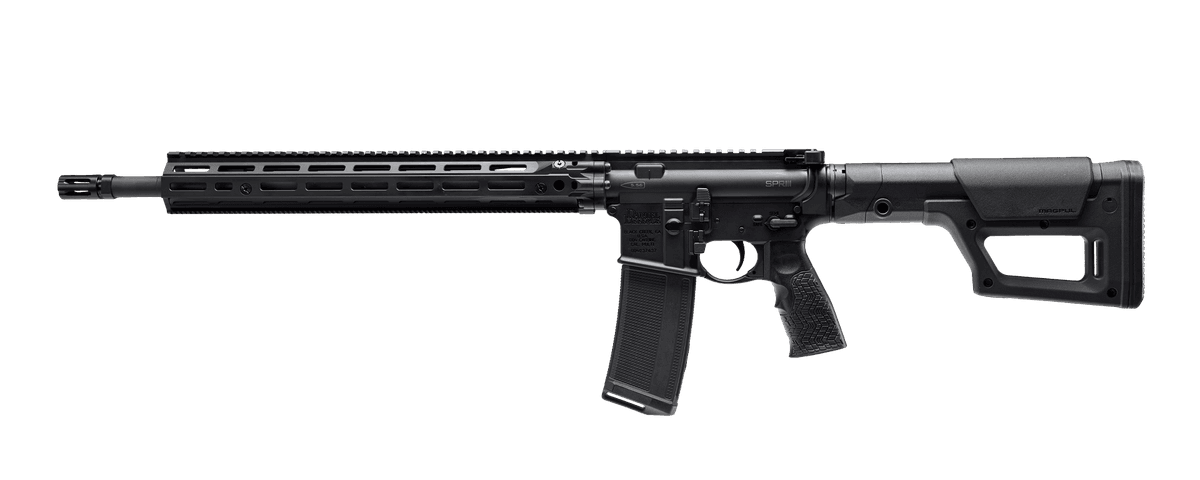
Daniel Defense SPRIII
5

Daniel Defense SPRIII

Best DD for a DMR or precision build

$2,784
Shop at Daniel Defense
  • +18-inch stainless MK12-profile barrel on rifle-length gas is the configuration that made the original MK12 a benchmark for 5.56 accuracy
  • +Geissele SSA two-stage ships standard, which is a genuine match trigger and not a mil-spec placeholder
  • +The RIS III 15 carries a full-length ARCALOCK bottom rail, so bipods, tripod clamps, and bags mount directly with no adapter
  • 8.6 lb bare, before glass, mount, bipod, or a can; this is the heaviest rifle Daniel Defense sells in 5.56
  • The most expensive rifle in the lineup
  • Rifle-length gas and an 18-inch barrel make it the wrong tool for anything resembling CQB or a truck gun

The DD4 RIII S, DDM4 PDW SBR, MK18 SBR, and DD PCC SBR are short-barreled rifles. Civilian SBR ownership is banned in CA, DC, HI, NJ, NY, and RI, and restricted in CT, DE, IL, and MD. Elsewhere a dealer purchase runs on an approved ATF Form 4 with NFA registration, at $0 federal tax since 2026-01-01 and outside the party-specific Silencer Shop Foundation v. ATF injunction. Verify current federal and state law before you order.

Affiliate links - purchases support this site at no extra cost to you. (?)

Why the Famous One Finishes Fourth

The M4A1 and the MK18 are the two Daniel Defense rifles most people can picture, and they share a ranking slot here because they are the same rifle at two lengths: RIS II quad rail, carbine gas, mil-spec lower, cold hammer forged barrel. They are also the two most compromised guns in the lineup, and the compromises are specific rather than general.

Start with the barrel contour, because it is the objection you will read most often about this rifle and it does not survive contact with the issued guns. The M4 profile is the government profile with the M203 grenade launcher cut machined into it, a relief notch under the front of the barrel. Same contour, same weight class, one notch. Both have gone downrange: the URG-I upper USASOC fields on its M4A1s runs a 14.5-inch government-profile cold hammer forged barrel on mid-length gas, and Daniel Defense's own spec sheet for the SOCOM M4A1 upper it built for the government lists a 14.5-inch M4-profile barrel on carbine gas.

The heavy contours are the ones that are actually a different barrel, and they were adopted for sustained automatic fire. That is the reason the Army gave for the thicker barrel when it converted M4s to M4A1 spec: the rifle shoots full auto, and the Army put the cost at under a pound, carried forward of the receiver where weight hurts handling most. At the same 14.5 inches a heavy contour runs roughly four ounces over a standard one. A semi-automatic carbine never spends that heat capacity, and the lighter barrel is the one that carries and points better, which is why the government and M4 contour guns stayed popular in service and remain the better choice on a civilian carbine.

The compromise that is real is the muzzle. The flash suppressor is pinned and welded, so the one modification most owners eventually want, a suppressor, means buying a new barrel instead of swapping a muzzle device. Add carbine-length gas where the V7 SLW gets mid-length behind the same barrel length, and a lower that stops at an ambidextrous safety selector, and the M4A1 lands fourth on configuration rather than on contour.

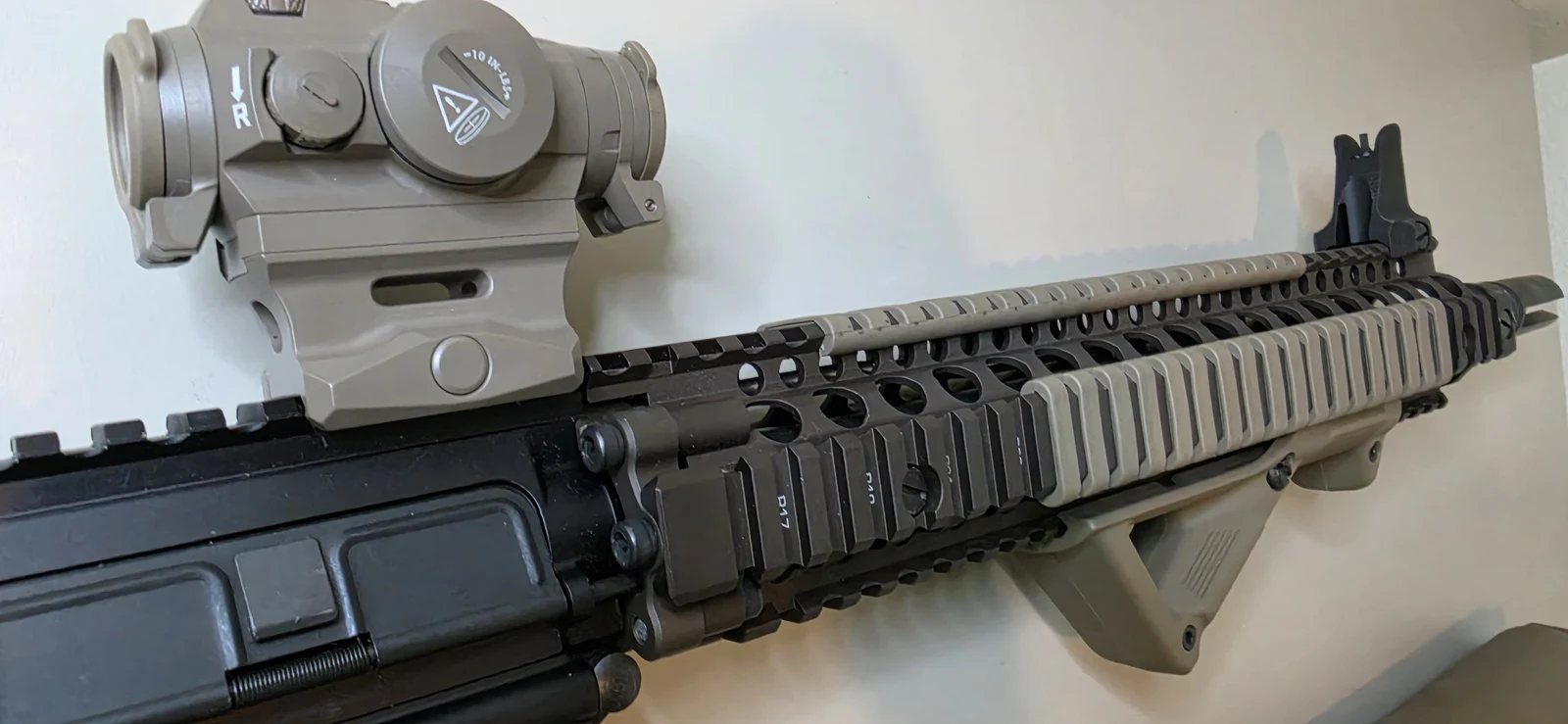
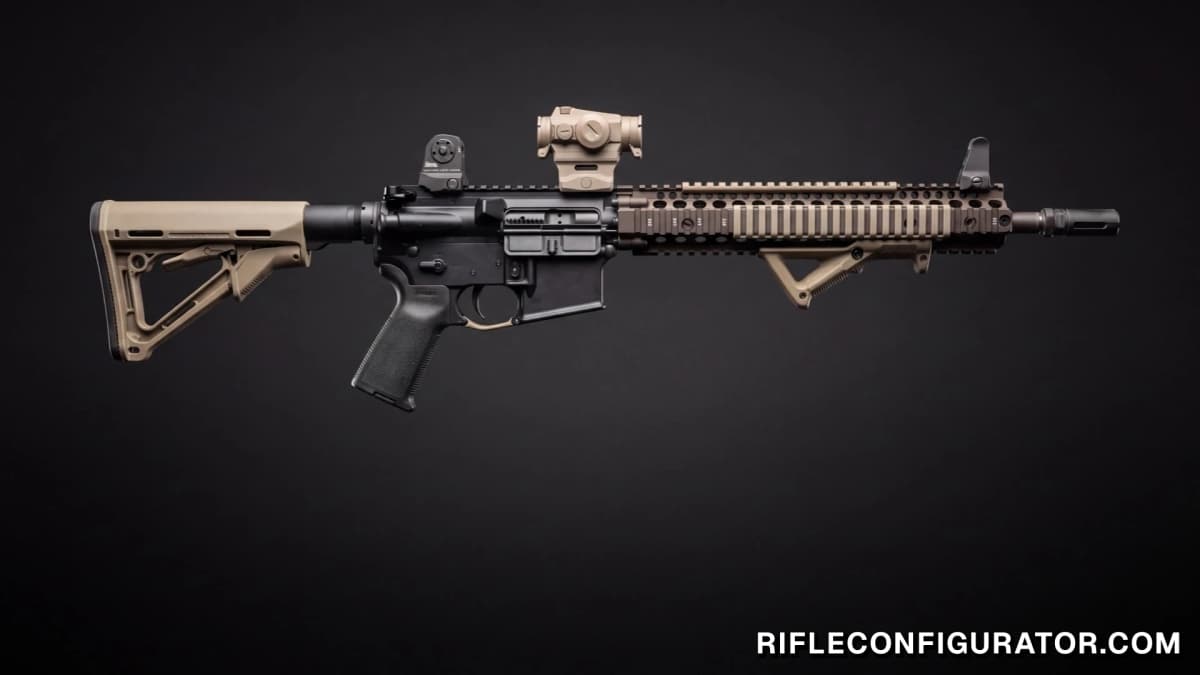
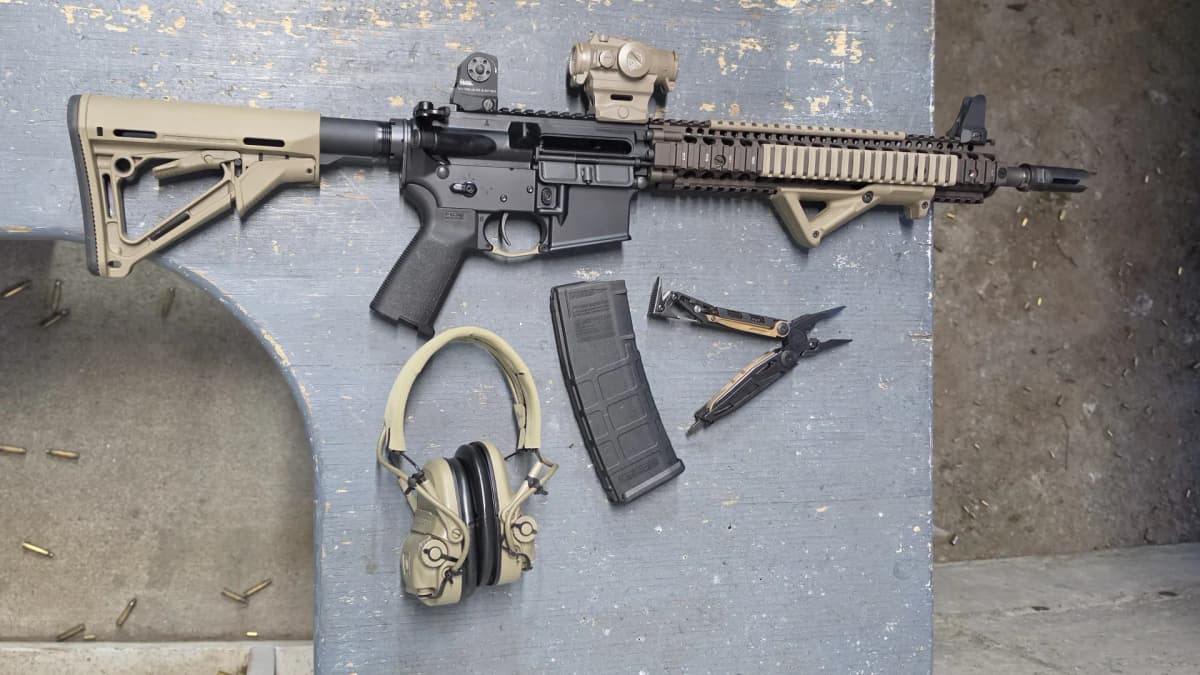
Close-up down the top rail of a Daniel Defense M4A1 Block II carbine, showing the RIS II quad rail with its numbered rail positions, an FDE micro red dot on the receiver rail, an FDE angled foregrip, and a folding front sight.
The RIS II quad rail on our own M4A1 Block II. The numbered rail positions are the reason this handguard persists: they let a unit specify exactly where a laser or light indexes and return it to the same slot after every cleaning.

If you want the Block II front end with a muzzle you can still spec, there is a route the factory carbine does not offer. Brownells sells the Daniel Defense M4A1 SOCOM Block II stripped upper receiver on its own, a 14.5-inch barrel under the RIS II rail with bare 1/2x28 threads, for $694.99. Build it on a lower of your choosing, have a gunsmith pin and weld a SureFire WARCOMP, $152 in 1/2-28, and the permanent device becomes a suppressor mount instead of a dead end, which is the one thing the complete rifle cannot be talked into. Note that Brownells lists that upper with a heavier SOCOM contour while Daniel Defense's own government-program spec sheets list the M4 profile, so if a specific contour is the point of the build, confirm it against the part number before you order.

The MK18's compromise is ballistic. 10.3 inches is a real CQB standard and the rifle handles beautifully, but the velocity loss against 11.5 inches is not free, and it makes ammunition selection matter more than it does on any other rifle here. If you want the shortest 5.56 that still behaves like a fighting rifle, that is the DD4 RIII S at 11.5 inches, and it also gives you the ambidextrous lower and the better rail. If you want the 10.3-inch length specifically, buy the MK18 and feed it accordingly. For a full velocity-by-inch breakdown, see the barrel length guide, and for the GWOT clone context there is a dedicated MK18 build guide.

None of this makes them bad rifles. The M4A1 is the rifle we run a forced reset trigger in, and in our own August 2026 session it went 500 rounds without a malfunction. It just is not the one to buy first if you are choosing with fresh eyes rather than buying the silhouette you recognize.

Special Mention: The DD PCC

The DD PCC does not belong in a ranking of fighting rifles, and that is not a knock. It is a range toy, and it is a very good one. The 9mm receiver set is genuinely shortened rather than an AR-15 lower with a magazine block, the hydraulic buffer takes most of the harshness out of direct blowback, and it feeds from CZ Scorpion magazines instead of something proprietary, so ammunition and magazines both stay cheap. The SBR version runs an 8.3-inch cold hammer forged barrel at $2,046. Suppressed with subsonic 147-grain, it is about as pleasant as a centerfire carbine gets. The factory trigger is the one thing owners consistently replace, and our DD PCC upgrade guide covers the PCC-rated options that survive the blowback bolt.

Daniel Defense Daniel Defense DD PCC SBR (8.3")
$2,046

Factory 8.3" 9mm SBR sibling of the PCC 916, with a DD buttstock over a hydraulic buffer; NFA-regulated transfer item

Pros
  • +22.5" collapsed is genuinely compact for a 9mm carbine
  • +Hydraulic buffer noticeably smooths the blowback impulse
  • +AR-15 fire control pocket takes PCC-rated drop-in AR triggers, unlike proprietary-pocket PCCs
  • +Factory 1/2x28 thread is suppressor ready out of the box
Cons
  • -NFA item: approved Form 4 transfer, registration, and a 21-year-old minimum age (federal tax has been $0 since 2026-01-01)
  • -Proprietary upper and BCG do not interchange with generic AR-9 parts
  • -Patented ambidextrous charging handle is platform-only
  • -Premium price for a blowback 9mm
Sku: 02-189-08291Caliber: 9mmBarrel Length: 8.3"Overall Length: 22.5" - 27"Weight: 6.1 lbs

Which One You Should Actually Buy

If you want one Daniel Defense and you are willing to file paperwork: the DD4 RIII S. Best barrel length, best rail, ambidextrous controls, free threads. Nothing else in the lineup does more things right at once.

If you want one Daniel Defense and no paperwork: the DD4 V7 SLW. It is the softest-shooting rifle here, the lightest 5.56 you can buy without paperwork at 6.2 pounds, and its permanent muzzle device is a suppressor mount instead of a dead end. It is also the cheapest rifle in this ranking, which is not the usual relationship between price and position.

If you are building around a suppressor: the DDM4 PDW SBR, and only if the can is actually in the plan. Bought without one, a 7-inch 300 Blackout is a worse rifle than the RIII S in every measurable way. Bought with one, it is the most compact serious firearm on this list.

If you want reach and a real trigger: the SPRIII. It is the only rifle here that ships match-grade, and the ARCALOCK bottom rail means your bipod, tripod, or bag mounts without an adapter. Accept that 8.6 pounds bare becomes eleven or twelve with glass and a can.

If the silhouette is the point: the M4A1 or the MK18. Buying the clone-correct GWOT rifle because that is the rifle you want is a completely legitimate reason, and nothing in this ranking argues otherwise. Just go in knowing the M4A1's muzzle is permanently spoken for.

Cross-shopping outside the brand is worth doing at these prices. The AR-15 brand comparison puts Daniel Defense against BCM, Geissele, and the value tier, and the SBR rankings cover what the rest of the market builds at these barrel lengths.

Daniel Defense Drops and Price Moves

New DD releases, barrel and rail changes across the DD4 and RIS III lines, and price movement on the models in this ranking. One email a week.

Free targets, drill cards, and weekly reviews by email.

Spec the Rest of the Build

Whichever one you land on, the optic, light, and suppressor are the next three decisions and they cost more than the difference between any two rifles here. Load your pick into the rifle builder to filter optics by mount height, lights by rail type, and suppressors by thread pitch, and price the whole thing before you commit to a receiver.

Frequently Asked Questions

What is the best Daniel Defense rifle?
The DD4 RIII S. It pairs an 11.5-inch cold hammer forged Government-profile barrel, the length that keeps 5.56 terminally effective while cutting nearly five inches off a 16-inch carbine, with the RIS III 10.5 M-LOK rail and a fully ambidextrous lower. Its muzzle threads are free, so a suppressor mount goes straight on, unlike the M4A1's pinned-and-welded flash suppressor. It costs $2,554 and, because the barrel is under 16 inches, it is a short-barreled rifle that requires an approved ATF Form 4 through a dealer.
Which Daniel Defense rifle is best for a suppressor?
The DD4 V7 SLW, if you want no NFA paperwork on the rifle itself. Its pinned-and-welded muzzle device is a Dead Air Xeno QD flash hider, which is a mount rather than an obstacle to one: the permanent attachment that makes the 14.5-inch barrel legal is the same part your can indexes on. Xeno is Dead Air's own taper-mount system, not the 1.375x24 HUB rear thread, so a HUB suppressor needs Dead Air's Xeno adapter threaded into its rear to use it. If you are already filing paperwork, the DDM4 PDW SBR is the purpose-built suppressed gun: 7 inches of 300 Blackout with 5/8x24 threads, designed around subsonic ammunition. The one rifle to avoid for suppressor use is the M4A1, whose flash suppressor is pinned and welded and cannot be swapped for a mount.
Is the Daniel Defense M4A1 or the MK18 better?
They are the same rifle in two lengths and neither is clearly better. The M4A1 runs a 14.5-inch M4-profile barrel and weighs 6.74 pounds; the MK18 SBR runs a 10.3-inch Government-profile barrel at 5.88 pounds and 26.75 inches collapsed. Both use the RIS II quad rail Daniel Defense supplies to USSOCOM. The M4A1 needs no NFA paperwork because its flash suppressor is pinned and welded past 16 inches, but that same pinning makes it a poor suppressor host. The MK18 is a short-barreled rifle requiring a Form 4, but its 1/2x28 threads are free. Pick the M4A1 if you want a GWOT-correct carbine with no paperwork, the MK18 if you want the CQB length and plan to suppress it.
Is the M4A1's M4-profile barrel wrong for a Block II clone?
No. The M4 profile is the government profile with the M203 grenade launcher cut machined into it, a relief notch under the front of the barrel, so the two are the same contour in the same weight class and both were issued. The URG-I upper USASOC fields on its M4A1s uses a 14.5-inch government-profile cold hammer forged barrel on mid-length gas, and Daniel Defense's own spec sheet for the SOCOM M4A1 upper it supplied to the government lists a 14.5-inch M4-profile barrel on carbine gas. Only the heavy contours are a genuinely different barrel, adopted for sustained automatic fire, which is the rationale the Army gave for the thicker barrel in its M4-to-M4A1 conversions, at a cost of under a pound carried out front. A semi-automatic rifle never uses that heat capacity, and the lighter barrel carries and points better, which is why the government and M4 contour guns stayed popular. Retailer listings for the stripped Block II upper describe a heavier SOCOM contour, so confirm the contour against the part number if clone accuracy is the goal.
What is the difference between RIS II and RIS III?
RIS II is the quad-rail handguard Daniel Defense has supplied to USSOCOM for the SOPMOD Block II program since 2005: Picatinny on all four sides, heavier, and it needs rail panels to be comfortable in bare hands. RIS III is the M-LOK evolution of the same architecture. It keeps the patented 6-bolt Bolt-Up System that free-floats the barrel, adds flush integral QD points at the receiver, and makes the bottom rail section removable, while shedding the weight and bulk of continuous Picatinny. Both free-float the barrel and lock up identically. RIS III is the better handguard for a new build; RIS II is what you buy for the clone-correct GWOT look or for legacy rail-grabber accessories.
Which Daniel Defense rifles do not require NFA paperwork?
Among the rifles ranked here, the DD4 V7 SLW ($2,363), the M4A1 ($2,599), and the SPRIII ($2,784) are ordinary Title I rifles you buy on a 4473 with no ATF form. The V7 SLW and M4A1 both use 14.5-inch barrels with permanently attached muzzle devices that carry them past the 16-inch minimum; the SPRIII has an 18-inch barrel. The DD4 RIII S (11.5 inches), DDM4 PDW SBR (7 inches), MK18 SBR (10.3 inches), and DD PCC SBR (8.3 inches) are all short-barreled rifles.
Do short-barreled rifles still require a tax stamp in 2026?
The tax is gone; the paperwork is not. The One Big Beautiful Bill Act zeroed the federal making and transfer tax on short-barreled rifles, short-barreled shotguns, suppressors, and AOWs effective 2026-01-01, so the $200 line is now $0. NFA registration, fingerprints, CLEO notification, and the NICS check all remain. A dealer purchase of a factory SBR still requires an approved Form 4 because 18 U.S.C. 922(b)(4) bars a licensed dealer from delivering one without Attorney General authorization. ATF's processing page, updated 2026-08-27, reports July averages of 9 days for an individual eForm 4 and 33 days for a trust, with a median of 8 days on individual filings.
What barrel length should I get on a Daniel Defense?
For 5.56, 11.5 inches is the sweet spot and the reason the DD4 RIII S tops this ranking. It leaves enough velocity for reliable terminal performance while shortening the rifle substantially. The 10.3-inch MK18 gives up roughly 150 fps for about an inch and a quarter of overall length, which makes its terminal performance more load-dependent and rewards heavier match ammunition over bulk M193. At 14.5 inches you lose almost nothing ballistically and skip the paperwork. Below 10 inches, stop using 5.56 entirely and move to 300 Blackout, which is what the DDM4 PDW SBR does with its 7-inch barrel.
Why are Daniel Defense rifles so expensive?
You are paying for barrel and rail manufacturing that most of the industry buys instead of making. Daniel Defense cold hammer forges its own barrels, chrome lines them, and HP/MPI tests them, which is why they carry long service lives. The RIS II and RIS III handguards use a patented 6-bolt Bolt-Up System that free-floats the barrel with a rigidity the company sells to USSOCOM. Every bolt carrier is M16-profile, magnetic-particle inspected, chrome lined, and properly staked. What you are not paying for is a trigger: most of the lineup ships mil-spec, and only the SPRIII includes a Geissele SSA.
Does Daniel Defense make a pistol caliber carbine?
Yes. The DD PCC is a 9mm AR-pattern carbine on a shortened receiver set, and the DD PCC SBR version runs an 8.3-inch cold hammer forged barrel with a 1:10 twist at $2,046. It uses widely available CZ Scorpion magazines rather than a proprietary pattern, runs a hydraulic buffer to soften the direct-blowback impulse, and has a fully ambidextrous lower with a pushbutton magazine release instead of the paddle most PCCs use. It is a range gun rather than a serious-use rifle, and its factory trigger is the most common owner complaint.