Key Takeaways
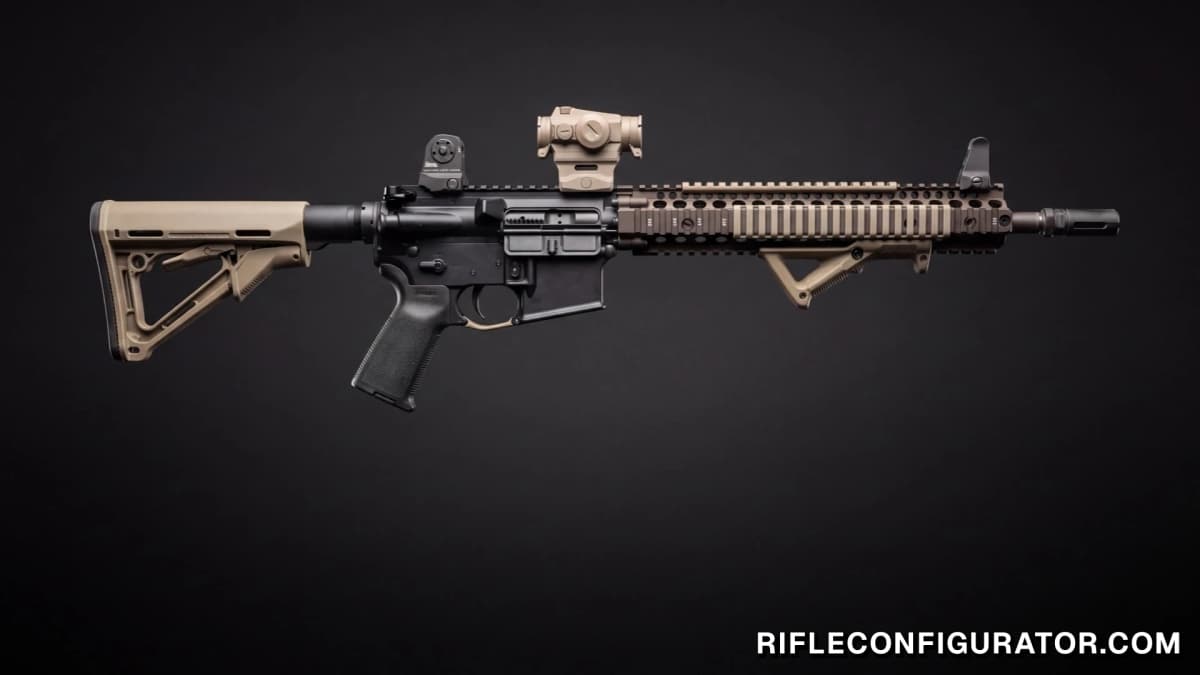
- →500 rounds, zero malfunctions: our own Block II carbine on an H3 buffer ran a full 500-round day of PMC X-TAC XM193 without a single stoppage, fed and cycled correctly in both trigger modes, and locked the bolt back on every last round.
- →Factory M16-profile carrier: Daniel Defense ships the full-auto-profile bolt carrier that forced reset triggers need, so the single most common FRT-killing part is already correct out of the box.
- →Carbine gas on a 14.5-inch barrel: the shortest common gas length behind a 14.5-inch barrel gives the highest port pressure of any standard AR configuration. An FRT wants a hard, fast carrier stroke, and this one delivers it.
- →H3 buffer is the tuning step: 5.0 to 5.4 ounces against the factory H buffer's 3.8. The Triggered Company specifies H2 minimum and H3 for 16-inch and shorter barrels.
- →The quad rail is a heat sink: the RIS II is the reason this rifle weighs 6.74 pounds, and it is also the reason the handguard stays usable during the kind of strings an FRT encourages.
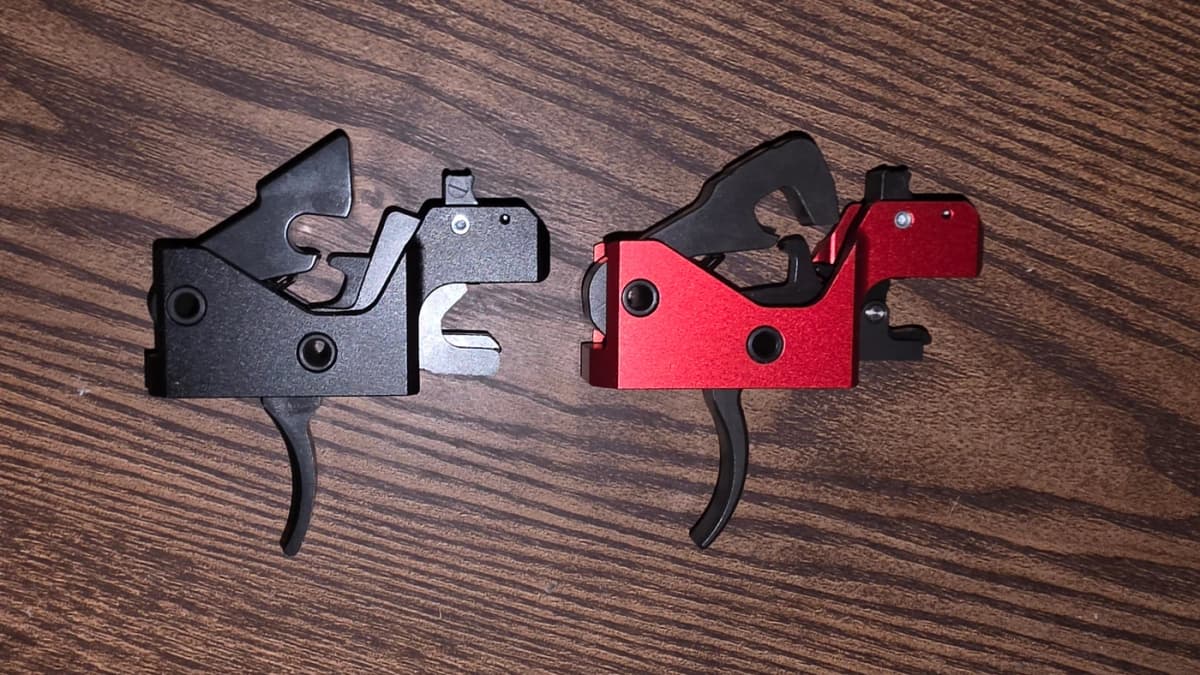
- →The trigger: The Triggered Company LAT ($324.99) runs a 3 to 3.5 lb single-stage break in semi and a selector-activated forced reset in the third position.
- Rounds Fired
- 500rdsPMC X-TAC, zero malfunctions
- Barrel / Gas
- 14.5inCHF chrome lined, carbine gas
- Buffer Weight
- 5.0-5.4ozH3, up from the factory H
- Trigger Pull
- 3-3.5lbLAT, standard semi mode
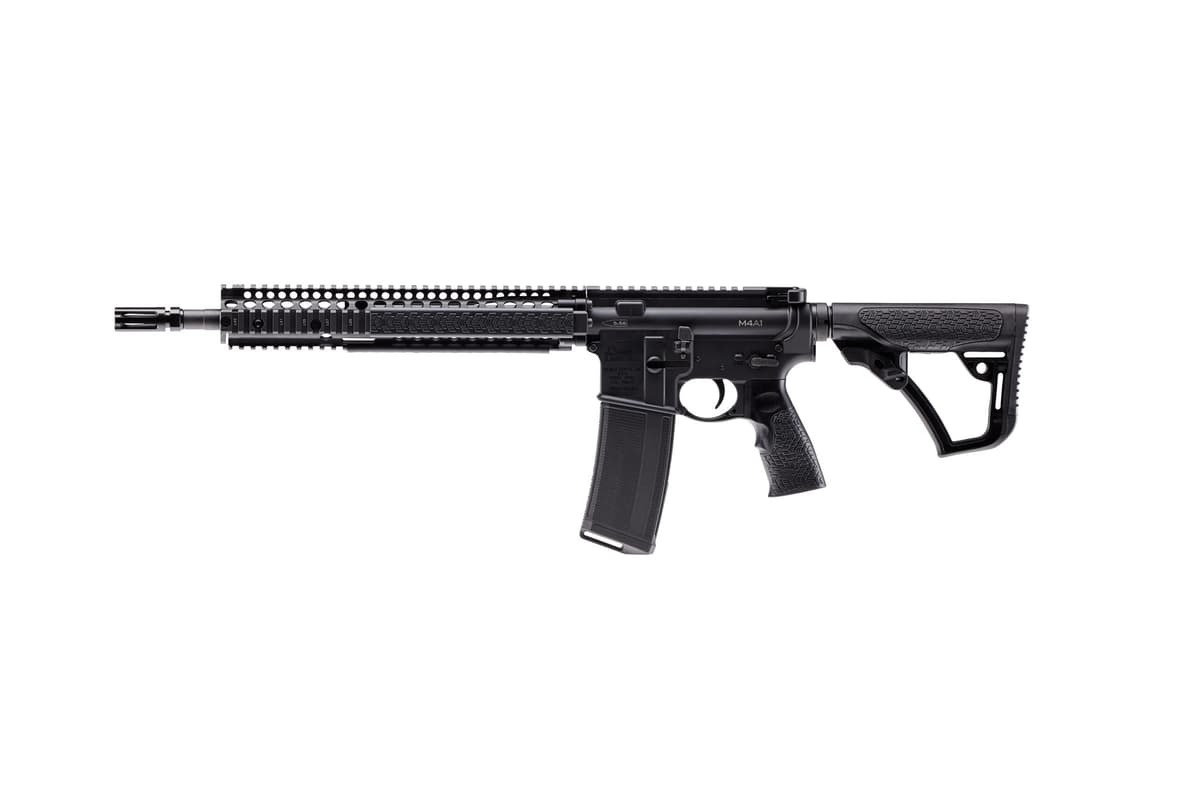
Daniel Defense M4A1 RIS II
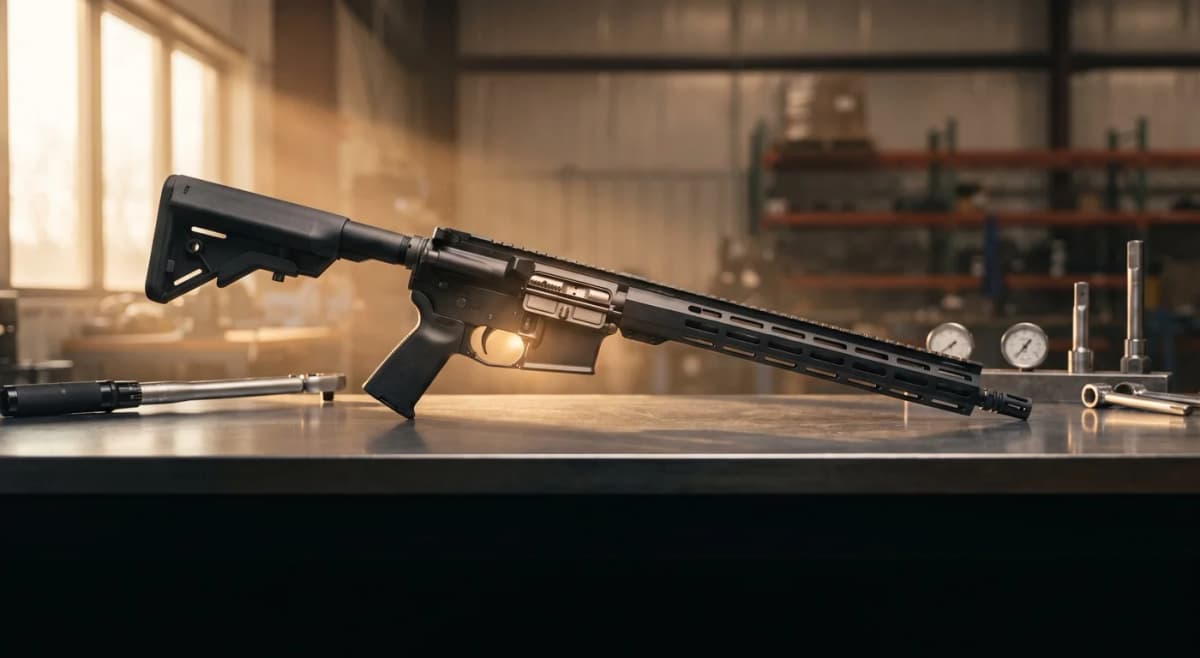
The off-the-shelf Block II host: M16-profile carrier, carbine gas, RIS II quad rail
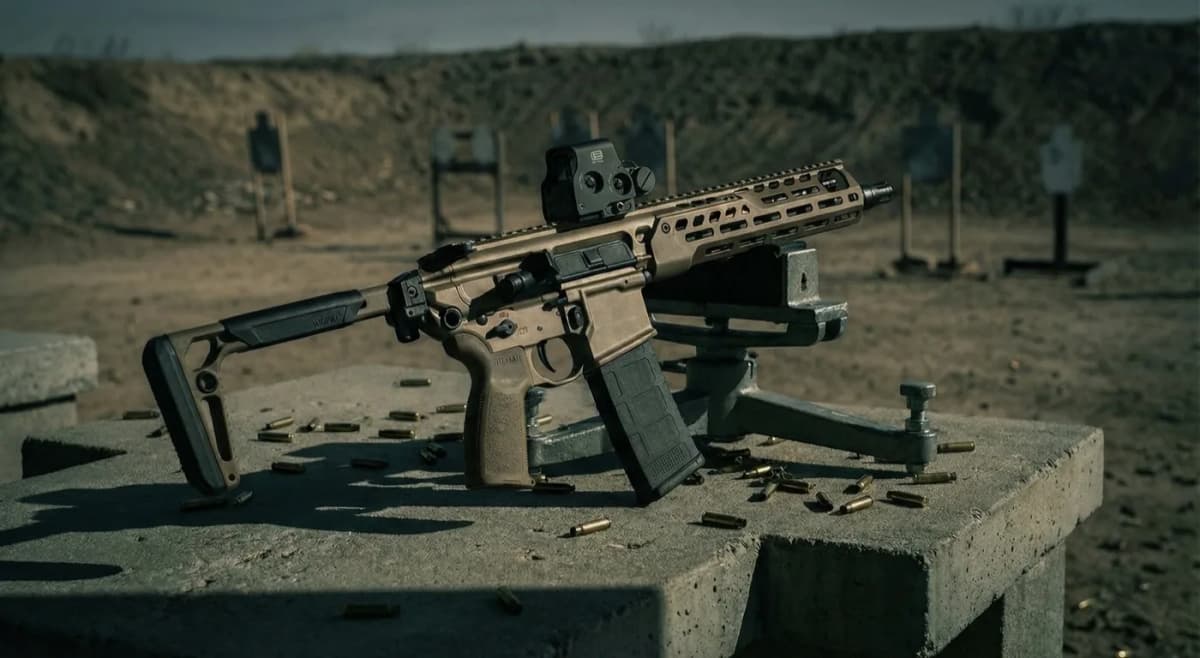
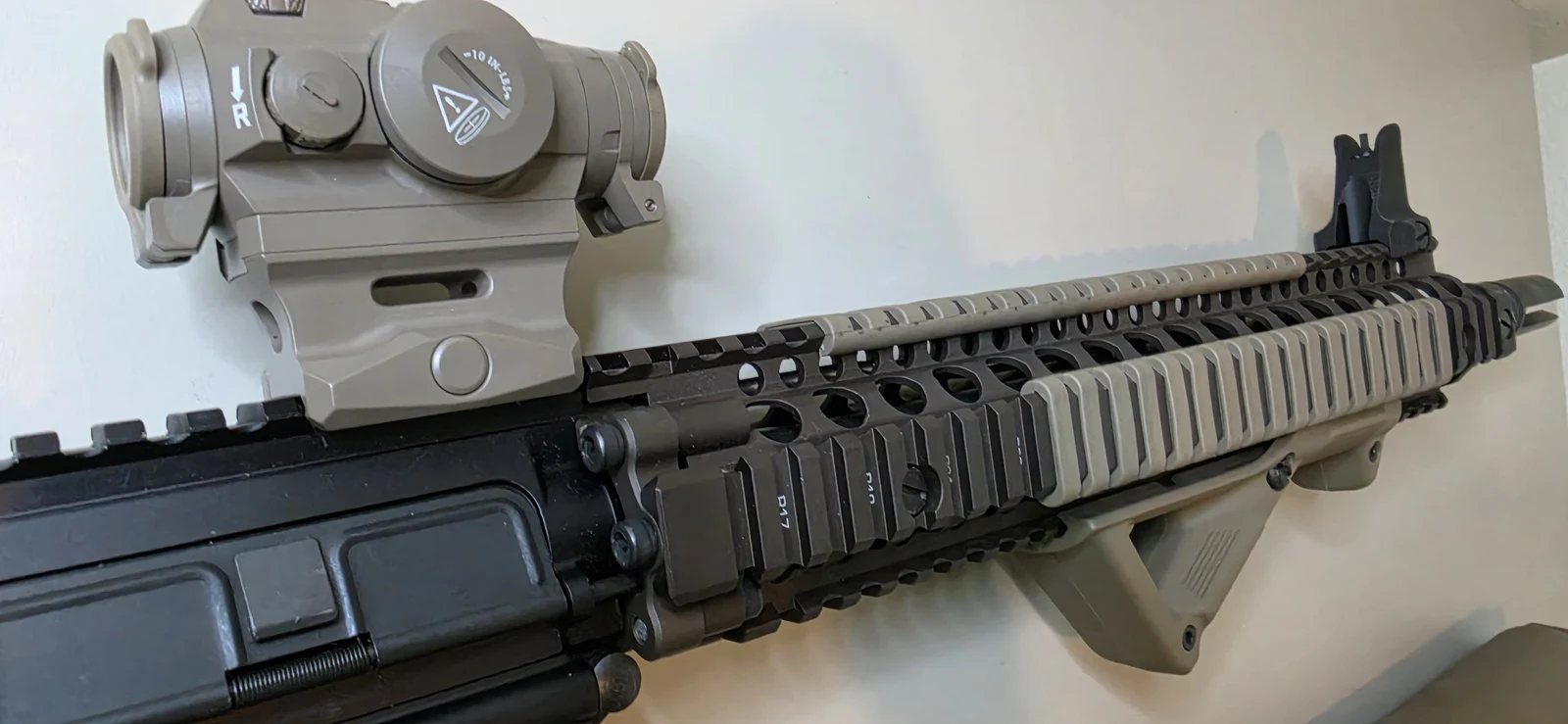
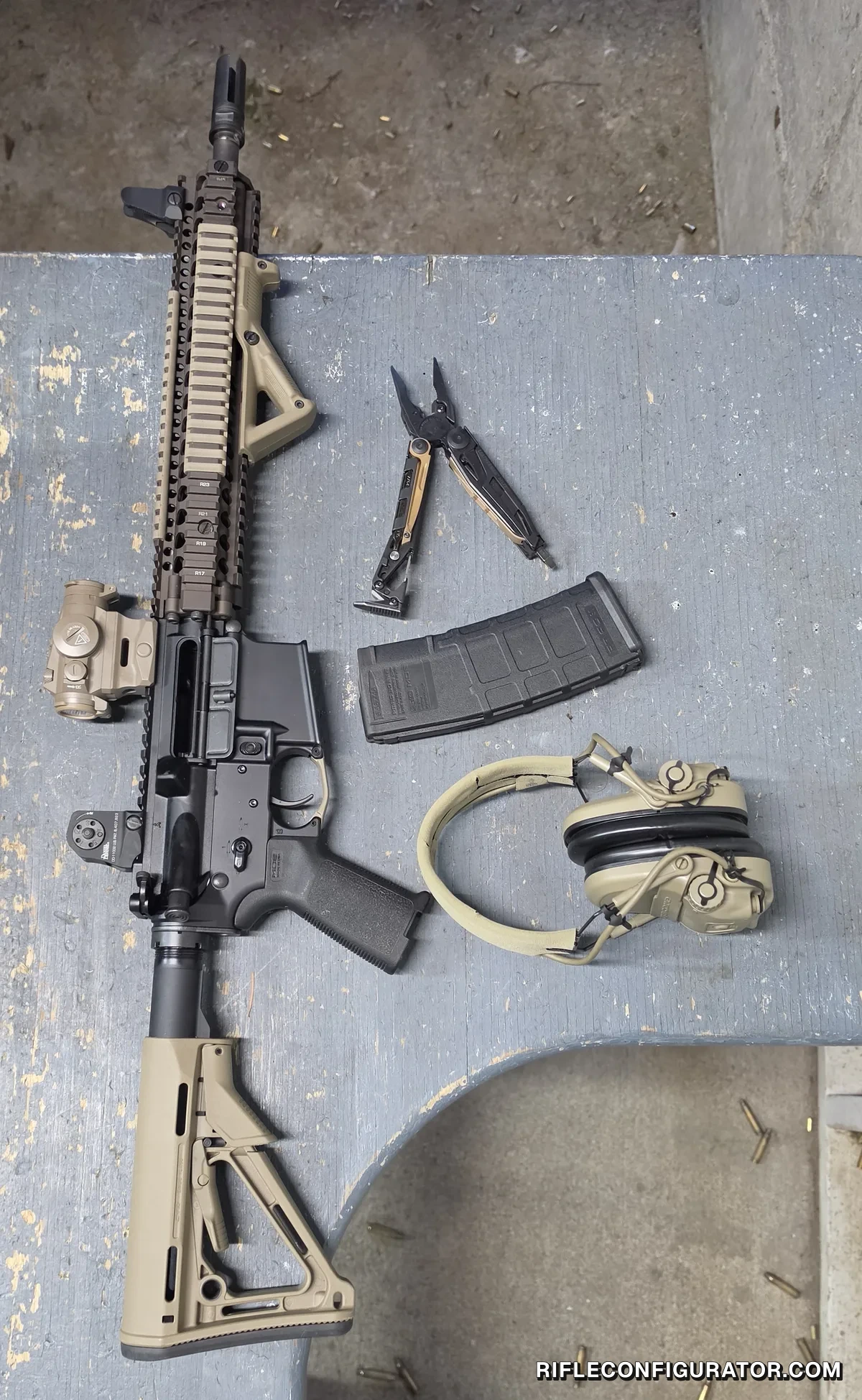
DD's legacy M4A1 with the original RIS II quad rail. Same handguard the U.S. SOCOM SOPMOD Block II program adopted in 2005. Carbine-length gas, mil-spec lower with an ambidextrous safety selector and independently ambidextrous GRIP-N-RIP charging handle (bolt catch and magazine release are single-sided), 14.5" CHF barrel pinned and welded to 16.0" overall.
- +The actual SOCOM SOPMOD Block II handguard configuration
- +Picatinny on all four sides accepts any 1913 accessory directly (no M-LOK adapters)
- +Ambidextrous charging handle from the factory
- −RIS II quad rail is significantly heavier than the M-LOK RIS III (6.74 lbs vs 6.39 lbs)
- −Quad rail without rail covers chews up your support hand fast
- −Pinned and welded flash suppressor rules out muzzle device swaps and most suppressor mounts
Affiliate links (?)
Featured build
Block II reference build
A SOPMOD-style setup on the M4A1 RIS II: EOTech EXPS3 up top, B5 SOPMOD stock, MOE-K2 grip, and a SureFire Scout on the quad rail. Swap the optic to compare.
Representative shapes: Magpul MOE-K2 Grip, A2 flash hider.
- Daniel Defense M4A1 RIS IIDaniel Defense · Base rifle$2,599.00Shop at Daniel Defense
 EOTech EXPS3EOTech · Optic$815.00View at OpticsPlanet
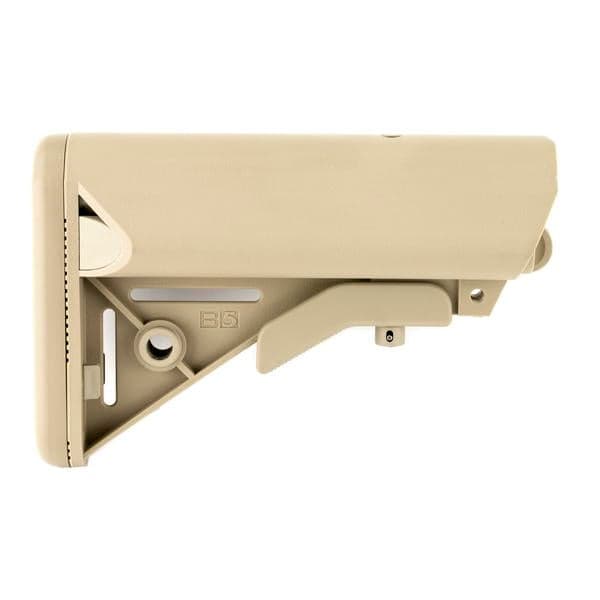 B5 Systems Enhanced SOPMOD StockB5 Systems · Stock$95.00View at OpticsPlanet
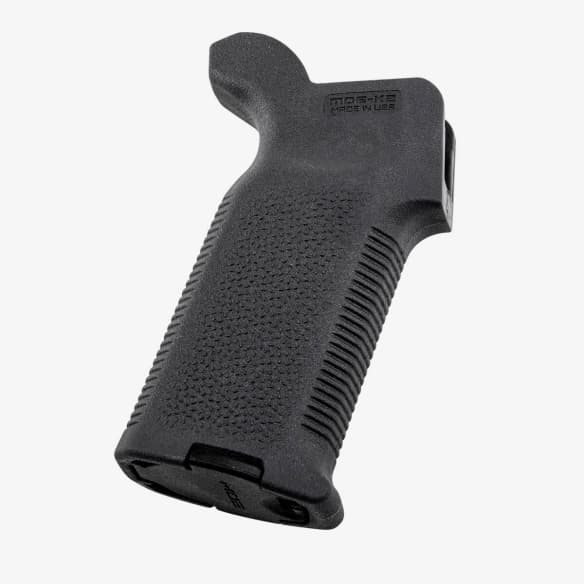 Magpul MOE-K2 GripMagpul · Grip · representative shape$20.95View at OpticsPlanet
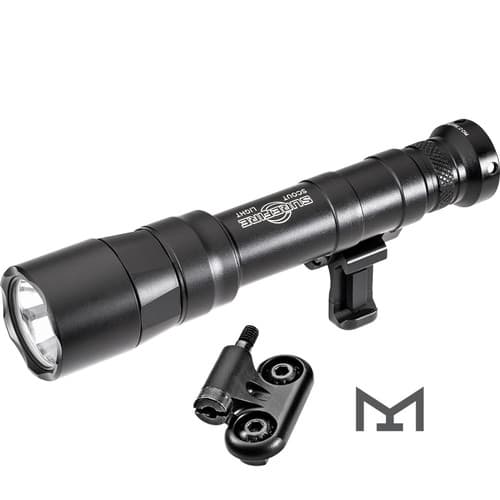 SureFire M640DFT-PRO Turbo Scout Light ProSureFire · Light$334.49Shop at Brownells
An FRT Is Only as Good as the Rifle Around It
A forced reset trigger does not have its own power source. The reset is driven by the reciprocating bolt carrier plus the trigger's internal spring pressure, which means every function problem people blame on the trigger is really a question about the host: is the carrier the right profile, is there enough gas behind it, and is there enough reciprocating mass to keep it from outrunning the reset. Get those three right and an FRT is boring. Get one wrong and you get a rifle that fires two rounds and goes dead.
That is why host selection is the real buying decision, not trigger selection. Our FRT compatible guns guide covers which platforms have a working forced-reset path at all. This piece is narrower: of the AR-15s you can buy complete, the Daniel Defense M4A1 Block II configuration needs the least work to run one well, and it is the rifle our own FRT lives in.
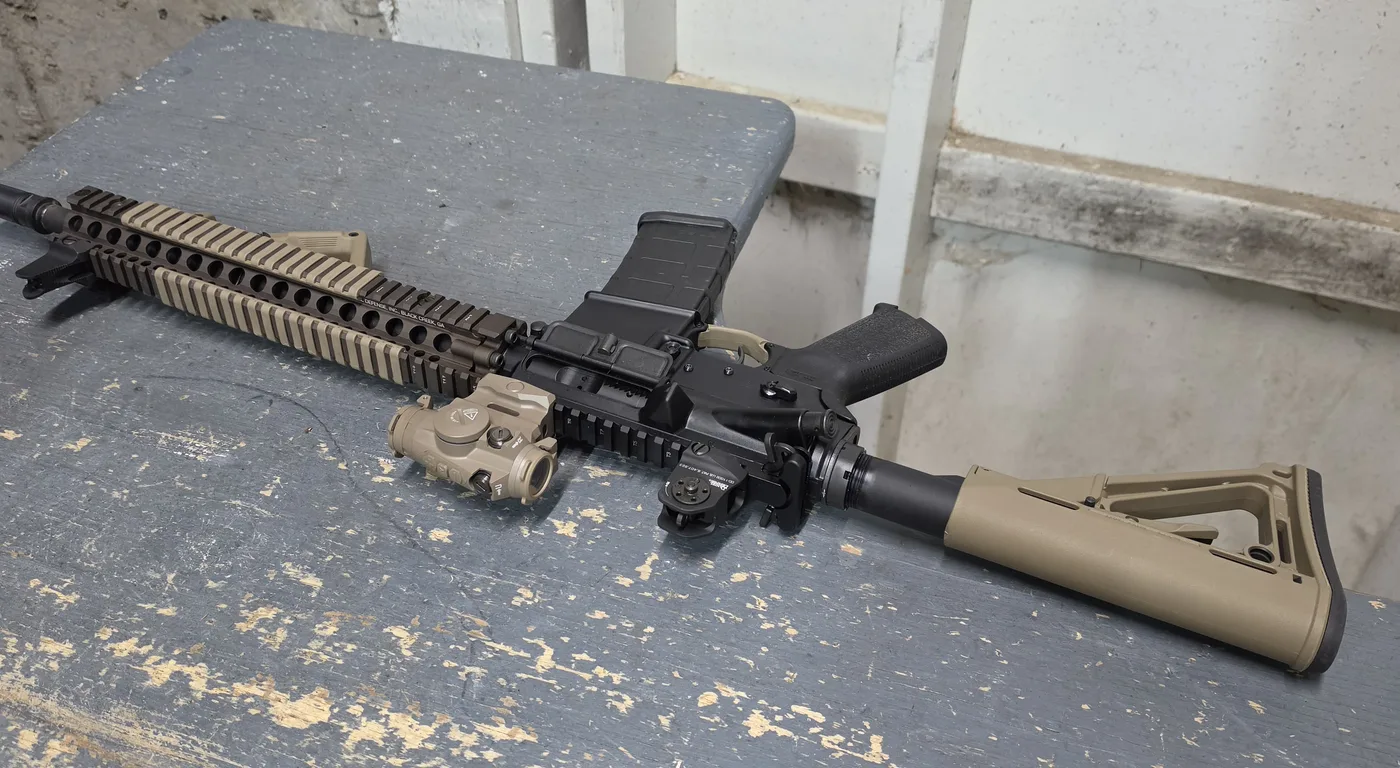
500 Rounds, No Malfunctions
Our Block II ran 500 rounds of PMC X-TAC in a single session on an H3 buffer and produced zero malfunctions: no failures to feed, no failures to extract or eject, and no dead trigger. On a forced reset host that number is more informative than a group size, because every FRT problem worth worrying about is a timing problem, and timing problems do not hide. They show up in the first few magazines or they do not show up at all.
Function was identical in both trigger positions. In standard semi the break stayed where it belongs and the reset was clean shot to shot. In the forced reset position the trigger drove back against the finger at one round per function for the length of every magazine. Neither mode wanted a different buffer, a different magazine, or a warm-up. The host was already correct, so the trigger had nothing to fight.
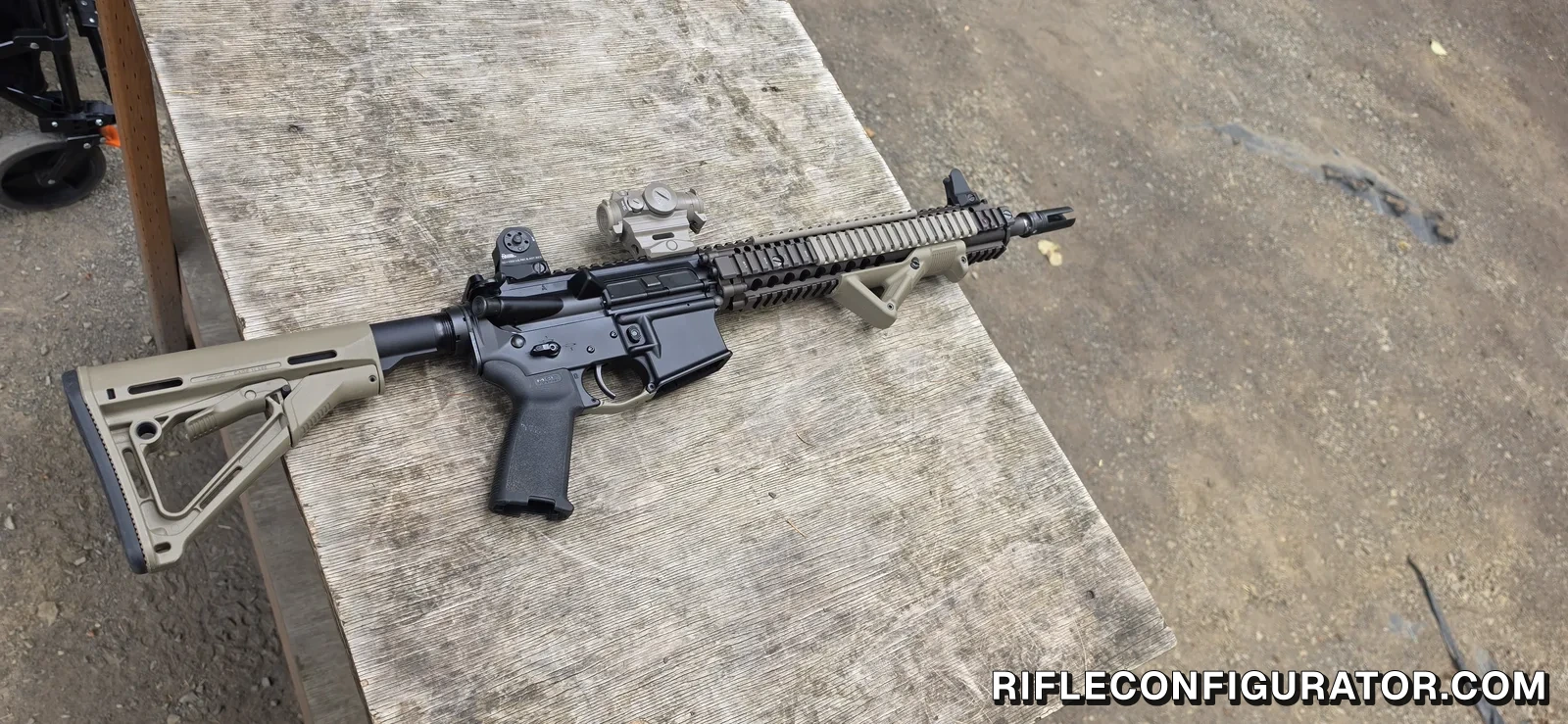
The bolt also locked back on the last round of every magazine, which sounds like housekeeping and is not. Buffer tuning on an FRT host runs in one direction, adding reciprocating mass until the carrier stops outrunning the reset, and the failure waiting at the far end of that road is a carrier that no longer travels far enough rearward for the bolt catch to rise under it. Last-round hold-open is the cheapest tell you have that you added enough mass and not too much. An H3 behind carbine gas and a 14.5-inch barrel sits on the correct side of that line, and 500 rounds of consistent lock-back is what that looks like from the shooter's end.
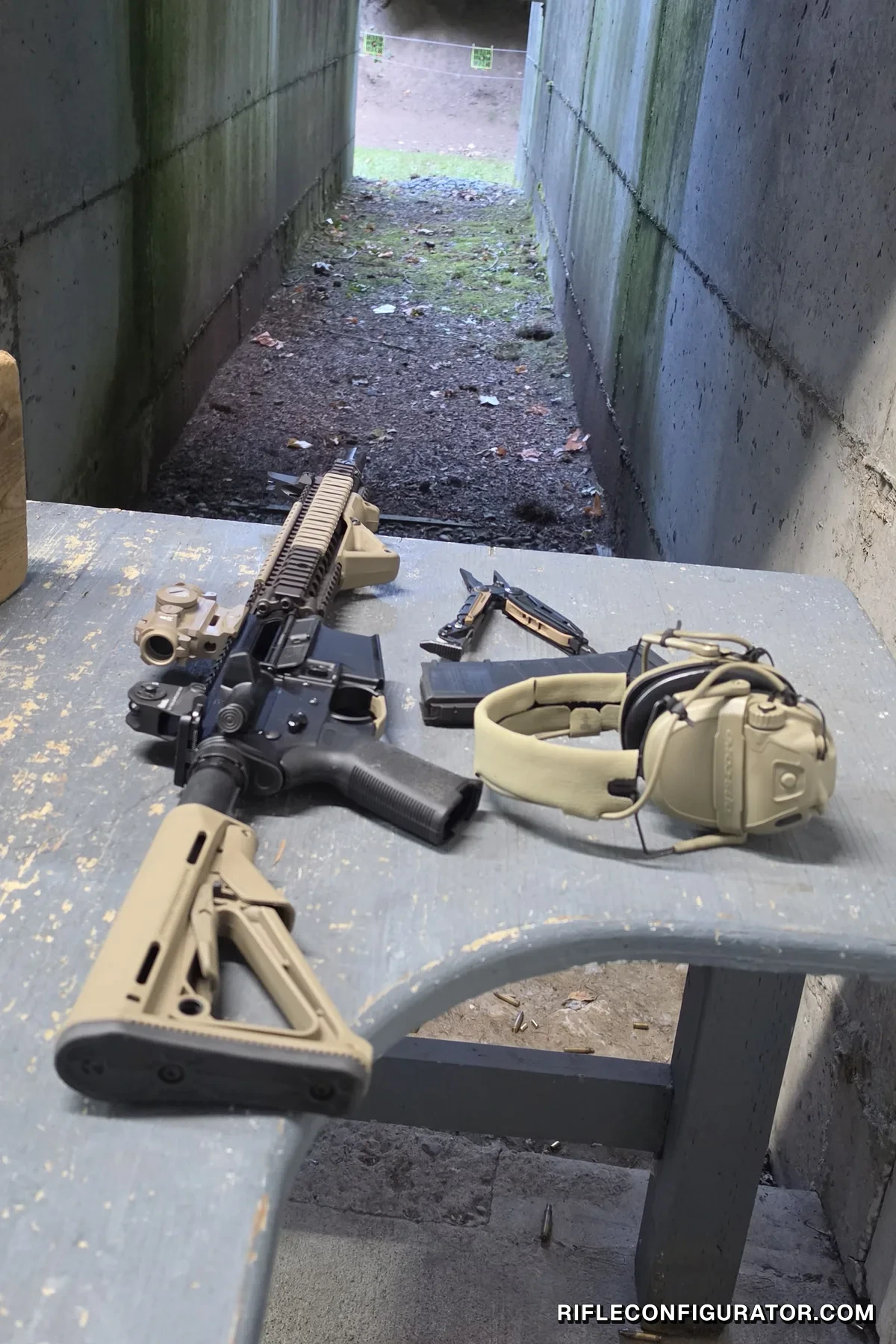
The load was PMC X-TAC, the 55-grain XM193, and on an FRT host that is worth a sentence rather than a footnote. X-TAC is loaded to full 5.56 NATO pressure instead of the lower .223 Remington standard PMC's Bronze line uses, which puts port pressure where a carbine gas system expects to find it. A forced reset trigger runs on carrier speed, and ammunition that gasses the rifle to spec takes a variable off the table before you start diagnosing anything else. For volume like this the case is the only sensible way to buy it.
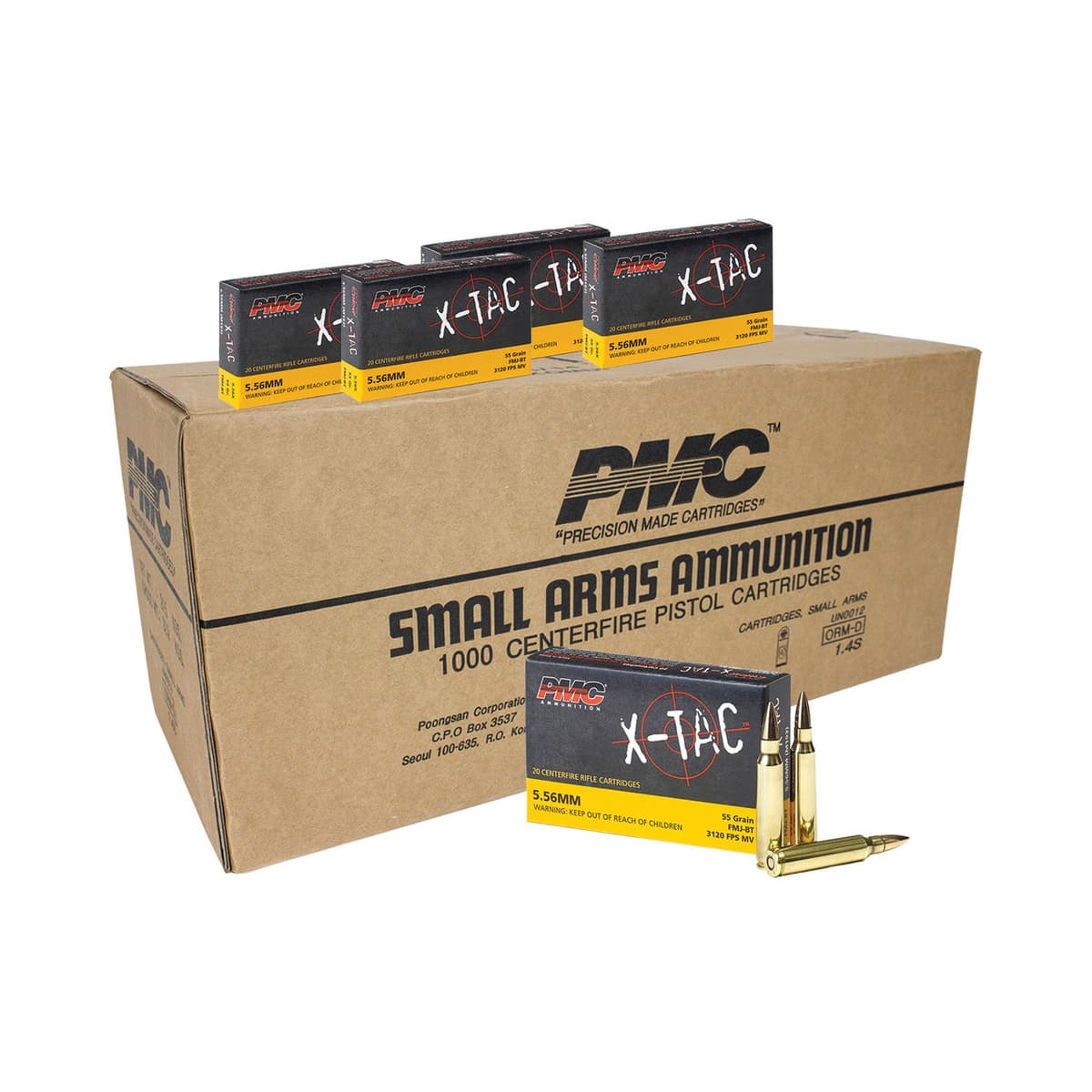
PMC X-TAC 5.56 NATO 55gr FMJ XM193 (1,000 Rounds)
The 1,000-round case of the NATO-pressure load this rifle ran
Case-level PMC X-TAC XM193 at NATO pressure, the volume tier of the M193-equivalent load for AR-15 training.
- +Lowest per-round tier of the NATO-pressure X-TAC load
- +Full 5.56 pressure supports normal carbine gas-system cycling
- +Reloadable brass cases
- −Large upfront purchase
- −Shipping weight changes landed cost
- −FMJ is a training load, not a hunting or defensive one
It Ships With the Right Bolt Carrier
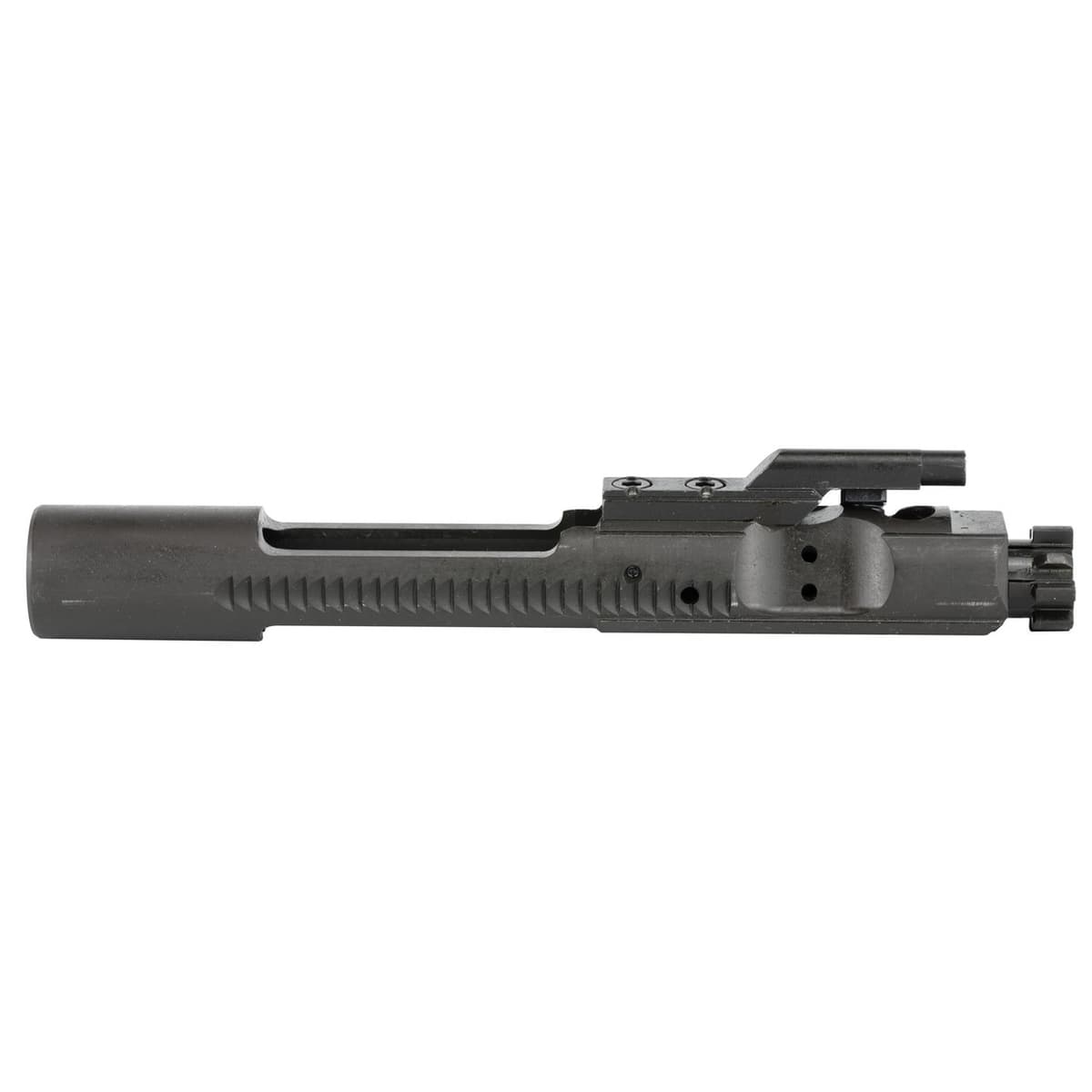
Daniel Defense builds its complete rifles with an M16-profile, mil-spec MP-tested, chrome-lined bolt carrier group with a properly staked gas key. That is the part an FRT needs, and on most budget ARs it is the part you have to buy separately. The semi-auto carrier profile relieves material from the rear underside of the carrier, and that relief is exactly where some forced reset designs take their actuation. A Rare Breed FRT-15L3 in a rifle with a semi carrier is dead from the first shot, and no amount of buffer tuning fixes it.
The full-auto carrier is also heavier, which works in your favor here for the same reason the buffer does. More reciprocating mass means a slower, more controlled carrier stroke and a carrier that is less likely to beat the trigger back to the front. The M4A1 gives you that mass without a parts order.
Carbine Gas Is a Feature Here, Not a Compromise
The M4A1 runs a carbine-length gas system behind a 14.5-inch barrel, which puts the gas port closer to the chamber than any other common AR-15 layout and gives the highest port pressure of the bunch. On a conventional semi-auto build that is the thing reviewers complain about: more felt recoil, faster unlocking, harder on parts than a mid-length. With a forced reset trigger it is the opposite. A hard, fast, unambiguous carrier stroke is the input the reset mechanism runs on, and the DD gas system delivers it with cheap ammunition, in the cold, and dirty.
This is also why the buffer conversation is mandatory rather than optional on this host. You are deliberately choosing the most heavily gassed standard configuration and then adding mass back to control it. Our AR-15 buffer weight and gas tuning guide walks through the full H1 to H3 progression and how to read ejection patterns if you want to work the problem from first principles.
The H3 Buffer Does the Tuning
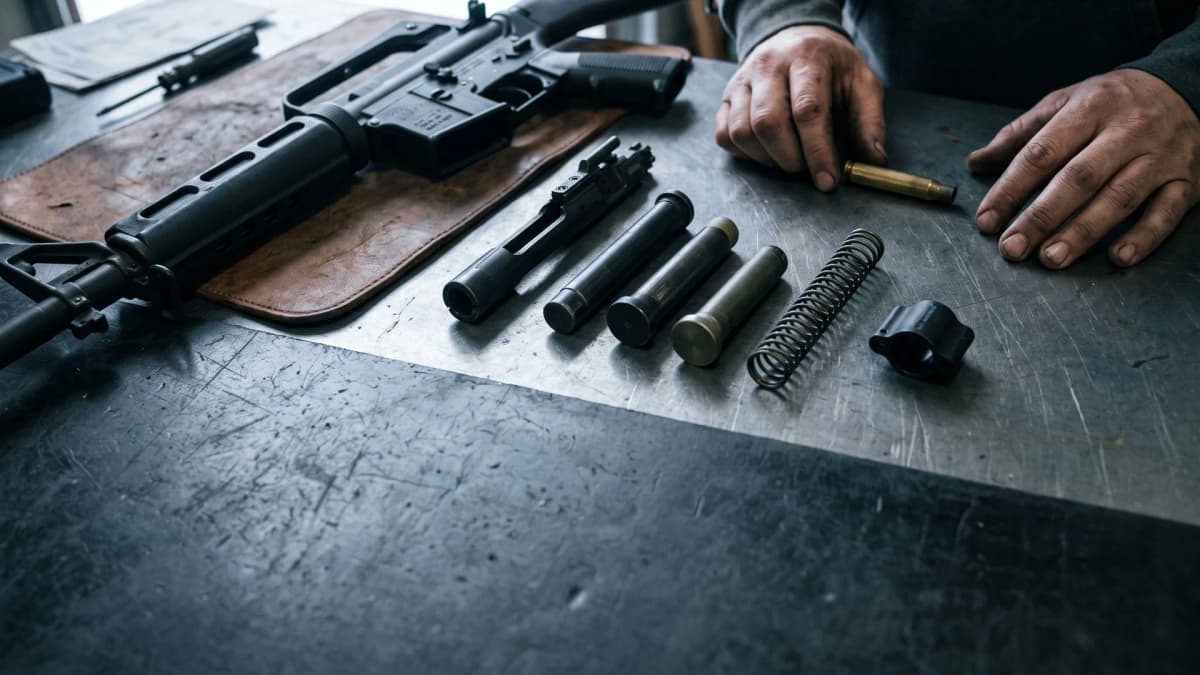
An H3 buffer weighs 5.0 to 5.4 ounces using three tungsten weights in the standard 3.25-inch carbine body, against the roughly 3.8-ounce H buffer Daniel Defense ships in the M4A1. That is the single change that turns a good FRT host into a reliable one. The Triggered Company's published requirement for both the LAT and the Disruptor is H2 minimum, H3 recommended for 16-inch and shorter barrels, and the Block II sits squarely in that bracket at 16.0 inches with the pinned flash suppressor. Run at that weight, ours has gone 500 rounds without a stoppage and without losing last-round bolt hold-open, which is both ends of the tuning window satisfied at once.
The failure this prevents is specific. A rifle that fires one or two rounds and then gives you a dead trigger with no hammer fall is a carrier that is outrunning the trigger's mechanical reset, and reciprocating mass is the whole fix. It is also the one symptom this host has never produced. It is worth knowing that this is only one of three distinct FRT failure modes, and that the other two, true light strikes and hammer follow, are not buffer problems at all. If H3 does not settle a rifle down, the next step up is a dedicated heavy unit like the ODIN Works H-FRT buffer, not a different trigger.
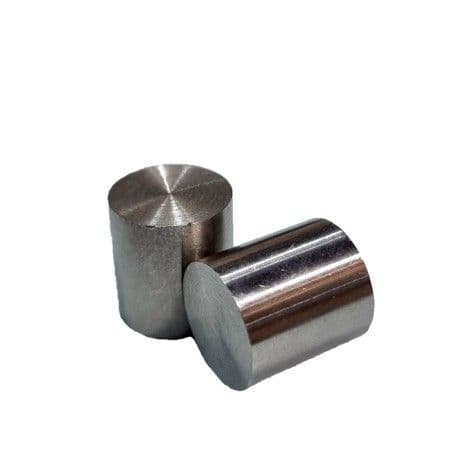
Various H3 Buffer (5.0-5.4 oz)
The buffer swap that makes a carbine-gas FRT host reliable
Heavy H3 buffer for extremely overgassed setups or short-barreled rifles. Maximum bolt carrier slowdown.
- +Maximum available mass for taming extreme overgassing
- +Significantly reduces bolt carrier velocity and felt recoil
- +Essential for large-bore AR cartridges in carbine systems
- −Too heavy for most standard AR-15 configurations
- −Can cause short-stroking with properly-gassed systems
- −Requires careful tuning with adjustable gas blocks
Affiliate links (?)
The Quad Rail Earns Its Weight Under Sustained Fire
The RIS II is the heaviest part of this rifle and the reason a 14.5-inch carbine weighs 6.74 pounds, and under an FRT that weight comes back as usable handguard time. A forced reset trigger encourages exactly the kind of shooting that heats a barrel and a rail fast, and the RIS II's aluminum mass gives that heat somewhere to go instead of straight into your support hand. Run the rail panels. A bare quad rail chews up a bare hand well before the gun gets hot enough to care about.
Heat is the actual ceiling on this kind of shooting, not the trigger and not the magazine. The barrel is the consumable, and a chrome-lined cold hammer forged barrel is the one you want spending its life hot. If you want to push that ceiling further, the heavier SOCOM contour under the same rail is the upgrade, and our civilian IAR build guide covers the sustained-fire math and the heat-management parts in depth.
If You Want the Heavy Barrel, Buy the Upper
The complete M4A1 RIS II uses the lighter M4 barrel contour rather than the heavy SOCOM profile. Both have been issued on M4A1s. The M4 profile is the government profile with the M203 cut machined in, the same contour the URG-I upper USASOC fields runs; SOCOM asked for the heavier barrel to handle volume of fire. For most shooters the distinction never comes up. For an FRT host it is the one spec worth paying attention to, because the heavy contour is the one built to survive sustained automatic fire. Daniel Defense sells that barrel under the same RIS II rail as the M4A1 SOCOM Block II stripped upper ($694.99), which is the path to the heavy contour.
It ships stripped, so budget a bolt carrier group and a charging handle on top of the price, and the bare 14.5-inch 1/2x28 muzzle needs a device pinned to 16 inches or a Form 1 before it is rifle-legal. The upside over the complete rifle is real: you spec your own M16-profile carrier, and the unpinned muzzle leaves a suppressor mount on the table, which the pinned and welded flash suppressor on the complete rifle does not.
If you would rather skip the pinning and the parts order, Daniel Defense also sells the Block II upper complete as the M4A1 RIS II Upper Receiver Group ($1,743). It is the M4 contour rather than the SOCOM heavy barrel, but it arrives with the M16-profile carrier and the GRIP-N-RIP ambidextrous charging handle in the box, a pinned low-profile gas block instead of the triangle front sight post, and the DD flash suppressor already pinned and welded to 16 inches. Drop it on a forged lower and the FRT host is done.
The FSP version of the same upper ($1,751) is the one to buy if you want the fixed triangle front sight and the SureFire SF3P muzzle device, which is the device the SureFire SOCOM suppressor family fast-attaches to. It is the same 14.5-inch M4 profile barrel and carbine gas, and it also ships with the bolt carrier and charging handle. The trade is that the front sight post fixes your sight plane and limits low-mount optic options.
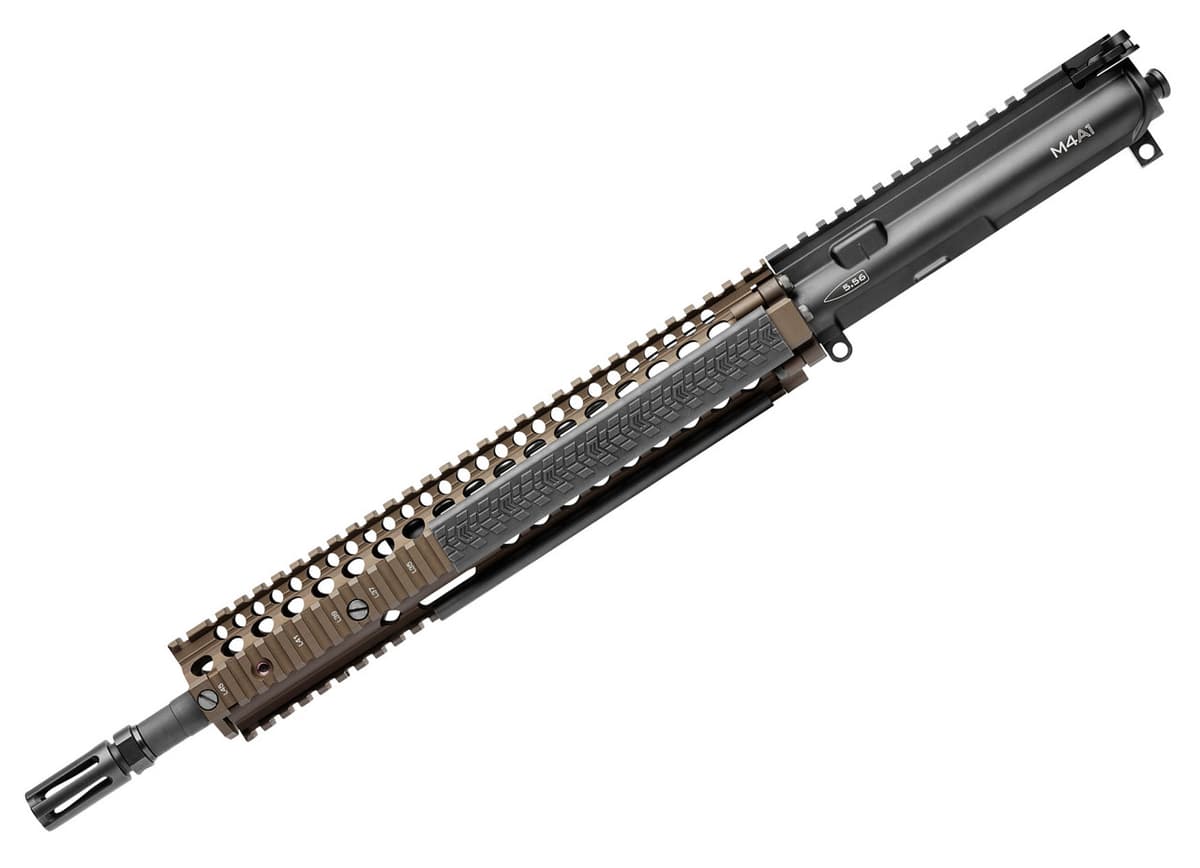
Daniel Defense M4A1 RIS II Upper Receiver Group 14.5"
Complete Block II upper, M16 carrier included, no gunsmith work
Block 2 RIS II upper without the front sight post. Low-profile pinned gas block under the quad rail for a clean folding-sight build.
- +RIS II quad rail in the correct Block 2 configuration without the triangle FSP
- +Low-profile gas block lets you run a folding front sight and any optic height
- +Complete with M16 BCG and ambidextrous charging handle
- −Ships the DD flash hider, not the SureFire SF3P, so it is not a drop-in SOCOM suppressor host
- −Pinned muzzle device and pinned gas block both require a gunsmith to change
- −Quad rail is heavier than the M-LOK RIS III and needs rail panels for a bare-hand grip
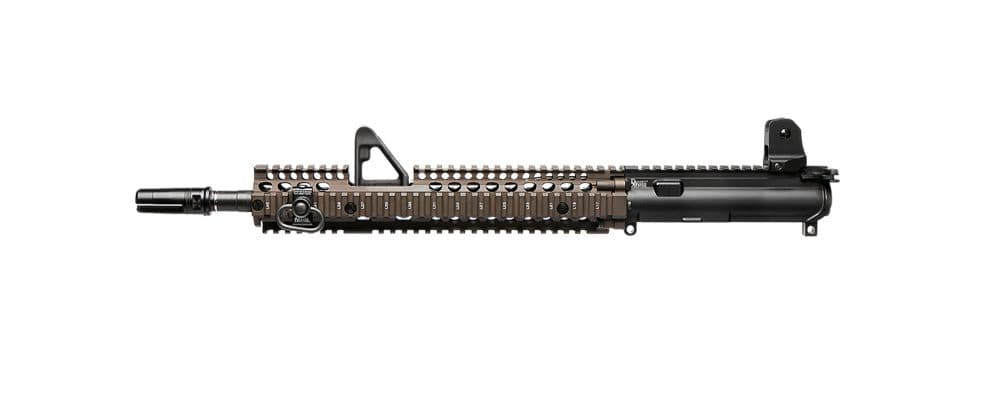
Daniel Defense M4A1 FSP Upper Receiver Group 14.5"
Same upper with the fixed front sight post and a SureFire SF3P
Classic 14.5" M4A1 configuration with pinned front sight post and quad rail.
- +Classic M4A1 military configuration
- +Pinned FSP provides robust, zero-retaining front sight
- +NFA-exempt with 16" OAL
- −FSP limits low-mount optic options
- −Heavier than low-profile gas block configurations
- −Quad rail adds weight vs. M-LOK alternatives
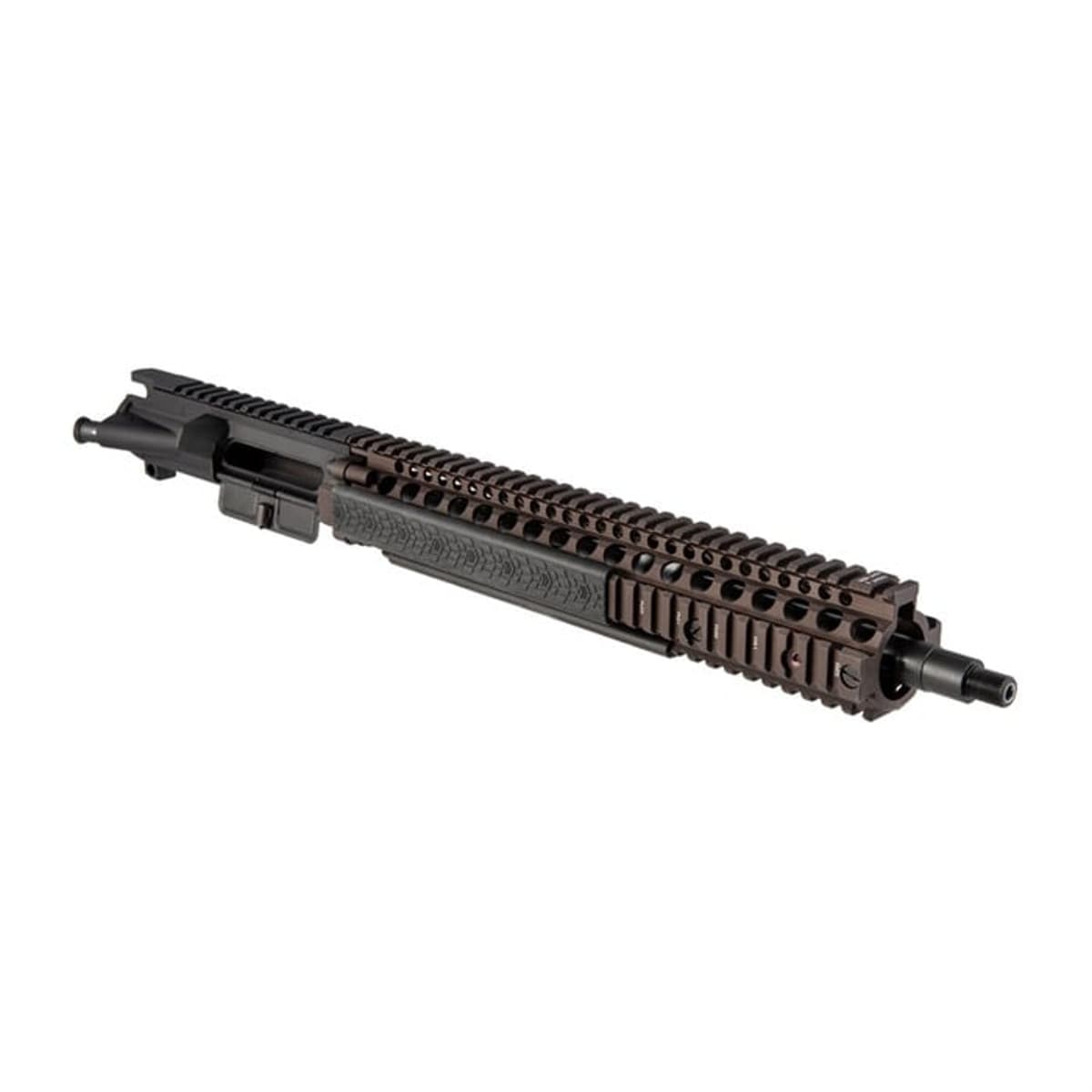
Daniel Defense M4A1 SOCOM Block II Stripped Upper 14.5"
The heavy SOCOM barrel contour under the same RIS II rail
The clone-correct heavy-profile Block 2 upper. SOCOM-profile barrel and RIS II rail, shipped stripped so you pin your own SureFire muzzle and add a BCG.
- +Only Block 2 upper with the SOCOM heavy barrel profile on carbine gas
- +Bare 1/2x28 muzzle lets you pin the correct SureFire SOCOM device for a suppressor-correct clone
- +Low-profile gas block and RIS II rail in the correct Block 2 configuration without an FSP
- −Stripped: no BCG, charging handle, or muzzle device, so budget another ~$250-350 in parts
- −Bare 14.5" barrel needs a 1.5"-or-longer device pinned to 16" or a Form 1 SBR before it is rifle-legal
- −Pinning and welding a muzzle device is gunsmith work, not a home install for most builders
Affiliate links (?)
The Short Version: MK18
Every argument in this piece holds on a MK18 and gets slightly stronger. The 10.3-inch barrel runs the same carbine-length gas system with the port even closer to the chamber, so carrier velocity is higher still, and the RIS II is the same rail with Santoprene panels in the box. Daniel Defense ships the MK18 Upper Receiver Group ($1,641) with the M16-profile BCG and the GRIP-N-RIP charging handle included, same as the 14.5-inch groups, so the FRT recipe does not change: H3 buffer, full-auto carrier, drop the trigger in.
What does change is the paperwork and the heat. A 10.3-inch barrel on a rifle lower is a short-barreled rifle, so the lower needs to be registered on an approved Form 1 before you assemble it, or you buy the complete MK18 SBR ($2,499) as a dealer transfer on a Form 4. The tax is $0 under the current law, but the registration and the wait are still real. Heat also arrives faster with less barrel to absorb it, which is the one place the 14.5-inch Block II is the better sustained-fire host. Our MK18 build guide covers the Mod 0 and Mod 1 parts lists in full.
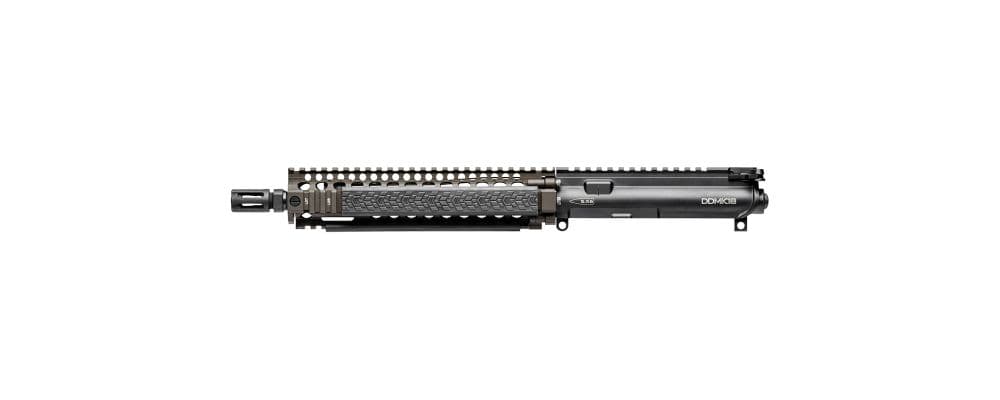
Daniel Defense MK18 Upper Receiver Group
Same Block II recipe at 10.3 inches, BCG and charging handle included
Iconic 10.3" 5.56 NATO URG with RIS II quad rail, the same configuration used by USSOCOM.
- +Battle-proven configuration used by USSOCOM
- +RIS II provides maximum accessory mounting flexibility
- +Compact 10.3" barrel ideal for CQB and vehicle operations
- −Premium pricing
- −Quad rail heavier than M-LOK alternatives
- −10.3" barrel requires SBR registration or pistol build
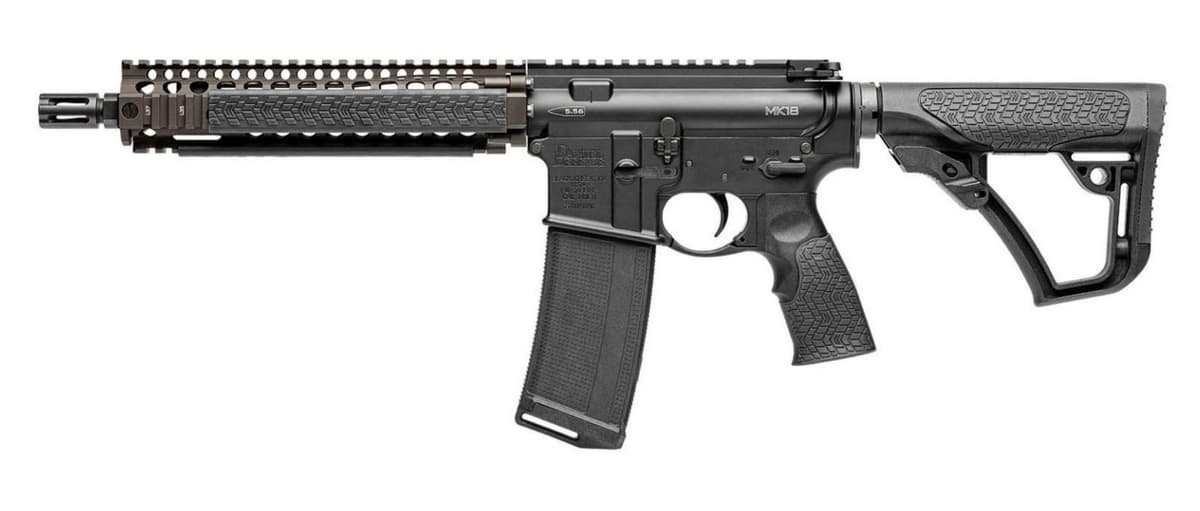
Daniel Defense MK18 SBR (10.3", RIS II)
The complete RIS II MK18 as a factory SBR, no upper assembly
Factory 10.3" 5.56 SBR with the RIS II quad rail, the closest catalog rifle to the issued MK18 Mod 1 silhouette; NFA-regulated transfer item
- +RIS II quad rail is the Mod 1 handguard, so the silhouette is right out of the box
- +Factory-built SBR, no upper assembly and no pin-and-weld muzzle device
- +Cold hammer-forged chrome-lined barrel handles sustained suppressed fire
- −Quad rail is heavier and harsher bare-handed than the RIS III M-LOK version
- −Still not a strict clone: the BCG, charging handle, and stock are DD parts, not Colt
- −10.3" barrel sacrifices muzzle velocity vs 14.5" or 16" carbines
Affiliate links (?)
The Trigger: Triggered Company LAT
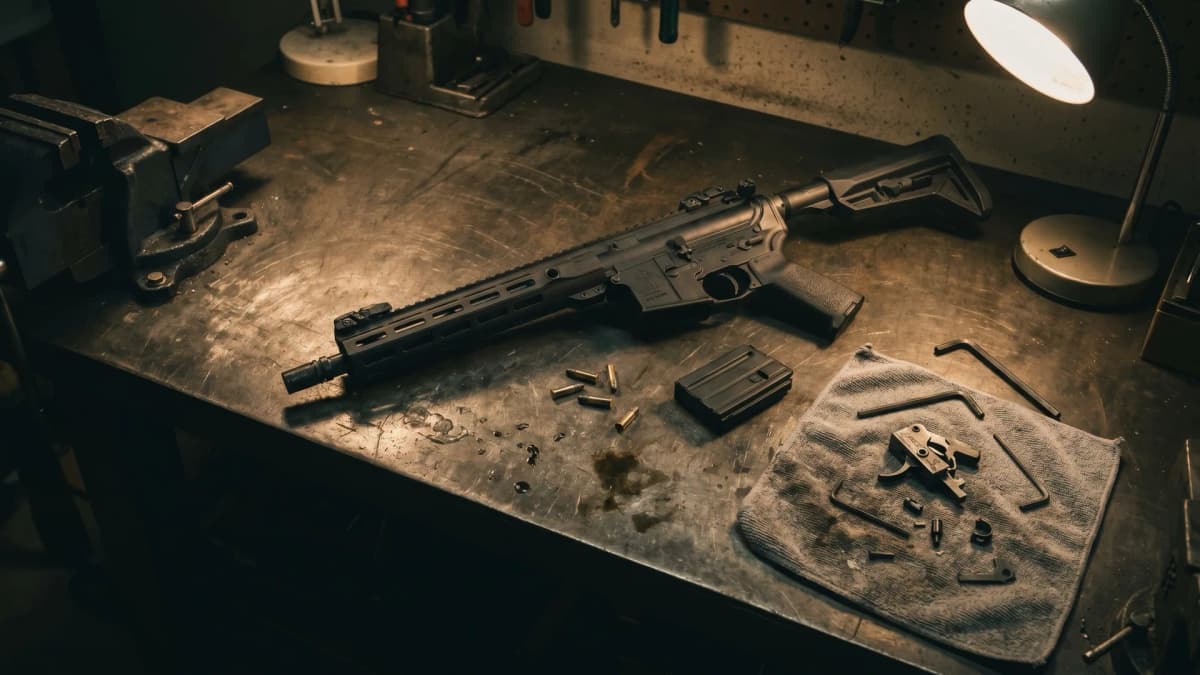
The LAT is the trigger in this rifle, and its selling point on a host this capable is that it does not force a trade. In standard semi mode the selector fully disables the assisted reset system, so the break is a genuine 3 to 3.5 lb single stage with a short reset. Move the selector to the third position and the assisted reset comes on, driving the trigger back against your finger at one round per function. You are not choosing between a match trigger and an FRT; you get both positions on one cassette, and across our 500-round session neither position produced a single malfunction.
Installation is drop-in with the anti-walk pins included, and the design is validated past 6,000 rounds under a course of fire derived from the USMC M27 IAR evaluation criteria, which is a relevant standard for exactly this kind of host. Our hands-on LAT review covers how the break actually feels and where the heavier Disruptor is still the better pick.
The Disruptor ($275) is the cheaper way into the same third position and the better pick if you want a duty-style pull rather than a match one. It breaks at 3.75 to 4.1 lbs against a defined wall, close enough to a two-stage in feel that you can stage against it and press, and that weight is CMP Service Rifle Match compliant. The buffer requirement is identical, H2 minimum with H3 for a 16-inch carbine, and so is the drop-in cassette install with anti-walk pins. The Disruptor is also the unit with the longer track record on this host; the LAT is the newer, lighter refinement of it.
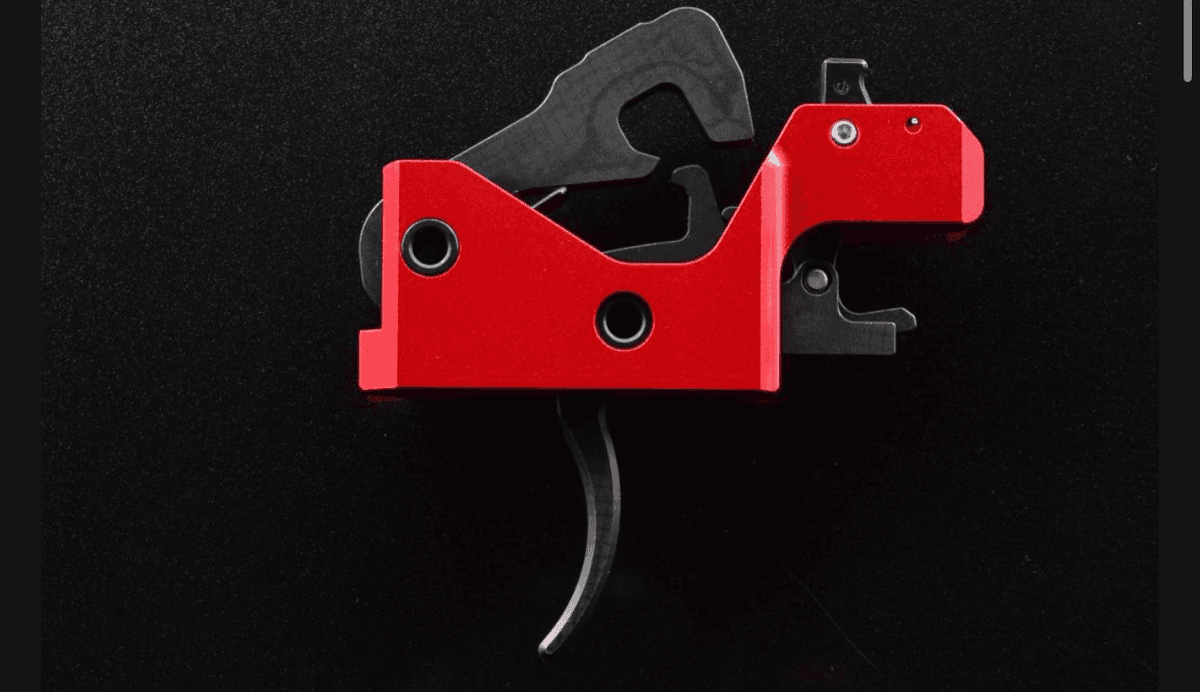
The Triggered Company LAT FRT
Match-grade semi break plus a selector-activated forced reset
Match-grade assisted reset FRT, a refinement of the Disruptor with a cleaner 3-3.5 lb pull and 17-4 stainless internals
- +Lighter, cleaner semi-auto pull than the Disruptor (3-3.5 lb vs 3.75-4.1 lb)
- +Selector fully disables the assisted reset in semi mode for a true single-stage break
- +17-4 stainless construction is an upgrade over the Disruptor's tool steel
- −Priced at a premium over the Disruptor
- −Requires H2/H3 buffer for carbine-length guns (additional cost)
- −State and local FRT restrictions still apply
Affiliate links (?)
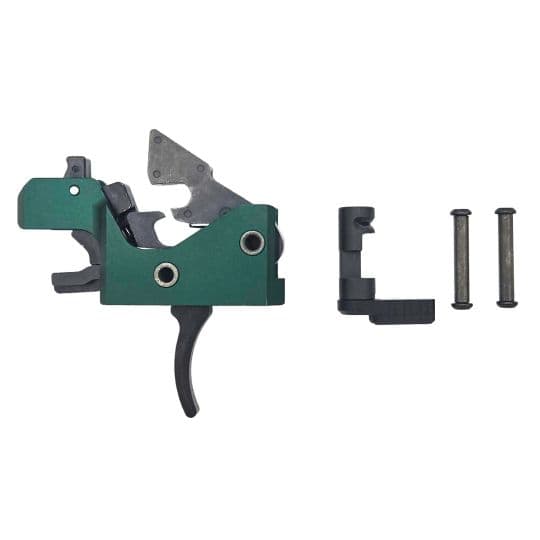
The Triggered Company Partisan Disruptor FRT
Cheaper, heavier duty-style break with a wall to stage against
Drop-in forced reset trigger with 3-position safety for rapid follow-up shots
- +Significantly faster follow-up shots vs standard triggers
- +Easy drop-in installation (torx wrench + included anti-walk pins)
- +Durable 17-4 stainless steel and 4140 chromoly construction
- −Take-up ahead of the wall is gritty out of the box on newer revisions
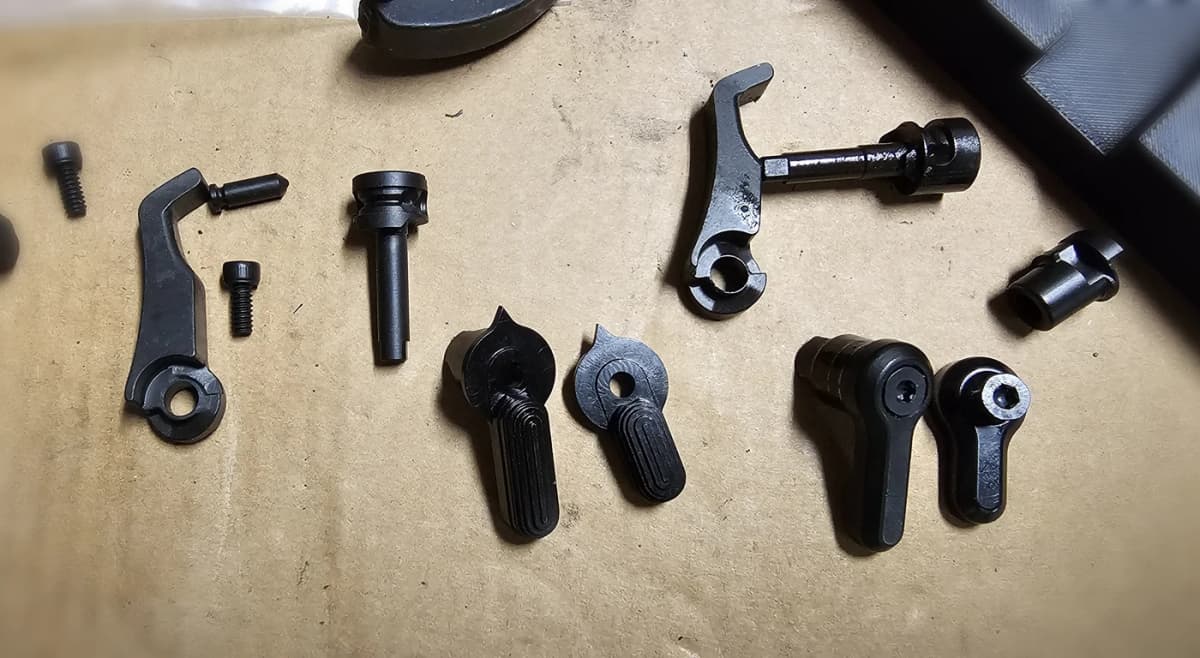
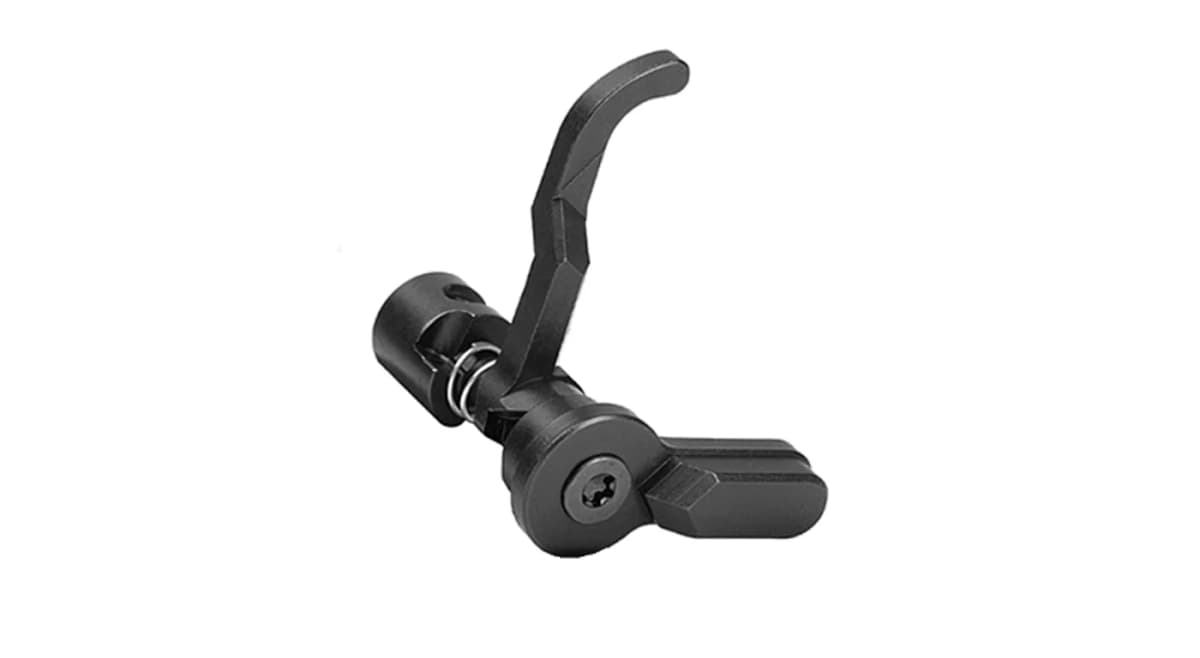
- −Stock selector is oversized, non-ambidextrous, and less positive than milspec (the SBW ambi selector fixes this)
- −Only 1-year warranty
Affiliate links (?)
Parts for an FRT Build
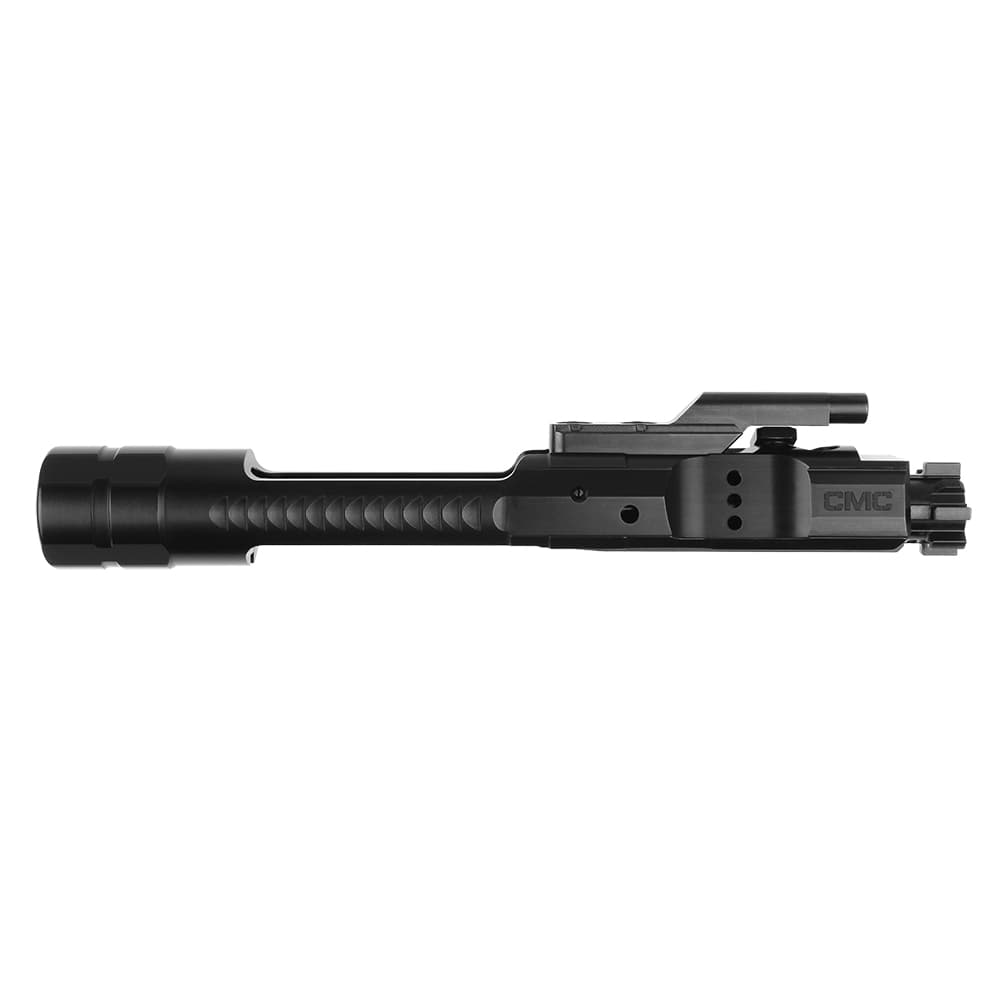
CMC AR-15 5.56/.223 Nickel Boron Bolt Carrier Group
- 5.56 NATO / .223 Remington
- Nickel-boron finish
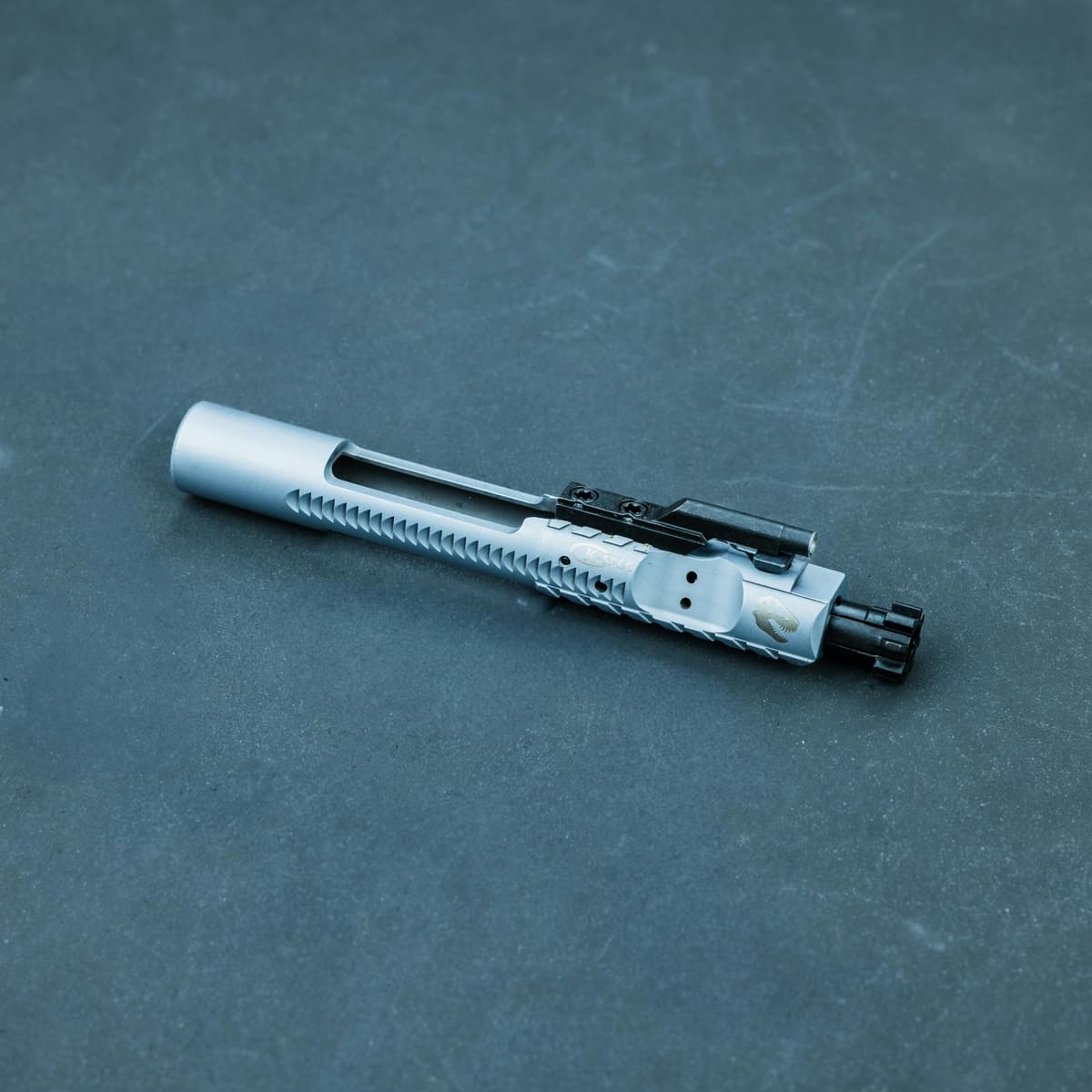
AR-15 Bolt Carrier Group
- AR-15 BCG
- 5.56 pattern
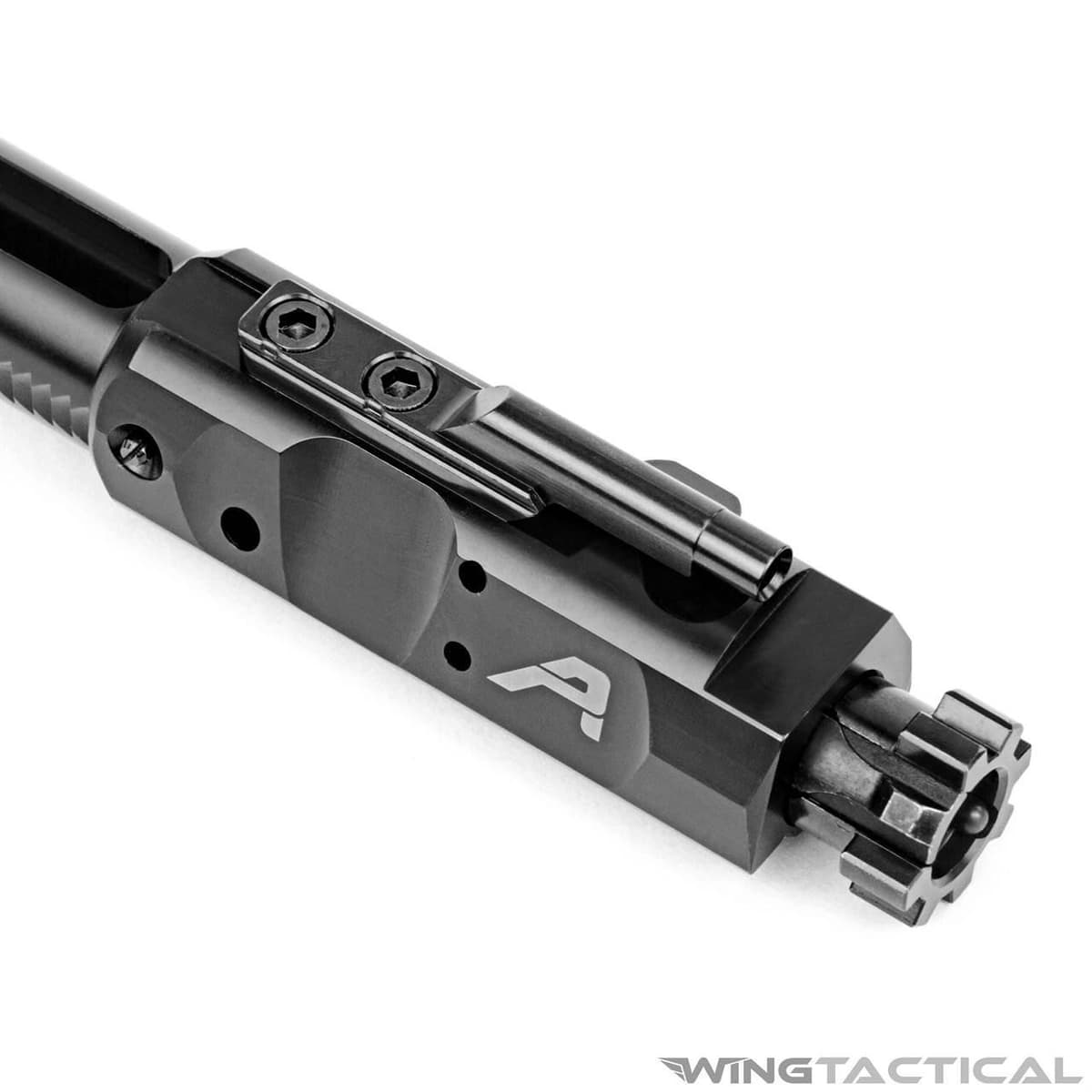
Aero Precision .308/7.62 Bolt Carrier Group (M16, Black Nitride)
- .308 Win / 7.62x51 NATO, DPMS Gen 1 / LR-308 / SR-25 pattern
- Full-auto M16 profile carrier
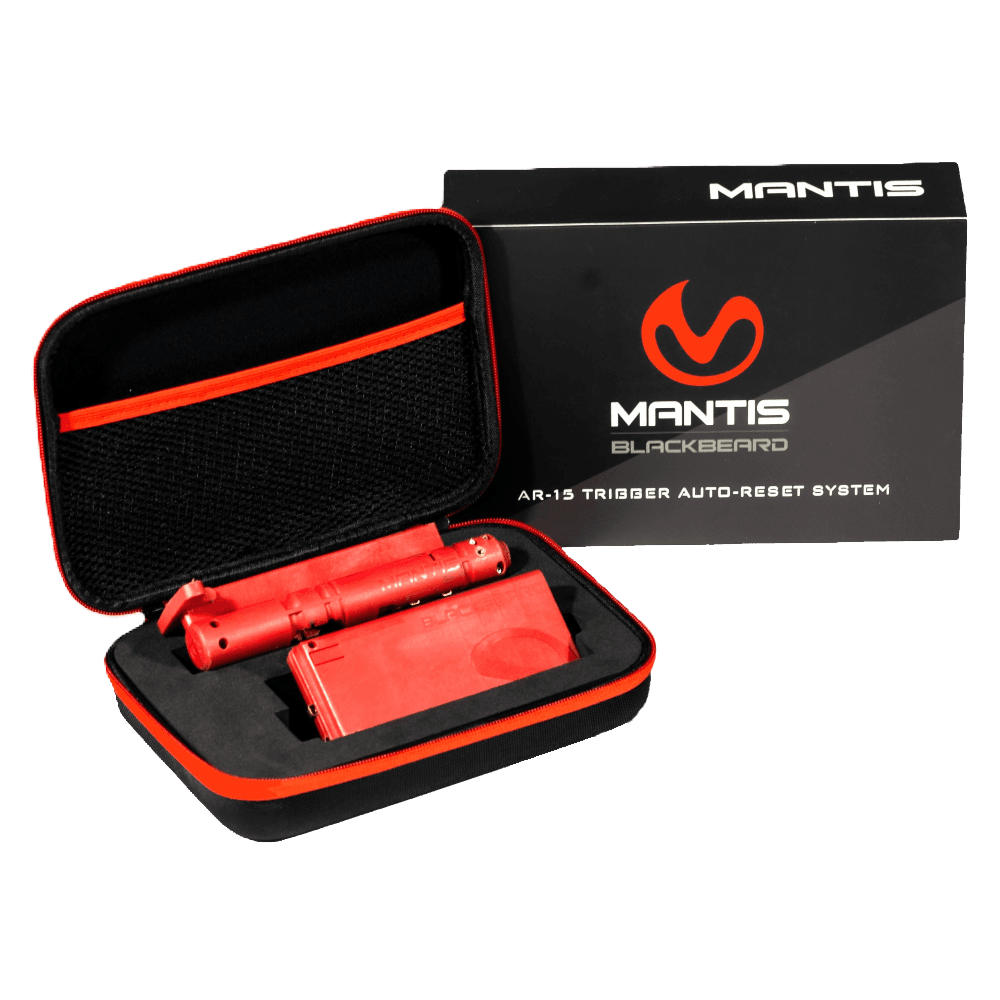
Mantis Blackbeard AR-15 Auto-Reset Trigger System
- Replacement BCG plus powered AR-15 magazine
- Uses the rifle's existing fire-control group
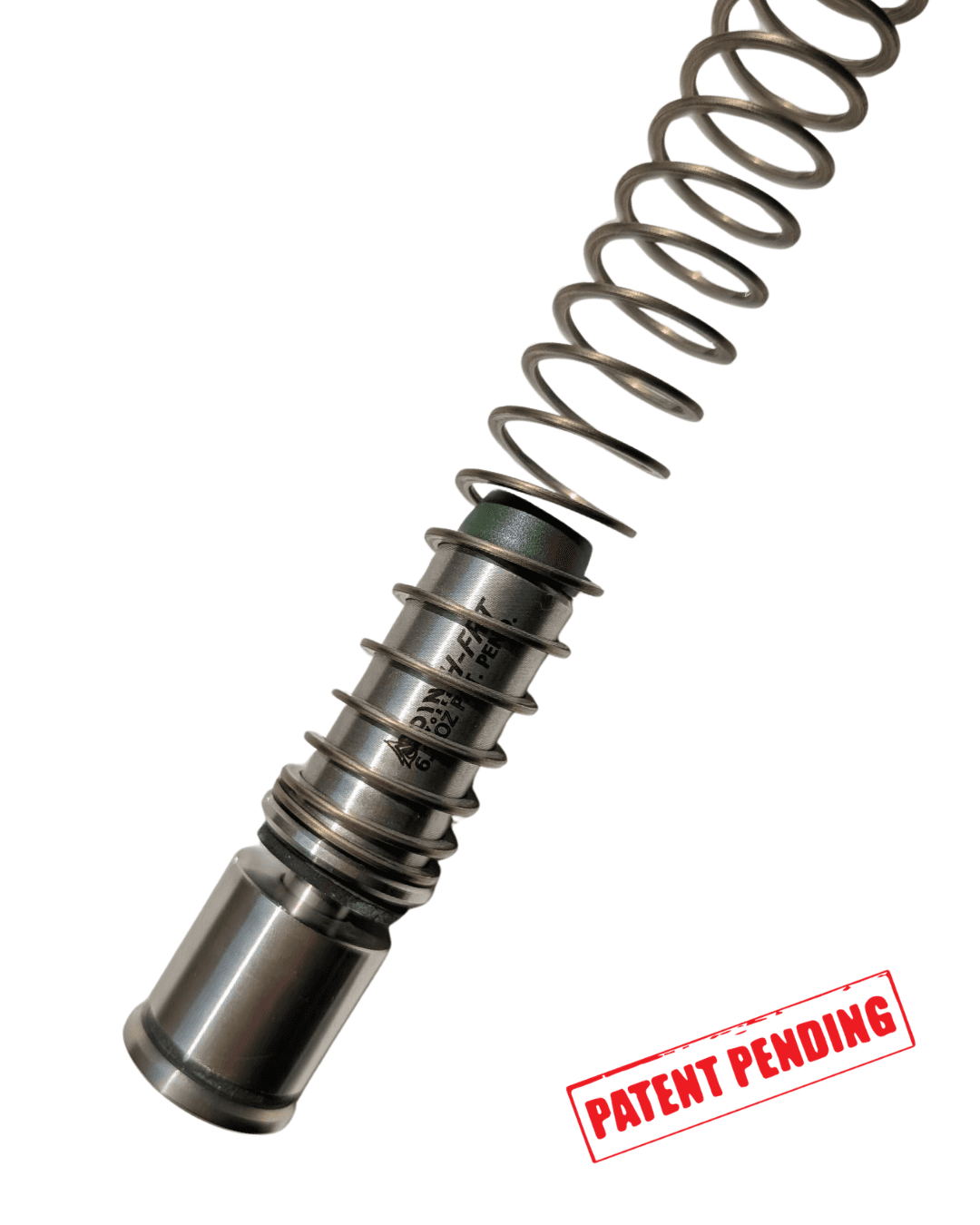
ODIN Works H-FRT Heavy Buffer (AR-15)
- 6.2 oz machined 303 stainless body
- Proprietary flat wire spring included
Colt Mil-Spec AR-15 Bolt Carrier Group (SP64028)
- M16 full-auto profile
- Chrome-lined carrier and gas key
Affiliate links (?)
Where FRTs Stand Legally
Rifle forced reset triggers are federally legal following the 2025 DOJ settlement with Rare Breed, which recognized the mechanism as one round per trigger function rather than an NFA machine gun. Sixteen jurisdictions restrict them at the state level: CA, CO, CT, DE, FL, HI, IL, MD, MA, MN, NV, NJ, NY, OR, RI, and DC. Florida belongs on that list as ambiguous rather than expressly banned; its bump-stock statute has never been tested against a one-pull FRT and makers decline shipments there.
Two things people get backwards. Vendor no-ship lists are shipping policy, not statute, and several of them include states with no FRT ban on the books. And the settlement's protection covers rifles and grip-forward pistols, not grip-fed striker pistols like a Glock or an M&P. None of that touches a Block II rifle, which sits in the clearest part of the picture. Verify your own state before ordering.
Stay Updated on FRTs and Block II Builds
New forced reset trigger releases, host compatibility, and buffer tuning, sent when there is something worth reading.
Frequently Asked Questions
▶What is the best host rifle for a forced reset trigger?
▶Do you need a full-auto BCG for a forced reset trigger?
▶What buffer weight should you run with a forced reset trigger?
▶Is the Daniel Defense M4A1 good?
▶Should you buy the Triggered Company LAT or the Disruptor?
▶Is a forced reset trigger reliable in a Daniel Defense M4A1?
▶Are forced reset triggers legal?
Bottom Line
The Daniel Defense M4A1 Block II is the best off-the-shelf forced reset trigger host because the three parts an FRT depends on are already right: M16-profile carrier, hard carbine gas, and a rail with the mass to stay usable hot. On an H3 buffer ours has run 500 rounds without a malfunction in either trigger mode.
Budget the H3 buffer as part of the build rather than as a fix, and treat the barrel contour as the one real fork in the road. The complete RIS II rifle is the M4 profile and the simpler purchase; the SOCOM Block II upper is the heavy contour and the suppressor path, at the cost of sourcing a carrier and pinning a muzzle device.