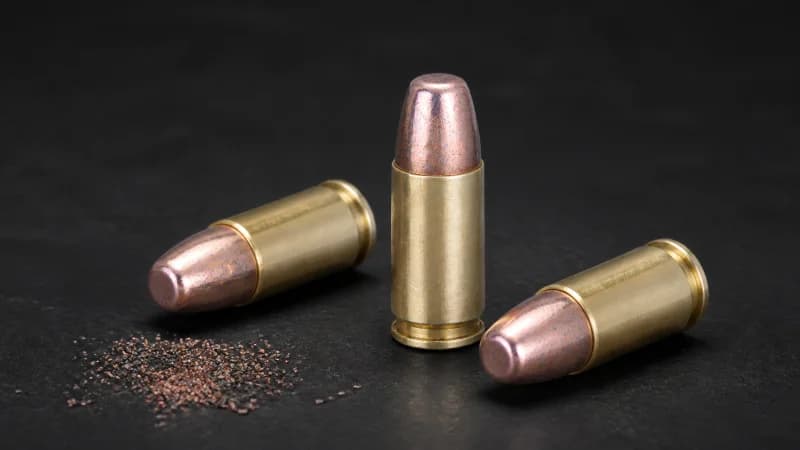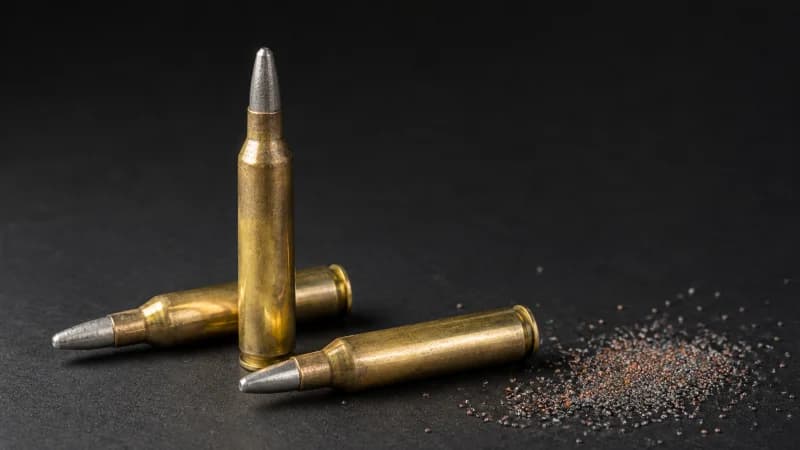
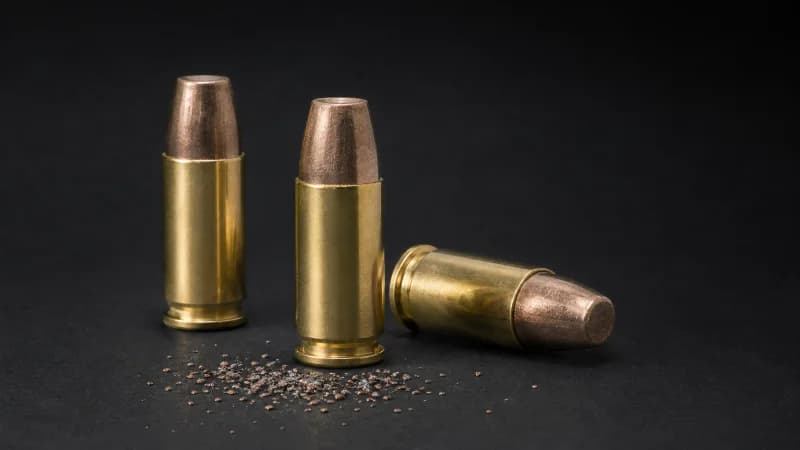
Frangible Ammo Explained: Best 9mm & .223 Training Loads header image
Gear
August 30, 2026
Frangible Ammo Explained: Best 9mm & .223 Training Loads

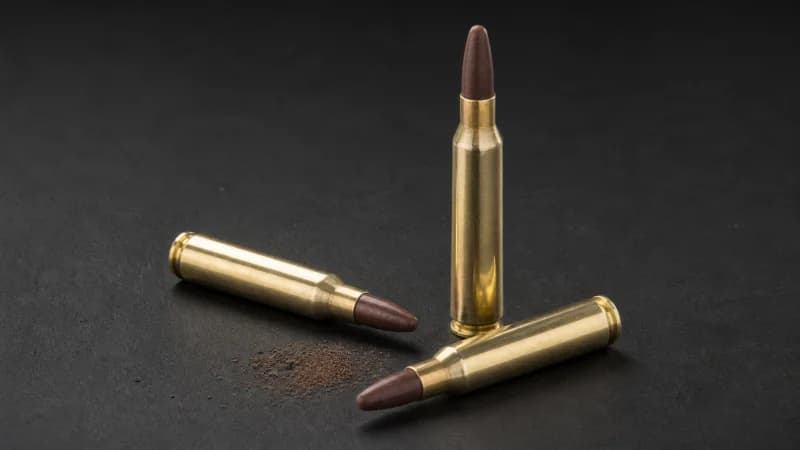
True frangible ammunition is specialist training ammunition for approved close steel, indoor ranges, and shoot houses. This guide explains how powdered-metal bullets break up on hard targets, where that behavior helps, and why a proven defensive hollow point remains the safer default for home defense.

[ < Back to guides ]
Buying guide9mm & .223Training

Frangible Ammo Explained: Best 9mm & .223 Training Loads

Use true frangible ammo for approved close-steel, indoor-range, or shoot-house training after the exact load runs reliably in your firearm. For home defense, a proven jacketed hollow point (JHP) remains the default because hard-target breakup does not establish repeatable soft-tissue penetration or barrier performance. If your range session uses ordinary paper or cardboard instead, the 9mm range ammo guide covers the conventional training loads that cost less and more closely match common practice weights.

By AB|Last reviewed August 2026

Key Takeaways

  • Seven specialist loads: this guide compares 4 true-frangible 9mm choices and 3 .223 Remington choices.
  • Construction is the test: true frangible bullets use compressed or sintered powdered copper with tin or polymer.
  • 9mm spread: the ranked pistol loads run from 70gr to 100gr, so recoil and point of impact need a pistol-specific check.
  • .223 spread: the rifle picks use 42gr, 45gr, and 55gr projectiles, with different primer and lead-source tradeoffs.

Best 9mm Frangible Training Loads

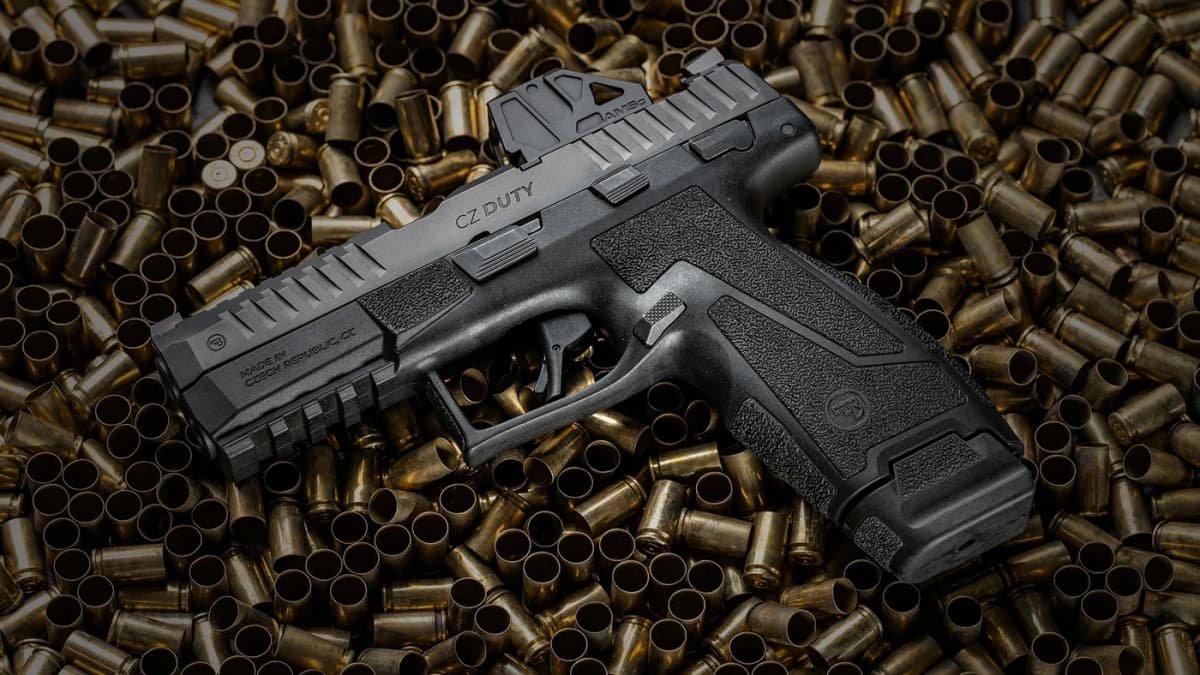
Federal BallistiClean RHT 9mm 100gr is the best overall 9mm frangible training load here. Its 100gr Reduced Hazard Training (RHT) projectile, 1,240 fps velocity, and 341 ft-lbs energy come from the same 4-inch test barrel, so the load gives a clear performance baseline as well as true hard-target breakup. The copper-plated primer and NT headstamp also make the training cartridge easier to keep separate from duty ammunition.

SinterFire GreenLine 9mm 100gr is the stronger choice when the indoor program also requires a lead-free primer. ICC Green Elite 9mm 100gr reaches the same goal with a lead-free copper-and-tin flat point and published velocity and energy. Federal American Eagle IRT Lead Free 9mm 70gr is the outlier: its lighter RHT projectile runs much faster, which makes a fresh function and point-of-impact check more important when your normal practice load weighs 115gr or 124gr.

Federal BallistiClean RHT 9mm 100gr
1

Federal BallistiClean RHT 9mm 100gr

Best overall 9mm frangible training load

$37
Pros
  • +Federal classifies BC9NT3 as a true 100gr SinterFire RHT load
  • +Published 1,240 fps and 341 ft-lbs data from a 4-inch test barrel
  • +Copper-plated primer and NT headstamp distinguish the training cartridge
Cons
  • 100gr recoil and point of impact can differ from 115gr or 124gr training loads
  • Training design does not replace a proven defensive JHP
  • Costs more than conventional FMJ range ammunition
SinterFire GreenLine 9mm 100gr Frangible
2

SinterFire GreenLine 9mm 100gr Frangible

Best lead-free-primer 9mm load for close steel

$34
Pros
  • +True copper-and-tin composite frangible projectile
  • +GreenLine pairs the frangible projectile with a lead-free primer
  • +The 50-round box carries product code SF9100GL-C
Cons
  • 100gr load can print differently from common 115gr and 124gr ammunition
  • Premium price compared with ordinary range FMJ
  • Requires a pistol-specific function check before a class
ICC Green Elite 9mm 100gr Lead-Free Frangible
3

ICC Green Elite 9mm 100gr Lead-Free Frangible

Best fully lead-free 9mm training load

$36
Pros
  • +True 100gr copper-and-tin frangible flat point
  • +Lead-free projectile and lead-free primer
  • +ICC publishes 1,250 fps and 351 ft-lbs for product code 009-100CTNT-B
Cons
  • 100gr ballistics differ from common duty-weight ammunition
  • Costs more than conventional 9mm range ammunition
  • Not a default substitute for a validated defensive JHP
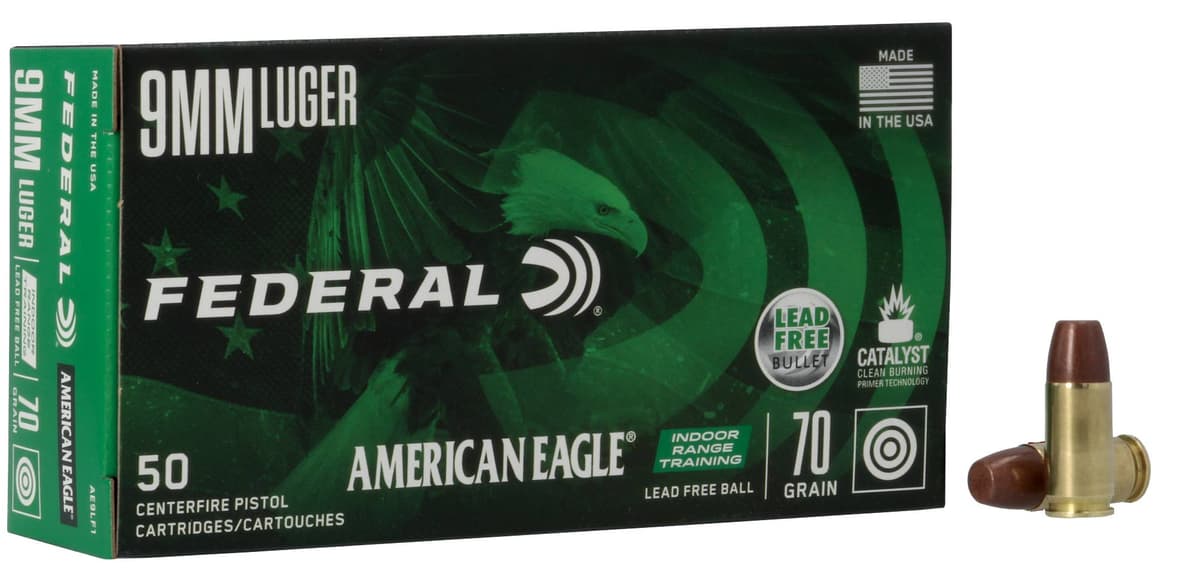
Federal American Eagle IRT Lead Free 9mm 70gr
4

Federal American Eagle IRT Lead Free 9mm 70gr

Best lightweight Federal indoor-range option

$31
Pros
  • +Federal's current catalog classifies AE9LF1 as a true 70gr RHT load
  • +Projectile and Catalyst primer are both lead-free
  • +Federal publishes a fast 1,625 fps muzzle velocity
Cons
  • Very light 70gr projectile can change recoil and point of impact
  • Function should be confirmed in the actual pistol before volume use
  • Premium cost compared with ordinary range ammunition

Affiliate links - purchases support this site at no extra cost to you. (?)

Best .223 Frangible Training Loads

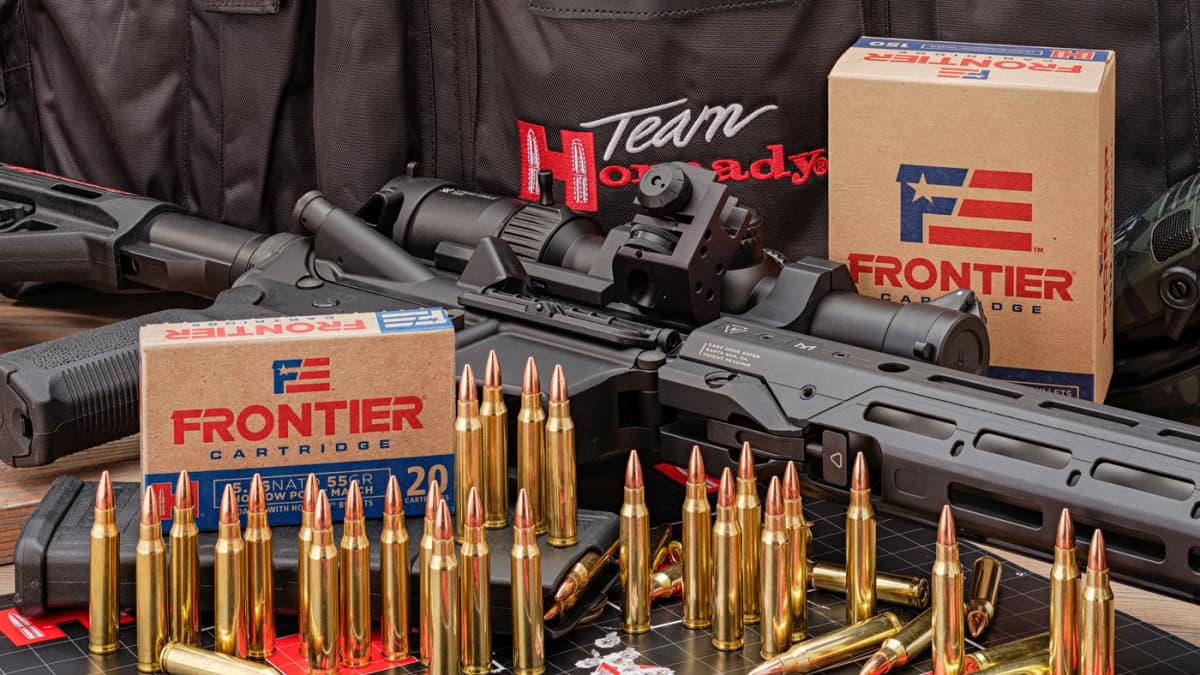
SinterFire RHA .223 Rem 55gr Frangible is the best .223 Remington pick when a familiar 55gr projectile weight matters. It pairs a copper-and-tin frangible bullet with a standard primer, so it is the conventional-weight training choice rather than the full-cartridge lead-free choice.

Federal BallistiClean 223 Rem 42gr RHT pairs its light RHT projectile with a lead-free TMF primer and publishes 3,450 fps. ICC .223 Rem 45gr 100% Lead-Free Frangible uses an unjacketed copper/polymer projectile, a lead-free primer, and published 2,925 fps and 853 ft-lbs figures. Both remove the usual ammunition-related lead sources, but their lighter bullets can strike in a different place than a 55gr or 62gr zero.

SinterFire RHA .223 Rem 55gr Frangible1

SinterFire RHA .223 Rem 55gr Frangible

Best conventional-weight .223 frangible training load
  • 55gr copper/tin frangible
  • RHA standard primer
  • SF22355RHA(50)
  • 50 rounds
$36.19 Catalog
View at OpticsPlanet
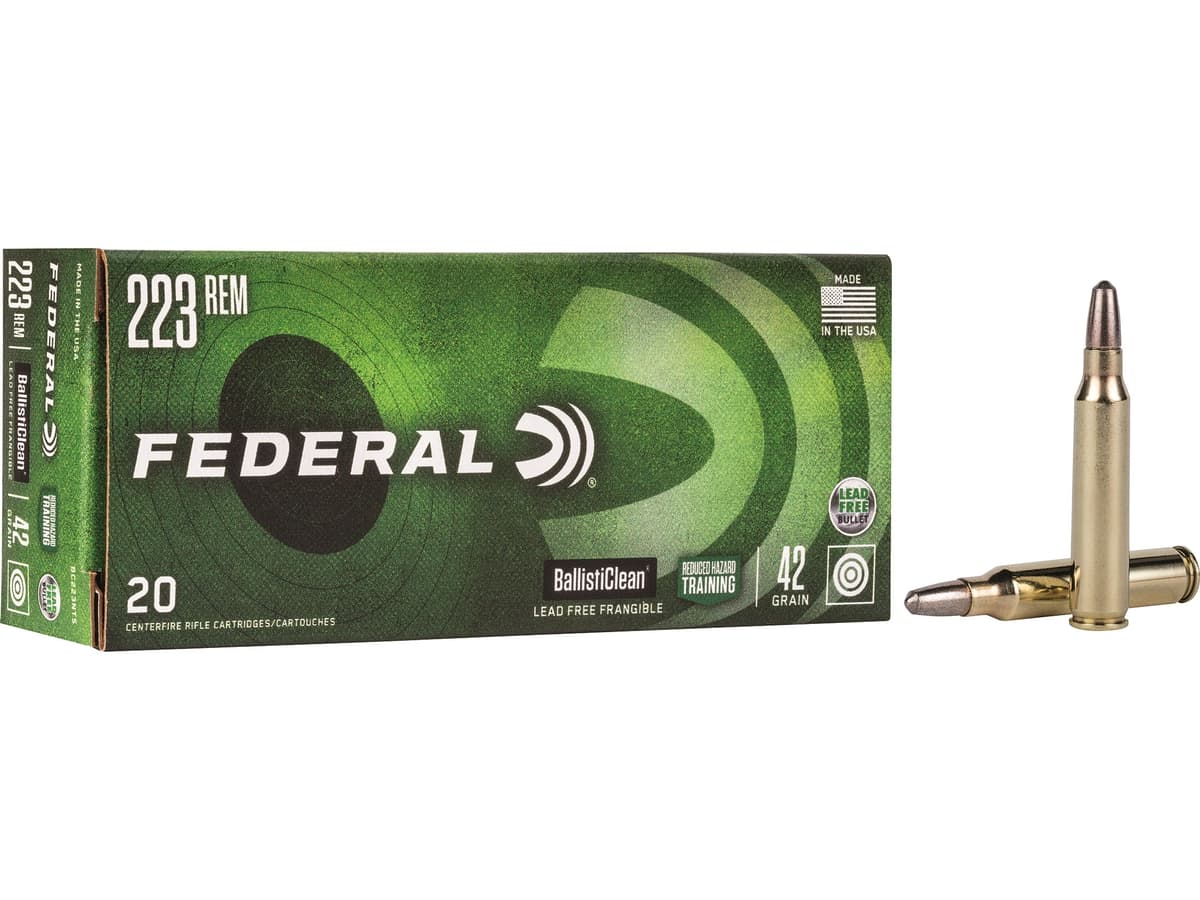
Federal BallistiClean 223 Rem 42gr RHT2

Federal BallistiClean 223 Rem 42gr RHT

Best Federal .223 load for lead-source control
  • 42gr RHT
  • TMF lead-free primer
  • 3,450 fps
  • 20 rounds
$42.99
View at OpticsPlanet
ICC .223 Rem 45gr 100% Lead-Free Frangible3

ICC .223 Rem 45gr 100% Lead-Free Frangible

Best fully lead-free .223 training load
  • 223-045PNT-B
  • 45gr copper/polymer
  • 2,925 fps
  • 20 rounds
$21.43 Catalog
Buy Direct from ICC

Affiliate links - purchases support this site at no extra cost to you. (?)

What Frangible Ammo Means

Frangible ammo uses a projectile built to break into small particles when it strikes a suitable surface harder than the bullet. The useful outcome is narrower than the name sounds: less large-fragment splash and less ricochet from an approved hard target. It is a target-interaction feature, not a promise that the cartridge becomes harmless after it leaves the muzzle.

Color and lead-free material do not prove frangibility. A polymer coating can cover a conventional lead-core projectile, and a monolithic copper bullet can be ductile instead of breakable. Neither construction becomes frangible just because it reduces exposed lead. The label needs to trace to compressed or sintered powdered-metal construction and hard-target breakup.

That distinction is why ordinary FMJ, enclosed-base, and polymer-coated training bullets belong in a different lane. They can be useful range ammunition, but they should not be counted as true frangible loads when a target maker or shoot-house rule calls for frangible ammunition.

How Sintered and Compressed-Metal Bullets Work

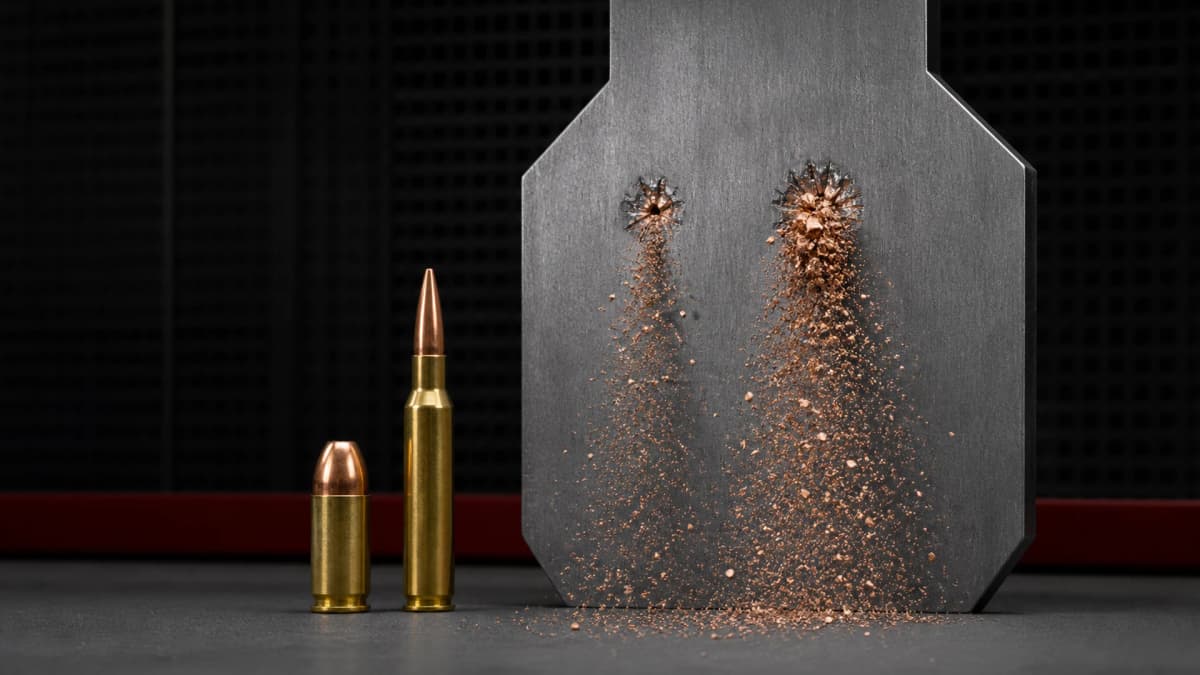
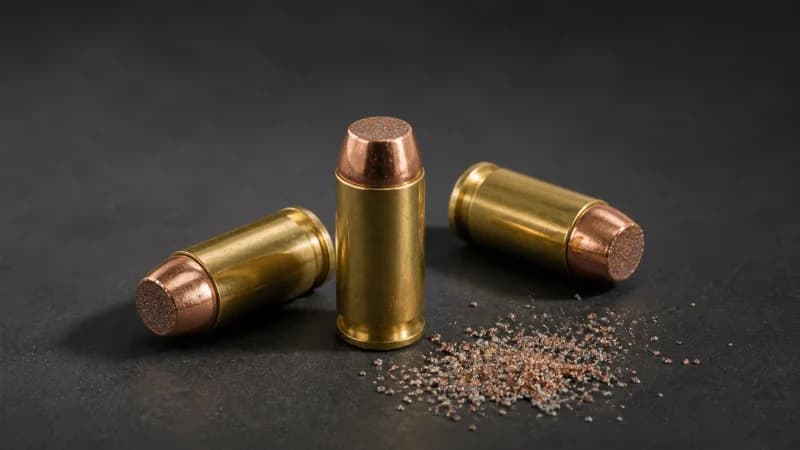
True frangible bullets bind powdered copper with tin or polymer into a solid projectile through compression or sintering. The finished bullet has enough strength to feed, chamber, take the rifling, and fly to the target. When it meets approved steel that is harder than the projectile, the bonded structure gives way and the bullet separates into many small particles.

The particle size changes the hazard pattern. A conventional bullet can return large jacket or core fragments, or leave the target on a ricochet path. A true frangible bullet sheds much of its mass as small particles at the hard surface, reducing those large returning pieces. Reducing risk is not eliminating it; fragments, target debris, and material already on the plate still require distance, angle, eye protection, and a sound backstop.

Soft material creates a different event. Tissue, drywall, wood, and many backstops do not force the same hard-target breakup, so the bullet can remain intact long enough to penetrate. Forensic research on centerfire frangible ammunition found severe wounds, including 9mm injuries comparable in severity to service ammunition and severe injury from high-velocity .223 projectiles. Frangible ammunition remains lethal ammunition.

Where Frangible Ammo Earns Its Keep

Frangible ammo earns its premium when training geometry puts a shooter close to approved steel or inside a shoot house. In those settings, hard-target breakup directly reduces the large fragments and ricochets that a conventional projectile can send away from the impact. That lets a properly designed range solve a specific training problem without pretending that close steel is risk-free.

The target still owns the rules. Steel grade, face condition, mounting angle, cartridge, impact velocity, distance, and backstop all affect where the debris goes. The steel target guide covers plate condition, downward deflection, and distance. A cratered or dished plate can redirect fragments toward the firing line, so a frangible bullet is never permission to keep shooting damaged steel.

Indoor ranges add a second reason to care about construction. Loads that combine a non-lead frangible projectile with a lead-free primer remove two ammunition-related lead sources. They do not replace working ventilation, hand hygiene, or clean-to-dirty gear control. The lead-exposure guide puts ammunition inside the full range-to-home control plan.

Frangible vs. Hollow Point

Frangible bullets and hollow points start with different jobs. The frangible training loads on this page are selected for breakup on approved hard targets. A defensive hollow point is selected for controlled expansion and repeatable penetration in a defensive test protocol. One solves a range-surface problem; the other solves a terminal-performance problem.

Bullet shape does not erase that mission. A flat point can be a training design, and an opening in a bullet nose does not prove defensive performance. Start with the exact cartridge's stated use and test protocol, then check function in the firearm. Do not use the word frangible as a shortcut for reduced penetration or the word hollow point as proof of a defensive load.

Should You Use Frangible Ammo for Home Defense?

Hard-target breakup cannot answer a home-defense question. The ranked training loads may stay intact long enough to penetrate soft tissue, drywall, wood, glass, or other barriers, and that behavior varies by exact design. The best 9mm self-defense ammo guide covers purpose-built defensive JHP choices.

The recommendation changes only when the exact frangible cartridge has passed a specific defensive function and terminal-performance protocol for the actual firearm and mission. Without that evidence, reduced hard-target splash is not a reason to displace a JHP built and tested for defensive penetration and expansion.

Check the Target Rules and Test Your Gun

Use a frangible load only when the range and target maker permit that exact cartridge. Confirm the target face is flat and undamaged, the mounting angle sends debris down, the firing distance meets the written rule, and the backstop is approved for the load. If any one of those conditions fails, change the target or ammunition instead of asking the bullet construction to make up the difference.

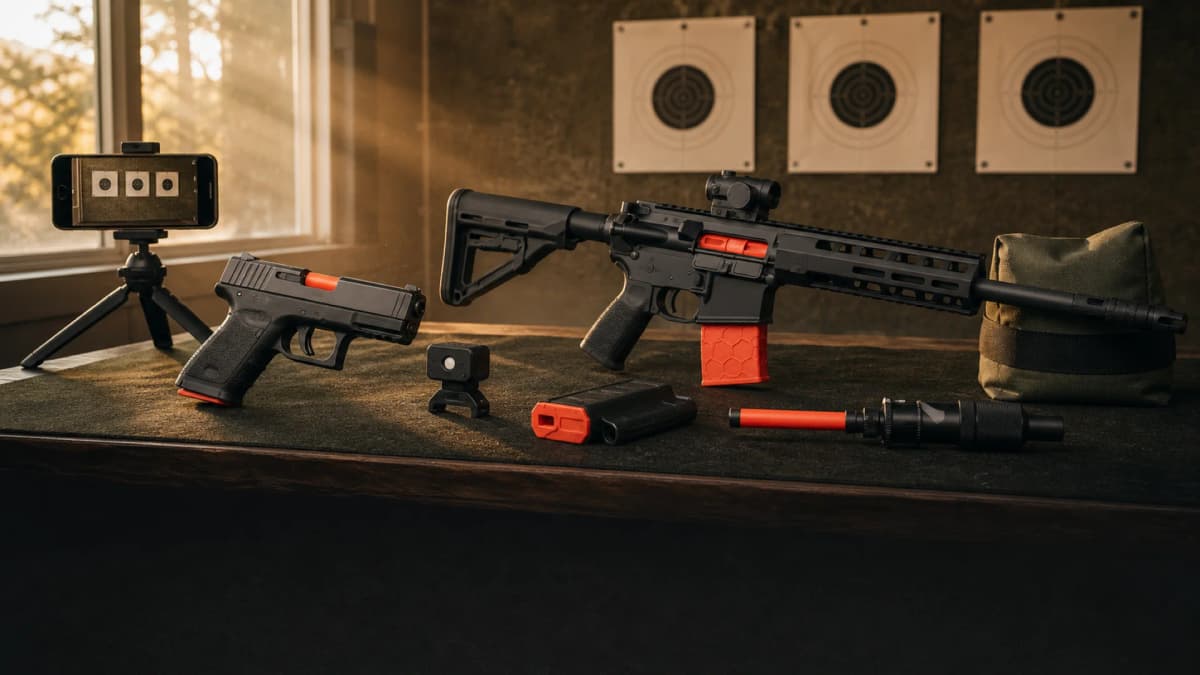
Then test the cartridge in the firearm you will bring. Verify feeding, ignition, extraction, cycling, recoil, and point of impact. The 9mm choices span 70gr to 100gr, while the .223 Remington choices span 42gr to 55gr, so a zero built around a conventional load may move. Complete that check before a class or high-volume session.

The three rifle picks above are .223 Remington loads. For a wider framework that also covers conventional 5.56 NATO choices, use the 5.56 ammunition selection guide. You can also browse the ammunition catalog to compare the seven loads above with other training categories.

Get Practical Ammunition and Range Guides

New ammunition comparisons, range-safety explainers, and training gear rankings for shooters who want a clear mission for every load.

Free targets, drill cards, and weekly reviews by email.

Frangible Ammo FAQ

What is frangible ammo good for?
Frangible ammo is best for specialist training on approved hard targets, especially close-steel drills, indoor ranges, and shoot houses. A true frangible bullet breaks into small particles on suitable steel, which reduces the large fragments and ricochets associated with conventional bullets. Lead-free-primer versions can also remove one ammunition-related source of airborne lead. The target maker and range still set the permitted cartridge, distance, target condition, and backstop.
Is frangible ammo lethal?
Yes. Frangibility describes what the bullet does when it strikes a surface harder than the projectile. It does not make live ammunition harmless. Published wound research found severe injury from centerfire frangible bullets, including 9mm wounds comparable in severity to service ammunition and severe wounds from high-velocity .223 projectiles. Handle every frangible cartridge with the same safety rules as any other live ammunition.
What does frangible mean?
A true frangible projectile is made to break into small particles on a suitable hard target. Common designs bind powdered copper with tin or polymer into a solid bullet through compression or sintering. The label does not promise breakup in soft tissue, drywall, wood, or every backstop.
What is the difference between frangible ammo and hollow points?
They solve different problems. Frangible training bullets are designed around hard-target breakup and reduced ricochet or splash. Defensive hollow points are designed to expand while delivering repeatable penetration under a defensive test protocol. Use true frangible ammunition for an approved training problem and a proven defensive JHP for the home-defense problem.
Is frangible ammo a good choice for home defense?
A proven defensive JHP remains the default for home defense. Frangible training loads can penetrate soft material, and their penetration and barrier behavior vary by design. Use a frangible load defensively only when the exact cartridge has passed a specific function and terminal-performance protocol for that role.
Is polymer-coated or monolithic copper ammo always frangible?
No. A polymer coating around a conventional lead-core bullet changes the jacket surface, not the bullet into a powdered-metal frangible design. A ductile monolithic copper bullet can also be explicitly non-frangible. Look for a manufacturer classification that describes hard-target breakup and compressed or sintered powdered-metal construction rather than treating color, coating, or lead-free material as proof.
Can you shoot frangible ammo at any steel target?
No. Frangible construction does not override target condition, steel grade, angle, distance, caliber, or range rules. Use only a target and backstop approved for the exact cartridge, and stop if the steel is cratered, damaged, or set at an unsafe angle.
Is frangible ammo legal?
For the target-training loads covered here, federal law excludes a frangible projectile designed for target shooting from the federal definition of armor-piercing ammunition. That is not blanket approval for every cartridge or jurisdiction. State and local rules for buying, possessing, transporting, and firing ammunition still apply, so check the exact cartridge and the law where you live and shoot.

Bottom Line

Buy true frangible ammunition for an approved hard-target training problem, then confirm the exact load, firearm, target, distance, and backstop work together.

The best 9mm starting point is Federal BallistiClean RHT 9mm 100gr. For .223 Remington, SinterFire RHA .223 Rem 55gr keeps a familiar projectile weight, while the lighter Federal and ICC choices add lead-free-primer options. Every one remains live, lethal ammunition whose useful advantage appears on a suitable hard target.