Streamlight ProTac HL-X
- ✓1,000 lumens
- ✓50,000 candela

Suppressor-ready AR-15 handguards compared by inner diameter, weight, and price. How to tuck a can over the barrel, clear it for heat, and pick the right bore.
Affiliate links (?)
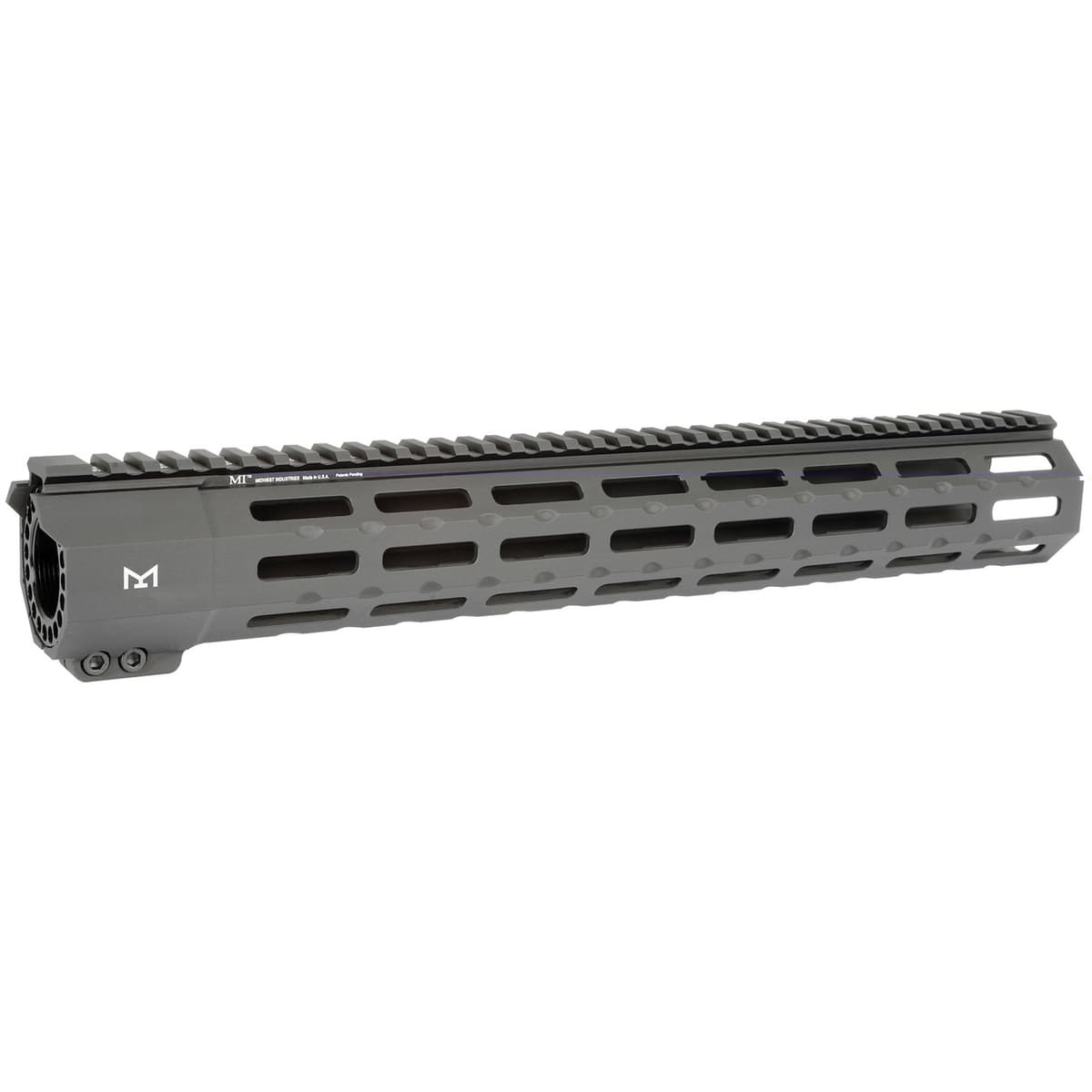
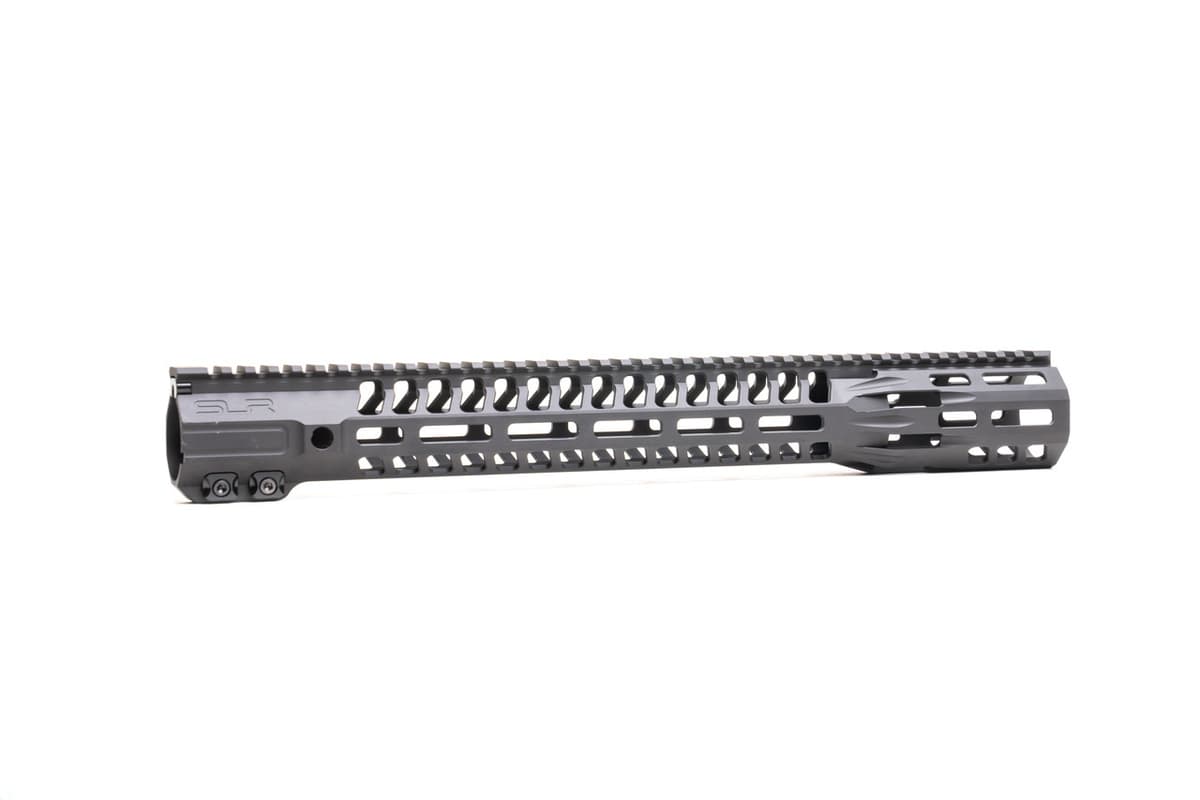
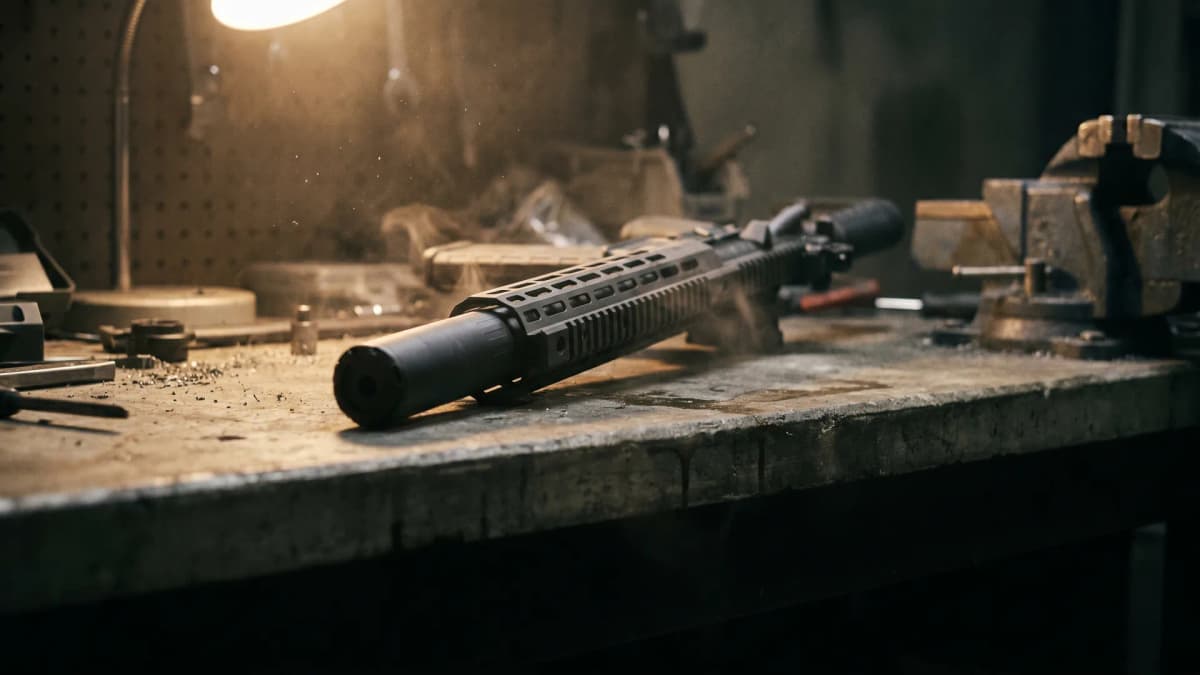
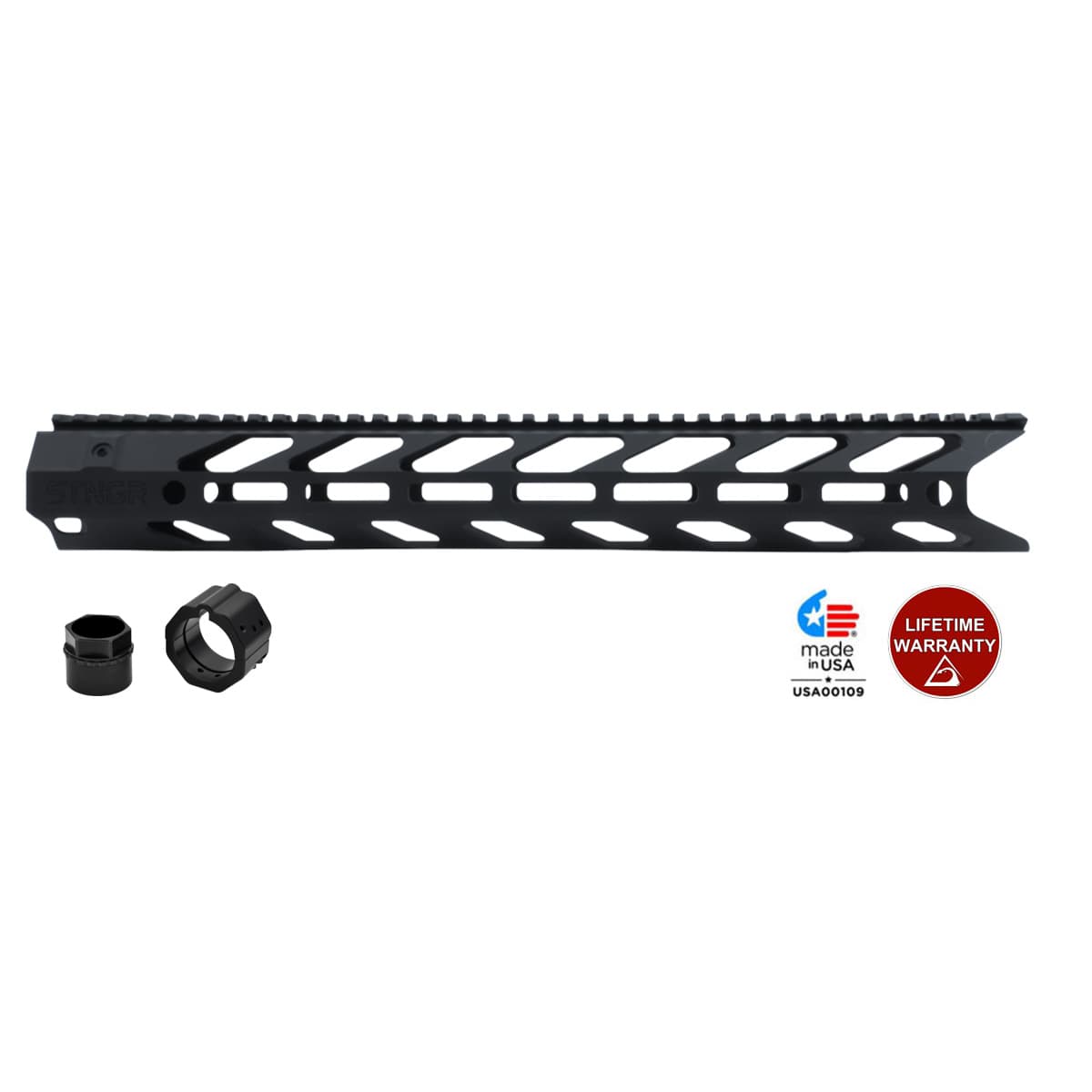
A suppressor-ready handguard tucks a rifle can over the barrel instead of off the muzzle, and the one spec that decides the purchase is inner diameter versus your suppressor's outside diameter. The STNGR HWK XL is the best overall pick: a 1.75 inch bore at just 8.7 oz with QD sockets standard. The SLR SD has the widest 1.8 inch bore for the largest cans, and the Angstadt Suppressor Series is the short-build PDW pick at 9.3 inches. We ranked all six by clearance, weight, and value, then break down the bore math, the tucked-can tradeoffs, and heat on 5.56 versus 300 Blackout.
Every rail here is free-float with a large bore sized to swallow a rifle can. We ranked by inner-diameter clearance, weight, length range, and value, weighted toward the spec that matters most: whether the bore clears your suppressor with air-gap room. For standard non-suppressed rails, see the broader AR-15 handguard buying guide. Use the rifle builder to check handguard and suppressor fitment against the rest of your build.
Sling, light, backup sights, and QD mounts, the upgrades most builders add first.
Affiliate links (?)
Best overall / lightweight
Best value mainstream pick
Best for short 300 BLK / AR9 PDW builds
Best budget pick
Premium / widest clearance
Affiliate links - purchases support this site at no extra cost to you. (?)
Match the handguard inner diameter to your suppressor's outside diameter with room to spare, and leave an air gap rather than a tight tuck. Most 5.56 and 300 Blackout rifle cans measure 1.5 to 1.62 inches in outside diameter, so any rail in this guide, from the 1.67 inch Midwest SP and UTG PRO SD up to the 1.8 inch SLR SD, will physically clear them. The question is not whether the can fits but how much air sits between the suppressor body and the rail wall.
The clearance math is simple: subtract your can's OD from the rail's ID, then split the remainder as the radial gap. A 1.5 inch can inside the 1.8 inch SLR SD leaves 0.3 inches of diameter, or 0.15 inches of air all the way around, which is generous. The same can inside the 1.67 inch Midwest SP or UTG SD leaves 0.17 inches of diameter, under a tenth of an inch of radial air. That is enough to clear, but the largest 5.56 cans pushing past 1.6 inches OD eat most of that margin, which is why both rails carry the same air-gap caveat for big bore-up cans. If you run a chunky 5.56 suppressor, the 1.74 inch AT3 SPEAR XL, 1.75 inch STNGR HWK XL, or 1.8 inch SLR SD buy back the breathing room.
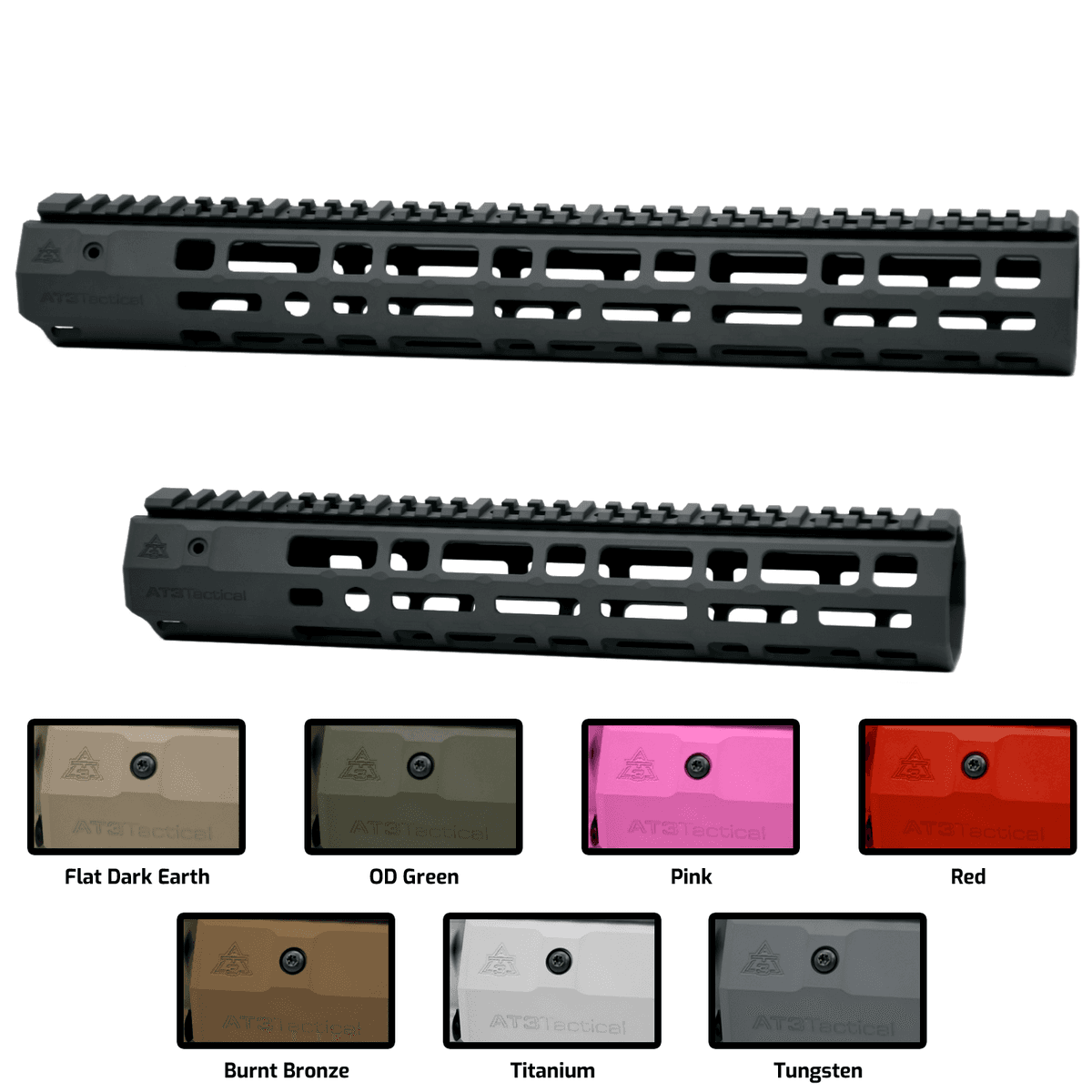
Wide bores carry a hidden cost beyond price and weight: a can that fills the tube blocks the M-LOK slots directly over it. AT3 is unusually direct about this and recommends a roughly 1.5 inch OD suppressor in the 1.74 inch SPEAR XL so the surrounding slots stay open for lights and hand stops. If you want both a tucked can and accessories alongside it, size the suppressor a few tenths under the rail ID. If maximum clearance is the only goal, fill the bore and mount accessories ahead of the can instead. Confirm your specific suppressor against the manufacturer's outer-diameter spec before committing; the suppressor compatibility guide covers host prep, backpressure, and point-of-impact shift for the rest of the suppressed setup.
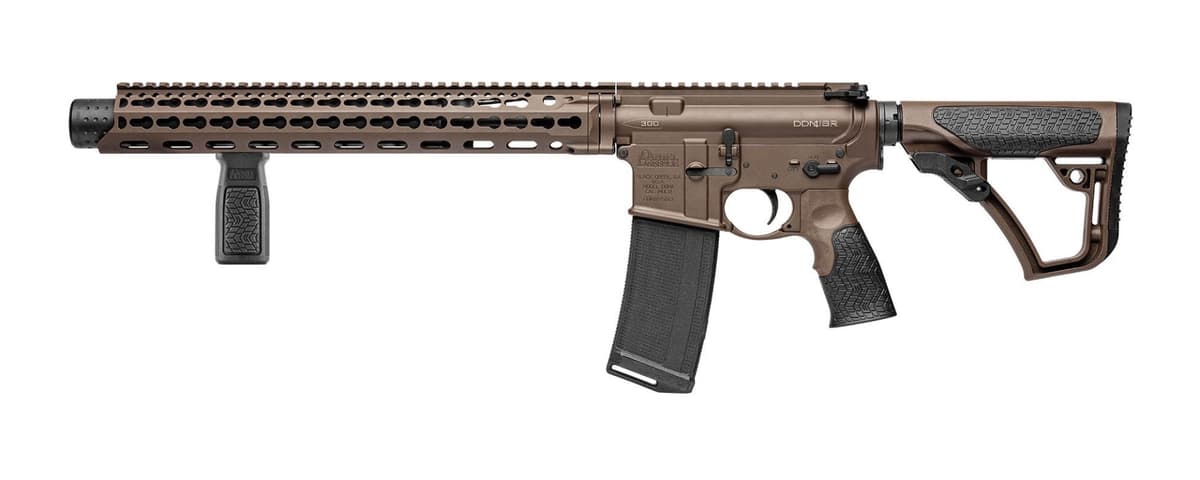
Tucking a suppressor trades length for heat and serviceability. The payoff is overall length: a 7 inch can bolted to a 16 inch barrel makes a 22-plus inch rifle, but run a 9 inch barrel under a long suppressor-ready rail and the same can disappears inside the handguard, keeping the package near carbine length. That is the entire reason these rails exist, and it is why they pair so well with short-barrel and PDW builds.
Mount access is the practical annoyance most builders underrate. A direct-thread can buried in the rail is awkward to torque and remove, so a quick-detach mount that indexes off a muzzle device is worth the cost on a tucked setup; you twist the can off without fishing a wrench down the bore. The Angstadt Suppressor Series and STNGR HWK XL both put QD sling sockets where you can still reach them around a tucked can, and SLR's slip-fit lockup keeps the wide rail rigid so the can does not shift point of impact between mountings.
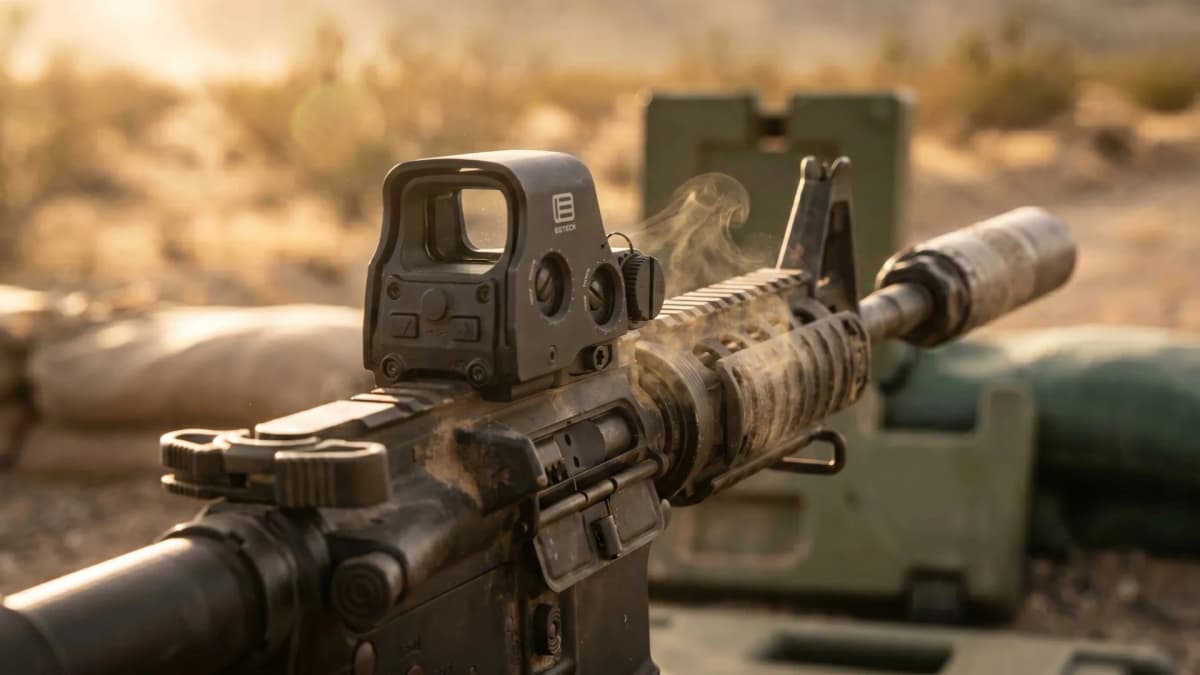
Heat is the defining tradeoff of a tucked can, and it is far worse on 5.56 than on 300 Blackout. A suppressor trapped inside an aluminum handguard radiates heat directly into the rail and your support hand, and aluminum conducts that heat efficiently. Run a sustained 5.56 string with a tucked can and the rail gets hot fast, which is the single biggest reason builders hesitate to bury a suppressor on a high-volume 5.56 carbine.
300 Blackout is the answer, and it is why these rails and short builds go together. Subsonic 300 BLK burns a fraction of the powder 5.56 does and runs noticeably cooler at the can, so a tucked suppressor stays manageable through normal shooting. Short 8 to 9 inch 300 BLK barrels paired with a long rail are the textbook tucked-can build: the can vanishes inside the handguard, the package stays compact, and the heat penalty is mild. The Angstadt Suppressor Series at 9.3 inches and the short 7.25 inch Midwest SP length are sized exactly for these builds. For the full caliber breakdown, see the 300 Blackout guide.
If you do run a tucked can on 5.56, manage the heat deliberately: leave an air gap around the suppressor rather than packing it tight against the bore wall, limit sustained strings, and let the can and rail cool between drills. There is no carbon-fiber option among these six rails, so the aluminum heat caveat applies across the board; the wider bores at least leave more air between the can and the rail. Backpressure also rises with a buried can, so a suppressed build benefits from gas tuning, covered in the adjustable gas block guide. For the suppressor itself, including the current $0 tax and eForm process, start at the suppressor buying guide or browse suppressors in the catalog.
Sorted widest bore first, since clearance is the spec that drives the buying decision. The SLR SD's 1.8 inch bore tops the list for the largest cans; the STNGR HWK XL pairs a near-widest 1.75 inch bore with by far the lightest weight; the Midwest SP and UTG SD anchor the value end at 1.67 inches.
| Handguard | Inner Diameter | Weight | Lengths | Barrel Nut / Mount | Price |
|---|---|---|---|---|---|
| SLR Rifleworks SD | 1.8" | 12.7 oz (9.5") | 4.25"-13.5" ML | Slip-fit, 7075 barrel nut | $330.99-$349.99 |
| STNGR HWK XL | 1.75" | 8.7 oz (13.5") | 13.5", 15.5" | Two-piece steel, non-timing | $189.99 (street ~$142) |
| AT3 SPEAR XL | 1.74" | ~12.5 oz | 12", 15" | Steel nut, aluminum clamp | Varies by retailer/finish |
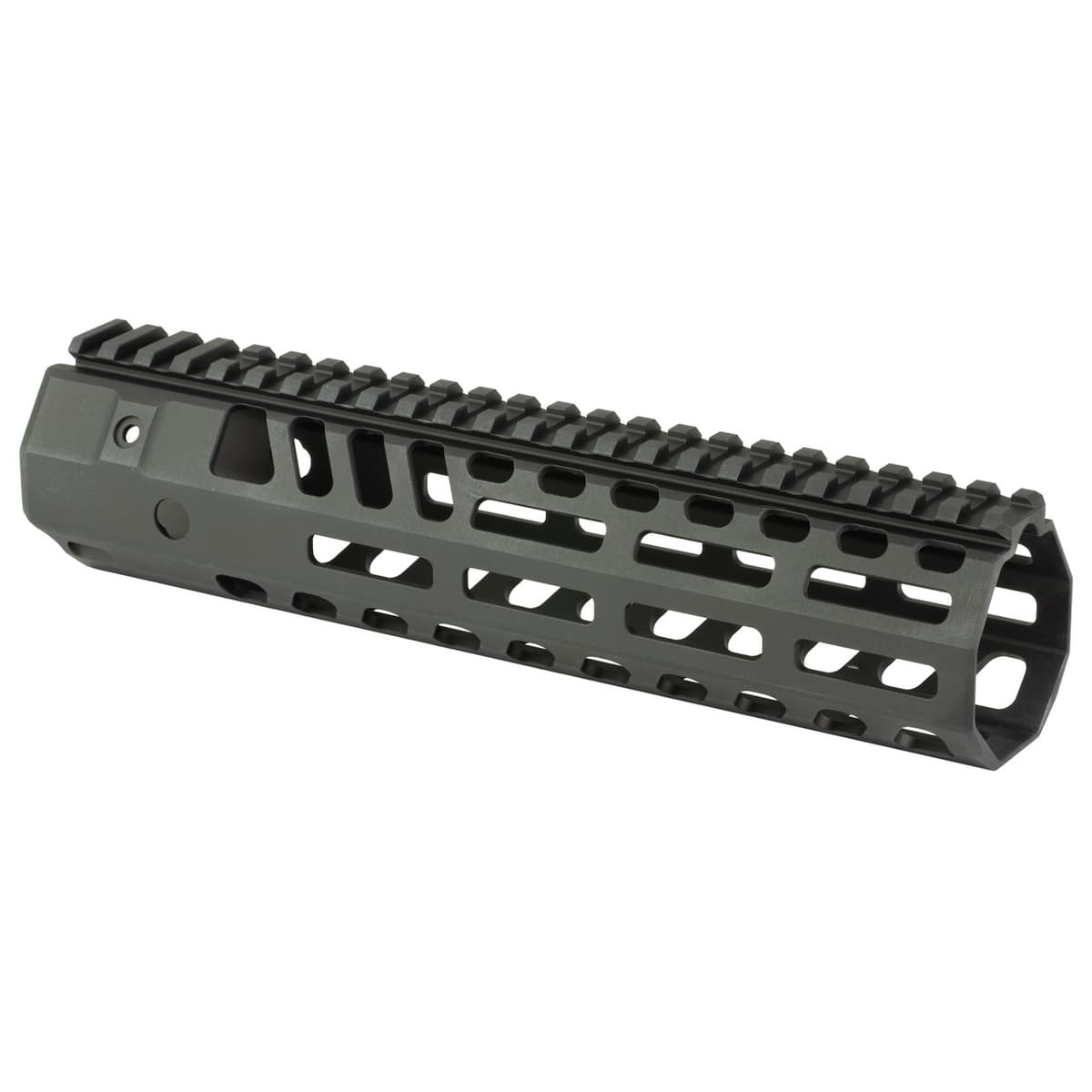
| Angstadt Suppressor Series | 1.7" | 11 oz (9.3") | 9.3", 14.8" | Free-float, no timing | $161 / $179 |
| Midwest Industries SP | 1.670" | 14.6 oz (15") | 7.25"-18" (6) | Free-float, included nut | $167.95-$225.95 |
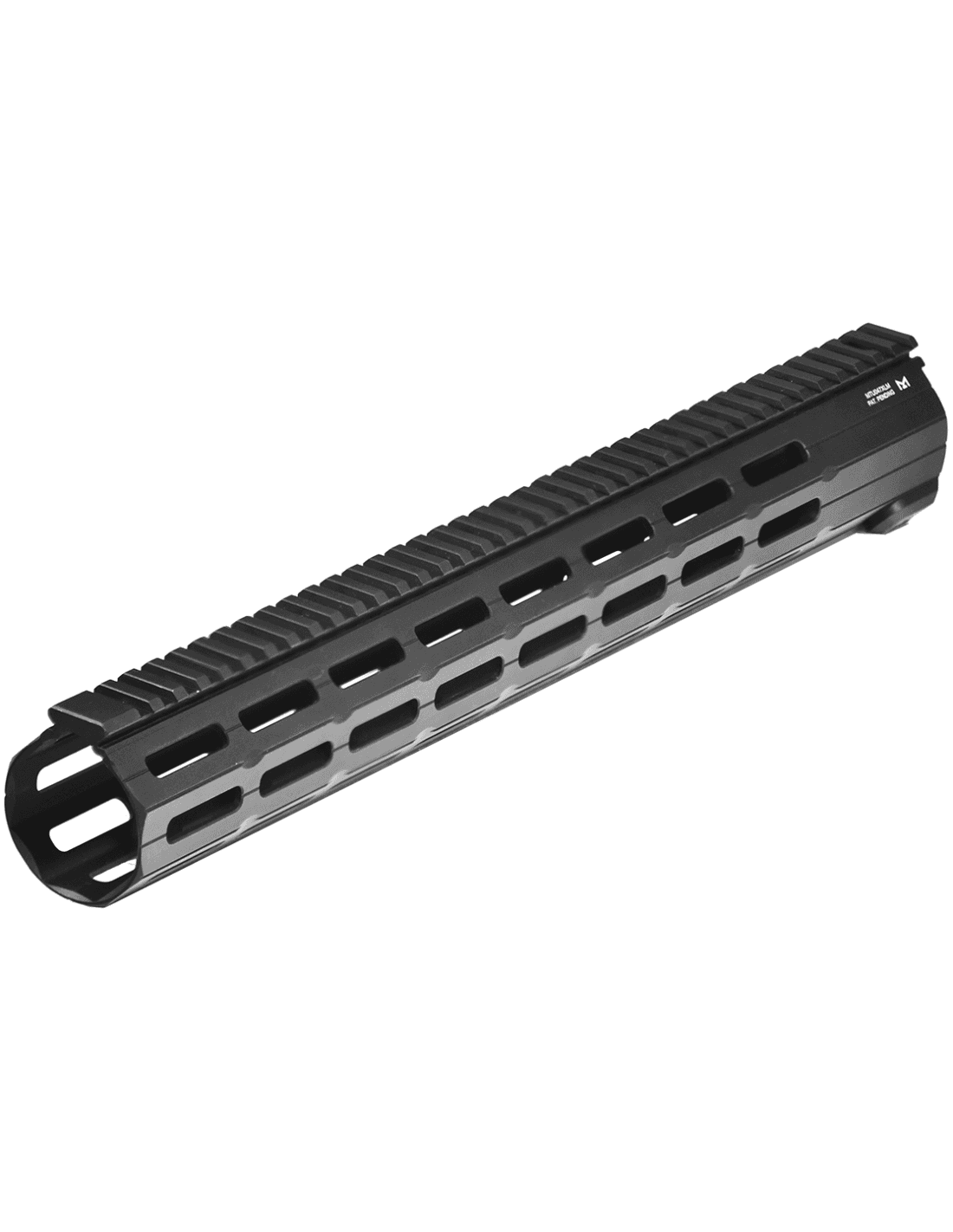
| UTG PRO Super Slim SD | 1.67" | ~11.5 oz (14") | 10", 14", 15/16" | Free-float barrel nut | $129.97-$144.97 |
Round out a suppressed build with the rest of the stack:

Avid shooter with 9+ years of experience including competition shooting. Built 10+ AR-pattern rifles and several handgun platforms for home defense, competition, and suppressed night shooting.
This page contains affiliate links. Purchases through these links support the site at no extra cost to you. Read the affiliate disclosure
Continue exploring with these related resources

The AR-15's factory takedown and pivot pins sit nearly flush, so most shooters fight them with a punch every time. Ranked extended, easy-install, and titanium sets from Battle Arms, Strike Industries, V Seven and more.

Extended buttons, ambidextrous catches, and oversized controls that make AR-15 reloads faster. Ranked picks for every budget, from a $18 Magpul button to the proven Norgon Ambi-Catch.

A single vetted mid-tier AR-15 build for the buyer stepping up from a budget rifle. Part-by-part picks for a ~$1,000-1,300 rifle that runs a class without babysitting, with a running cost tally, why each slot beats the budget pick, and a separate optic add-on tier.
Related articles and industry updates

Oil infrastructure attacks, AI-driven semiconductor demand, and geopolitical instability are creating supply chain pressure on ammunition, optics, and emergency gear. Prioritized buying checklist: ammunition, magazines, optics, spare parts, and general emergency preparedness.

Complete comparison of forced reset triggers and super safeties for AR-15: Triggered Company Disruptor FRT (formerly Partisan), new LAT trigger, Arc-Fire V2 (now shipping), Atrius FRS, and Mars Super Safety. Performance, pricing, legality, and which system fits your build.

Virginia background checks topped 75,000 in May 2026, more than double May 2025, as gun shops report selling AR-15s, standard-capacity magazines, and NFA items at record pace ahead of the July 1 assault weapons ban. Virginia ranked second in the nation for NFA checks in May.