Key Takeaways
- →Shroud stays free: The harness mounts to helmet side ARC rails through two included mounts, so a PVS-14 or a binocular keeps the front shroud instead of competing with the drone goggle for it.
- →Fidlock magnetic release: The goggle comes on and off one-handed without pulling a strap over the helmet or disturbing the helmet's fit.
- →Neckband safety strap: Released goggles hang on the chest instead of dropping, so the operator can go straight to a controller or a rifle.
- →Fits by strap width, not model: Adaptiv Defense lists compatibility with most systems using standard 3/4 inch webbing, so the fitment question is the strap, not the SKU.
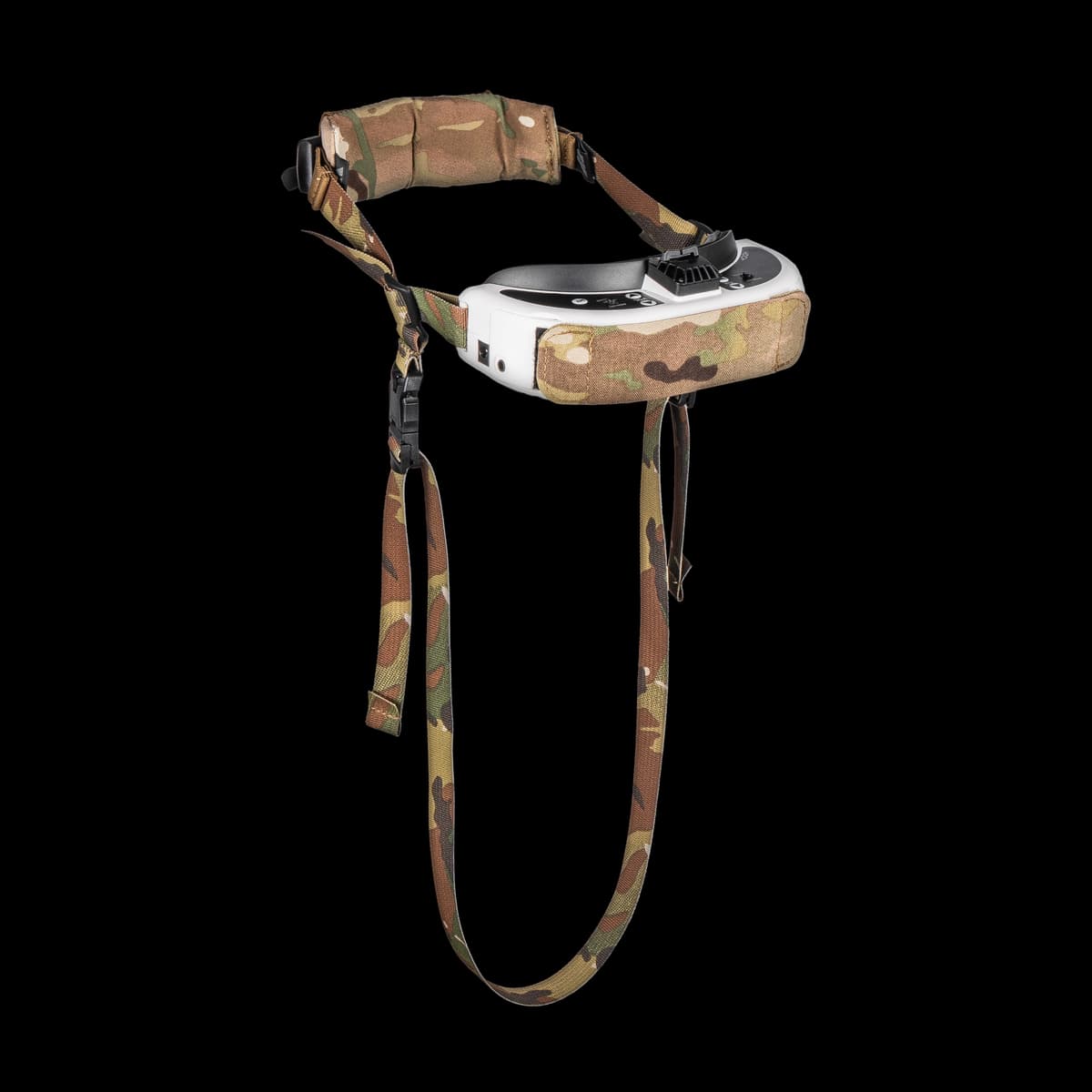
- →$140 with the extras included: Kit ships with the harness and safety strap, a standalone padded headband, two ARC rail mounts, and a lens cover with adhesive hook and loop.
The Shroud Is the Contested Real Estate
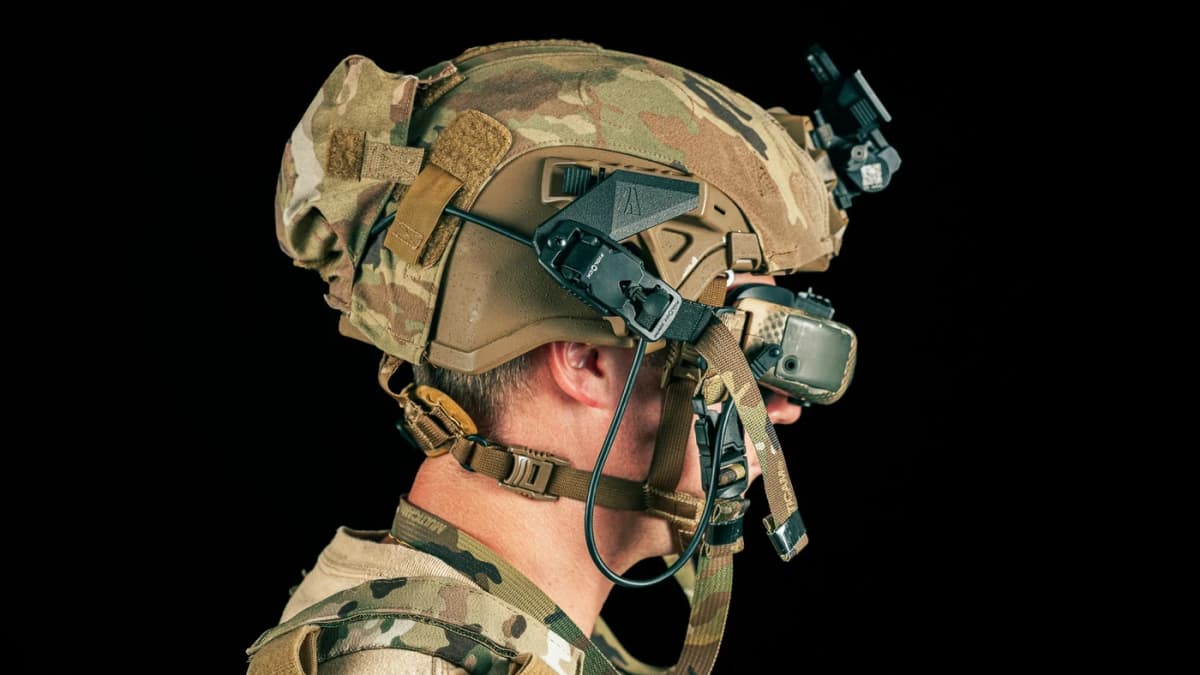
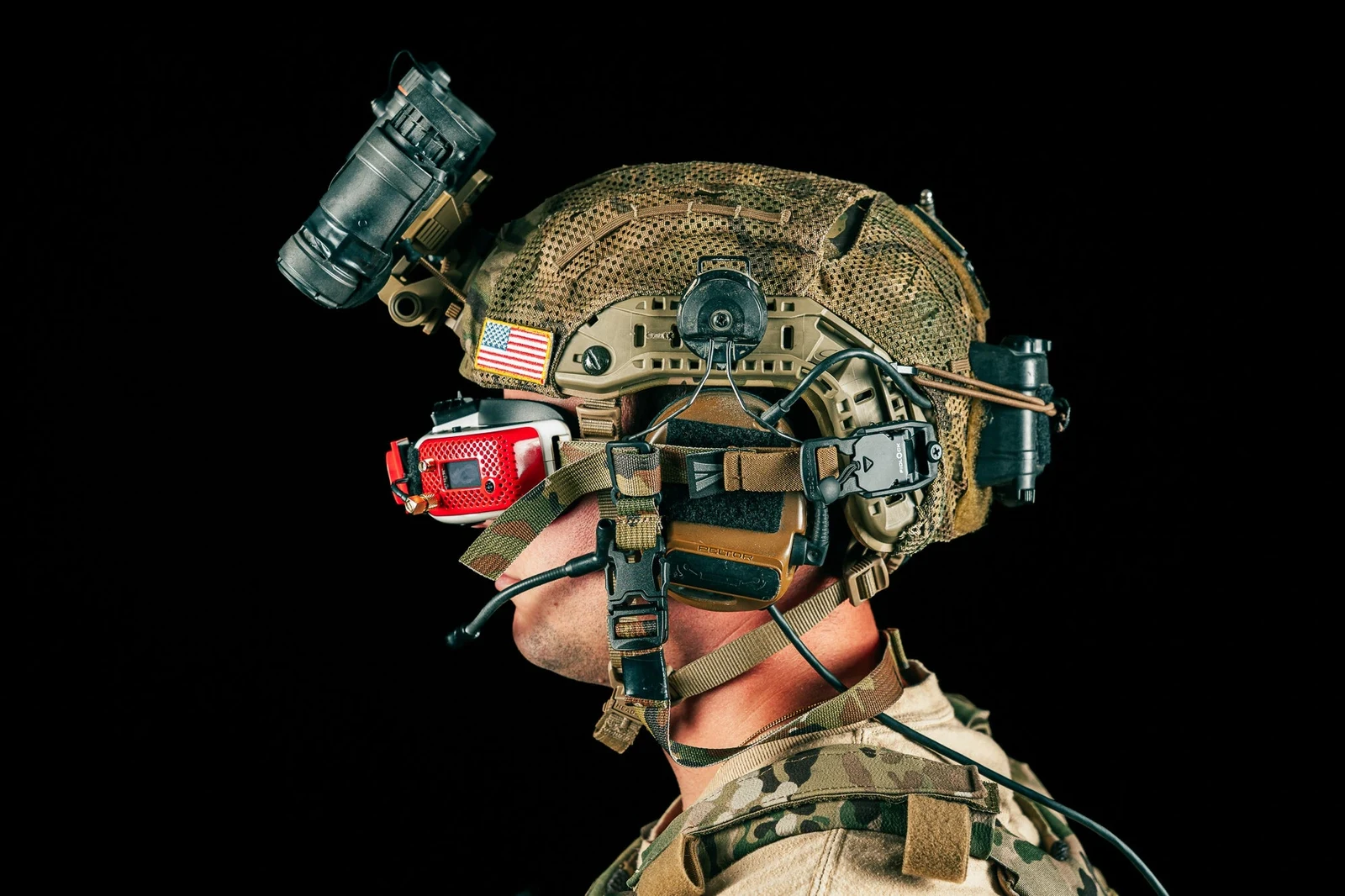
An FPV drone goggle and a night vision device both want the front of the helmet, and the shroud only holds one at a time. That is the entire reason the Adaptiv Defense F.L.I. Goggle Harness exists. Shroud-mounted products such as the Beez Combat Systems FGM hang the goggle off the same interface a PVS-14 uses, which forces the operator to pick one capability per mission or dismount hardware mid-task. The F.L.I. routes around the conflict by moving the goggle to the helmet's side ARC rails through a pair of Fidlock magnetic connectors.
F.L.I. stands for Fast Latch Integrated, and the name describes the mechanism rather than the mounting position. The kit replaces the elastic head strap that ships on the goggle. Two ARC rail mounts carry one half of each Fidlock connector; the other half attaches to the goggle through its existing 3/4 inch webbing. Nothing touches the shroud, so a PVS-14 or a dual-tube setup stays mounted and ready the whole time the goggle is in use.
Why Magnetic Attachment Matters Here
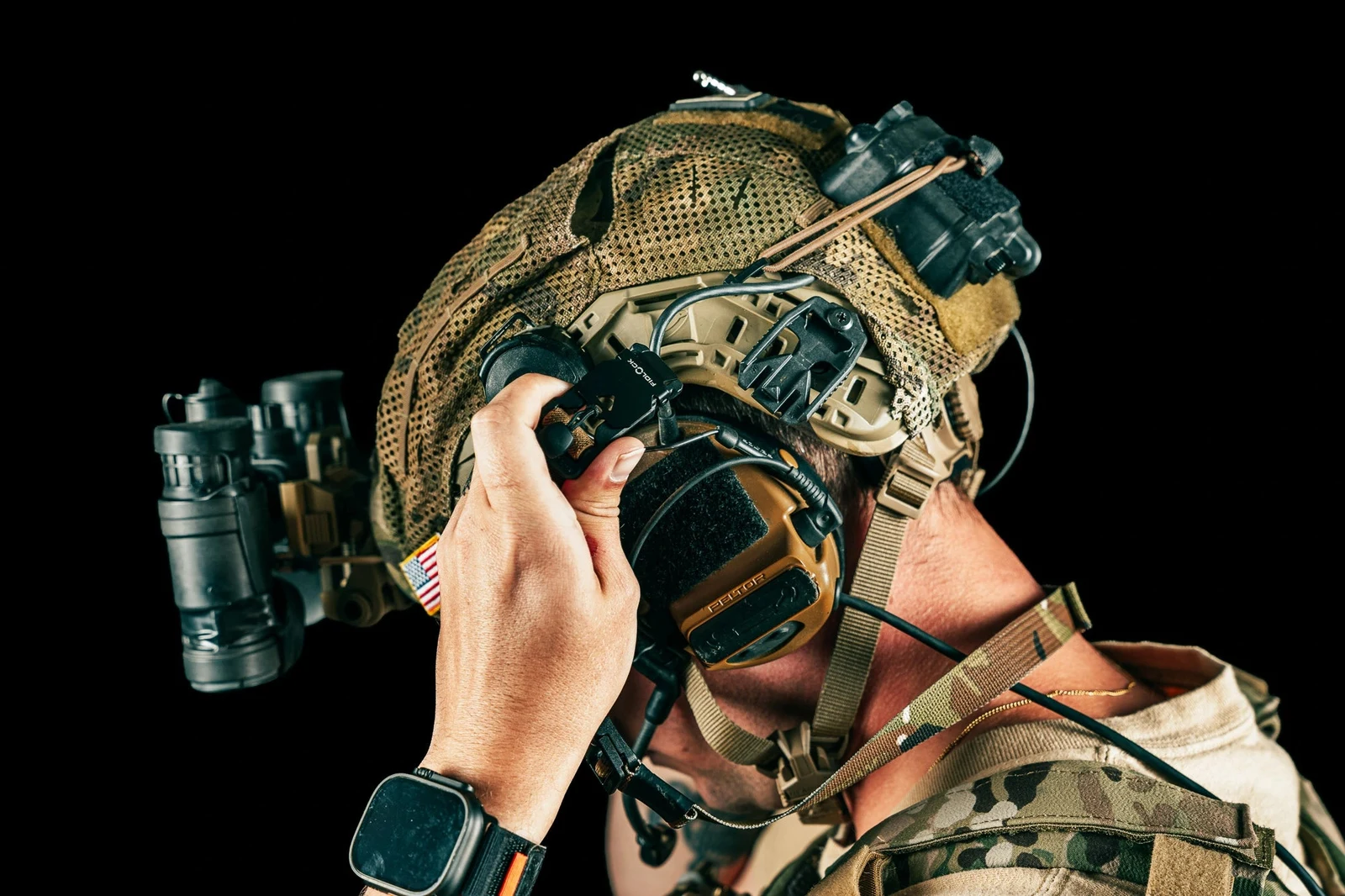
A magnetic connector is faster than a buckle and quieter than ripping hook and loop, but the real gain on a helmet is that the attachment does not disturb the fit. Pulling an elastic goggle strap on and off over a helmet drags the cover, shifts the retention, and often catches on ear pro or a comms arm. The Fidlock halves seat by feel, and Adaptiv Defense specifies attach and detach without removing the helmet, so the goggle can come off with one hand while the other stays on a controller.
Adaptiv Defense does not publish a harness weight, and the ARC rail position does mean the goggle's mass sits to the sides rather than out front on the shroud. That is a favorable trade for anyone already running counterweights: a shroud-mounted goggle loads the same lever arm as night vision, while rail-mounted hardware sits closer to the head. It also means the F.L.I. competes for rail space with helmet lights, comms arms, and counterweight pouches, which is the practical cost of the design.
The Neckband Safety Strap Is the Feature That Earns the Price
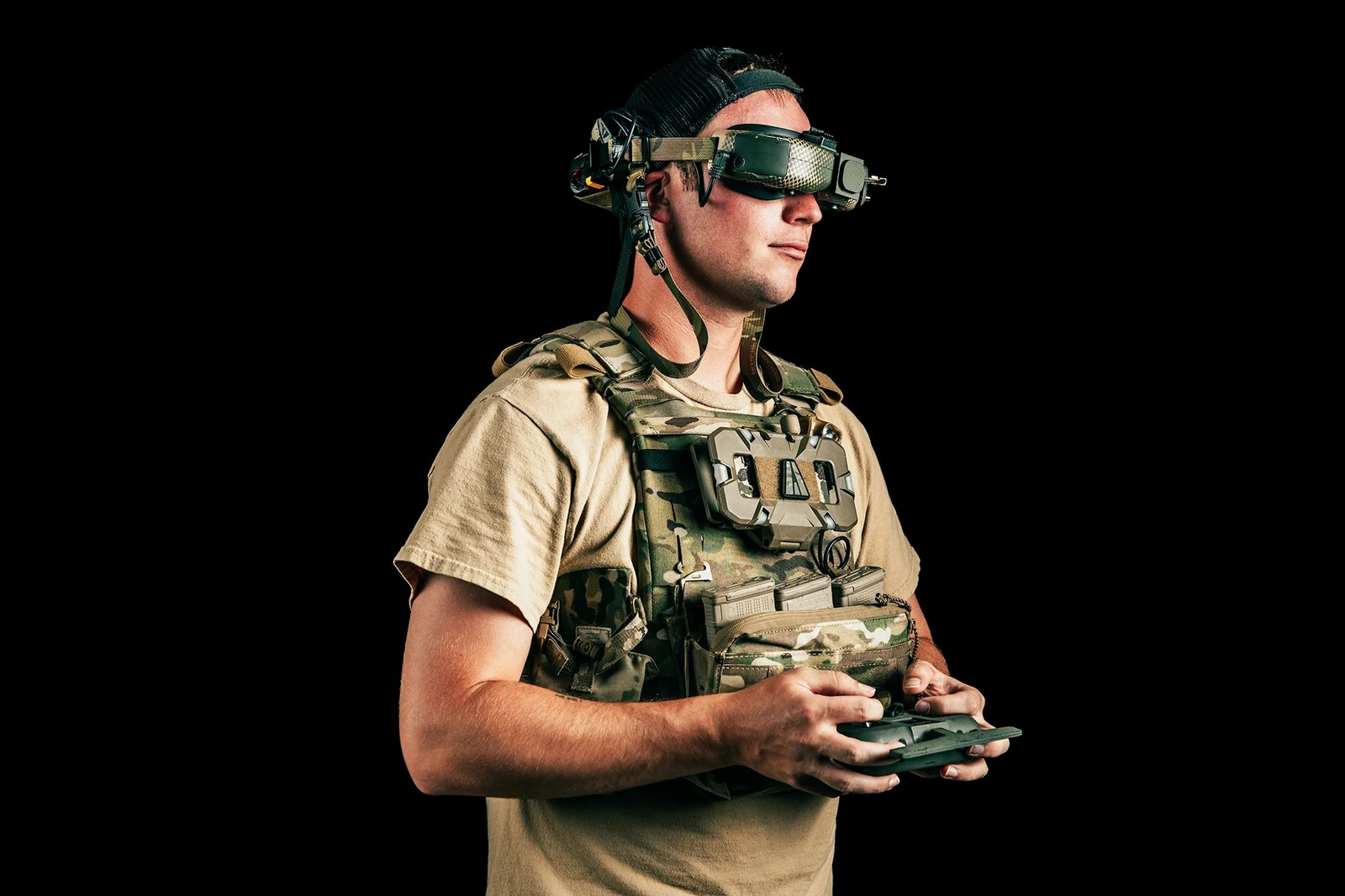
The neckband safety strap catches the goggle on release and holds it against the chest, and that single detail is what makes the system usable under load. A drone operator running a small unmanned aircraft is not choosing between flying and doing nothing; they are choosing between flying and going back to a rifle. A goggle that has to be stowed in a pouch before the operator can transition is a goggle that gets left flying too long or set down somewhere it should not be.
With the strap, the release is the transition. The goggle drops to the chest, hangs there on the plate carrier, and comes back up without being re-strapped. For anyone who already runs night vision alongside a weapon light and laser, the pattern is familiar: the piece of gear you use intermittently needs a parked position that is not a pocket.
Adaptiv Defense F.L.I. Goggle Harness
Drone operators who need an FPV goggle and night vision on the same helmet
Fidlock-based harness that hangs FPV drone goggles off helmet ARC rails instead of the shroud, leaving the NVG mount free.
- +Keeps the shroud free so night vision and an FPV goggle coexist on one helmet
- +Magnetic release is faster and quieter than pulling an elastic strap over a helmet
- +Included headband covers no-helmet use without buying a second harness
- −Requires a helmet with ARC rails; no shroud-only or bare-bump option
- −Goggles with a molded non-removable strap will not accept the 3/4 inch interface
- −Only two colorways, Black and MultiCam, with no solid tan or ranger green option
Affiliate links (?)
Headband Mode and the Lens Cover
The included standalone padded headband uses the same Fidlock attachment points as the helmet mounts, so the goggle moves from helmet to bare head without re-rigging anything. That covers training days, bench work, and any flying that does not warrant a helmet, and it means a buyer is not paying for a helmet-only accessory that sits in a bag whenever the helmet does.
The lens cover addresses a specific failure mode rather than a comfort complaint. Higher-end FPV goggles run OLED panels, and an unattended goggle left face-up under open sky can take sun damage through its own optics. Adaptiv Defense includes a cover with adhesive hook and loop so the goggle can hang on the neckband or sit on a carrier with the panels shaded.
Helmet Rail Accessories
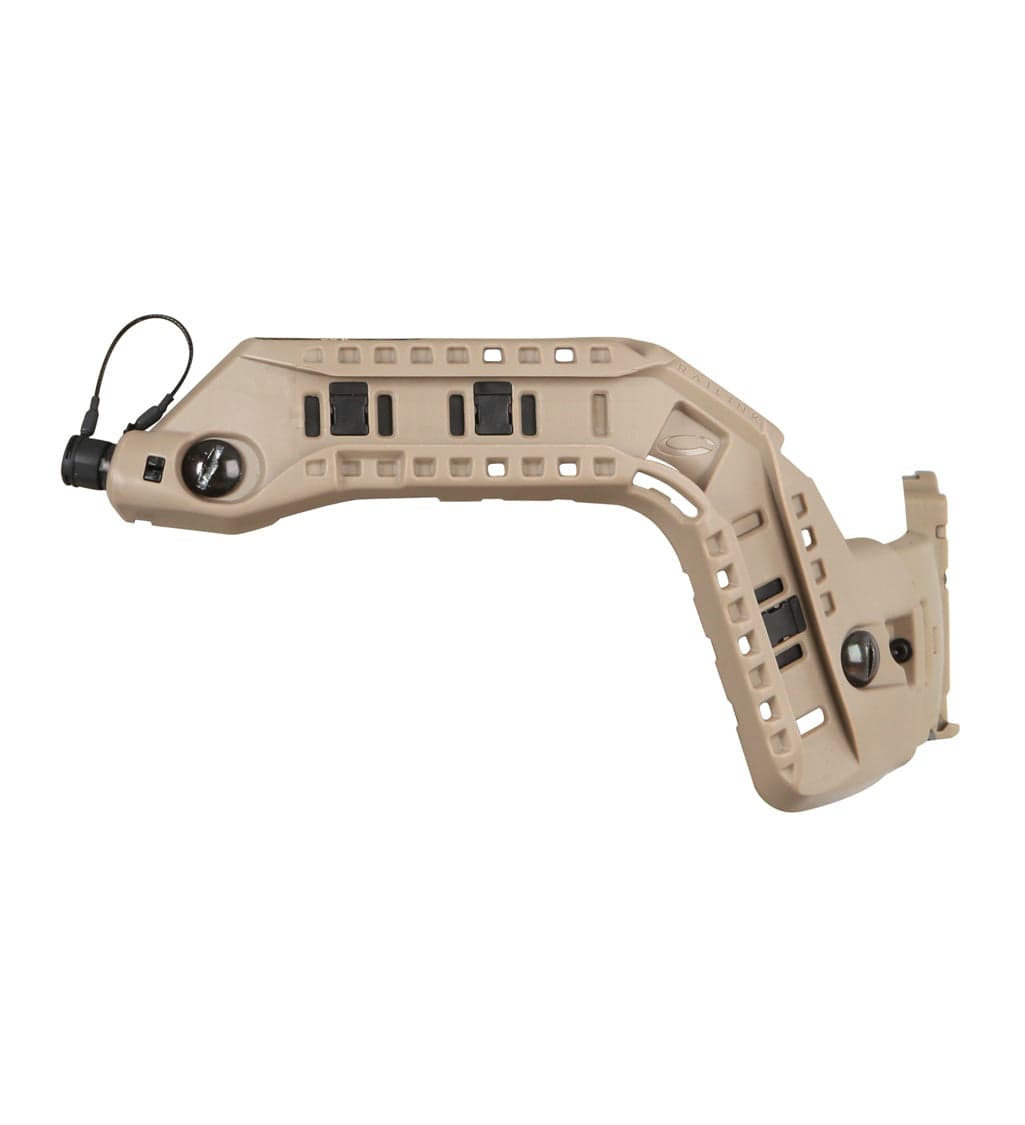
RAILINK Power & Data ARC Rails (Retrofit Kit)
- Retrofit for FAST High Cut helmets (M/L/XL/XXL)
- Power + data backbone via ARC interface
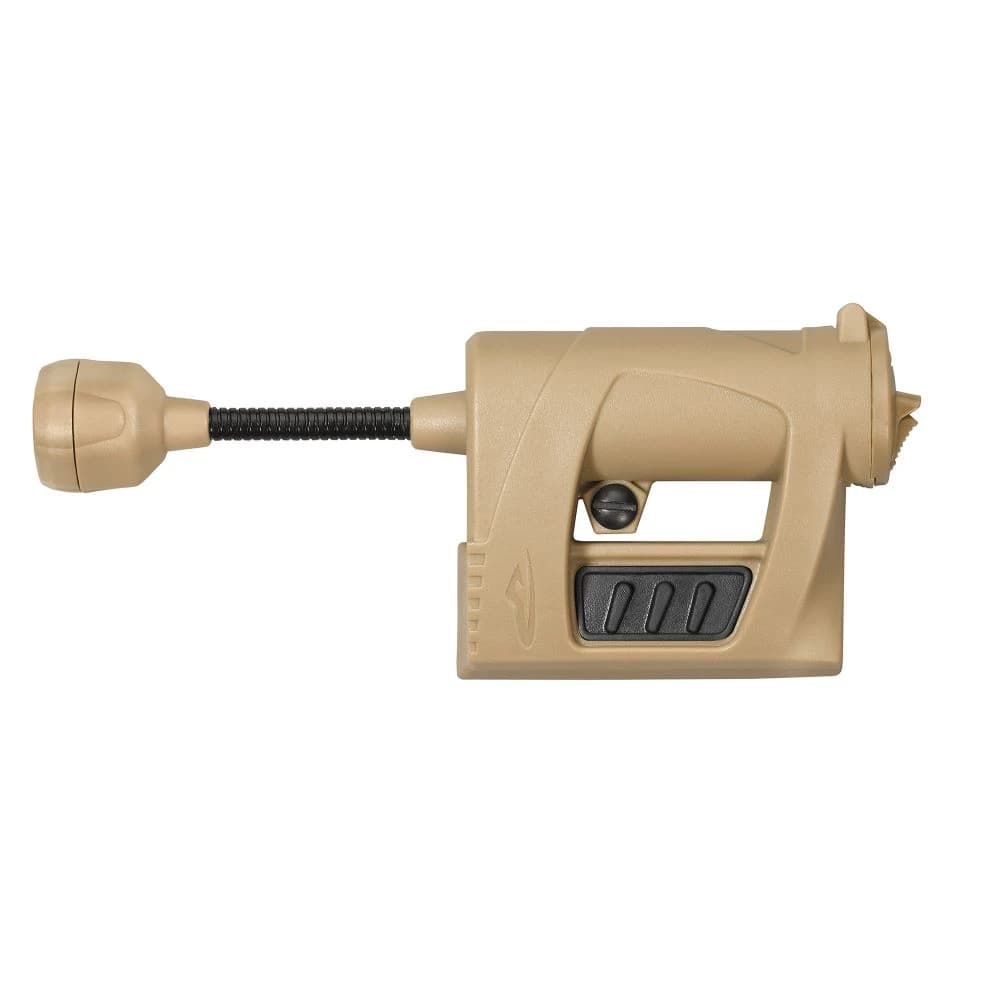
Charge Pro MPLS Helmet Light
- 55 lumens (max white)
- Single CR123A battery
F.L.I. Goggle Harness
- Fidlock magnetic attach/detach
- Mounts to ARC rails, not the shroud
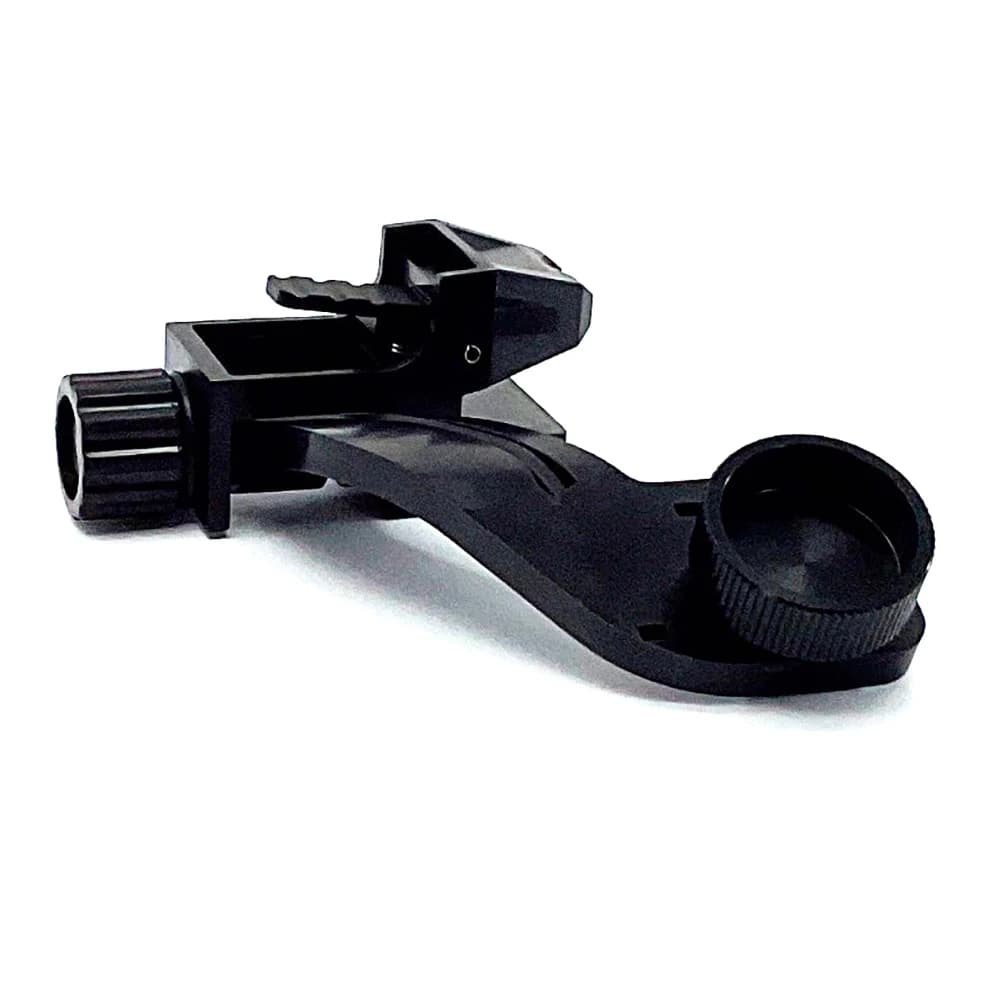
PVS-14/6015 Transfer Arm
- PVS-14 and 6015 monocular fit
- USGI-pattern bayonet output
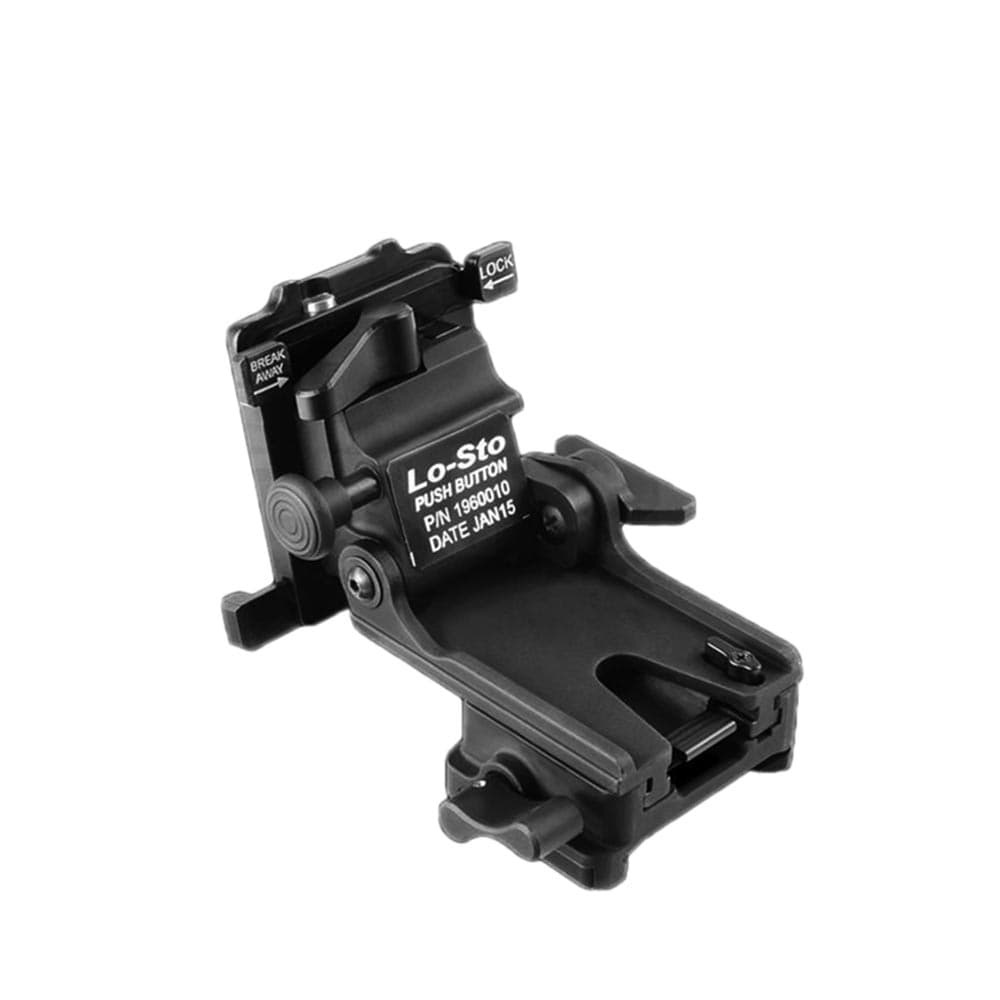
LoSto Push-Button Helmet Mount (PVS-7/14 Bayonet)
- Horn-style PVS-7/14 interface
- Push-button stow and deploy
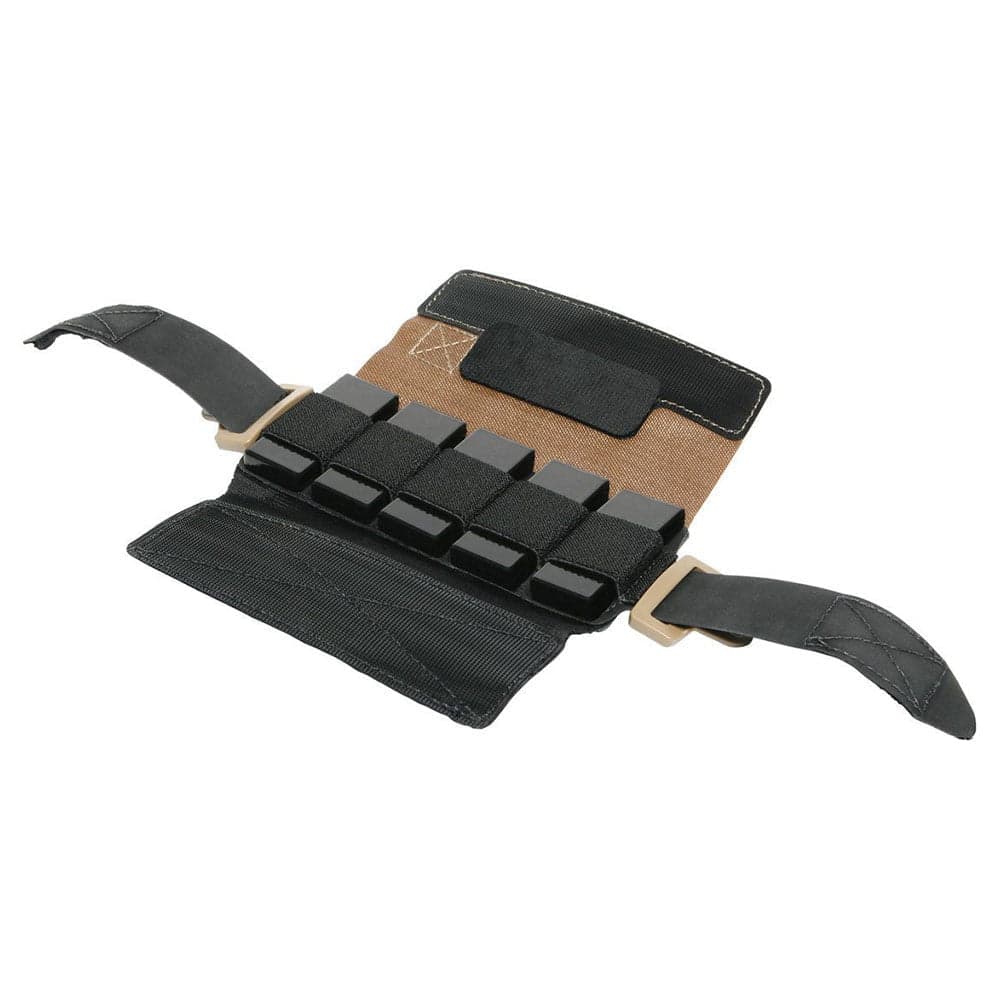
Counterweight Kit (5 × 70 g Weights)
- Five removable 70 g weights
- Five pockets for weights or batteries
Affiliate links (?)
F.L.I. Versus Shroud-Mounted FPV Adapters
At $140 the F.L.I. undercuts the shroud-mounted approach on both price and capability overlap. The closest competing product, the Beez Combat Systems FGM (FPV) Goggle Mount, lists at $259.99 and interfaces through a genuine Wilcox dovetail, which is the same connection a night vision arm uses. That buys a rigid mount in Beez's high-strength 3D-printed construction and a published compatibility list covering the DJI Goggles 2, SKY04, and Walksnail Avatar HD Goggles X, but it puts the goggle exactly where the NVG wants to be.
The two products answer different questions. A dovetail mount is the better pick for a dedicated drone operator who is not carrying night vision and wants the goggle locked to a rigid arm with flip-up geometry. The F.L.I. is the better pick for a mixed loadout where both devices ride on the same shell, and its webbing-based interface fits by strap width rather than by a model list. Adaptiv Defense also folds the headband, the ARC mounts, and the lens cover into the lower price, so the effective gap is wider than the sticker difference.
What the F.L.I. Does Not Do
The harness requires a helmet with ARC rails. There is no shroud-only or bare-bump mounting path, so a helmet without side rails needs a rail retrofit before the mounts have anywhere to go. ARC is the interface Ops-Core originated and the one the FAST family covered in our ballistic helmet guide uses natively. Team Wendy's EXFIL Rail 2.0 and Rail 3.0 are a different proprietary interface, and Team Wendy sells its own adapters to run ARC-mounted accessories on them, so confirm the adapter path before assuming an EXFIL shell takes the mounts. A shell with no compatible ARC rails, including unrailed legacy and low-cut shells, needs a rail retrofit before the mounts have anywhere to go.
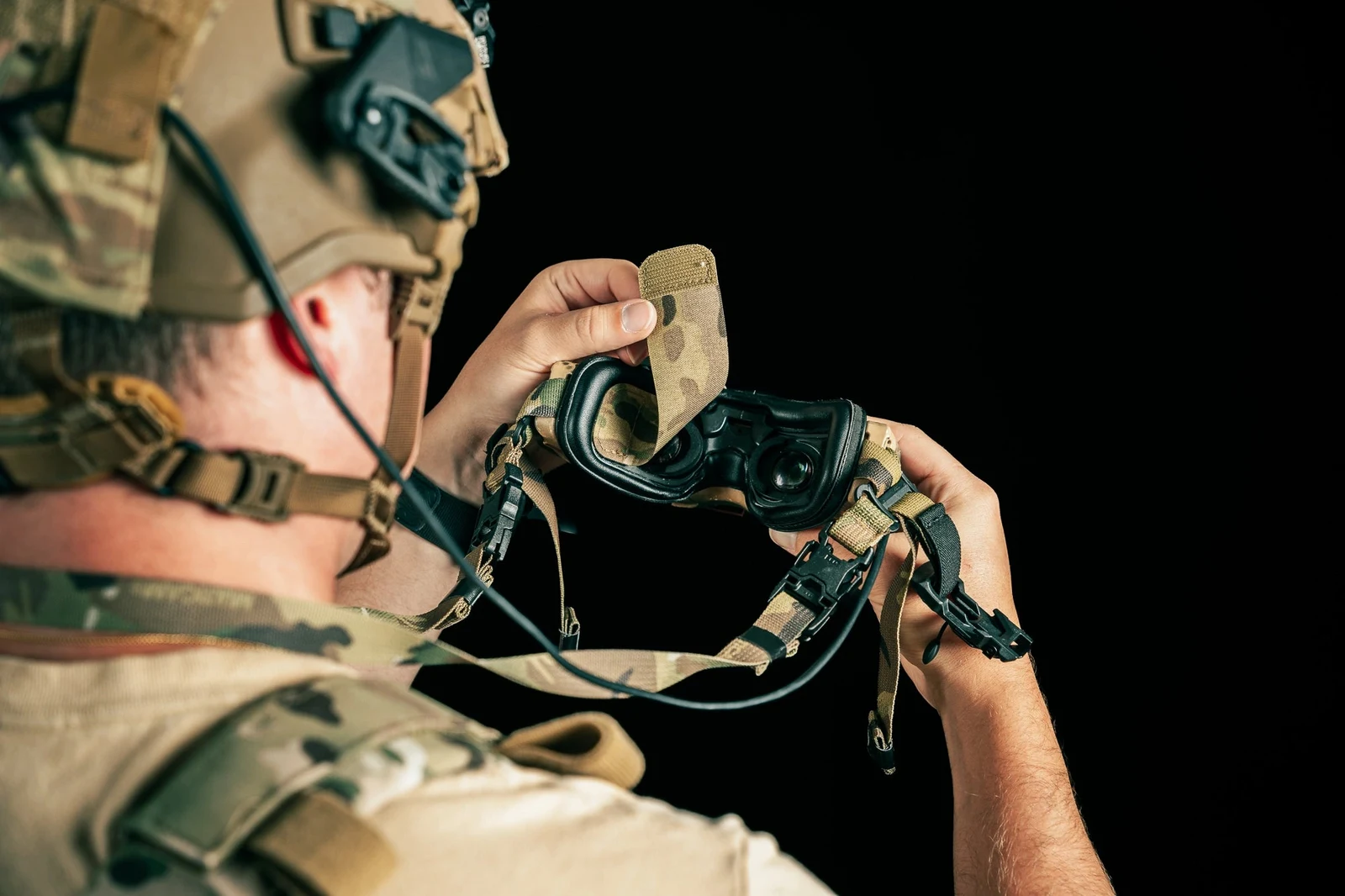
Goggles with a molded, non-removable head strap are also out, since the harness needs the stock 3/4 inch webbing to attach to. Box-style analog goggles and DJI's digital shells both use removable webbing, and our FPV drone build guide covers which of those two formats a given aircraft commits you to. Adaptiv Defense does not publish a harness weight or a rail-side mount weight, so anyone building to a helmet weight budget is working without that number. Colorways are limited to Black and MultiCam at the same price, with no solid tan or ranger green option. The complete rail-accessory picture, including lights and counterweights that compete for the same real estate, is in our helmet accessory catalog.
Stay Updated on Helmet and Night Vision Gear
New helmet systems, NVG mounts, and rail accessories, sent once a week with prices and fitment notes.